Complicity Begins in the Act of Looking - Favu Gallery

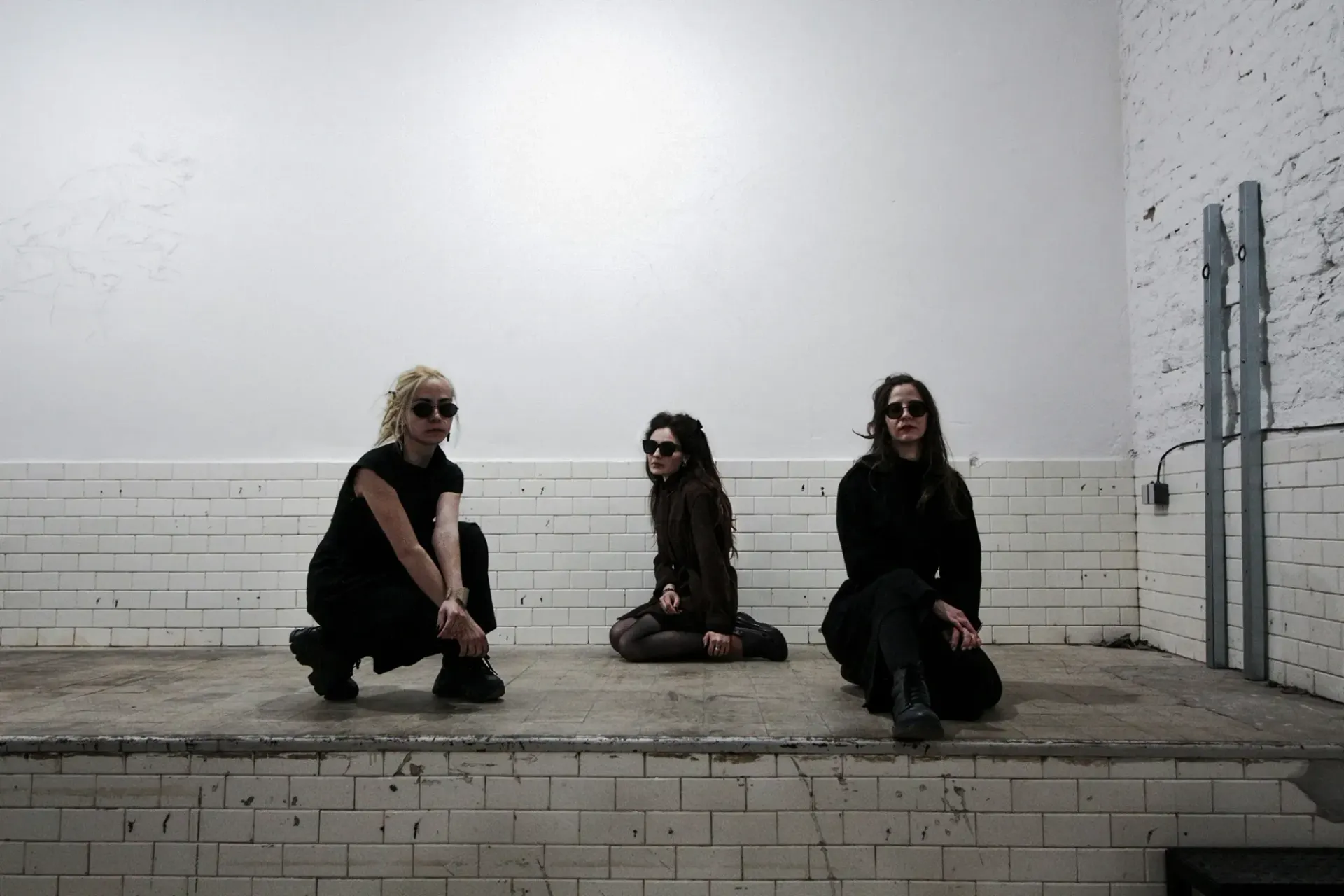
FAVU Gallery Presents Echoes that refuse to fade in Brno, curated by Massimiliano Maglione
The anatomical theatre was not built for the body on the table.
It was built for everyone arranged above it, tiered positions, organized sightlines, the consensus of not intervening. Visibility, in this model, is already a form of governance.
Echoes that refuse to fade takes this as its premise and works it through space, material, and sound.
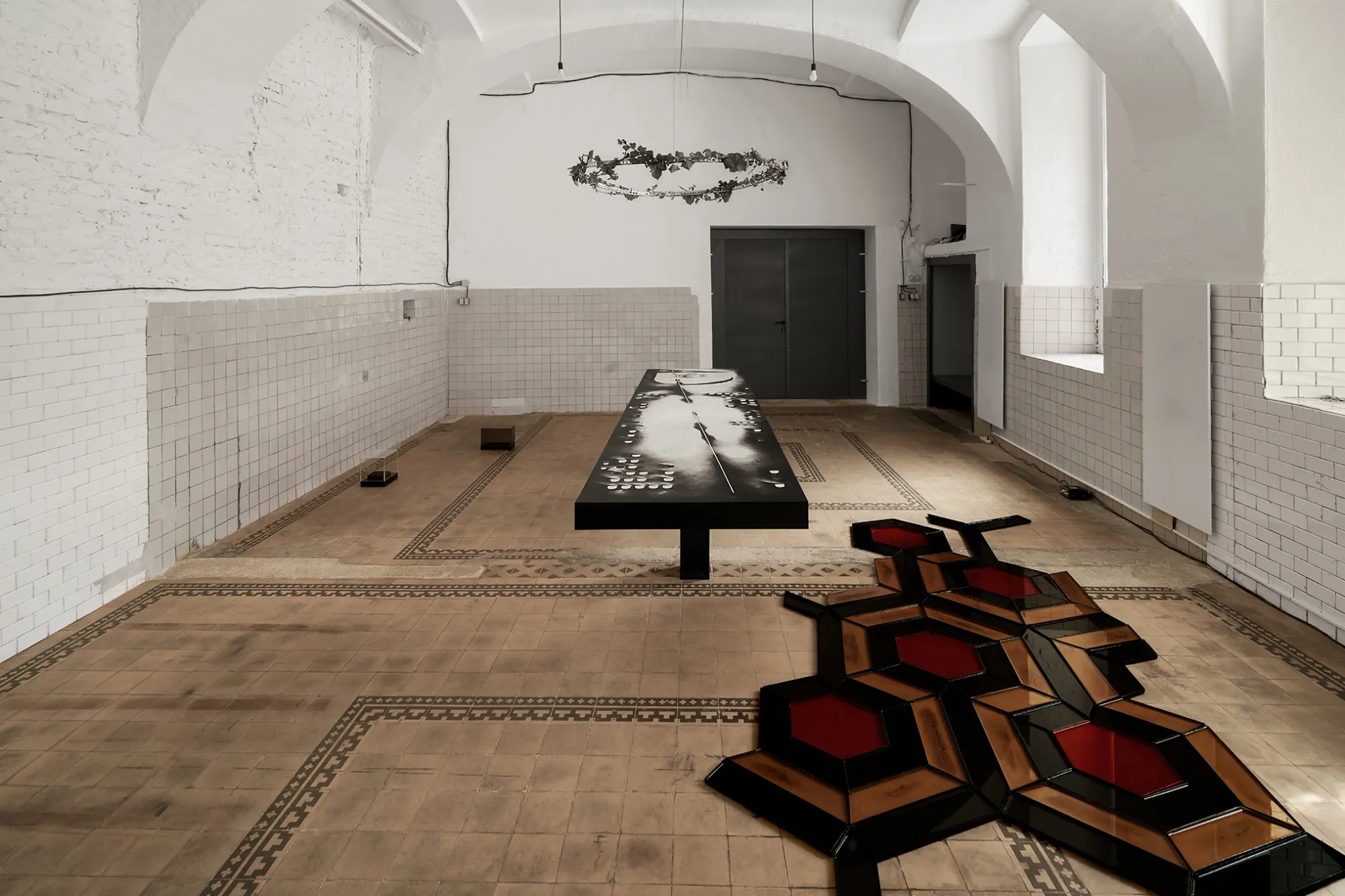
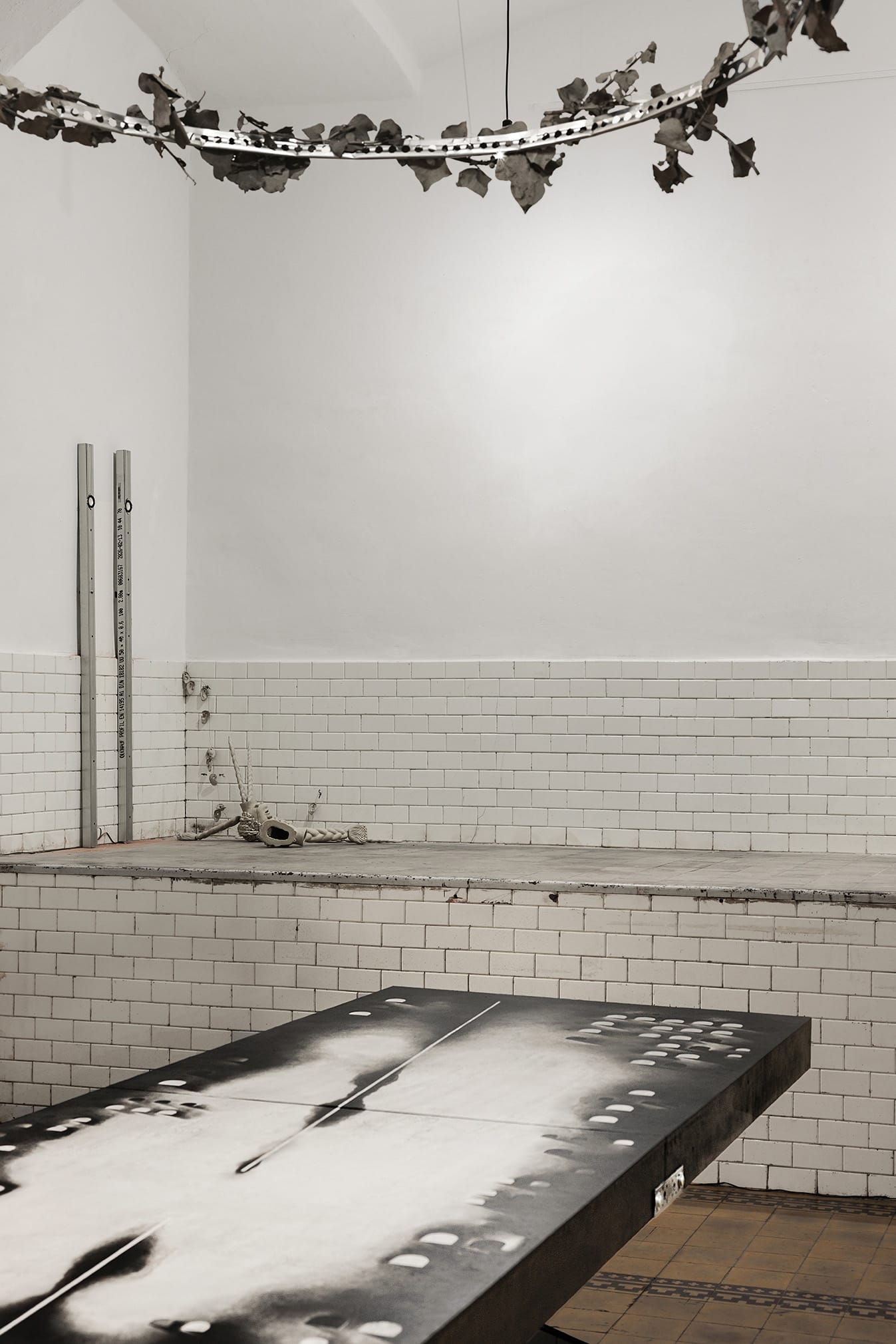
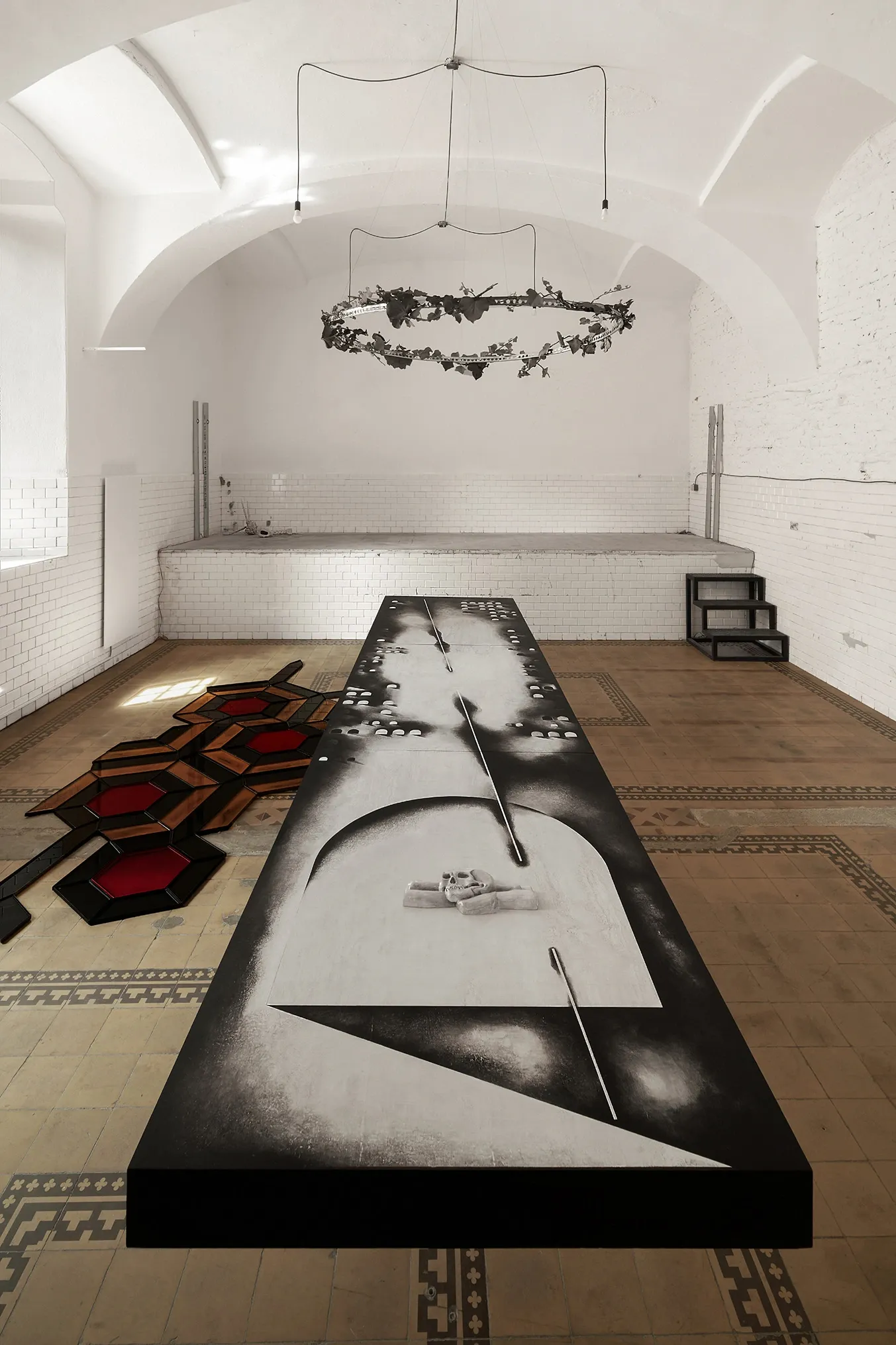
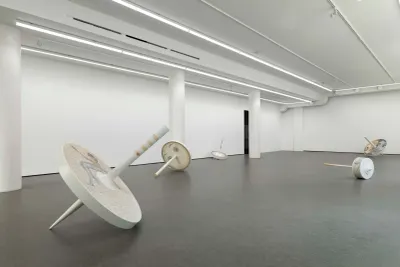
Anzhelika Palyvoda, Céline Struger, Sofiia Yesakova, installation view, Echoes that refuse to fade, FAVU Gallery, Brno, 2026. Courtesy the artists and FAVU Gallery. Photo: Polina Davydenko.
What the exhibition argues, without announcing it, is that this structure did not end with its architectural moment.
Authoritarian regimes leave behind something harder to catalog than ruins, residues that have entered the way we see, the forms we recognize without knowing why, the silence we keep in the presence of the organized and the sanctioned.
The past does not present itself as object. It presses from beneath.
Anzhelika Palyvoda, Céline Struger, Sofiia Yesakova
Echoes that refuse to fade
FAVU Gallery
Brno, Czech Republic
–
Wed – Thu, 15:00 – 20:00
Pekařská 436/78, Brno
Massimiliano Maglione
Viola Hertelova, Polina Davydenko
Courtesy FAVU Gallery
Authoritarian memory does not survive as content. It survives as a perceptual condition, organizing what is visible, what can be said, and from which position what is shown gains legitimacy.
FAVU Gallery currently occupies a former distillery building on Pekařská, while its permanent home on Údolní undergoes renovation. The main space has white subway tiles running halfway up the walls, vaulted brick ceilings, an original floor whose Victorian geometric border holds embedded dates.
No significant transformation was needed to make this work with the show's argument. The gallery already reads as institutional, part autopsy room, part classroom, part holding cell, before any work enters it.
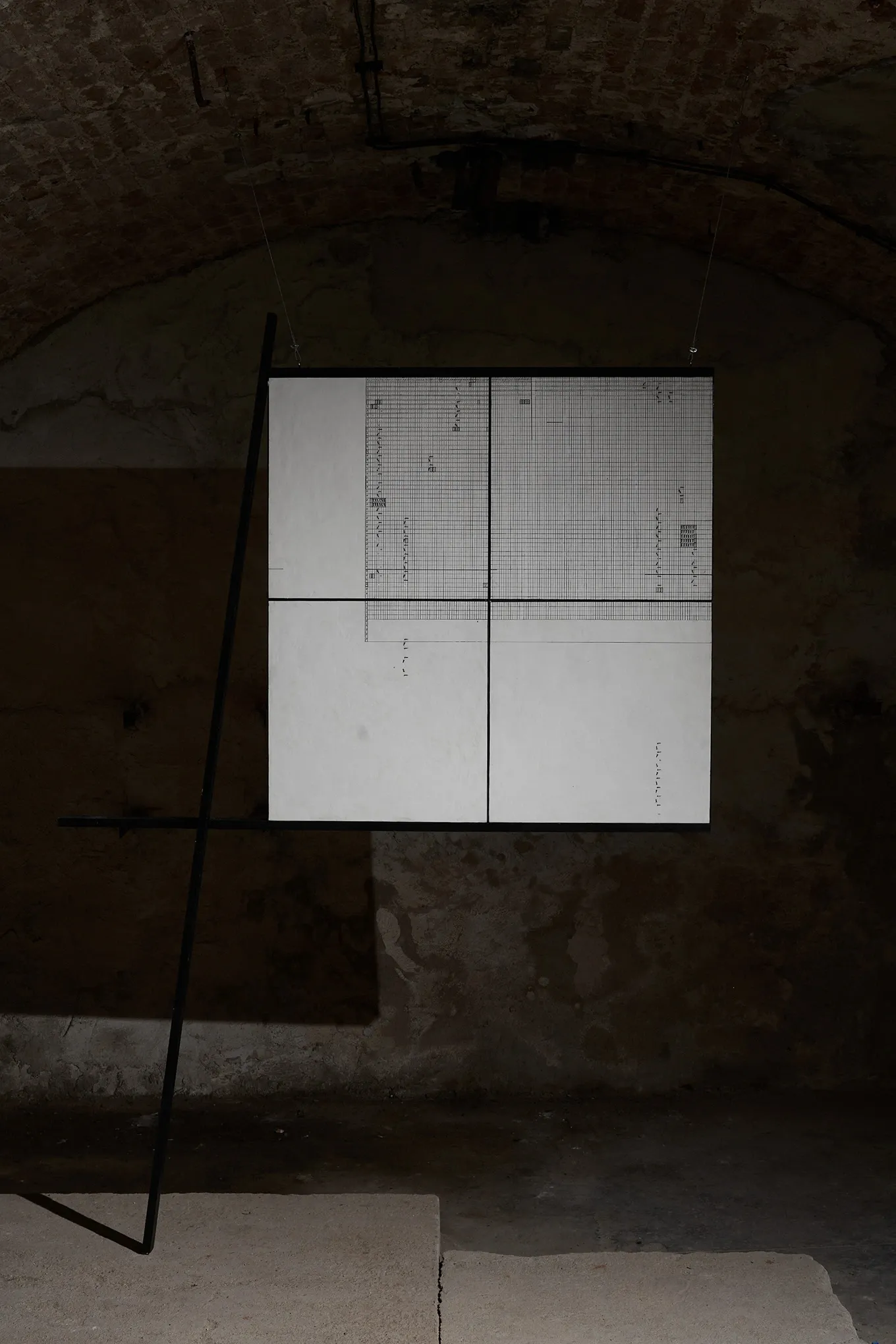
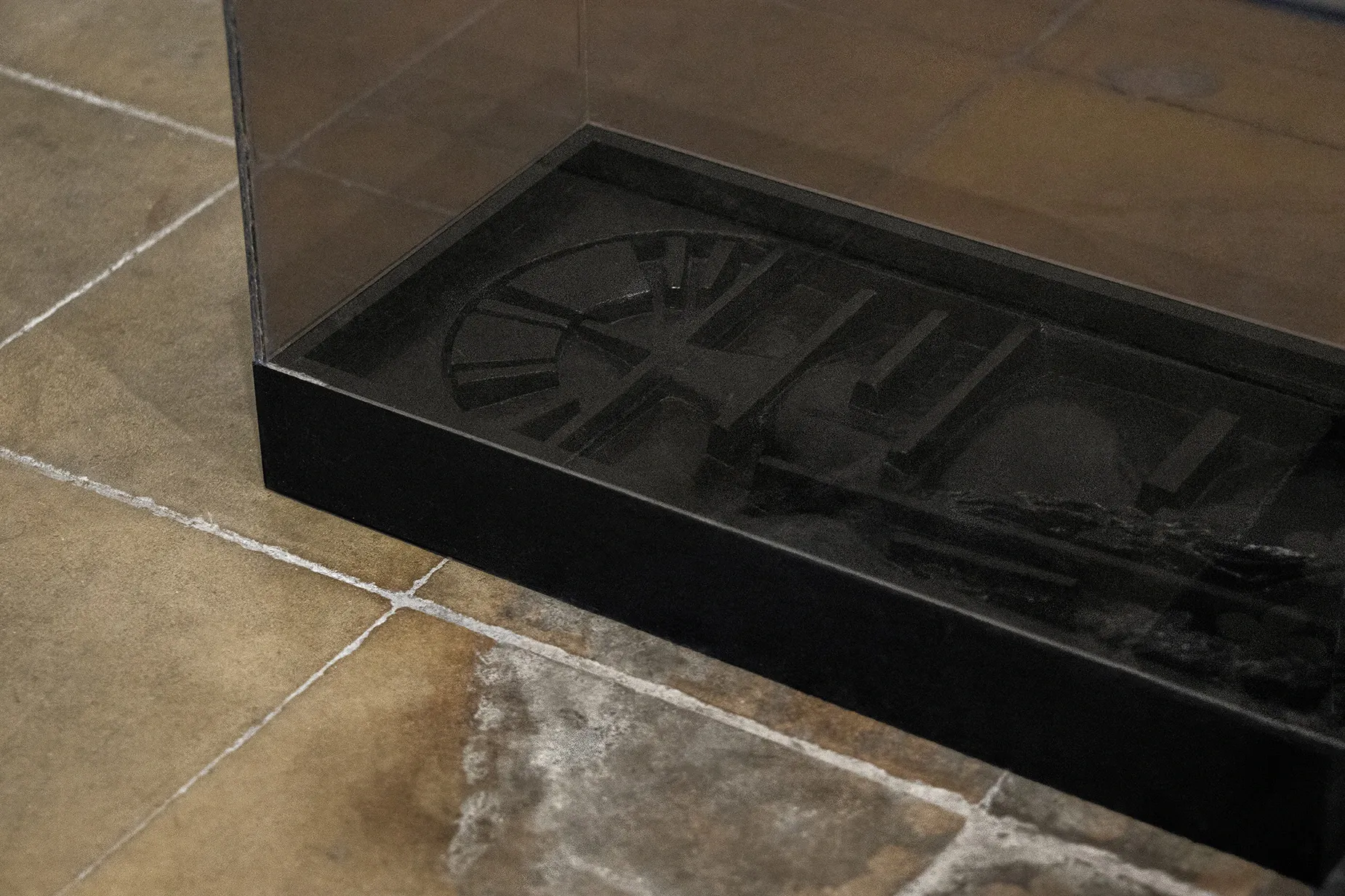
At the center of the main room, Sofiia Yesakova's table occupies the space with the authority of something that was always there. Long and black, its surface carries painted imagery drawn from historically marked architectural spaces, places where violence was organized, formalized, administered.
Skull and crossed bones appear alongside these forms, placed not as quotation but as a sign that has passed through several contexts, Christian memento mori, military insignia, disciplinary instrument.
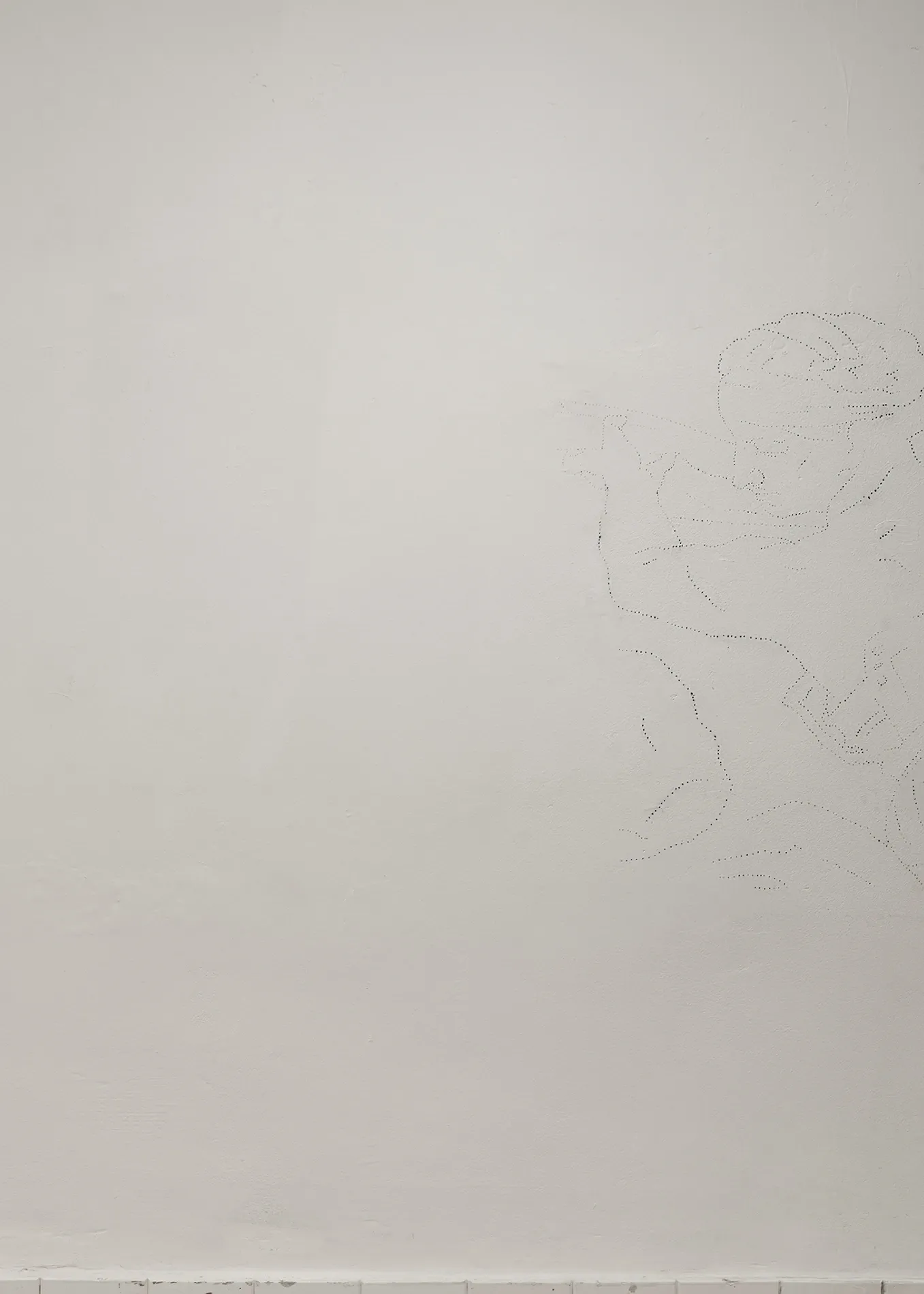
In each passage the image loses stable meaning and gains a different function. The gesture of leaning over the surface to look is not neutral. The angle already positions the viewer as participant in something unnamed.
Above, Anzhelika Palyvoda's crown hangs from the vaulted ceiling at a height that makes its weight felt without touching anything.
It is a circular structure of metal profiles with preserved, cement-fixed vegetal elements, dark, leaf-like, visually heavy but formally fragile. The form holds glory, mourning, the funeral wreath, and the crown of thorns at once, and settles into none.
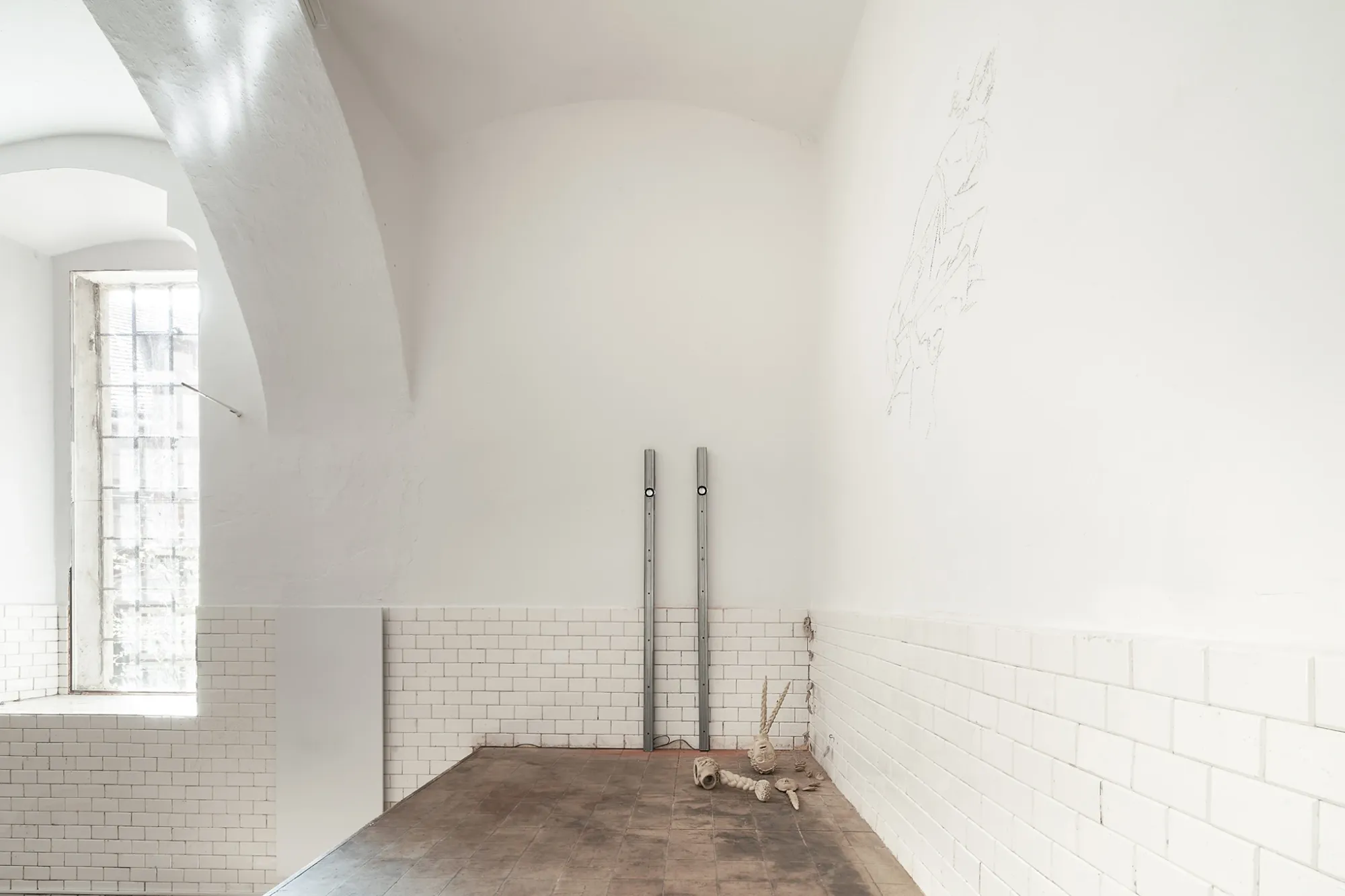
The four vertical metal profiles nearby, industrial wall-building materials, emit sound from openings placed at mouth height. The source is a childhood fragment, a Latin Requiem sung in school choir without understanding its meaning, repeated until only the sound form remained.
Distributed across the room from both sides, the audio generates an enveloping effect in the center. One does not hear it so much as feel it moving through the body and the tiled space simultaneously.
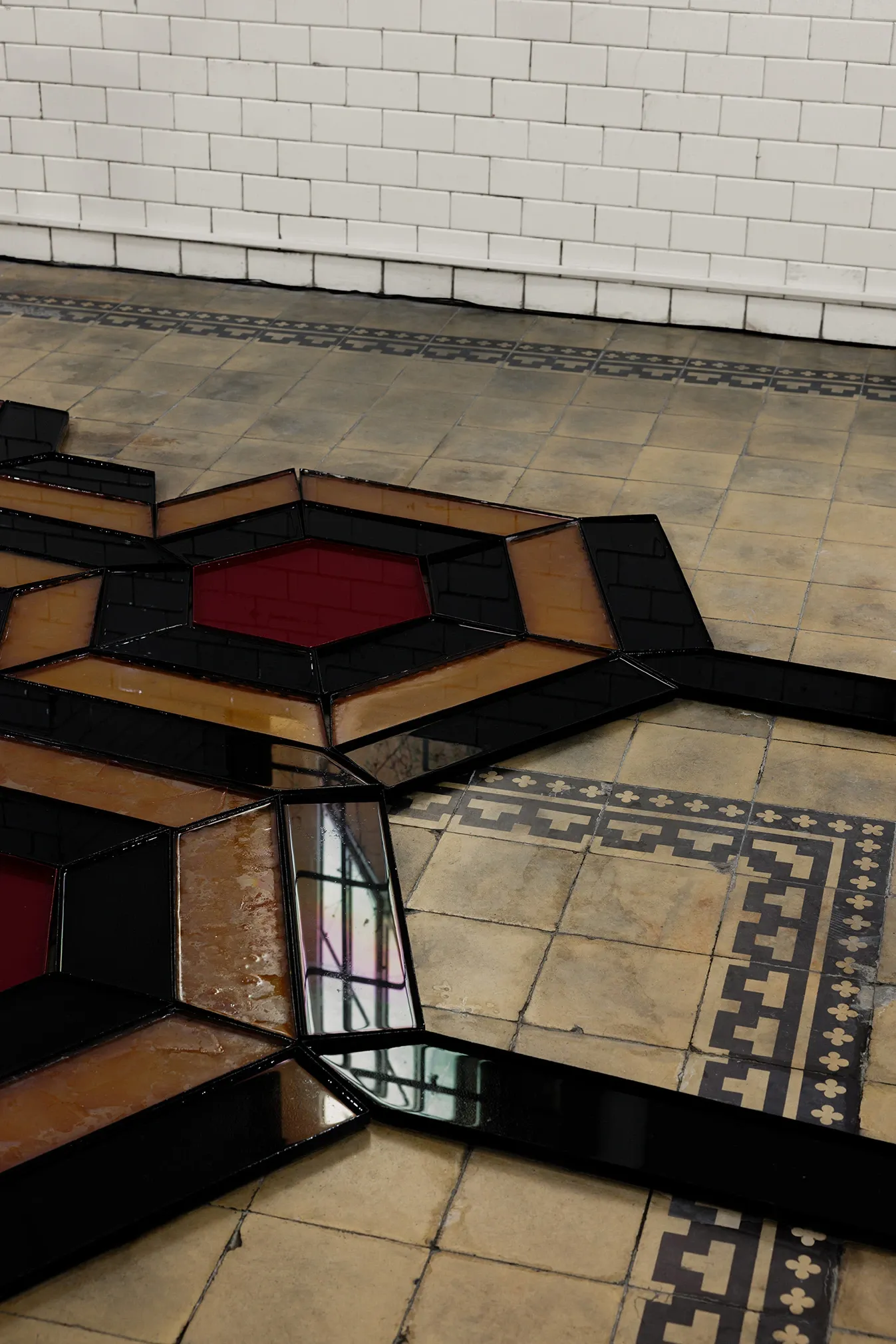
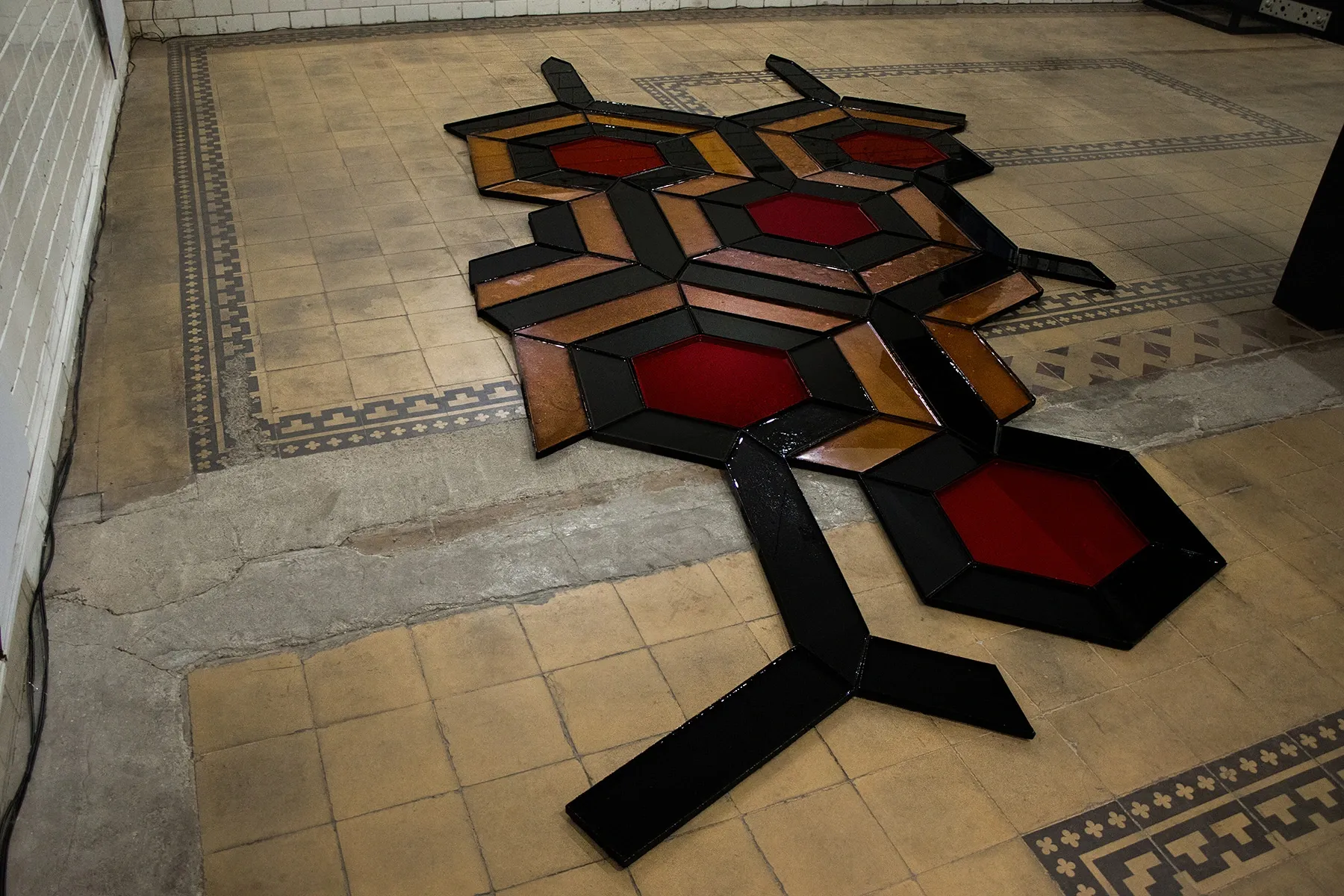
On the floor, Céline Struger's modular hexagonal grid spreads across the original tiles, panels in deep red, amber, and smoky gray, held in black frames.
The pattern carries its own cultural sediment, recognizable from the carpet in Kubrick's The Shining, a form that organizes space while quietly refusing to be trusted.
Laid over the existing historic floor geometry, it places one system of ordering the visual over another, and the original tiles show through the gaps.In the lower level, the exhibition moves into closer quarters.
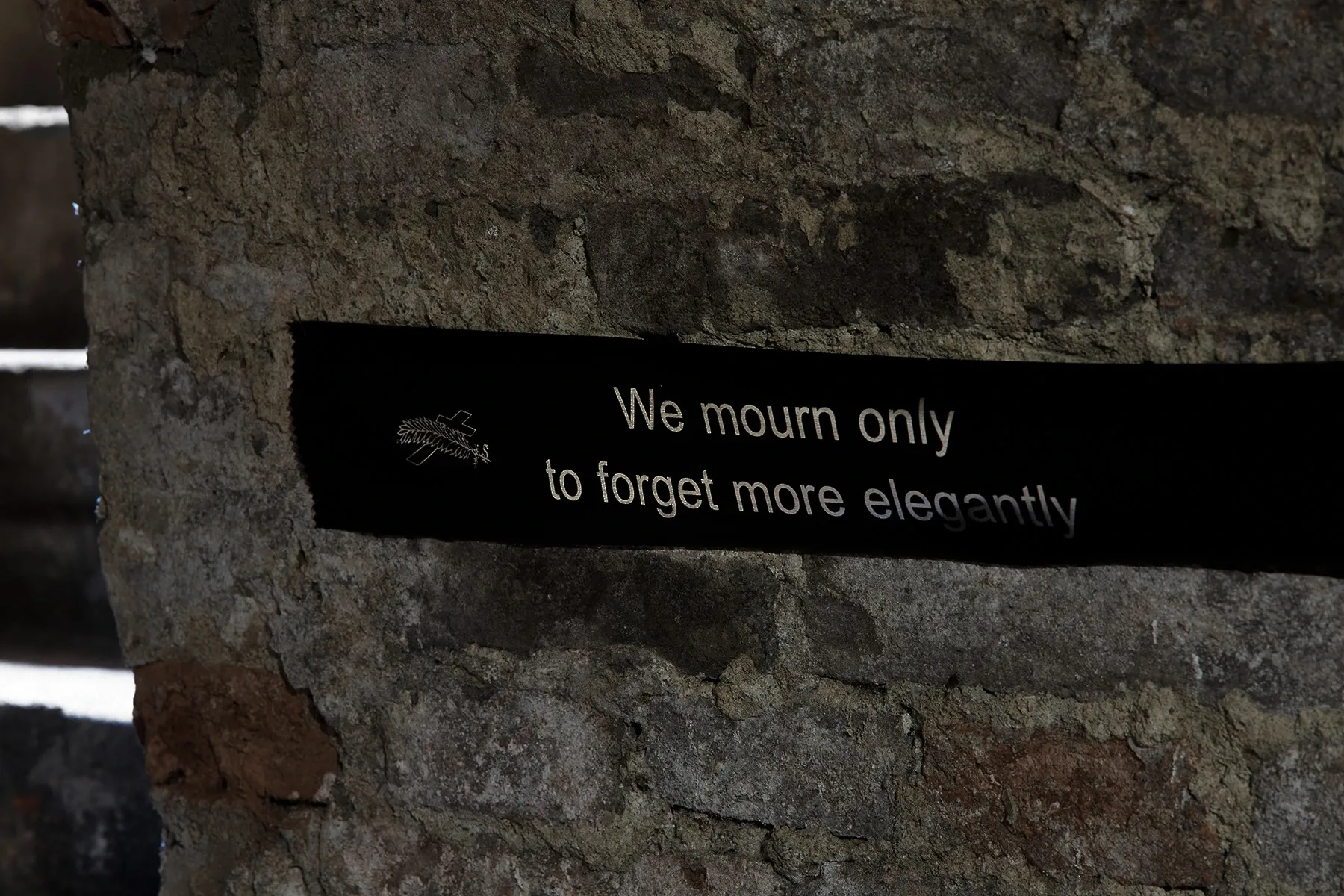
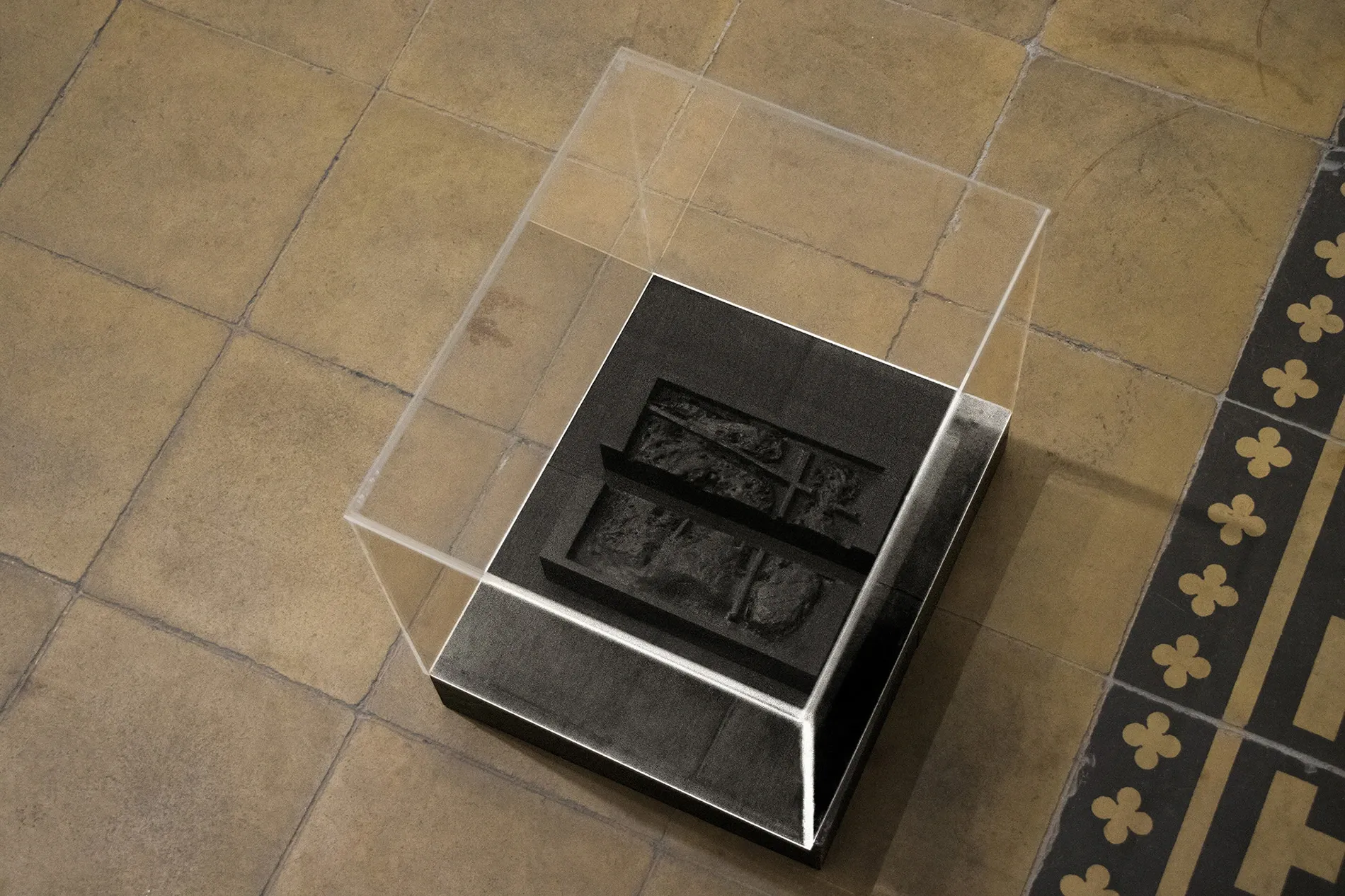
Sofiia Yesakova's Cargo 200 refers to the Soviet military code for the transport of bodies, a bureaucratic procedure that reduces death to logistics, the body to cargo. The mechanism it describes is not only historical.
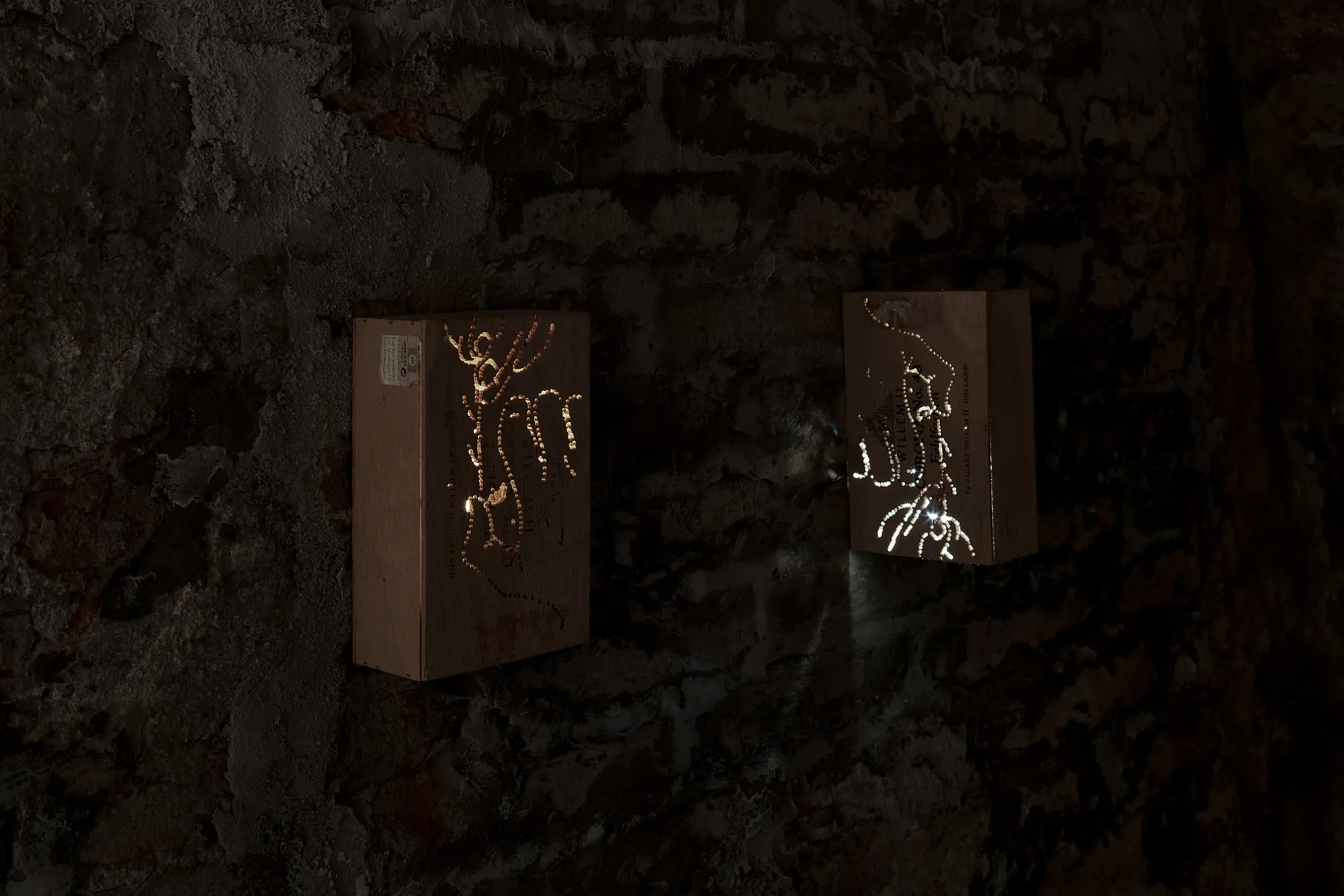
Anzhelika Palyvoda's cigar boxes, originally belonging to someone now gone, are mounted on the raw brick walls of the basement.
Their surfaces are perforated with imagery drawn from the biological concept of cultivar, a graft onto another plant, and from the morphology of marks left by firearms.
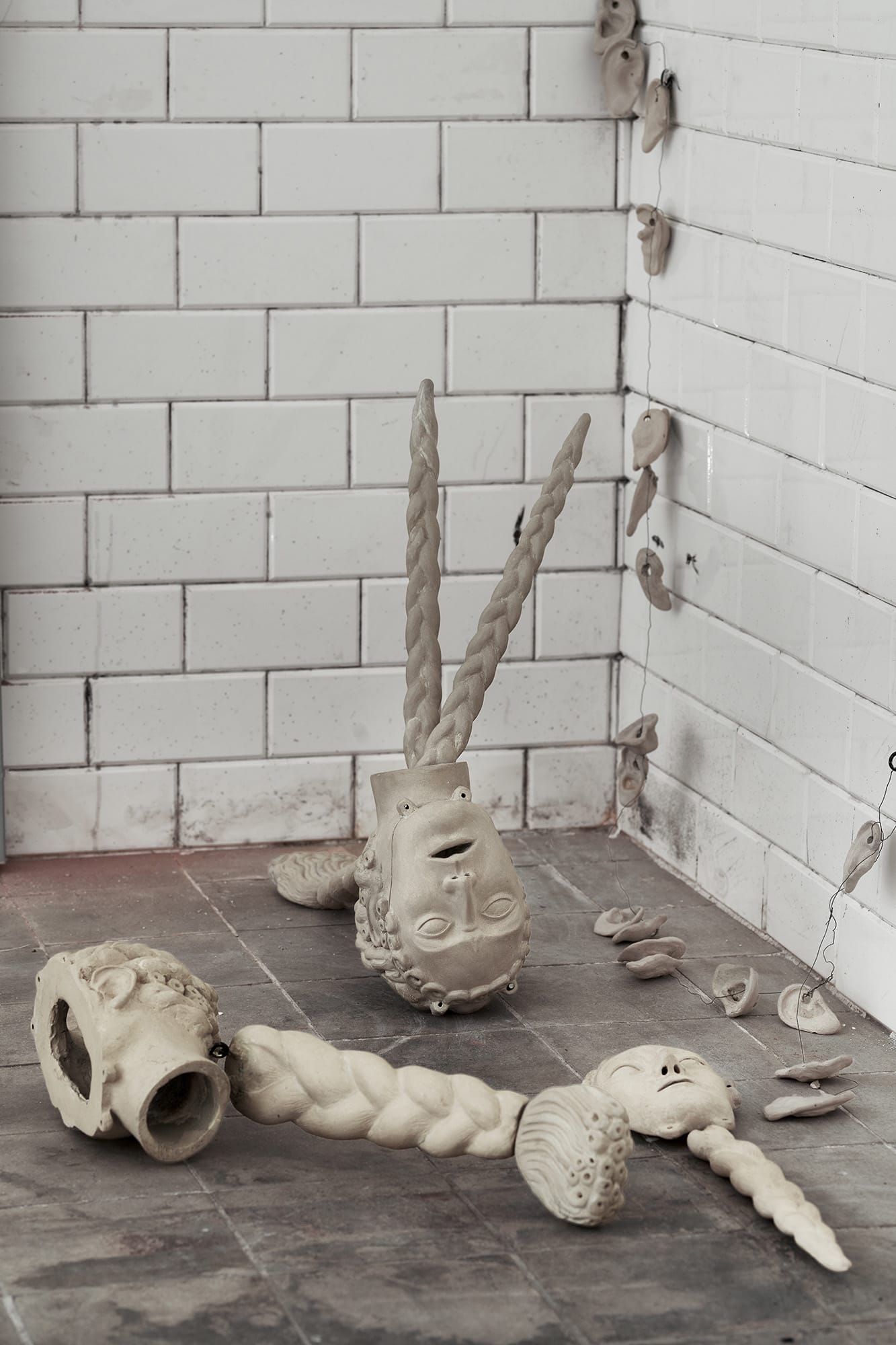
The circular, clean hole functions as passage, for sound, for light, for what one set of gestures shares with another. Céline Struger's Equalizer series, ceramic heads arranged on the floor, disjointed, part relic and part something more recent, stages the reworking of historical forms according to present conditions of legitimation.
They appear as manipulated fragments, not continuous with what came before them but reorganized by the gaze that now holds them.
This exhibition opens while the mechanisms it describes are active, not retrospective. The ongoing war in Ukraine, from which Palyvoda's source material directly draws, makes the question of what it means to watch, to know, and to remain in position a live one rather than an art-historical one. The space makes this explicit without stating it.
In the basement, Struger's triangular glass elements, filled with a milky, slightly sedimented liquid, reflect the surroundings and the presences that pass through it. From a distance, they read as closed, almost monochrome surfaces.
Up close, the cloudiness opens, the bottom becomes visible, the floor shows through. The last room does not conclude anything. It changes the quality of what was seen above it, and the smell, sweet, slightly disturbing, stays with you longer than it should.
Anzhelika Palyvoda on Instagram
Céline Struger on Instagram
Sofiia Yesakova on Instagram
Instagram of FAVU Gallery
Curator Massimiliano Maglione on Instagram
About Catapult Contemporary - Art Platform Submission
This is a exhibition review published by Catapult — an independent editorial platform for contemporary art, based in Vienna. We publish exhibition reviews, artist features, interviews, and critical context, with a focus on emerging and mid-career practices from Europe and beyond.
catapult.art
Want to be featured? Submit your work →