What Cuteness Is Built to Hide

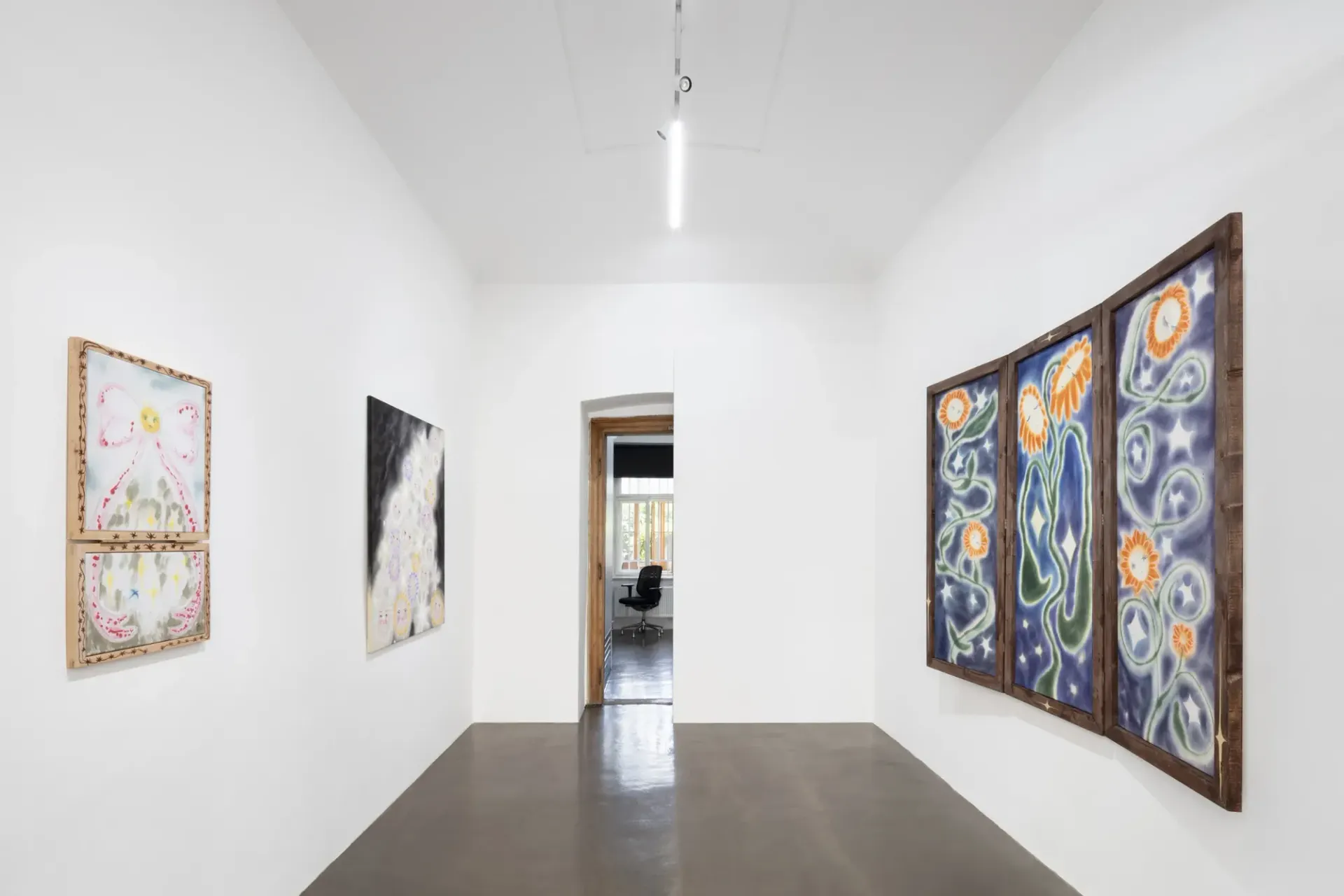
Olga Krykun at Clauda, Prague, Stardust for Tomorrow.
Clauda presents Stardust for Tomorrow by Olga Krykun, on view through July 18, 2026.
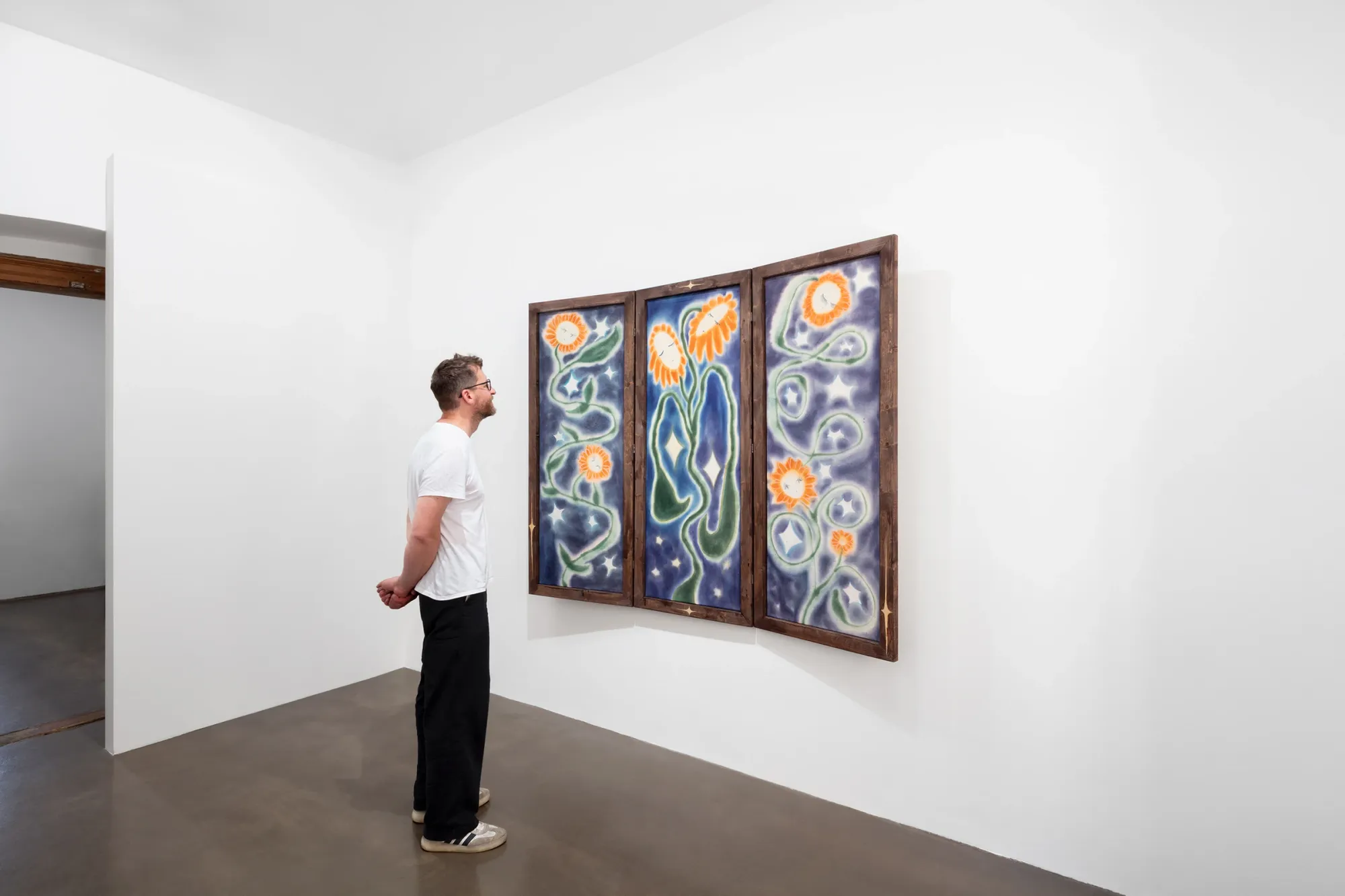
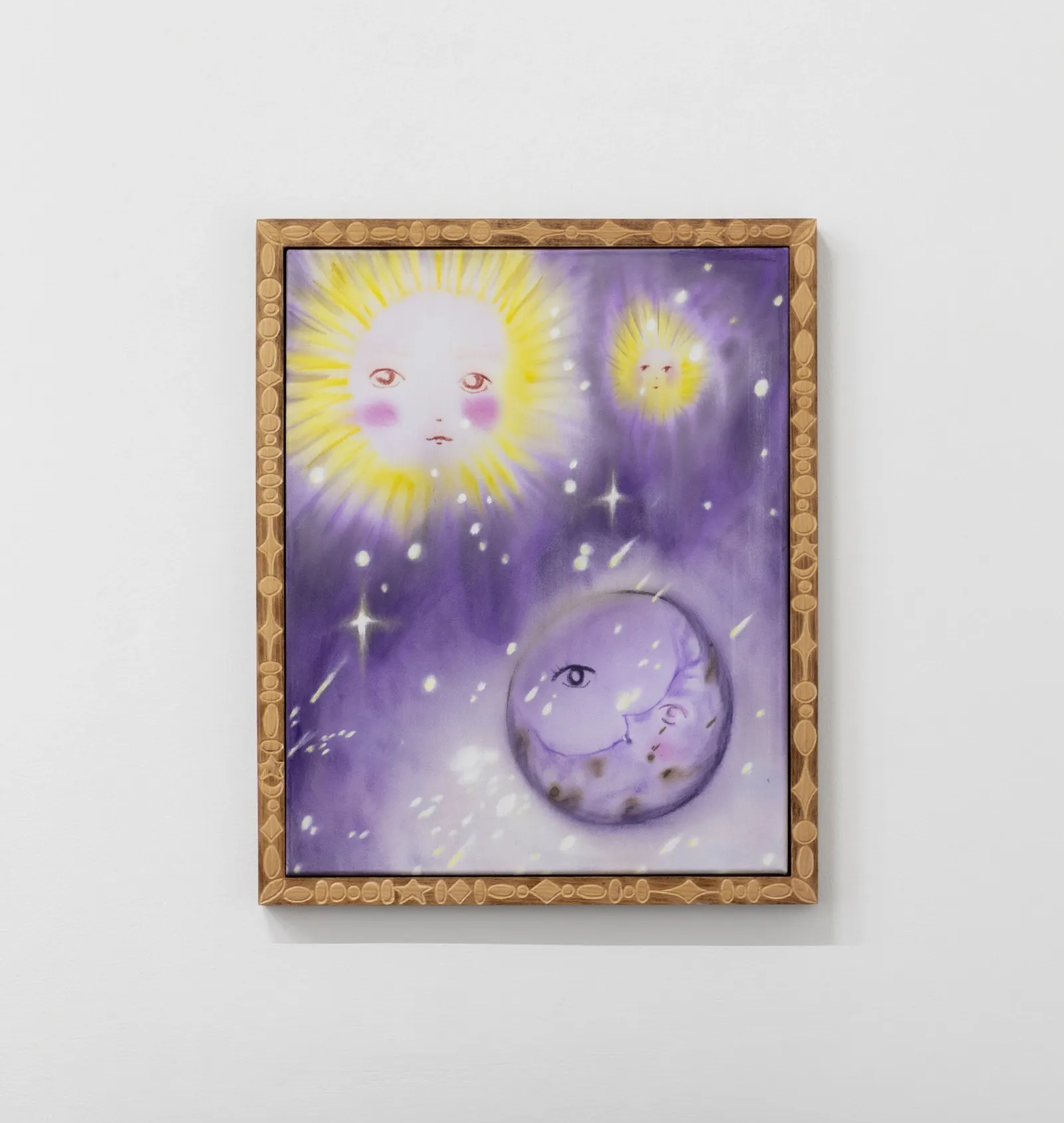
Sunflowers with faces are supposed to be harmless. Round cheeks, half-closed eyes, a soft palette borrowed from stationery sets and stickers.
The cuteness works like a quiet agreement, asking for tenderness and offering safety in return, until the question becomes what happens when that agreement is made under entirely different circumstances.
Olga Krykun
Stardust for Tomorrow
Clauda
Prague, Czech Republic
–
Wed – Sat, 2pm – 6pm
Veverkova 28, Praha 7, 170 00
Emma Hanzlíková
Eva Rybarova
Courtesy Clauda
hello@clauda.cz
The visual language recalls souvenir shops more than galleries, the kind of trinkets shipped in bulk and sold cheap at open-air markets.
That association is not incidental. Kitsch has long been a way of making the unbearable transportable, small enough to carry, soft enough to hold.
Cuteness offers the viewer a sense of safety it never fully owns. Underneath the glitter, the stem is already a skeleton.
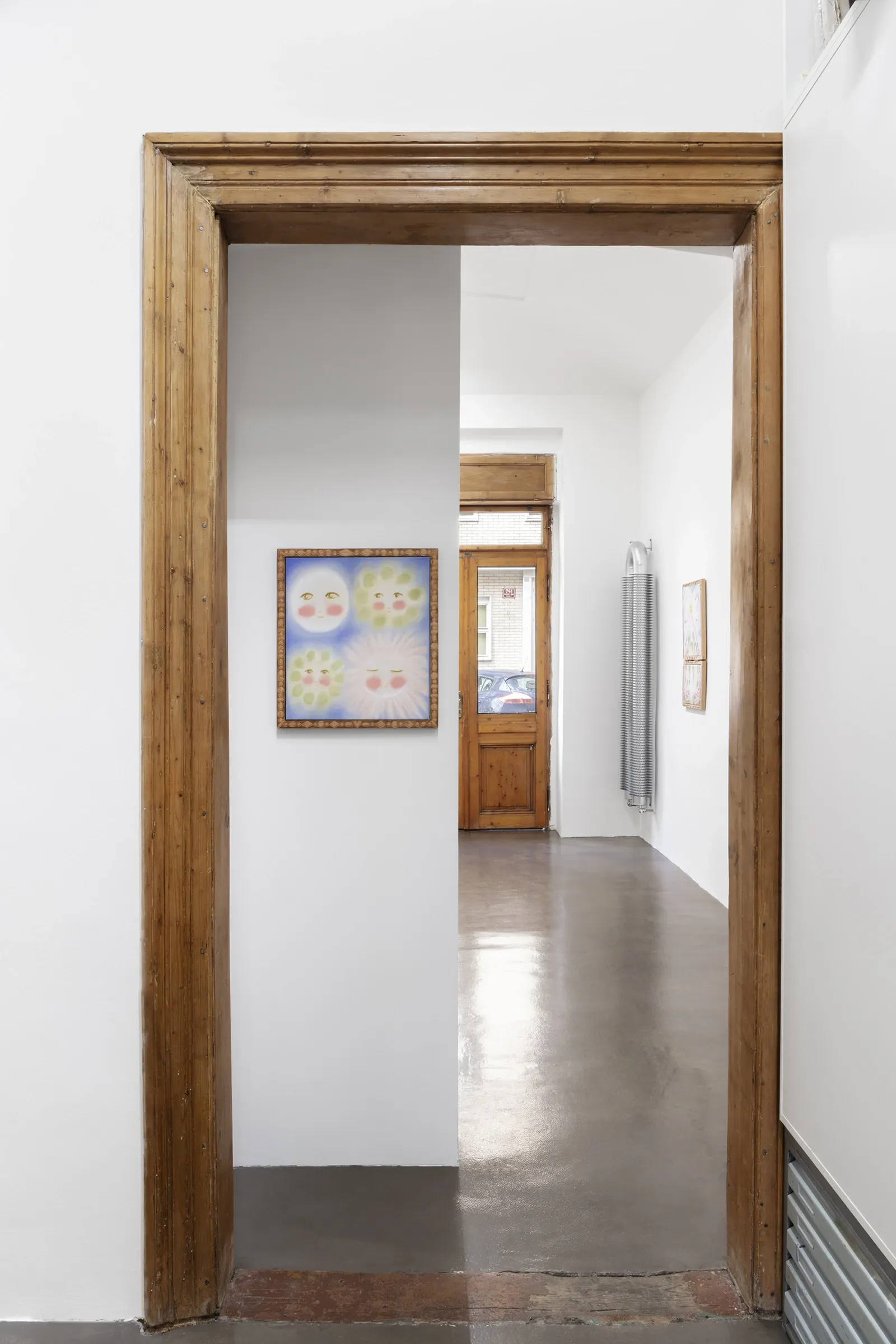
Clauda occupies a converted apartment on Veverkova Street, its rooms narrow and interconnected, doors framed in old varnished wood that predates the gallery by decades.
Krykun's paintings hang close together, almost domestic in scale, so that a corridor becomes a room becomes another corridor.
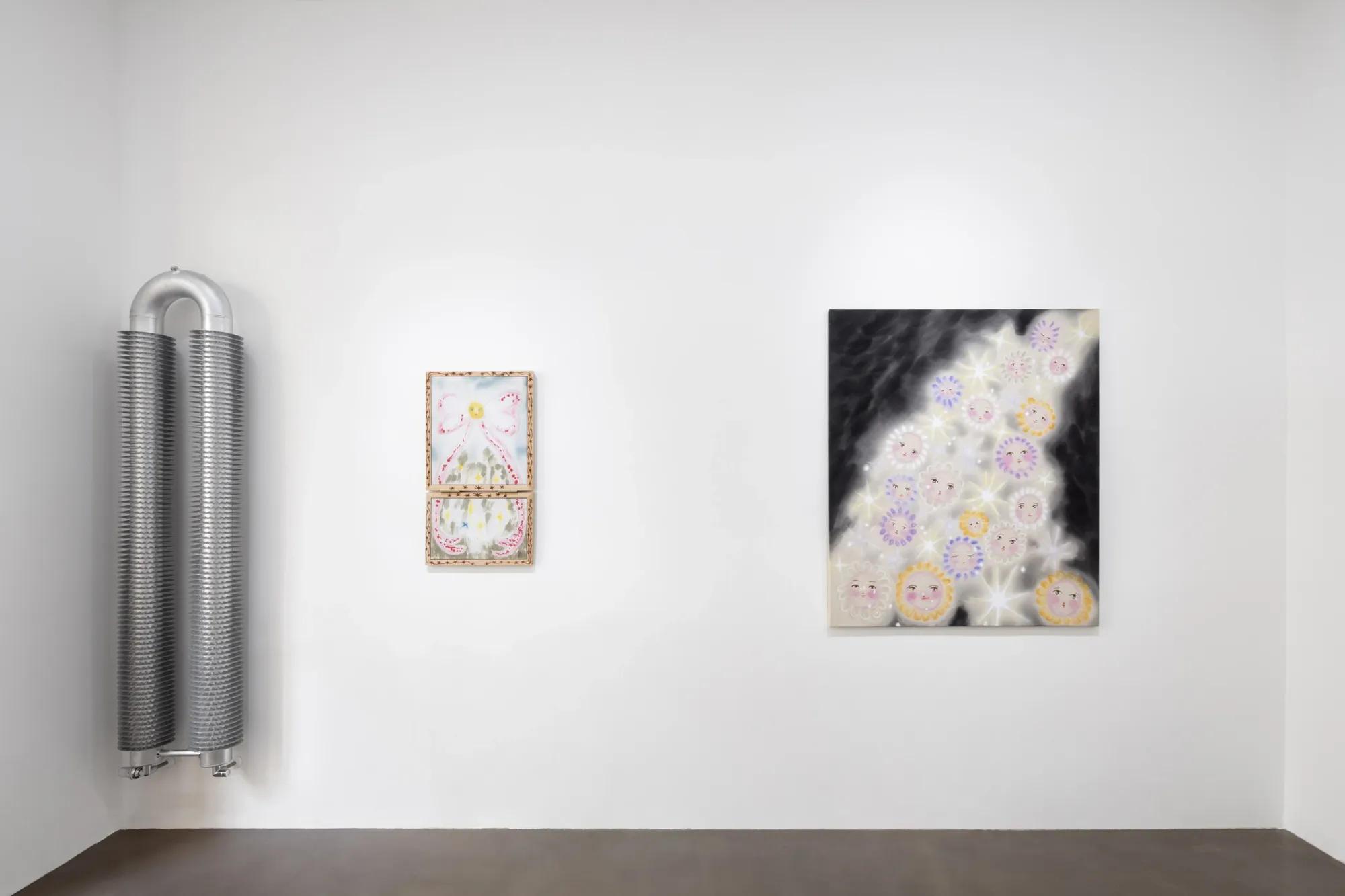
A ribbed steel radiator, original to the building, stands beside one canvas as an accidental sculpture, industrial and cold against the softness around it.
The apartment format keeps the work at eye level and within arm's reach, closer to how these images might first have appeared, as souvenirs on a shelf rather than paintings on a wall.
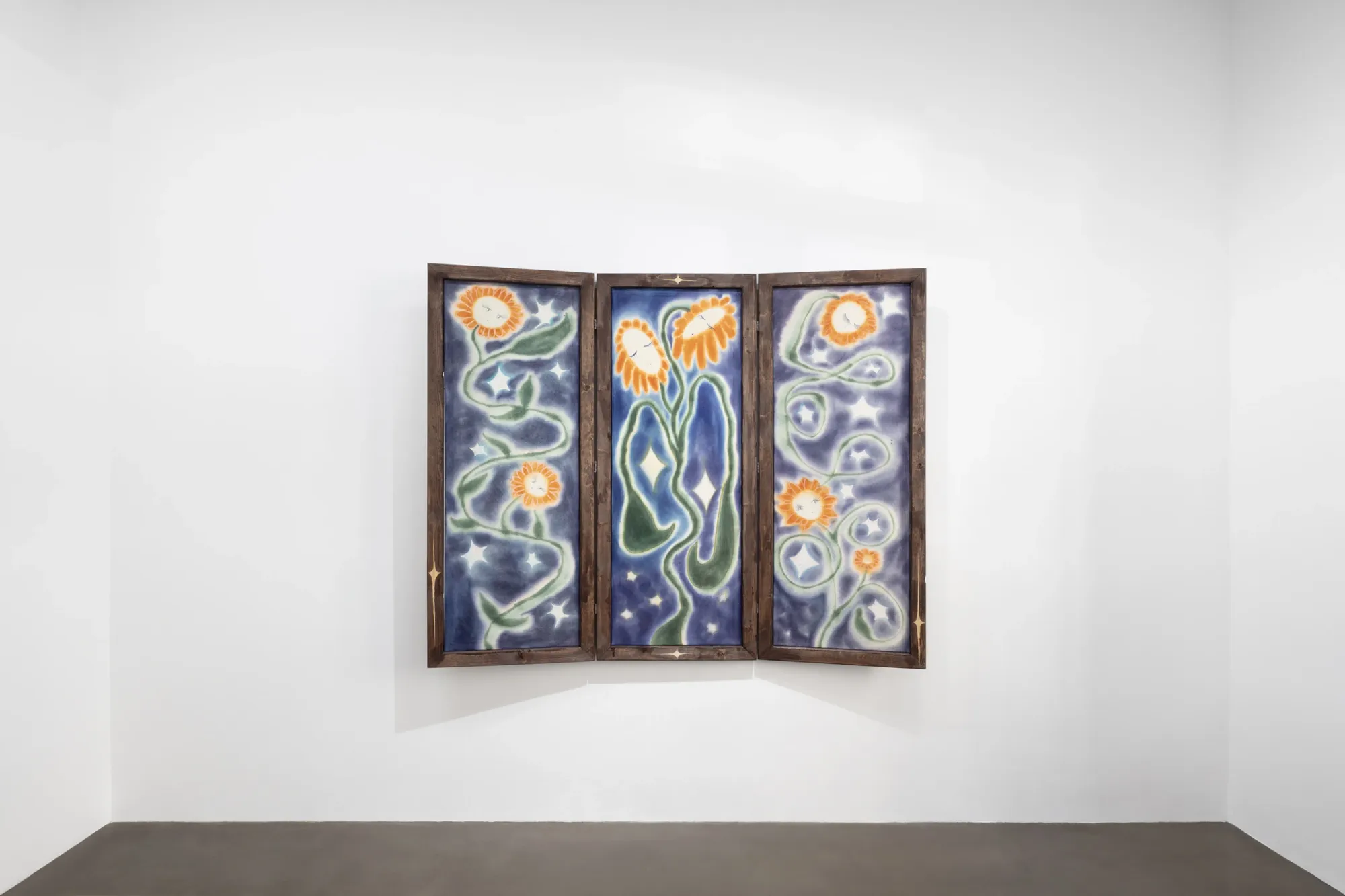
One triptych spans three roughly hewn wooden panels, its sunflowers rendered with closed eyes and a soft blush, stems twisting into loops that read as much like vines as like signatures. The panels do not sit flush against each other, tilted slightly so the flowers seem to sway even while perfectly still.
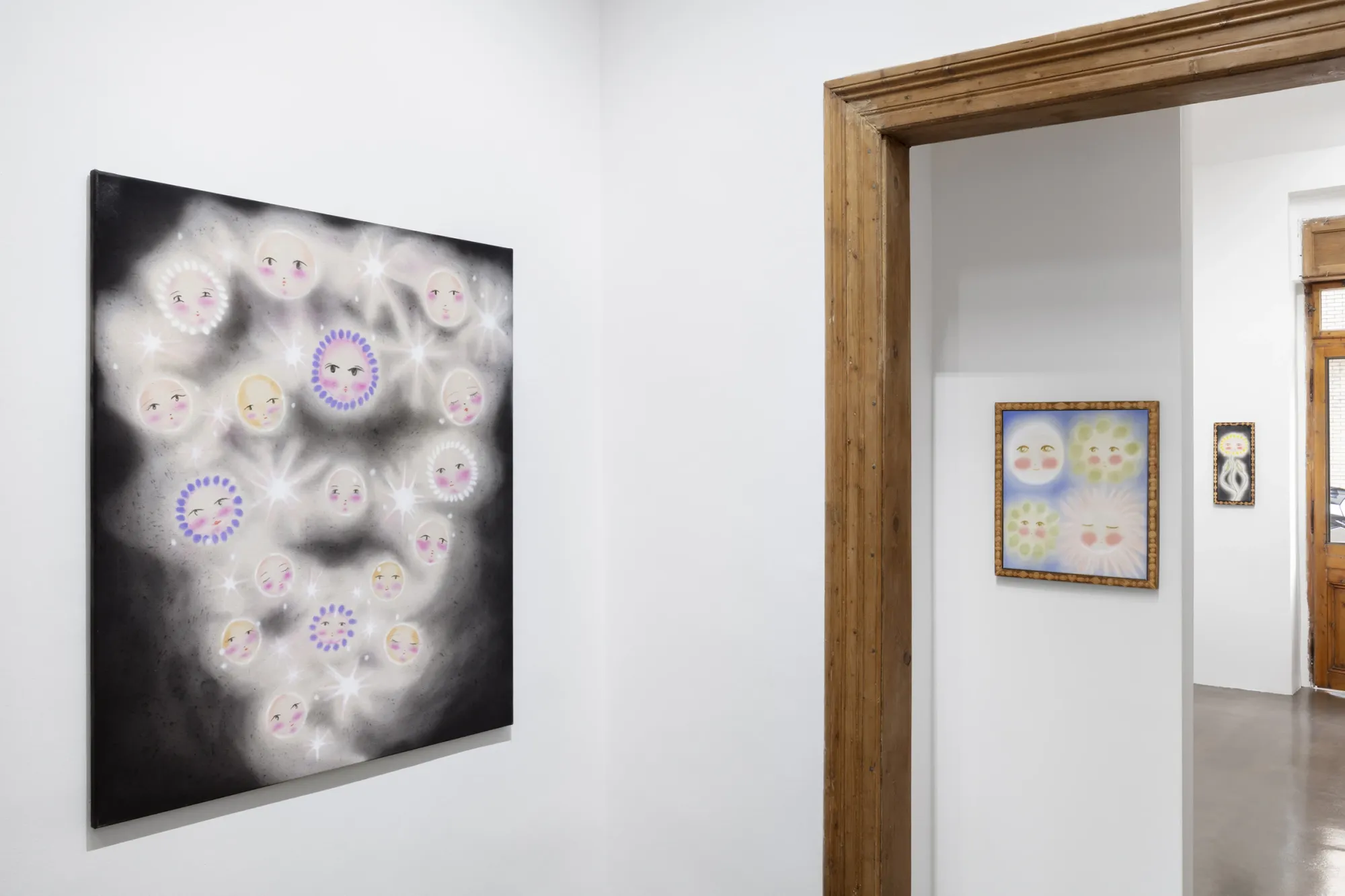
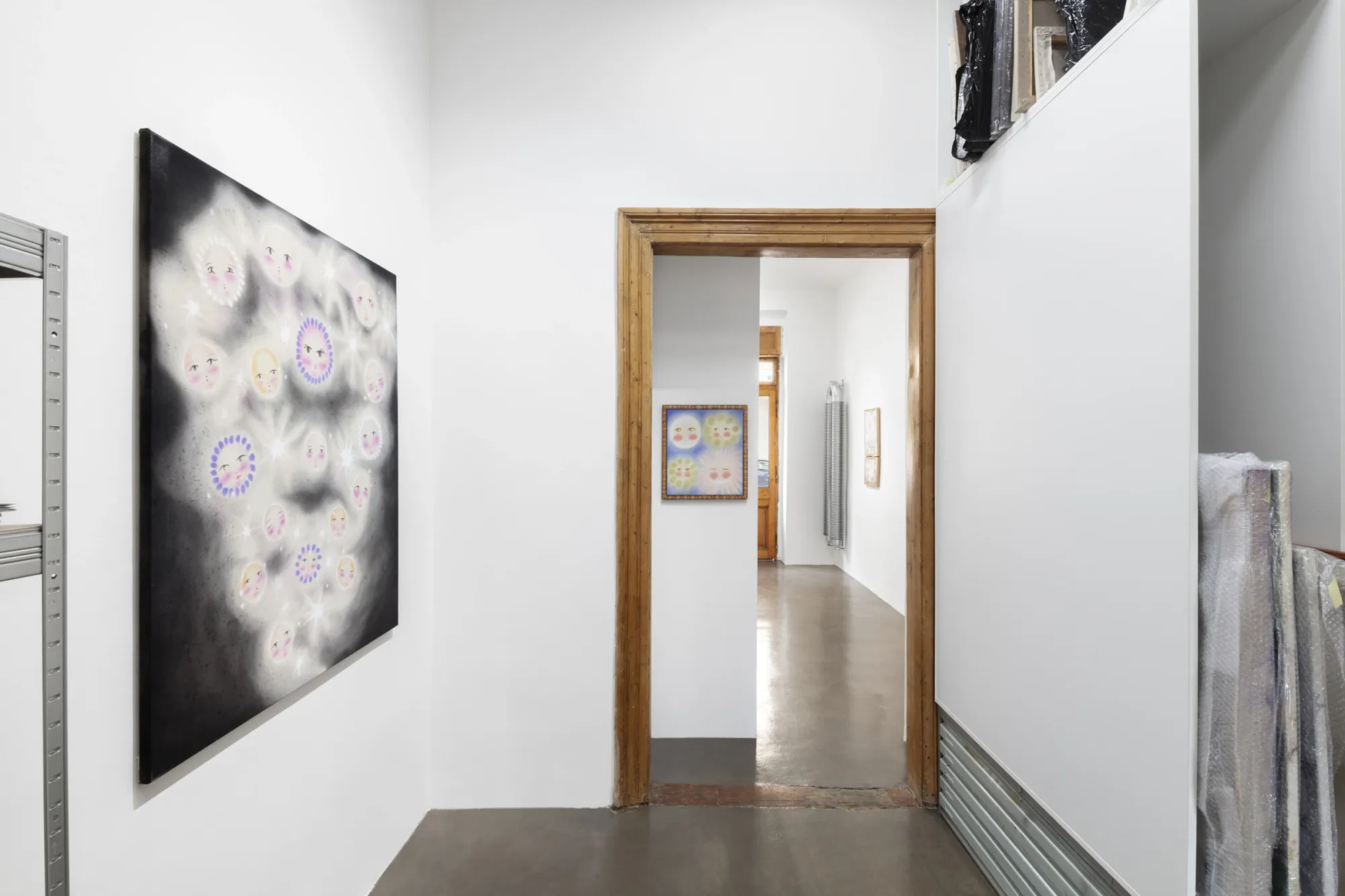
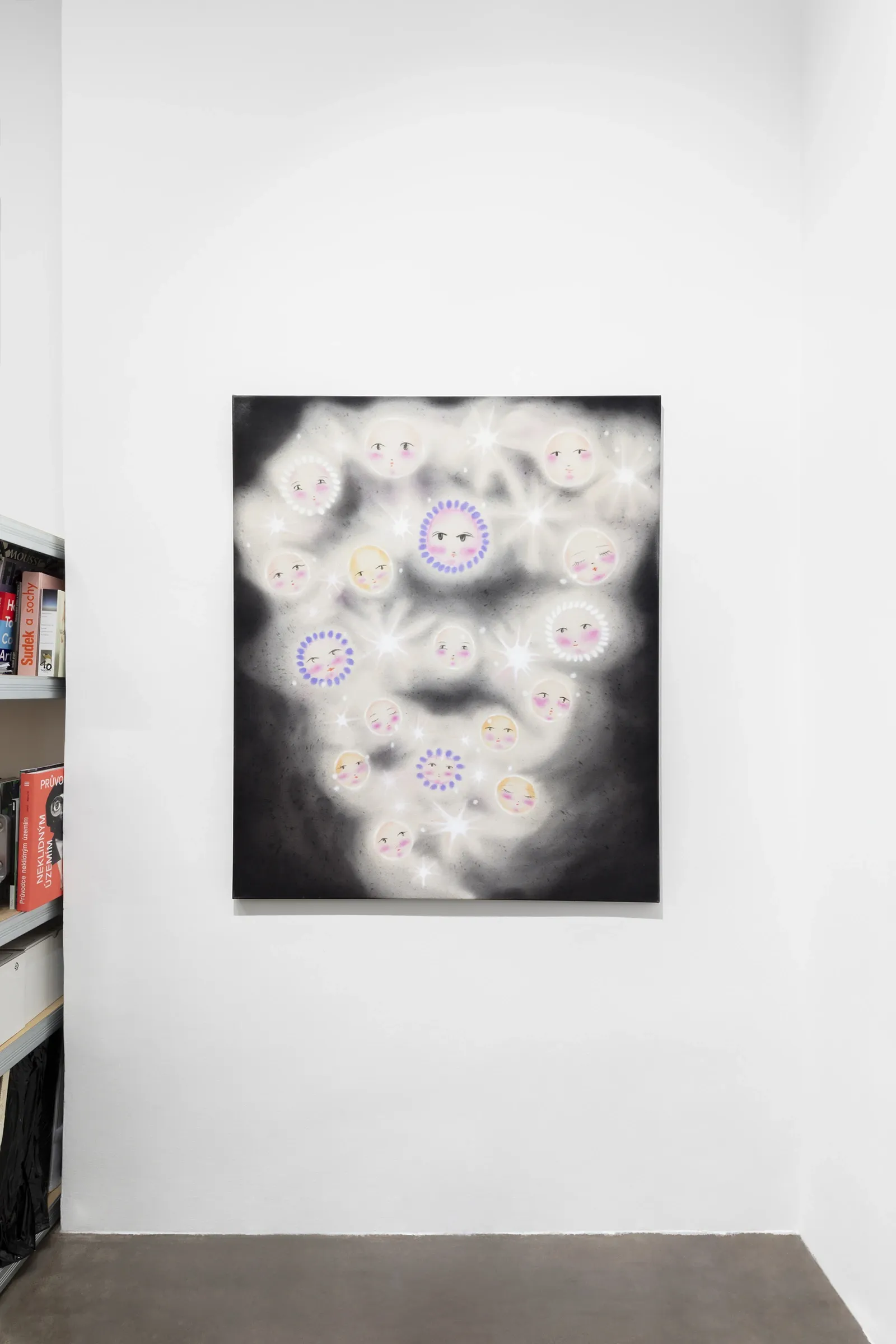
Nearby, a square canvas gathers a dense cluster of small round faces against a bruised, smoky ground, each one ringed in light like a struck match or a distant star, multiplying until they stop reading as individuals and start reading as static.
A third work folds along its own hinge, a pink bow painted across two joined panels that meet in the middle like a book closing on itself, its ribbon trailing into a patch of dry, khaki-colored grass at the bottom edge. The gesture is domestic, almost dollhouse in scale, and it holds its crease visibly, refusing to pretend it was ever a single flat surface.
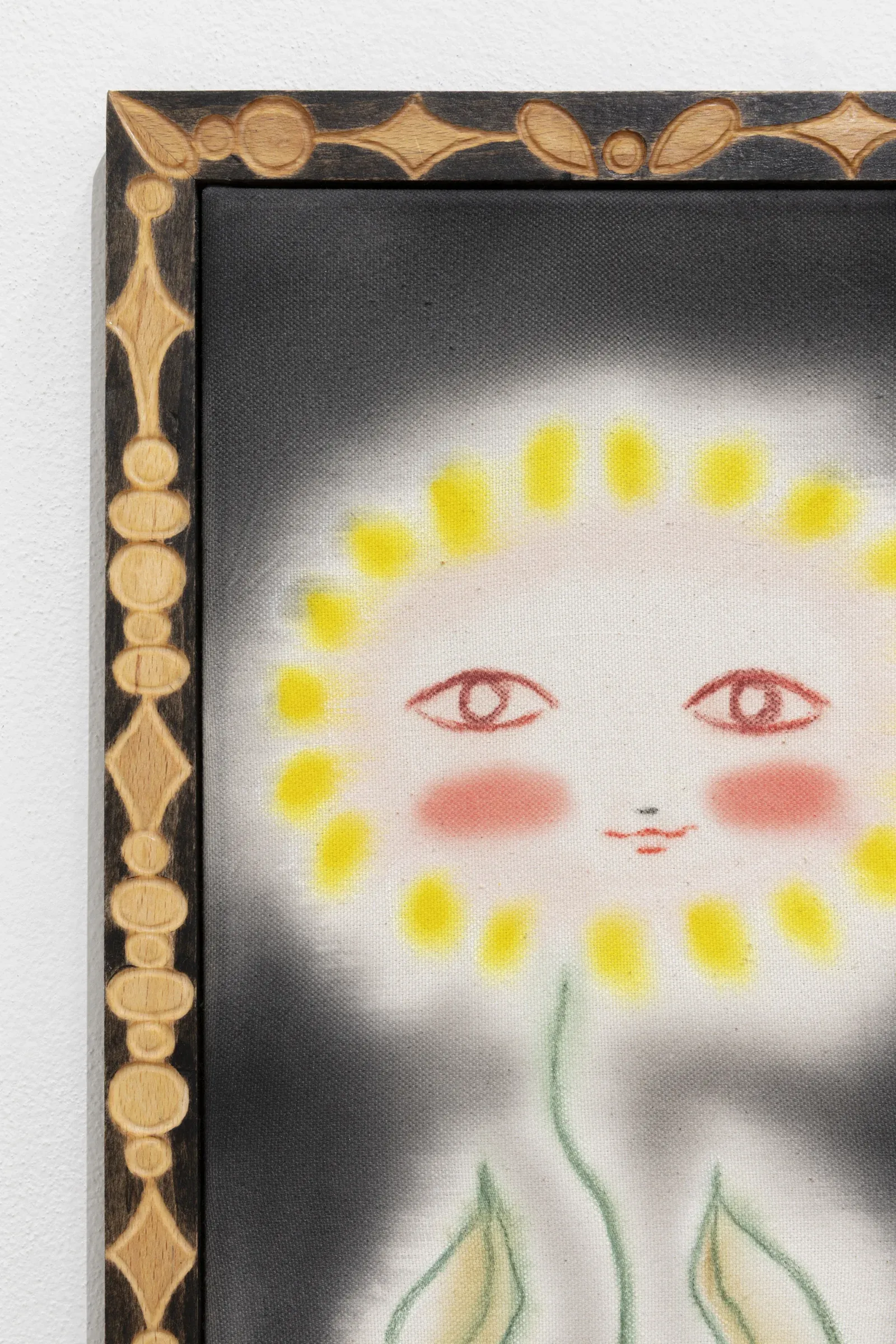
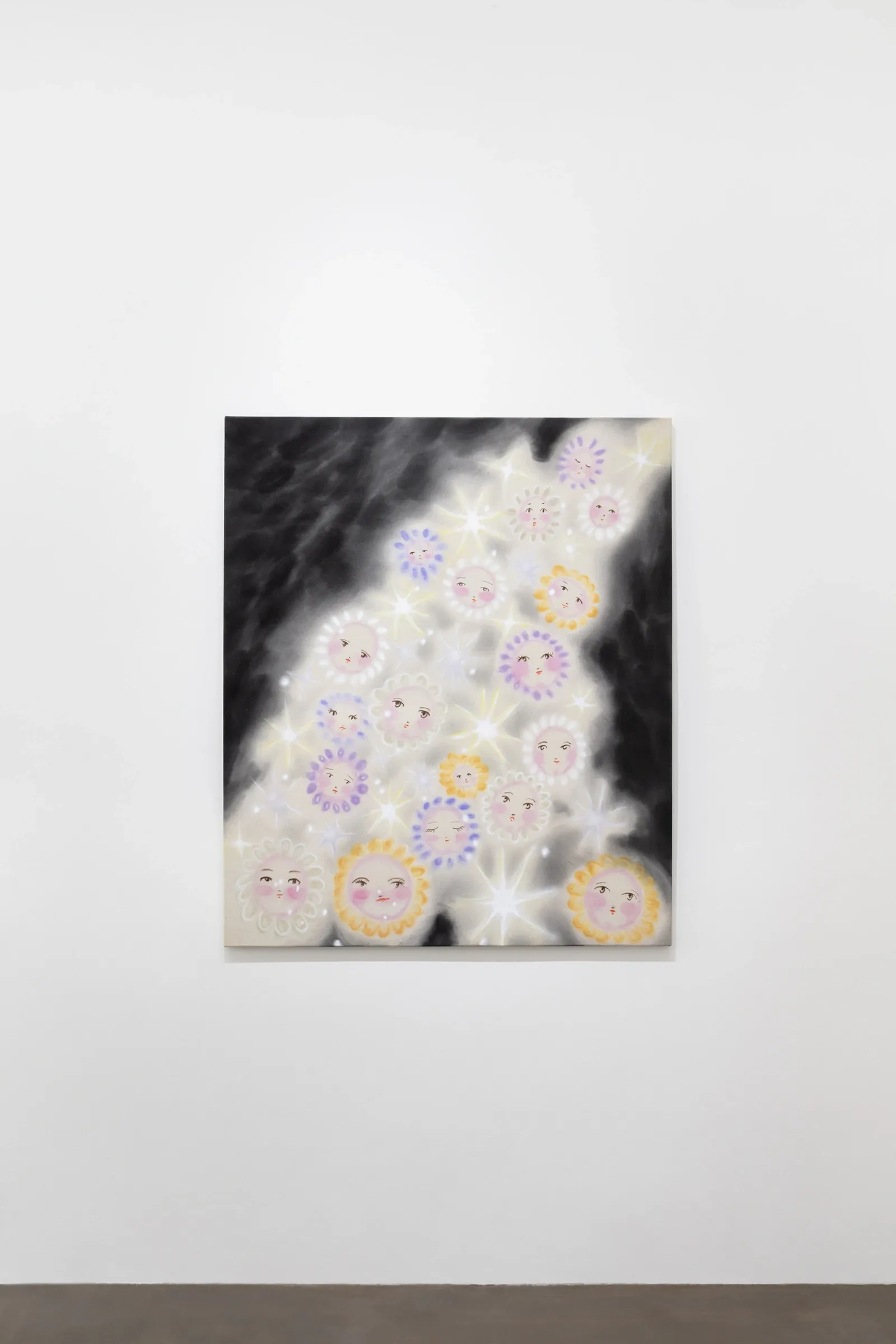
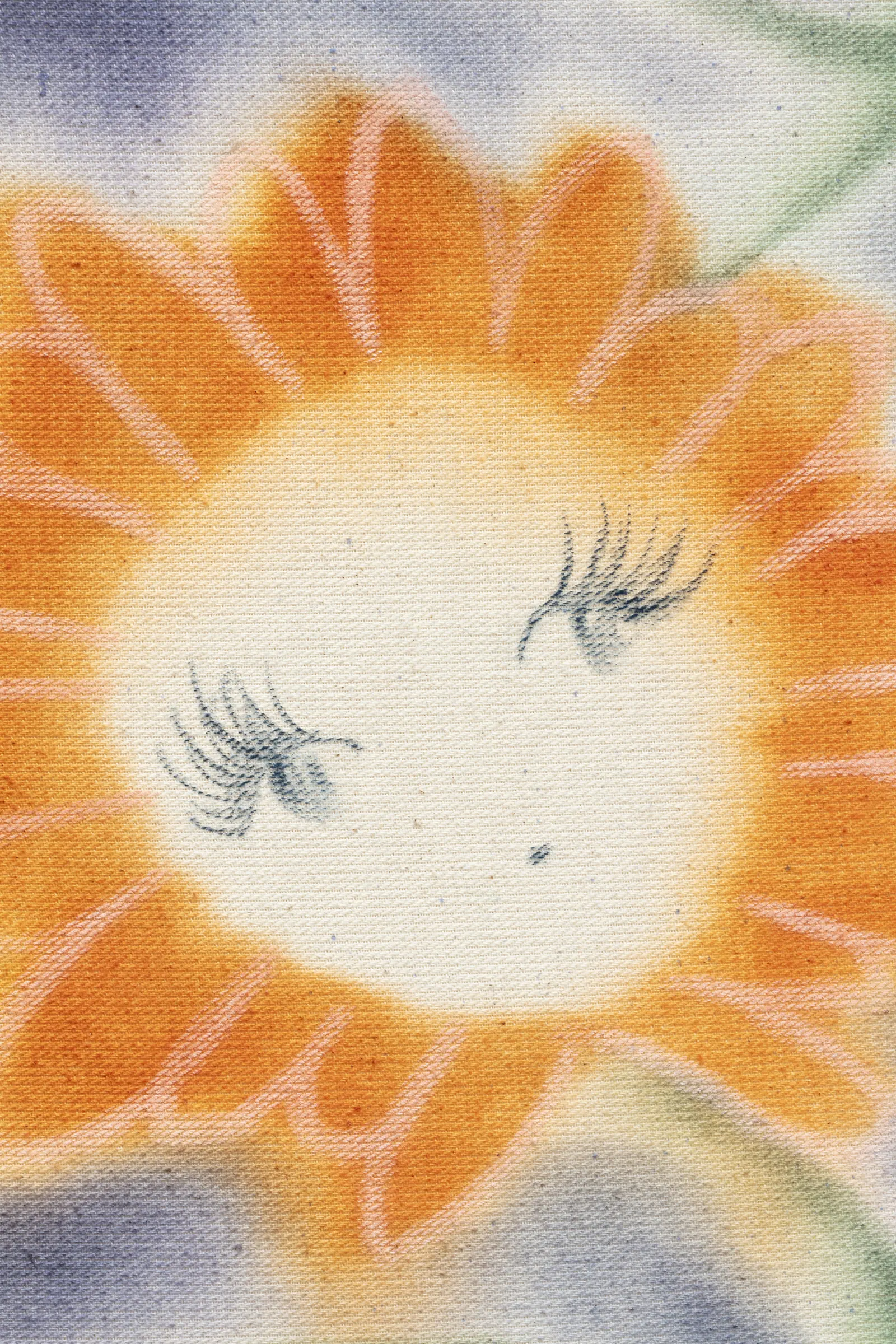
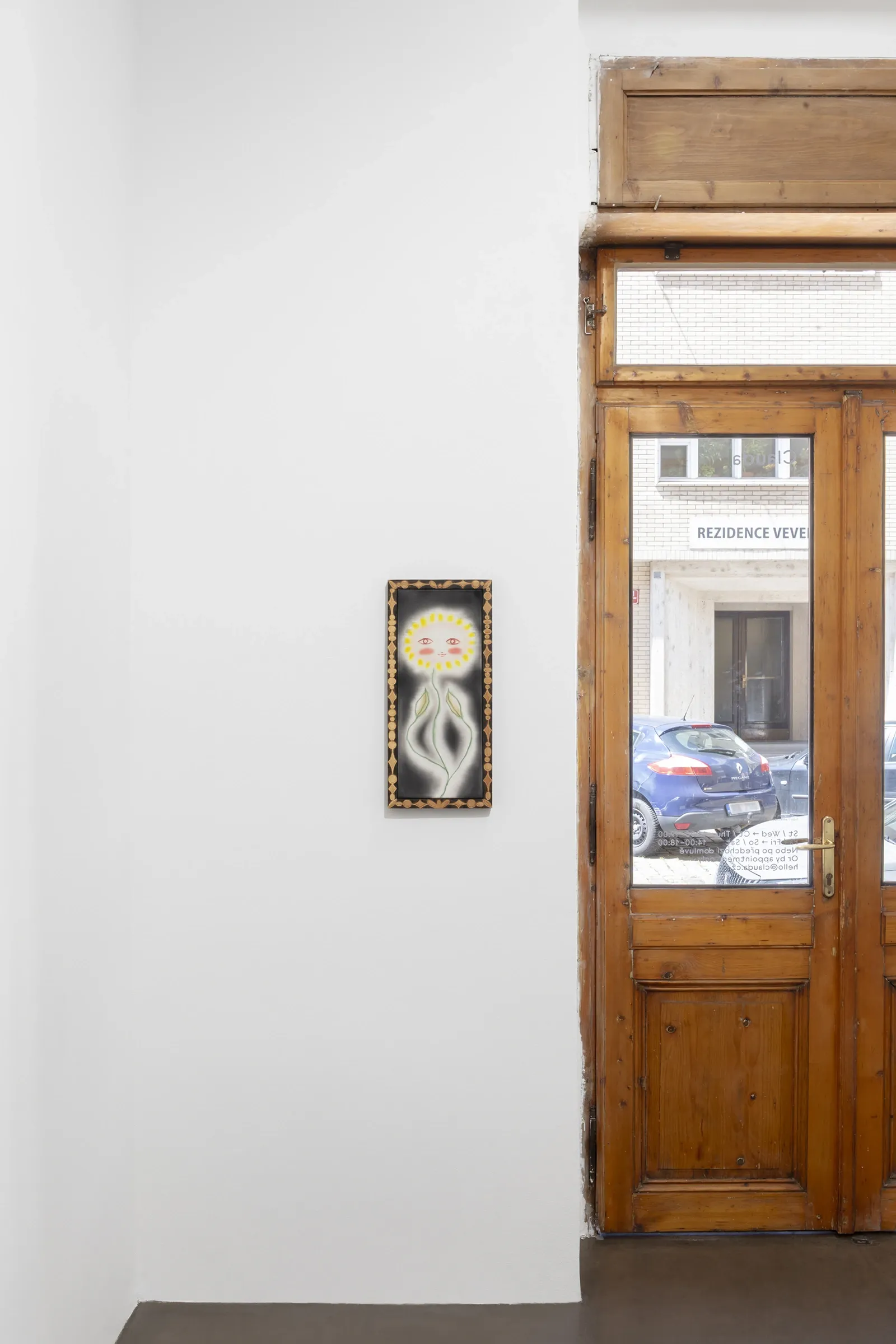
The paintings arrive at a moment when soft aesthetics circulate faster than hard information, when a war can be scrolled past between a meme and a recipe video. Krykun, who grew up in Odessa and now moves between Prague and Japan, is not illustrating the war directly.
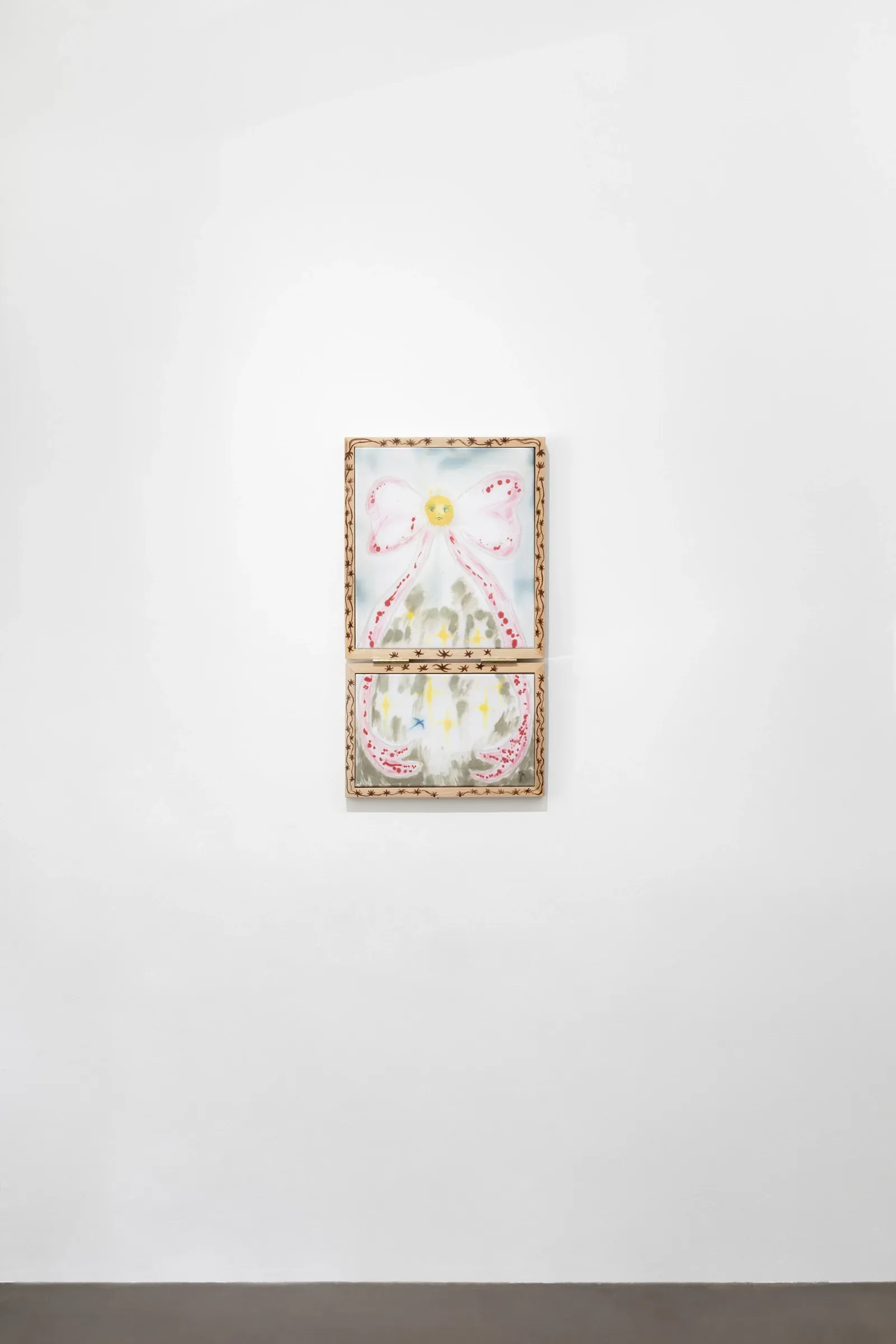
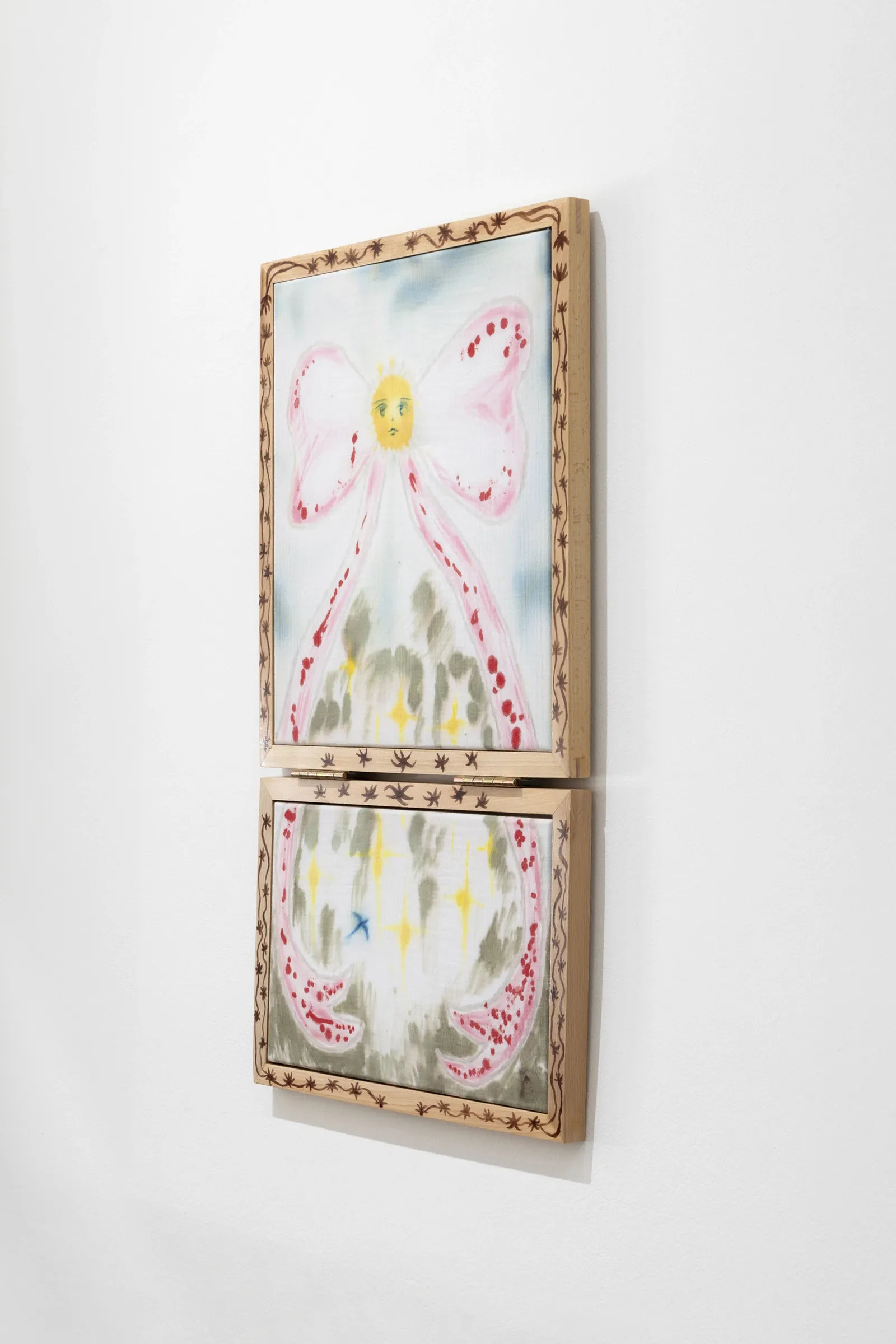
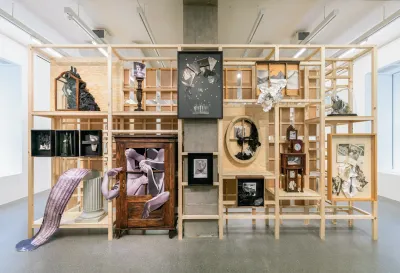
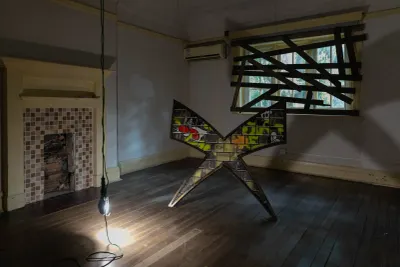
Olga Krykun, Stardust for Tomorrow, 2026. Photo: Eva Rybarova. Courtesy Clauda, Prague.
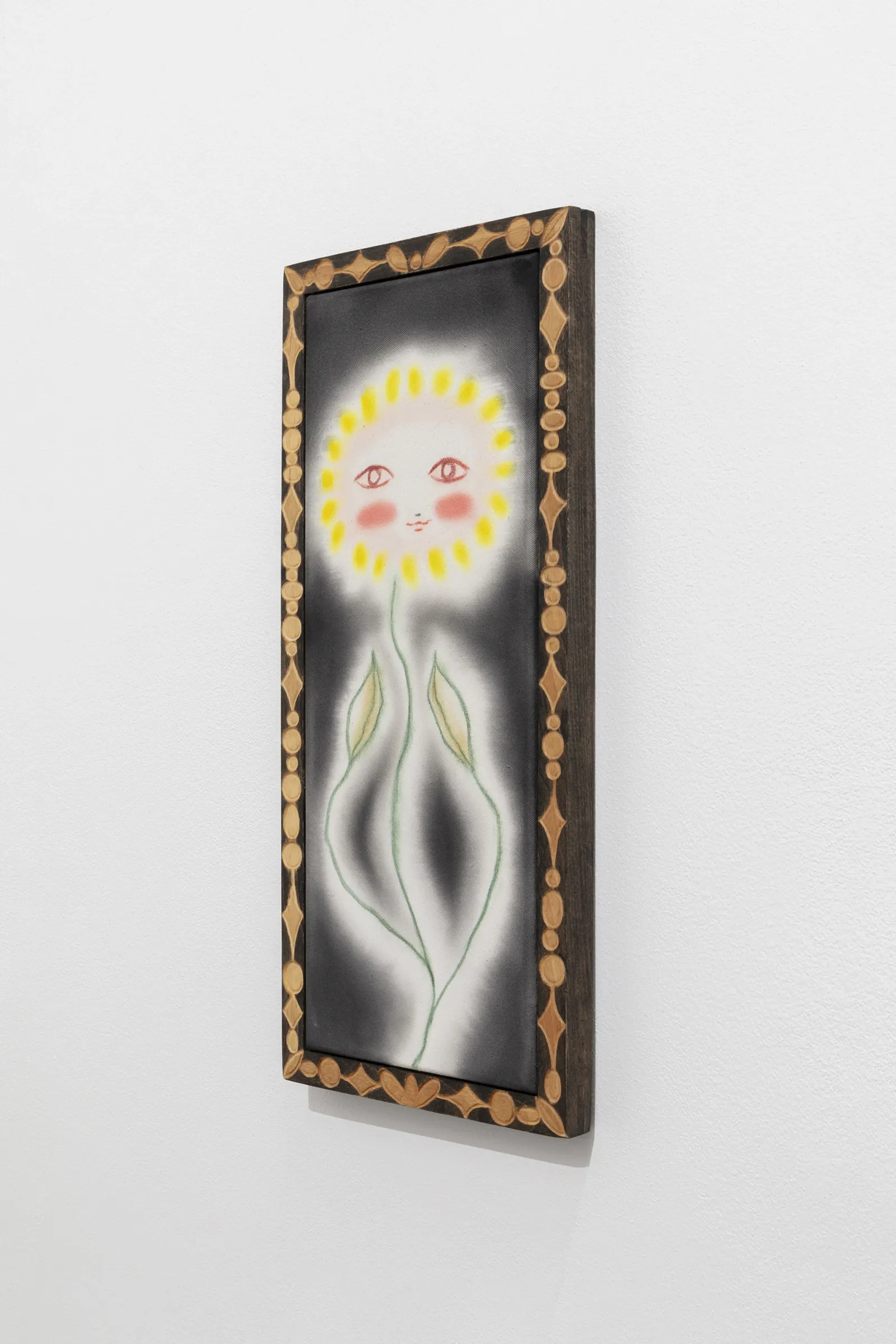
She is showing how easily violence gets absorbed into a visual register built for comfort, the same pastel gradients and glitter effects that soften a phone screen at two in the morning.
The sunflower, a symbol repeated across mourning and protest alike since 2022, appears here without a single overt reference to the conflict, and the omission becomes its own argument.
If cuteness works as a coping mechanism, the exhibition asks what exactly it is coping with, and for whom.
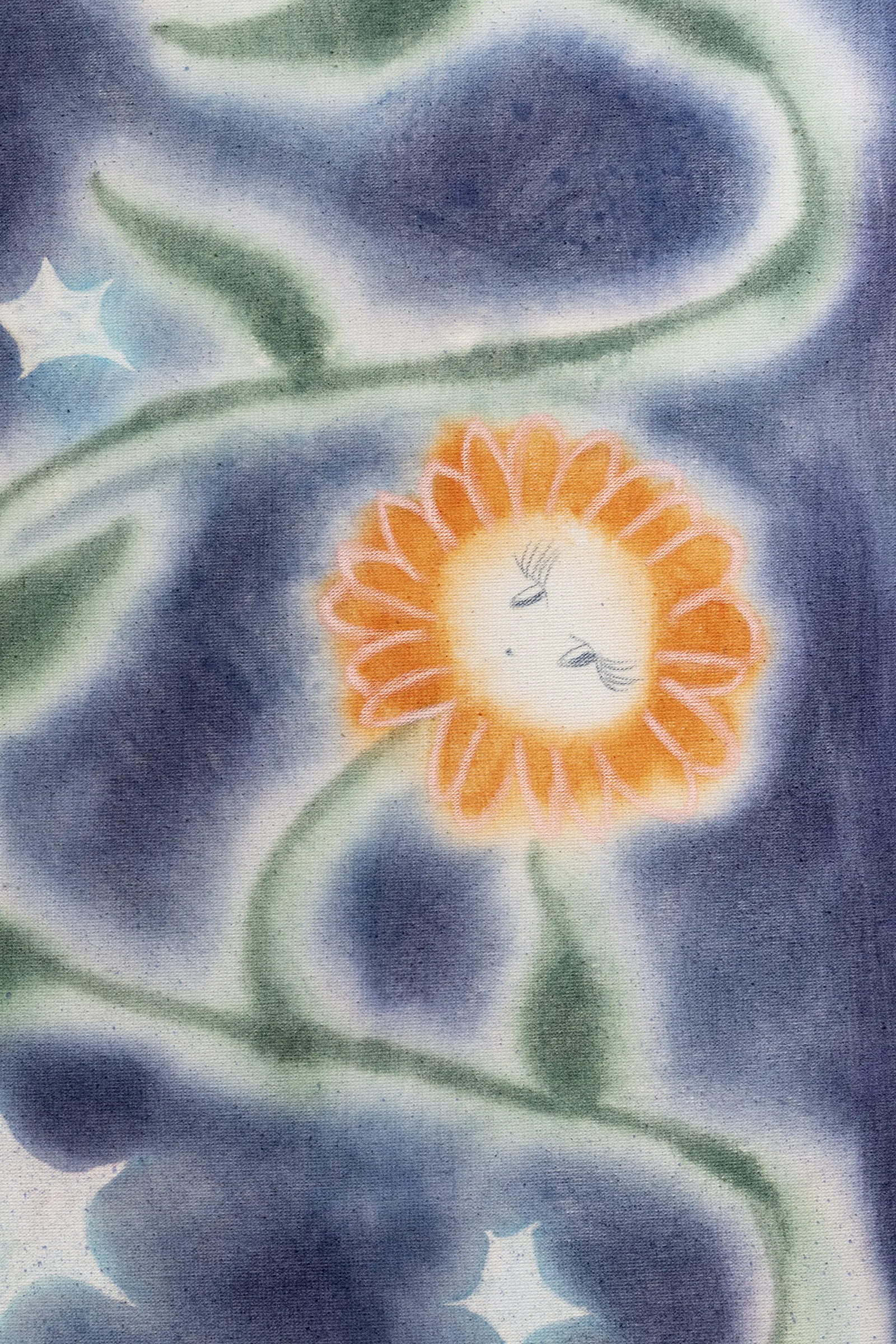
By the final room, the faces on the walls have started to blur into each other, sun and moon and flower losing their outlines under the same soft brush. Nothing here resolves into a single message.
The paintings stay in the register of the lullaby, and a lullaby, sung long enough, starts to sound like something you are trying not to hear.
Instagram Clauda
Instagram Olga Krykun
About Catapult Contemporary - Art Platform Submission
This is a exhibition review published by Catapult — an independent editorial platform for contemporary art, based in Vienna. We publish exhibition reviews, artist features, interviews, and critical context, with a focus on emerging and mid-career practices from Europe and beyond.
catapult.art
Want to be featured? Submit your work →