Something is Soft in the Horror Section

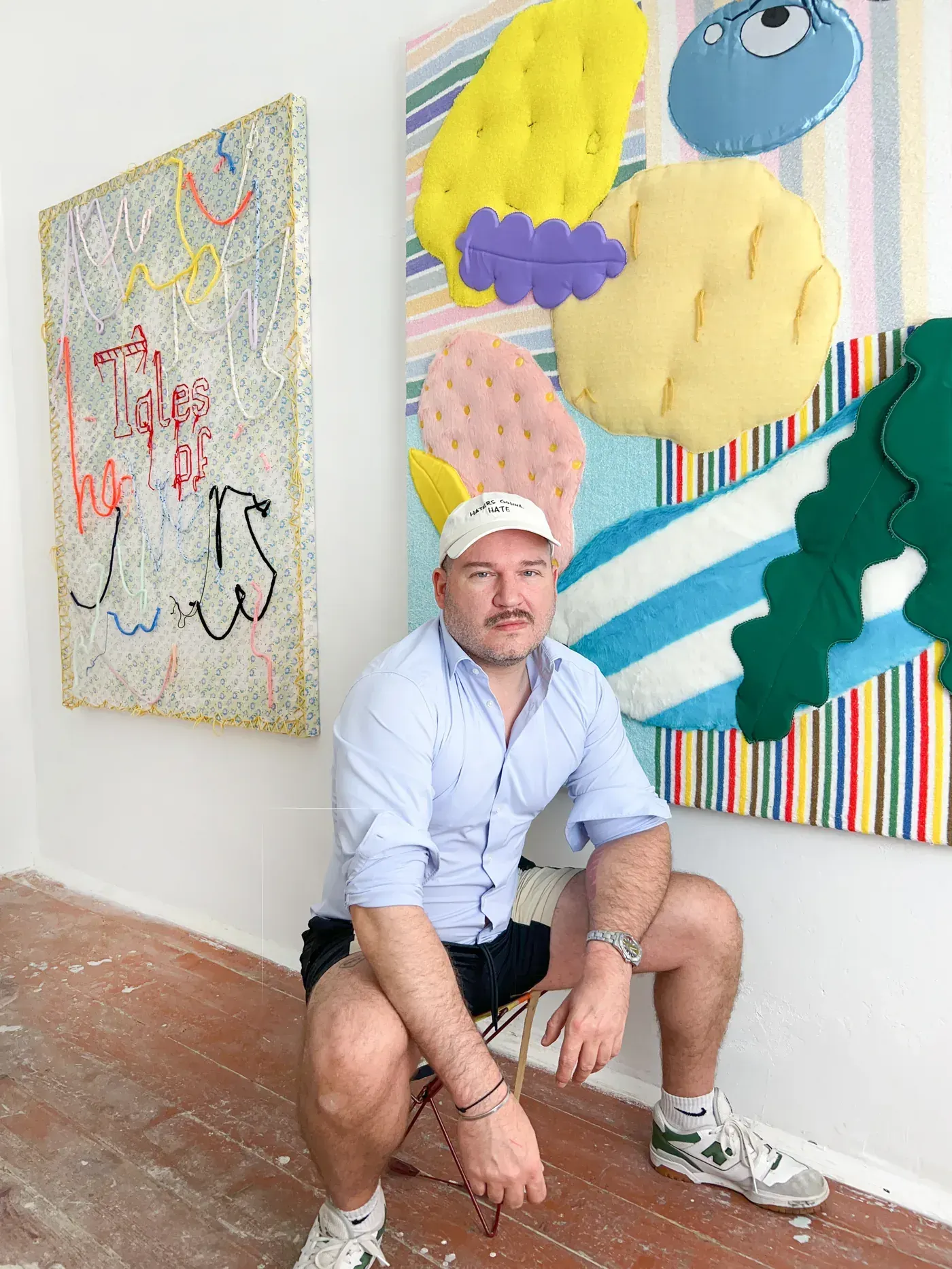
Daniel Ferstl - Artist in Focus
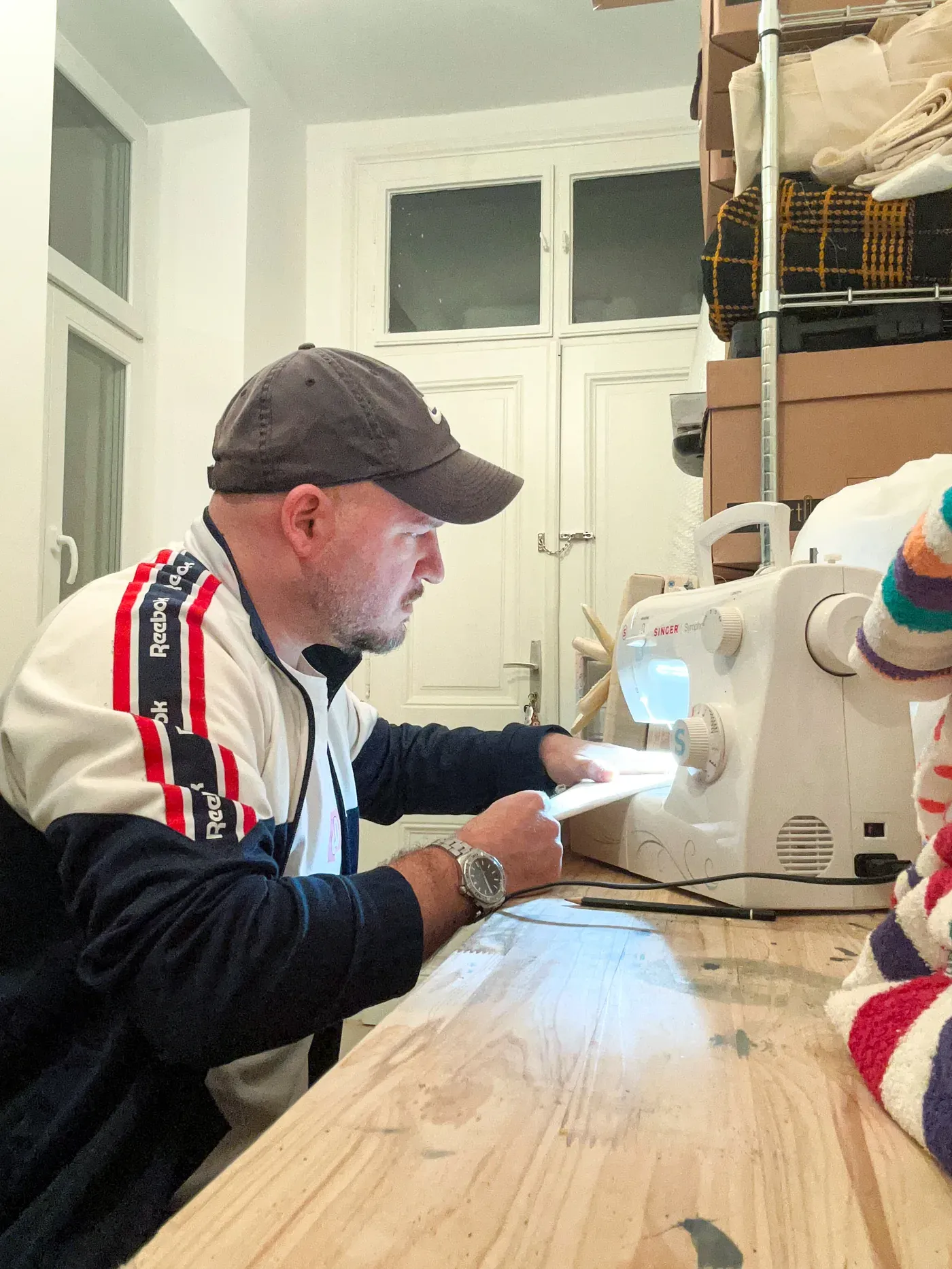
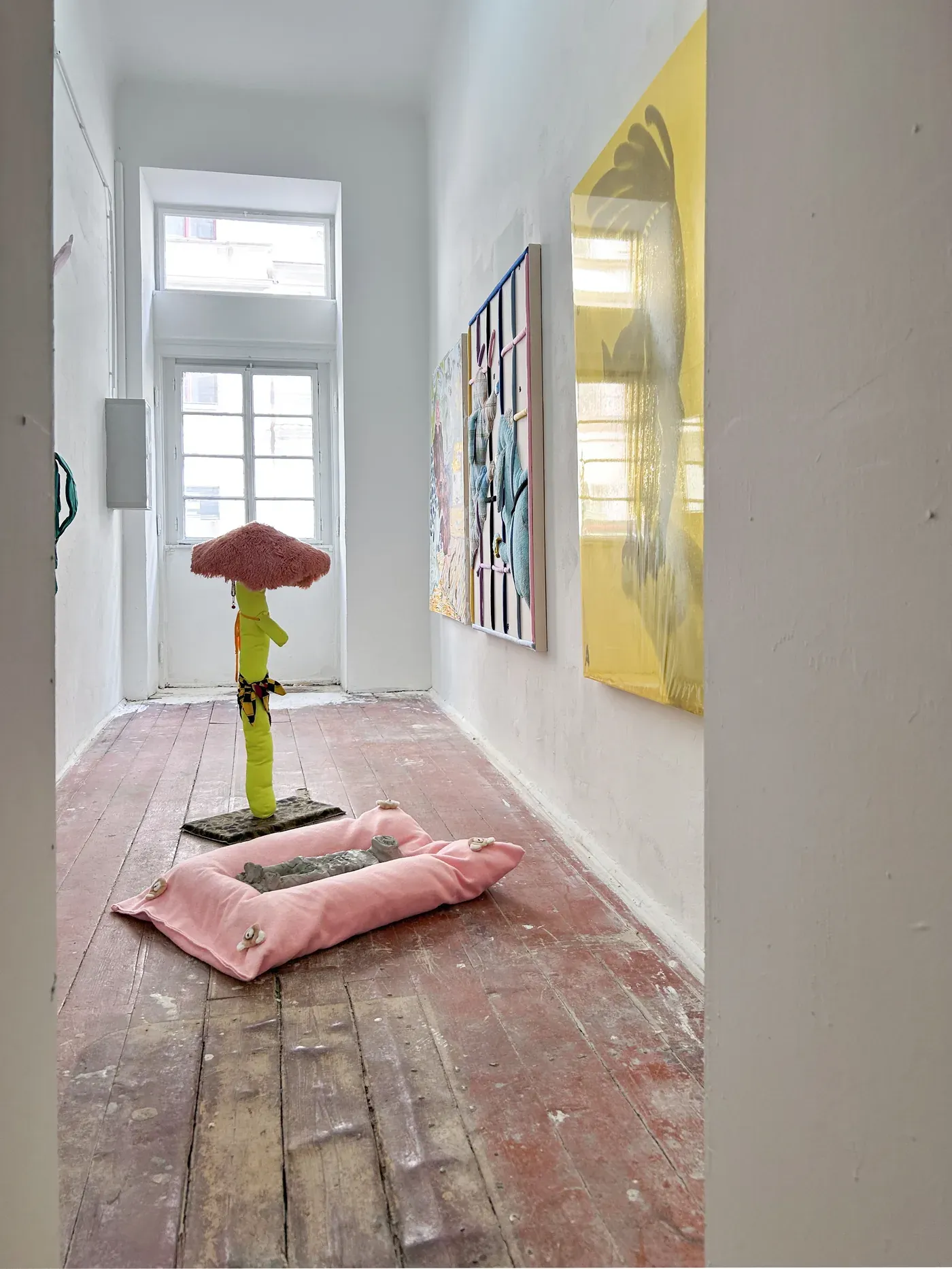
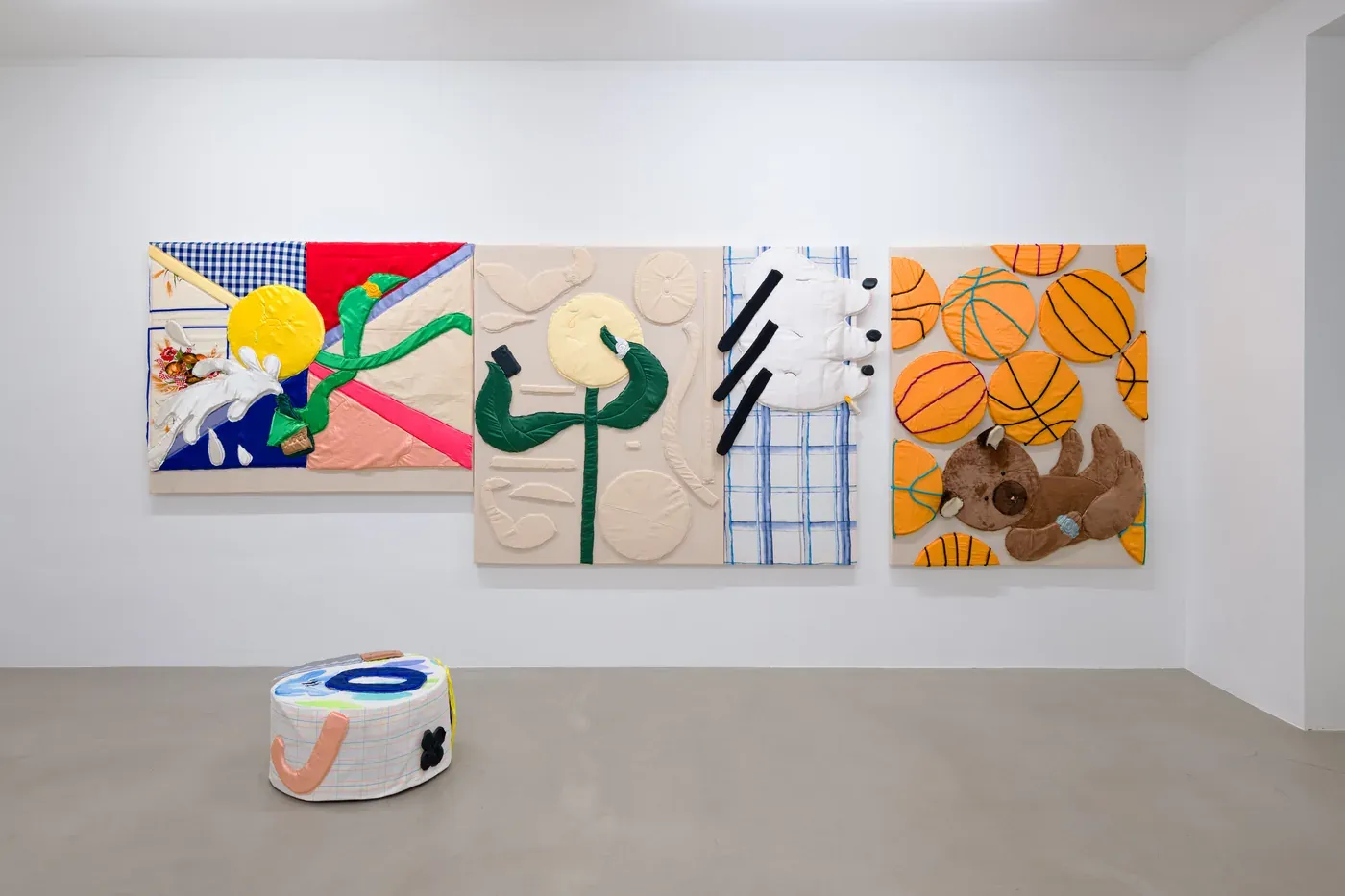
The canvases don't begin with paint. Ferstl sources fabric first, wool check, terry cloth, satin, printed cotton, then sews padded forms directly onto it, building the image from accumulated textile decisions rather than mark-making.
The result sits somewhere between a wall-mounted quilt and a soft-relief sculpture, and reads the way most vernacular objects do: immediately recognizable, slightly uncanny at sustained attention.
Linz, Austria
Vienna, Austria
Mixed media, textile, ink drawing, canvas
Universität für angewandte Kunst Wien, Malerei / Animationsfilm / Tapisserie, Prof. Christian Ludwig Attersee, 2003–2008
Backseat Dreamer, Proyecto Reme, Palma, 2025
For you !Kneedeepinthehoopla, Wonnerth Dejaco, Vienna, 2024
Über das Neue, Belvedere 21, Vienna, 2023
Collection of the State of Austria; Collection of the City of Vienna; Collection Famille Servais, Brussels
@daniel_ferstl
Courtesy the Artist
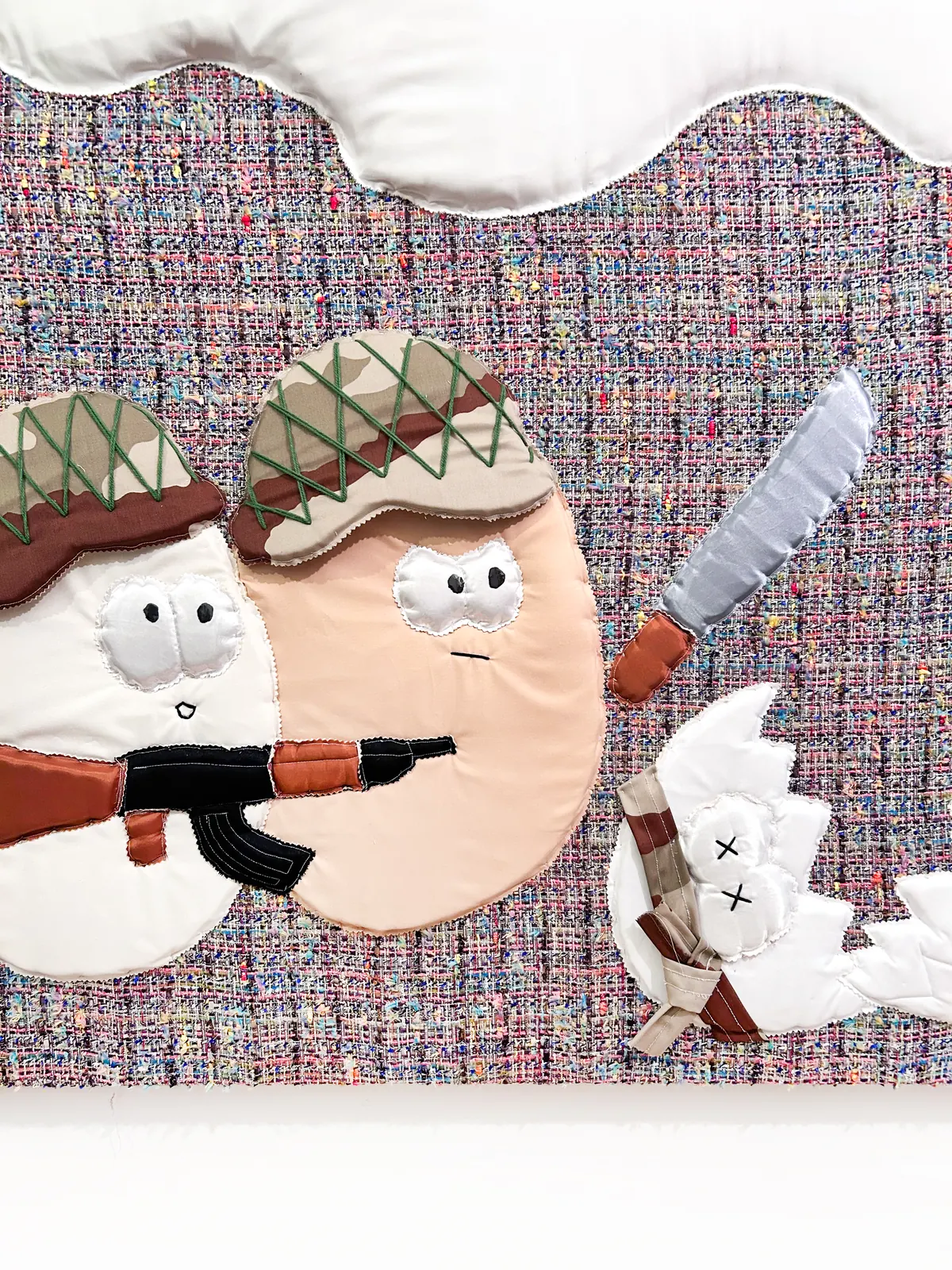
The forms he attaches are borrowed from a particular bandwidth of popular culture, horror film characters, cartoon dogs, consumer brand logos, meme imagery, rendered in foam, fleece, and upholstery padding, then sewn to backgrounds of improbably tasteful domestic fabric.
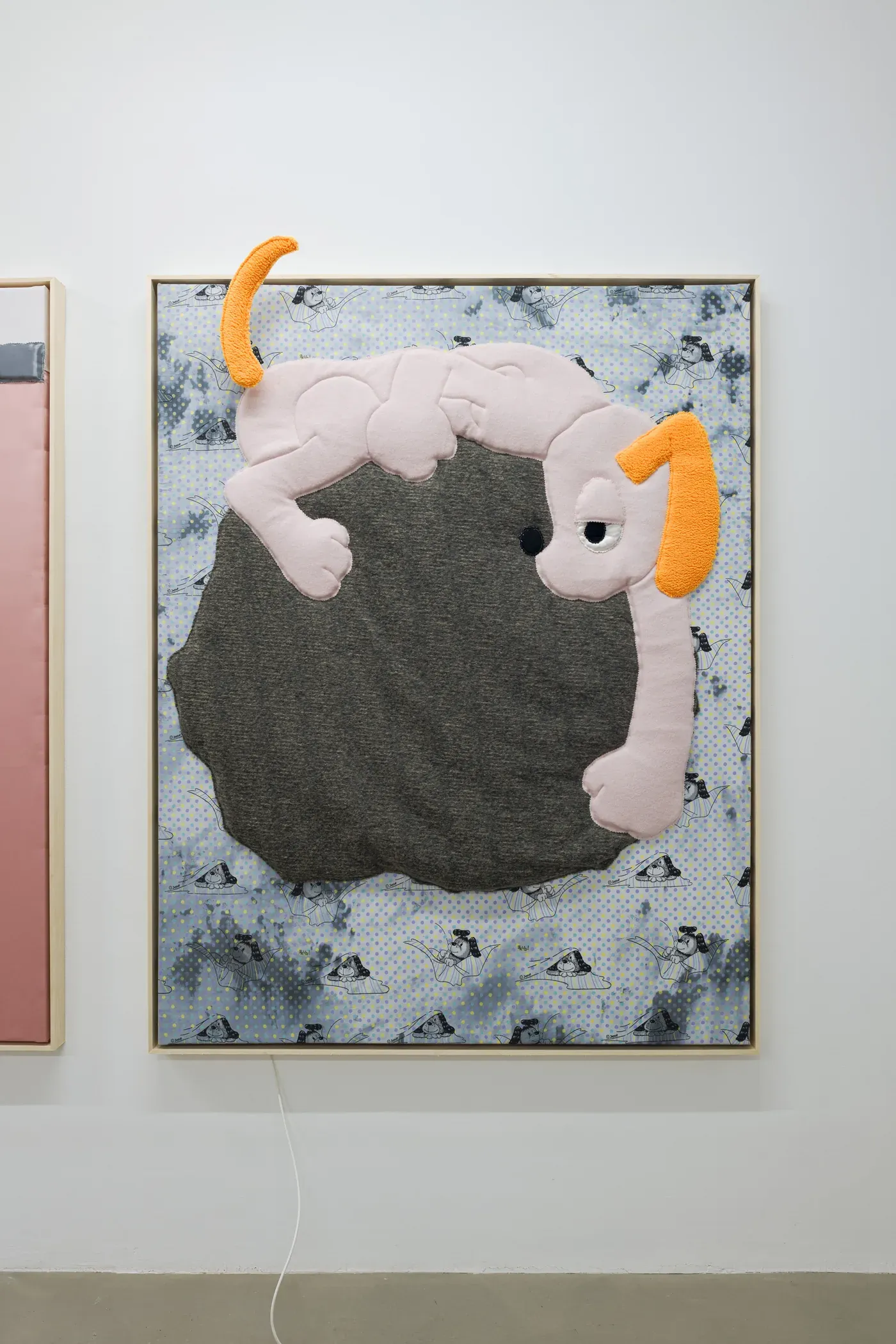
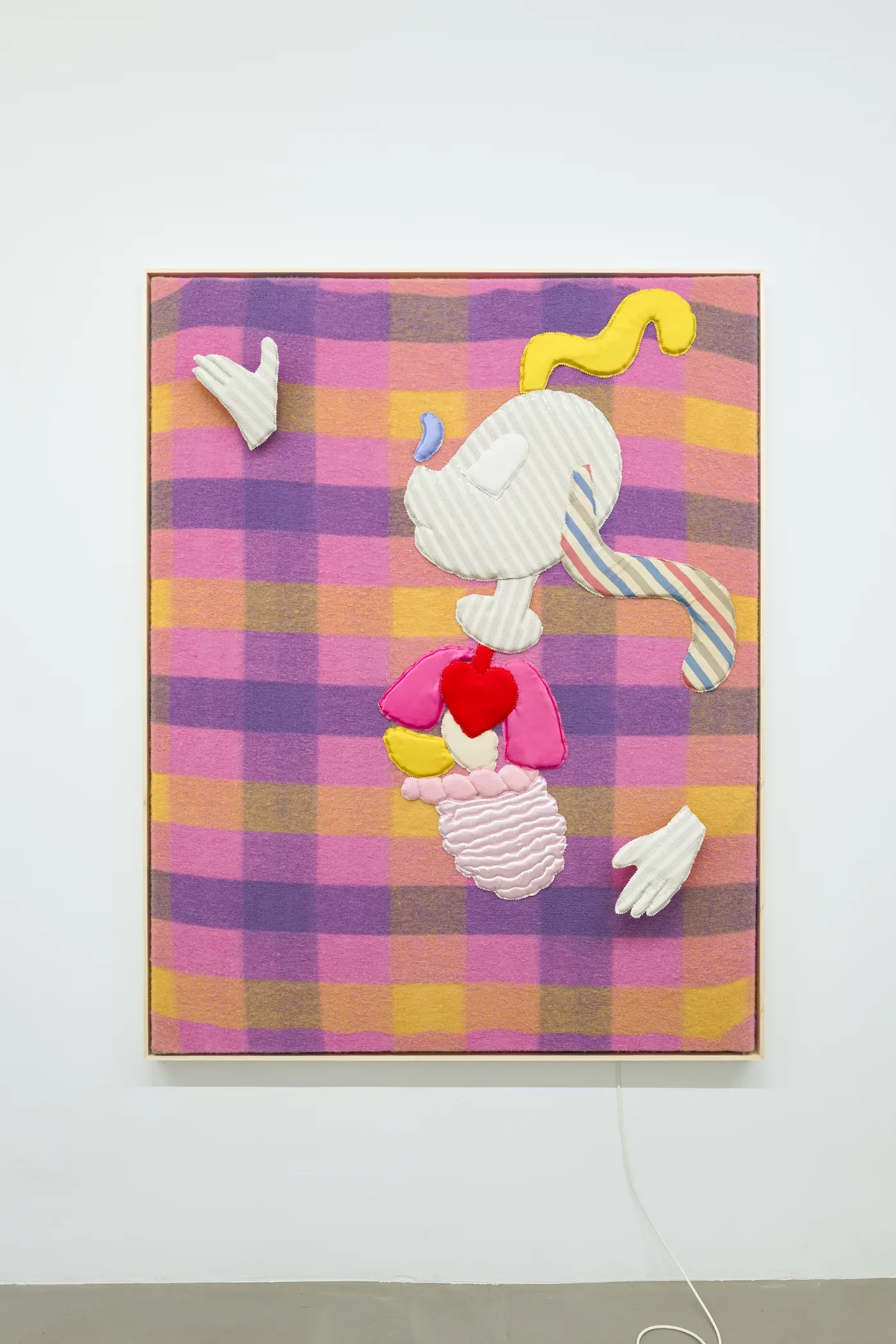
This is not pastiche, and it is not critique by ironic distance. The works ask something more uncomfortable: whether comfort and dread might not be different registers at all, but the same register at different volumes.
"Who's in control? Me? My subconscious mind? Isn't that the same? Am I my own back seat dreamer?" - Daniel Ferstl
Across the large-format works, the argument holds a specific tension, Posh Doggo Skeleton (2024) carries it most plainly, a skeleton in a plaid skirt, sewn in fleece and leatherette, arm raised mid-pose, shoes intact.
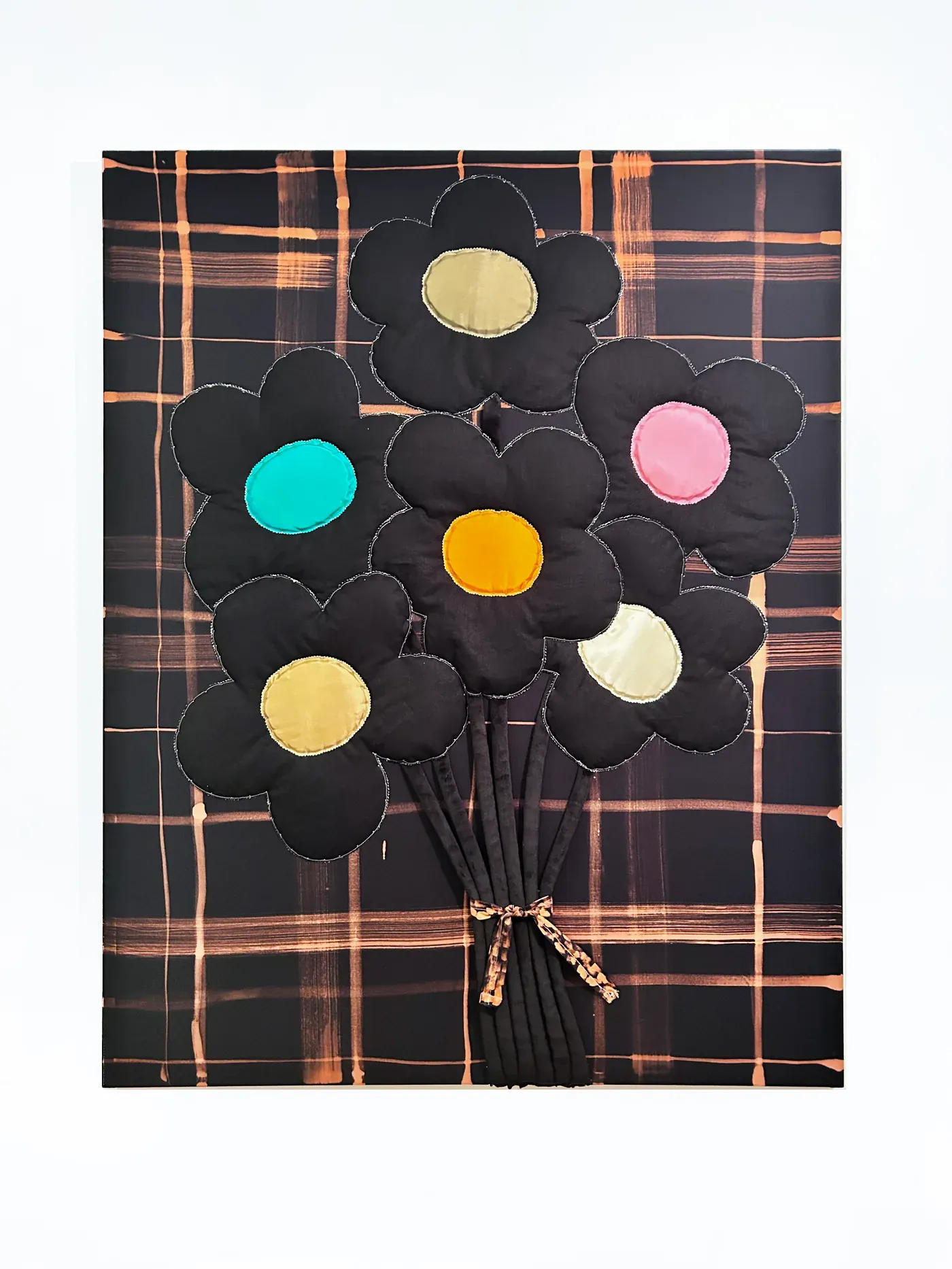
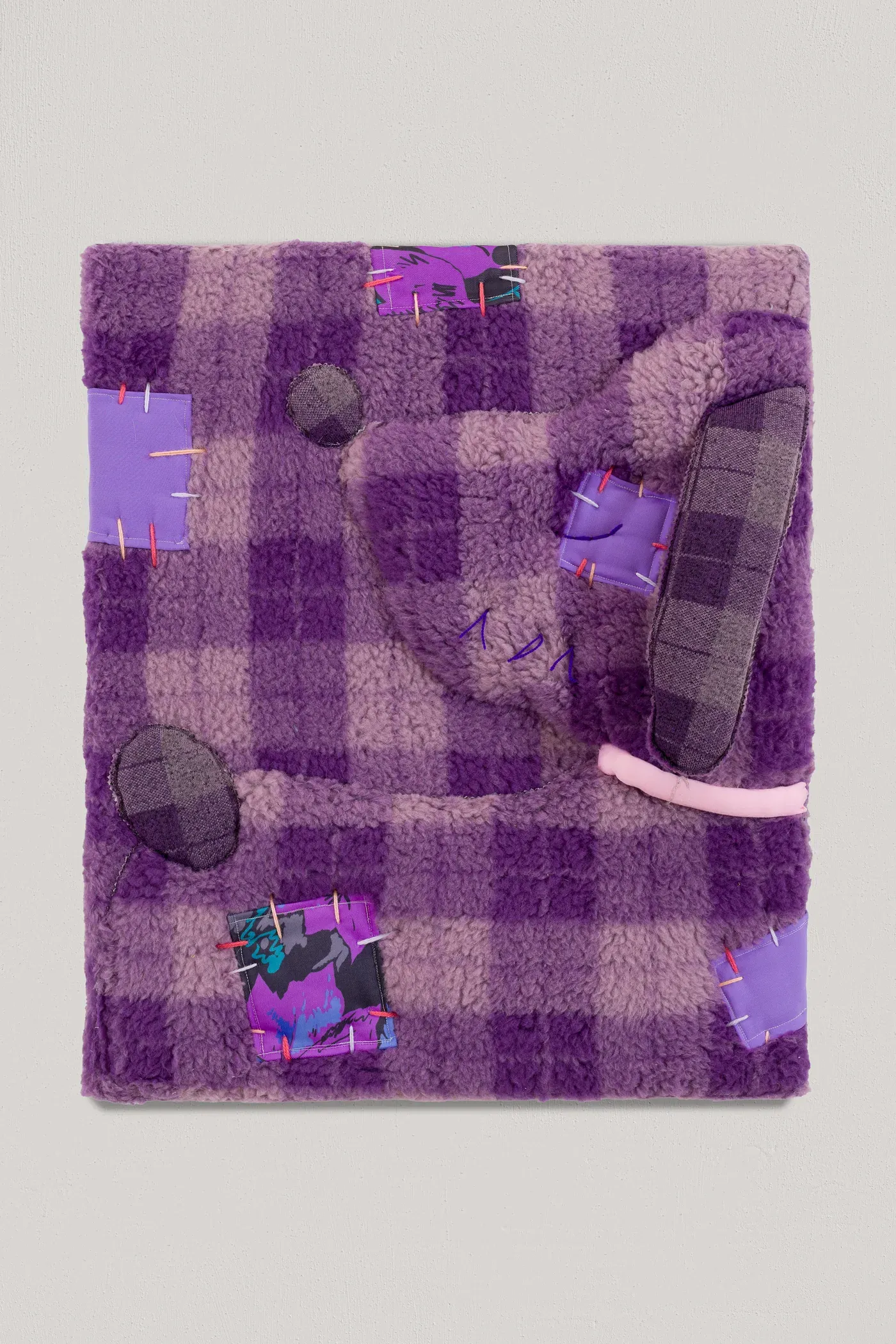
The figure has the bearing of a socialite and the anatomy of a Halloween decoration, set against grey felt, it holds the line between horror iconography and domestic softness without resolving it, which is the point. The surface is genuinely appealing; that is not a contradiction but the condition.
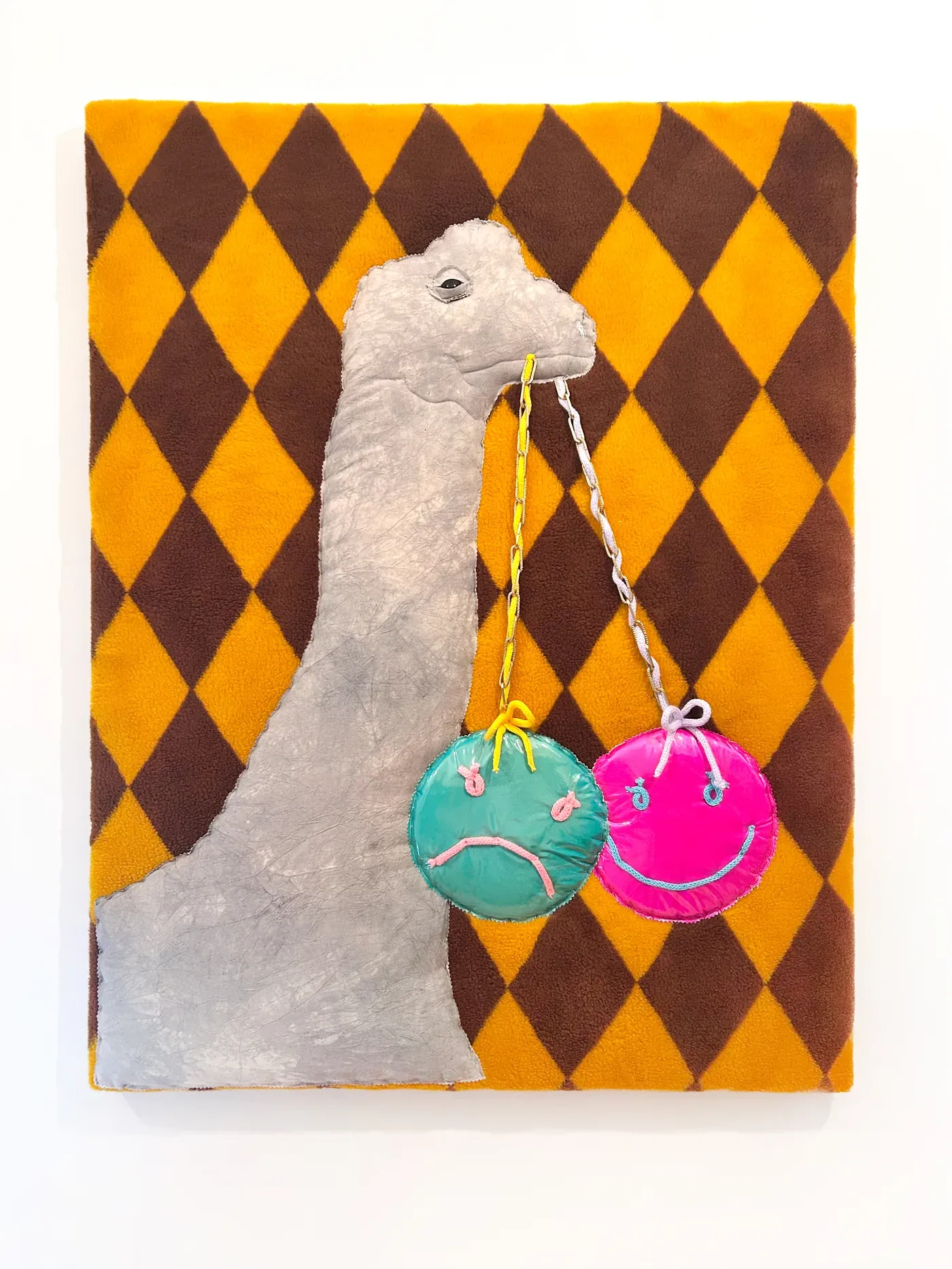
Sometimes I struggle to love myself (2026) works in a different key. A padded grey creature, vaguely dinosaurian, carries two foam emoji faces on a steel chain, one sad, one happy, both dangling, against a diamond-pattern velvet background in amber and brown.
The title arrives without irony, which is what makes it land. Ferstl's work often does this, takes the language of casual self-disclosure and gives it physical weight, stitches it down, frames it.
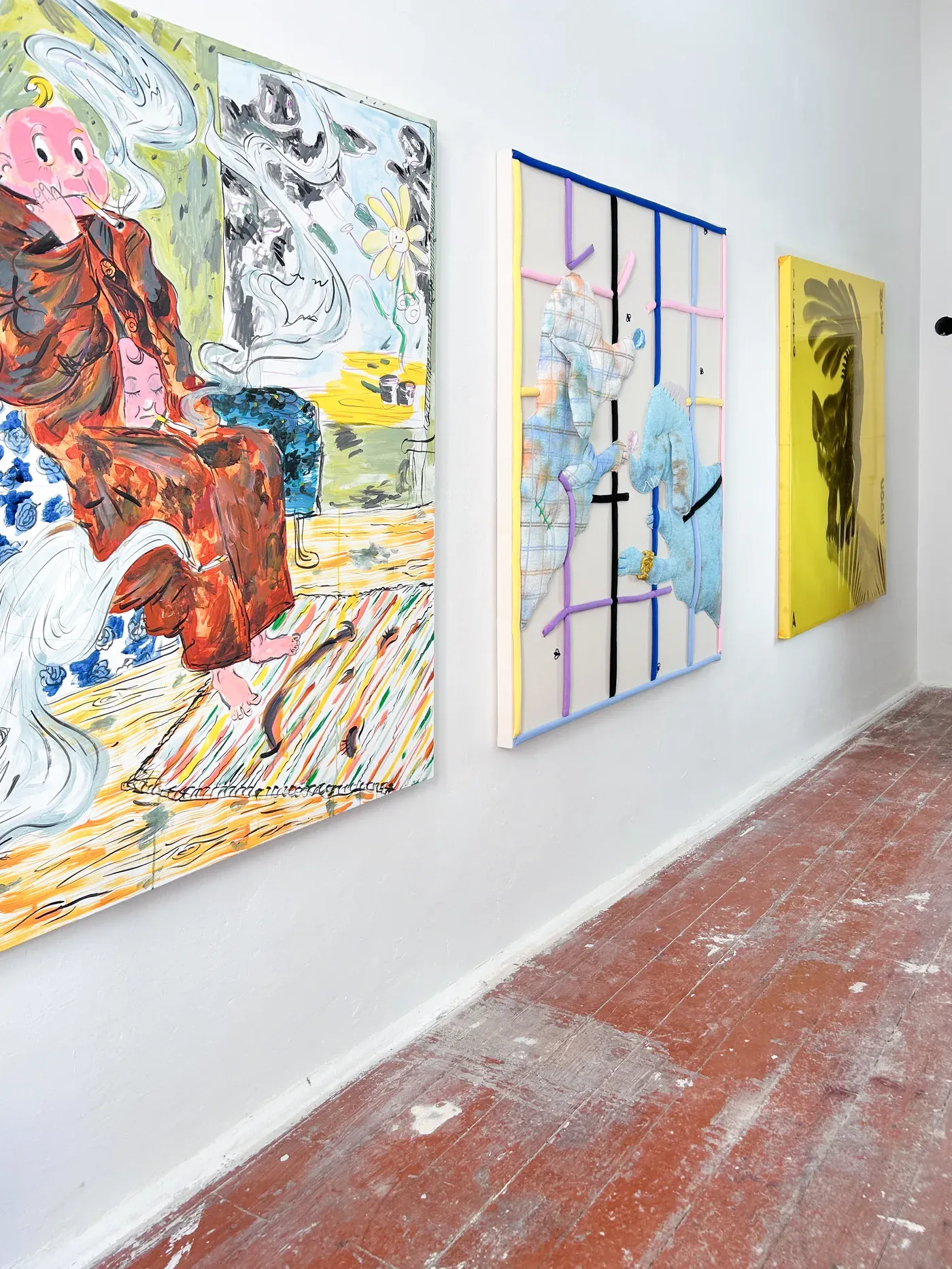
The most recent canvases pull back from spectacle.
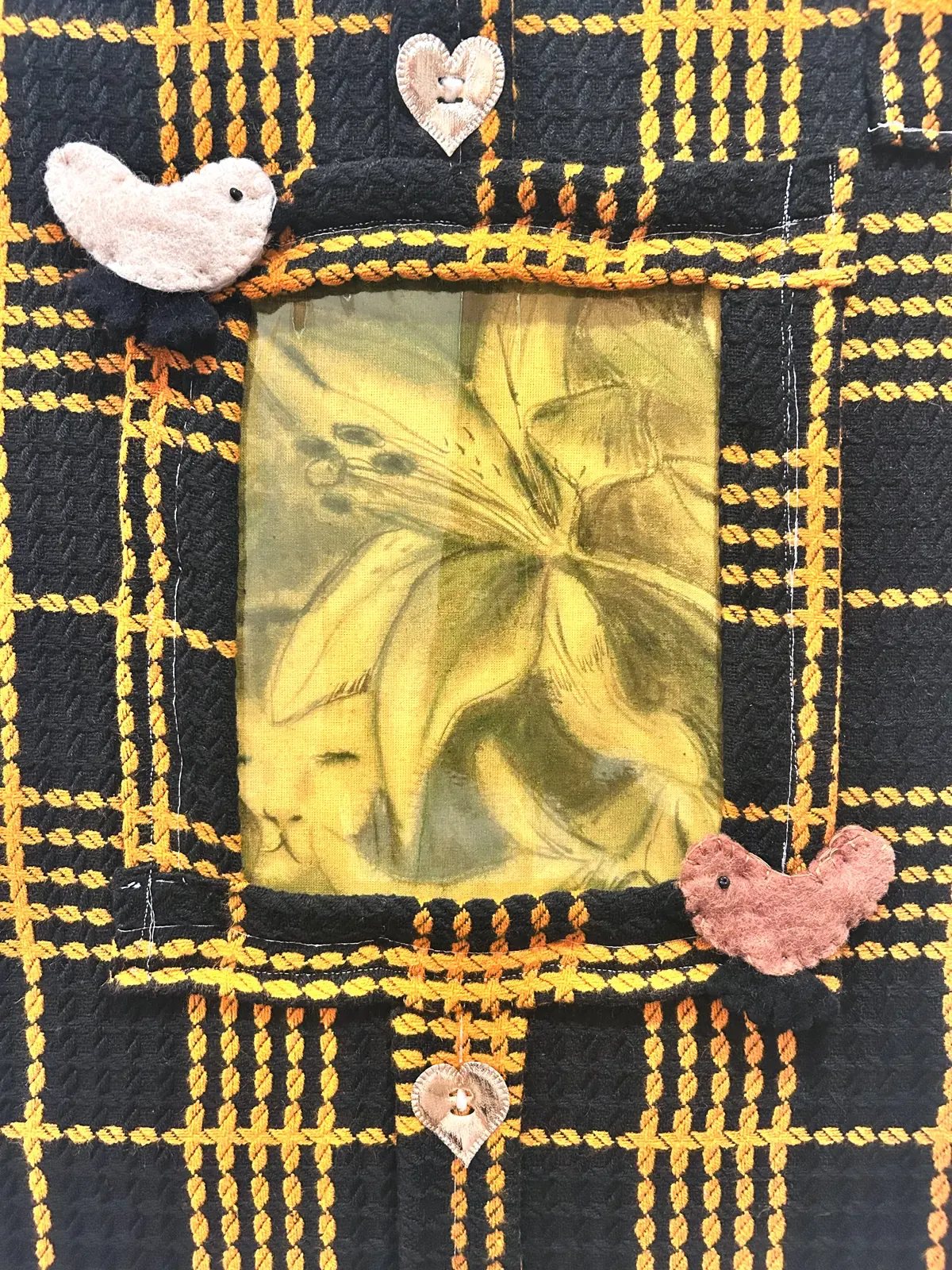
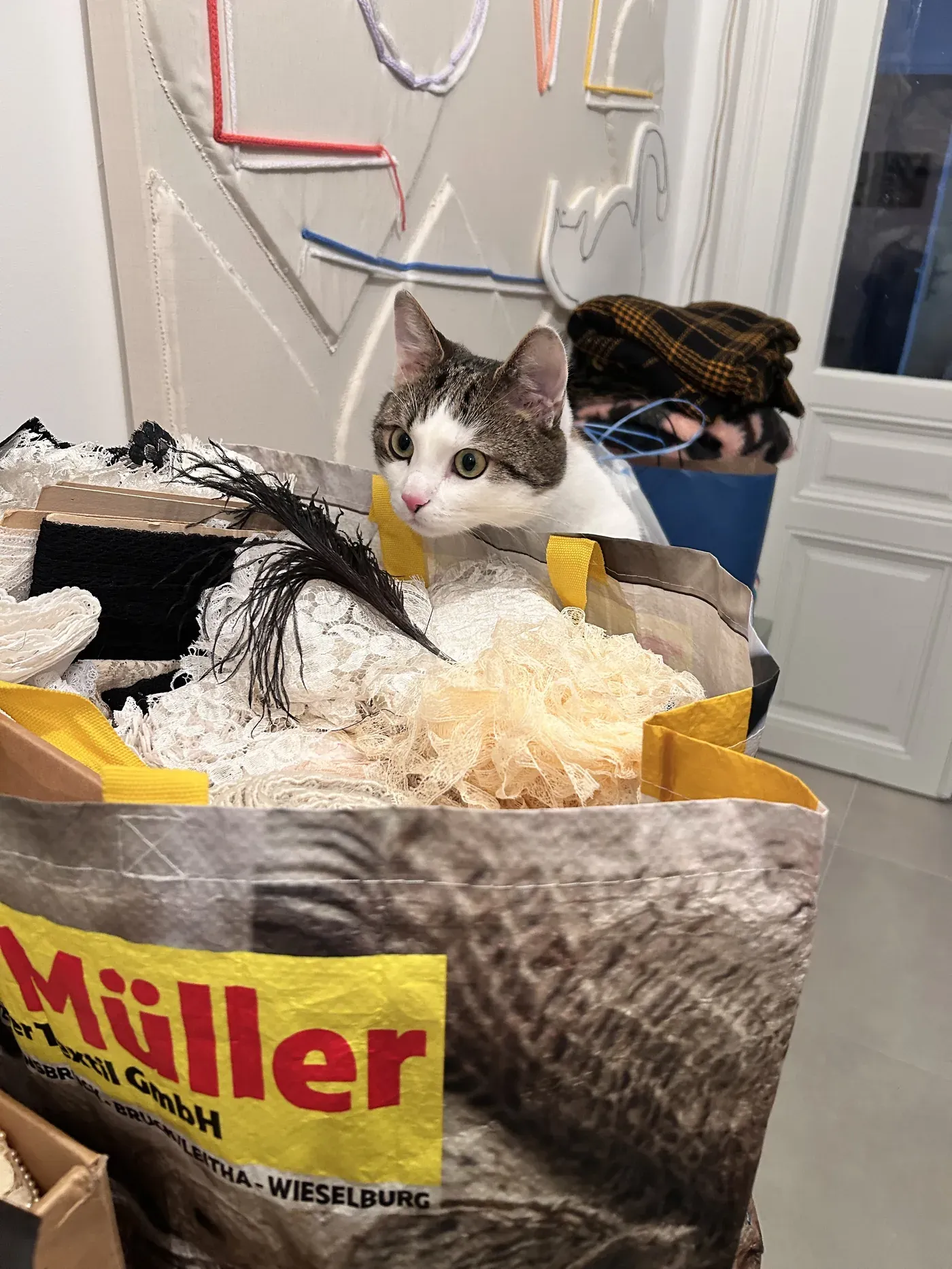
A series of small works from 2025–2026 embeds ink drawings of his cat, Matteo, who appears repeatedly, into textile canvases constructed like shirts, with working buttons, wool birds perched at the edge, terry cloth borders. They are more intimate, less armored by humor; they don't ask whether comfort is a trap, they seem to have accepted it as the medium and keep working inside it.
Ferstl studied painting, animation, and tapisserie at the Universität für angewandte Kunst Wien under Christian Ludwig Attersee, completing his studies in 2008. The tapisserie training matters, textile construction here is not a conceptual pivot away from painting but a continuation of a material lineage.
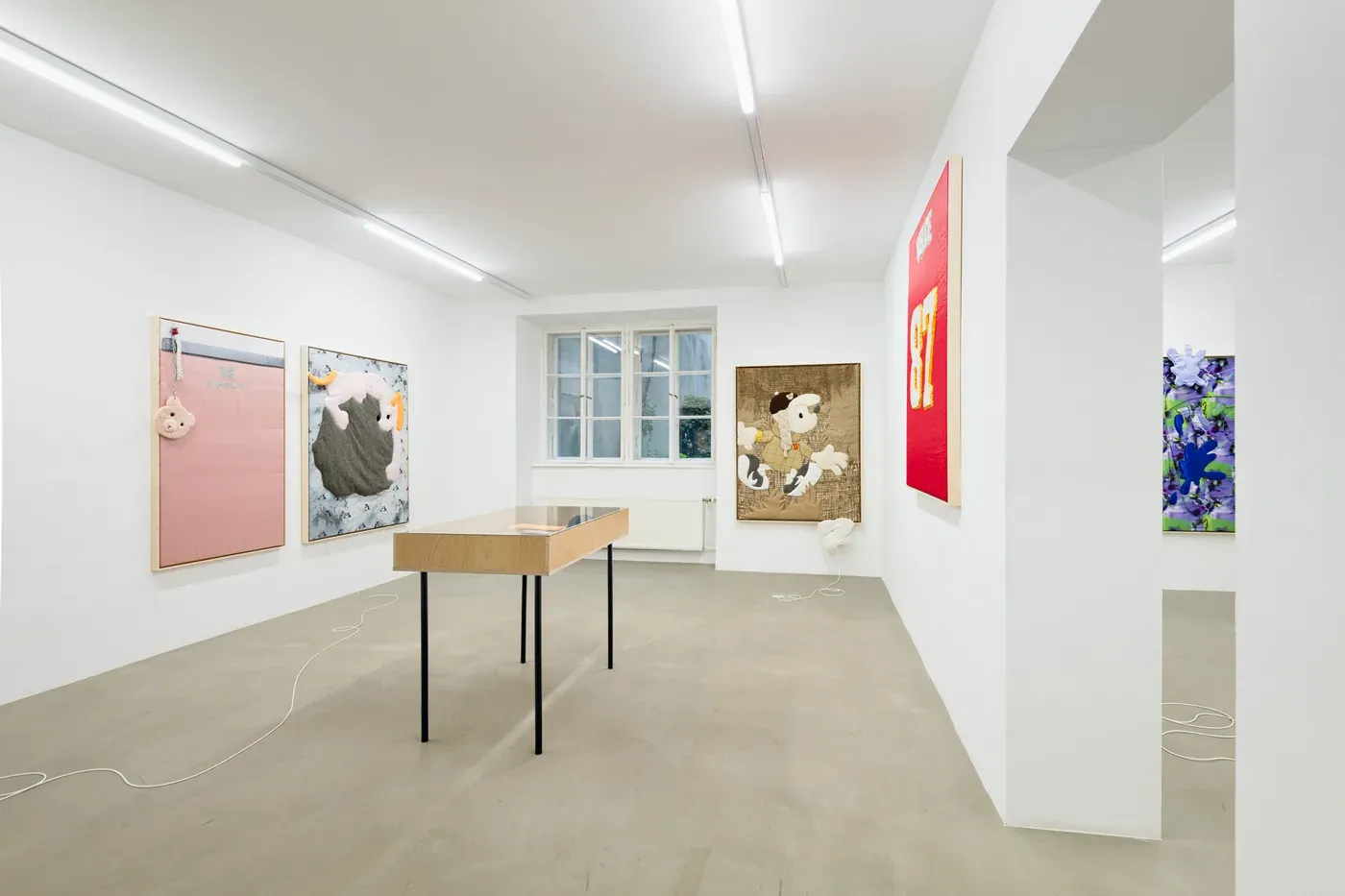
He was a founding member of the artist-run space MAUVE (2012–2016), a significant node in Vienna's scene at the time. His work has entered the collection of the State of Austria and the City of Vienna, and was included in the 2023 Belvedere 21 group show Über das Neue.
This summer he has a solo show at Ateliers Vauban in Besançon, France in August, followed by a residency at LaBibi Gallery in Mallorca in September