A Body That Keeps Arriving in Countries Where It Does Not Speak the Language

NAK Neuer Aachener Kunstverein Presents Ich bin wie du in Aachen
NAK Neuer Aachener Kunstverein presents Ich bin wie du, the first institutional solo exhibition by Elen Braga, curated by Maurice Funken, through 26 July 2026.
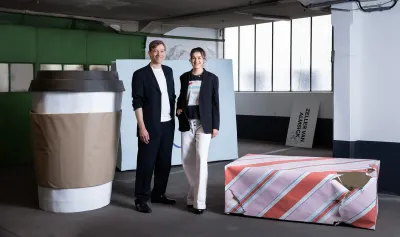
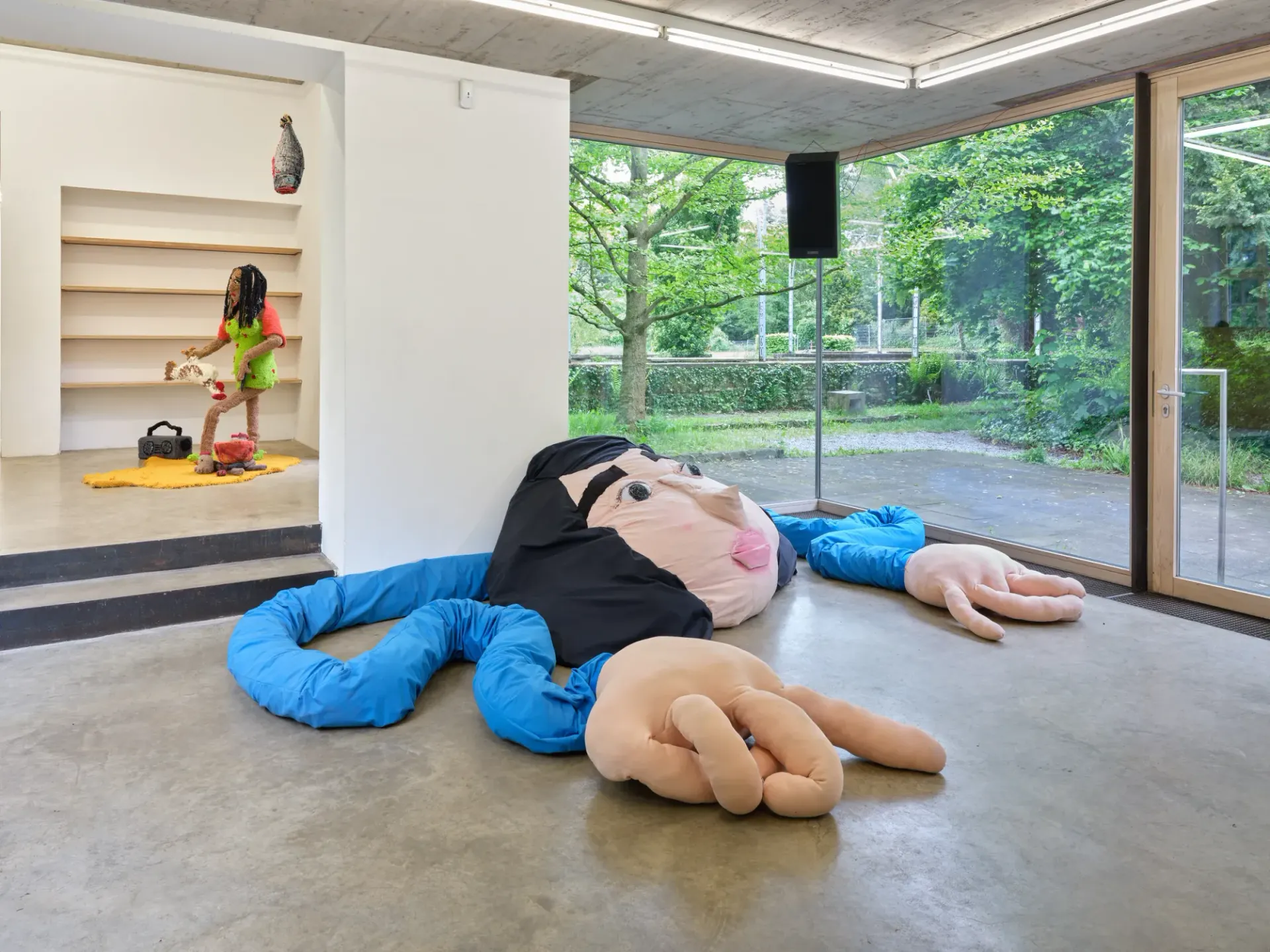
The show begins with a head. Elen Braga's own, oversized, with fabric arms, installed in the NAK foyer before visitors have chosen a direction.
Bababuá greets you before the exhibition has officially started. That placement carries weight, arrival, self-projection, the body announced before anything else has been said.
Elen Braga
Ich bin wie du
Aachen, Germany
–
Maurice Funken
Simon Vogel
Courtesy the artist and Wouters Gallery, Brussels
The title borrows from a 1976 disco song by German singer Marianne Rosenberg. A song about recognition, about finding the self in another.
Braga takes that premise and runs it through everything that makes equality complicated, such as migration, xenophobia, political violence, the daily reality of learning a foreign language by memorizing its numbers, until the chorus sounds more like a demand than a comfort.
The claim of sameness is not the same as equality. Braga builds that gap into the structure of the exhibition, room by room, until the walls themselves say otherwise.
The NAK Neuer Aachener Kunstverein is a kunstverein in the traditional sense: a membership-based institution with a history of supporting ambitious, risk-taking work.
For Braga, a Brazilian artist based in Antwerp, showing for the first time in a German institutional solo, the venue is not incidental. Germany, its language, its history, its political present, becomes material in this exhibition. Not backdrop.
The route through the first floor is structured like a life history in nonlinear order. My Grandmother and 50 Years in 5 is a hand-tufted textile sculpture of a woman cooking over an open fire, a chicken in hand.
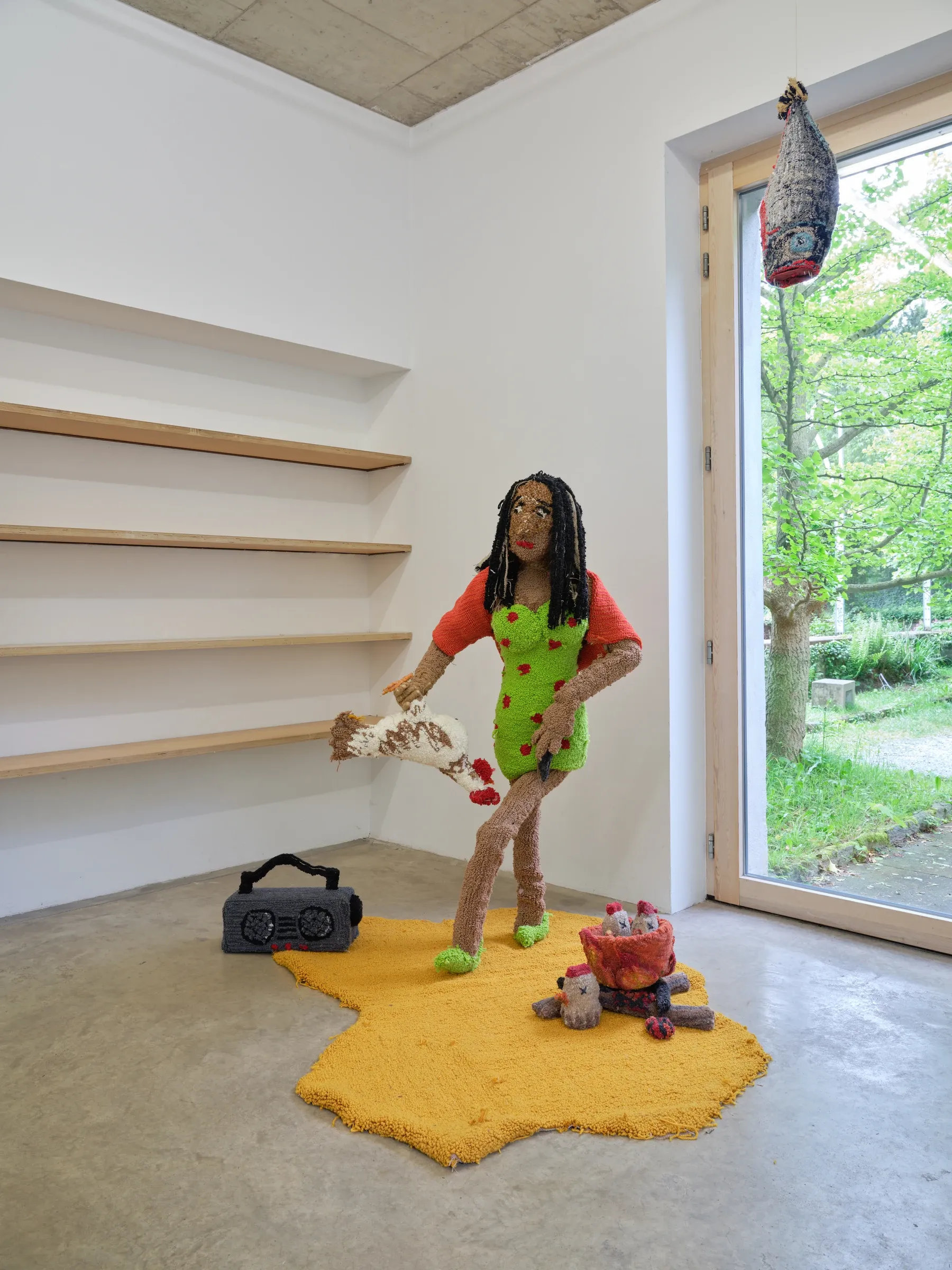
A radio plays the voice of former Brazilian president Juscelino Kubitschek promising a better Brazil. The piece is at once intimate and historical, the domestic detail impossible to separate from the political noise beneath it.
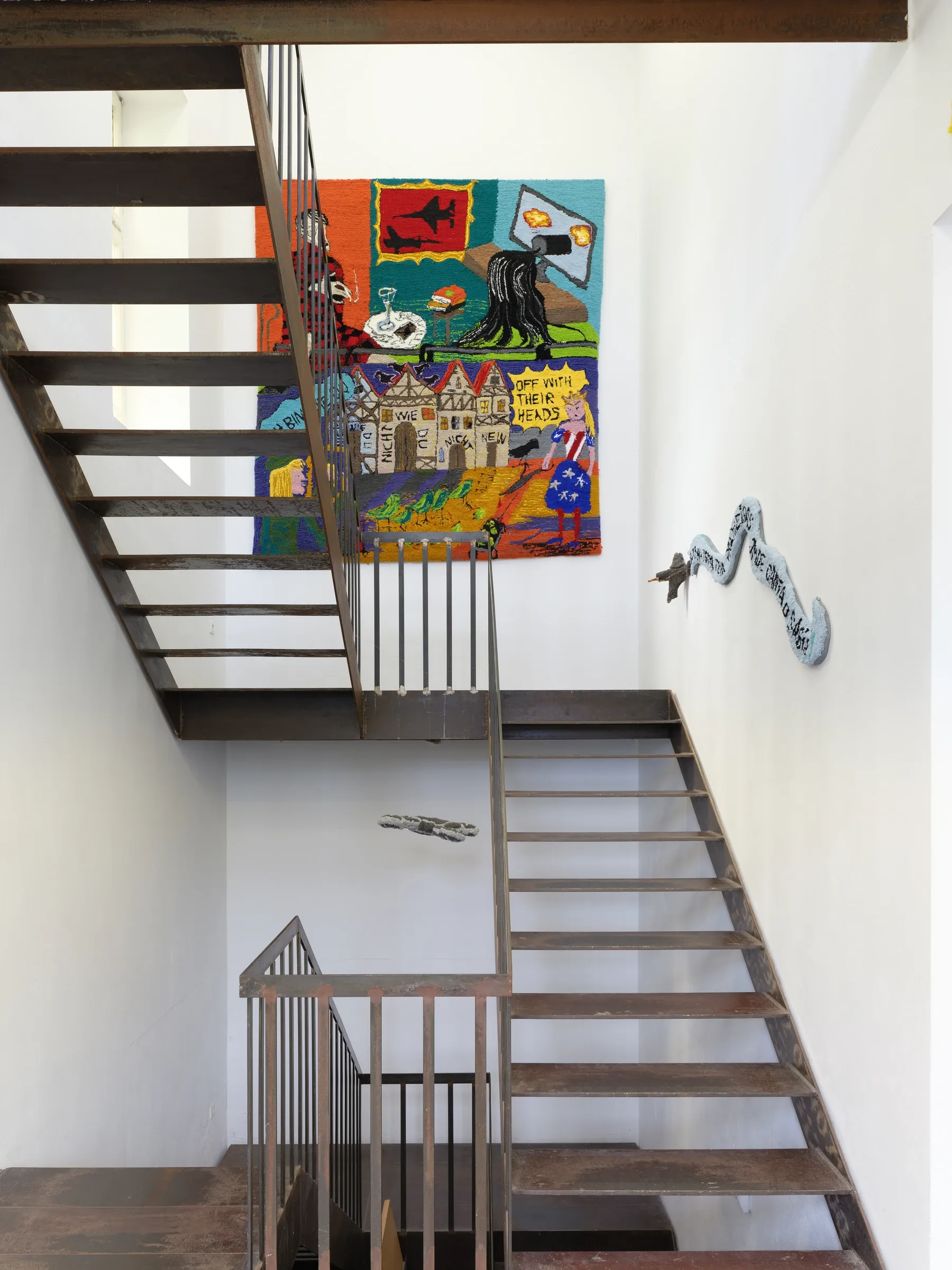
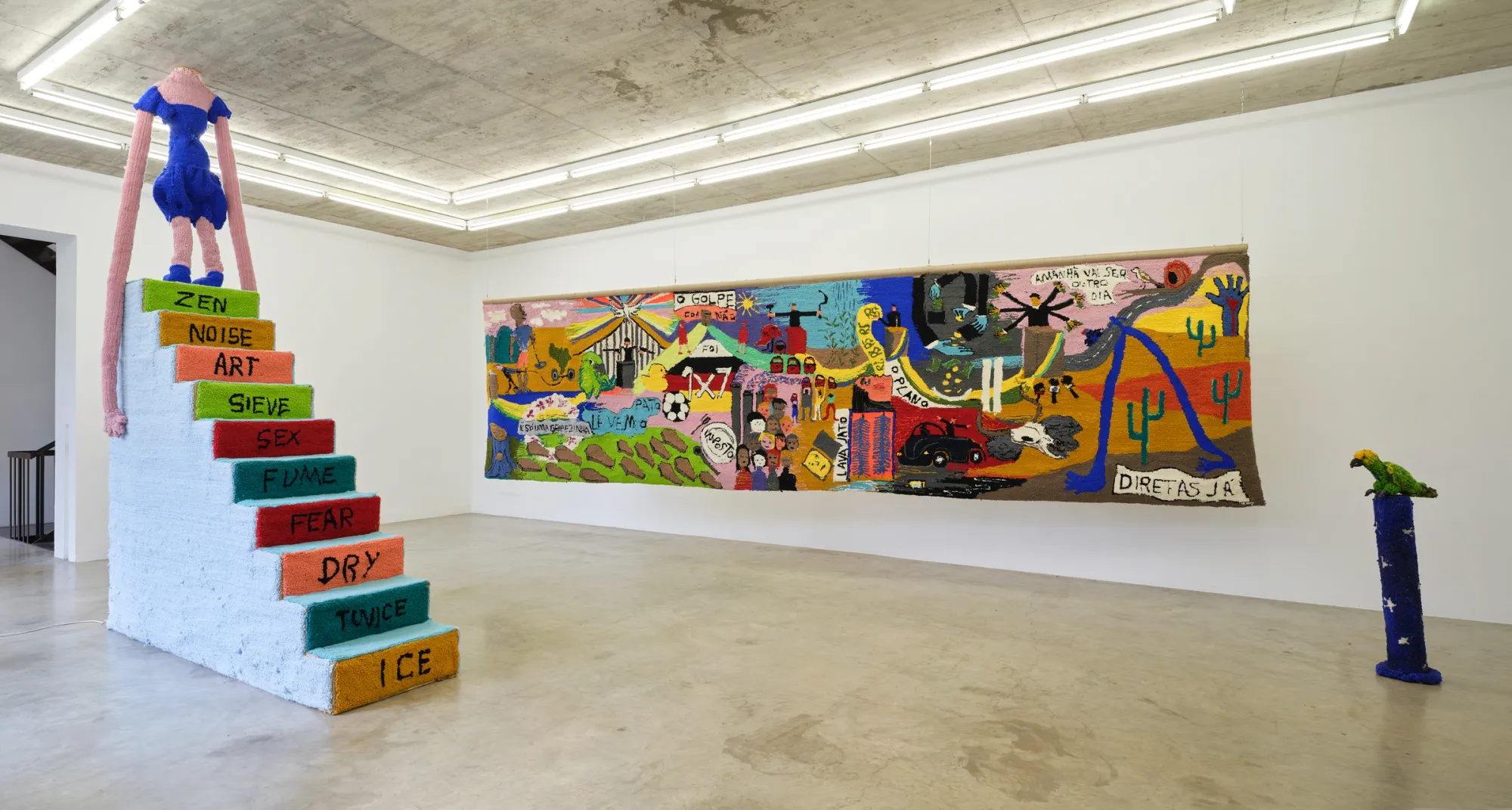
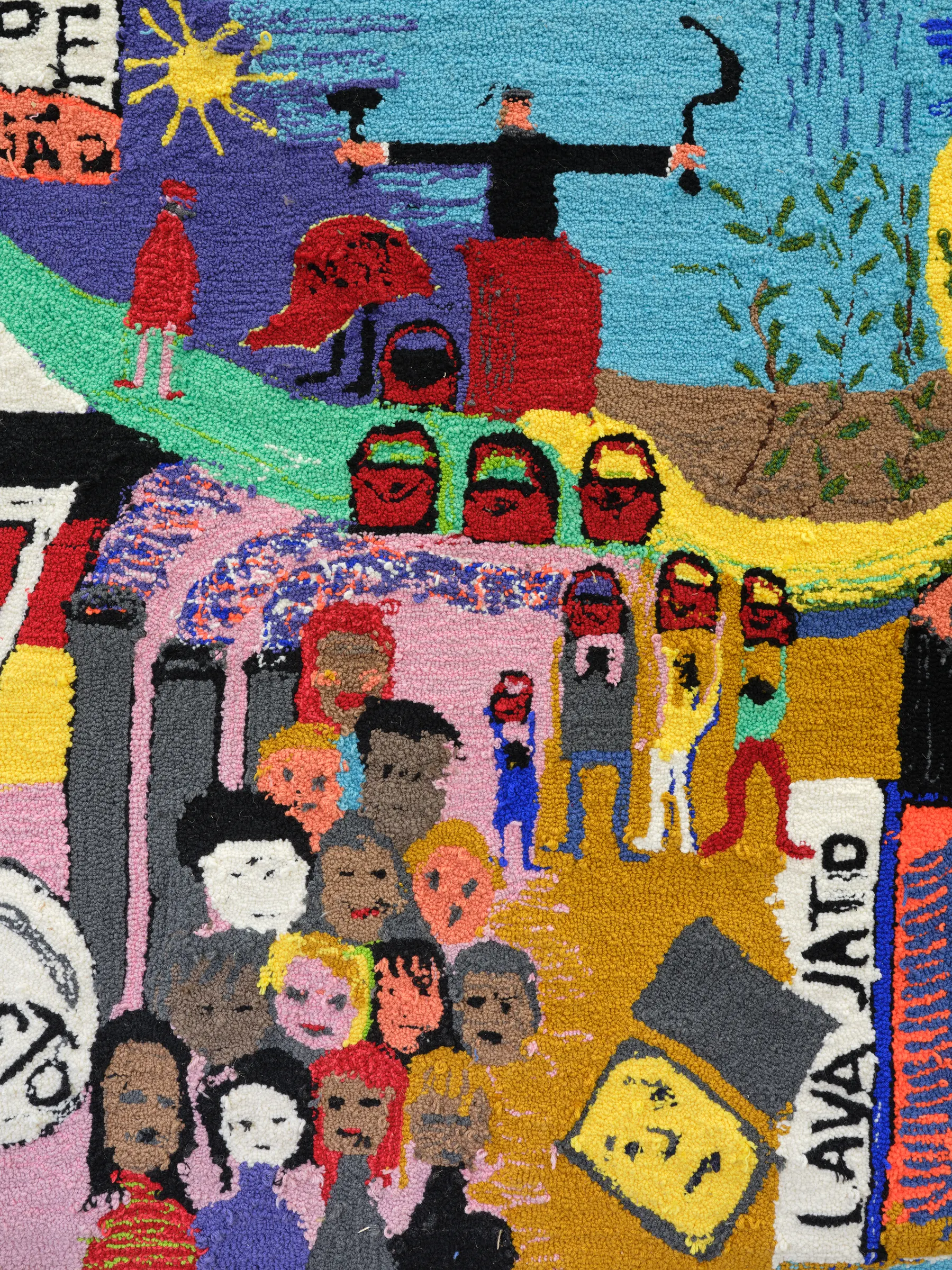
The six-meter textile Amanhã será outro dia (Tomorrow will be another day) dominates the first exhibition space. It is dense in religious symbolism, Brazilian presidential failures, COVID graves, the 2014 World Cup final between Germany and Brazil. And a duck.
Loosely arranged text elements do not explain the images, they compete with them. Braga has said she must know how to say something before she can identify what it is. The textile works this way, it is a form before it is a thesis.
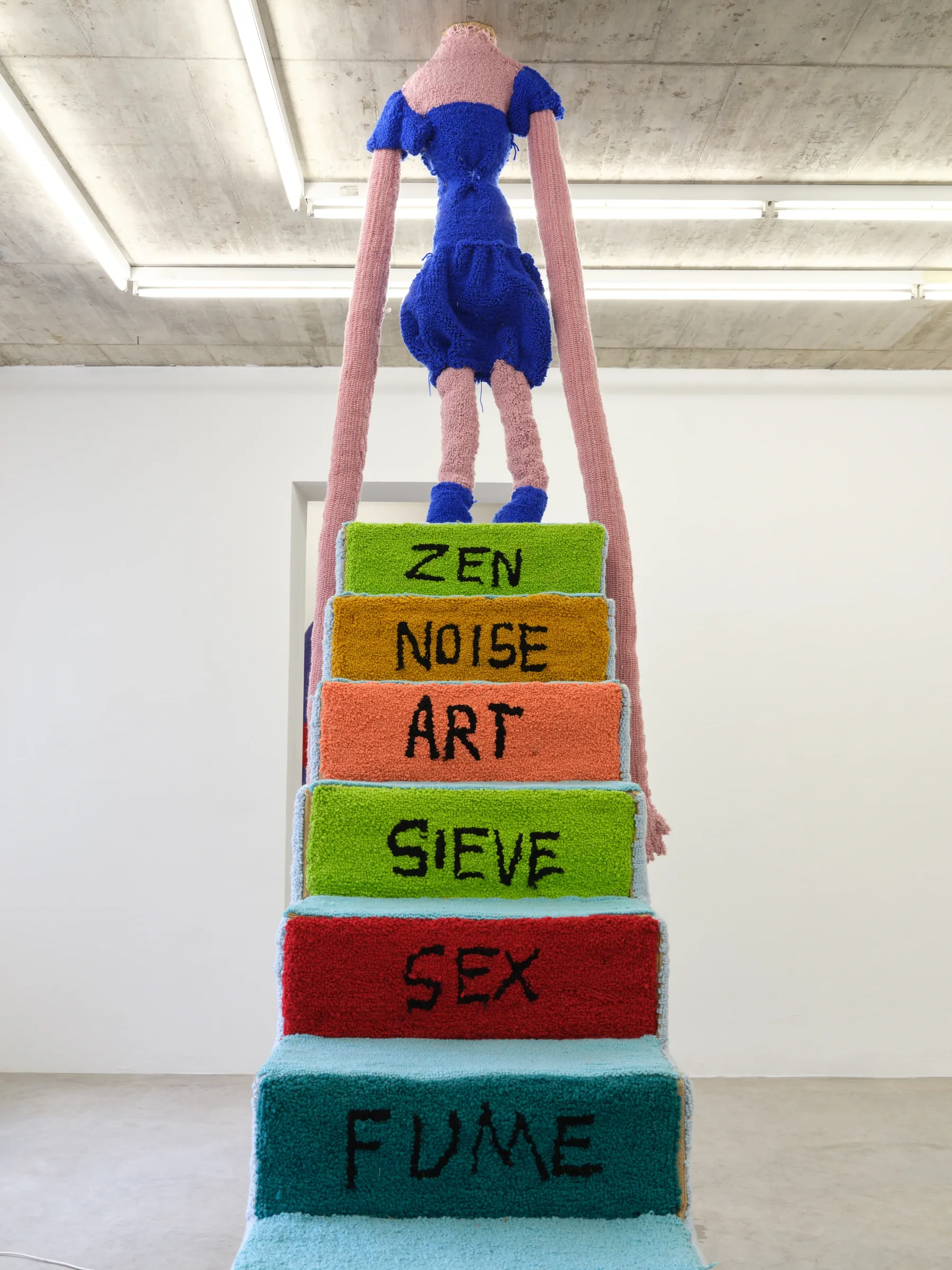
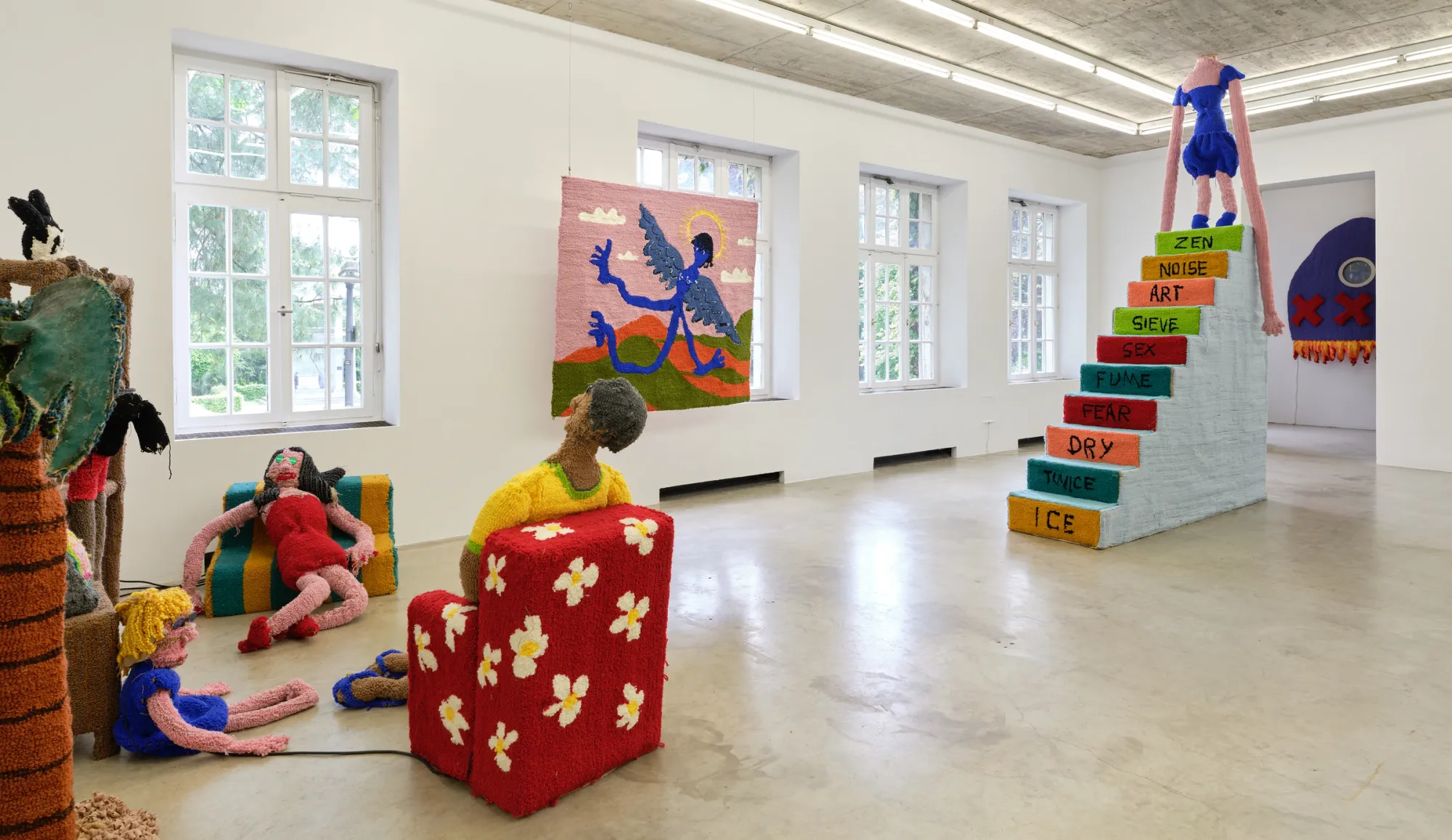
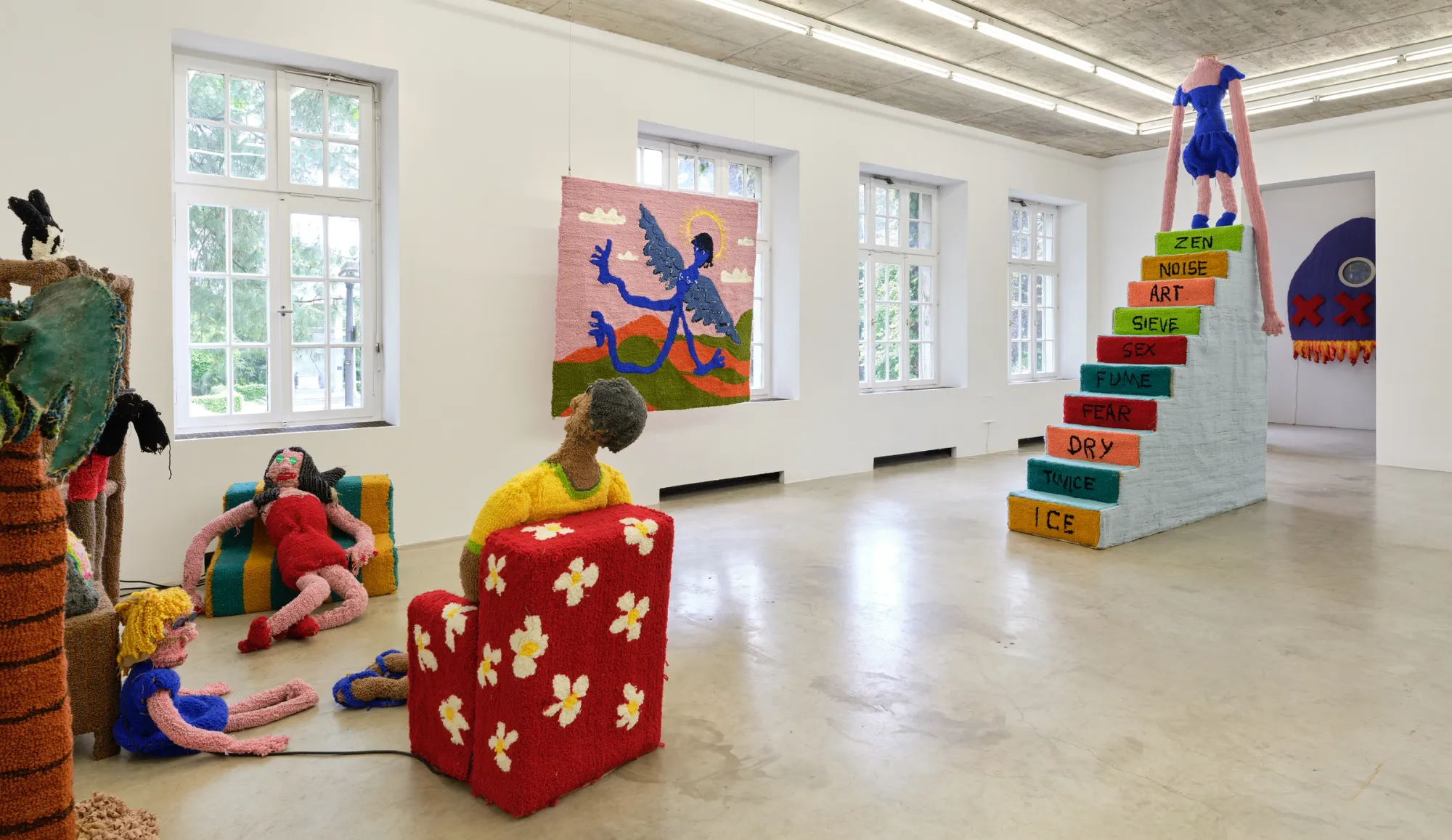
One to zen is a staircase-like structure that appears to teach the first ten German numbers. Look closer and the steps double as catchphrases: "ICE," "FEAR," "NOISE." At the top sits a decapitated textile self-portrait of the artist.
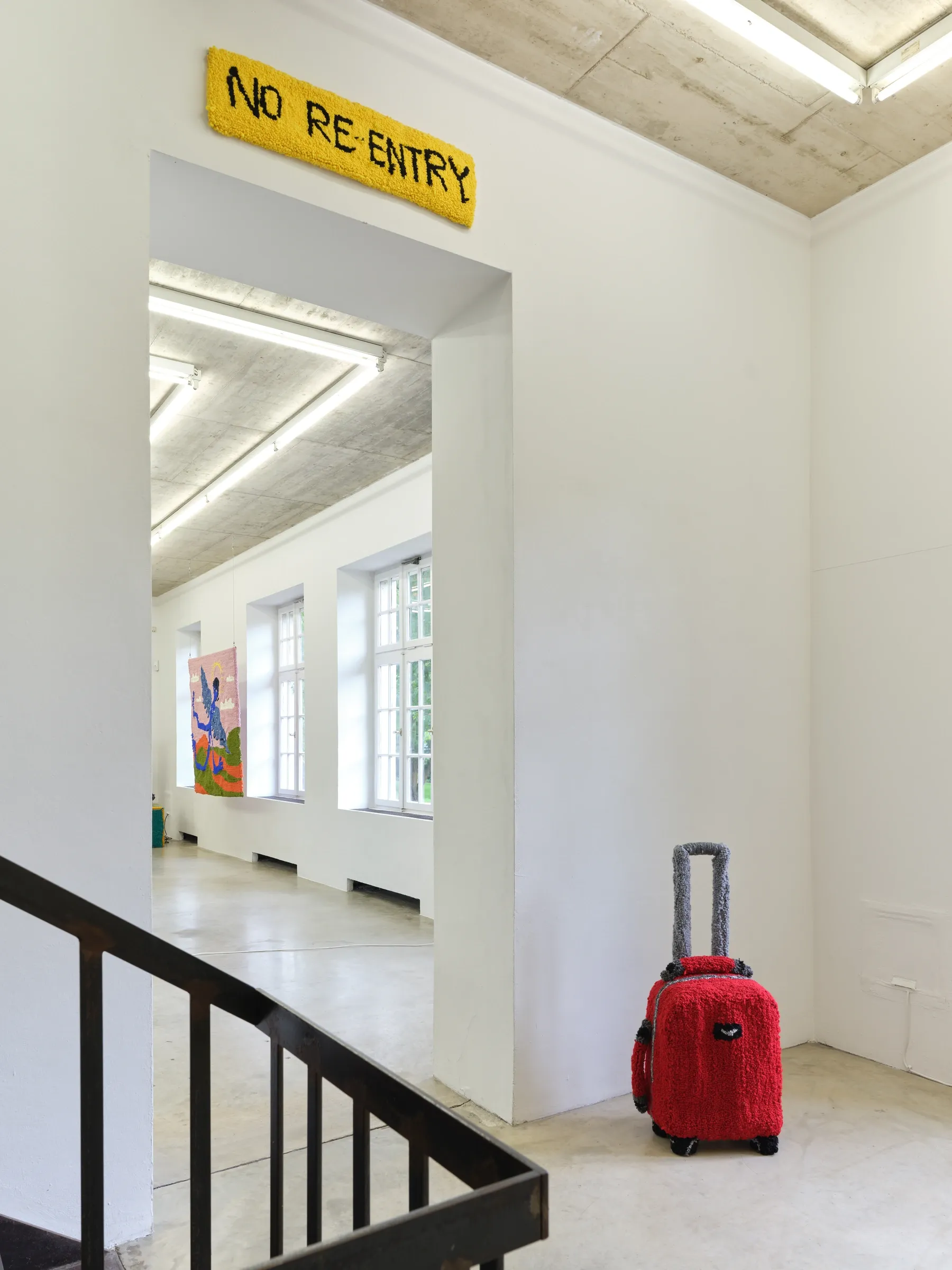
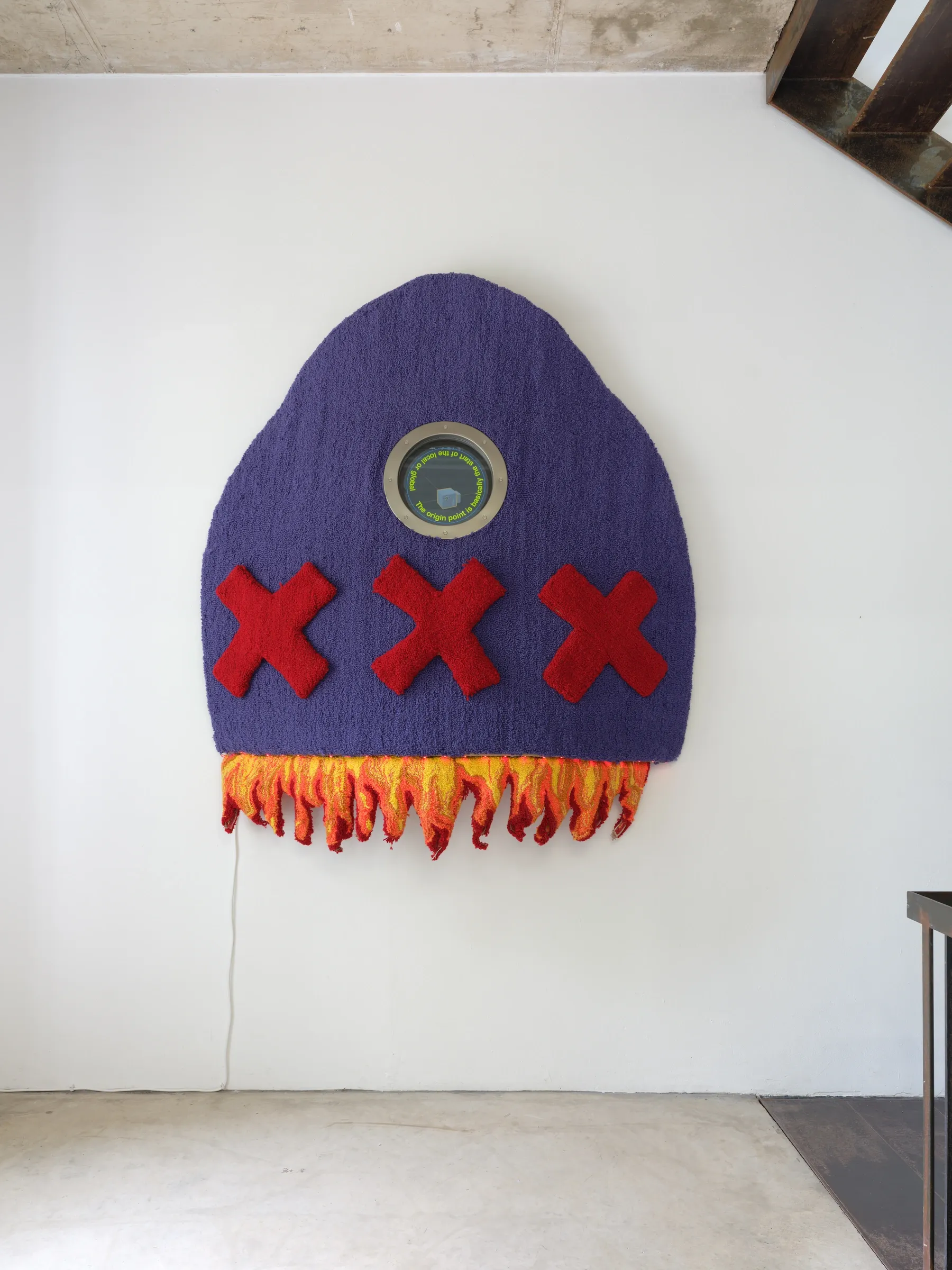
Nearby, a suitcase rests under a sign reading No Re-Entry. The spaceship in Original blue stands ready, the hopeful exit for all aliens, all strangers, all foreigners. The sequence reads as autobiography and as political map at once.
The exhibition opened in May 2026, when the rightward political shift Braga references is not historical lesson but running current.
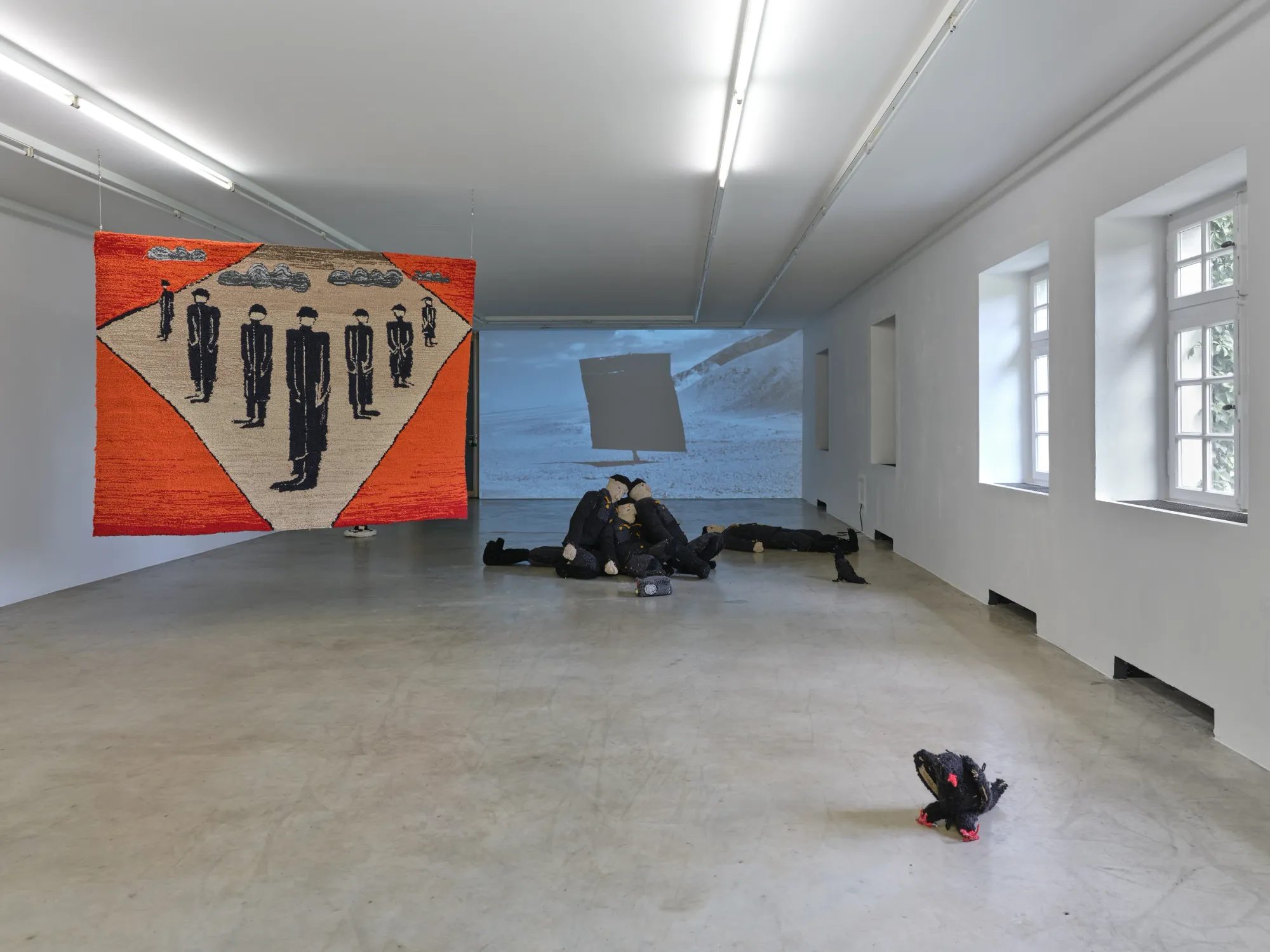
The soldiers in gray uniforms who stare blankly at the large red-white-black tapestry Winter in Germany are uniformed and conformist by design.
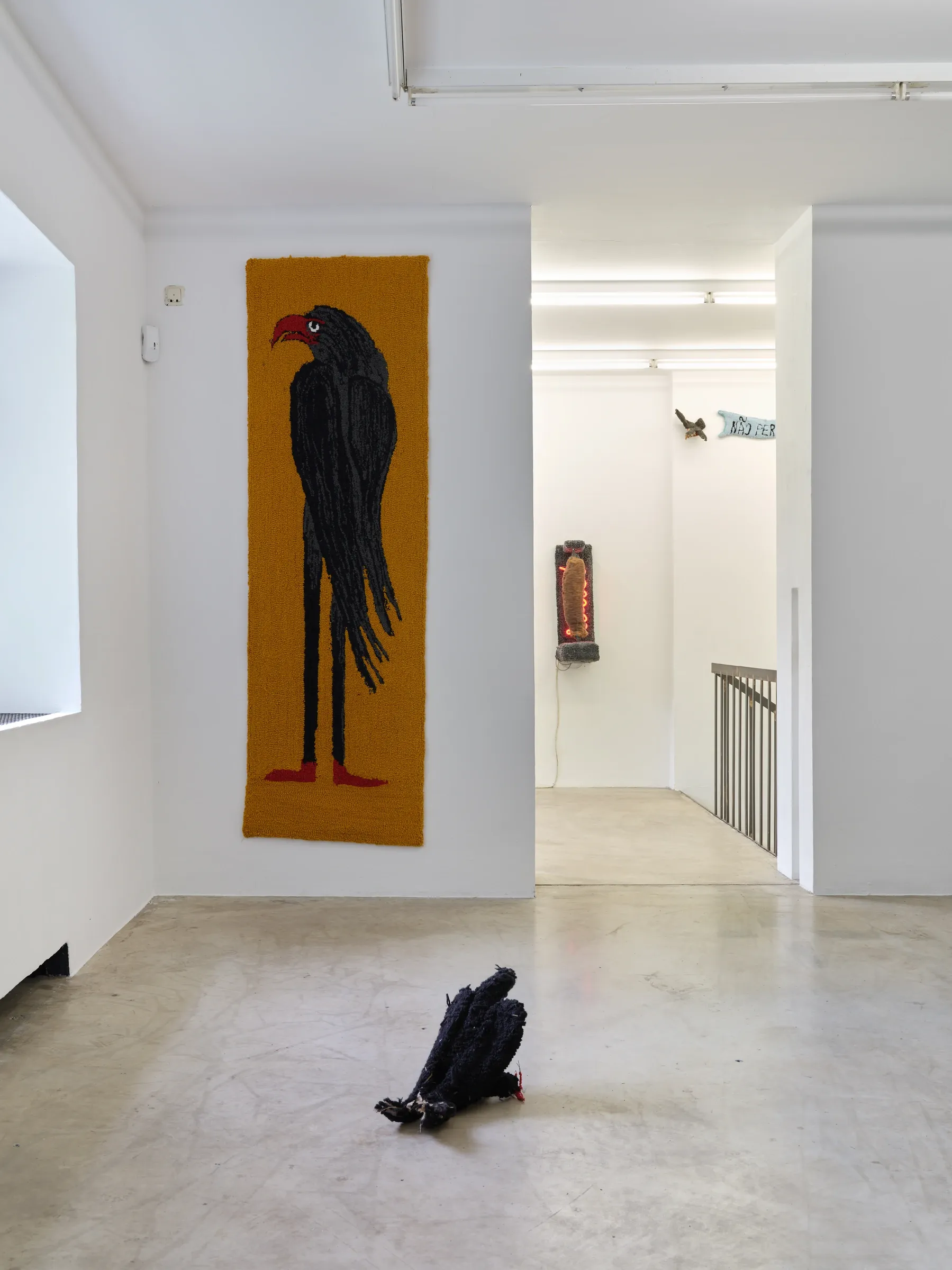
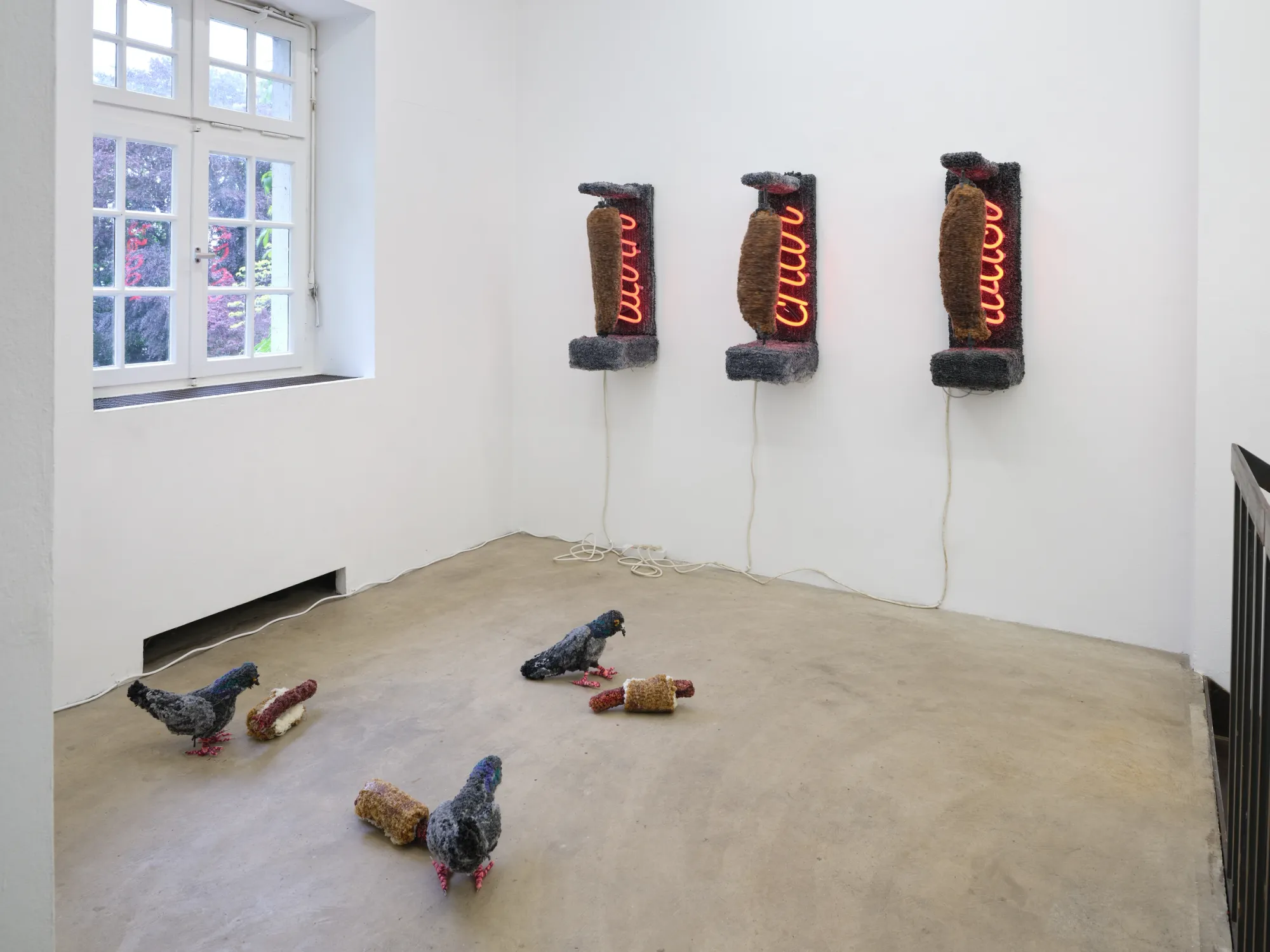
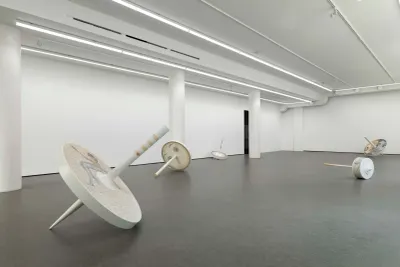
The rotating textile kebab skewers of Burn Char Roast carry the double weight of ironic affection and xenophobic reality. The titular wall piece in the stairwell includes the phrase "OFF WITH THEIR HEADS" and, despite the song it borrows, a correction: "NICHT WIE DU," not like you. The reversal is placed inside the work's own body.
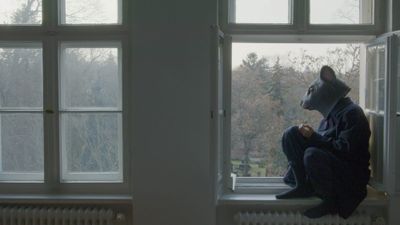
The video Nevermore shows Braga in Death Valley, in a foreign land, struggling against landscape and light. It is black-and-white, large-format, and poetic in the way physical endurance can be poetic, when effort is the only legible argument.
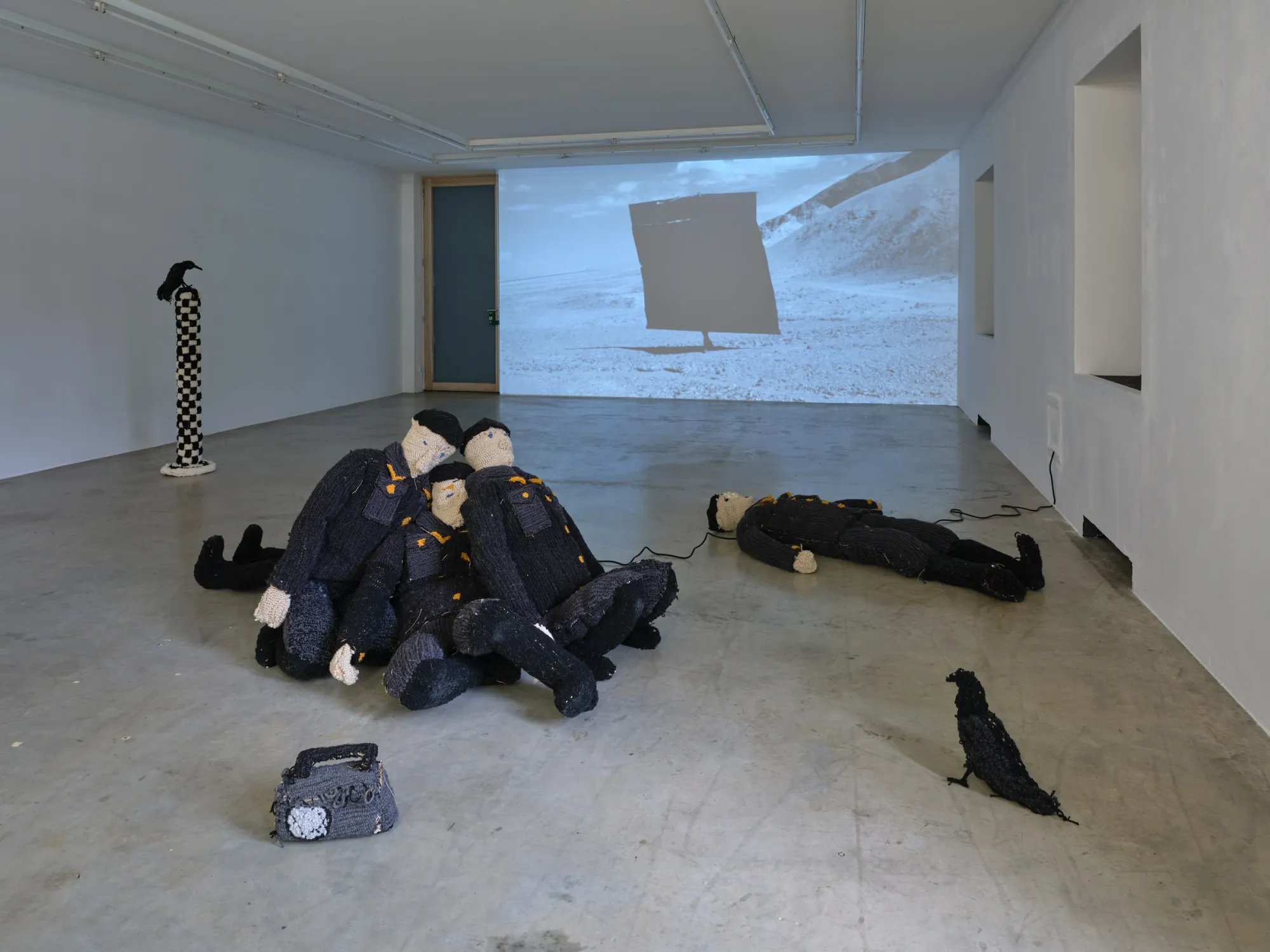
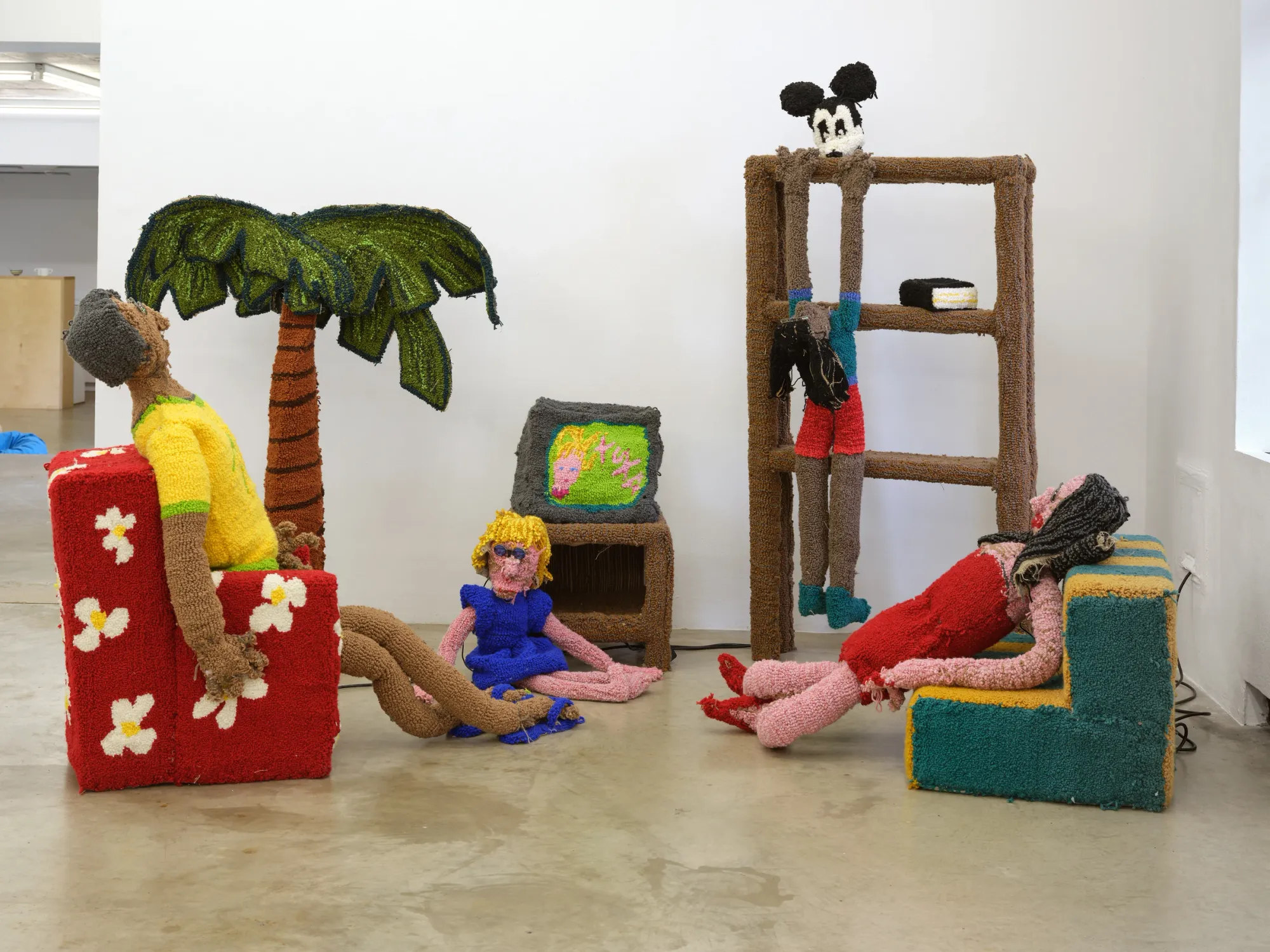
One leaves the exhibition having moved through a grandmother’s fire, a Brazilian soap opera, gray soldiers, rotating meat skewers, and the artist’s own severed head at the top of a staircase.
The works do not ask for sympathy. They ask you to count to ten in a language you do not speak, and notice what the numbers actually say. By the end, Ich bin wie du is no longer a promise of sameness, but a test of who is allowed to be counted as equal.
Instagram Elen Braga
NAK Instagram
Maurice Funken Instagram
Wouters Gallery Brussels
About Catapult Contemporary - Art Platform Submission
This is a exhibition review published by Catapult — an independent editorial platform for contemporary art, based in Vienna. We publish exhibition reviews, artist features, interviews, and critical context, with a focus on emerging and mid-career practices from Europe and beyond.
catapult.art
Want to be featured? Submit your work →