Wanting to Win Was Always About Not Being Left Alone

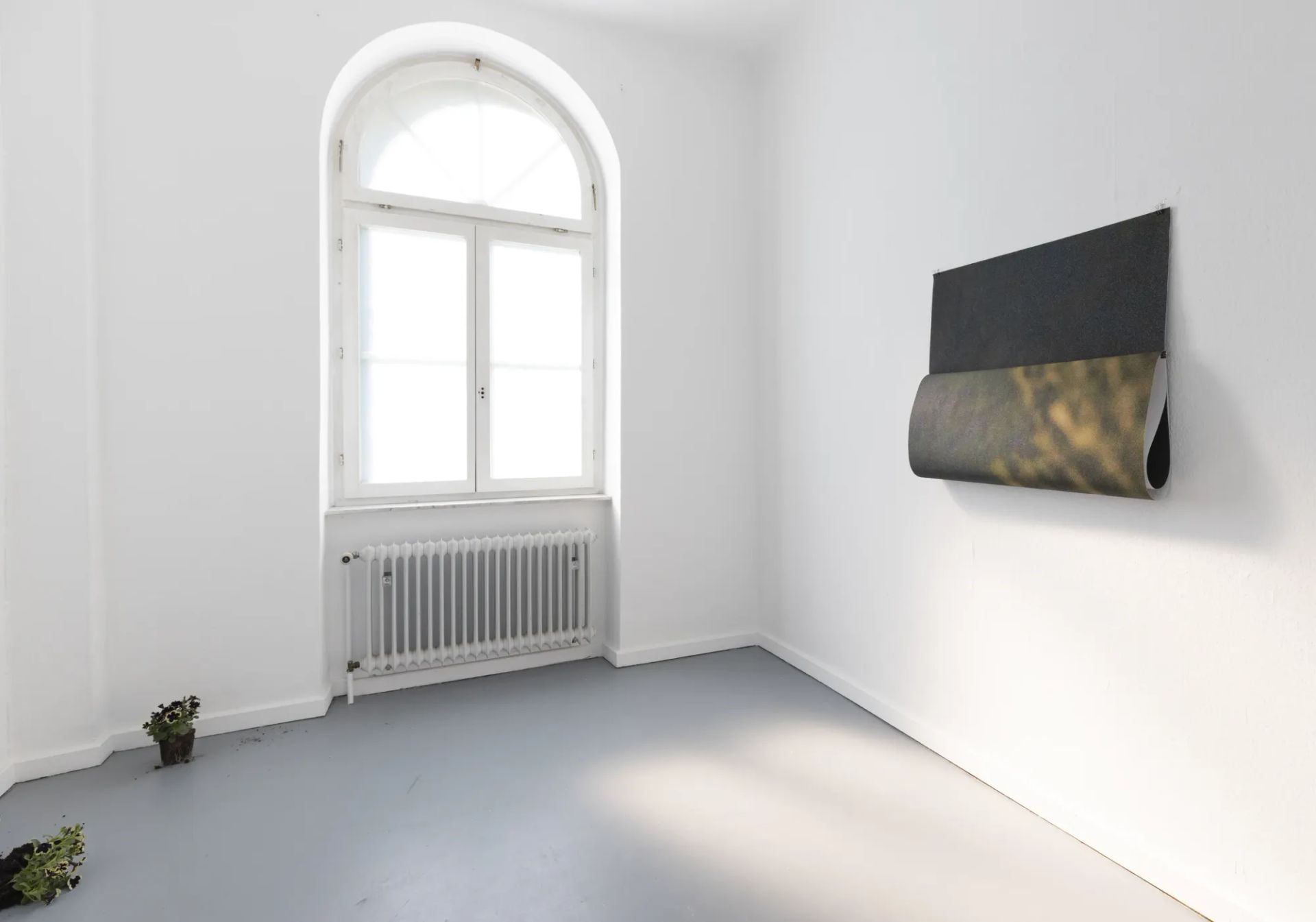
Finja Sander at Kunstverein Wilhelmshöhe with Will groß sein, will siegen in Ettlingen, Germany
Kunstverein Wilhelmshöhe presents Will groß sein, will siegen by Finja Sander, curated by Alex Besta, through May 31, 2026.
There is a phrase that sounds triumphant until you hear the longing underneath it. Will groß sein, will siegen - I want to be great, I want to win, carries the grammar of ambition but also, if you stay with it, the grammar of a child who does not want to be left behind. Finja Sander names her exhibition after this kind of wanting, the kind that cannot fully be separated from a need for witness.
Her practice has long worked the distance between grief as institutional form and grief as something the body keeps doing without permission. Memory, in this work, is not preserved in monuments. It is reused, reassembled, redirected, a processual behavior that happens in materials, in gestures, in the spaces between rooms.
Memory, for Sander, is not an archive but a behavior. It repeats, degrades, and reconstitutes, less something to be maintained than a gesture the body keeps returning to without being asked.
Finja Sander
Will groß sein, will siegen
Kunstverein Wilhelmshöhe
Ettlingen, Germany
–
Alex Besta
Finja Sander
Courtesy Kunstverein Wilhelmshöhe
Kunstverein Wilhelmshöhe occupies a Gründerzeit building in Ettlingen, its tall arched windows and high ceilings carrying the ambient weight of a space built for civic ambition.
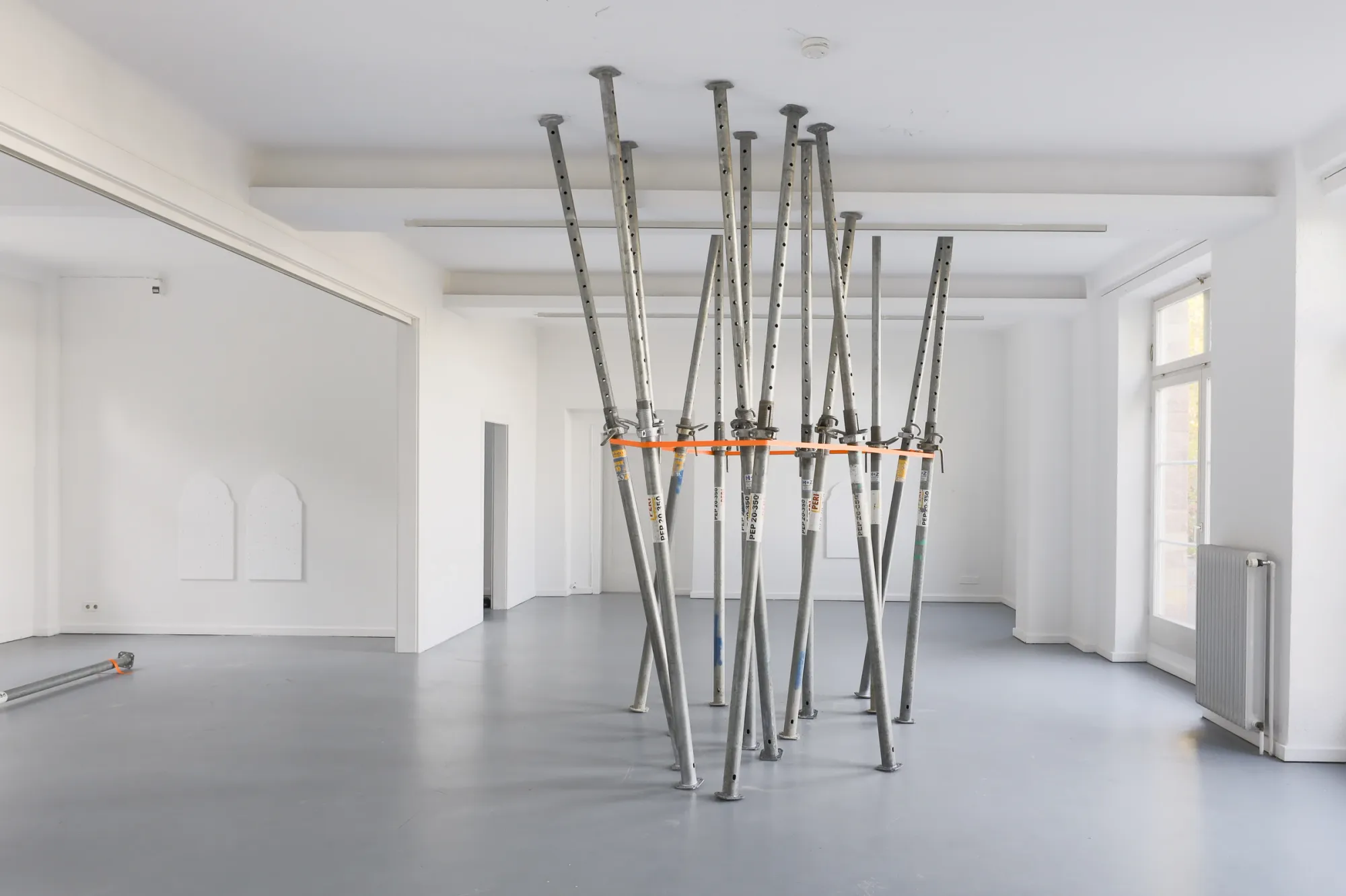
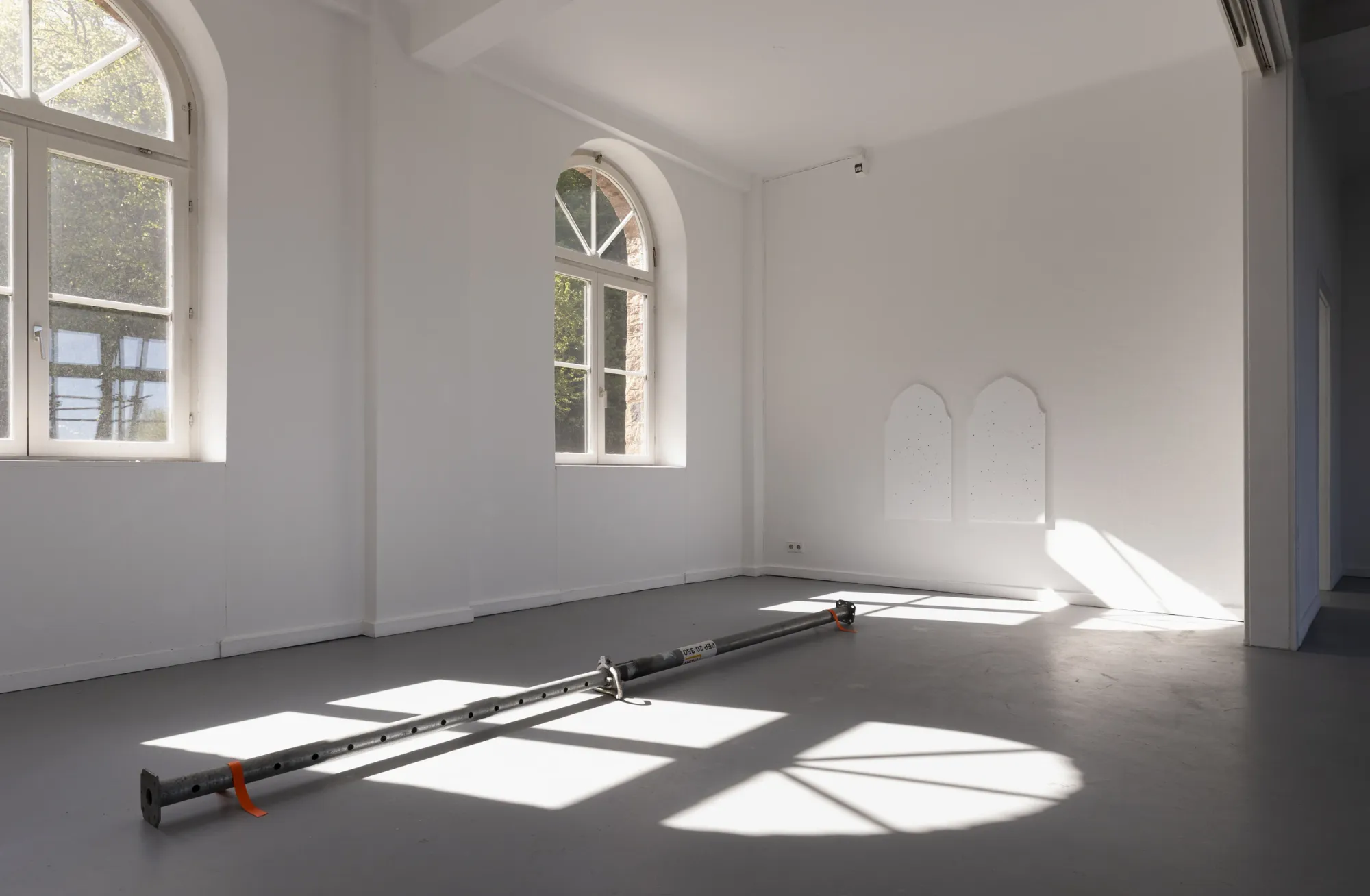
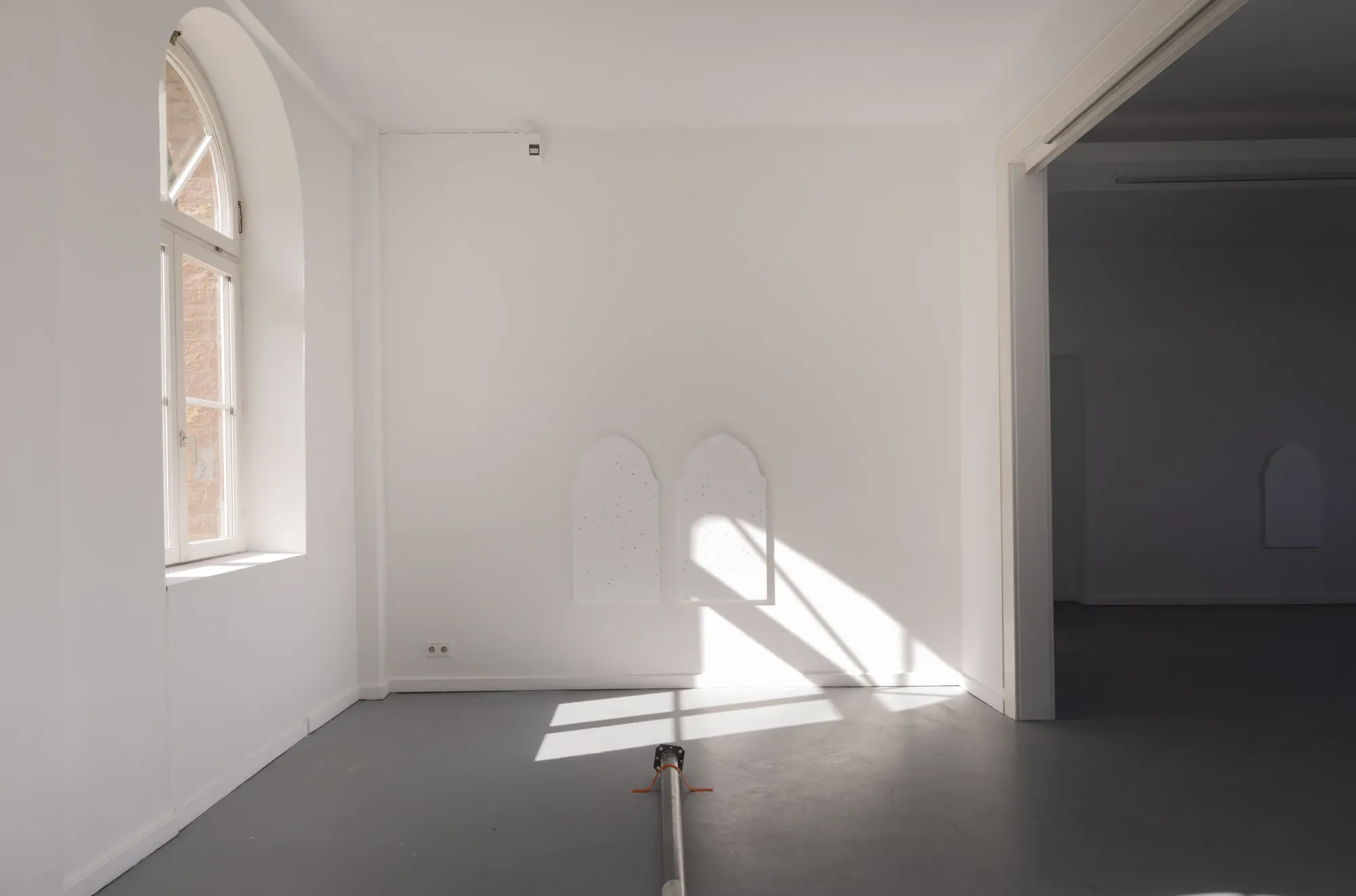
Sander does not work against this architecture but alongside it, noting where its forms echo and where they break down. The arched windows recur across every room, becoming a visual grammar the installation absorbs, duplicates, and casts back as shadow.
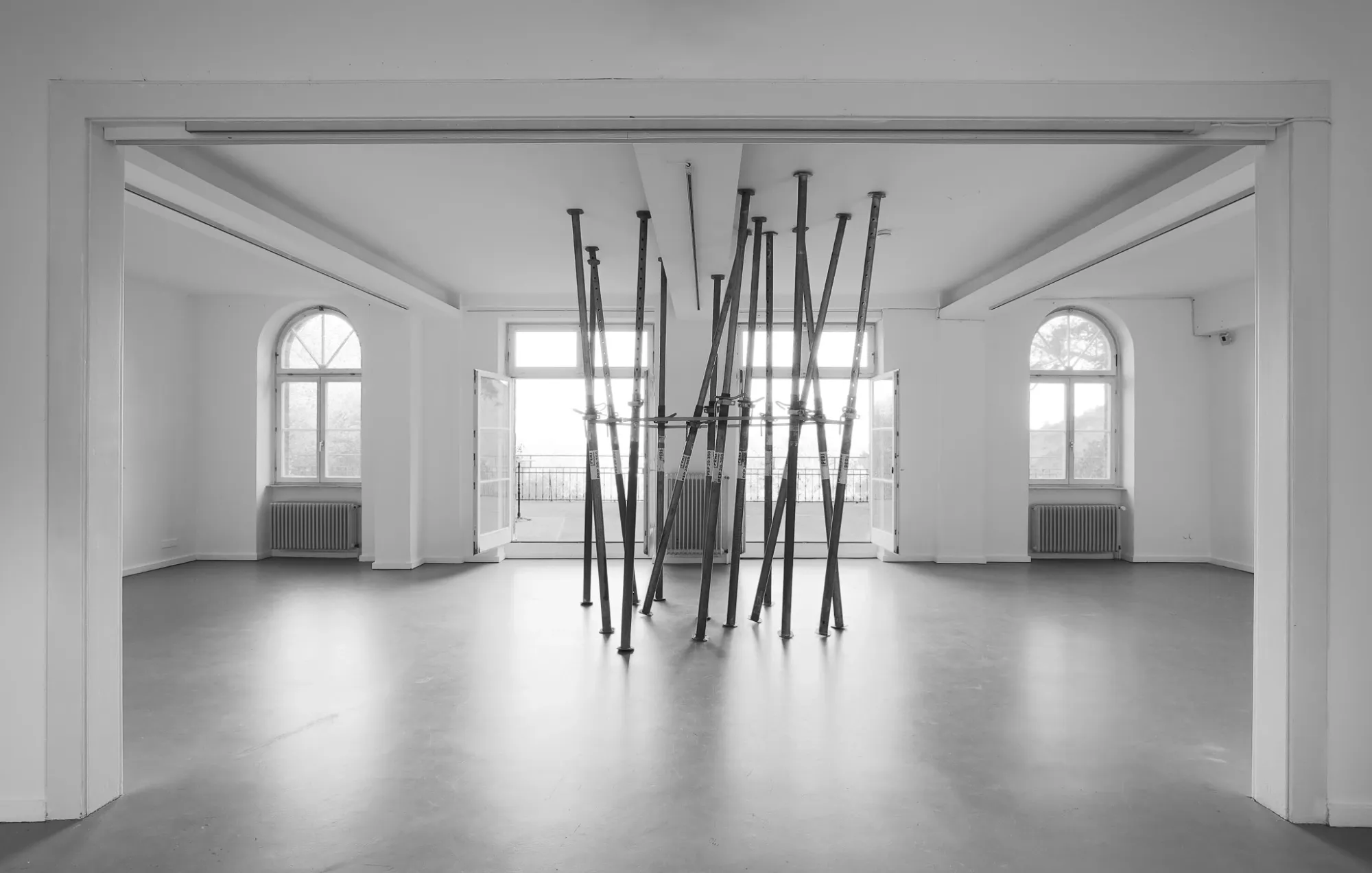
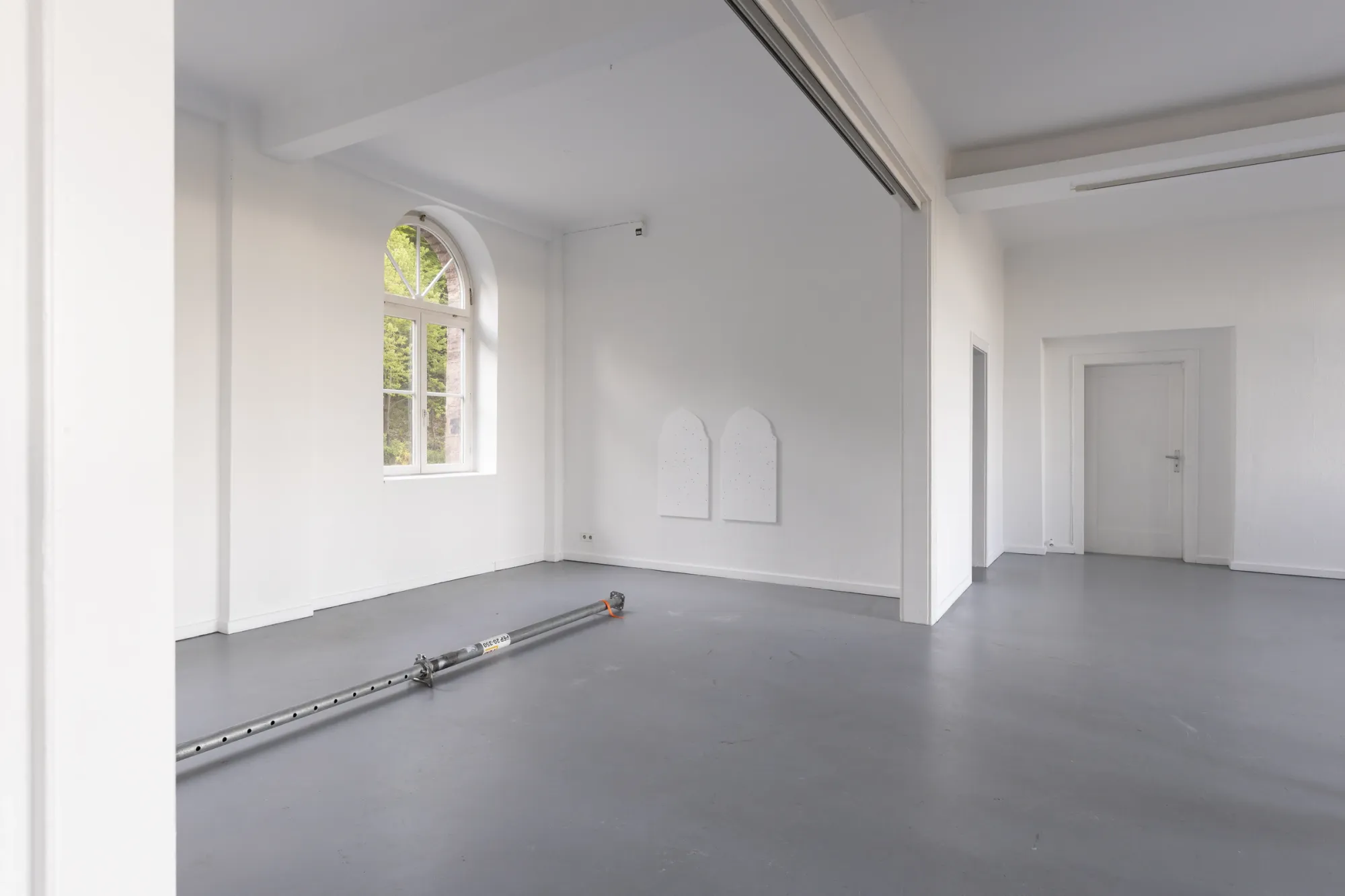
The title work, Will groß sein, will siegen, spreads fifteen ceiling supports across the floor of the main hall and into adjacent rooms. Normally these tools stand vertical, bracing ceiling against load. Here they lie horizontal, their orange ratchet straps connecting them into a network that runs through the building's spaces rather than between its surfaces.
Against the back wall, two arch-shaped forms cut from styrofoam panels lean where the supports cannot reach, the building's window geometry repeated in insulation material, at a scale that occupies without filling.
The elements seem to hold the rooms in relation to each other, a temporary framework connecting what was always already connected. Support, in this configuration, happens sideways.
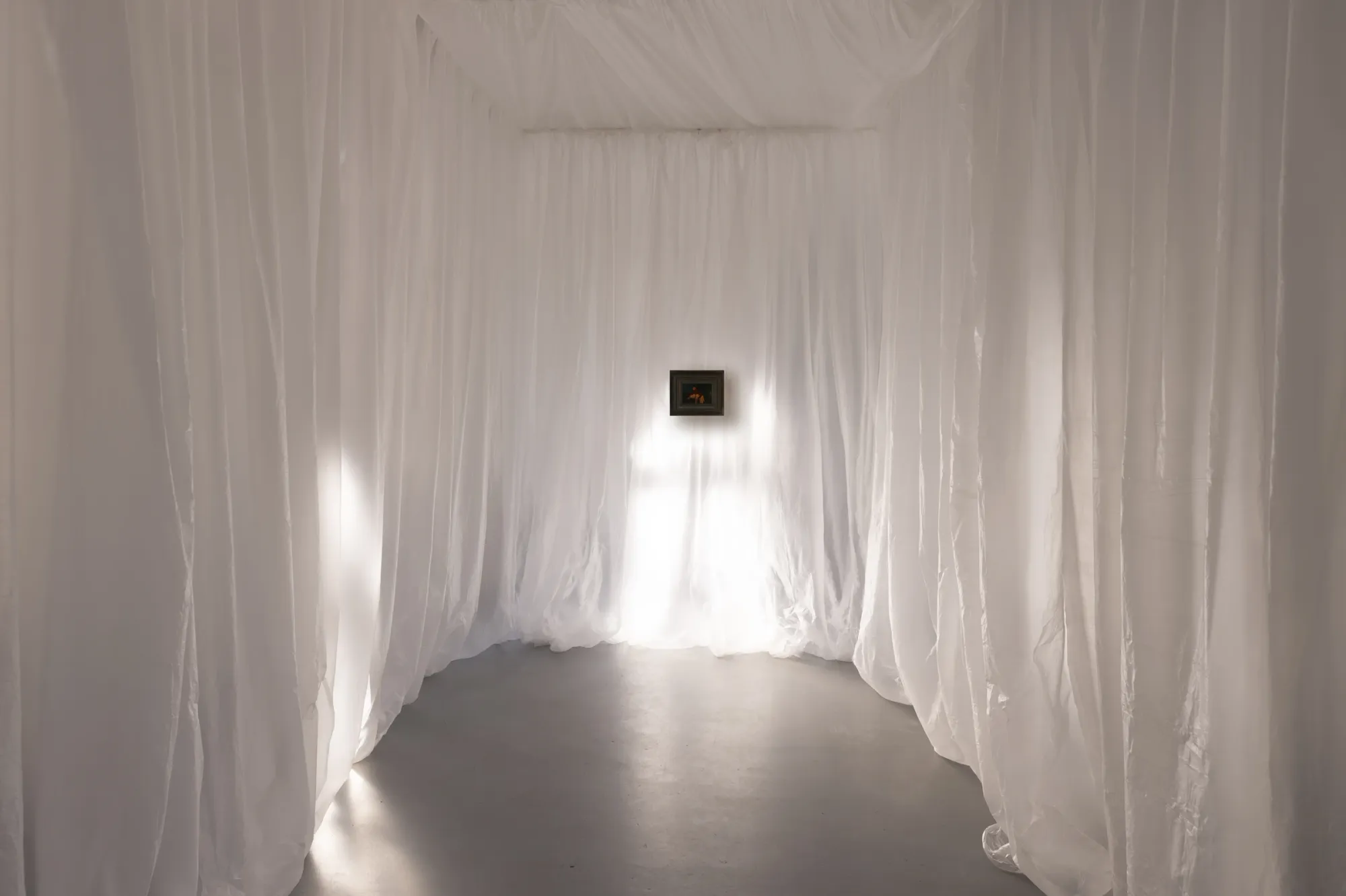
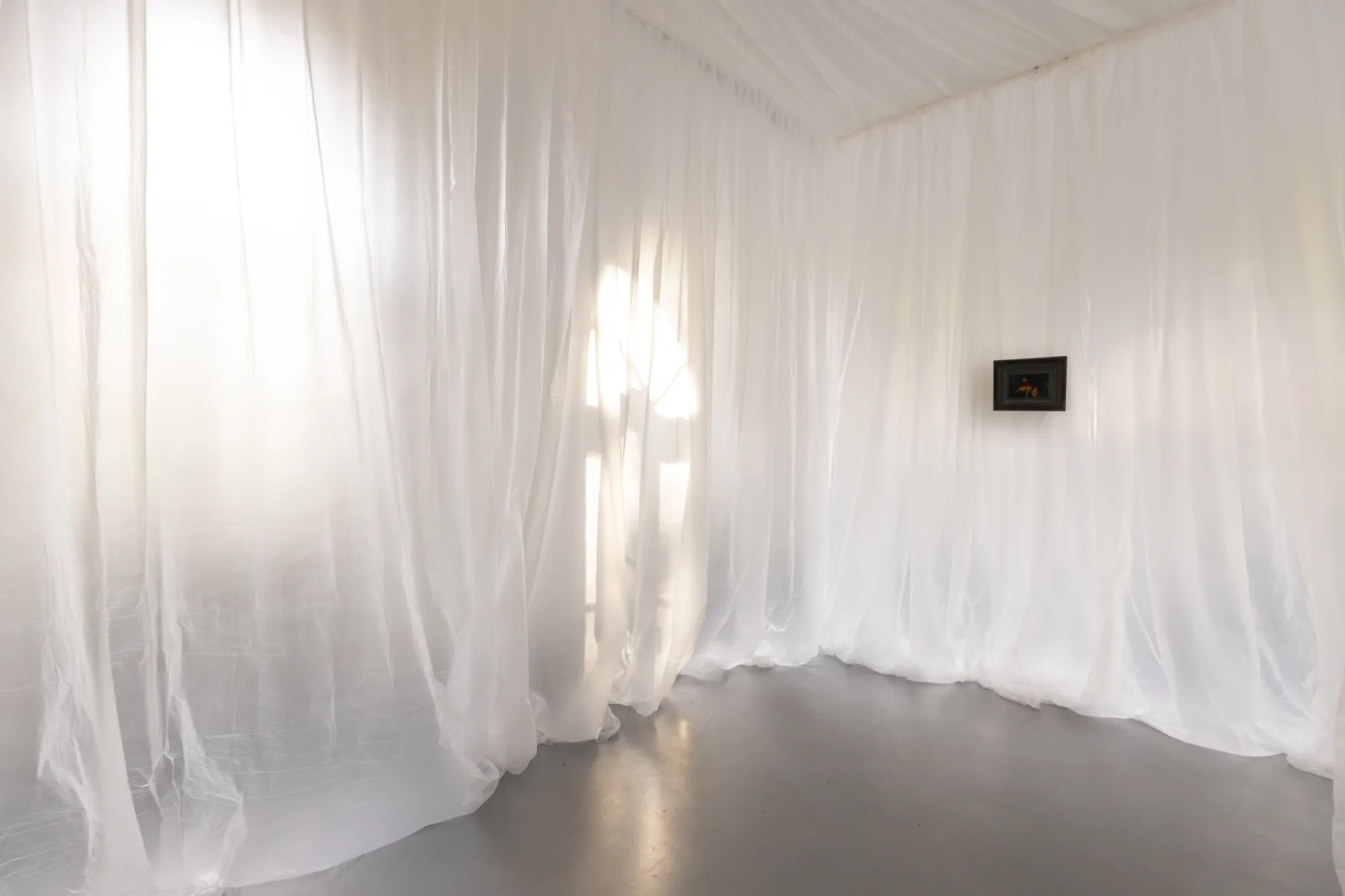
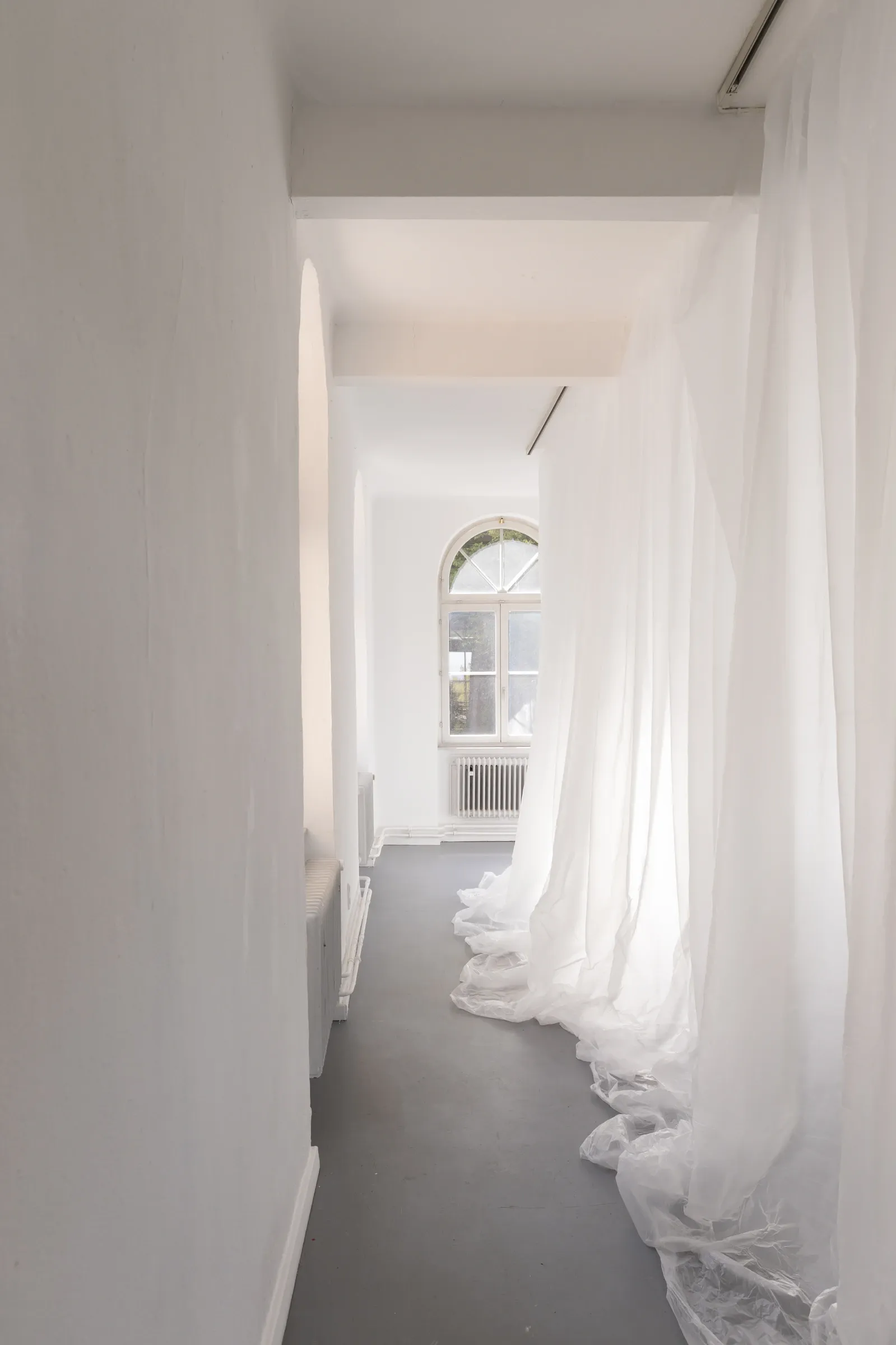
In the Kabinett, Backyard Reunion [Kabinett] converts the narrow corridor into something between a passage and an enclosure. Painter's plastic sheeting hangs from the ceiling rail to the floor, pooling in heavy folds, semi-transparent enough to pass light but thick enough to change what you see through it.
At the far end, a single small photograph in a dark wooden frame hangs on the back wall, behind museum glass. The image carries the intimacy of a private archive. Getting there means moving through the sheeting, not difficult, but bodily in a way the gallery does not usually require.
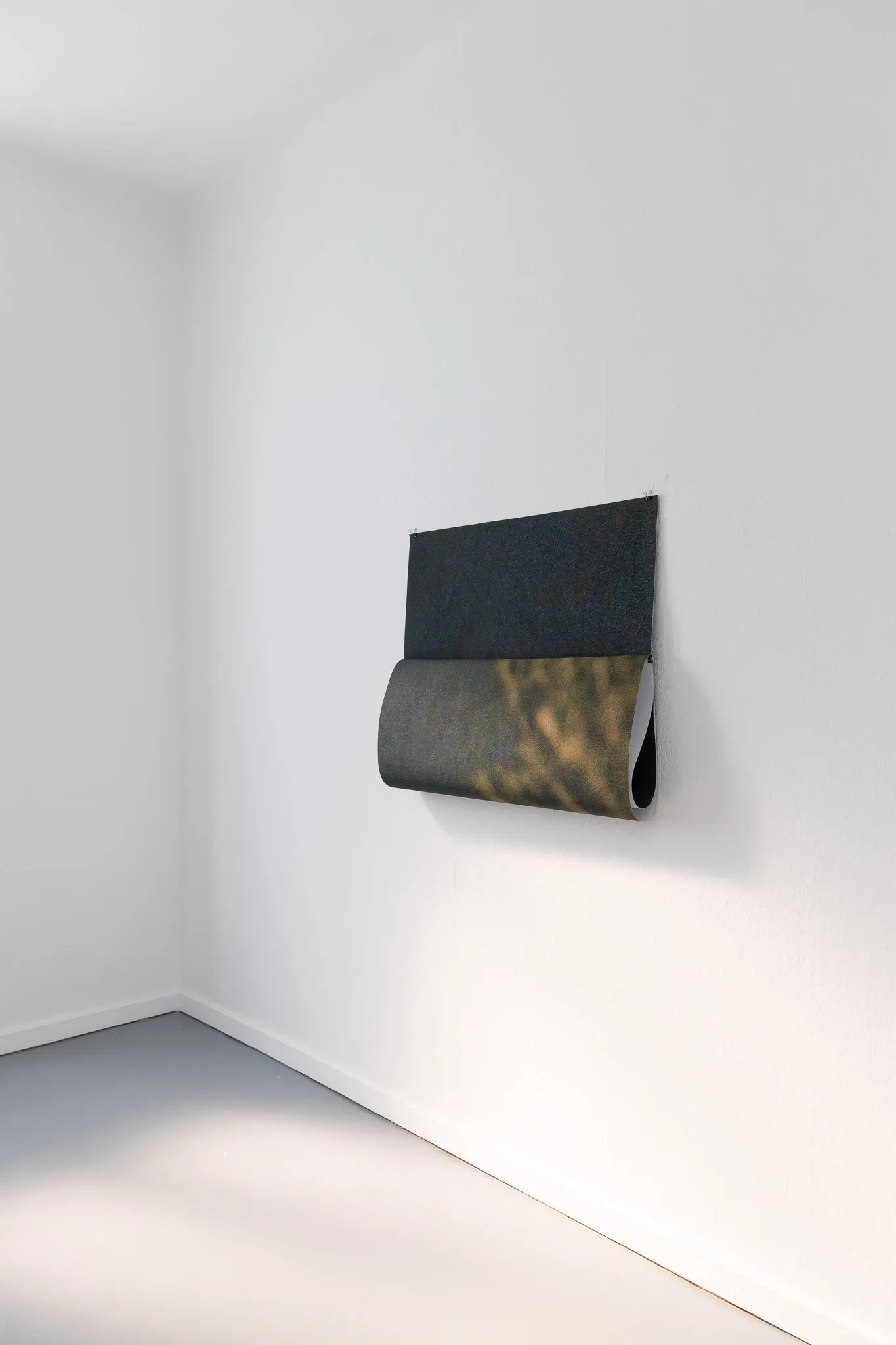
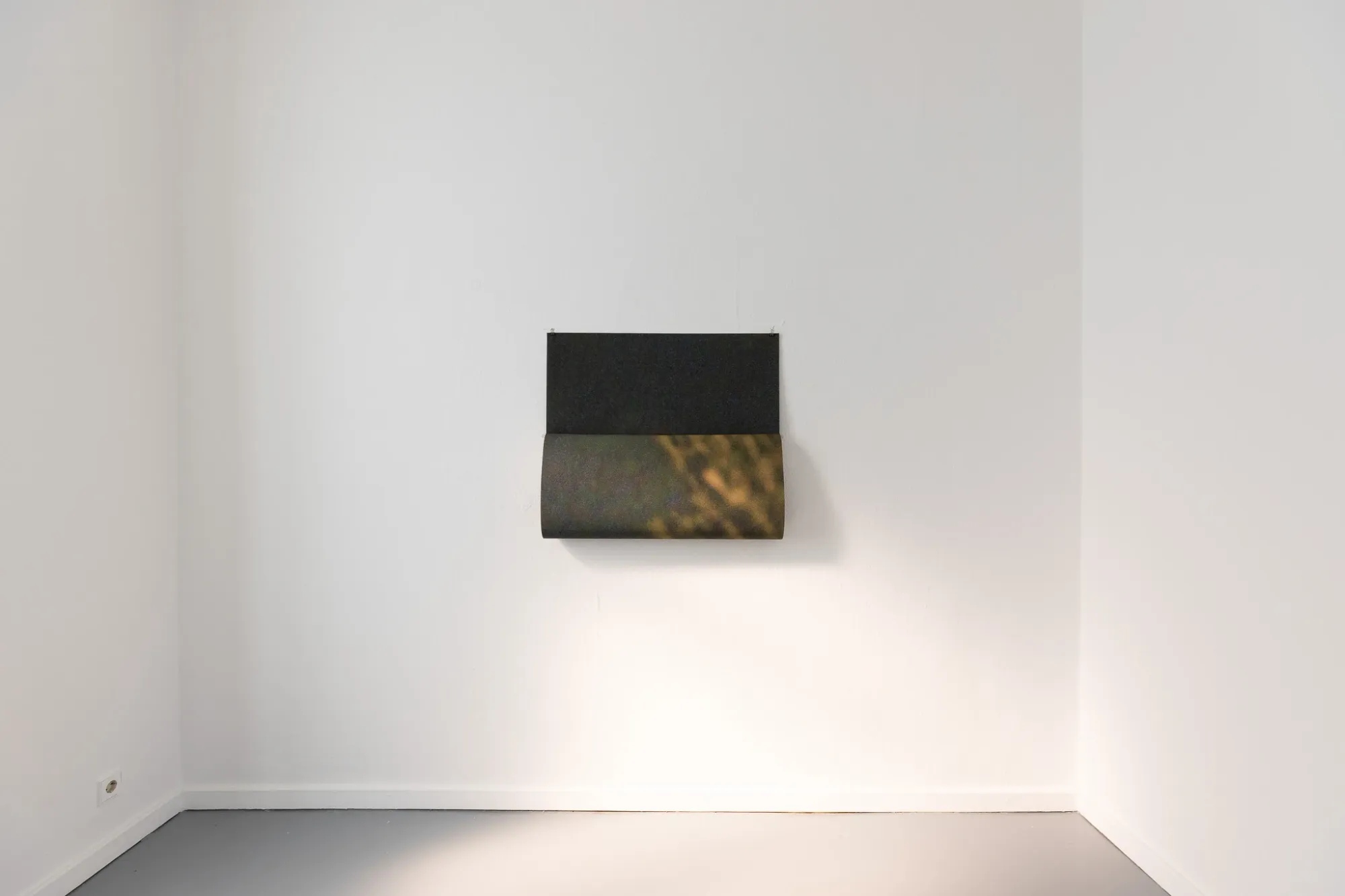
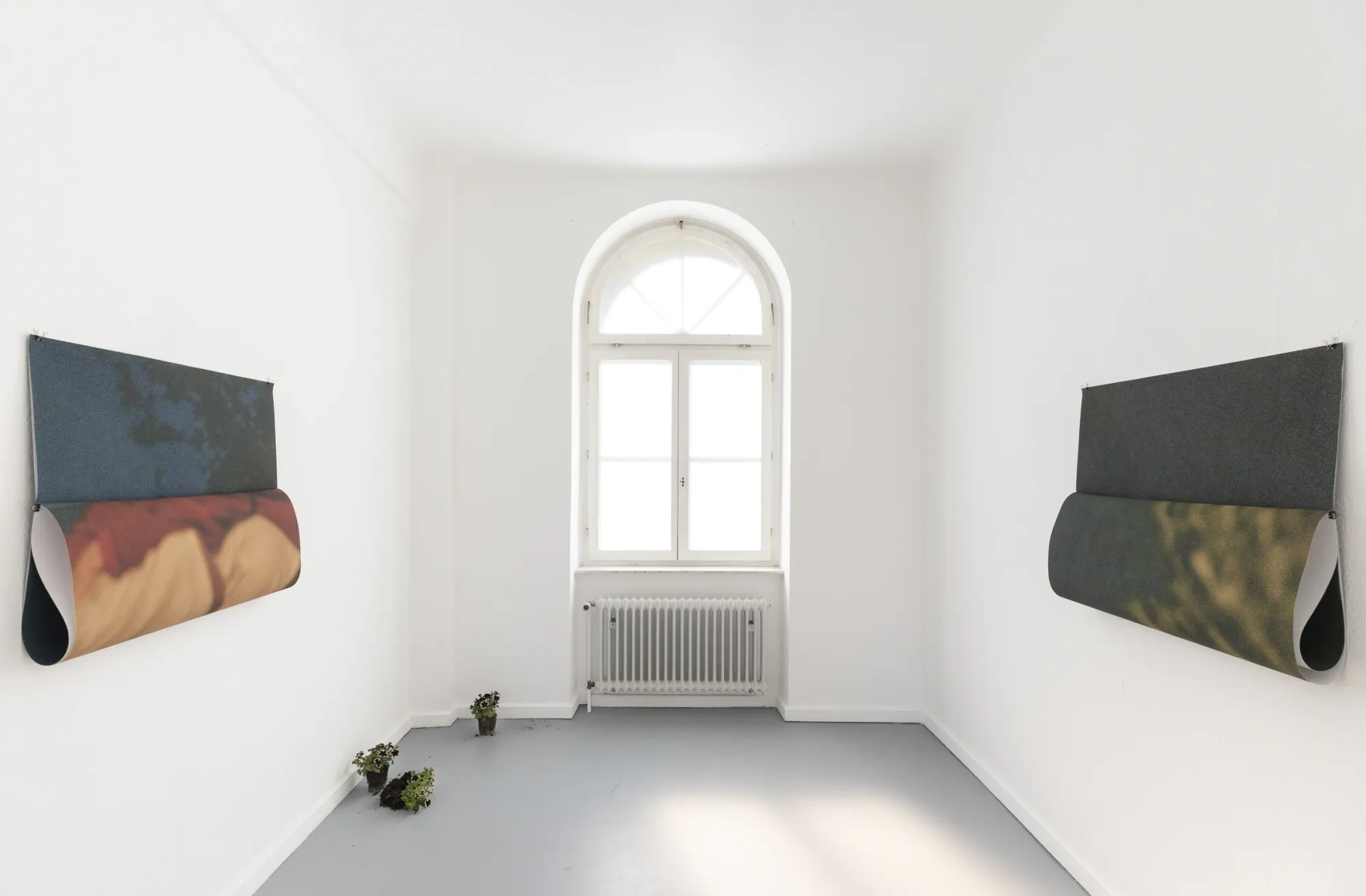
Backyard Reunion [FRAMES] I–II places two linen prints facing each other across a smaller room. Each piece curls at the lower edge, held by photo clips, the image folding back to reveal the linen backing.
The photographs draw from Sander's series Twenty-Something Girls (2025), close to the body, warm-toned, ambiguously intimate. Beneath both works, on the floor, grave flowers in small pots. They are not decorative, they are there as material fact, the way grief tends to place its objects without announcement.
Sander's argument about remembrance applies pressure from an unexpected angle. She is not making a case for grief as private experience. She is making a case for the structures that prevent grief from becoming abstract, the friend who holds back your hair, the sheeting that defines an inside, the support that lies down and connects rather than stands and separates.
At a moment when public mourning accelerates while its mechanisms thin out, her proposition carries some weight. Whether intimacy can hold what the official frameworks keep dropping is not a question the work resolves. It leaves the supports where they are, horizontal, orange, still taut.
Instagram Finja Sander
Kunstverein Wilhelmshöhe on Instagram
About Catapult
This is a exhibition review published by Catapult — an independent editorial platform for contemporary art, based in Vienna. We publish exhibition reviews, artist features, interviews, and critical context, with a focus on emerging and mid-career practices from Europe and beyond.
catapult.art
Want to be featured? Submit your work →