A Room That Reconfigures Itself Has No Fixed Center

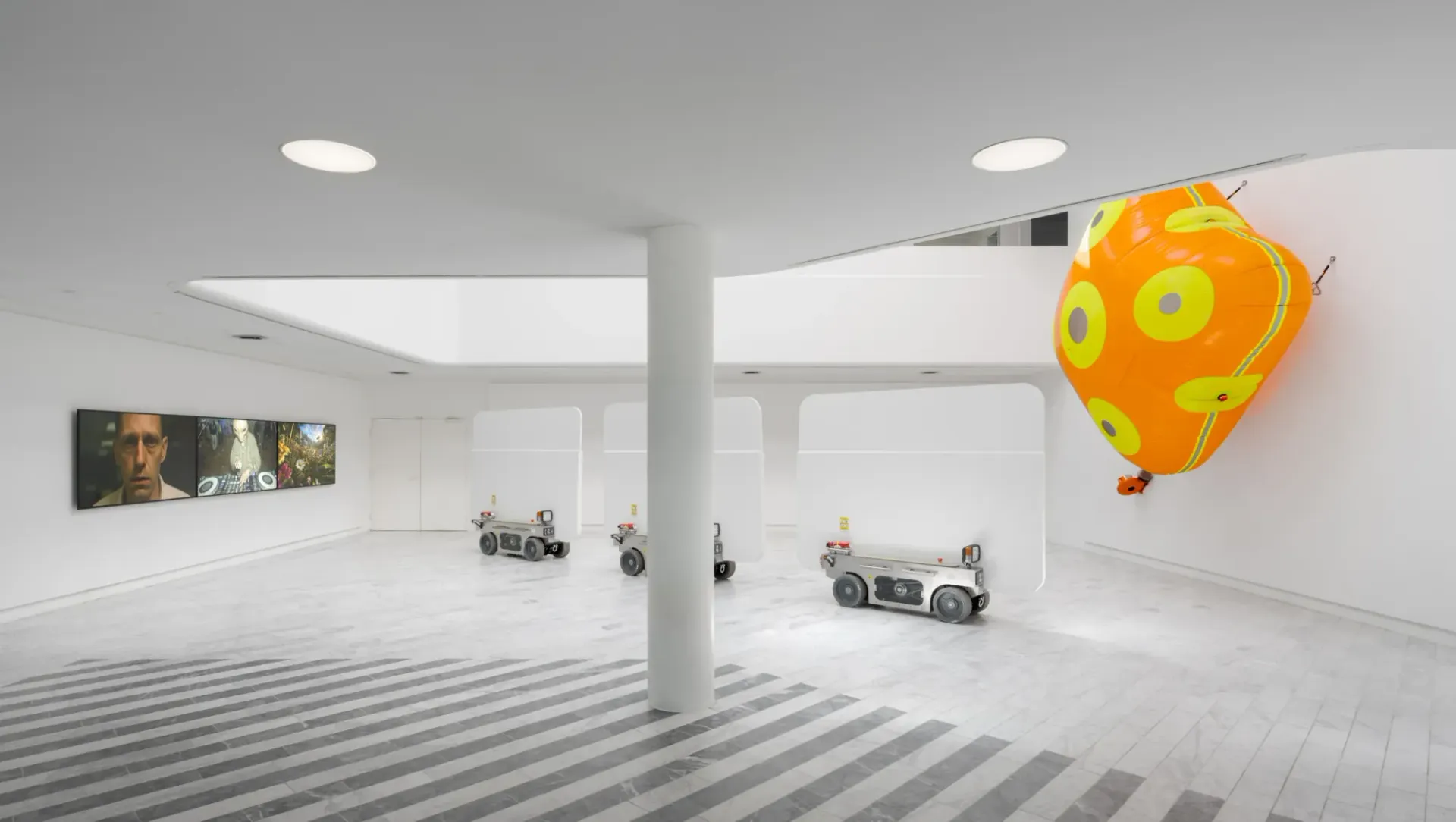
Louis Morlæ’s Walls at the World’s End at Tranen in Hellerup
Tranen presents Walls at the World's End by Louis Morlæ, curated by Toke Lykkeberg, through 16 August 2026. This is Morlæ’s first solo exhibition in the Nordic region.
The logic of disruption promised speed. What it delivered, over time, is a world whose underlying architecture has become unreadable, not just to the people living inside it, but to the engineers who built it.
The motto "move fast and break things" was once a tactical instruction. It has since become a general condition.
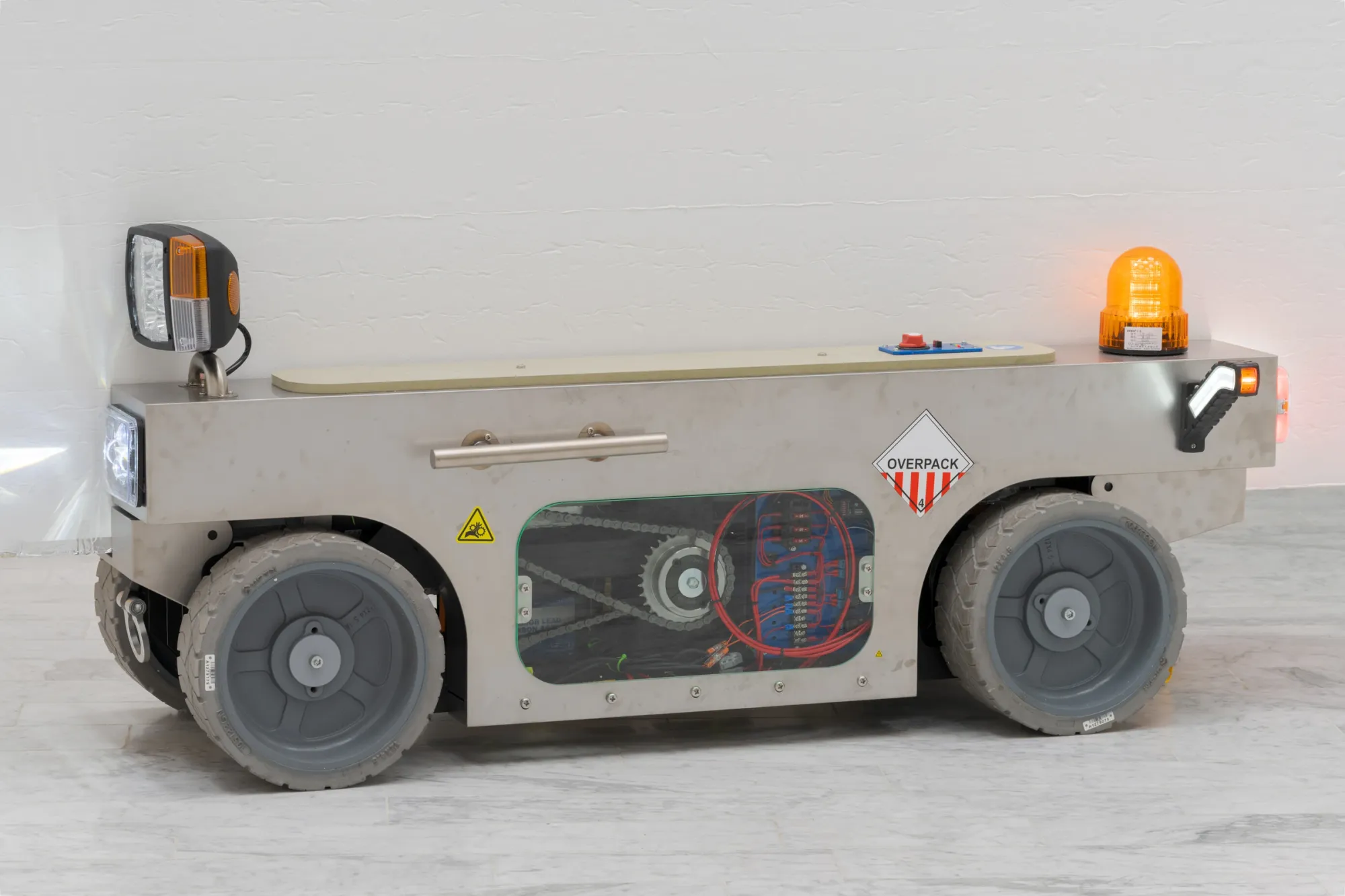
There is something specific about watching that condition rendered in hardware. Not as metaphor, but as object. Three robotic walls move through a gallery, following patterns no single person fully controls.
The walls are moving. The system that moves them knows something its creator no longer does. That is not a malfunction. That is the point.
Tranen sits inside the Gentofte Central Library in Hellerup, north of Copenhagen, a community institution housing a contemporary art program, which already carries a certain structural irony.
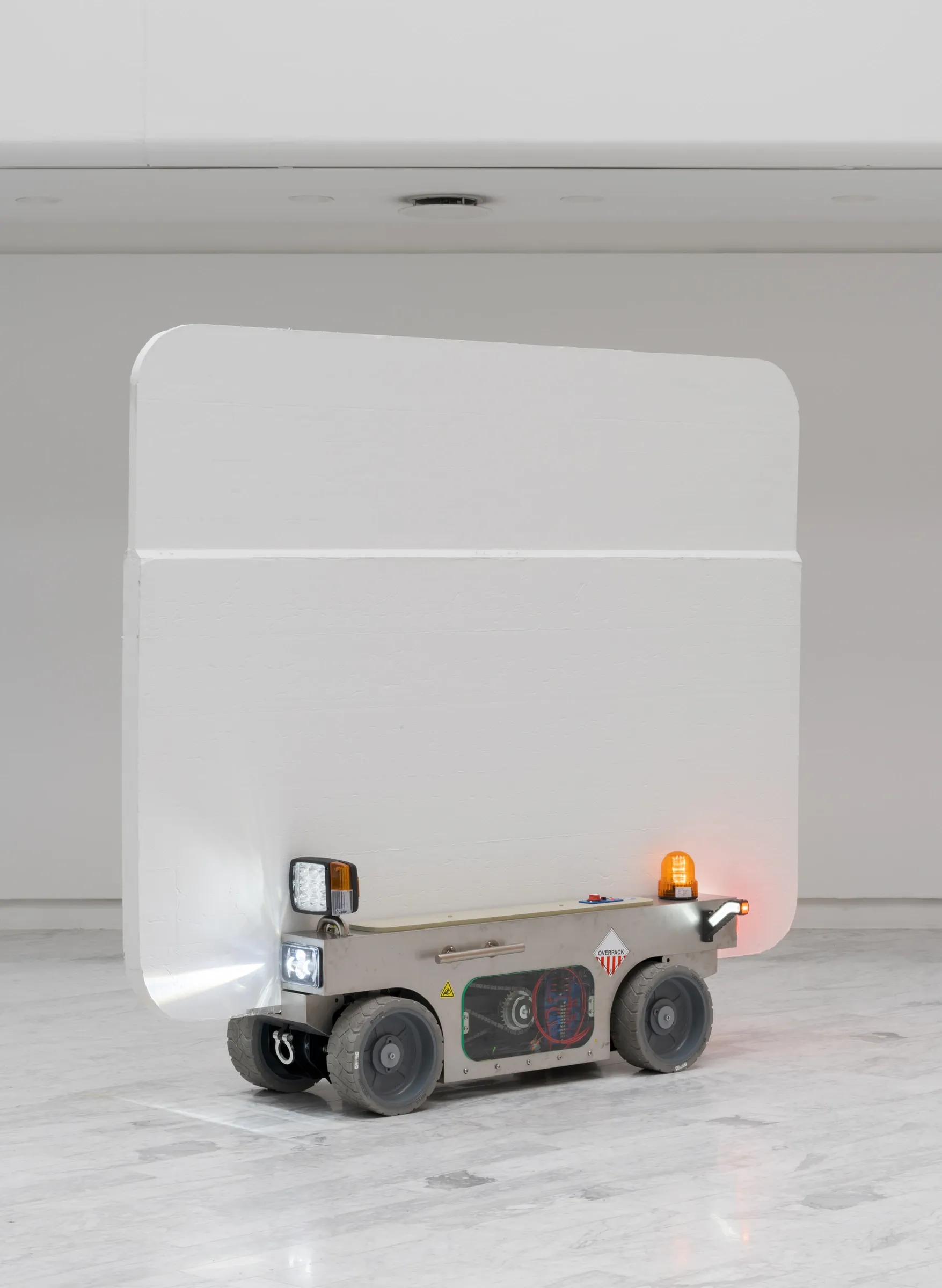
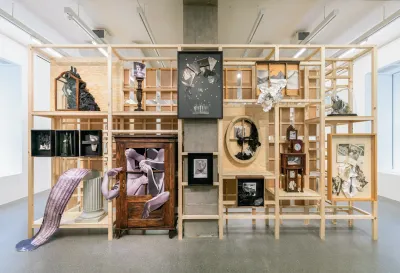
It is the kind of civic infrastructure that survives precisely by being legible, ordered, purposeful. Morlæ installs three robotic walls that slowly, repeatedly, and without warning reorganize the room.
Louis Morlæ
Walls at the World's End
Tranen
Hellerup, Denmark
–
Mon–Fri 8:00–20:00, Sat–Sun 10:00–16:00
Ahlmanns Allé 6, 2900 Hellerup, DK
Toke Lykkeberg
David Stjernholm
Courtesy Tranen
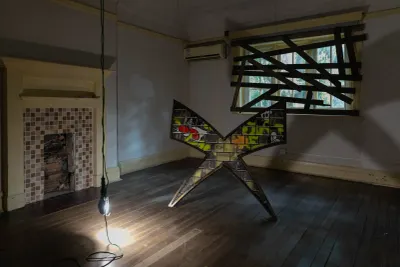
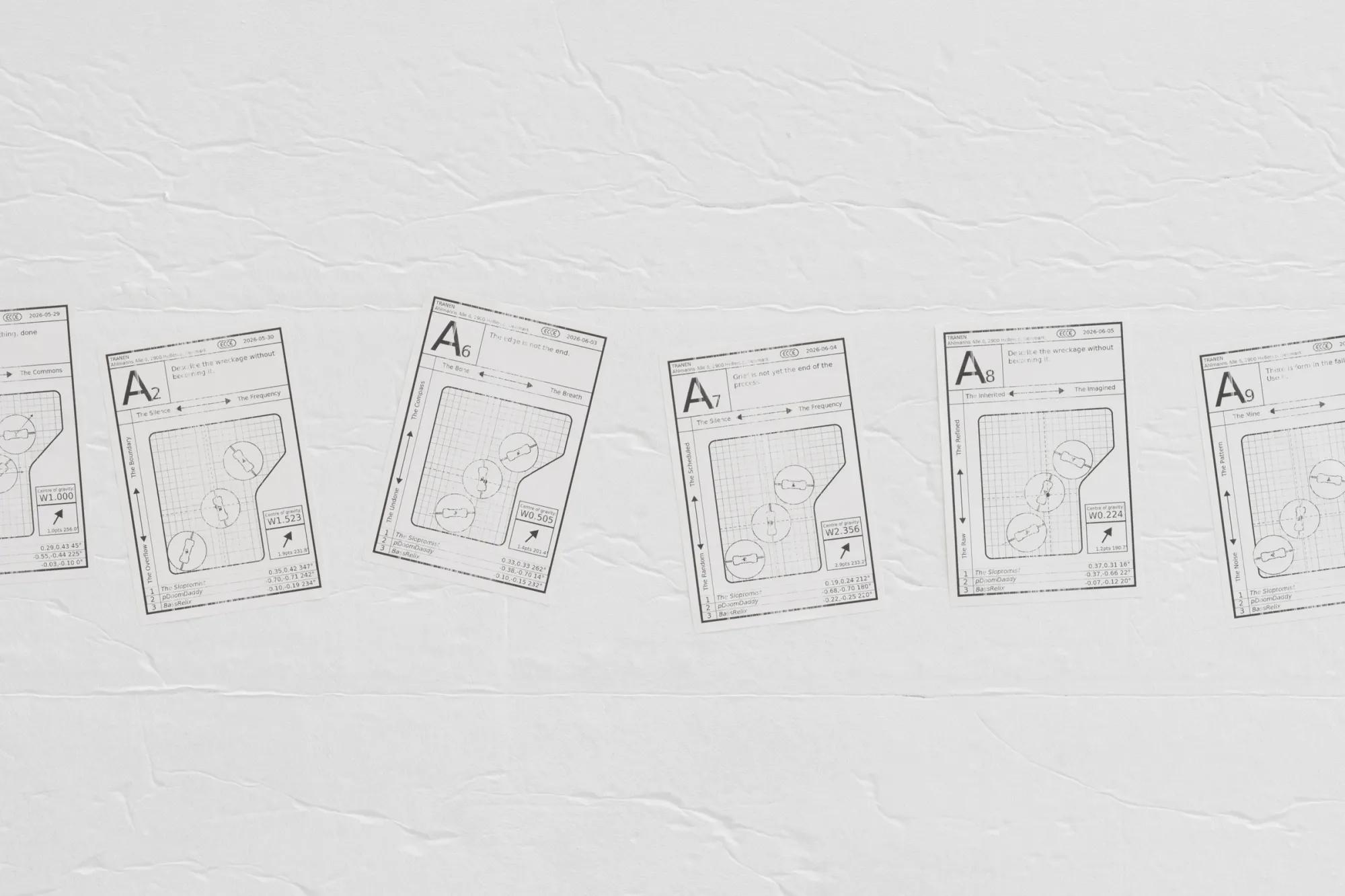
The mobile partitions are his central work. Built on wheeled chassis by an engineer known from the British TV show Robot Wars, they are controlled by an AI system that harvests live data from the internet using what Morlæ calls poetic concept pairs, "the fence and the horizon," "the furnace and the tide."
What actually moves them is, in other words, whatever is happening in the world right now, filtered through logic that Morlæ himself cannot fully read. The walls follow the world. They just don't explain themselves.
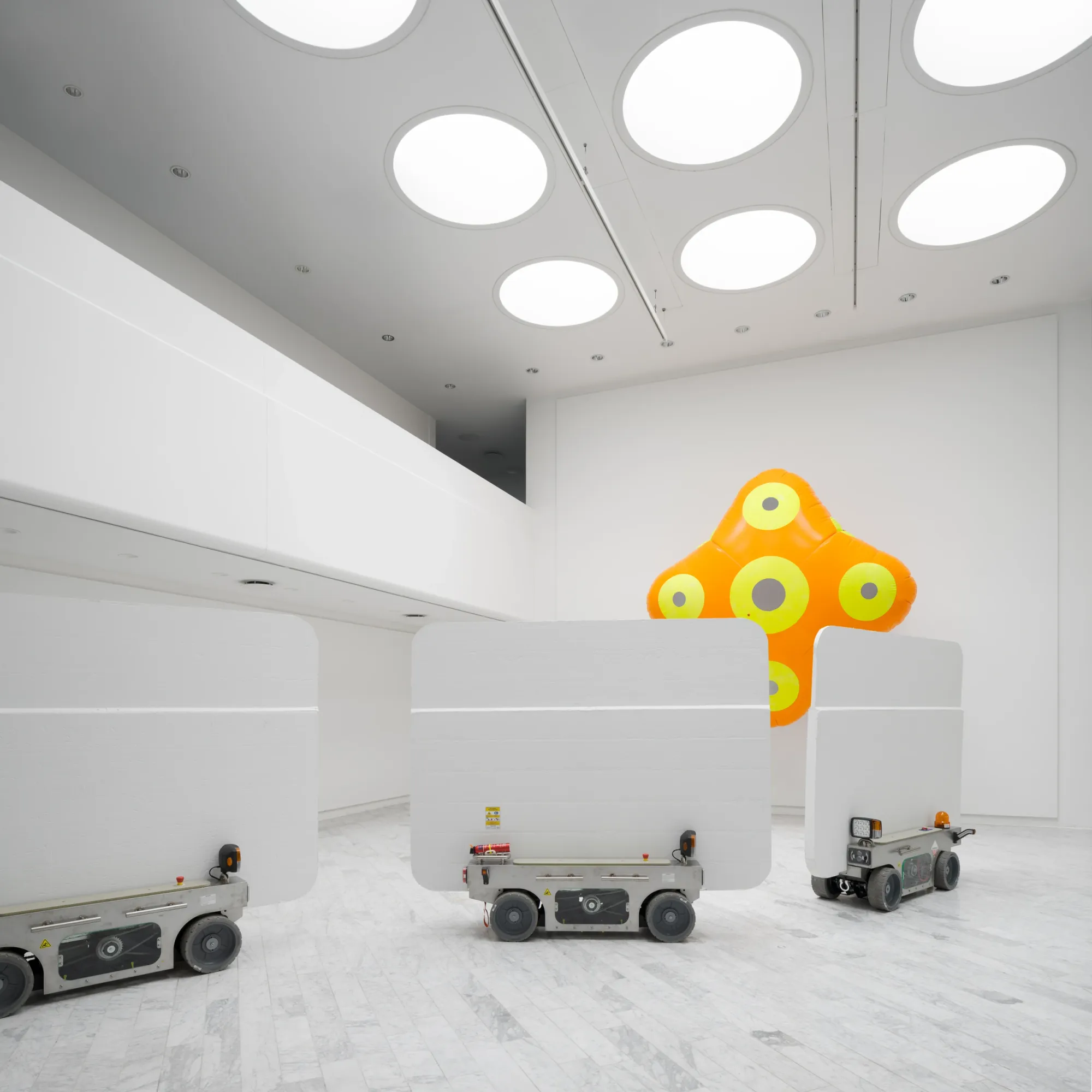
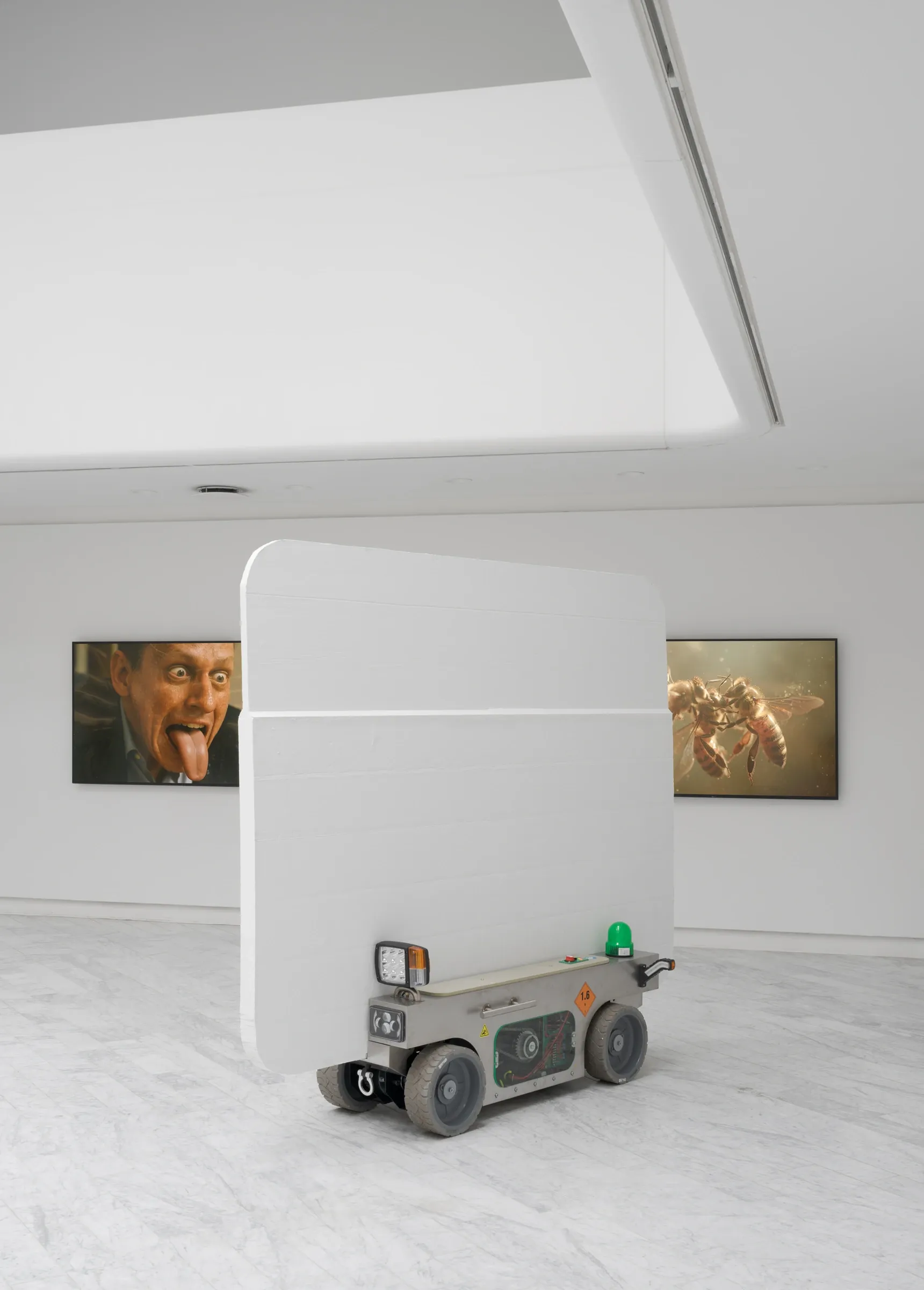
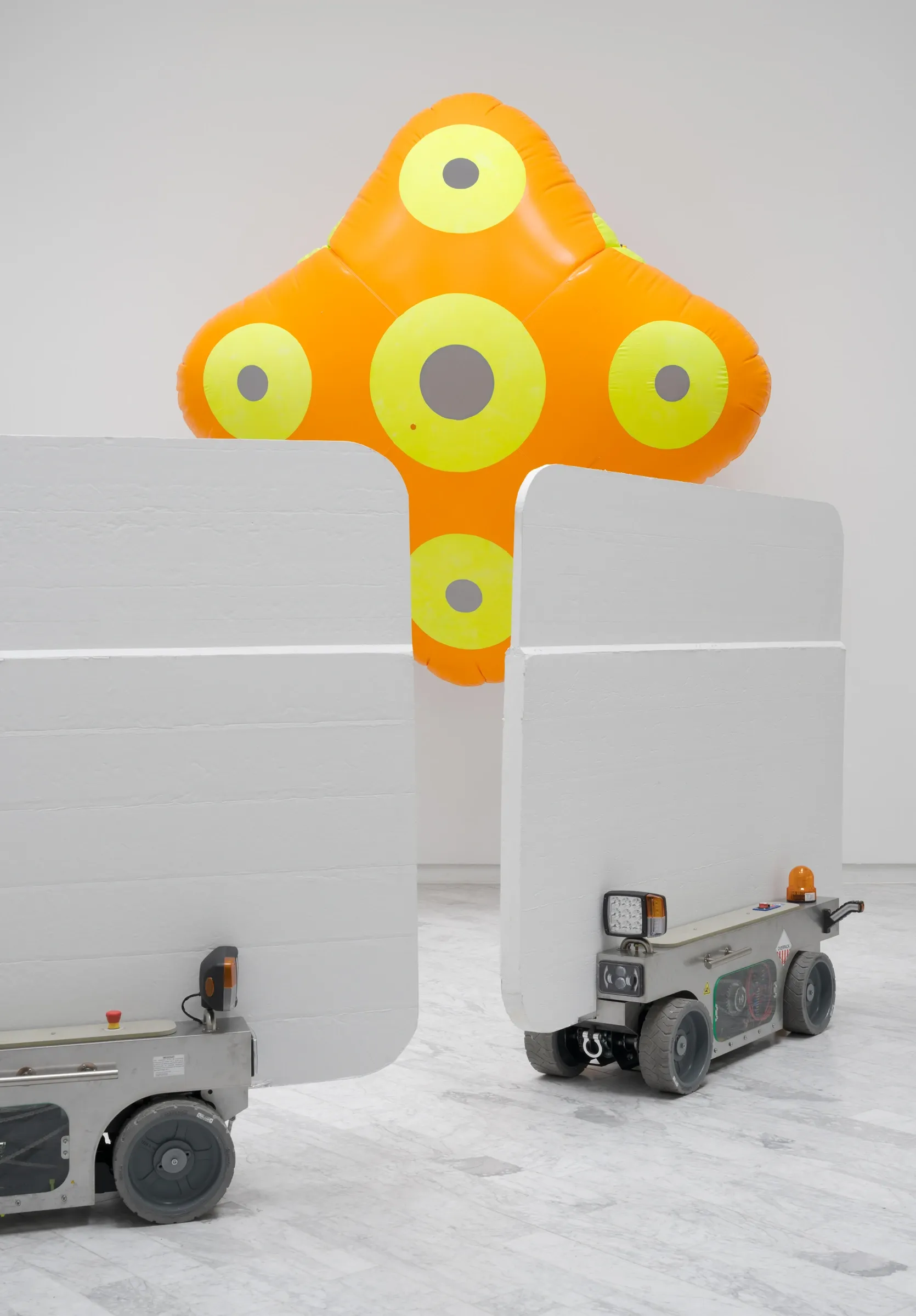
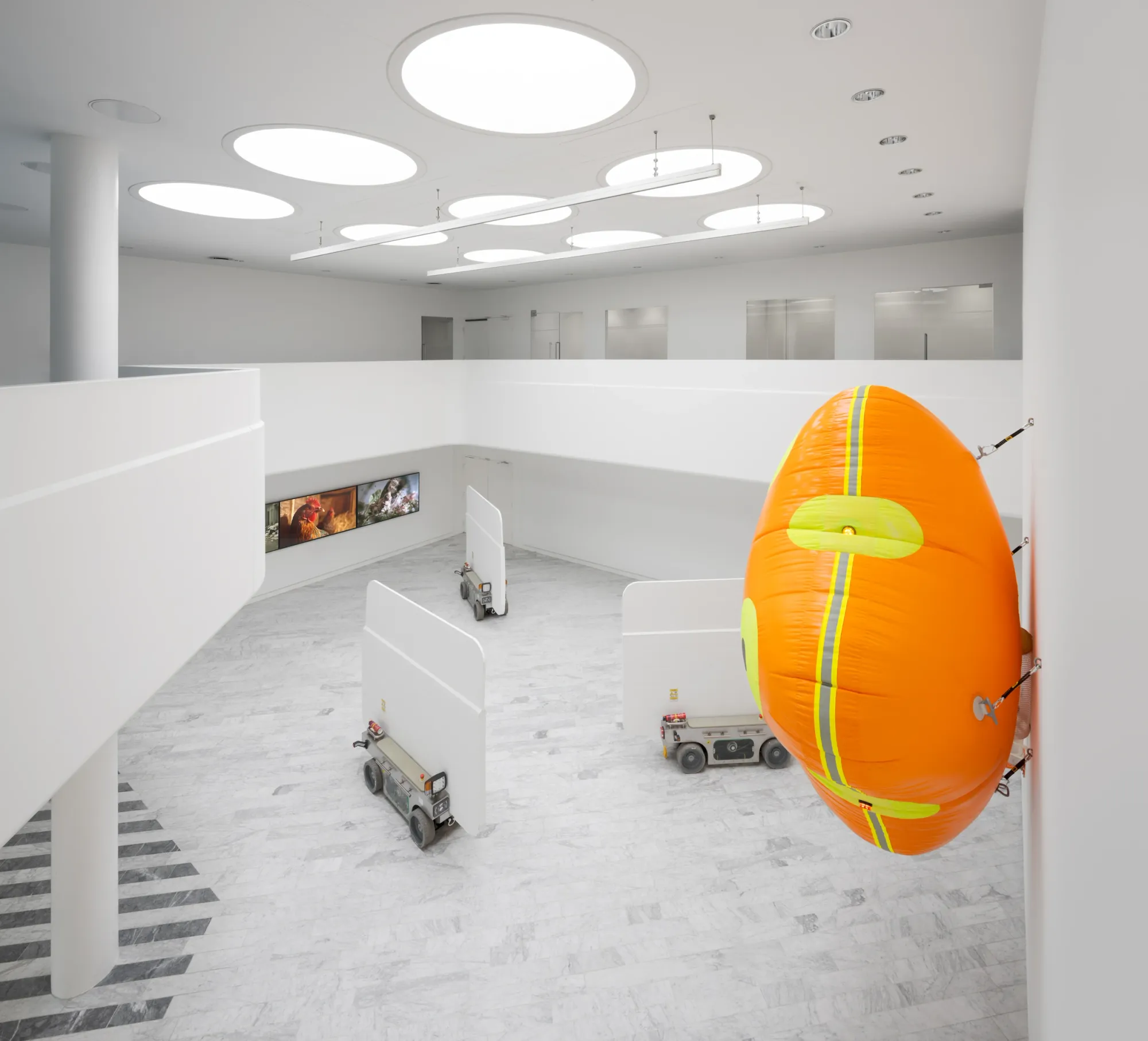
Physically, they behave something like bumper cars. They can collide, rebound, be set to different modes. During the exhibition's run, they continuously generate new configurations within Tranen's single chamber, new passages, new dead ends, new thresholds. The visitor navigating the gallery on one afternoon will find a different spatial logic on the next. The walls are both the infrastructure and the disruption of it.
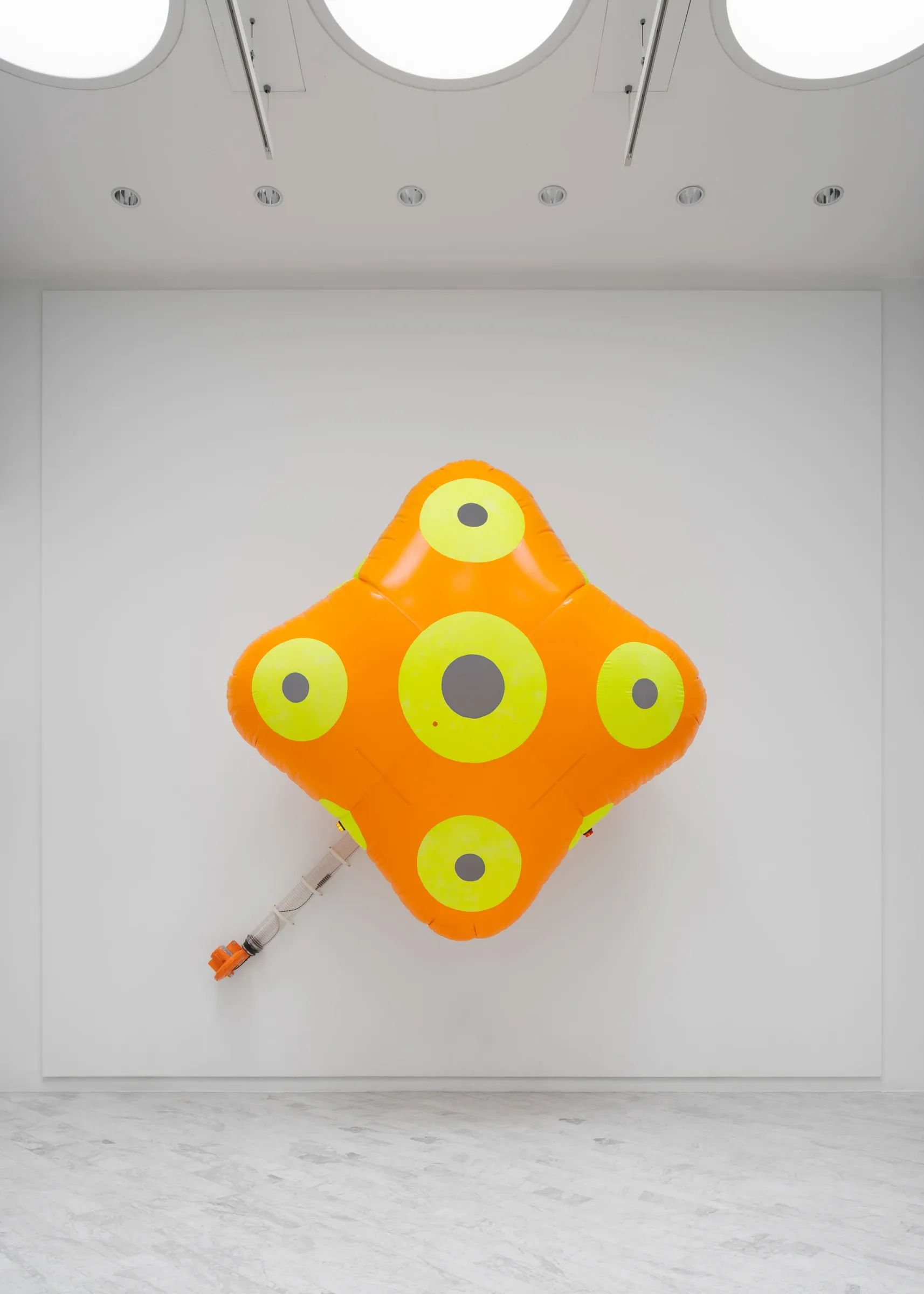
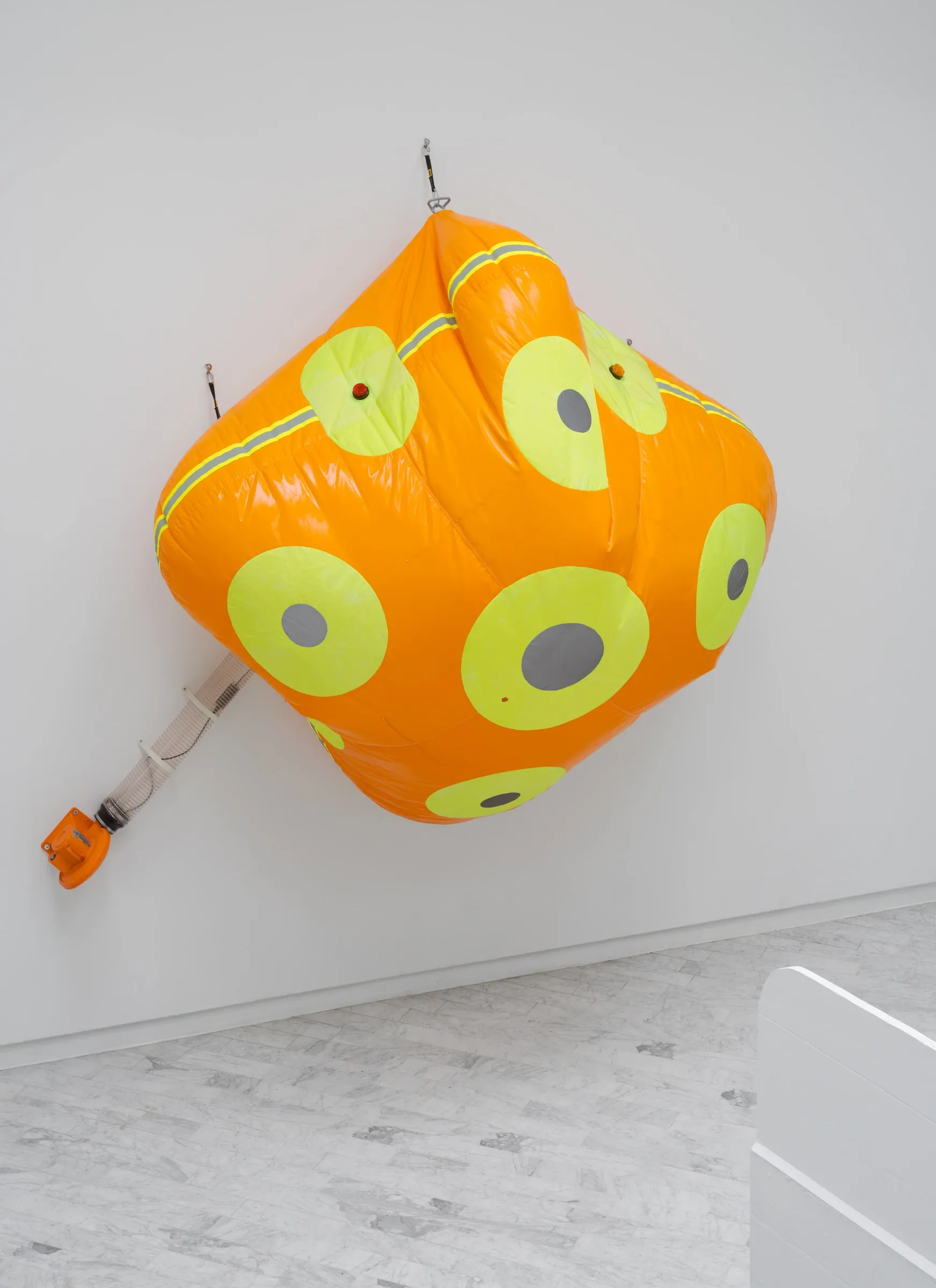
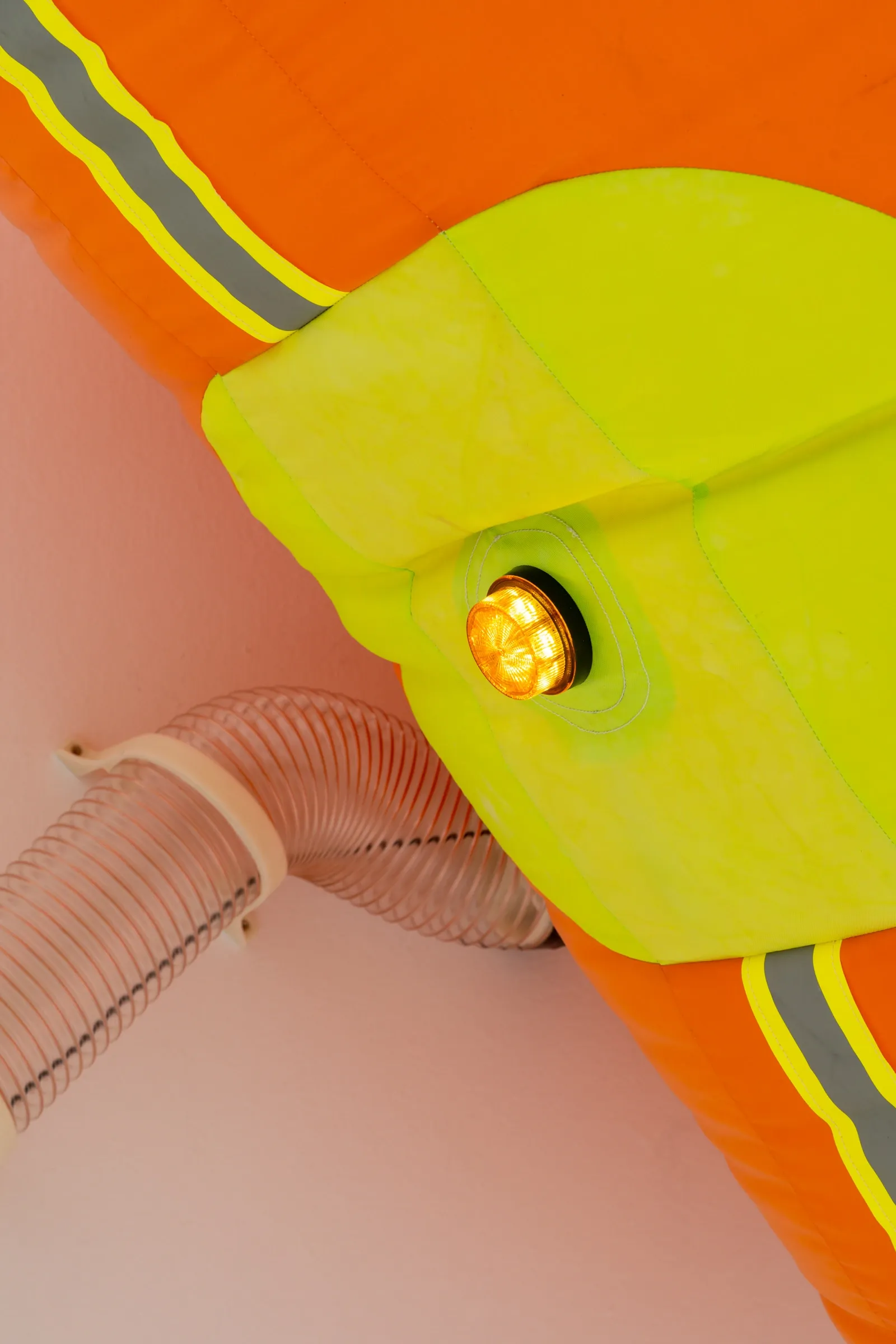
Above them, mounted high on the end wall, hangs an oversized airbag with flashing lights. It can be inflated to compress the room, restricting how far the walls can travel. Morlæ frames it as a kill switch, the tech industry's answer to the risk it creates.
The airbag literalizes the absurdity of that position. The safety measure is also hot air. The same actors accelerating AI development claim they will also regulate it, as if the genie could be reliably pressured back into the bottle by inflating the bottle around it.
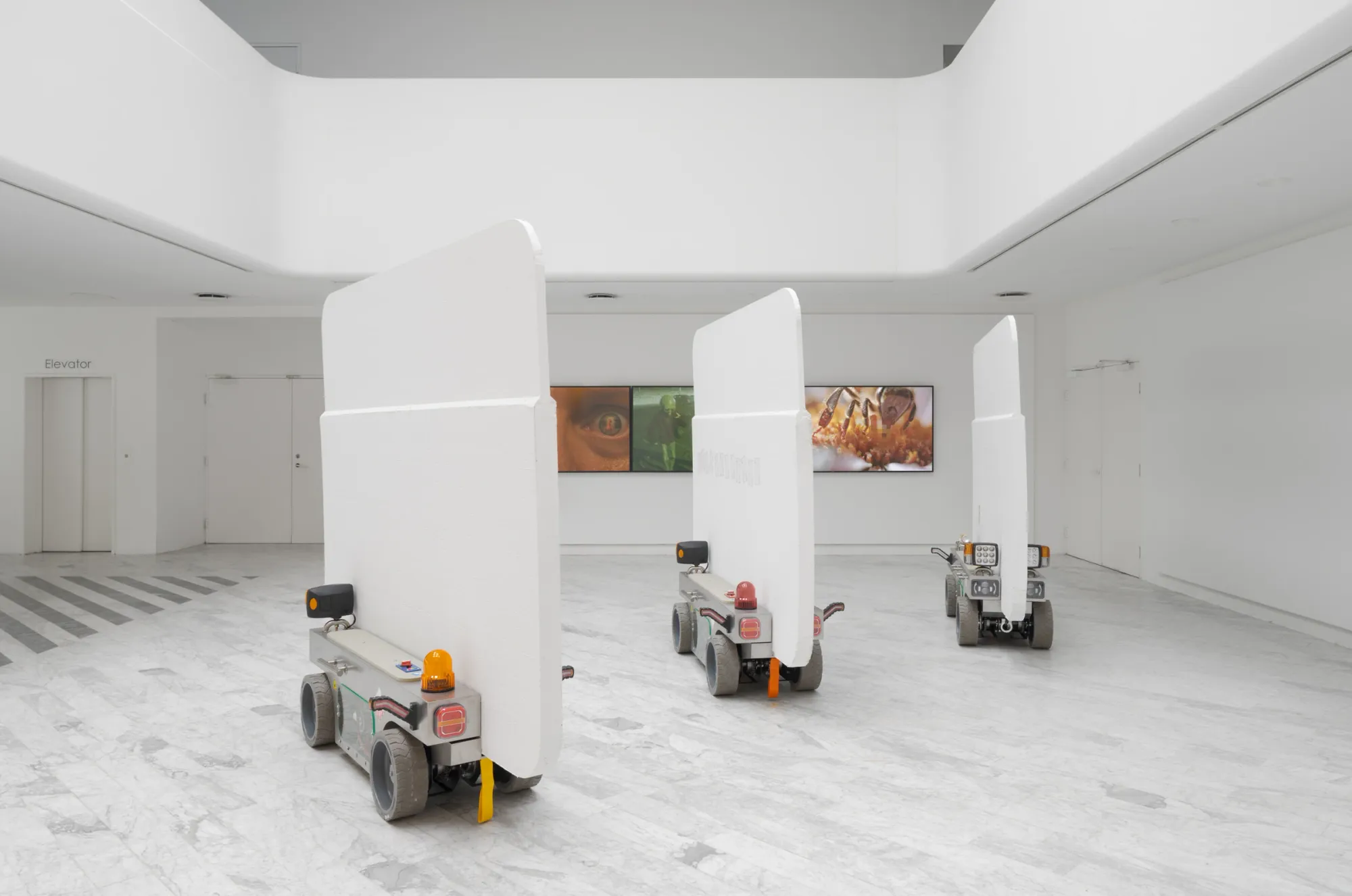
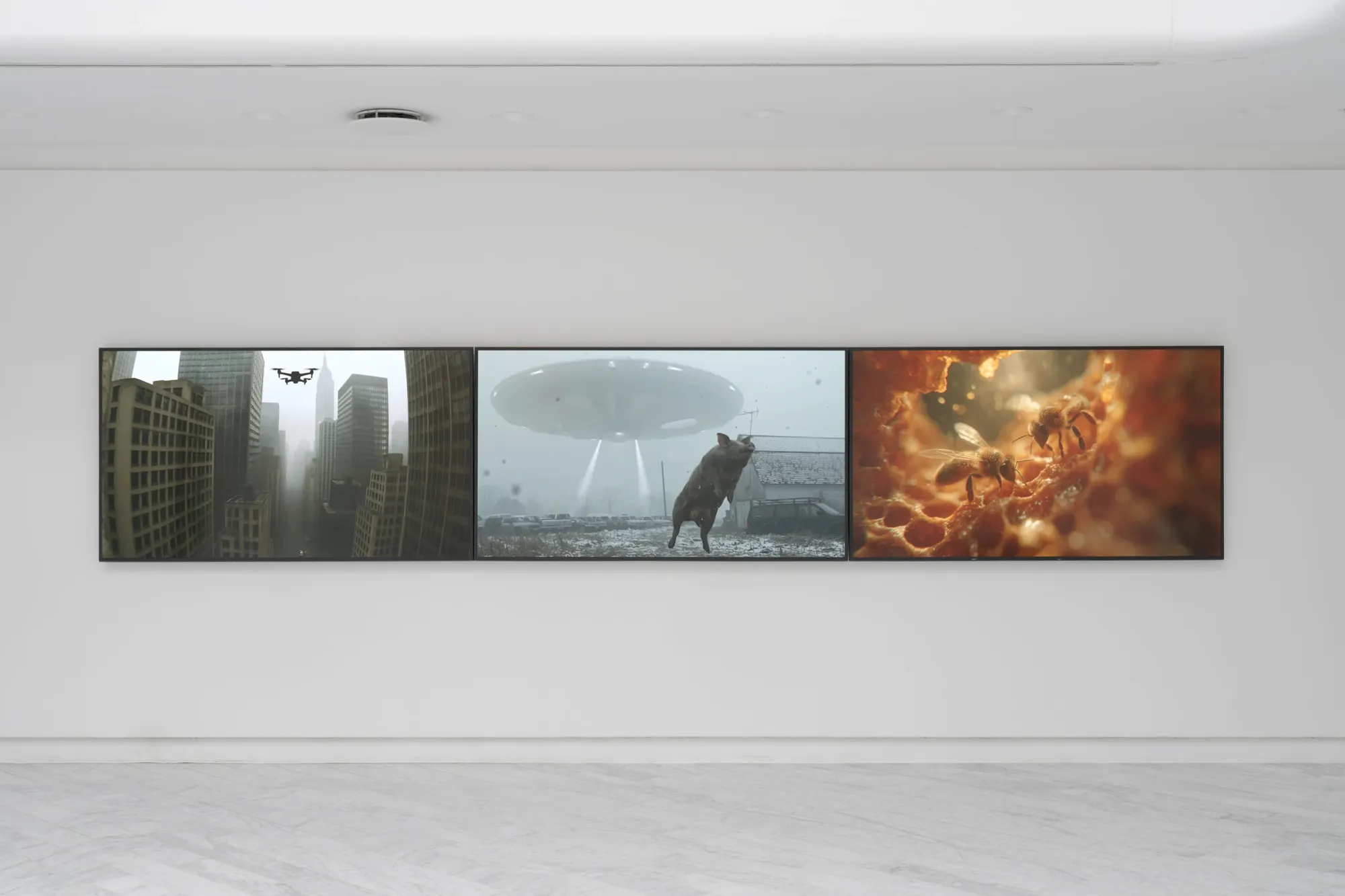
Running alongside the walls, three single-channel films occupy the space. Each takes a different end of the world as its premise, not as prophecy but as fever dream, built using the latest AI video generators as they arrive on the market.
In one, a tech individualist in the mold of Peter Thiel spirals inside a degraded version of his own futurism.
In another, an eco-collective's techno rave ends with alien abduction. The third imagines a post-human multispecies society from the perspective of ecstatic bees. None of the three are predictions. All three carry the quality of what AI systems call hallucinations, internally coherent visions that are not, strictly speaking, grounded.
That word, hallucination, recurs in discussions of AI output because it names something AI systems do that humans often do too, just with different consequences. Morlæ's films sit in that space. They feel like the kind of answers an AI gives when it has been pushed past the edge of its training data, plausible structures, strange content, confident delivery.
At the end of the exhibition, the walls will still be moving. The system will still be pulling from the internet, still running its poetic pairs, still generating configurations that no one planned.
Morlæ offers numerous scenarios for what comes after the world as we know it. What he does not offer is a stable place to stand while watching them.
Instagrams Louis Morlæ
Instagram Tranen
About Catapult Contemporary - Art Platform Submission
This is a exhibition review published by Catapult — an independent editorial platform for contemporary art, based in Vienna. We publish exhibition reviews, artist features, interviews, and critical context, with a focus on emerging and mid-career practices from Europe and beyond.
catapult.art
Want to be featured? Submit your work →