When Language Recedes, Architecture Remains

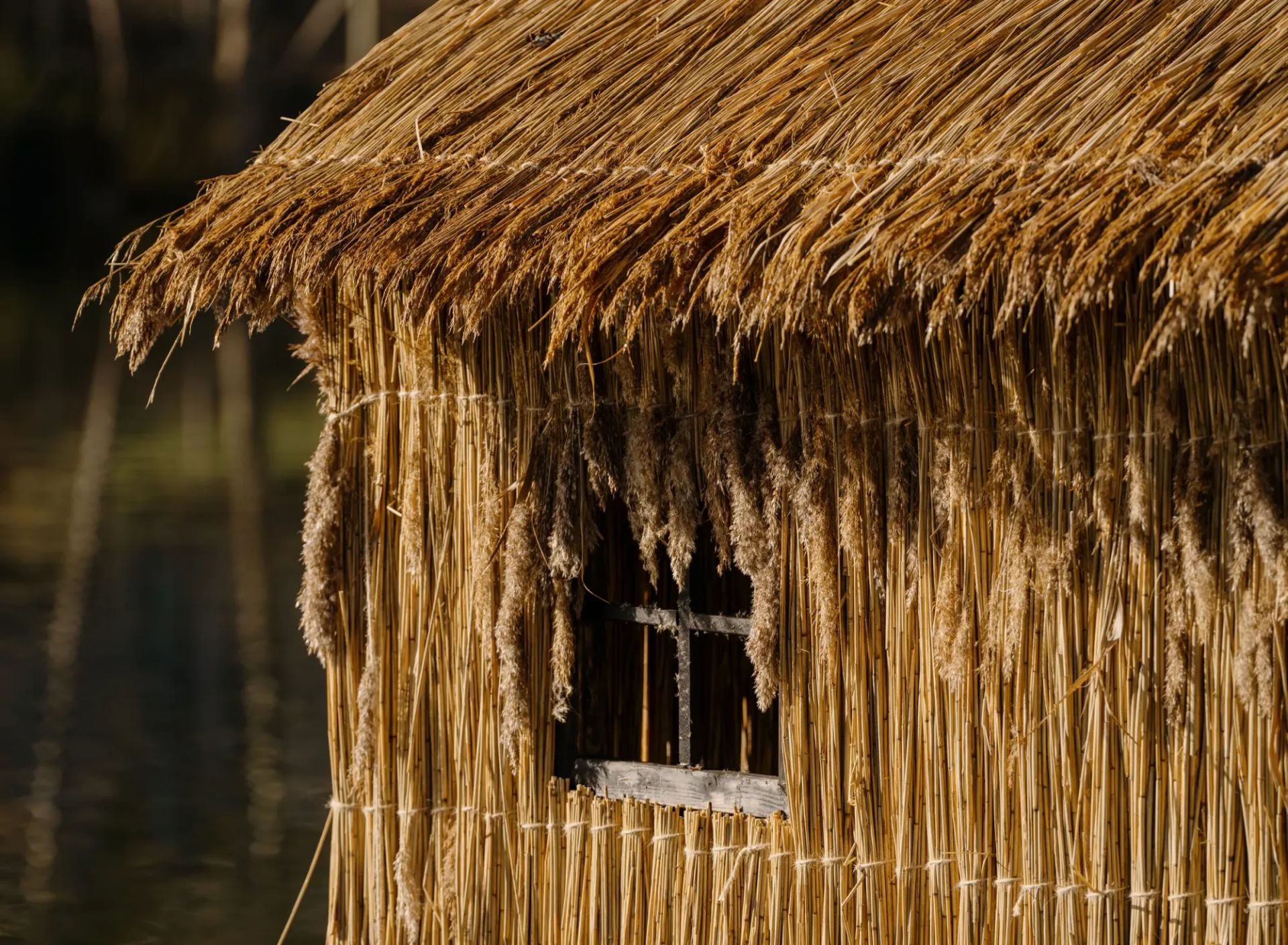
Olivia Rode Hvass and Museet for Samtidskunst Presents She Listens but She Can't Speak in Kurhuset, Roskilde
Museet for Samtidskunst presents She listens but she can't speak by Olivia Rode Hvass at Skt. Hans, Roskilde.
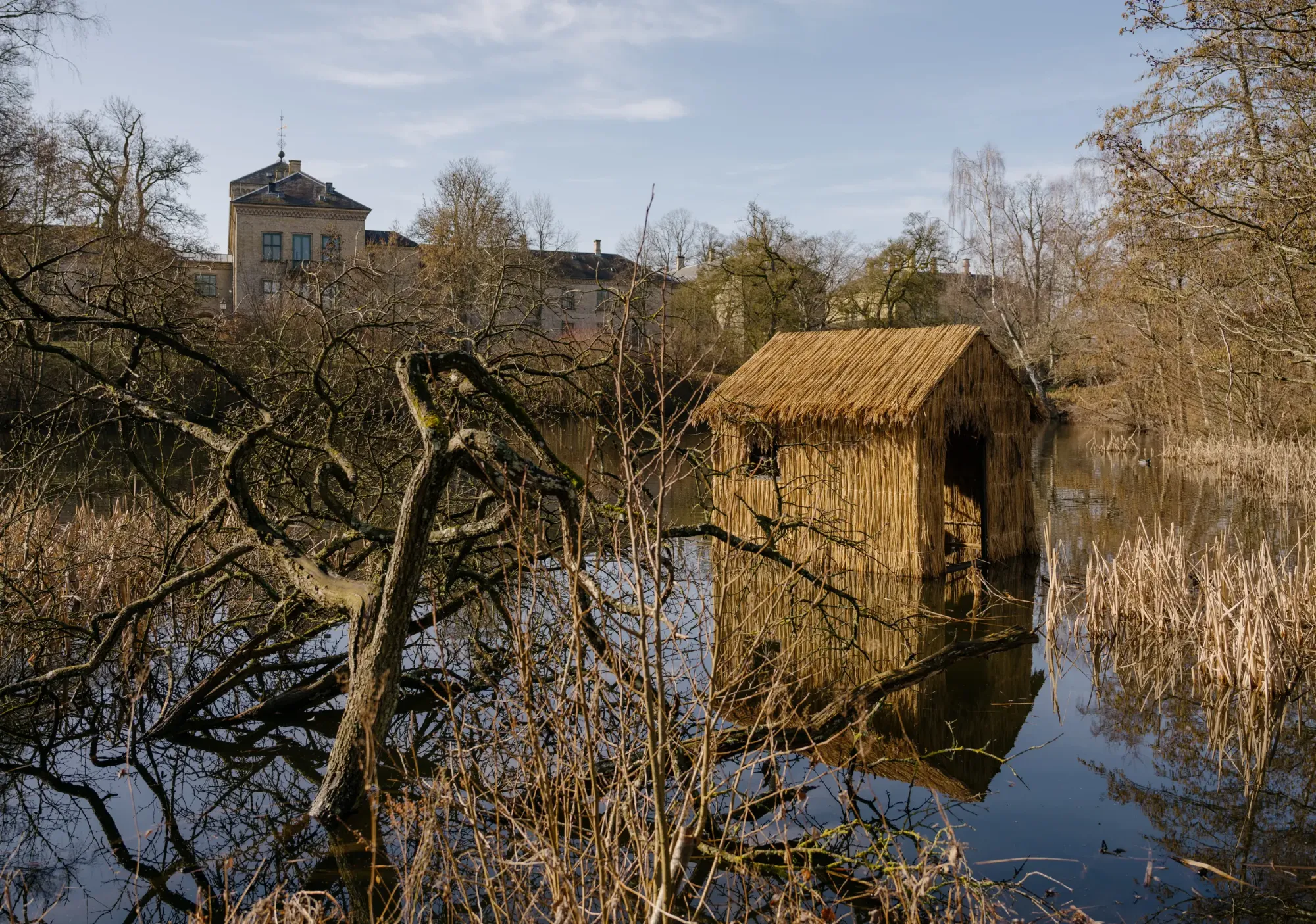
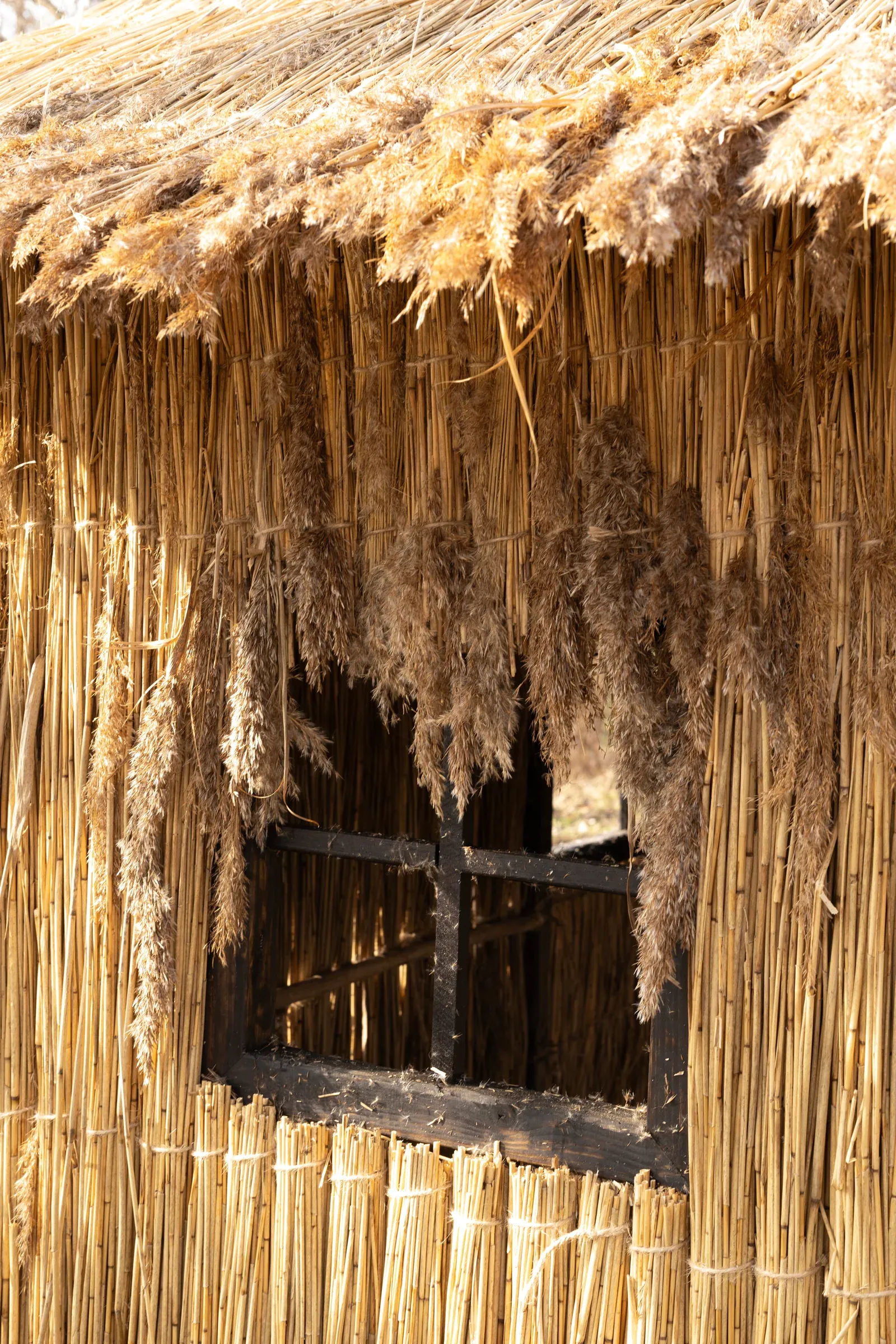
When the words run out, other forms of holding take over. Drawing, touch, and the accumulated gesture of building something by hand carry what language, when it fails, cannot.
There is a long history of structures made not to last, made instead to mark.
Olivia Rode Hvass
She listens but she can't speak
Museet for Samtidskunst
Roskilde, Denmark
David Stjernholm, Nicola Helin
Courtesy Museet for Samtidskunst
The question of what an artwork can do for a person who cannot see it has no clean answer.
But the impulse behind it, to make a visible form out of an invisible act of care, describes something particular about what sculpture, at its most unguarded, sometimes manages.
The most honest structures are built for someone who may never enter them. Their purpose is to hold the weight of a wish that has nowhere else to go.
She listens but she can't speak is sited on the lake at Skt. Hans, the closed grounds of a former psychiatric hospital in Roskilde, where Museet for Samtidskunst, a nomadic museum without fixed walls, currently resides.
The work floats. Touched by wind and water. As the only piece in the exhibition visible around the clock, it does not require an opening time or a gallery threshold; it is simply present, the way worry is.
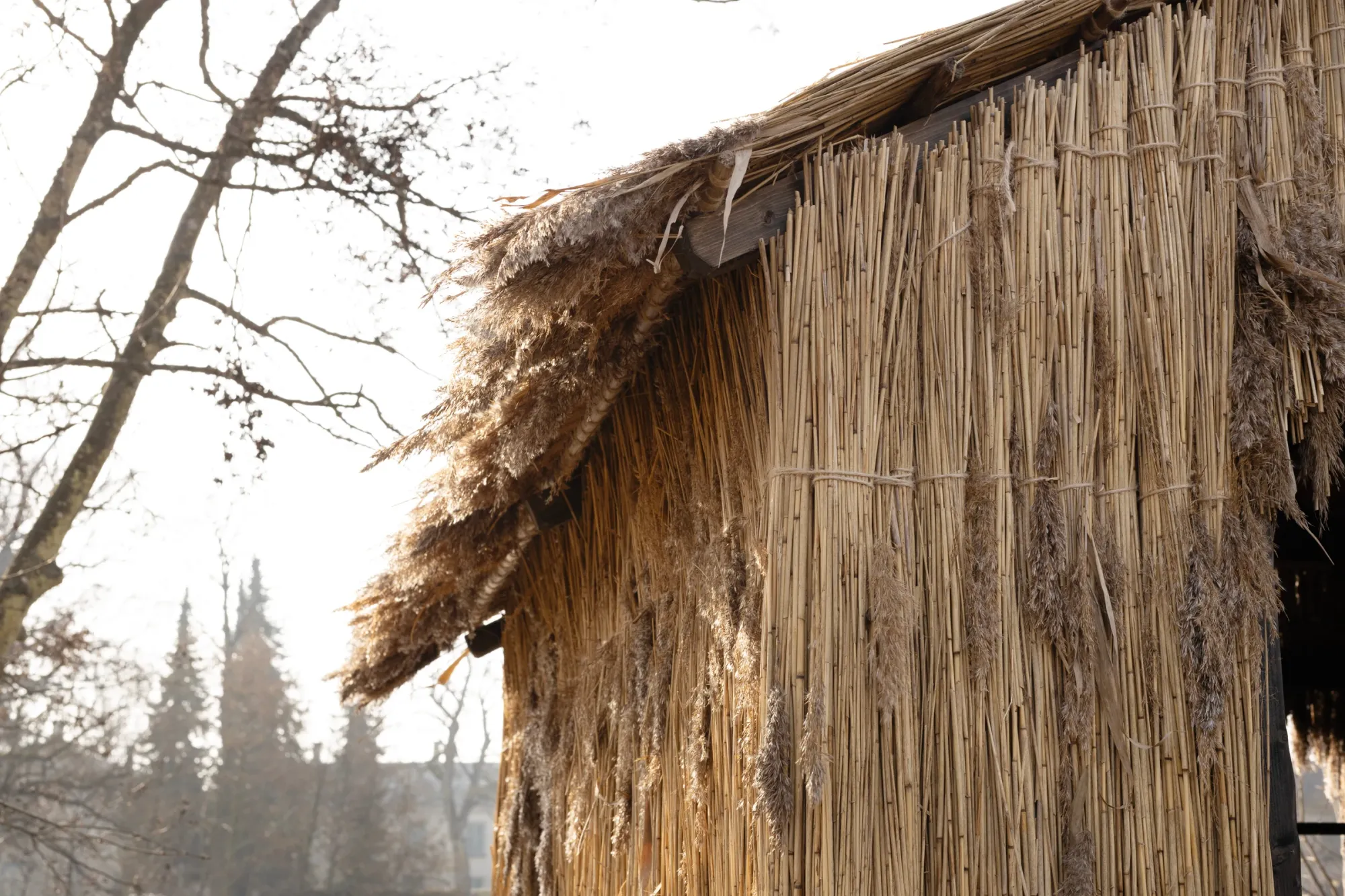
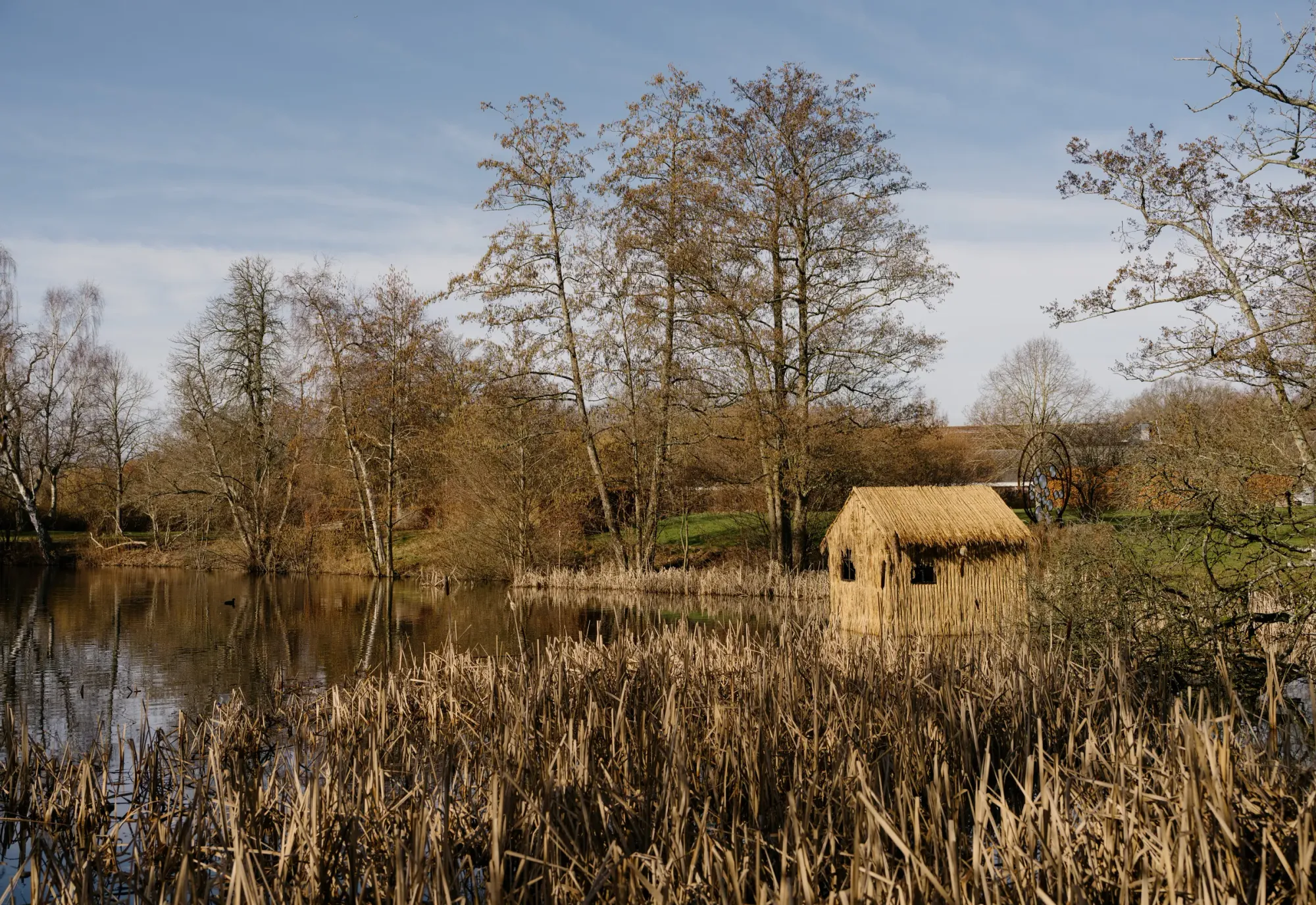
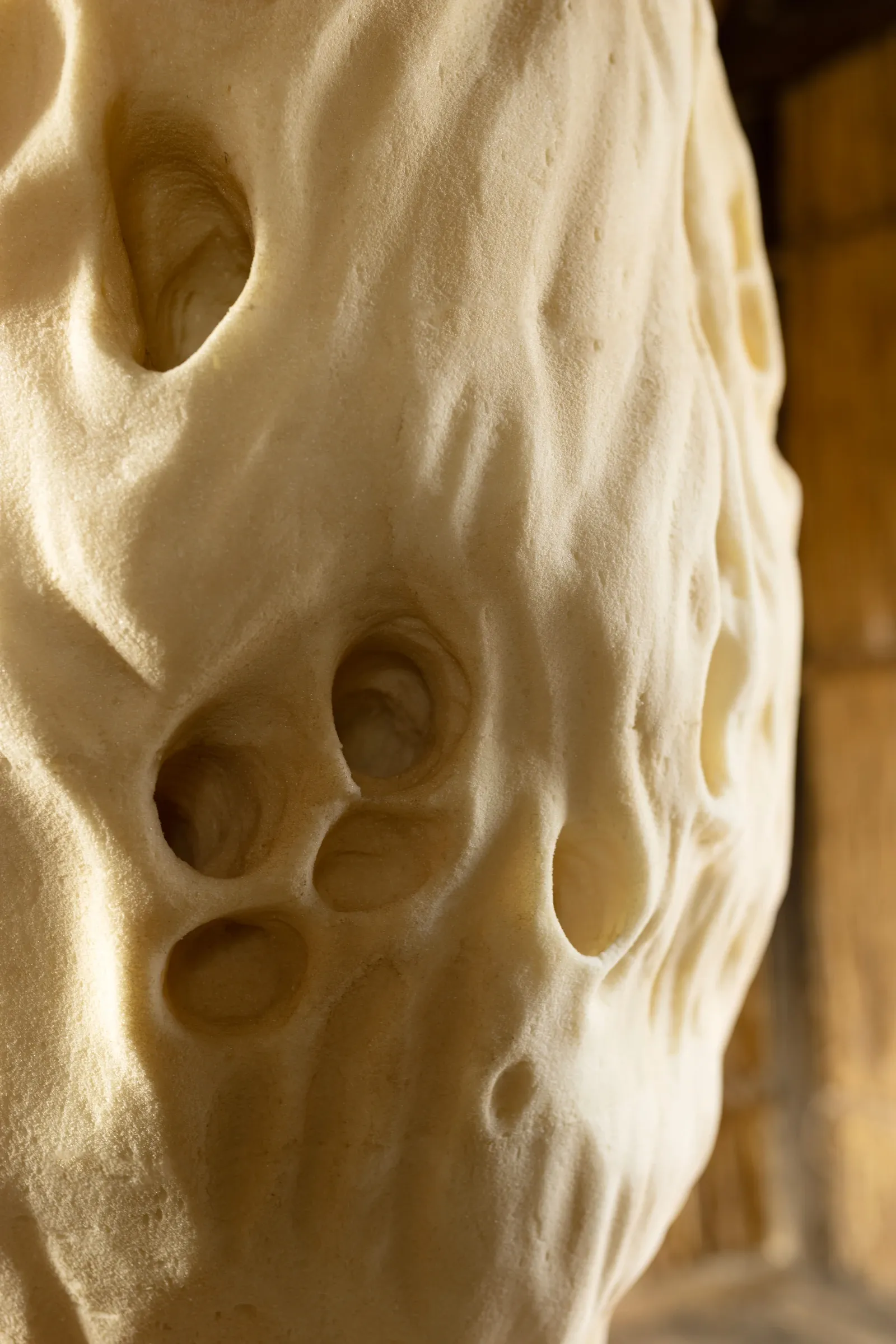
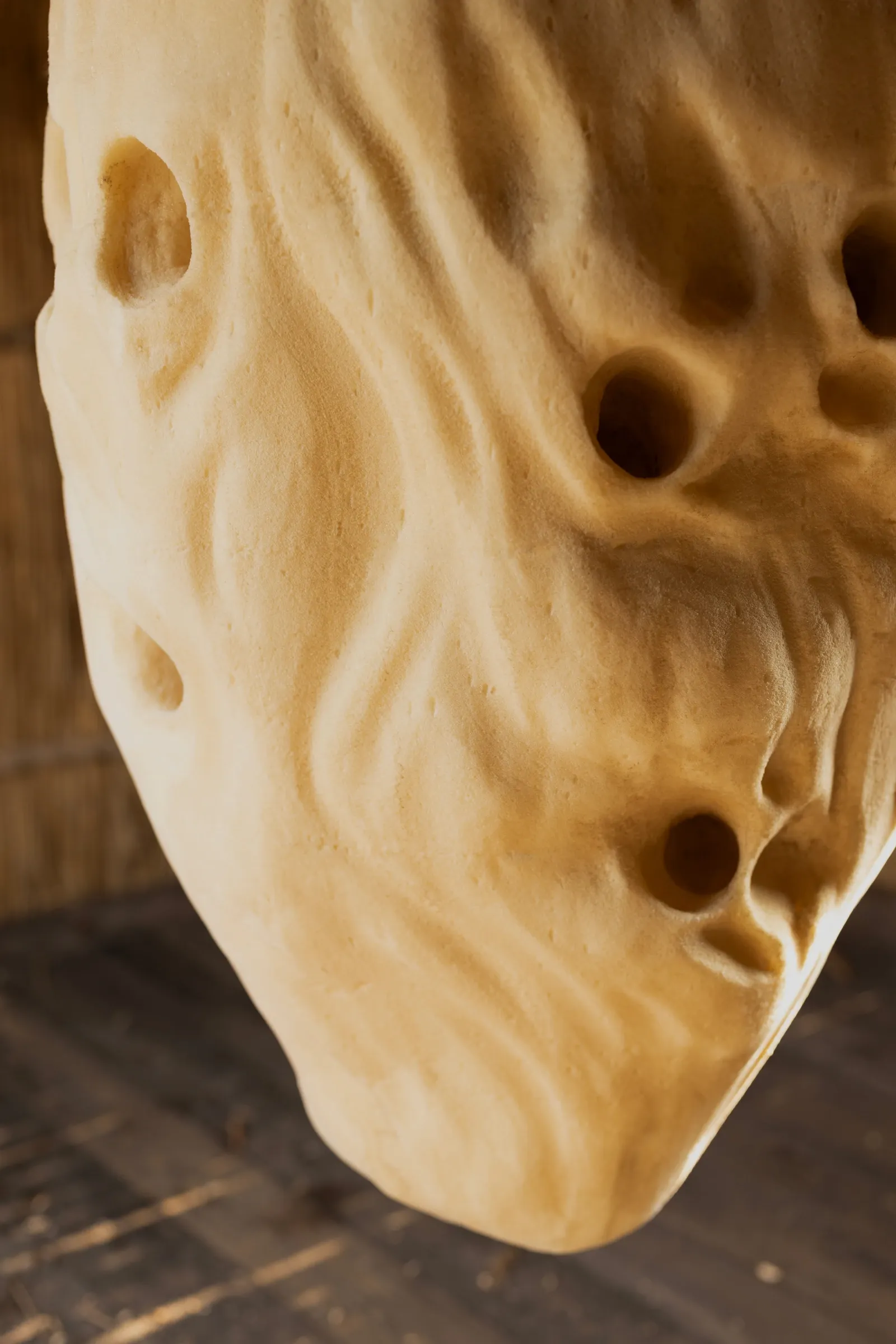
The structure is a small reed house, its walls built from the same reeds that grow at the lake’s edge. Inside, visible through the window and the door, a yellow cocoon made of building foam, the material that sits behind walls in every constructed space, pressed between boards and insulation, ordinarily invisible.
Here it is exposed and held. Rode Hvass drew the cocoon first, a shelter sketched on paper during a hospital visit for a friend who had lost the use of speech. The sculpture is the drawing made physical, brought out onto the water.
 Dominique Catherina Foertig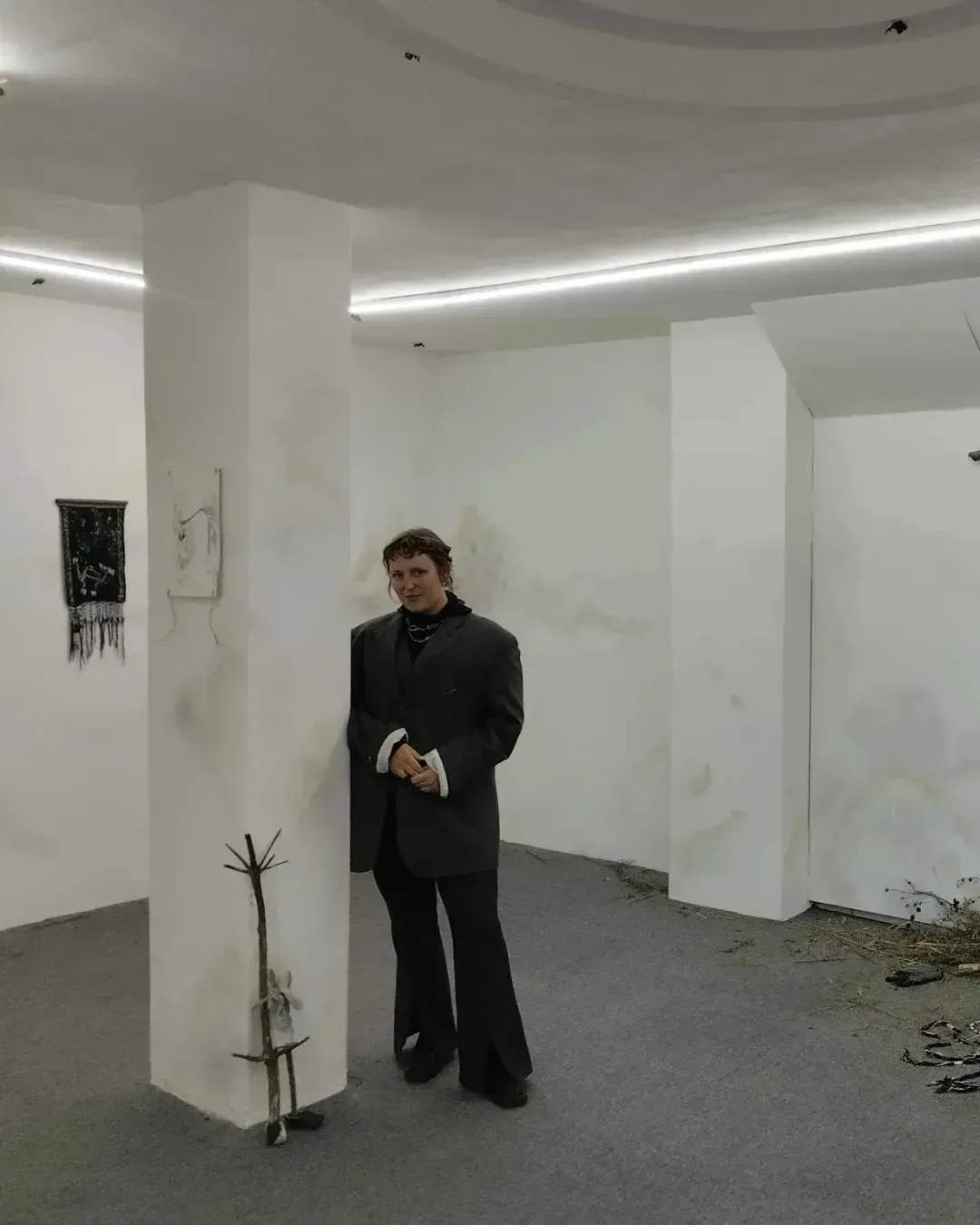
Olivia Rode Hvass - Catapult Contemporary
The choice of reed is not incidental. It is one of the few building materials that does not decay in standing water. It has been used for thatched roofs across Denmark, for reed boats in South America, and for the floating islands of the Ma'dan people in Iraq.
The house carries this compressed history of building in difficulty while anticipating a future in which flooding will determine what can and cannot be built. It is a structure with no fixed shore.
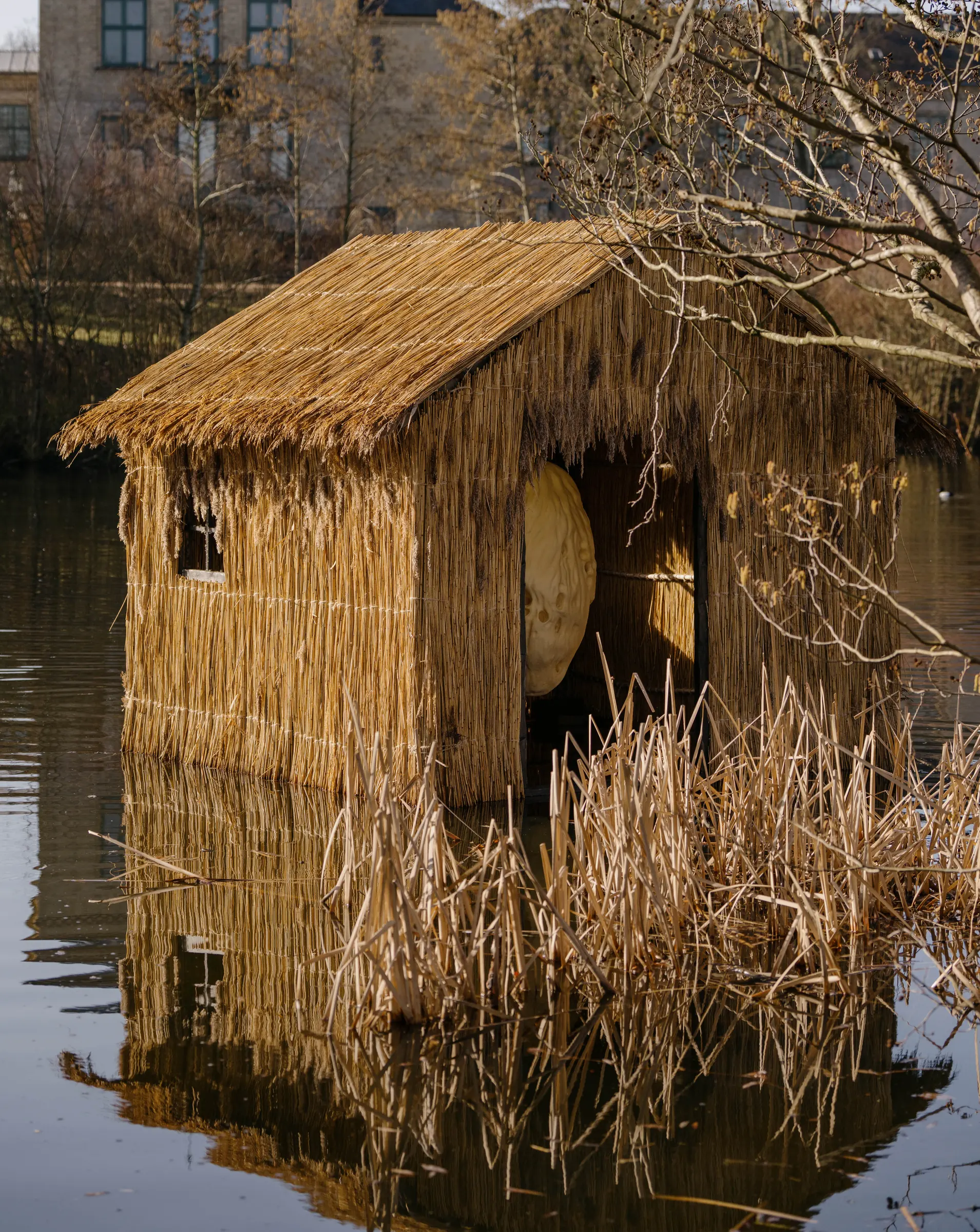
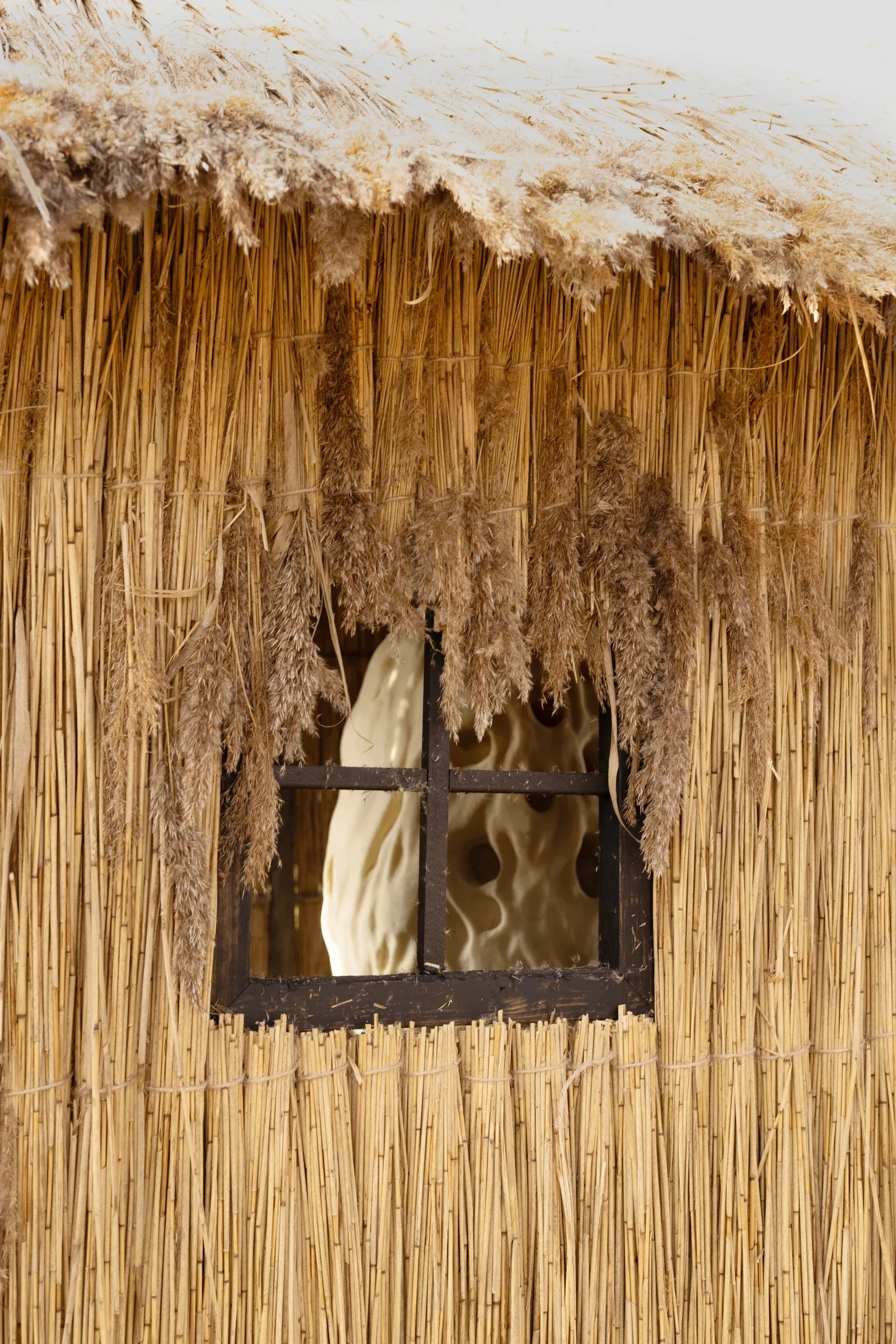
Olivia Rode Hvass plans to burn the work after the exhibition closes. That the work should end in fire feels right. Not as destruction but as transformation.
Care, in the terms this sculpture suggests, is not a permanent condition. It is something that transforms. The cocoon will not always be a cocoon. The house will not always be on the water.
Not all Alices have an Olivia.
That sentence, which closes the artist’s own text, describes the dedication the work carries and the social critique embedded in it.
Rode Hvass’s practice has consistently returned to the conditions that make care difficult, loneliness, individualism, and the costs borne by those who fall outside the pace of the ordinary.
This work extends that preoccupation into something quieter and more exposed. It sits on the lake and waits.
Museet for Samtidskunst on Instagram
Olivia Rode Hvass on Instagram
About Catapult
This is a exhibition review published by Catapult — an independent editorial platform for contemporary art, based in Vienna. We publish exhibition reviews, artist features, interviews, and critical context, with a focus on emerging and mid-career practices from Europe and beyond.
catapult.art
Want to be featured? Submit your work →