Can a Vase Archive a Text Message?
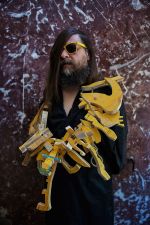
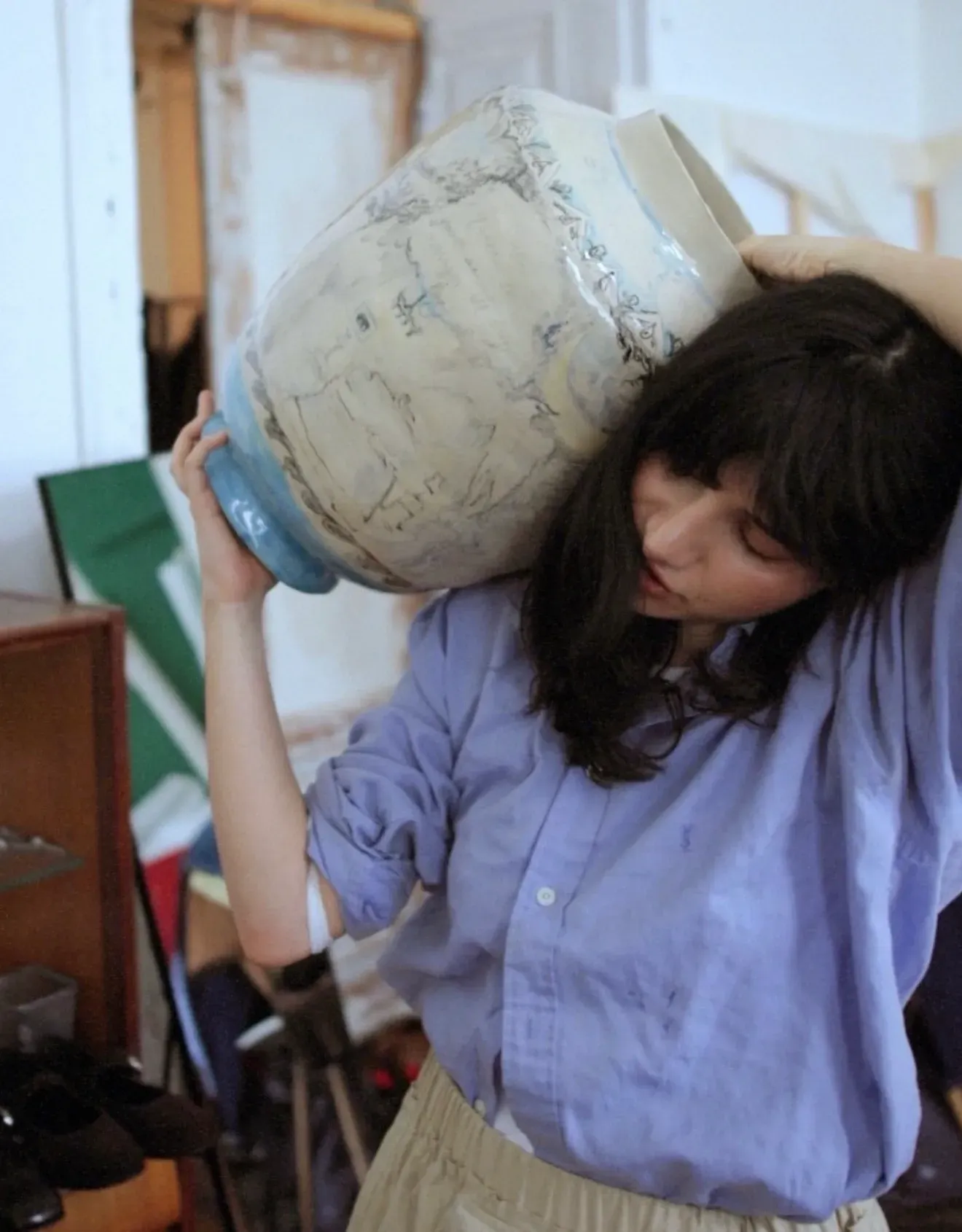
Christina Arark Manucharyan on Armenian Heritage, Ceramics and Digital Communication
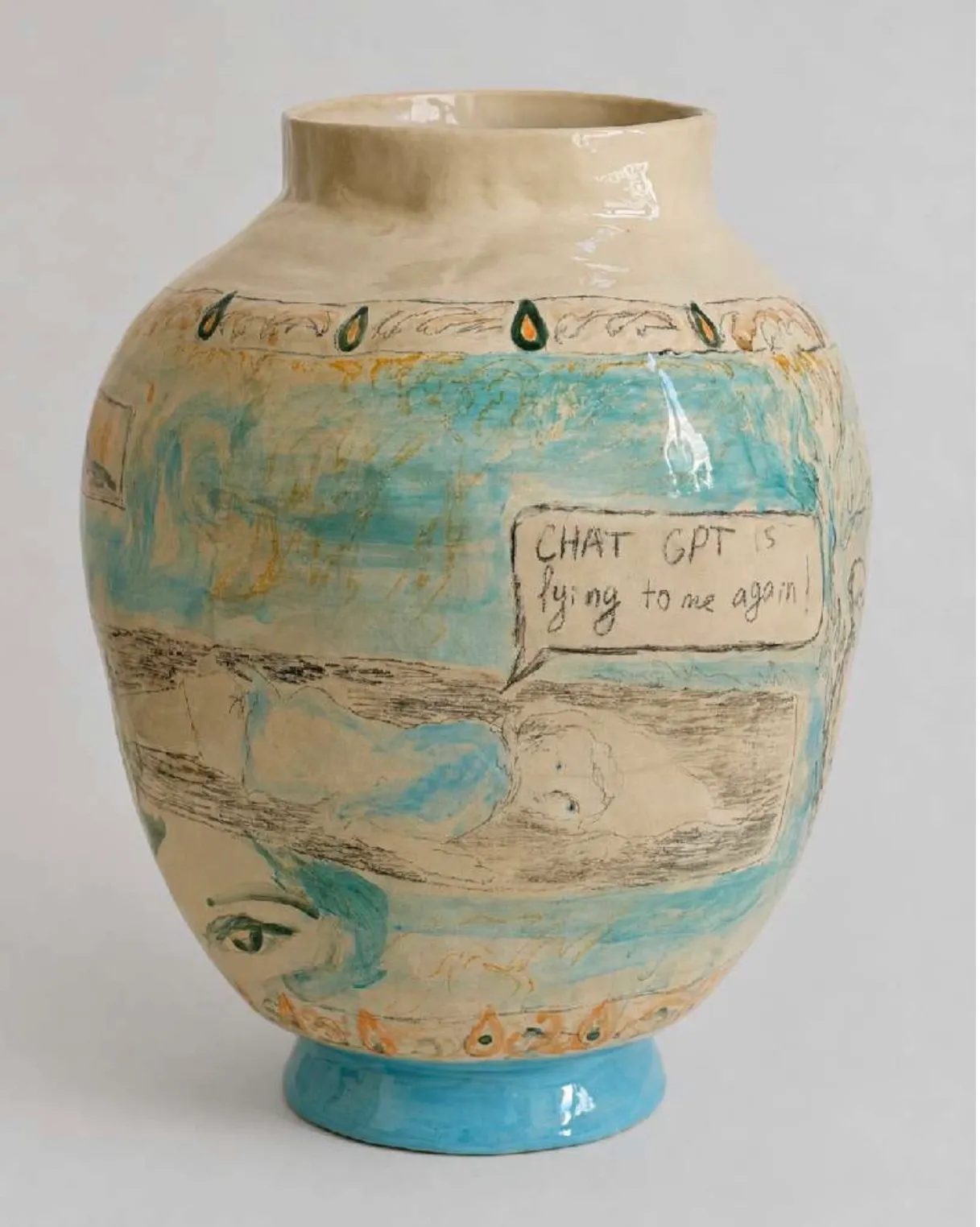
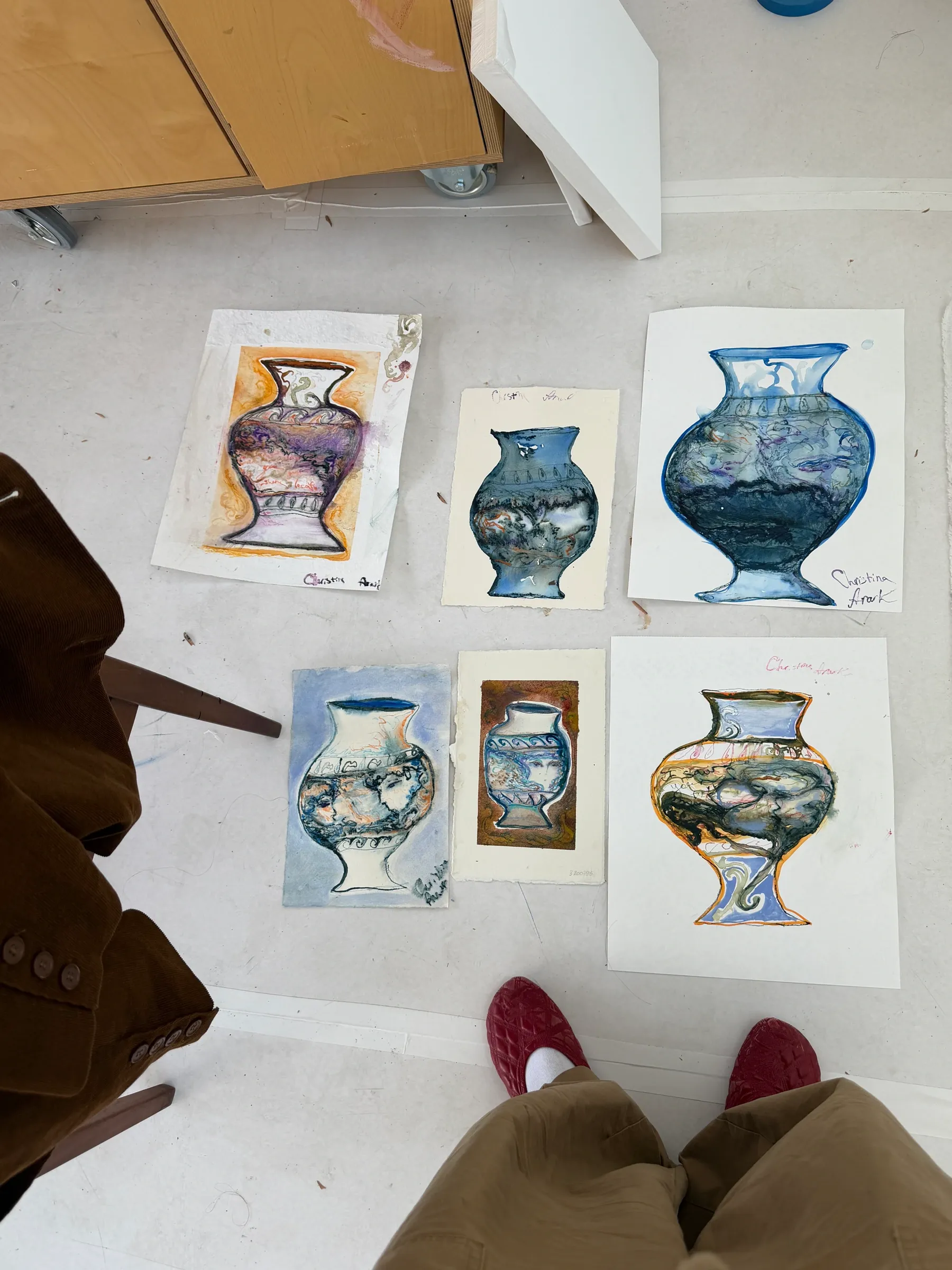
A vase wears a band of drops and waves around its shoulder. Below it, a speech bubble reads: Chat GPT is lying to me again!
On Christina Arark's ceramics the interface does not sit beside the pot. It is drawn, glazed and fired into the same surface as a face, a bird or a flip phone.
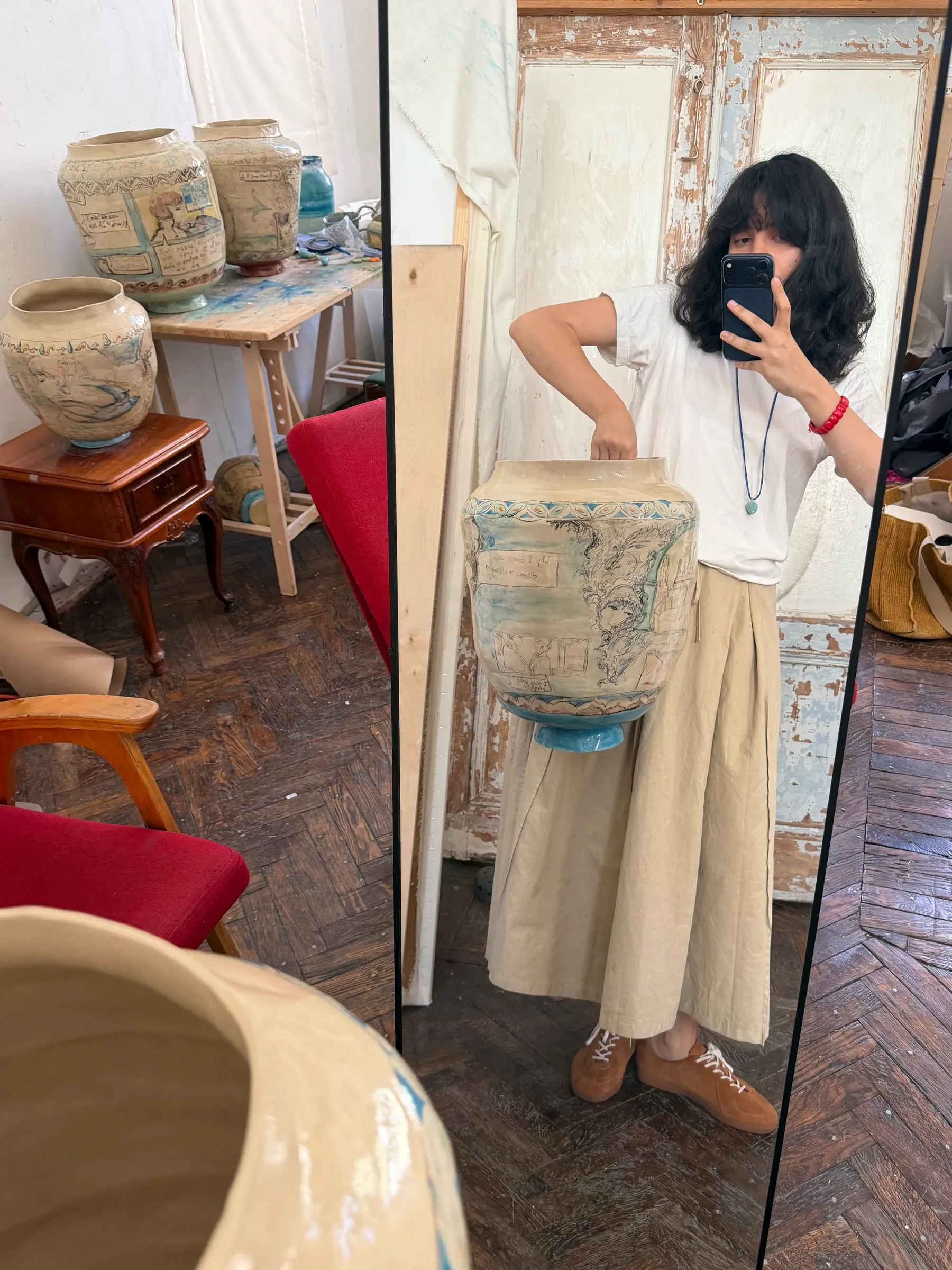
Christina Arark Manucharyan, born in 1998, works across painting, ceramics, textiles and community-based practices, rooted in Armenian cultural memory.
She collects and documents ornaments while travelling through the regions of Armenia, and she writes a story for every ceramic work.
The fragment becomes something you can spend time with. It acquires a surface, a weight and a place in the room. Christina Arark
Her paintings and drawings become chapters of those stories. She has moved to Belgium for an MA in Visual Arts at PXL-MAD School of Arts, with an artist's book about contemporary communication and intimacy as the main project.
Belgium
1998
Painting, ceramics, textiles, drawing and community-based practices
MA in Visual Arts, PXL-MAD School of Arts (in progress)
christinarark.com
@christinarark
Courtesy the Artist
The conversation starts with a simple question: who is speaking in a title that reads like a message?
Catapult Contemporary: Many of your titles read like messages. Who is speaking in these works, and who is being spoken to?
Christina Arark: For each work, I write a story of its own, and very often it is a love story, yes :) I love exploring how closeness is built in the modern world and how our digital love languages work.
So I like the titles to feel familiar like a message you have just received or a fragment of a conversation you have accidentally had with your close ones.
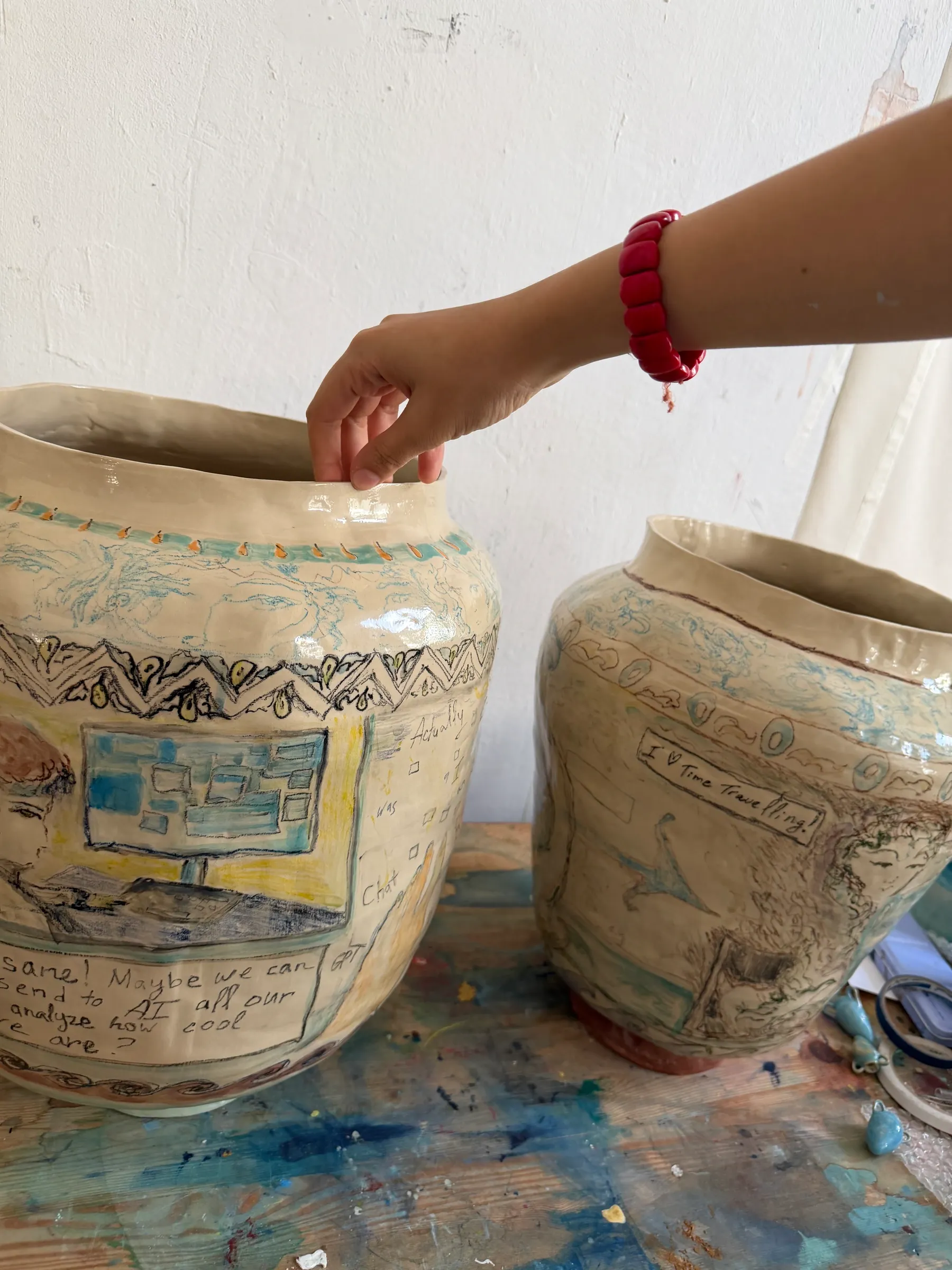
One of my recent works tells the story of an endless Zoom call. Everyone keeps passing tasks to someone else until AI joins the conversation, and suddenly everyone thinks delegating their work to AI is an excellent idea (inspired on a true story, apologies). Eventually, someone suggests that perhaps they should all close their laptops and go touch some grass.
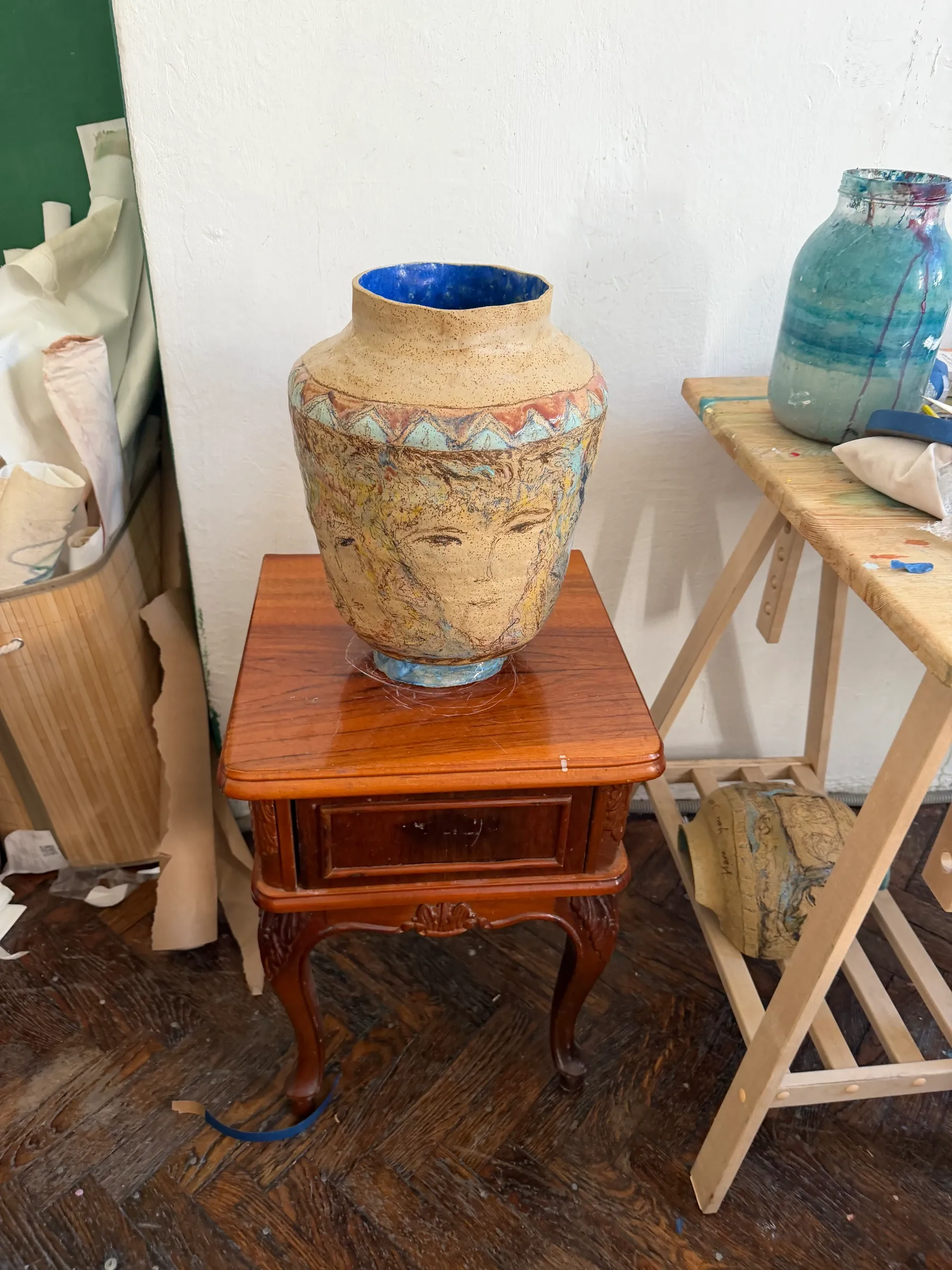
Another vase explores the idea that playlists are new love letters. I find them among the most sincere digital love languages: you choose songs for someone, arrange them in a particular order and In a long-distance relationship it is almost like creating a soundtrack for the space between you.
I find it very poetic. They might look small on a screen but they can be seen as a connection bridges between us.
2. Catapult Contemporary: When a message, a screenshot or a ritual moves from the phone onto a vase, what do you decide to keep, and what stays behind on the screen?
Christina Arark: That’s a great question and something I really enjoy playing with. Sometimes I keep only a sentence or the feeling a conversation left behind. Other times I reproduce the screen itself, its images and fragments of its interface, trying to create a kind of feeling of a scrolling where everything stated to mess up.
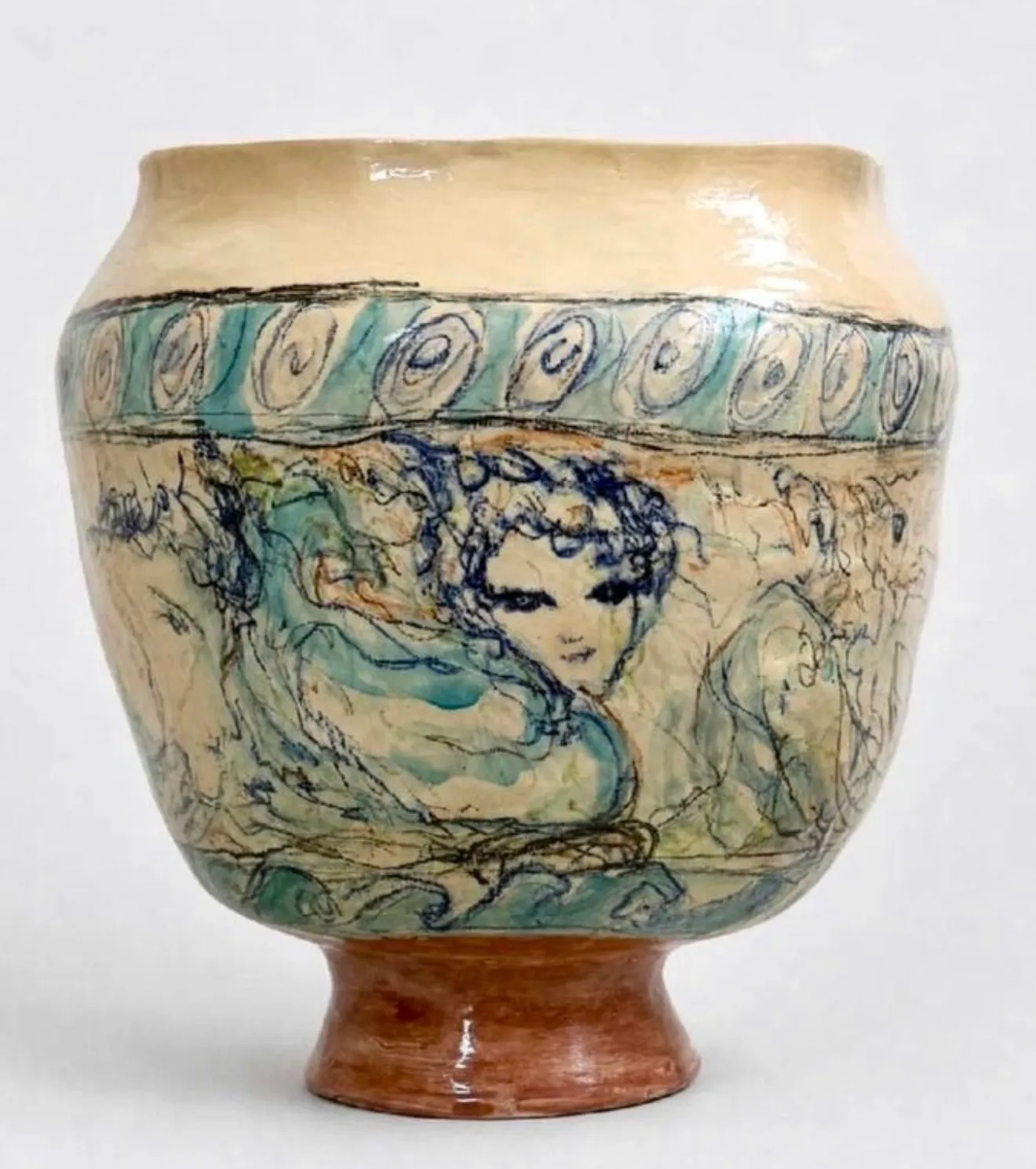
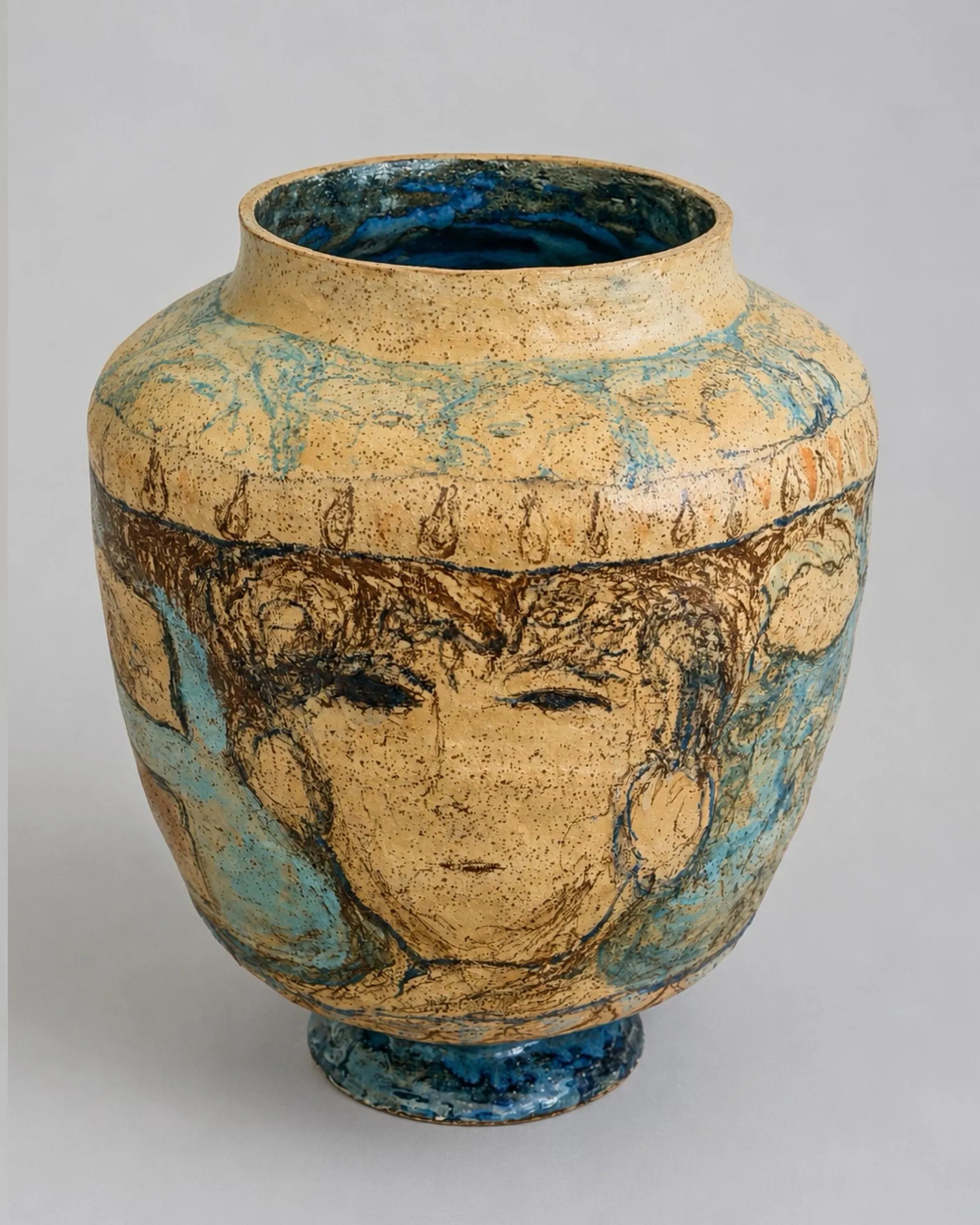
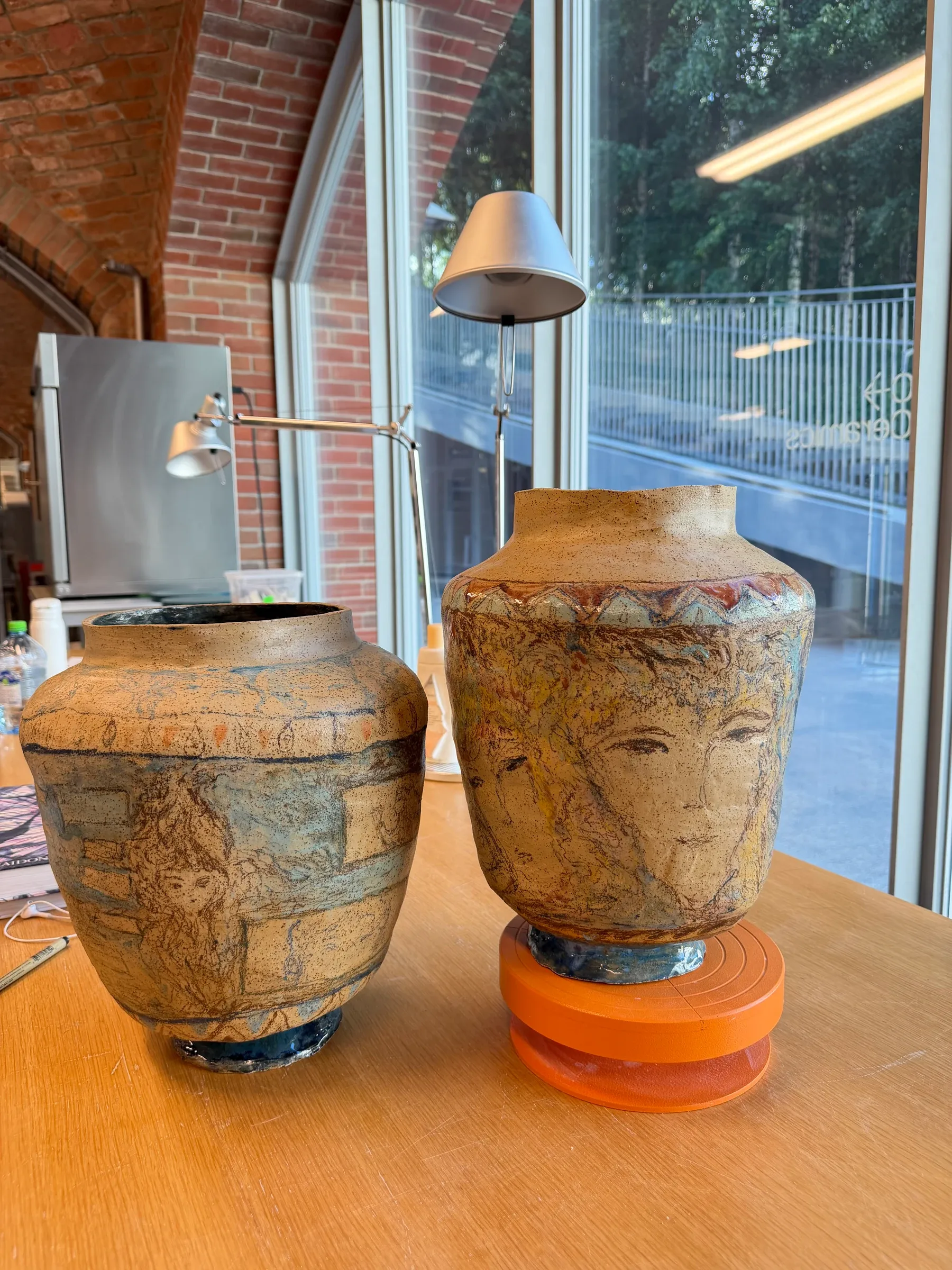
Christina Arark, (left) I will share my playlist with you (right) You are my digital detox, ceramic. Courtesy the artist.
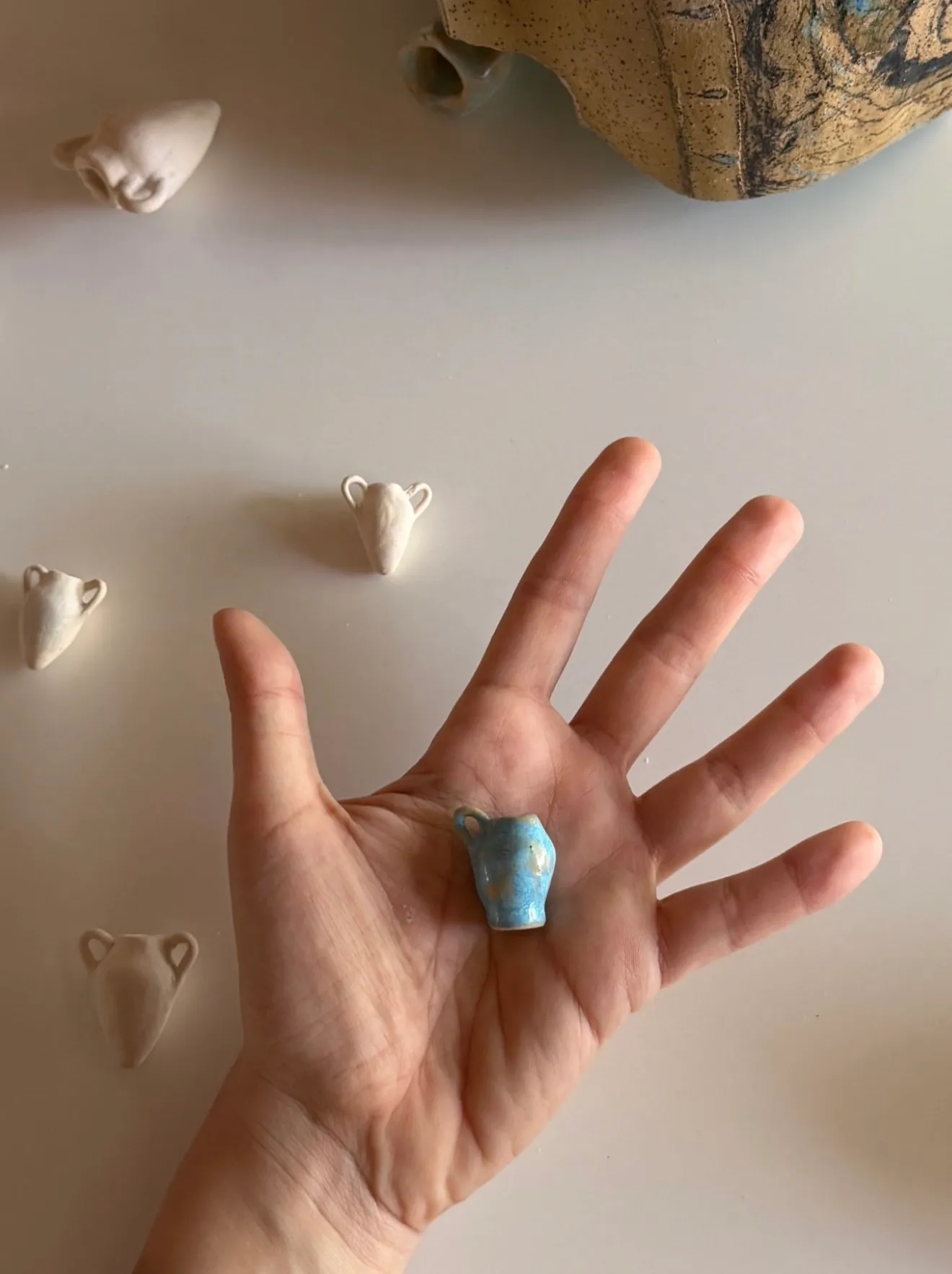
On a phone, your finger moves and the images disappear. With a vase, you move around the object or turn it in your hands. A scene disappears around the curve, and another comes into view. You cannot see everything at once. I like using that movement to unfold a story.
What I keep depends on the work. It might be a specific message, a visual detail, or the rhythm of moving from one fragment to another. What stays behind is often the endless stream around it: all the other tabs, notifications and things competing for attention.
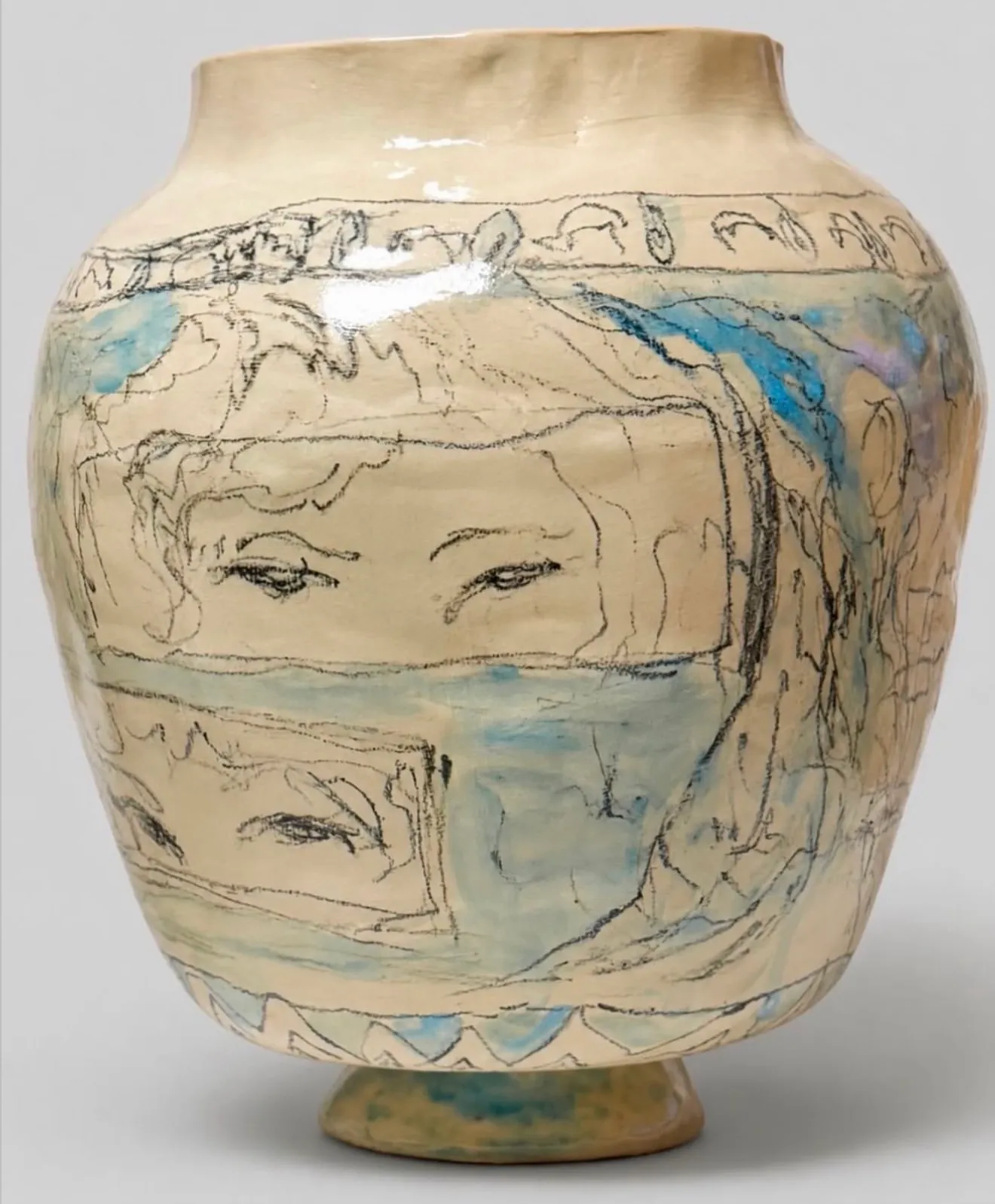
The fragment becomes something you can spend time with. It acquires a surface, a weight and a place in the room.
Vessels have held so much of everyday life, and their surfaces have carried stories for centuries. Our phones also hold our conversations, memories and rituals. Bringing those traces onto ceramics is a way of giving them another life and making sure social media is not our only archive.
3. Catapult Contemporary: What happens to a drawing once it is fired, and what do you have to give up to the fire?
Christina Arark: There is no single recipe and I’m also making my own pigments which adds another element of working with medium (and closeness to it).
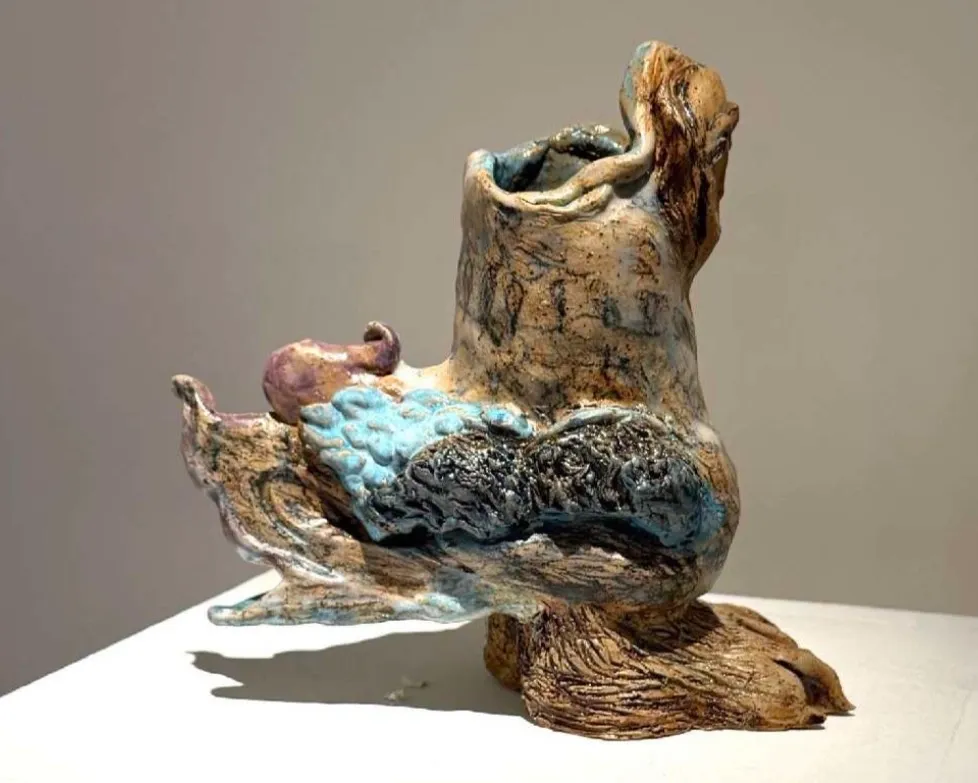
With ceramics there are always three of us: me, the material and the firing. The kiln is a co-author. It transforms patterns, sometimes magically, sometimes without mercy. I can learn through testing, but I still have to give up the idea of controlling every part of the result.
That uncertainty has taught me to respond to what happens, including things I did not plan. Now I want to bring more of that freedom into my painting on a canvas and in my graphic series.
4. Catapult Contemporary: Are the sentences taken from real conversations, and do you see tenderness and distrust as a contradiction or as one feeling?
Christina Arark: I find a lot of inspiration in my friends’ love stories, things I read online (and doomscrolling but I call it internet surfing), and scenes from everyday life. So yes some sentences begin in real conversations. Others come from my own thoughts or develop through the characters I write.
And I love them people feel connections between their own stories.
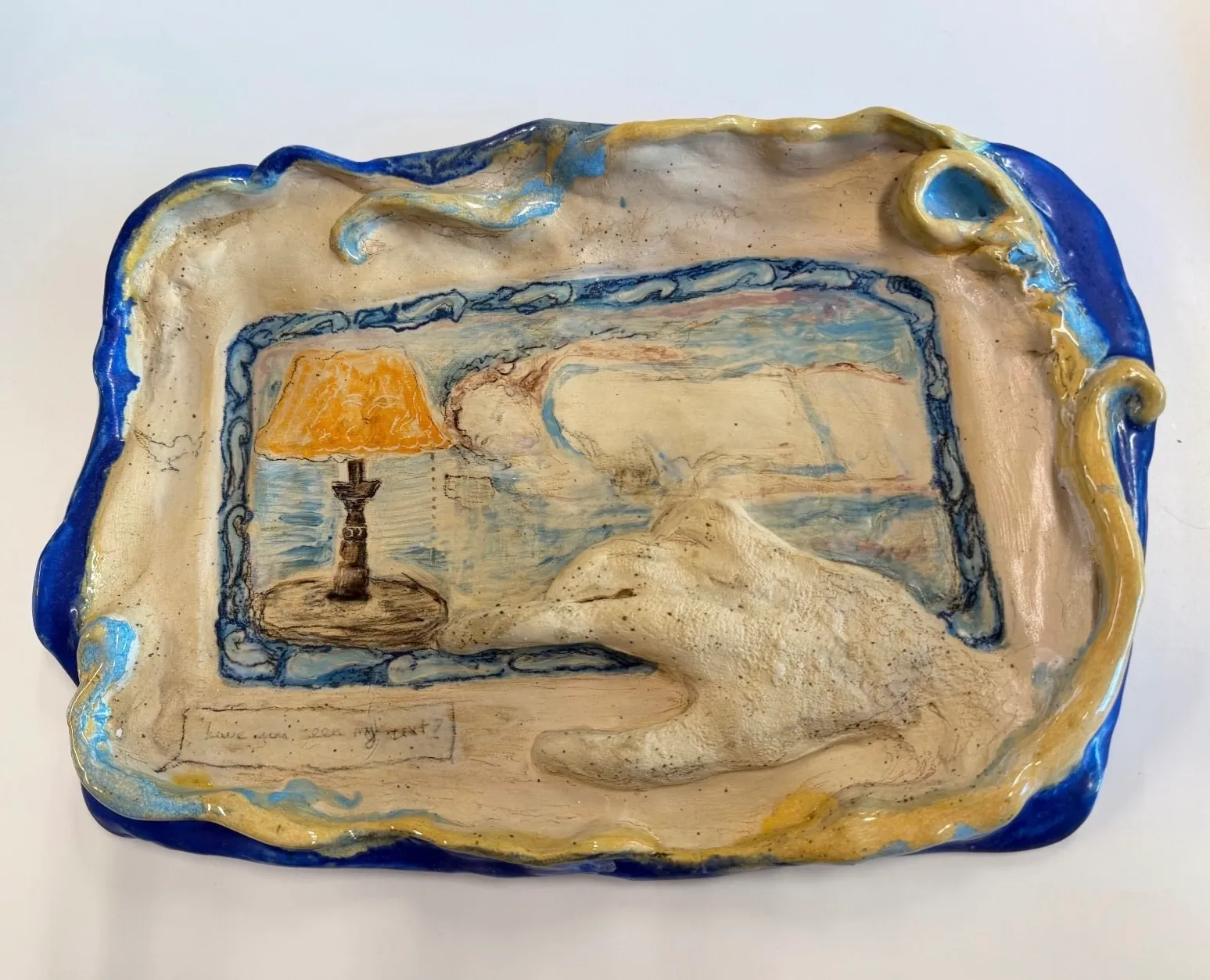
“Chat GPT is lying to me again!” has that frustration, but also a funny familiarity. The word “again” makes it sound almost like an argument with someone you know too well. “You are my digital detox” is a love confession expressed through that with that person I prefer not to excepe to online world but to stay in the real one. It means that someone’s presence is enough to make you forget to check your phone. New Romantic!
I am part of this world too. I overthink messages, doomscroll and sometimes look for an answer in a search bar when I probably need to go outside… and touch some grass.
5. Catapult Contemporary: Which ornaments and traditions do you draw from, and what does ornament do when it sits next to a screenshot?
Christina Arark: I work with Armenian ornaments that I collect and document while travelling through different regions of the country. I am gradually building my own archive, studying the patterns’ structures, repetitions, rhythms and symbolic meanings.
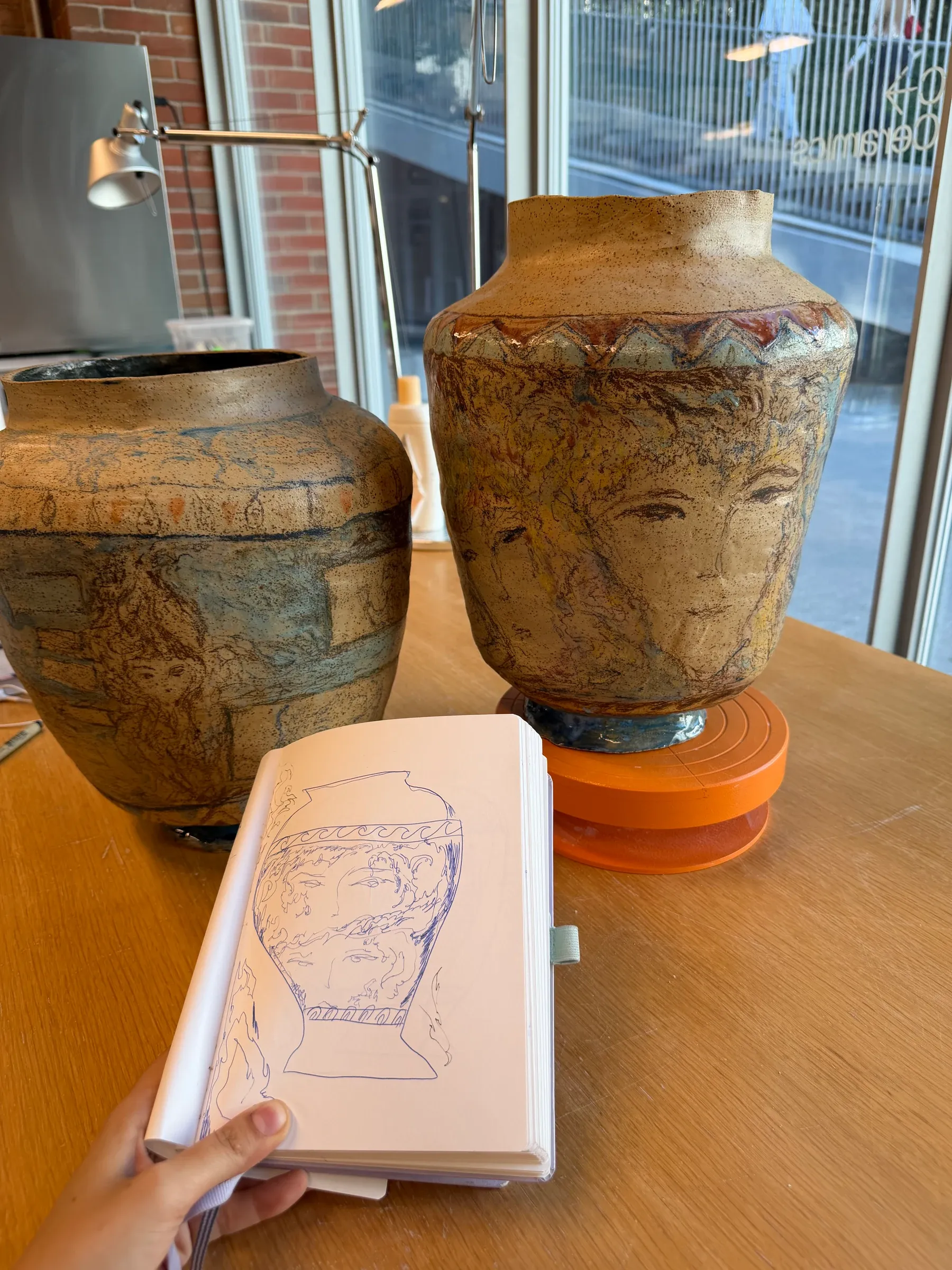
The ceramic traditions of Dvin are an important reference for me. I am drawn to the way a vessel’s form, ornament and images can belong to one continuous surface. Looking at these objects makes me think about how stories and traces of everyday life can remain with us through material.
In my works, ornaments frame contemporary stories. They surround messages, screens and characters dealing with very current feelings. I love that connection. Like an inherited visual language can hold a story about a Zoom call or an unsent love letter.
It allows different times to exist on the same surface. I bet you can travel in time?
6. Catapult Contemporary: Which myths do you reach for, and what happens when a myth meets a text message?
Christina Arark: I return to Armenian folklore, figures such as Anahit, birds as messengers, protective creatures and the moon. I am drawn to stories in which the natural world can listen, carry a message, or help someone cross a distance.
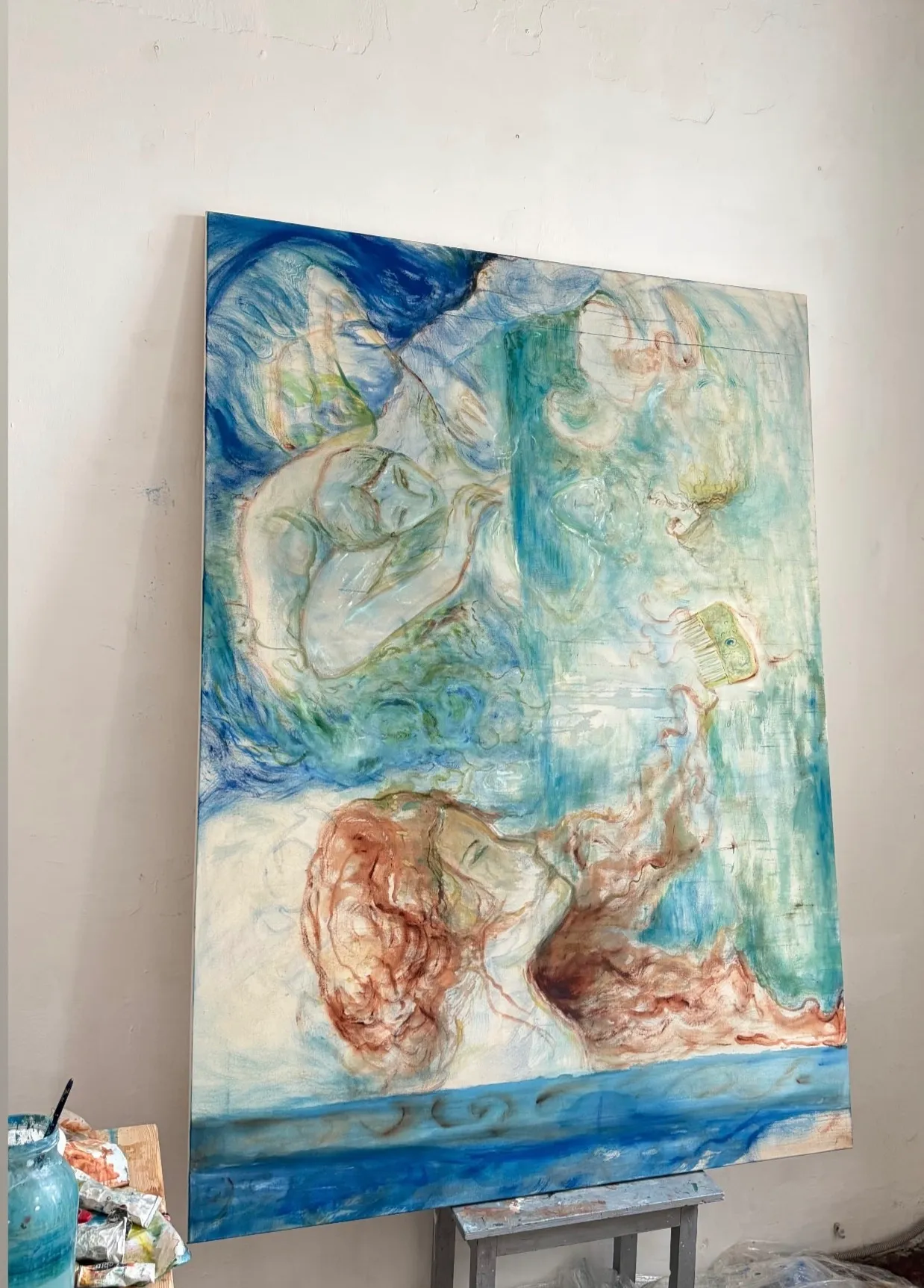
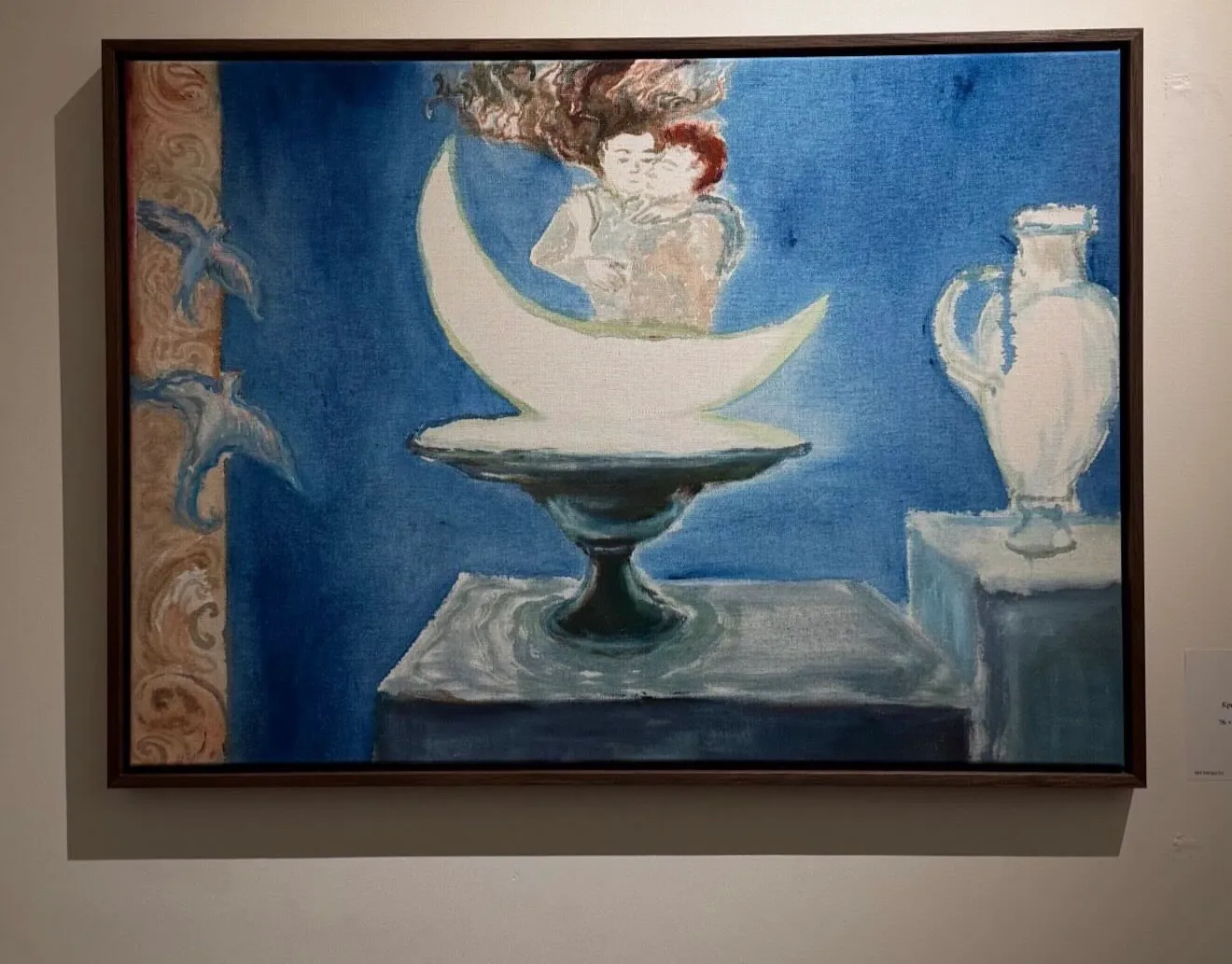
These references enter a personal mythology that I keep developing through my works. Sometimes a bird carries an urgent message. Sometimes the moon becomes a place where two people can finally be together.
A text message can carry a very human signal : please hear me, remember me, come back, tell me you arrived safely.
7. Catapult Contemporary: What do you want to test at PXL-MAD that your work has not been able to answer so far?
Christina Arark: I moved to Belgium because I wanted to strengthen my painting and give it more time. I love ceramics and I feel we have chemistry. My relationship with painting can be more complicated so I wanted to see what would happen if I gave it a year of attention.
My main project is an artist’s book about contemporary communication and intimacy. I already write a story for each ceramic work, while my paintings and drawings unfold as related scenes and chapters. Now I want to bring them together through interconnected stories and comics.
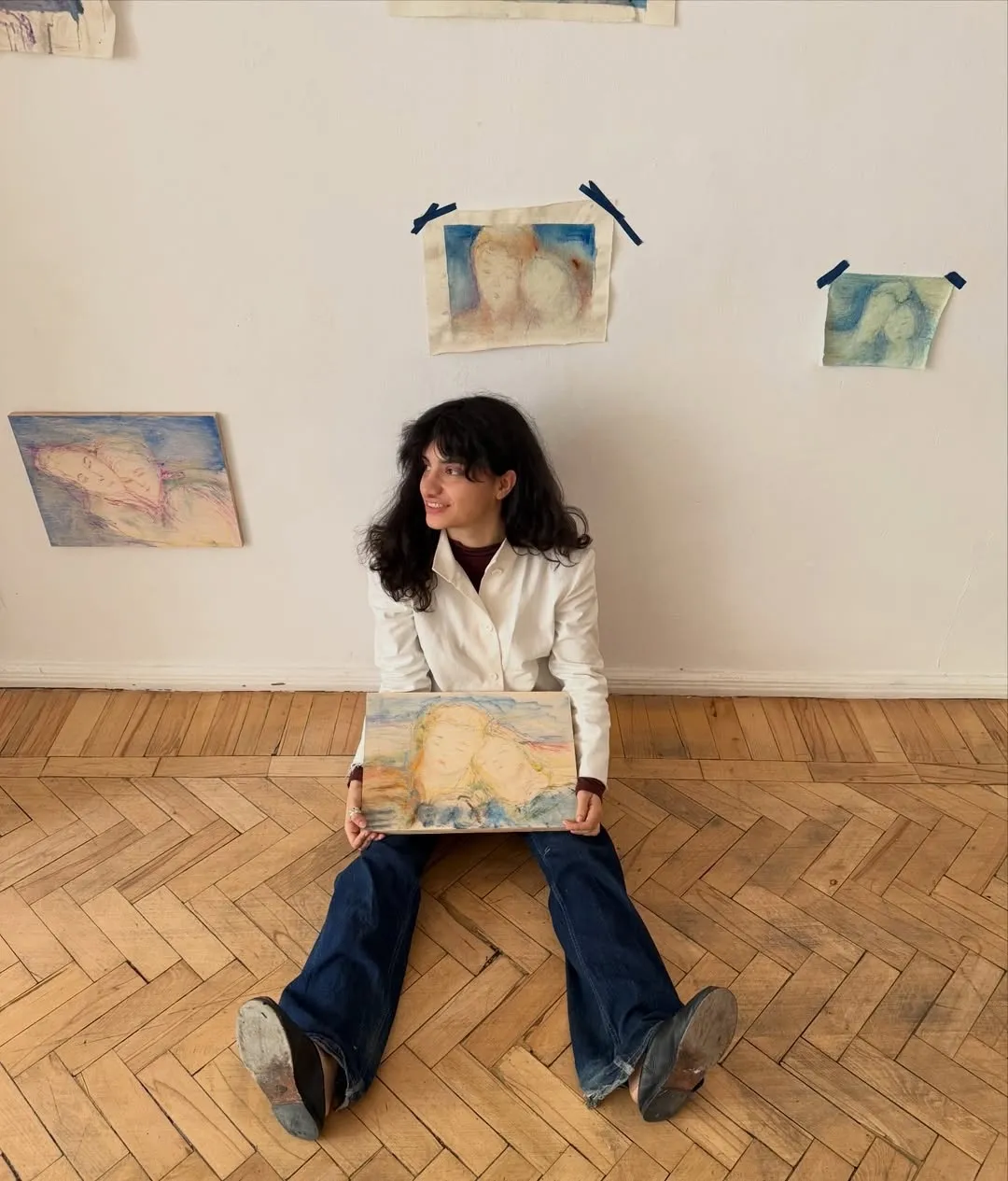
I want to explore how closeness develops across those pages and add a research base to my practice. How can a reader move through this world? What can a drawing reveal that the text leaves open?
I also discovered that there is a strong ceramics department here so I will continue developing that part of my practice alongside painting. We have already started making our own clay, and I am so excited about it.