The Everyday Was Never the Easy Subject

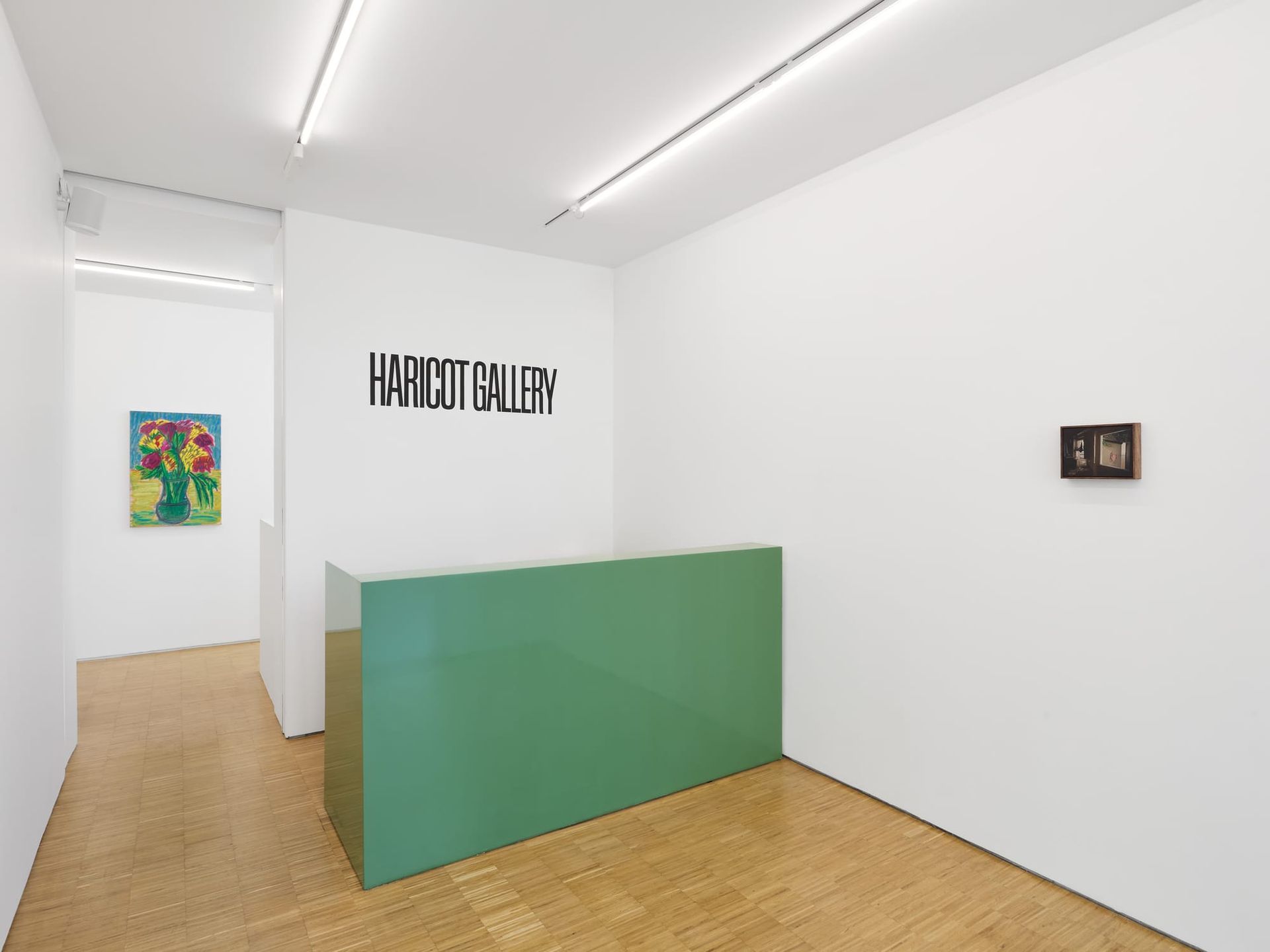
Haricot Gallery Presents What Shall We Do for the Rent? in London
Haricot Gallery presents What Shall We Do for the Rent?, through 1 August.
A kitchen table, a bathtub, a jug of cut flowers going soft at the edges. None of it looks like it is asking for attention. That is exactly the wager five painters are making on Royal College Street this summer.
Ania Hobson, Emily Ponsonby, Ethan Caflisch, David Hanes, Selena Corsellis
What Shall We Do for the Rent?
Haricot Gallery
London, United Kingdom
–
Wednesday–Friday 11–6, Saturday 12–5
205 Royal College Street, London, NW1 0SJ, United Kingdom
Ollie Hammick
Courtesy Haricot Gallery
harry@haricotgallery.com
The question in the title is older than any of the paintings in the room. It has been asked in this same stretch of Camden for more than a century, by people who could not always answer it.
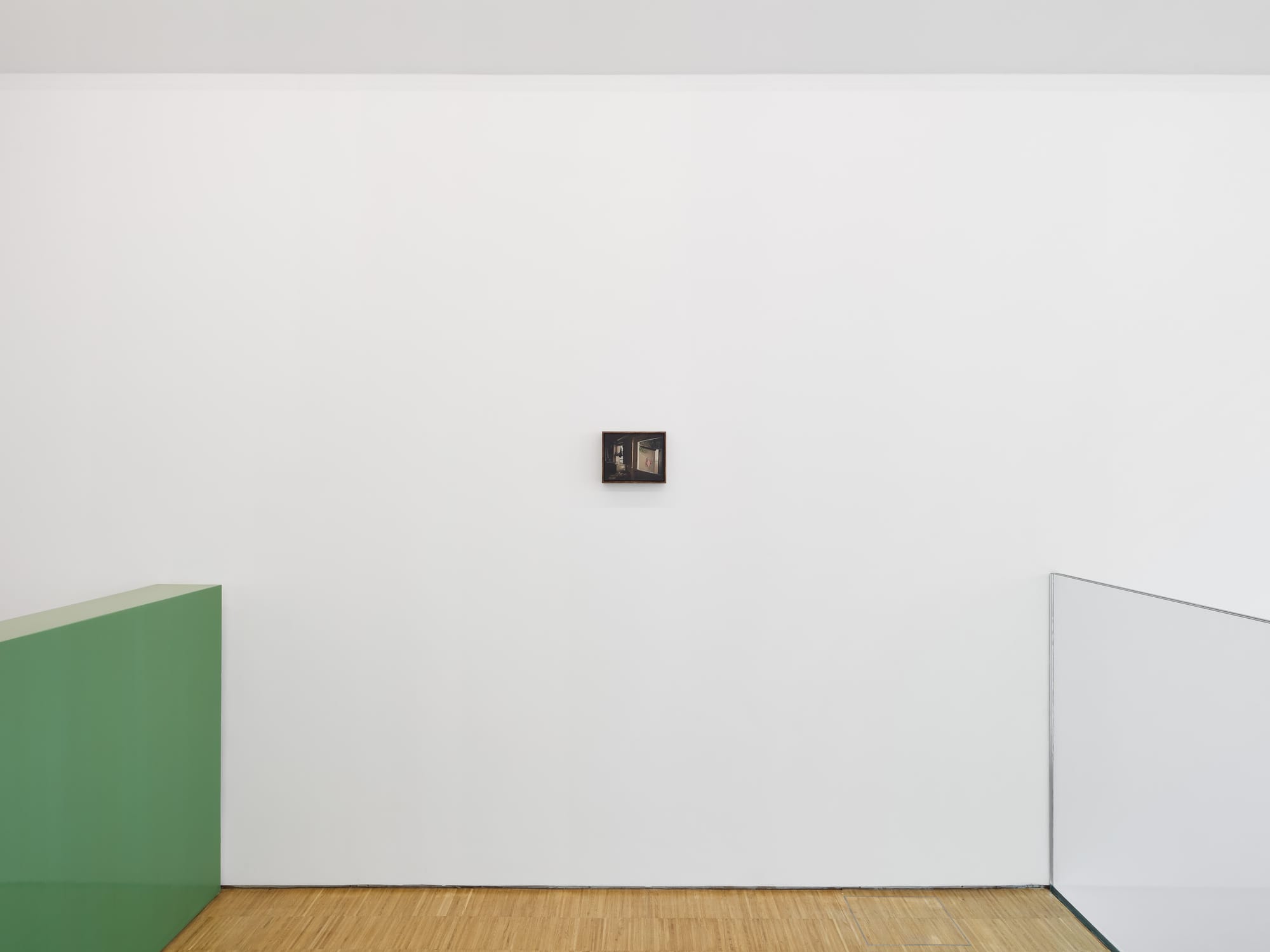
Painting the room does not settle the question. It just makes clear what the room contained while the question stayed open.
A room does not care how the rent gets paid. It keeps what is left over after that argument has already happened somewhere else.
Haricot Gallery sits on Royal College Street, in the part of Camden that gave the Camden Town Group its name. Walter Sickert, Gilman, Ginner, Bevan and Gore worked a few streets from here, painting bedsits, back gardens and music halls instead of anything picturesque.
They wanted the boldness of Cézanne and Van Gogh applied to a neighbourhood nobody thought was worth that kind of attention. A century on, the gallery's summer group show works the same ground with different tools.
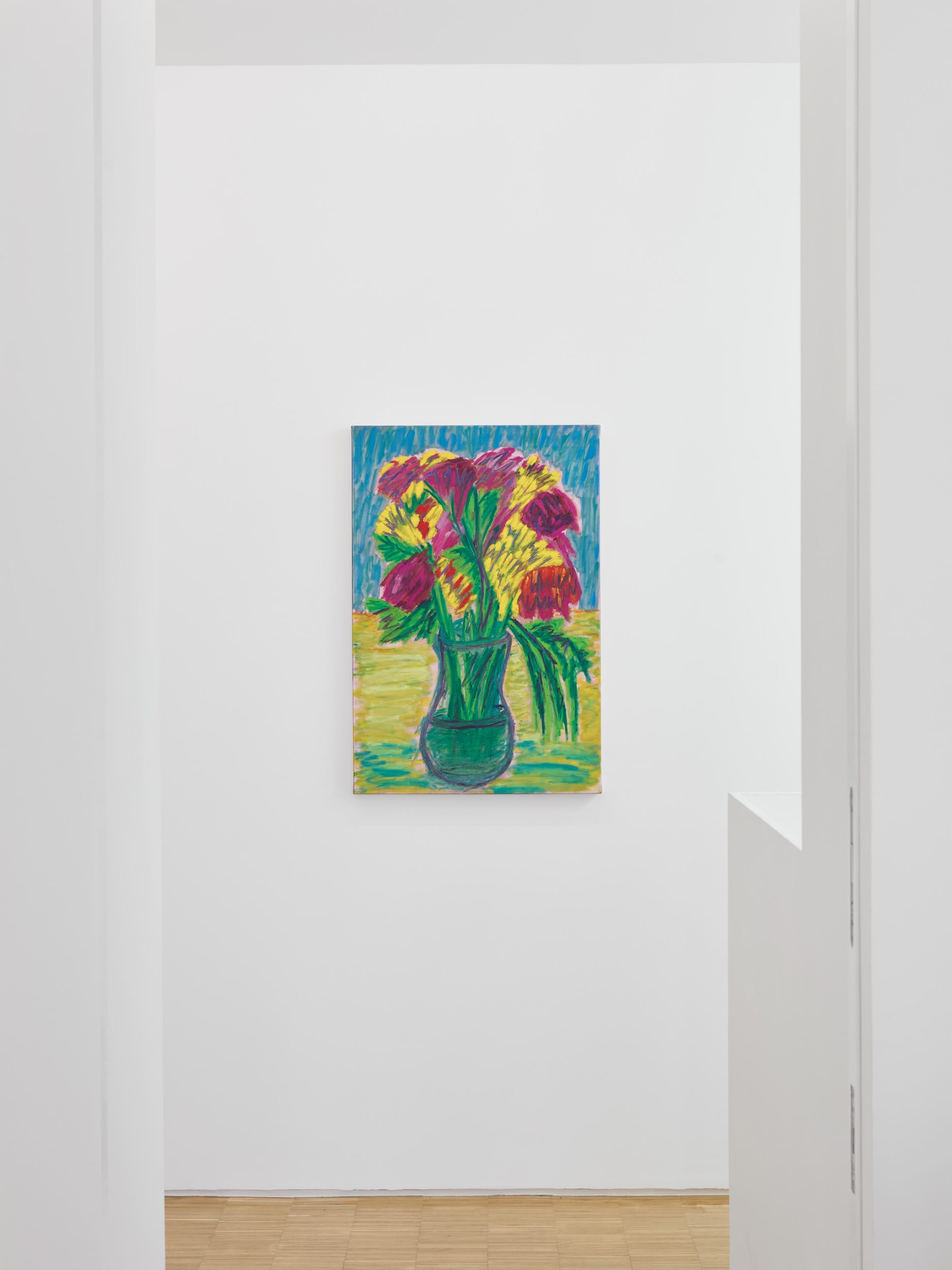
One canvas holds nothing more than cut flowers in a glass vase, rendered in thick strokes of magenta, acid yellow and cobalt against a raw turquoise ground. The paint sits close to the surface, laid on fast, the kind of mark that does not allow for revision. Petals curl past their best moment and nobody has bothered to move the vase, which is its own kind of honesty.
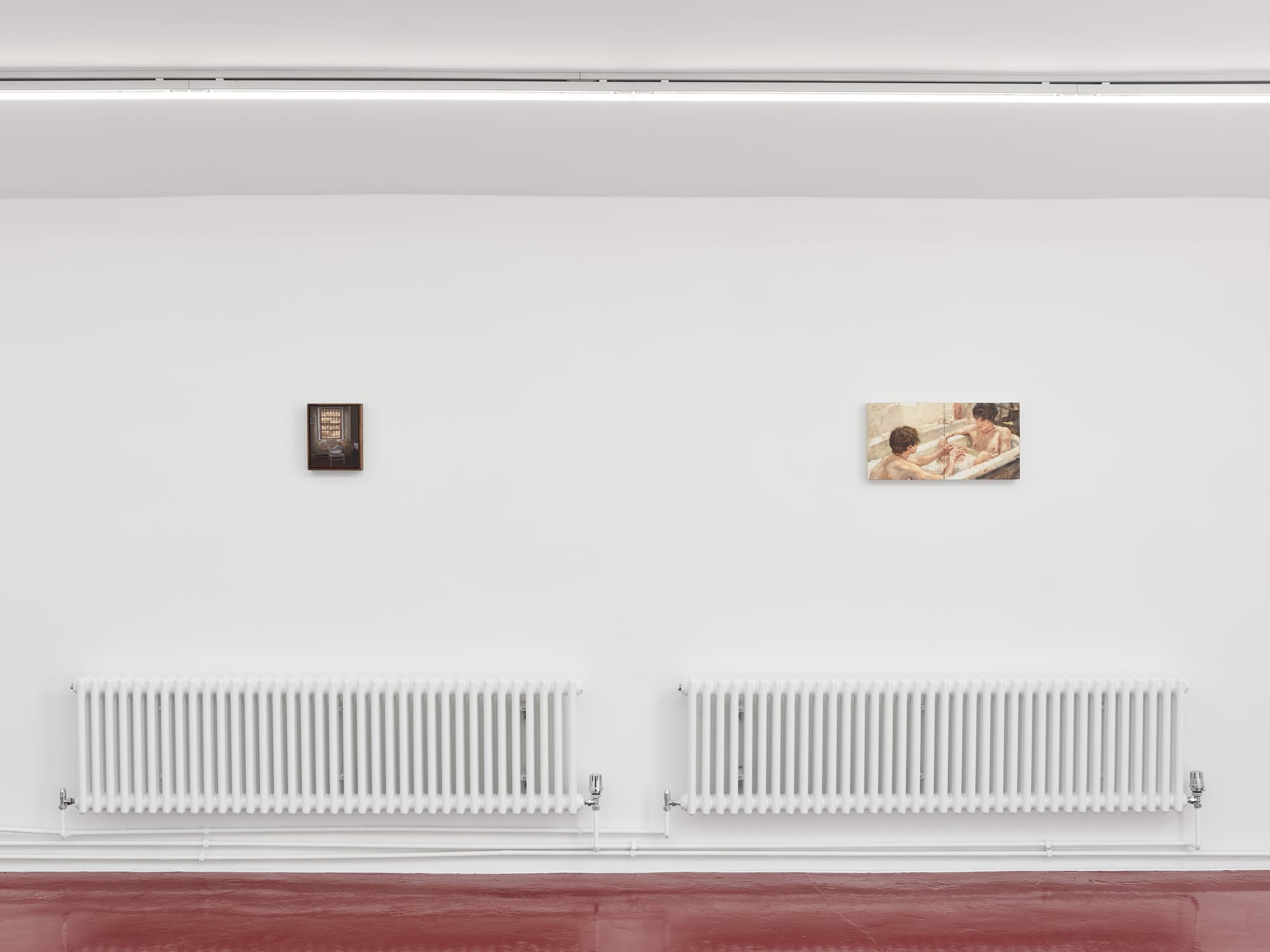
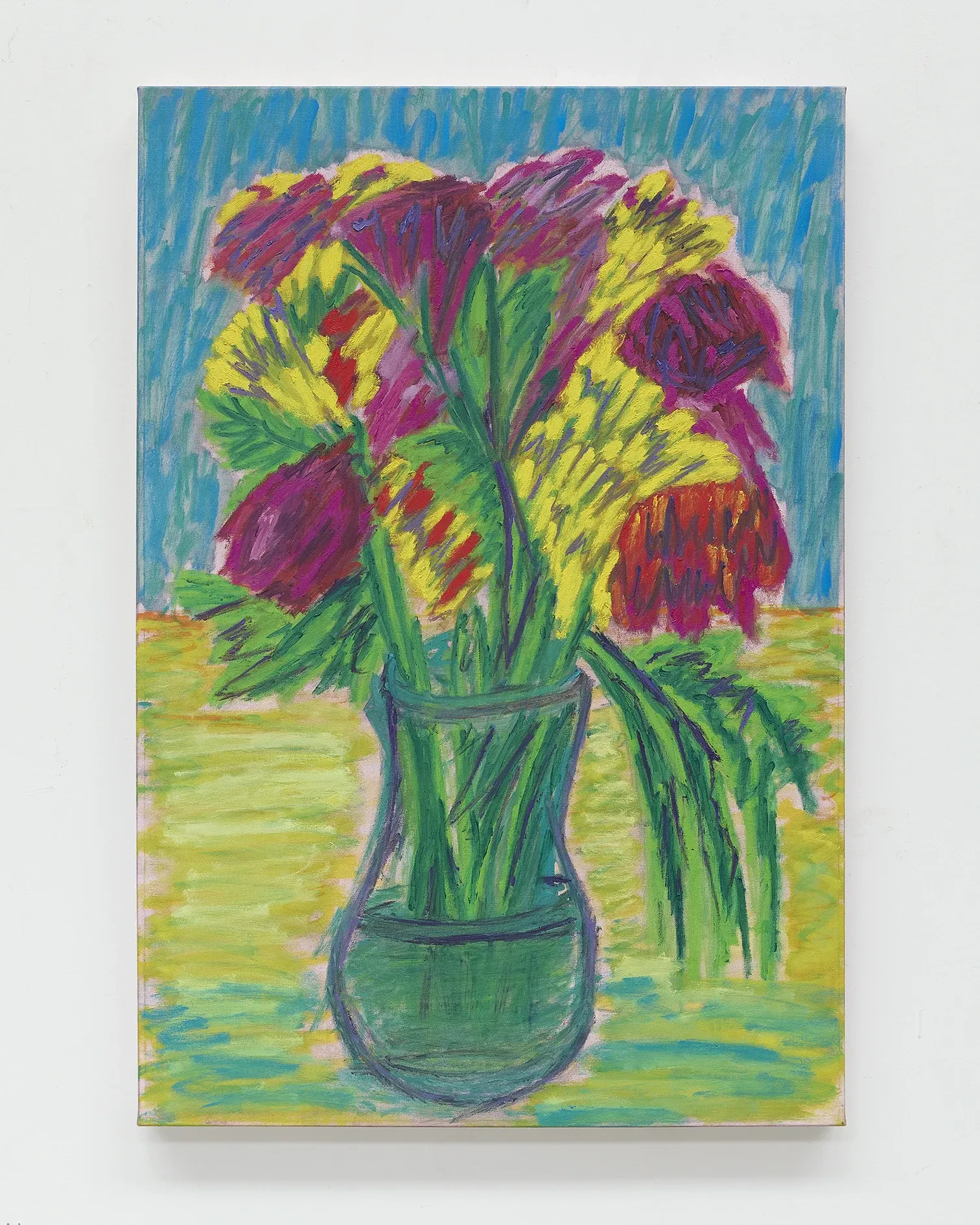
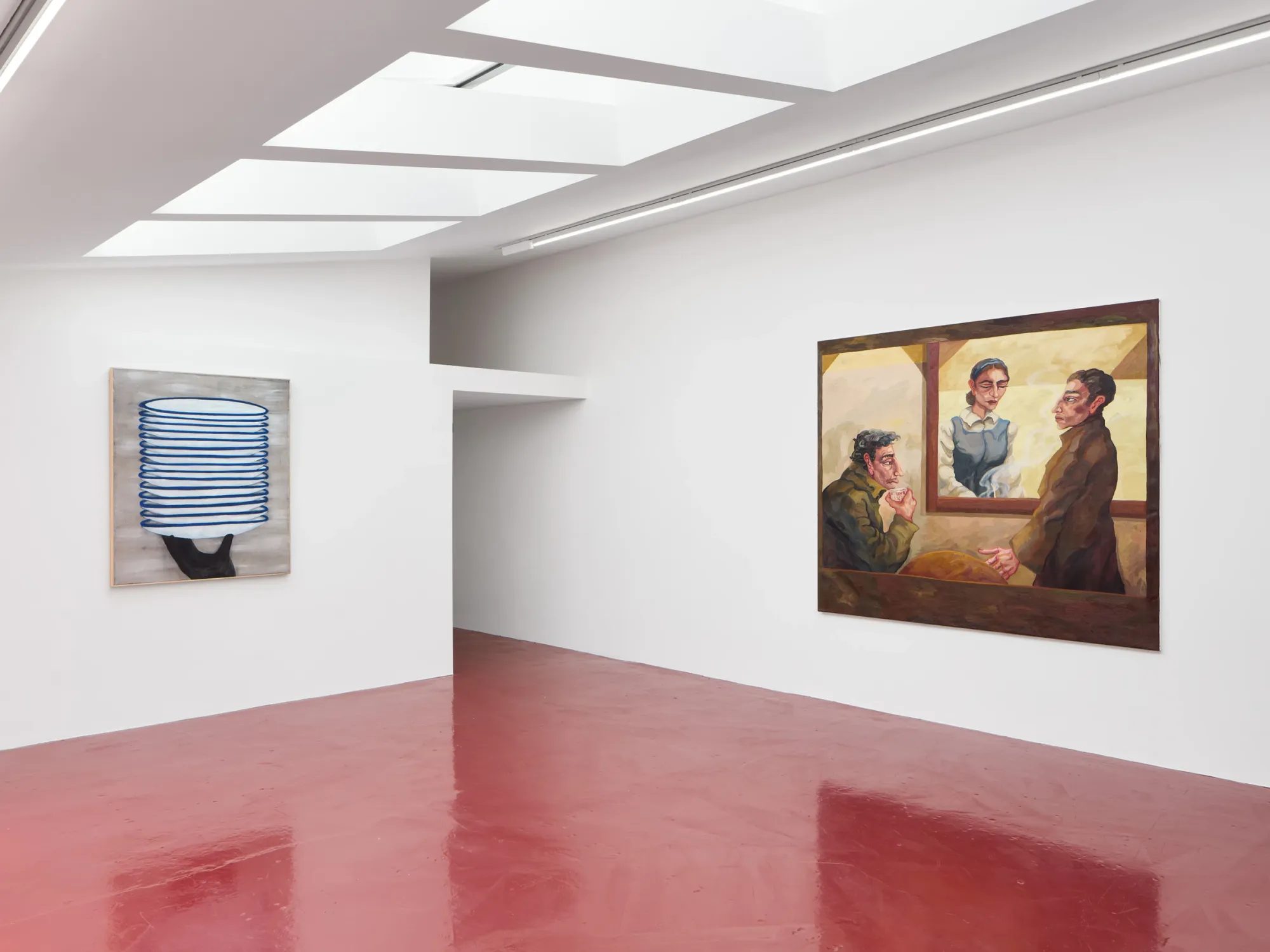
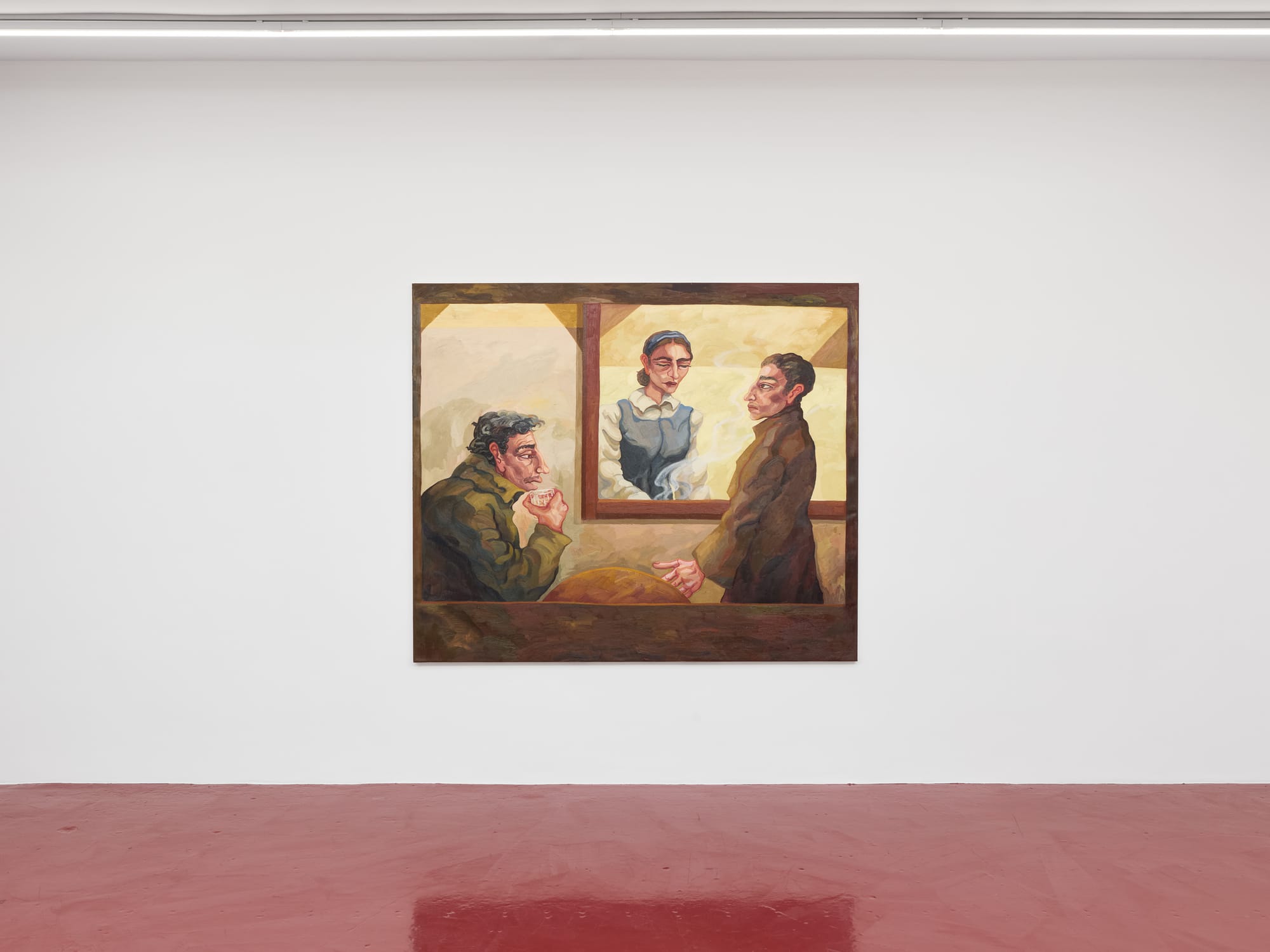
Another painting holds three figures around a table, rendered in worn greens and umbers, steam rising visibly from a cup between them. Two of the figures face each other across the table while the third looks out through a window frame built into the composition, one body braced between interior and exterior.
The hands are doing more talking than the faces. Nothing about the scene resolves. It holds the charge of an argument that has not started yet, or has just finished, and declines to say which.
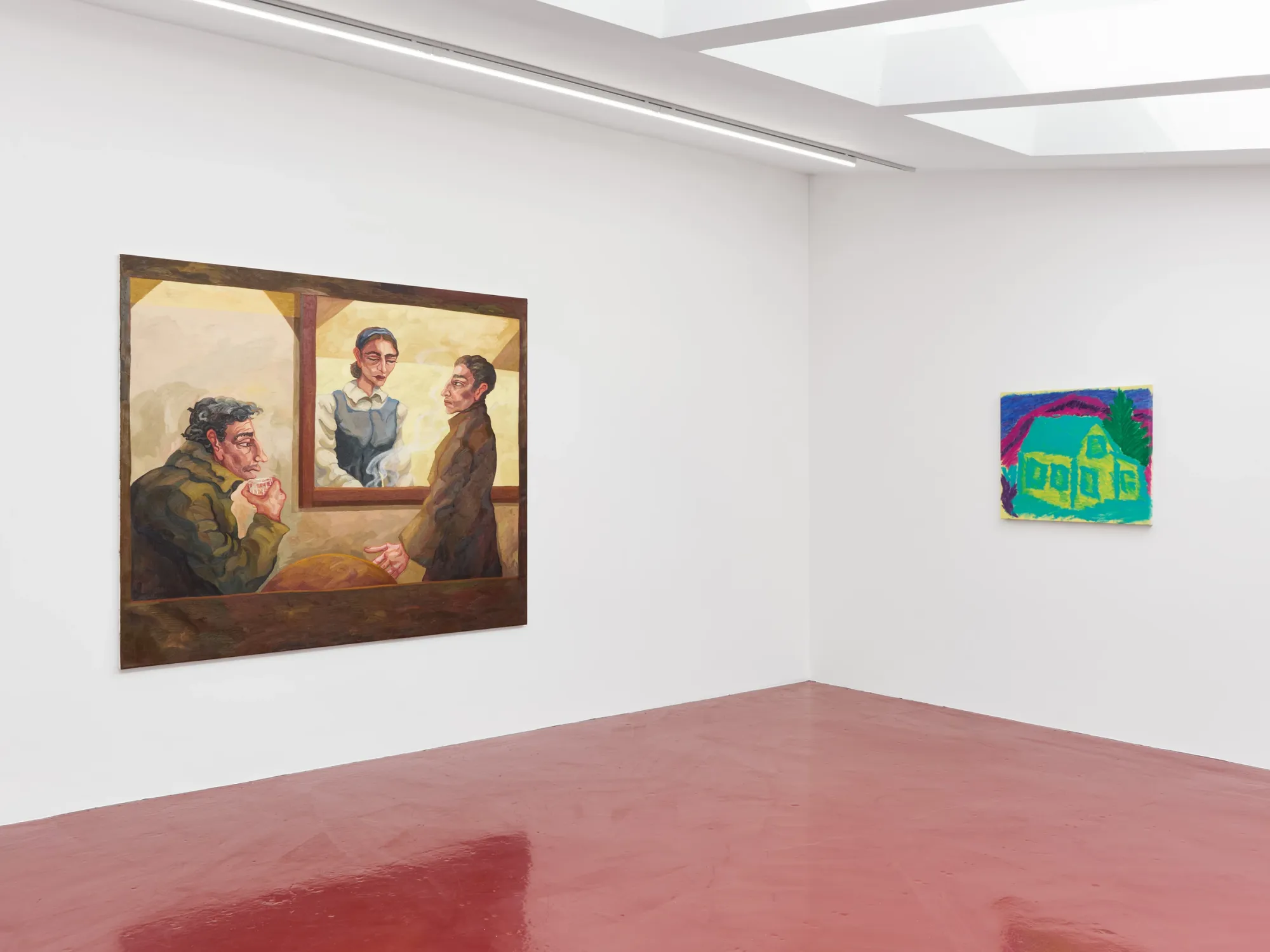
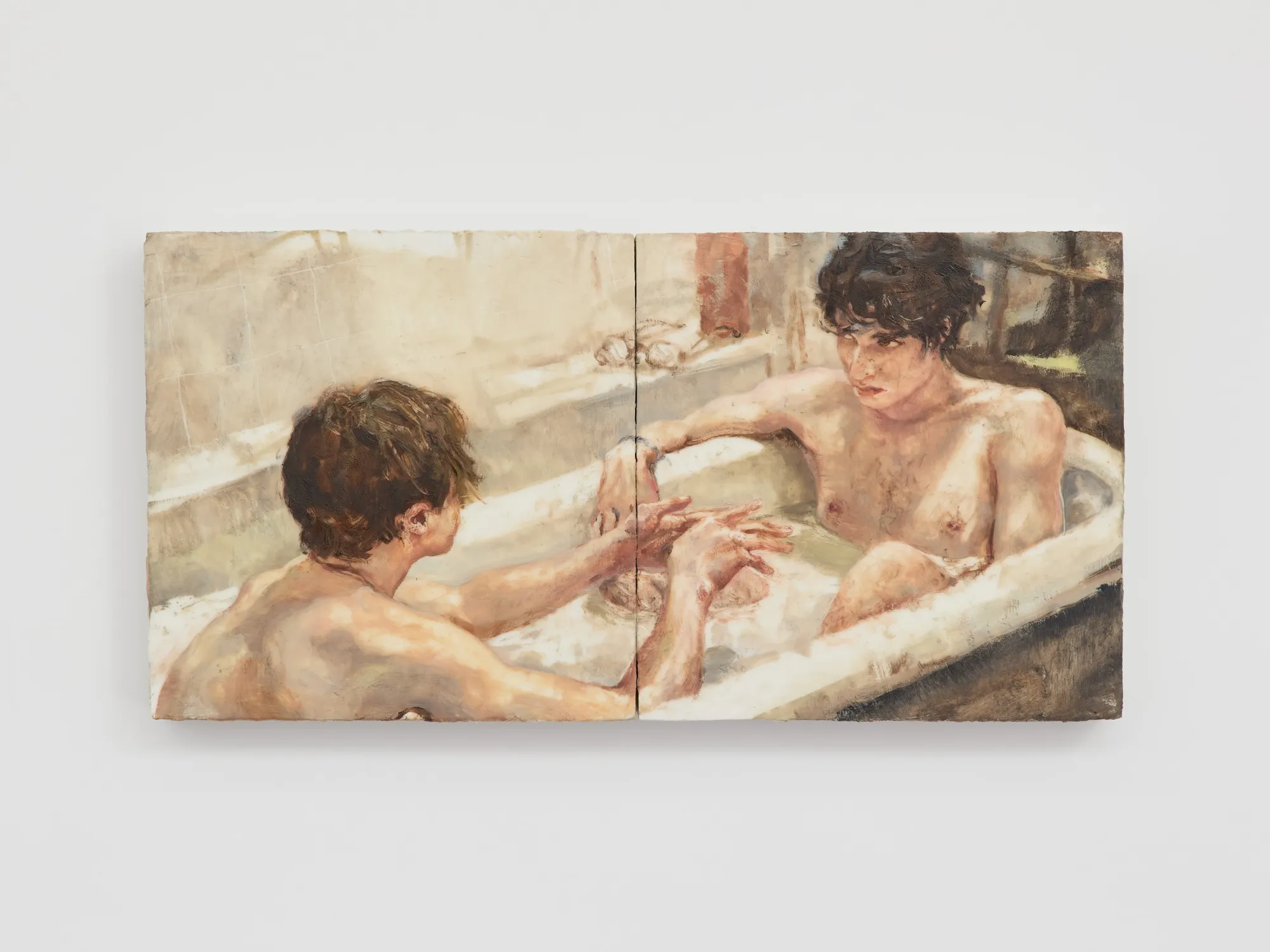
A third work, split across two joined panels, shows two boys sharing a worn bathtub, hands almost meeting in the water between them. The paint handling turns tender at exactly the point of contact, soft ochre flesh tones against a bathroom rendered in flat, unglamorous beige.
It is an intimate scene painted without any of the varnish that intimacy usually gets. The seam between the two panels runs straight through the space where the hands do not quite touch.
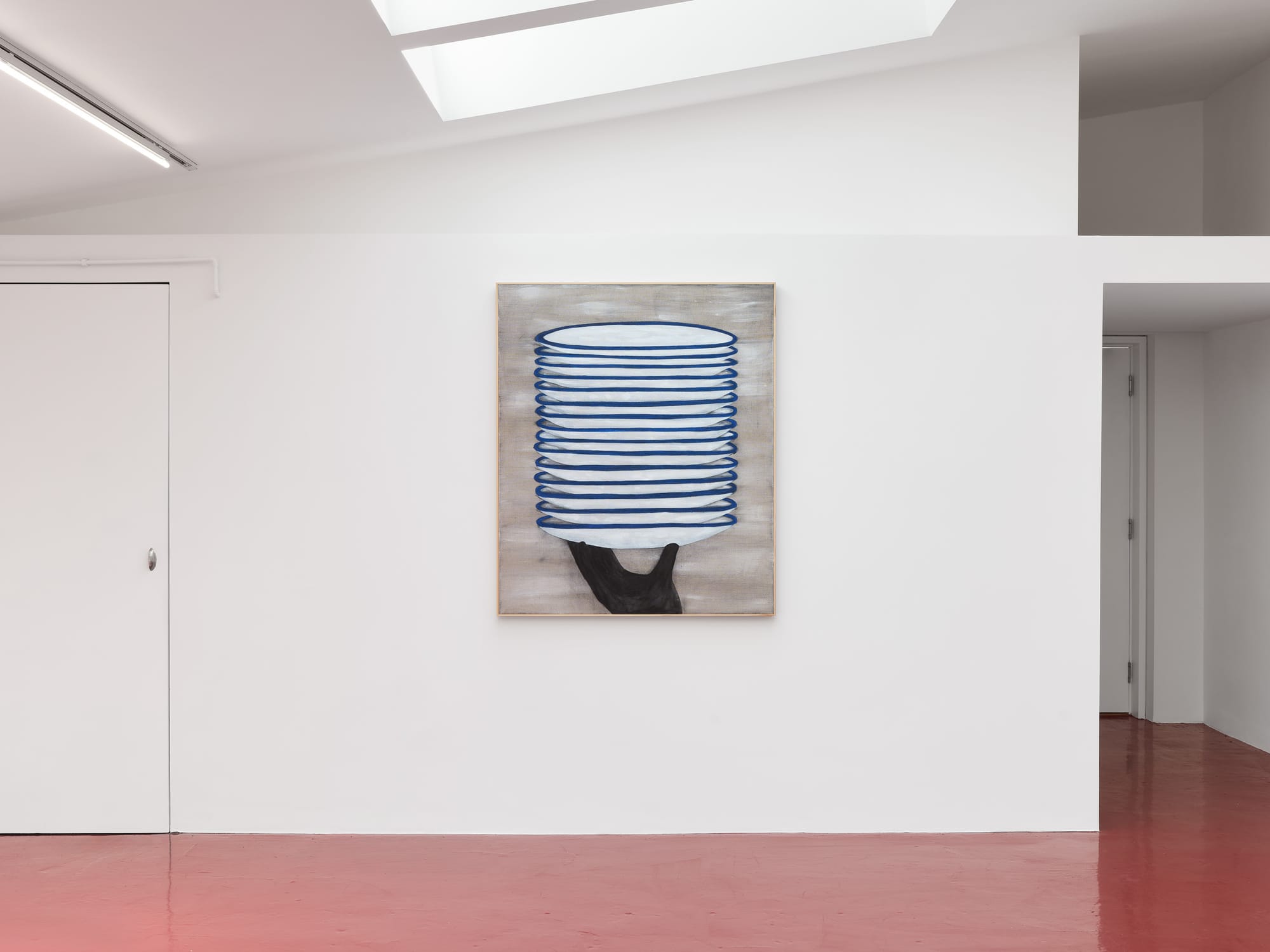
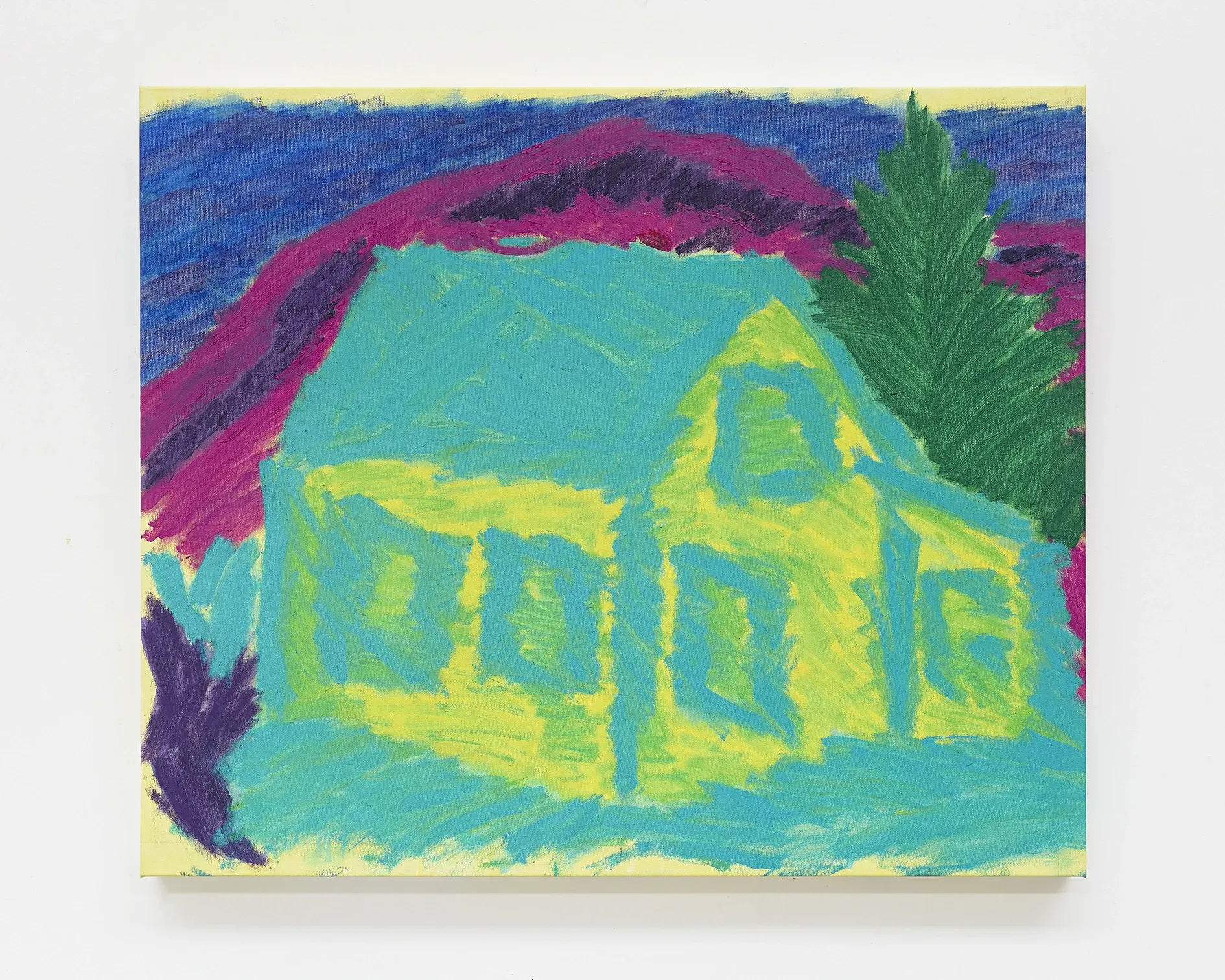
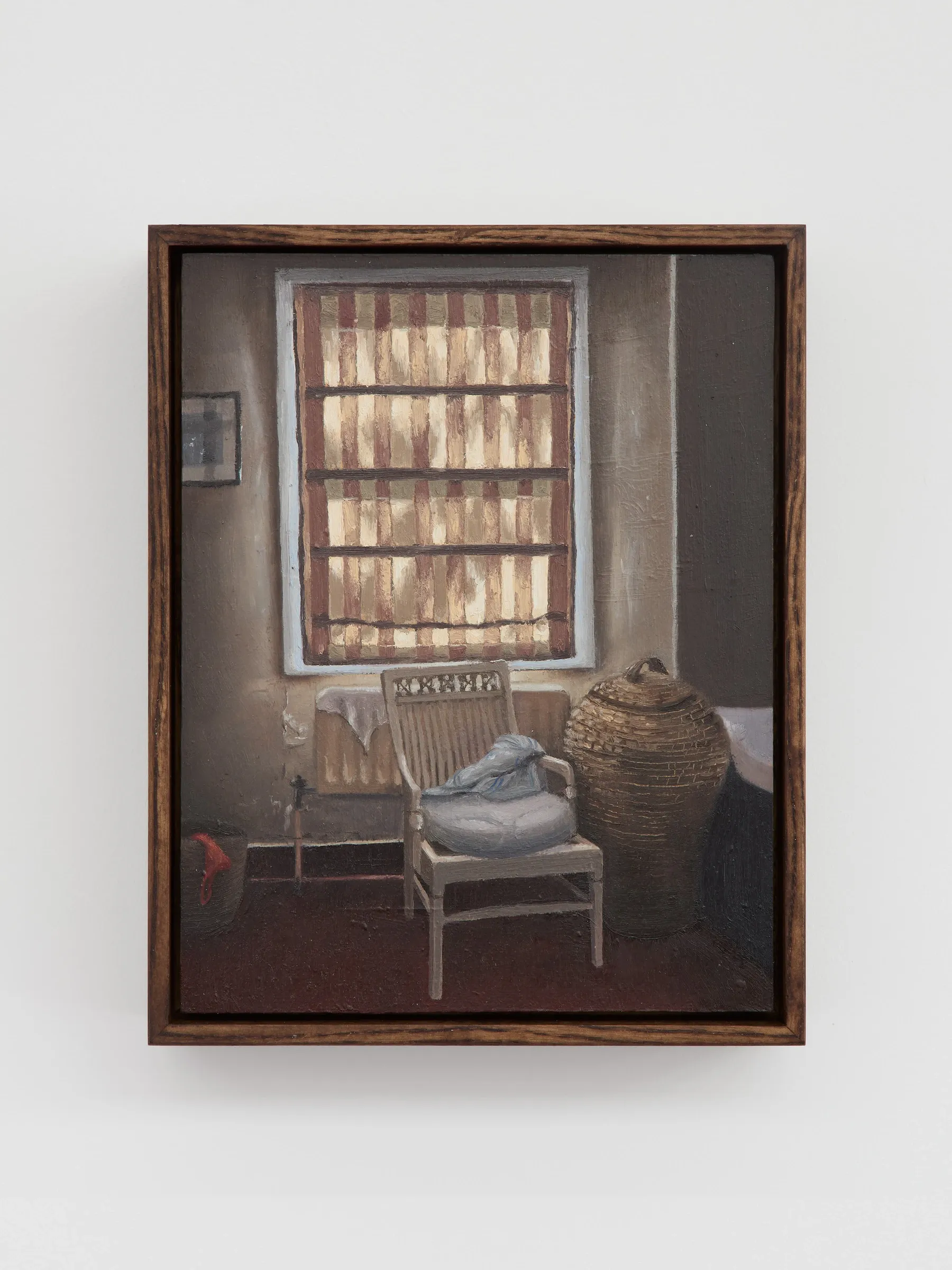
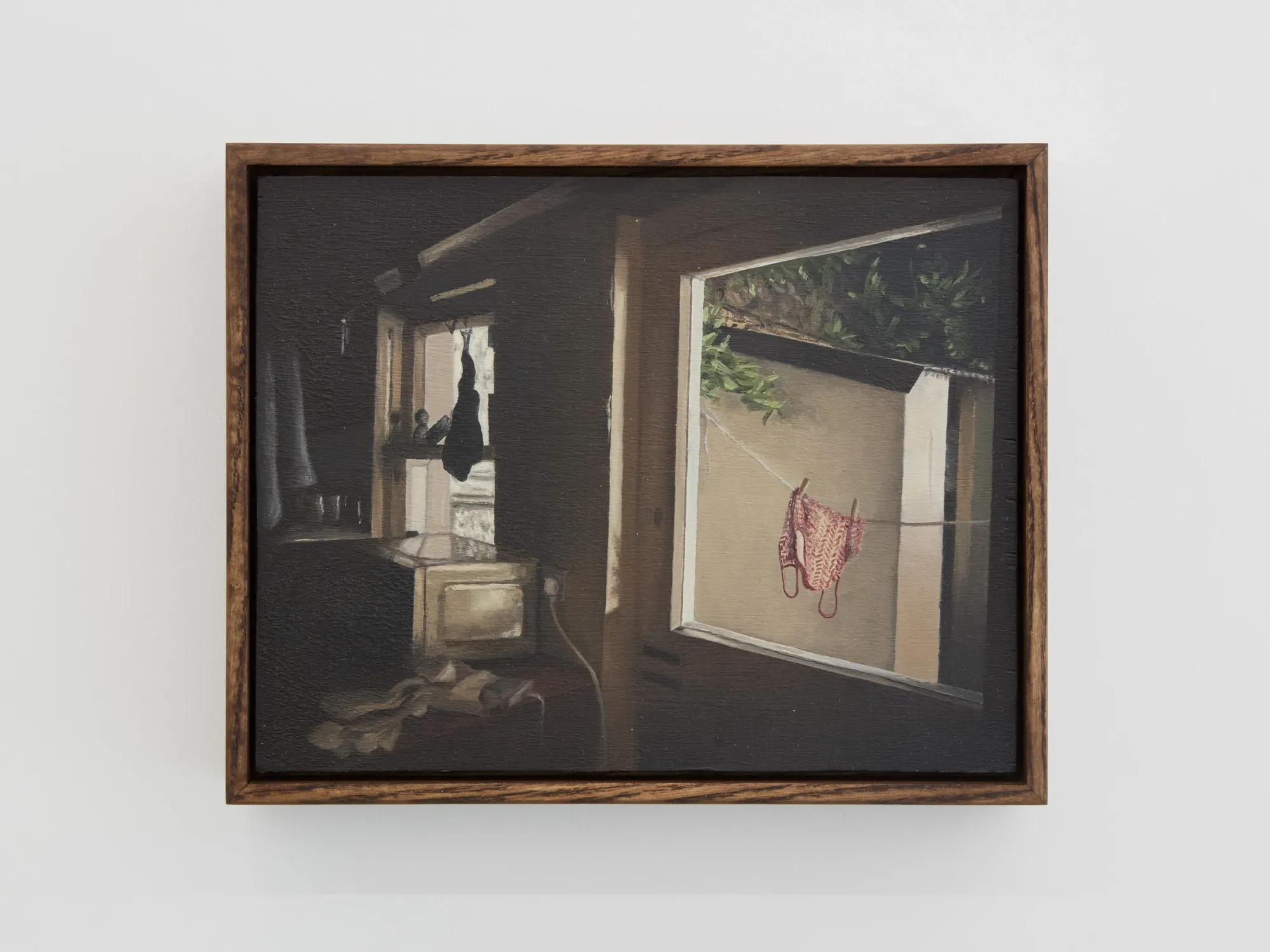
Elsewhere in the room, a house rendered in acid turquoise and magenta sits under a hallucinatory pink sky, a stack of white plates balances on an outstretched arm, and a red knitted garment dries on a line outside a darkened kitchen window. Domestic accumulation, insisted on in colour that does not apologise for itself.
Rent has become the background arithmetic of most conversations happening in this city right now, the sum everyone is quietly doing without saying so directly. These paintings do not editorialise about that. They stay in the rooms where the arithmetic gets done, the kitchen, the bathroom, the flowers bought anyway. The politics is present by omission, in what a body still finds worth doing inside a space it cannot fully secure.
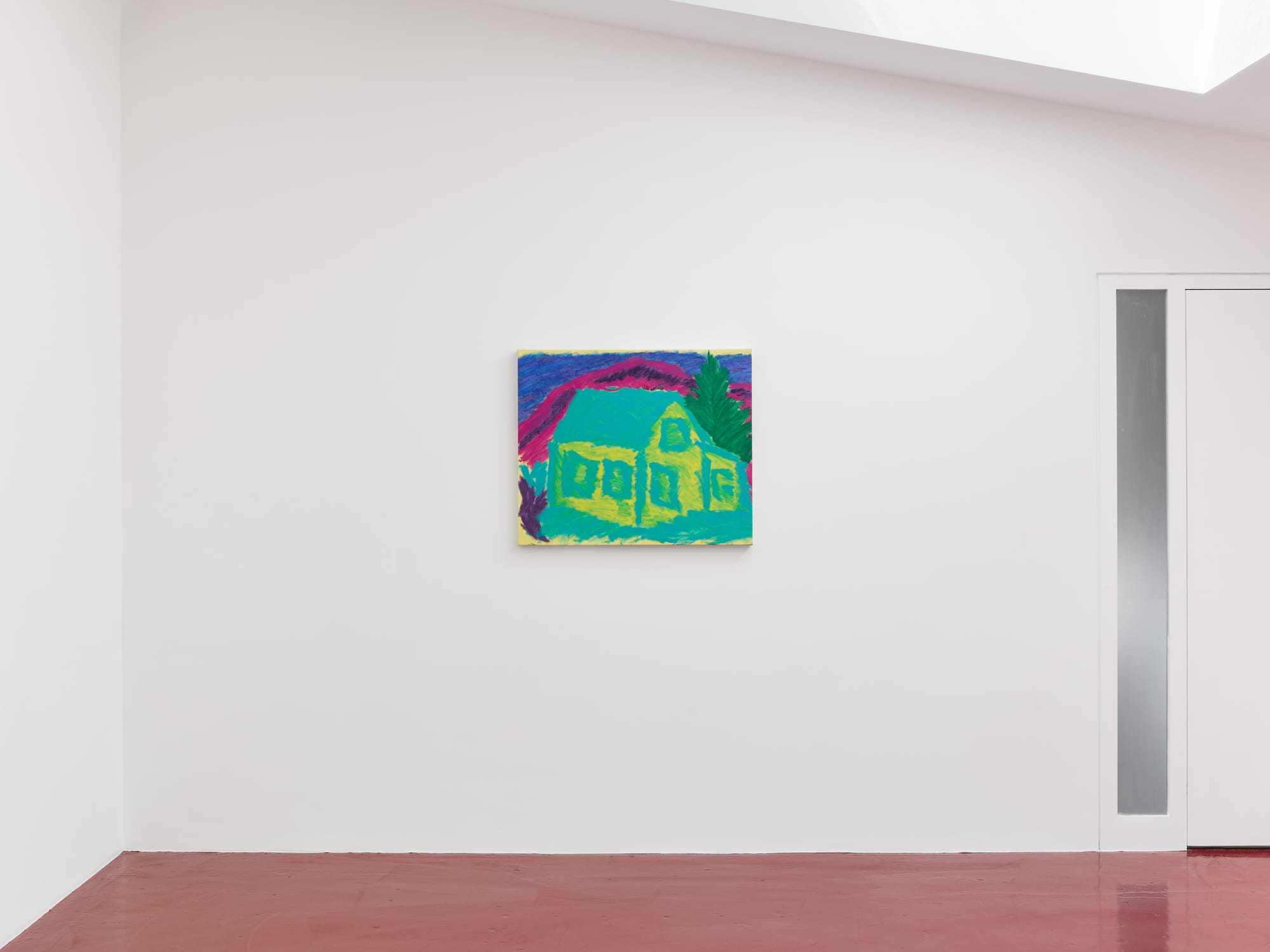
The flowers in that first painting are already past their best by the time anyone gets to see them. They were probably like that when they went into the vase. Someone bought them anyway, which is the whole argument the show is making without raising its voice.
Haricot Gallery on Instagram
Ania Trojanowska on Instagram
David Hanes on Instagram
Emily Ponsonby on Instagram
Selena Corsellis on Instagram
About Catapult Contemporary - Art Platform Submission
This is a exhibition review published by Catapult — an independent editorial platform for contemporary art, based in Vienna. We publish exhibition reviews, artist features, interviews, and critical context, with a focus on emerging and mid-career practices from Europe and beyond.
catapult.art
Want to be featured? Submit your work →