Reluctance Is a Form of Admission

Joschua Yesni Arnaut's first solo exhibition at Galerie 3AP runs at the gallery's Frankfurt space through June 13, 2026.
The title, ungerne, German for "reluctantly" or "unwillingly," sets a resistance in motion from the outset. What is refused remains active.
Working across sculpture, photography, and installation, Arnaut assembles a set of objects that circle the same psychic knot without resolving it.
Joschua Yesni Arnaut
ungerne
Galerie 3AP
Frankfurt am Main, Germany
–
Brückenstrasse 76, 60594 Frankfurt a.M.
Aileen Treusch
Joschua Yesni Arnaut
Courtesy the artist and Galerie 3AP/Frankfurt a.M.
mail@galerie-3ap.de
Galerie 3AP presents ungerne, curated by Aileen Treusch, with a text by Alex Leo Freier:
Ungerne (German for “reluctantly” or “unwillingly”) is the title of Joschua Yesni Arnaut’s exhibition. The title suggests that Arnaut is ‘unwilling’ to do something, say, to open his show.
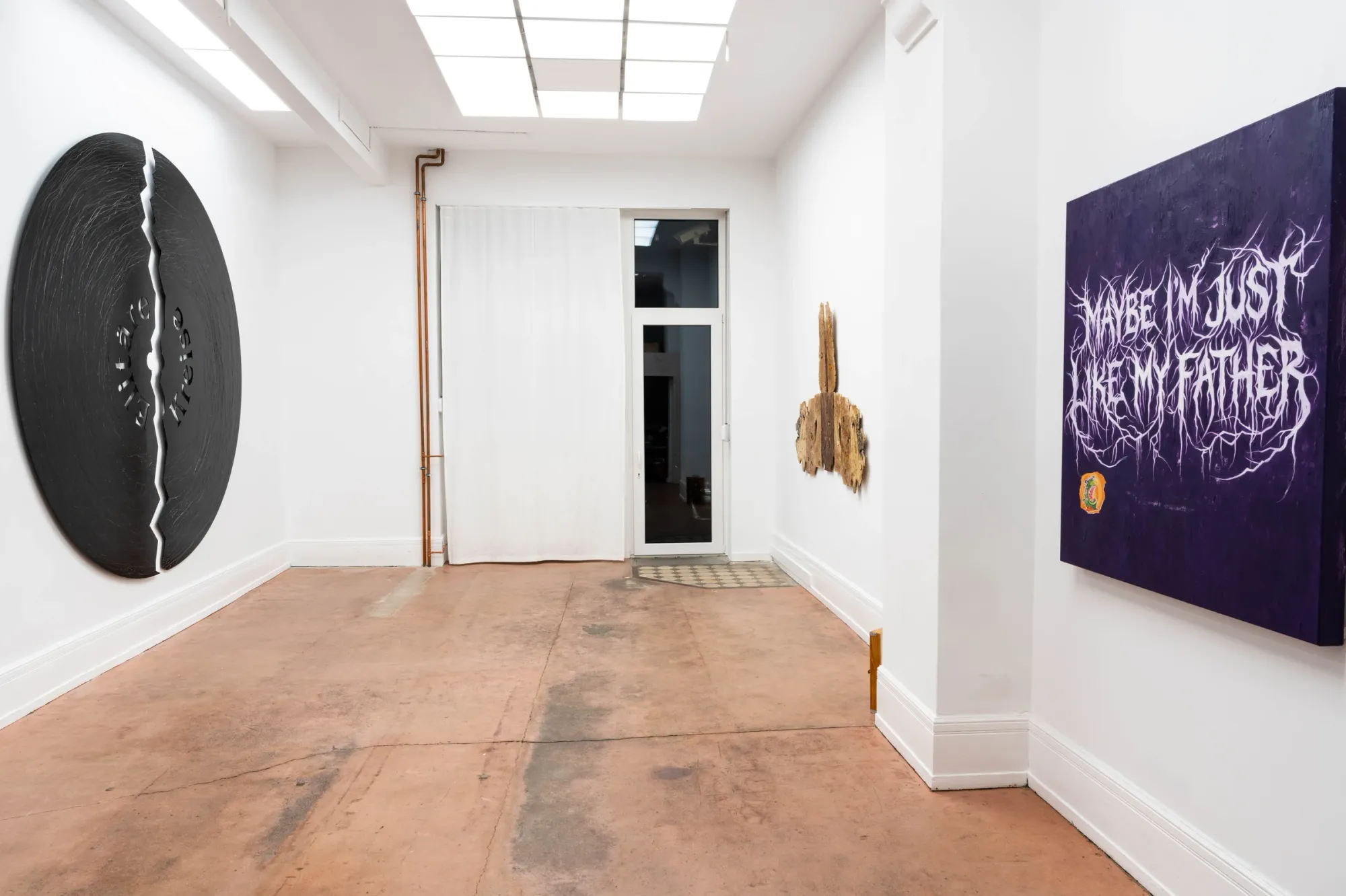
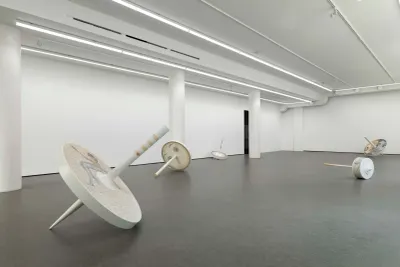
Joschua Yesni Arnaut, ungerne, 2026, installation view, ungerne, Galerie 3AP, Frankfurt am Main, 2026. Courtesy the artist and Galerie 3AP/Frankfurt a.M. Photo: Joschua Yesni Arnaut.
The pre fix ‘un’ is telling: it signals negation. To understand what this negation means, one might turn to Sigmund Freud, who, after all, seems to have the final word in these matters.
"Anyone claiming to do something unwillingly may still, in part, take pleasure in it."
To Freud, negation (ger.: ‘die Verneinung’) offers a way to voice a thought without fully accepting it emotionally. Anyone claiming to do something unwillingly may still, in part, take pleasure in it. This strange contradiction between word and thing (ger.: ‘Wort’ und ‘Sache’) that emerges in negation seems to permeate Arnaut’s show.
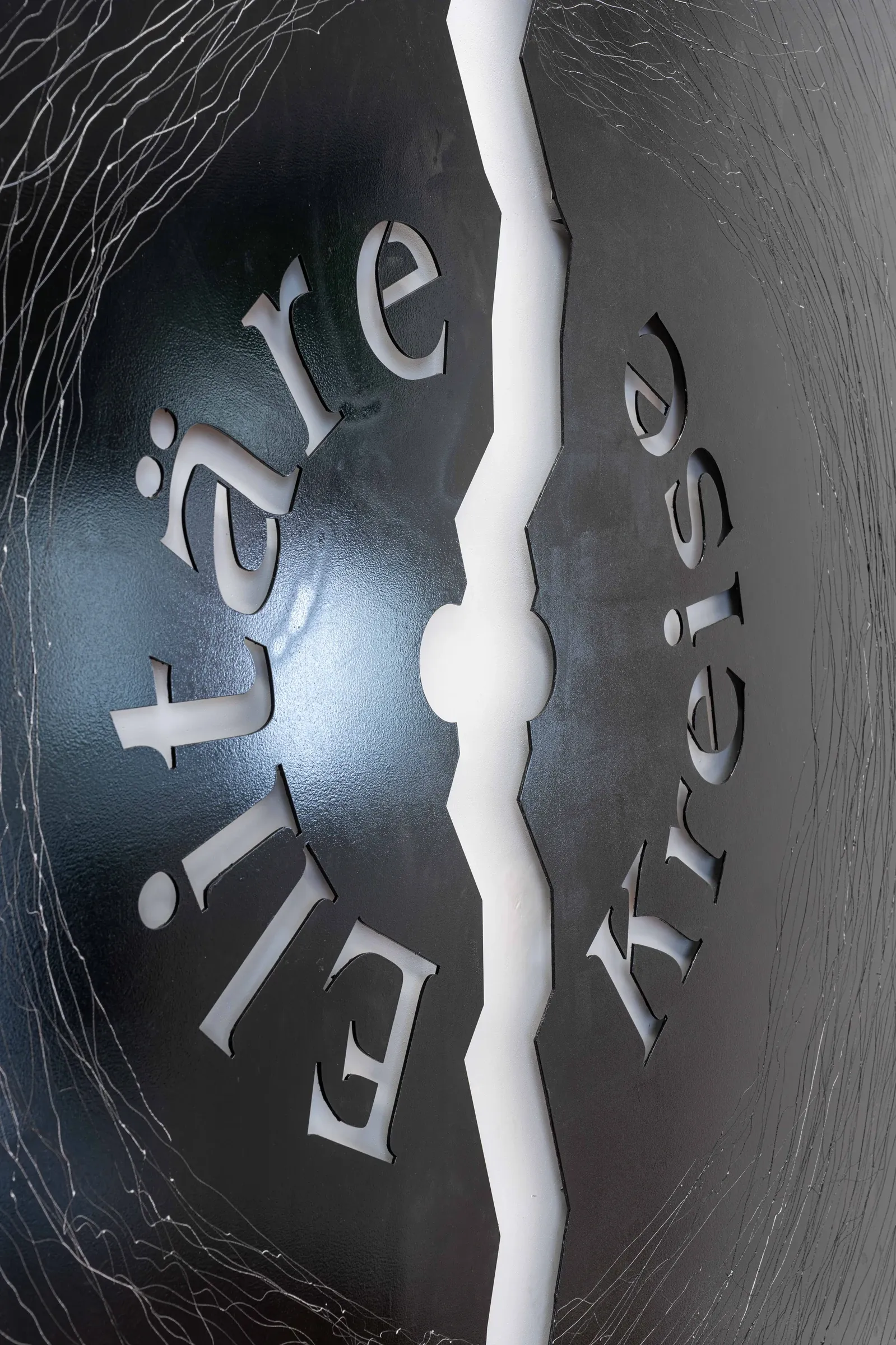
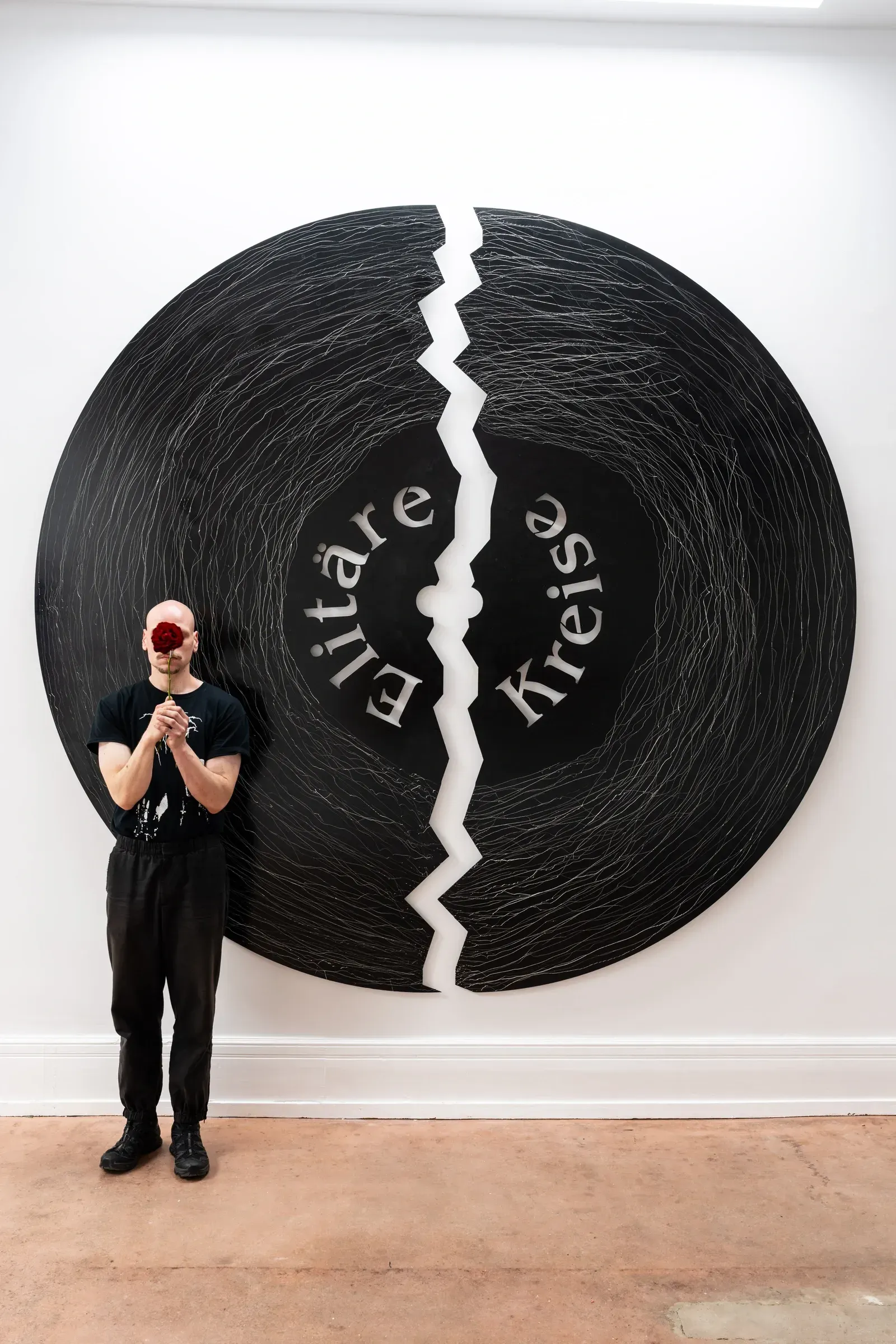
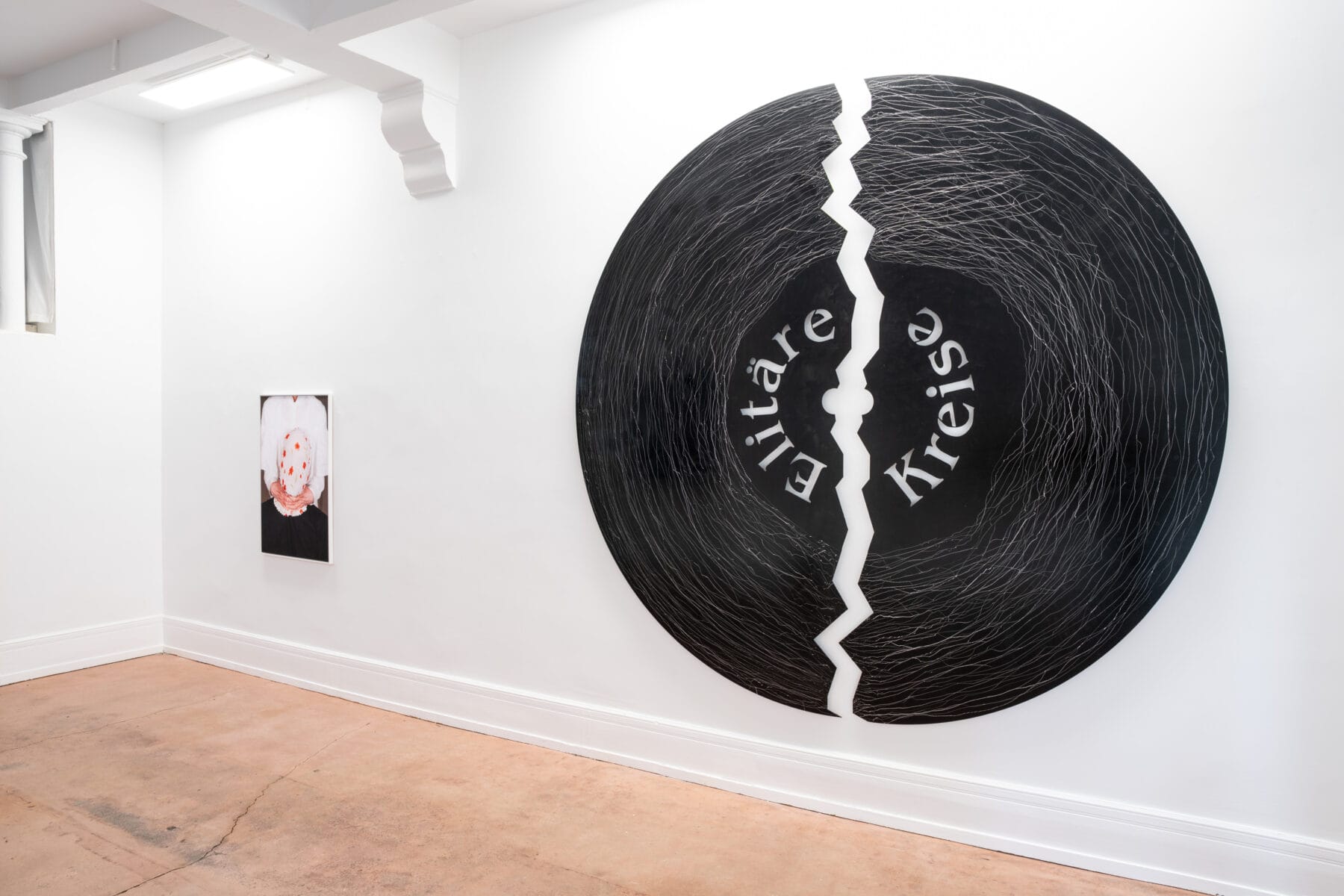
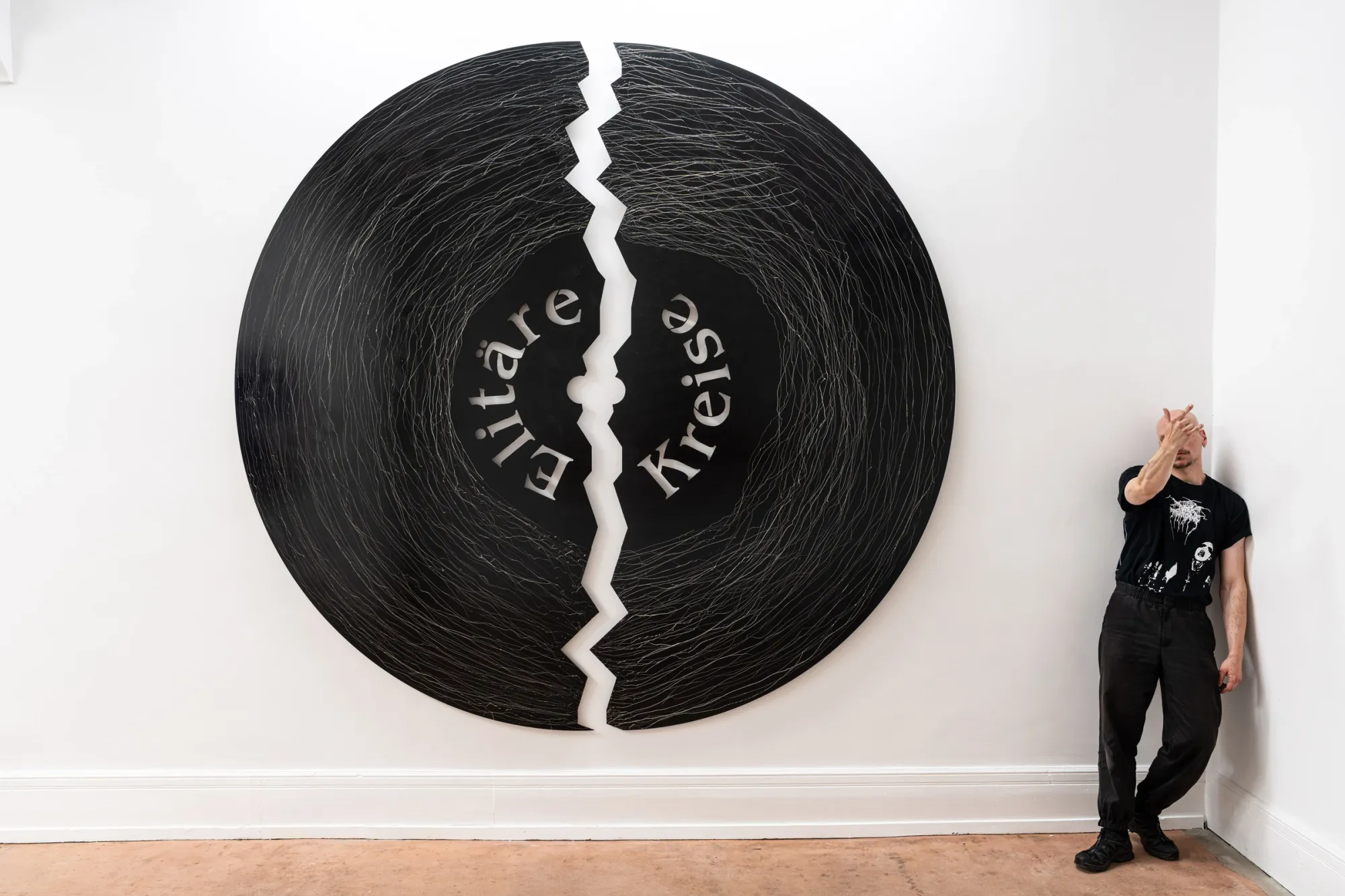
A colossal vinyl record hangs on the wall. Where one would expect an album or song title, it reads: Elitäre Kreise (‘elitist circles’). The disc is riddled with circular scratches and cracked all the way through. Does this work deal with an affair drawing ever-widening circles?
Or is it about a lonely soul circling a recurring thought pattern? Music, some kind of pharmakon for getting through life, was carefully silenced by the artist. In antiquity, there was the idea that the celestial spheres produced a harmonious symphony, inaudible to human ears. The fractured disc is far removed from such spherical harmonies. Its rhythm is disrupted.
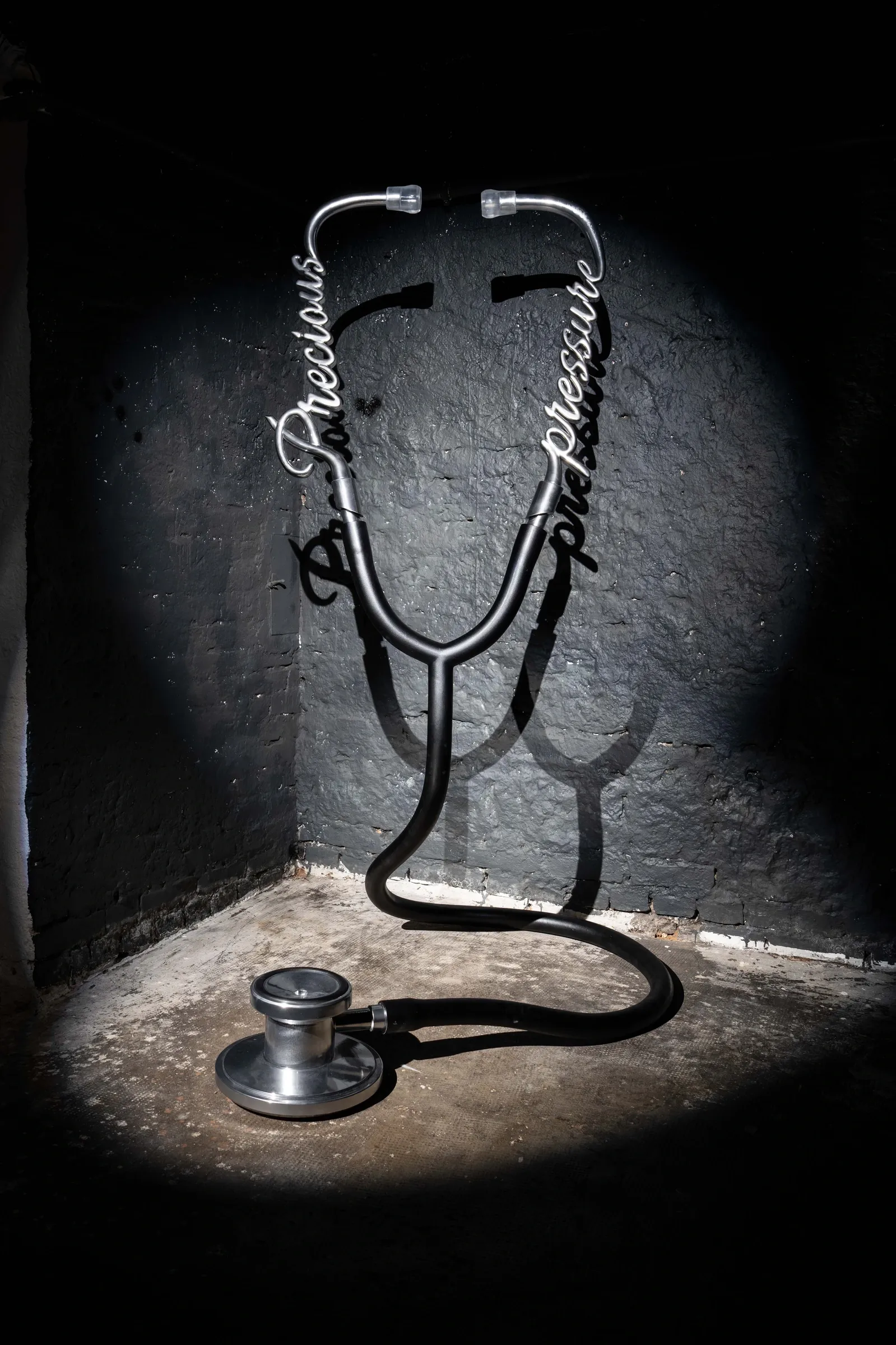
Another work in the show revolves around rhythm: a gigantic stethoscope. It does not seem to register diastolic and systolic values, and one wonders whether it listens to the heart at all. The sculpture bears the words Precious Pressure.
The heart appears not only to hold something precious but also to generate pressure itself. Stress seems to disturb the cardiac cycle and affect forms of attachment. Again, the contradiction remains unresolved: will the right diagnosis restore the patient to soundness?
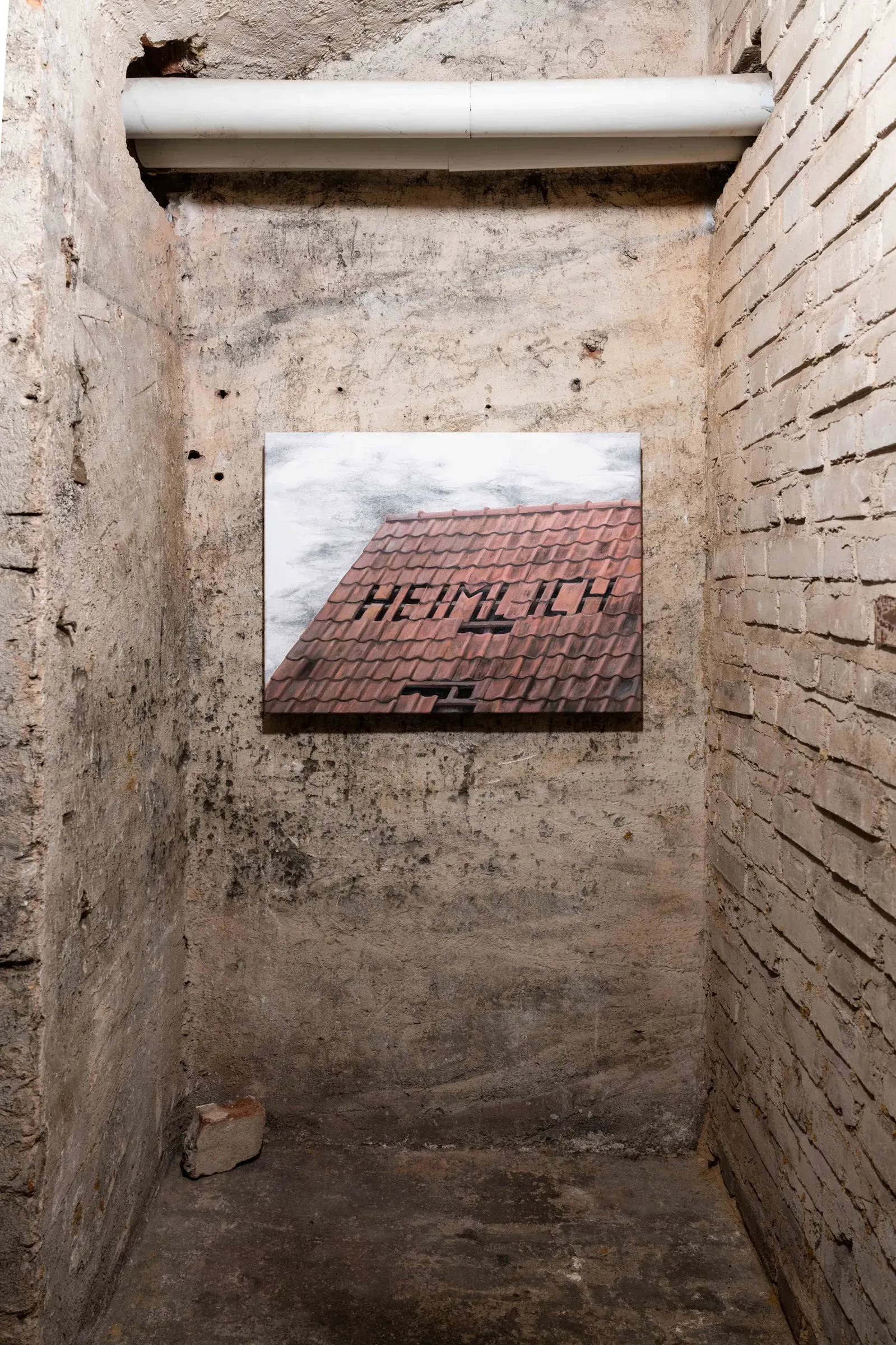
One painting shows a roof structure. Some of its tiles have fallen away or been removed. Beneath the roofing membrane, wooden beams and the dark interior of the house are exposed. The damaged areas coalesce into the word heimlich (engl.: ‘hidden’). Freud has closely examined this word as well.
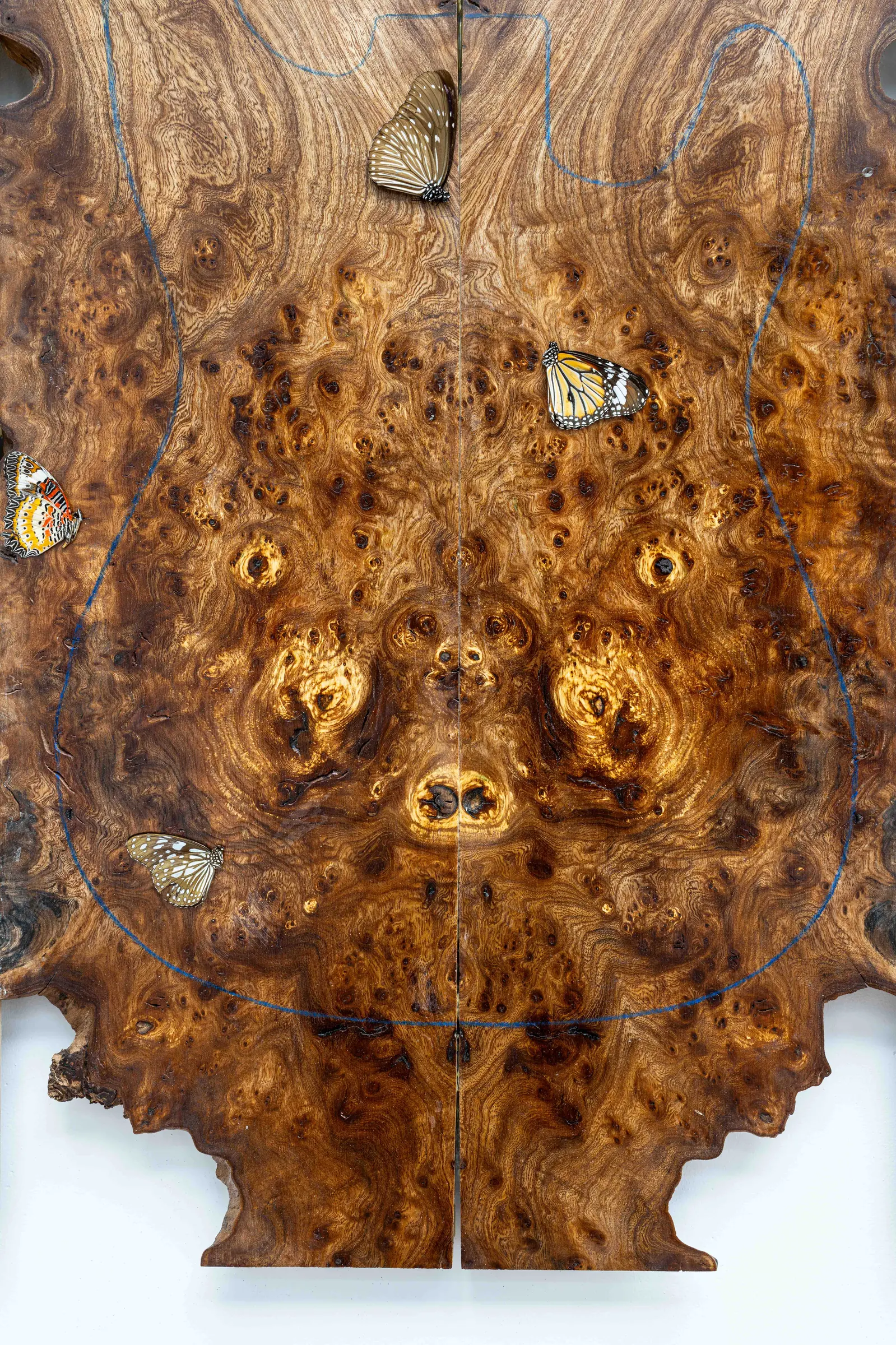
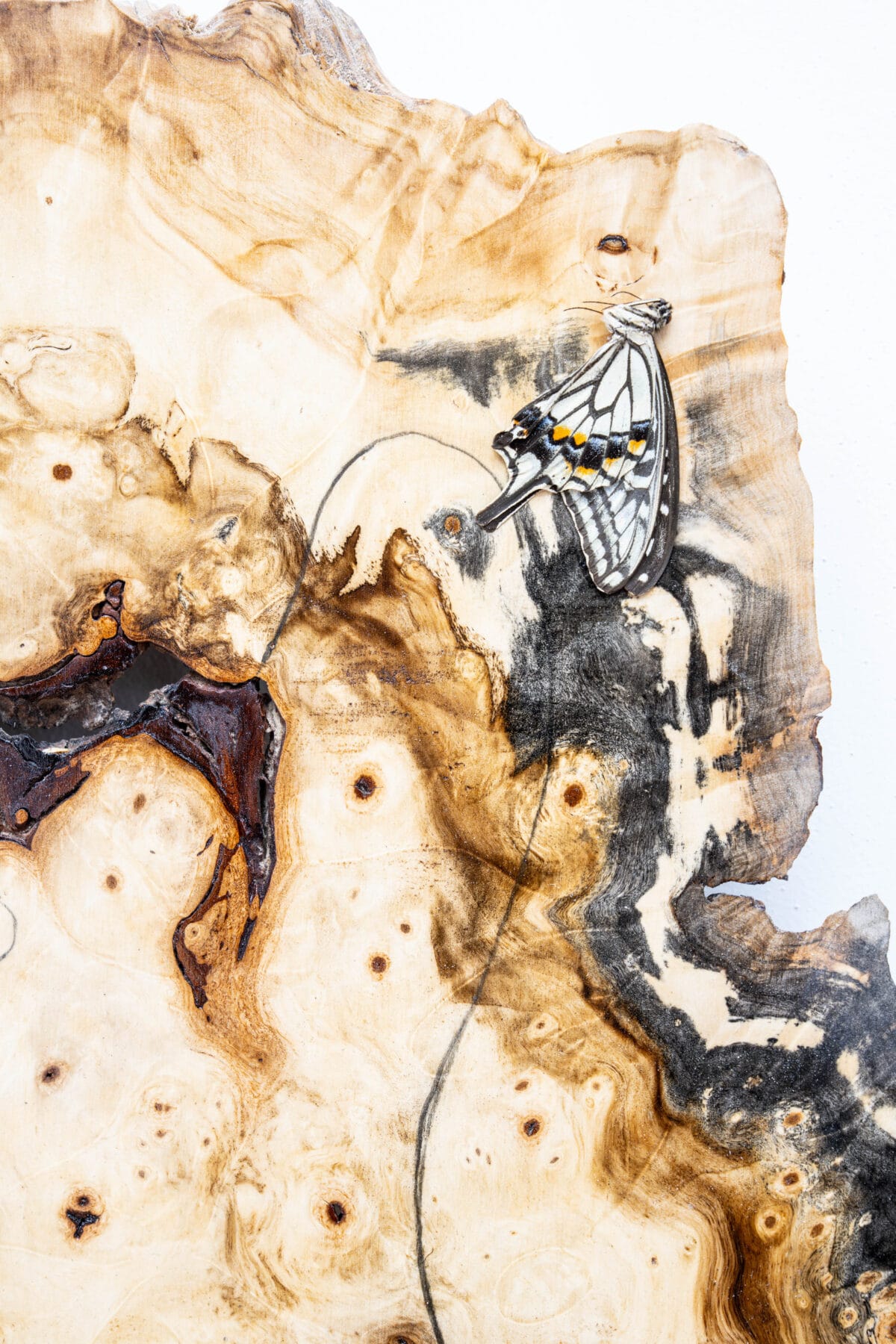
Joschua Yesni Arnaut, Times of Grace – Neurosis, detail, ungerne, Galerie 3AP, Frankfurt am Main, 2026. Courtesy the artist and Galerie 3AP/Frankfurt a.M. Photo: Joschua Yesni Arnaut.
It contains ‘Heim’, meaning ‘home’. Behind walls, something intimate may be concealed. Freud speaks of the return of the repressed when something secret comes to light. When negated, the familiar becomes ‘unheimlich’, meaning uncanny.
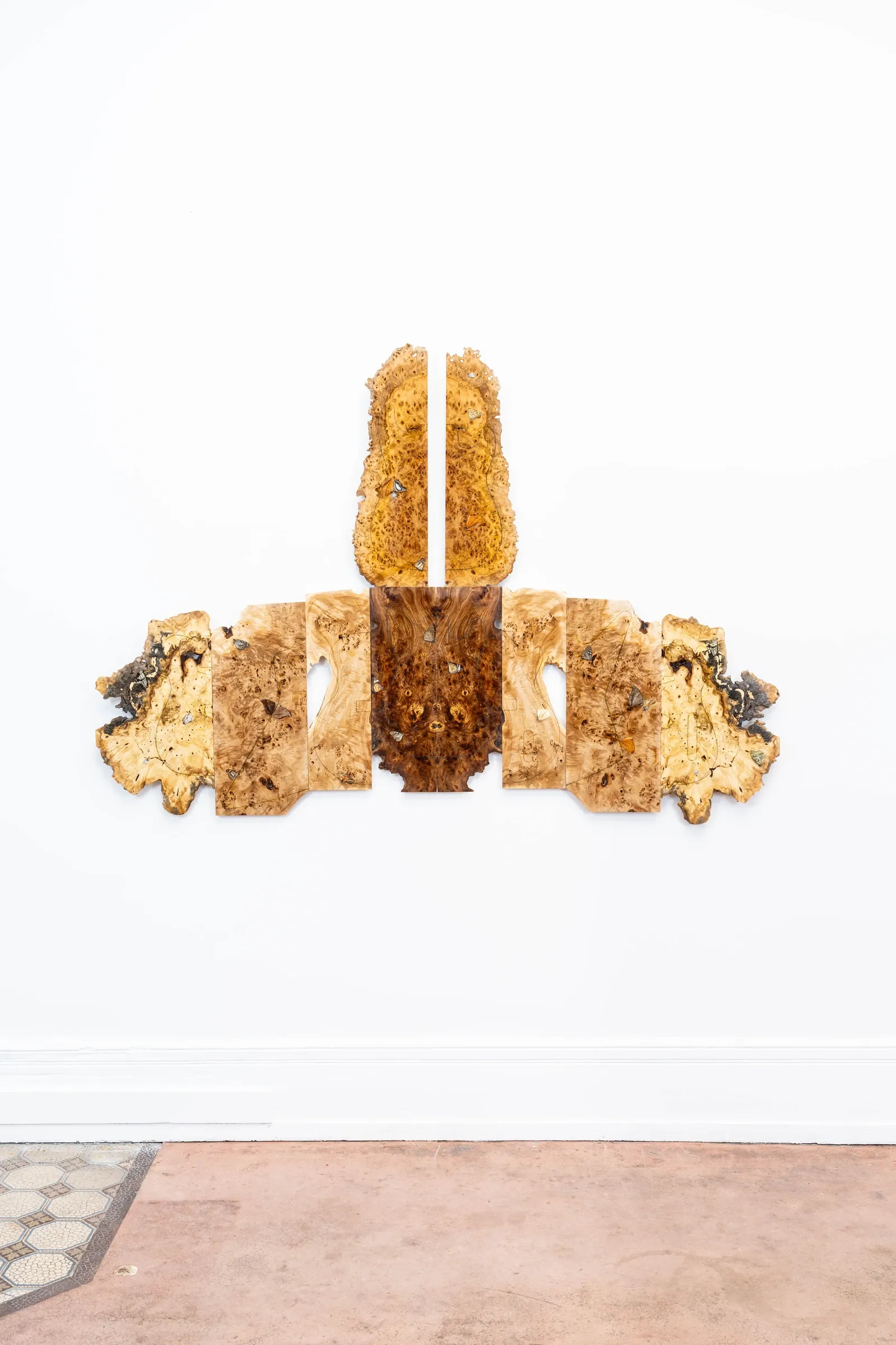
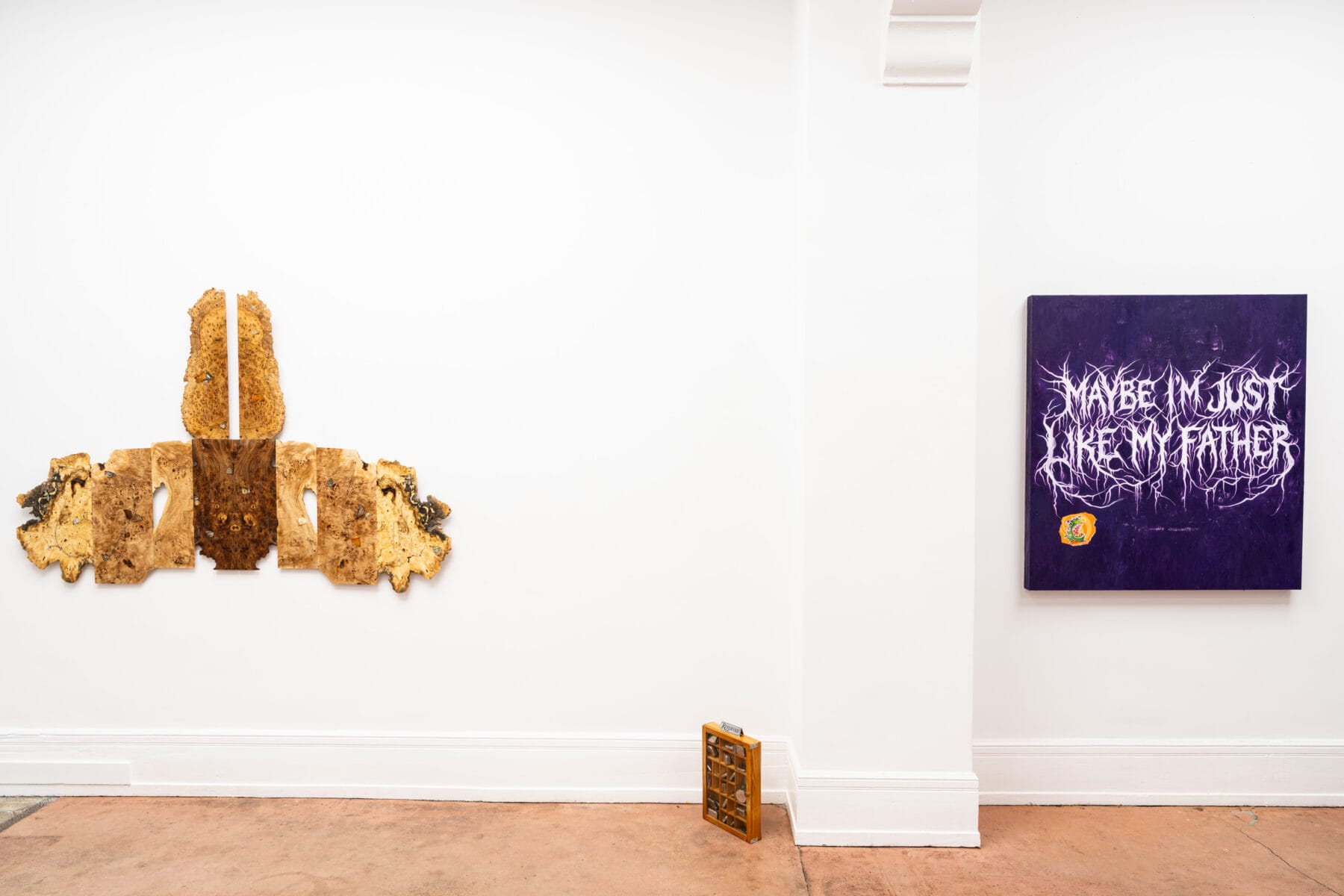
Uncanny is also the appropriate term for another wooden construction on the gallery wall. A totem-like structure resembles a stretched animal hide. Those prone to paranoia might begin to see faces in the grain of the wood. On closer inspection, guitar body shapes have been traced onto its surface.
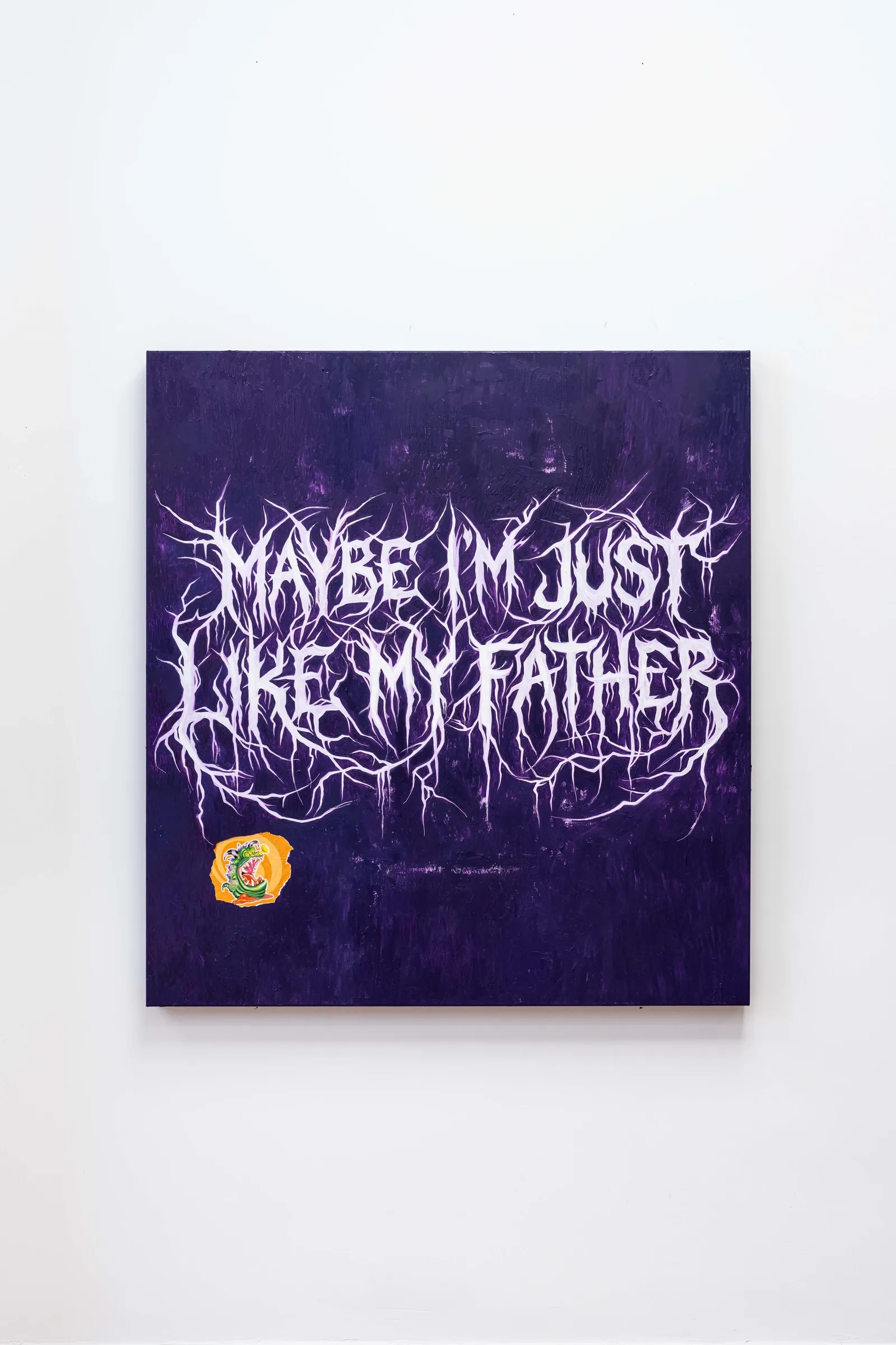
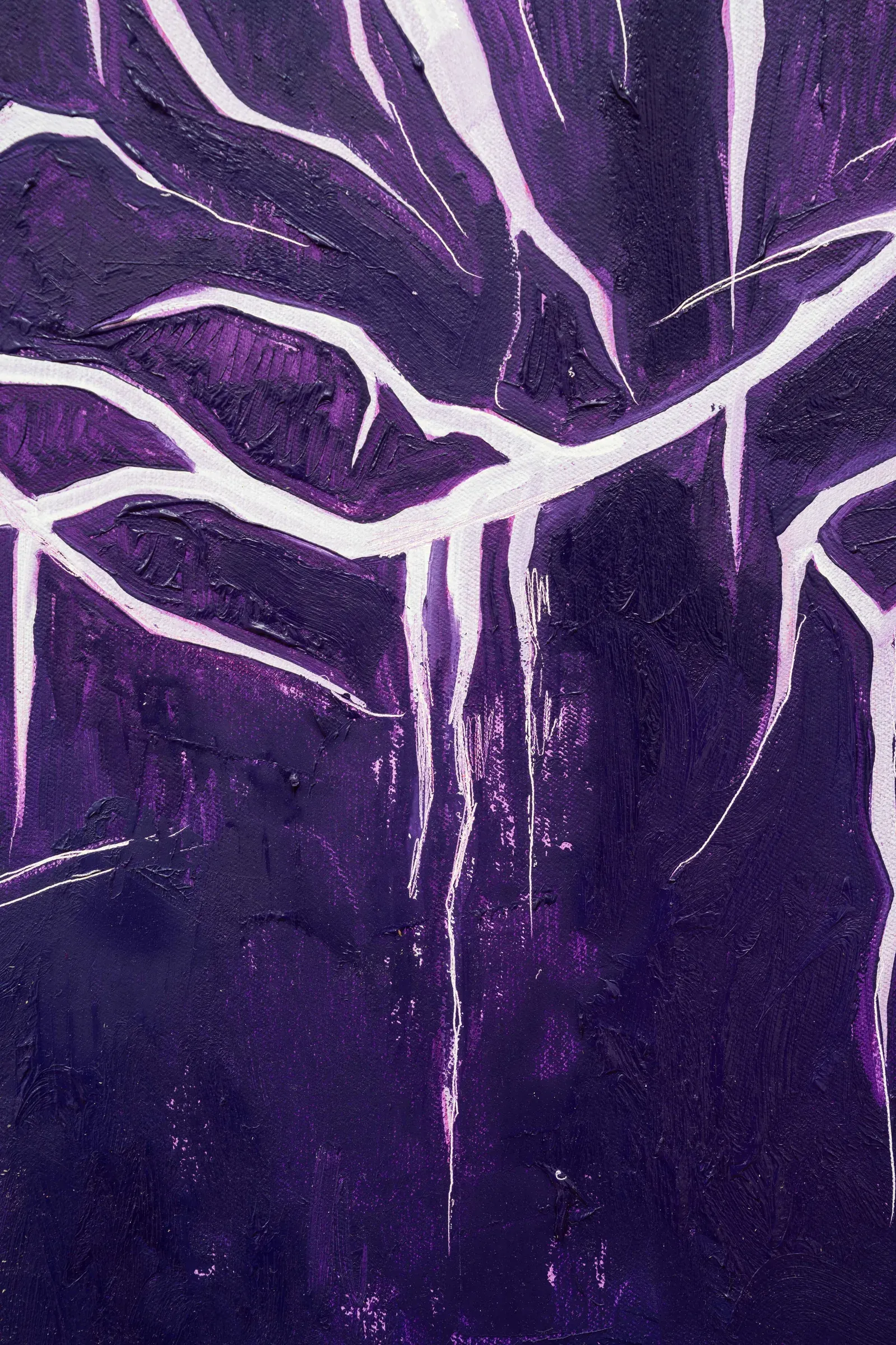
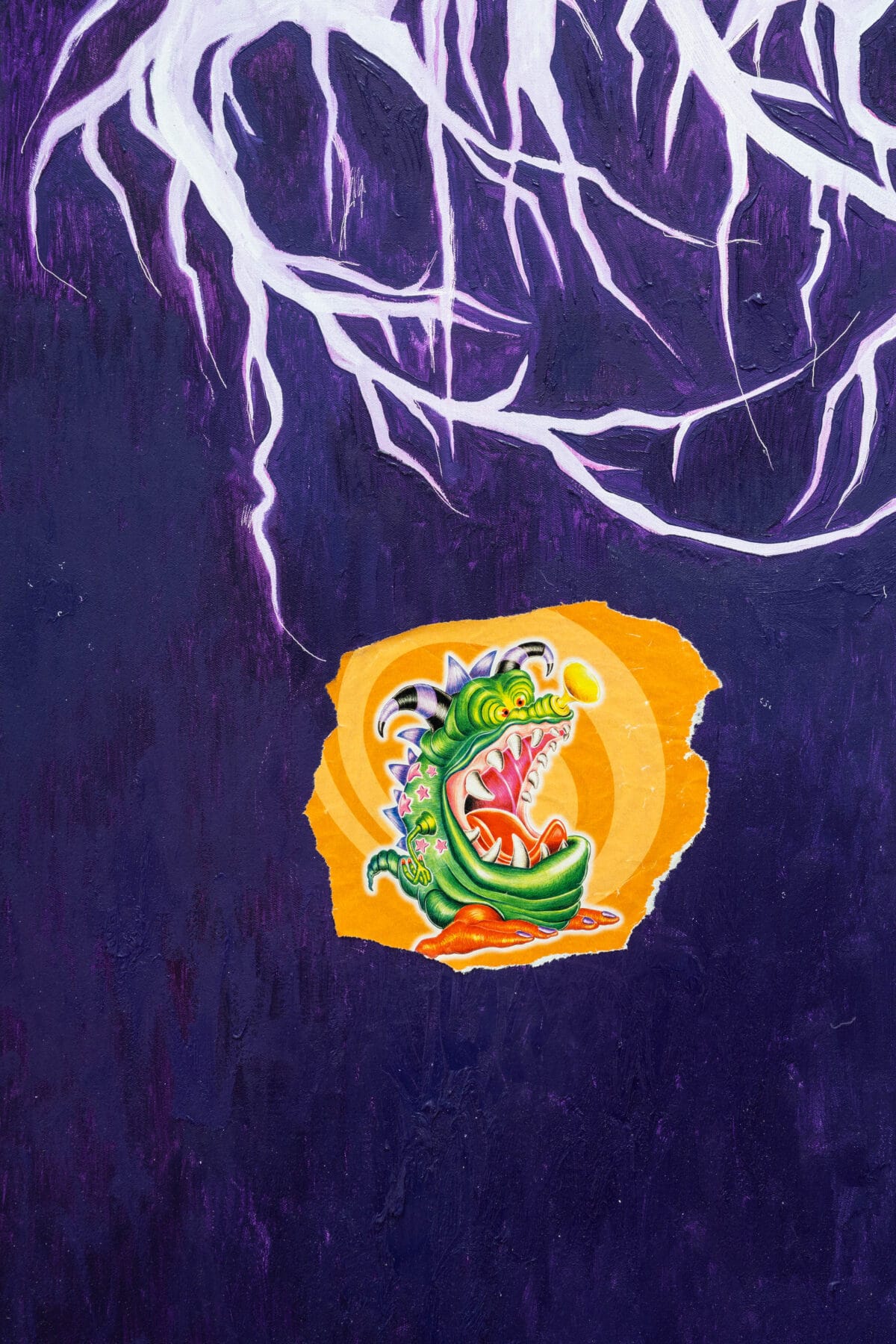
Joschua Yesni Arnaut, Maybe I'm Just Like My Father, detail, ungerne, Galerie 3AP, Frankfurt am Main, 2026. Courtesy the artist and Galerie 3AP/Frankfurt a.M. Photo: Joschua Yesni Arnaut.
The work is named after the album Times of Grace by the band Neurosis and consists of body blanks used by guitar makers. Here, they are presented in the rough, yet already oiled for further treatment. Imagining gentle care introduces a tender counterpoint to the material in its unrefined condition. As with the other works, the impression of the uncanny remains unresolved.
Two wall pieces stage a final pair of opposites. Once again, a sense of harmony is broken. On a square painting, it reads: Maybe I’m Just Like My Father. The thorny typography makes the work look like a metal album cover.
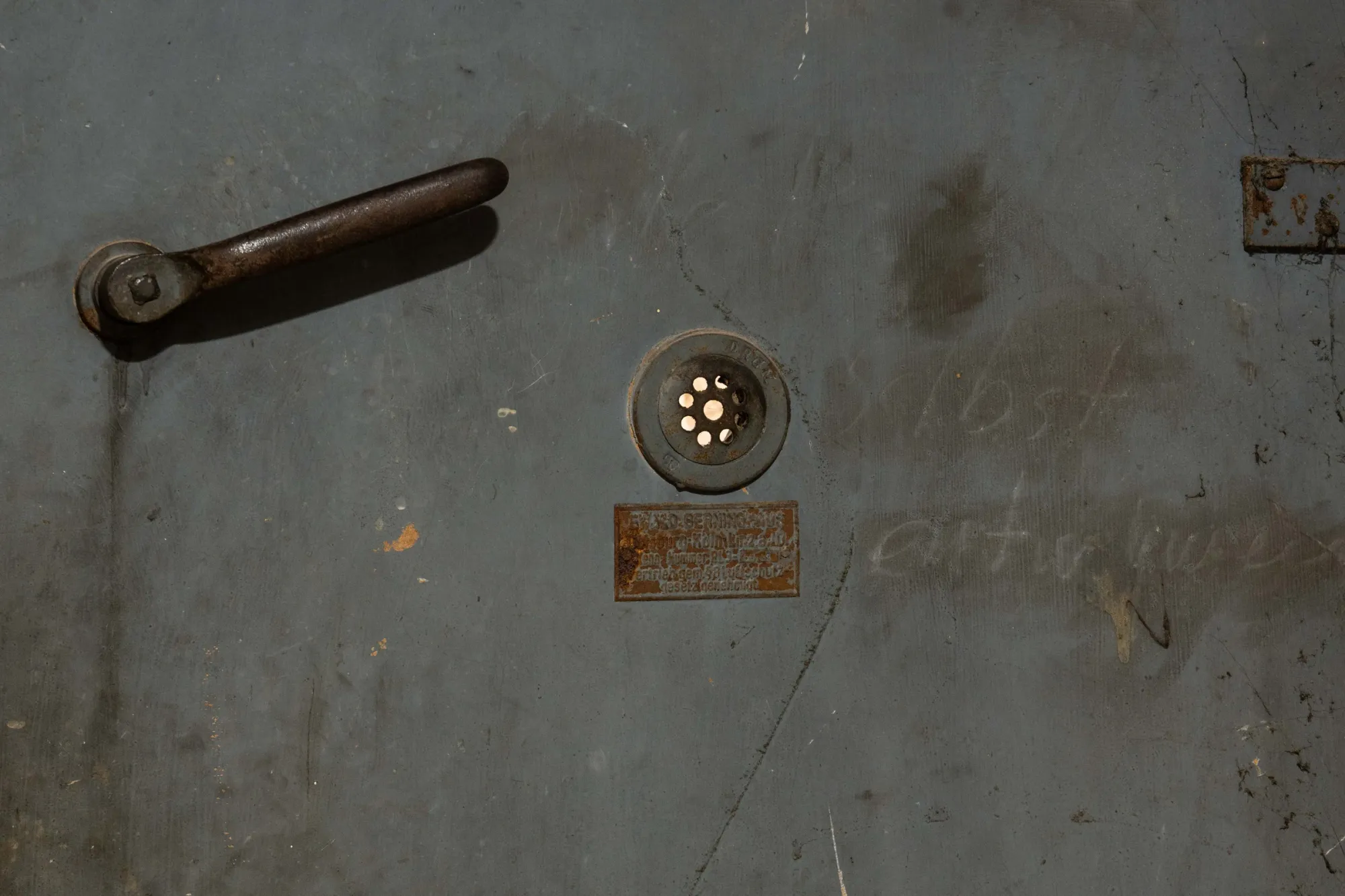
Like a slowly growing lesion, the seemingly Nordic, root-like lettering becomes uncanny. A sense of nihilism sets the tone, radiating through all spheres.
Is destiny prevailing over the artist, just as ages ago, Oedipus was doomed from the outset? What is the artist suffering from? Could his affliction be diagnosed? Perhaps the correct diagnosis could solve a riddle akin to that posed by the Sphinx.
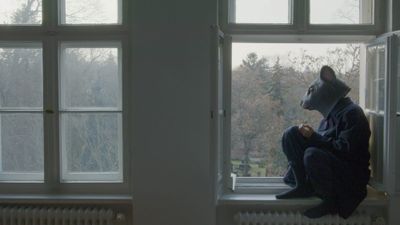
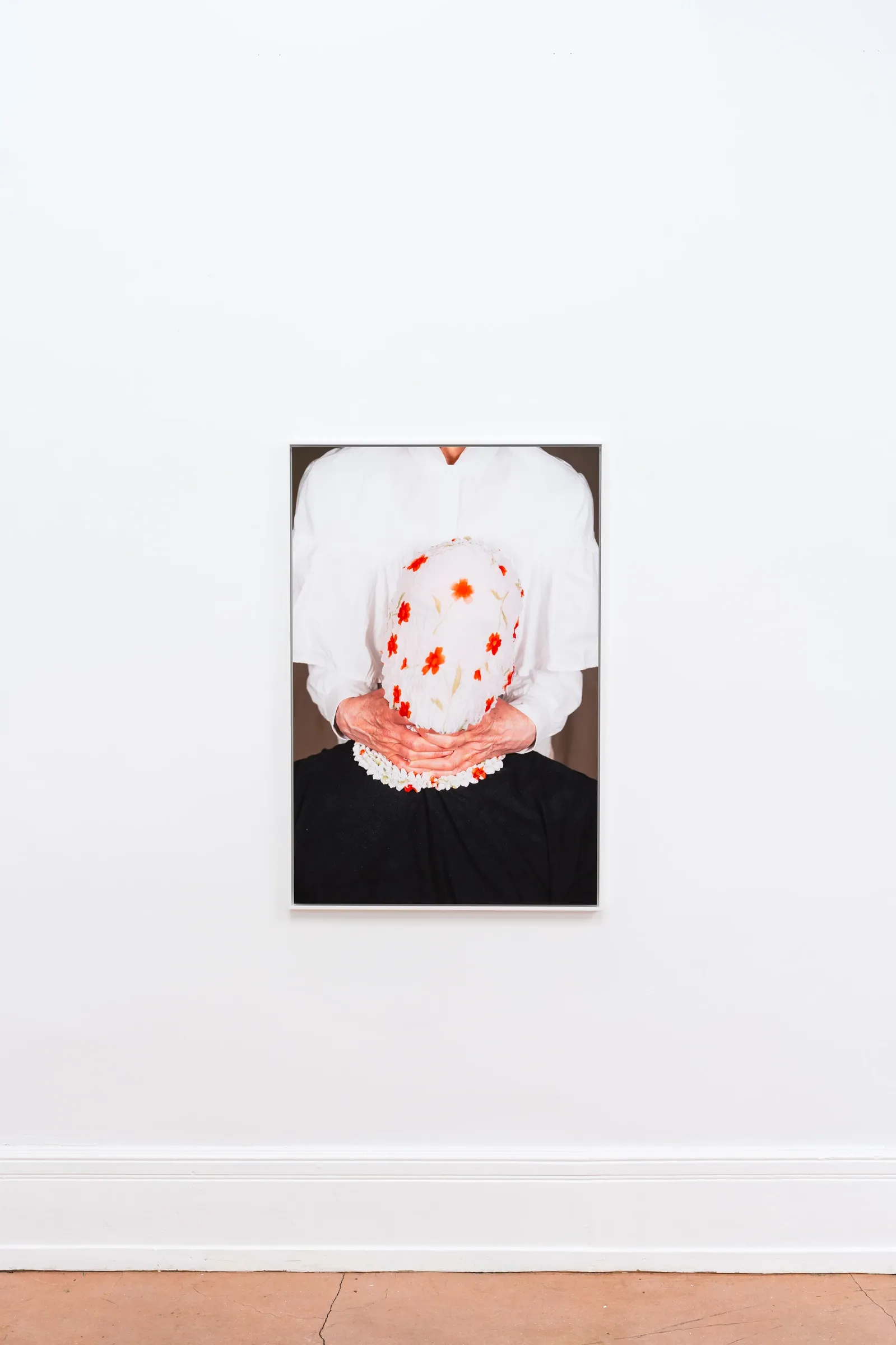
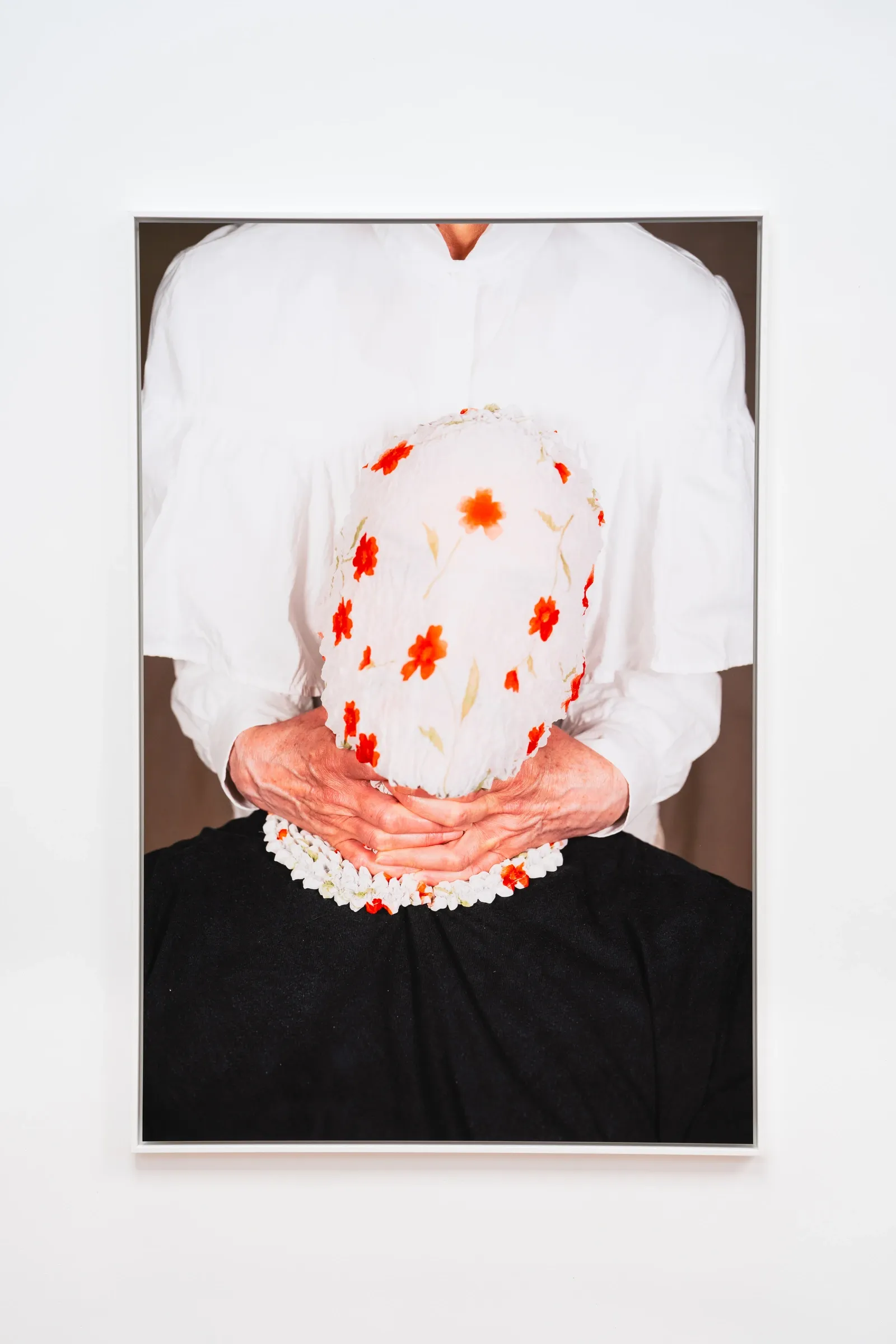
In the show’s title piece, the Sphinx – meaning ‘the strangler’ in Greek – holds the artist in her firm grip. Like the lettering in the ‘father’ painting, the image shows traces of brute force. Named Ungerne – ‘unwilling’ – it is a kind of self-portrait, except the artist is not to be seen.
A flowered cloth is stretched over his head. Hands press it tightly around his neck. Who is applying this gentle pressure to the young man? Freud’s patient seems to know the answer: “It is not the mother.”
Text by Alex Leo Freier
The title work offers neither a face nor an explanation. A cloth covers the head, hands press it around the neck. The grip is attentive, the agency unclear.
What runs through the entire show is not confession but diagnostic procedure. Something is being examined, the result withheld.
The guitar body blanks in Times of Grace, already oiled, not yet instruments, hold that same suspended state. Care has been applied. The outcome has not.
Instagram Joschua Yesni Arnaut
Galerie 3AP on Instagram
Aileen Treusch on Instagram
About the Artist and Text Author
Joschua Yesni Arnaut (born 1989, lives in Frankfurt am Main) works across photography, sculpture, and installation. He examines the relationship between body, memory, and space, deconstructing autobiographical narratives of power, masculinity, and vulnerability to open new perspectives on self and social codings.
Alex Leo Freier is a doctoral candidate at the Institute for Cultural Studies at Humboldt-Universität zu Berlin and researches aesthetics and epistemology. His dissertation project examines the theory of the dream image in Walter Benjamin and Sigmund Freud.
About Catapult Contemporary - Art Platform Submission
This is a exhibition review published by Catapult - an independent editorial platform for contemporary art, based in Vienna. We publish exhibition reviews, artist features, interviews, and critical context, with a focus on emerging and mid-career practices from Europe and beyond.
catapult.art
Want to be featured? Submit your work →