Julia Wachtel on exploring Identity Through Assemblage.
Julia Wachtel in Conversation with DiFranco - Catapult Contemporary
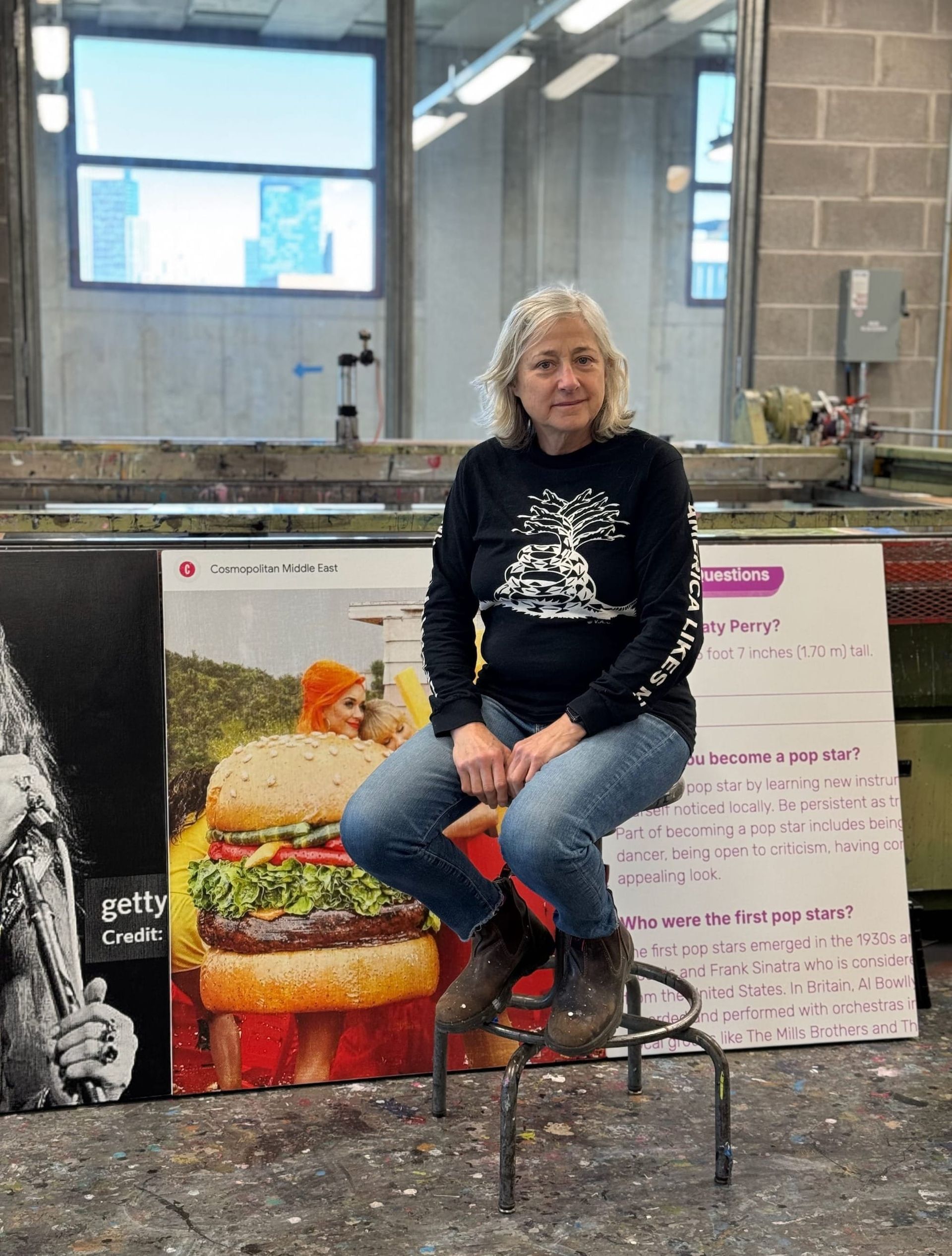
Julia Wachtel has spent decades taking images apart and putting them back together in ways that make us look twice.
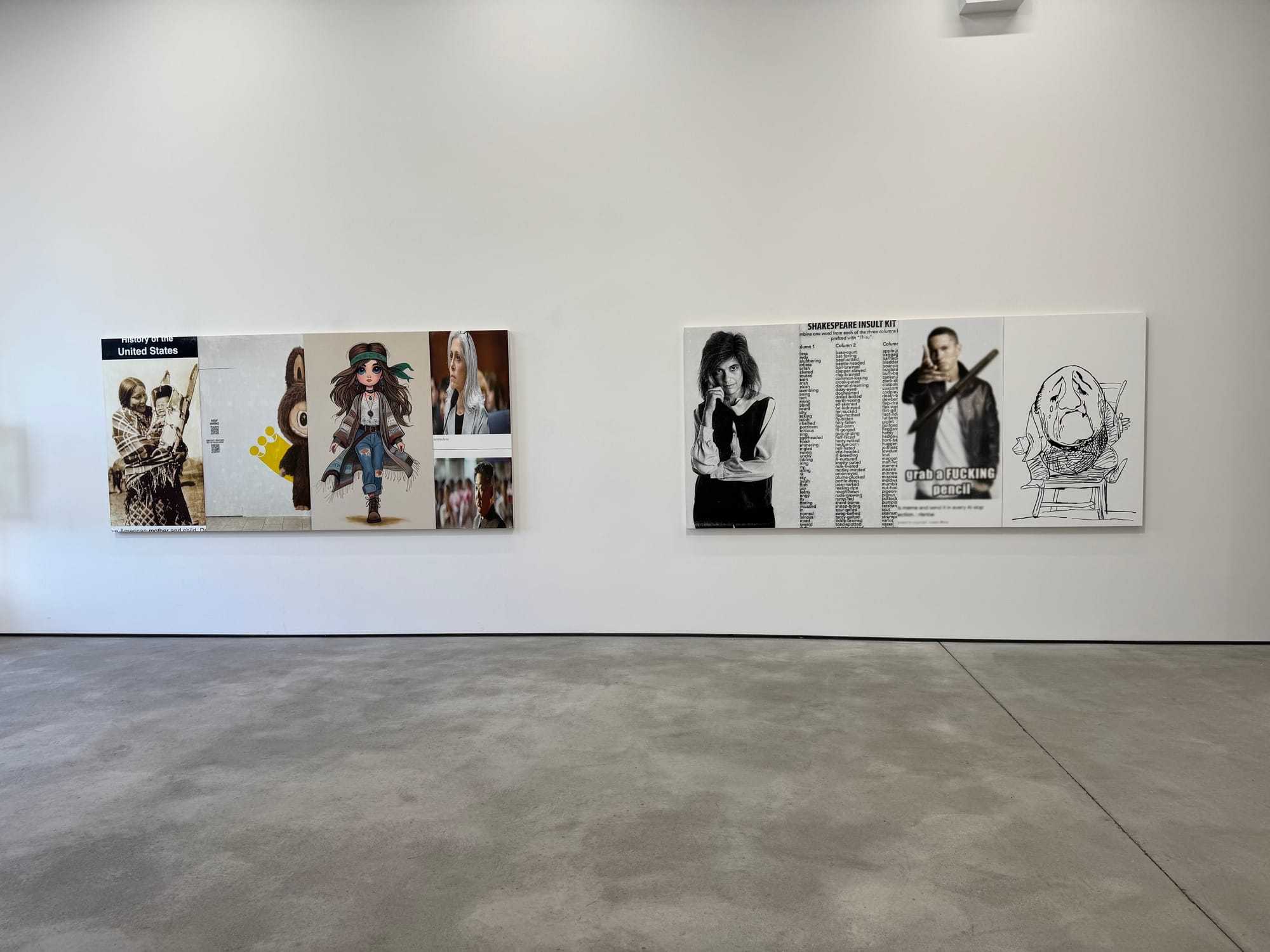
Cartoon characters, advertisements, political imagery and internet fragments find themselves sharing the same canvas, sometimes awkwardly, sometimes hilariously.
New York, 1956
Painting, screenprint, appropriation
BA Middlebury College (1977), School of Visual Arts (1978), Whitney Museum Independent Study Program (1979)
Return to Content a/b, Klemms, Berlin, 2026
Return to Content a/b, Jahn und Jahn, Munich, 2026
and, VON AMMON co, Washington D.C., 2026
Spring show, Ehrlich Steinberg, Los Angeles
VON AMMON co, Washington D.C.
juliawachtel.com
Courtesy the Artist
In conversation with DiFranco, Julia Wachtel talks about the strange logic of images, why painting still matters in a world of screens, and why artists shouldn't be afraid to take risks.
Segment I - Images, Appropriation and the Language of Painting
1. Since the early 1980s, images taken from popular culture, advertising and the media have played a central role in your work. What draws you to these images, and at what point do you recognise that an image you come across has the potential to become a painting?
These images are part of the ecosystem we are all living in. They are the plankton that we absorb and internalize.
Even as a child I was drawn to pop culture in all it’s visual forms. From billboards to magazines to tee shirt design, etc. So I have a real love of them.
The specifics of my interest in this world of images has shifted over the many decades I’ve employed them in my paintings, and therefore the decision making as to what to use has shifted over time.
But generally I look for images that have the capacity to open up multiple paths of associations, references and interpretations. And of course there is the intuitive aesthetic/emotional feeling of the image.
2. Your compositions often bring together seemingly unrelated images, creating tension, irony or ambiguity. How do you decide which images belong together in a work? Are you trying to construct a narrative, provoke an emotional response, or create a space where different interpretations can coexist?
I’m not trying to construct a narrative. I think the easiest comparison would be to poetry which frees written language from the rules of grammar. I am not adhering to the original “grammatical” logic of the imagery I use, but decontextualizing it and creating a different language.
The paintings ask the viewer to look at images and think about the embedded narratives and readymade feelings that this commercial imagery typically delivers to us.
By taking them out of context and contextualizing them with other equally decontextualized image I hope it creates the space for that. The strangeness of this new situation perhaps wakes the viewer up to see them with a lucid dreamlike quality. I know that sounds quite grandiose, LOL, but that’s what I’m trying to set up for myself.
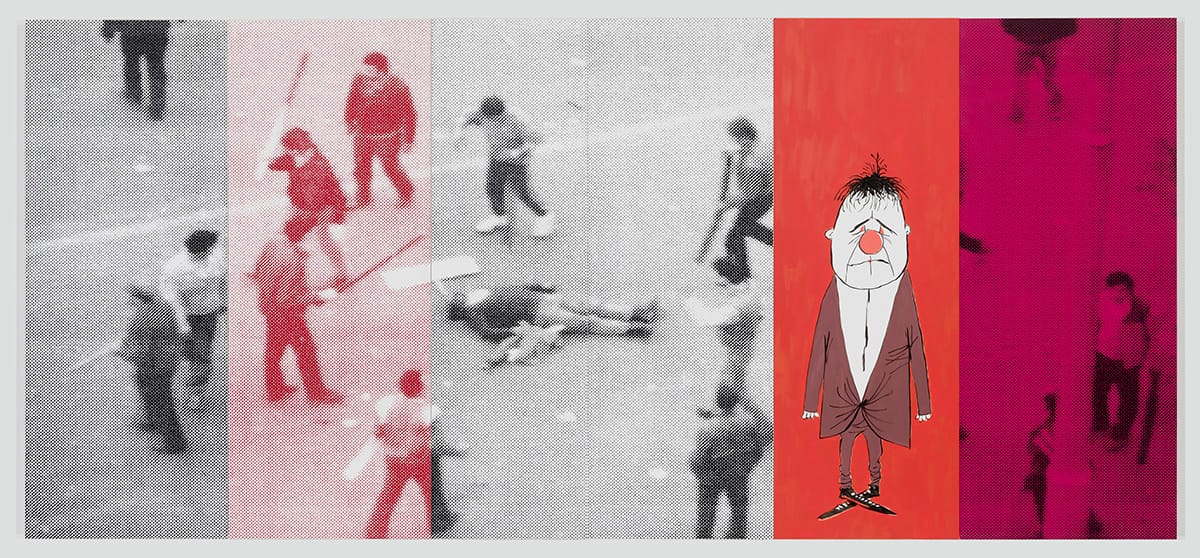
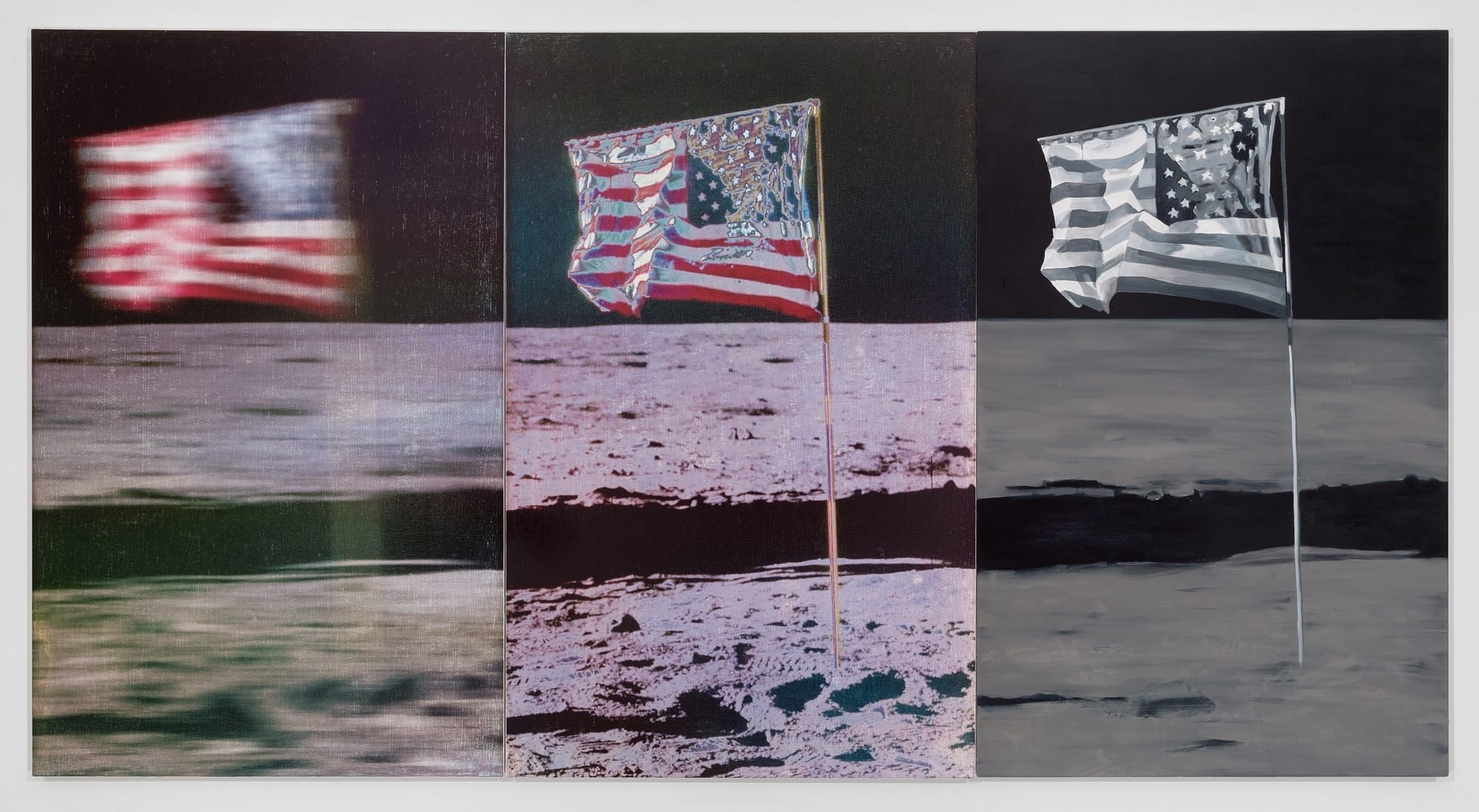
And then it asks the viewer to hold these images together, visually, intellectually and emotionally as it is a static thing, a painting. If the painting is successful there are invisible threads, tenuous as they might be, that bind the disperate images together, almost like a gravitational pull. If that were not the case it would just be randomness that doesn’t mean anything.
3. Your practice seems to involve both selecting and editing images and reflecting on the language of painting itself. Do you see yourself primarily as a painter, an editor of images, or someone working somewhere between the two? How has this relationship evolved over the years?
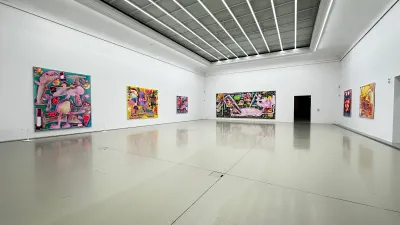
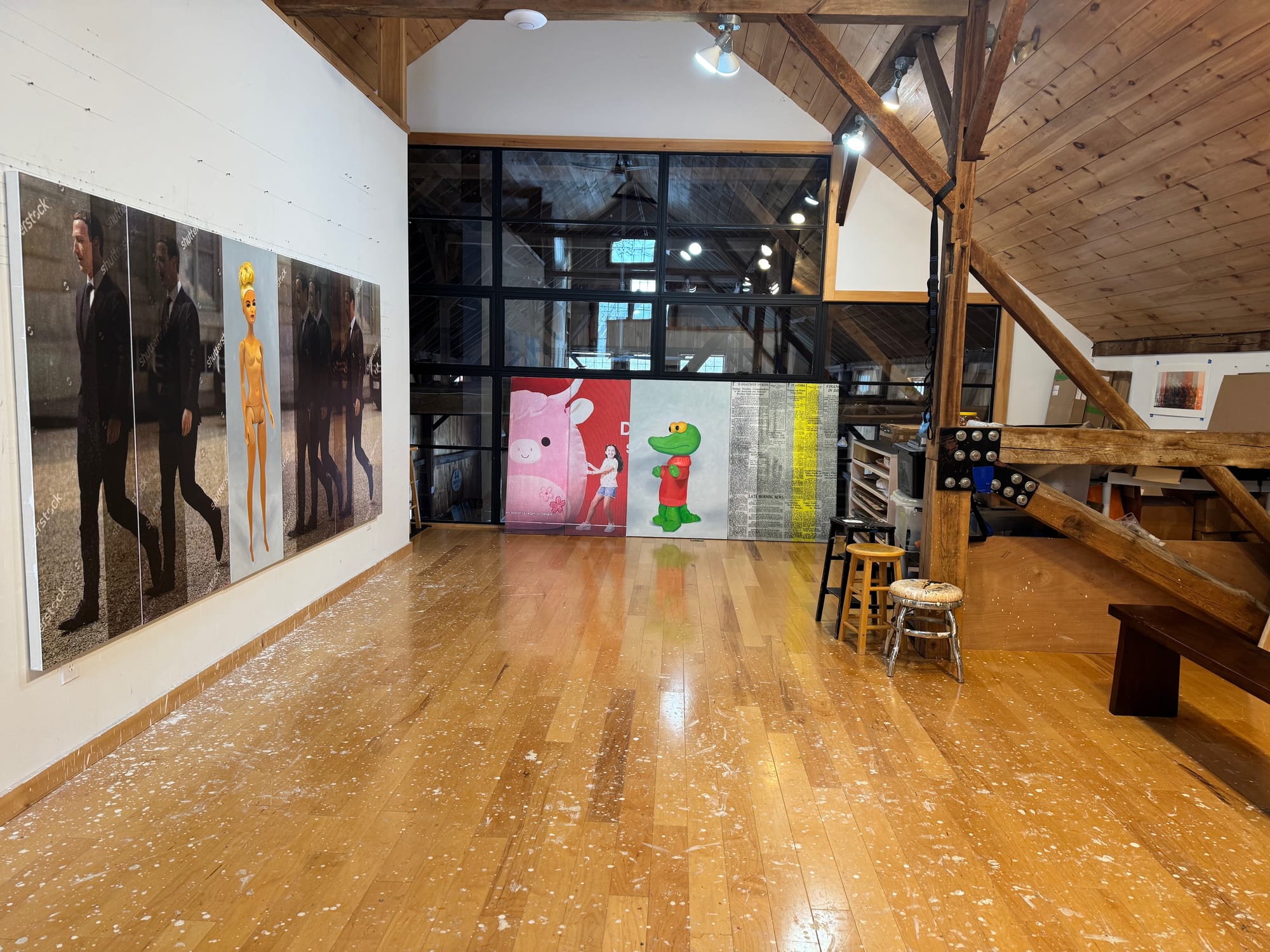
I see myself as an artist-painter. But yes editing is critical to the work. The selection of images and the sequencing of them is the conceptual backbone of the work. But it is a painting. Paint on canvas. Not a photo or a video. Sadly most people see artworks these days as a digital file. On the one hand my work excels in this environment as it is photo based.
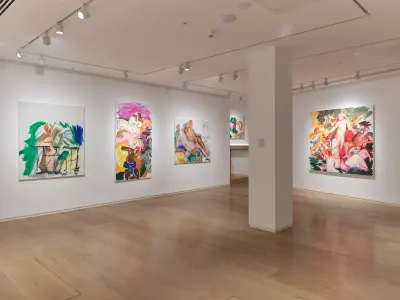
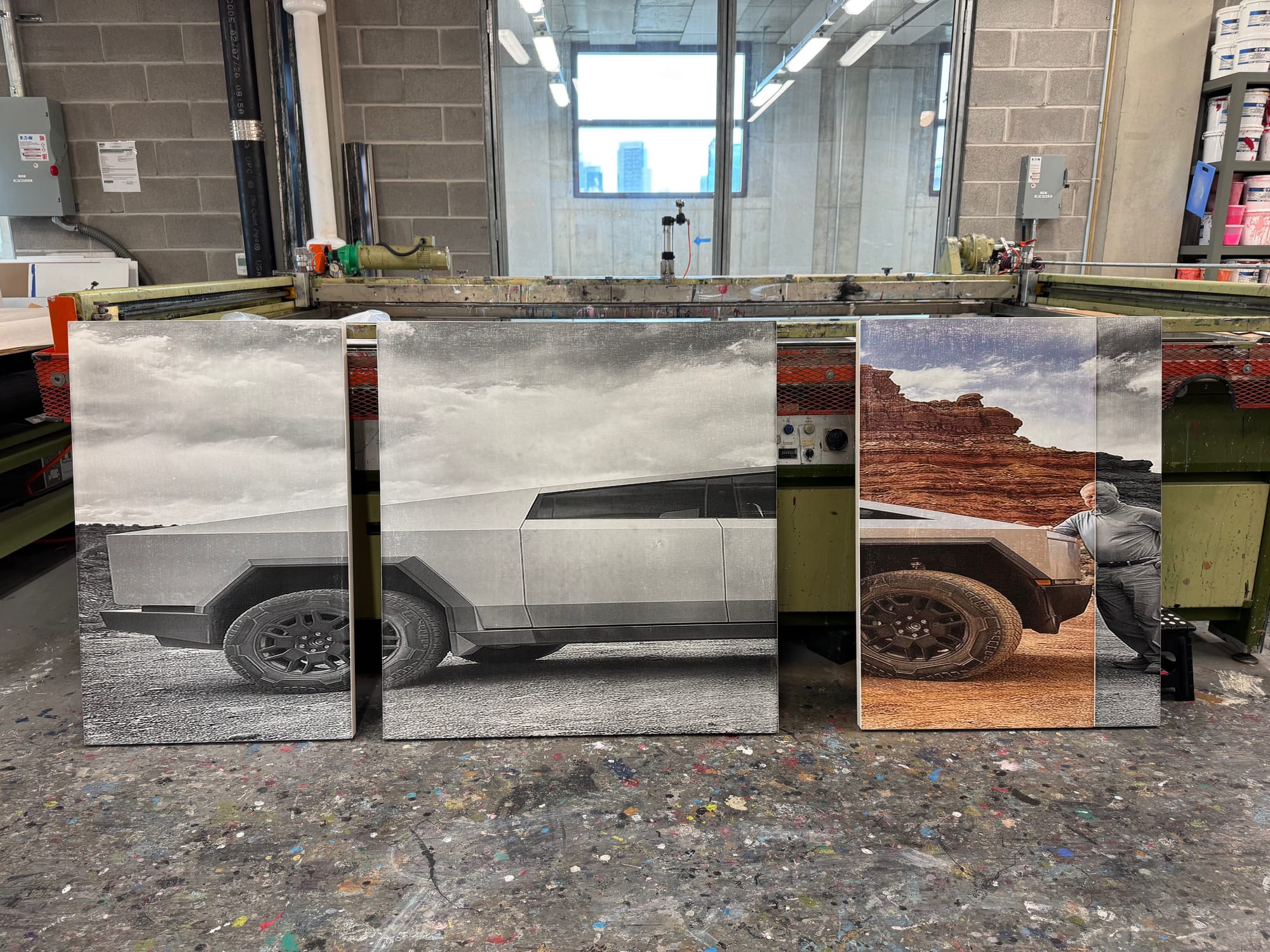
But the algorithms tighten it up and misrepresent what the paintings actually look like in real life. They are clearly hand made. The photo panels are hand pulled screen prints. There are imperfections, and texture to the surface. The different pressures of the squeegee creates nuance in the prints. And the hand painted panels have much more looseness and space than what you can see in a digital reproduction.
Segment II - Inside Julia Wachtel's Painting Process
4. Your paintings bring together different visual languages, often combining oil painting, acrylic and screenprinted elements. Could you walk us through the process of making a work, from the initial research and image selection to preparing the canvas, transferring images, applying painted layers and completing the final surface?
There are multiple ways I start a painting. Sometimes there is a very concrete idea, such as ”fast food restaurant in a flood.” Other times it could just be a feeling state or bit of language, like “anxiety” or “LOL”. With these more abstract words its fascinating to see what the internet mirrors back.
What the algorithm has woven together to give a visual face to internet txt acryonms for instance. Once I have the first image, I just start building on it. I create an InDesign document and develop the painting there. I might play around with just that image, distorting it, adjusting colors, etc.
Then through a process that is both intellectual and intuitive I start researching other images. But key is the visual aspect of the image. An idea is meaningless if the image doesn’t project an aesthetic and emotional response.
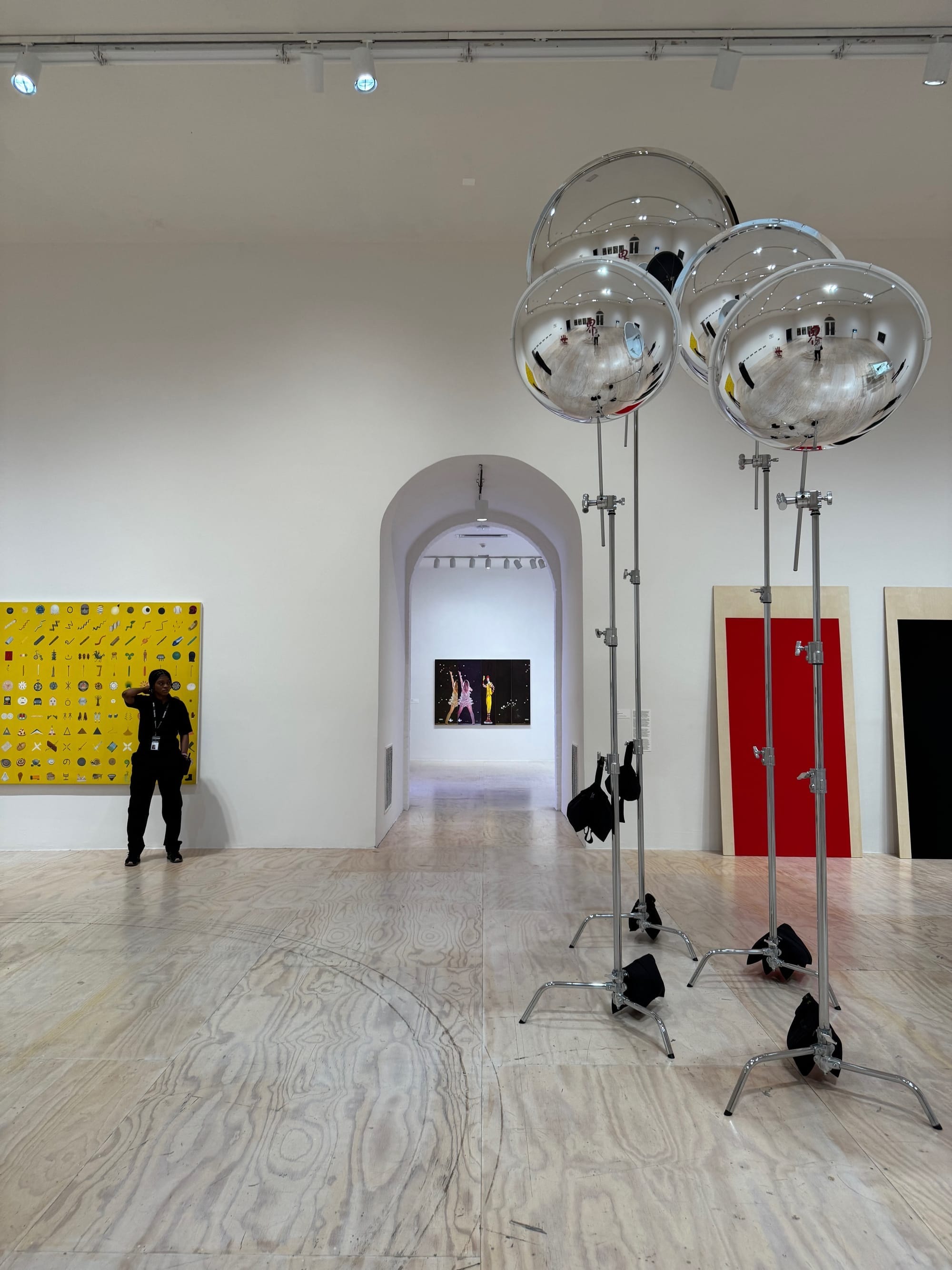
At this point I can go down multiple rabbit holes. Sometimes I quickly find something to start with, sometimes there is nothing I like from the intitial prompt but I get redirected to other places, and sometimes it’s a dead end. Most of the paintings I plan in InDesign are failures and don’t get put into proudction.
I have a huge graveyard of paintings on my computer! Once I’ve settled on a painting I start to put it into production. I have the panels fabricated to the .25 inch. The canvas is stretched on hard panels so that I can screenprint directly onto the actual panels, not canvas to be put on stretchers later.
The reason is that the specificity of the cropping is so important I would lose control any other way. And I like the edges of the panels to be raw canvas.
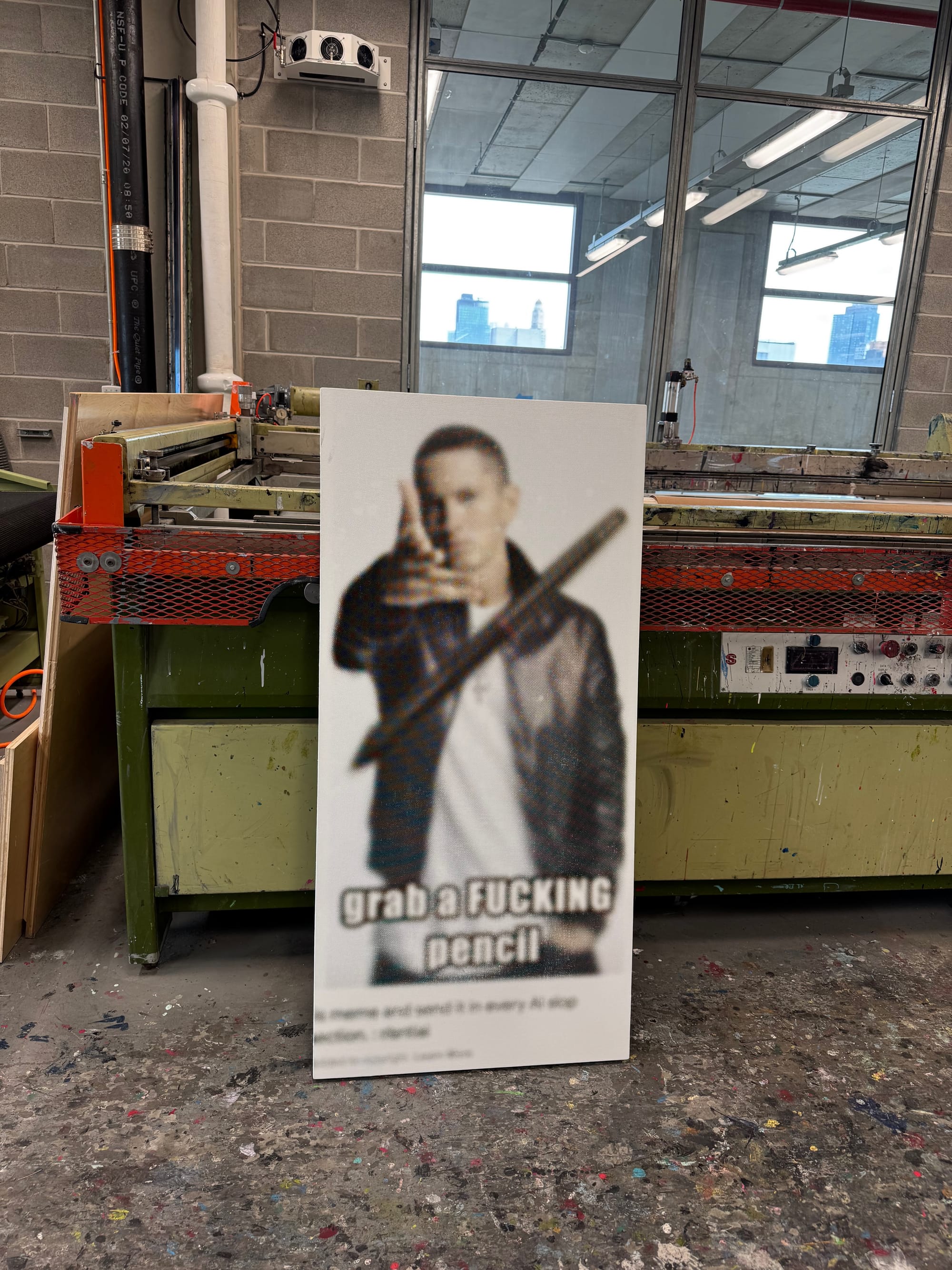
I want the image only on the surface as the paintings in many ways are a meditation on the media surface. Once I have the panels in the studio I start working on the hand painted panels. The screened panels have to be prepared with many coats of gesso and sanding to get the quality of screen print I want. And the last stage is to print the panels. I work with Luther Davis in Brooklyn, who is one of the best Master printers in the US. That is a really fun and sometimes collaborative process, working with the team. Although most often we print exactly as planned, there is room for change. I am present for the entire process, making decisions as we go.
5. Moving images from the media onto a painted surface involves a significant transformation. Something originally consumed in a matter of seconds becomes an object that invites prolonged attention. How do you decide what should be mechanically reproduced, what should be painted by hand, and where the physical intervention of the artist should remain visible? What roles do scale, texture, colour and differences between surfaces play in shaping the meaning of a work?
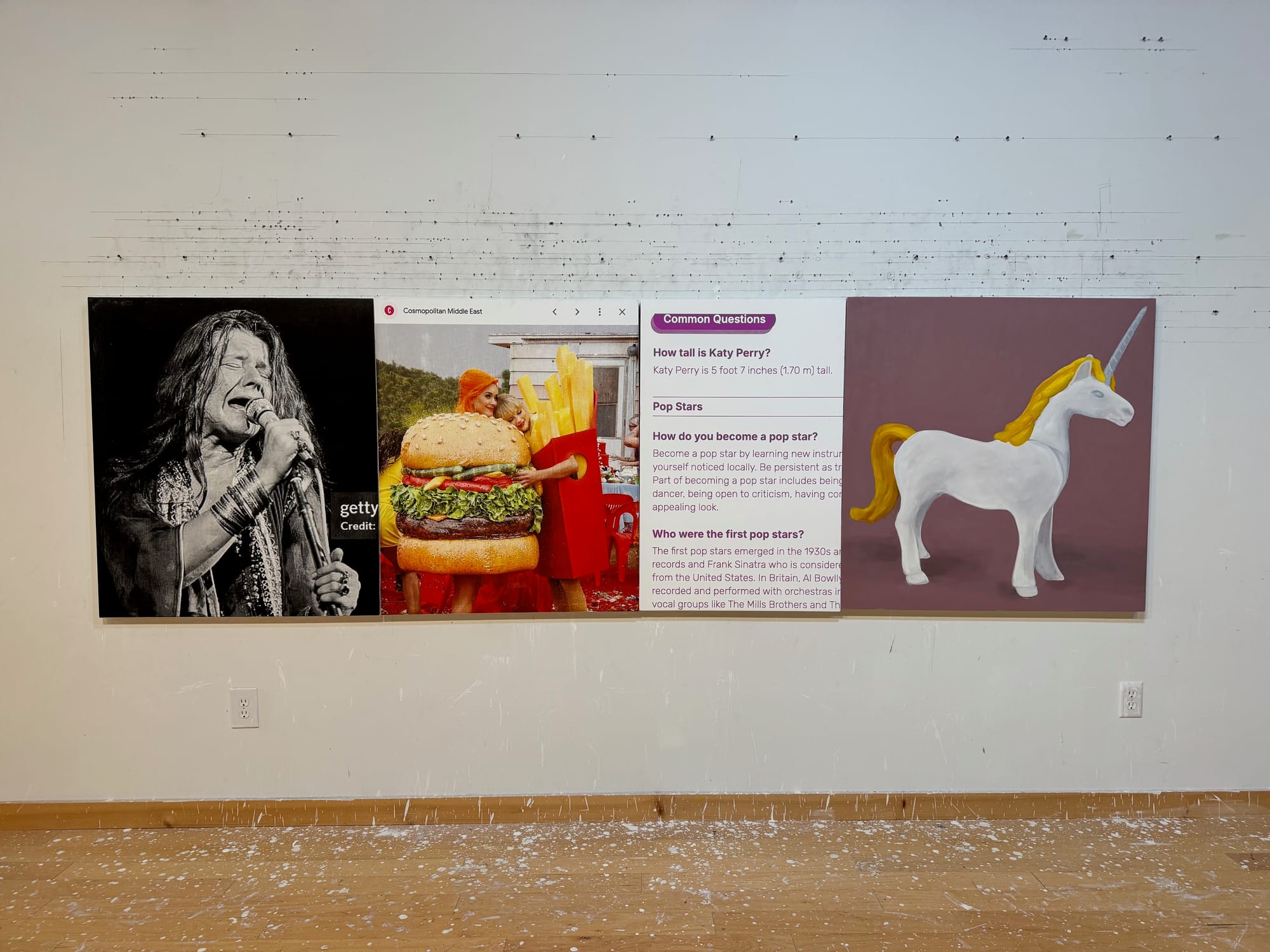
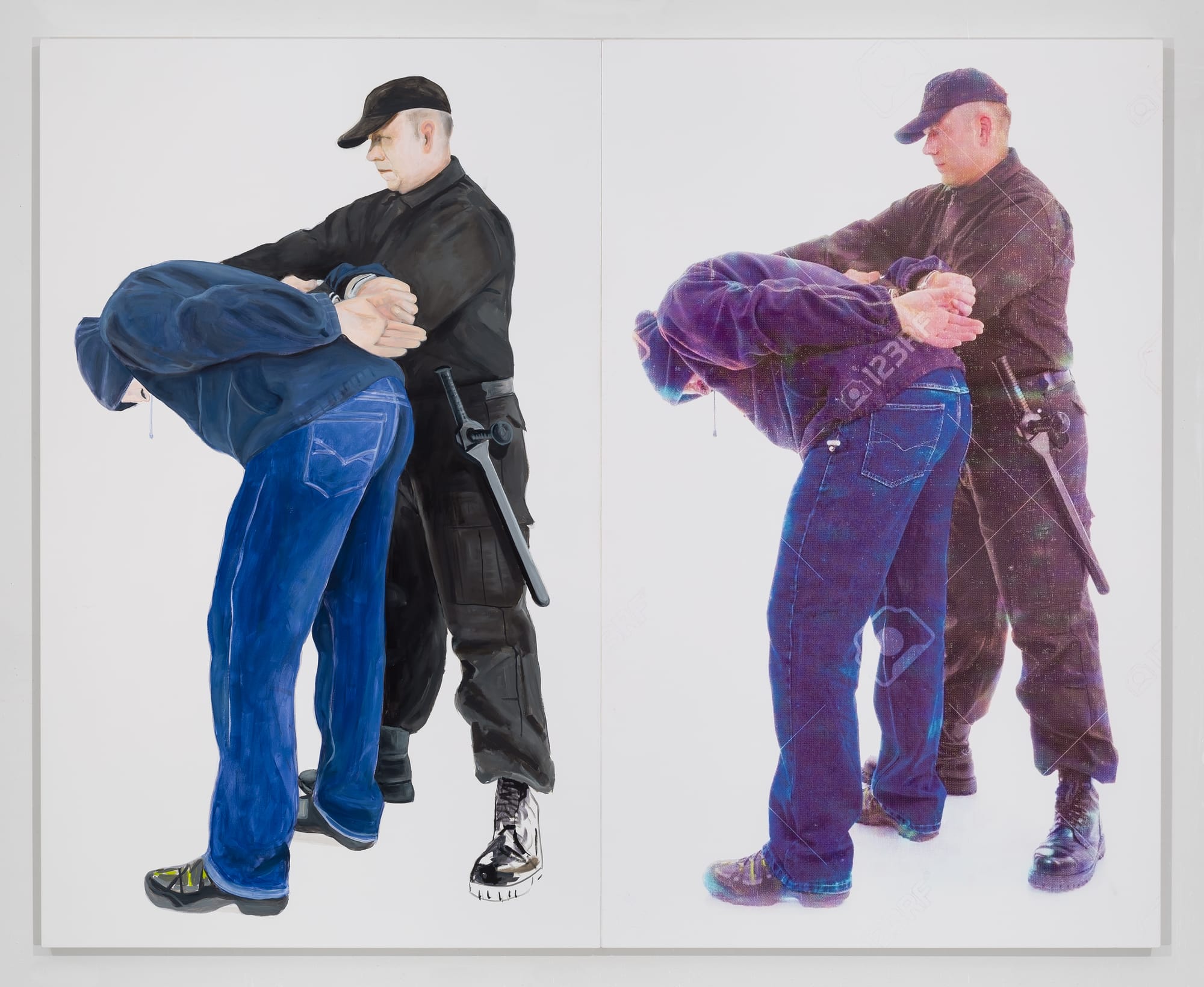
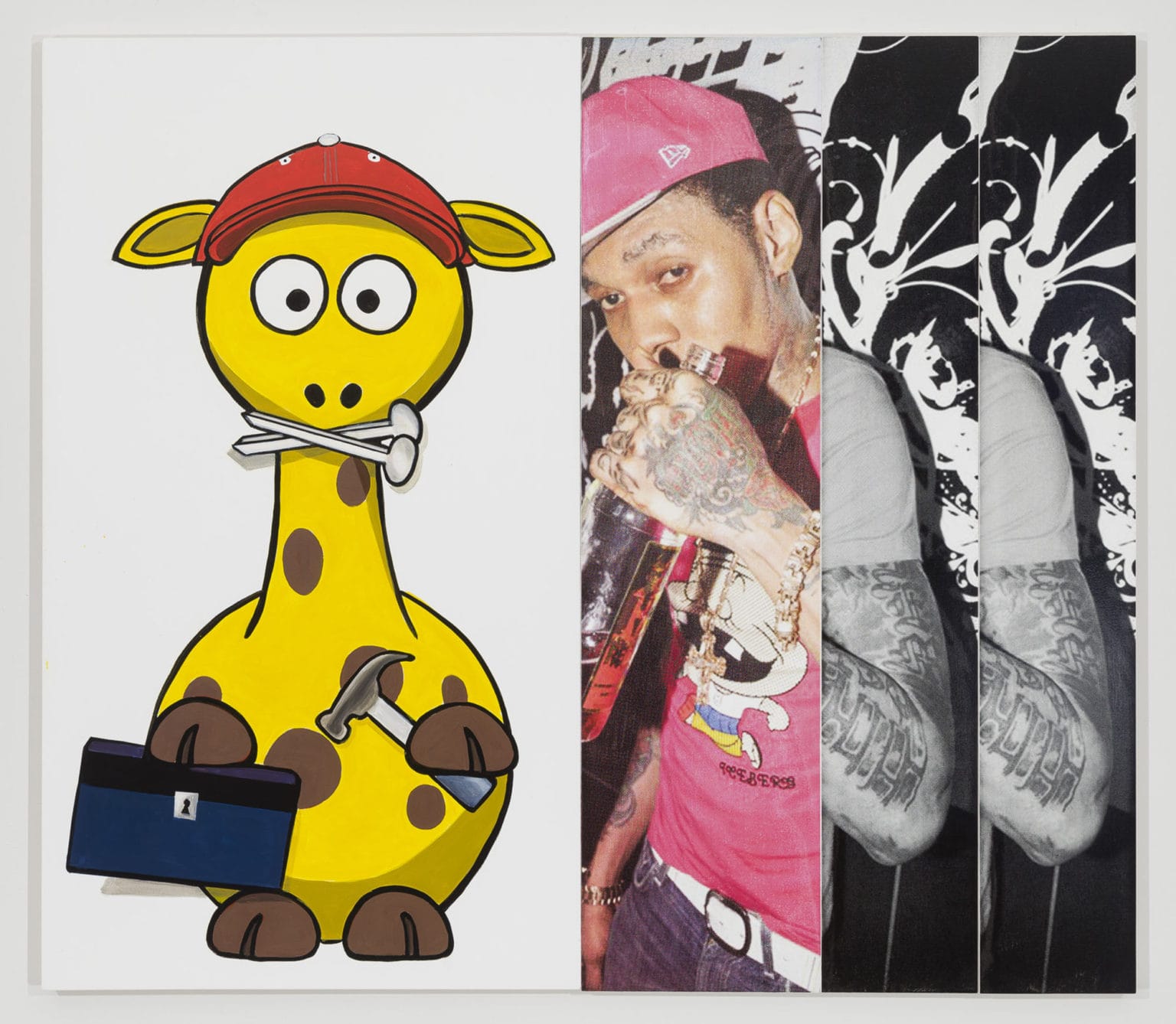
The decisions as to what to print and what to hand paint is usually pretty obvious to me in the process. The hand painted is almost always a figure, whether a person or animal. The screen printed images are usually photo based.
I don't have an interest in making photo realist paintings. Sayer Gomez is a master of that. I’m going in a different direction. I paint the figures with a good deal of facsimile to the referenced image, but I never go all the way. I want the paintings to have space. The mark of a human making something. It’s important to me as the hand painted figures are positioned amidst the screen printed images of public imagery whether commercial or from social media.
6. The almost unlimited availability of digital images has made visual research both more accessible and more complex.
What tools do you currently use to collect, organise, edit and prepare the images that enter your paintings? And how do you prevent technology from dictating the outcome, leaving room for intuition, chance and the physical act of making?
It’s true. The unlimited universe of digital images on the one hand gives me a fantastical resource, but of course it begs the question, why this image? So editing is key.
At the end of the day there is a lot of intuition that is the final decision maker. The images have to carry a lot of weight to make it believable, and something you want to engage in and look at.
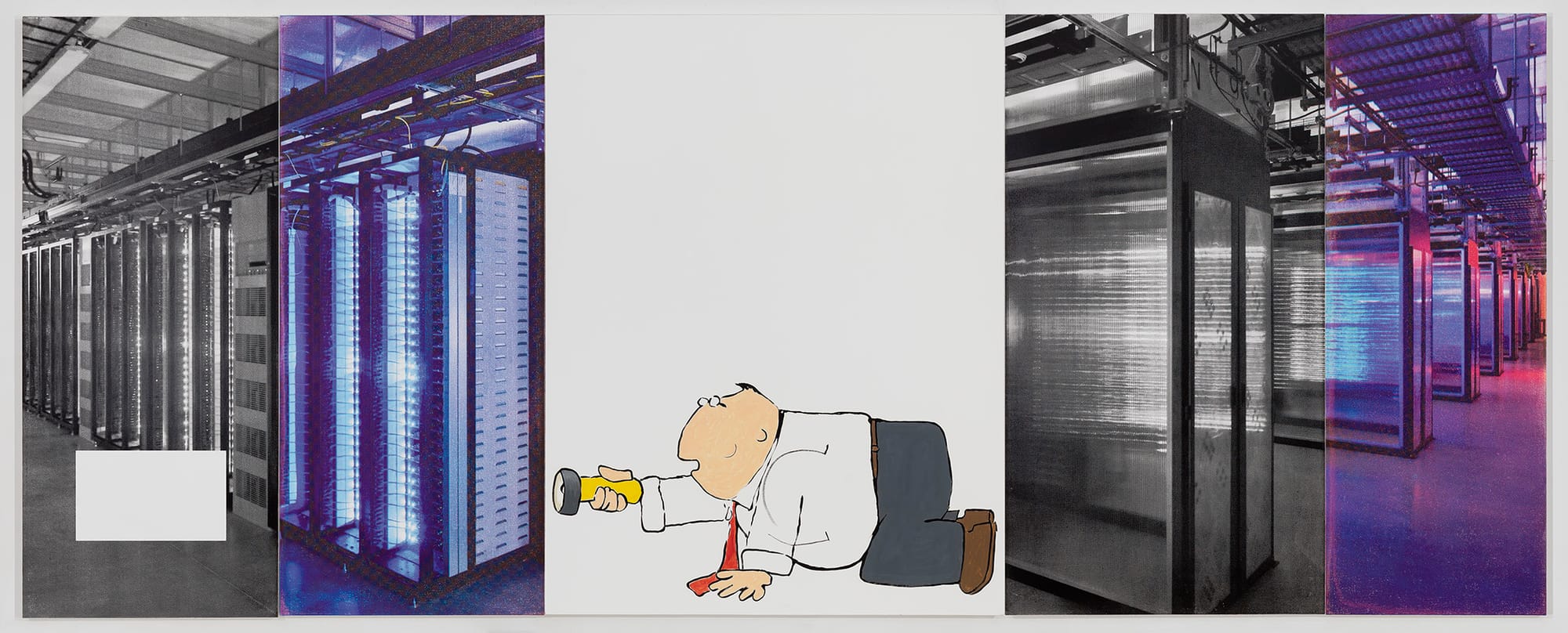
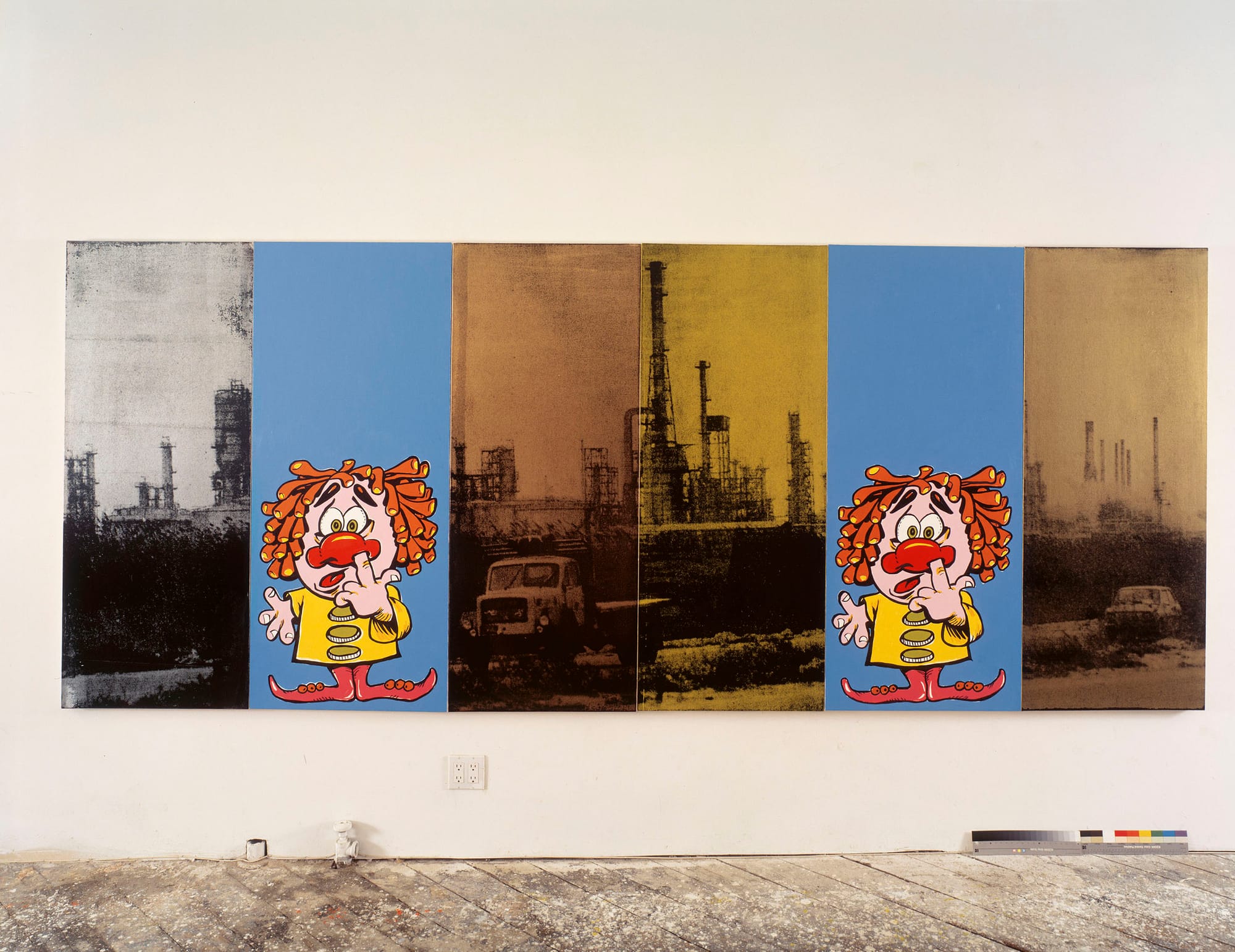
I use the technical tools of the Adobe programs, mainly InDesign and Photoshop as a form of ready made. I’m talking about tools such as cropping, blurring, orienting, etc. So I’m using this technology in a relatively primitive way. It speaks to the choices that are given to us that are predesigned but give us the capacity to create within those boundaries.
The creative pathways within the TikTok algorithms are highly structured for instance. There is no voodoo or techniqual intrigue in the paintings which I hope give it a directness and power.
Segment III - Pop Culture, Politics and the Attention Economy
7. Beyond art history, which artists, writers, filmmakers, musicians or other cultural figures have had the greatest influence on your visual sensibility? Are there personal interests or everyday habits of observation that might not be immediately visible in your paintings but play an important role in your creative process?
Honestly the list is too long, and I hate singling out specific contemporary artists because I will read this and realize I forgot this person or that. I think it’s true to say that for the last many years I have been more influenced by music in thinking about my work than in visual artists.
I listen to a lot of pop, rap, r&b, synth. The musical scrutures and attitudes inspire me, and are easily transmitable into a visual form (think repitition, overlaying, pastiche, appropriation, dynamics, mood, etc).
In my formative years both film and theory were critical to my thinking about my work. Figures such as Goddard and Baudrillard for instance. Now, I consume a lot of media from newspapers, film, streaming, internet, etc. So I am always in an observational mode in respect to them.
From a subject matter perspective, reading about the Attention Economy is probably the subject that has been most important to my thinking lately. I read a lot of historical biographies and am a bit of a reality t.v. junkie.
8. Your work often brings images of entertainment, consumerism and celebrity into contact with material that carries social or political implications. To what extent do you see appropriation as a tool for political critique? Do you believe a painting can expose the ideological contradictions within an image without necessarily taking an explicit political position?
I have no intention to be didactic or to solve any problem. But I do hope that painting can expose the ideological contradictions within an image without necessarily taking an explicit political position, as you so eloquently stated.
Media is not neutral.
All information whether written or image has cultural if not political or commercial ideology baked into it. Nothing is value free, including art.
9. We live in a time of constant image circulation, political polarisation and growing dependence on digital platforms to interpret reality. Has your relationship with these images become more critical, more pessimistic, or simply different over the years? Is there a particular contradiction in contemporary society that you find especially difficult to represent or make sense of through painting?
I find this moment to be a particularly difficult one. The multiple existential crises facing global society are terrifying. Let me say that I am tempermentally a very optimistic person. But it is hard to not start to feel defeated. In the face of that it can feel overwhelming to try to make a painting that meets the moment.
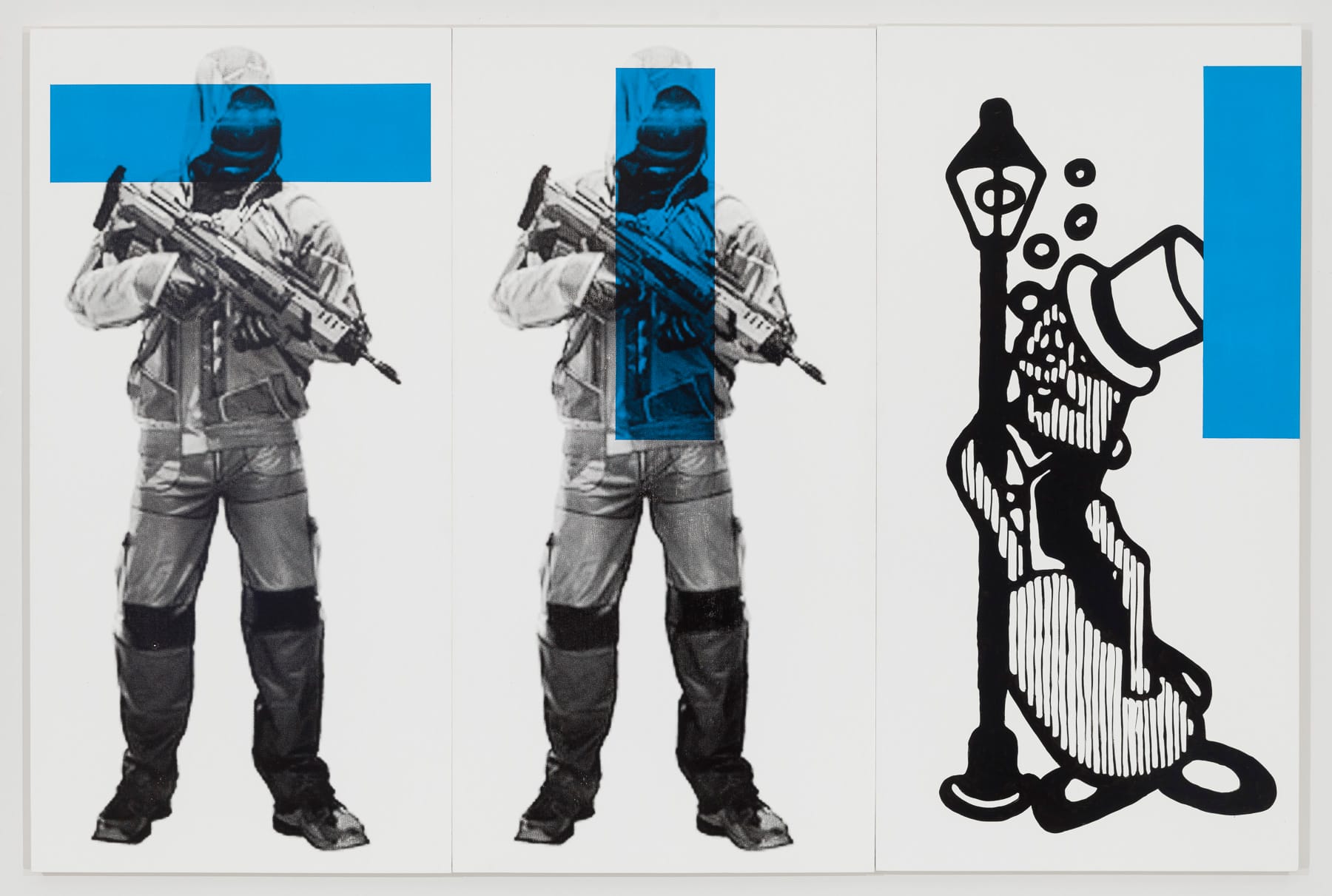
I have to remind myself that the burden of change doesn’t rest on a single individual artist but on the collective enterprise of art to have the potential to both reflect and confront. It’s obvious to look at the big themes such as politics, the environment, war, etc. but I think it’s also important to also look at the world of entertainment and consumption, and the ways in which we are being harvested as data in those spaces.
That said the freedom to not follow norms and to engage in humor and irrational play which is at the core of art, is for me personally restorative and keeps me going.
Segment IV - New Paintings and Recent Exhibitions
10. In 2026, your exhibition and at von ammon co in Washington explored questions of hypocrisy and the contradictions between images, public statements and underlying motivations. More recently, Return to Content a/b, presented through Klemm’s in Berlin and Jahn und Jahn in Munich, offered another perspective on your practice. How do these projects relate to your current concerns, and what new questions have emerged through the work?
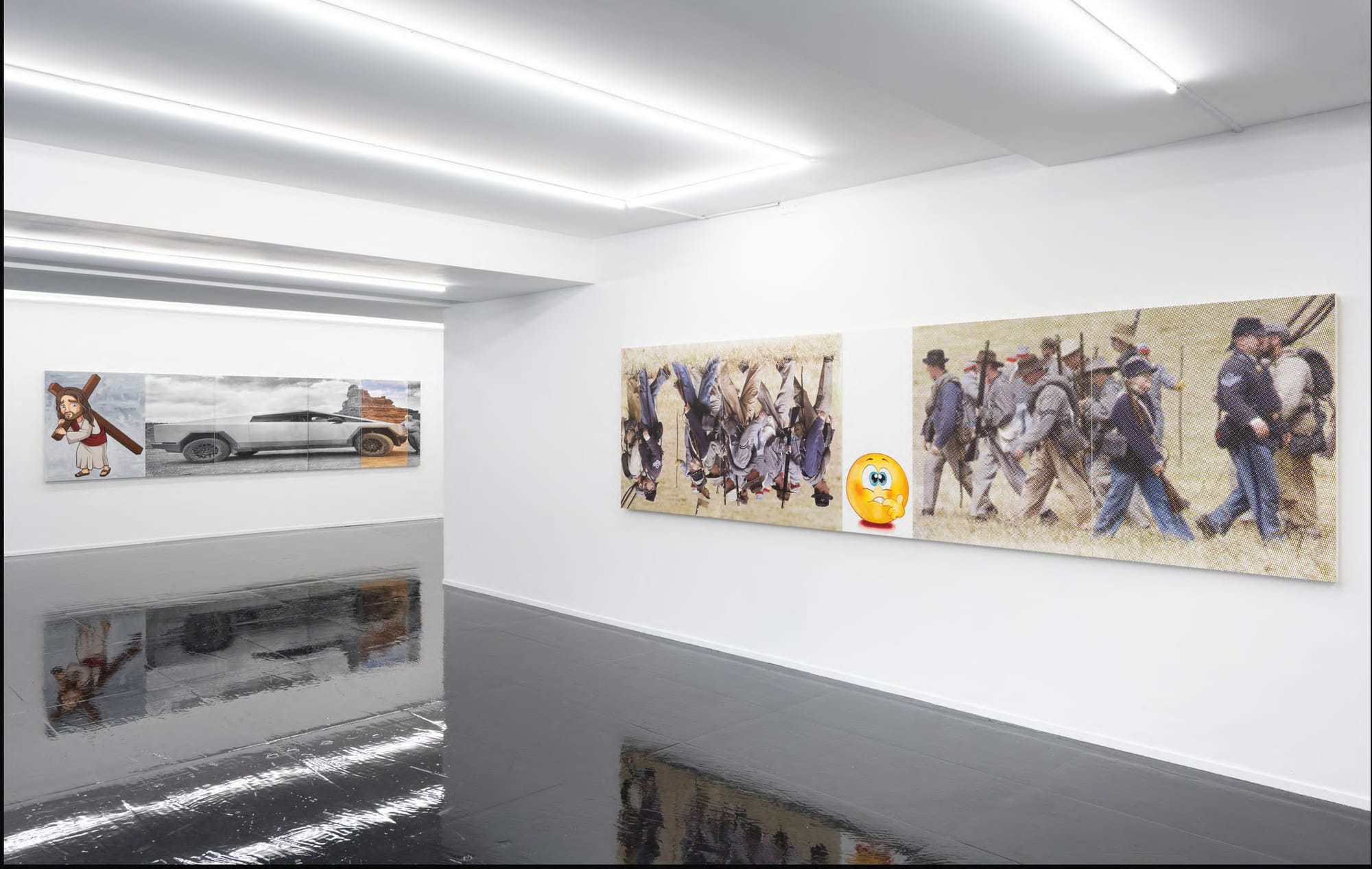
Doing an exhibition in Washington D.C. in the current political moment, it was necessary for me to address politics directly. The painting “civil”, from a few years back presented an image of Civil War reenactors. and the painting CyberChrist literally had a cartoon image of Christ carrying the cross and a Tesla cybertruck which I distorted and elongated in the painting.
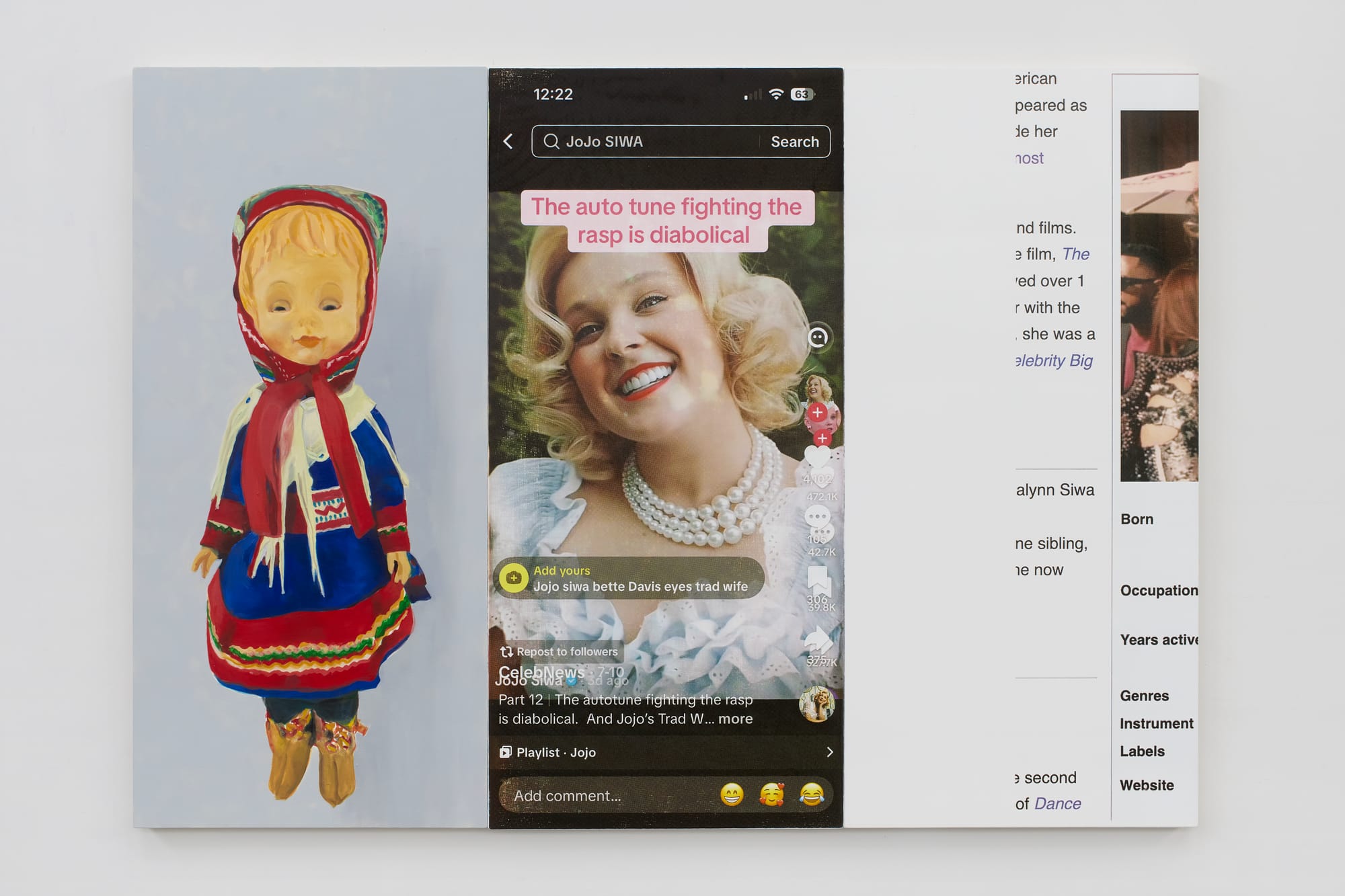
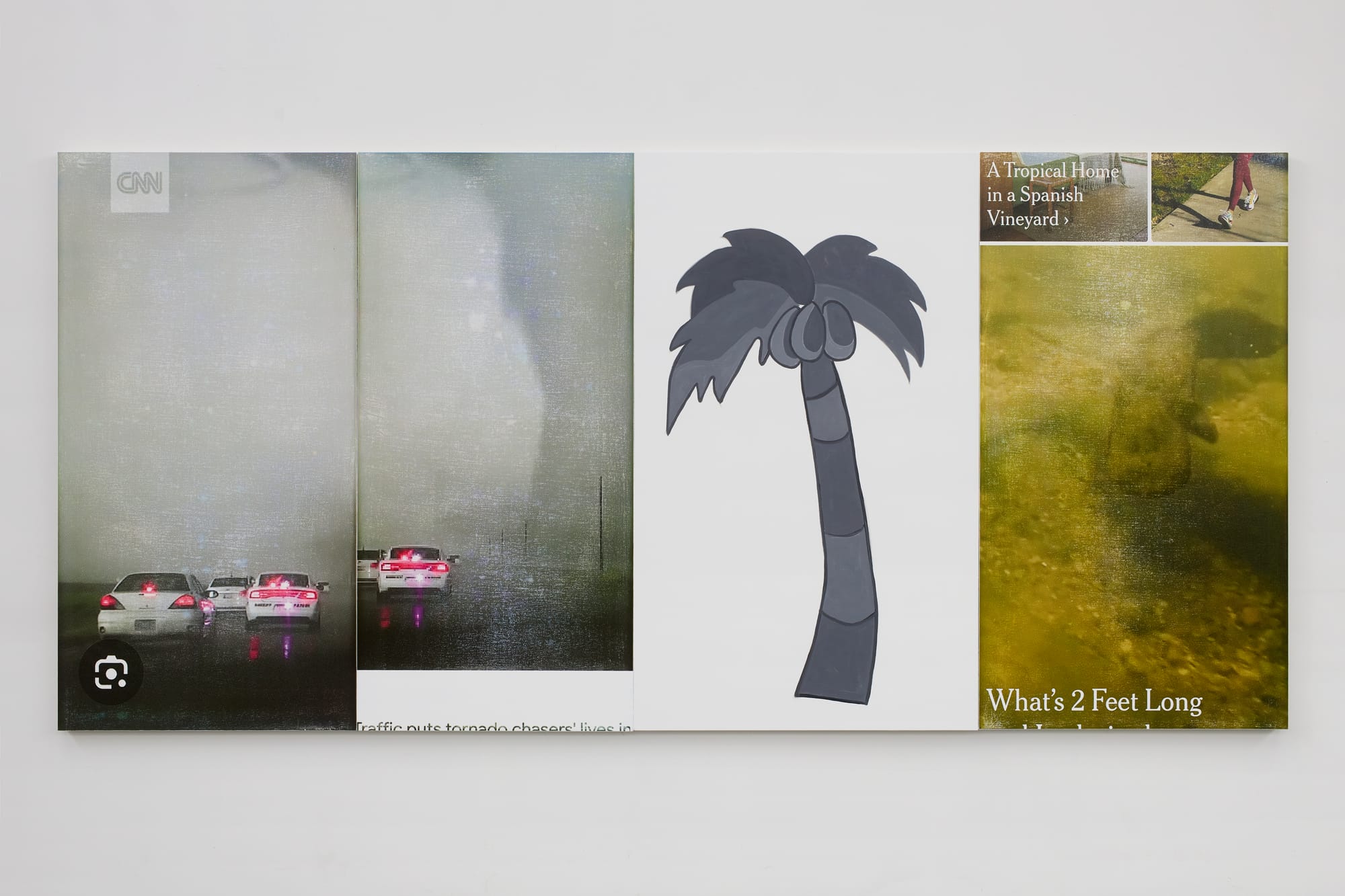
The body of work at Klemms and Jahn und Jahn is a new body of work that takes the consumption of content as it’s subject matter. I started taking content from everywhere, screengrabs off my phone, my own photos at the mall or potentially anywhere, and turning them into content for the work. I also formally structured the paintings a bit differently utlizing white spaces and run off text, challenging the edges of the panels. This new body of paintings is perhaps more random and more formal at the same time.
11. Looking back at works from different periods, we can see certain ideas that have remained constant, alongside changes in how you use images and construct your painted surfaces. When you look at your earlier paintings, do you recognise questions that you are still trying to resolve? Are there any artistic strategies or convictions you have abandoned, or that you now understand in a completely different way?
I’ve asked myself different questions along the way. Some essential ideas carry through from the beginning. But the lens has changed along the way.
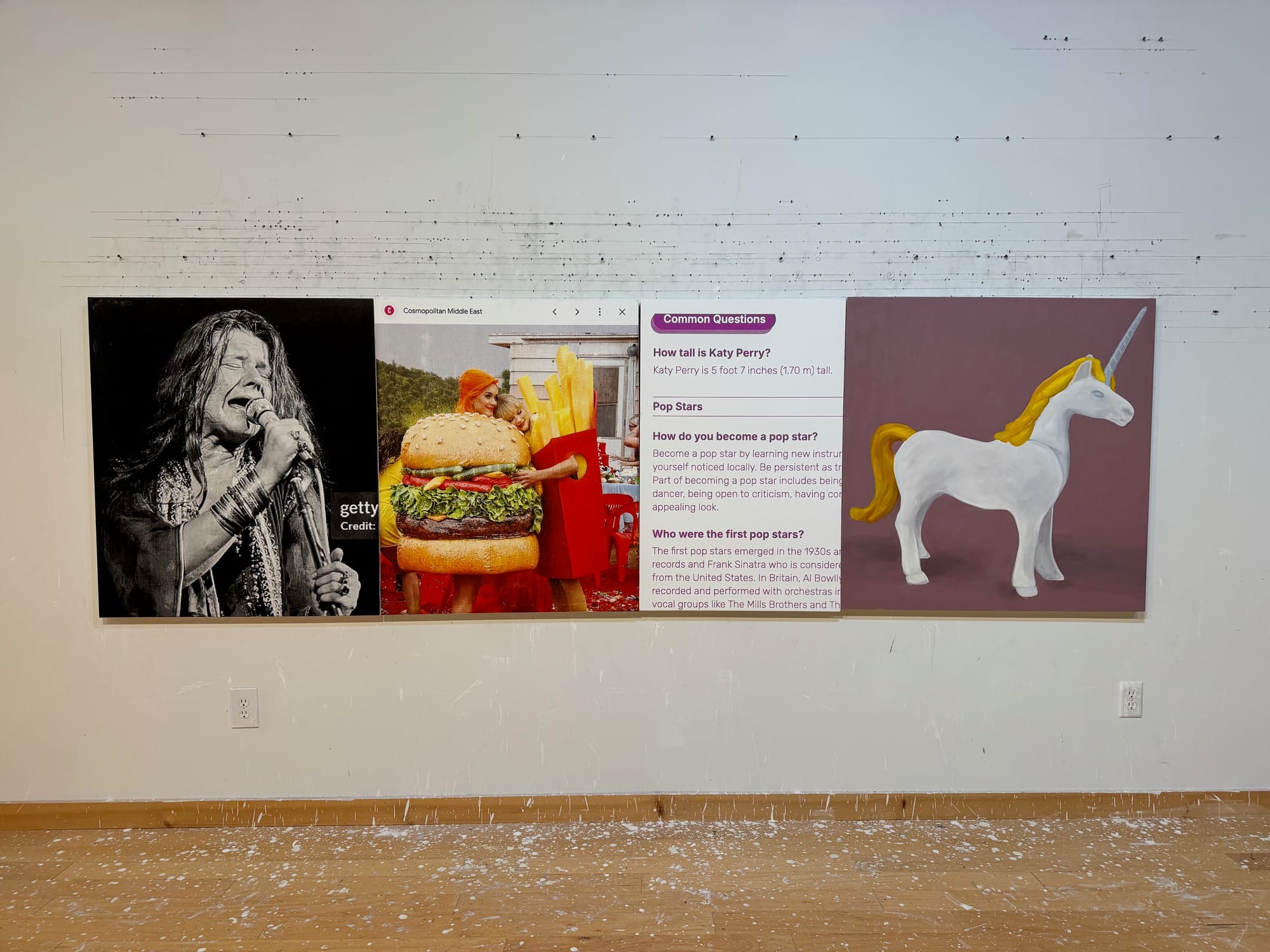
My thinking was focused through a psychological and sociological lens in the early work. Now I would say with the internet, social media and Ai, none of which existed when I started, my questions are different. I think it's fair to say that now the image world has eclipsed the written world.
Everyone has a phone in their hand, consuming images. And many are constructing their own narrative clips and uploading them into social media. There are roughly 16 million uploads to TikTok every minute according to my Google search just now. The implications of the reach that media now has into our lives is more complicated and therefore demands different formal strategies.
12. Beyond your current exhibitions and projects, are there new bodies of work, technical experiments or ideas taking shape in the studio that point towards an unexpected direction in your practice? Is there a visual or material territory you have not yet explored but would like to investigate in the coming years?
During the Covid period I experimented with and made short videos. Usually no longer than 1 minute. At some point I hope to get back into that, but at the moment I’m content to just make paintings. I’d like to explore and expand some of the technical capablities inherent in the screen print process.
Up untill now I’ve been pretty loyal to the straight CMYK process. Experimentation gets expensive! That said, I’m doing a small limited print edition on wood panels for my spring show in LA with Ehrlich Steinberg Gallery, and I’m hoping to explore some different print techniques.
Segment V - Painting, the Art Market and Artistic Freedom
13. How do you see the current state of contemporary art at a time when images circulate faster than ever, while our attention seems increasingly fragmented?
Do you think painting still offers a particular form of resistance to this speed, or has it also become subject to the same systems of consumption and visibility that it sometimes seeks to question?
Great question and I don’t know if I have a good answer for it. I have to believe art serves as a form of resistance. And I believe painting is here for as long as we are. Making a physical mark on a surface has existed since prehistoric time.
I think it’s primal, like dance. And with society moving into an increasingly virtually dominated world, I think there is inherent meaning in the physical object to reflect back our own physical self.
14. The closure of galleries, the financial difficulties faced by independent art spaces and the growing economic pressure on the art world raise important questions about the sustainability of the artistic ecosystem.
Do you think these changes threaten diversity and experimentation in contemporary art? And how might they affect your own practice, your relationships with galleries and the possibility of developing long-term projects?
Yes, I think the ecosystem is in big trouble both for the galleries and artists. Josh Kline’s recent piece in October Magazine was a thorough and I believe accurate analysis of this. At this point I’m excited to work with young and more scrappy galleries.
There is an energy and optimism there. And I put a lot of value on the ability to have meaningful conversations about the work with my dealers. So personal connection is really important for me.
I think the work that is excelling in the market right now tends to be quite conservative and not very interesting.
That gives me even more permission to be as irreverant as I can!LOL
15. Looking ahead to the coming decades, what conditions do you think are essential for artists to continue producing work that is relevant, critical and experimental?
What advice would you give to younger artists trying to build a lasting practice within an art world that is increasingly competitive, unstable and dependent on digital visibility?
The biggest advice I give to young artists is just to take risks. My impression has been that so many young artists are so afraid of being politically incorrect, and constrain themselves in ways that don't advance anything.
They give up on the freedom at their disposal. For now the art studio is one of the most free places one can operate. That of course can change.
Julia Wachtel (born 1956, New York) is an American artist whose work combines painting, screenprinting and appropriated imagery from advertising, media and popular culture. Often associated with the Pictures Generation, she is represented in the collections of The Museum of Modern Art and the Whitney Museum of American Art, among others.
Website · Instagram
Gallery for contemporary art at 3210 Grace Street Washington D.C, opened in 2019 by Todd von Ammon, with a program focused on experimental work. It presented Wachtel's 2026 solo exhibition “and”.
Website · Instagram
Contemporary art gallery founded in 2007 by Sebastian Klemm and Silvia Bonsiepe. It presented Wachtel's Return to Content a/b from 10 September to 24 October 2026.
Website · Instagram
About Catapult Contemporary
This is an artist interview published by Catapult Contemporary, an independent editorial platform for contemporary art, based in Vienna. We publish exhibition reviews, artist features, interviews, and critical context, with a focus on emerging and mid-career practices from Europe and beyond.
catapult-platform.art ·
Instagram
Want to be featured? Submit your work →
No spam, no sharing to third party. Only you and me.