Ignacio Uriarte Gathers Nine Artists Whose Marks Behave Like Writing

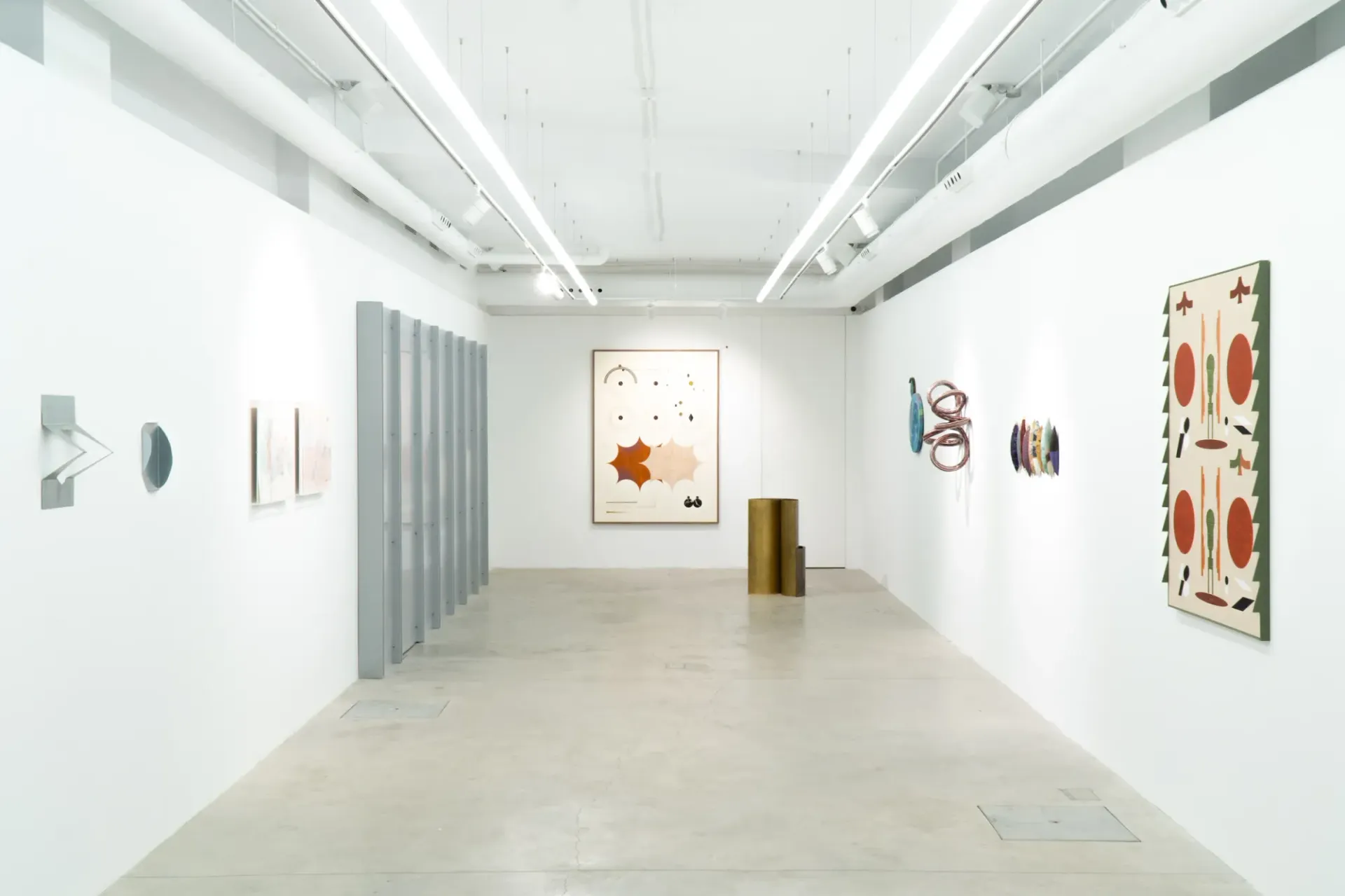
Osnova Gallery Presents Kinetic Syntax in València
Osnova Gallery presents Kinetic Syntax, curated by Ignacio Uriarte, through November 20, 2026.
Yelena Popova, Raúl Díaz Reyes, Amparo de la Sota, David Zink Yi, Ignacio Uriarte, Valerie Krause, José Vera Matos, Jaime Pitarch, Elena Alonso
Kinetic Syntax
Osnova Gallery
València, Spain
–
Carrer del Clero 18, 46006 València
Ignacio Uriarte
Enrique Pascual
Courtesy Osnova Gallery
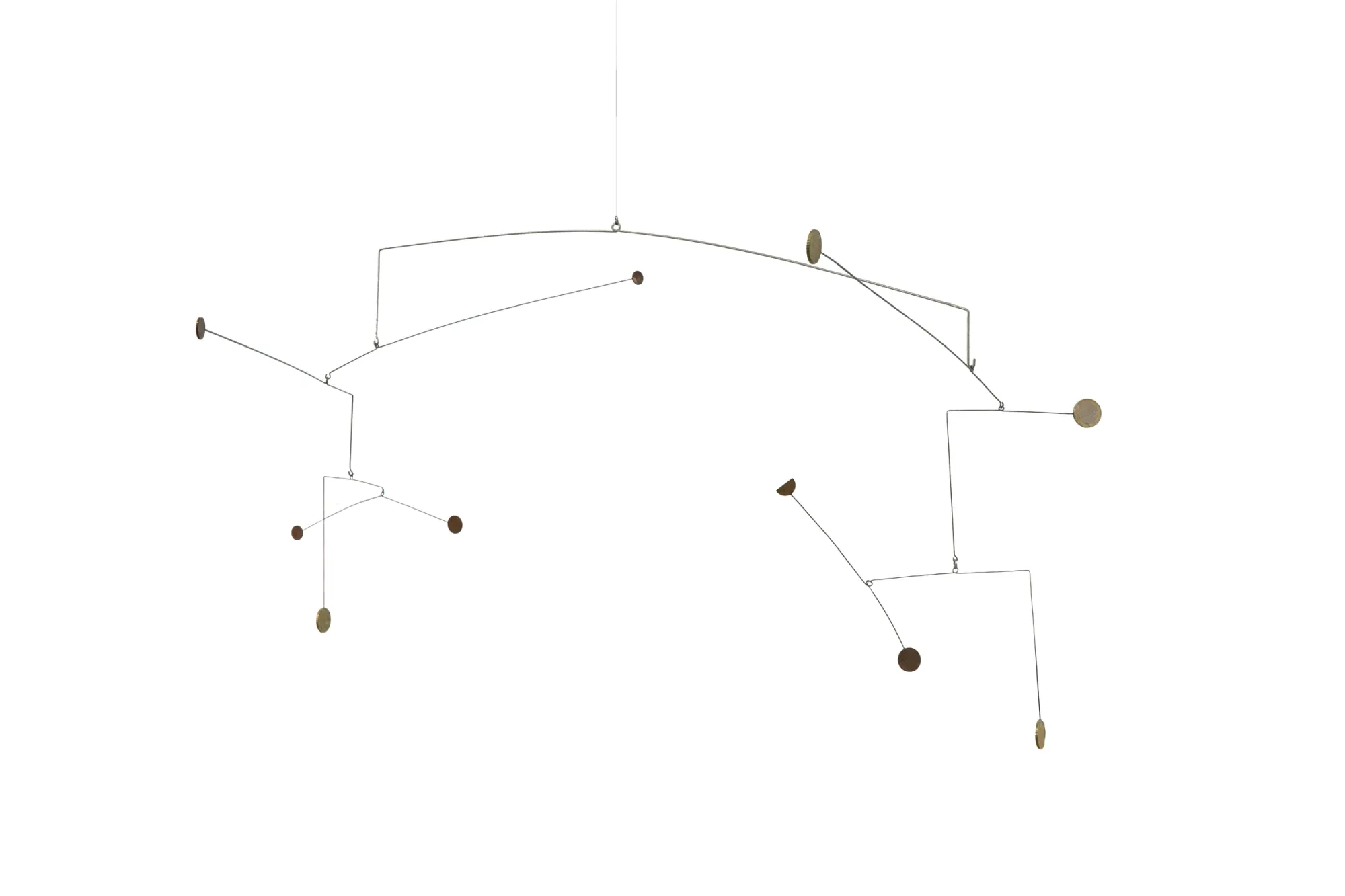
A mobile made from loose change might seem like a playful tribute to Alexander Calder. In Kinetic Syntax at Osnova Gallery in València, Jaime Pitarch takes the idea quite literally.
His Calderilla hangs real euro coins he found, turning pocket change into a delicate balancing act. Even the title joins in, referring to small change in Spanish while nodding to Calder's name.
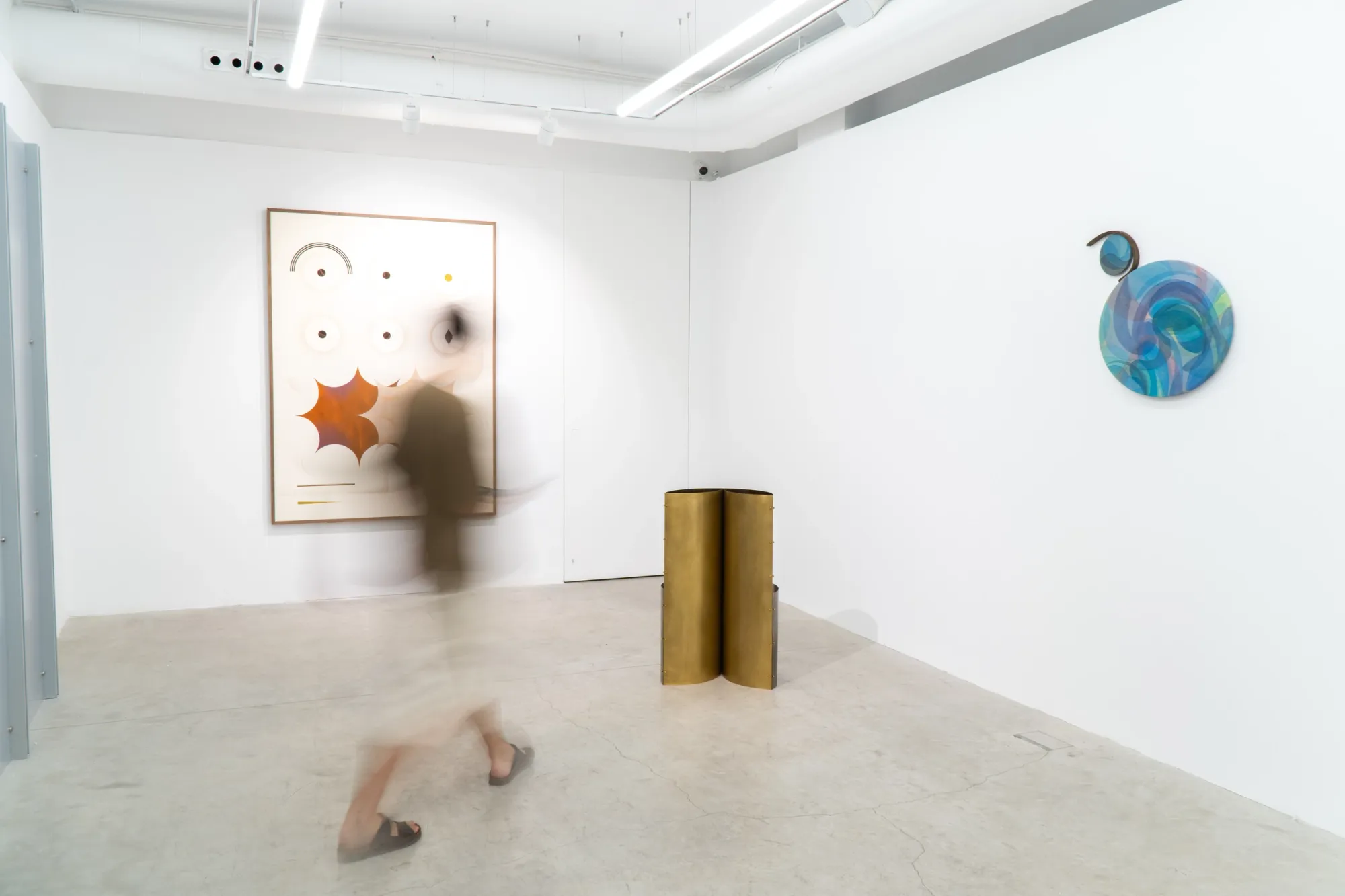
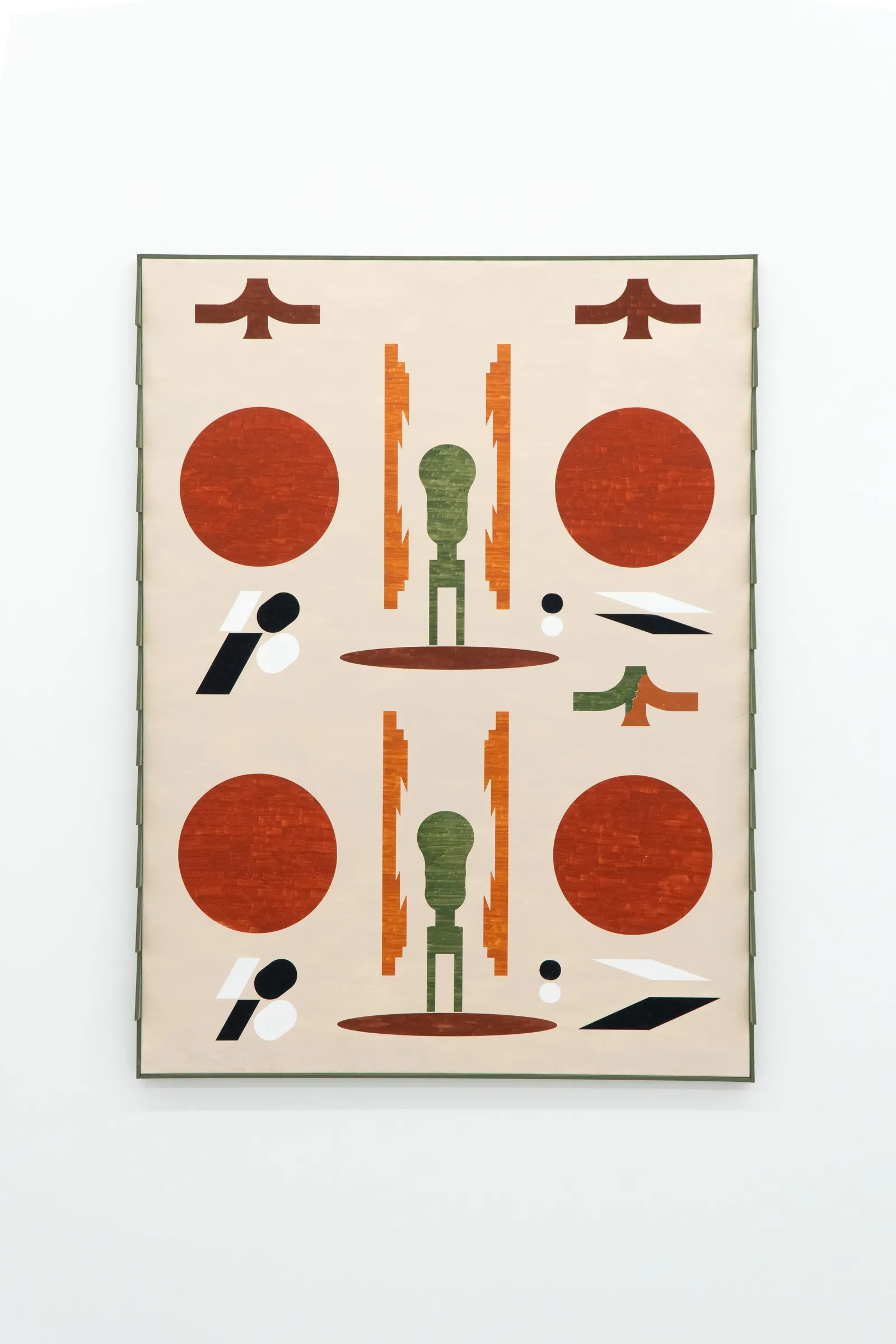
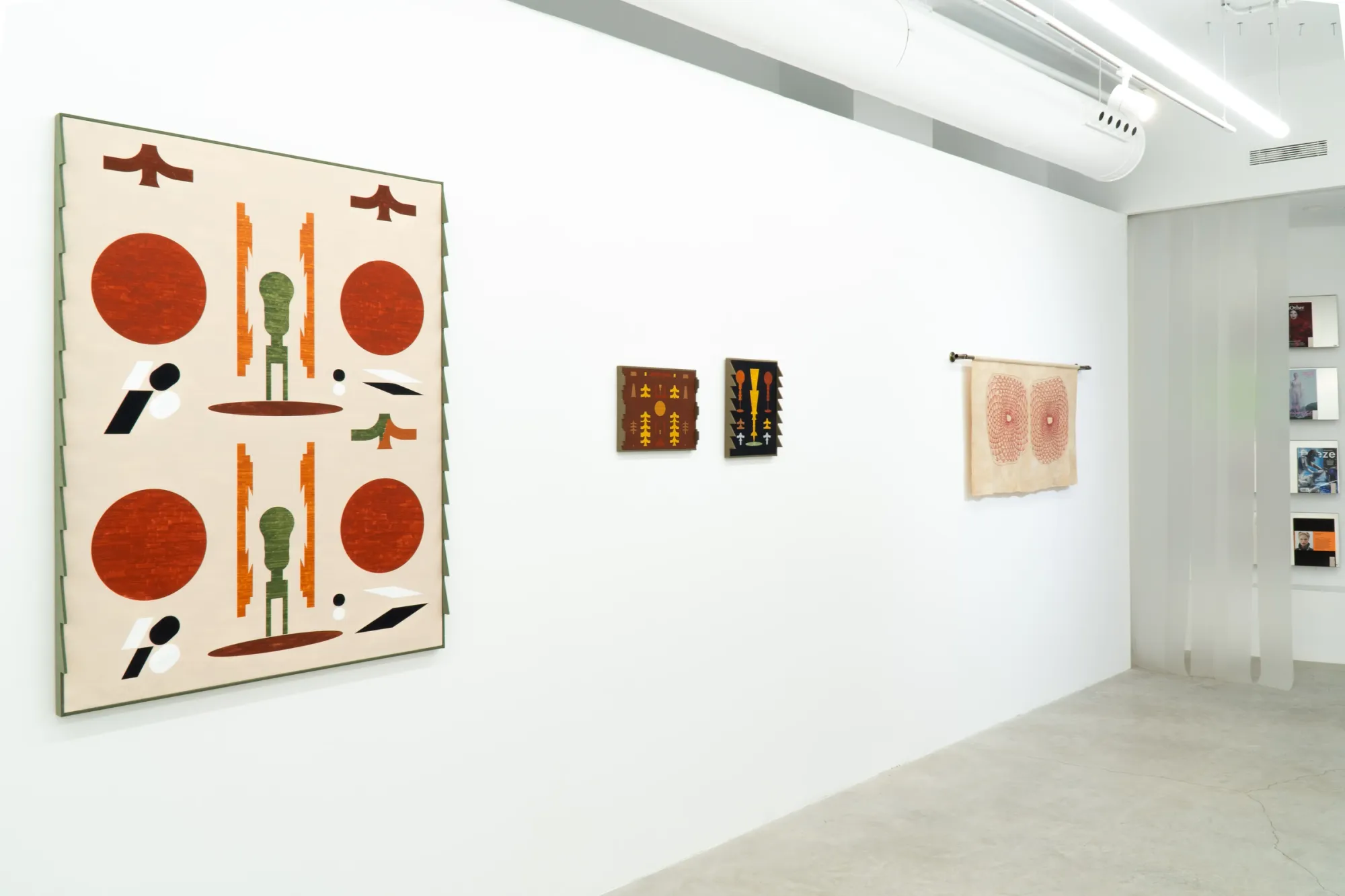
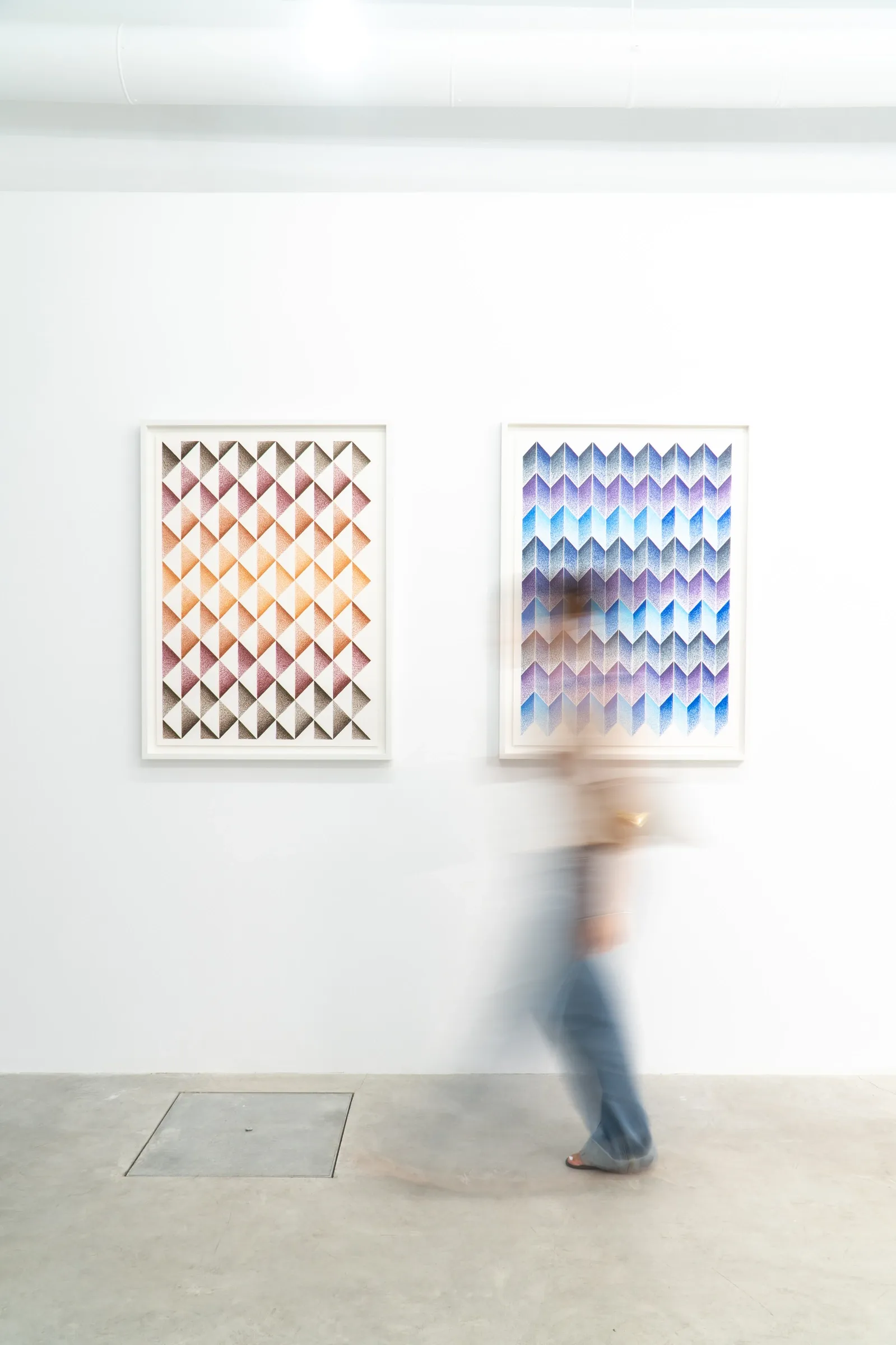
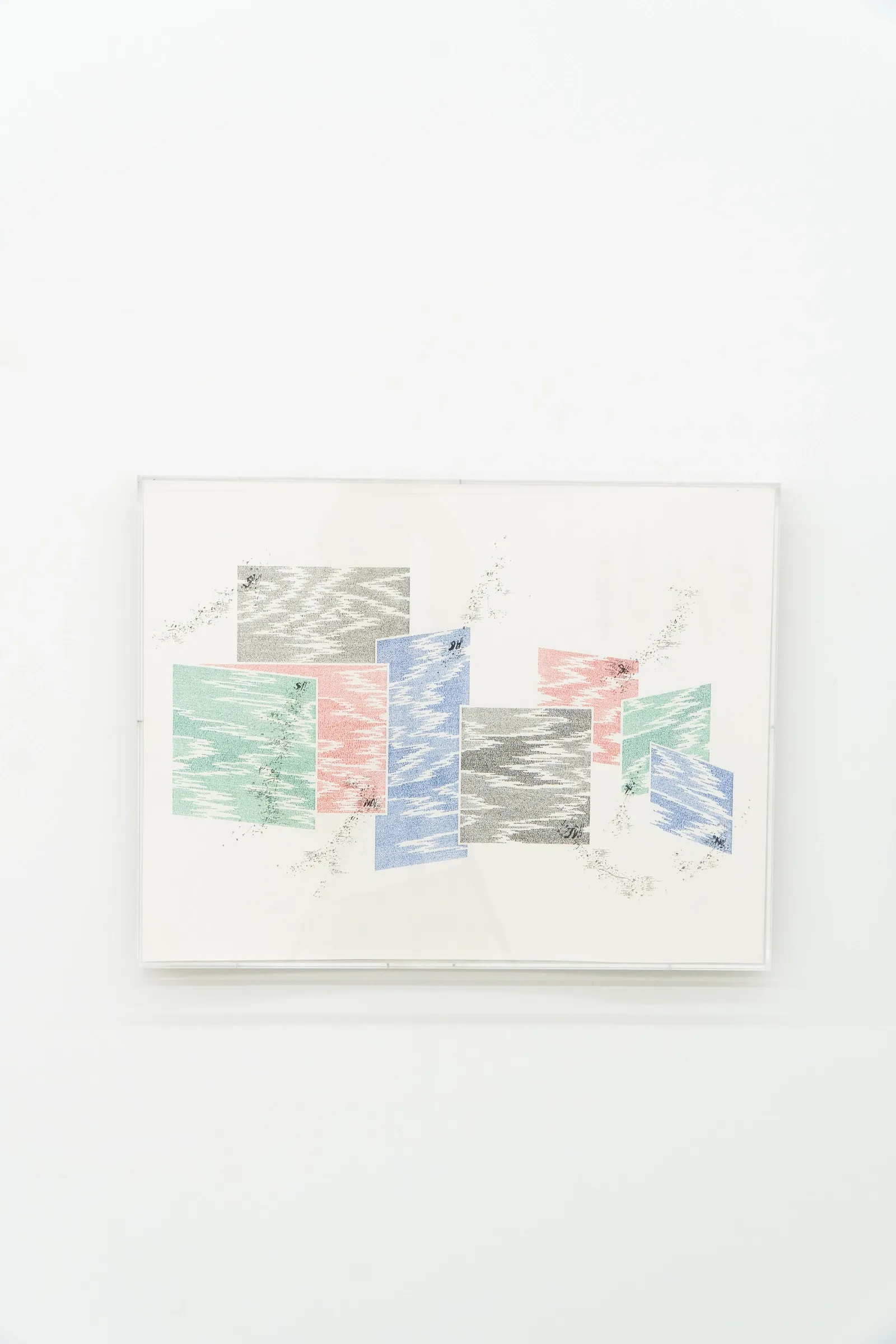
Curated by Ignacio Uriarte, who also contributes two drawings in pigmented ink, the exhibition brings together nine artists working with signs, gestures and materials.
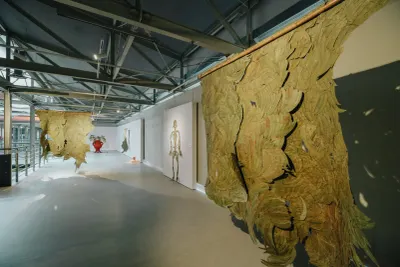
Valerie Krause cuts and folds galvanized steel into small wall sculptures where the missing material matters as much as what remains. Yelena Popova creates her own pigments from soil and clay gathered in the landscape.
On view from September 17 to November 20, 2026, Kinetic Syntax moves between drawing, sculpture and visual language. Below, Uriarte's curatorial statement explains how these works form relationships that can be experienced through movement rather than simply decoded.
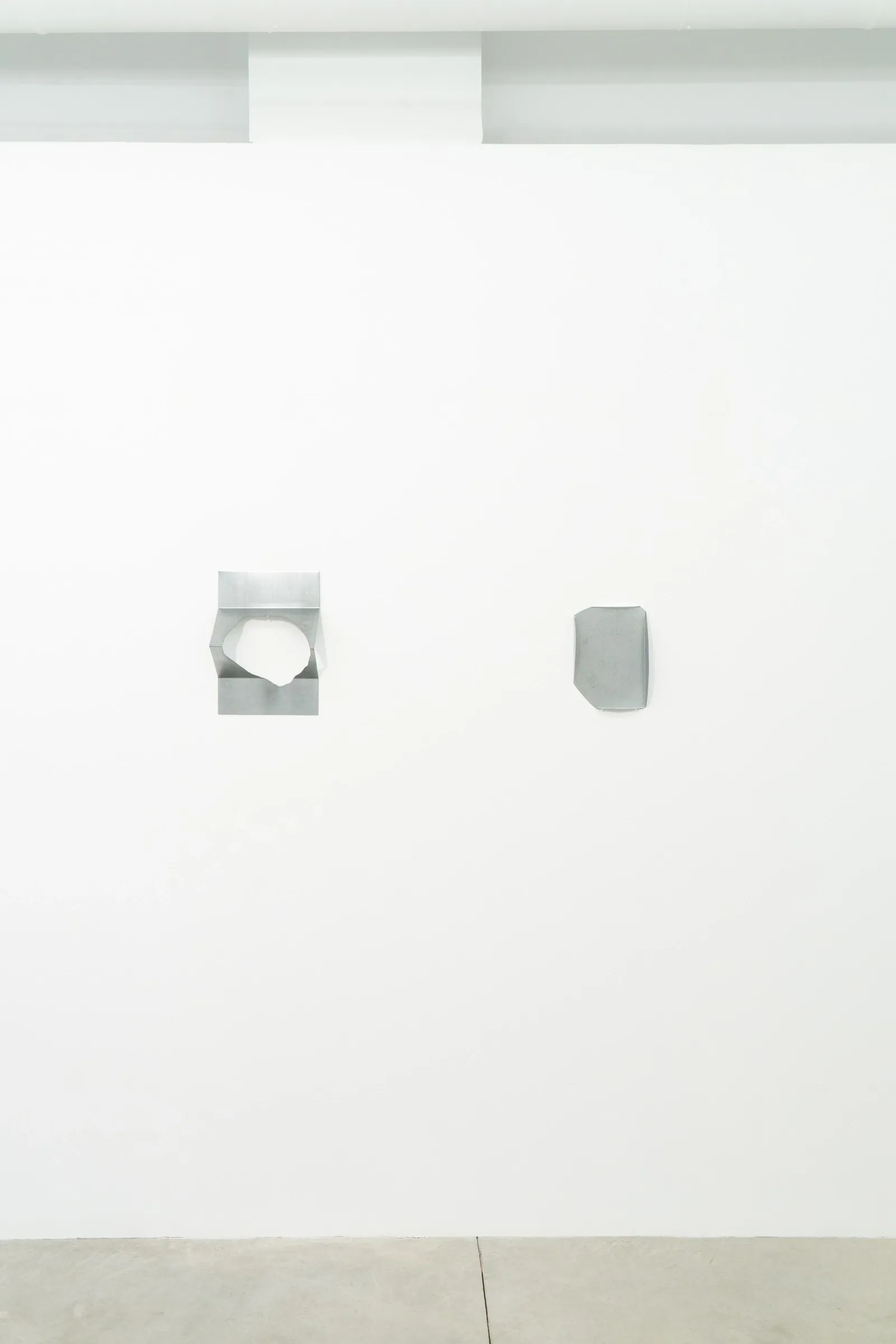
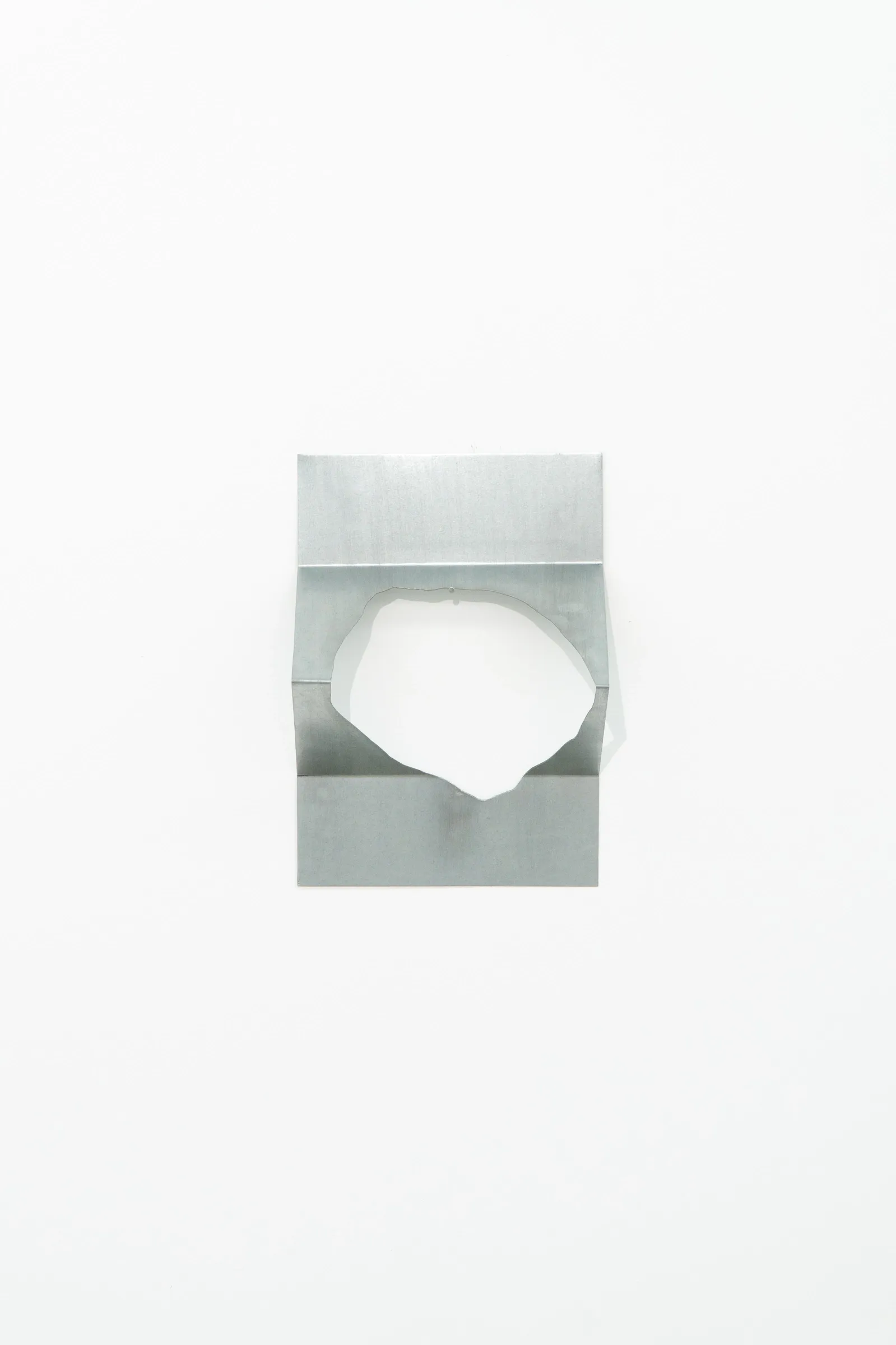
Valerie Krause, Untitled, 2022 and Untitled, 2021, galvanized steel, Kinetic Syntax (installation view), Osnova, València, 2026. Photo: Enrique Pascual. Courtesy Osnova Gallery.
Curatorial Statement by Ignacio Uriarte
Kinetic Syntax brings together a set of practices that explore the relationship between gesture, sign, matter, and system, placing itself in a shared territory between drawing, writing, sculpture, and visual notation.
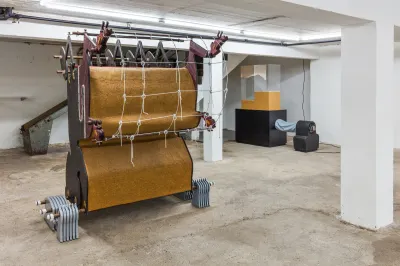
Through a variety of media—painting, drawing, ceramics, textiles, or installation—the works in the exhibition investigate how forms can operate as units of meaning: marks, symbols, or diagrams that, when articulated with one another, produce a kind of spatial syntax.
The exhibition begins from a semiotic intention: the images, lines, and structures found in these works are not presented solely as abstract forms, but as open signs—capable of being read, deciphered, or projected by each viewer.
Some refer to contemporary systems of signage—the schematic clarity of urban wayfinding, diagrams, or technical design—while others evoke more ancient registers: archaic scripts, ritual patterns, symbols that seem to come from remote cultures or from collective memories that are difficult to locate with precision.
Between these two polarities—ancestral and everyday, ritual and functional—a field of resonances is established in which a sign can recall both a lost writing system and a traffic signal.
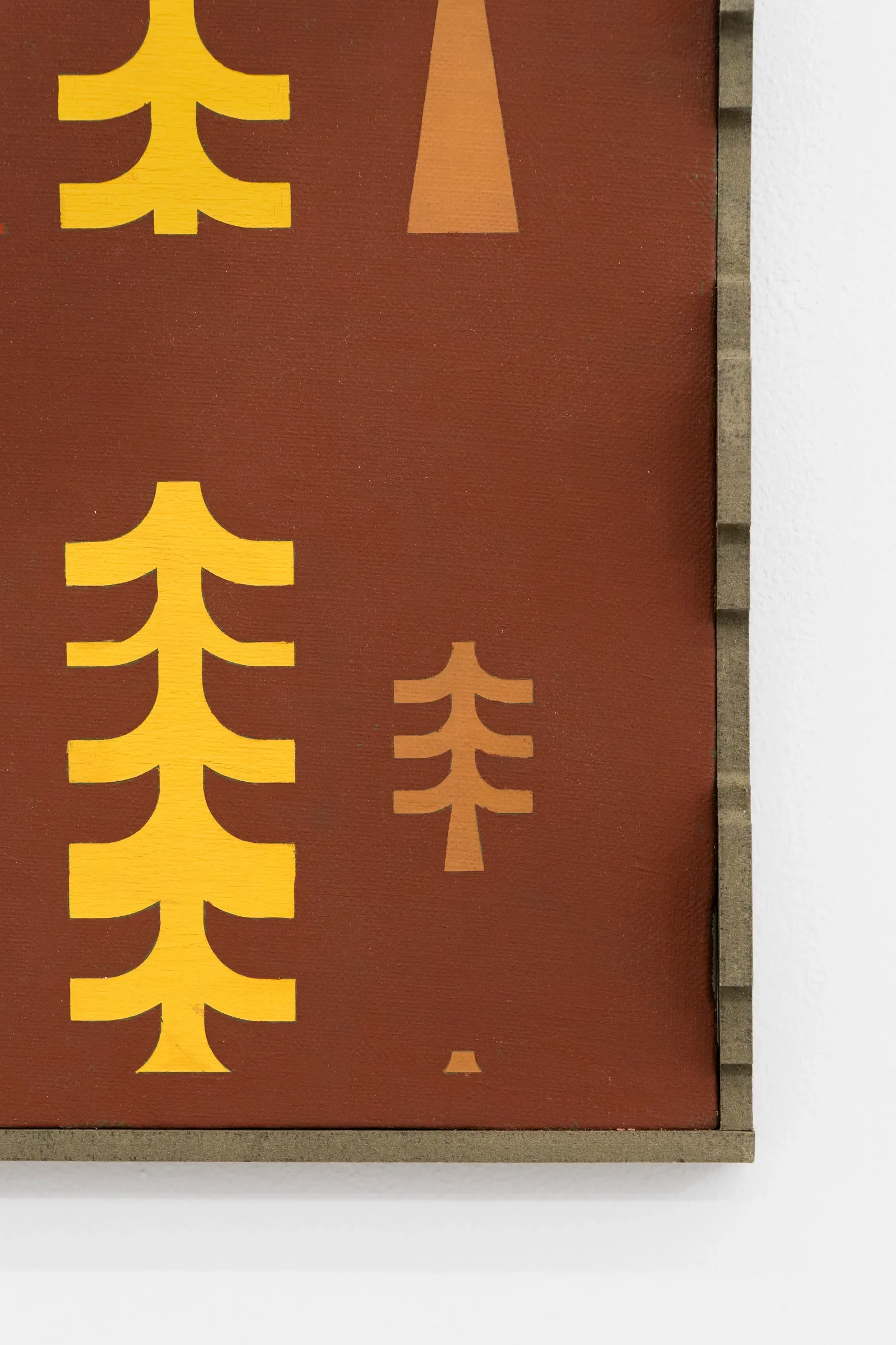
In this context, the boundary between art and writing becomes especially porous. The repetition of the stroke, the accumulation of signs, and the organization of textual or graphic fragments generate structures that oscillate between reading and contemplation, between cognitive and bodily experience.
The works thus function as open archives, where thought, memory, and gesture are inscribed on surfaces that invite you to be traversed rather than decoded in a strictly linear way.
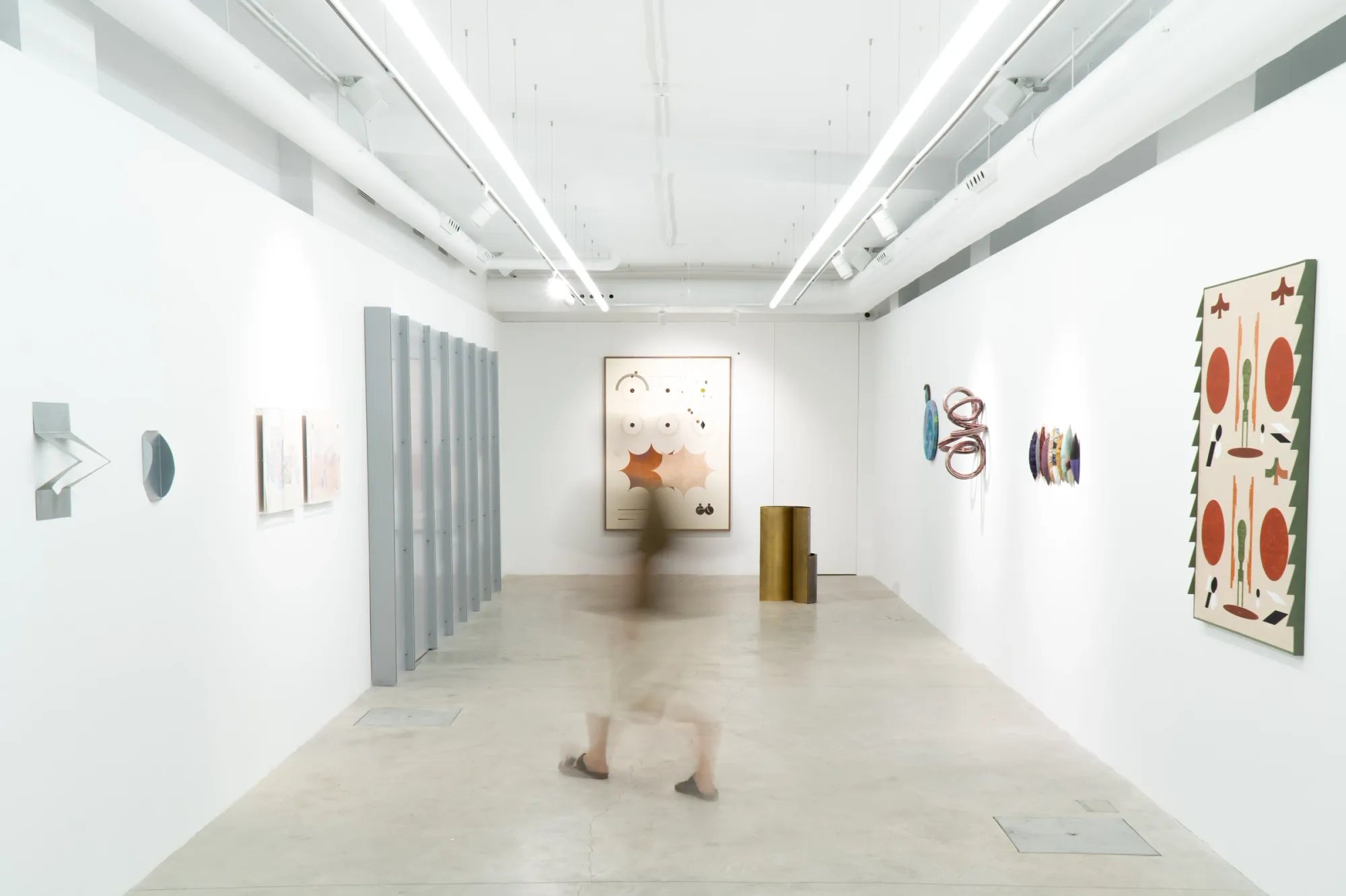
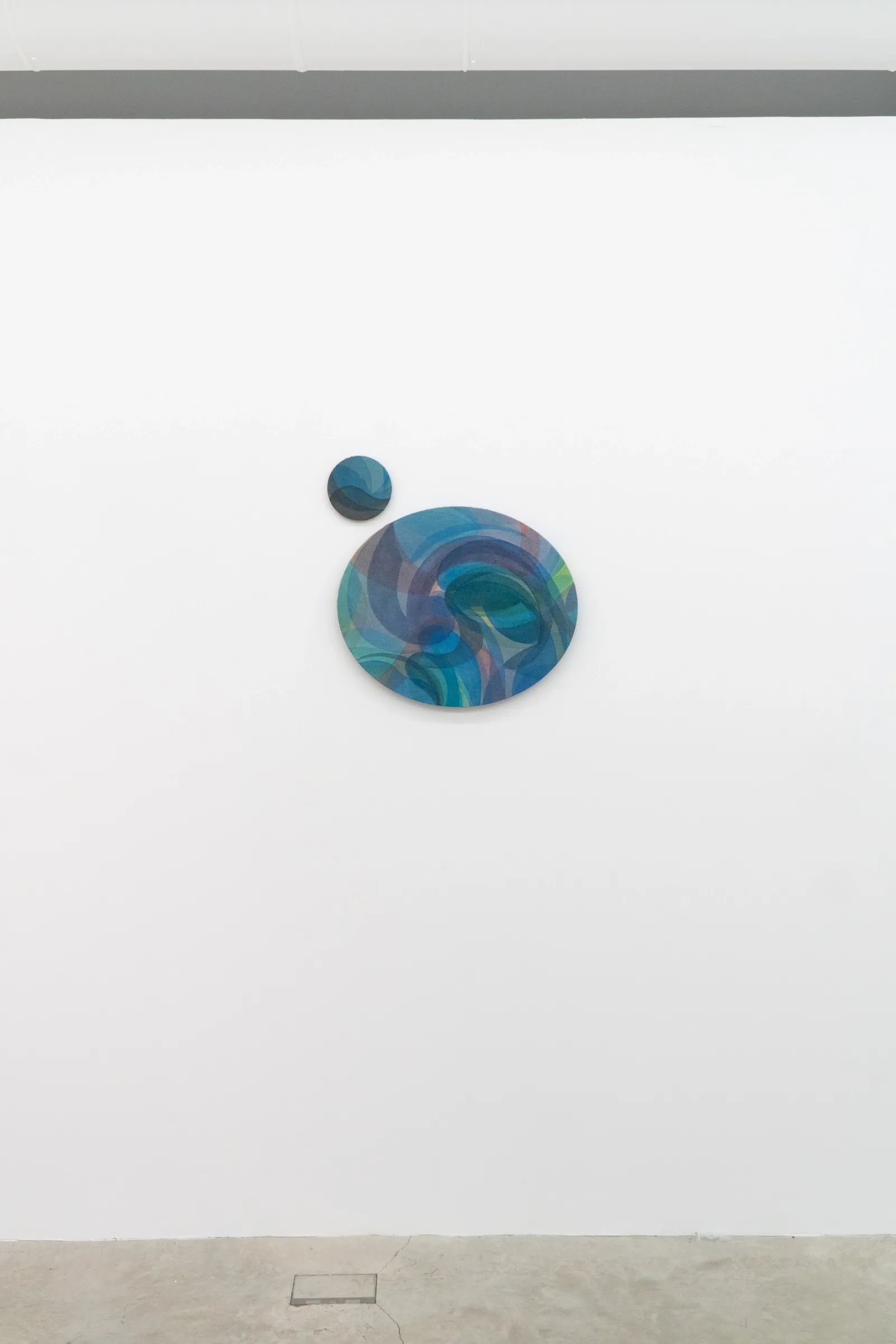
Born in Ozersk, Russia, in 1978, lives in the UK. Shows The Wave, a painting in natural pigments on Irish linen with a wooden element.
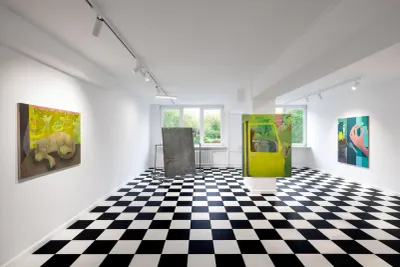
Born in Madrid in 1977, lives between Madrid and São Paulo. Shows paintings in acrylic on canvas with wooden elements, among them Cuatro, 2024.
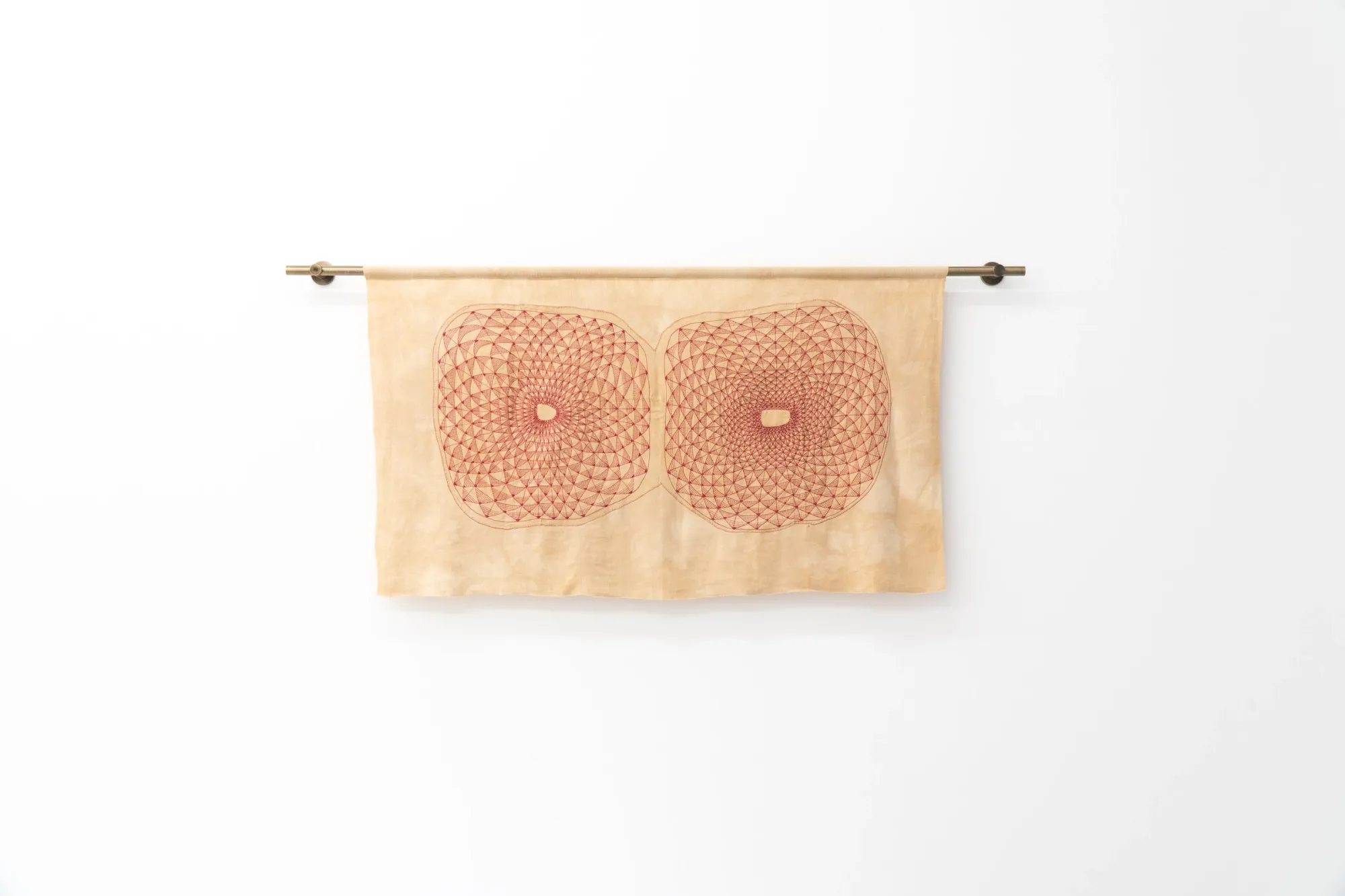
Born in Madrid in 1961. Shows an untitled embroidered textile from 2026, worked in cross-stitch.
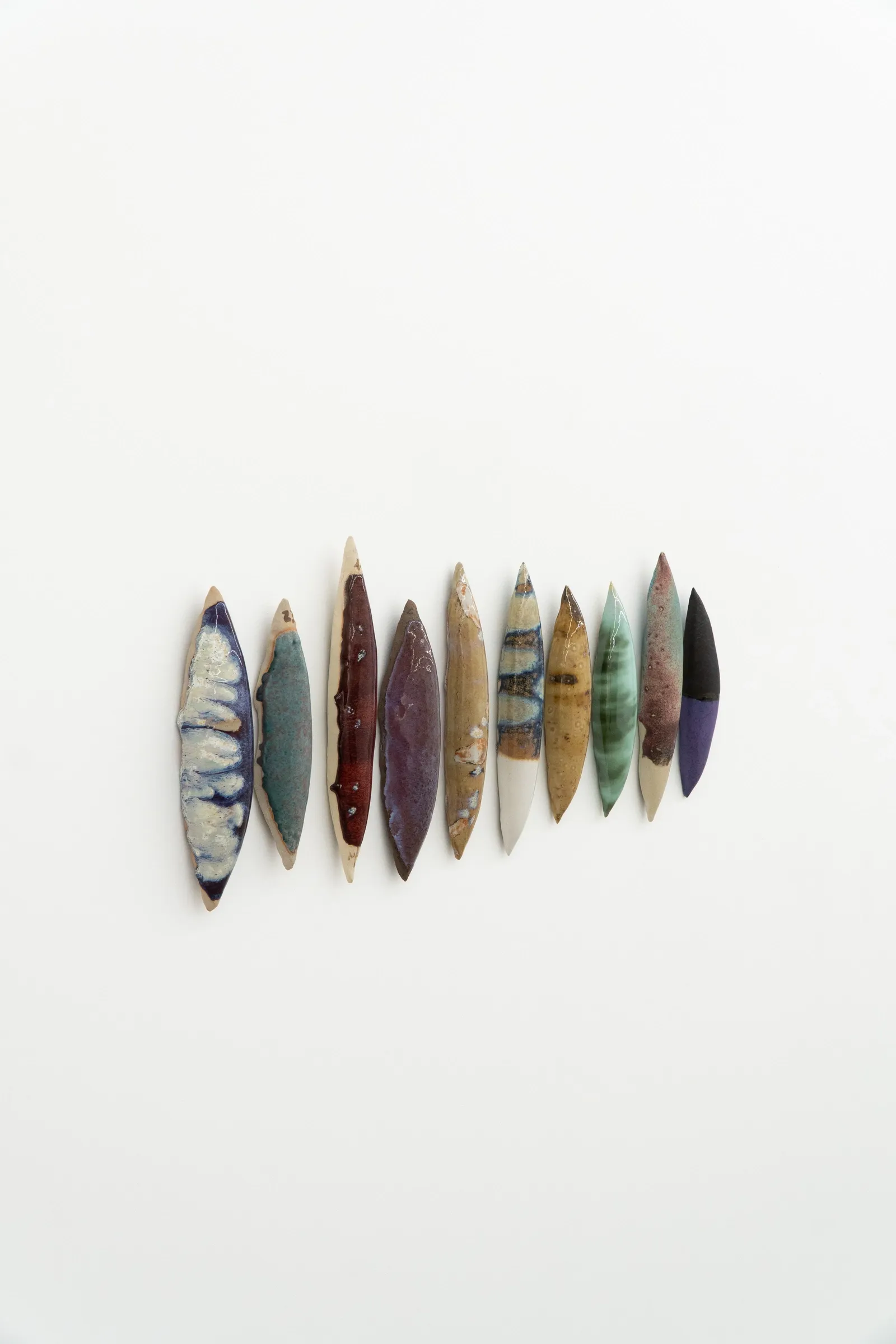
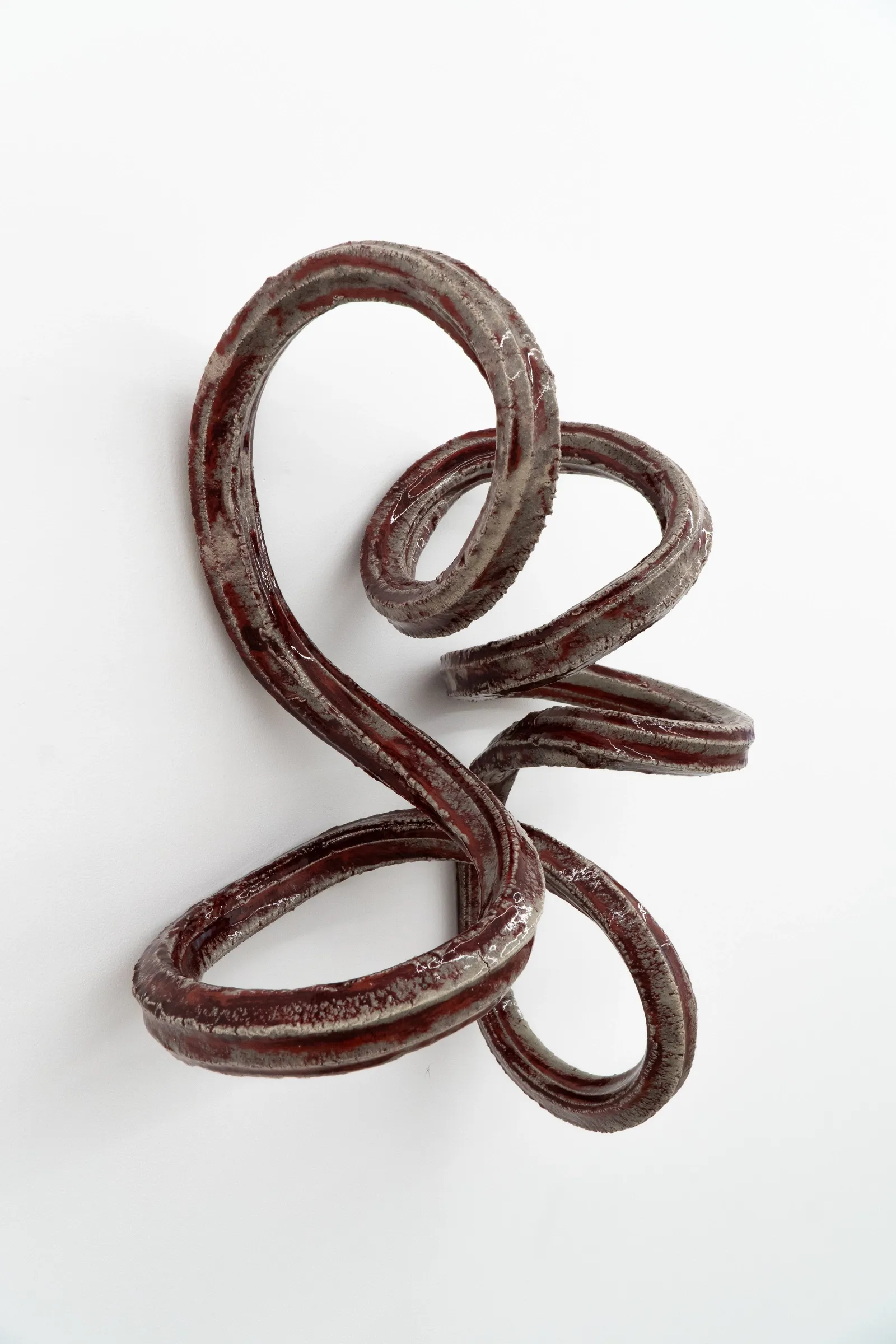
Born in Lima in 1973, lives in Berlin. Shows glazed stoneware sculptures, among them the series All My Colours and Untitled (Spiral), 2026.
Born in Herdecke, Germany, in 1976, lives in Düsseldorf. Shows two untitled small wall sculptures from 2021 and 2022, made of cut and deformed galvanized steel.
Born in Lima in 1975. Shows Poetics of Relation 4 and Poetics of Relation 8, both 2023, stylograph on bamboo paper.
Born in Valencia in 1963, lives in Barcelona. Shows Calderilla, a mobile of metal wire and euro coins.
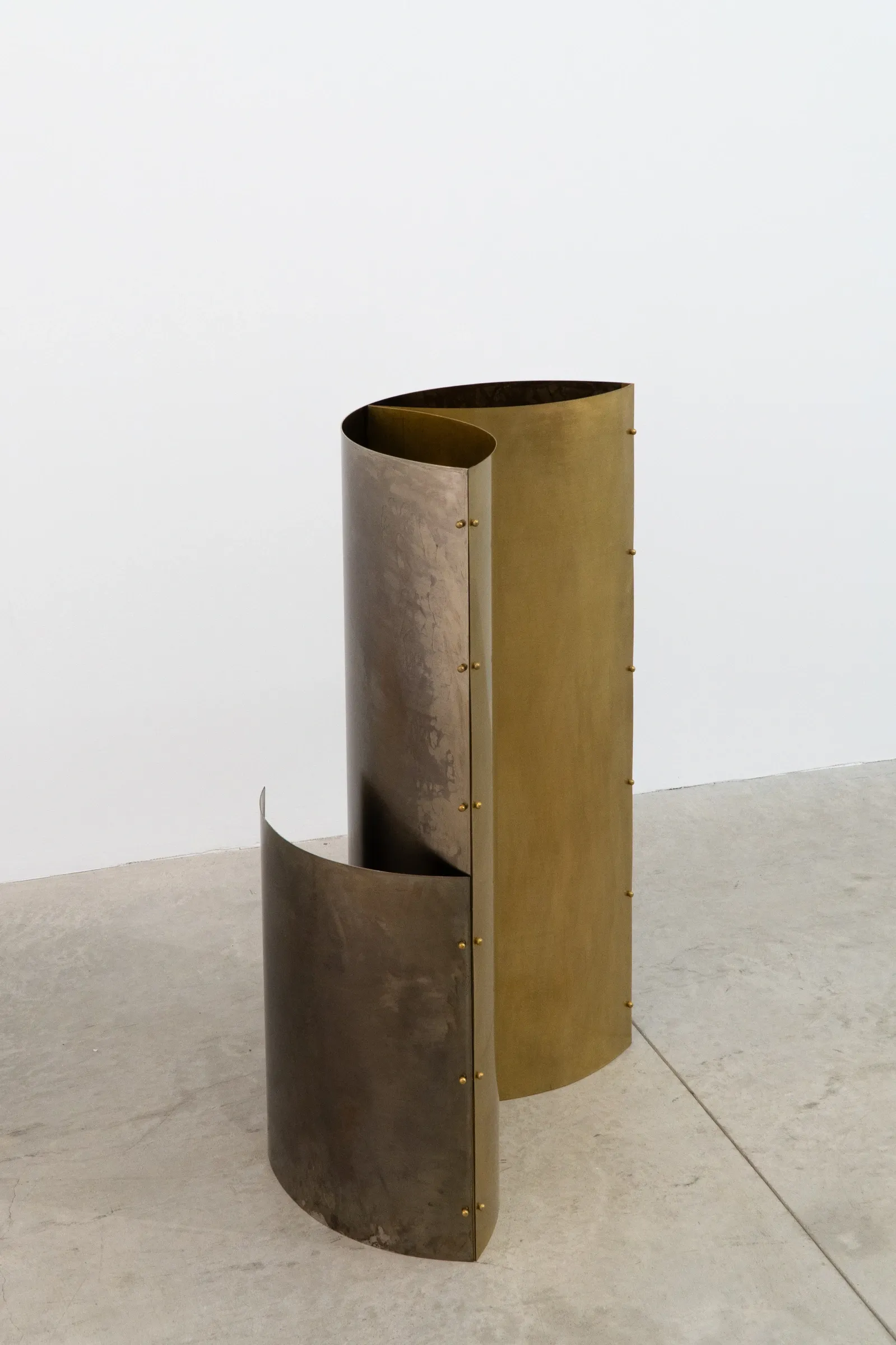
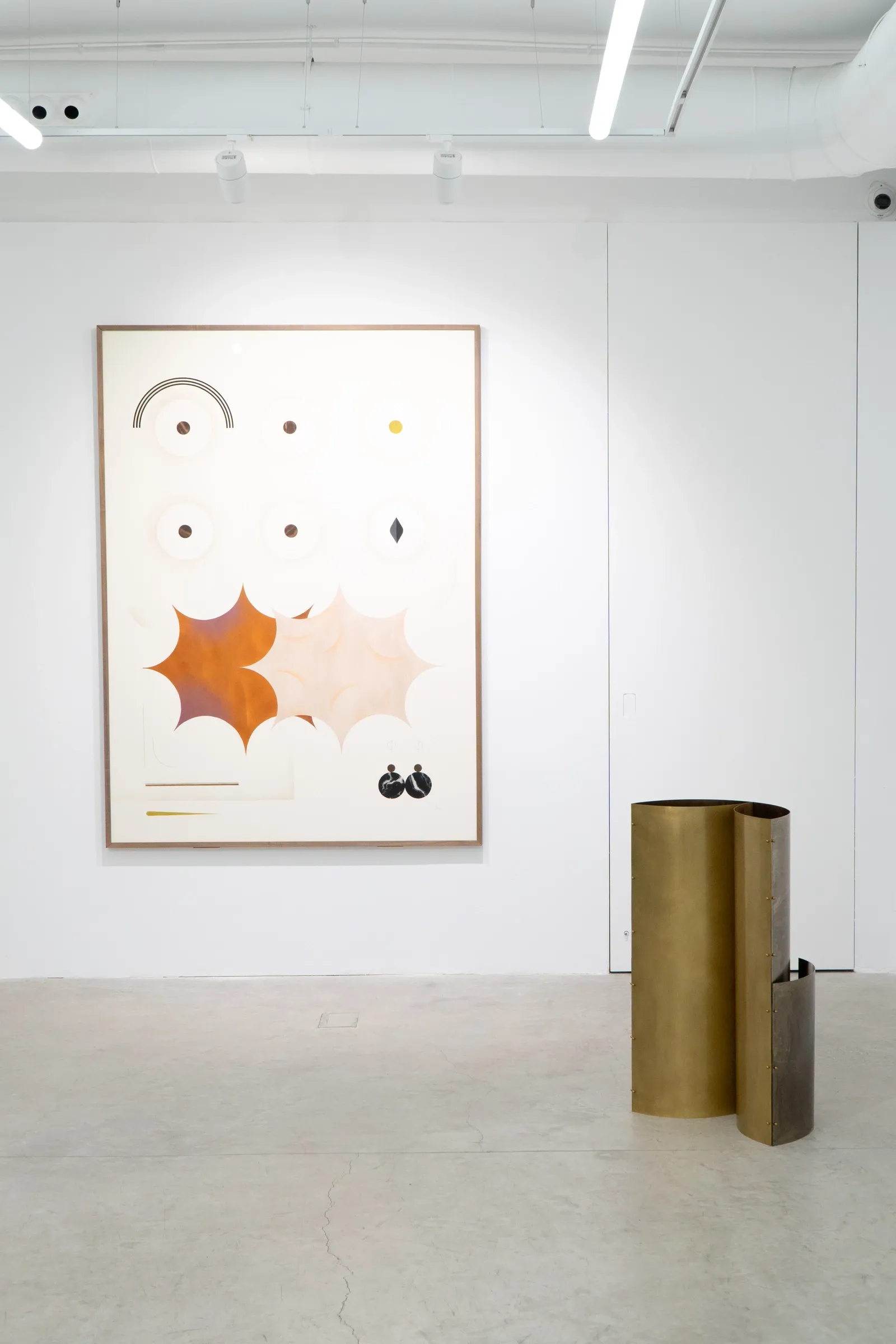
Born in Madrid in 1981, lives in Madrid. Shows a large drawing on paper and the iron and brass sculpture Open Die Column (Reconditioned).
Born in Krefeld, Germany, in 1972, lives in Valencia. Curated Kinetic Syntax, wrote the curatorial statement and shows two pigmented ink drawings, Triangle Progression Grid and Zigzag Waves.
Osnova Gallery stands out as a vibrant art space nurturing emerging talents globally since 2014. Located in a historical building in the center of Valencia, Osnova is a gallery with a keen focus on introducing new artist voices, it seamlessly integrates the local art community into the international art landscape, embodying a fresh and inclusive approach to contemporary art curation. Founders: Dmitrii Vetrov and Alena Kurmasheva.
Website · Instagram
About Catapult Contemporary
This is an exhibition review published by Catapult Contemporary, an independent editorial platform for contemporary art, based in Vienna. We publish exhibition reviews, artist features, interviews, and critical context, with a focus on emerging and mid-career practices from Europe and beyond.
catapult-platform.art ·
Instagram
Want to be featured? Submit your work →
No spam, no sharing to third party. Only you and me.