Krys Huba Paints the Woman Who Slept With the Lights On

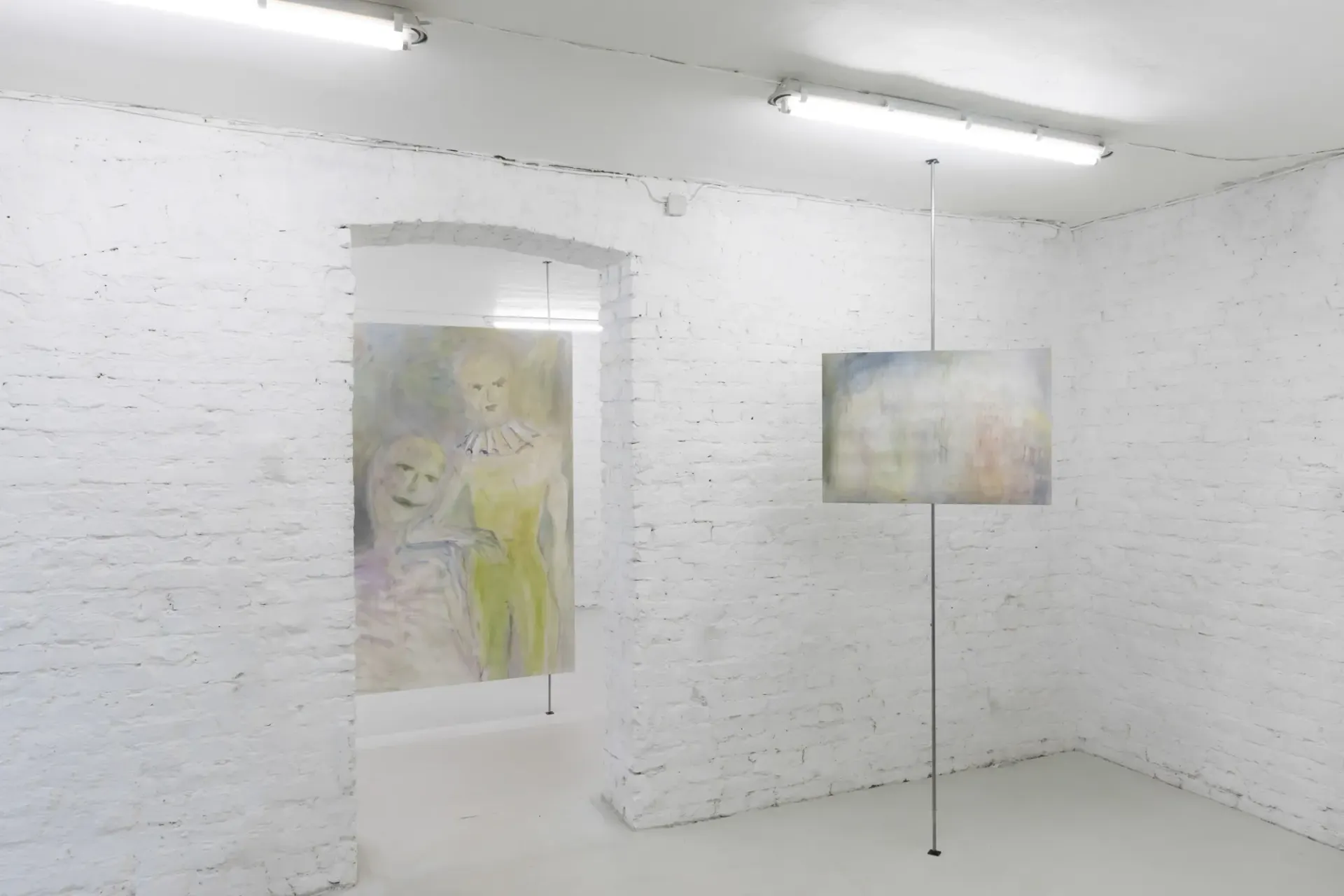
soft power Presents Krys Huba’s falling into you in Berlin
soft power presents Krys Huba’s falling into you in Berlin-Kreuzberg, through October 17, 2026.
Krys Huba
falling into you
soft power
Berlin, Germany
–
Thursday to Saturday, 15:00 to 19:00
Fürbringerstraße 11, 10961 Berlin
Studio Replica
Courtesy the artist and soft power, Berlin
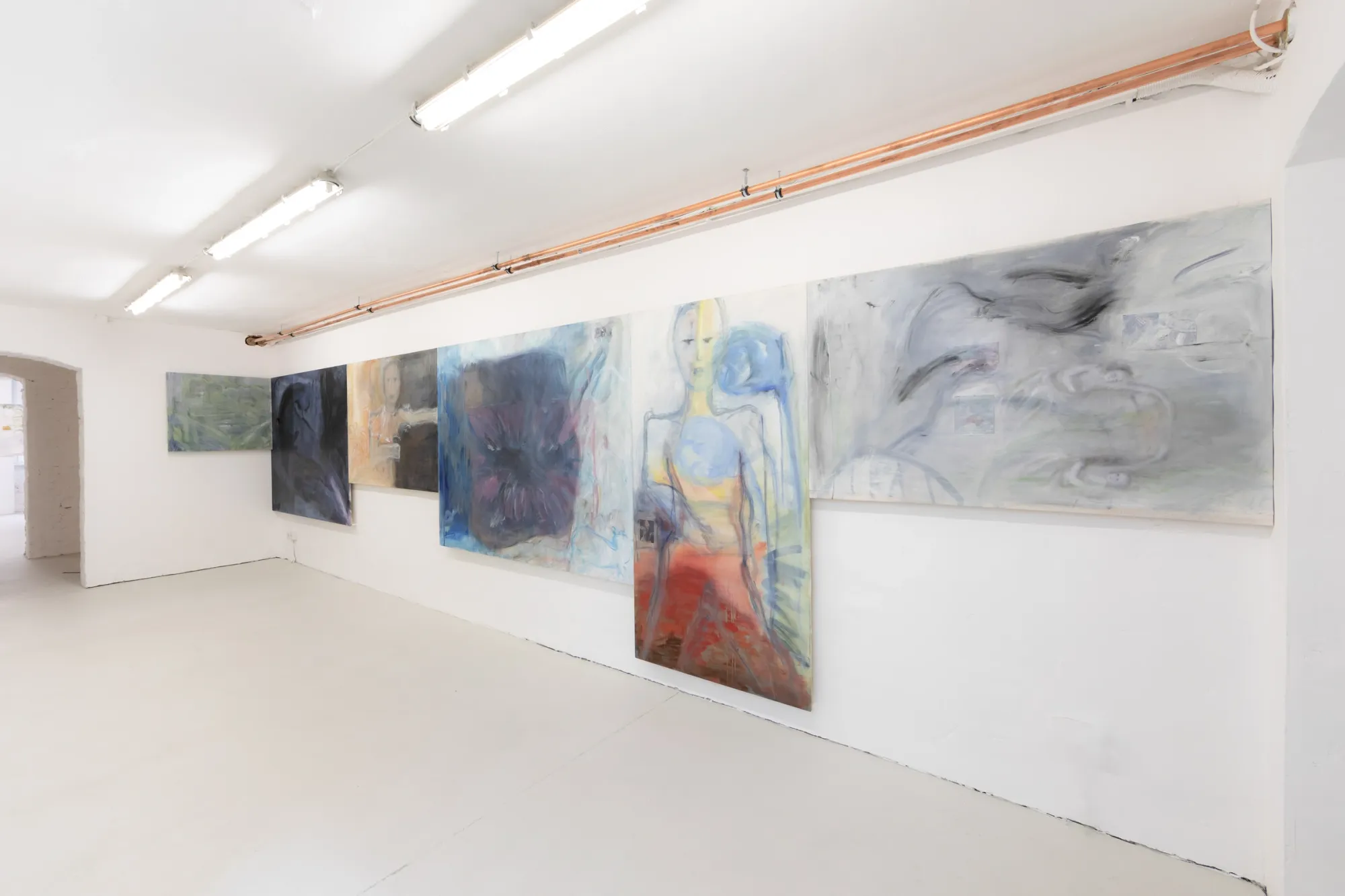
Krys Huba presents falling into you at soft power, Fürbringerstraße 11 in Berlin-Kreuzberg, on view through October 17, 2026. The starting point is JenniCam.org, the website Jennifer Ringley launched from her college dorm room in 1996 and used to broadcast her life until it went offline on December 31, 2003.
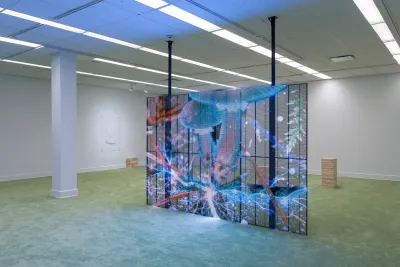
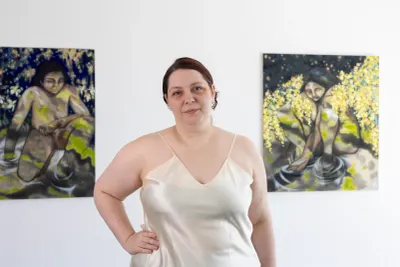
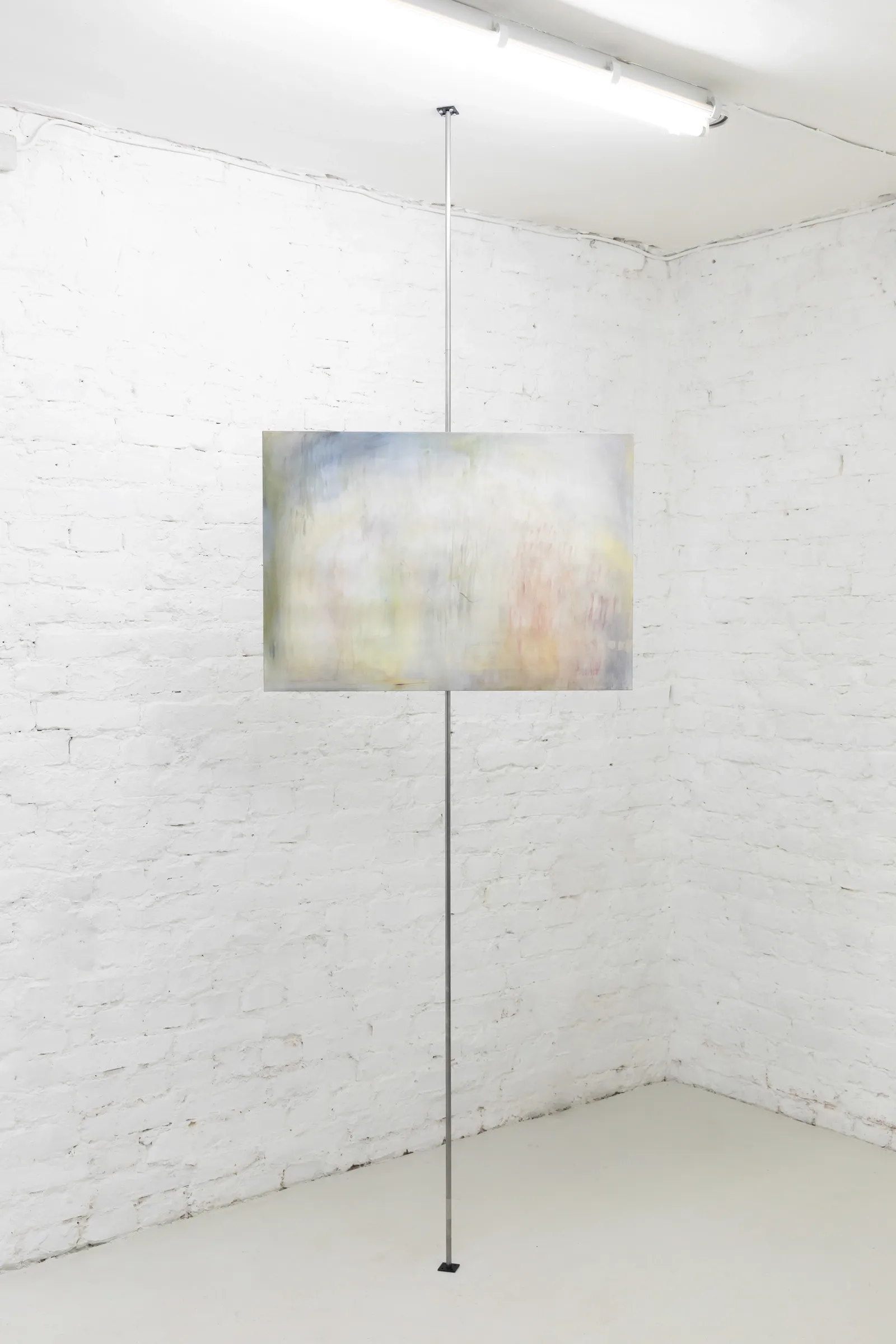
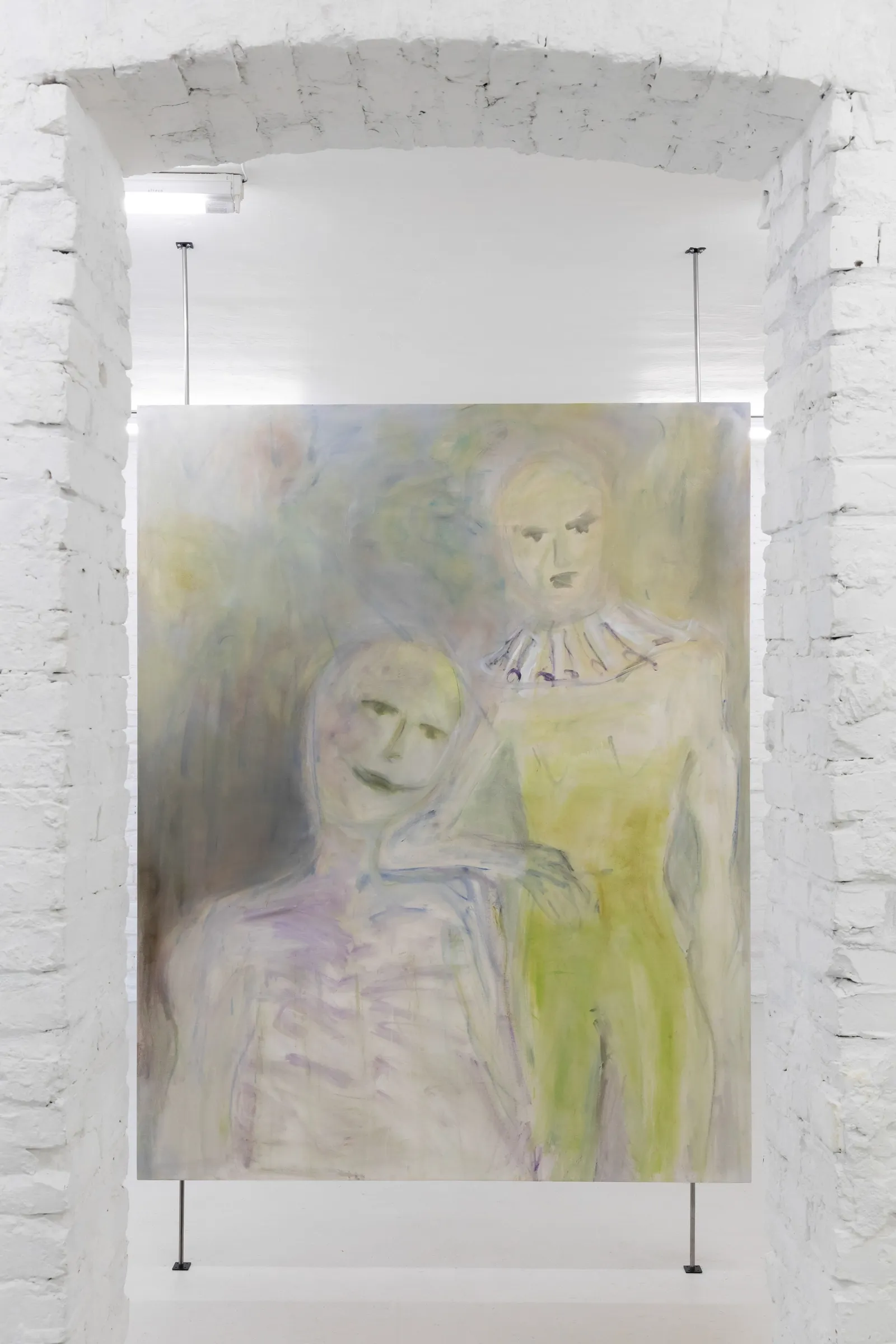
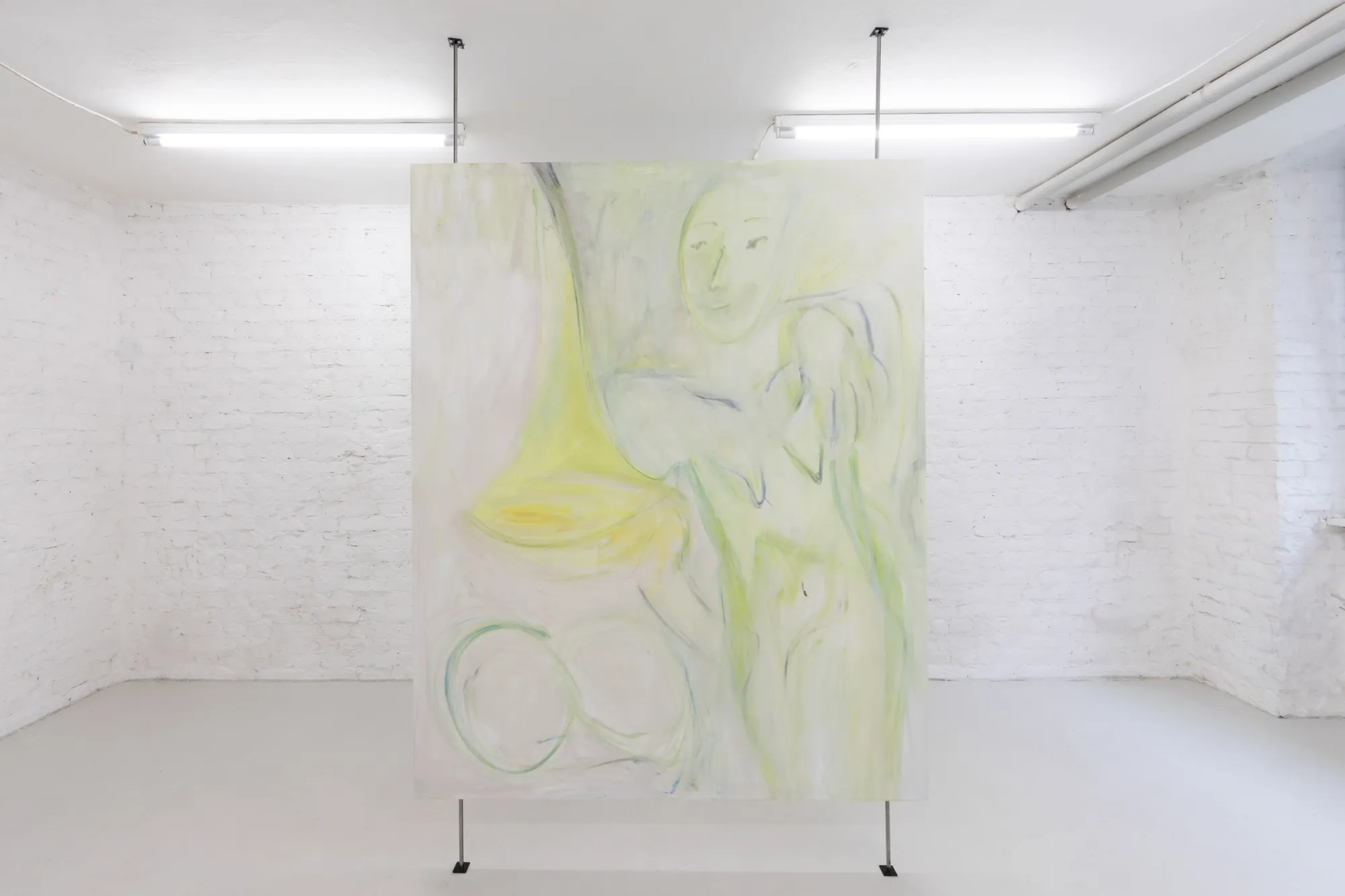
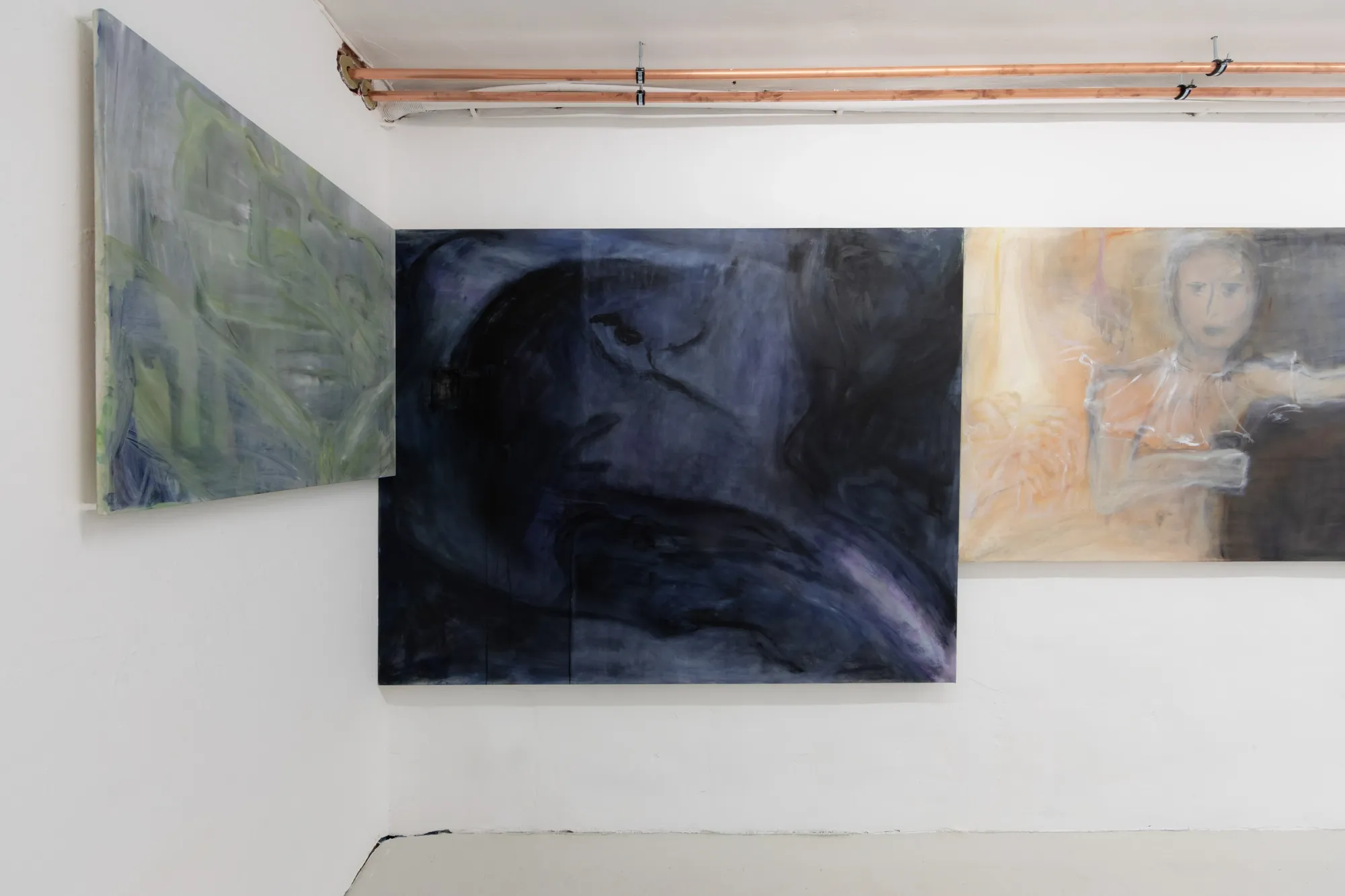
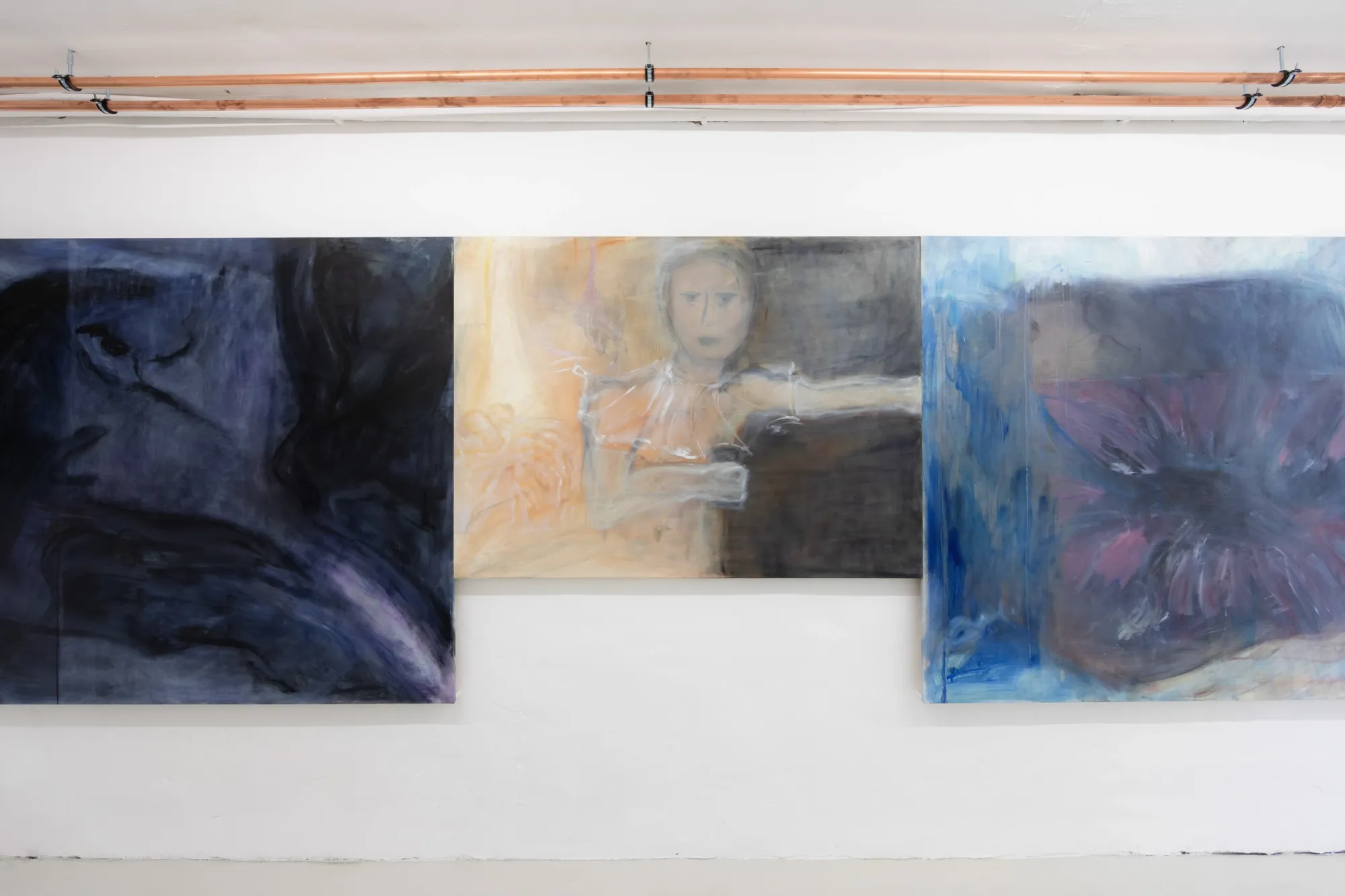
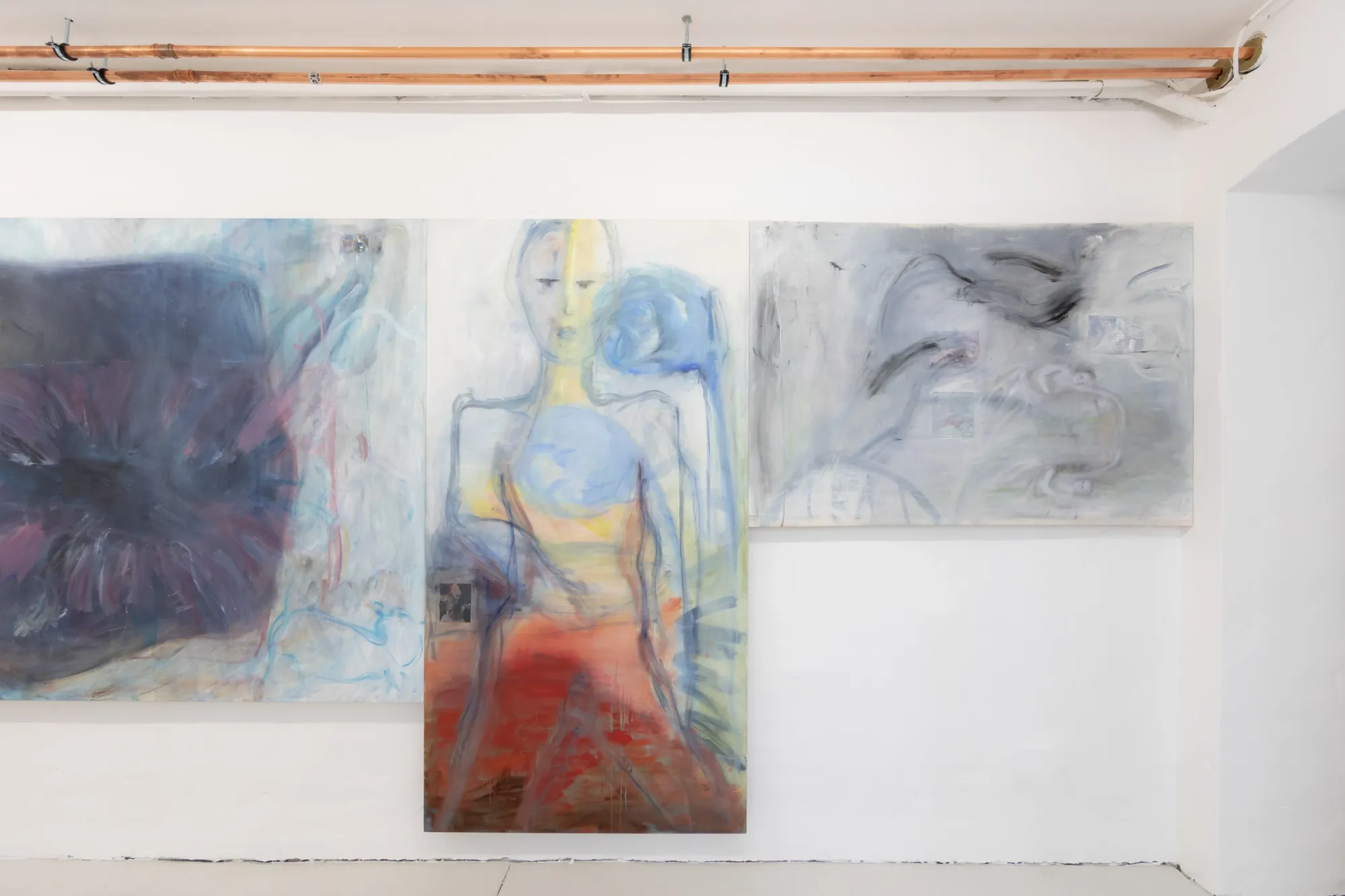
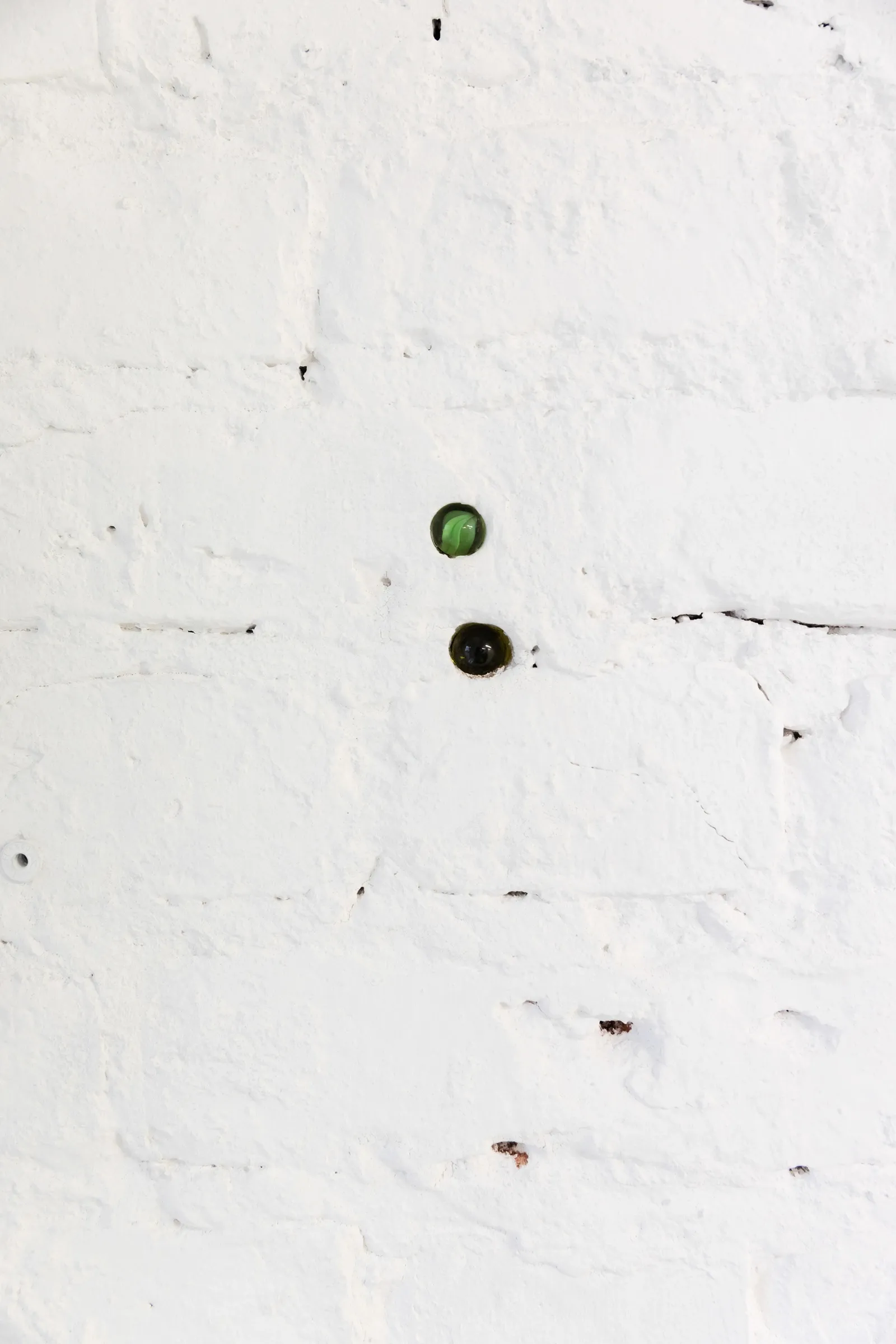
Across the exhibition, Huba works with oil painting, printed archival imagery, latex and glass. In clowns, an ink-jet printed screenshot from JenniCam appears on transparent fabric with oil and a latex cast of a 3D print. Other works include oil paintings on canvas, stars in latex and glass, and eyes, made from glass marbles set into the wall.
Below, the exhibition text explains why Huba reads those surviving images as resistance rather than exposure.
Exhibition Text from soft power
"On her final day as a pioneering internet celebrity, Jennifer Ringley got up some time after 7.30am, used her computer for a while at around 1.15pm, had something to eat at 6.15pm, and then apparently went out for the evening." (The Guardian, 3.1.2004)
On December 31, 2003, JenniCam.org, the first live streamer on the internet, went offline, never to return.
As a painter and writer, Krys Huba's research centers on what they call the "pre-streamers" of the twentieth century who addressed the camera directly and sustained a permanent gaze. Early on in what we know as today's internet culture, Jenni became one of those pioneers, shaping live streaming and social media before either existed as such.
Jenni bought a webcam in 1996 and became famous for broadcasting her life 24/7 from her college dorm room, essentially inventing what is now known as "lifecasting."
She rigged the webcam on her computer to take photos every 15 minutes and upload them in real-time on her website JenniCam.org, giving her rapidly growing audience a peek into her everyday life: Jenni browsing the internet or reading a book, working or doing nothing, having friends over, having sex or sleeping, coming and going (much of the time, viewers saw an empty apartment) – Jenni regarded her website as a document of real life, and she wanted to present an authentic version of that real life to her audience.
At its peak, JenniCam.org got 7 million hits per day, making it one of the most popular websites on the internet at the time. When Jenni went offline, she offered no public explanation. Her exit happened on her own terms, echoing how she had introduced herself eight years earlier: My name is Jennifer Ringley and I am not an actor or dancer or entertainer. I am a computer geek … I don't sing or dance or do tricks (okay, sometimes I do, but not very well and solely for my own amusement, not yours).
Drawn to this strange beauty of reclaiming one's own body, and the fight to possess it, Jenni's story became an impulse for Krys Huba's series of paintings and writing, following the traces that trans, non-binary, agender, intersex, and women pioneers have left online across the history of the internet; traces that remain largely unread.
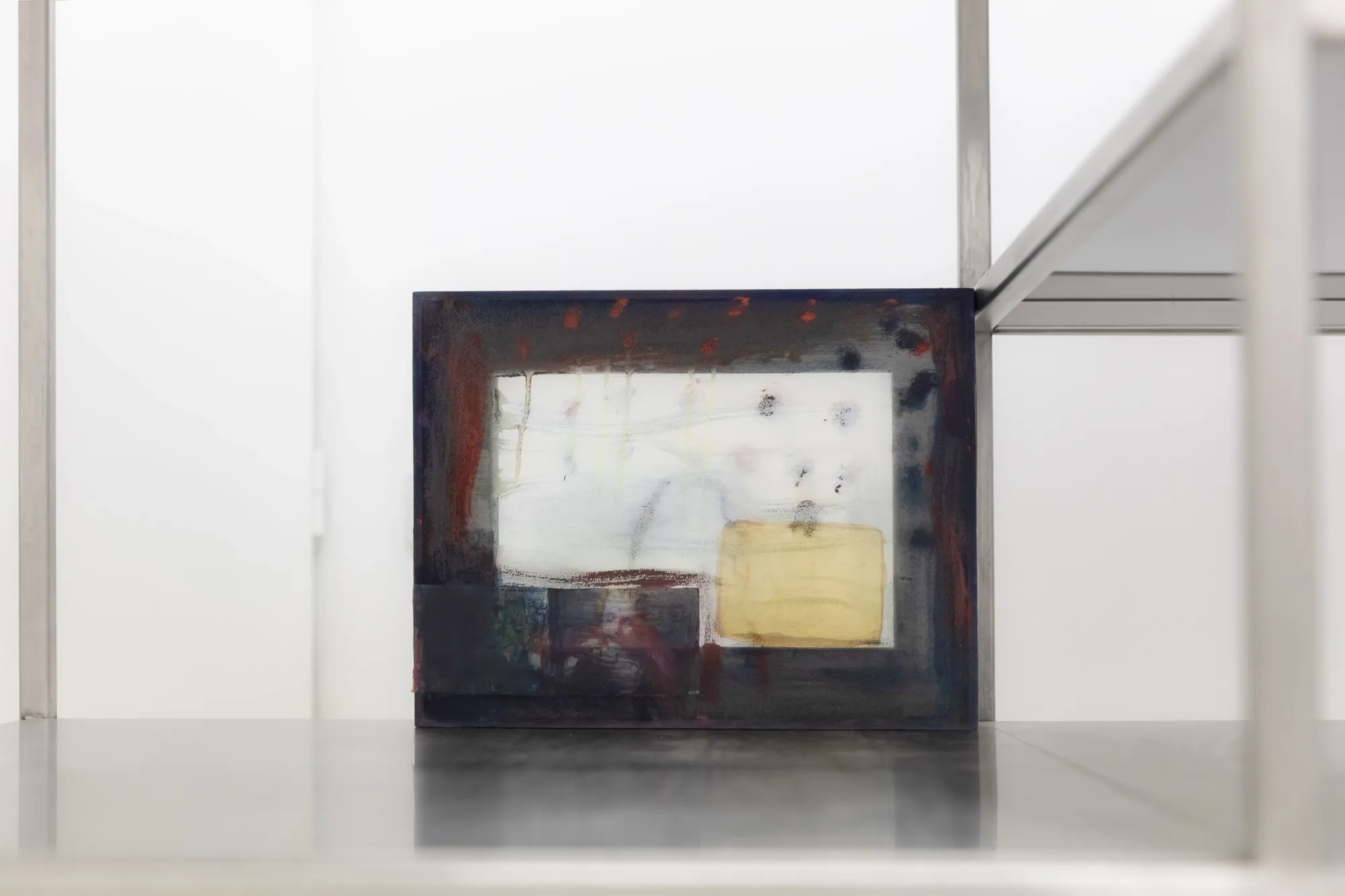
Huba brings the stories they tell into dialogue with a digital present caught between the renegotiation of Foucault's Panopticon,¹ the stalker as a figure of unauthorized access, and the deepfake that strips bodies of their consent.
"I am wary of nostalgia when it reduces the past to consumable fragments", says Krys Huba, "rather, it is about how certain materials – a screenshot from 1996, a low-resolution still – act as vessels for overlapping temporalities. They are not purely past; they keep circulating and shift meaning as they move between contexts."
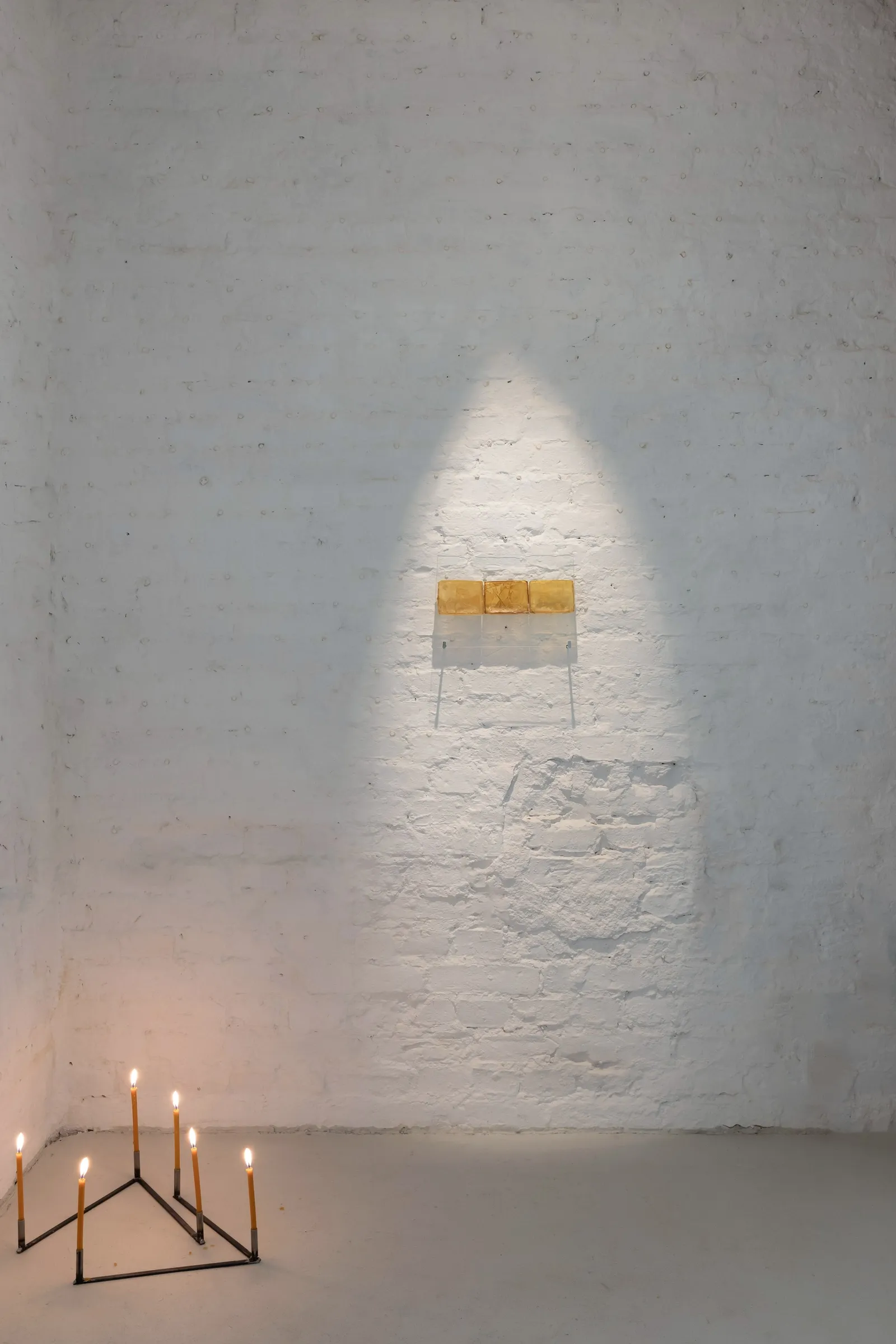
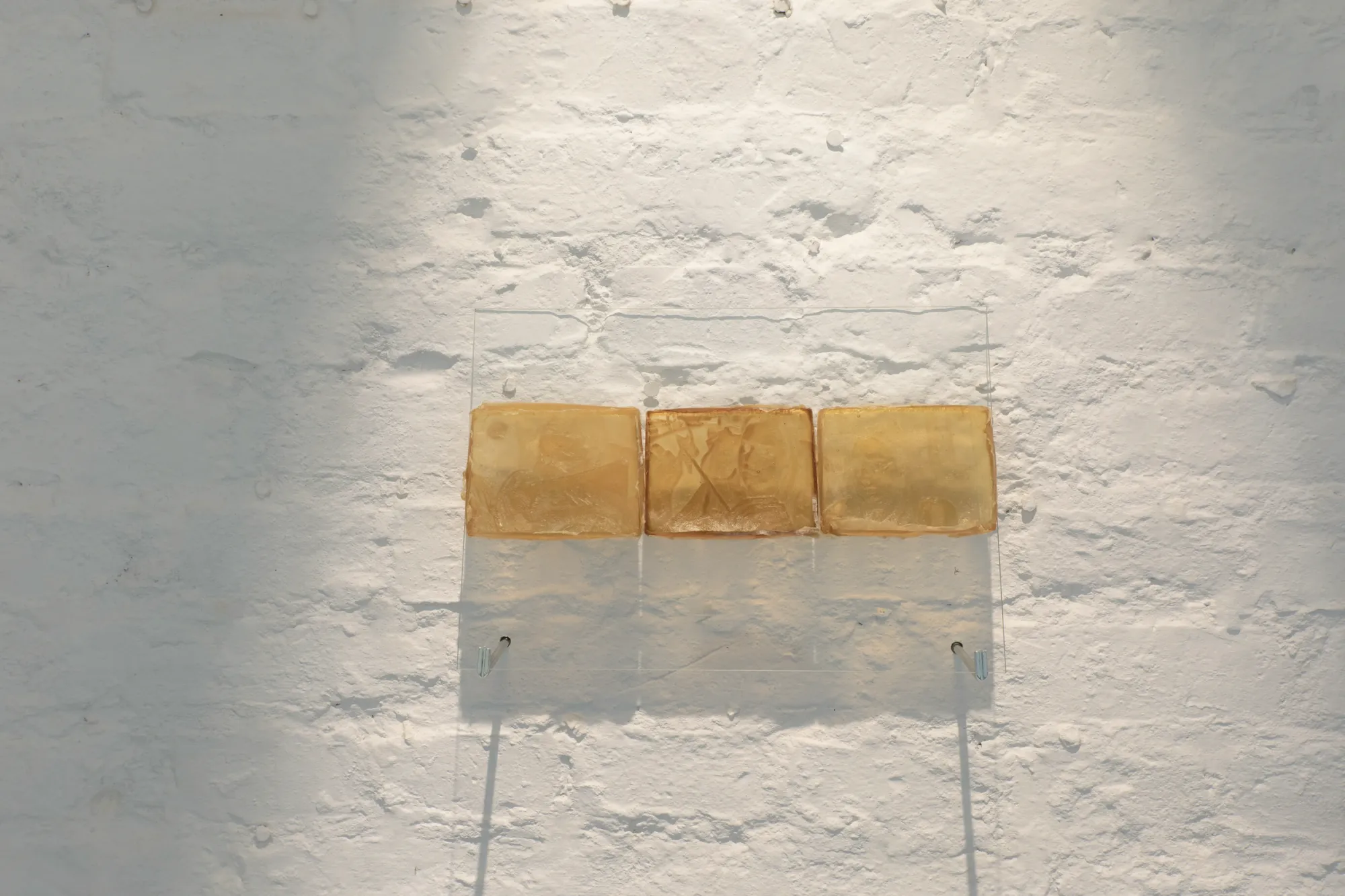
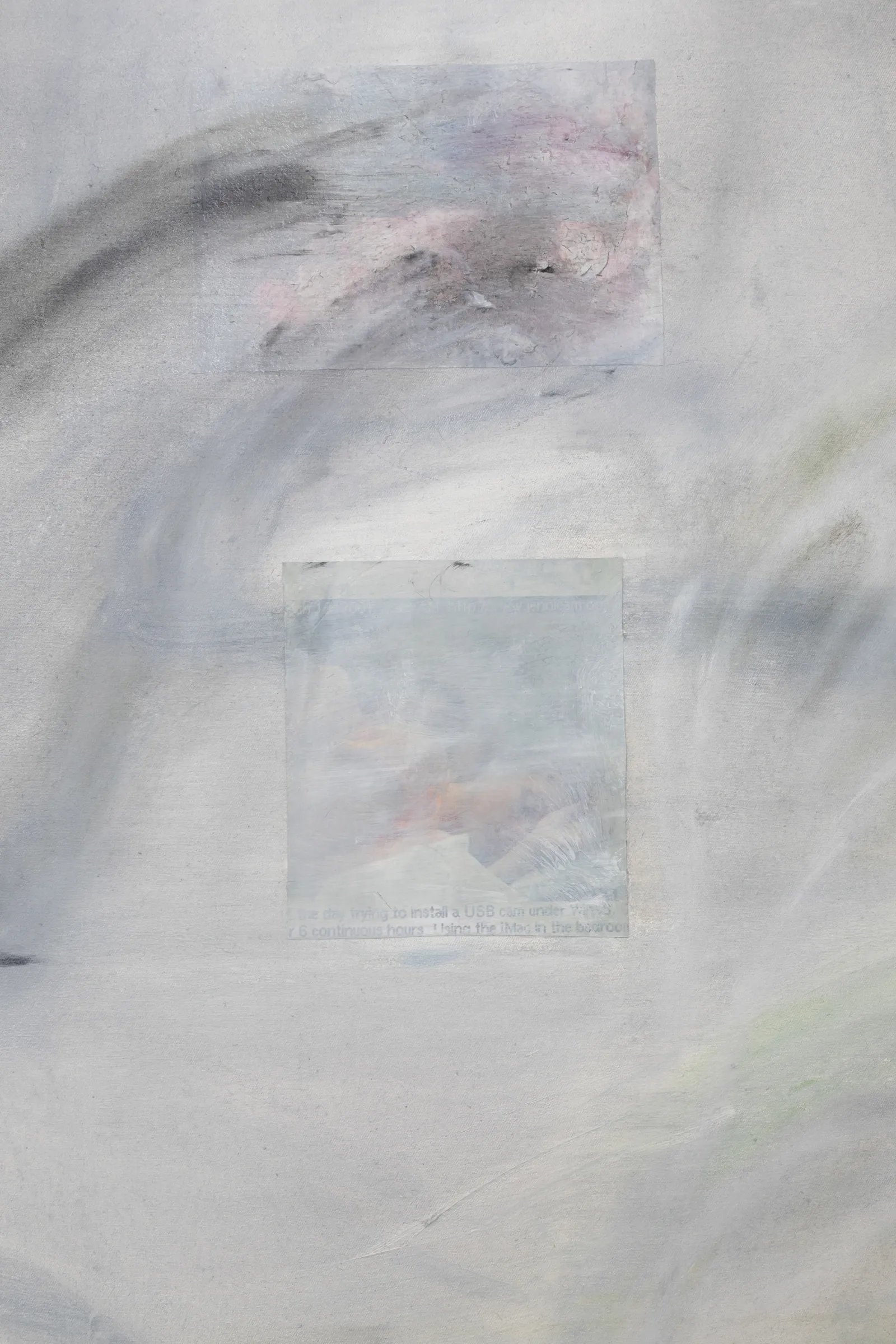
The few grainy, still images that have remained as the sole traces of JenniCam's existence, once uploaded to the website with a 60-second delay, would not hold a candle to modern live streaming. Yet they were utterly compelling to her audience.
Where today's internet demands total transparency and predictive data, these early fragments offer a radical opacity, capturing the raw friction of a body discovering its own digital agency. In a reversal of the Panopticon, instead of being trapped and neutralized by an invisible, policing observer, Jenni claimed the power of visibility. She slept with the lights on, not out of fear, but as a courtesy to her fans.
Krys Huba treats the painting itself as a relic of the screen, a durable monument to a fleeting transmission.
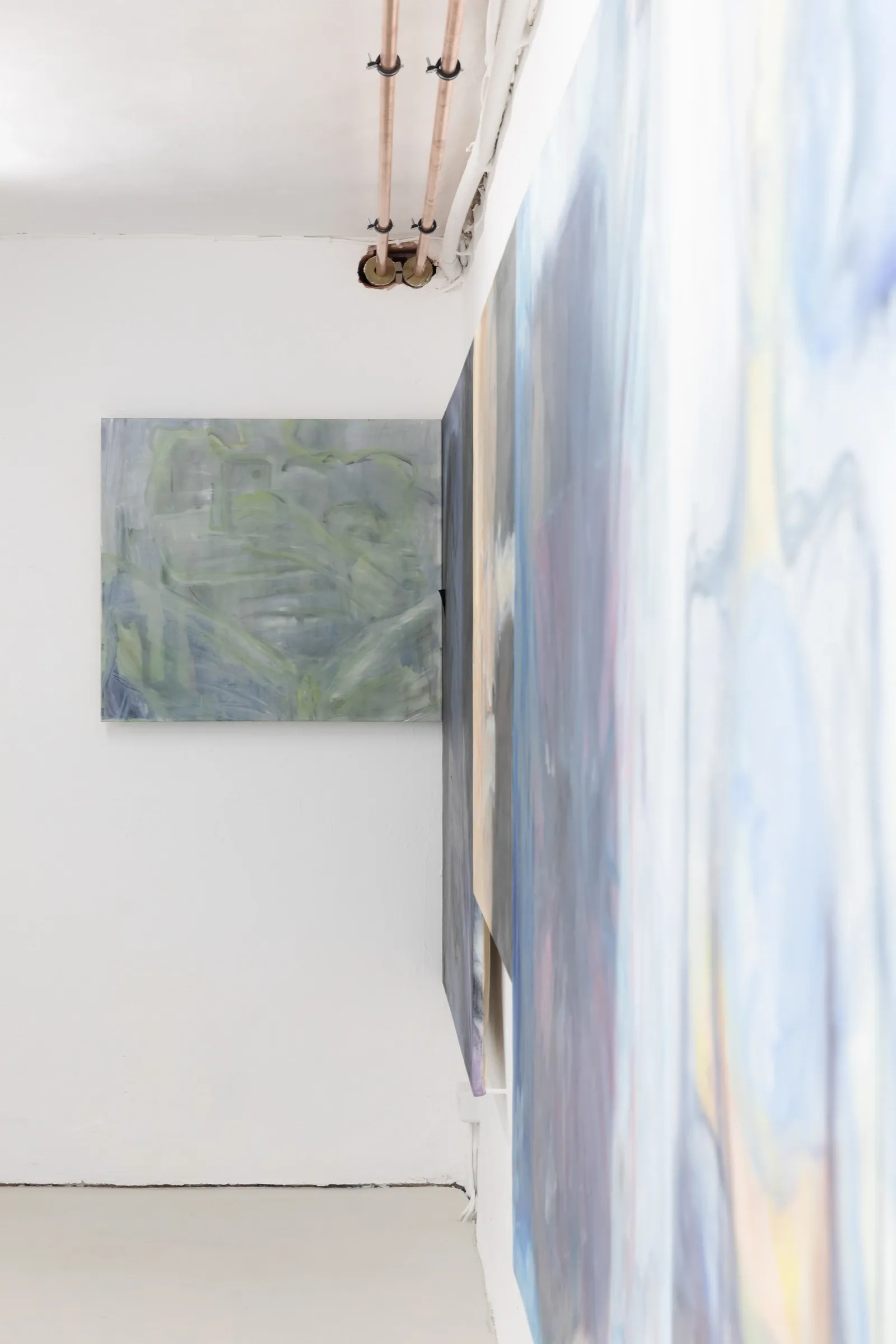
The distance between the historic webcam and the physical room collapses, pulling the viewer into an immersive surrender, a sensation of falling into the pixelated gaze of the past. As the border between the observer and the observed dissolves, these bodies do not yield to our presence. Instead, they materialize as a fierce site of resistance.
To cross from the documented reality of Jenni's room into Huba's imagery is to step over a threshold where the logics of time, space, and gravity have dissolved into the grotesque.
 NADIA EGAN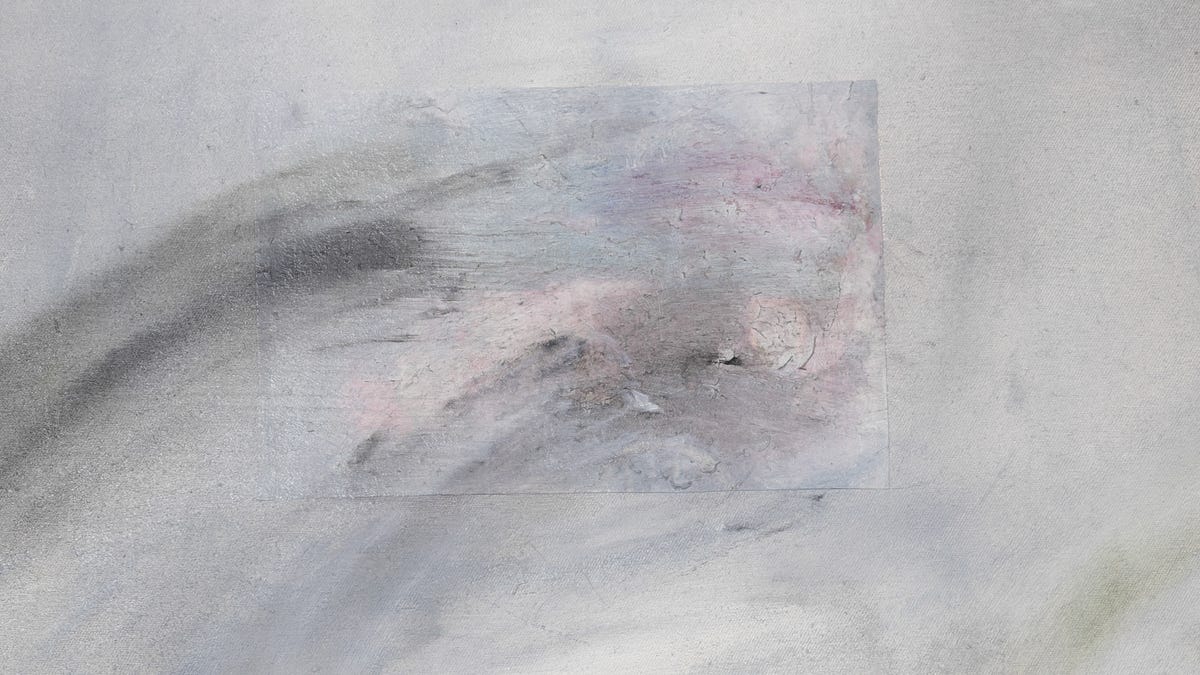
Interview with Krys Huba
Operating within this dim, intuitive realm, Krys Huba gives attention to how the past permeates us, and to its shadowy absences.
Drawing connections between image, body, and narrative, the artist transfers fragments of buried digital relics onto the canvas, bringing them into conversation with references from historical portrait painting, early performance practice and queer feminist activist histories. Entangled bodies emerge, occupying the space like a fresco on the walls of a streamer's grotto. Figures recurring in expressive, life-sized gestures in oil, returning our gaze, falling into you.
¹ Panopticon: A circular prison design where inmates are visible to an invisible guard in a central tower. Philosopher Michel Foucault popularised the term in his book Discipline and Punish (1975) as a metaphor for how modern society uses the psychological threat of constant surveillance to enforce conformity and create "docile bodies."
For a contemporary analysis of how digital subjects invert and reclaim agency within this dynamic, see Johanna Brewer, "Seeing Like the Streamers: Reprogramming the Panopticon," in Real Life in Real Time: Live Streaming Culture, eds. Johanna Brewer et al. (MIT Press, 2023).
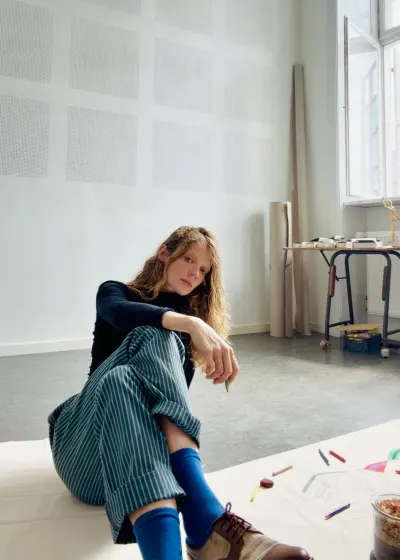
Krys Huba works across painting, printed matter and writing, with over-life-size figures, fabrics and body-oriented installations that are often activated by performative readings. Their first institutional solo exhibition took place at Künstlerhaus Bethanien, Berlin, in 2025.
Website · Instagram
About Catapult Contemporary - Art Platform Submission
This is an exhibition review published by Catapult — an independent editorial platform for contemporary art, based in Vienna. We publish exhibition reviews, artist features, interviews, and critical context, with a focus on emerging and mid-career practices from Europe and beyond.
catapult-platform.art · Instagram
Want to be featured? Submit your work →