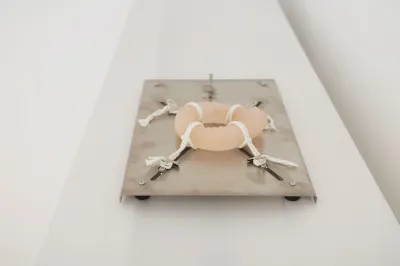
A Sculpture No One Is Allowed to Enter, Repaired by Everyone Anyway

This review documents Reparaturgesellschaft, a group exhibition featuring eight artists at the Wewerka Pavilion, which ran through August 2, 2026.
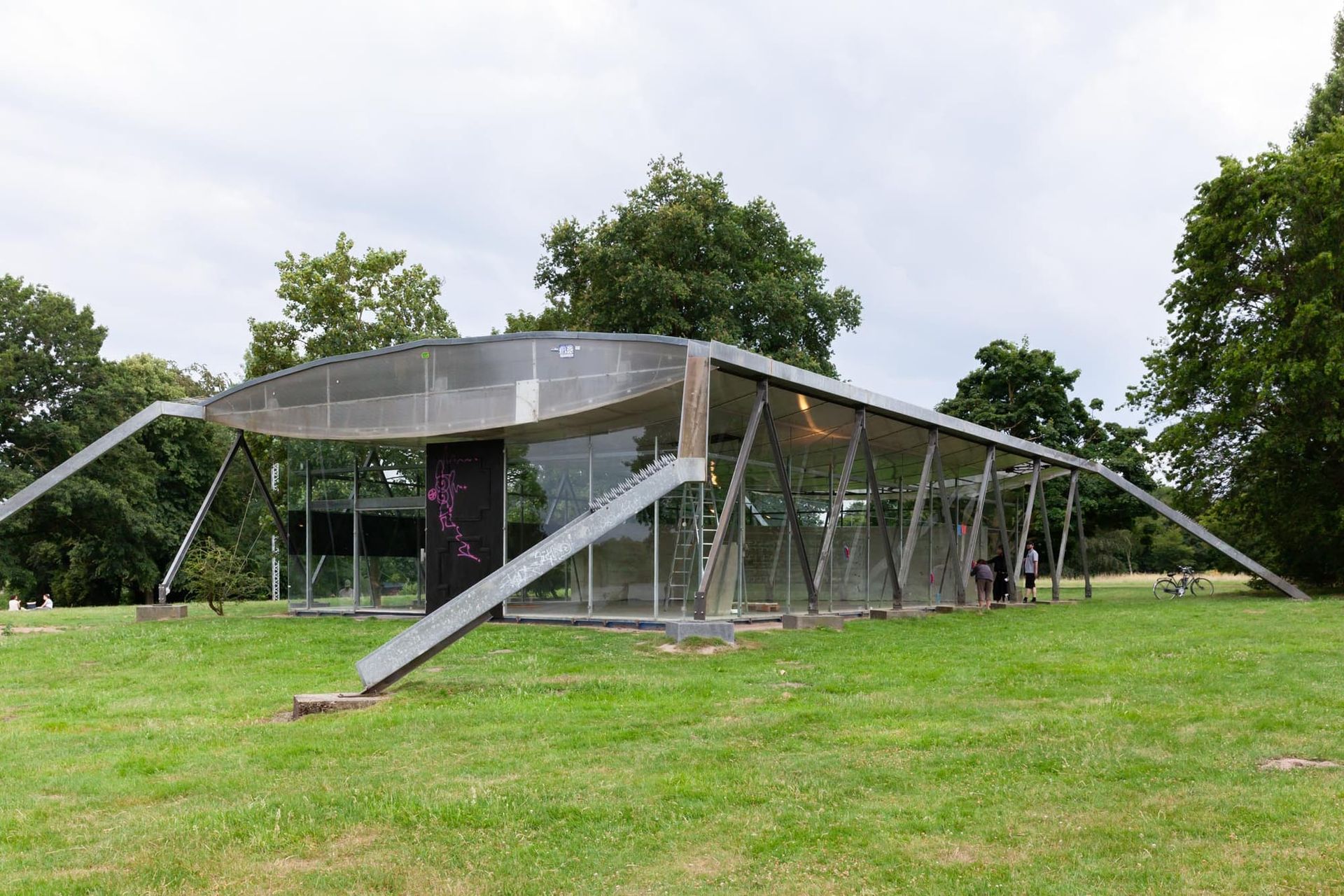
Reparaturgesellschaft, Wewerka Pavilion, Münster, 2026, glass and steel pavilion on grass with pink graffiti on black door, visitors nearby
Reparaturgesellschaft, installation view, Wewerka Pavilion, Münster, 2026. Photo: Hyesung Ryu. Courtesy Kunstakademie Münster.

Reparaturgesellschaft at the Wewerka Pavilion in Münster

Reparaturgesellschaft at the Wewerka Pavilion in Münster, curated by Jonas Roßmeißl, ran through August 2, 2026.

Reparaturgesellschaft
Artists:
Rieke Albertin, Yooyoung An, Leona Egelkamp, Maurice Fey, Finn Froböse, Max Hedderich, Suyeon Prana Kim, Junsun Park
Exhibition:
Reparaturgesellschaft
Venue:
Wewerka Pavilion
City:
Münster, Germany
Dates:
Address:
Aasee-Uferweg, 48143 Münster, Germany
Curator:
Jonas Roßmeißl
Photography:
Kunstakademie Münster, Hyesung Ryu
Image Courtesy:
Courtesy Kunstakademie Münster

The Wewerka Pavilion on the Aasee has never settled into a single identity.

Legally a sculpture, used like architecture, closed to the public yet permanently exposed to weather and passersby, it has spent decades accumulating exactly the kind of wear that was probably never anticipated.
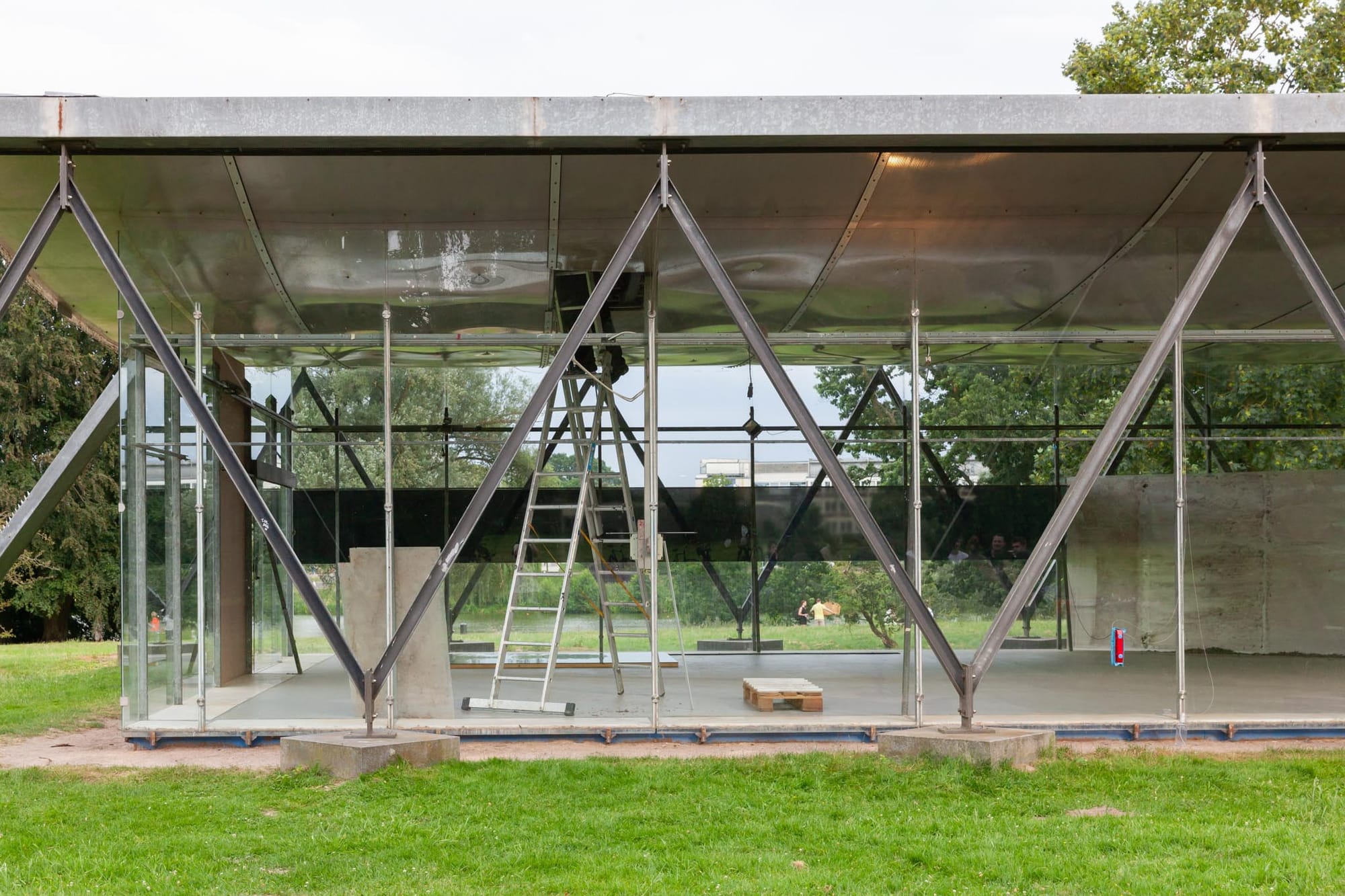
Reparaturgesellschaft, Wewerka Pavilion, Münster, 2026, interior view through steel struts with ladder, wooden pallet, and concrete plinth
Reparaturgesellschaft, installation view, Wewerka Pavilion, Münster, 2026. Photo: Hyesung Ryu. Courtesy Kunstakademie Münster.
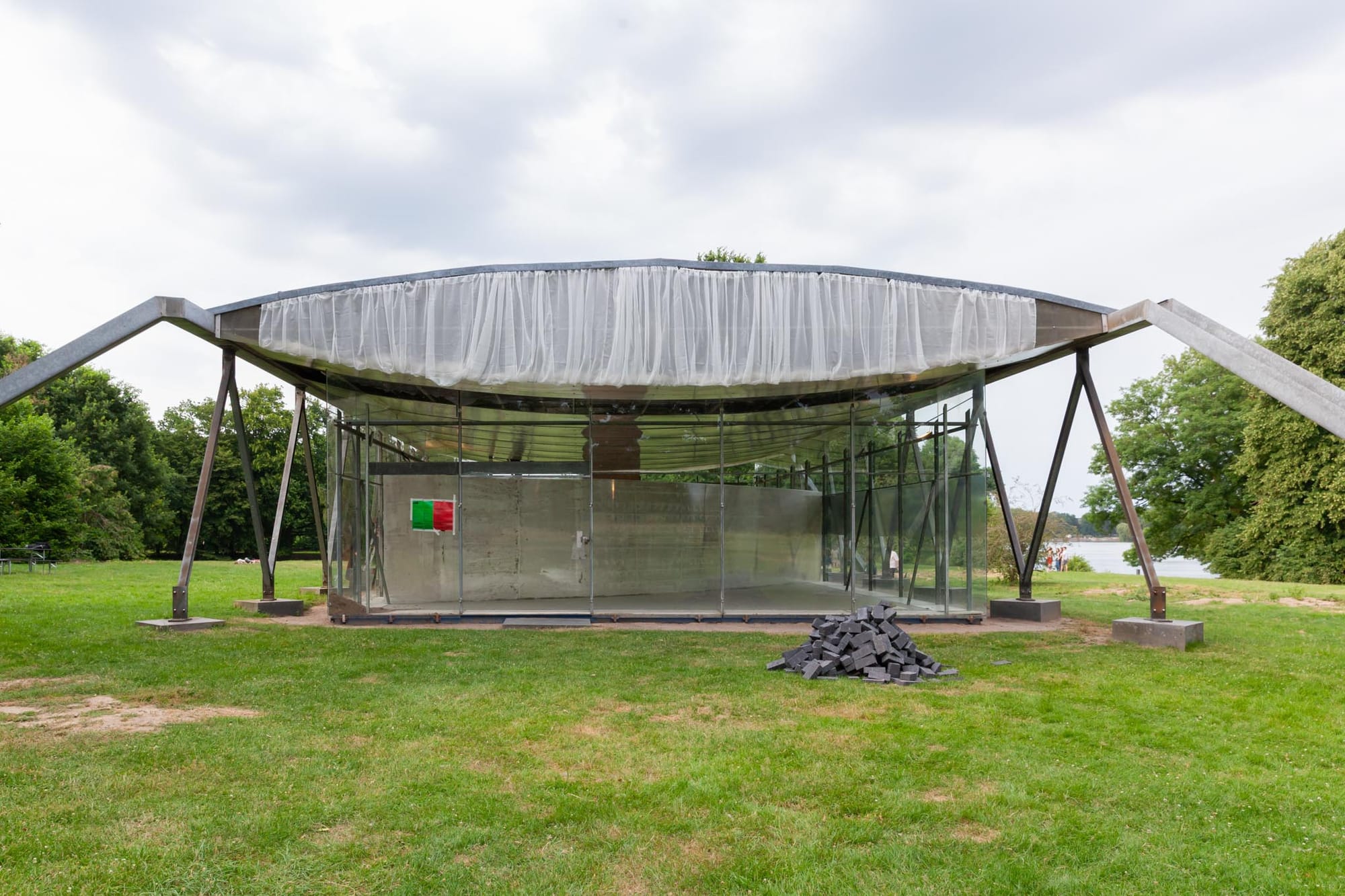
Reparaturgesellschaft, Wewerka Pavilion, Münster, 2026, white curtain draped along pavilion roof edge with pile of dark stone pavers on grass
Reparaturgesellschaft, installation view, Wewerka Pavilion, Münster, 2026. Photo: Hyesung Ryu. Courtesy Kunstakademie Münster.

Eight artists from Kunstakademie Münster spent July inside that contradiction, treating the pavilion's condition as raw material rather than a problem to solve.

Curatorial Note by Jonas Roßmeißl


“What exactly is the Wewerka Pavilion? It is certainly not an exhibition space, because for reasons of building and zoning regulations, it is off-limits to the public. This very circumstance also renders its designation as a sculpture—as architecture that can be experienced autonomously—absurd.” (Sabine Maria Schmidt, Stadtblatt, May 1988)
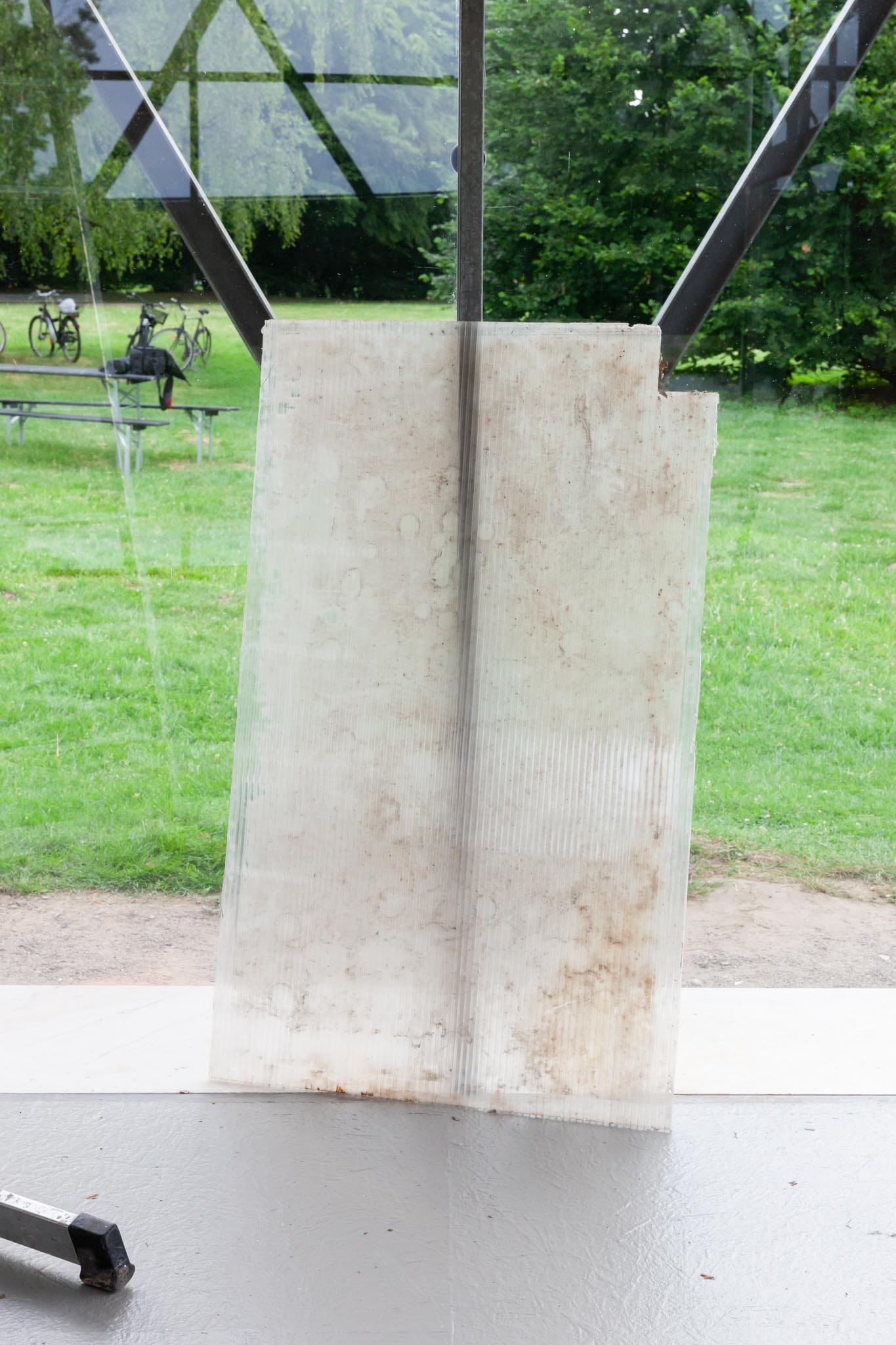
Reparaturgesellschaft, Wewerka Pavilion, Münster, 2026, weathered ribbed glass panel with water stains leaning against steel structural strut
Reparaturgesellschaft, installation view, Wewerka Pavilion, Münster, 2026. Photo: Hyesung Ryu. Courtesy Kunstakademie Münster.

The question that Sabine Maria Schmidt posed as early as 1988 at the inauguration of the Wewerka Pavilion still seems to have no definitive answer today. Legally declared a sculpture, yet treated as architecture by custom, this ambivalence is reflected above all in the pavilion’s current condition.

Its patina does not signify an aestheticized ruin, but merely reveals the ravages of time, to which even the most resistant materials of our industrial production are subject.
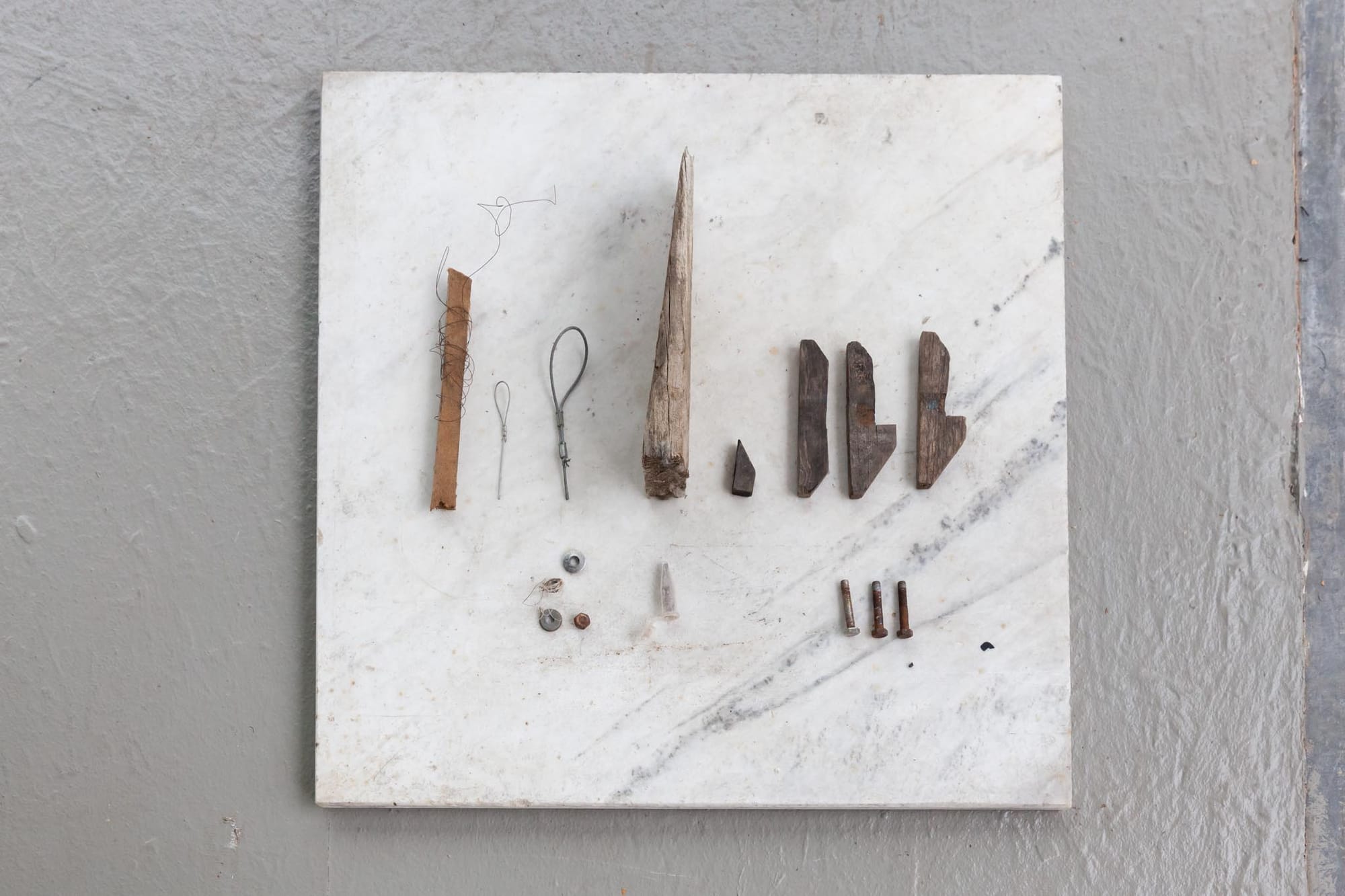
Reparaturgesellschaft, Wewerka Pavilion, Münster, 2026, marble slab with arranged collection of wood fragments, wire loops, screws, and bolts
Reparaturgesellschaft, installation view, Wewerka Pavilion, Münster, 2026. Photo: Hyesung Ryu. Courtesy Kunstakademie Münster.
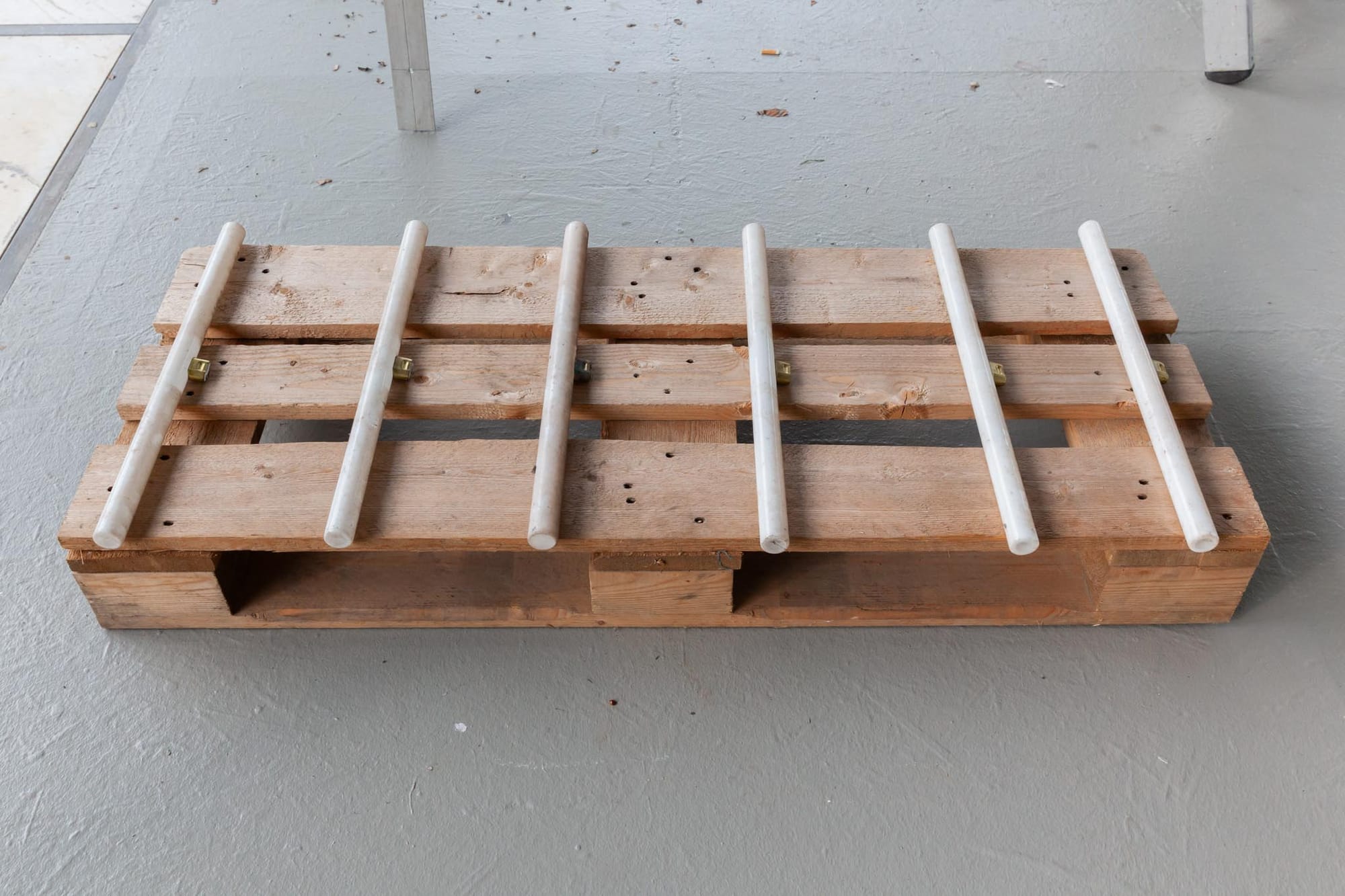
Reparaturgesellschaft, Wewerka Pavilion, Münster, 2026, wooden pallet with white marble rods threaded through slats and brass fittings
Reparaturgesellschaft, installation view, Wewerka Pavilion, Münster, 2026. Photo: Hyesung Ryu. Courtesy Kunstakademie Münster.
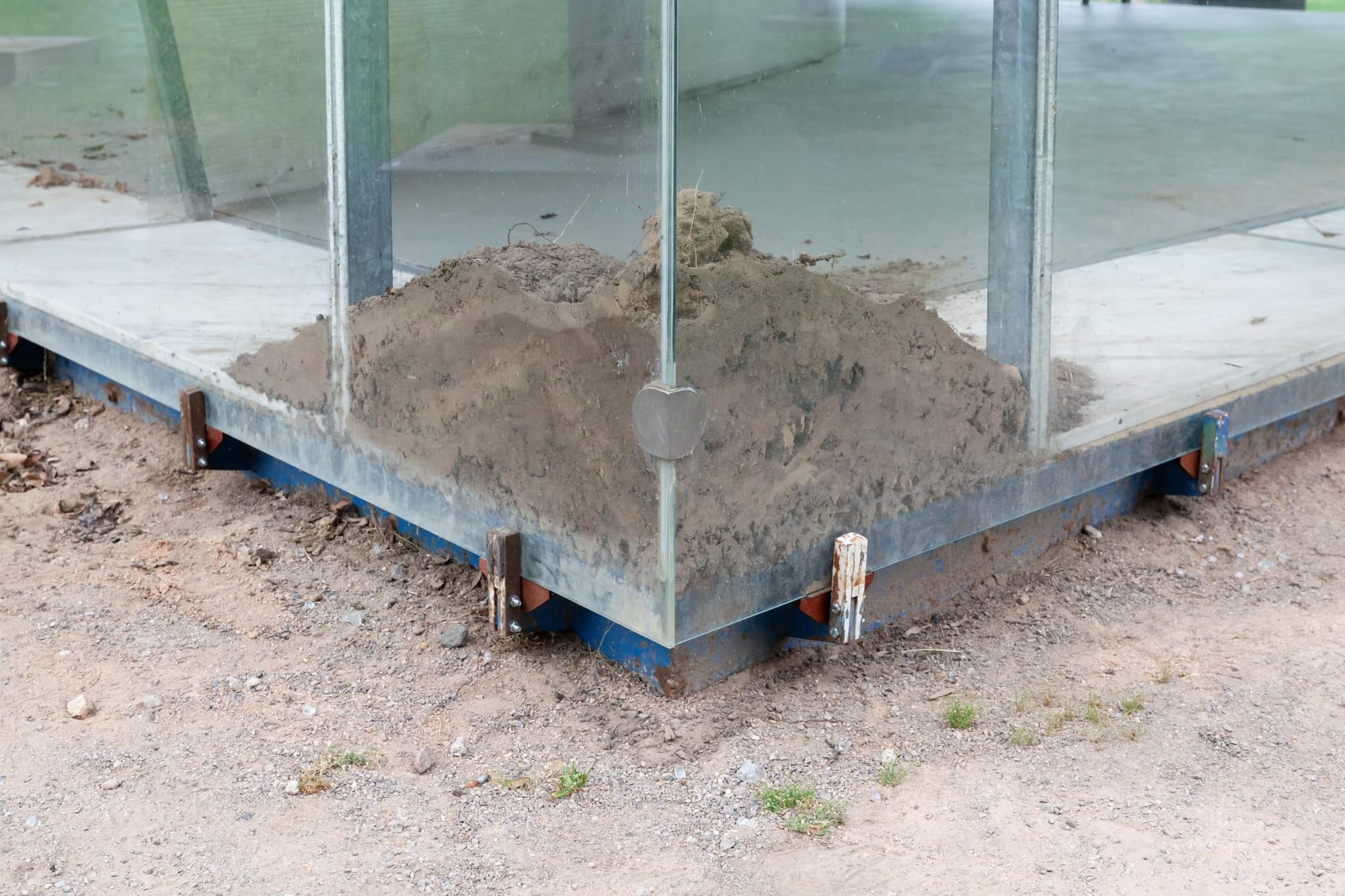
Reparaturgesellschaft, Wewerka Pavilion, Münster, 2026, detail of soil mounded against glass pavilion corner at steel post
Reparaturgesellschaft (detail), Wewerka Pavilion, Münster, 2026. Photo: Hyesung Ryu. Courtesy Kunstakademie Münster.
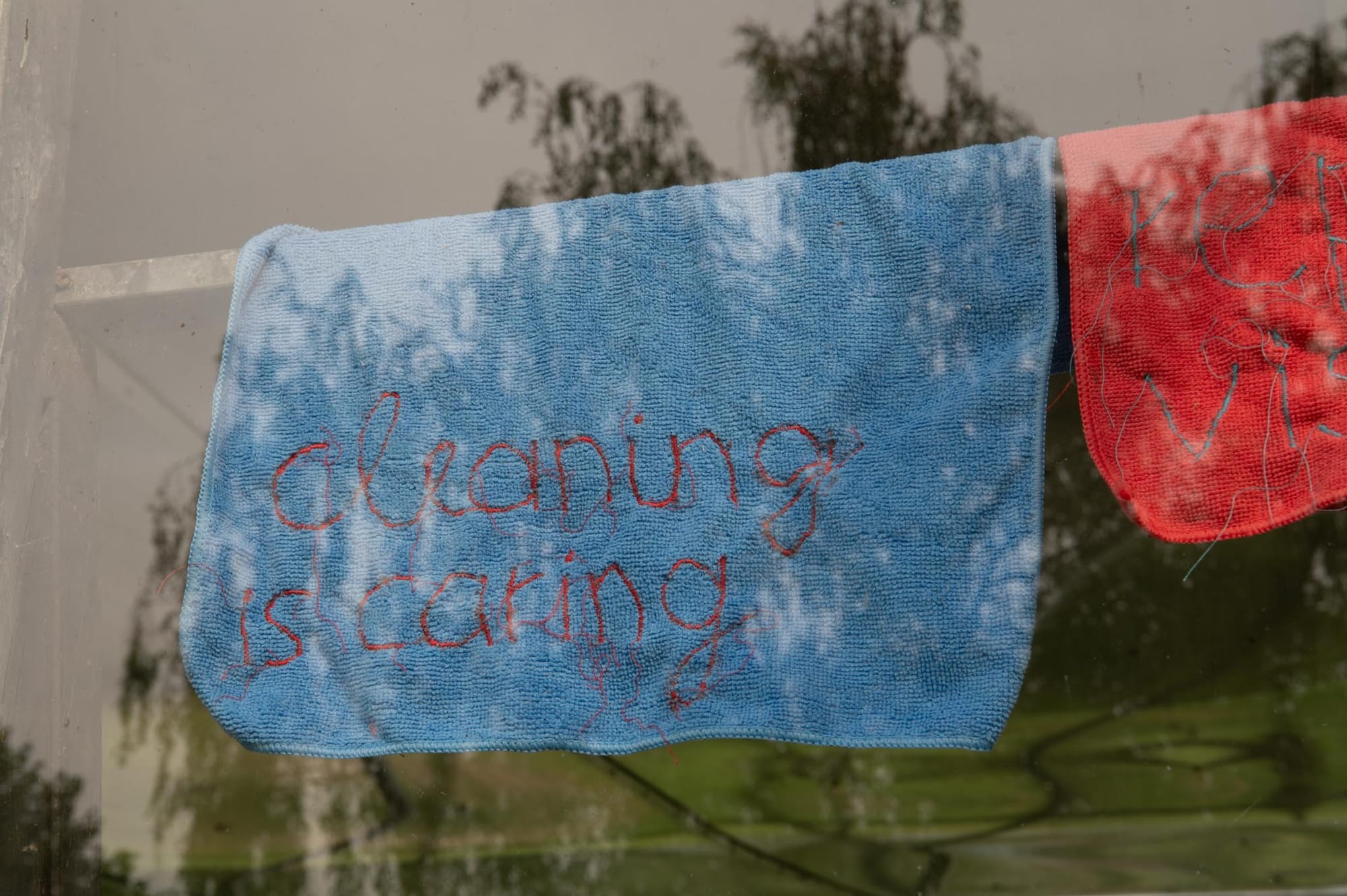
Reparaturgesellschaft, Wewerka Pavilion, Münster, 2026, blue cloth embroidered with the words cleaning is caring, hanging on a line
Reparaturgesellschaft, installation view, Wewerka Pavilion, Münster, 2026. Photo: Hyesung Ryu. Courtesy Kunstakademie Münster.

Every use of the sculpture distances it from its original form. Authorship, ownership, and the right of use have never been one and the same.

We have decided to treat the pavilion as what it legally is: a sculpture with which—and against which—we work. Let’s imagine a construction site where all participants put their own vision of change into practice. Where does this contradiction of change lead?
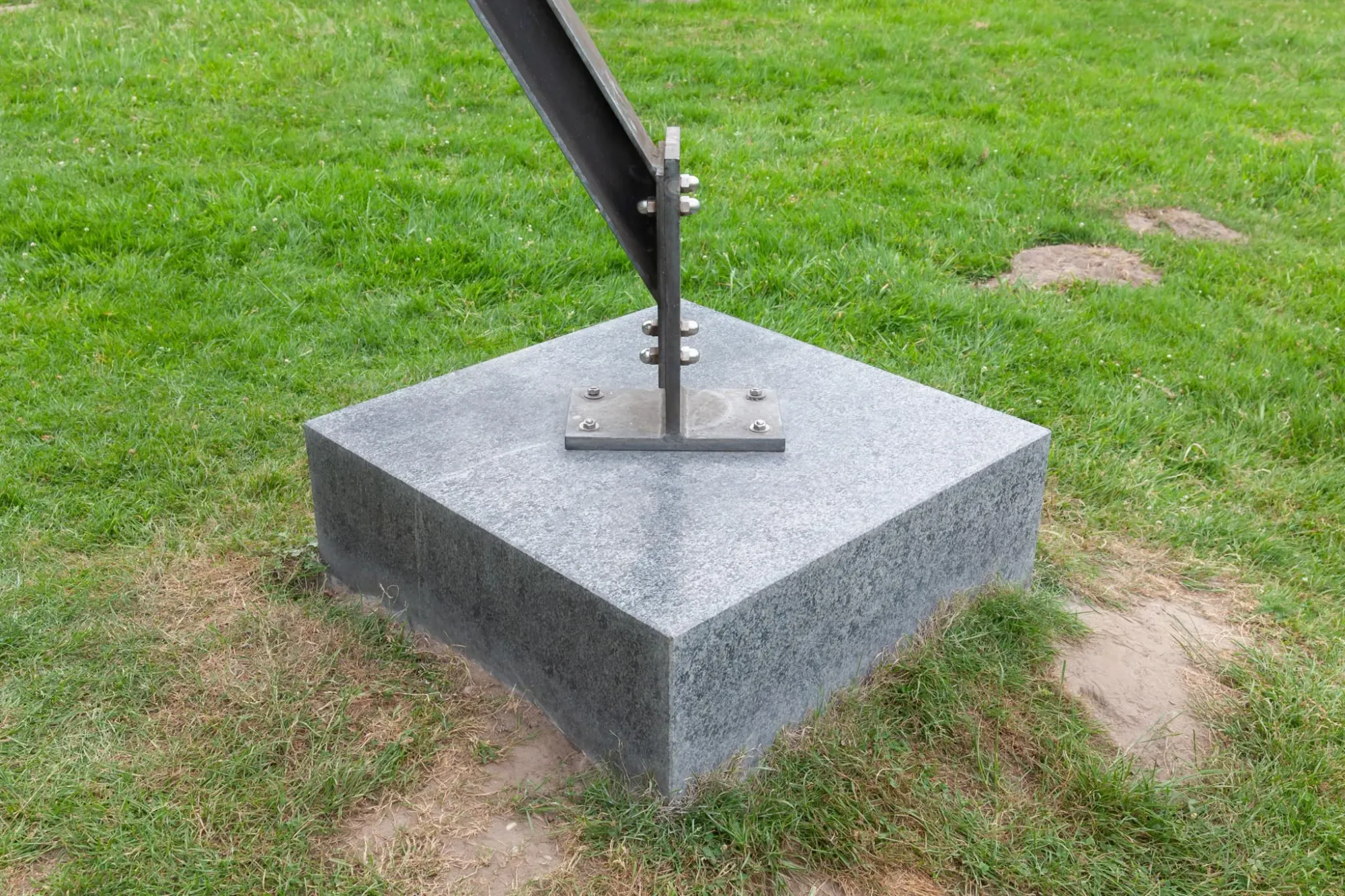
Reparaturgesellschaft, Wewerka Pavilion, Münster, 2026, detail of black steel beam bolted to granite plinth on grass
Reparaturgesellschaft-8.jpg) CAPTION: Reparaturgesellschaft (detail), Wewerka Pavilion, Münster, 2026. Photo: Hyesung Ryu. Courtesy Kunstakademie Münster.
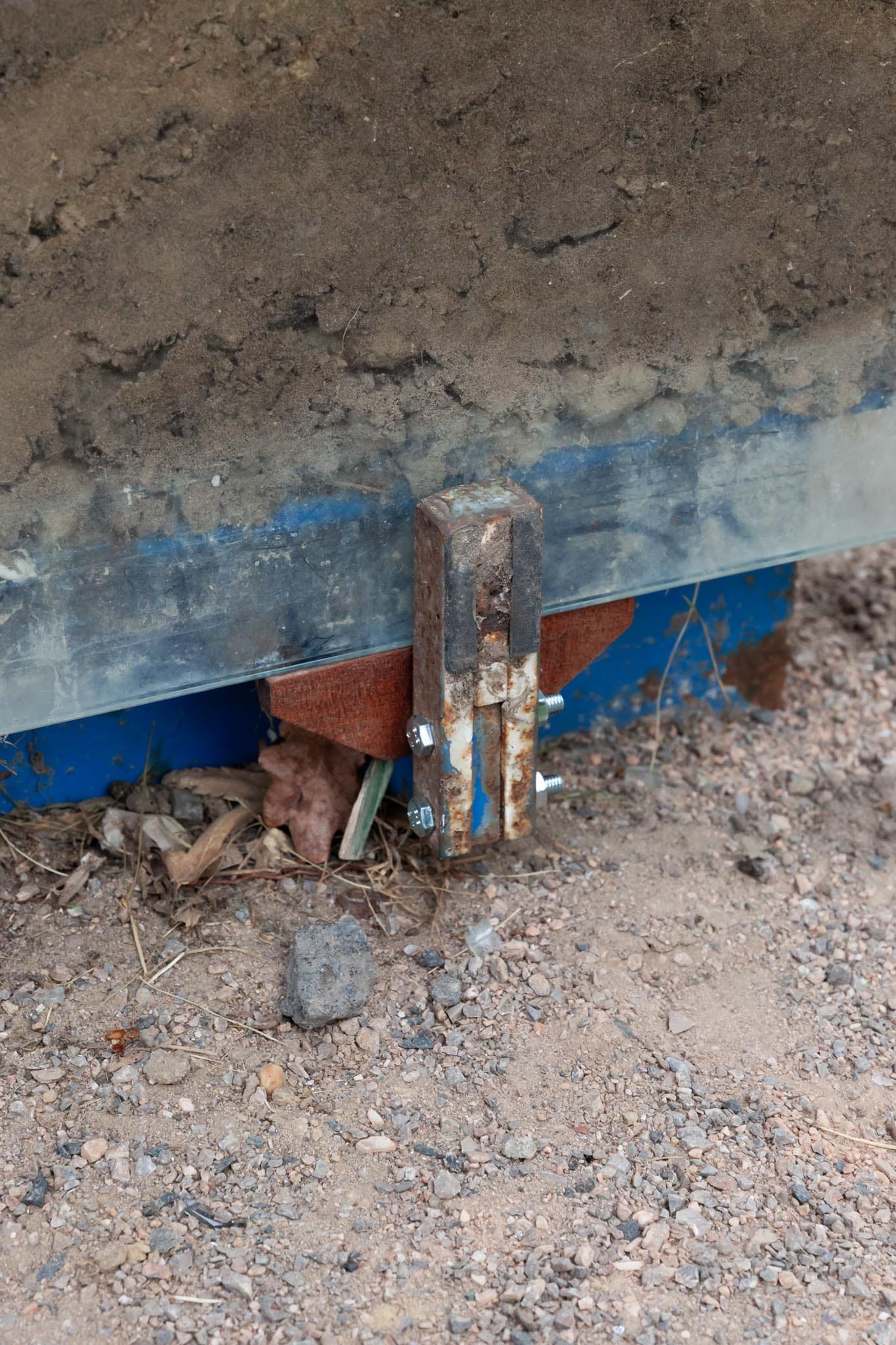
Reparaturgesellschaft, Wewerka Pavilion, Münster, 2026, detail of rusted steel bracket clamping wooden wedge against glass pavilion base
Reparaturgesellschaft (detail), Wewerka Pavilion, Münster, 2026. Photo: Hyesung Ryu. Courtesy Kunstakademie Münster.

Can the enhancement of a surface become a form of destruction, or can the deconstruction of an existing structure generate new value? Who throws or lays the first stone? This exhibition is also meant to explore these questions.


Follow and support:

Rieke Albertin on Instagram
Yooyoung An on Instagram
Leona Egelkamp on Instagram
Maurice Fey on Instagram
Finn Froböse on Instagram
Max Hedderich on Instagram
Suyeon Prana Kim on Instagram
Junsun Park on Instagram
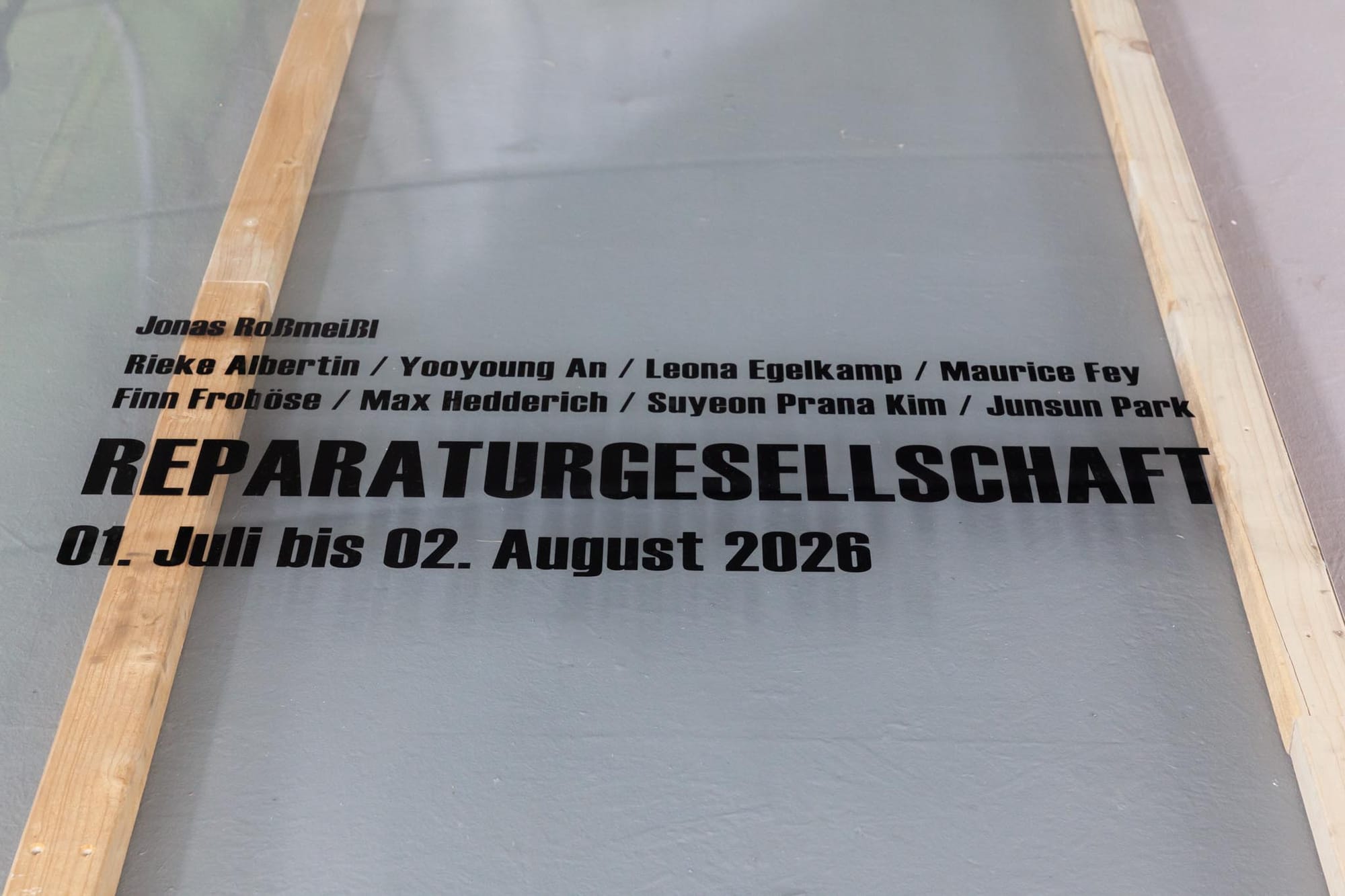
Reparaturgesellschaft, Wewerka Pavilion, Münster, 2026, detail of glass floor panel printed with exhibition title, dates, and artist names
Reparaturgesellschaft (detail), Wewerka Pavilion, Münster, 2026. Photo: Hyesung Ryu. Courtesy Kunstakademie Münster.
Next
Read →

Cookie-Einstellungen