A Wall That Has Started to Grow

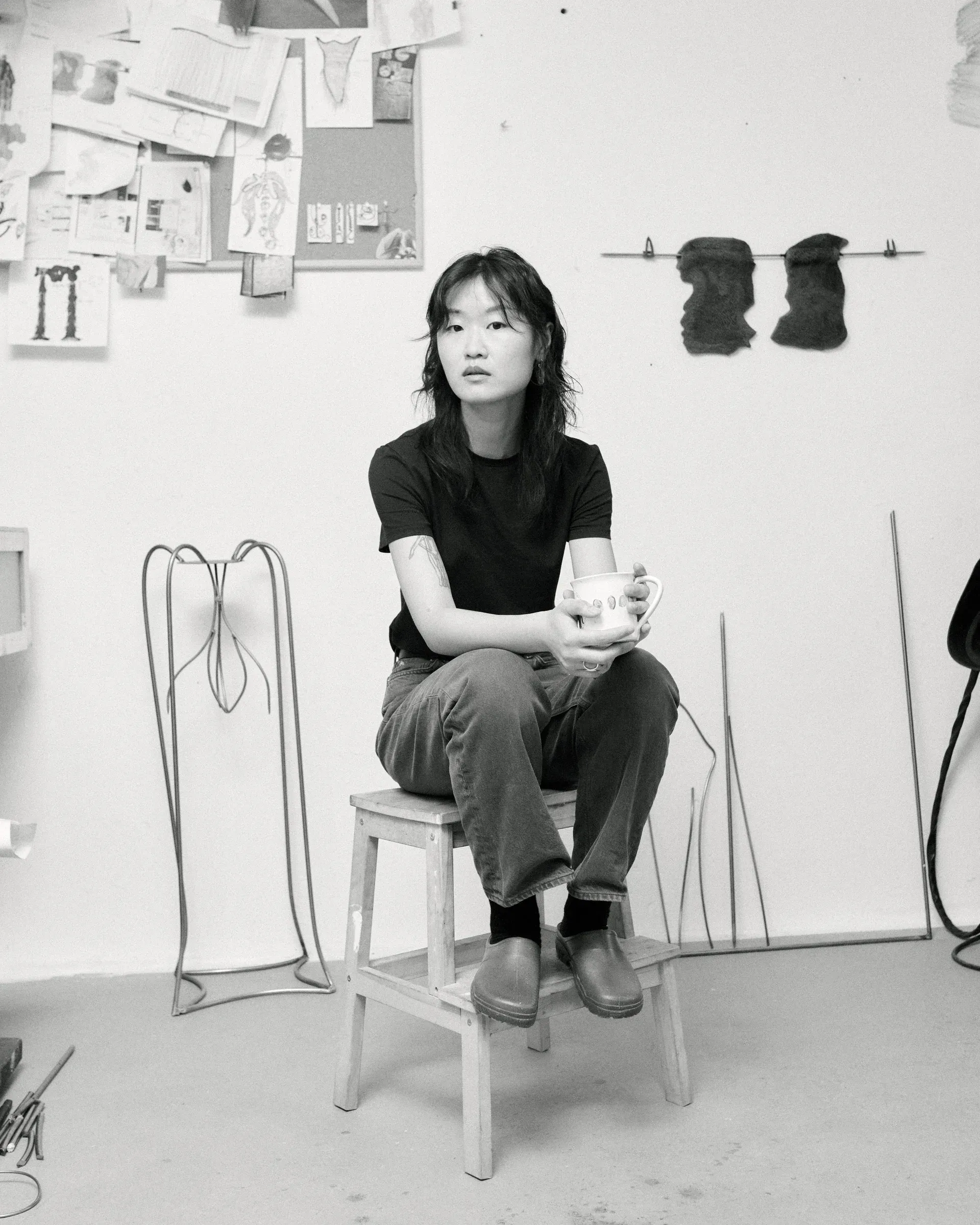
Lu Cheng: Ceramic and Steel Sculpture, Munich
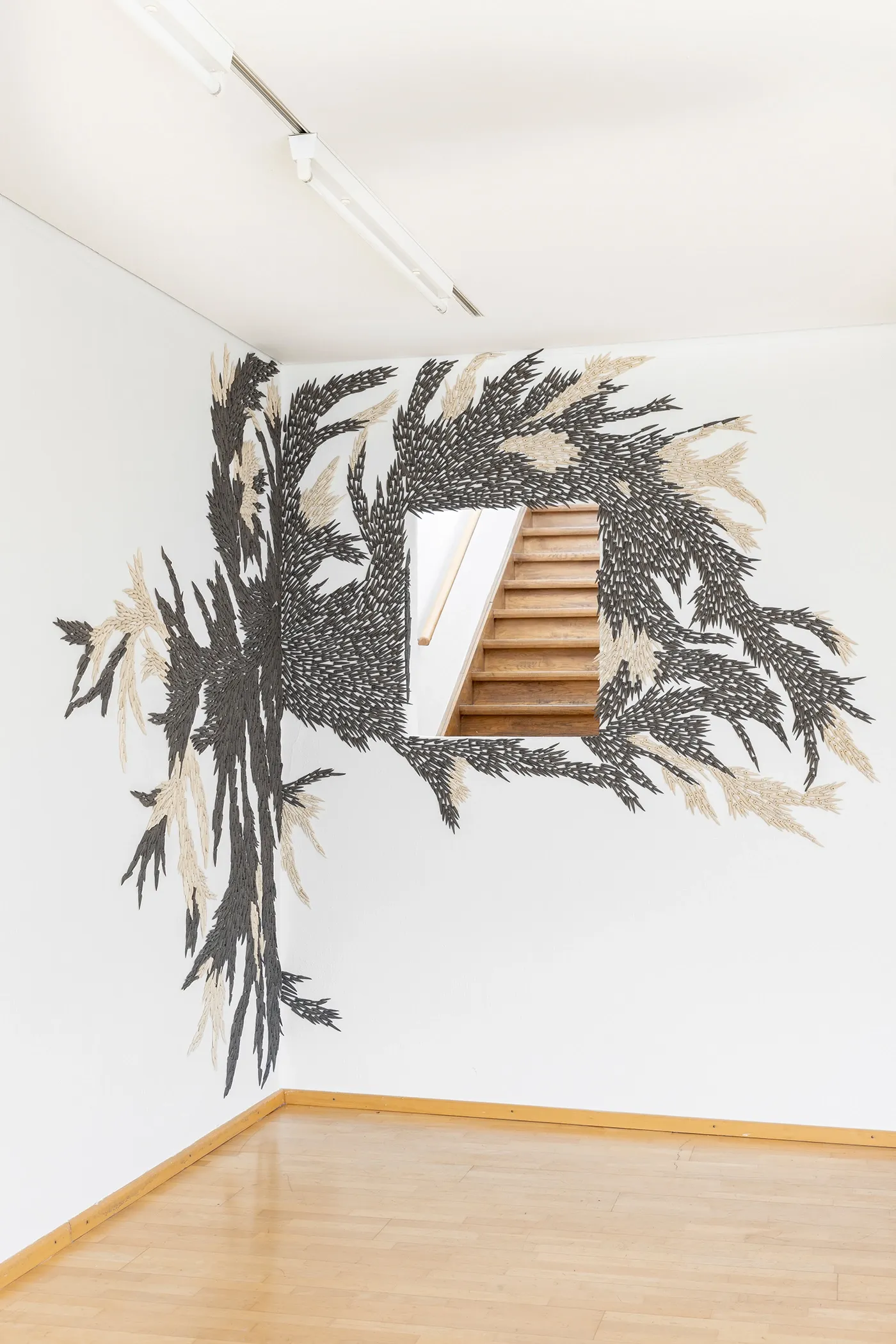
Ceramic spikes in charcoal and pale sand spread from a gallery corner across two walls and frame an opening onto a wooden staircase.
From a distance the mass reads as foliage. Up close it breaks into small, separate units that each keep their edge.
Shanghai, 1996
Munich, Germany
Sculpture, Installation, Ceramic
Academy of Fine Arts Munich, Meisterschülerin of Prof. Peter Kogler (2025)
Industrial Design, China Academy of Art
What Holds, What Leaks, Kunstverein Augsburg, 2026
Habitat, Galerie Nina Mielcarczyk, 2026
Blick nach vorn, Kunsthalle Memmingen, 2025
lucheng.de
@lu_cheng_
Alex Jeskulke, Sebastian Bühler, Marlene Mauer, Younsik Kim
Courtesy the Artist, Kunstverein Augsburg, Galerie Nina Mielcarczyk
Lu Cheng works between sculpture, installation and spatial research, and her subject is becoming rather than the finished object.
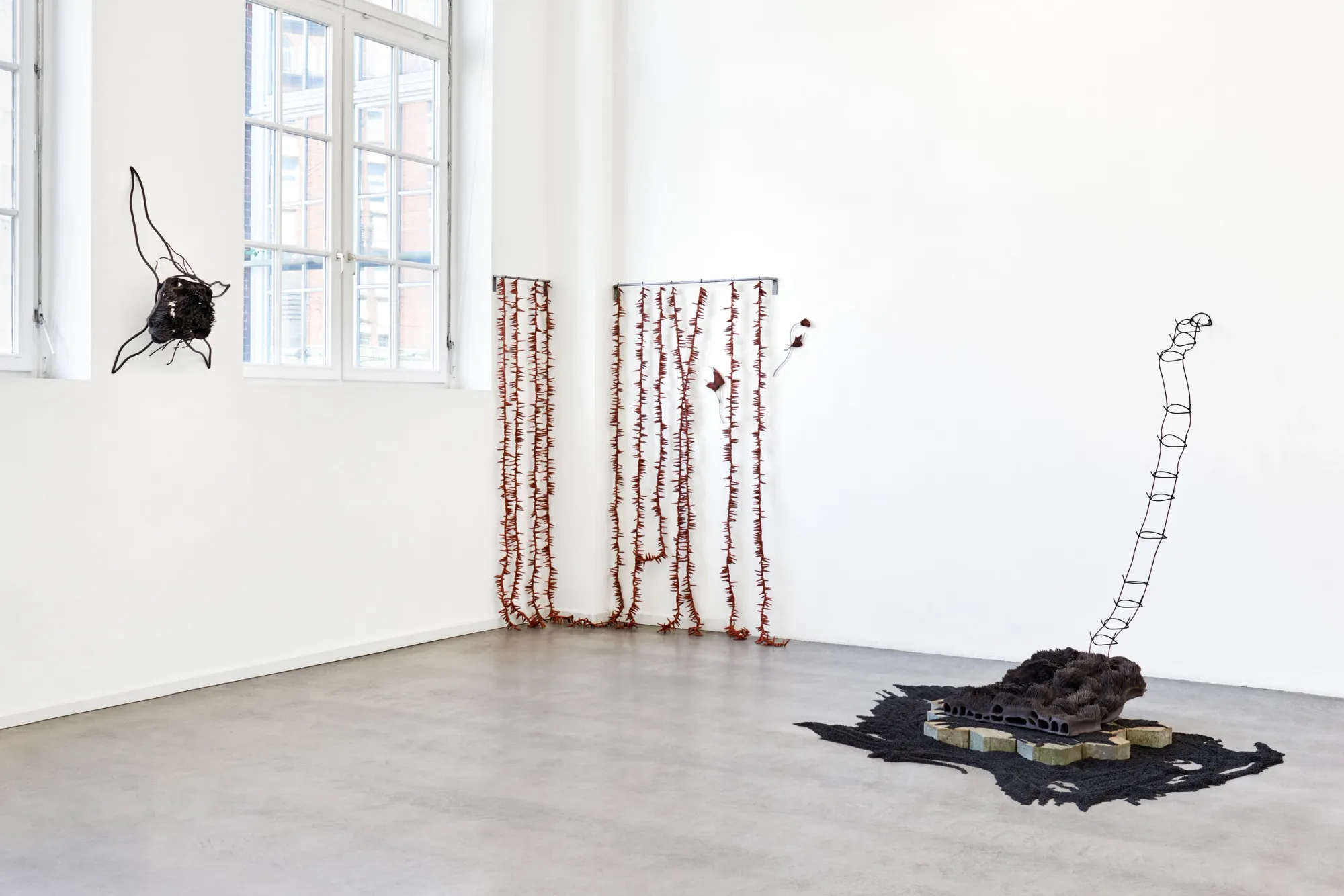
Growth in these pieces is not a metaphor laid over the surface. It is the way they are built, and the way they threaten to outrun their own support.
Her sculptures seem to stay upright only through an argument between what grows and what holds.
In Expansion, 2026, the first of her Wall Series, the ceramic is the subject and the wall is merely the ground, which reverses how a relief usually behaves. The units appear to push outward from the corner rather than hang on it, and the opening onto the stairwell becomes part of the organism, a gap the growth has had to negotiate.
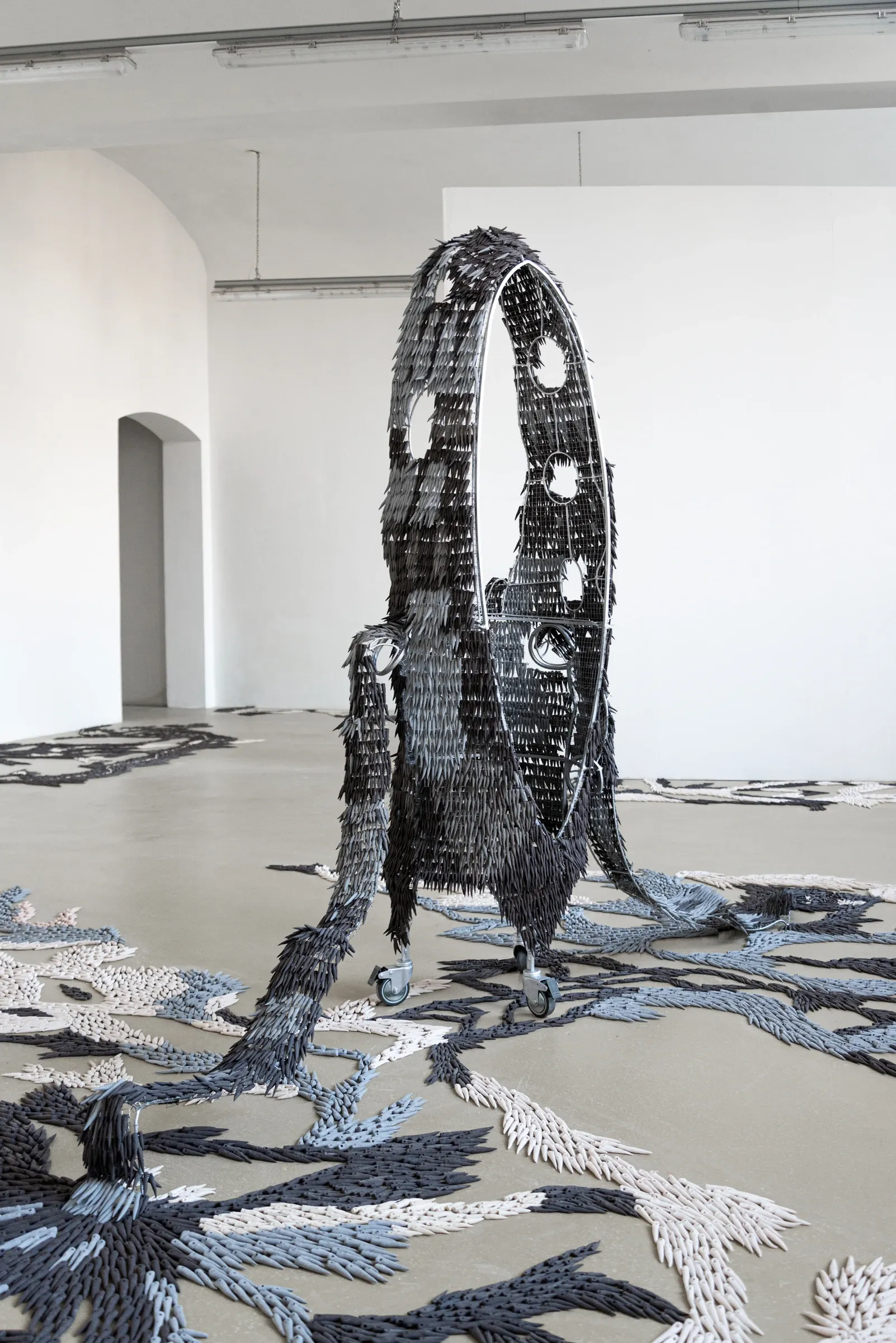
The two tones, charcoal and sand, give the mass a pulse, as if some areas were older than others. Repetition does the work here. A single pointed form, multiplied far enough, starts to look like behaviour rather than ornament.
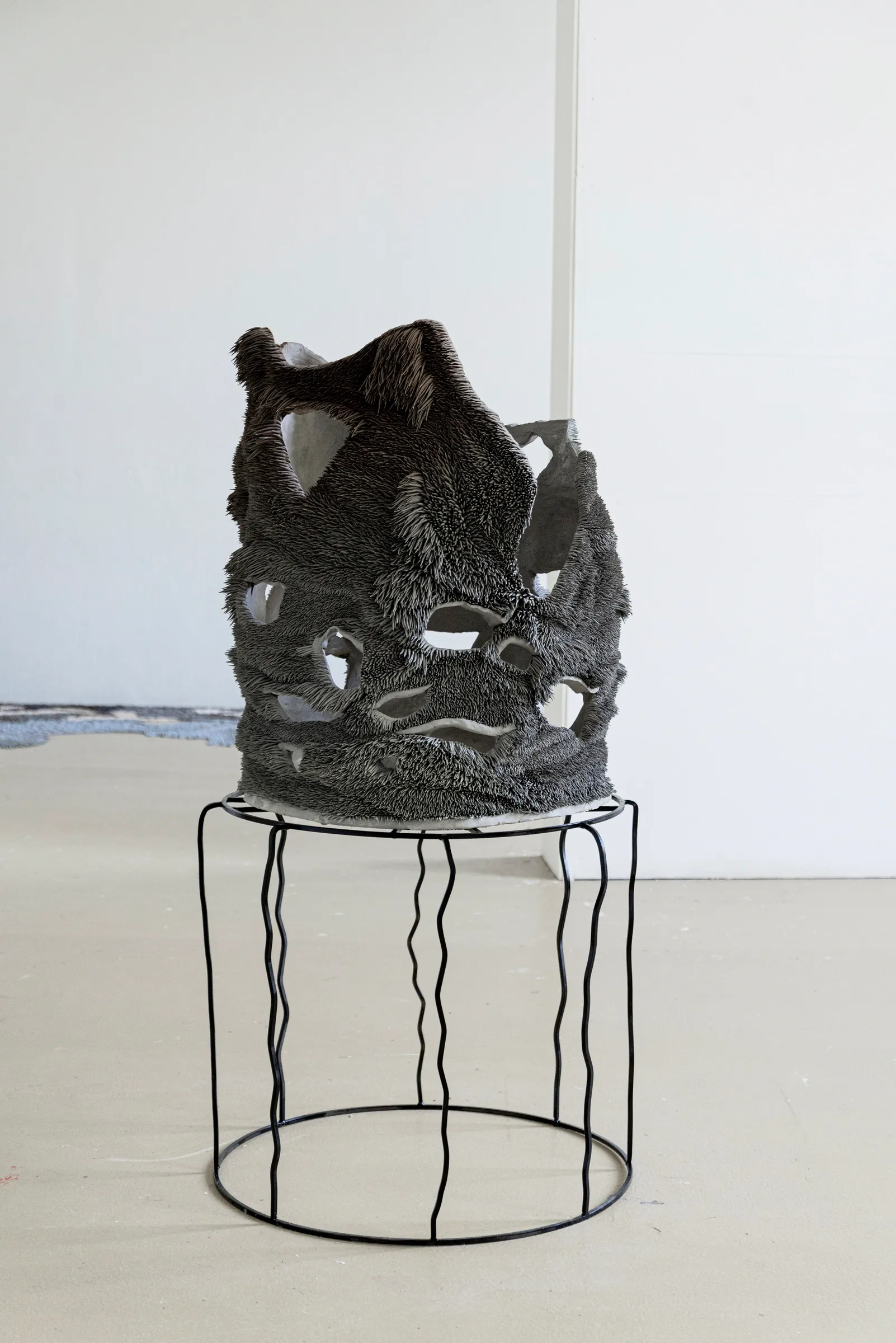
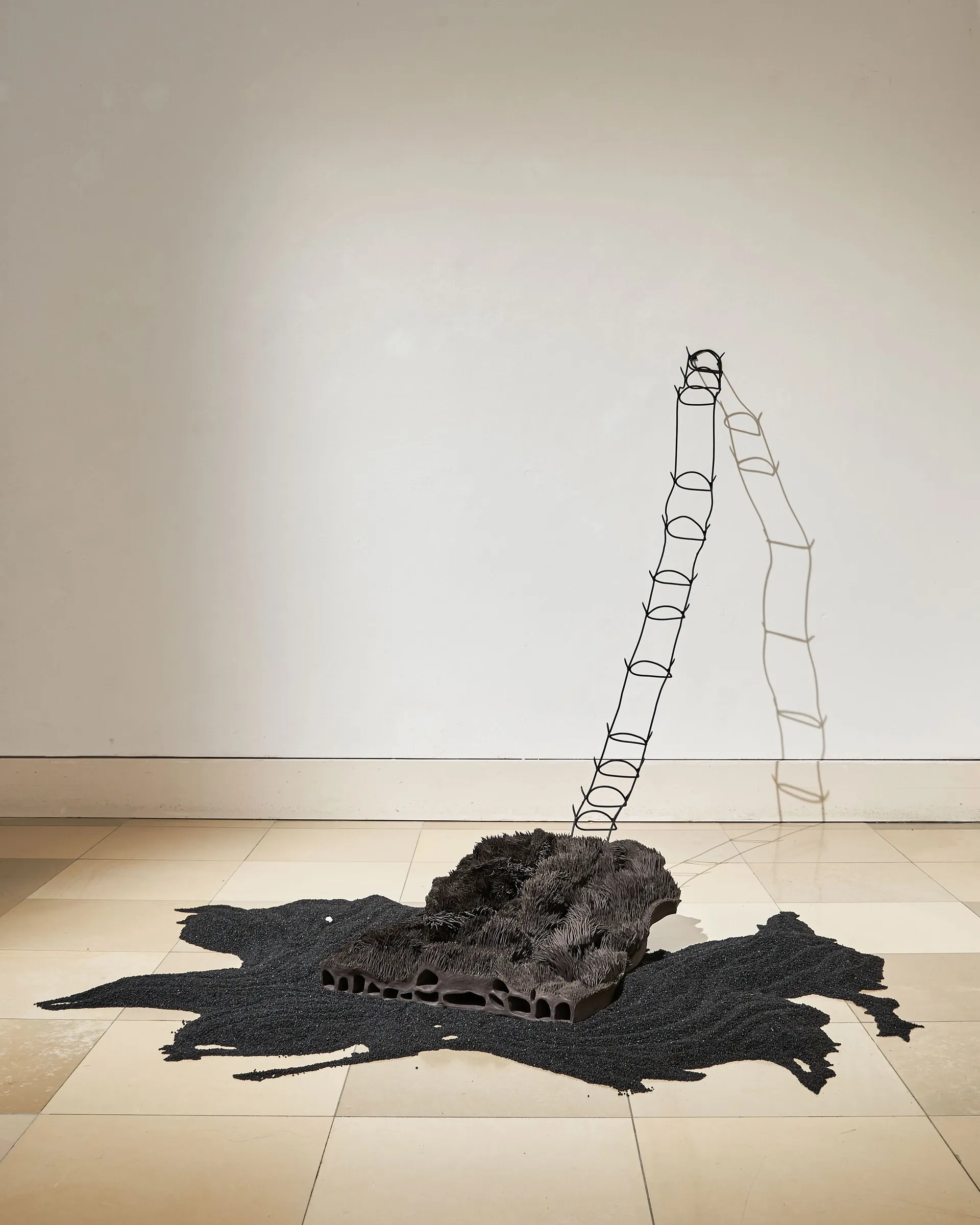
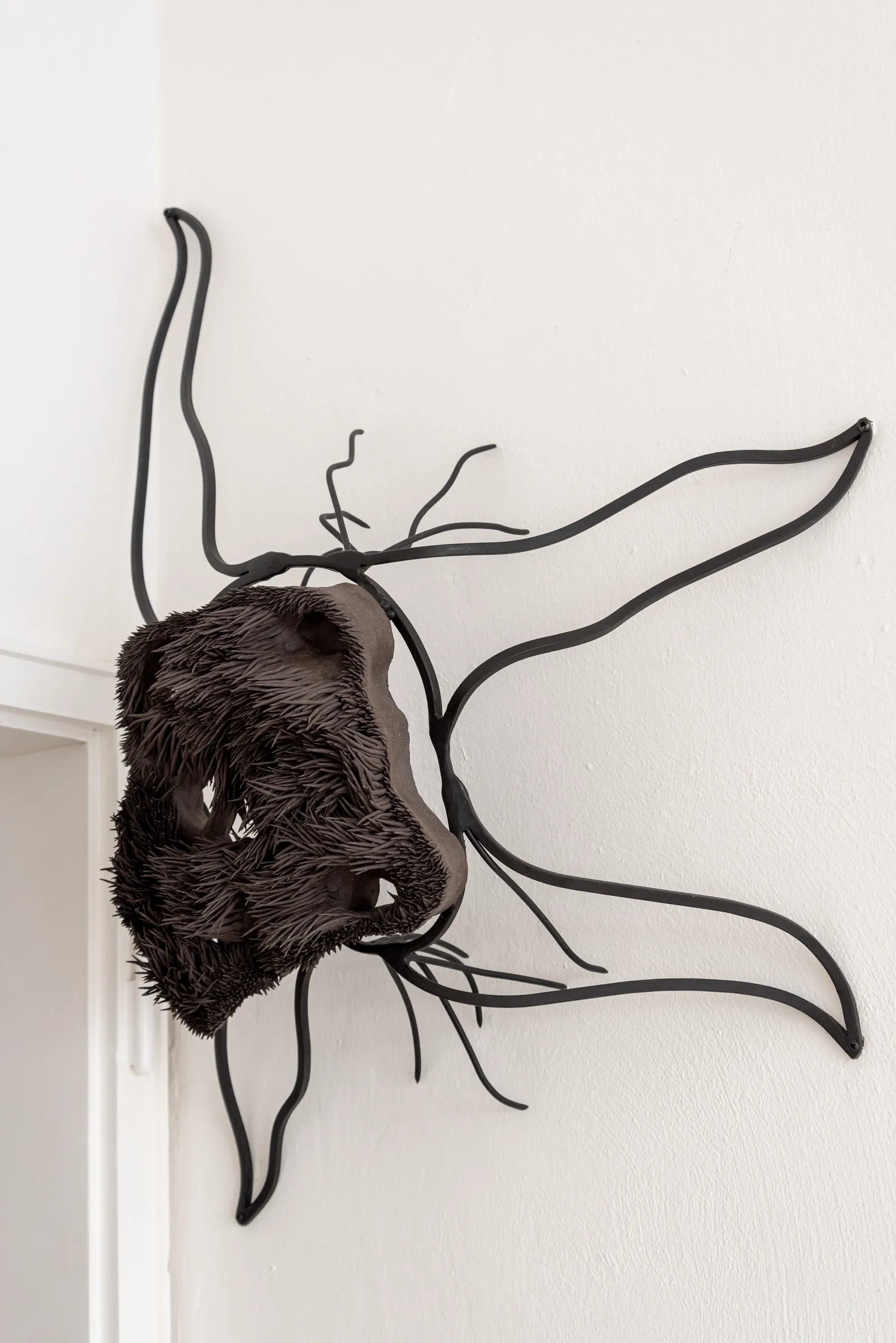
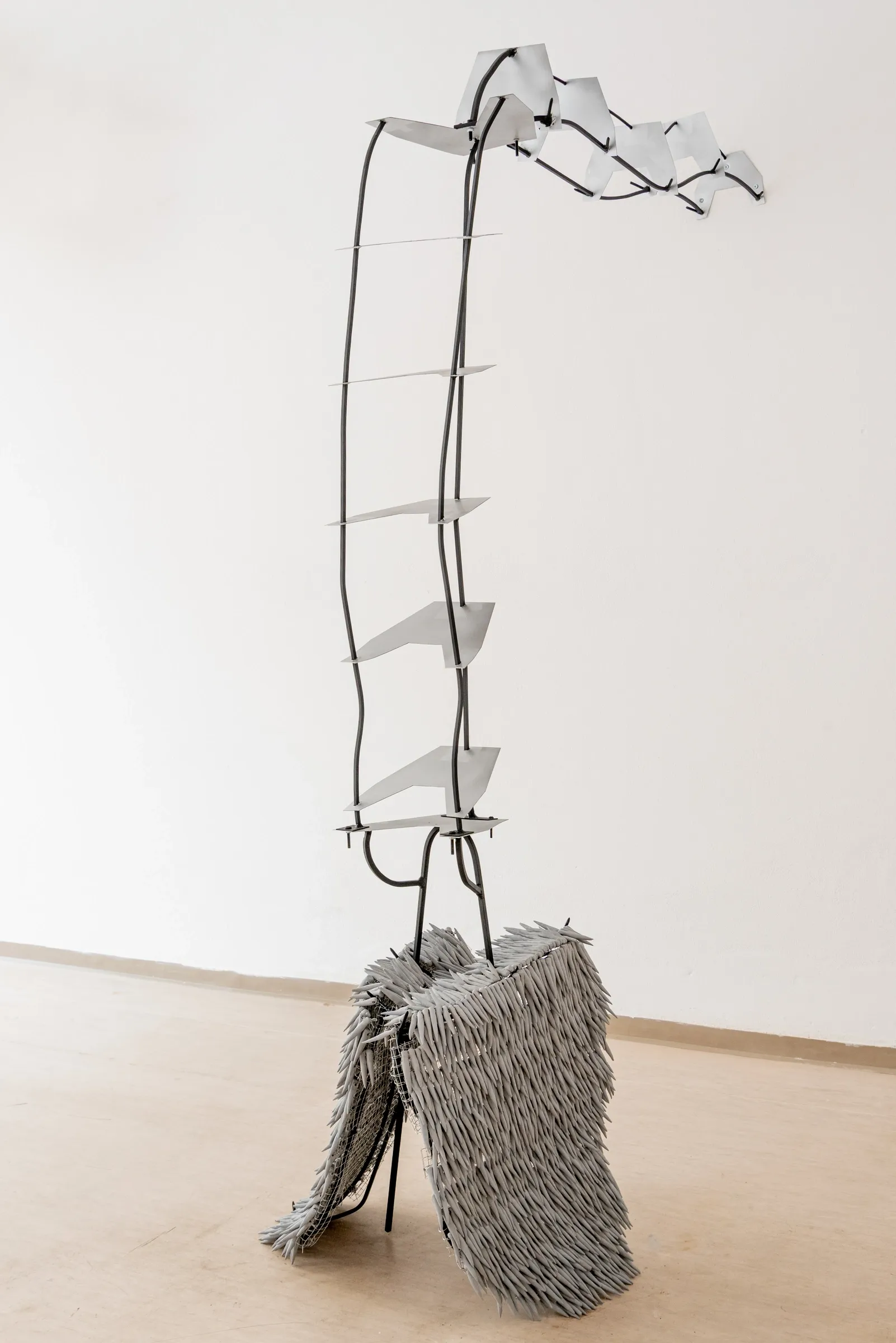
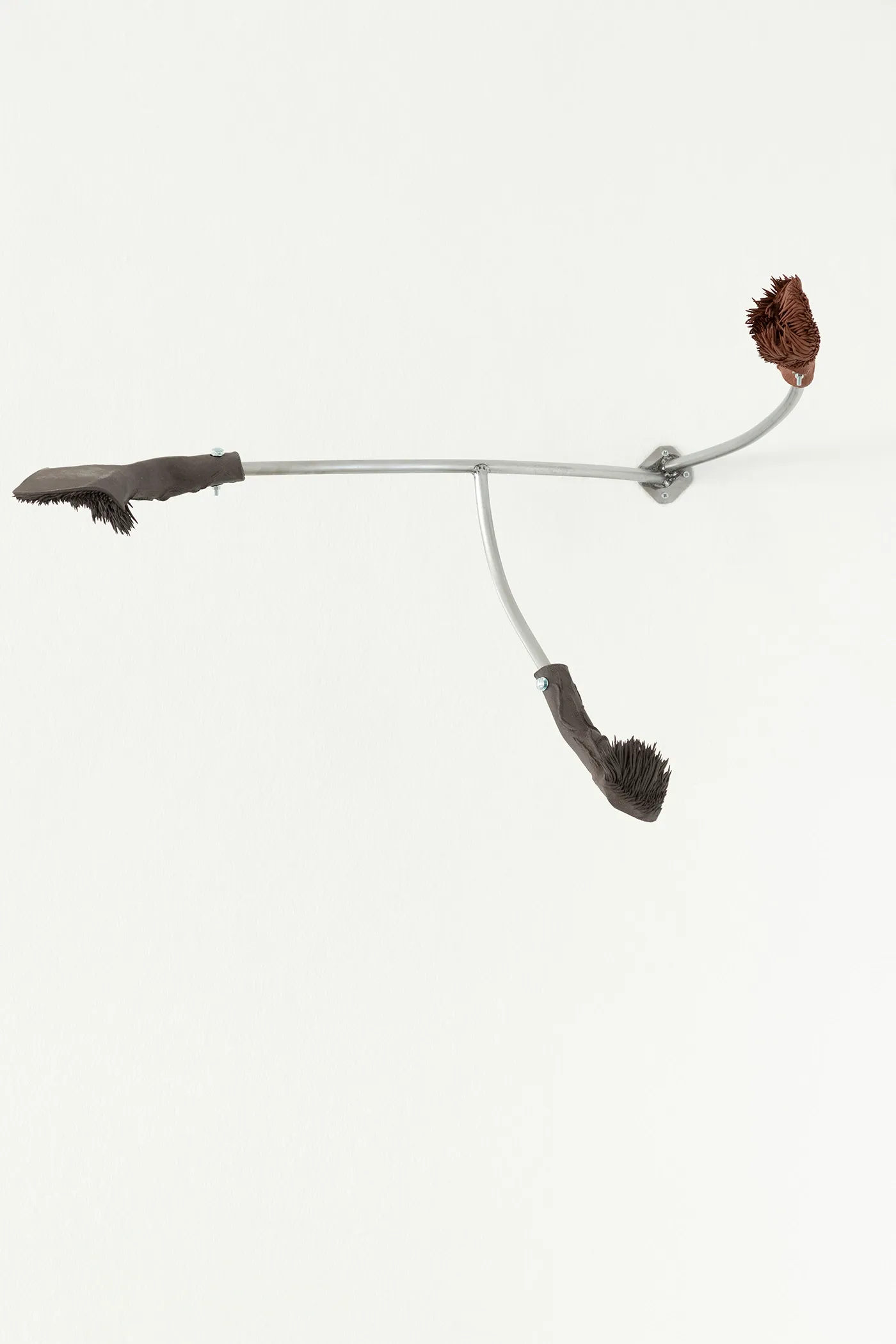
Steel plays the opposite role. In Fulcrum, 2025, a slender structure of linked steel loops leans against the wall and rises from a low, dark ceramic mass that sits in a spill of black granules. The ceramic looks heavy, bristled and slightly collapsed. The steel looks drawn. Between them the work seems to ask which of the two is holding the other up. Shell, 2025 and Closer, 2026 move the same pairing into a standing form and a hanging one, so the question travels from piece to piece without being answered.
Cheng studied industrial design at the China Academy of Art before moving to the Academy of Fine Arts Munich, where she graduated in 2025 as a Meisterschülerin of Peter Kogler. Industrial design is a discipline of control, which makes her current method easier to read.
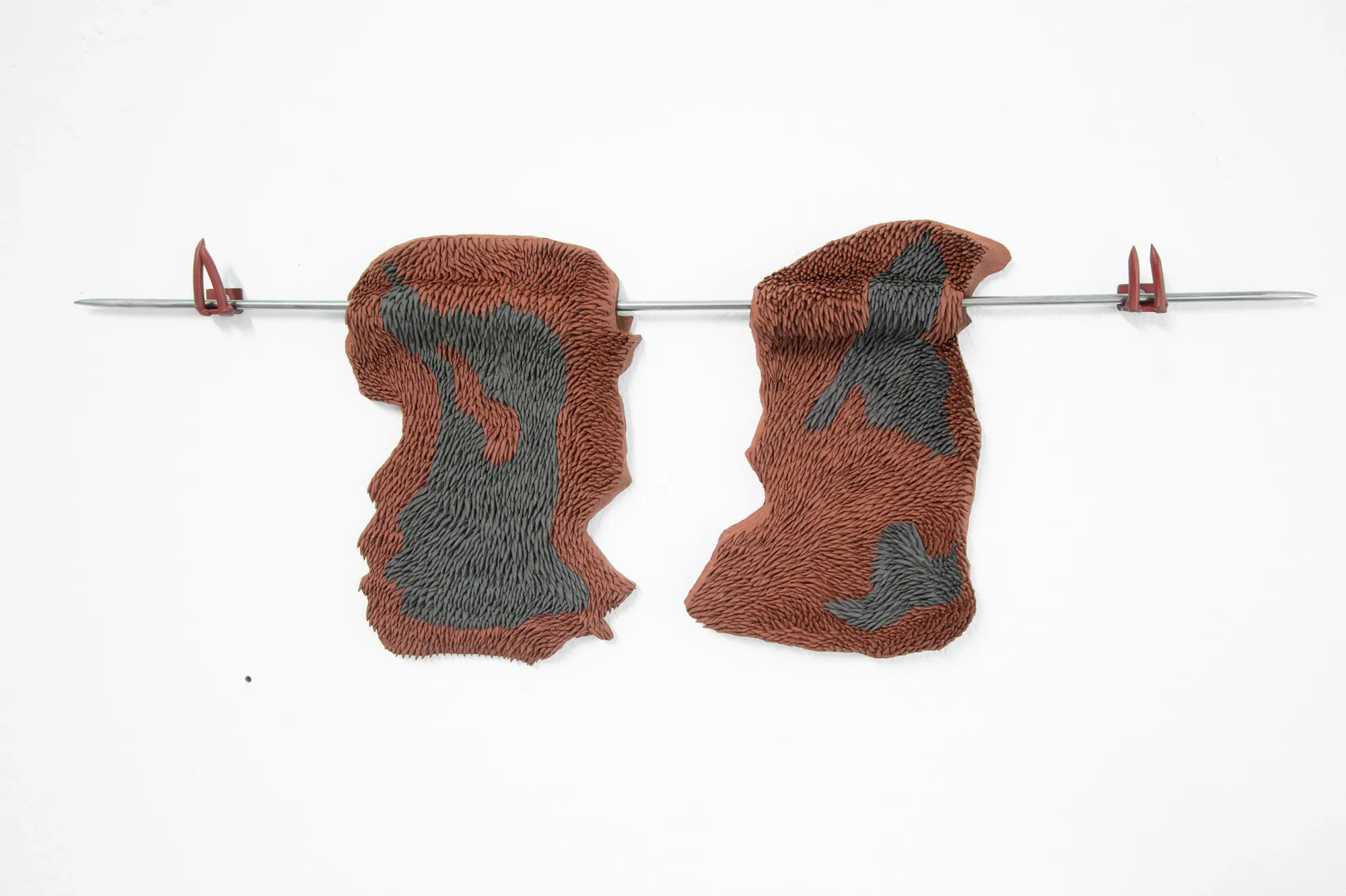
Firing temperatures, weight and surface set tensions she can only partly steer, and she describes this productive loss of control as central to the work. Her statement invokes vibrant matter, and the relationship of life forms to their environment and to deep time. In 2026 the work was shown in a duo presentation at Kunstverein Augsburg and in the solo Habitat at Galerie Nina Mielcarczyk.
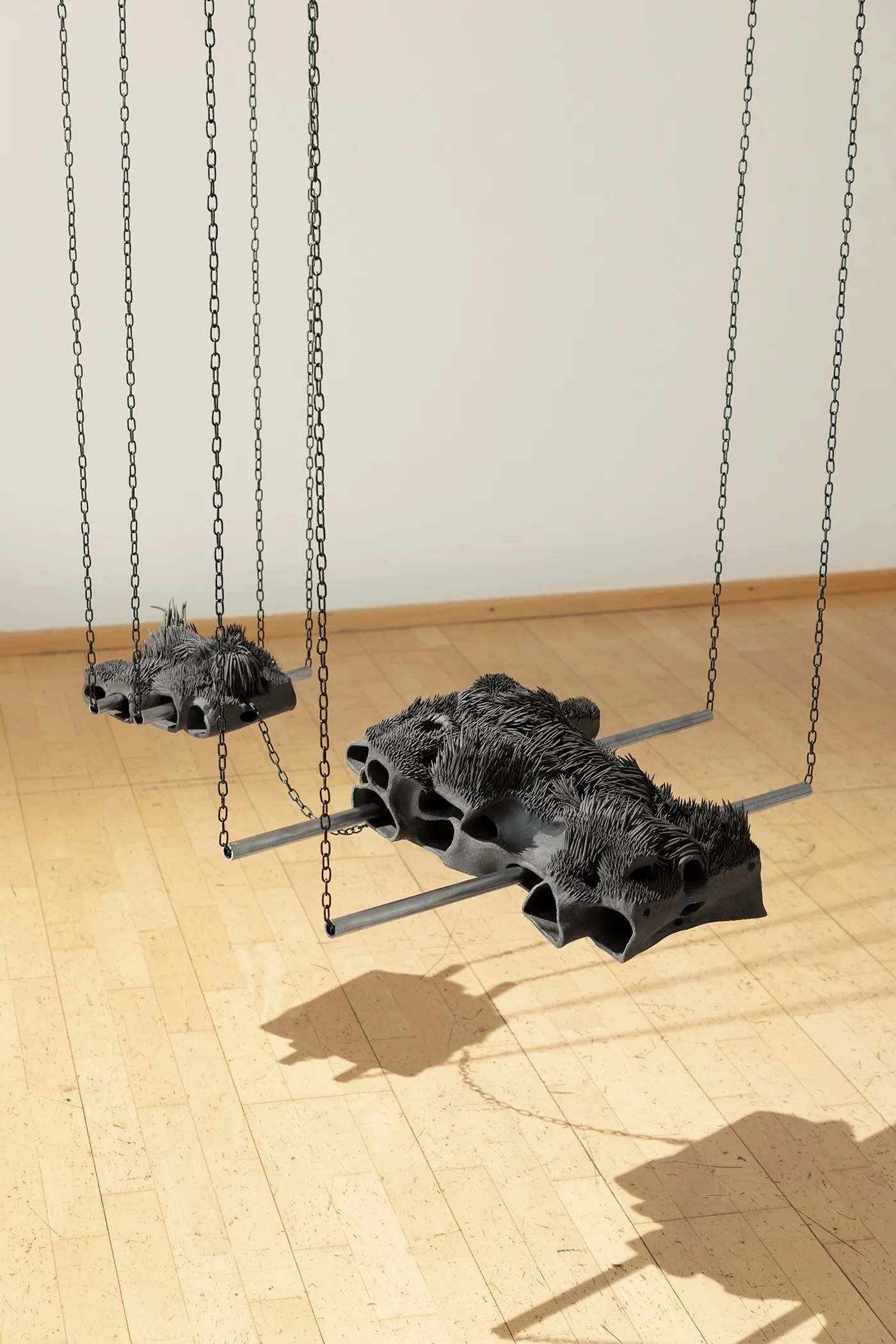
One of the 2026 works is titled Fossilized Becoming. The phrase holds the whole question: a process, stopped, and still visibly in motion.
About Catapult Contemporary
This is an Artist in Focus feature published by Catapult Contemporary, an independent editorial platform for contemporary art, based in Vienna. We publish exhibition reviews, artist features, interviews, and critical context, with a focus on emerging and mid-career practices from Europe and beyond.
catapult-platform.art ·
Instagram
Want to be featured? Submit your work →
No spam, no sharing to third party. Only you and me.