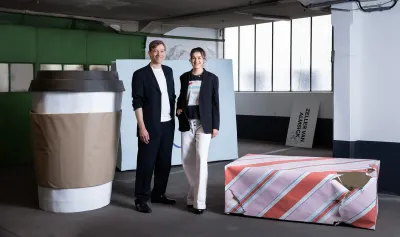
Maciej Nowacki and Miłosz Tomkowicz Let the Body Argue With the Monument

HOS Gallery Presents Blood Concrete Sun in Warsaw
HOS Gallery presents Blood Concrete Sun, curated by Marianna Łomża, through August 8, 2026.
Maciej Nowacki, Miłosz Tomkowicz
Blood Concrete Sun
HOS Gallery
Warsaw, Poland
–
Tuesday – Saturday, 12–6 PM
Dzielna 5, 00-162 Warsaw, Poland
Marianna Łomża
Szymon Sokołowski (installation views)
Courtesy HOS Gallery
biuro@hosgallery.pl
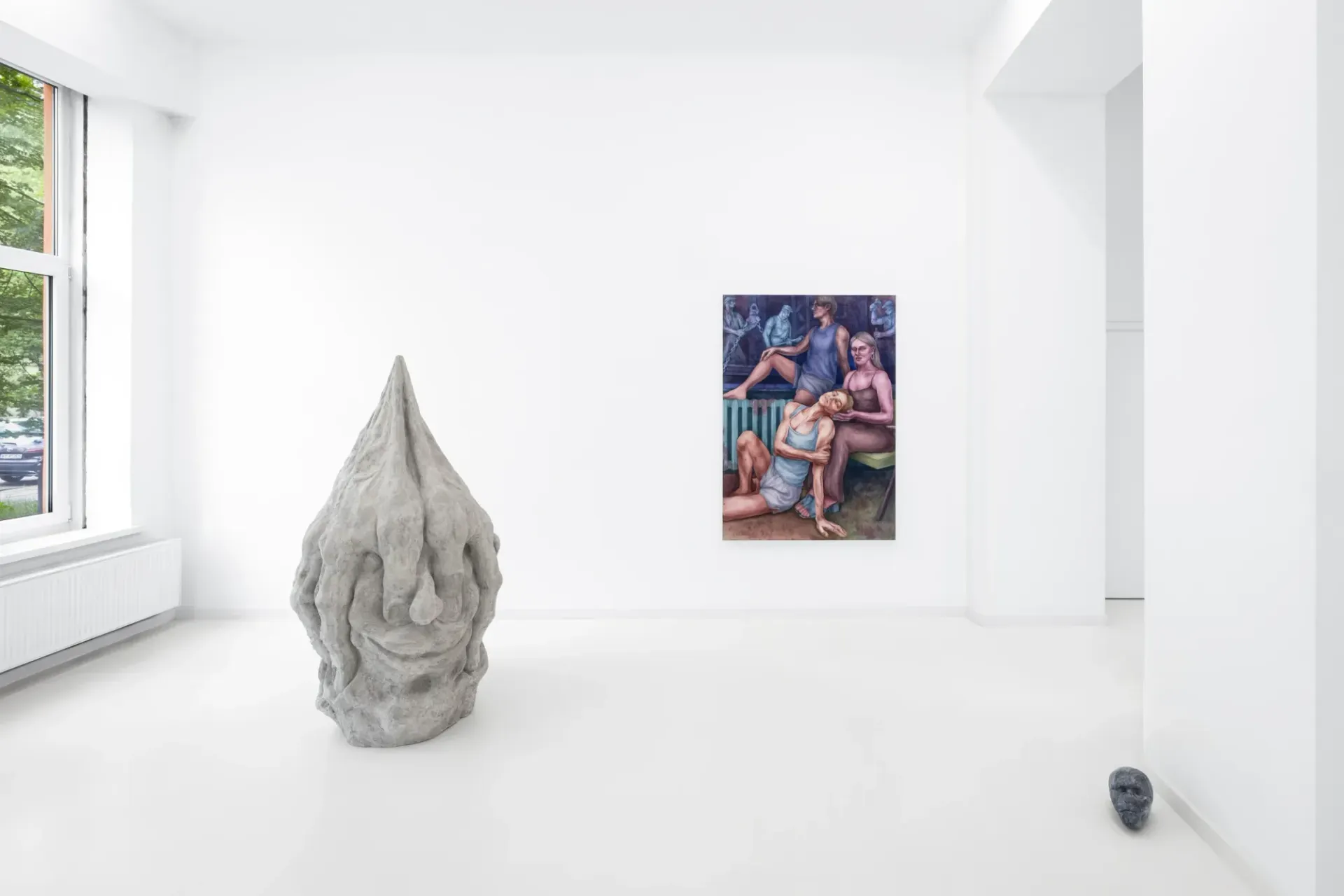
HOS Gallery brings together two artists working from opposite ends of the same question. Maciej Nowacki paints intimacy staged against monuments drawn from the socialist realist imaginary.
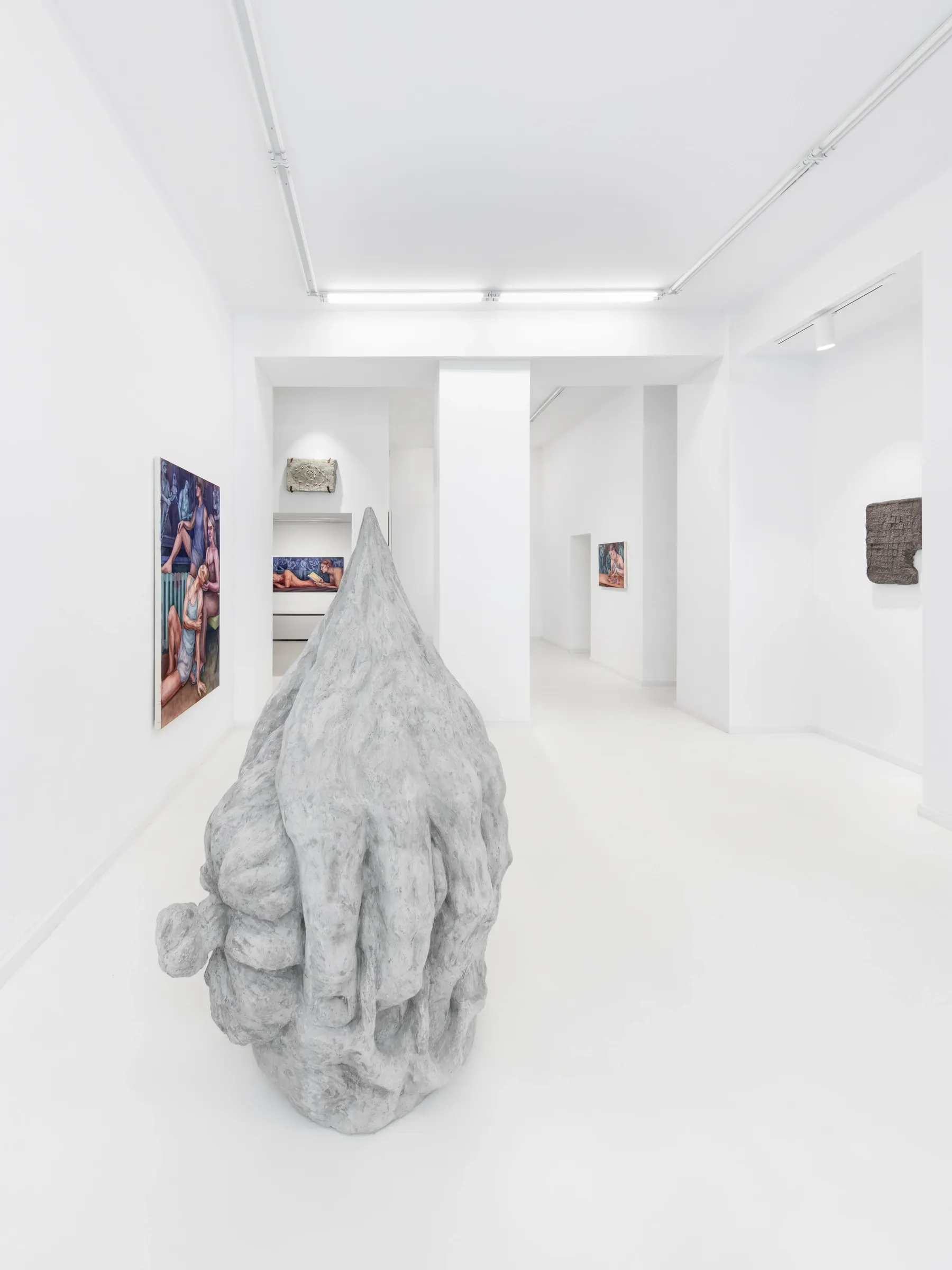
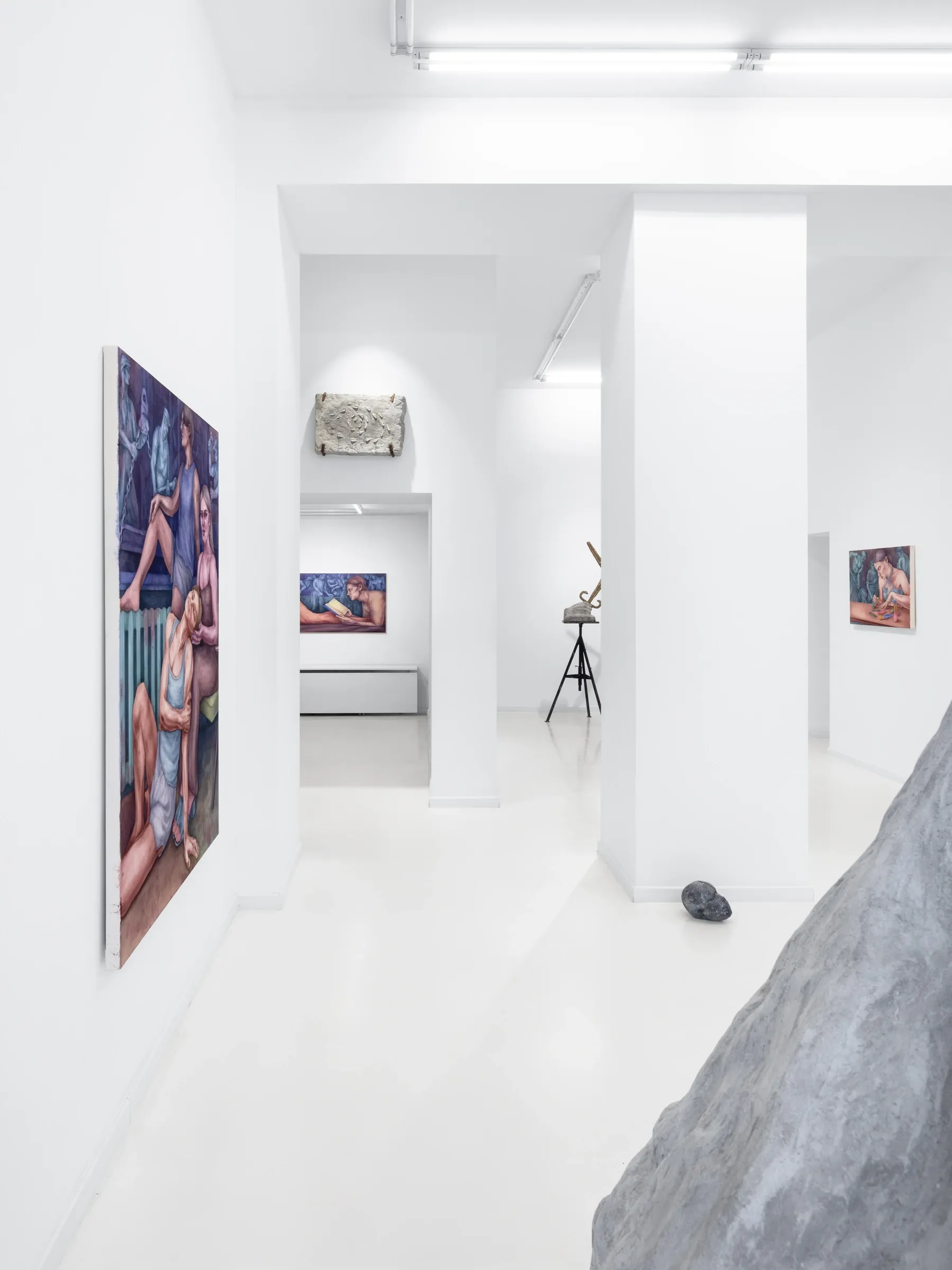
Miłosz Tomkowicz casts monuments themselves, in concrete and bronze, treating myth as a material to be poured and set.
Curatorial text written by Marianna Łomża:
Blood Concrete Sun is about what remains. About the residues of past imaginaries, myths, communities, and desires that continue to shape the way we think about ourselves and the world.
In the works of Maciej Nowacki and Miłosz Tomkowicz, the body, monument, artifact, and ritual become different ways of engaging with questions of memory, inheritance, and endurance: what we attempt to pass on, what may remain after us, and what role we play in shaping these processes.
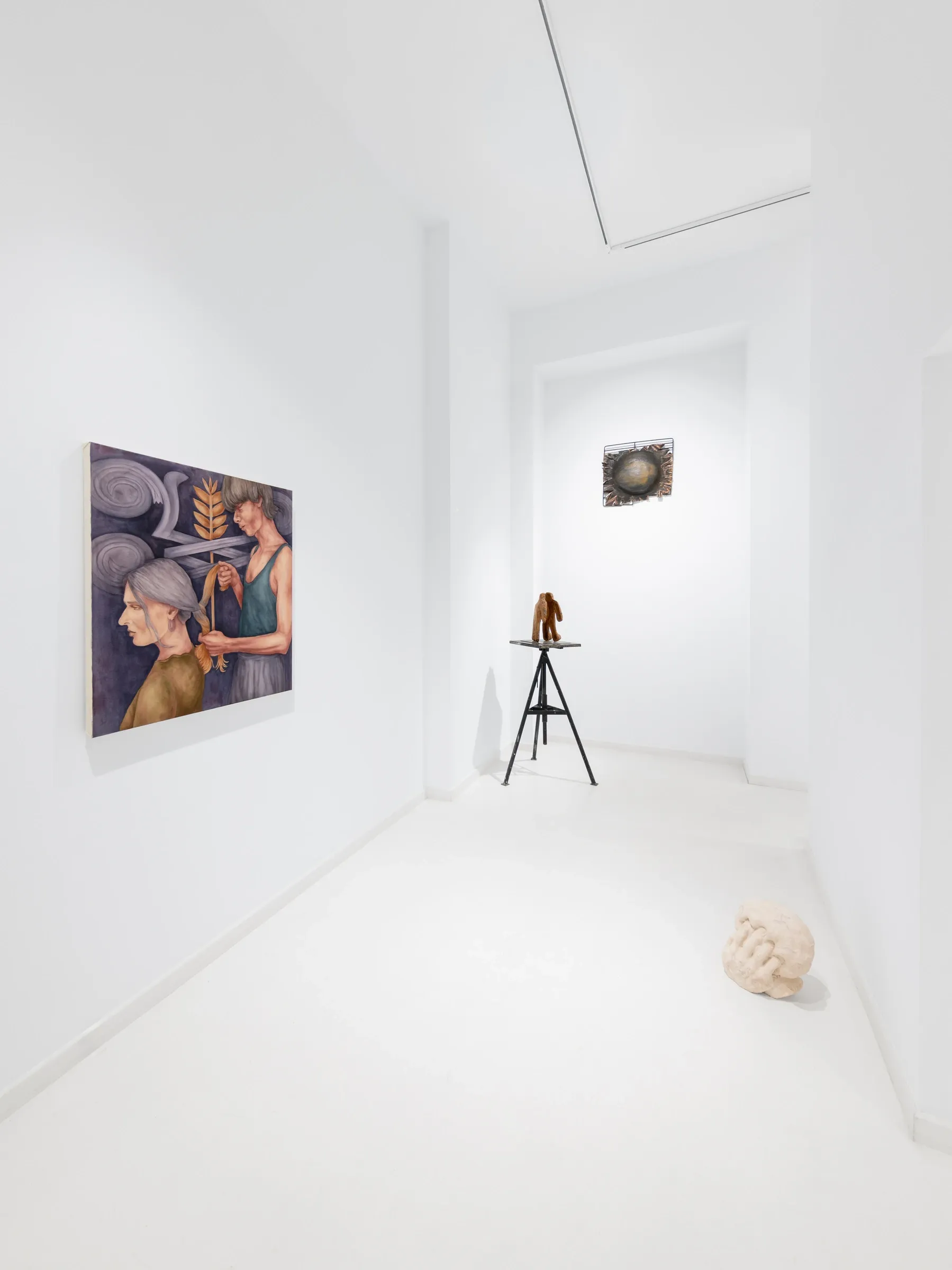
Past orders do not appear here as a closed chapter, but rather as a constellation of images and signs that continually return, intertwining with the present.
Archives, in turn, emerge as a malleable space of intervention, reinterpretation, and transformation, a site of ongoing negotiation of meaning. What is inherited proves susceptible to displacement, reinterpretation, and reuse, acquiring new functions and contexts.
The exhibition title establishes three axes around which its narrative unfolds. Blood refers to the body, mortal, fragile, yet full of desire and serving as a matrix of collective memory.
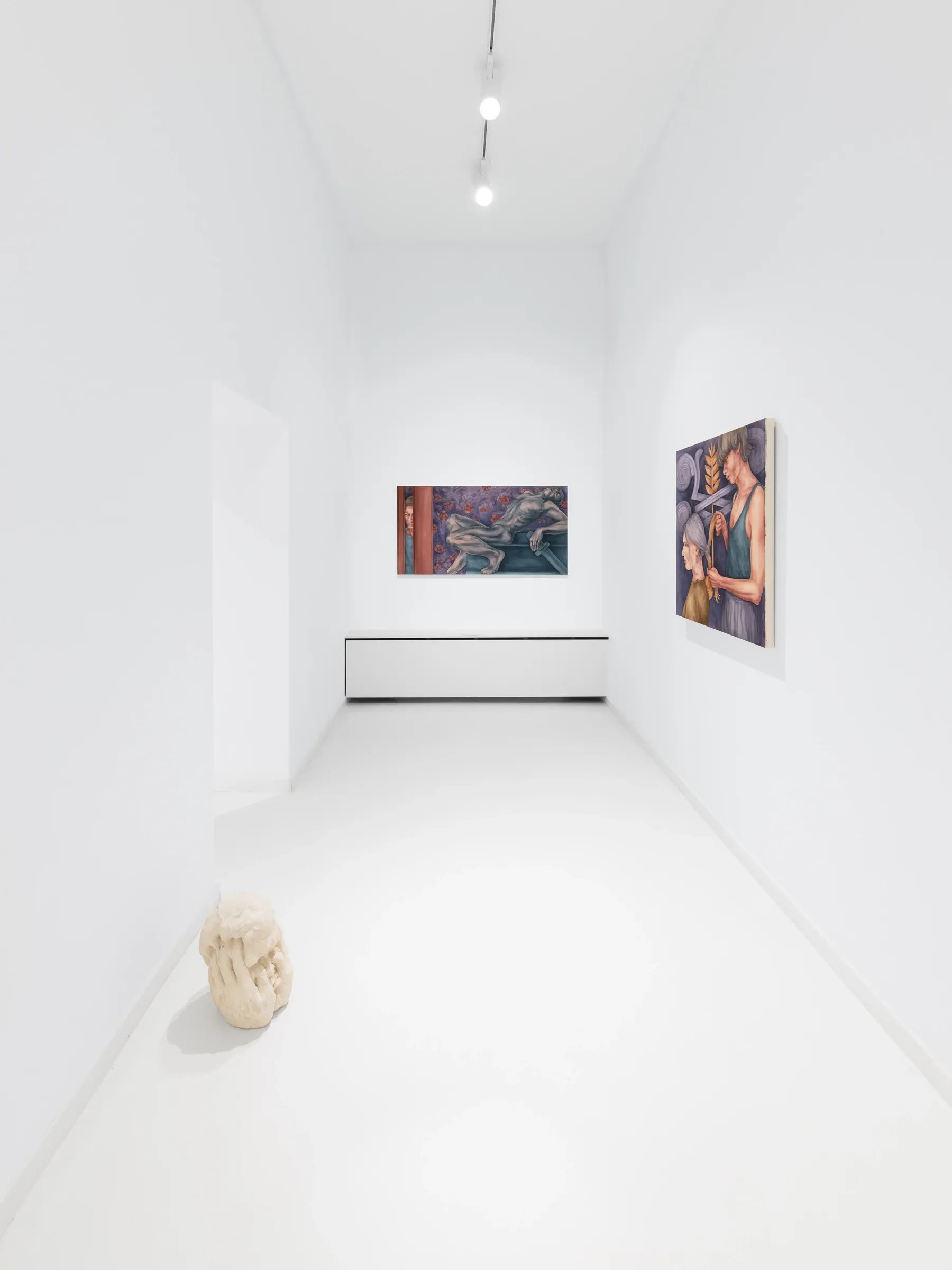
Concrete evokes a world of structures, ideologies, and material forms that once sought to give permanence and durability to particular visions. Sun points toward the realm of myth, ritual, and projections of the future. Between the corporeal, the constructed, and the imagined lies the shared field of interest explored by both artists.
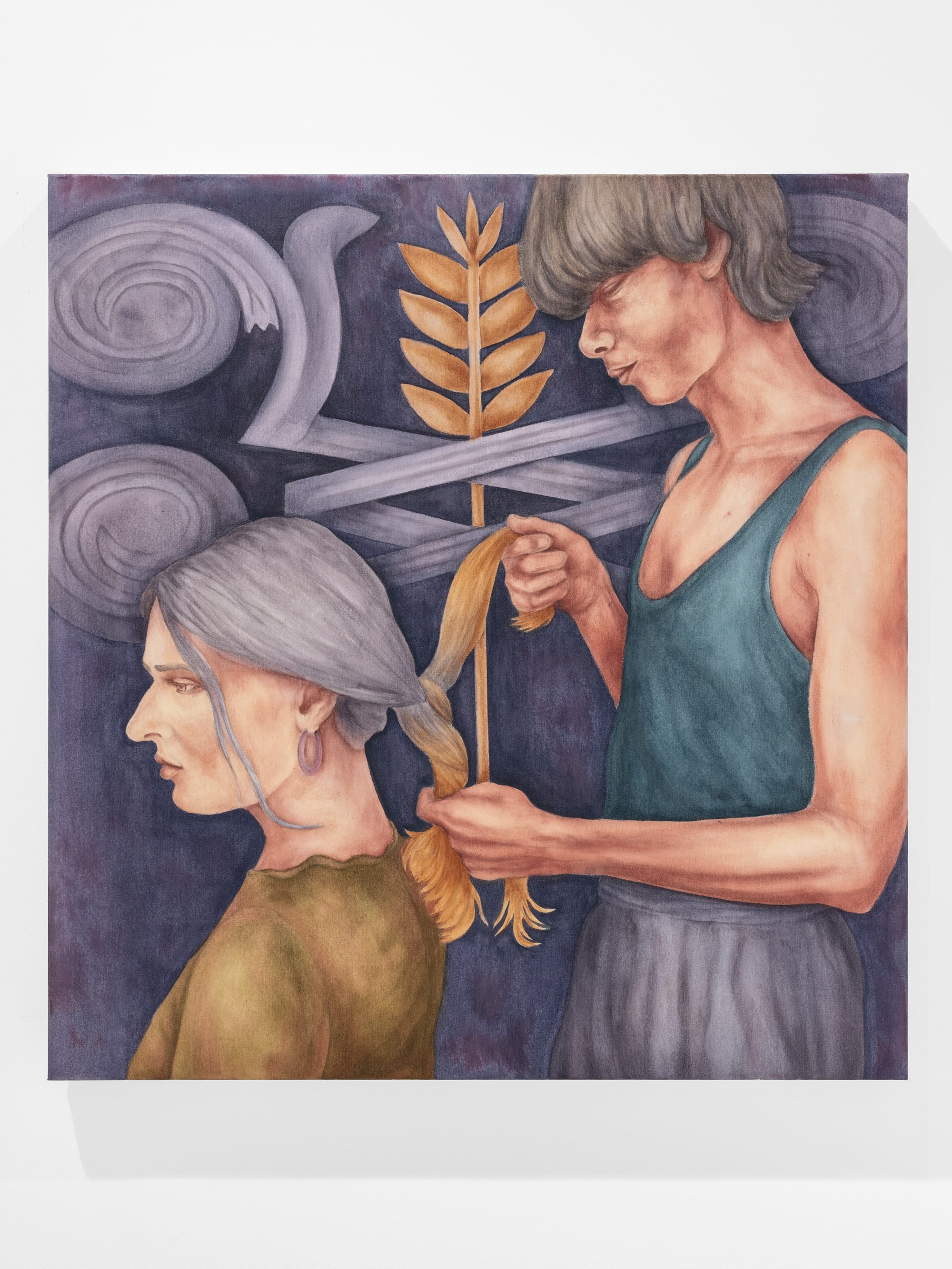
Maciej Nowacki portrays both people close to him and figures recognizable within queer communities, many of whom consciously shape and perform their own identities. Yet in his recent paintings they do not appear primarily as heroes or icons; they paint their nails, braid their hair, rest, or simply spend time together.
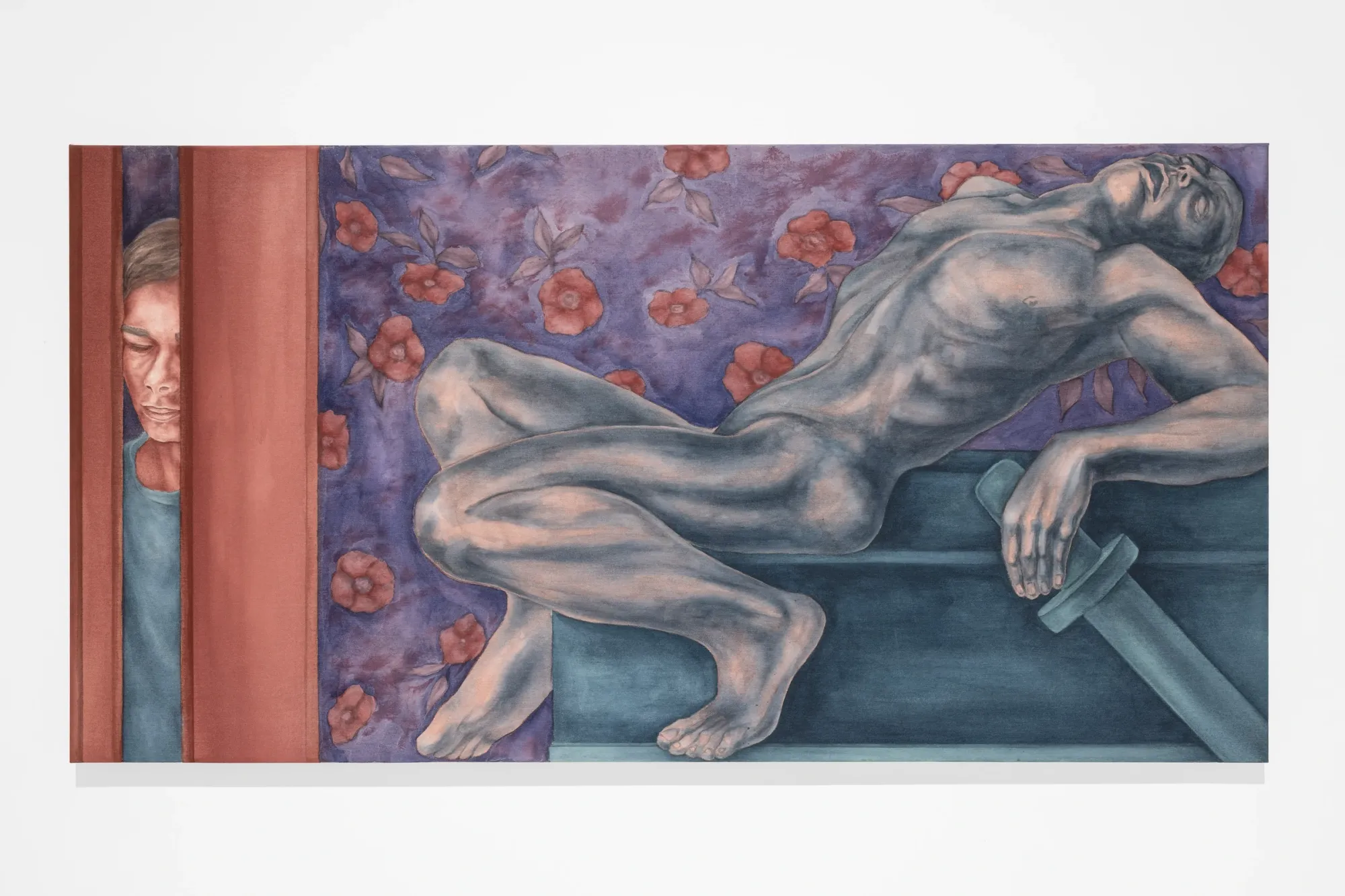
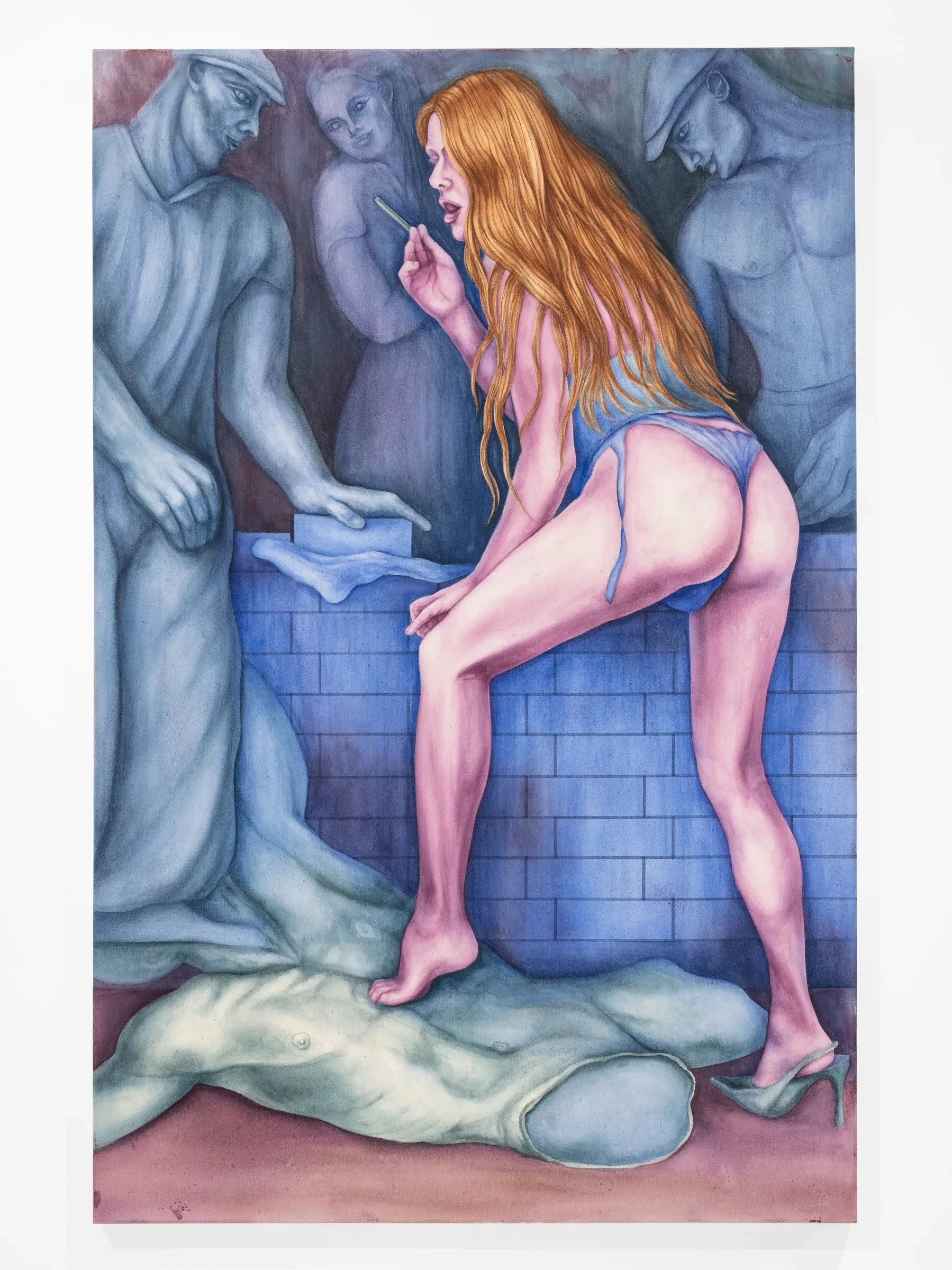
These seemingly ordinary situations unfold against the backdrop of builders, monuments, and architecture drawn from the socialist realist imaginary, invoking notions of collective labor and social foundations, both past and present.
Everyday gestures of care and coexistence do not compete with history; rather, they propose a new model of community based on exchange, mutual support, and alliances, offering a contemporary form of collectivity in dialogue with models embedded in historical narratives.
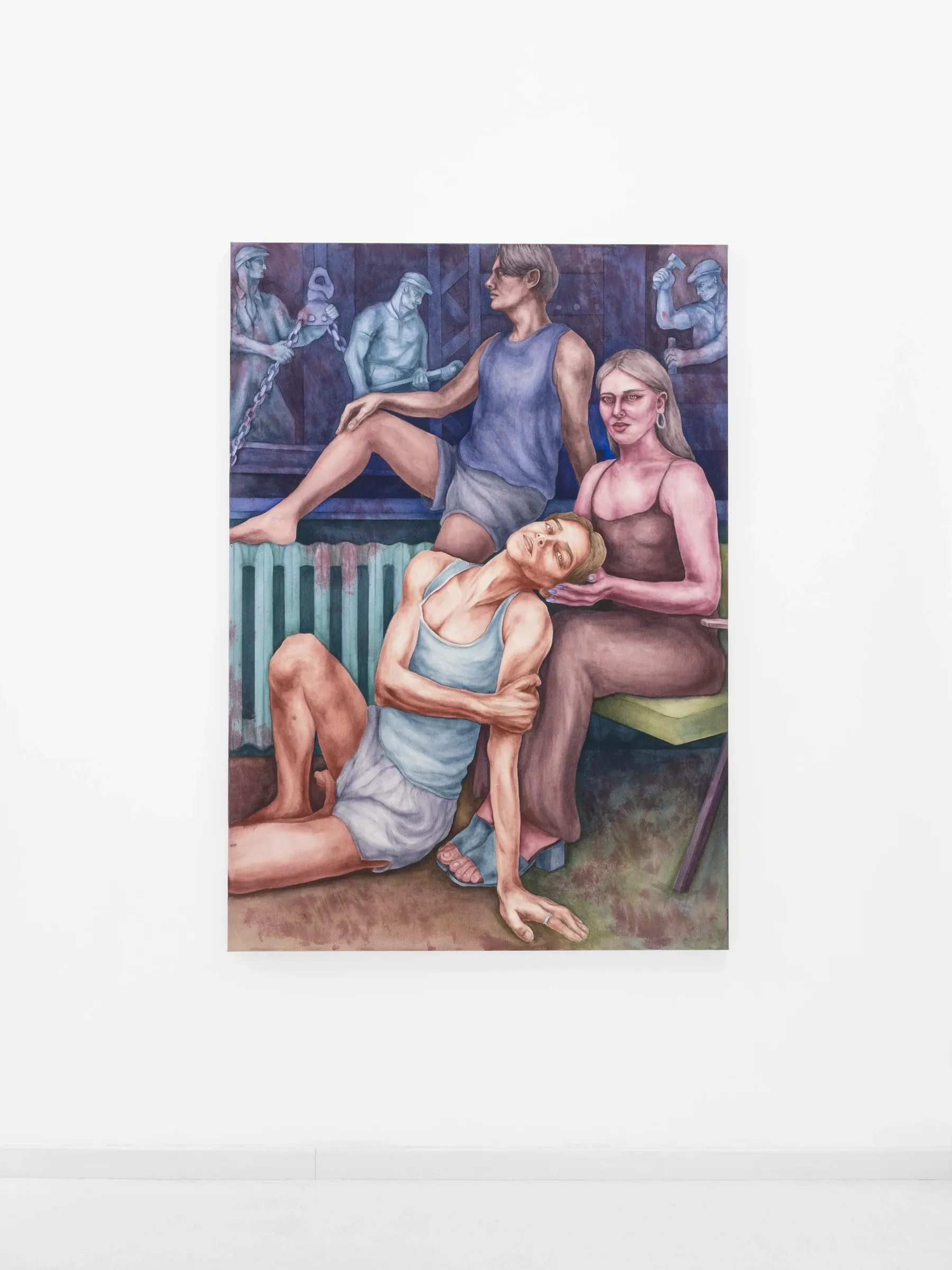
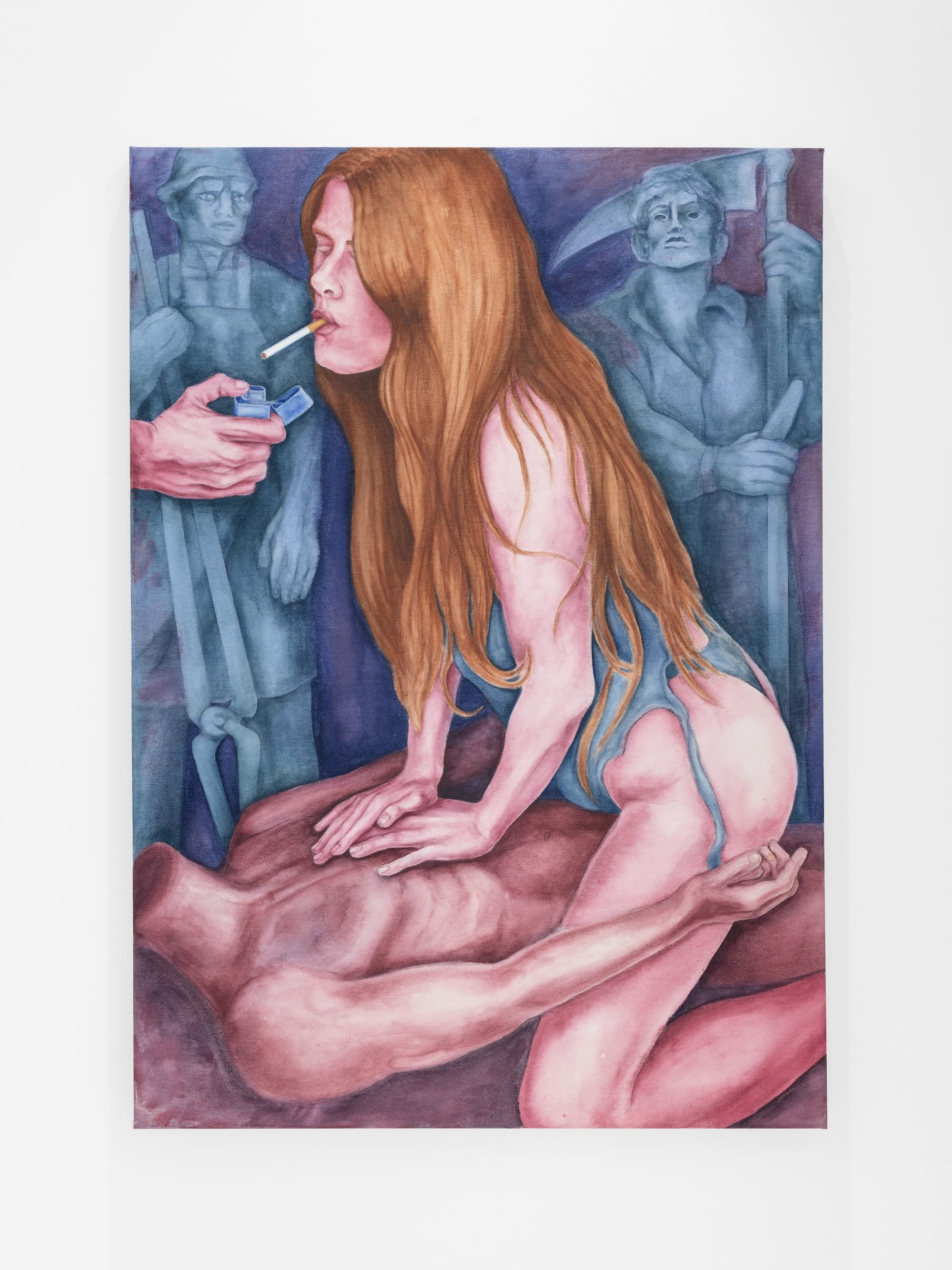
This dynamic becomes particularly visible in works featuring Pat Dudek. The trans woman appears as a figure of reversal, challenging normative notions of gender, power, and the body.
In one painting she steps on a fragmented mannequin resembling an idealized classical representation of masculinity; in another she sits upon it while a disembodied hand, belonging to the very order she appears to oppose, lights her cigarette.
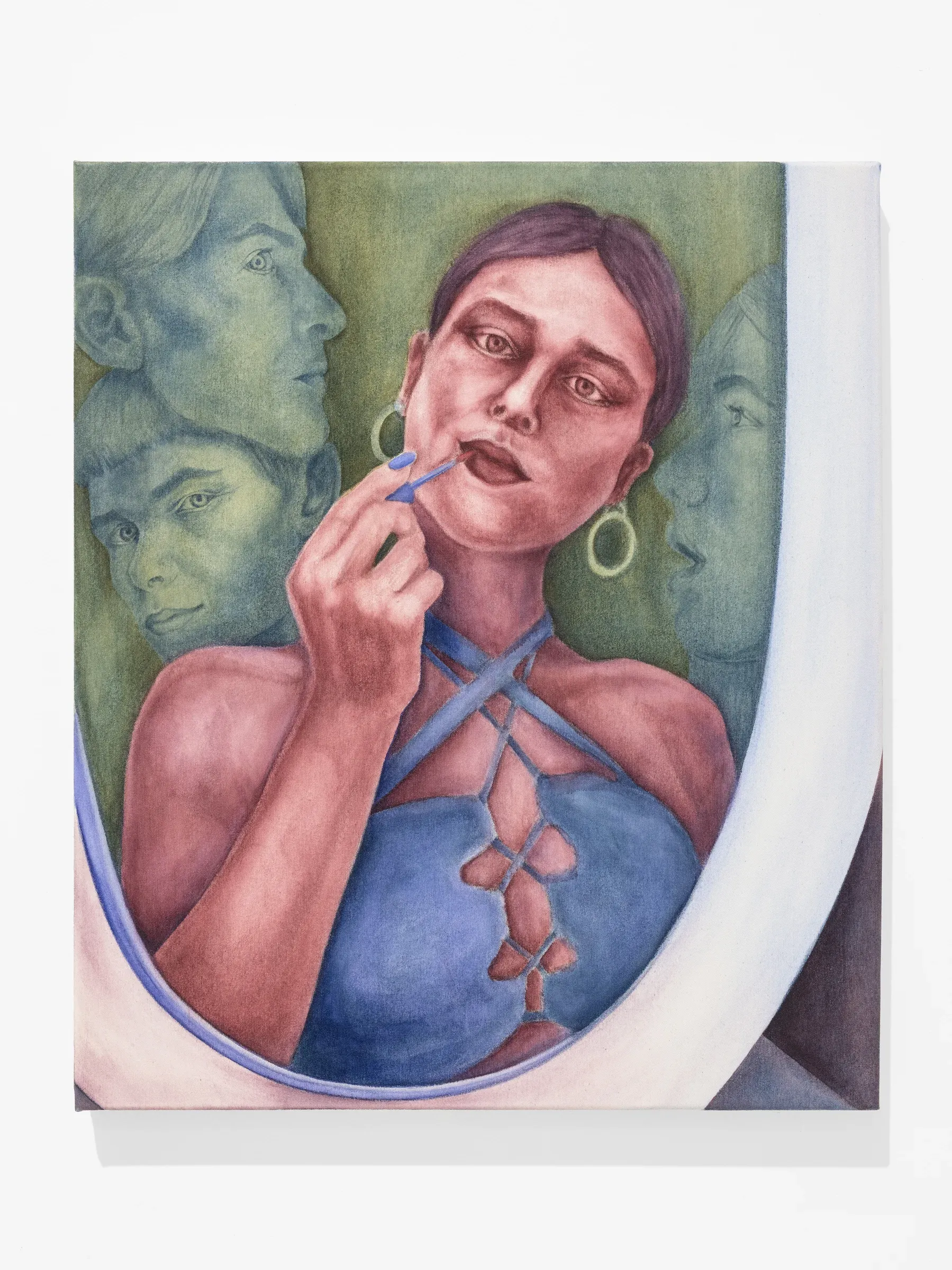
Gestures of dominance and dependence coexist, resisting any straightforward reading of the relationship. There is neither a simple victory over history nor a complete liberation from its influence. Instead, the works present an image of continual entanglement, negotiation, and appropriation of symbols inherited from the past.
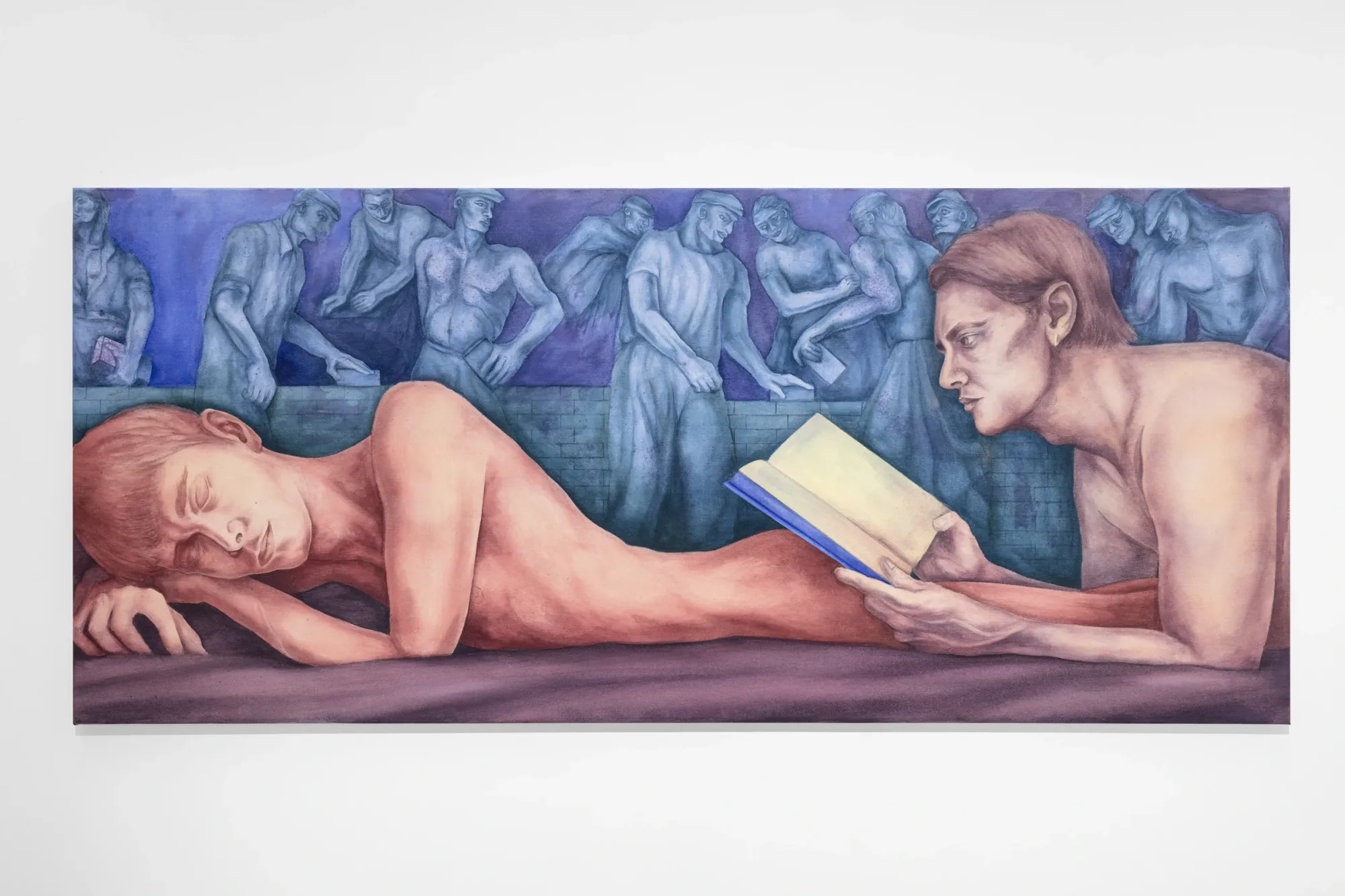
A similar tension appears in a painting referencing the Monument to the Fallen Soldiers of the Polish Military Organization, commonly known as the Peowiak Monument, located in front of Zachęta National Gallery of Art in Warsaw. Upon its unveiling, the monument sparked controversy for depicting the male body as weak, wounded, and devoid of heroic posture.
For Nowacki, it becomes a point of departure for reflecting on contemporary models of masculinity. In the painting Duty, the fragility that once outraged the patriarchal establishment ceases to be a flaw and instead becomes a potential source of resistance against contemporary fantasies of strength, control, and domination.
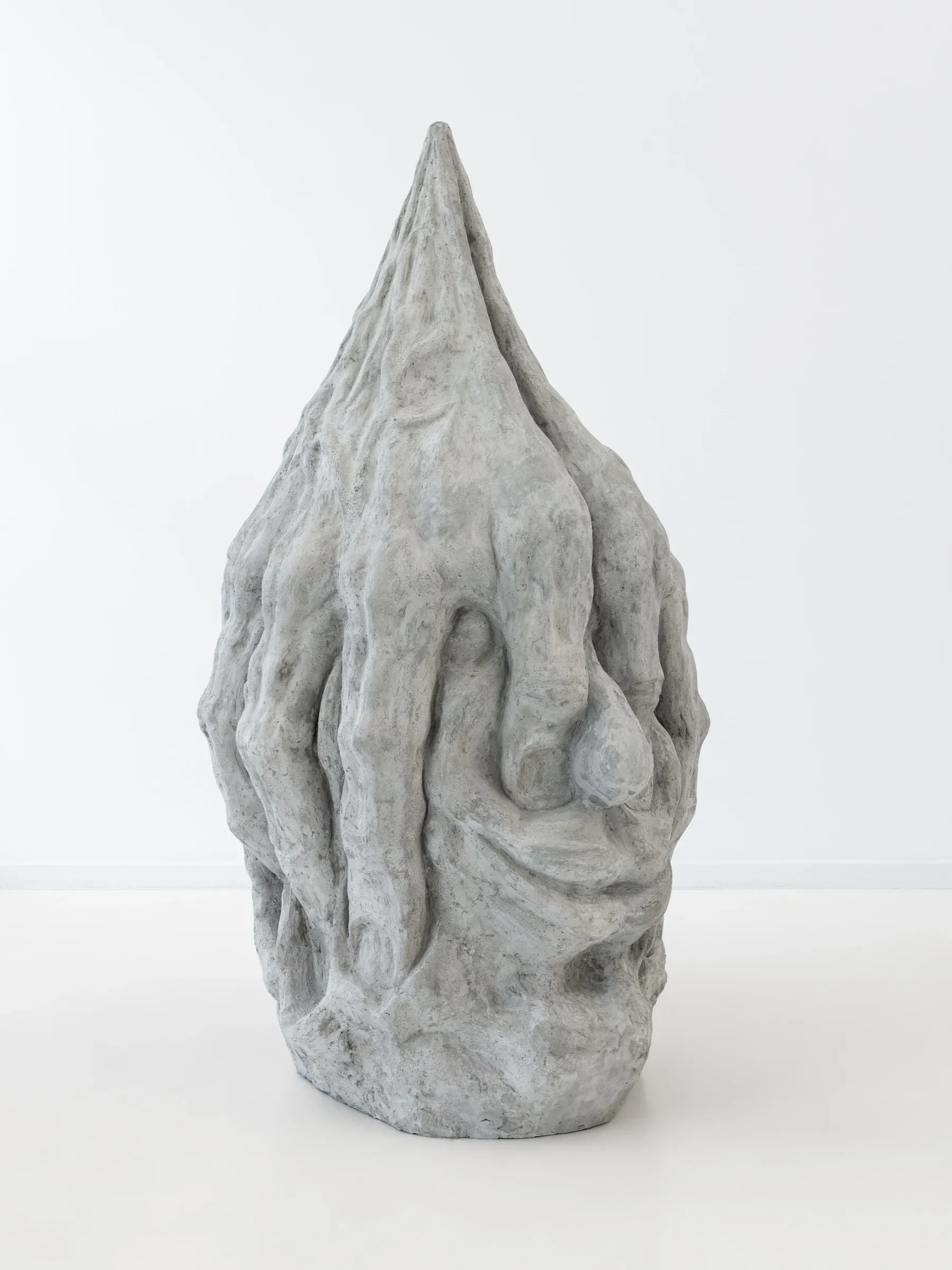
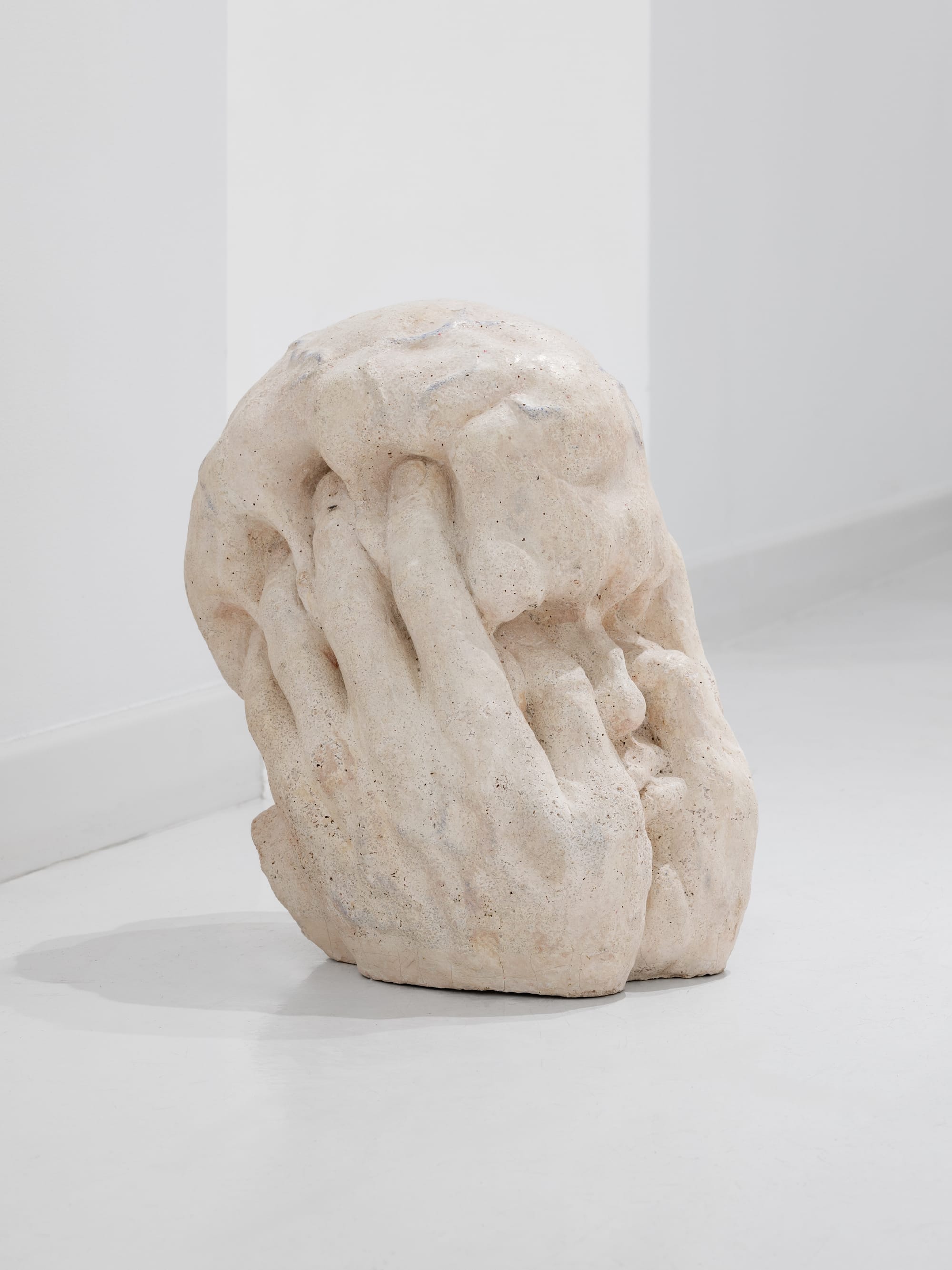
Miłosz Tomkowicz's practice revolves around artifacts, monuments, and figures that evoke both history and the realms of myth and imagination. Many of his works begin with objects and symbols operating at the intersection of fact, legend, and collective memory. In Ancestor, a sculpture that in many ways opens the exhibition, a monumental concrete head held between two hands evokes a distant predecessor whose influence persists despite the passage of time.
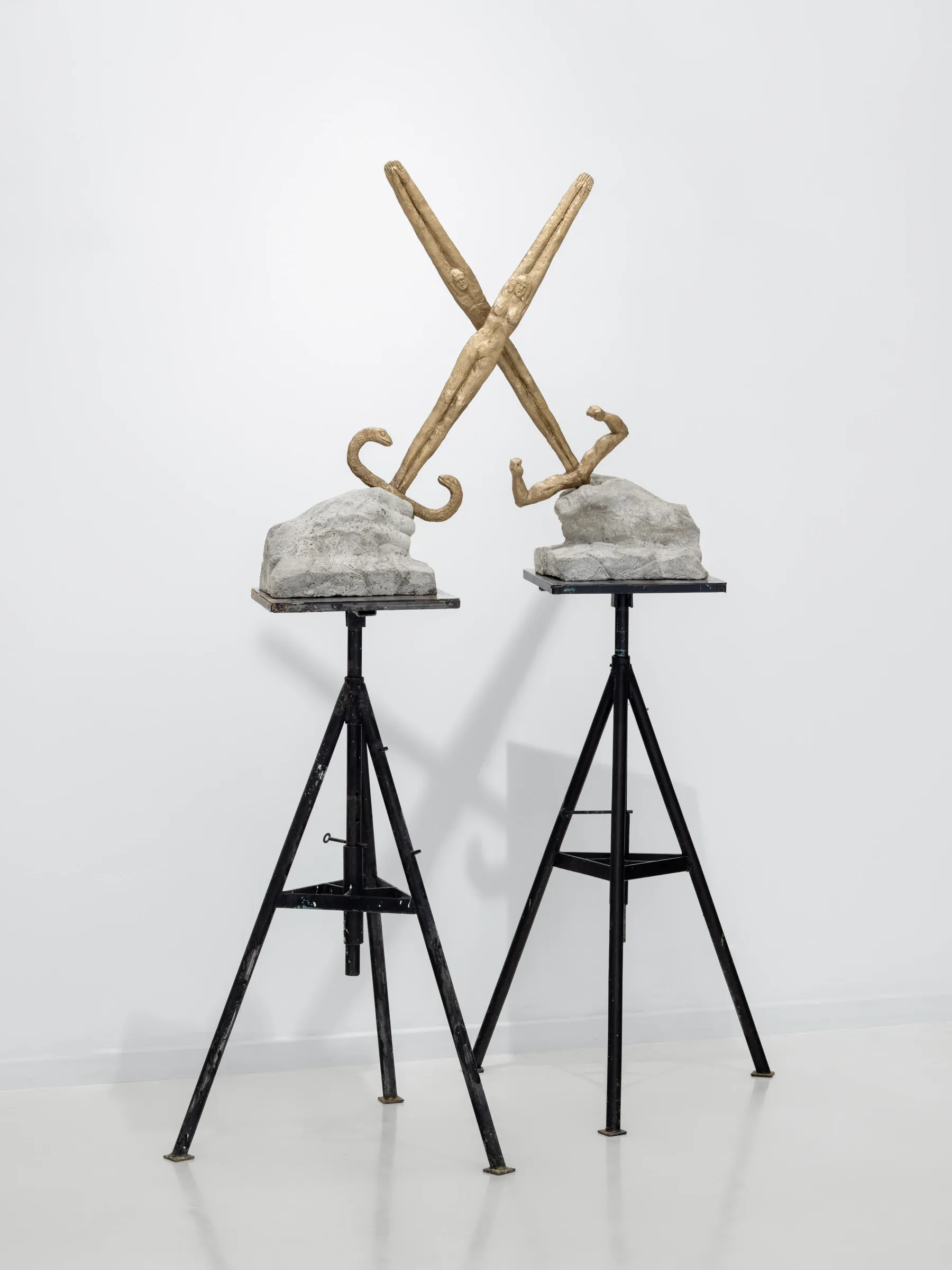
The gesture of the hands remains ambiguous, it may suggest protection, prayer, formation, or pressure. In Two Bare Swords, the artist refers to the Grunwald swords, physically lost in the turmoil of history, treating them not as historical artifacts but as images that have survived primarily within imagination and storytelling. The title also alludes to literal nakedness, while the depicted male and female bodies evoke associations with intimacy and vulnerability.
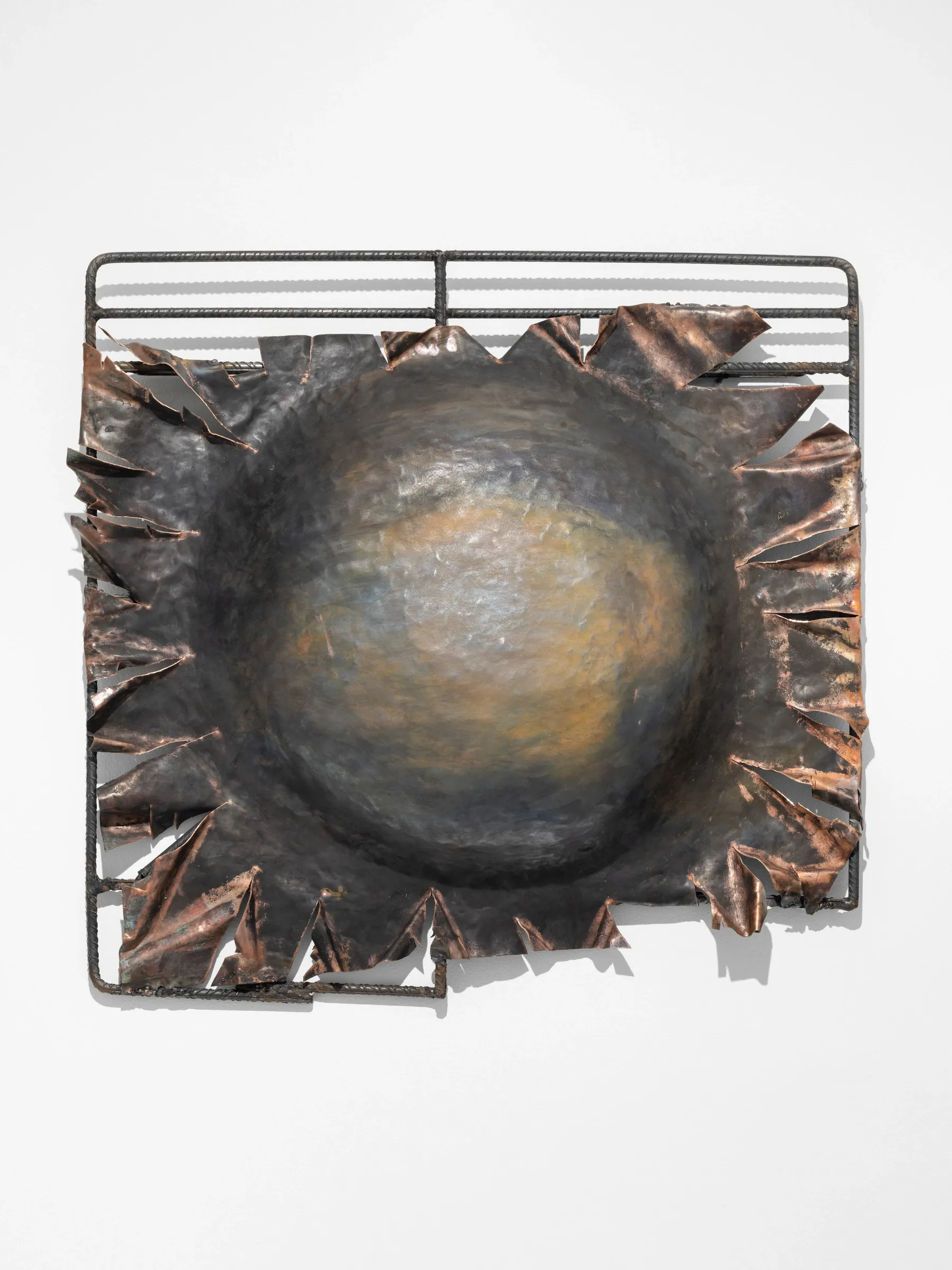
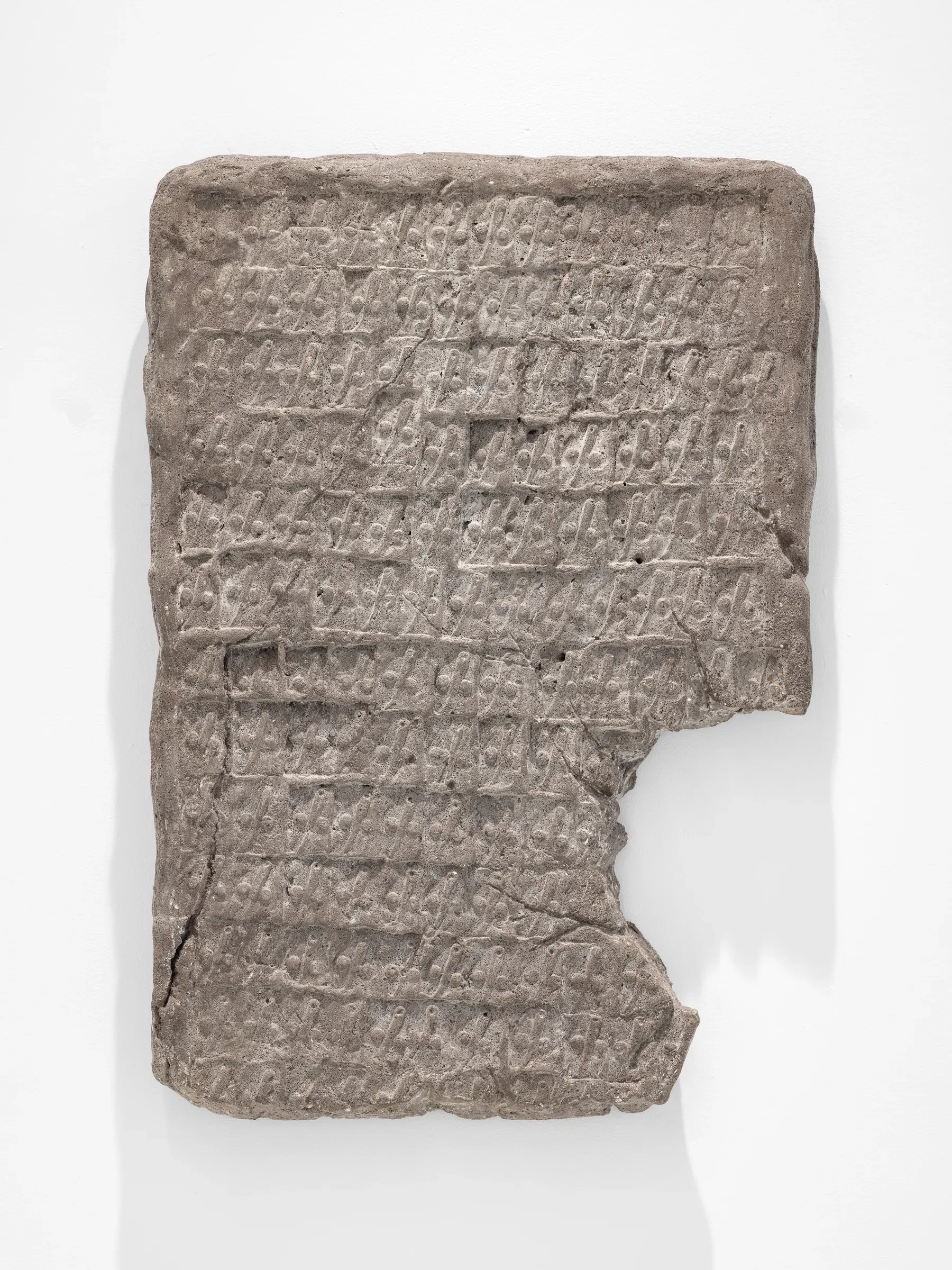
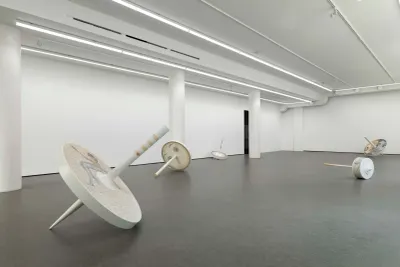
Material plays a crucial role in Tomkowicz's work. Concrete and bronze function not merely as formal elements but as carriers of meaning. Concrete heads, hands, and monumental forms evoke monuments, permanence, and attempts to arrest time.
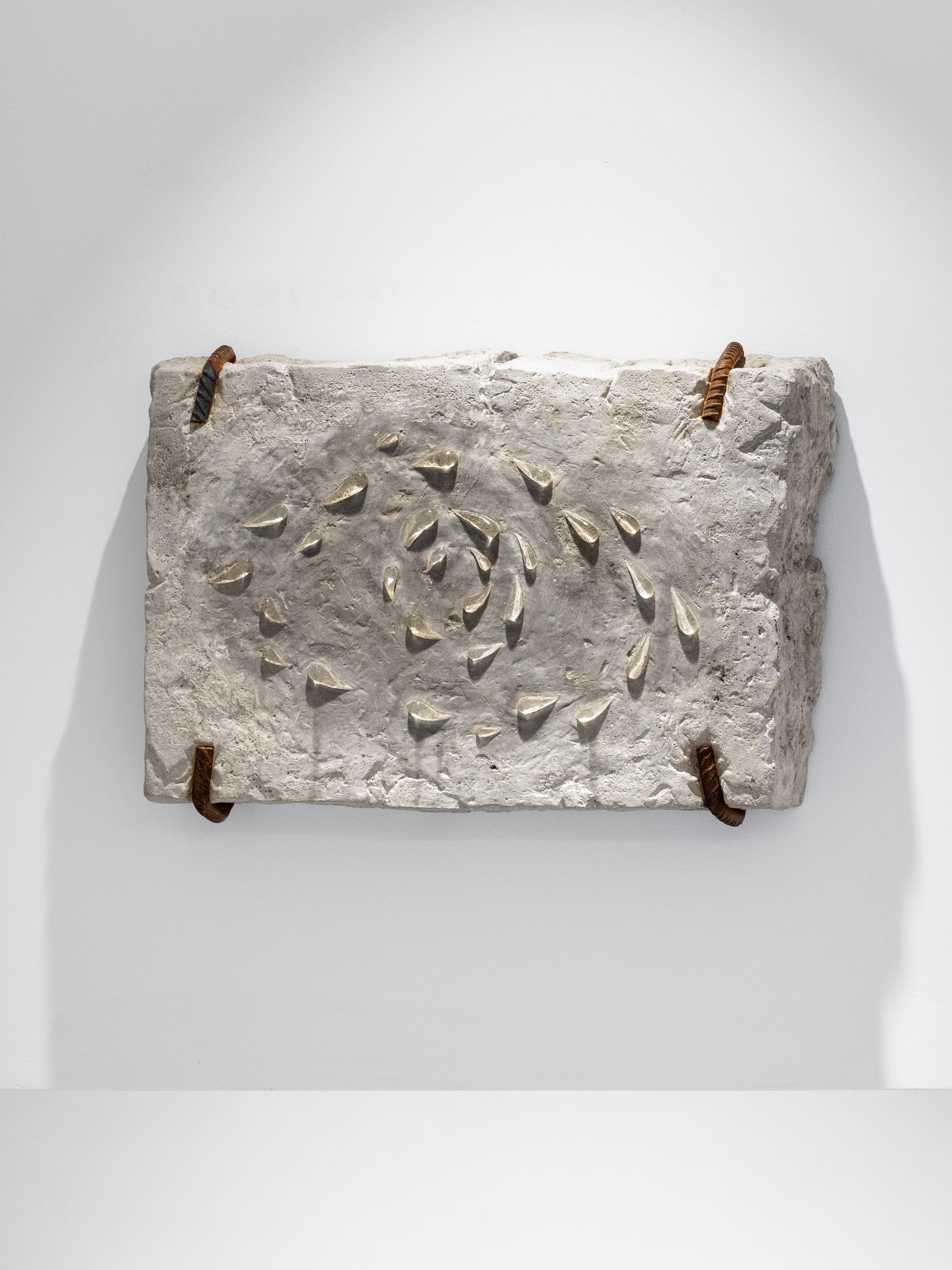
Bronze, used among others in Two Bare Swords and Great-Grandmother, refers to traditions of artifacts, weaponry, and ceremonial objects. The titular Sun, trapped like a trophy and stretched over a steel reinforcement framework, raises questions about what happens to a myth or idea when we attempt to give it a lasting material form. Throughout Tomkowicz's practice, these materials remain interconnected, much like the recurring oppositions that structure his work: movement and stillness, strength and fragility, endurance and transformation.
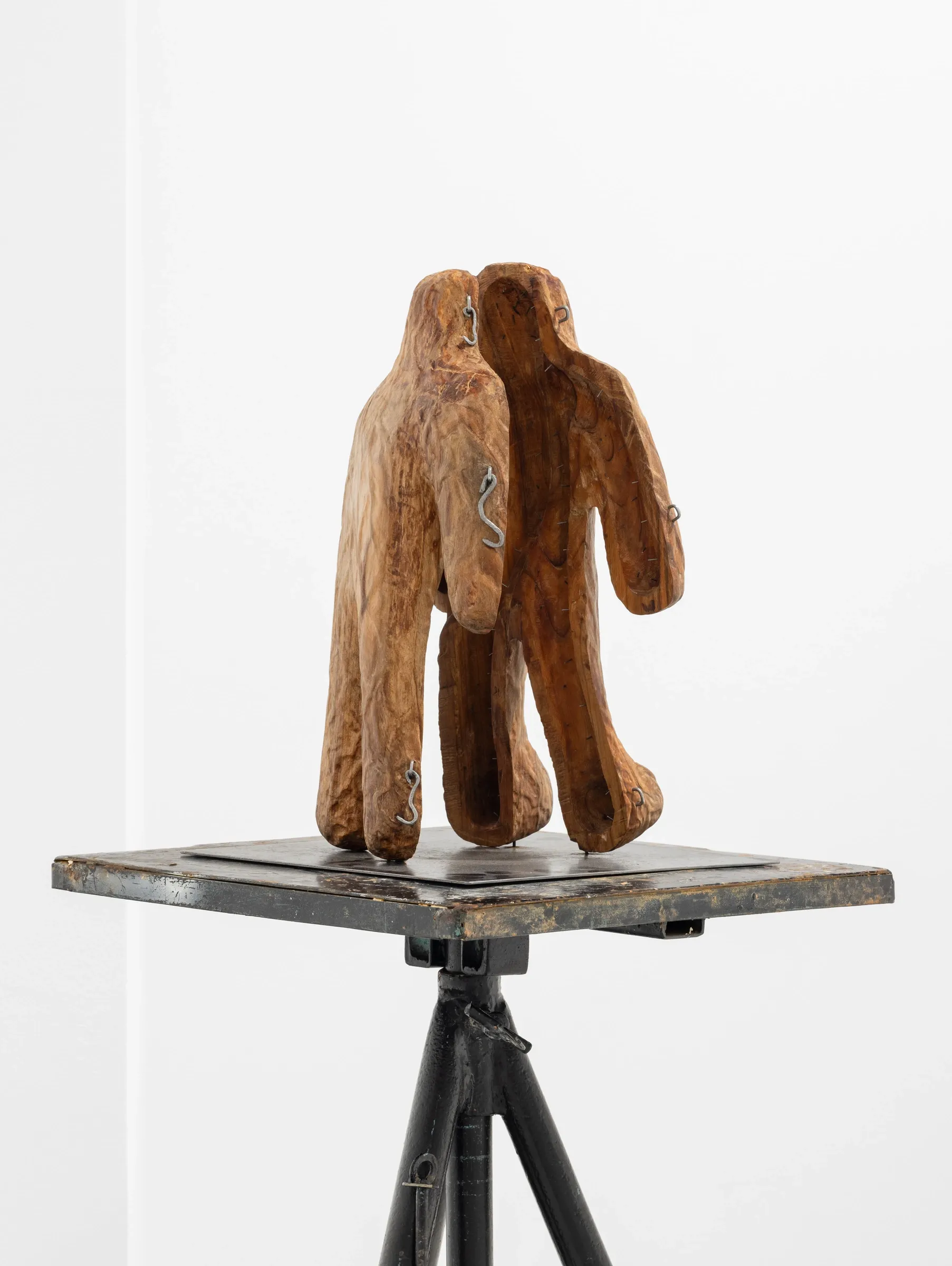
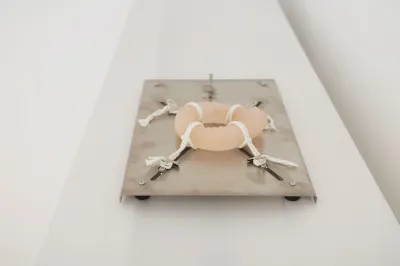
These contrasts become especially pronounced in works addressing violence, power, and heroic narratives. Borrowing its title from Adam Mickiewicz's Redoubt of Ordon, Two Hundred Cannons Thundered invokes the romantic language of war while simultaneously drawing on visual references to ancient reliefs and folk tales. In Case for a Lost Soul, an object suggesting protection also becomes a site of potential threat and confinement.
Likewise, figures of heroes, warriors, and ancestors do not function as unequivocal symbols of triumph. Tomkowicz is interested instead in the moment when dependence, uncertainty, and fear emerge beneath the surface of strength. His works are not about victory, but about the fragility concealed within structures usually associated with permanence and control.
Although both artists engage with similar themes, they begin from fundamentally different positions. Nowacki starts with the body and relationships, with specific individuals, everyday gestures, intimacy, and coexistence. From this perspective, he approaches history, monuments, artifacts, and inherited visions of community, opening them up to new interpretations.
Tomkowicz proceeds in the opposite direction. He begins with what is no longer there: myth, ancestral figures, monuments, and symbols of power, gradually revealing their enduring relevance in the present.
He is interested in how grand narratives, histories, and structures leave their mark on individuals, their bodies, fears, and lived experiences. It is between these two perspectives, from the individual toward history and from history toward the individual, that the dialogue of Blood Concrete Sun takes shape.
In both cases, images, myths, and forms of community emerge as legacies to be inherited, questioned, and transformed through new languages and interpretations.
Curator: Marianna Lomza
Miłosz Tomkowicz on Instagram
Maciej Nowacki on Instagram
HOS Gallery on Instagram
Marianna Łomża on Instagram
About Catapult Contemporary - Art Platform Submission
This is a exhibition review published by Catapult — an independent editorial platform for contemporary art, based in Vienna. We publish exhibition reviews, artist features, interviews, and critical context, with a focus on emerging and mid-career practices from Europe and beyond.
catapult.art
Want to be featured? Submit your work →