Marwa Arsanios Spends Eight Years Asking Who Land Belongs To.

TAXISPALAIS Kunsthalle Tirol Presents Marwa Arsanios’s Who is Afraid of Ideology? in Innsbruck
TAXISPALAIS Kunsthalle Tirol presents Marwa Arsanios’s Who is Afraid of Ideology?, curated by Nina Tabassomi, through October 4, 2026.
Land rarely asks who owns it. People do, usually after a quarry has been cut, a border drawn, or a community moved off ground it worked for generations. The question sounds legal. It rarely stays that way for long.
Usership is a slower claim than ownership. It has to be renewed by hands and daily return, not filed once and forgotten in an archive. What happens to a landscape, and to the people on it, when only one of these claims is written down?
Ownership needs paper. Usership needs to keep showing up.
Marwa Arsanios
Who is Afraid of Ideology?
TAXISPALAIS Kunsthalle Tirol
Innsbruck, Austria
–
Tuesday–Sunday 11am–6pm, Thursday until 8pm
Maria-Theresien-Straße 45, 6020 Innsbruck, Austria
Nina Tabassomi
Günter Kresser
Courtesy the artist and mor charpentier
info@taxispalais.at
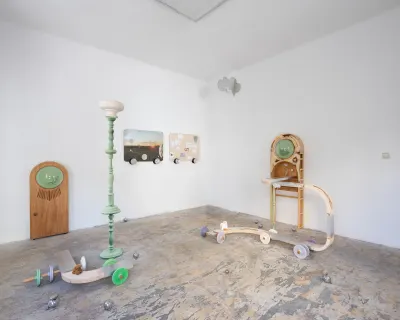
TAXISPALAIS sits within a historic palace on Maria-Theresien-Straße, darkened almost entirely for this exhibition.
Marwa Arsanios’s first institutional solo show in Austria unfolds as a sequence of enclosed rooms, one for each part of a film cycle she has built since 2017.
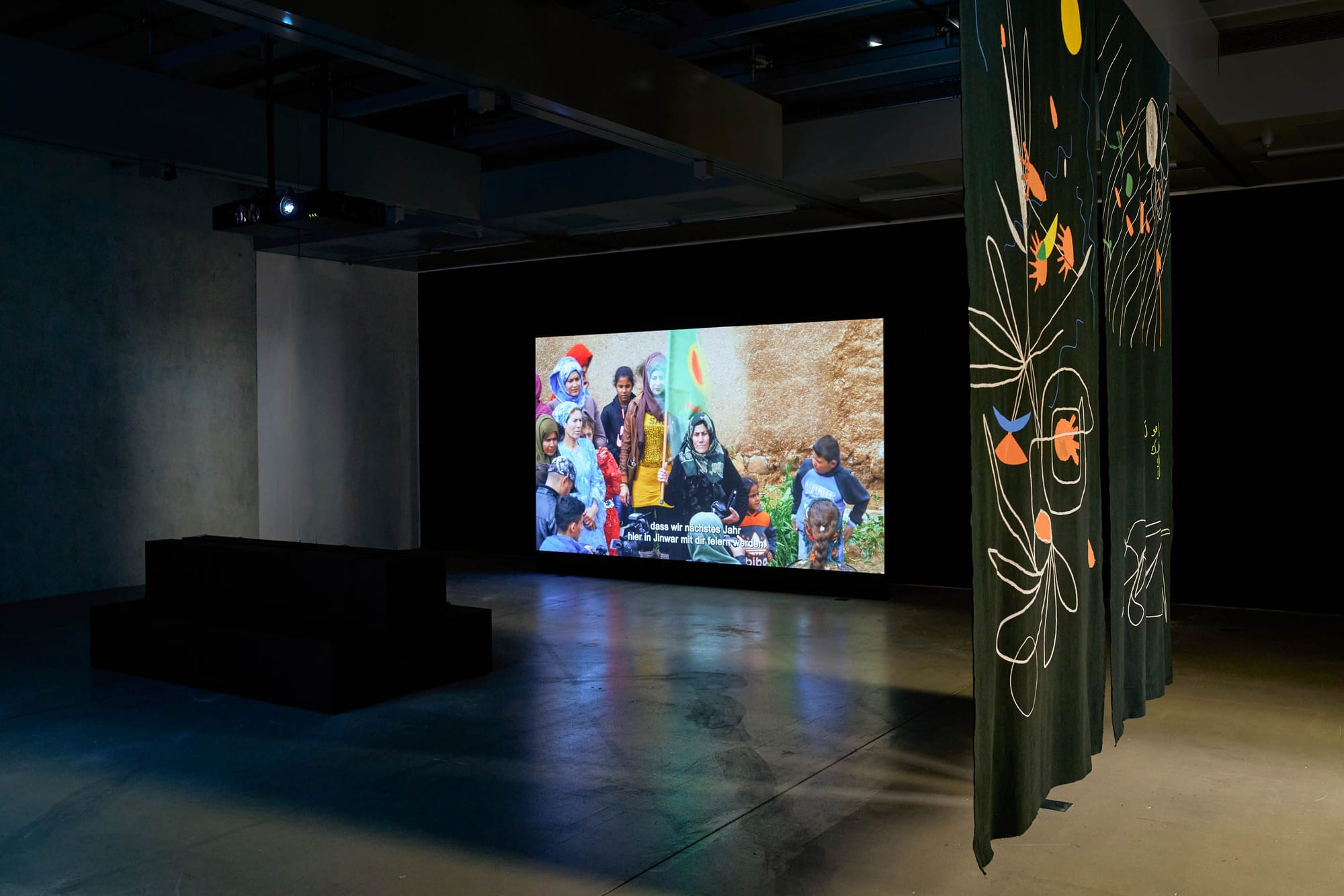
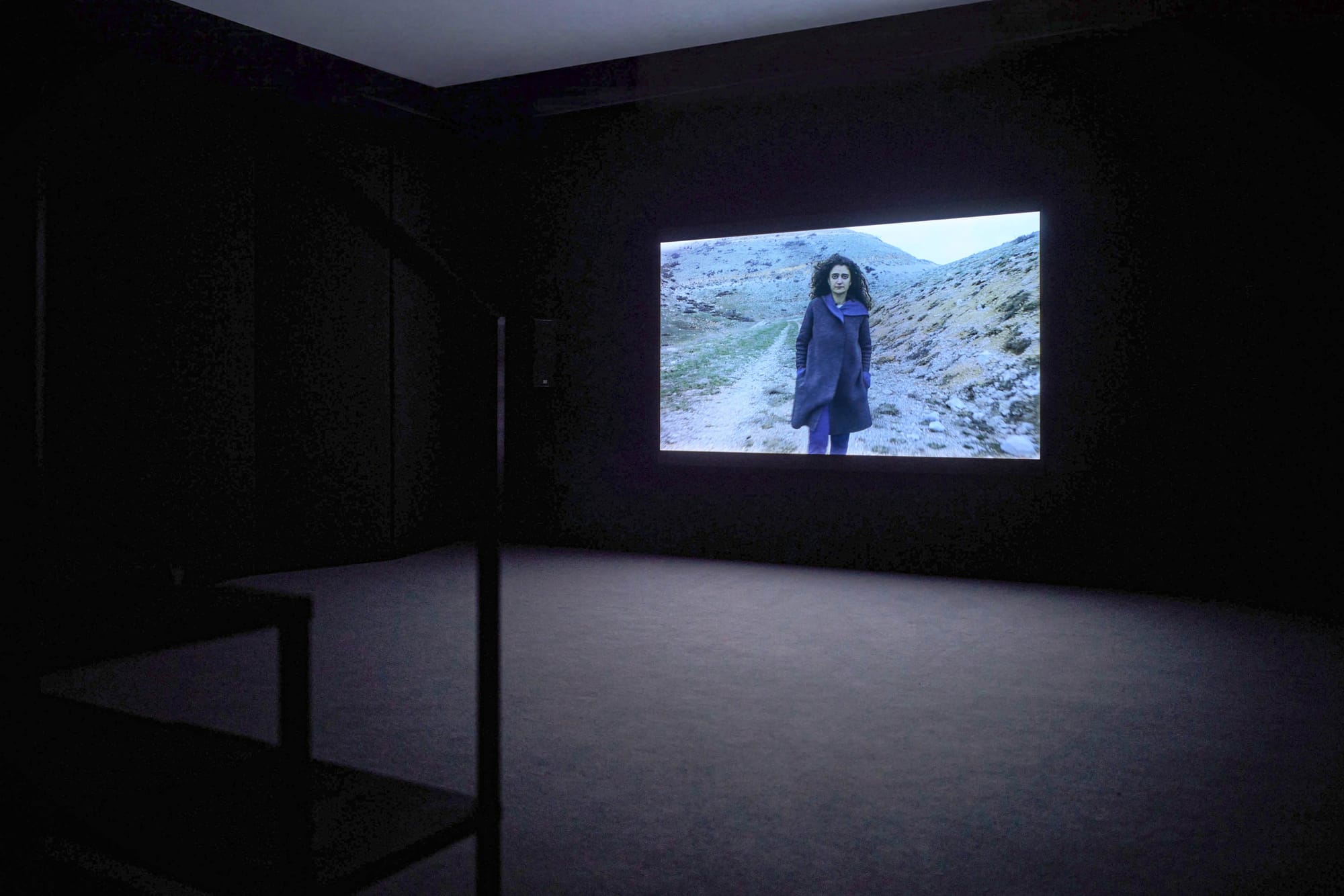
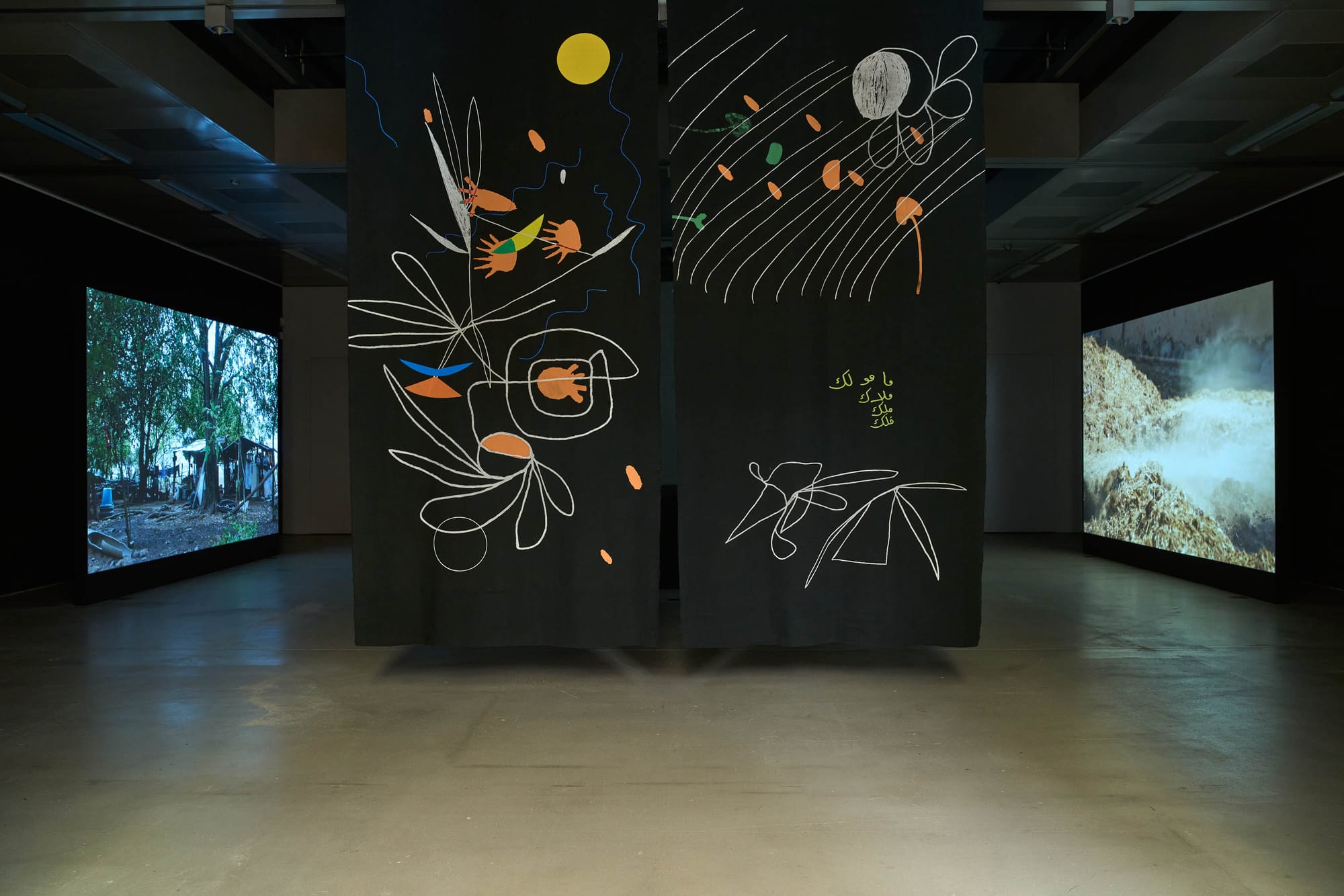
There is little wall text to guide the order. Corridors hung with drawings and printed fabric do that work instead, moving the visitor through geography the way the films do, one region folding into the next.
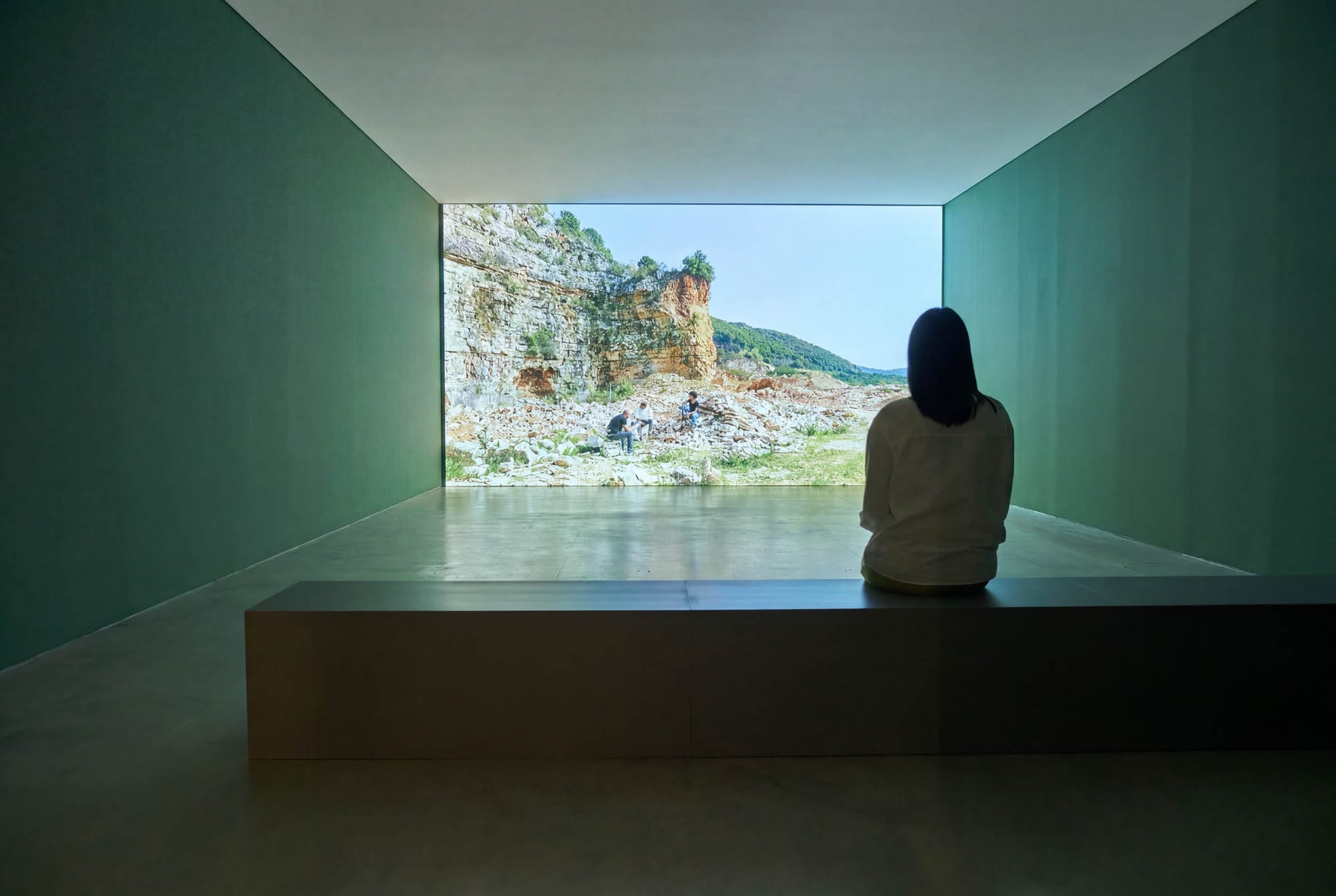
In the room built for Part 4, Reverse Shot, a low bench faces a screen at floor level, so watching means sitting close to the ground it argues about. The footage returns to a former quarry in Lebanon, where Arsanios and a group of collaborators try to rehabilitate and communalize the land. People sit on rubble and talk.
Nobody performs expertise. The camera holds the distance of someone still deciding what she is allowed to claim.
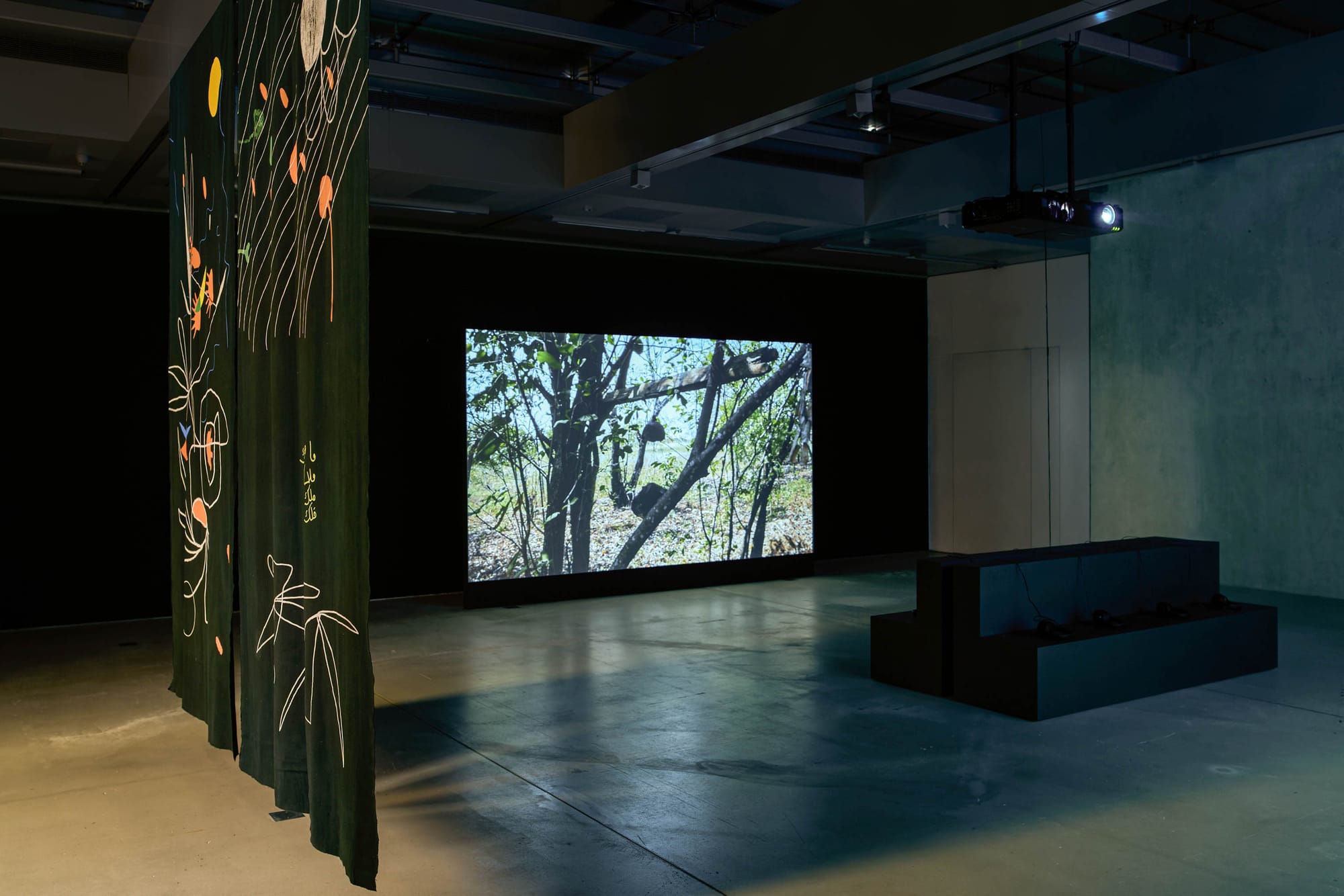
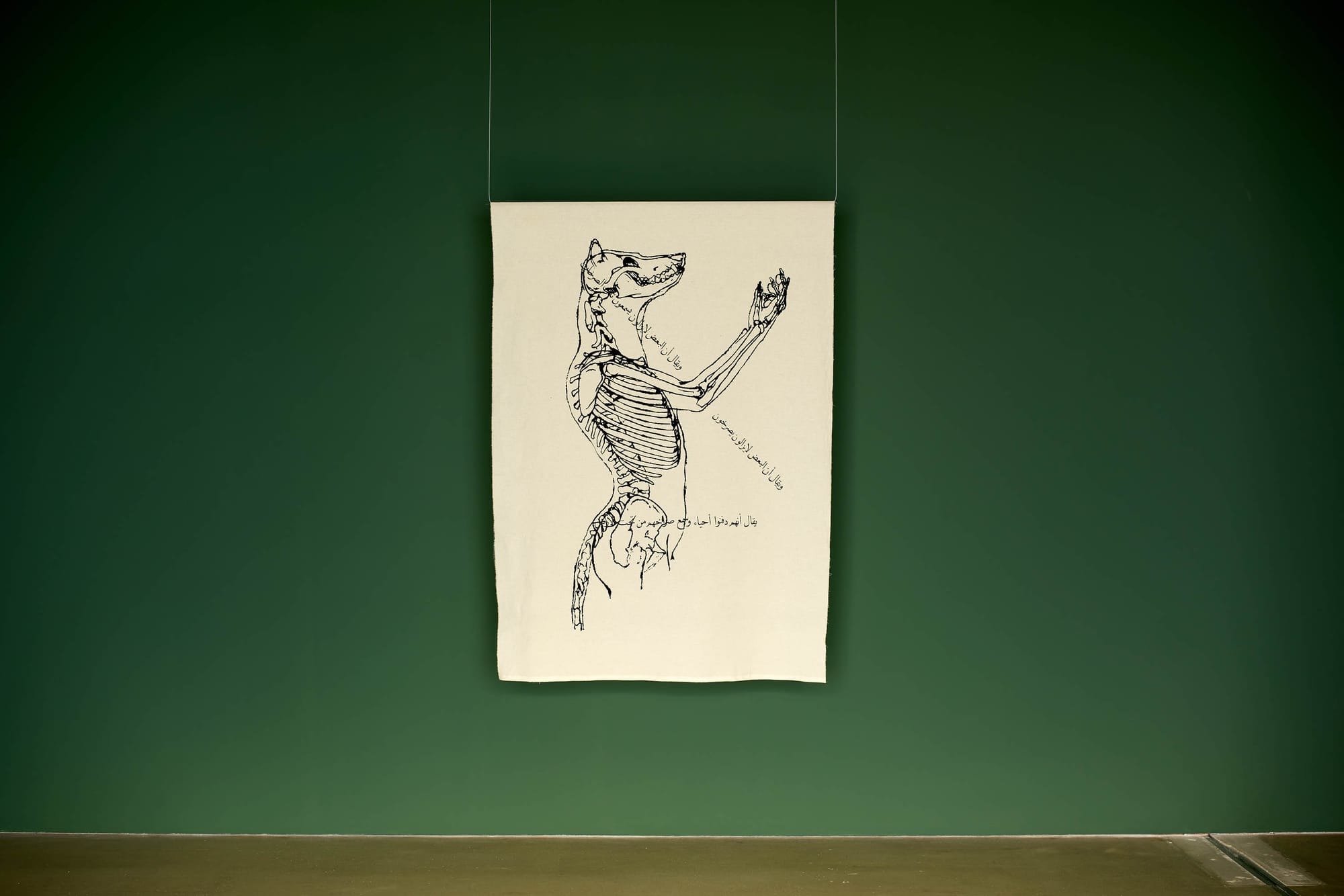
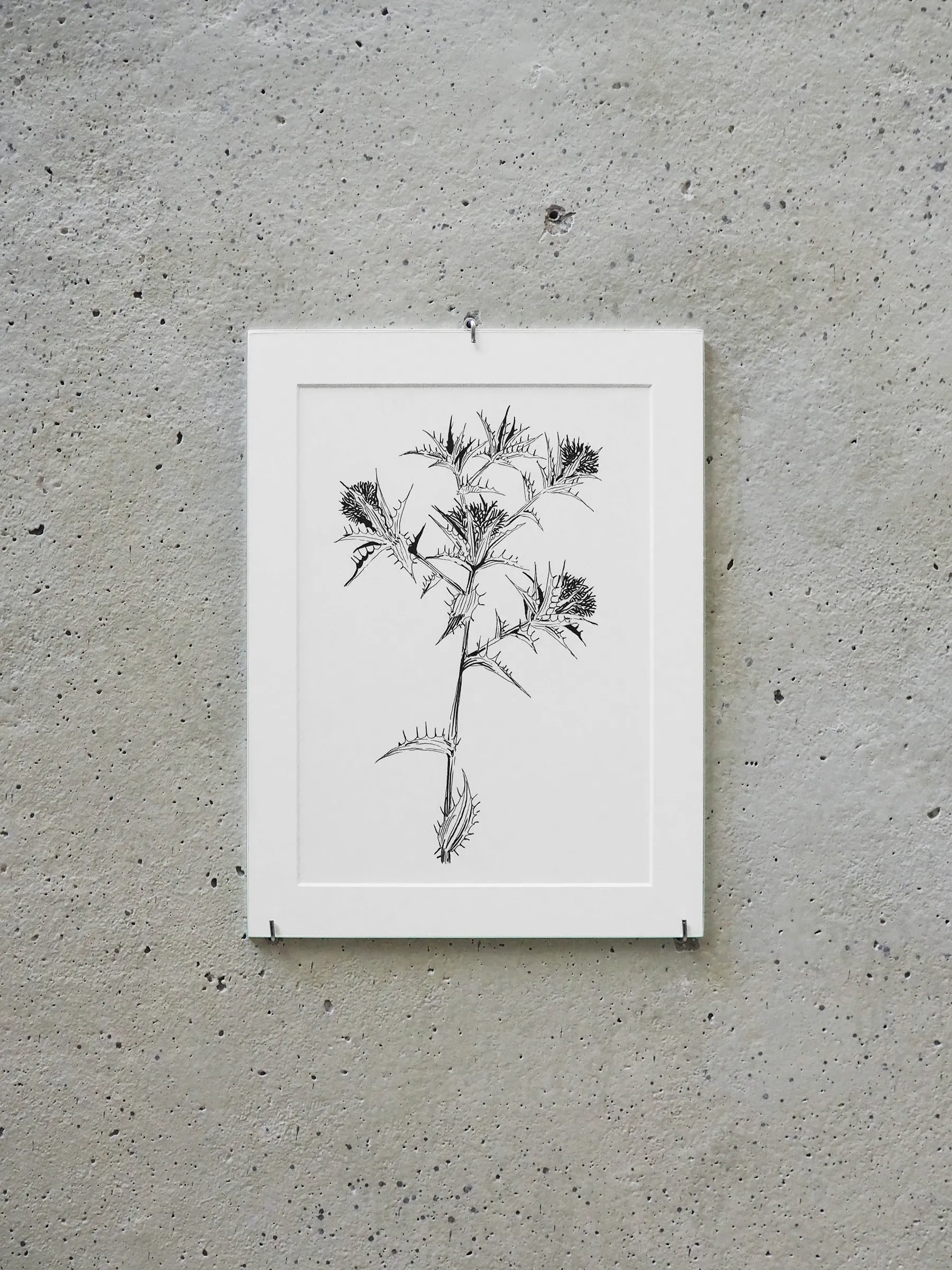
Nearby, a length of unstretched fabric hangs from the ceiling on thin cable, printed with the ink-line skeleton of an animal reaching upward, Arabic script running along its ribs like a second spine.
The textile has no frame, no glass, nothing between the image and the room's air. It shifts slightly when someone walks past, keeping the animal from settling into being only a picture.
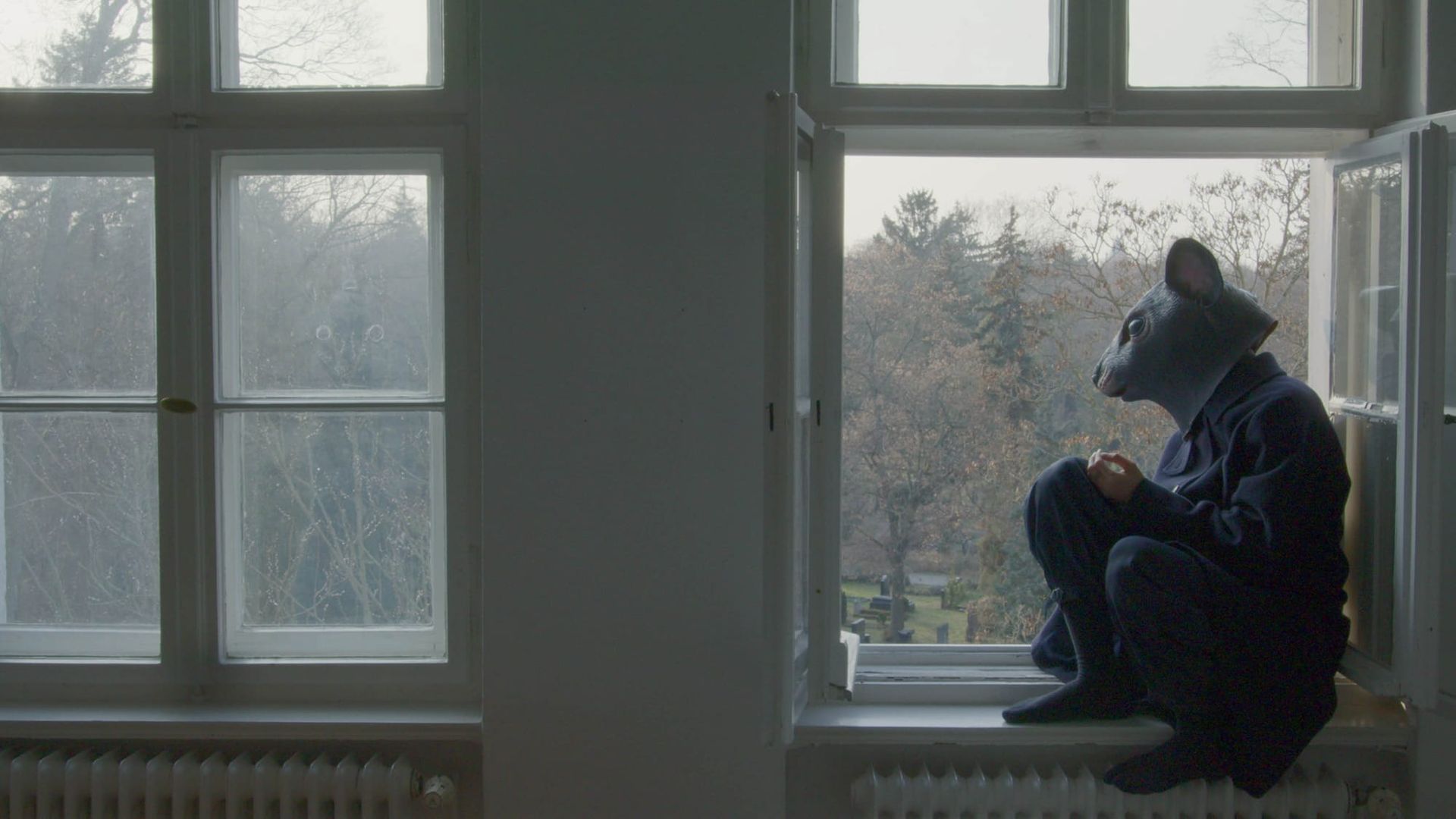
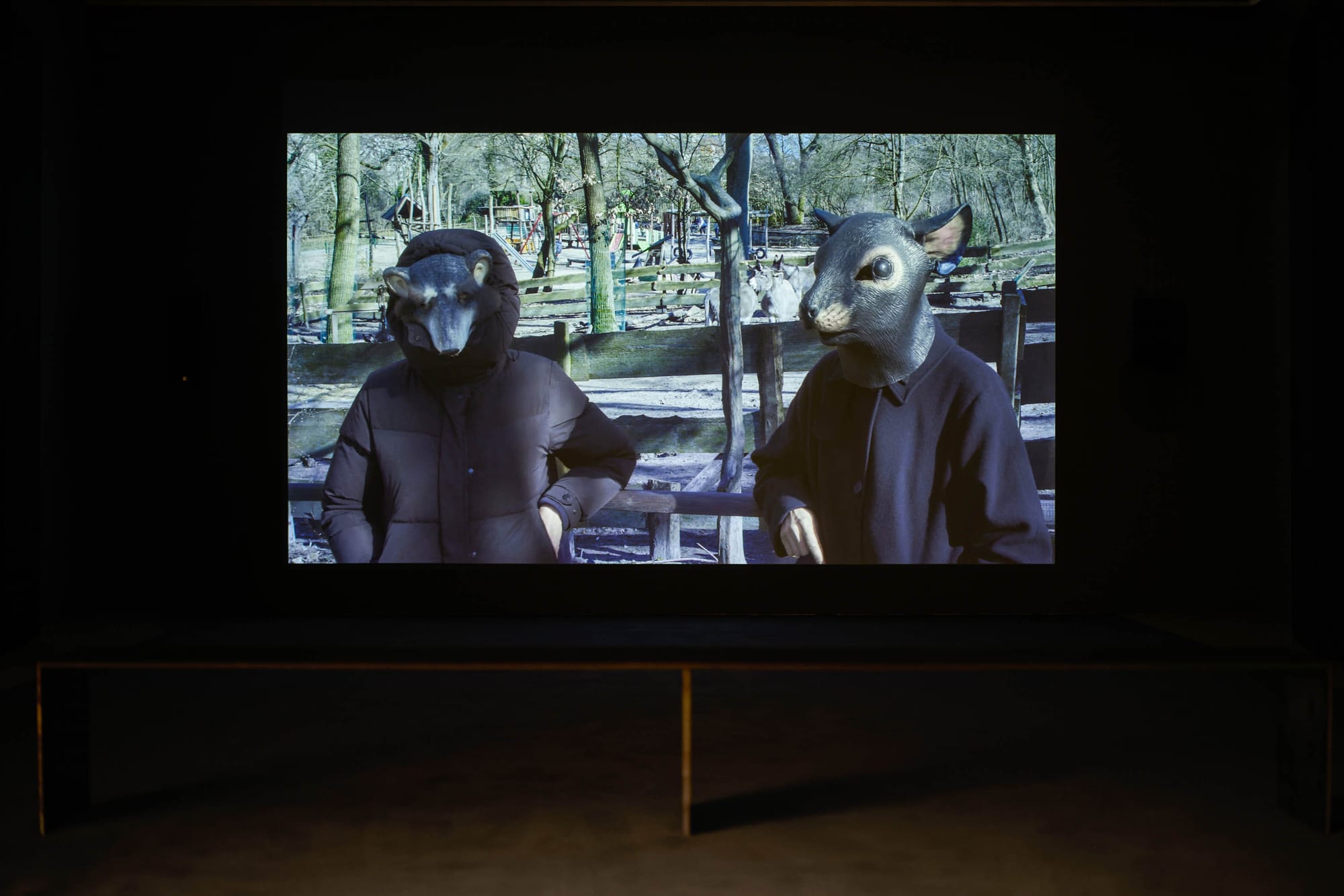
Part 5, Right of Passage pushes furthest into fiction. Two adults in rodent masks stand at a wooden park fence in what could be any European park, saying nothing the subtitles translate. Later the same creature sits alone at an open window, a cemetery visible through the glass, and tells a story about waking up changed.
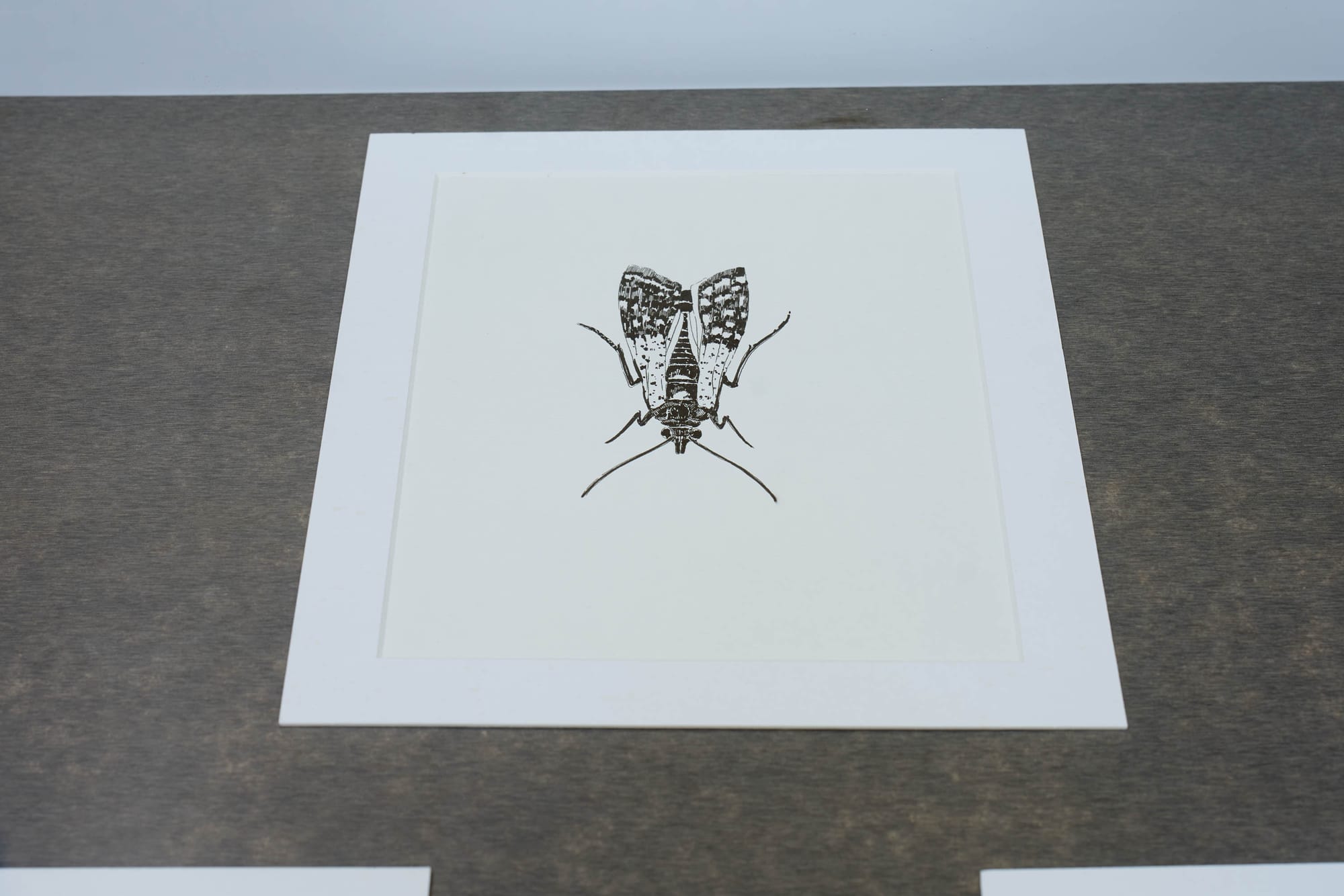
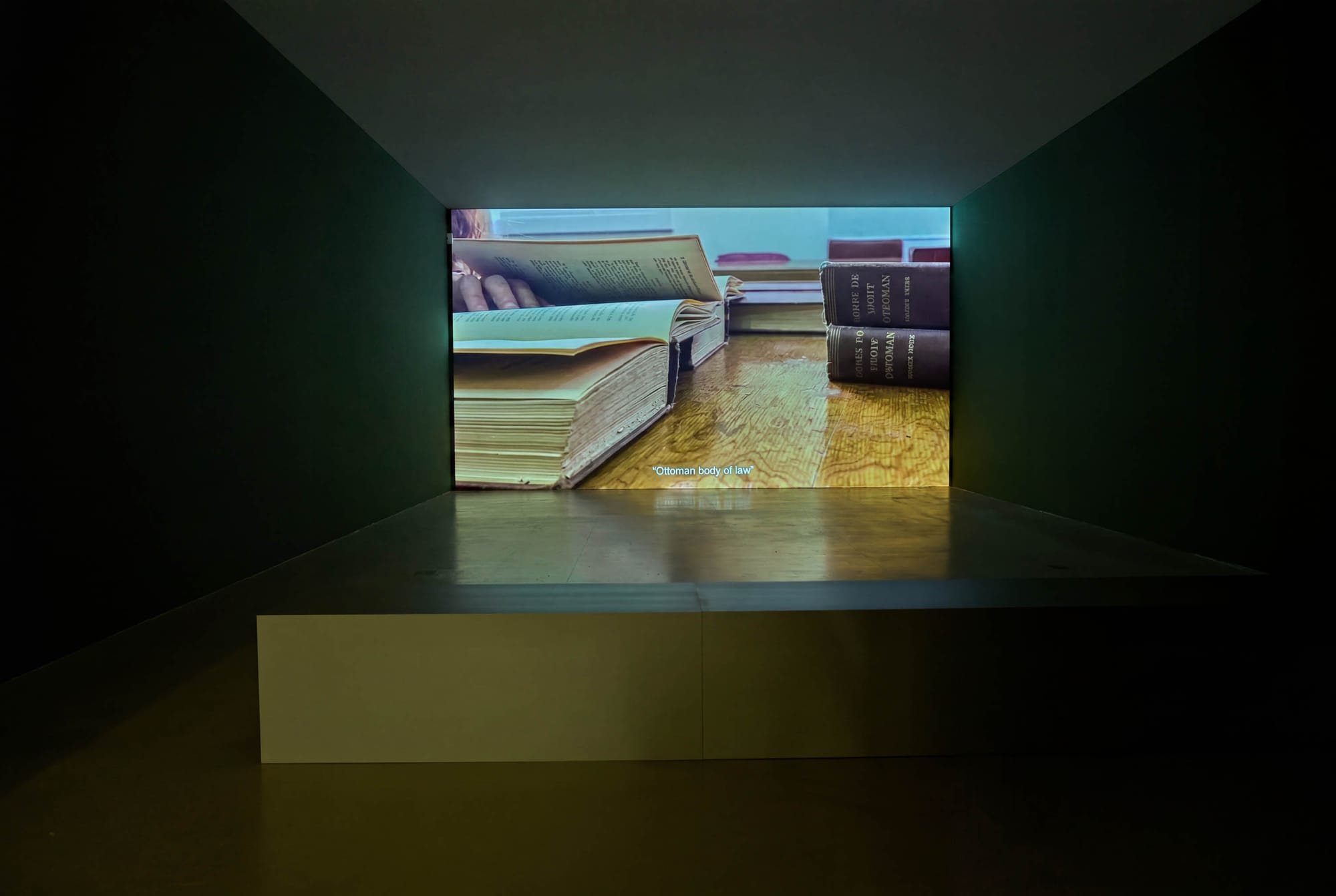
Elsewhere in the same film, a hand turns the pages of an old legal volume, while the subtitle reads Ottoman body of law.
Arsanios lets the fable and the archive occupy the same running time, as if dehumanization were less a metaphor than a filing system.None of the five parts resolve into policy or proposal.
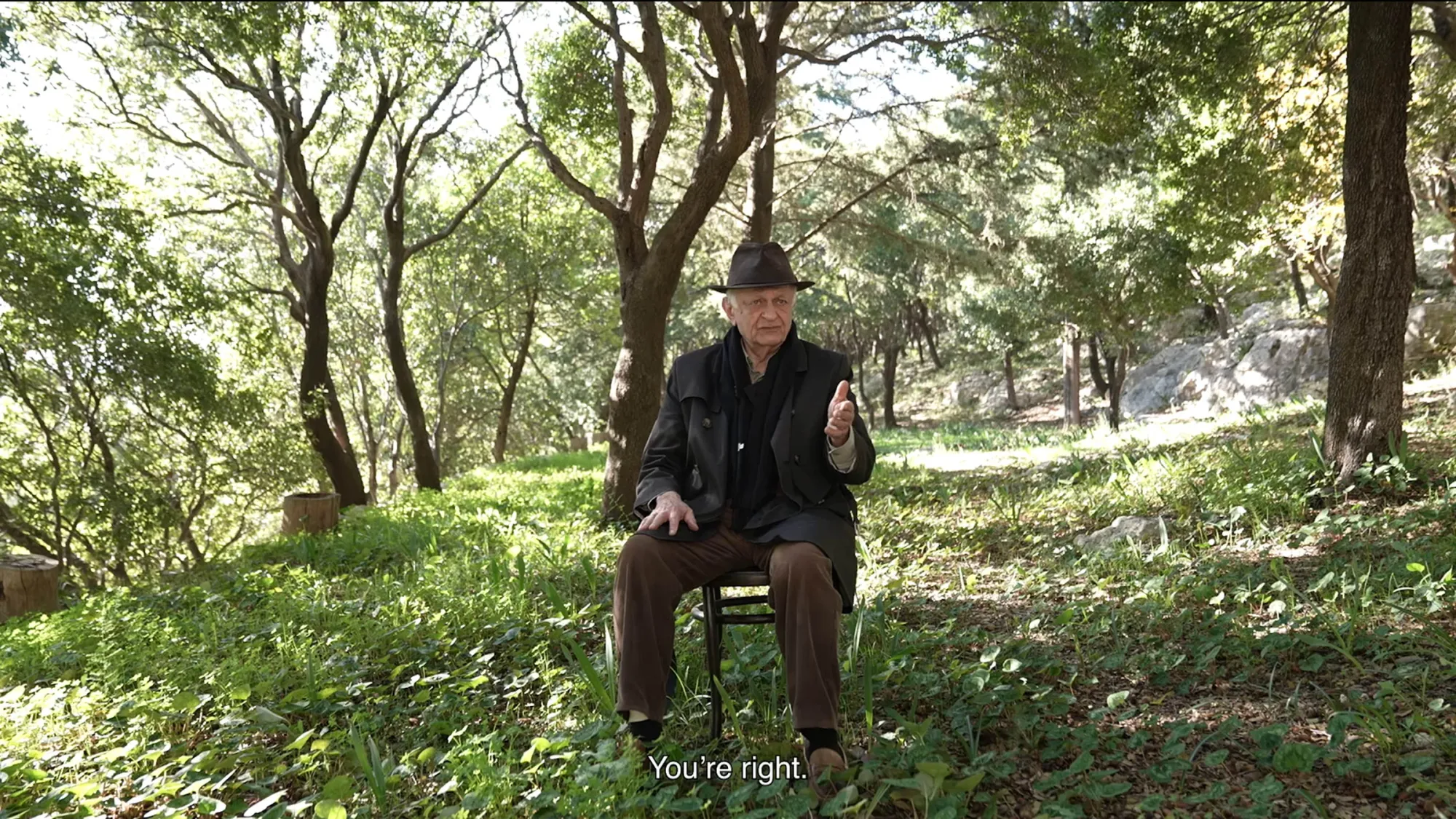
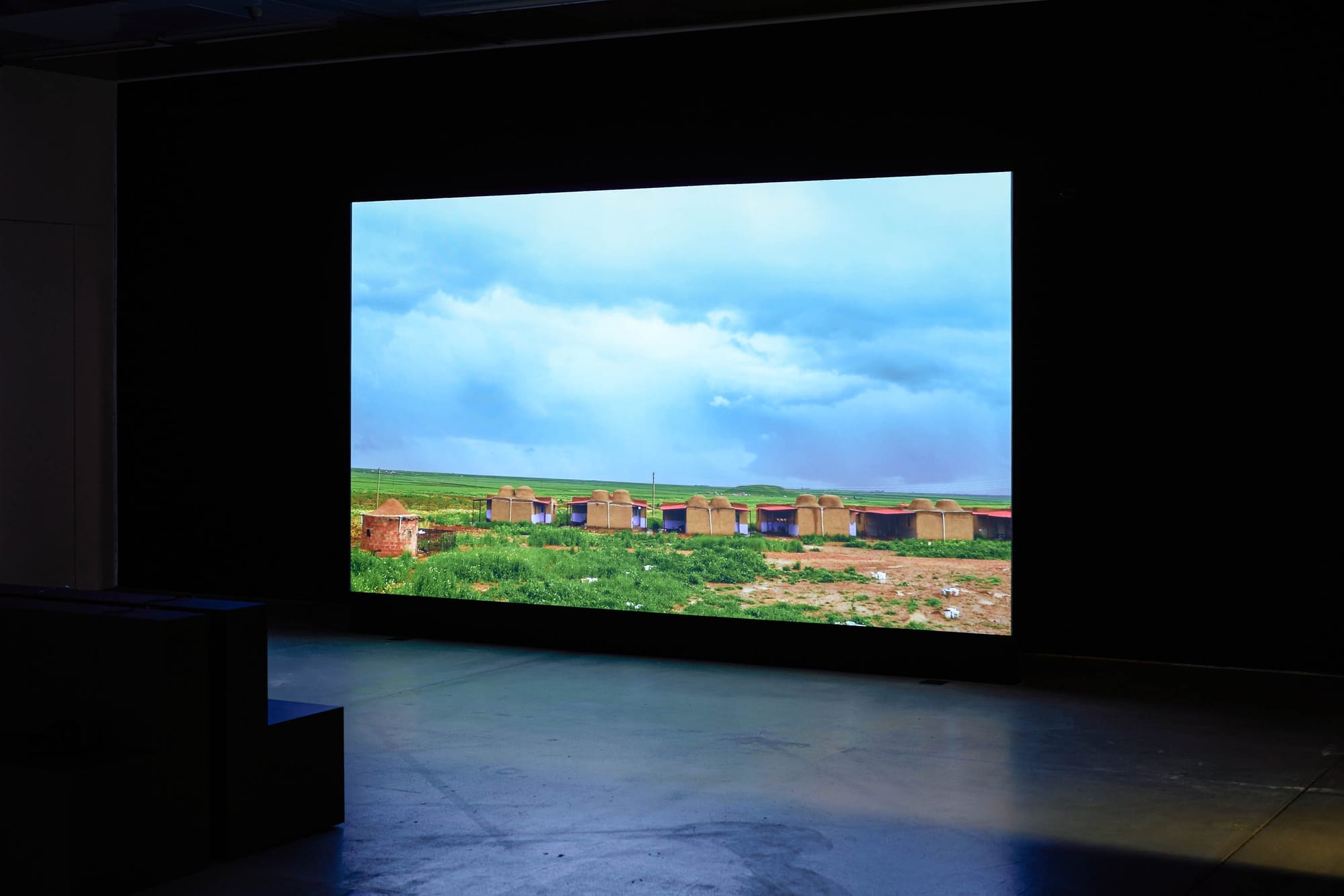
What they hold in common is a refusal to treat land, law and body as separate categories, whether the struggle unfolds with the Kurdish women’s movement in Iraq and northeastern Syria, with Grupo Semillas in Colombia, or across the scarred ground of a former quarry in Lebanon.
That refusal reads differently now than it might have in 2017, the year of the first part. The vocabulary Arsanios uses, usership, communalization, self-defense, has moved from activist meeting rooms into wider use without losing its edge.
By the fifth room, the animal masks no longer feel like a swerve from the documentary rooms before it. They feel like a continuation, a way of naming what the footage could only show. The books stay open on the floor of the screen long after the visitor has left that room. Nobody closes them.
TAXISPALAIS Kunsthalle Tirol on Instagram
Marwa Arsanios on Instagram
About Catapult Contemporary - Art Platform Submission
This is a exhibition review published by Catapult — an independent editorial platform for contemporary art, based in Vienna. We publish exhibition reviews, artist features, interviews, and critical context, with a focus on emerging and mid-career practices from Europe and beyond.
catapult.art
Want to be featured? Submit your work →