The Pavement Was Always Writing Back

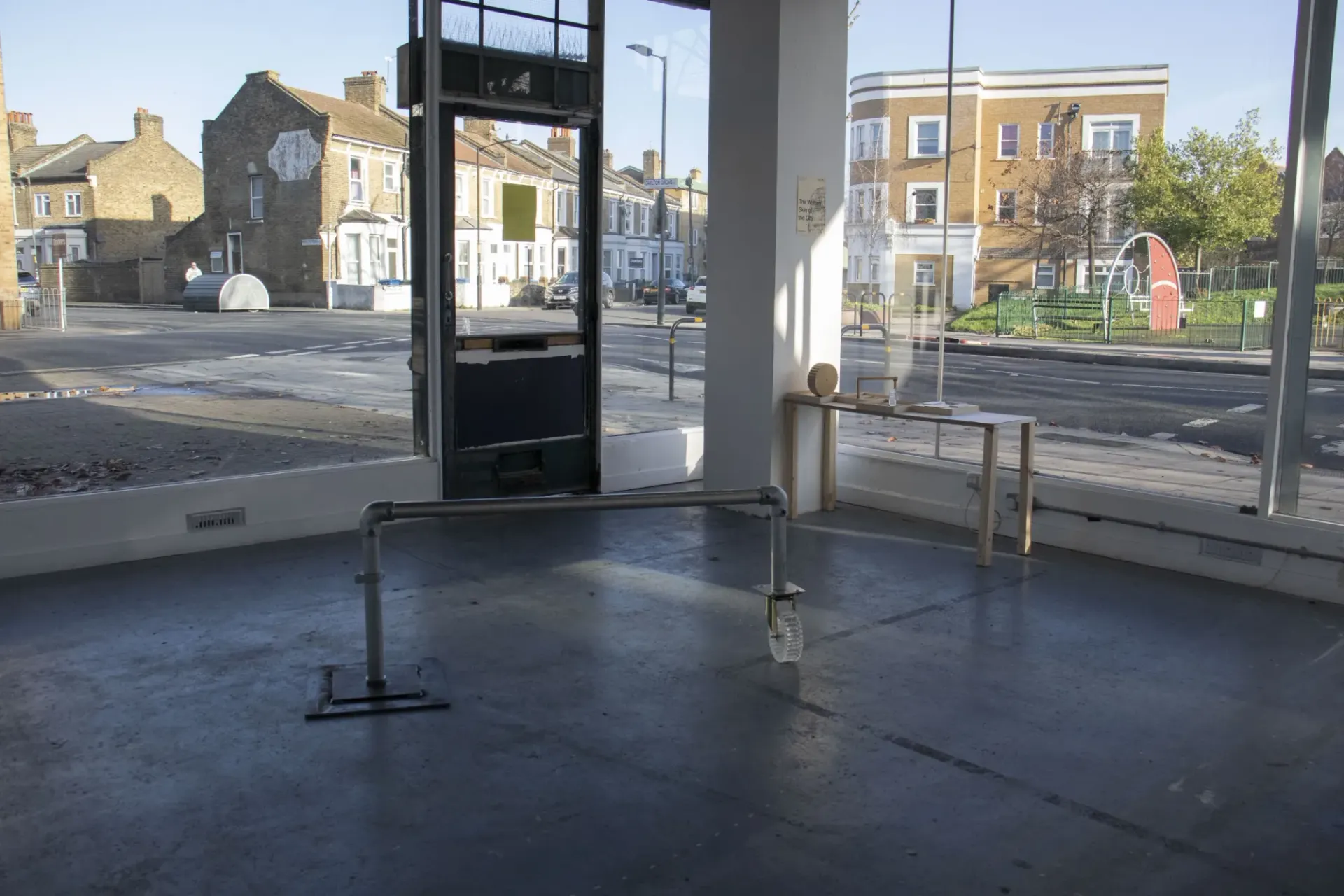
The Written Skin of the City by Min Jeong Park at AMP Gallery in London
Min Jeong Park’s solo exhibition The Written Skin of the City took place at AMP Gallery in Peckham, London, from 17 to 19 December 2025.
Urban surfaces are usually understood as passive, ground for movement, backdrop for life. Min Jeong Park's work in South London disputes that assumption without argument. The city's skin, she suggests, has already recorded everything that passed over it.
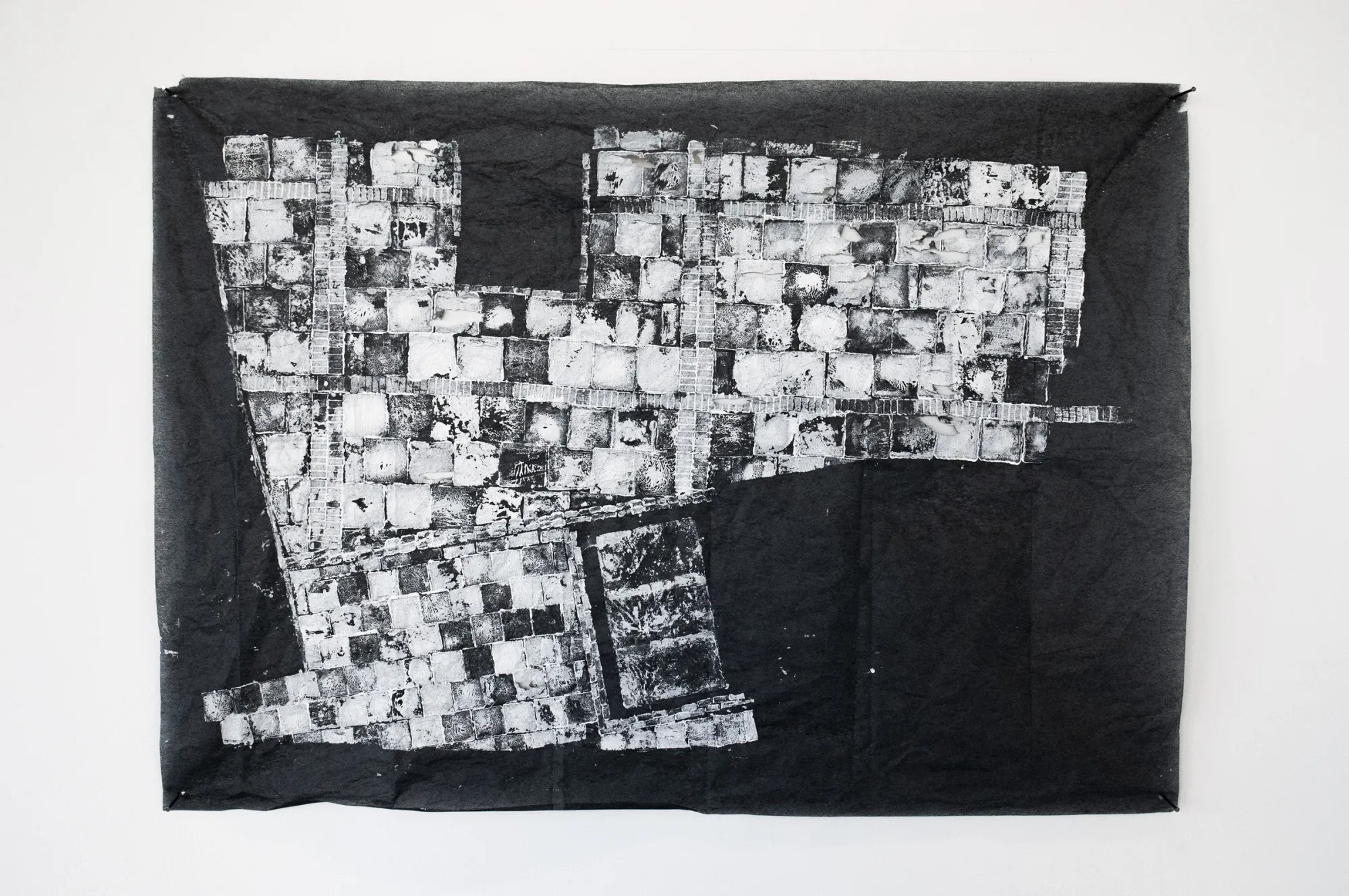
What separates her approach from documentary photography or urban archaeology is the method of contact. Park doesn't observe surfaces from a distance. She presses into them, extracts their imprint, and carries it inside, where it becomes something else entirely.
Min Jeong Park
The Written Skin of the City
AMP Gallery
London, UK
–
Courtesy Min Jeong Park
@_mm.ii.nn_
The forecourt of a housing estate in Peckham is not a neutral surface. It carries every buggy wheel, every dog paw, every crack and repair decision the council made and deferred. What Park does is make that legible, not as history, but as ongoing inscription.
AMP Gallery occupies a glass-fronted ground-floor space facing a busy junction in Peckham, South London. The transparency of the space is a condition, not an accident. While looking at Park's work inside, the actual street and its pavement remain continuously visible through the windows, the rubbings and the surfaces they came from coexist in the same visual field.
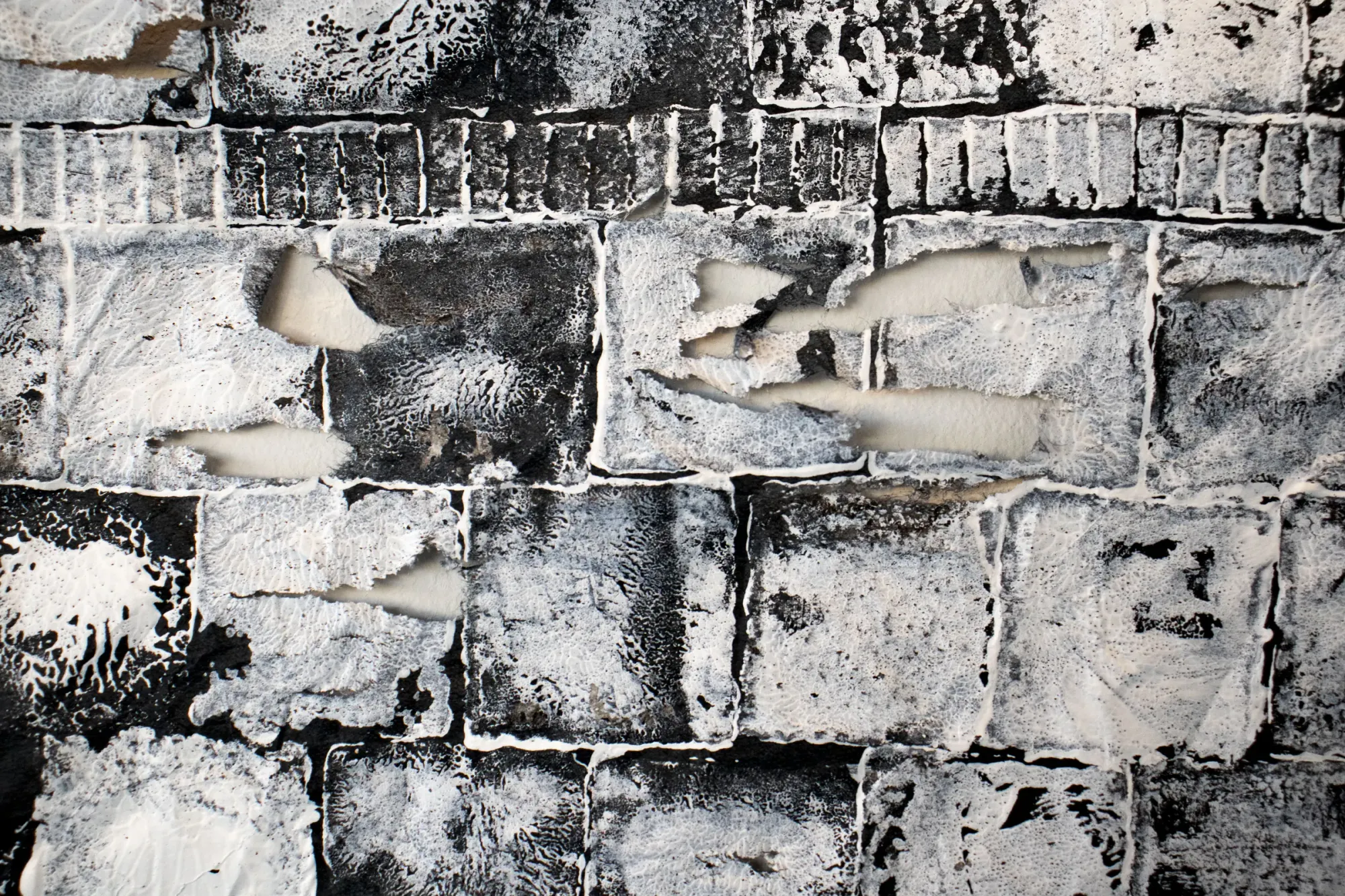
The largest works in the show are rubbings made on black textile from the paving grid of the Pelican Estate forecourt, a 1970s residential estate near the gallery. On dark ground, white wax registers every tile edge, every stain, every joint.
Hung on the wall, they read somewhere between map and monoprint, gridded enough to retain the logic of the original surface, irregular enough to make clear something irreversible happened to it. The scale shifts the encounter, what was underfoot becomes something you stand before.
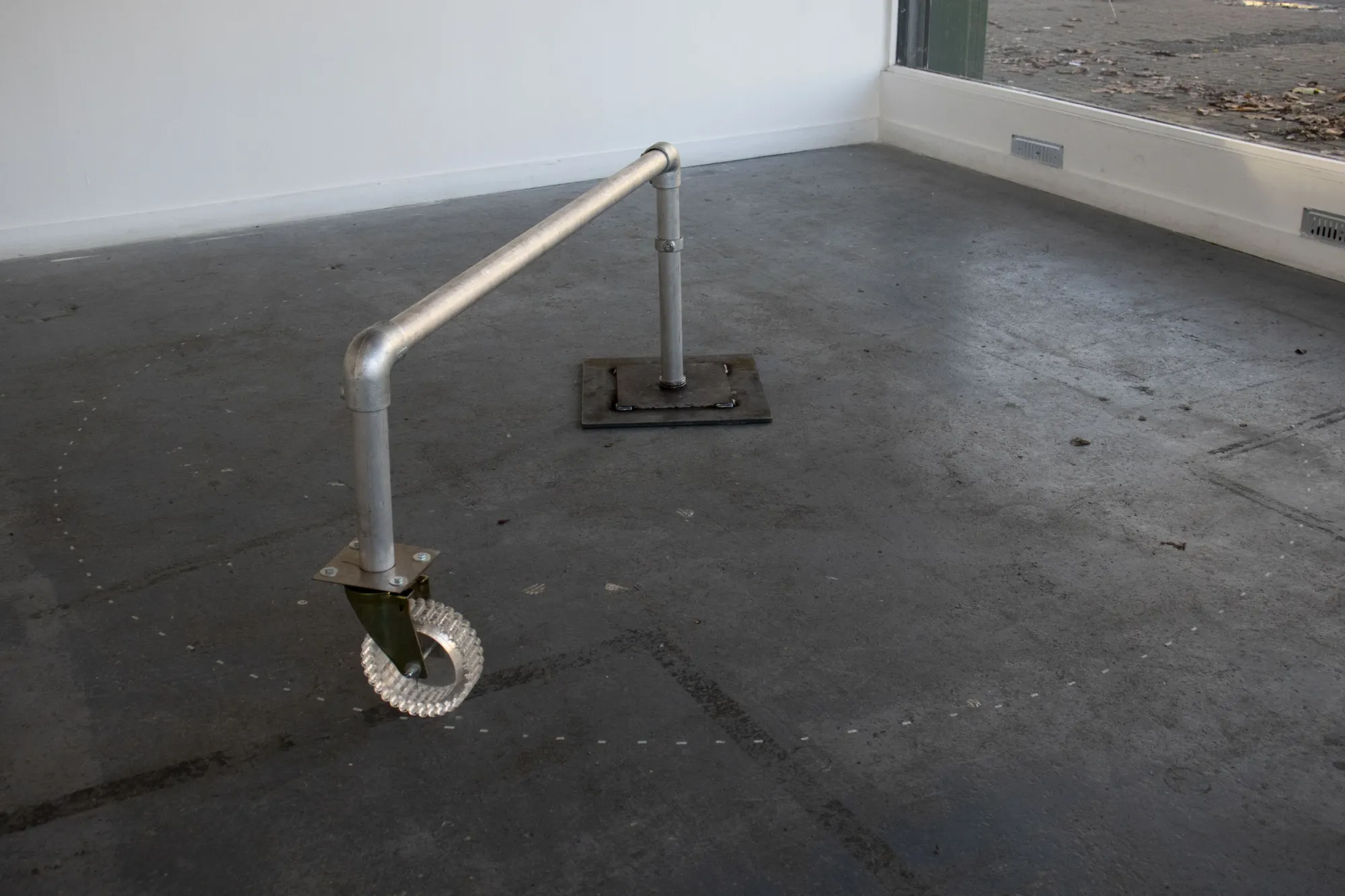
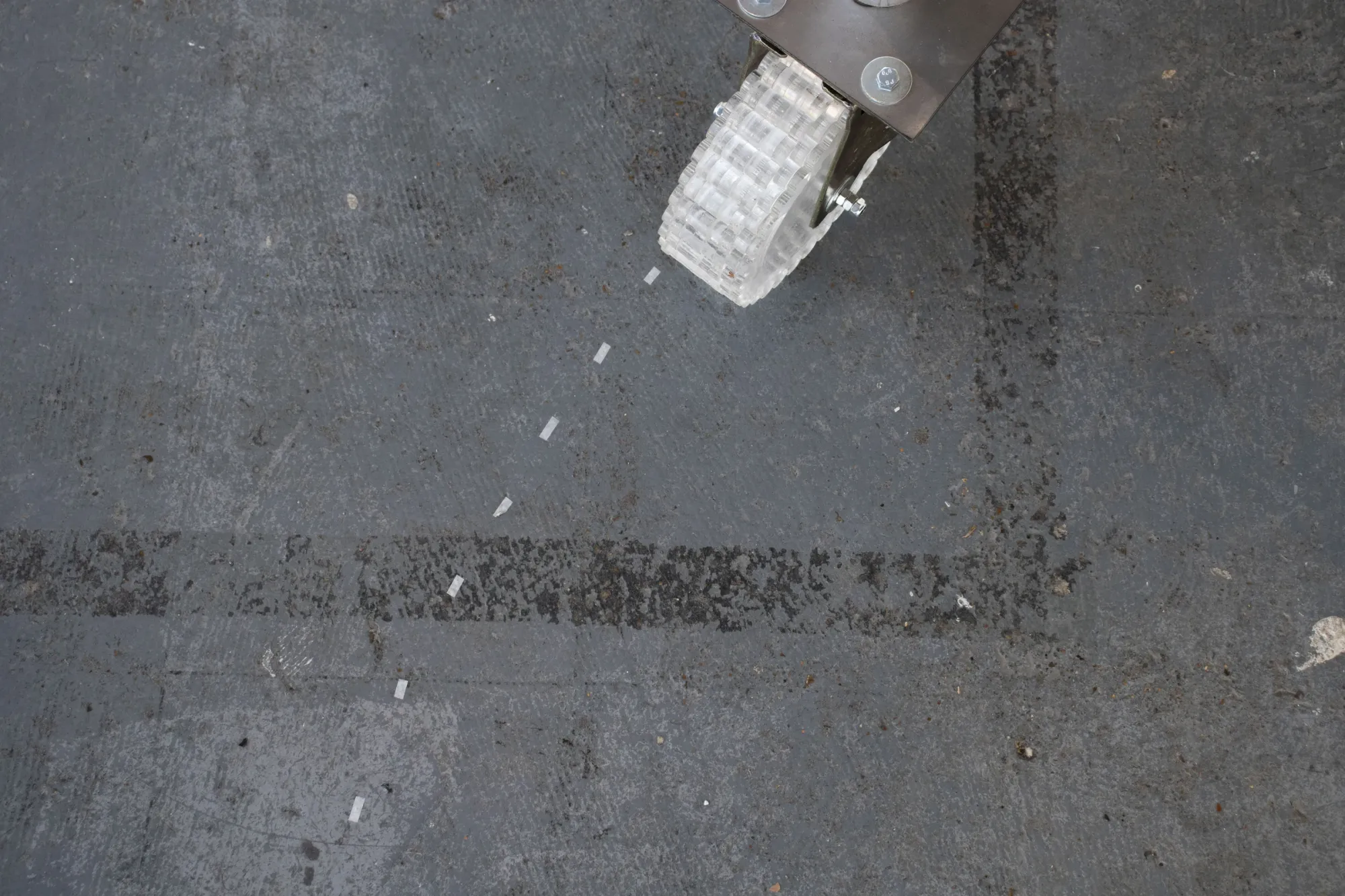
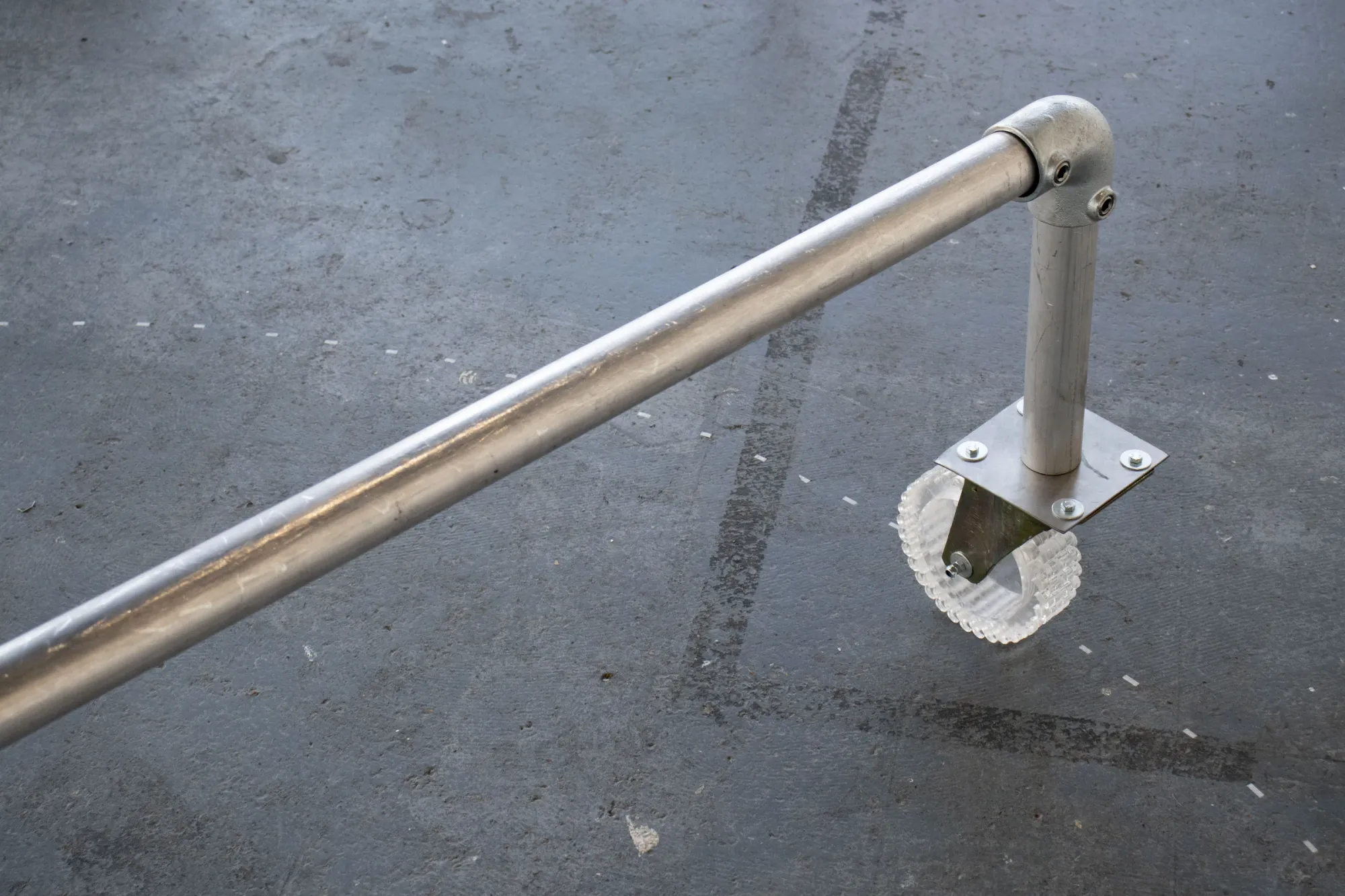
The floor piece, Wheeled Bench, is a scaffolding-pipe structure with a single rubber wheel at one end and a chalk dispenser at the other. Pushed along the gallery floor, it leaves a dotted arc of marks, a trace of its own movement, on dark concrete not unlike the surface outside. The object holds the line between functional furniture and drawing instrument without resolving it. It doesn't beautify the surface it moves across, it simply continues what the city started.
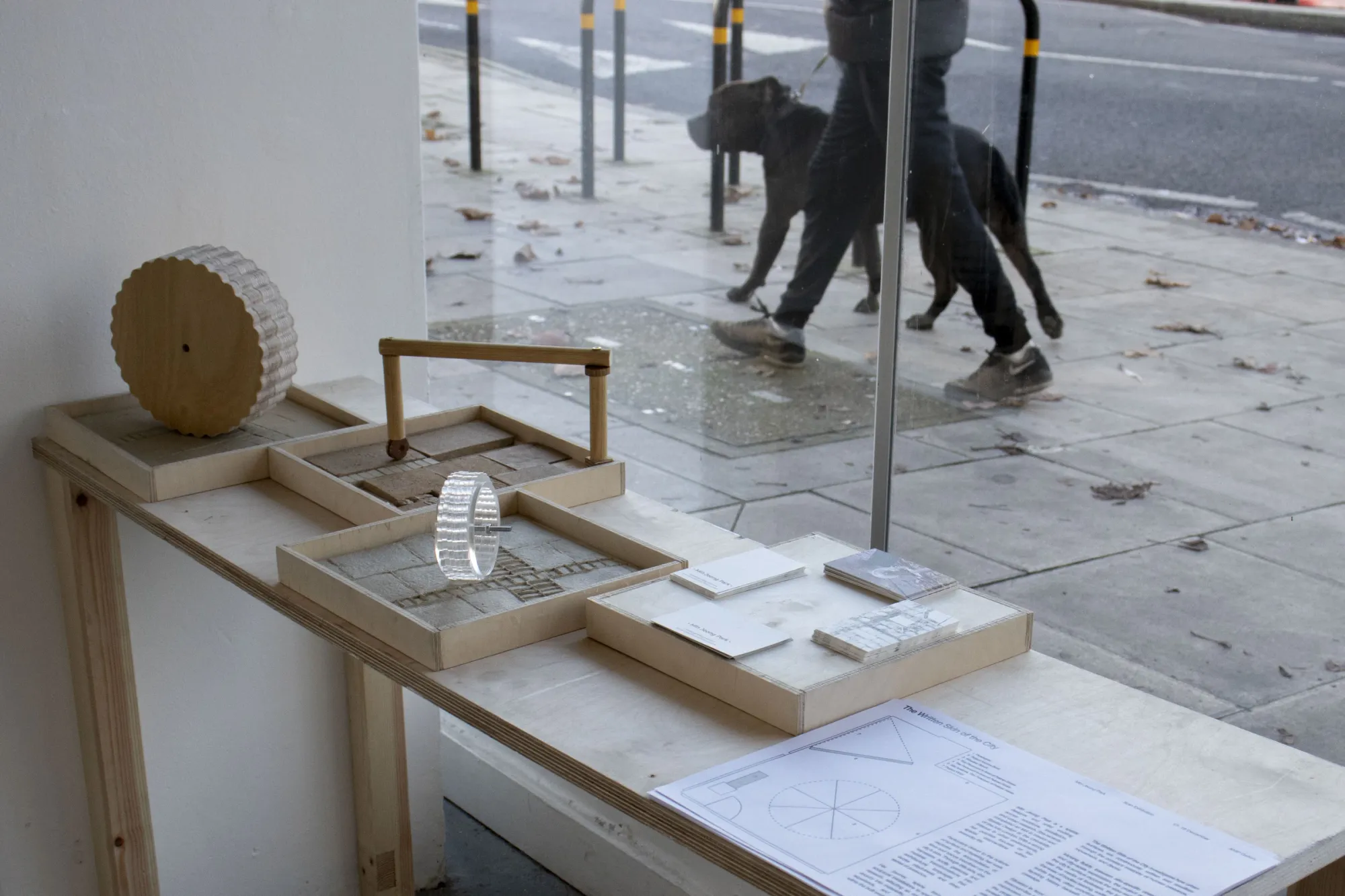
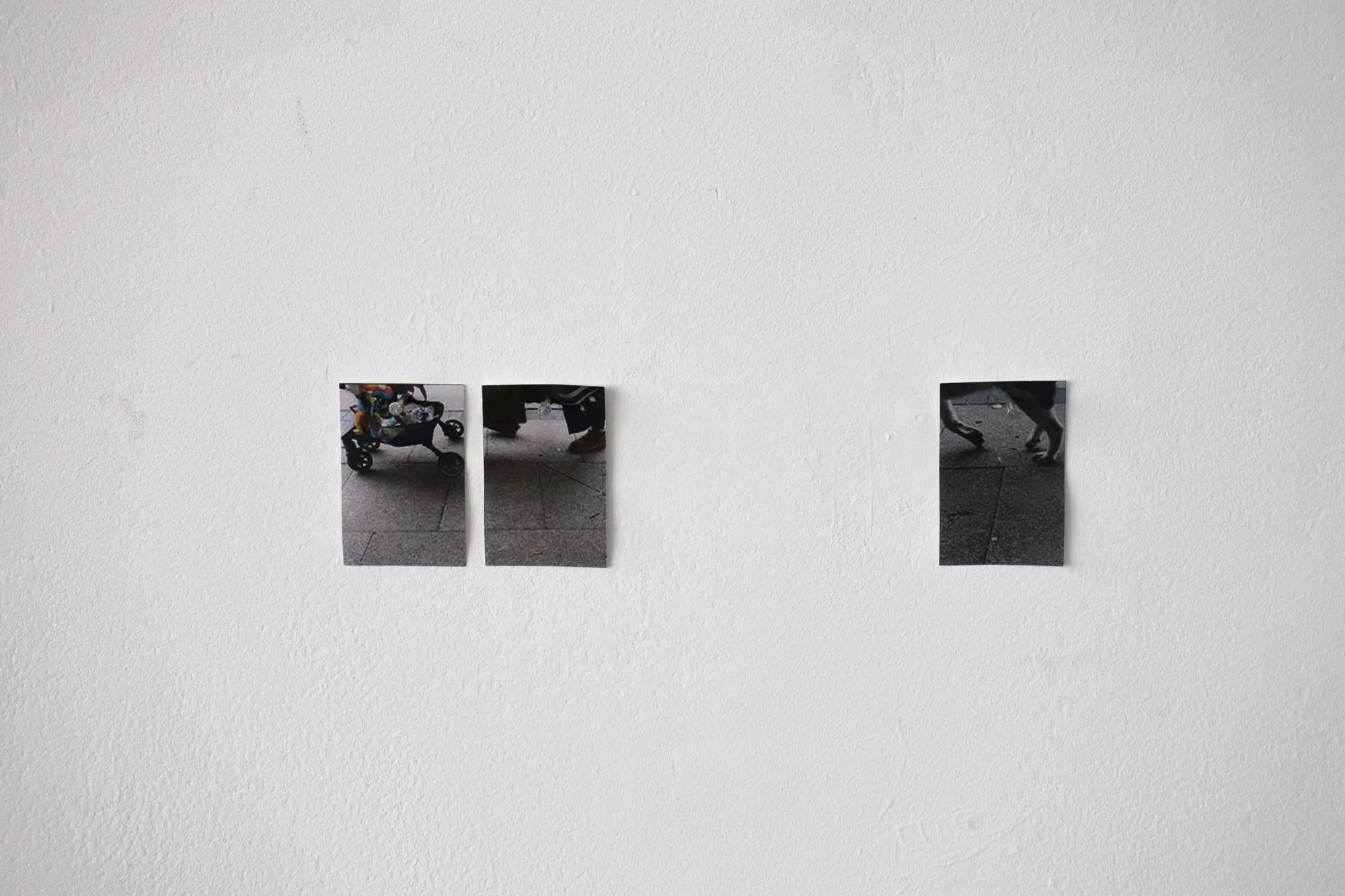
A set of small photographs, pinned without frames, shows wheels, paws, and feet on pavement, close to the ground, stripped of any orienting horizon. Nearby, the Prototypes for the Wheeled Bench sit in shallow wooden frames, actual paving tiles lifted and held, like specimens from a surface that remains in use. Together they mark the gap between observation and intervention that the exhibition returns to repeatedly.
There's a particular weight to work that looks this carefully at the ground beneath working-class housing in South London in 2025. The forecourt of the Pelican Estate is not a picturesque surface.
It carries decades of occupation without much architectural attention, accumulating the marks of lives that left no other record. Park doesn't aestheticize that neglect or romanticize it. She reads it as inscription, which is different from documentation. Inscription implies a subject that left it. Once the surface is understood this way, it holds its record without requiring a monument.
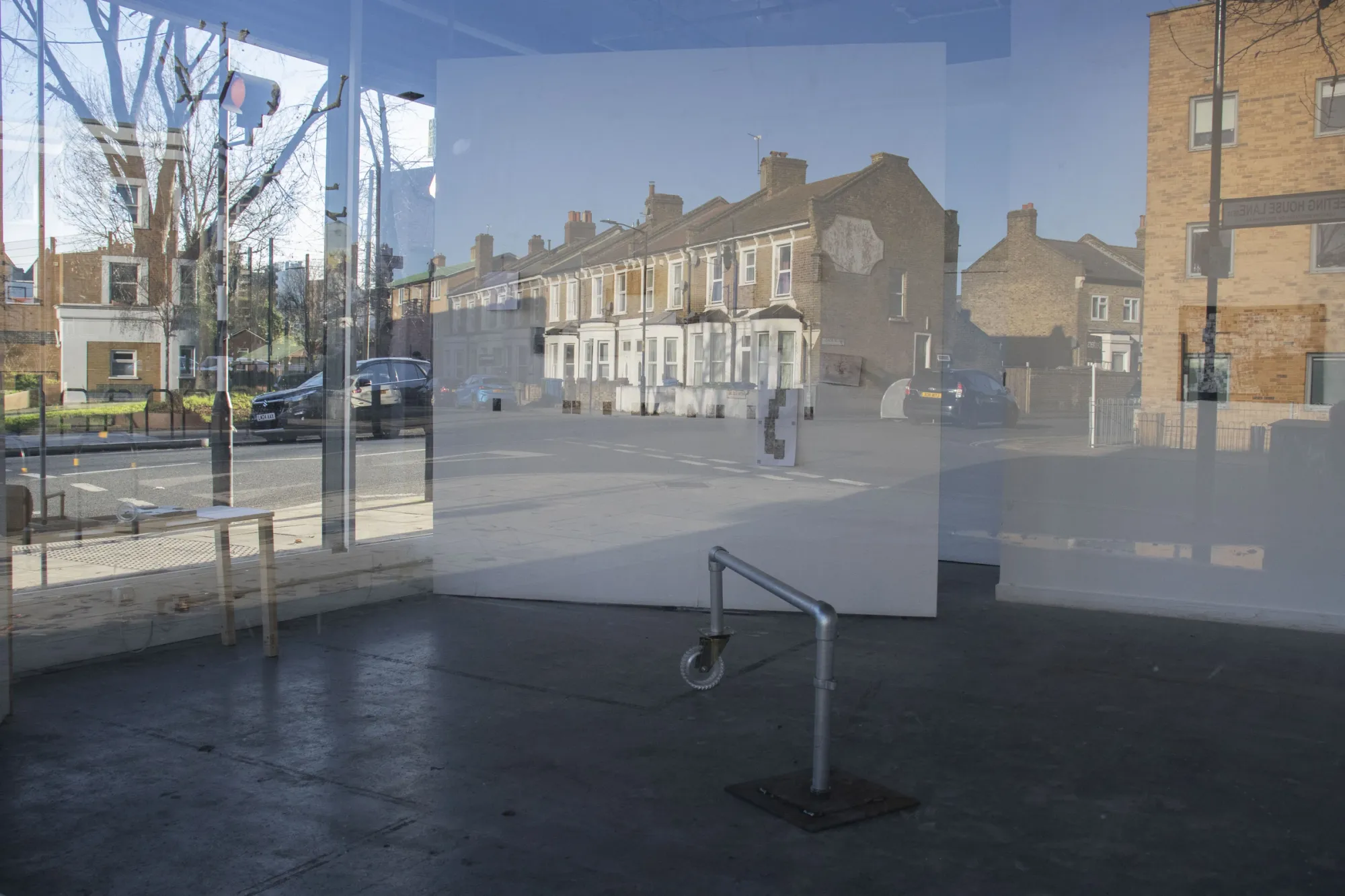
What the Wheeled Bench adds to the floor is already indistinguishable from what was there. In Park’s work, the city is not a backdrop to movement, but a surface that has been writing all along.
About Catapult
This is a exhibition review published by Catapult - an independent editorial platform for contemporary art, based in Vienna. We publish exhibition reviews, artist features, interviews, and critical context, with a focus on emerging and mid-career practices from Europe and beyond.
catapult.art
Want to be featured? Submit your work →