Natalia Sara Skorupa Dresses Polish Patriotism in a Red-Striped Tracksuit

Lotna Gallery Presents God, Honour, Motherland in Warsaw
Lotna Gallery presents God, Honour, Motherland, curated by Maj Smoszna, through December 18, 2026.
Natalia Sara Skorupa
God, Honour, Motherland
Lotna Gallery
Warsaw, Poland
–
Maj Smoszna
Gustaw Gozdecki
Courtesy the artist and Lotna Gallery
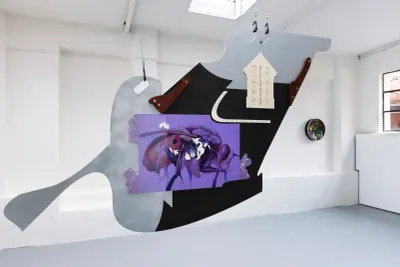
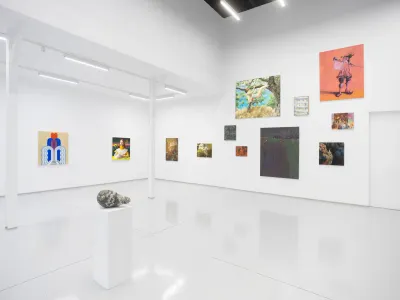
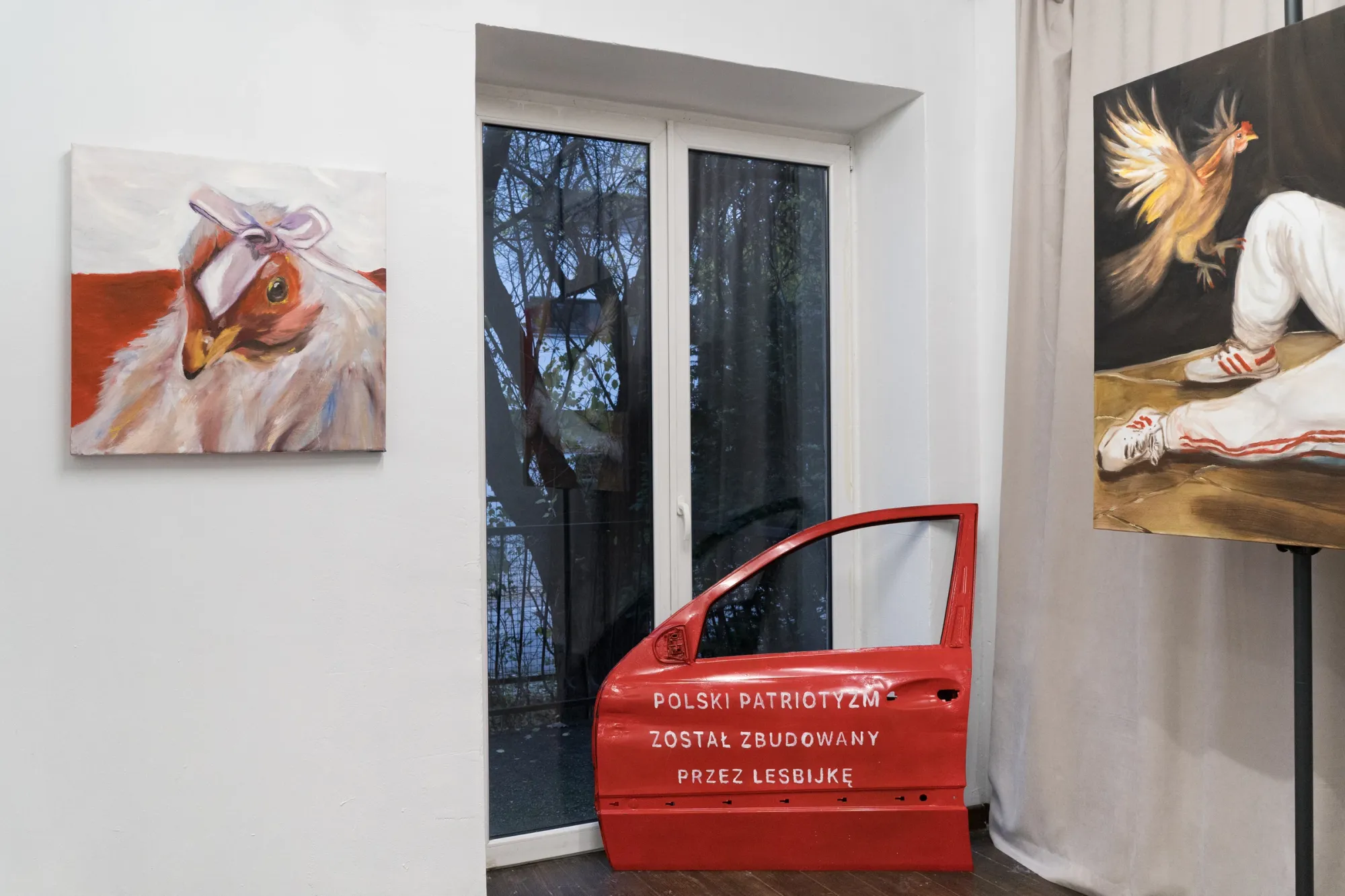
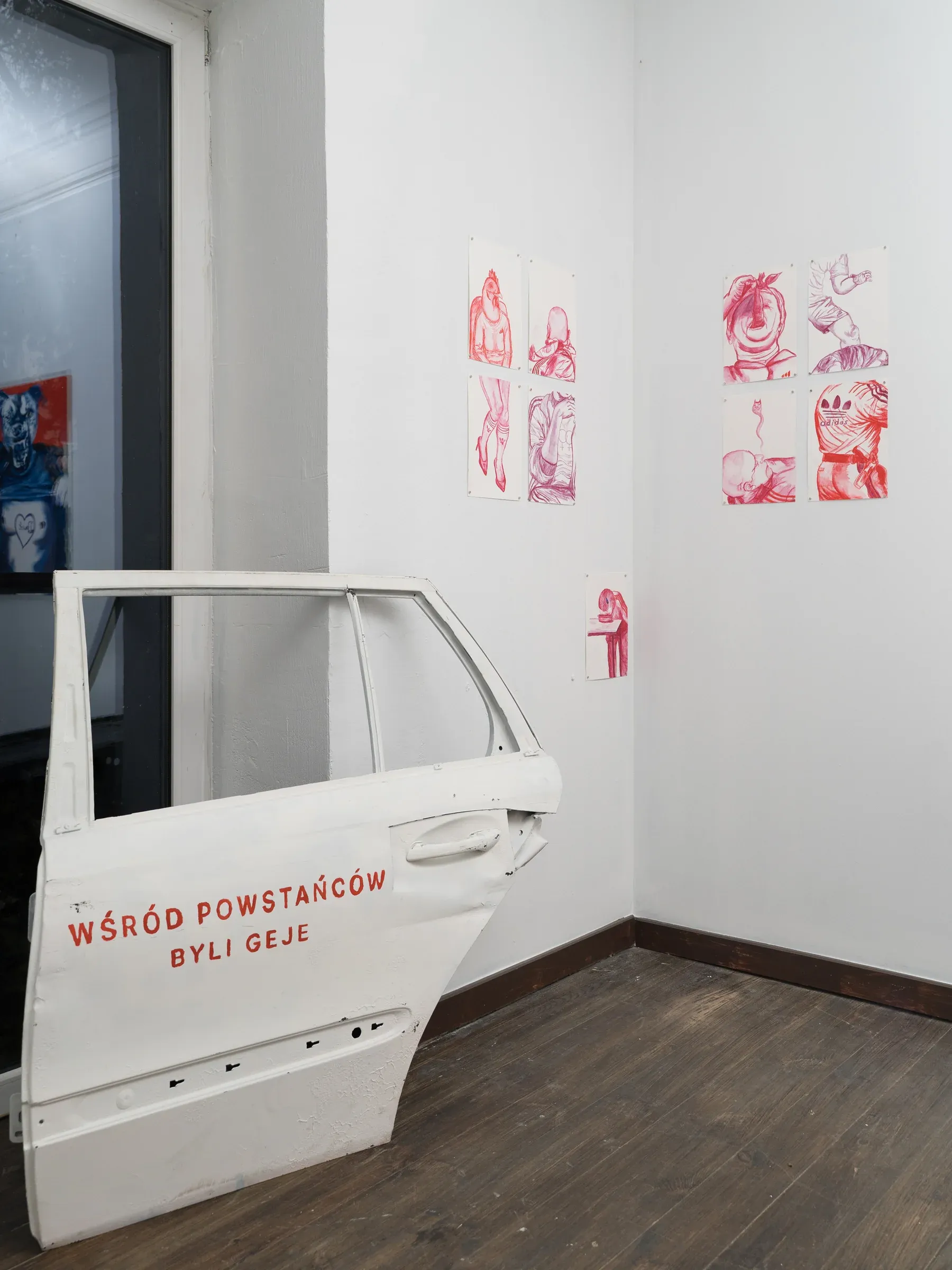
A red car door rests against a gallery window in Warsaw, a sentence lettered across it in white Polish capitals. In translation, it reads: Polish patriotism was built by a lesbian. Around it hang paintings of figures in white tracksuits with red stripes, a hen with a pink ribbon, a skull-faced figure in bed with a cat beside her.
This is God, Honour, Motherland, the first solo exhibition by Natalia Sara Skorupa, on view at Lotna Gallery from November 6 to December 18, 2026, curated by Maj Smoszna.
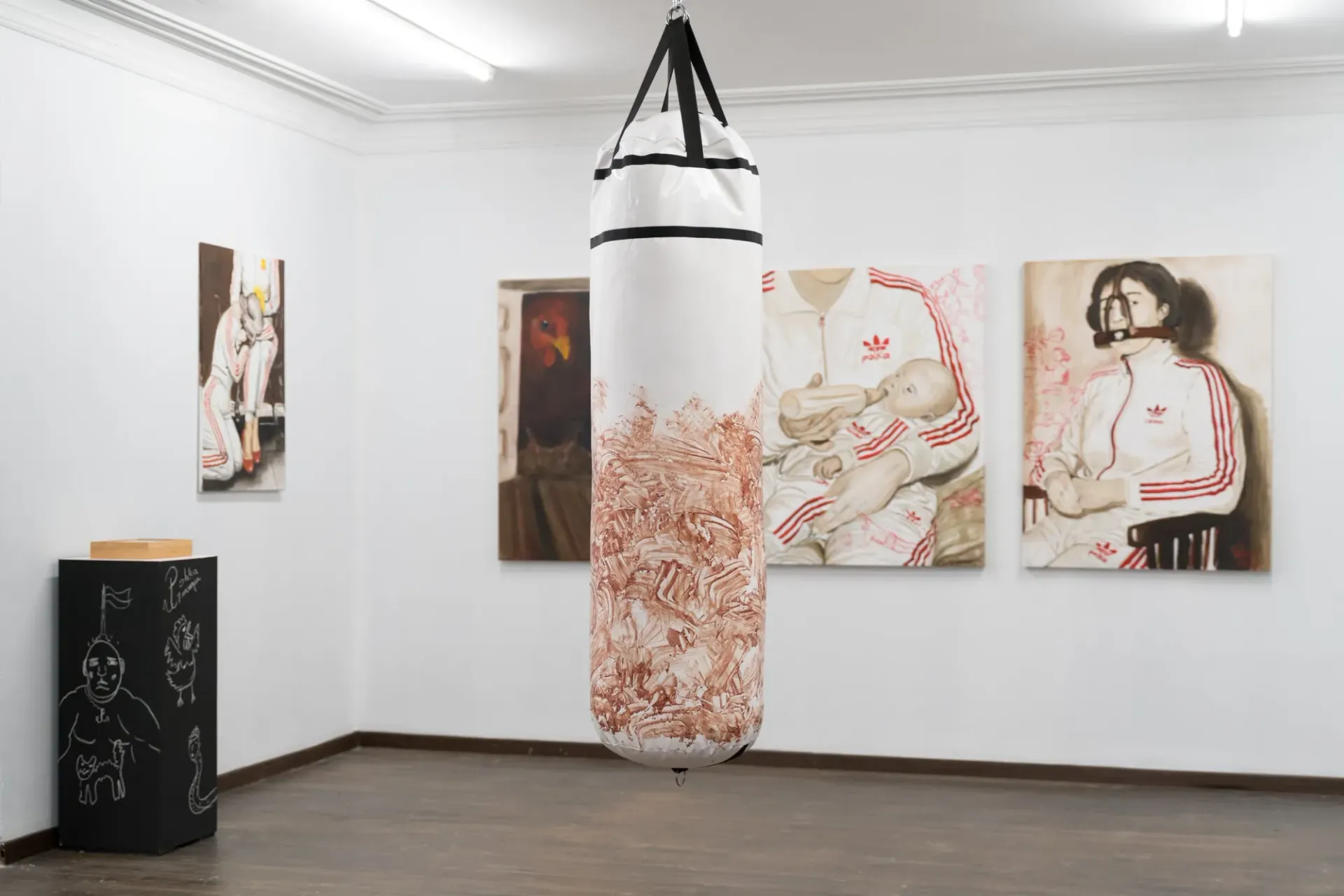
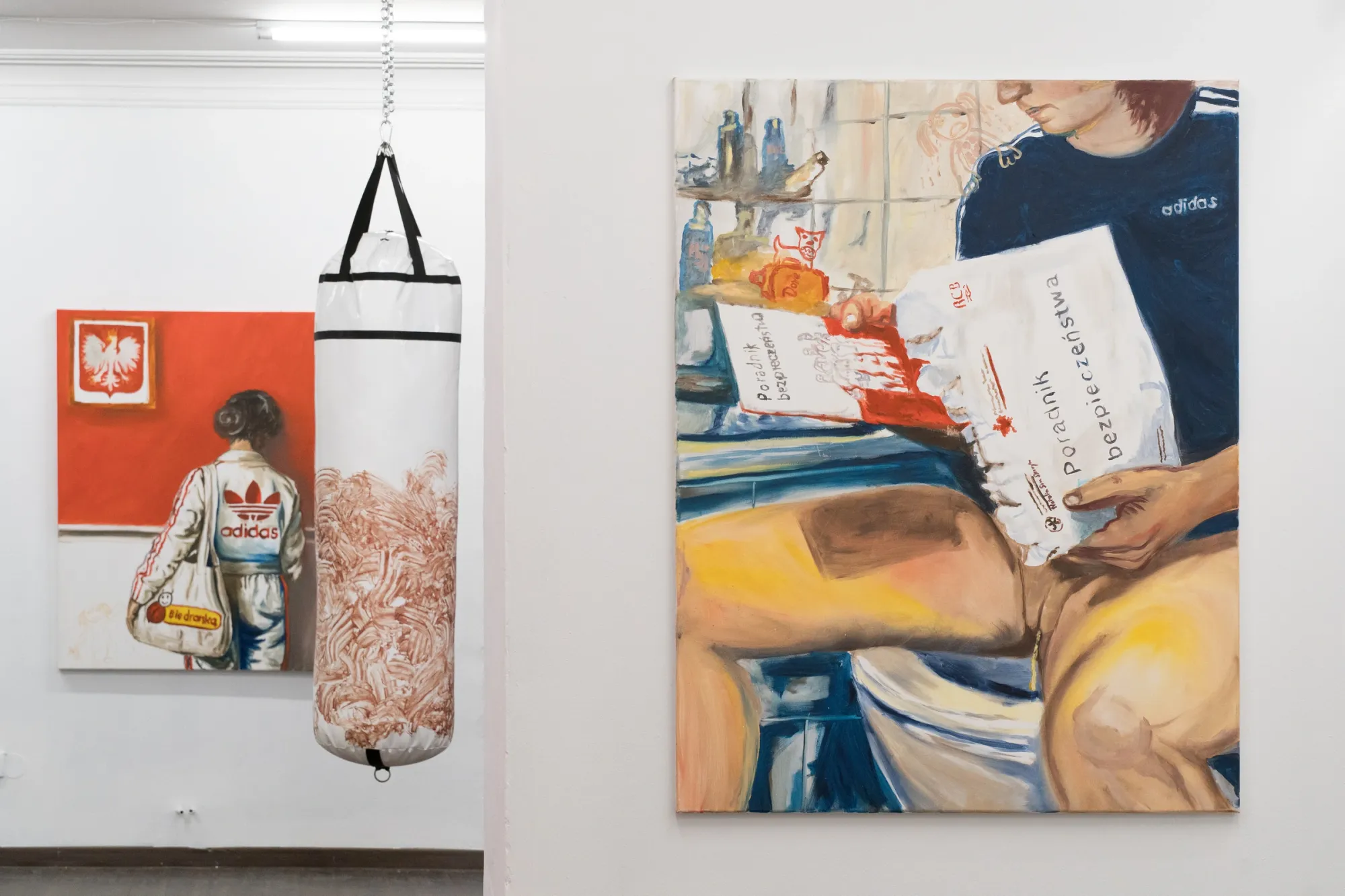
A white punching bag hangs in the middle of the room as the surface for the performance Citizen. The paintings around it change register quickly: dog-headed men brawl on a green pitch in front of housing blocks, a hen wears a pink bow, a seated figure in a tracksuit has a bridle strapped over her head.
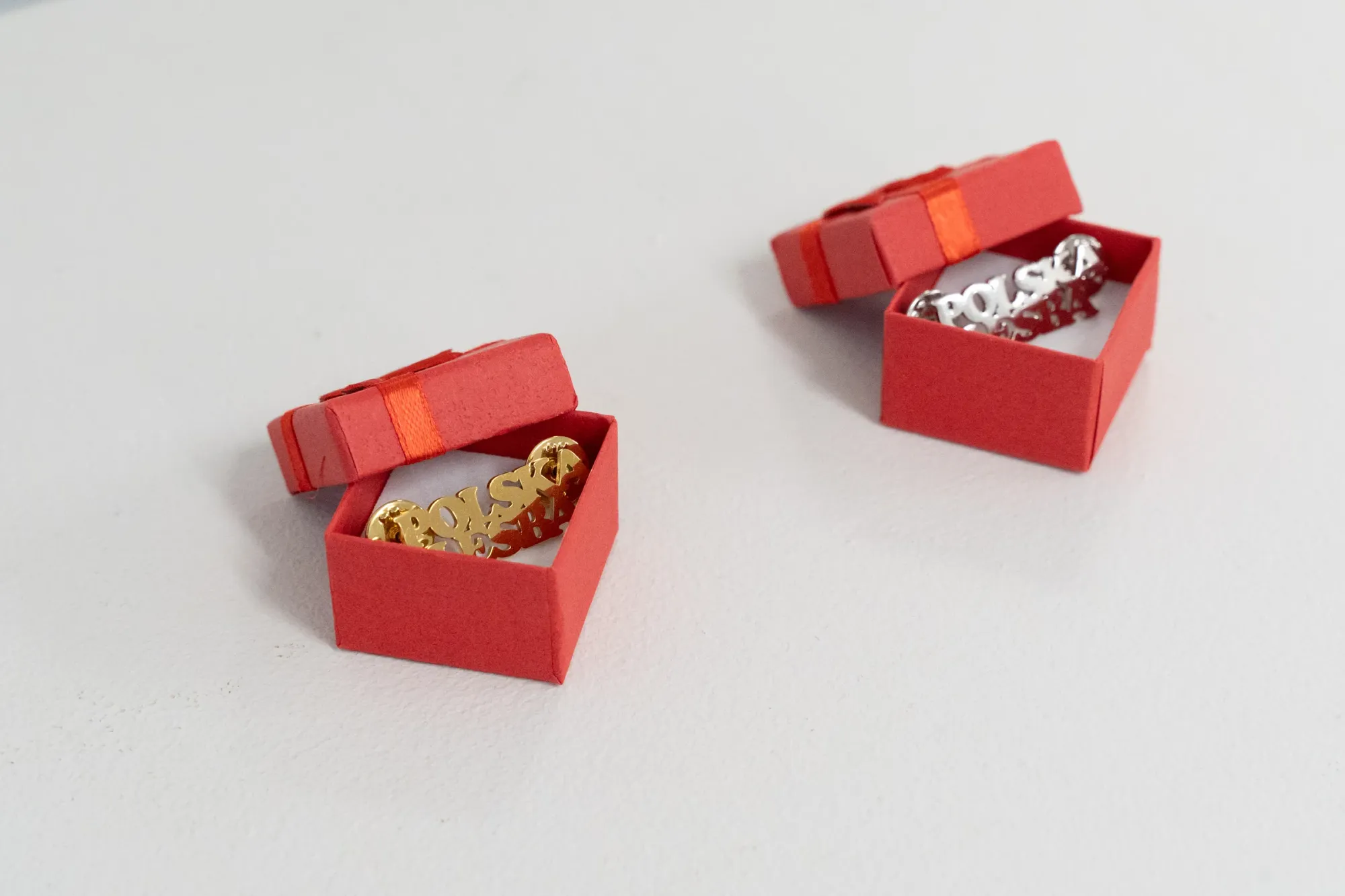
Nearby, a video-performance plays in front of a red curtain, and a pair of stained white gloves lies in a wooden box under glass.
Curatorial Text by Maj Smoszna
God, Honour, Motherland is a solo exhibition devoted to Polishness as seen from the perspective of a queer artist, one who is usually excluded by national symbols. Drawing on Dorota Masłowska’s tracksuit novel and feminist body art, Natalia Sara Skorupa confronts the realities of housing estates, historical memory and patriotic ideology under the white-and-red flag.
By appropriating nationalist emblems and aesthetics, she asks whether love for one's homeland and love for another woman must truly be mutually exclusive.
Everyone was Polish, simply everyone, everyone, everyone
RADIO: “In the old days, when the world was still governed by divine law, everyone in the world was Polish. Everyone was Polish, the German was Polish, the Swede was Polish, the Spaniard was Polish, everyone was Polish, simply everyone, everyone, everyone. (...) But the good times for our state came to an end. (...) Polish flags were destroyed and other stripes, stars and various squiggles were painted on them, the Polish language was officially replaced with fancy foreign languages that nobody knows or understands, except for the people who speak them solely so that we Poles won't know or understand them, and so that we feel like the lowest of the low…” (Dorota Masłowska, Między nami dobrze jest, 2008).
Every November, for as long as little Polak can remember, marches roll through Warsaw. Amid scandal, filled with love and hatred, Polish patriots and patriotesses march under the white-and-red flag. According to their organisers, the Independence March is the largest “patriotic demonstration in Europe”. “Our goal is Great Poland, and in our hearts: God, Honour, Motherland.”
Natalia Sara Skorupa’s exhibition addresses Polish patriotism and nationalism in times of advancing fascisation. In the title, the word motherland is replaced with matczyzna, literally understood as an inheritance from one's mother, and symbolically pointing to the place of women, including queer women, within national discourse.
Raised in a housing estate in Szczecin, among women of different generations, Skorupa describes herself as a queer patriot. It sounds like a provocation, but it may also be an uncomfortable truth. This political declaration is reflected in her artistic practice, which she consistently develops through performances, installations, films and paintings.
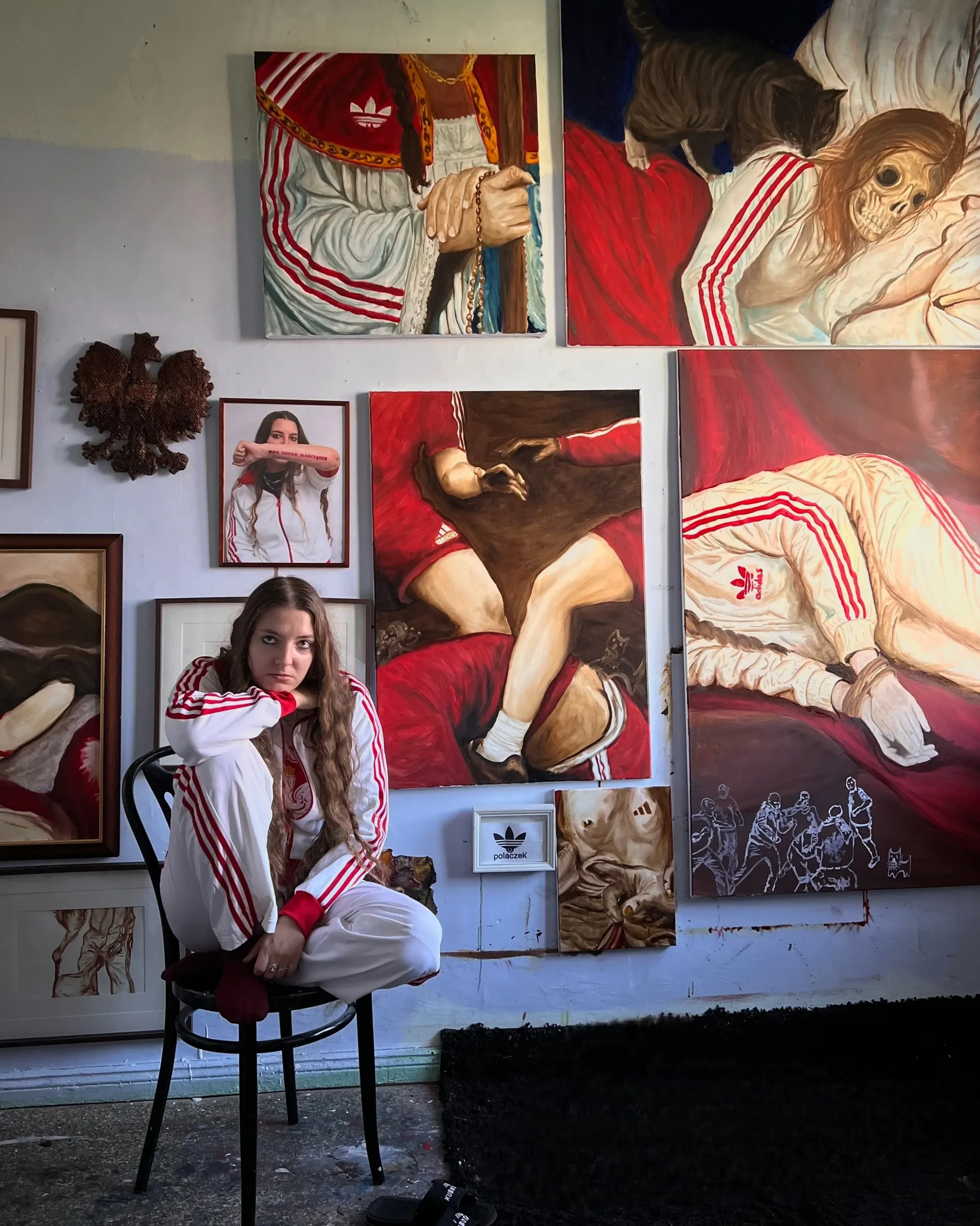
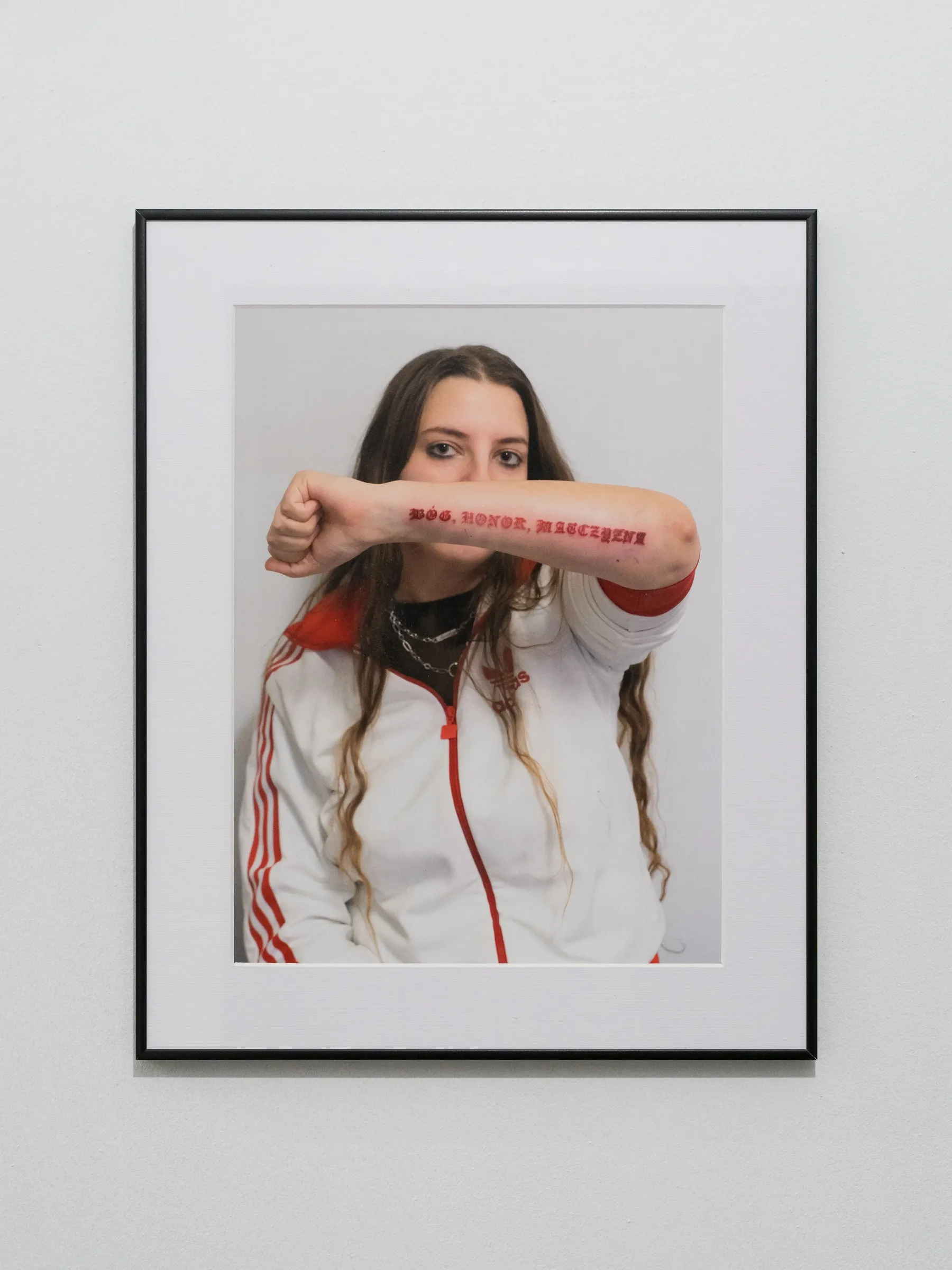
In her painting, alongside oil paint, blood appears as an ingredient, a tool and, at the same time, a life-giving fluid transformed into artistic matter. The titular photograph God, Honour, Motherland shows Skorupa wearing a characteristic white-and-red tracksuit with three stripes. The artist partially covers her face with her hand, on which a scarification is visible, a form of body modification involving deliberate damage to the skin in order to create a scar. Blood replaces ink, and the skin becomes a carrier of an identity declaration. It is also a reference to nationalist tattoos used in radical subcultures to manifest belonging and ideology.
The queer patriot vs. the mad patriot
The figure of the “queer patriot” can provocatively be juxtaposed with the figure of the “mad patriot”, as described by Maria Janion. Both are tragic figures. The former loves a country that does not reciprocate her feelings; the latter loves his homeland so deeply that he descends into madness.
Skorupa’s work explores various aspects of Polish nationalist discourse, its protagonists, symbols and historical imaginings. The artist transforms motifs known from historical painting, associated primarily with the work of male artists such as Matejko and the Kossaks, and relocates them to the setting of courtyards and housing estates. Instead of aristocratic palaces, noble salons and battlefields, we find the spaces of everyday life. This is the case, among others, with Matejko’s Rejtan.
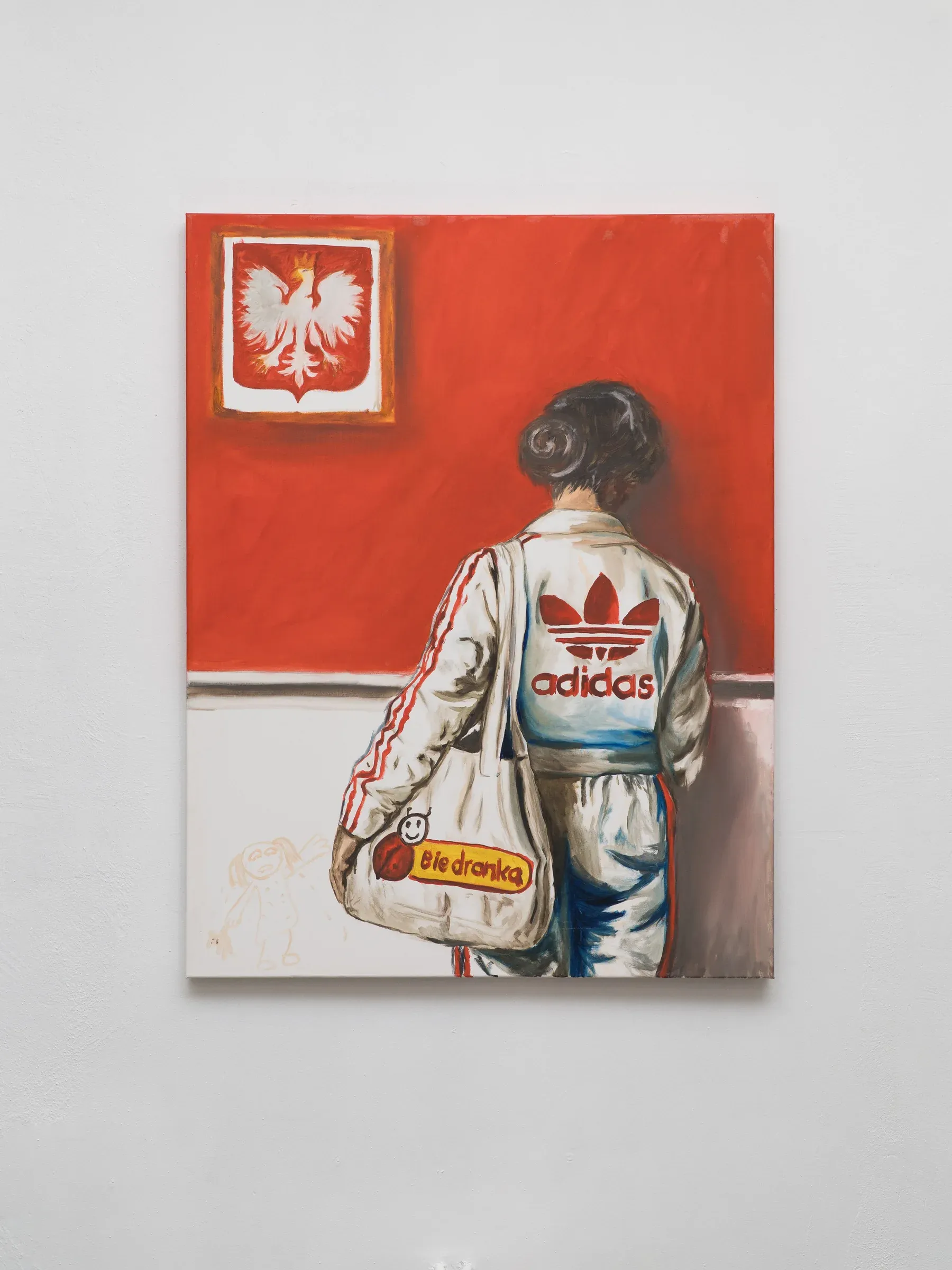
Natalia Sara Skorupa, God, Honour, Motherland, painting, Lotna Gallery, Warsaw, 2026. Photo: Gustaw Gozdecki. Courtesy the artist and Lotna Gallery.
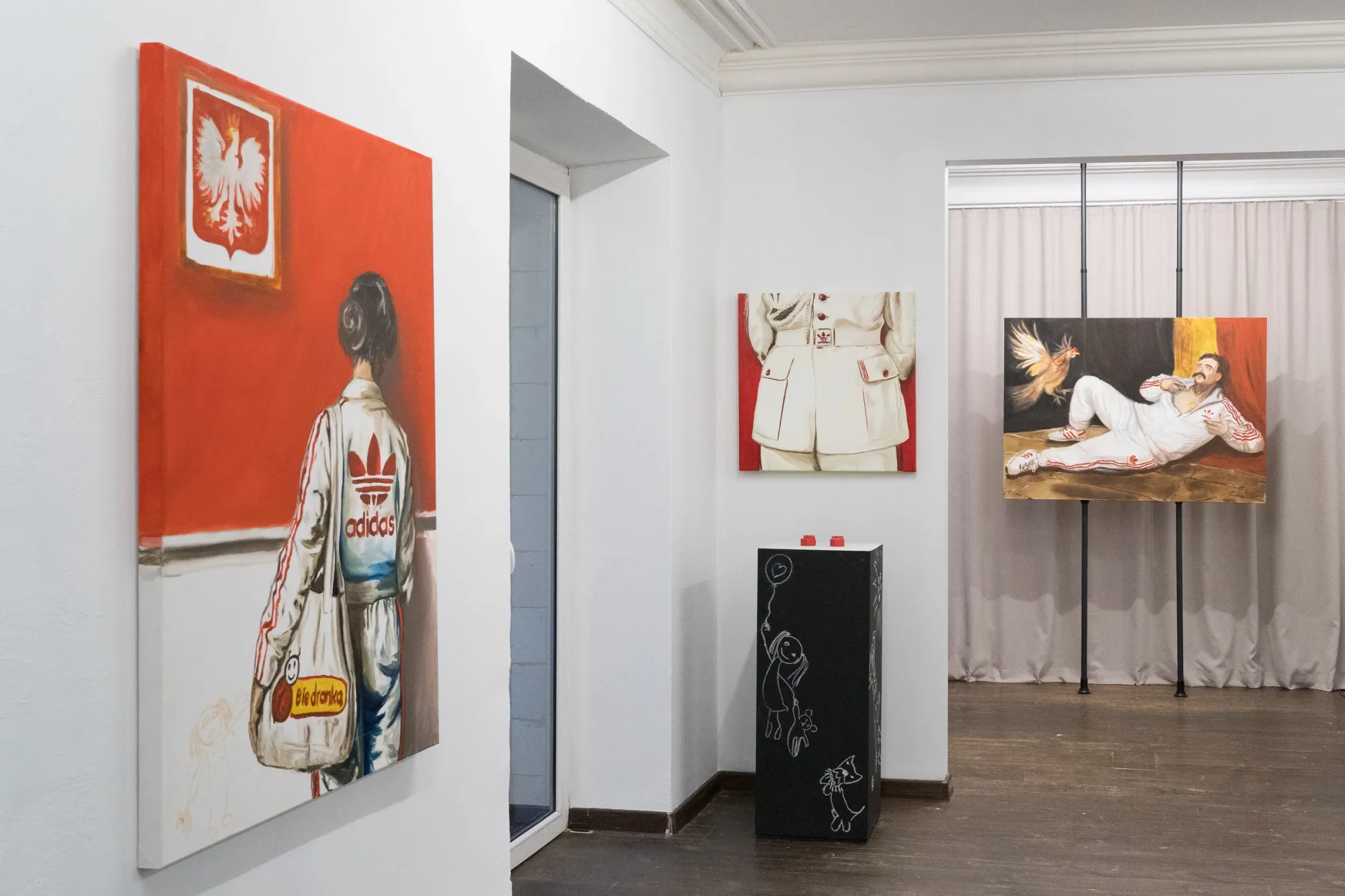
“There is a dark zone in Polish patriotism, bordering on the sacred, madness and suicidal death. When the existence of the homeland is threatened by violence and evil, ‘mad’ Polish patriots emerge. Their archetypal representation is, perhaps, Rejtan,” writes Maria Janion in the introduction to Wobec zła (2026).
Skorupa takes up this myth by referring to one of the canonical works of Polish patriotic art and adopting its original title: The Fall of Poland. In her interpretation, the scene loses its solemnity and tragedy, becoming almost a caricature. Rejtan wears a white-and-red tracksuit with three stripes, has red-painted fingernails, an eagle-shaped earring and a gold chain bearing the symbol of Fighting Poland.
He resembles Silny from Dorota Masłowska’s novel, or a gay icon with an exposed chest and emphasised masculine physique. The crowd of magnates, hetmans and noblemen is replaced by a rooster that jumps onto the terrified man. Is this iconoclasm? Quite possibly.
Domestic hens
Roosters and hens regularly return in Natalia Sara Skorupa’s work. Sometimes they take on a dark, sinister form, as in Domestic Hen, while at other times they reveal their seemingly charming side. Poultry is part of Skorupa’s artistic vocabulary. She grew up in a traditional household where warm chicken soup was served for dinner, although she herself is now vegan.
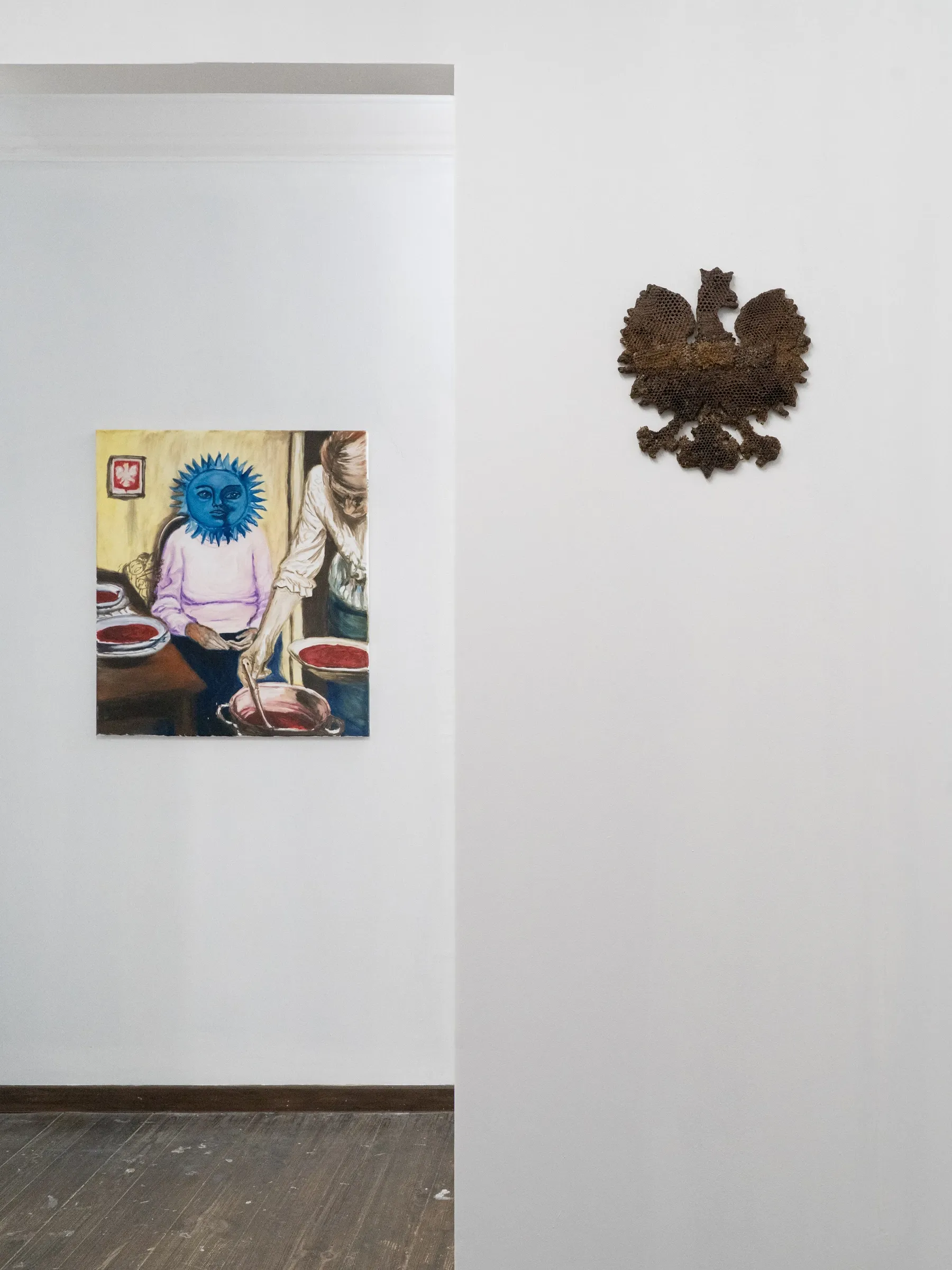
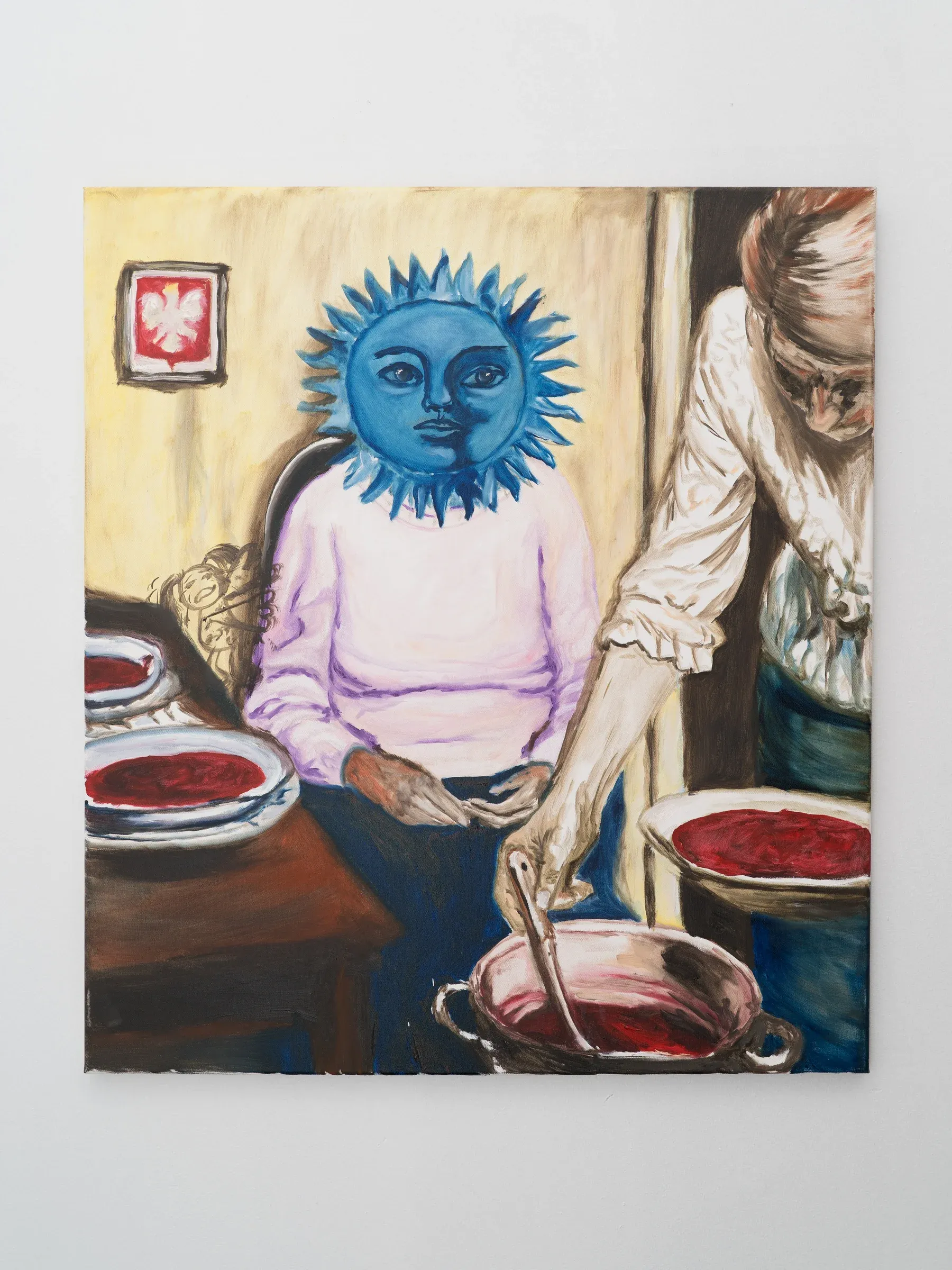
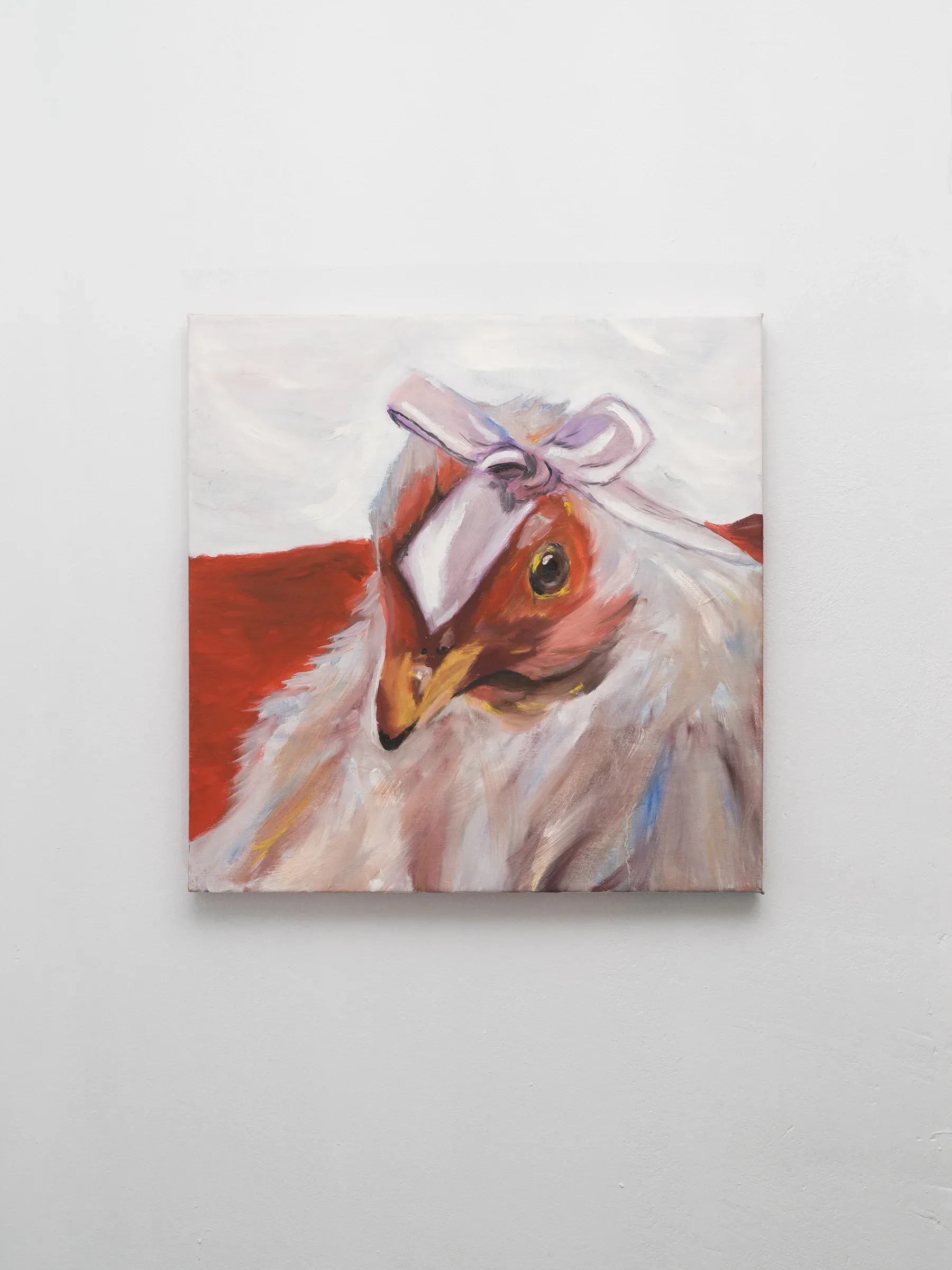
The hen becomes a symbol of women's enslavement under patriarchy, but can also embody innocence and naivety. This is the case in the charming portrait I’m Just a Girl in Poland. The seemingly innocent little hen, with a pink ribbon in her comb, acquires additional meanings in the context of social expectations imposed on women.
Skorupa’s paintings also repeatedly feature housing blocks and the lives of so-called ordinary people, primarily younger and older women who wage an invisible daily struggle against the system. They go shopping at Biedronka, as in Shame, cook dinner, pick up children from school, and combine all these responsibilities with professional work.
Mrs Halina is one of the characters who regularly appears in her work. She is probably inspired by women from the painter’s family, but she also represents thousands of Polish women without whom the ideal of the “Polish family” could never exist. Mrs Halina raises a Polish child conceived through IVF, Mrs Halina cooks her husband, Mrs Halina killed patriarchy, Mrs Halina runs over nationalists. The titles of these works commemorate both the tragedies of Polish women and their struggle and heroism. Humour and irony become a way of telling stories about everyday struggles, the experience of inequality and the fight for the right to self-determination.
Tracksuit painting
In Natalia Sara Skorupa’s works, one can almost hear the looped, speed-fuelled voice of Silny from Dorota Masłowska’s Snow White and Russian Red (2002). The artist looks at explosive men, brawls, groups of football supporters, nationalists, members of the ONR and neighbourhood hooligans. Such characters appear, among others, in the work Football Fans and in a series of drawings made with red watercolour.
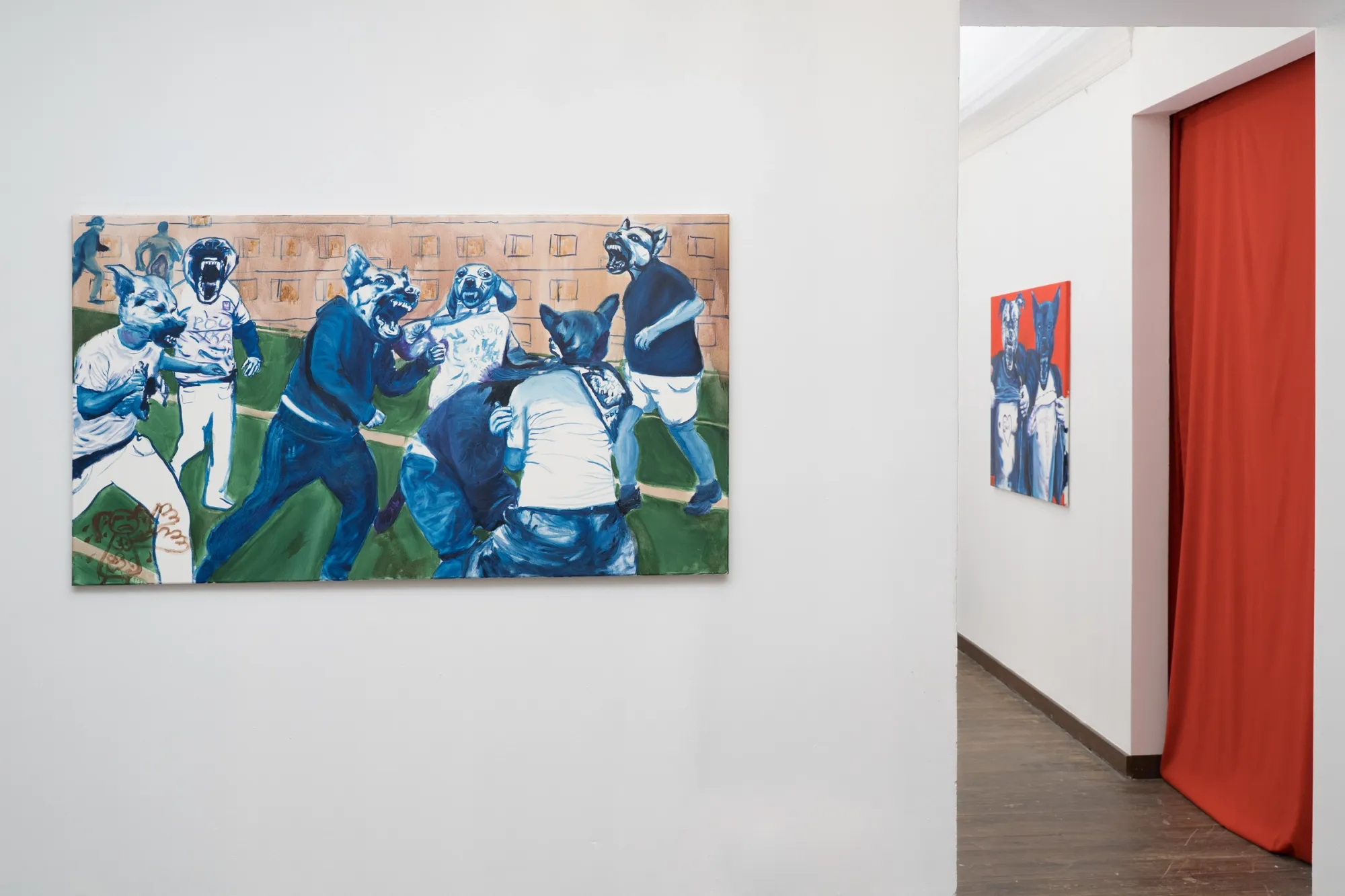
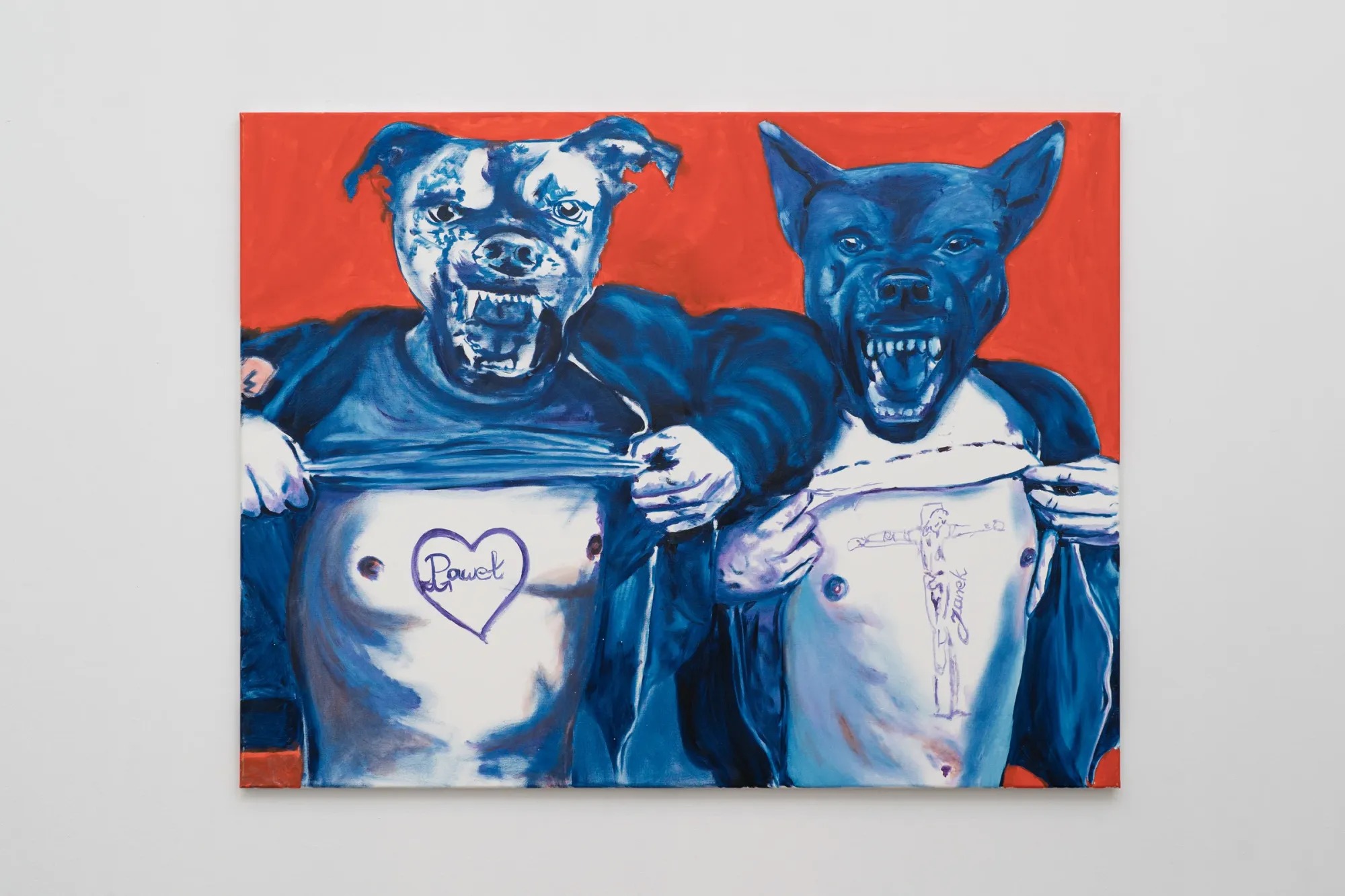
Male figures in Skorupa’s work almost never have clearly defined faces. Their features are blurred or completely erased, and sometimes human heads are replaced by the heads of furious dogs. In the scene Declaration of Love, two men with dog heads display their tattooed chests. Among the tattoos are national and Christian symbols, such as the Fighting Poland emblem and a crucifix. What is surprising, however, is a male name written inside a little heart, placed where we might expect the name of a beloved woman. In this way, the artist once again queers patriarchal figures of masculinity, reminding us of the often homosocial dimension of male national communities.
Lesbians, queers, feminists
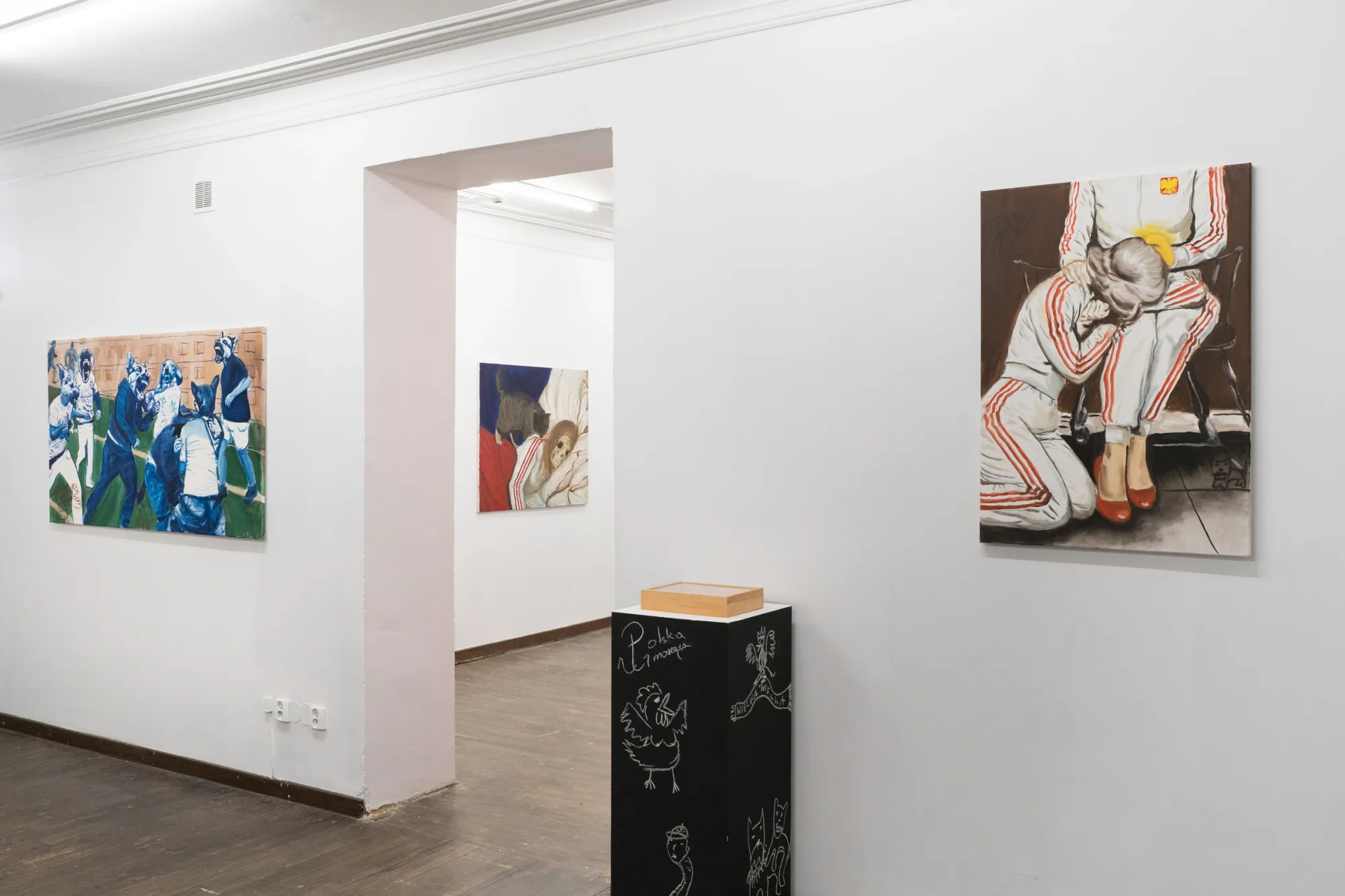
Violence is constantly present in various forms throughout Skorupa’s work. The artist addresses the oppression of women, invoking both historical and contemporary forms of their subjugation, as well as traditions of emancipation. Using scrapped car doors, she recalls activists who fought for women's rights, such as Maria Konopnicka, the author of the patriotic song Rota, who remained in a close relationship with the painter Maria Dulębianka until the end of her life.
“Polish patriotism was built by a lesbian” is a slogan that recurs in Skorupa’s work, one with which the queer artist clearly identifies. She consistently juxtaposes Polishness with lesbian identity, as if attempting to engrave this connection into collective consciousness. It is an attempt to restore forgotten or marginalised aspects of history, but also a need to justify her own place in a society that repeatedly denies queer people the right to fully participate in the national community.
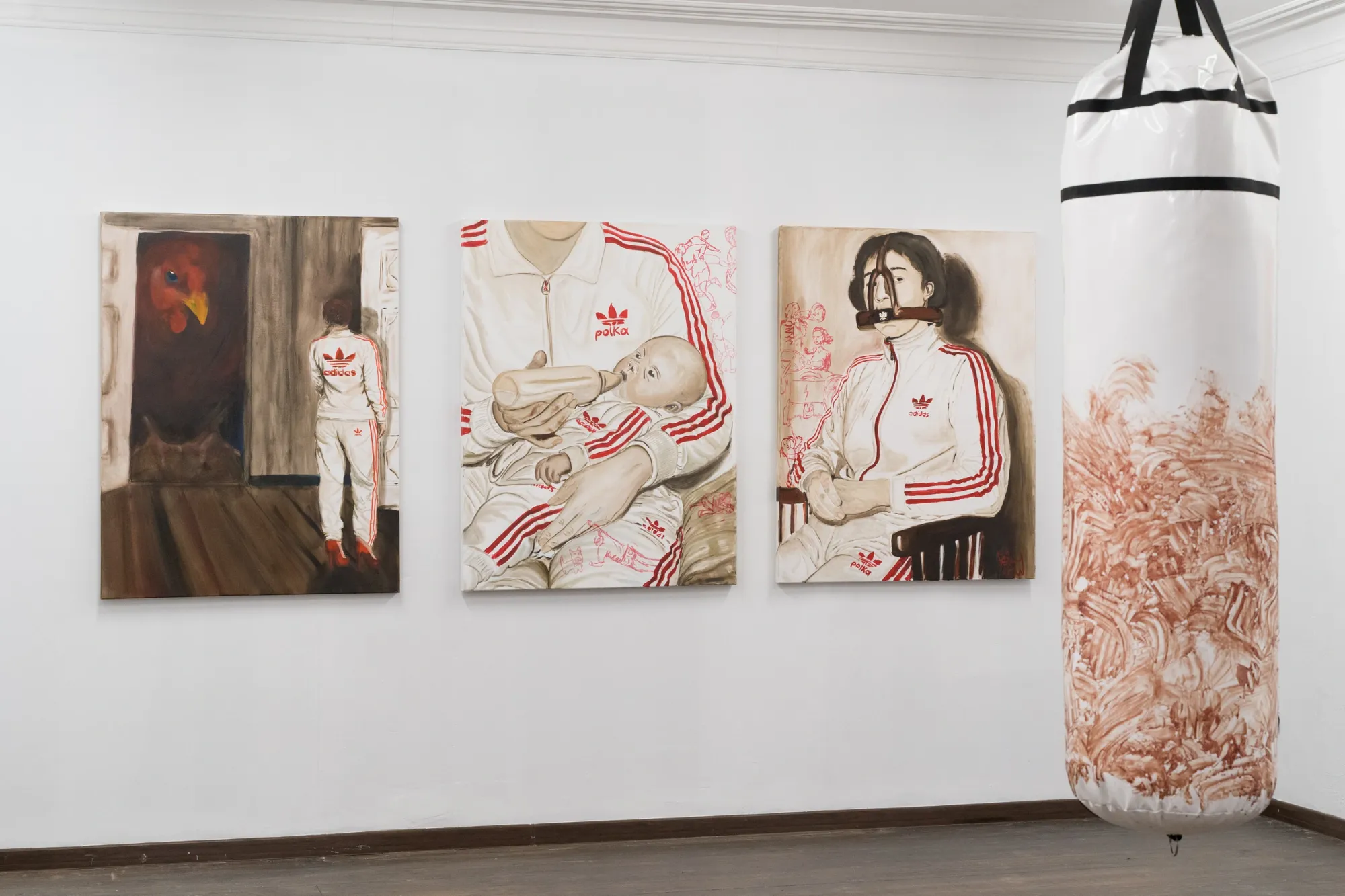
A particularly moving example is the painting Feminism Runs in My Blood. It depicts a figure trapped in a so-called scold’s bridle, a metal device once used to publicly silence and humiliate women. It was placed on the victim’s head and locked. An element inserted into the mouth pressed against the tongue, preventing speech and causing pain. In the background, socialist tractor-driving women and demonstrators participating in the Black Protests emerge. The juxtaposition of a historical instrument of oppression with contemporary demonstrations shows how the forms of control over women’s bodies change, while the mechanisms of subordination themselves remain present.
Fear, anger, love
Natalia Sara Skorupa’s work emerges from emotional and bodily experiences that the artist explores both in painting and performance. In her latest series of paintings, she turns her attention towards the sphere of privacy and everyday life. The situations depicted unfold within the body and domestic interiors: in bathrooms, bedrooms and beds.
The impact of works such as I Will Never Be a Mother and Careful, I Bite is almost physical: we can experience the depicted situations as though they were happening to our own bodies. Mutilation, biting and other forms of (self-)aggression become expressions of resistance against dominant norms and stereotypes.
In Let Me Rot, a figure appears immersed in depressive immobility, with a skull instead of a face. A cat, however, protects her from complete disintegration. Helplessness and the experience of mental crisis intertwine here with the need for closeness and care.
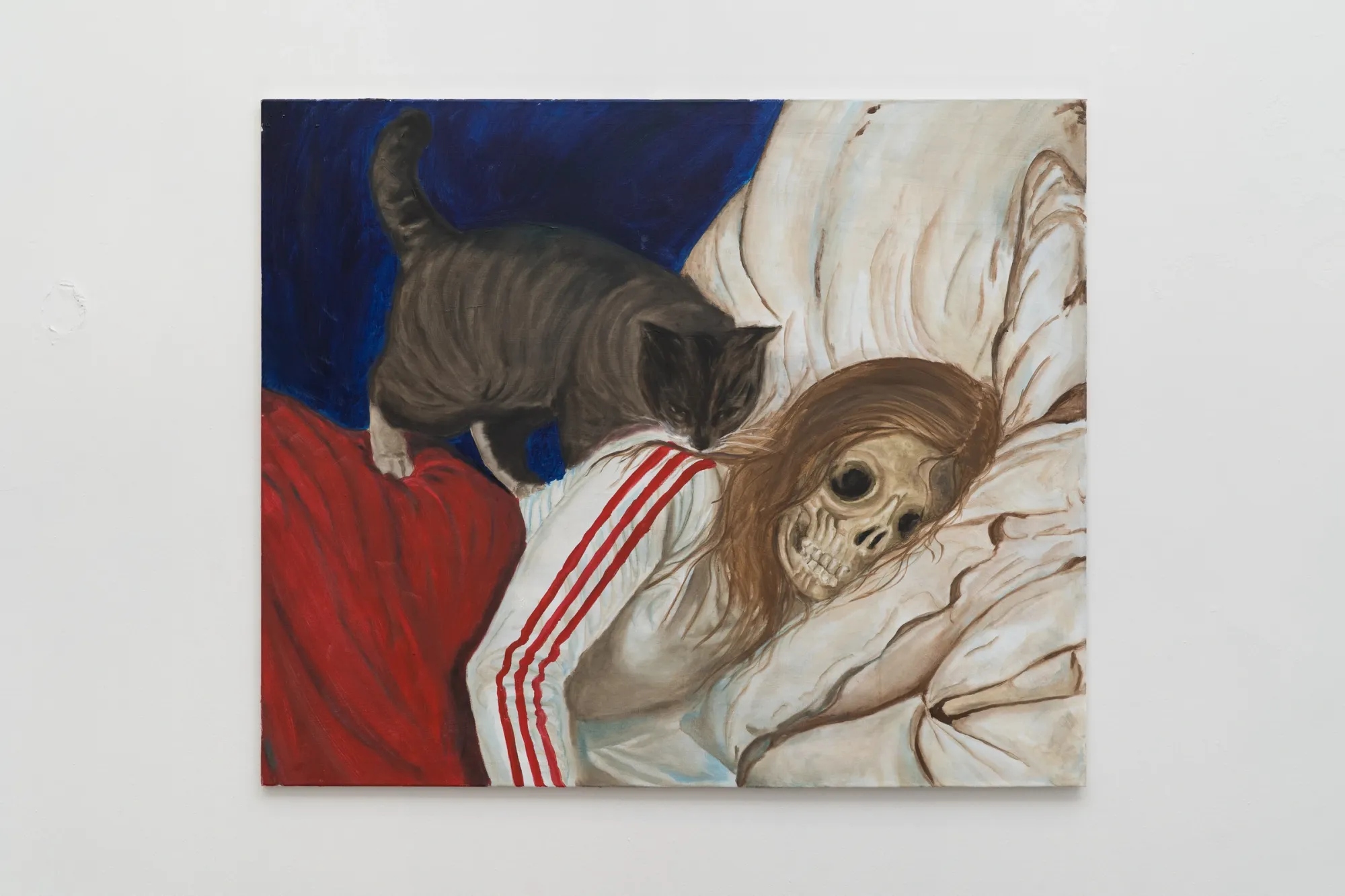
Blood as paint
In her live performances, the artist places the audience in situations that often provoke anxiety. She uses blood and deliberately breaks the continuity of the skin, making these actions one of the main means of artistic expression.
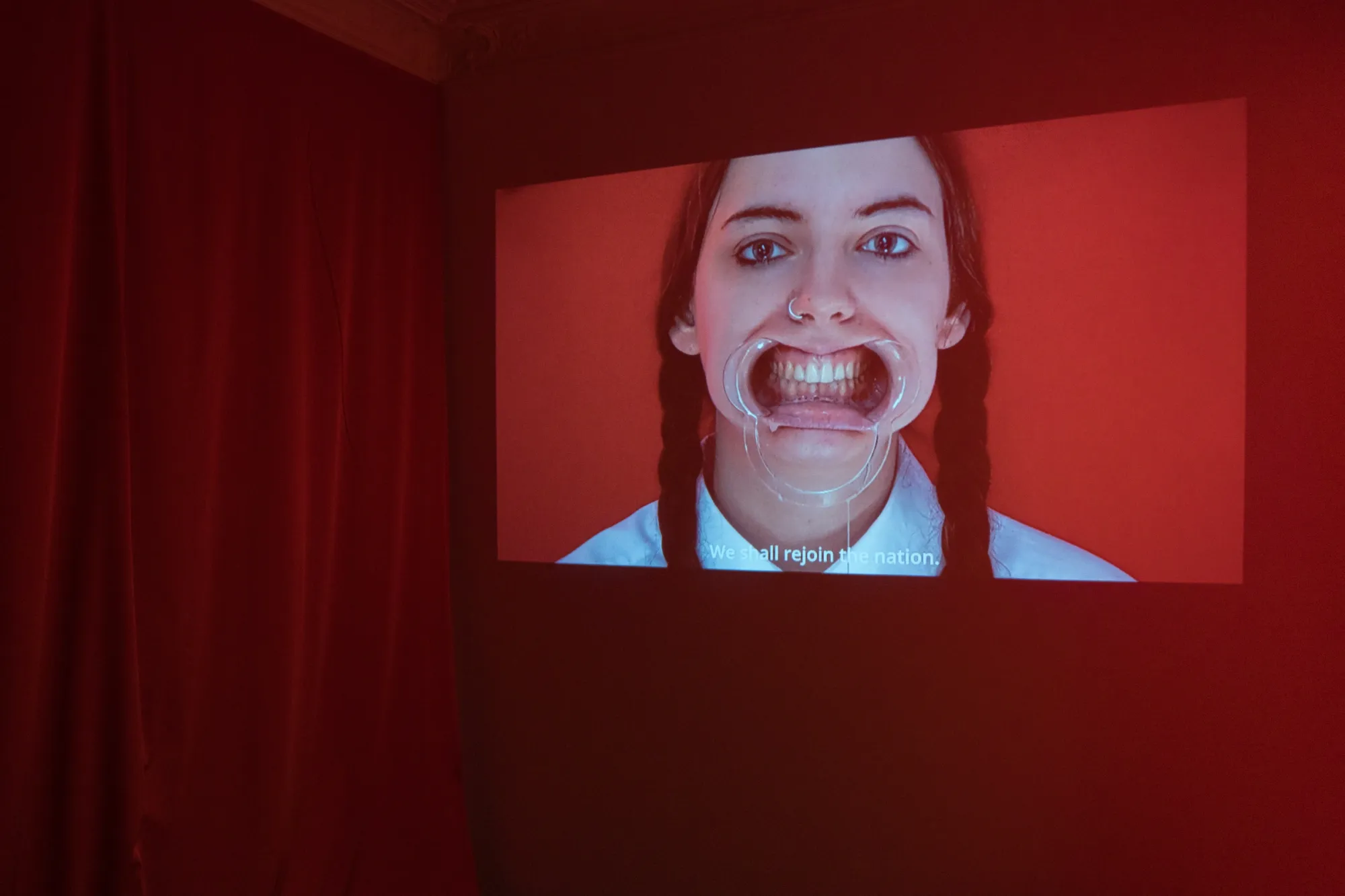
For her first solo exhibition, she prepared a new performance, Citizen. Using her cut fists, she “paints” a white-and-red flag with her own blood on a punching bag suspended in the middle of the gallery. The action brings to mind the practices of radical feminist body art.
Skorupa seems closest to Marina Abramović and Gina Pane, who since the 1970s have used the body as an artistic tool: injuring themselves, exposing themselves to pain and suffering, forcing audiences to confront their own discomfort. In their work, the female body ceased to be merely an object of erotic desire and social judgement, becoming a site of conflict, violence and resistance.
The performance Shame directly references Abramović’s practices, particularly her work Thomas Lips (1975). Wearing a Soviet uniform, Skorupa cuts a Soviet star into her buttock with a razor blade. She then begins to strike the exposed part of her body, combining self-punishment with a gesture evoking an erotic game.
The white-and-red colour scheme also unifies her performances and paintings. Red, symbolising, among other things, the blood shed for the homeland on the Polish flag, comes directly from the artist’s body. Skorupa covers white elements of clothing, such as gloves or a collared shirt, with it, objects associated with innocence and purity. In this way, she literally inscribes her own corporeality into the national symbol.
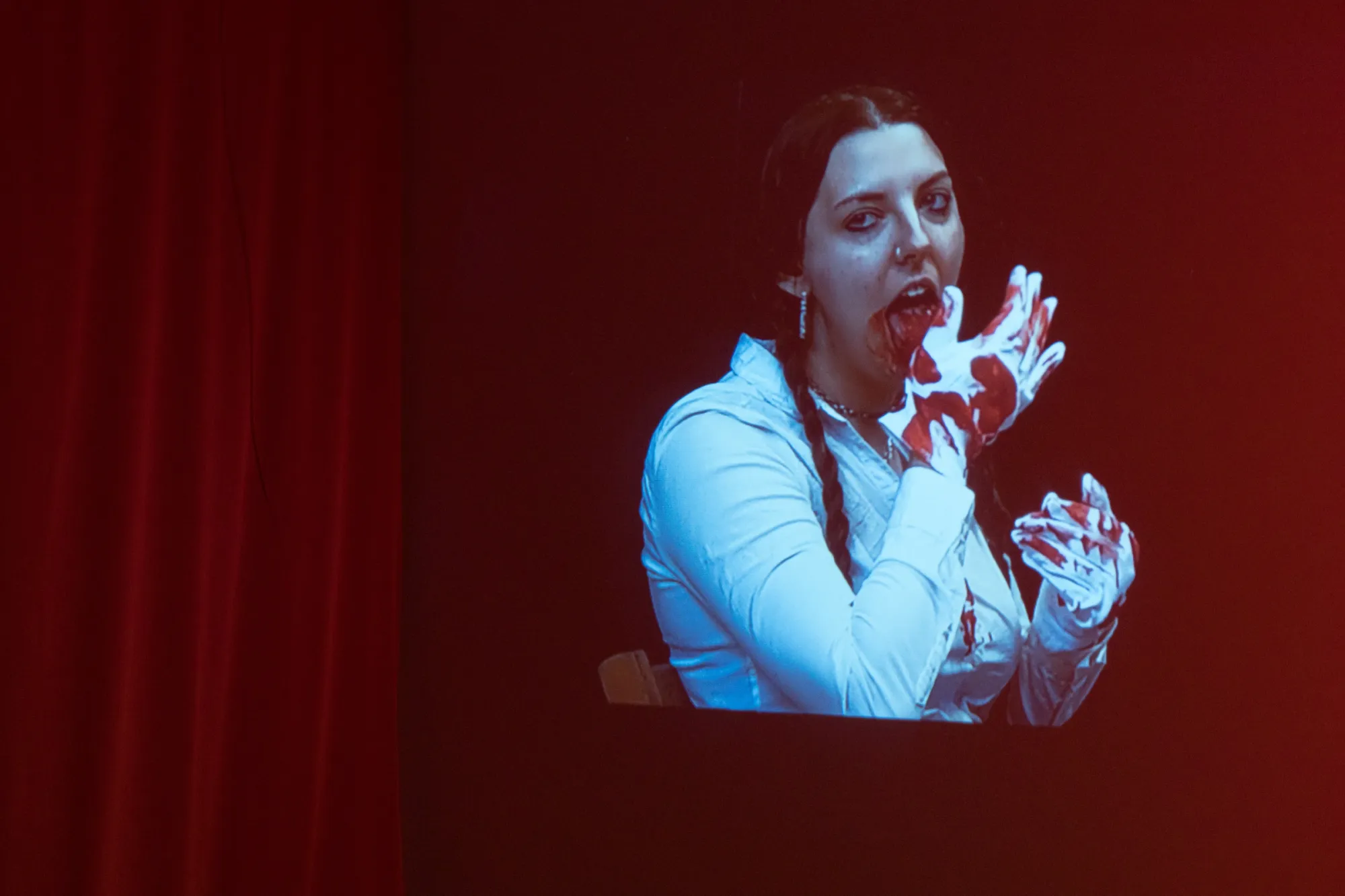
In the performance White vs. Red, the artist cuts her tongue, which begins to bleed. She then licks white gloves with her bloodied tongue, gradually staining them red. In Weapon, she cuts her arm with a razor blade, then arranges it into the shape of a gun and rhythmically strikes it against a wall, leaving a bloody mark on the white surface.
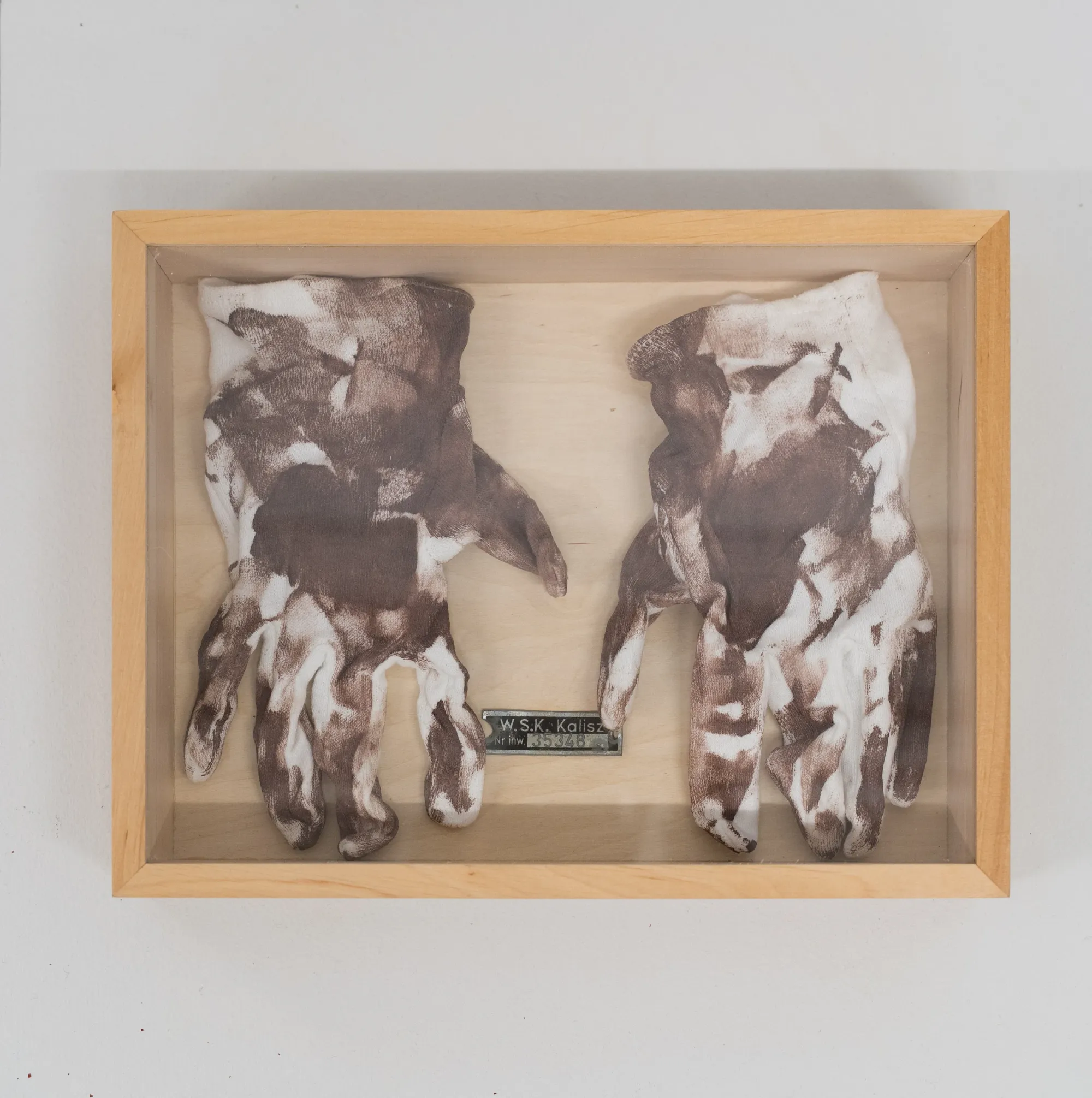
In Polish Lesson, Skorupa puts pieces of glass into her mouth, bites them and injures her tongue and the inside of her mouth. At the same time, she recites the patriotic poem Who Are You? by Władysław Bełza. The artist’s voice and successive lines of the poem mix with the sound of the glass being crushed. Blood fills her mouth and runs down her white shirt. National education, one of whose foundations is the inculcation of patriotic formulas in children, is confronted with the violence embedded in the process of upbringing. The poem, which each of us learned in Polish primary school, ends with the question:
“What do you owe her? Give your life.”
Queer artist from Szczecin who works across painting, performance, film and installation, using blood as material. Graduate of the Academy of Art in Szczecin and the University of Szczecin. God, Honour, Motherland is her first solo exhibition.
Curated God, Honour, Motherland and wrote the exhibition text.
About Catapult Contemporary
This is an exhibition review published by Catapult Contemporary, an independent editorial platform for contemporary art, based in Vienna. We publish exhibition reviews, artist features, interviews, and critical context, with a focus on emerging and mid-career practices from Europe and beyond.
catapult-platform.art ·
Instagram
Want to be featured? Submit your work →
No spam, no sharing to third party. Only you and me.