Nina Bachmann Finds the Vocabulary of the Hunt Inside Rush Hour

Galerie Gegen & Lücke Presents Nina Bachmann's Schieben, Drücken, Treiben in Berlin
Galerie Gegen & Lücke presents Schieben, Drücken, Treiben, Nina Bachmann's solo exhibition in Berlin, through October 10.
Certain words survive translation because they never really left. Bachmann herself identifies Treiben, Schieben and Drücken as terms that also belong to the language of hunting, a connection developed in Rush Hour, the exhibition text by Pola van den Hövel, Director of Villa Schöningen.
To press, to push, to drive an animal from cover. Hunting language, still intact, still describing something. What it describes today is a commute.
Nina Bachmann
Schieben, Drücken, Treiben
Galerie Gegen & Lücke
Berlin, Germany
–
Wednesday–Saturday, 12–6pm
Rosa-Luxemburg-Straße 35, 10178 Berlin
Jannis Uffrecht
Courtesy the artist and Galerie Gegen & Lücke
Look closely enough at any crowd and the language starts to make a strange kind of sense. Someone corners a place at the door before it closes.
Someone else gets herded toward the back, absorbs the push, and passes it on without quite meaning to. That pressure is not evenly distributed.
Van den Hövel's text connects it to work, commuting, family and financial concerns, as well as to unequal access to quiet, space and retreat. Those with greater financial means can more easily afford a quiet apartment, shorten a commute or leave the city temporarily.
The city does not resolve the pressure it creates. It only ever redistributes it, one body against the next.
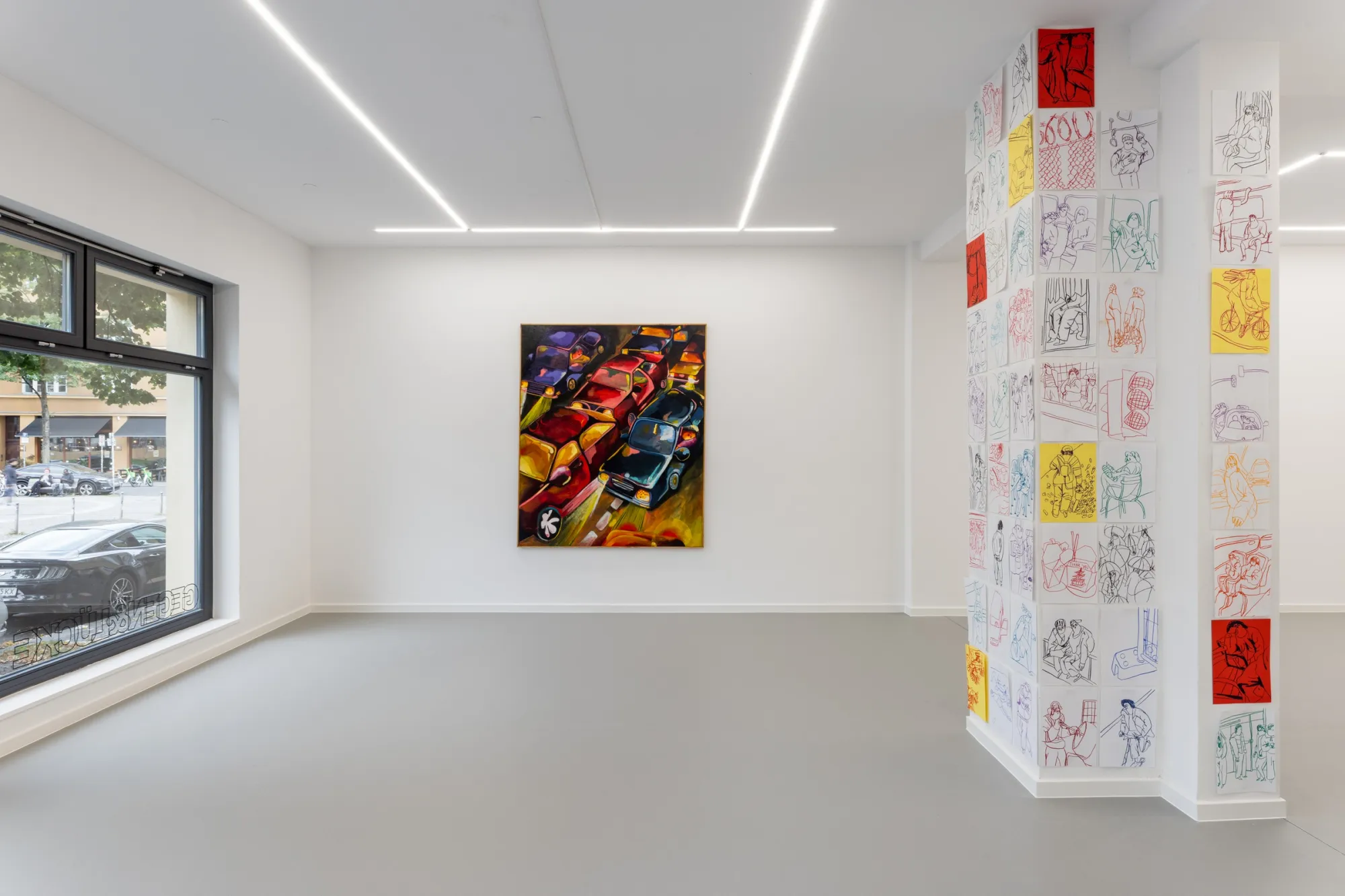
Galerie Gegen & Lücke occupies a narrow storefront on Rosa-Luxemburg-Straße, its street window folded into the show rather than kept as a barrier to it: from the pavement, passers-by look straight into a painting of gridlocked traffic. Inside, the rooms stay white and unadorned, which lets Bachmann's saturated palette do work a busier install would dampen.
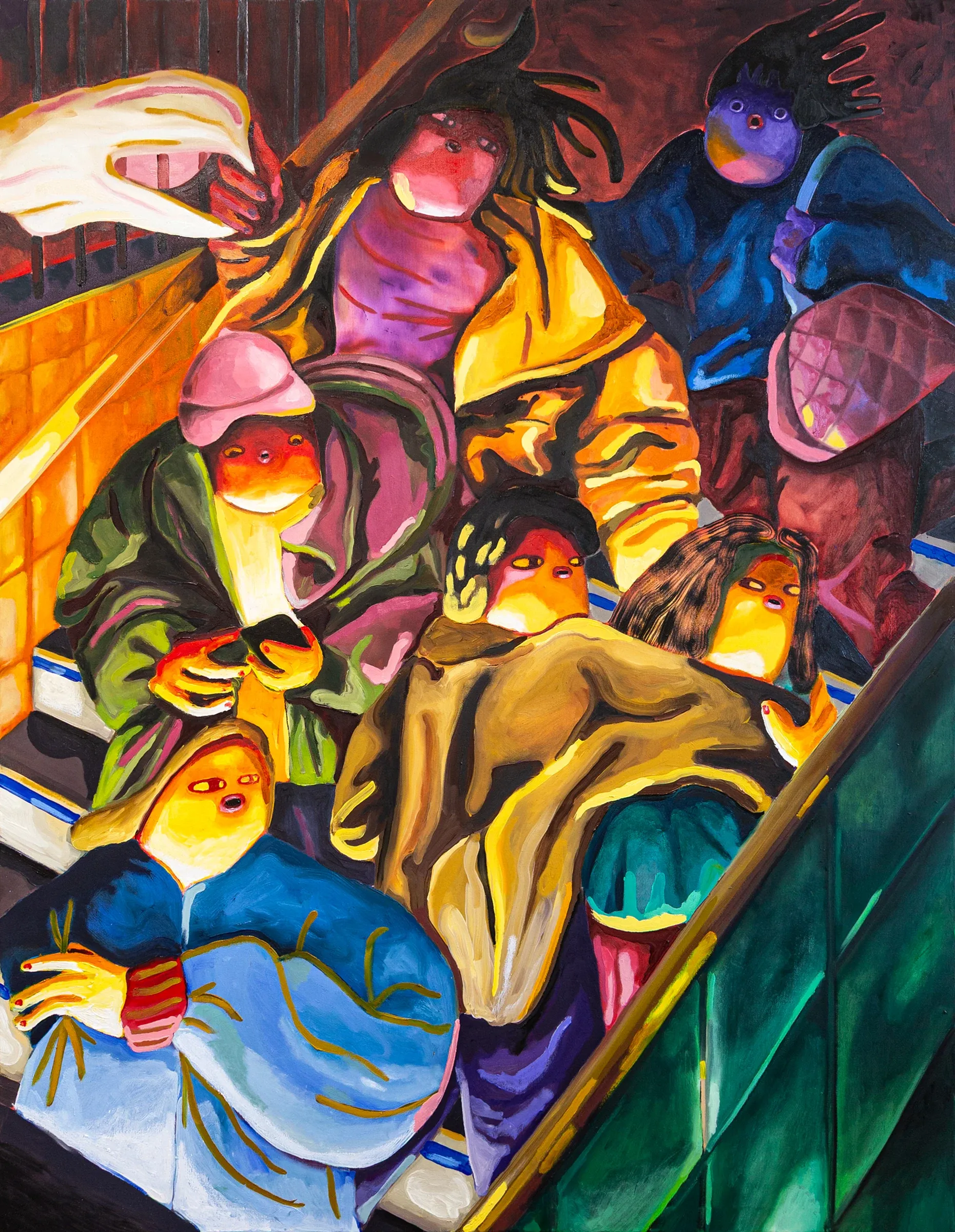
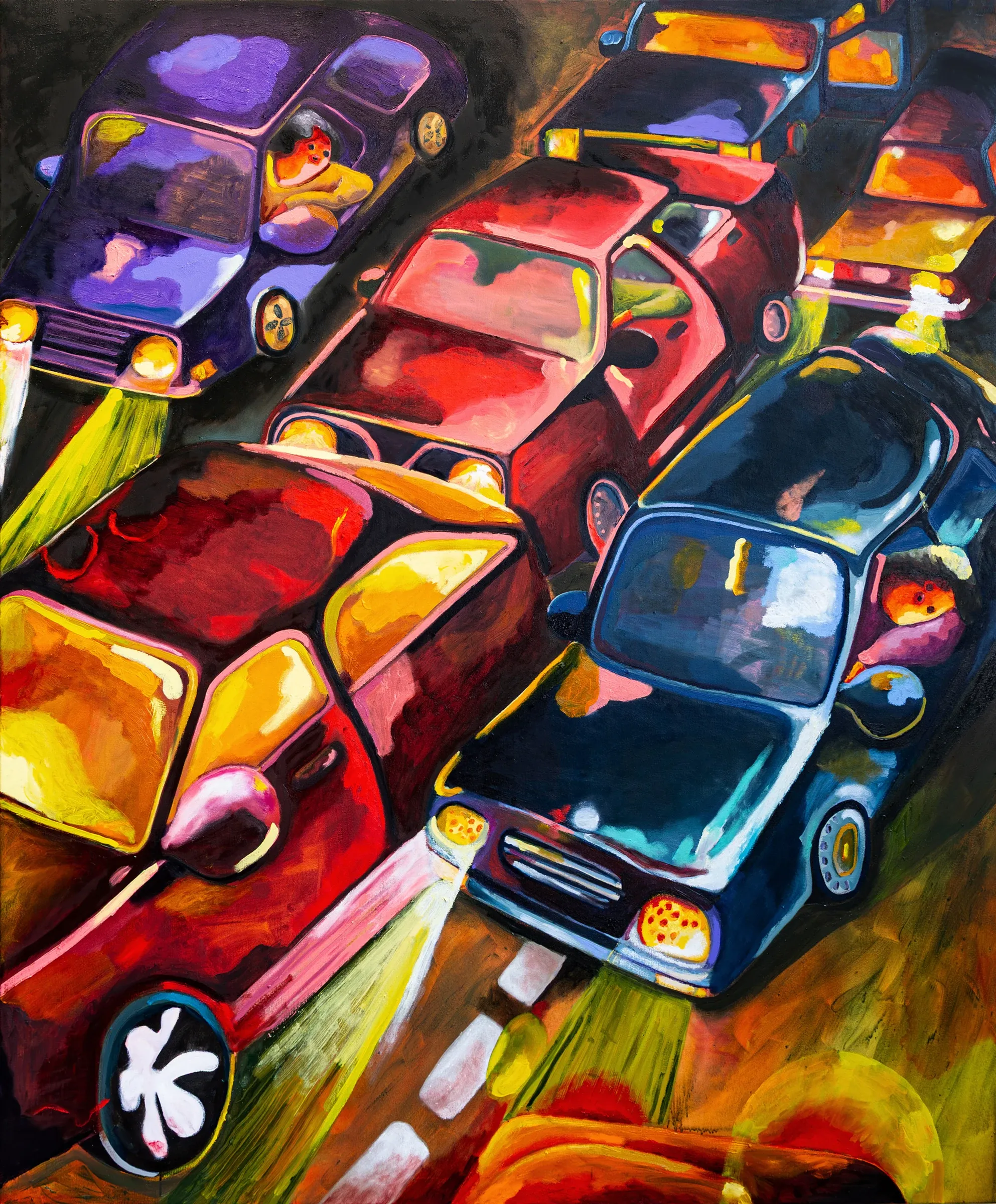
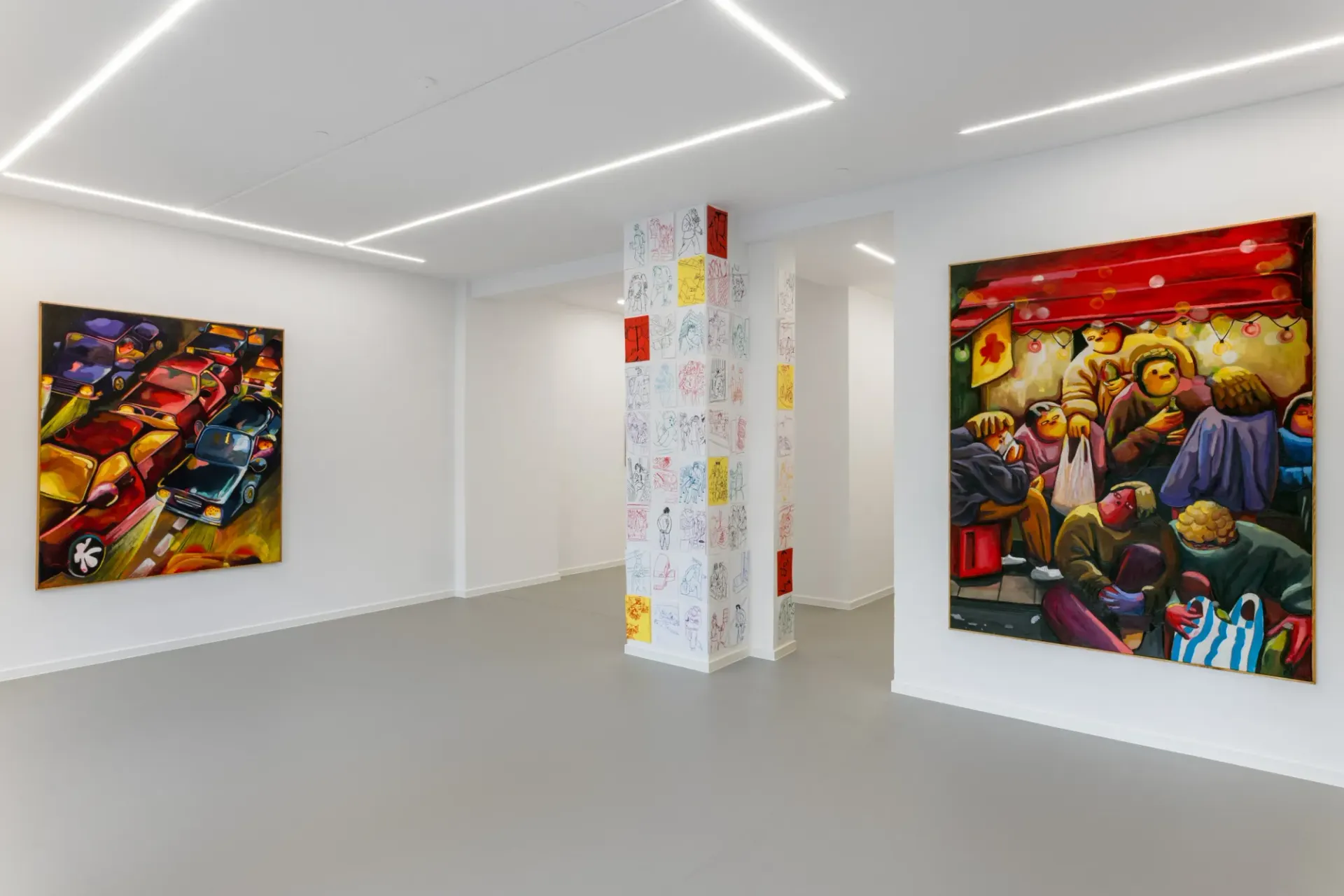
Nina Bachmann, (left) Schieben, Drücken, Treiben, 2026, oil on canvas, 150 x 195 cm. (right) Feststecken, 2026, oil on canvas, 145 x 170 cm.Courtesy the artist and Galerie Gegen & Lücke.
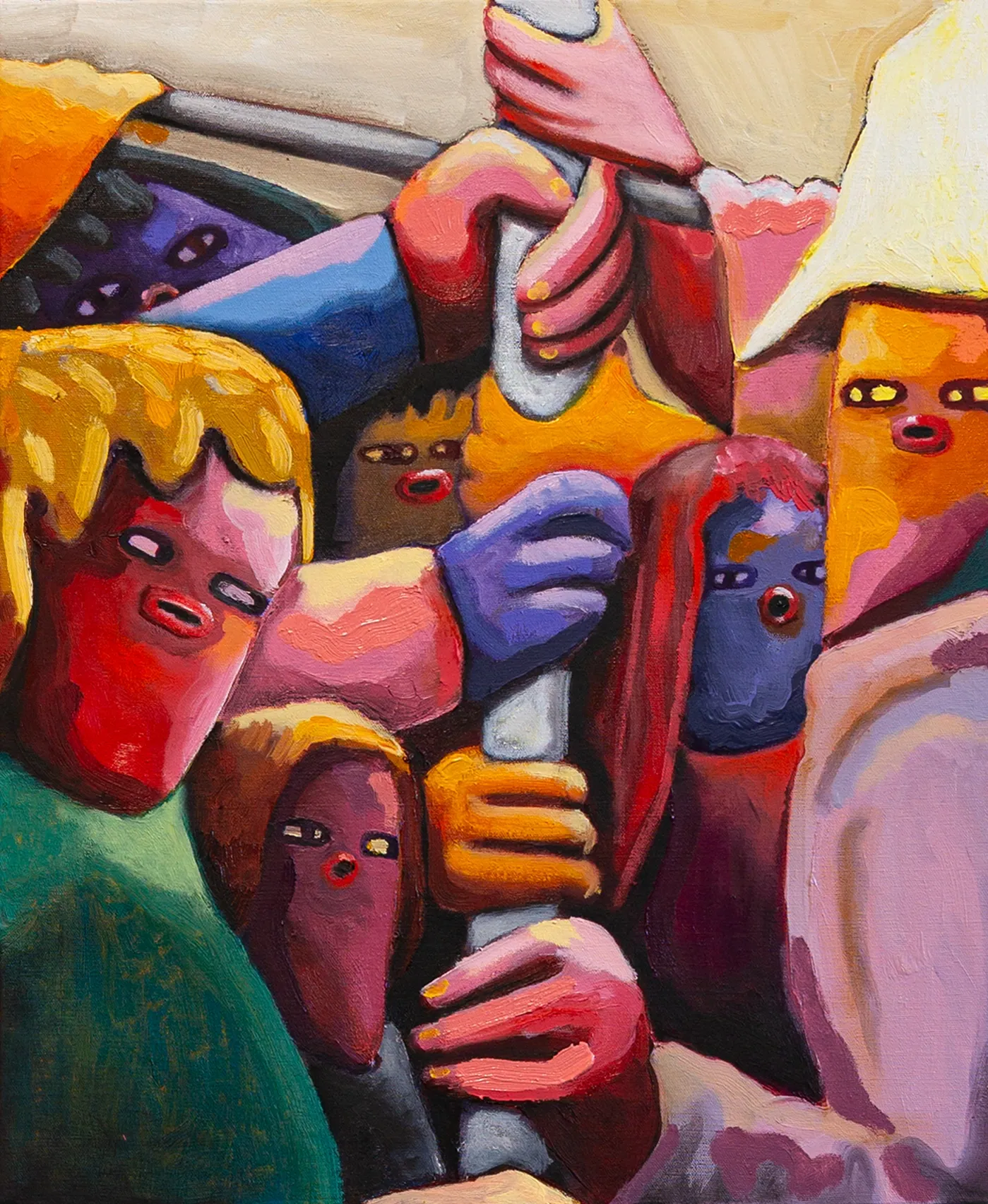
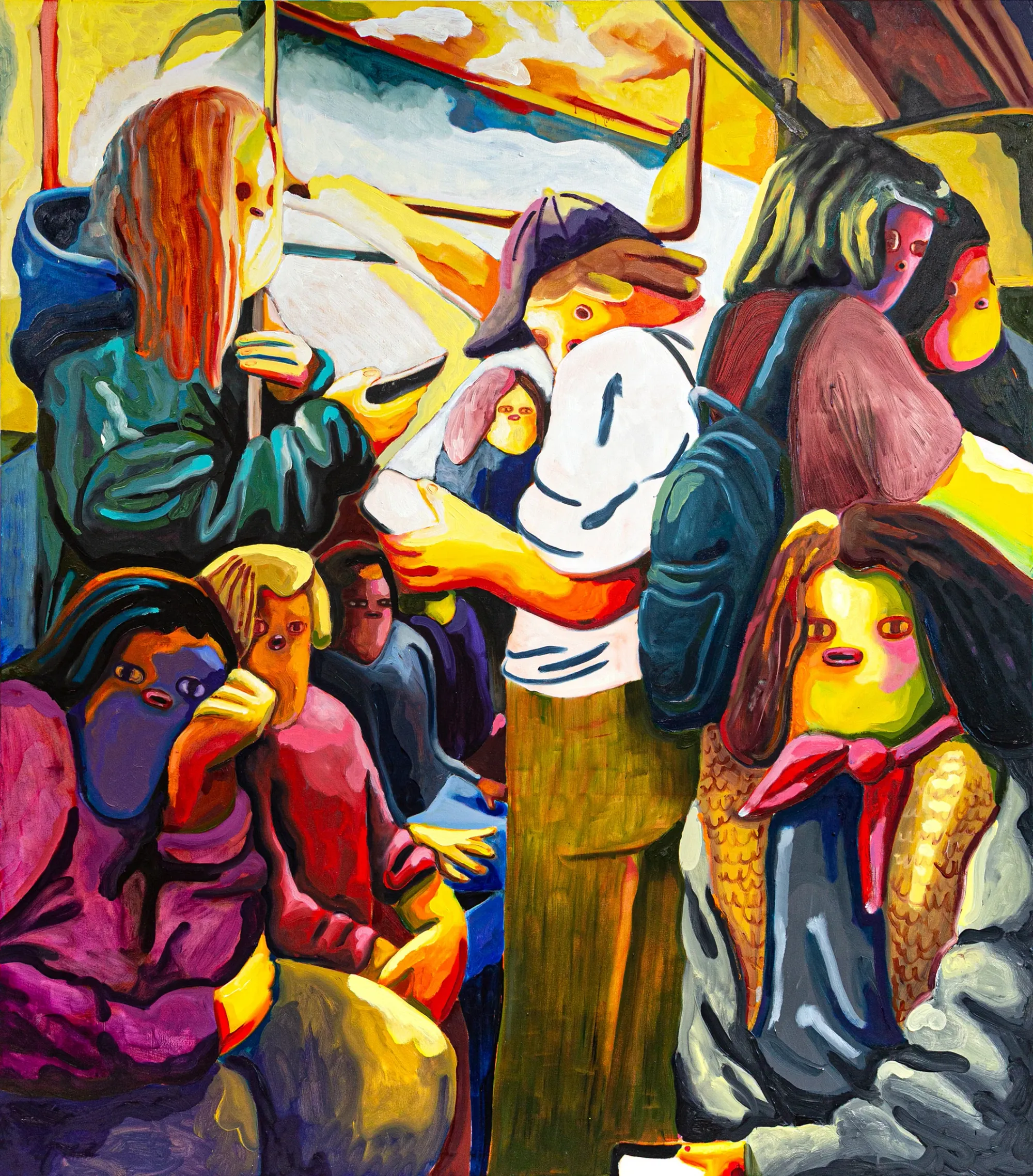
Nina Bachmann, (left) Umzingelt, 2026, oil on canvas, 50 x 60 cm. (right)Auf Tuchfühlung, 2026, oil on canvas, 170 x 195 cm. Courtesy the artist and Galerie Gegen & Lücke.
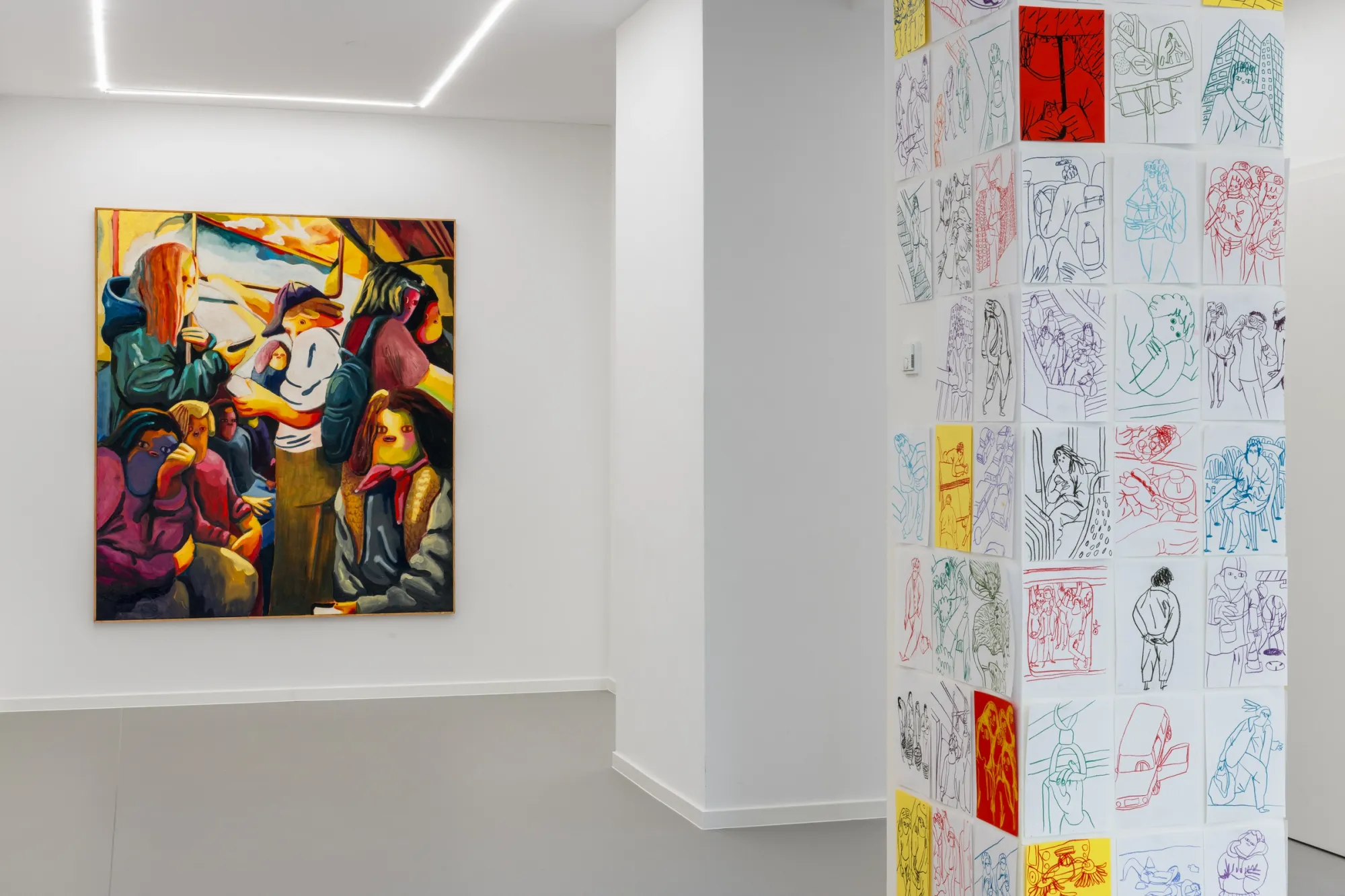
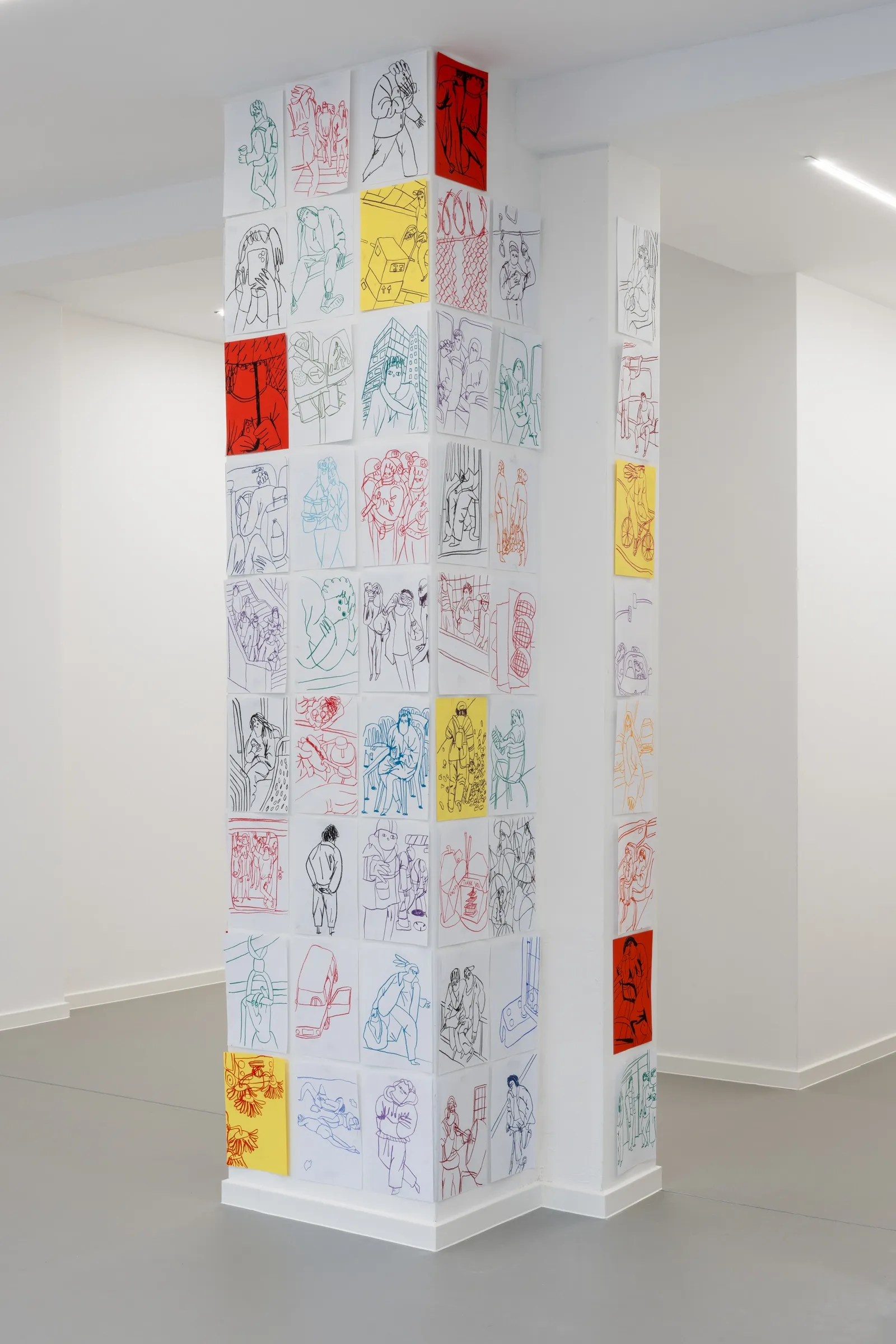
A column near the entrance has been given over entirely to small sketches, pinned edge to edge in red, yellow, and white paper, a visible index of the studio process behind the larger canvases. The effect is less like walking into a finished argument than into its working notes, still pinned to the wall.
The title painting sets the terms. A crowd descends a stairwell in dark reds and forest greens, one figure waving a pale cloth overhead like a flag or a surrender, hands gripping shoulders and railings in equal measure. Nobody in the composition has room to stand still, and the paint stays thick and unblended exactly where bodies meet, as though friction itself needed a texture.
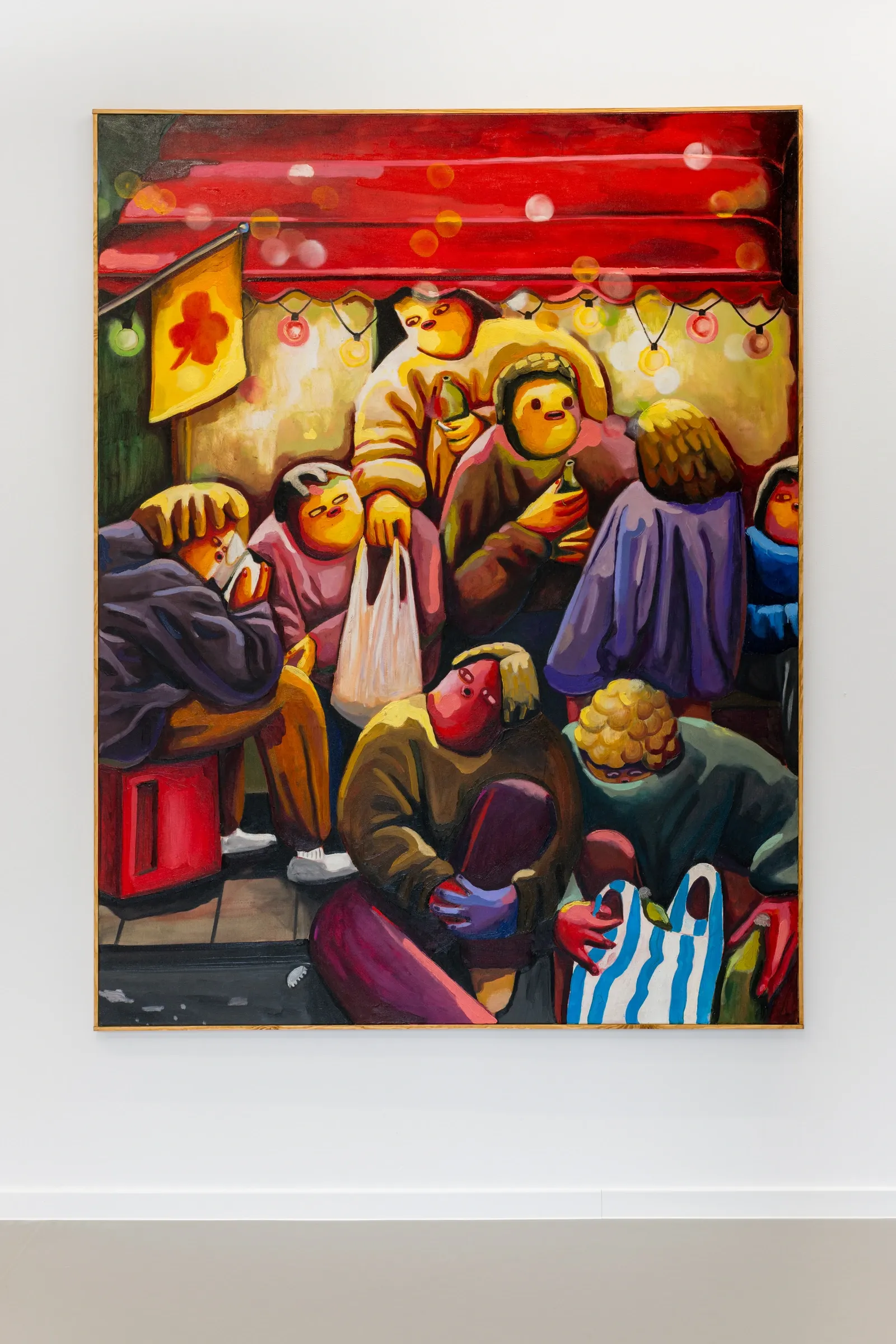
Feststecken takes the opposite tempo: cars locked bumper to bumper under a streetlight, headlights fanning yellow across asphalt that never quite clears. Bachmann paints the vehicles from above, flattening the jam into something closer to a puzzle than a road, each door and window edge outlined hard enough to read as armor. The stillness reads as its own kind of violence.
Auf Tuchfühlung returns to bodies rather than machines: a bus interior packed past comfort, a hand gripping a yellow rail at the painting's center while faces press in from every side. Bachmann's figures carry the exaggerated proportions her practice is known for, oversized hands, elongated limbs, features pushed slightly off register, and here that exaggeration reads less as comedy than as description. Closeness, drawn this literally, stops looking friendly.
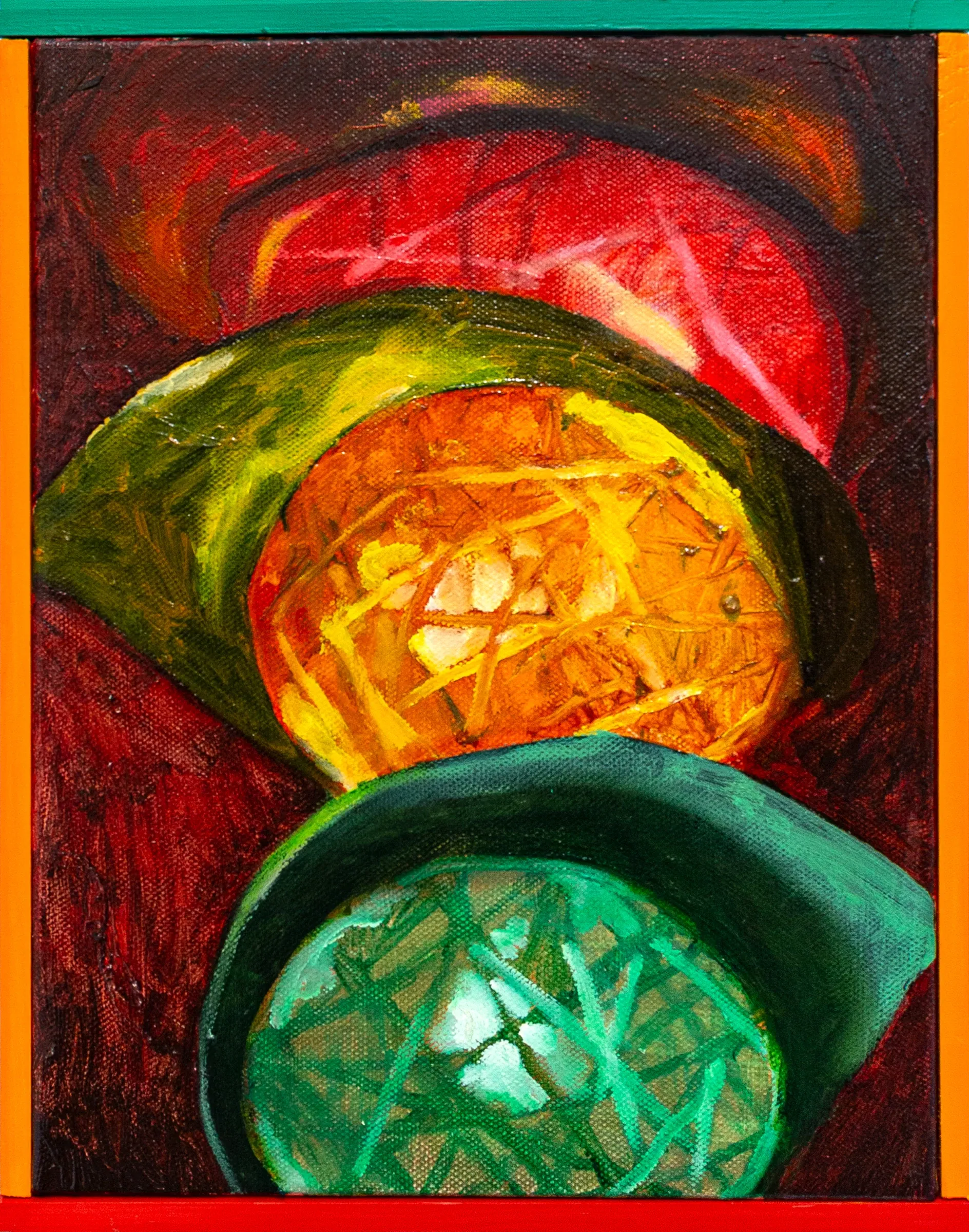
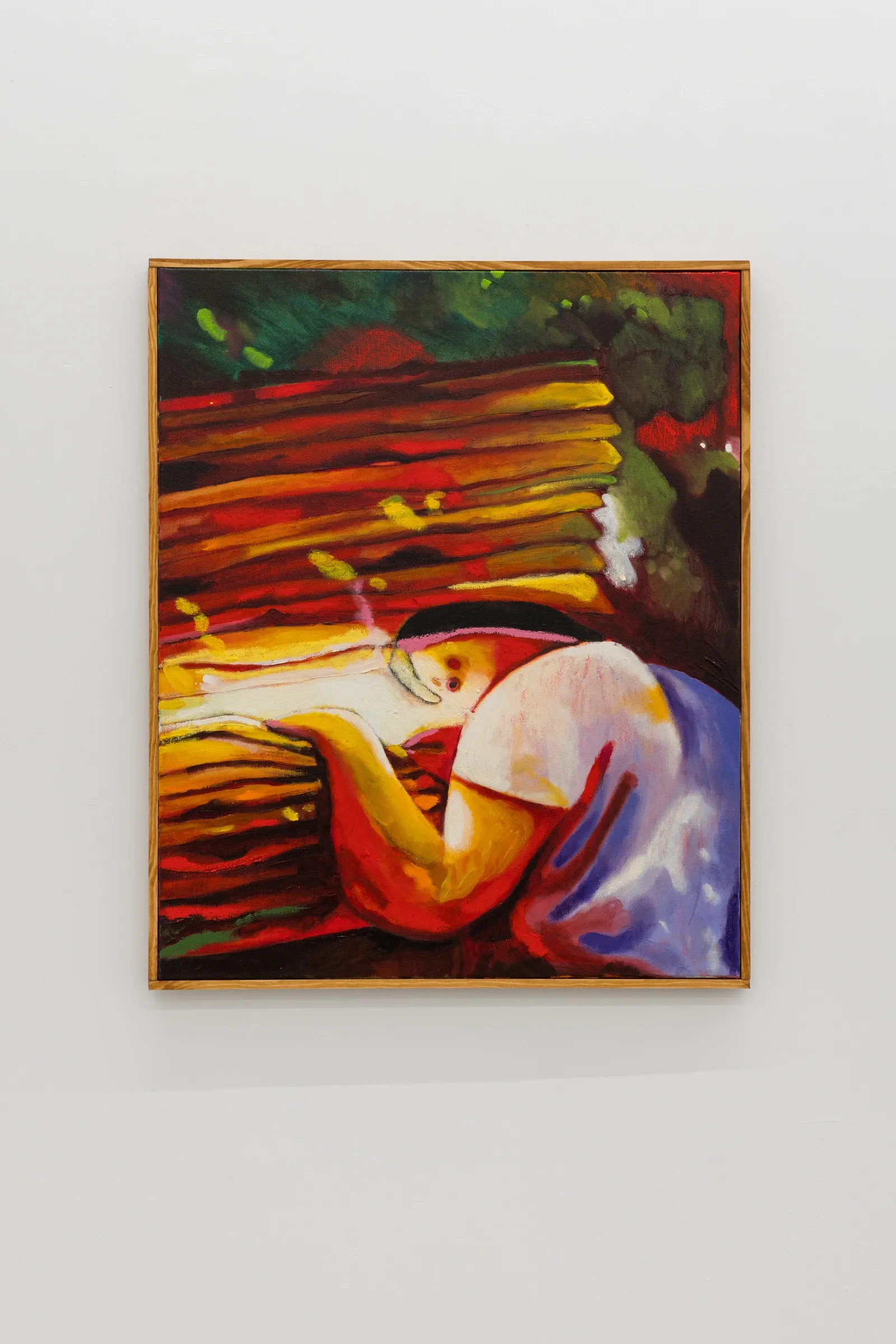
Stoßzeiten isolates a single traffic light down to its component threads of paint. Umzingelt closes in on a hand locked around a subway pole. Die letzte Station widens out to a night market under string lights, bottles and bags changing hands beneath a red awning. Daheim bleiben breaks the pattern entirely: a lone figure face down on a garden fence, and the quiet of it lands harder for everything that surrounds it.
It is difficult not to read the exhibition against a moment when the language of burnout has become so common it barely registers as language anymore, mentioned in passing the way weather is. Bachmann's paintings do not diagnose that condition so much as sit inside it, tracking how pressure moves through a day without asking anyone to feel sorry about it.
But pressure is only one side of the city Bachmann describes. Its density also generates energy, and the same intensity that exhausts can be something she needs. The city in these works is therefore not simply oppressive, but a source of both stimulation and fatigue. Her figures rarely look victimized. They look occupied, which is a different thing, and arguably a harder one to paint.
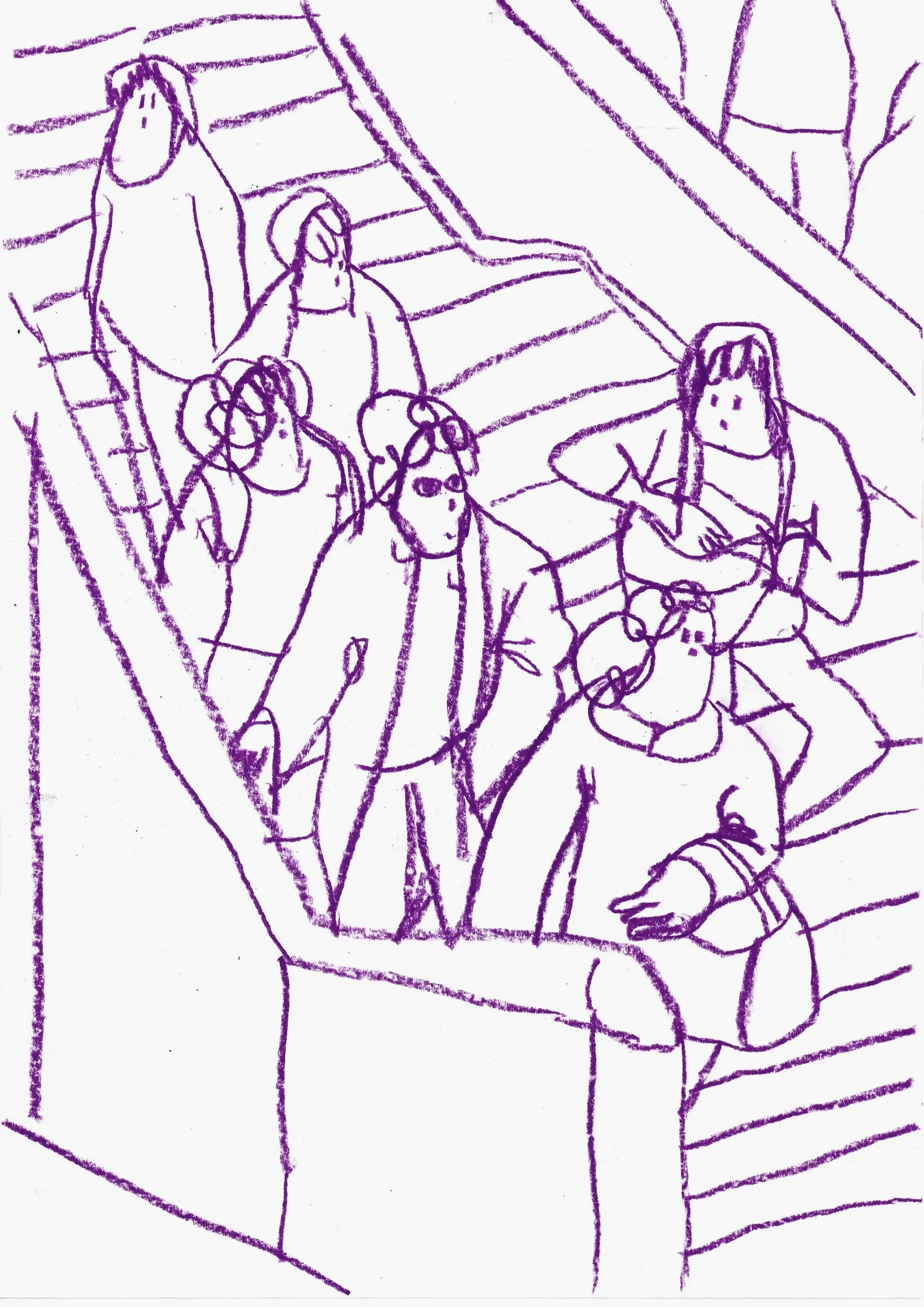
By the time the show reaches Daheim bleiben, the relief of stillness feels earned rather than sentimental, one body finally horizontal after a room full of bodies in motion. Bachmann does not resolve the tension her title announces; she just gives it a place to rest for a canvas or two. Rush hour, in her account, is never really over. It just changes which direction it is pushing.
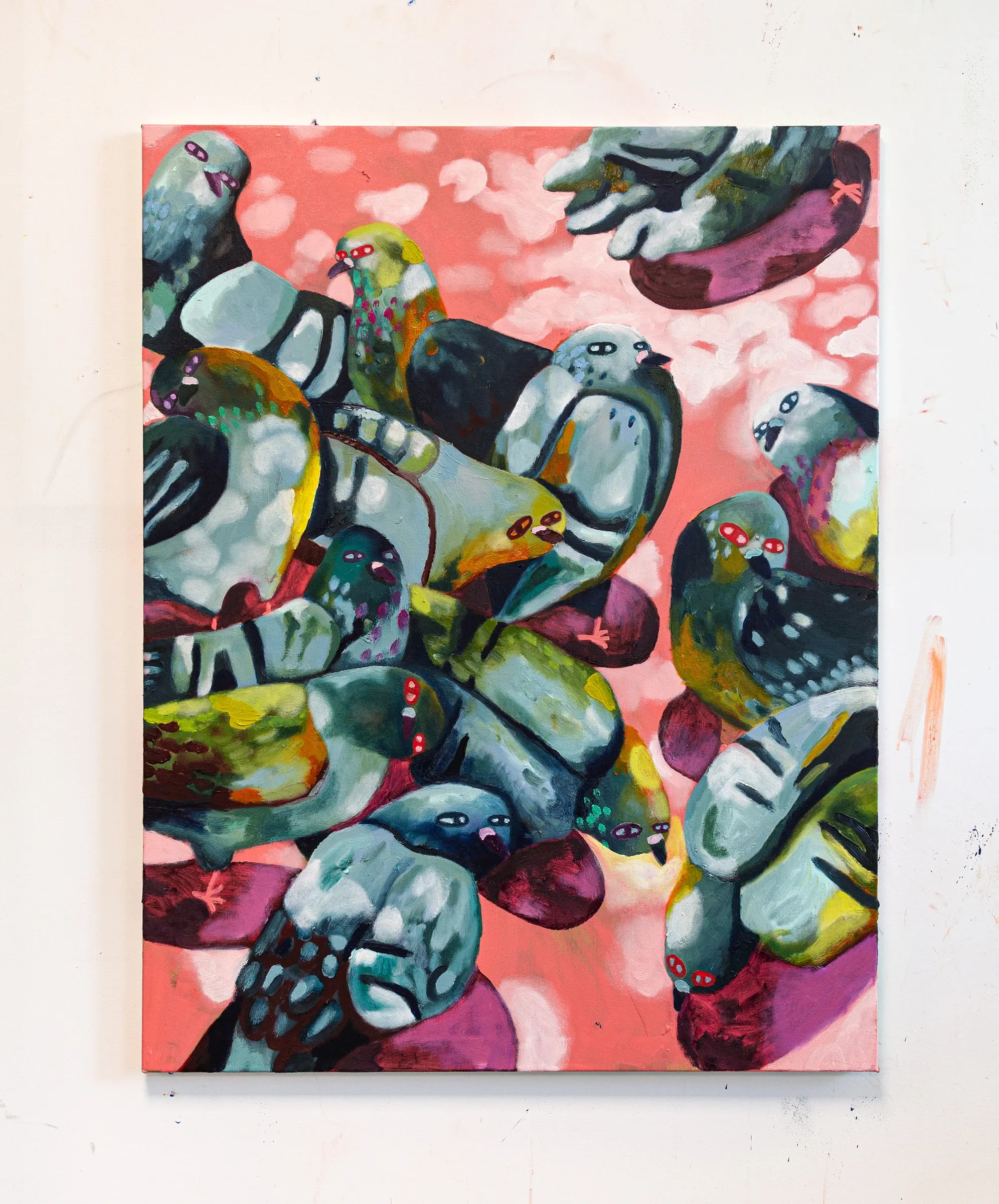
Born 1990 in Munich, where she still lives and works. Bachmann studied Communication Design at the University of Applied Sciences Munich and came to painting through illustration and graphic design. She has shown in Berlin, Vienna, Madrid, London, and Copenhagen, and her work has appeared on the cover of Zeit Magazin.
Website · Instagram
About Catapult Contemporary - Art Platform Submission
This is an exhibition review published by Catapult — an independent editorial platform for contemporary art, based in Vienna. We publish exhibition reviews, artist features, interviews, and critical context, with a focus on emerging and mid-career practices from Europe and beyond.
catapult-platform.art · Instagram
Want to be featured? Submit your work →