Nocturne Reads Argentine Surrealism Through the Posthuman

Mnemosyne Projects Brings Nocturne to Little Red Door Club in Buenos Aires
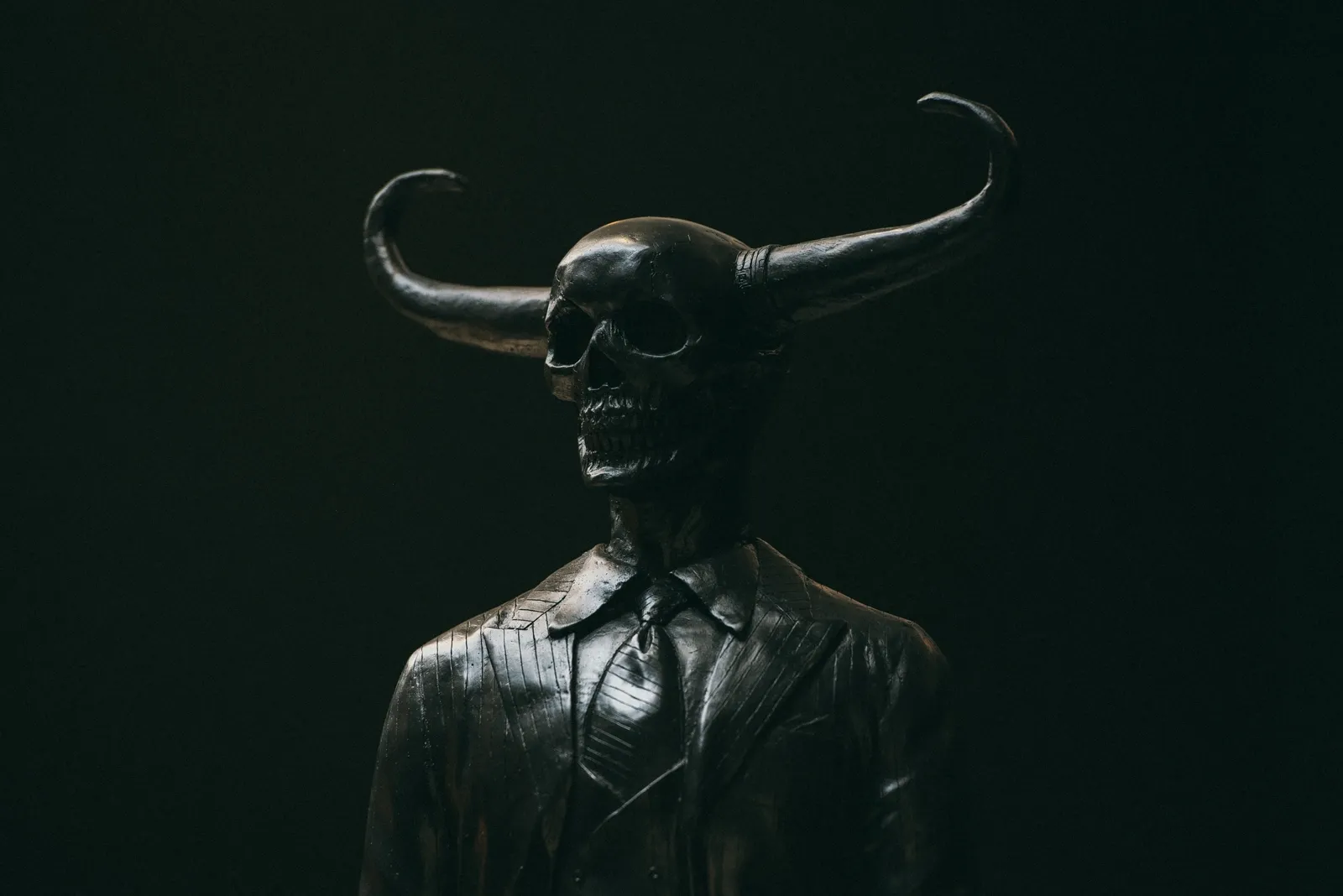
A skull in a business suit, an empty cradle and a tower with no apparent purpose. At Nocturne: Posthuman Dreams, Myths, and the Invisible, familiar objects become strangely unsettling.
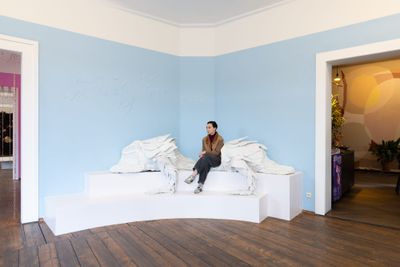
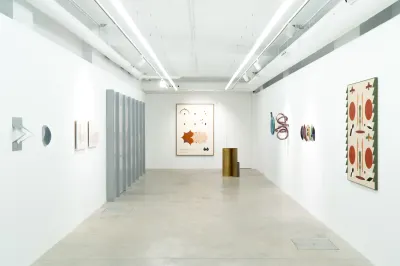
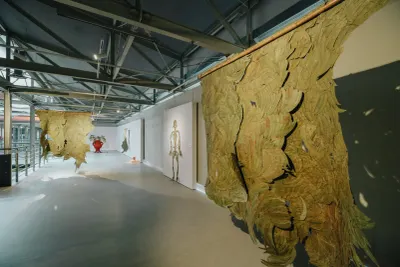
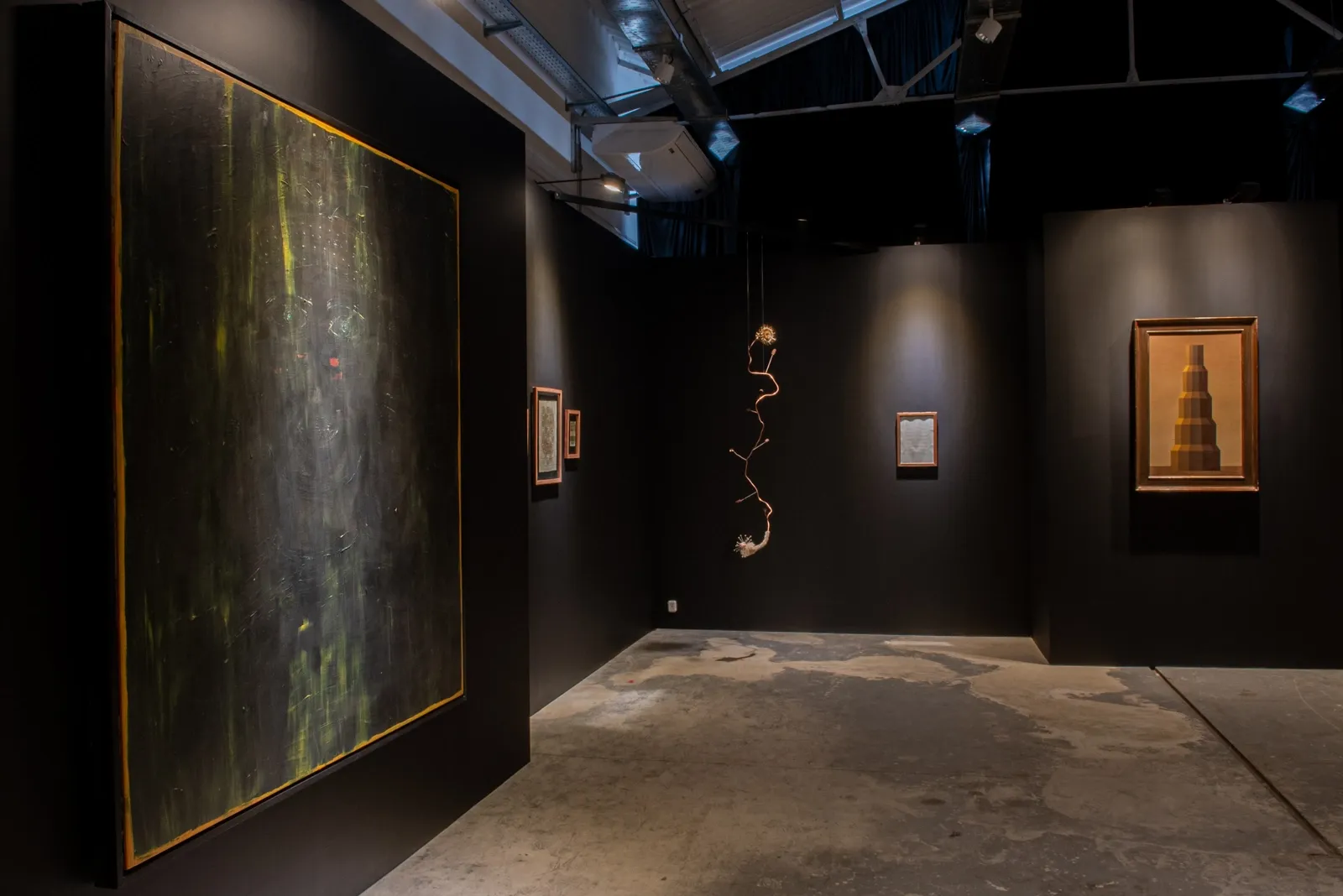
Curated by Ekaterina Juskowski at Little Red Door Club in Buenos Aires, the exhibition brings Argentine Surrealism into conversation with posthumanism, questioning what happens when humans are no longer at the centre of everything.
Roberto Aizenberg, Joaquín Aras, Valentín Asprella Lozano, Jonathan “Joni” Barberi, Juan Batlle Planas, Nicola Costantino, Corcho Rodríguez, Juan de Dios Mena, Foto Estudio Luisita, Max Gómez Canle, Jorge Macchi, Alejo Musich, Maximiliano Ocampo Salinas, Andrés Piña, Francisca Rey, Jesse Alexander Kotansky
Nocturne: Posthuman Dreams, Myths, and the Invisible
Little Red Door Club
Buenos Aires, Argentina
–
Mon–Sat by appointment, Sun closed
Villa Crespo, Buenos Aires
Ekaterina Juskowski, curatorial assistant Carolina Kleine Samson
Matias Iesari
Courtesy Mnemosyne Projects and Little Red Door Club
Nocturne runs from November 2 to December 13, 2026, at Little Red Door Club in Buenos Aires' Villa Crespo district, produced by the club and presented by Mnemosyne Projects.
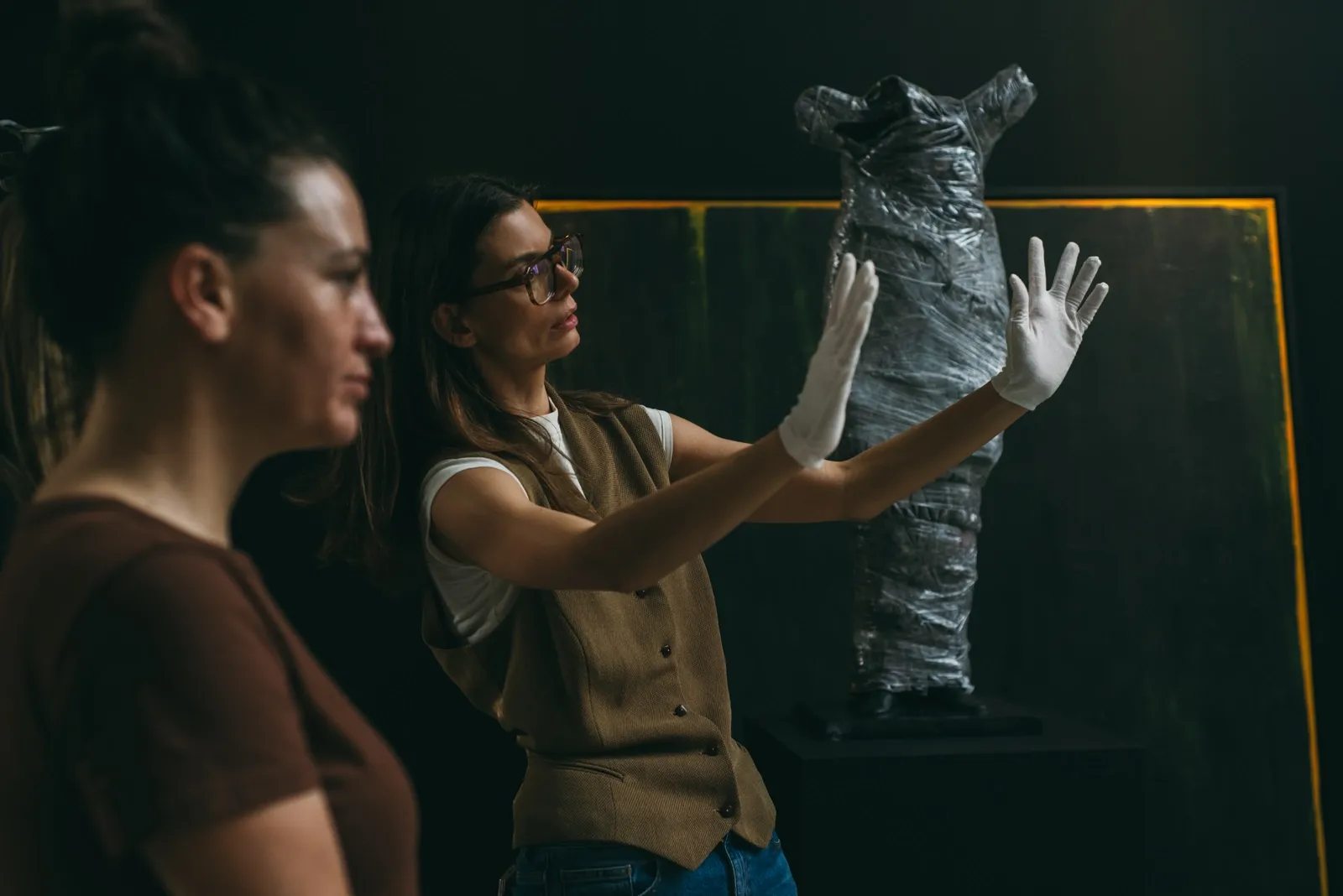
The group show brings fifteen artists and an original soundscape by Jesse Alexander Kotansky into one nocturnal field, from the Detached Hands of Saint Anthony (18th century) and Juan de Dios Mena's palo santo carving (1950) to Juan Batlle Planas, Roberto Aizenberg, Corcho Rodríguez's Deadman in Black (2025) and Andrés Piña's Cometierra (VI) (2026).
The exhibition is supported by eight galleries and institutions, including Ruth Benzacar Galería de Arte, MACA – Museo de Arte Contemporáneo Atchugarry and Wilhelmina's Art Gallery. After the opening, the exhibition can be visited by appointment, Monday to Saturday, in guided tours led by the curator.
Curatorial Essay by Ekaterina Juskowski
What happens when the familiar becomes strange and what ordinarily remains unseen begins to acquire presence? This question lies at the heart of Nocturne: Posthuman Dreams, Myths, and the Invisible, an exhibition presented by Mnemosyne Projects at the Little Red Door Club in Buenos Aires.
Curated by Ekaterina Juskowski, with curatorial assistance from Carolina Kleine Samson, Nocturne revisits Argentina’s Surrealist legacy through the ecological, technological, and philosophical concerns of the present. Rather than approaching Surrealism solely as a historical movement, the exhibition understands it as a critical method: a way of destabilizing established certainties, altering perception, and approaching realities that exceed the limits of rational consciousness.
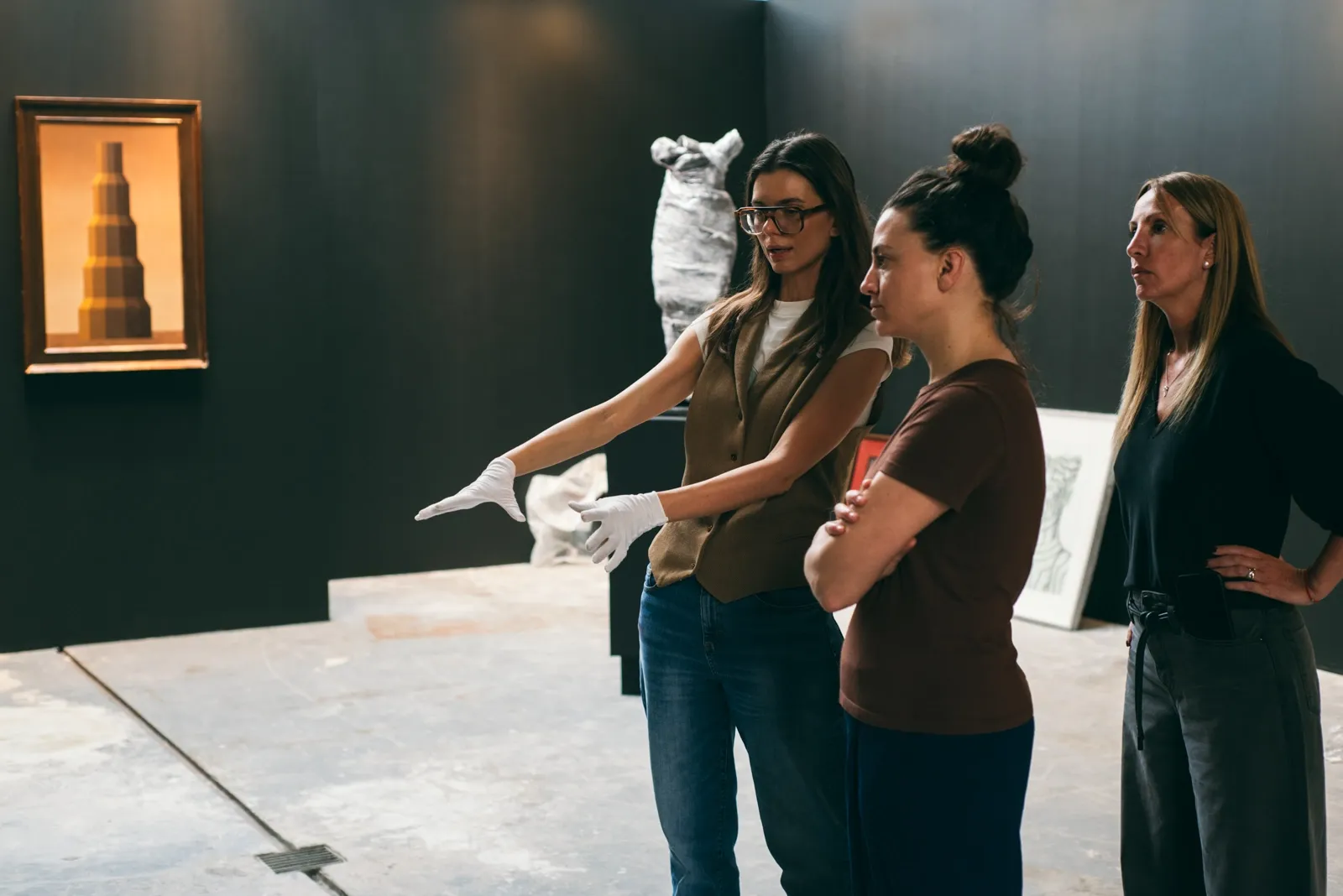
Juskowski draws the connection between Surrealism and posthumanism through their shared challenge to human-centered ways of understanding the world. Surrealism displaced the authority of reason by turning toward dreams, myth, automatism, and the unconscious. Posthumanism extends this displacement by questioning the privileged position of the human itself.
Within Nocturne, darkness stops being simply an absence of knowledge. Instead, the curator treats it as a way of knowing. The nocturnal in Juskowski’s interpretation becomes a liminal field in which distinctions between body and object, life and nonlife, presence and absence, nature and technology become increasingly porous.
Presented at Little Red Door Club, Nocturne does not reconstruct a chronological history of Argentine Surrealism. Instead, it brings historical and contemporary works into contact through shared questions about perception, materiality, memory, agency, and the invisible.
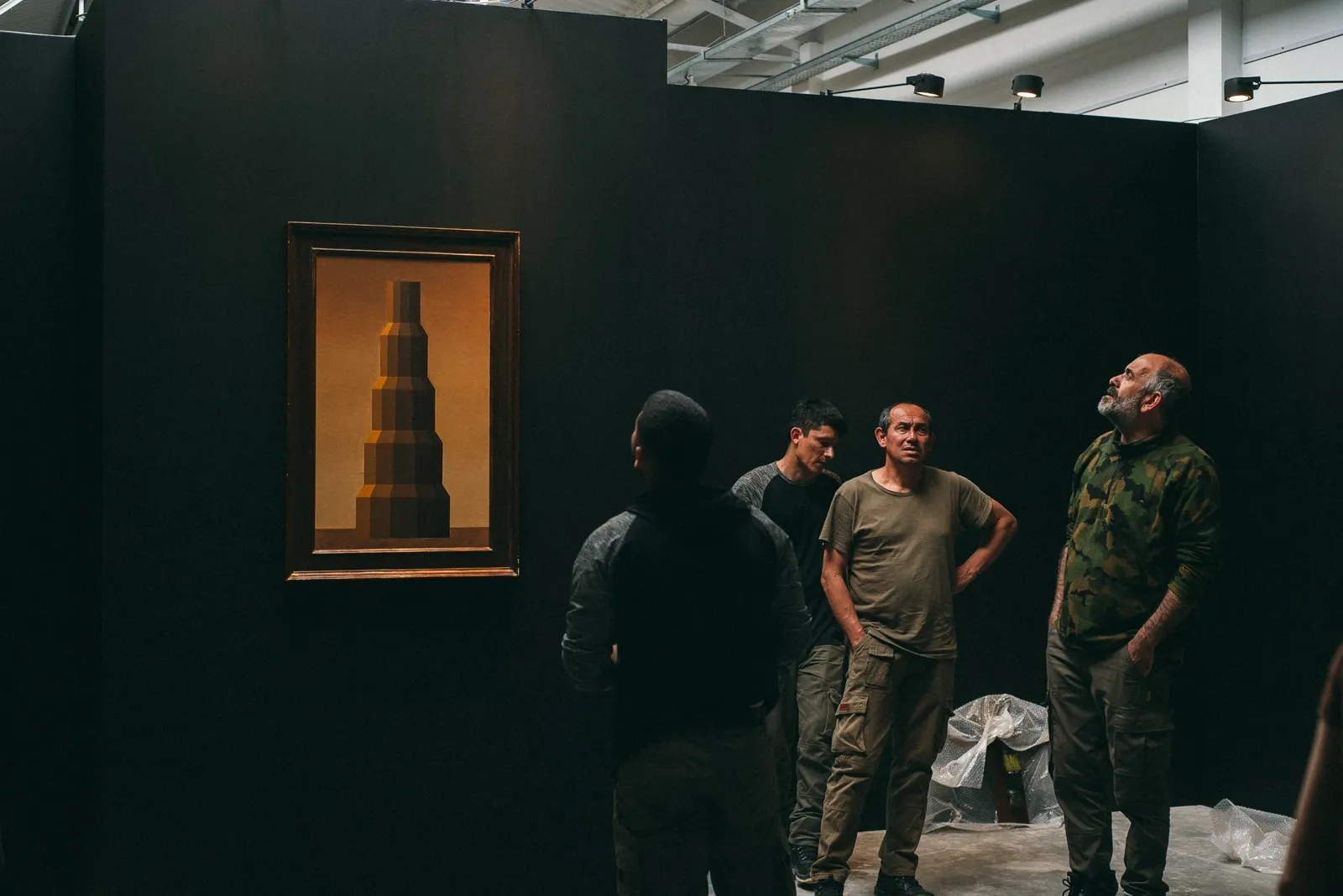
In this nocturnal field, a tower withdraws from human use. A portrait refuses recognition. A cradle remembers an absent body. A cooking vessel returns the dead to the soil. A photograph preserves the ghost of a dying tree. A machine listens for signals beyond human perception. A saint’s fragmented body participates in the production of an imagined future. A skull continues to wear the costume of social authority.
From Sacred Visions to Posthuman Surrealism
Juskowski traces Argentina’s Surrealist genealogy from the religious images and devotional objects of the colonial period to contemporary works. It is not a simple chronology or a claim of direct influence, but a history of recurring operations: objects acquire agency, landscapes become psychic, architecture withdraws from human function, images migrate across time, and bodies lose their stable boundaries.
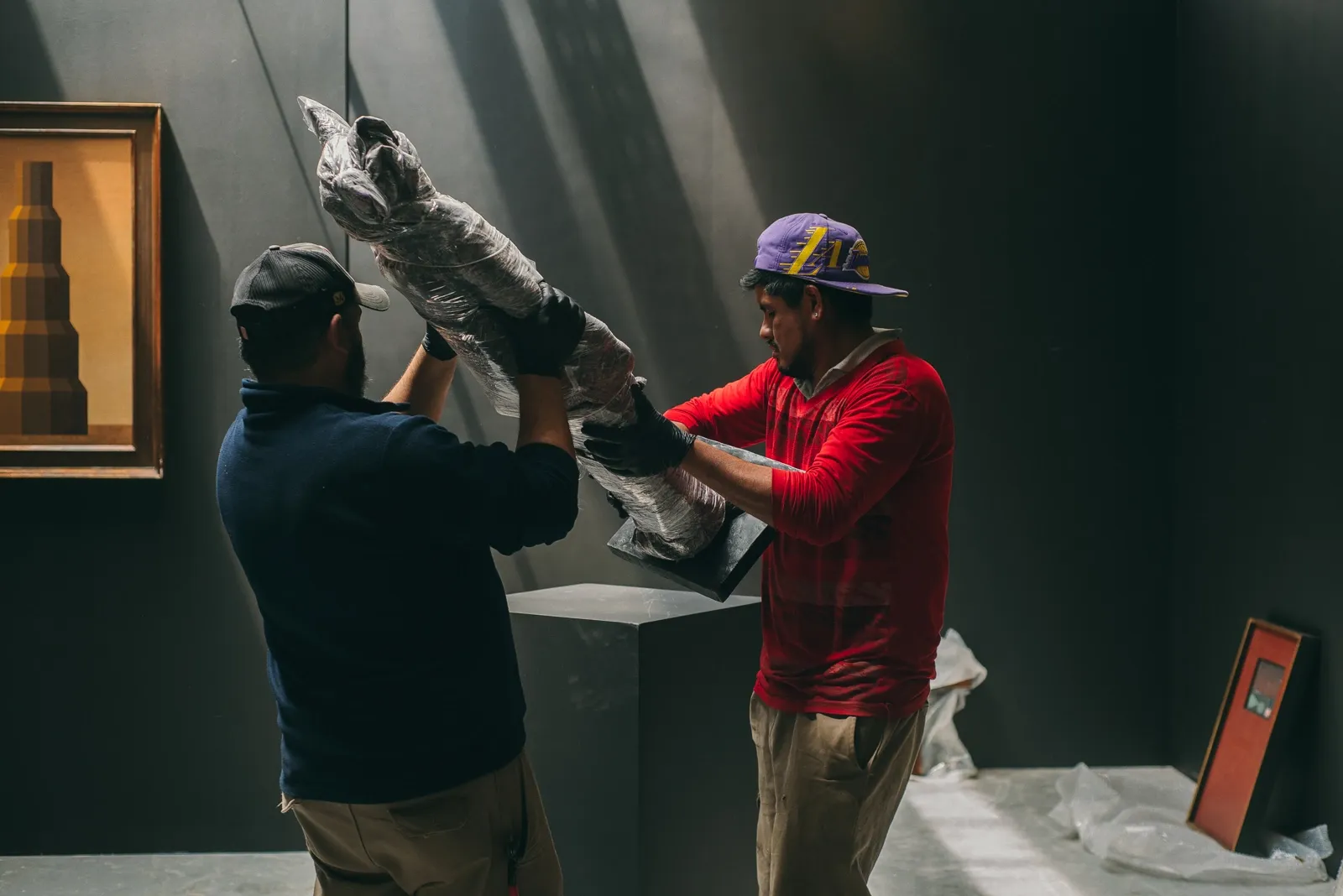
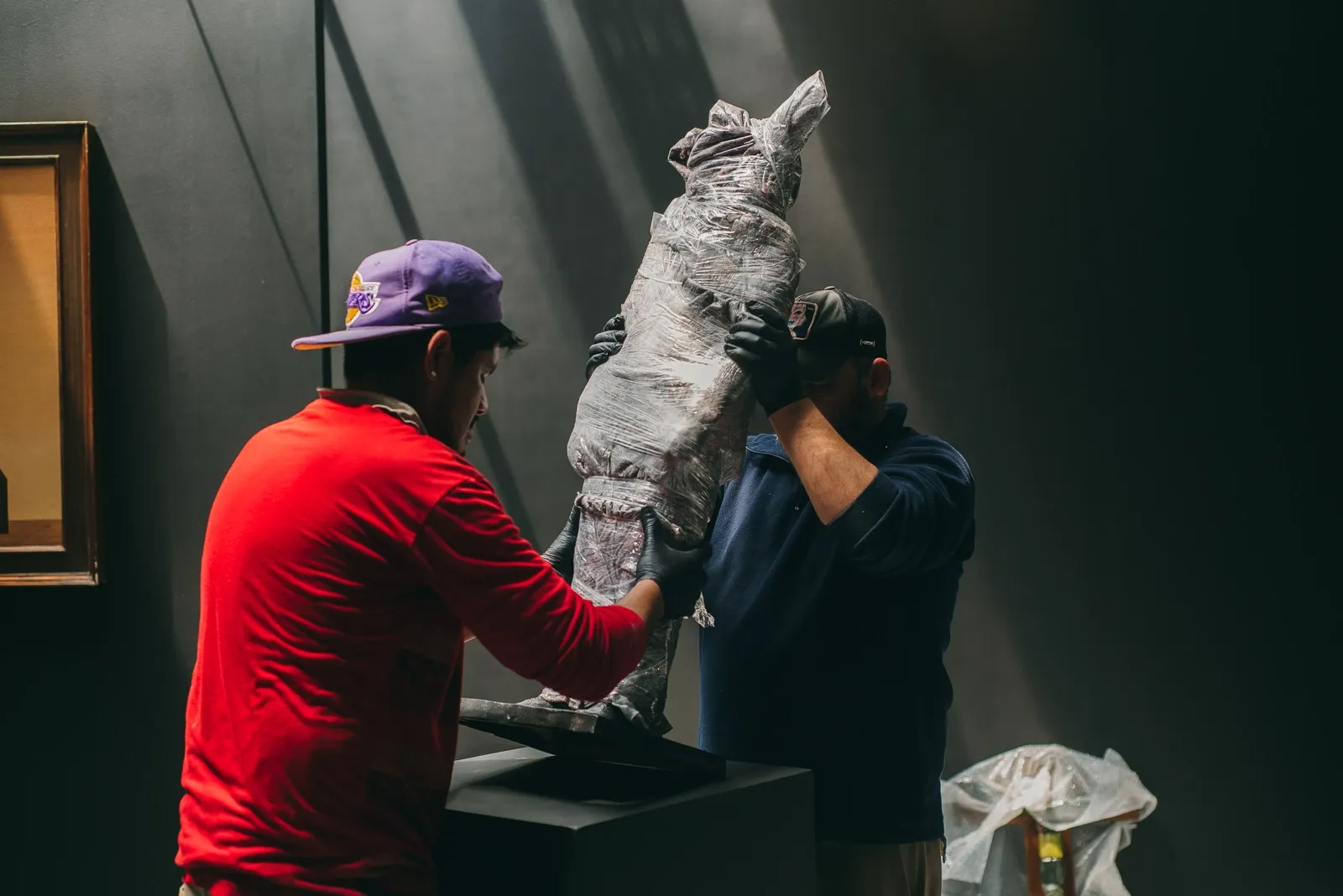
Colonial saints, crucifixes, relics, and fragmented sacred bodies created a world in which matter could carry spiritual agency. The Detached Hands of Saint Anthony (18th century) featured in the exhibition reactivate this inheritance. Withheld until the saint grants the petitioner a novio, they transform the sacred fragment into an instrument of negotiation with invisible forces. The familiar object becomes uncanny and animated, anticipating a central operation of Surrealism.
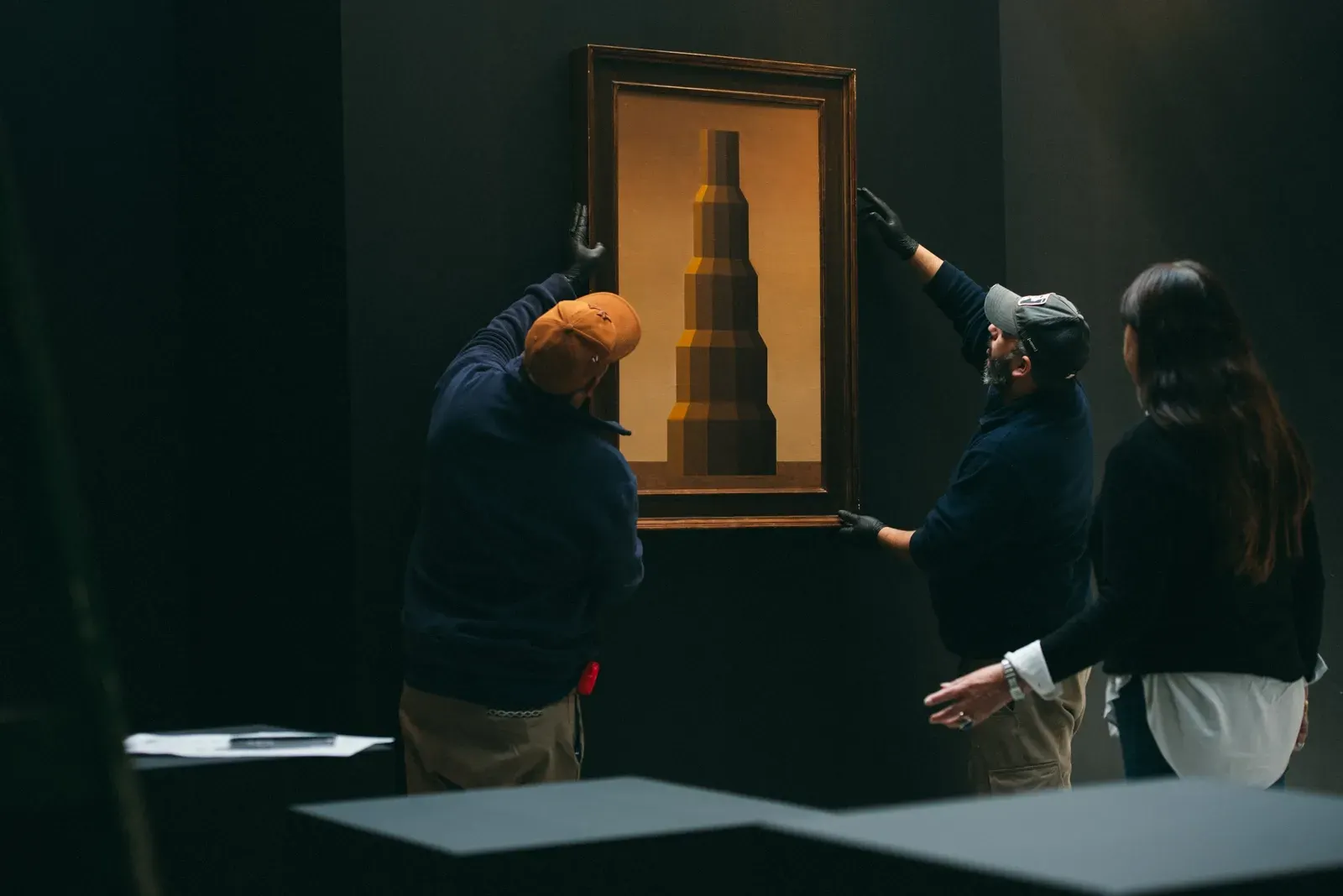
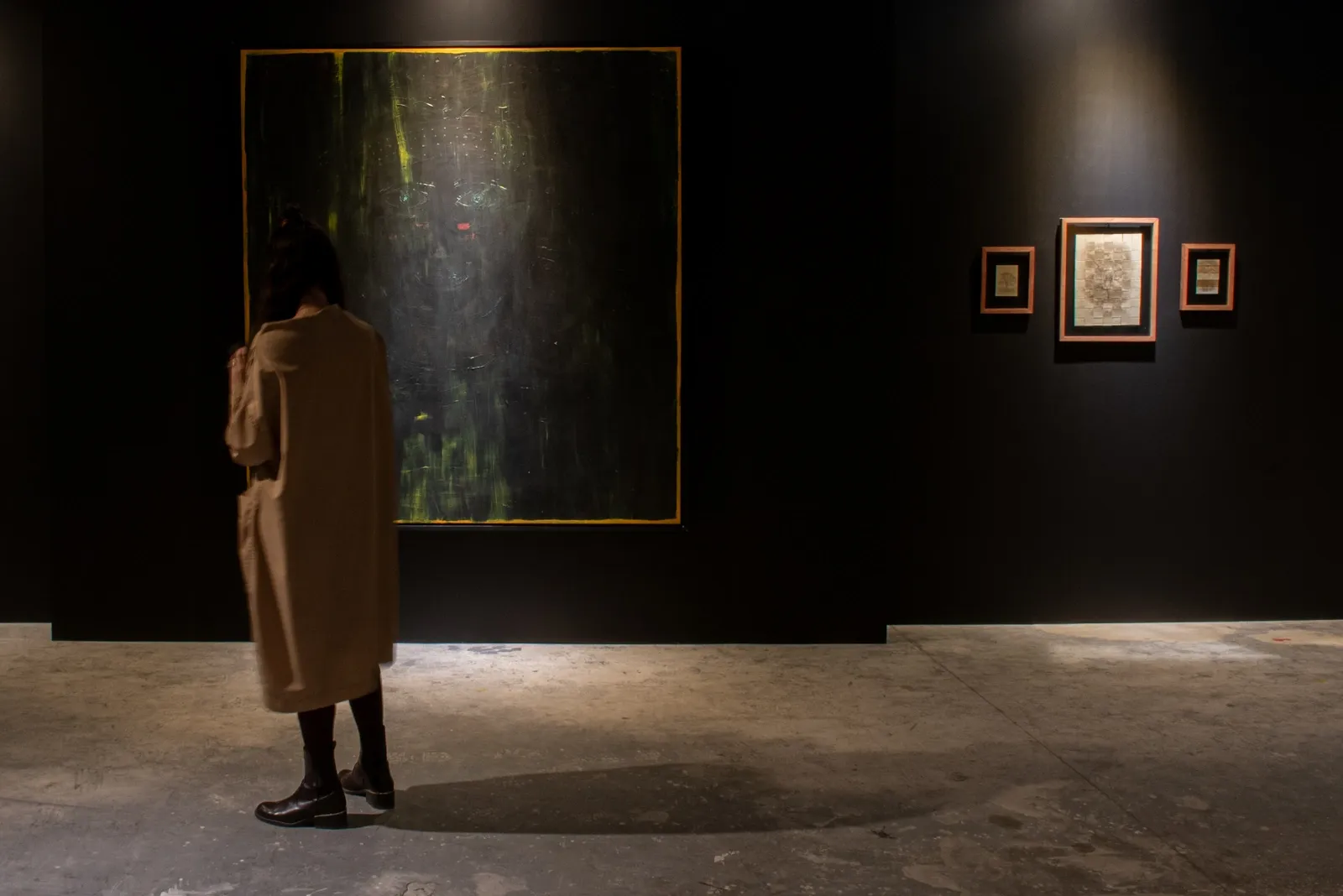
Juan Batlle Planas translated this encounter with the invisible into twentieth-century Argentine Surrealism. In Paisaje, landscape becomes a psychic territory suspended between matter and dream. His student Roberto Aizenberg developed this legacy through solitary towers, ambiguous figures, and impossible architectures. The tower presented in Nocturne refuses recognizable function and appears as an autonomous presence governed by an inaccessible logic.
Max Gómez Canle places Aizenberg’s metaphysical geometry within a broader archive of Flemish and Renaissance landscapes and Argentine abstraction. By bringing images from different periods into one pictorial space, he transforms art history into a nonlinear field of displacement and recurrence.
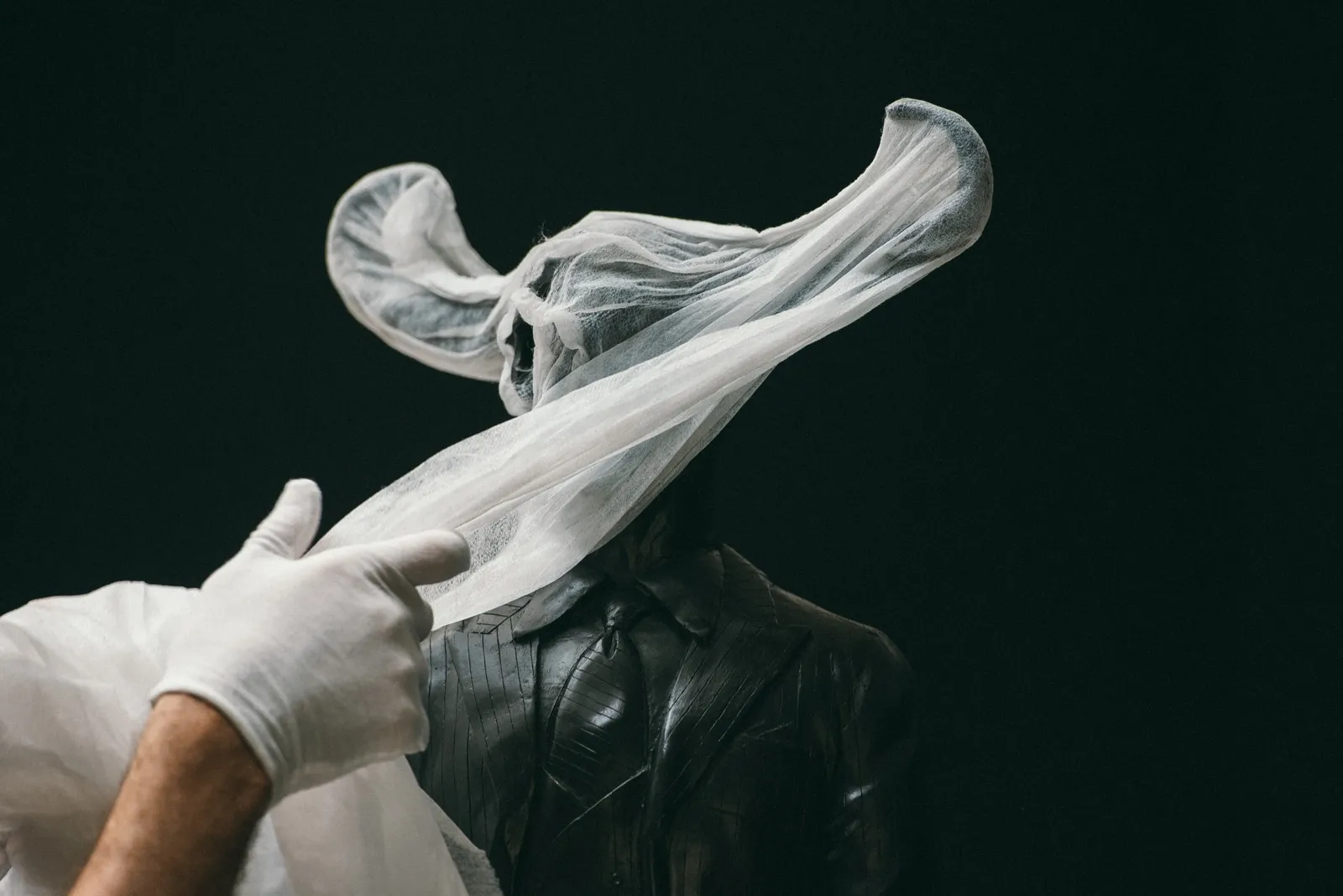
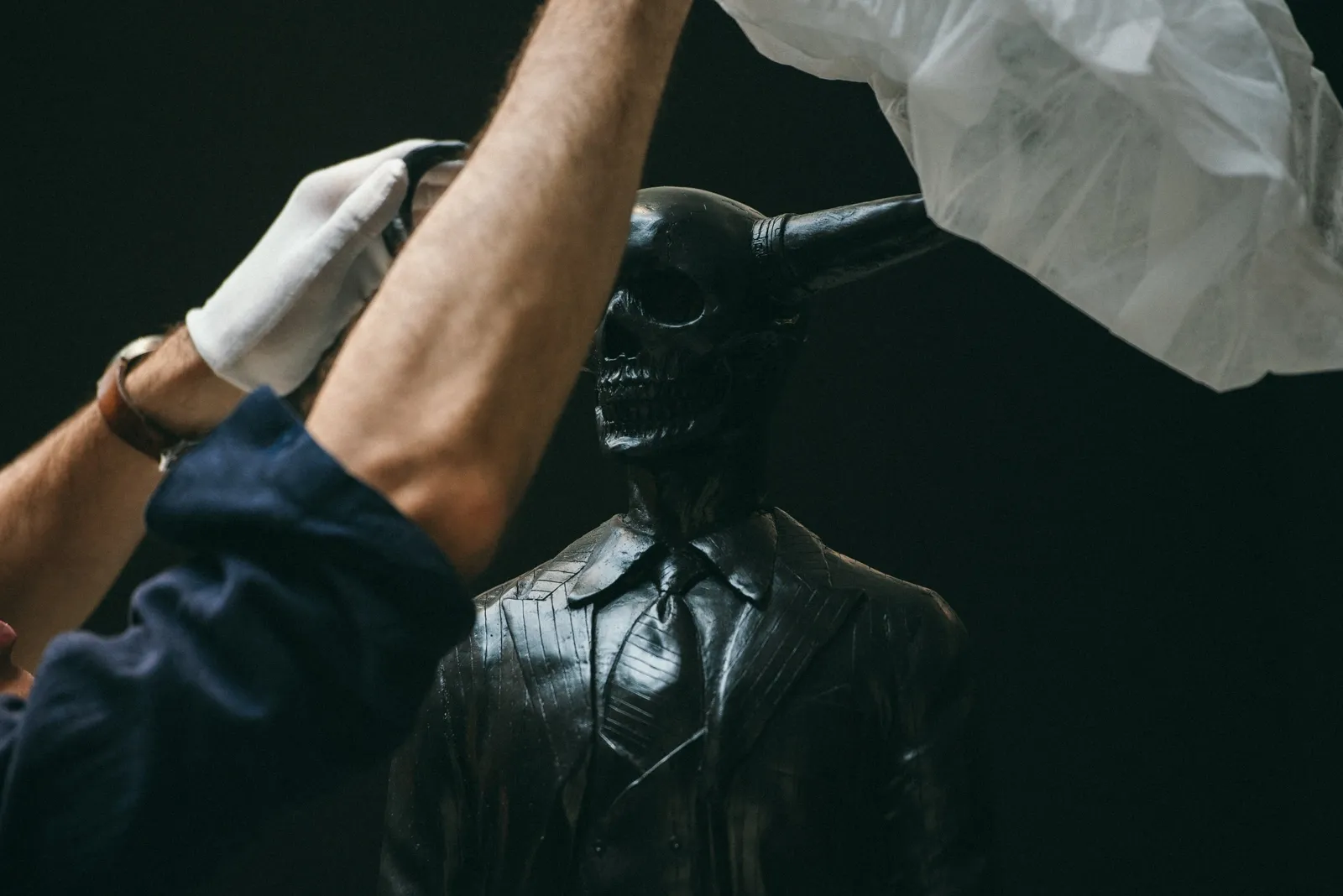
Corcho Rodríguez carries this genealogy into the posthuman future. In Deadman in Black (2025), social persona, skull, animal, mythological being, and sculptural object occupy the same body. The work becomes a posthuman vanitas, extending the traditions of memento mori and vanitas beyond the transience of individual life. It exposes both the vanity of social power and the deeper vanity of believing that humanity exists apart from animality, matter, and decay.
Hidden Systems
Maximiliano Ocampo Salinas’s Constellations of Fire (2015) is a series of collages in which the artist carefully arranges matches over vintage prints. Throughout his artistic practice Ocampo Salinas organizes objects, forms, and ideas in search of concealed systems that govern their relationships.
The enigmatic interiors of the works in the exhibition recall the labyrinthine halls of Alain Resnais’s 1961 film Last Year at Marienbad. In one composition, the matches reproduce the configuration of Nim, a mathematical strategy game in which players remove objects from separate groups until none remain. Its apparently simple arrangement conceals an abstract mathematical structure that determines every possible move.
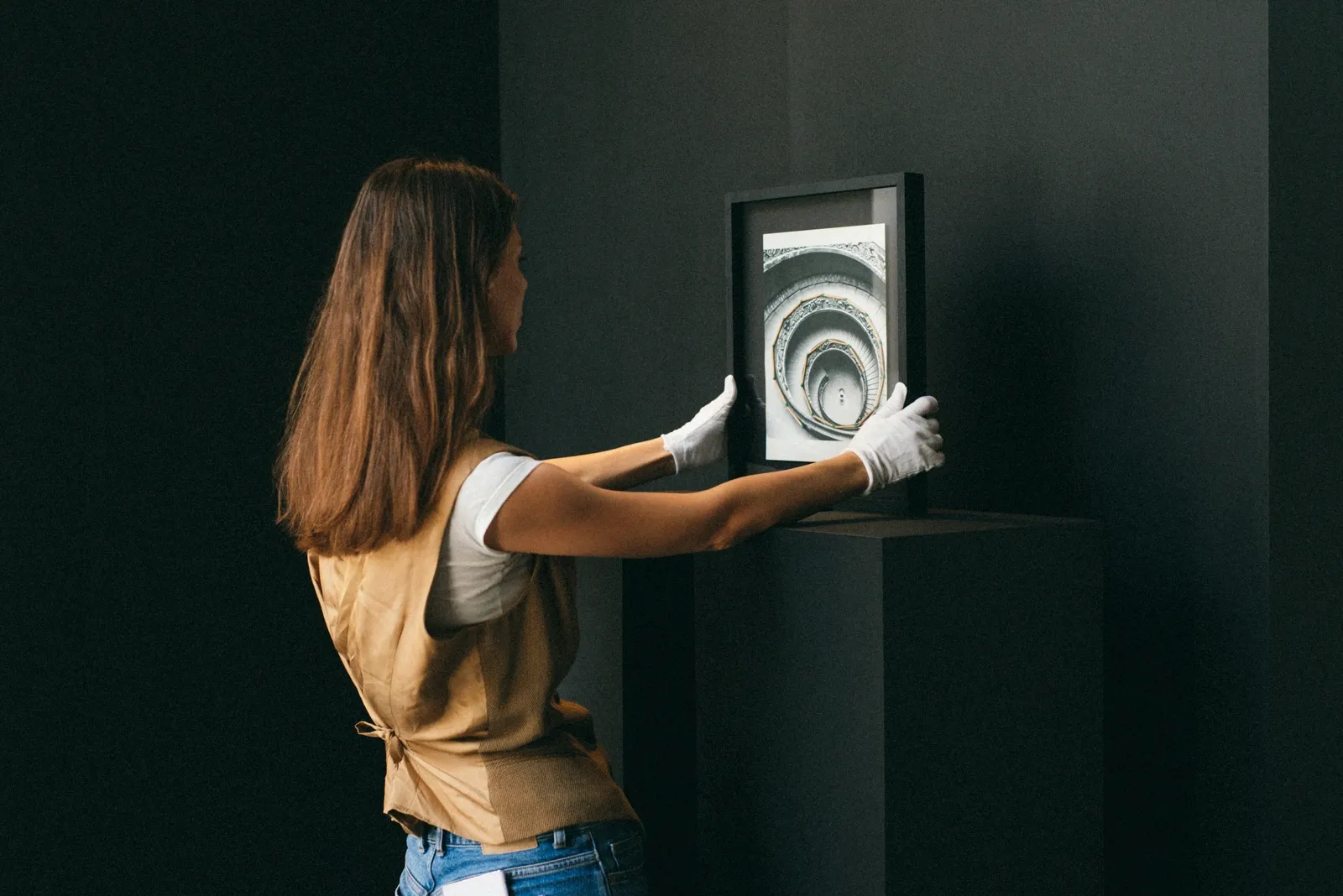
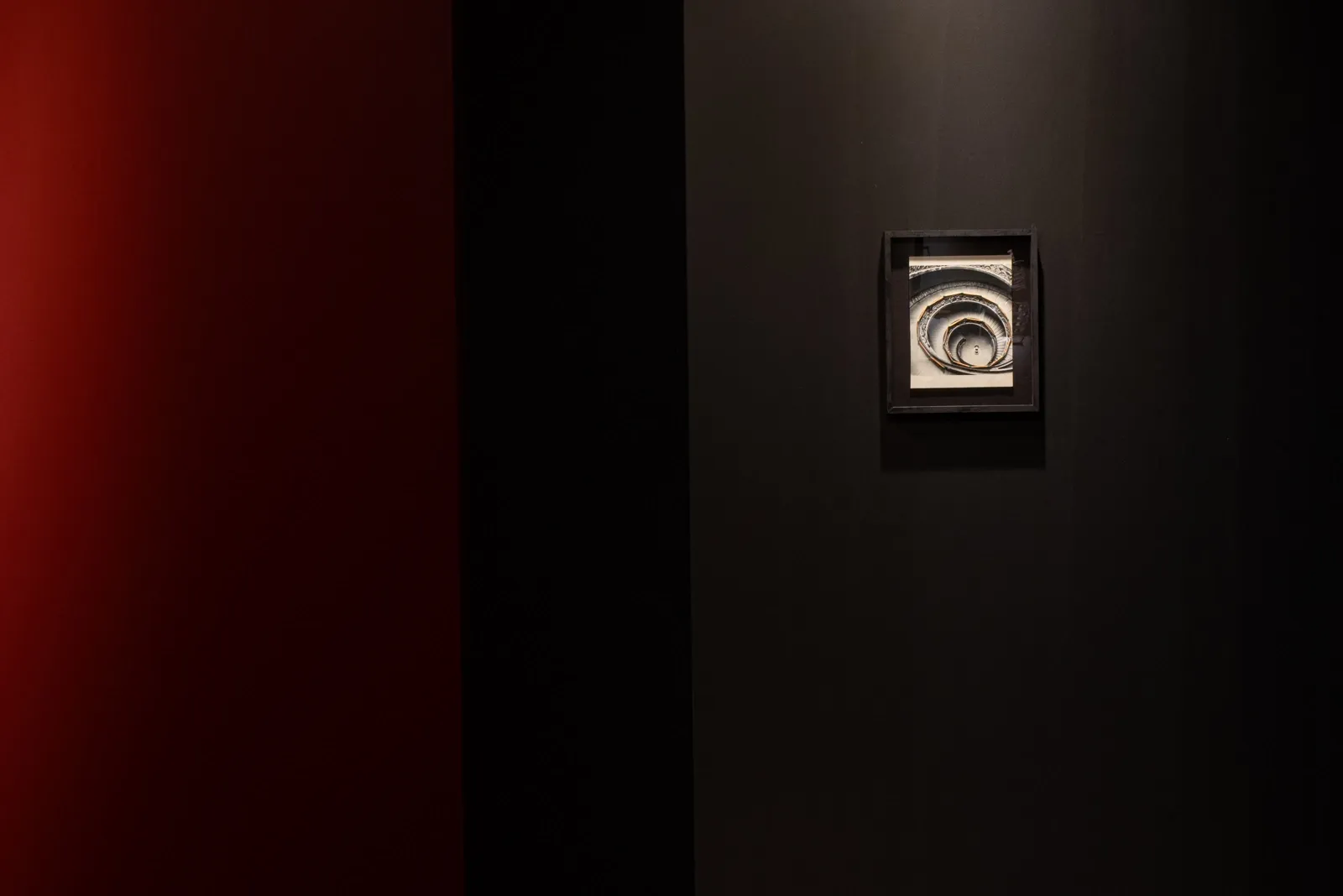
Within Nocturne, Nim becomes a model of hidden order. Human decisions appear to direct the game, yet every action unfolds within a system that exceeds immediate perception. The matches are simultaneously counters, constellations, and dormant flames. Their precise arrangement contains the possibility of ignition, connecting calculation to disappearance and order to its potential destruction. The work suggests that a lack of human knowledge does not imply an absence of structure: systems may continue to operate independently of our ability to recognize or understand them.
Joaquín Aras’s Fotografía toma directa (2024) extends this uncertainty into the relationship between media, reality, and belief. A UFO appears beside the Obelisk, introducing an impossible presence into Buenos Aires’s most recognizable urban image. The title claims the evidentiary authority of direct photography, while the image activates the logic of conspiracy theories, in which ambiguity is interpreted as proof of a concealed reality.
The work questions human ability to determine what is real. Together, the two works suggest that reality may contain orders, technologies, intelligences, and forms of agency that remain active beyond human perception and comprehension.
Childhood, sleep, and nocturnal fear
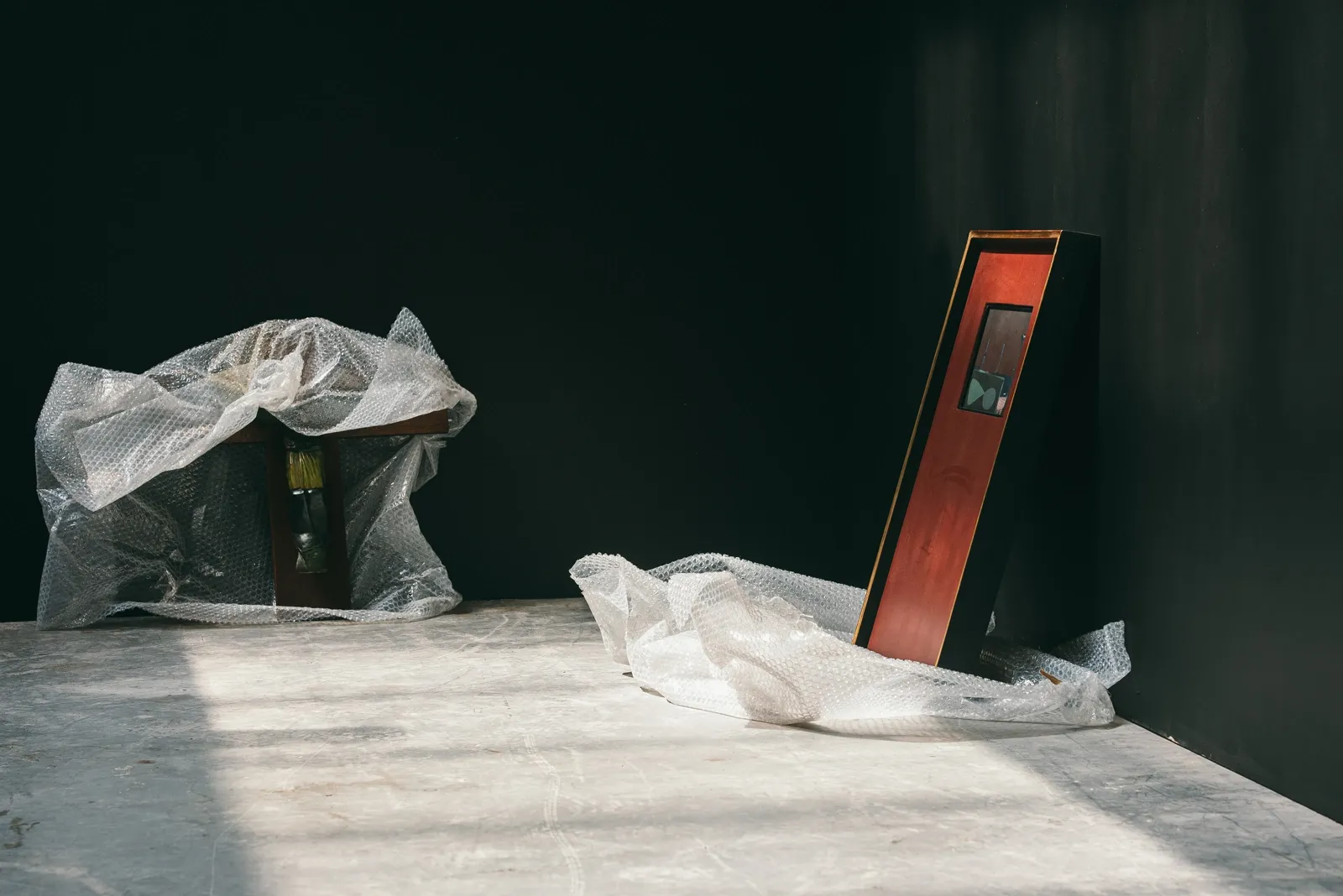
Francisca Rey’s Nadie conoce este lugar como vos, from the Canción de cuna series, transforms the cradle into a threshold between protection and confinement, sleep and death, memory and disappearance. Constructed from iron, crystal, bronze, marble, and gold leaf, the sculpture resembles domestic furniture, a cage, a reliquary, and a funerary monument.
The bodily scale of the work evokes an absent occupant whose presence appears to persist within its materials. The cradle promises protection, yet its bars also suggest restriction. The lullaby, similarly, is both tender and unsettling: an invisible force that guides the body away from wakefulness and into the vulnerability of sleep.
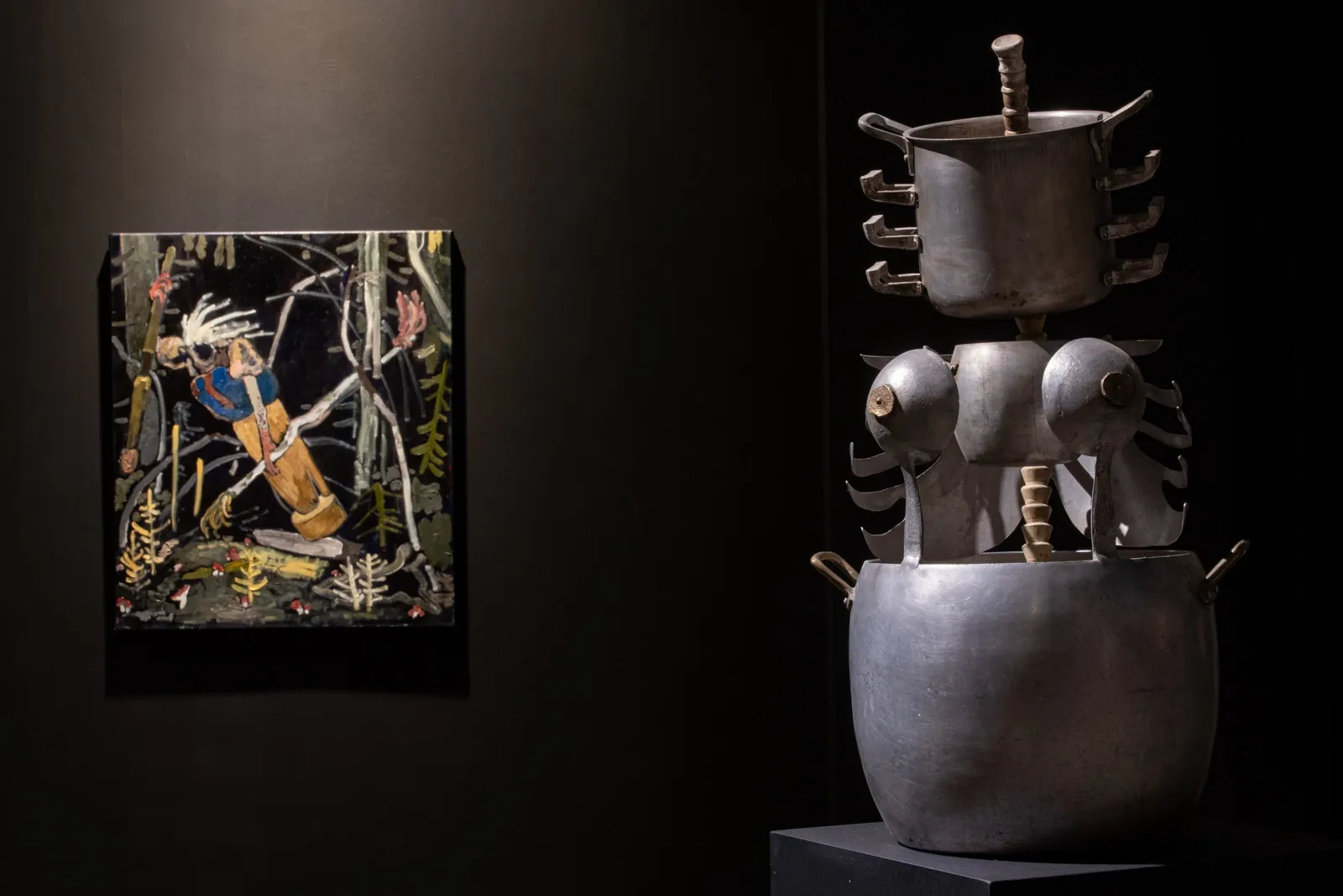
In dialogue with Rey’s empty cradle, Alejo Musich introduces Baba Yaga, the ambiguous witch of Slavic folklore. Associated with the forest, death, transformation, and the devouring of children, Baba Yaga is not simply a monster. Depending on the story, she may threaten, test, punish, or assist those who enter her domain. Musich’s blurred, spectral treatment renders her less as a stable character than as an apparition suspended within an unstable pictorial space.
Together, the two works transform childhood into a territory shaped by visible objects and invisible fears. The cradle marks the intimate space of the lullaby, while Baba Yaga embodies what may be waiting beyond its boundaries. One work guides the child toward sleep; the other gives form to the darkness encountered there.
Bodies and matter
In Andrés Piña’s Cometierra (VI) (2026), domestic cooking vessels are transformed into ambiguous bodies, funerary containers, and agents of material exchange. The series draws upon the relationship between the pot and Amerindian burial practices in which bodily remains could be deposited in vessels and returned to the earth as generative matter. The object that feeds the living thus becomes the vessel through which the dead nourish the soil.
Cooking, consumption, burial, and regeneration enter a single material cycle. The sculptures’ vaguely anthropomorphic forms remain suspended between body and vessel, domestic object and ritual figure. The pot is no longer a passive container. It participates in the transformation of living matter into nourishment and of the human body into new forms of life. Cometierra (VI) (2026) destabilizes distinctions between nourishment and decomposition, person and object, life and nonbeing. The human body relinquishes its ontological privilege and returns to the material continuum from which it emerged.
Jorge Macchi’s work titled A.B (1997) approaches the bodily fragment through intimacy. Human hairs are stretched in parallel rows across a white sheet of paper, transforming bodily remnants into the lines of a musical staff. The hairs resemble a structure waiting to receive notes, yet the score remains silent and cannot be conventionally performed. If the hairs belonged to someone loved by the artist, as has been suggested, the work becomes a portrait without a visible face. The body is absent, but a physical trace remains. Hair continues to exist after separation from the person, occupying an uncertain position between body and object, presence and loss. Arranged into musical order, these remains suggest a private composition whose melody may be imagined but never heard.
Unstable Identities
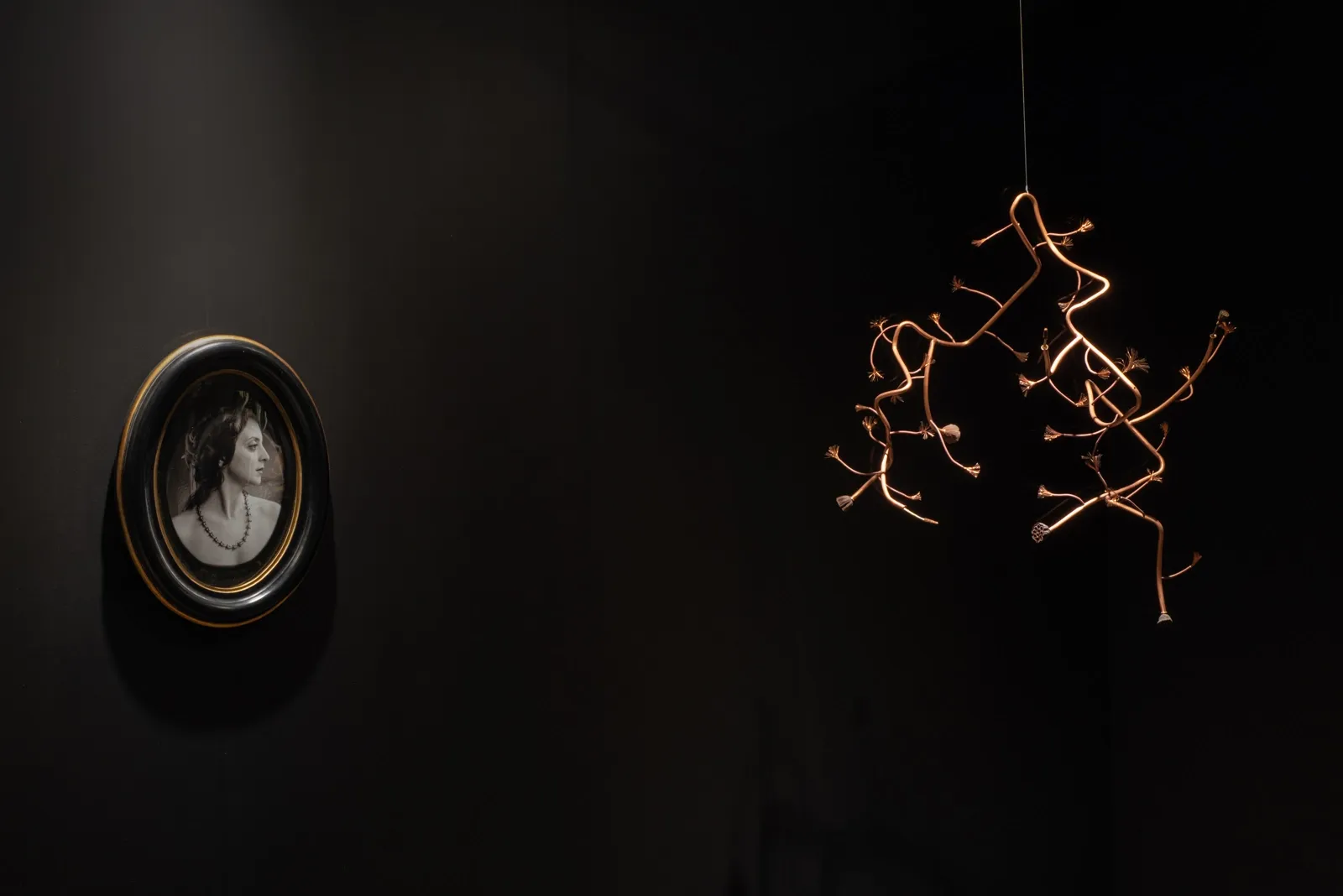
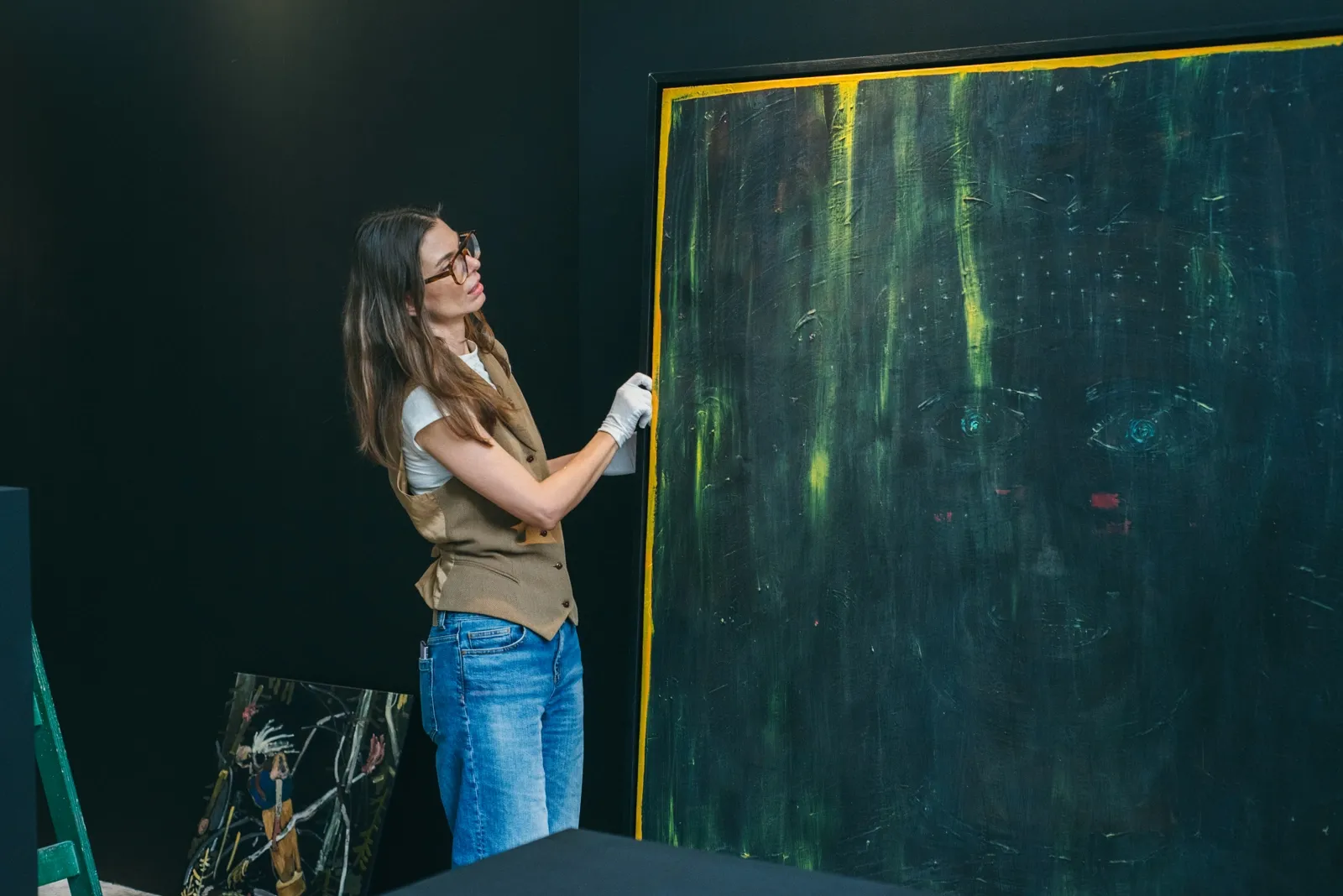
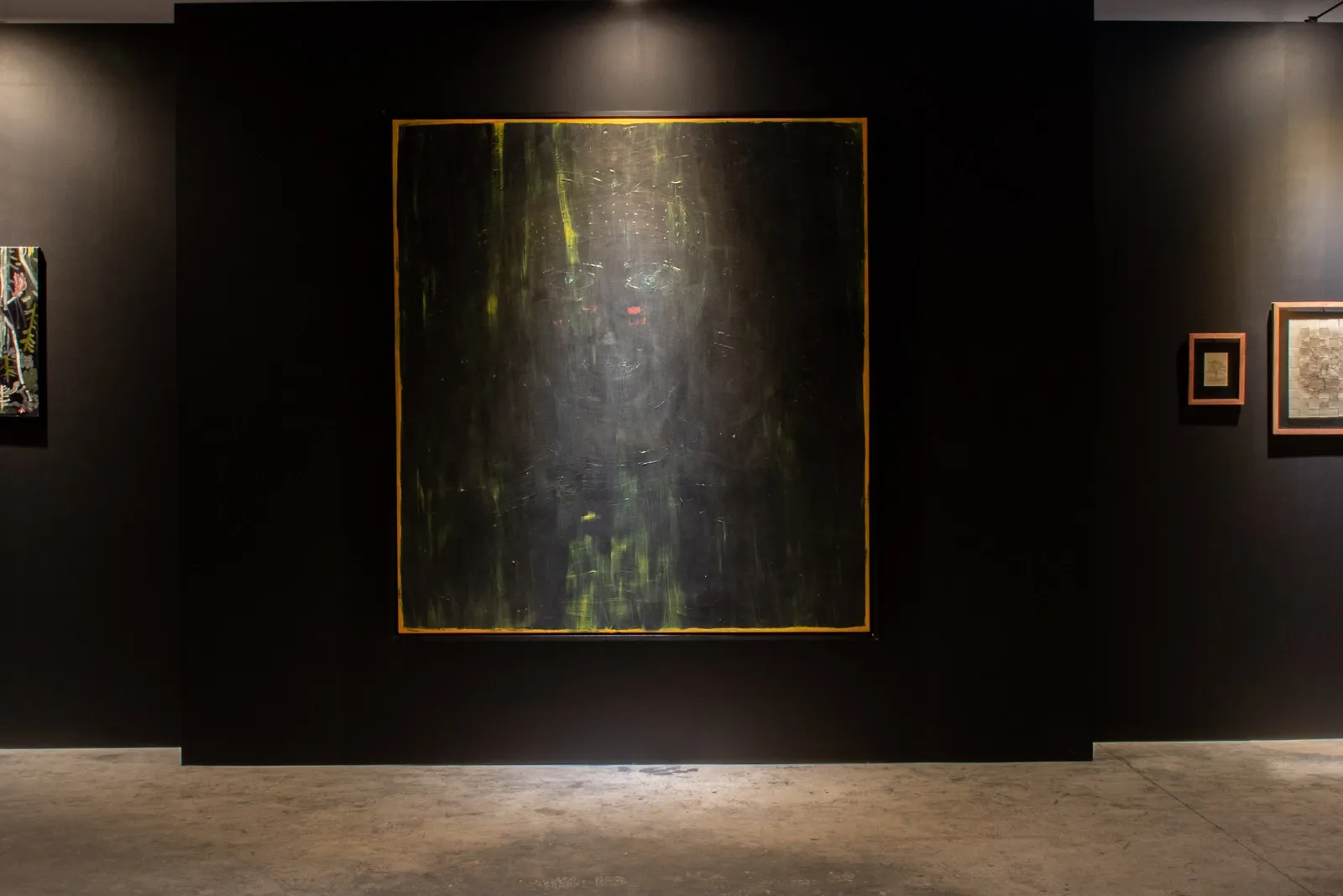
Nicola Costantino’s Nicola. Julia Margaret (2016), Roberto Aizenberg’s Portrait (1982), and Corcho Rodríguez’s Rostro en Retirada (2023) challenge portraiture’s traditional promise to reveal and preserve identity. Across the three works, the self is inhabited by another historical figure, transformed beyond recognizable likeness, or deliberately withdrawn from view. Throughout the exhibition identity appears fluid and unstable.
In Nicola. Julia Margaret (2016), Nicola Costantino embodies the nineteenth-century photographer Julia Margaret Cameron, allowing one woman artist to return through the body of another; produced using collodion, the photograph transforms Costantino’s body into a living archive where identity is transmitted through reenactment, material process, and historical memory. In Roberto Aizenberg’s Portrait (1982), recognizable features give way to geometric structures, patterned surfaces, and ambiguous forms, suspending the figure between person, object, architecture, and psychic projection. Corcho Rodríguez’s Rostro en Retirada (2023) reverses portraiture’s identifying function as the face retreats into a nearly black pictorial surface. It refuses to become fully visible and challenges the assumption that beings exist to be observed, interpreted, and possessed by the human gaze.
Ecological ghosts and sensitive machines
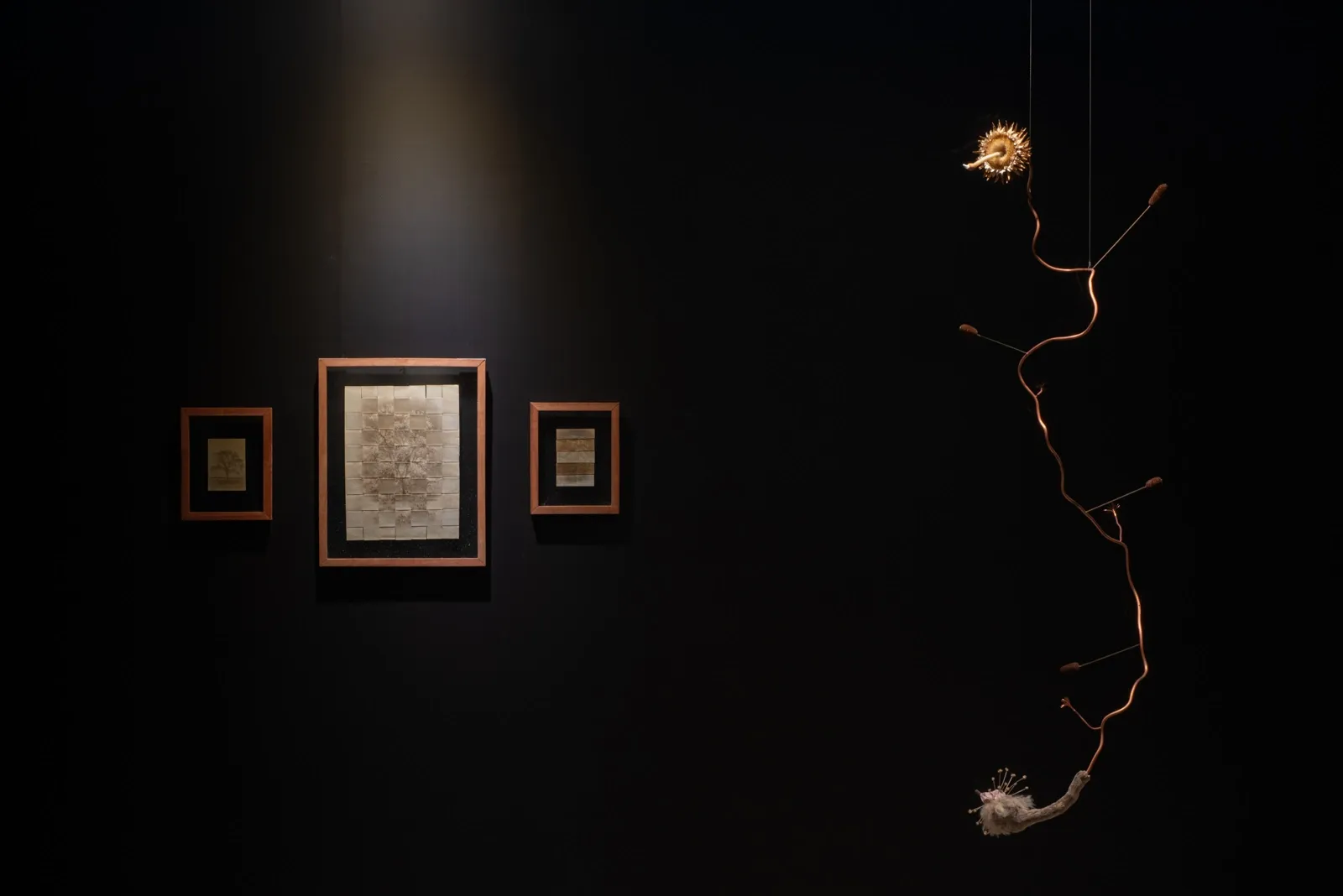
In Jonathan “Joni” Barberi’s Satori, climate collapse appears as a slow transformation absorbed by the landscape. Begun after a prolonged drought reduced water levels around Chascomús, the series documents dying trees and other traces of ecological loss. Through cyanotype, these trees become blue apparitions, both photographic evidence and ghosts of a disappearing ecosystem. By deconstructing and reassembling the prints, Barberi fragments the continuity of the landscape, transforming documentary photography into a spectral archive of drought and human intervention.
Valentín Asprella Lozano’s Radars offer another model of environmental perception. Rotating structures combine bones, hair, seeds, wood, and leaves with plastics, metals, hoses, and electric motors, forming hybrid bodies that seem to register signals unavailable to human senses. Within Nocturne, the two works displace humanity as the primary observer: Satori presents the landscape as a material witness to ecological collapse, while Radars distributes perception across organic matter, technology, and the atmosphere. Neither makes the invisible fully knowable; instead, both turn toward what exceeds human perception.
Sacred bodies
Juan de Dios Mena’s polychrome carving in palo santo from 1950 brings Christian sacrifice into an uneasy relationship with colonial histories of dehumanization. The Indigenous subject is dehumanized twice: physically through crucifixion and pictorially through the artist’s caricatural treatment of his body.
Although the cross elevates him to the sacred position of Christ and presents him as persecuted and worthy of mourning, his distorted features invoke a visual language historically used to displace Indigenous peoples toward animality and deny their full humanity.
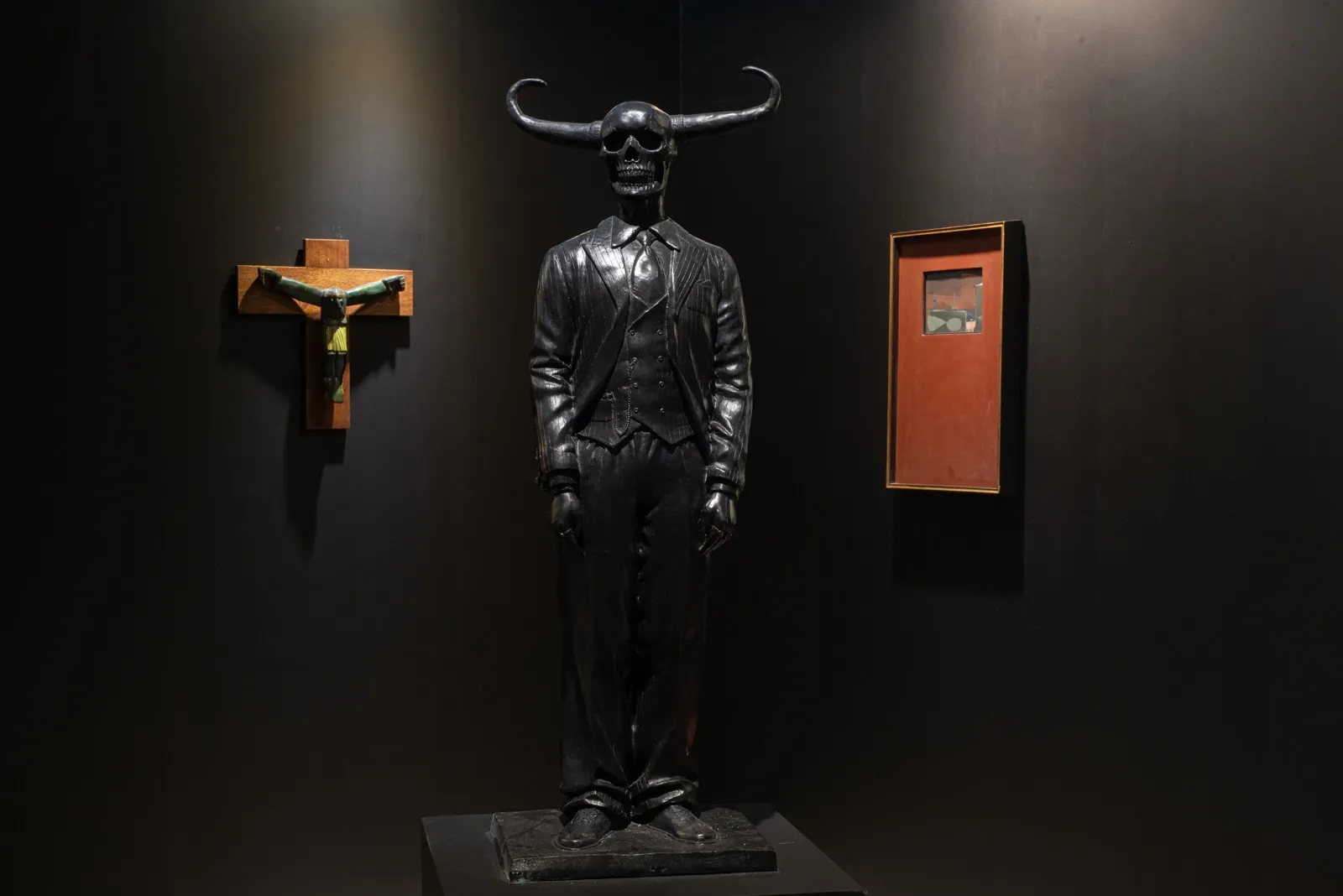
Whether the sculpture exposes this violence, reproduces it, or remains implicated in it cannot be fully resolved, and its discomfort lies precisely in that ambiguity.
Within Nocturne, the work complicates the posthuman dissolution of boundaries between human and animal existence: while posthumanism questions humanity’s assumed superiority over animals and the natural world, colonial power historically excluded particular peoples from the category of the human.
The sculpture therefore asks who has the privilege of moving beyond the human, and who must first struggle to be recognized as human.
The Spectacle
The uncropped photographs of Foto Estudio Luisita reveal the material apparatus surrounding the fantasy of Buenos Aires revue theater. In Cena Para Amante and Fantástica (1972), empty chairs, curtains, stage edges, lighting equipment, and areas of darkness return to images originally cropped around the performers.
These elements do not destroy the theatrical illusion but expose the objects, technologies, architecture, and vacant spaces required to produce it. The complete frame reveals that spectacle is never created by the performer alone.
In Joaquín Aras’s Just Like That! (2020), the distinction between the real and the spectacle becomes a matter of life and death. When comedian Tommy Cooper suffers a fatal heart attack during a live television performance, the audience continues laughing because his collapse retains the recognizable form of comedy.
Aras presents the fatal event alongside an alternative version in which Cooper rises and completes his routine, allowing death and recovery to occupy the same mediated duration. Reality does not interrupt the spectacle from outside but enters through its existing codes and is absorbed by them. Together, the works ask whether the real can ever be separated from the frames, performances, and images through which it becomes visible.

Nocturne (2026) by Jesse Alexander Kotansky
An original soundscape by New York-based composer and multi-instrumentalist Jesse Alexander Kotansky extends the exhibition beyond the visual field. Titled Nocturne 2026, the composition is inspired by Roberto Aizenberg’s Father and Son Contemplating the Shadow of a Day (1962), from the collection of the Museo Nacional de Bellas Artes in Buenos Aires.
Translating the painting’s metaphysical atmosphere into an immersive sonic environment, Kotansky’s soundscape moves through the exhibition as an invisible presence, connecting artworks from different periods and giving sonic form to the dreamlike, the immaterial, and the unseen.
Central figure of Argentine Surrealism and a student of Juan Batlle Planas, known for solitary towers, monuments and impossible architectures.
Website · Instagram
Works across photography, video, installation, performance and text, examining how media reorganizes reality and shapes belief.
Website · Instagram
Builds suspended Radars from organic and manufactured materials, in a practice concerned with energy, spatial interaction and the emotional capacity of materials.
Website · Instagram
His Satori series, begun in 2023 after a prolonged drought around Chascomús, records dying trees in cyanotype.
Website · Instagram
Pioneer of Surrealism in Argentina, born in Torroella de Montgrí, Spain, raised in Buenos Aires and largely self-taught.
Embodies the photographer Julia Margaret Cameron in Nicola. Julia Margaret (2016), made with collodion.
Website · Instagram
Conceived Deadman as his alter ego, a figure that runs through his painting and sculpture. He also conceived Little Red Door Club.
Website · Instagram
Shown with a polychrome carving in palo santo from 1950.
Founded by Luisa Escarria and her sister Chela, the studio photographed Argentine popular entertainment and Buenos Aires revue theater with a Hasselblad medium-format camera.
Website · Instagram
Paintings combine Flemish and Renaissance landscape, Aizenberg's metaphysical geometry, Argentine abstraction and digital culture.
Website · Instagram
Repeatedly explored the relationship between visual art and musical notation in the 1990s.
Website
Painter of Baba Yaga I (2019), rendered in a blurred, spectral manner.
Website · Instagram
Organizes found objects, forms and ideas in search of the hidden systems that structure their relationships.
Website · Instagram
His Cometierra series draws on the relationship between the cooking pot and Amerindian burial practices.
Website · Instagram
Independent curator, writer, researcher and cultural critic, and founder of Mnemosyne Projects. She curated Nocturne with curatorial assistance from Carolina Kleine Samson and wrote the curatorial essay.
An invitation-only private members club in Villa Crespo, conceived by the artist Corcho Rodríguez as a destination for art, culture and hospitality. Its new location combines a contemporary art gallery, a private art collection, a cocktail bar and a dining program.
About Catapult Contemporary
This is an exhibition spotlight published by Catapult Contemporary, an independent editorial platform for contemporary art, based in Vienna. We publish exhibition reviews, artist features, interviews, and critical context, with a focus on emerging and mid-career practices from Europe and beyond.
catapult-platform.art ·
Instagram
Want to be featured? Submit your work →
No spam, no sharing to third party. Only you and me.