A Space That Holds Together Only From One Position: Parsa Khalili

Parsa Khalili: When Painting Becomes Architecture
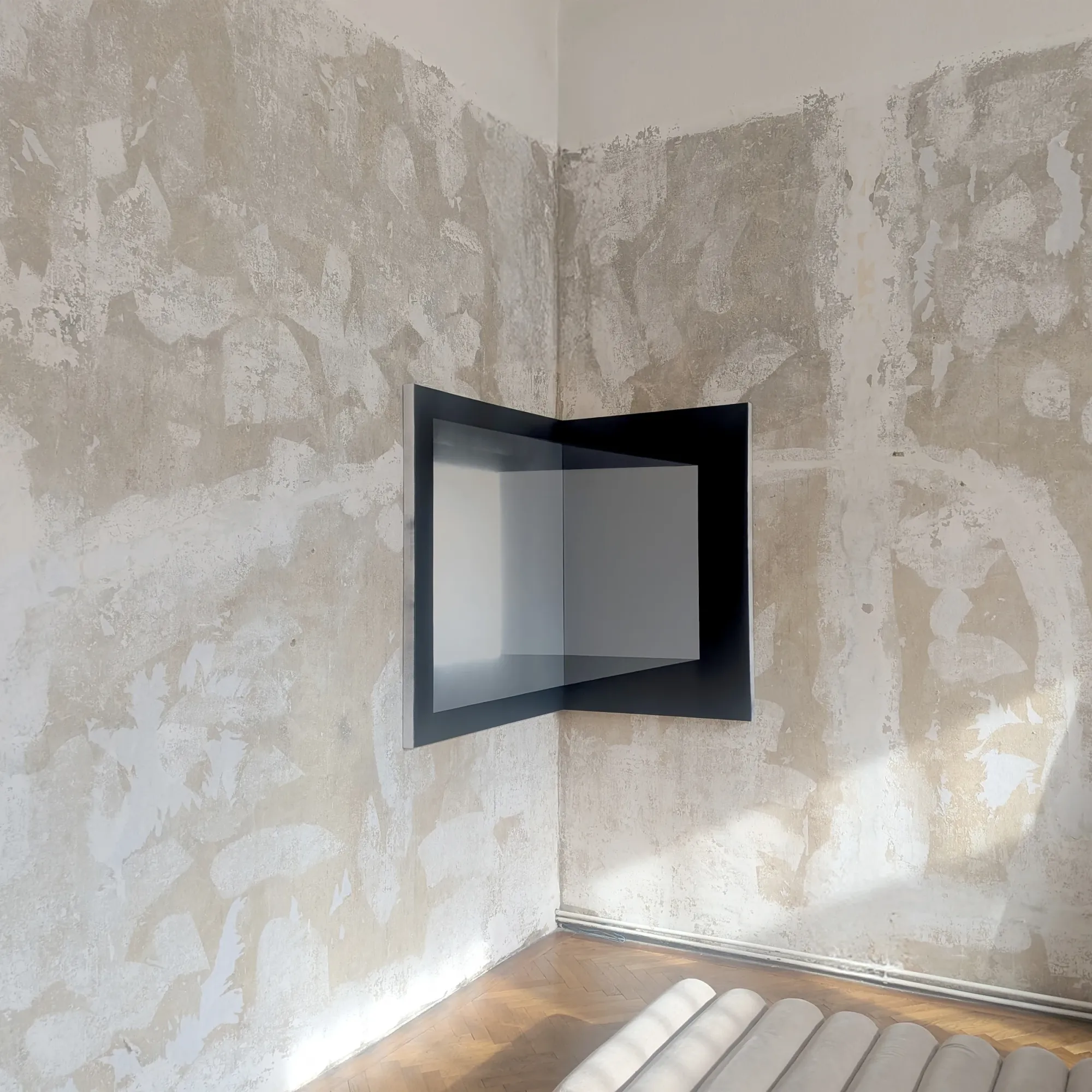
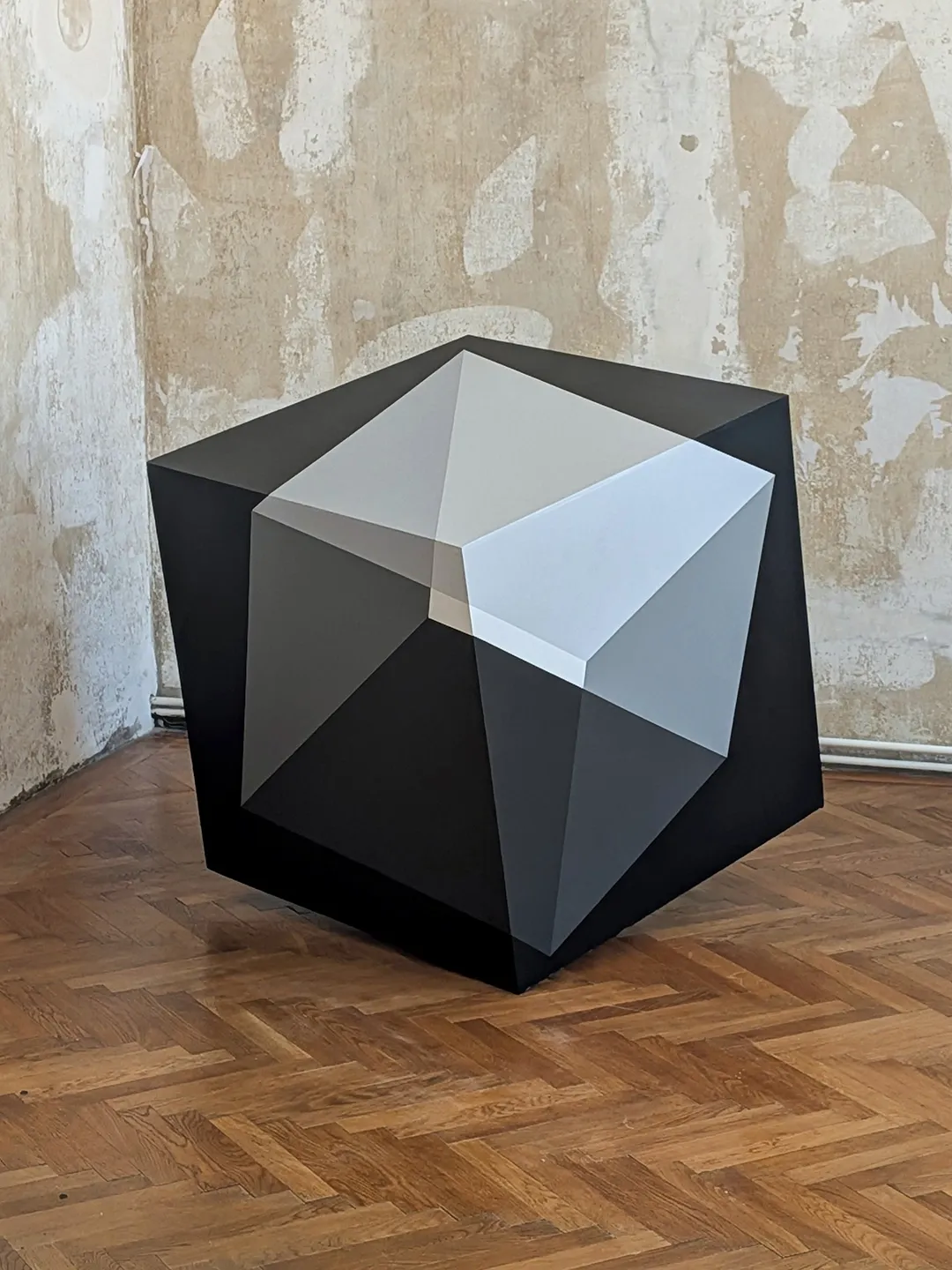
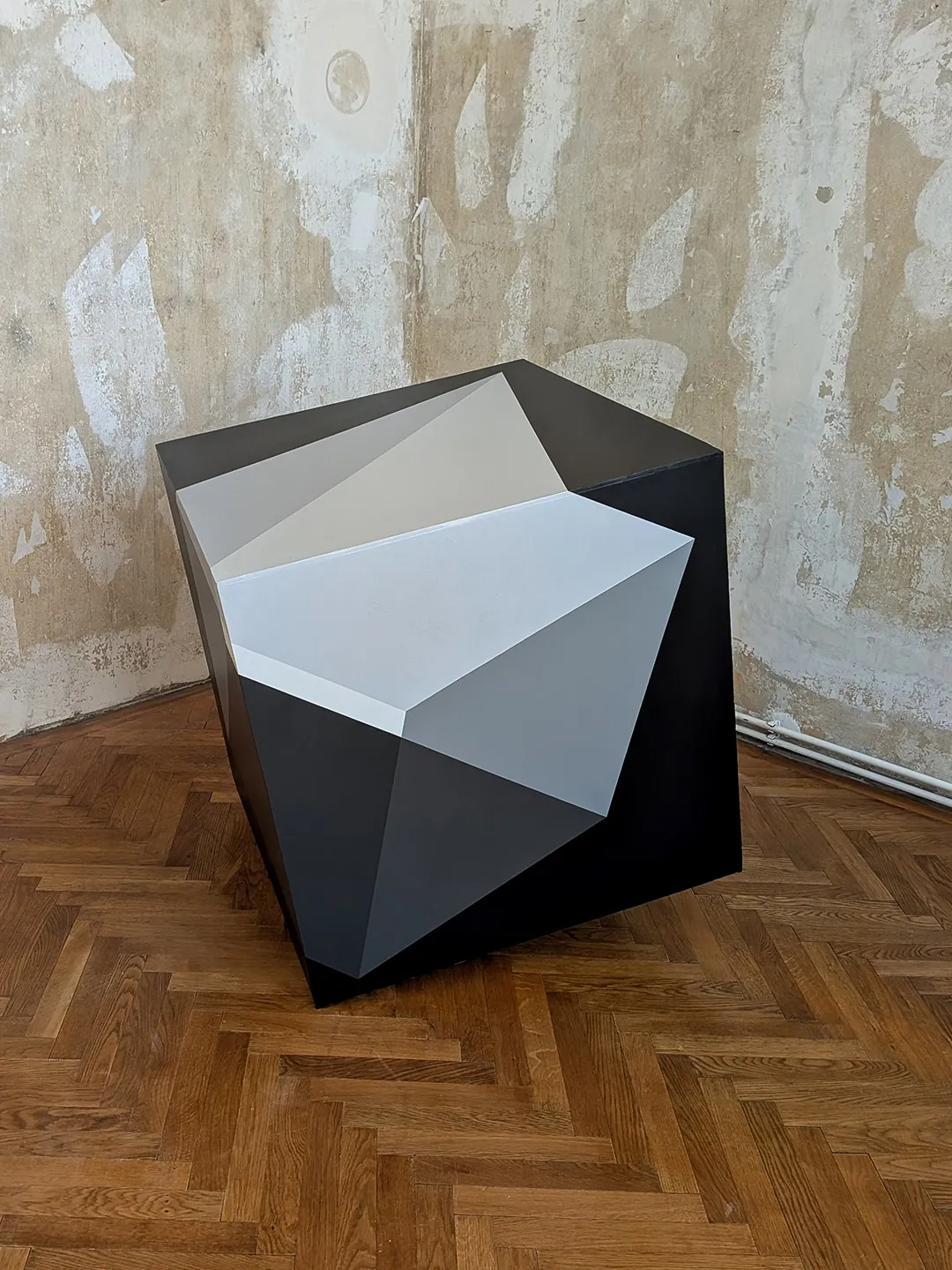
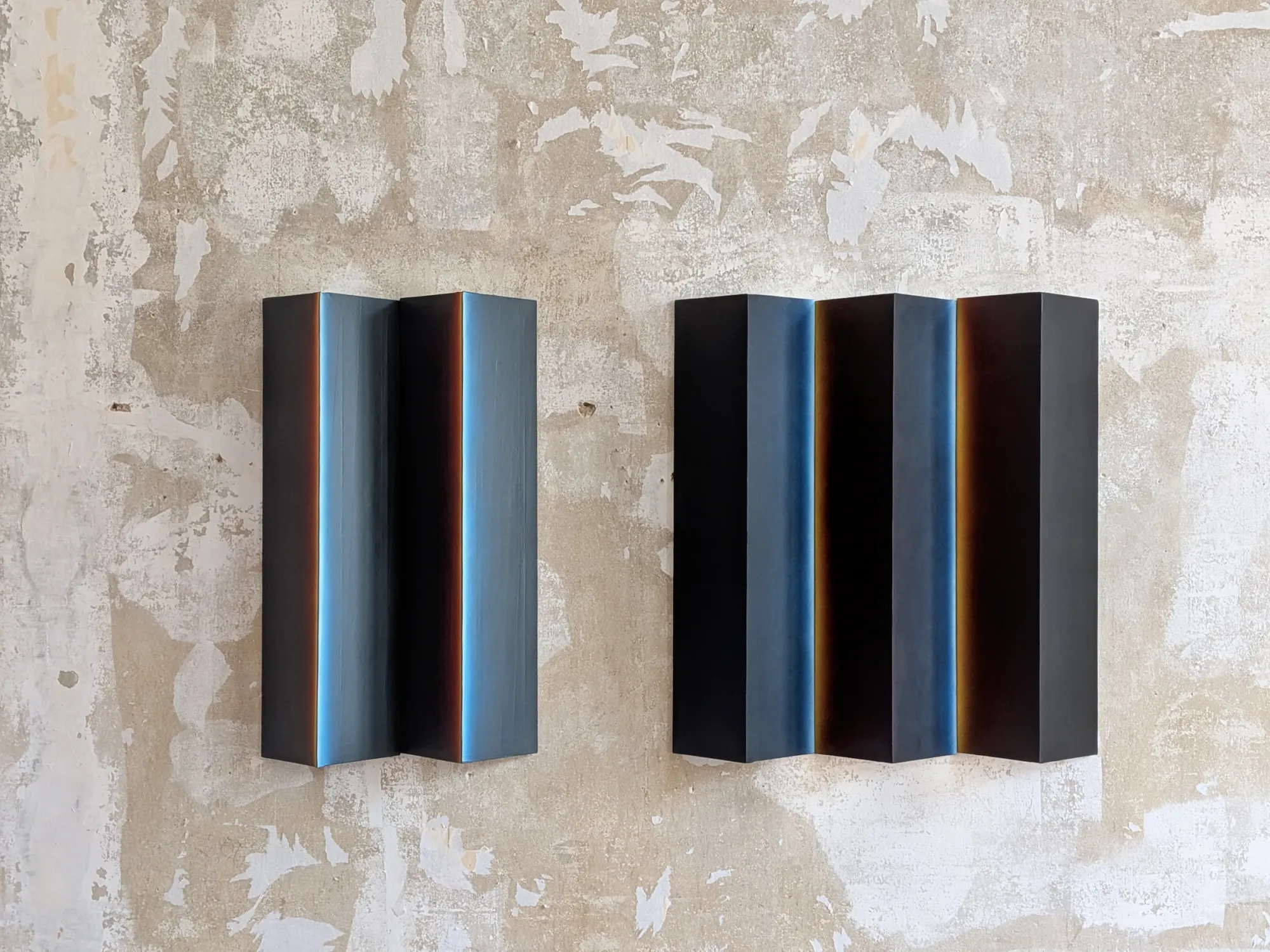
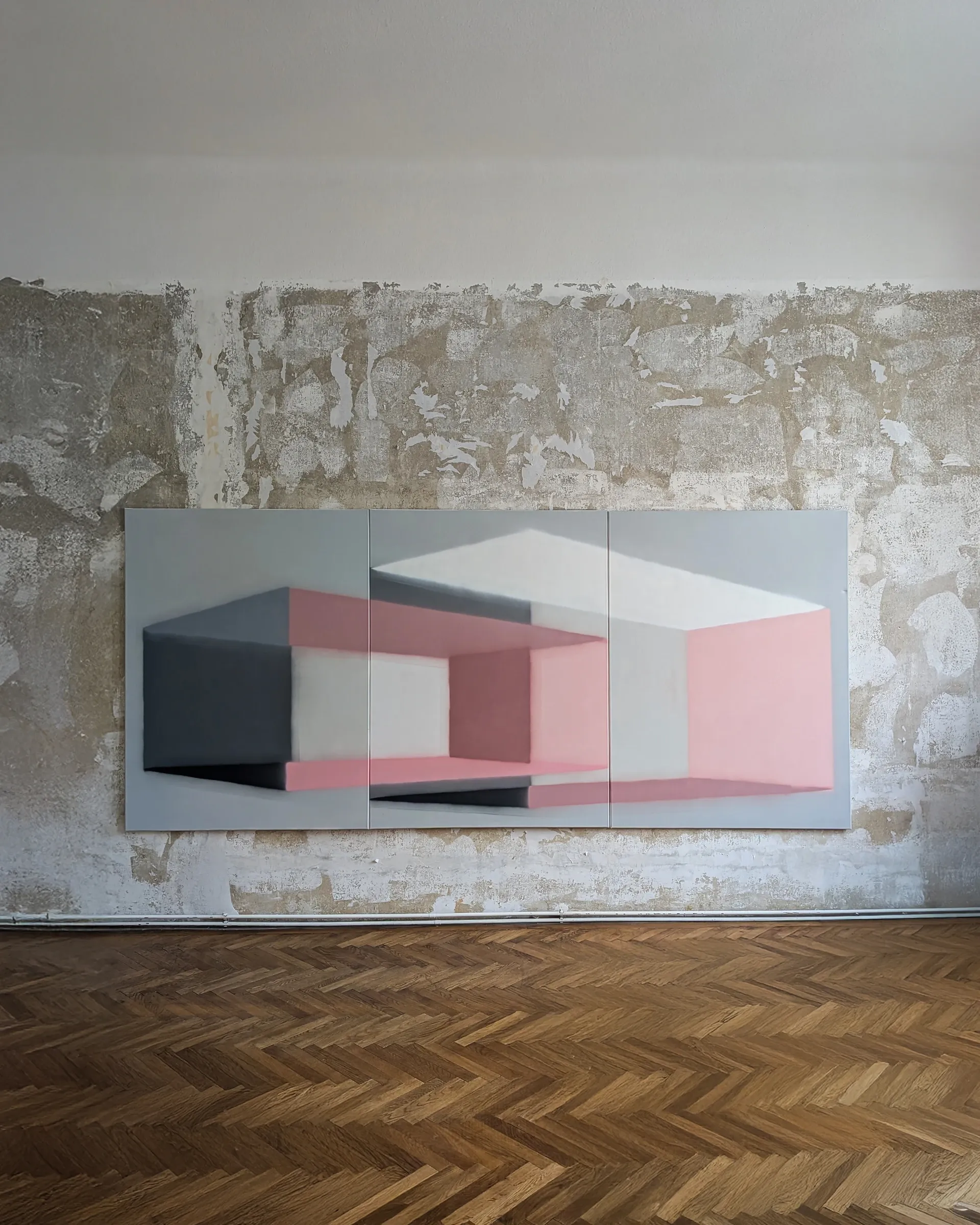
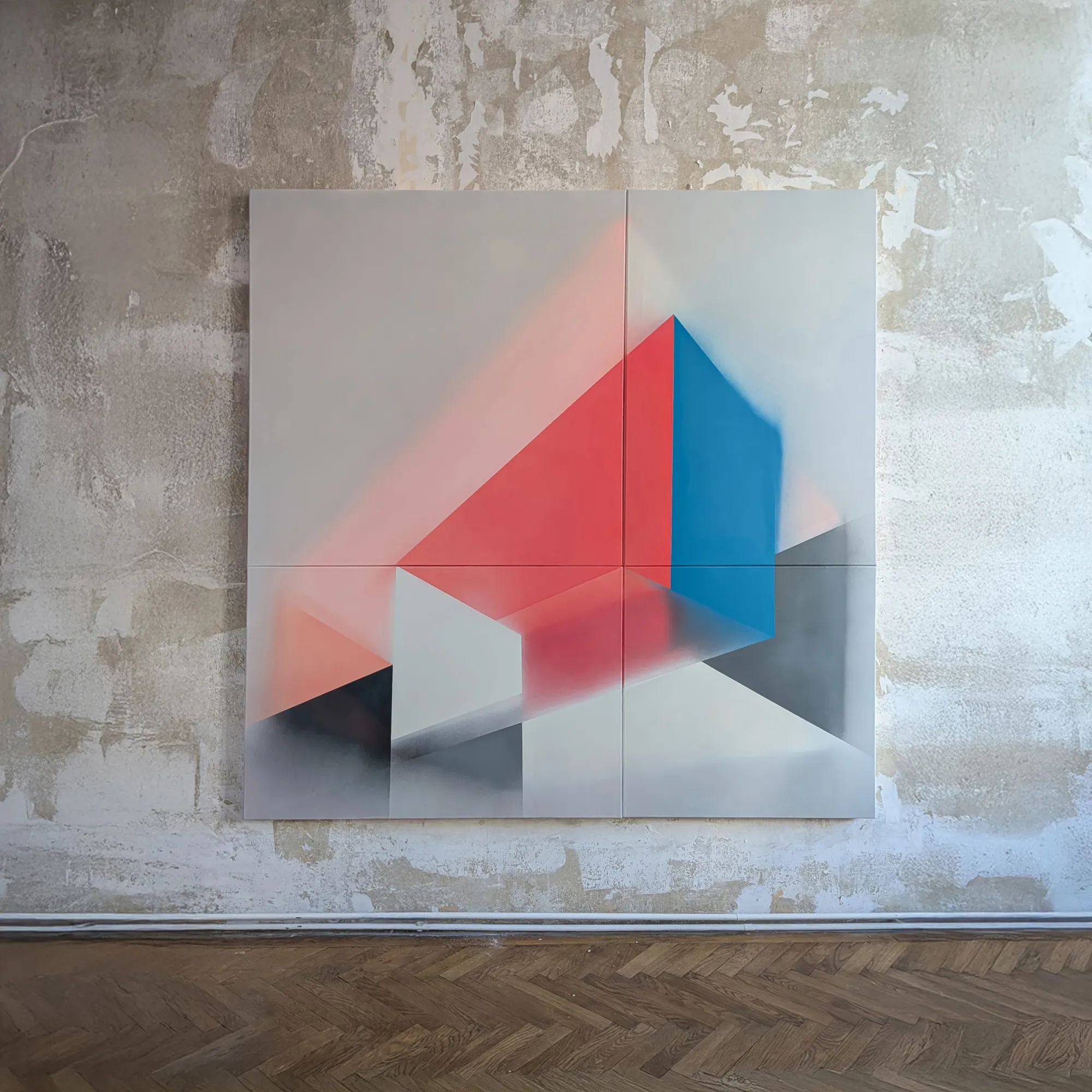
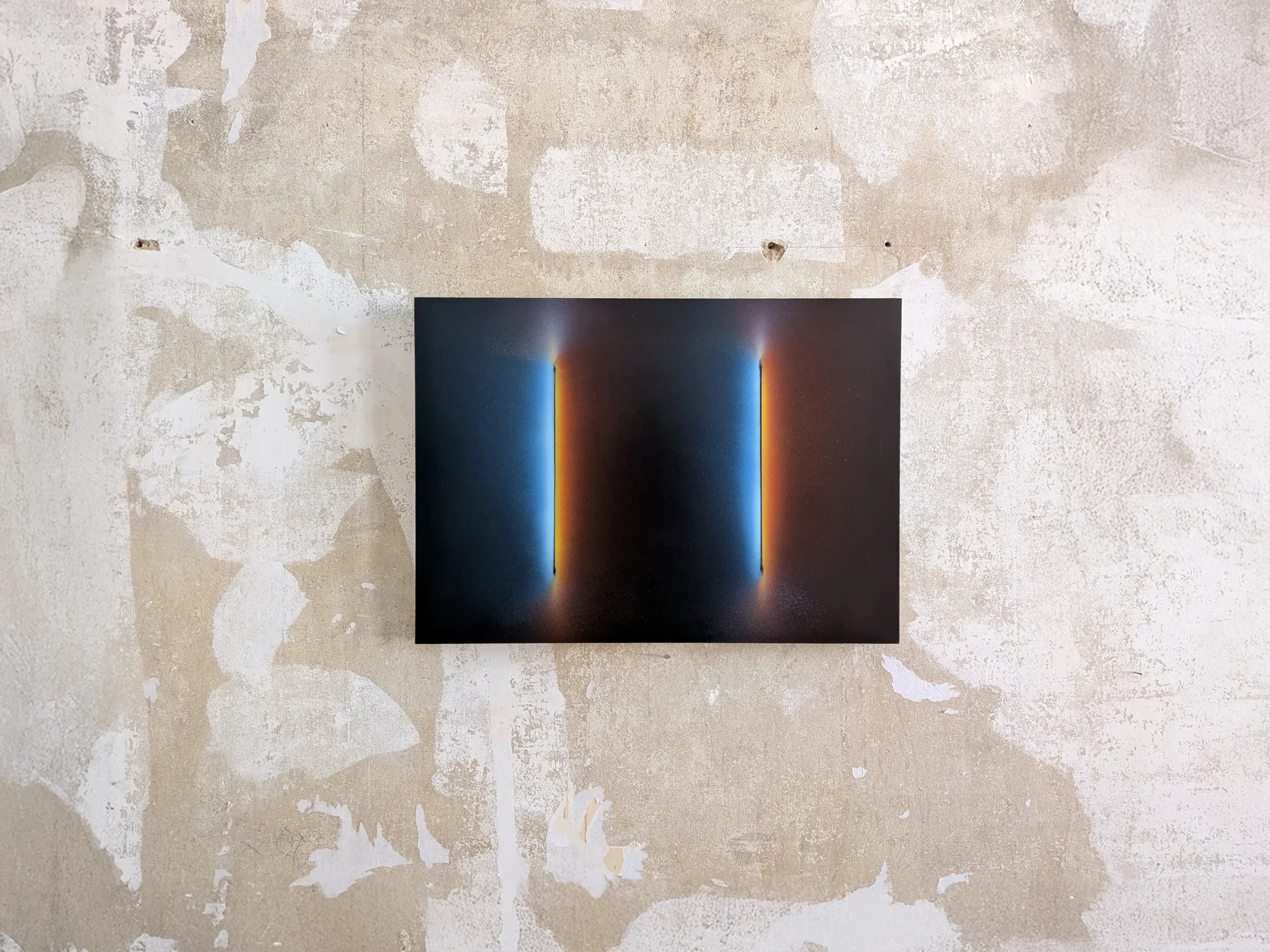
The paintings look like rooms, but none of them can be entered. A box of grey and white opens across the corner of a wall, a black volume turns on the floor, a dark panel glows along its edges as if lit from behind. Nothing in them describes a place.
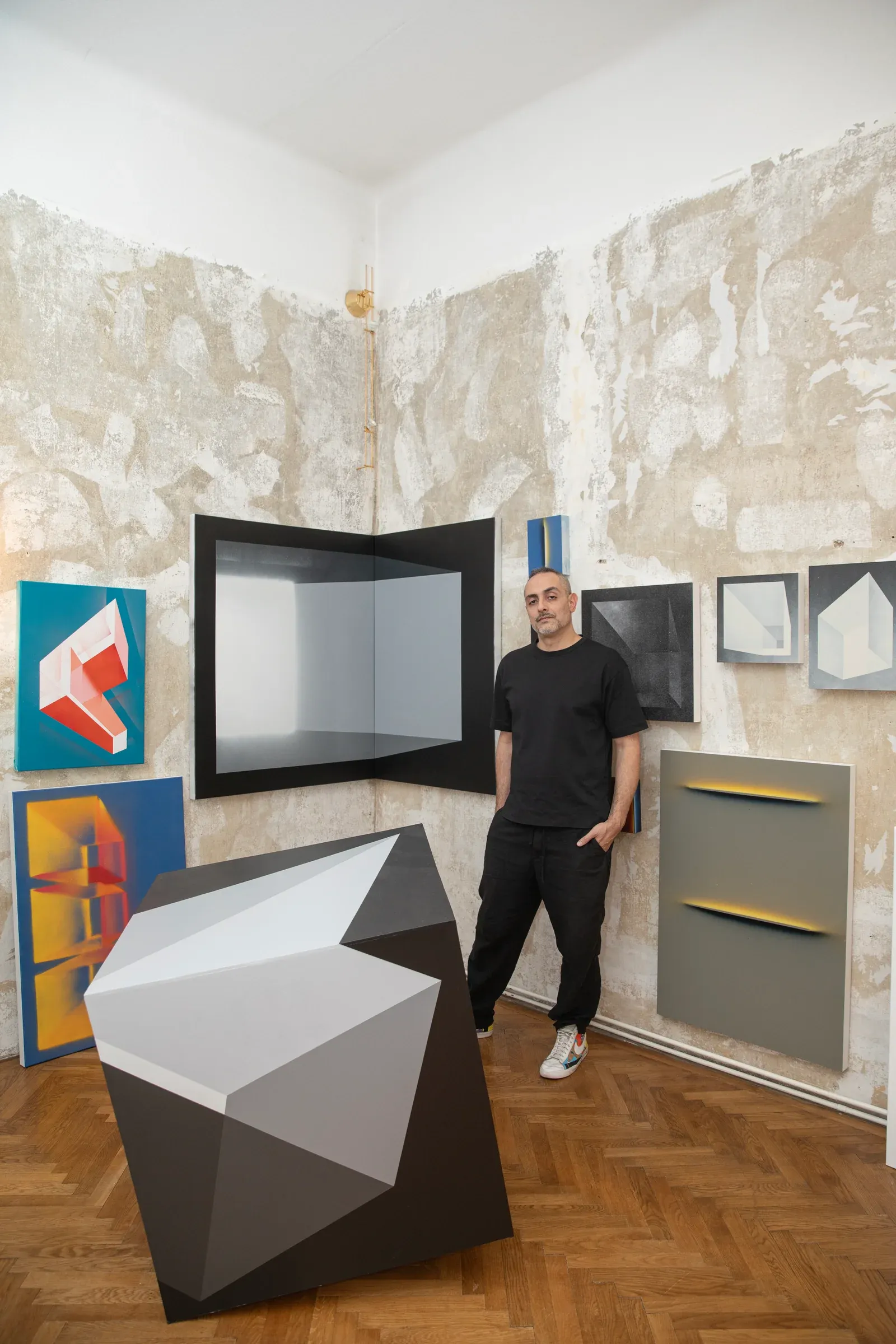
What they do is closer to a test. Geometry is set up with the clarity of a drawing, then pushed until it slips. An edge softens, a volume flattens, a depth opens where the canvas should stay flat. With no scene to rest in, the only thing left to look at is how the space is being made.
Tehran, Iran, 1984
Vienna, Austria
Painting, relief, object
Yale School of Architecture (MA), University of Illinois (BS), ENSA Versailles
Diffractions, Gezwanzig Gallery, Vienna, 2026
Apparitions, Paper Positions, Vienna, 2025
Constructions, Bildraum 07, Vienna, 2024
parsakhalili.com
@studio.parsakhalili
Parsa Khalili
© Parsa Khalili
Parsa Khalili trained as an architect, and the paintings keep the habits of the trade without making buildings. His statement is blunt about it. These are constructions of form, not representations of environments, and the Platonic solids that recur in them carry no symbolic meaning. They work as neutral test bodies.
Space is something this painting builds and then loses, and the viewer's position decides which of the two is on show.
A solid may survive as a single edge or axis, or break into gradients and fragments that keep only a trace of its alignment.
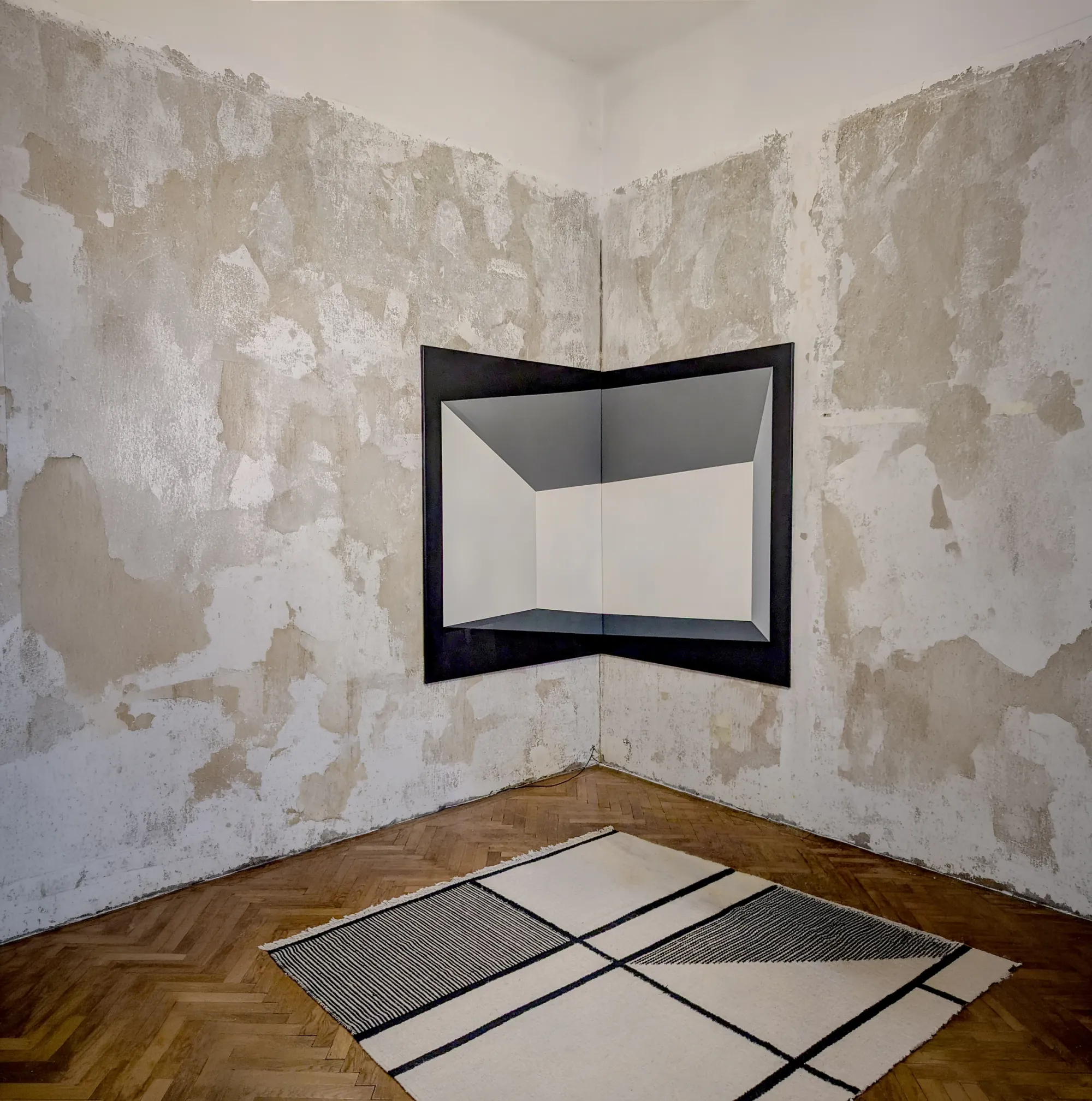
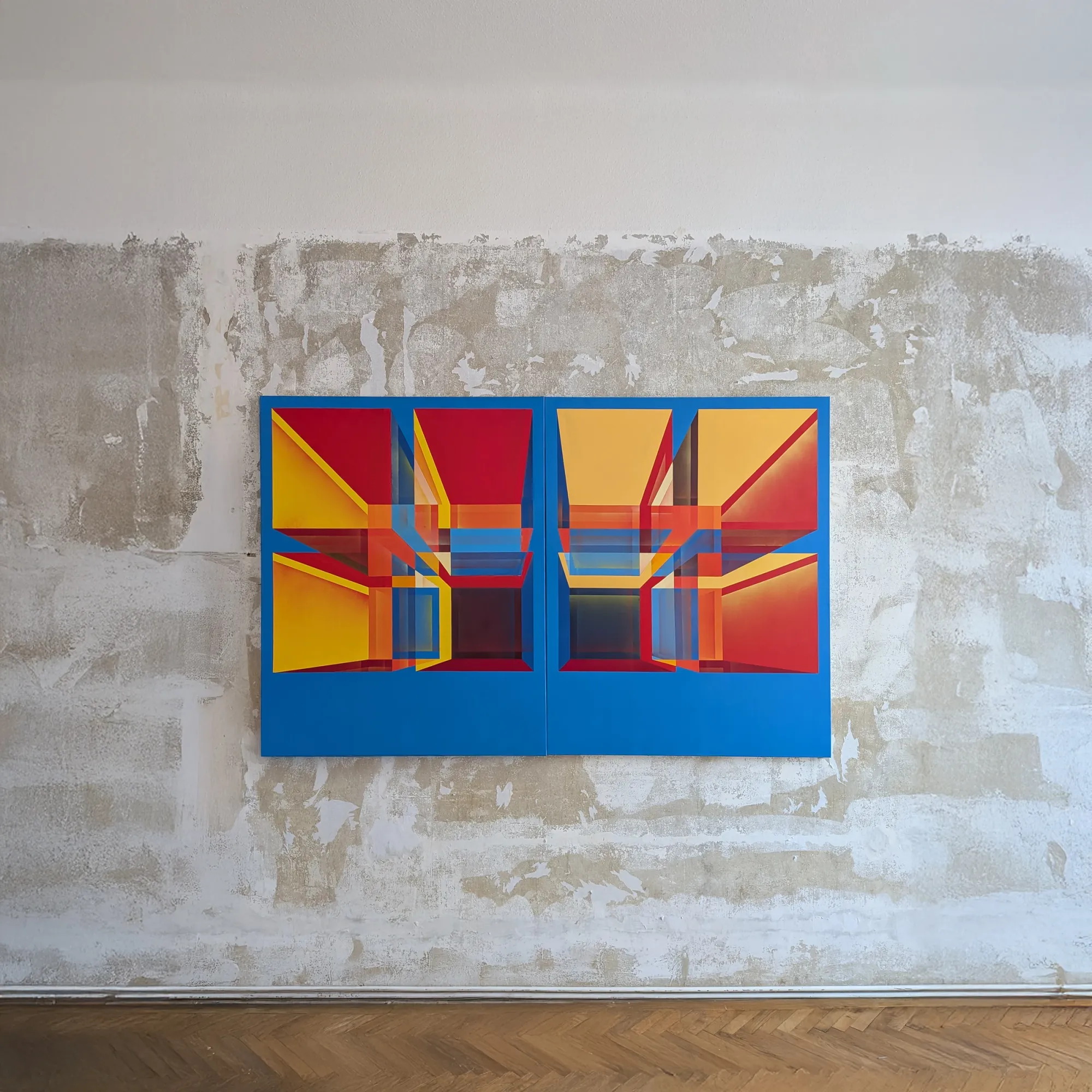
The corner paintings make the argument most directly. They are hung where two walls meet, and the painted box continues across the join, so the room becomes part of the picture's mechanics. Inhabitation I, from 2026, moves the same problem onto the floor.
It is a black volume of gypsum and wood with grey facets painted on its surface, and its form seems to shift between a cube and something less regular as a viewer walks around it.
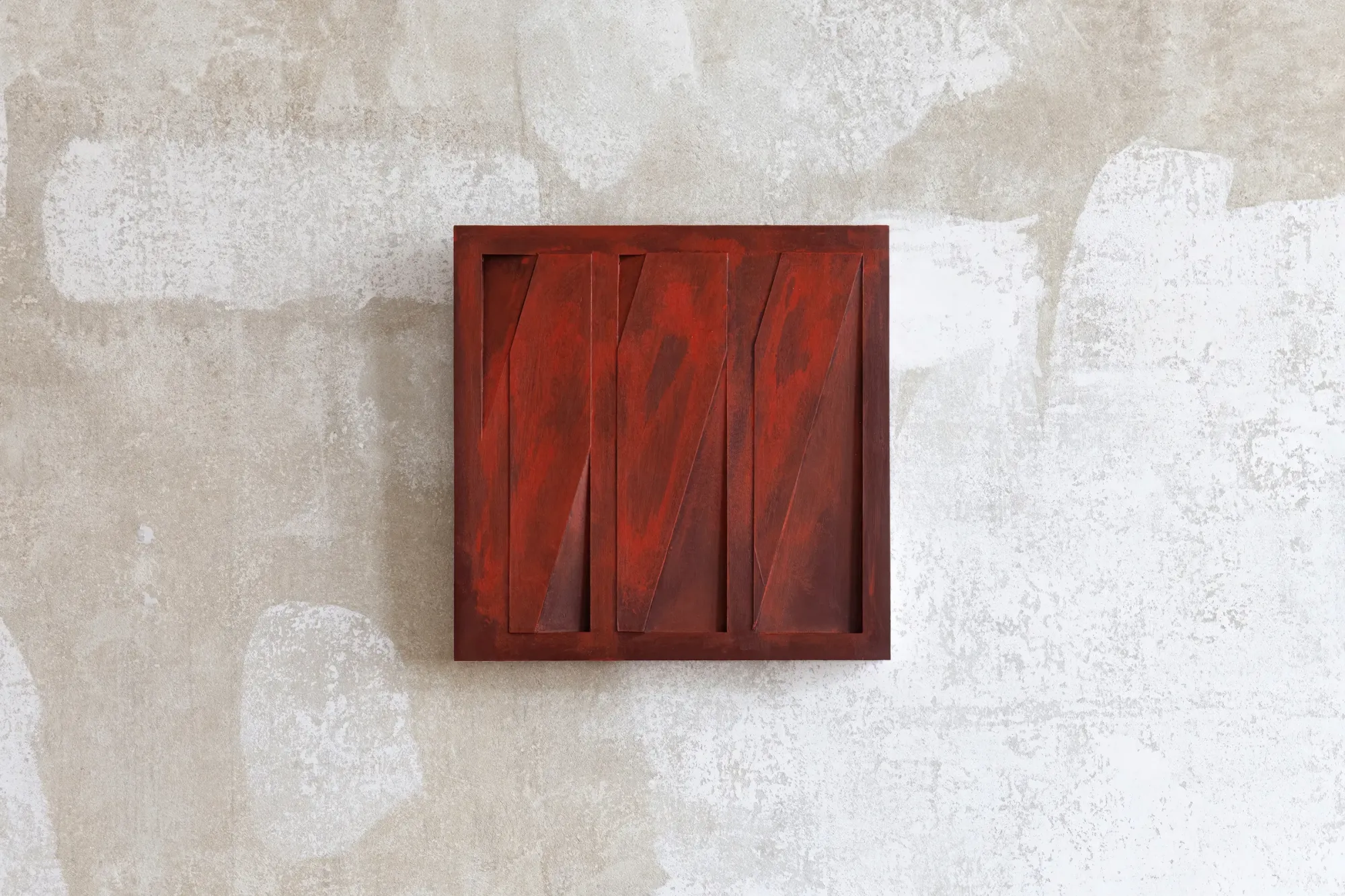
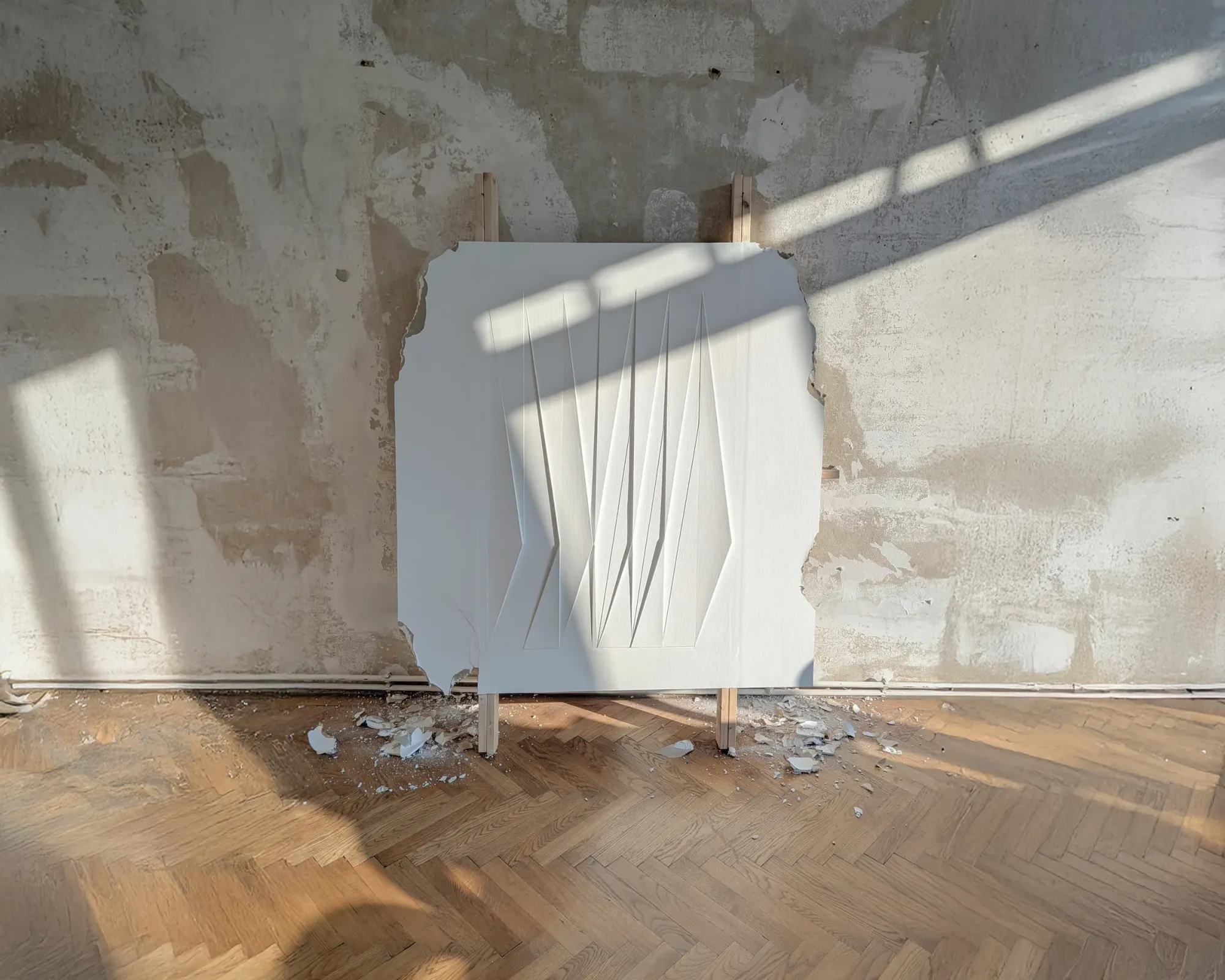
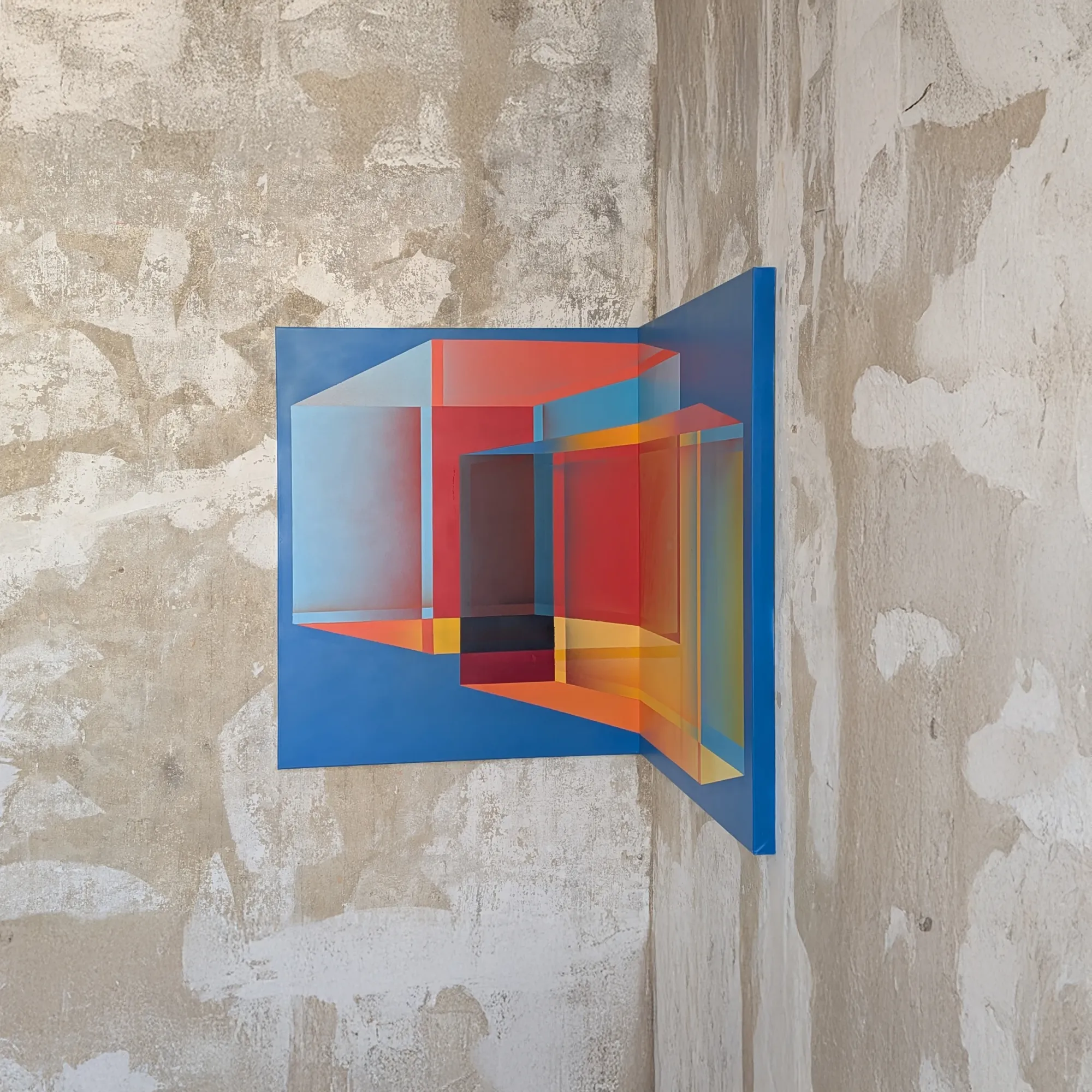
Color does as much structural work as line. In the Emissions series, dark aerosol surfaces glow along their edges, pigment standing in for light that is not there. The statement notes that optical fringes, a flaw in optics, become productive here.
The soft sprayed gradients also connect to Khalili’s background in graffiti, where spray paint was already part of his artistic vocabulary.
The background explains the method more than the résumé does. Born in Tehran in 1984, Khalili studied architecture at Versailles, the University of Illinois and Yale, worked in offices including Eisenman Architects and Diller Scofidio + Renfro, and taught at Princeton and the University of Applied Arts Vienna.
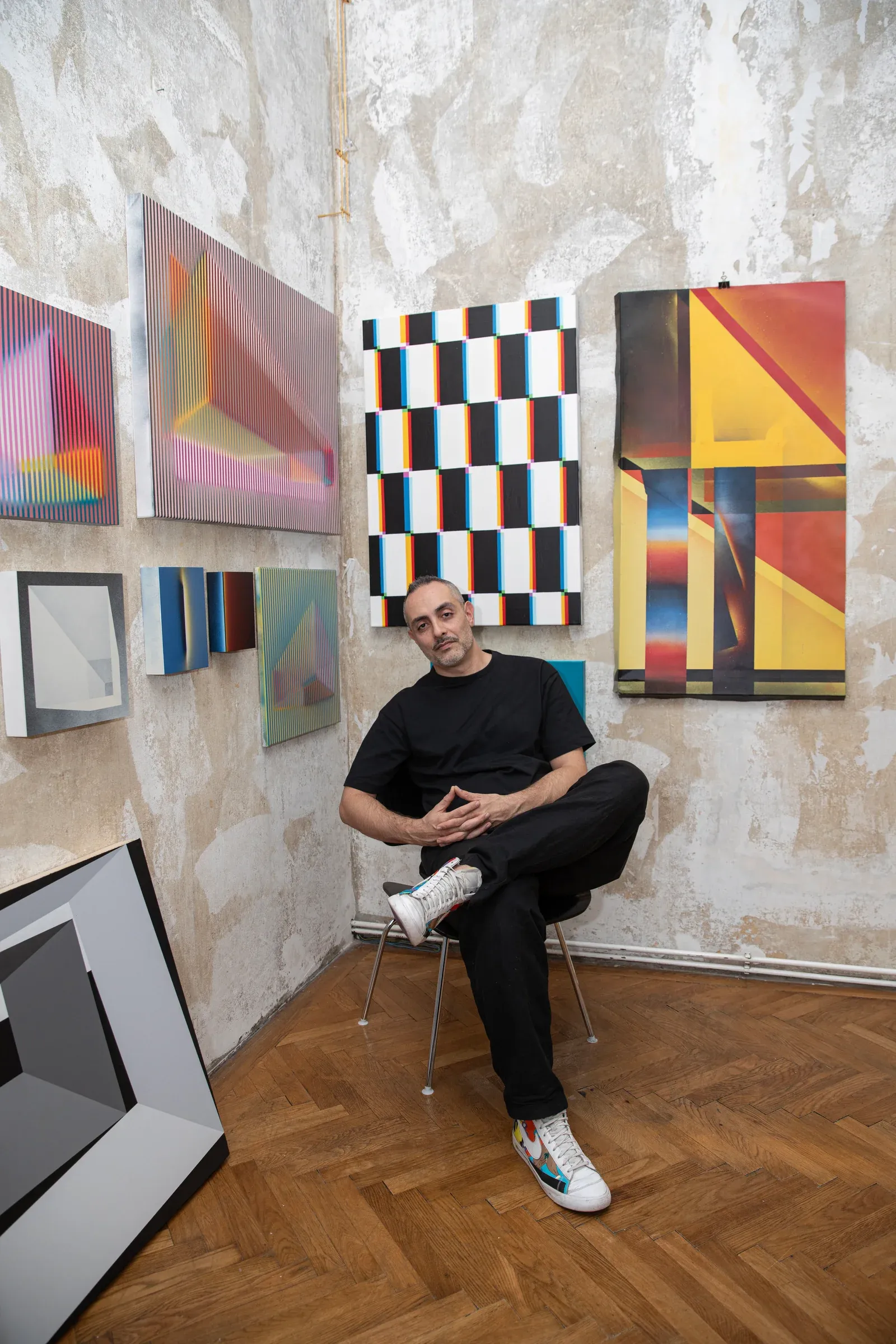
His working process moves from sketches and precise drawings to digital models before reaching the canvas. Diffractions at Gezwanzig Gallery in early 2026 came two years after Constructions at Bildraum 07.
Whether the room belongs to the painting or to the wall it hangs on stays open.
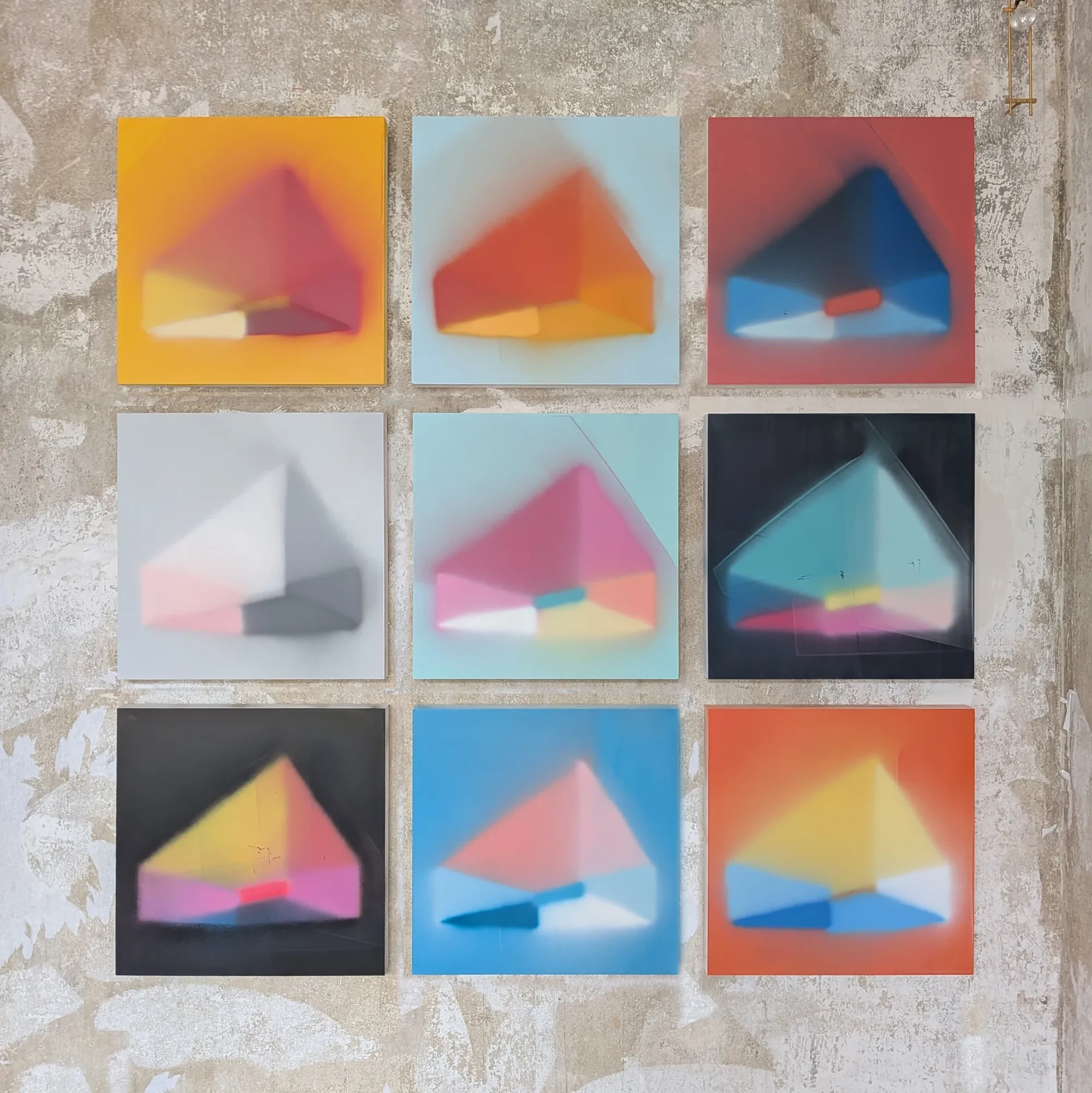
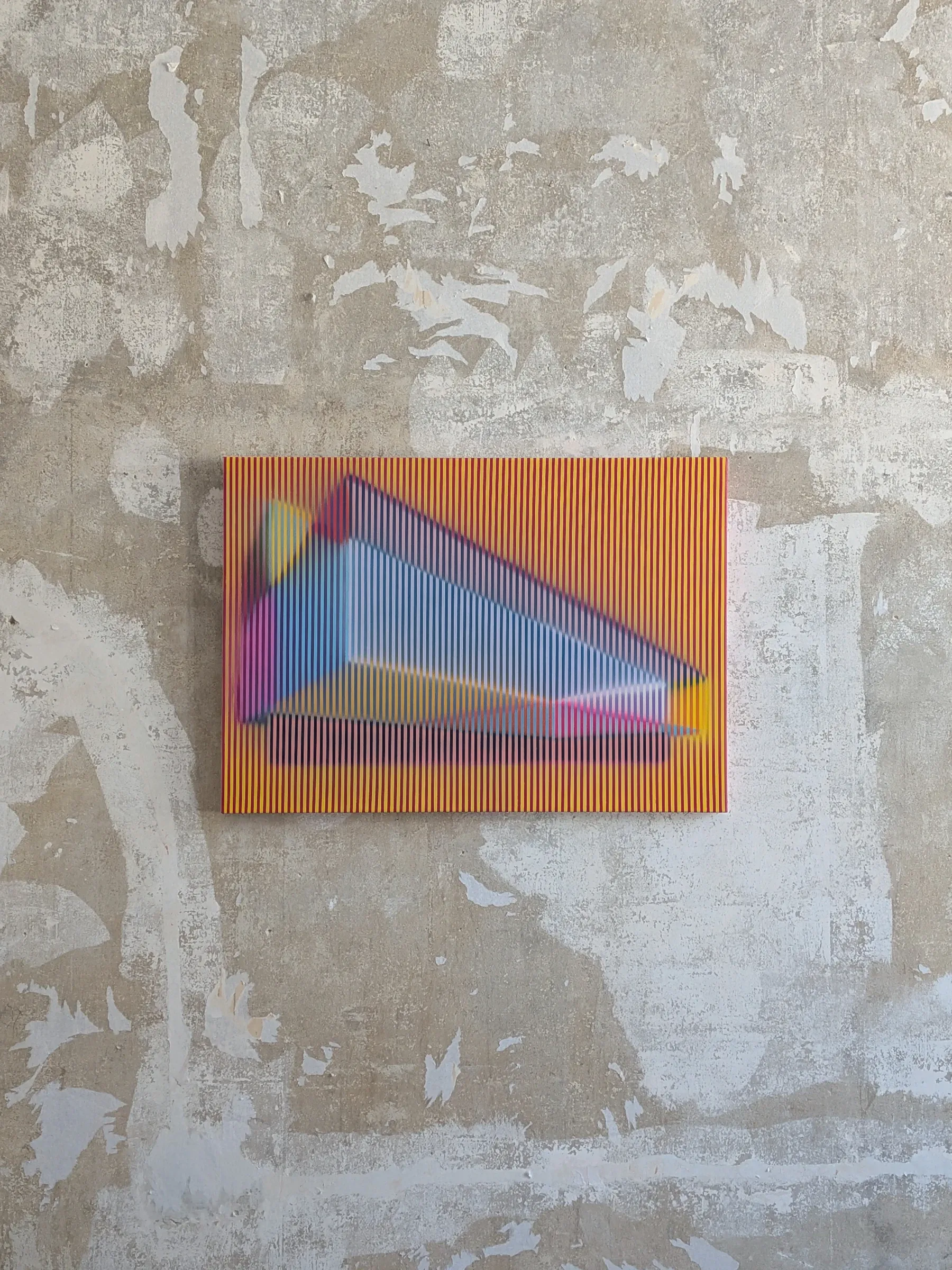
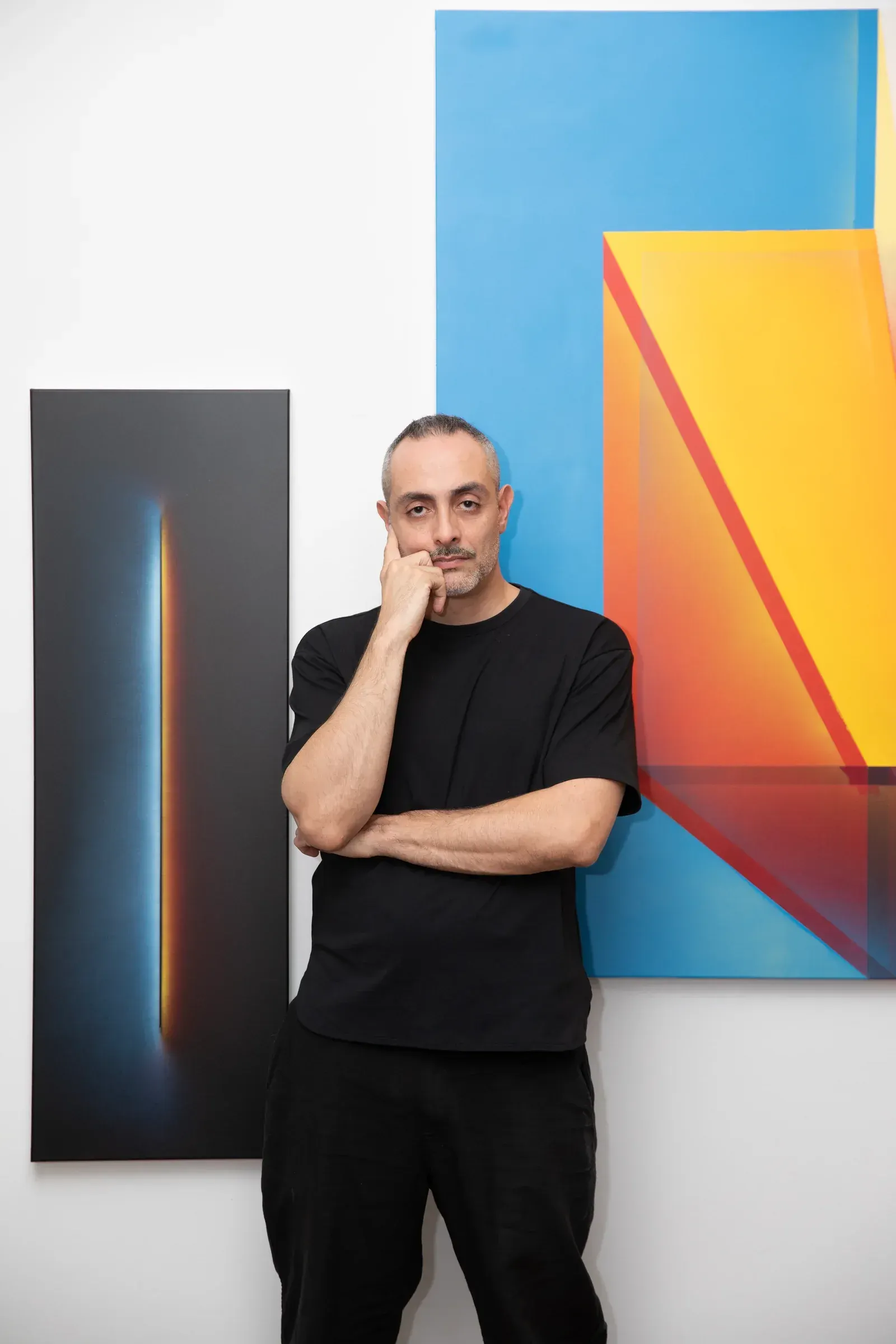
Parsa Khalili, (left) Marilyn 01-09, 2025. Acrylic and aerosol on gessoboard, nine panels of 50 x 50 cm, 160 x 160 cm overall. Photo: Parsa Khalili. © Parsa Khalili. Parsa Khalili, (right) Superimposition V, 2026. Aerosol on canvas, 100 x 70 cm. Photo: Parsa Khalili. © Parsa Khalili.
A contemporary art gallery founded in 2023 by Florian Erhart, located at Gumpendorfer Straße 20 in Vienna. It showed Khalili's solo exhibition Diffractions from January to March 2026.
Website
One of the exhibition spaces run by Bildrecht near the MuseumsQuartier, primarily showing painting, installation and object art. Constructions, Khalili's exhibition there, ran from August to September 2024.
Website
About Catapult Contemporary
This is an Artist in Focus feature published by Catapult Contemporary, an independent editorial platform for contemporary art, based in Vienna. We publish exhibition reviews, artist features, interviews, and critical context, with a focus on emerging and mid-career practices from Europe and beyond.
catapult-platform.art ·
Instagram
Want to be featured? Submit your work →
No spam, no sharing to third party. Only you and me.