A Body Breathes Whether or Not Anyone Thinks to Listen

Rahel Oberhummer’s Still Breathing at Maison Visinand in Montreux
Ice is not inert. It holds gas, particulate, water, atmospheric records sealed at the moment of freezing, centuries before the terminology for what they would eventually prove had been invented.
The question this exhibition asks is not how we lost what glaciers carry, but what it means to build a second container for something that was already keeping itself.
Espace Culturel Maison Visinand presents Still Breathing, curated by Audrey Beyeler and Noor Diba, through June 28, 2026.
Rahel Oberhummer
Still Breathing
Montreux, Switzerland
–
Audrey Beyeler, Noor Diba
Etienne Malapert
Courtesy the artist and Espace Culturel Maison Visinand
There is something in the idea of preservation that assumes the thing to be preserved is passive.
Rahel Oberhummer's practice proposes the opposite. The material being held, glacial water, ancient air, sand from a living river, already had its own logic of survival. The vessels she introduces do not rescue this material. They continue what the ice began.
What the glacier was already doing, trapping, holding, archiving, Oberhummer repeats in glass. The difference is that the glass can be seen through.
Rahel Oberhummer (b. 1991, Leukerbad, lives and works in Vevey) developed this body of work in collaboration with Dr. Margit Schwikowski of the Paul Scherrer Institut, whose glaciological research provided the primary source materials, water and air from the Plaine Morte and Rhône glaciers.
The collaboration is not illustrative. The scientist provides substances, the artist provides vessels. What is transferred between them is the question of what constitutes evidence.
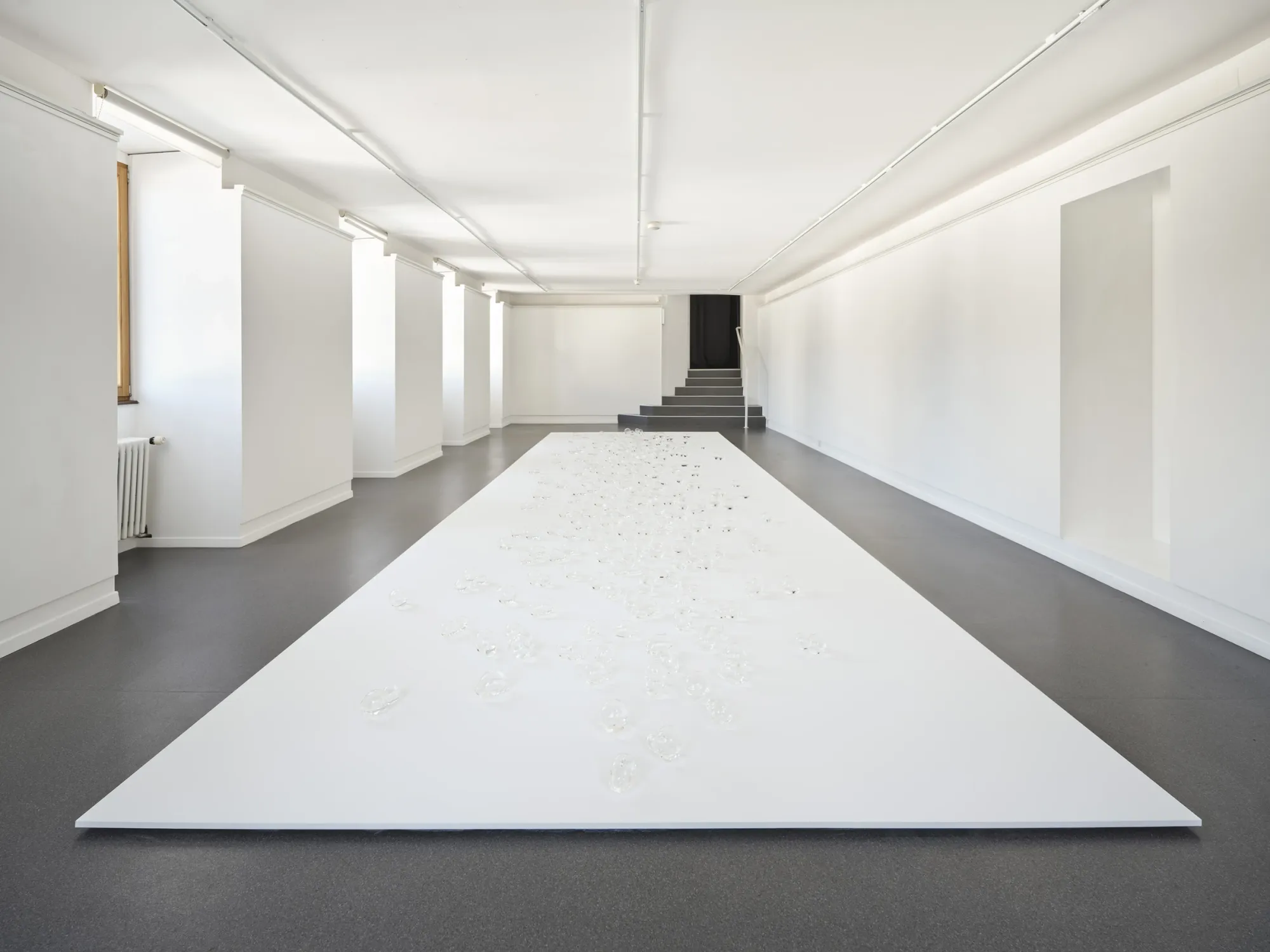
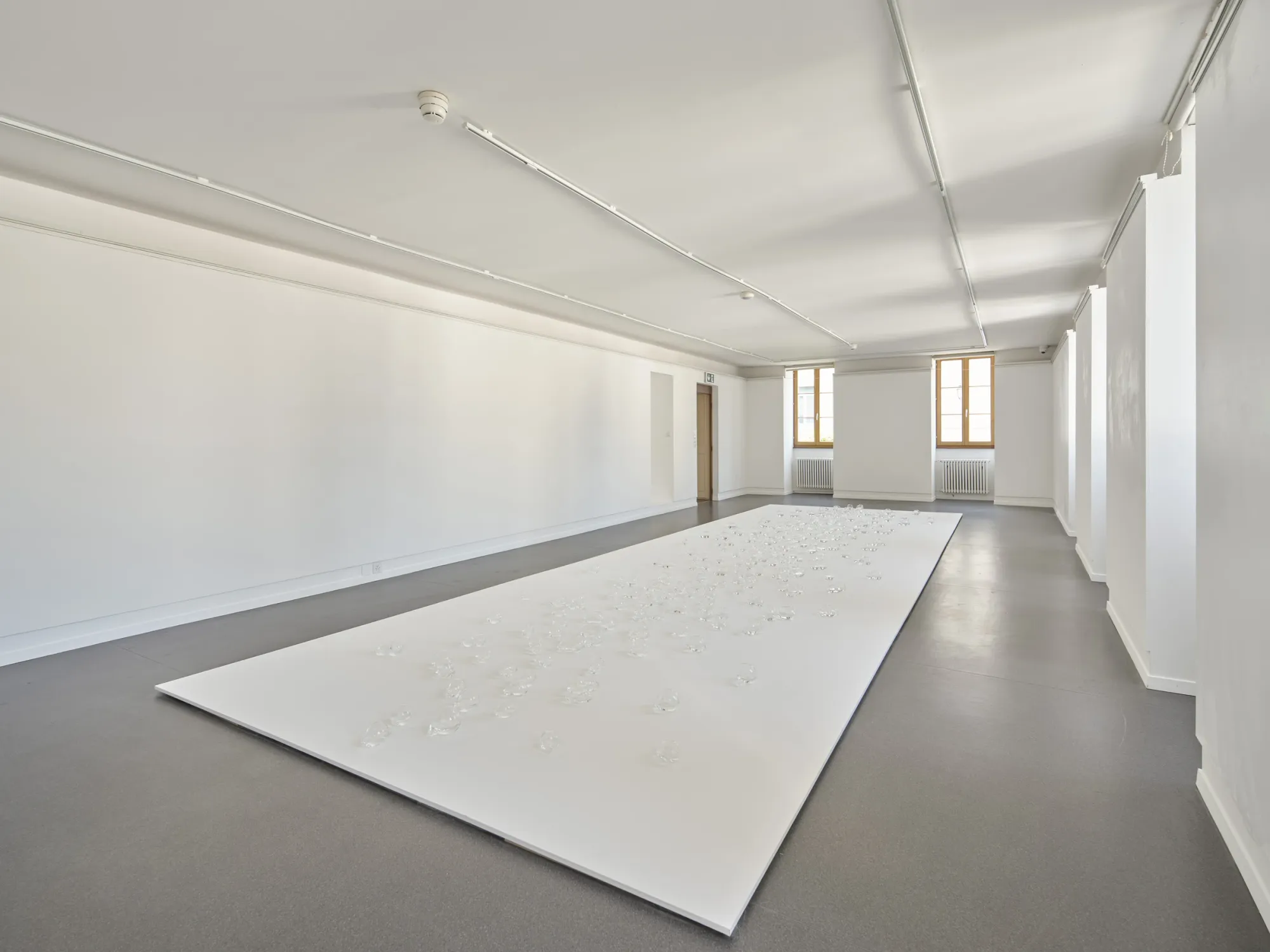
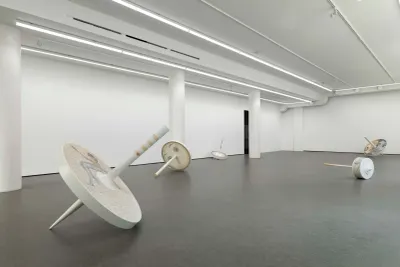
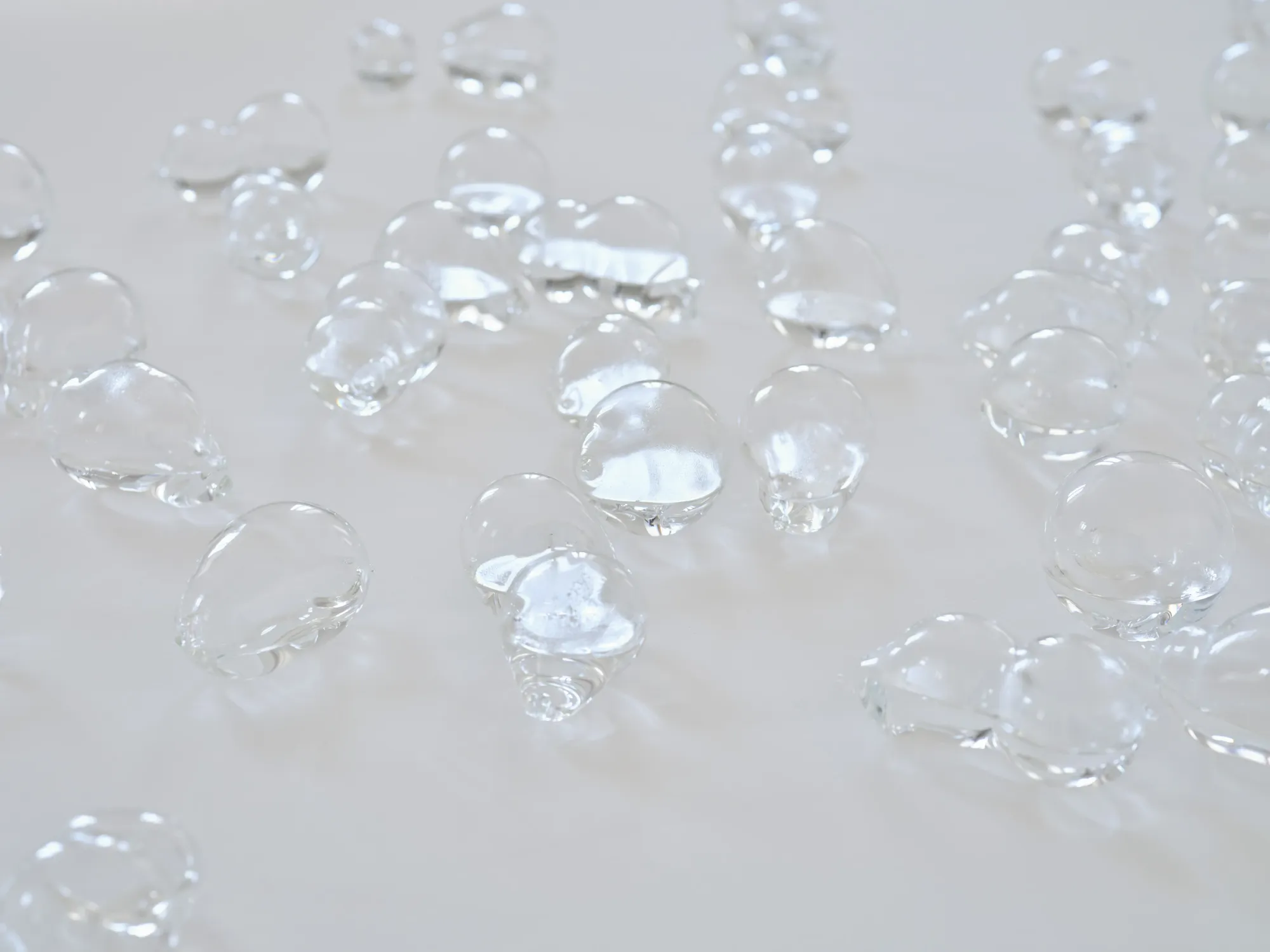
Plaine Morte (2025) occupies the main gallery floor, 268 torch-blown borosilicate glass bubbles scattered across a white rectangular field nearly nine metres long. From the entrance, the scale registers before the material does. The white surface reads almost as snow.
Only at closer range do the bubbles become distinct, each one slightly different in size and form, irregular, rounded, each holding water from melting ice cores.
At close range they resemble clusters of organic matter, cells, seeds. The work's title refers to a glacier above the Valais plateau. Its material content is what that glacier has been releasing as it recedes. The bubbles are the second holding.
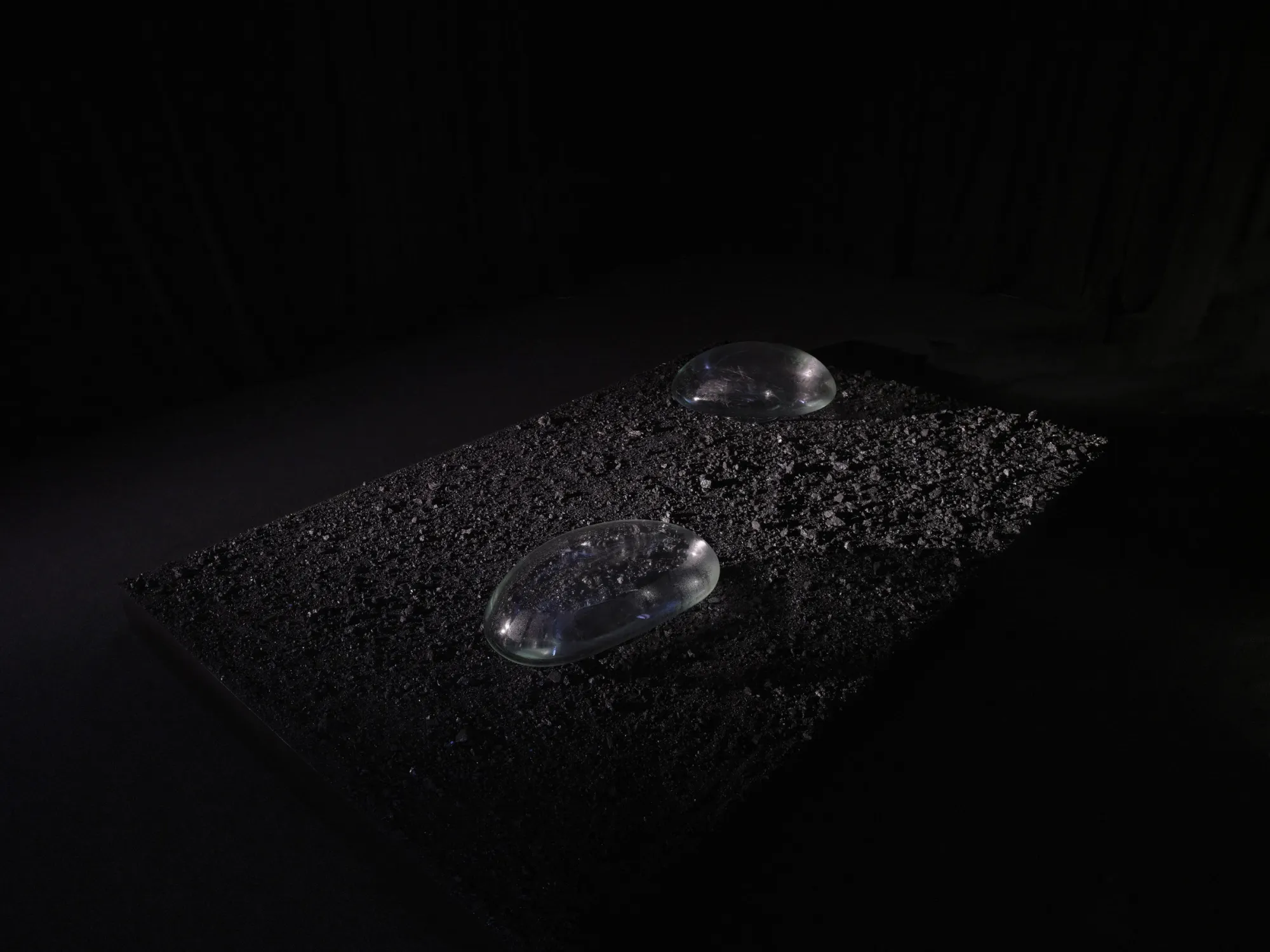
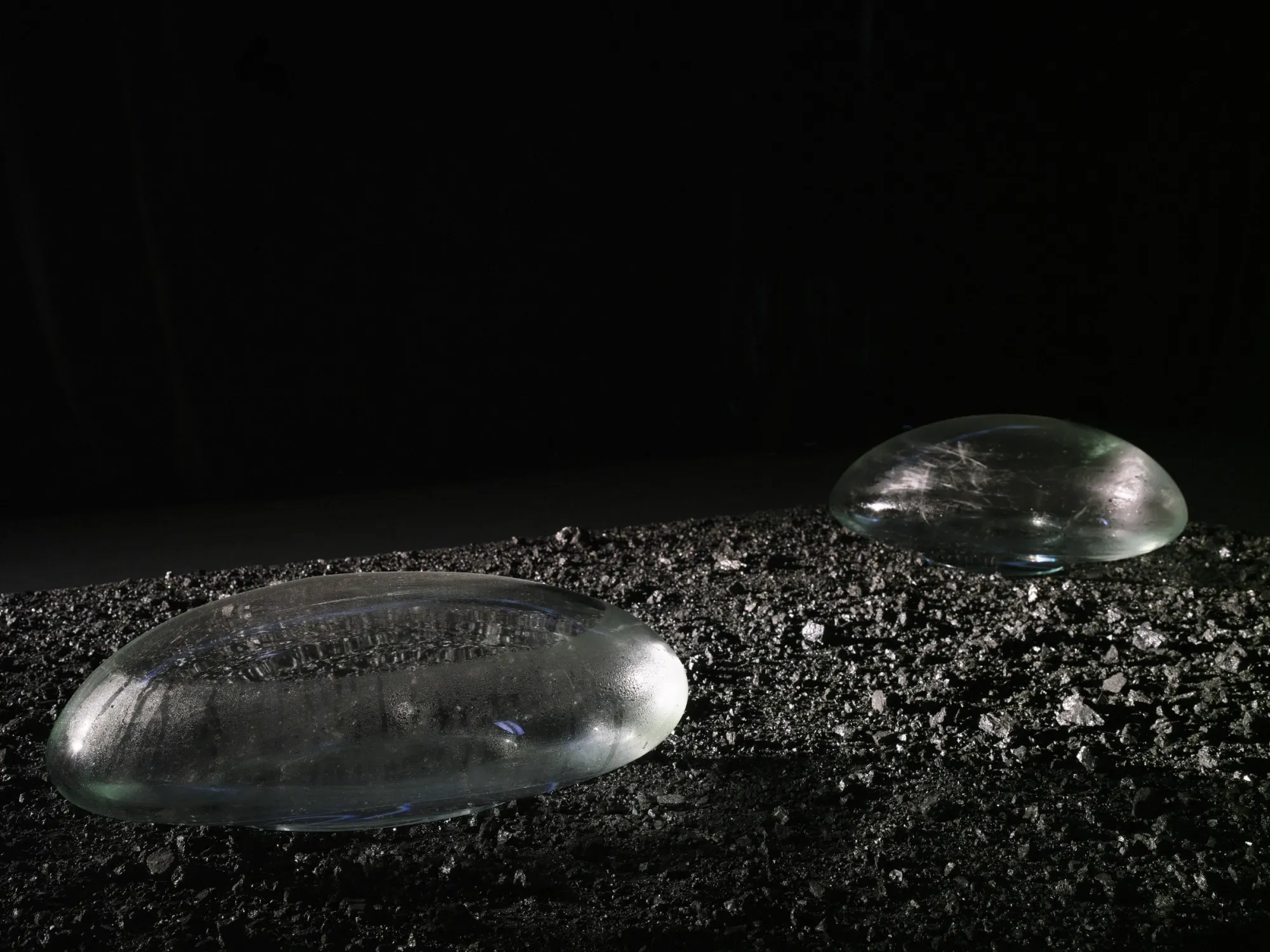
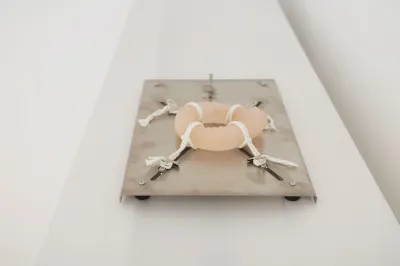
Still Breathing (2025) presents two flat, lens-shaped glass forms nestled into a bed of anthracite coal powder. The contrast is stark, transparency against dense, light-absorbing black. Sealed inside the glass is air from Rhône Glacier ice cores, ancient atmosphere predating the CO₂ concentrations that in 2026 have reached levels no ice archive has ever recorded going forward.
The internal condensation that forms within the glass, the work "breathing," as the title has it, mirrors the evaporation the glacier produces as it melts. The anthracite names the extraction system that produced the discrepancy between what the ice preserved and what the atmosphere now contains.
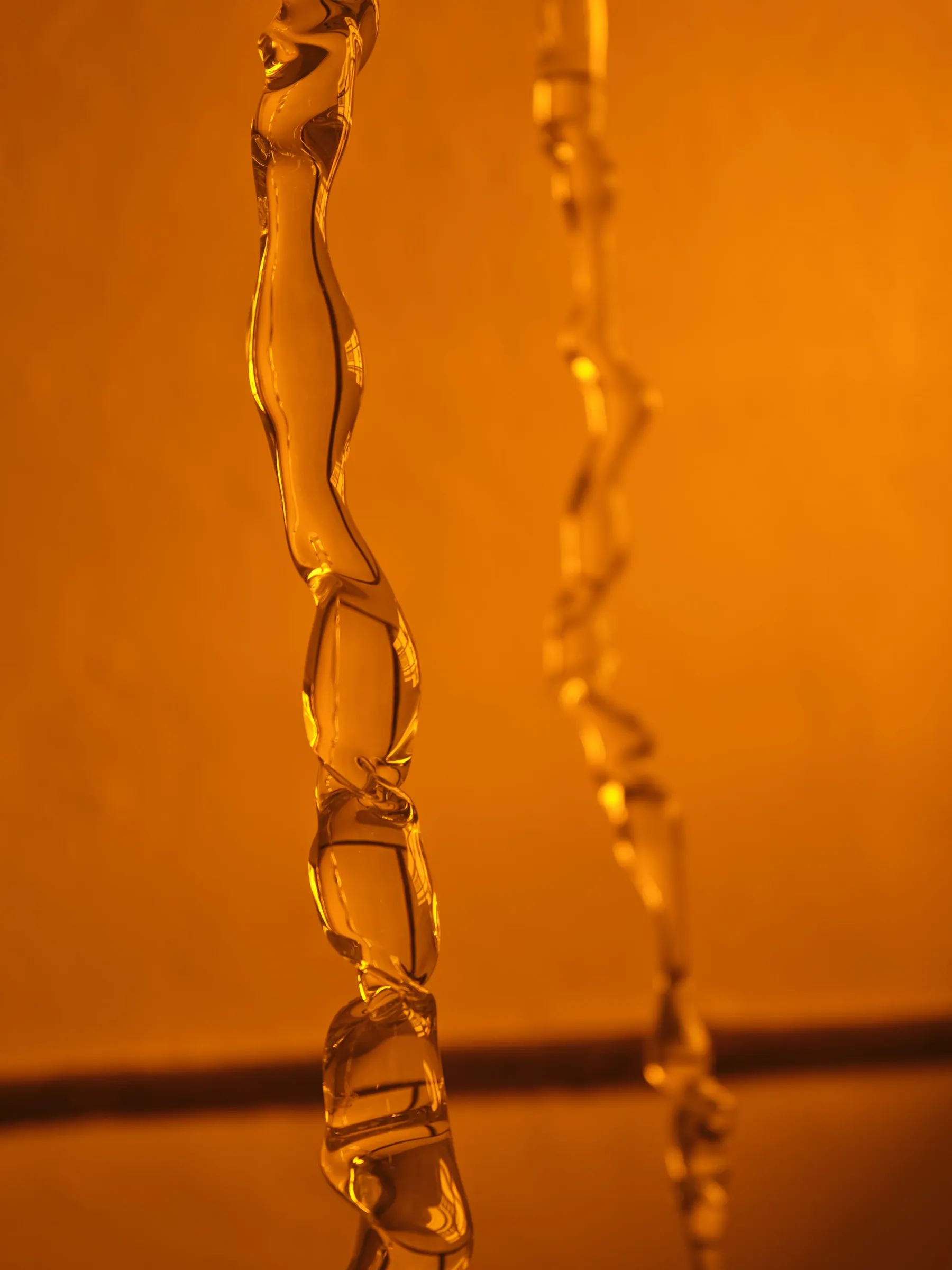
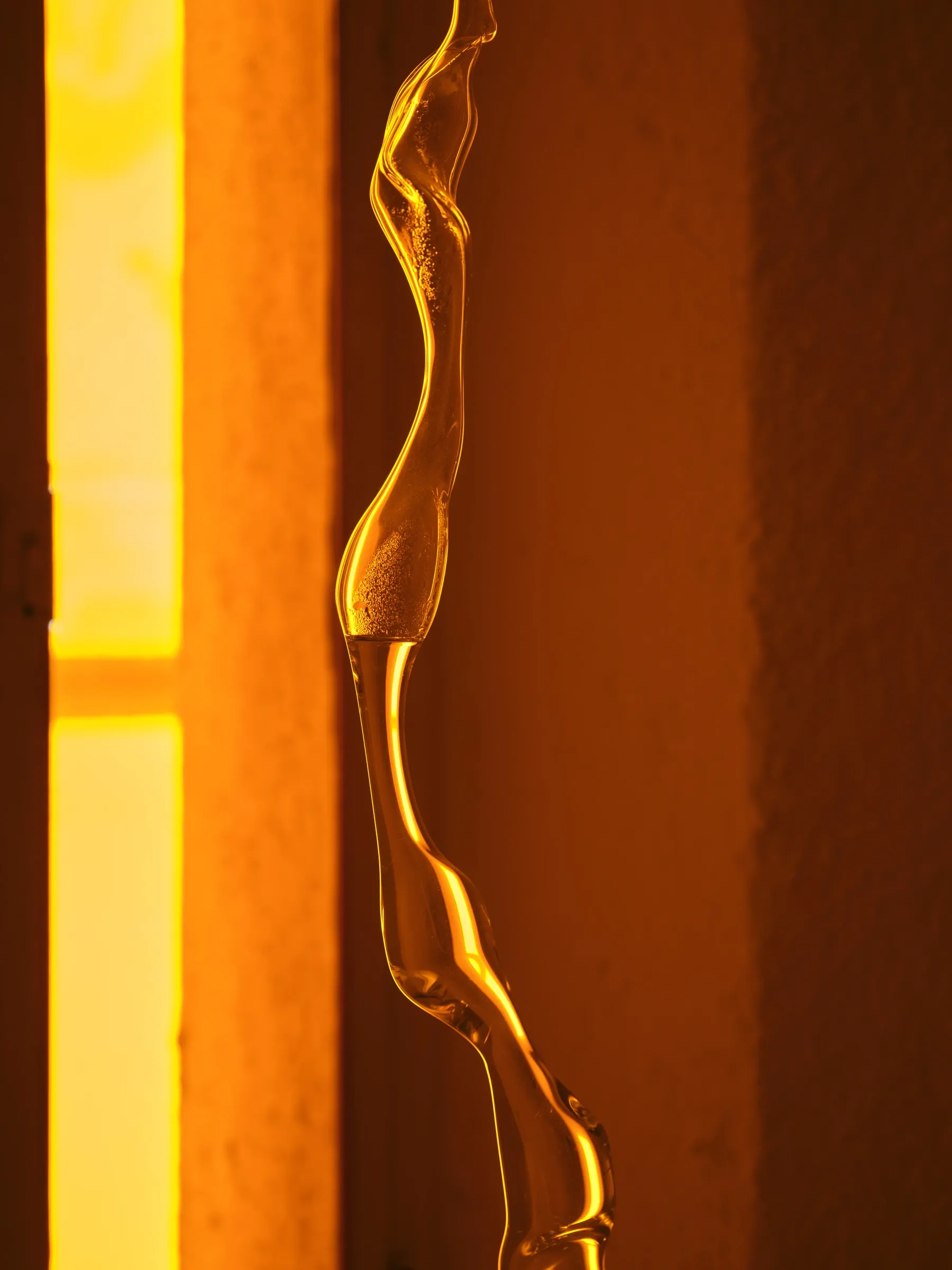
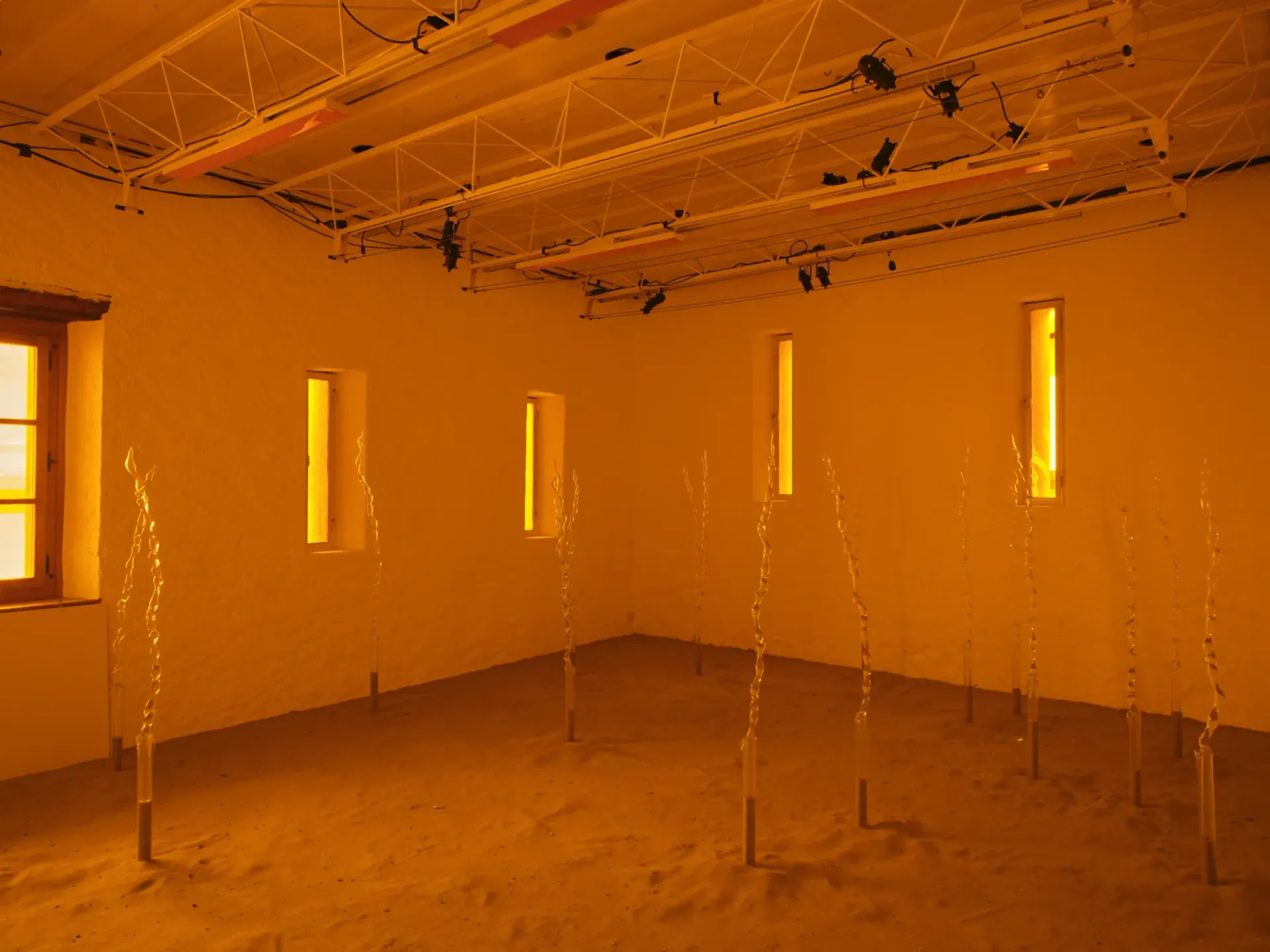
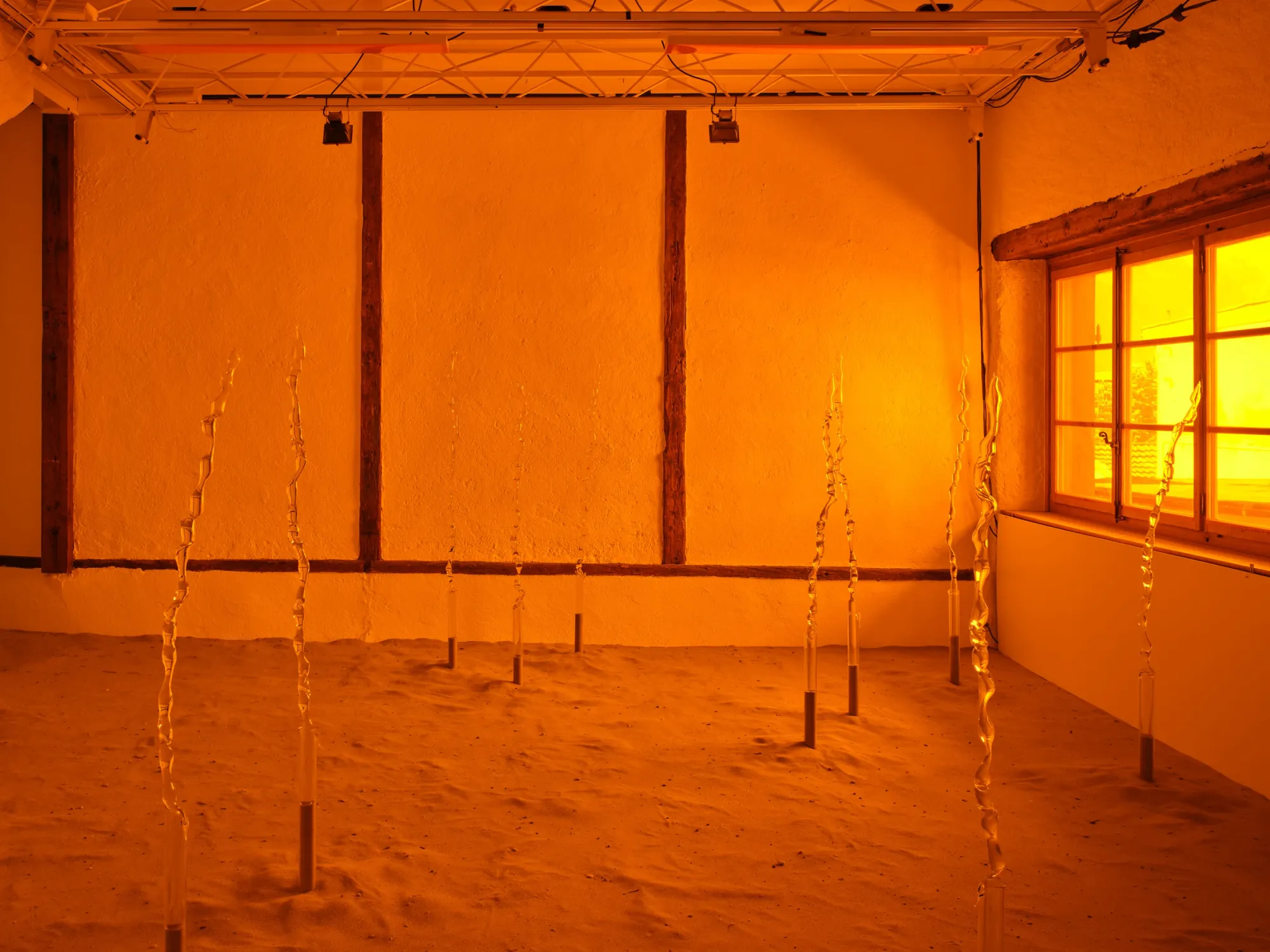
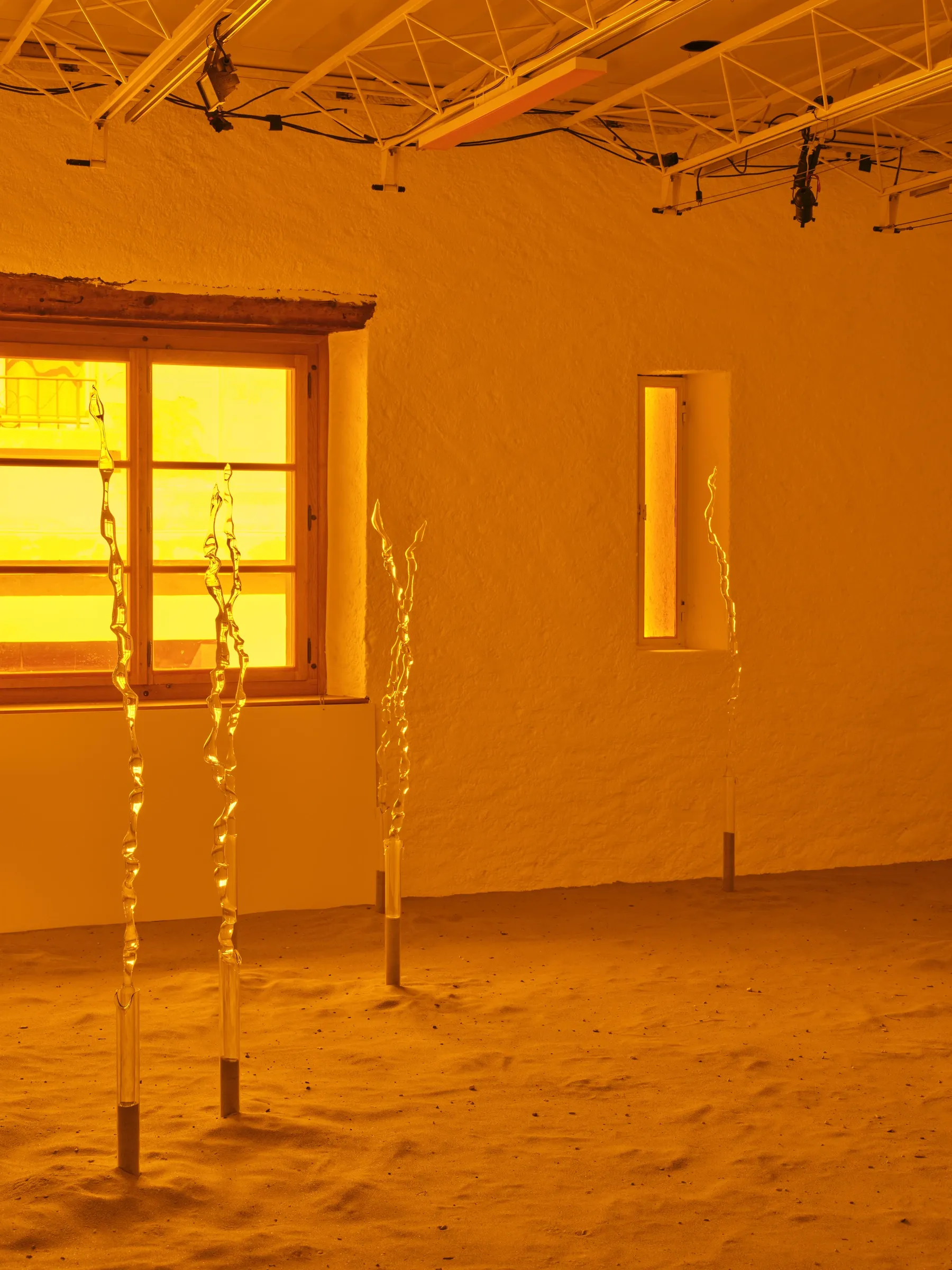
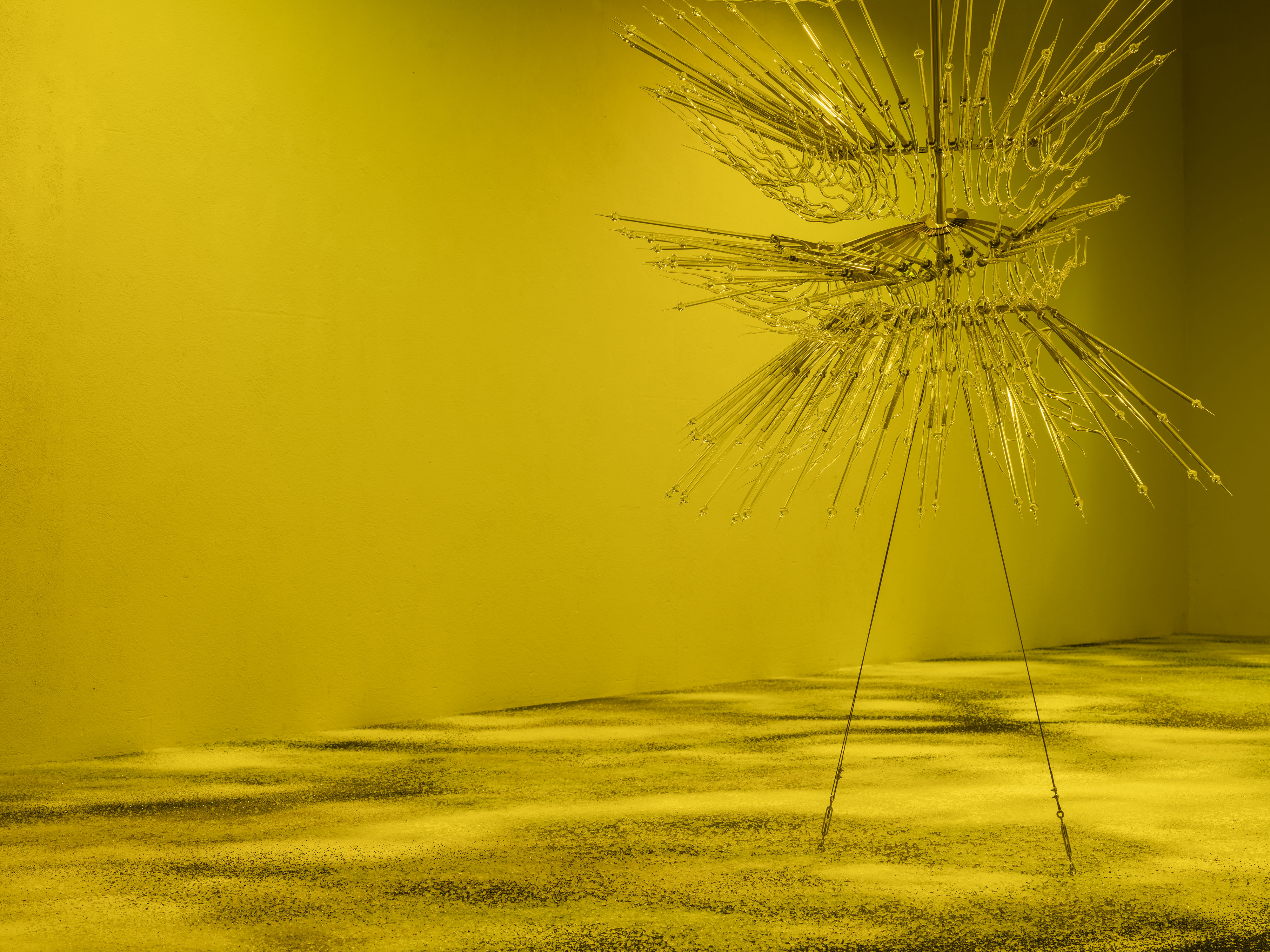
Sentinels (2025) is the most spatially charged of the three. The room is covered floor-to-ankle in sand from the Rhône. Orange filters on the windows transform the entire space, walls, floor, glass forms alike, into monochrome amber.
From slender metal supports, multiple rods rise through the room, each one twisted and contorted, their forms both fragile and insistent. They do not look stable. They look like they have been arrested mid-motion, under pressure they carry in their shape.
By 2026, atmospheric CO₂ has exceeded every level recorded in millennia of glacial archives. What the ice has been cataloguing for longer than human civilization is now a documented past rather than a future projection. Oberhummer does not make an argument from this directly.
She makes containers, three of them, differently scaled, differently lit, differently weighted. The scientific collaboration that underlies the exhibition is part of its argument. Art does not need to explain what ice cores say to make the fact of their existence felt in a room.
The glass rods in Sentinels contort under no visible force. Whatever bent them happened elsewhere, earlier, or by accumulation. They hold their shape in sand from the same river system whose glacier supplied the water sealed in Still Breathing The sand is sediment still in motion.

Rahel Oberhummer - official Website
The glass is sediment that stopped. That the two materials share the same origin and now appear in the same room at entirely different scales and states is the quietly relentless logic of the exhibition. The work does not resolve. It holds.
Rahel Oberhummer on Instagram
Maison Visinand on Instagram
About Catapult Contemporary - Art Platform Submission
This is a exhibition review published by Catapult — an independent editorial platform for contemporary art, based in Vienna. We publish exhibition reviews, artist features, interviews, and critical context, with a focus on emerging and mid-career practices from Europe and beyond.
catapult.art
Want to be featured? Submit your work →