Roland Reiter Turns Salvaged Vehicle Parts Into Bodies That Refuse a Name

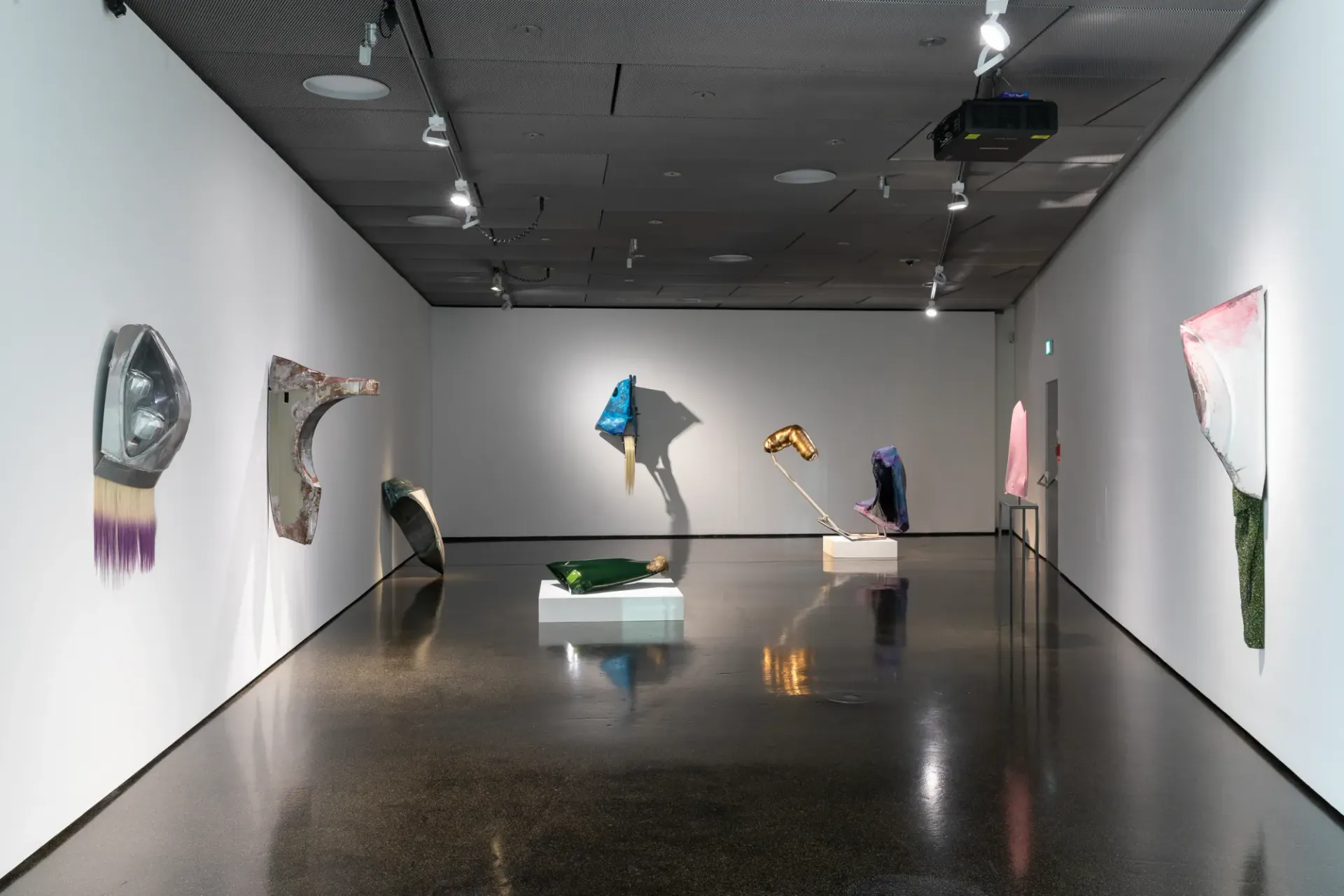
studio Neue Galerie Graz Presents No matter what it is, but it matters what it could be
The studio of Neue Galerie Graz presents No matter what it is, but it matters what it could be, curated by Roman Grabner, through September 6, 2026.
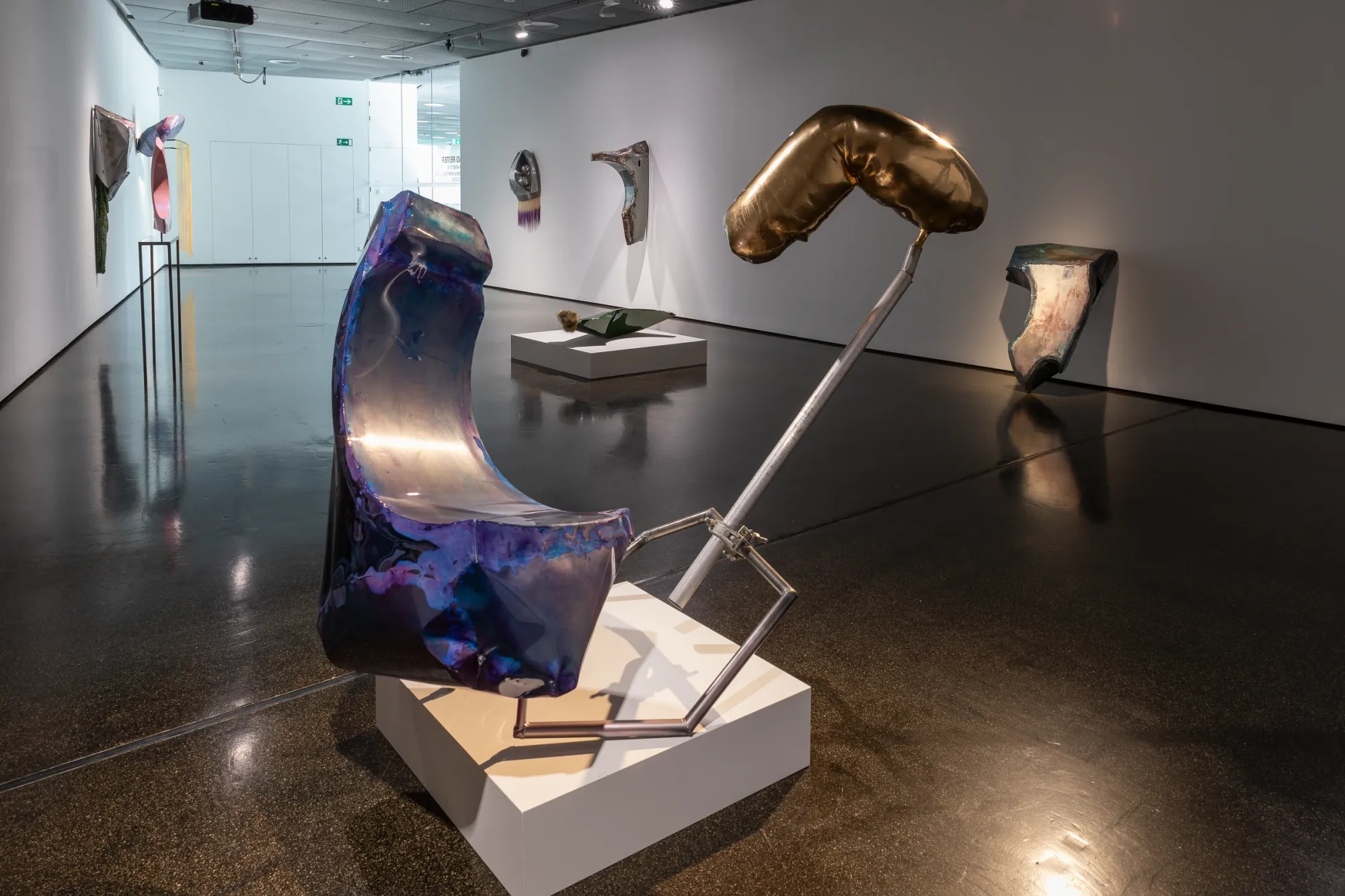
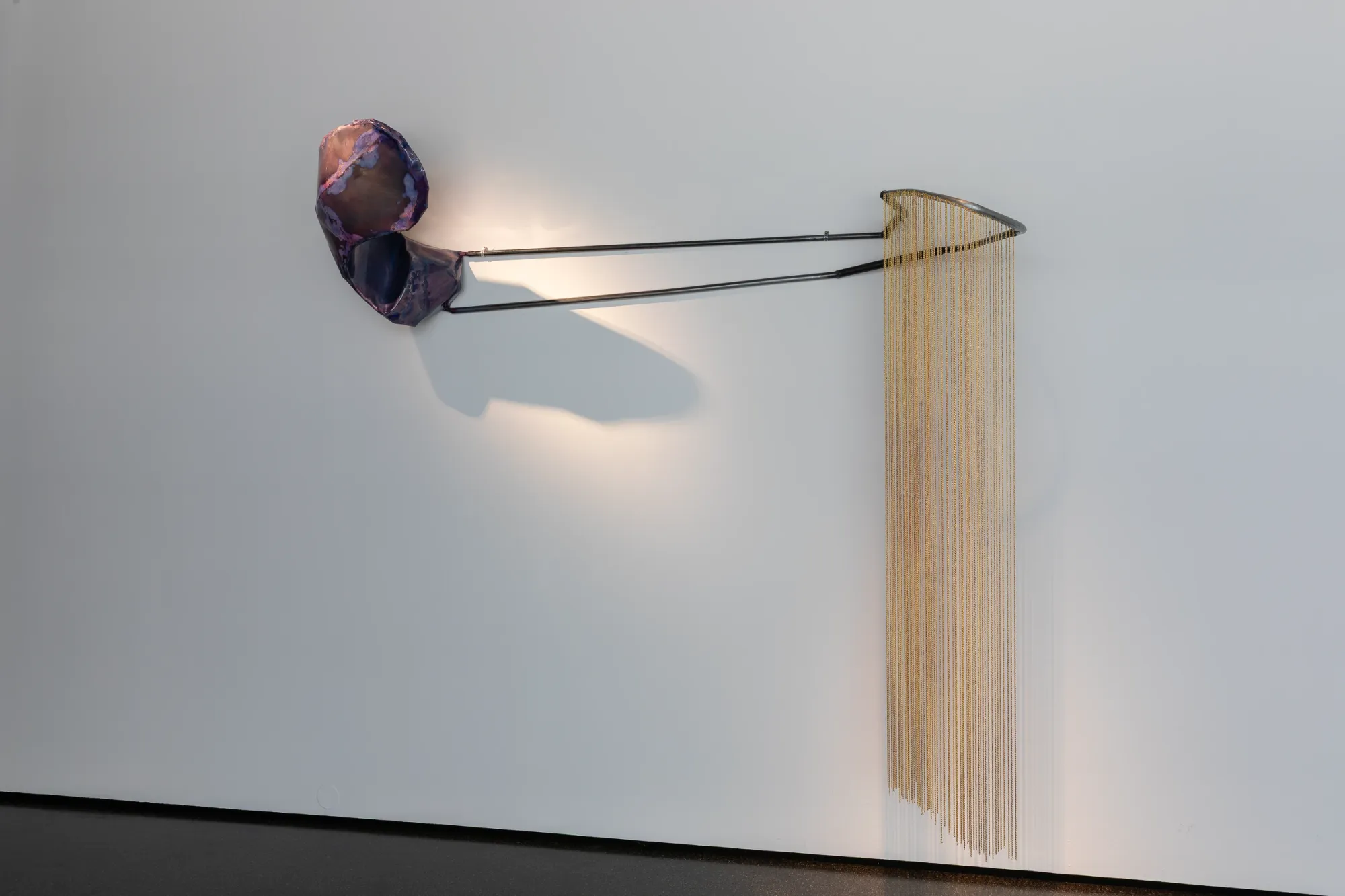
A car door stops being a car door long before it becomes anything else. In between, it is only surface and weight, still carrying the memory of a function it no longer performs. That interval is where this exhibition lives.
Roland Reiter
No matter what it is, but it matters what it could be
studio Neue Galerie Graz
Graz, Austria
–
Tue–Sun and public holidays, 10am–6pm. Studio entry free.
Joanneumsviertel, 8010 Graz
Roman Grabner
Paul Vincent Schütz © Bildrecht, Wien 2026 / Universalmuseum Joanneum, J.J. Kucek © Bildrecht, Wien 2026
Courtesy Universalmuseum Joanneum
Sculpture has spent a century arguing with the automobile, pressing its steel, stacking its parts, borrowing its lacquers.
This exhibition does not repeat that argument so much as let it curdle into something closer to comedy, or tenderness, or both at once. The industrial object stops pretending to be finished.
An object that used to move is not obligated to explain what it means now. It only has to keep insisting that it could still become something.
The studio sits inside Neue Galerie Graz, a smaller space historically set aside for artists still finding their footing. Roland Reiter, who has taught sculpture at the University of Applied Arts Vienna since 1995, is not that.The mismatch gives the room a specific charge, with veteran technique deployed at a scale built for beginnings.
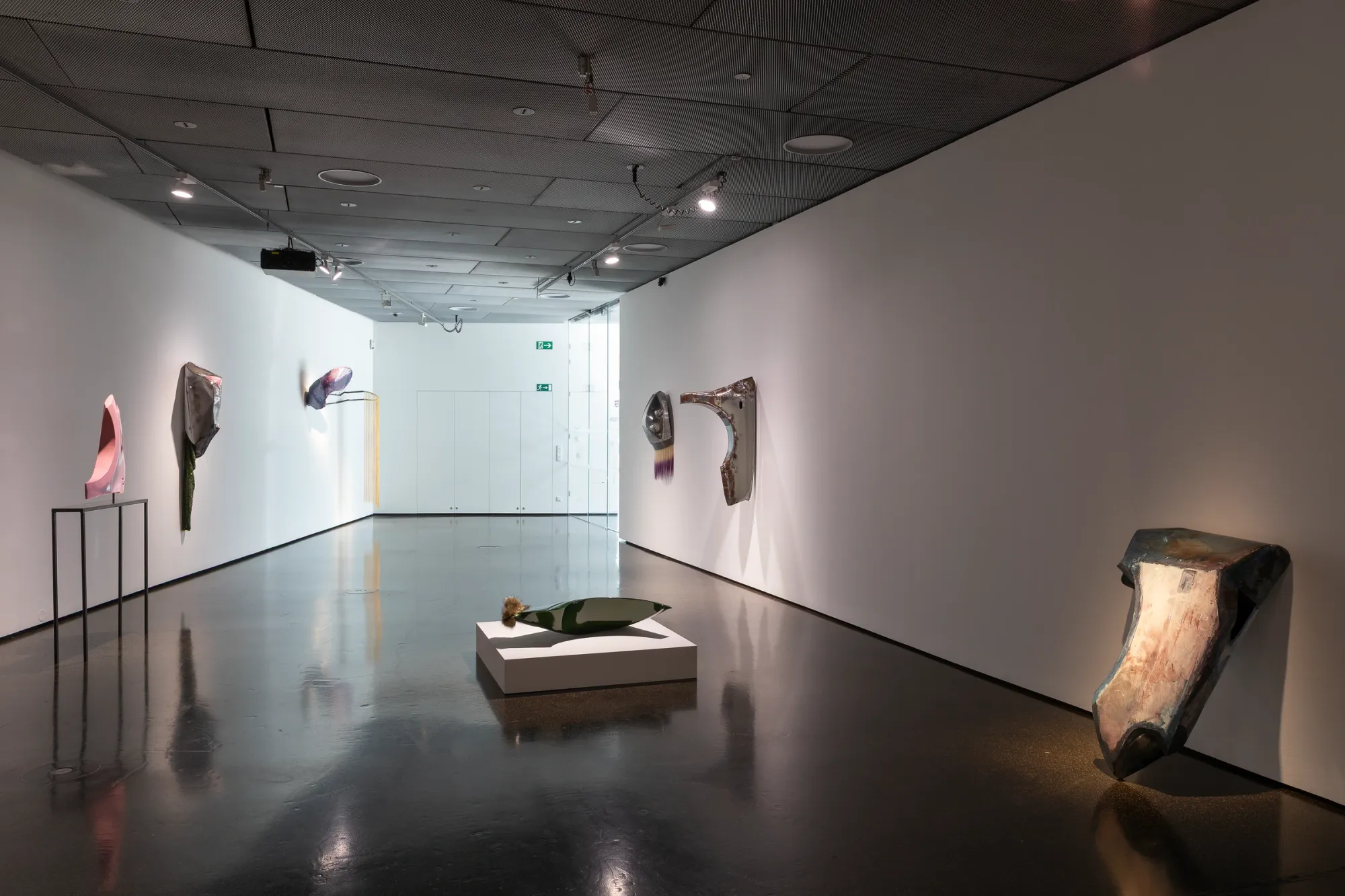
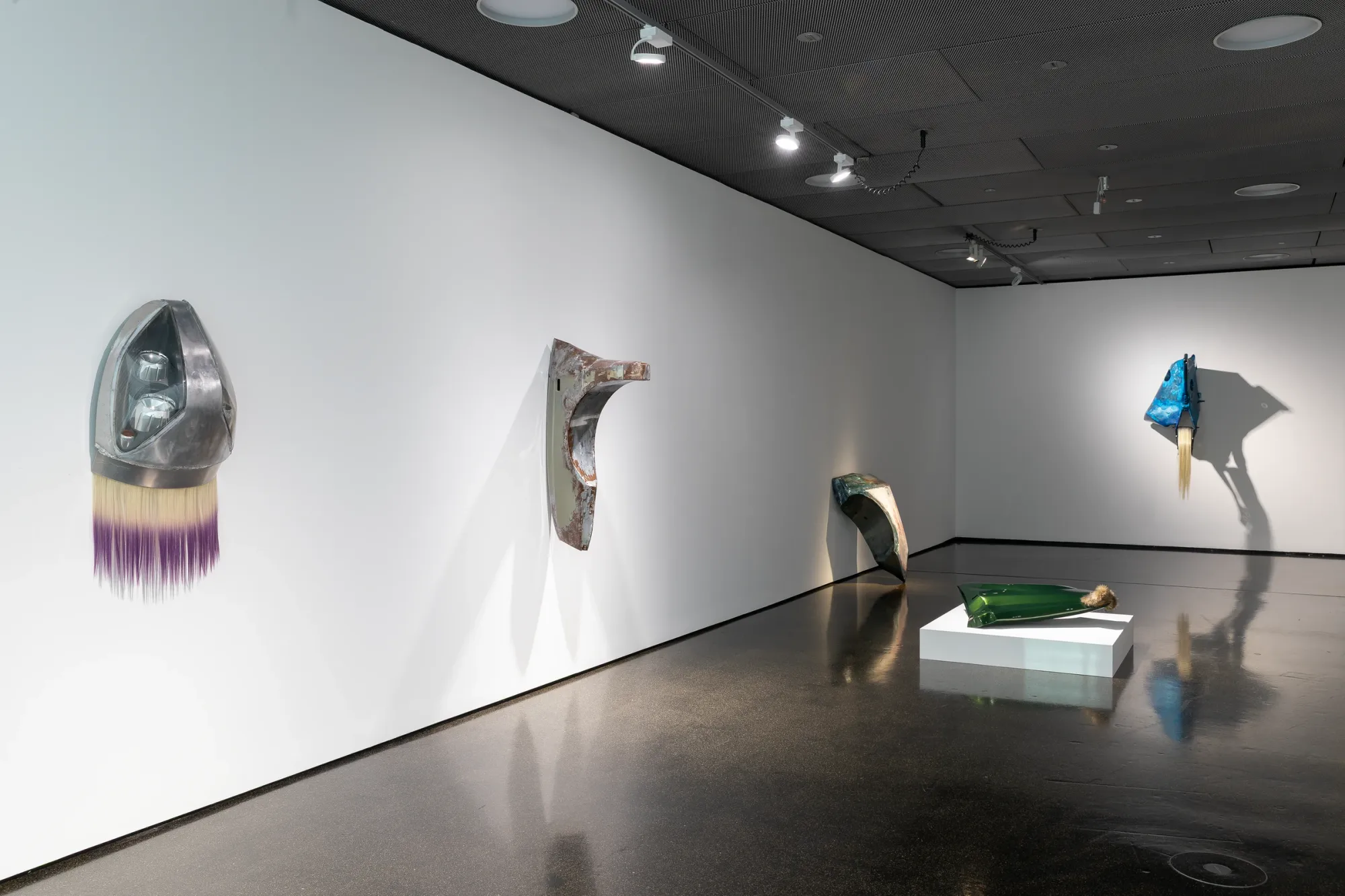
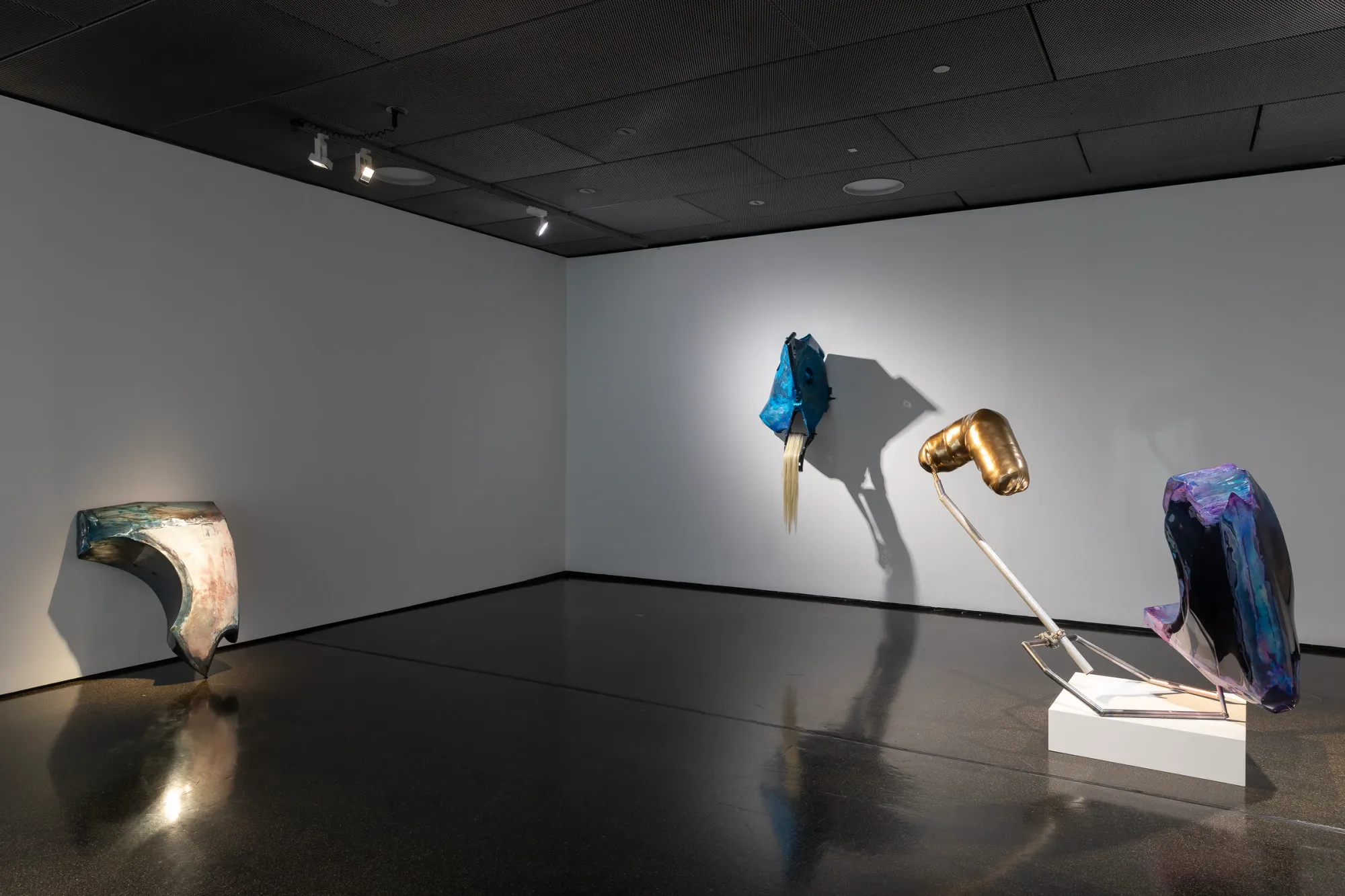
Across the series, Reiter works with components taken from both cars and motorcycles, recombining, extending and reshaping them. Take 2er Golf. The title names its source plainly, a second-generation Volkswagen Golf, but the object itself withholds recognition.
Reiter works the salvaged metal with an angle grinder, spatula and rags, layering automotive lacquers until the surface reads less like bodywork and more like a painting that happens to have weight. Transit Bus II follows the same procedure on different source material, its curved sheet still bearing the shape of a route it no longer runs.
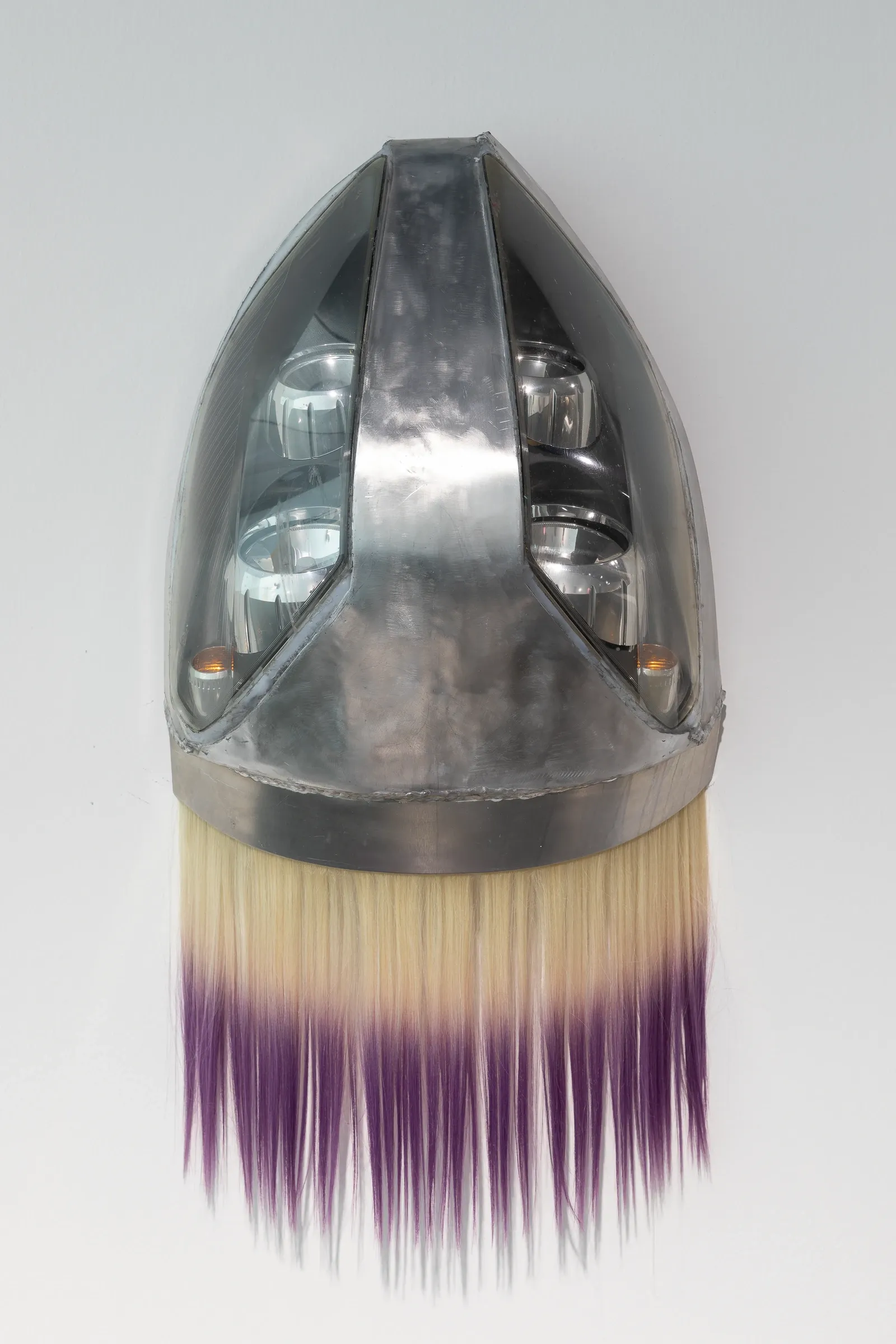
Neither piece stays fixed to the wall. Reiter builds his objects to hang, lean or lie flat on the floor, and that instability is structural rather than accidental.
A sculpture that can also be a painting, propped rather than mounted, keeps deciding what kind of object it is in real time. The paint does the arguing that the title refuses to settle.
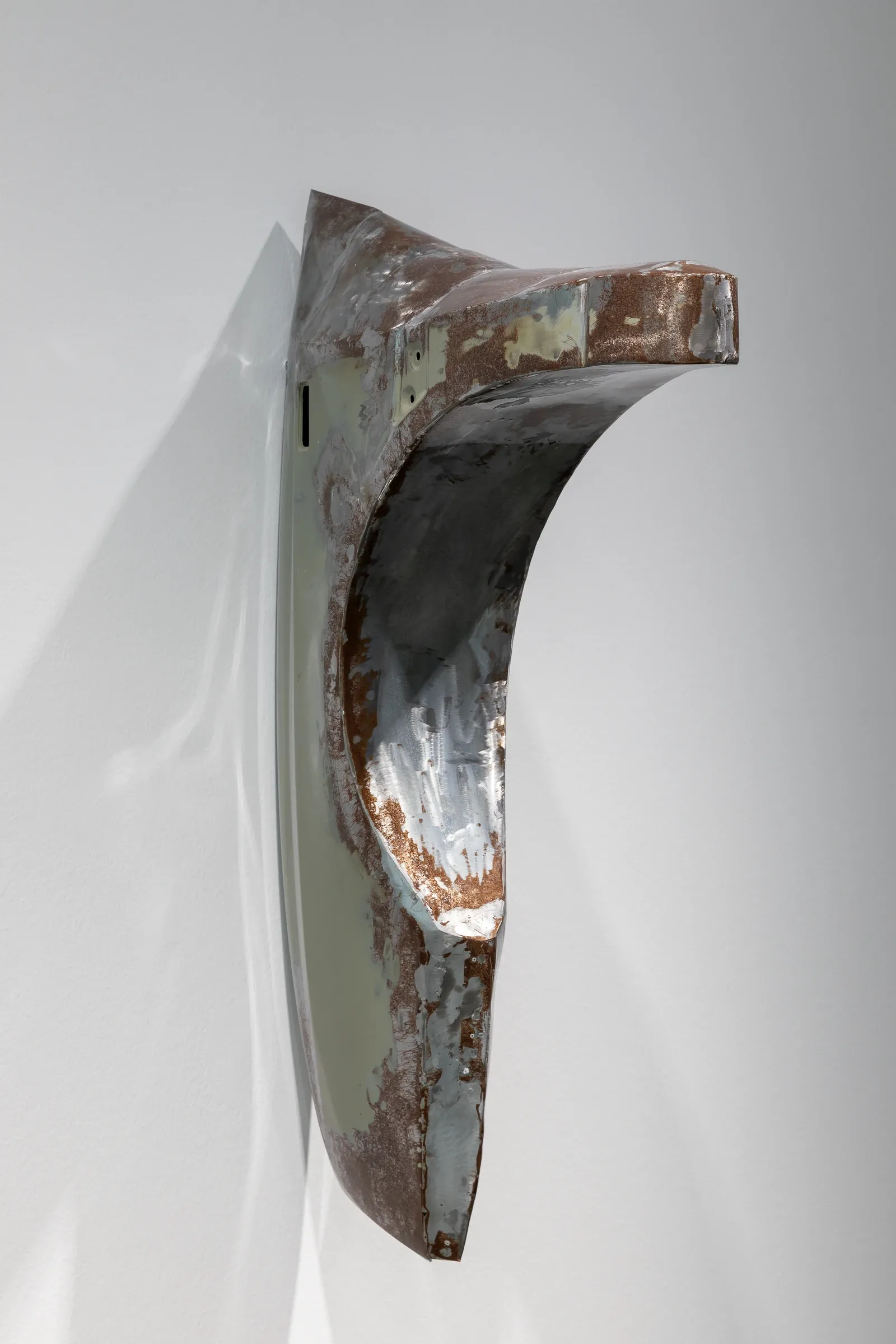
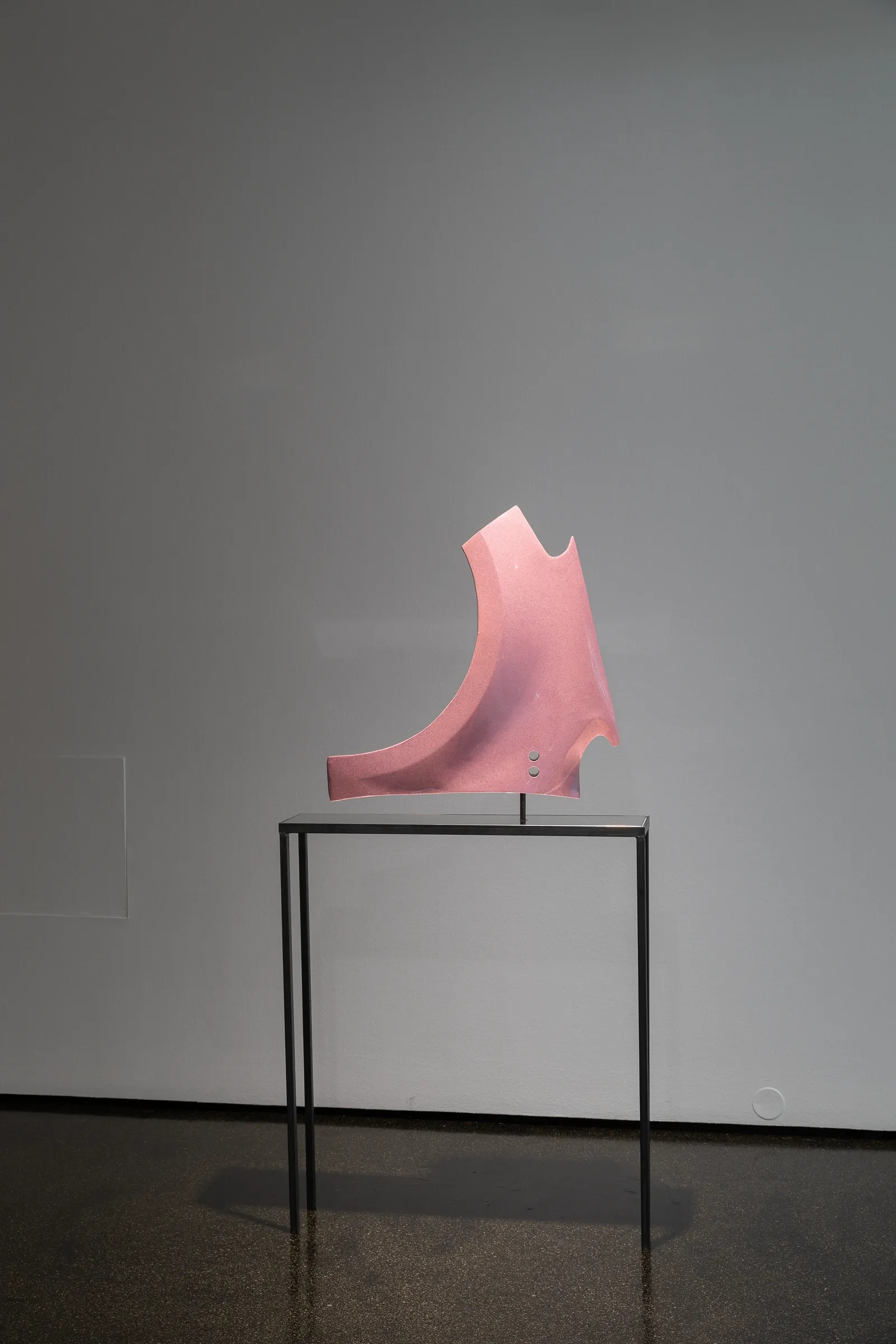
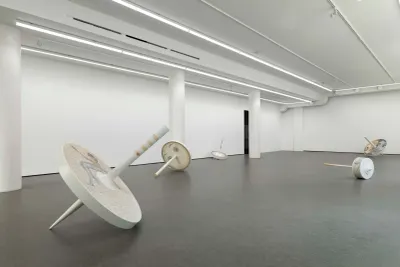
Installation view of "Roland Reiter. No matter what it is, but it matters what it could be" at the studio of Neue Galerie Graz, curated by Roman Grabner. Photo: Universalmuseum Joanneum/J.J. Kucek © Bildrecht Wien, 2026.
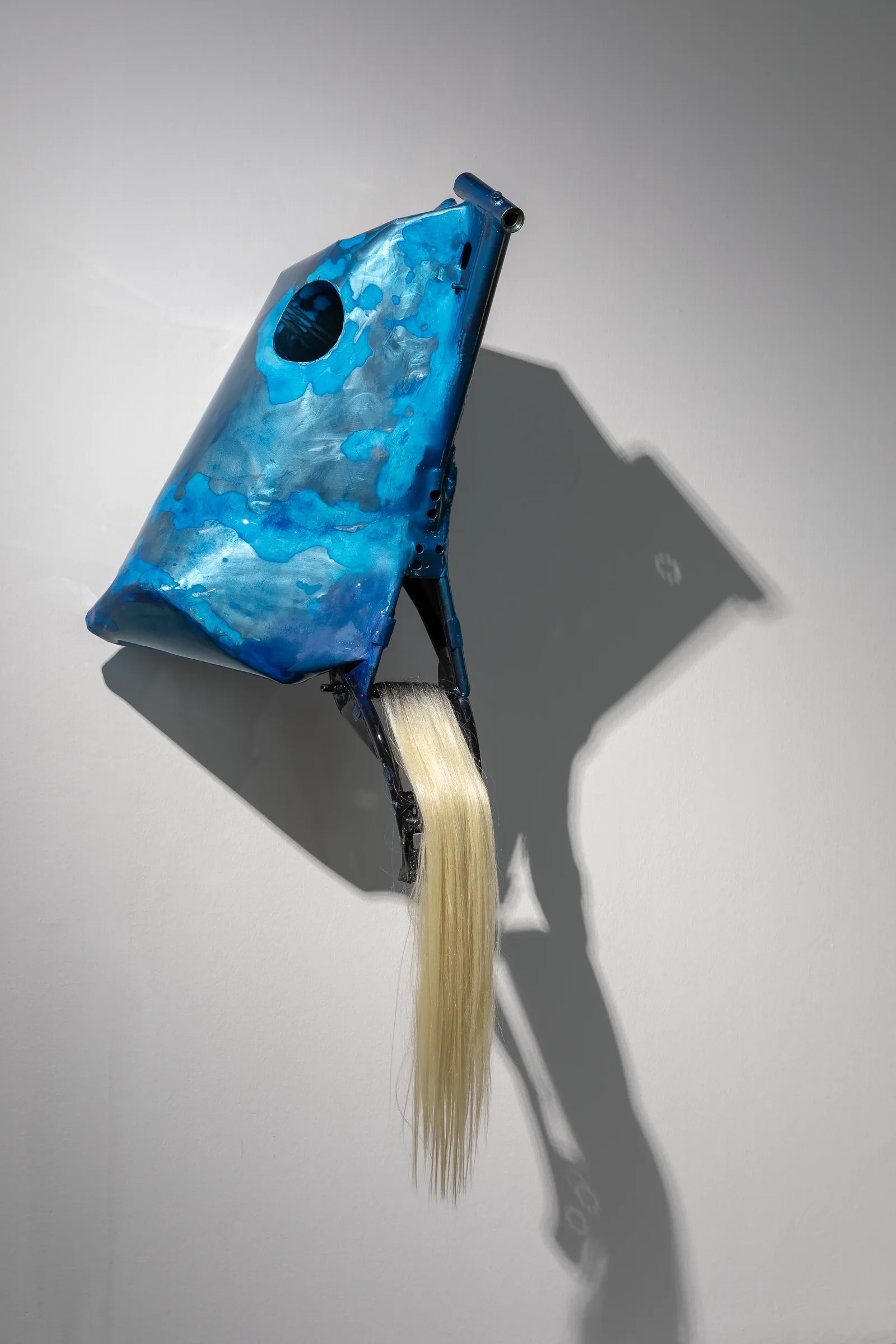
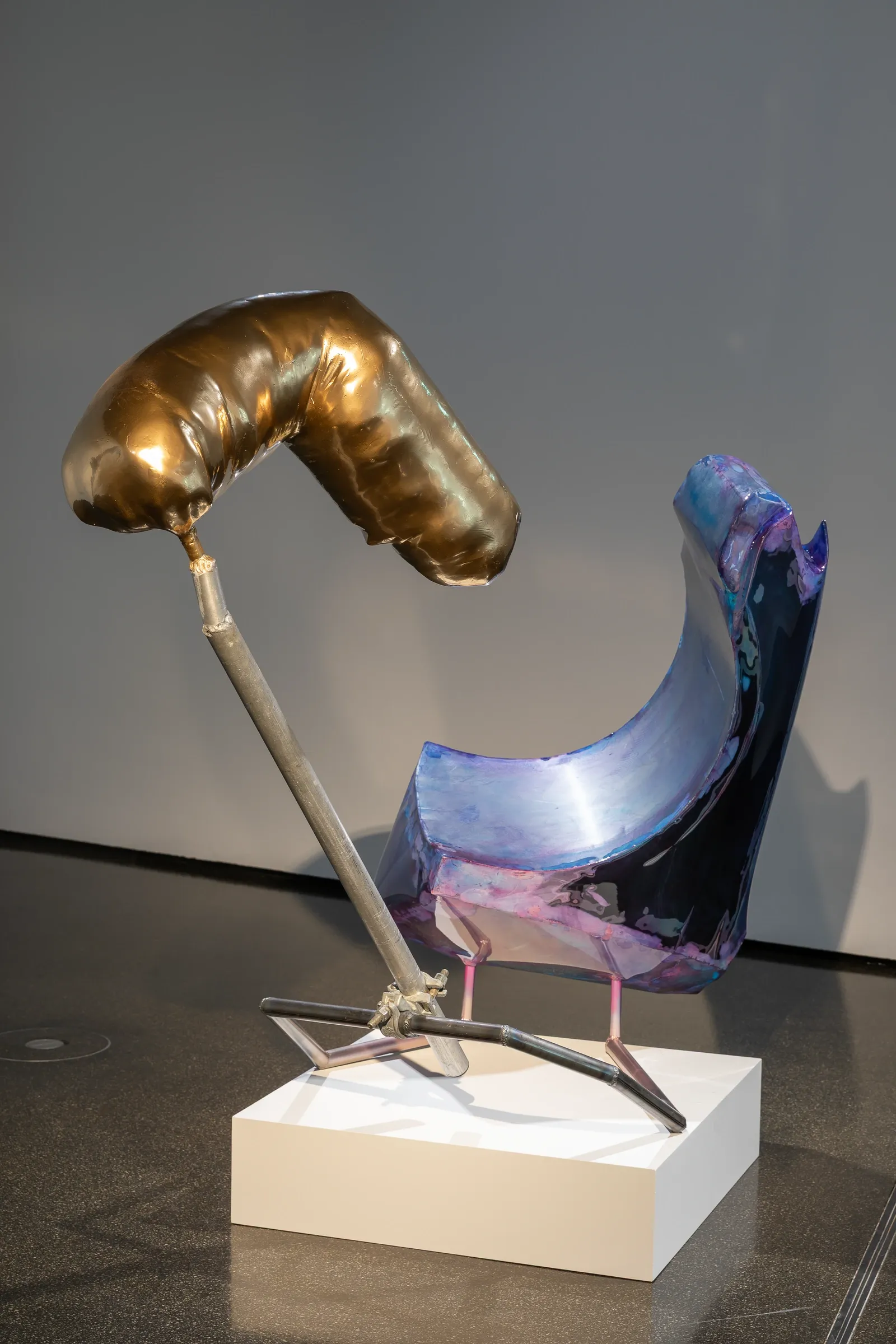
Installation view of "Roland Reiter. No matter what it is, but it matters what it could be" at the studio of Neue Galerie Graz, curated by Roman Grabner. Photo: Universalmuseum Joanneum/J.J. Kucek © Bildrecht Wien, 2026.
Car culture is currently mourning itself in slow motion, as combustion engines get phased into showroom nostalgia and electrification rewrites what a chassis is for. Reiter's timing tracks that shift without commenting on it directly.
He is not restoring these fragments to any earlier glory. He is letting them sit in the awkward middle ground between still being a machine and no longer needing to be one, which is roughly where a lot of current thinking about bodies, human and otherwise, sits too.
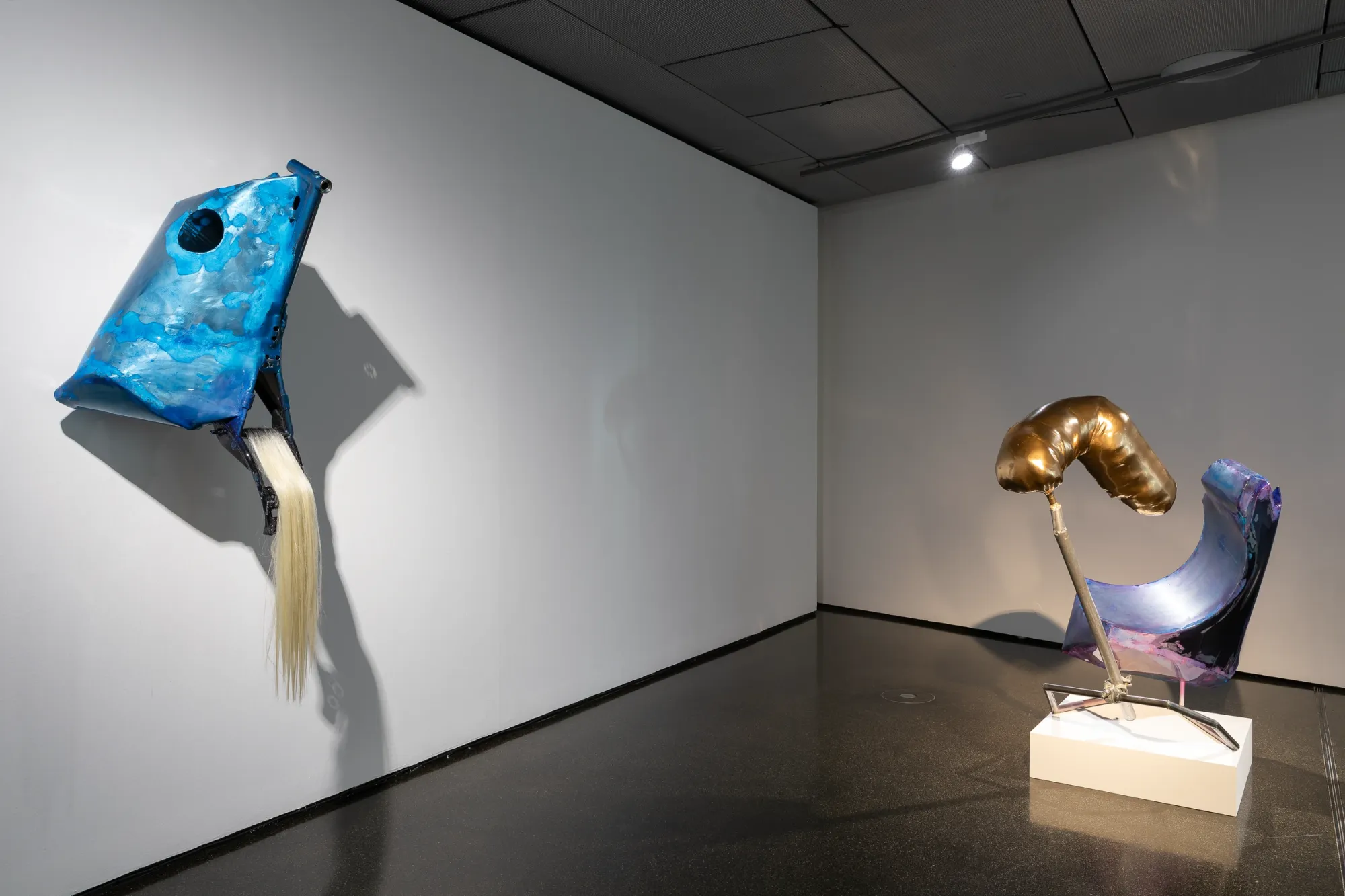
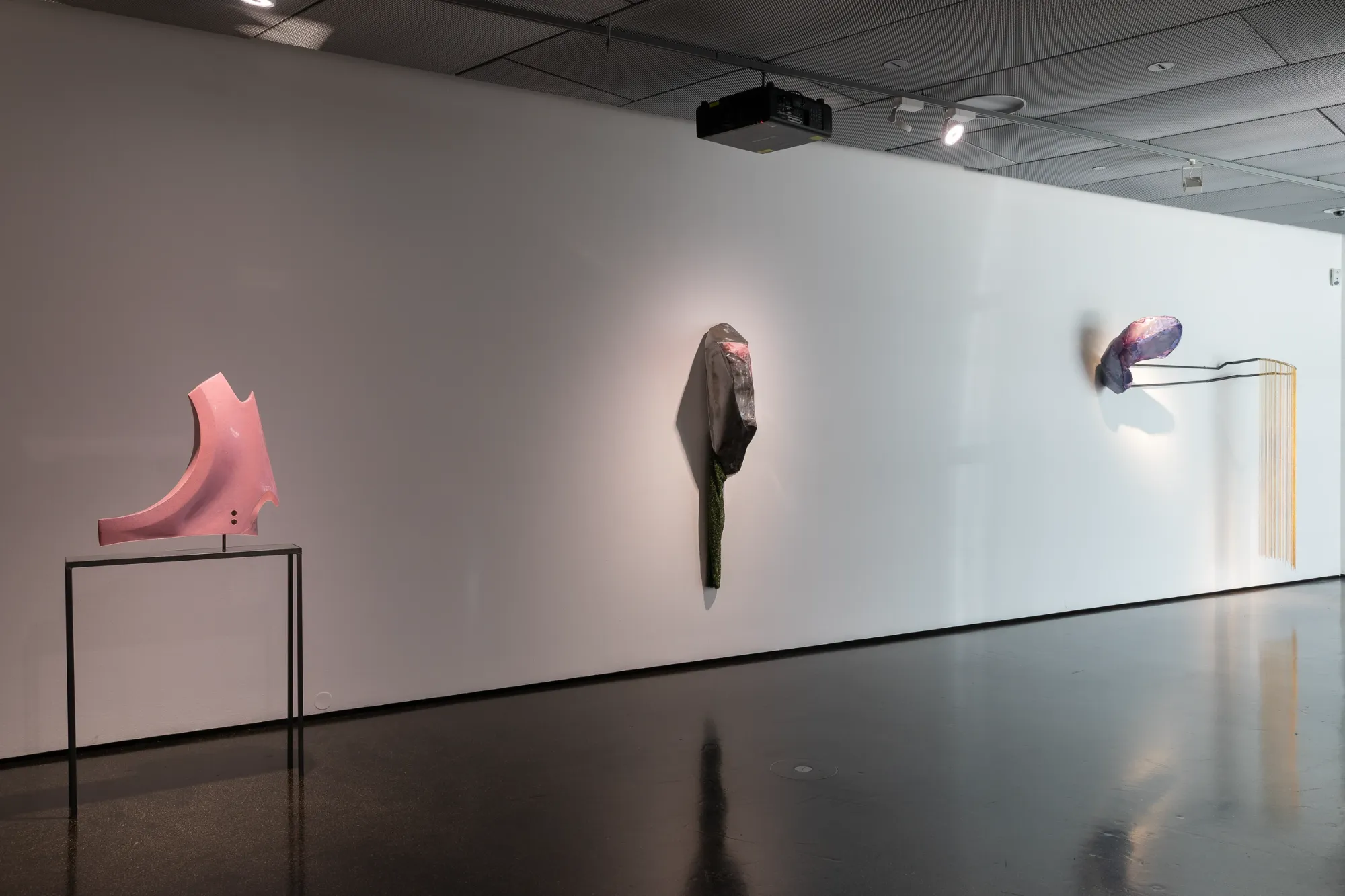
Up close, the lacquer catches light the way a freshly waxed hood would, half joke, half genuine tenderness, and Reiter never quite tells you which. The objects do not look repaired.
They look like something still being decided, propped mid-thought against the studio wall. Nothing here has finished becoming what it is going to be.
stay connected, keep the art in motion
Roland Reiter on Instagram
Studio Neue Galerie Graz on Instagram
About Catapult Contemporary - Art Platform Submission
This is a exhibition review published by Catapult — an independent editorial platform for contemporary art, based in Vienna. We publish exhibition reviews, artist features, interviews, and critical context, with a focus on emerging and mid-career practices from Europe and beyond.
catapult.art
Want to be featured? Submit your work →