Too Big for a Living Room, Too Intimate for a Museum

Telegraph Gallery Presents Signal V in Olomouc
Telegraph Gallery presents Signal V: A Selection of Objects and Installations from the Robert Runták Collection, curated by Jan Kudrna, through 24 September 2026.
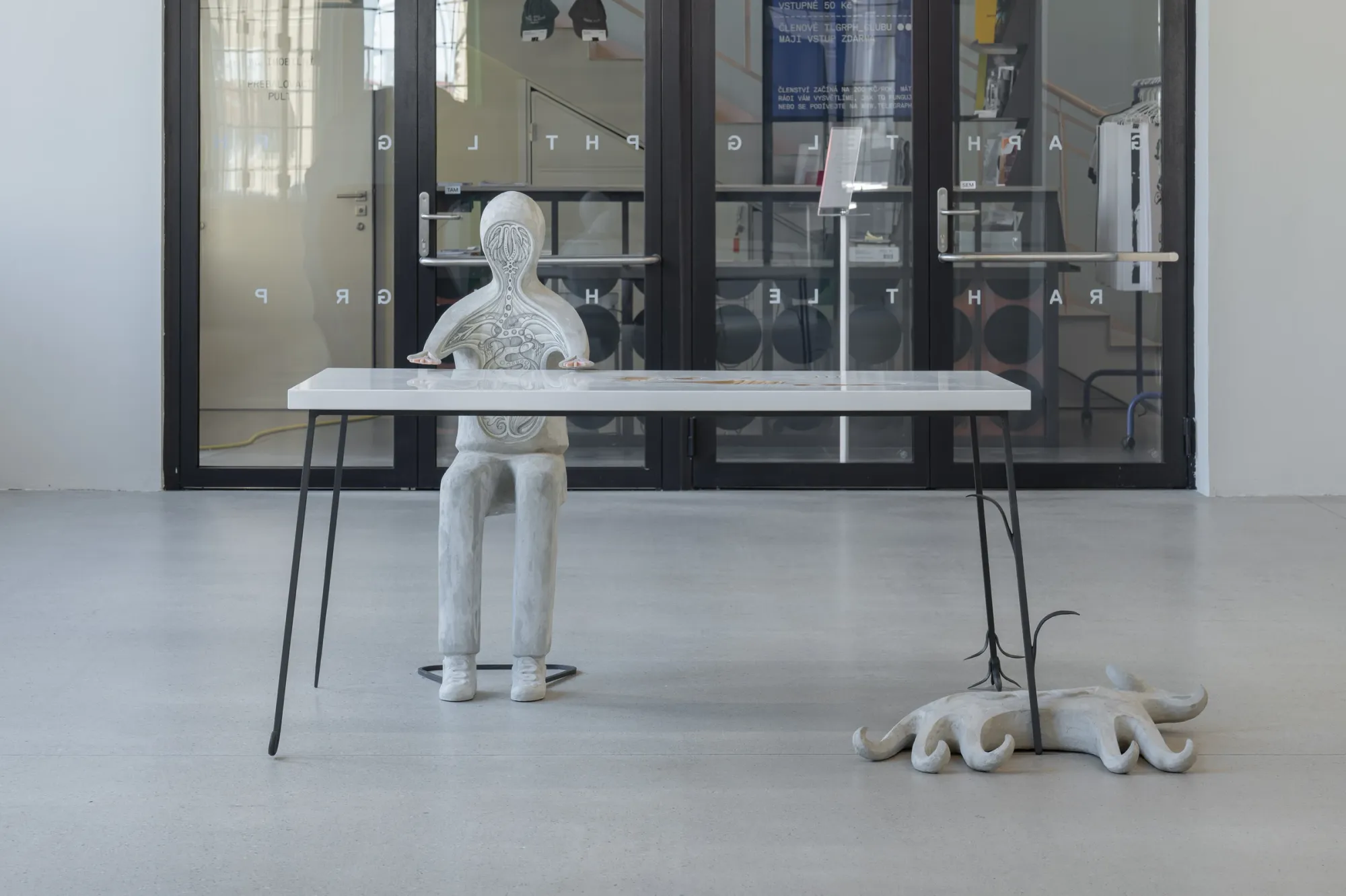
A private collection has boundaries a museum rarely has to think about. Storage is finite, insurance is real, and a living room was never built to hold a work fourteen feet across.
Someone kept buying them anyway, and this selection follows that habit into a former industrial hall, large enough to let the work stand at full size, close enough to encounter directly.
Krištof Kintera, Jiří Příhoda, Milena Dopitová, Roman Ondak, David Možný, Anna Hulačová
Signal V: A Selection of Objects and Installations from the Robert Runták Collection
Telegraph Gallery
Olomouc, Czech Republic
–
Tue–Thu 9am–7pm, Fri 9am–9pm, Sat–Sun 10am–6pm
Jungmannova 3, Olomouc, Czech Republic
Jan Kudrna
Matěj Doležel
Telegraph Gallery and the Robert Runták Collection
marketa.kalouskova@telegraph.cz
A museum builds distance into its architecture through barriers, wall text and a guard asking visitors to step back. Change the setting and that distance begins to shift.
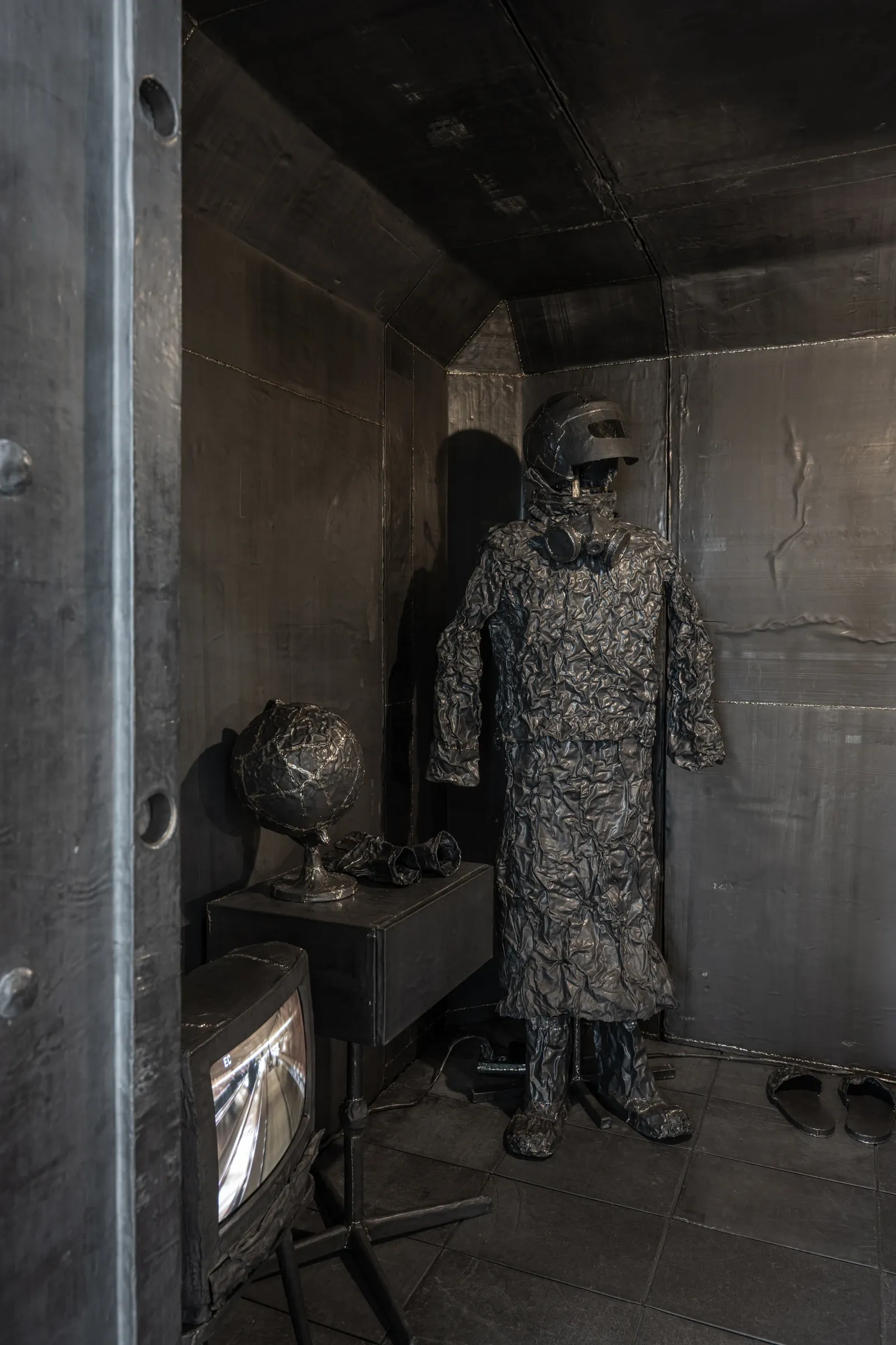
Here a visitor can get close enough to see the weld seams on a steel door, and that changes how large the object even reads as being.
An object does not become smaller by standing in a smaller room. It just stops pretending the viewer is safe from it.
“The Signal exhibition series has long presented curated selections aimed at demonstrating that contemporary art has no boundaries and that viewers should not be intimidated by any form of artistic expression. In the fifth instalment of the series, we deliberately remove monumental installations from their original, often cold museum setting and relocate them to the more intimate and immediate context of Telegraph Gallery.
Here, artists from different generations and with diverse formal approaches come together, united by a deeper internal philosophical structure. Visitors will find themselves in close proximity to the works, allowing them to experience familiar objects through entirely new spatial relationships and perspectives.
The exhibition offers an intense, almost physical experience that, within a private setting, encourages visitors to reconsider established stereotypes about the scale and the possibilities of contemporary art and collecting,” explains exhibition curator Jan Kudrna.
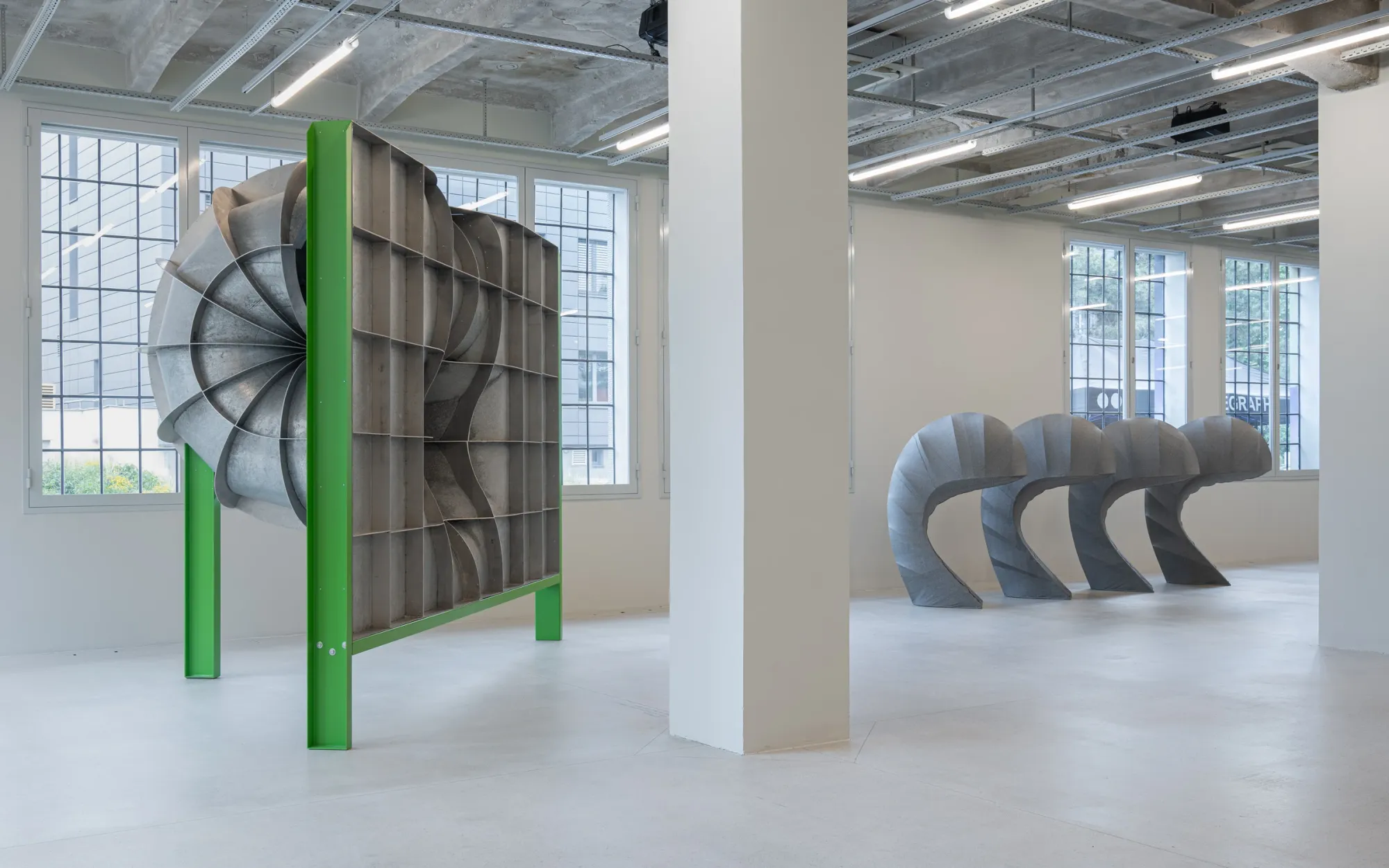
Telegraph Gallery occupies a former industrial building in Olomouc, its ceiling carrying exposed concrete beams and steel conduits, windows barred like a factory rather than a white cube. Curator Jan Kudrna calls the usual museum setting for this kind of work cold, and the room argues the opposite without needing to say so.
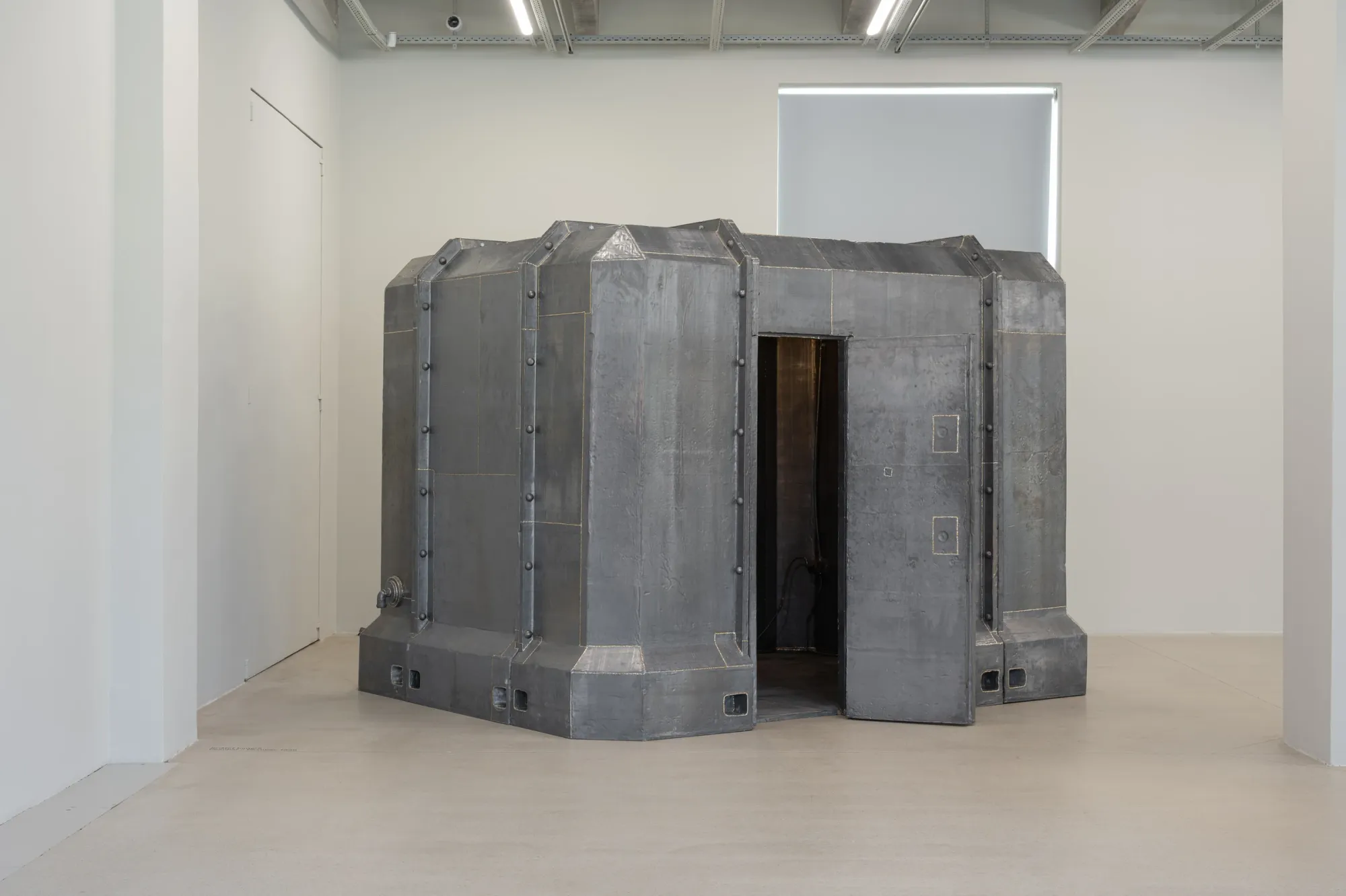
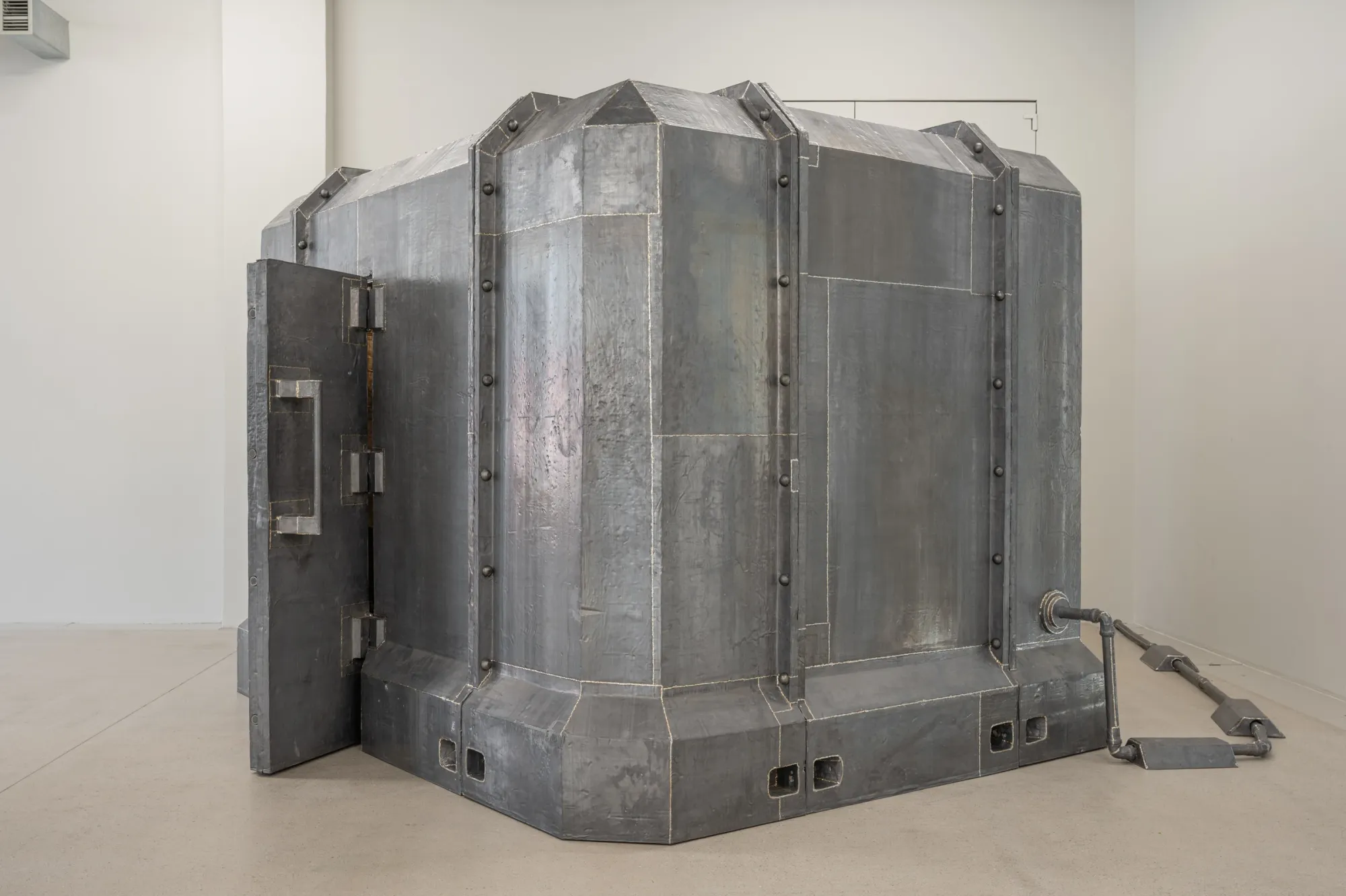
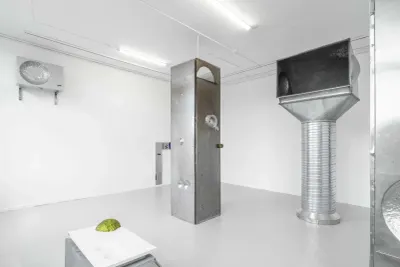
Krištof Kintera's Plumbař is a steel vault the size of a small room, riveted and welded like industrial architecture rather than sculpture, its heavy door left open. Past the threshold, a corroded metal figure stands beside a battered globe and an old television playing static, a stranded occupant of its own bunker. From across the room, the piece reads as machinery. Up close, it reads as someone's last shelter.
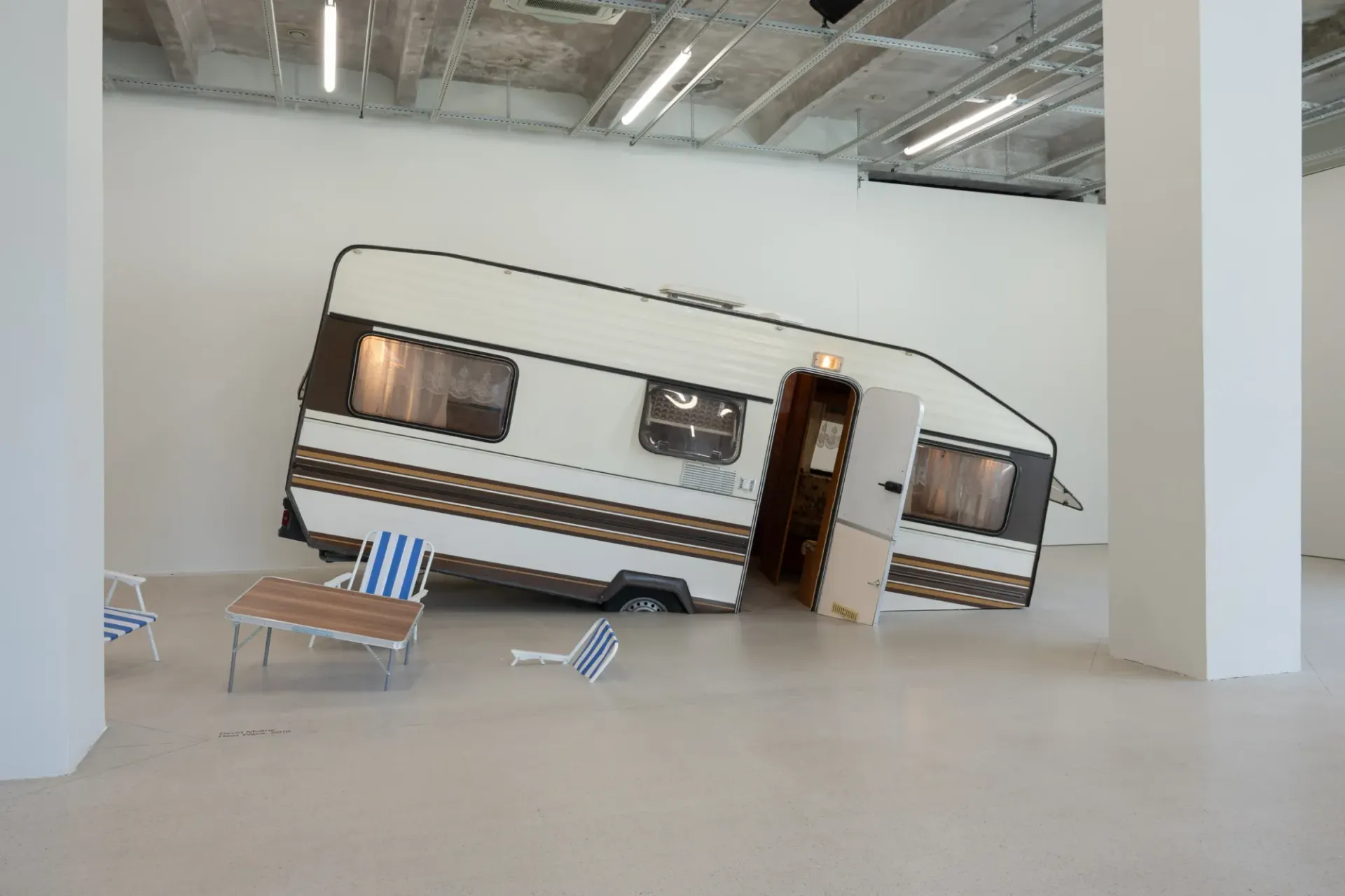
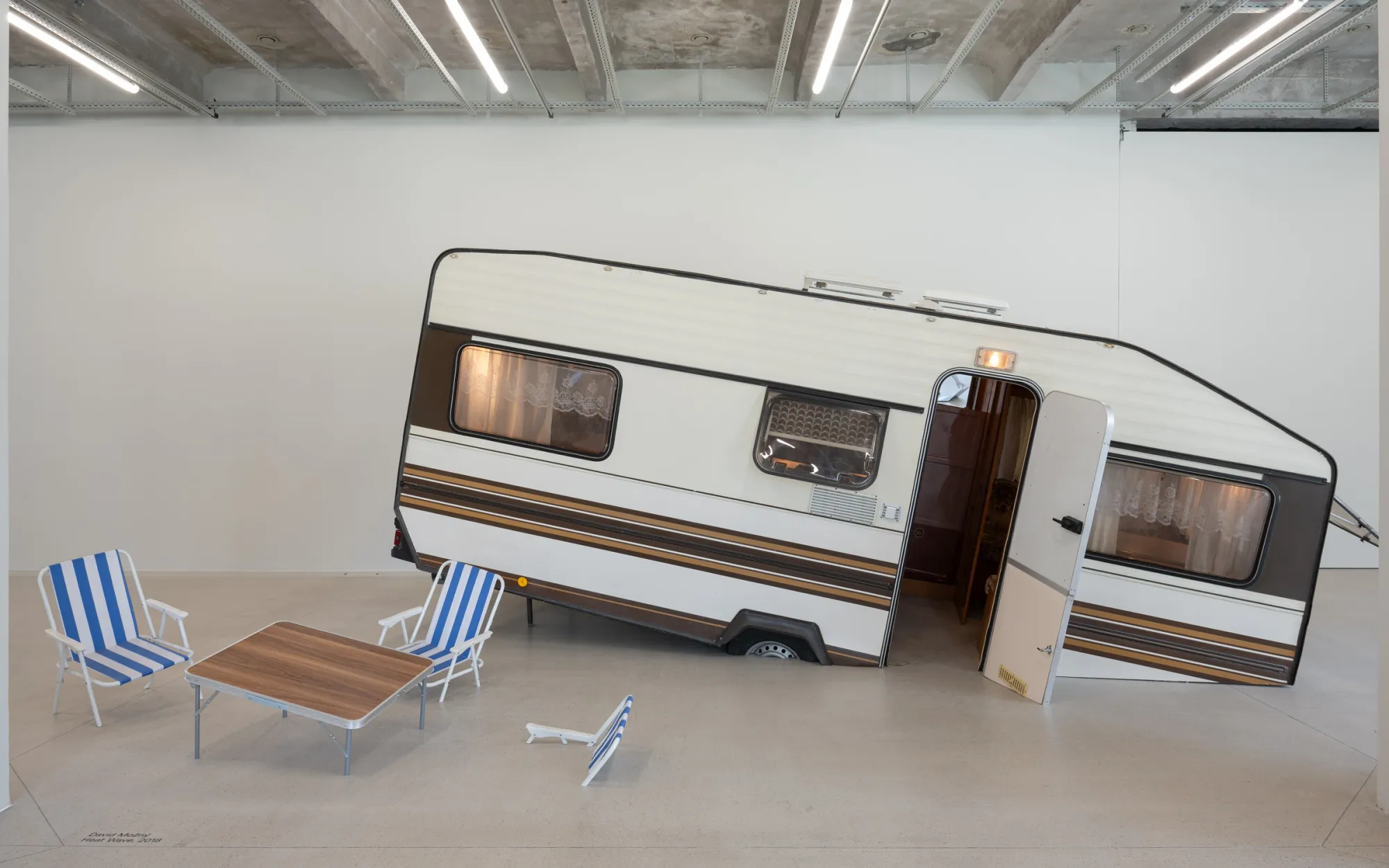
David Možný's Heat Wave sinks a vintage caravan into the floor at an angle, as though the ground gave way mid-holiday. A folding table and two striped beach chairs sit abandoned outside the door, lace curtains still hanging in the windows. The piece commits to its own collapse, tilting nose down until the domestic scene inside becomes closer to a wreck.
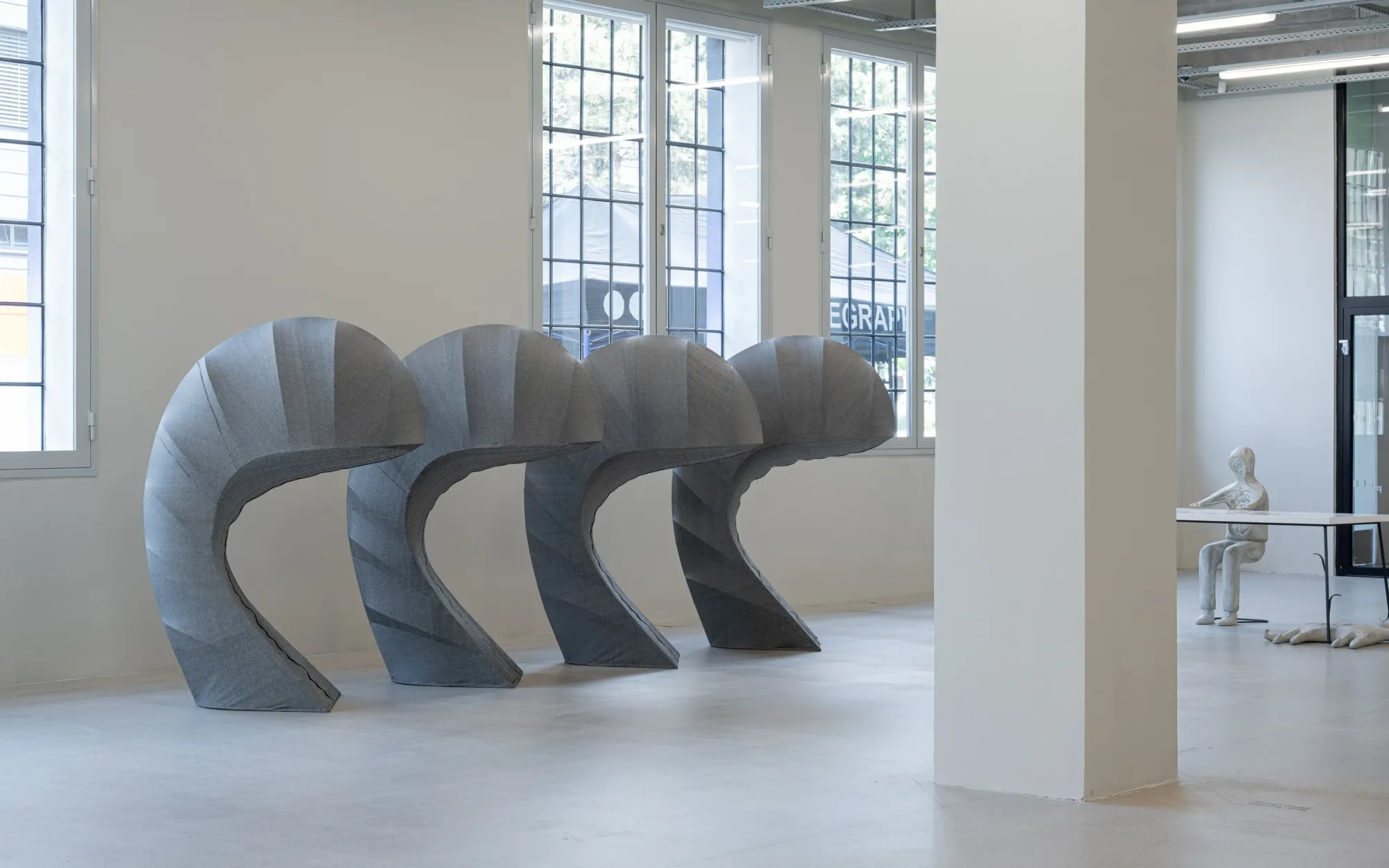
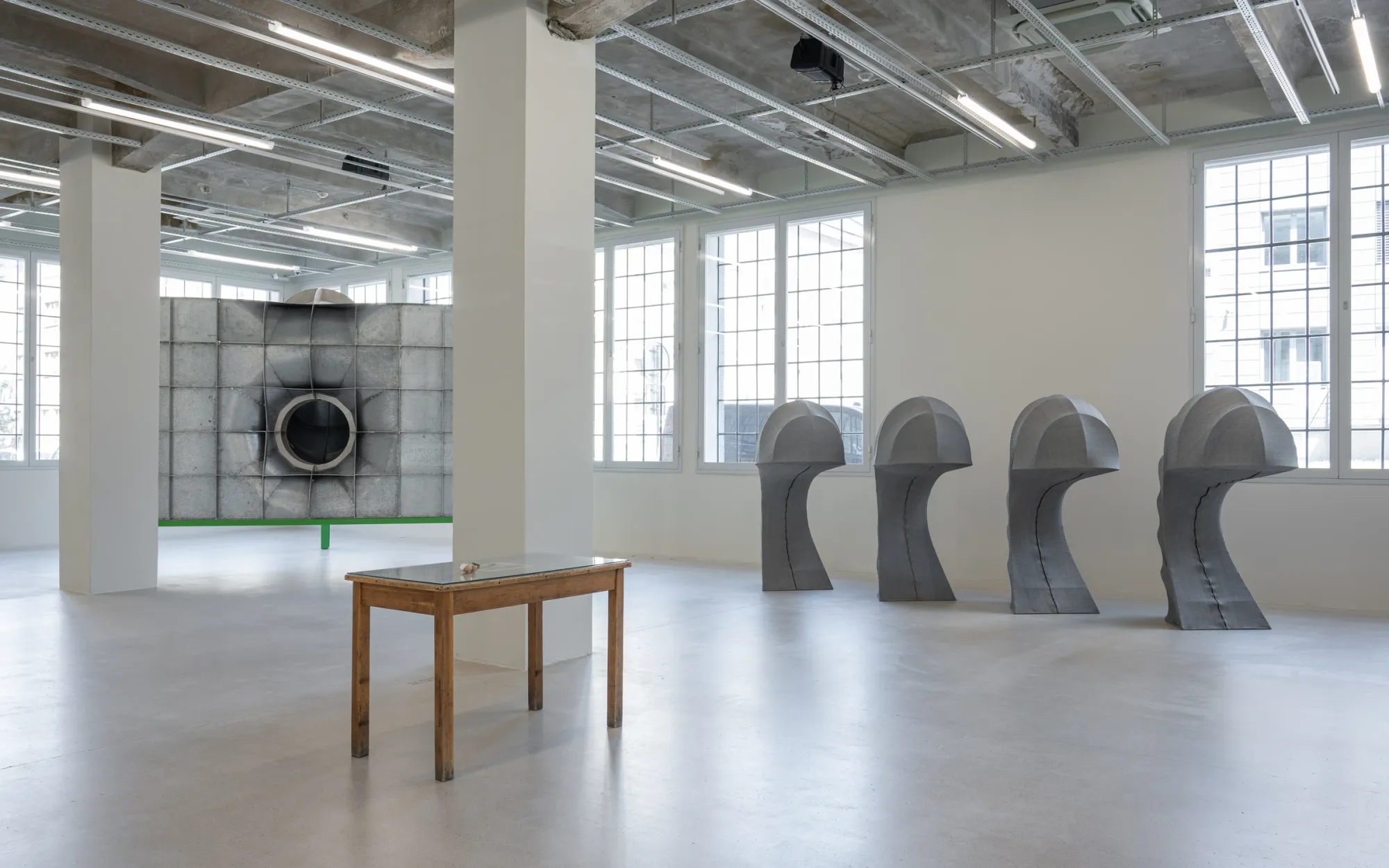
Milena Dopitová's Helmets lines up four fabric-wrapped forms bowing like a procession caught mid-genuflection, stitched in the grey wool of an old coat. The series dates to the early 1990s, when Dopitová worked with devices meant to enhance or protect the human body, though whatever body once fit inside these has long since left the room. What remains is the posture, repeated down the gallery.
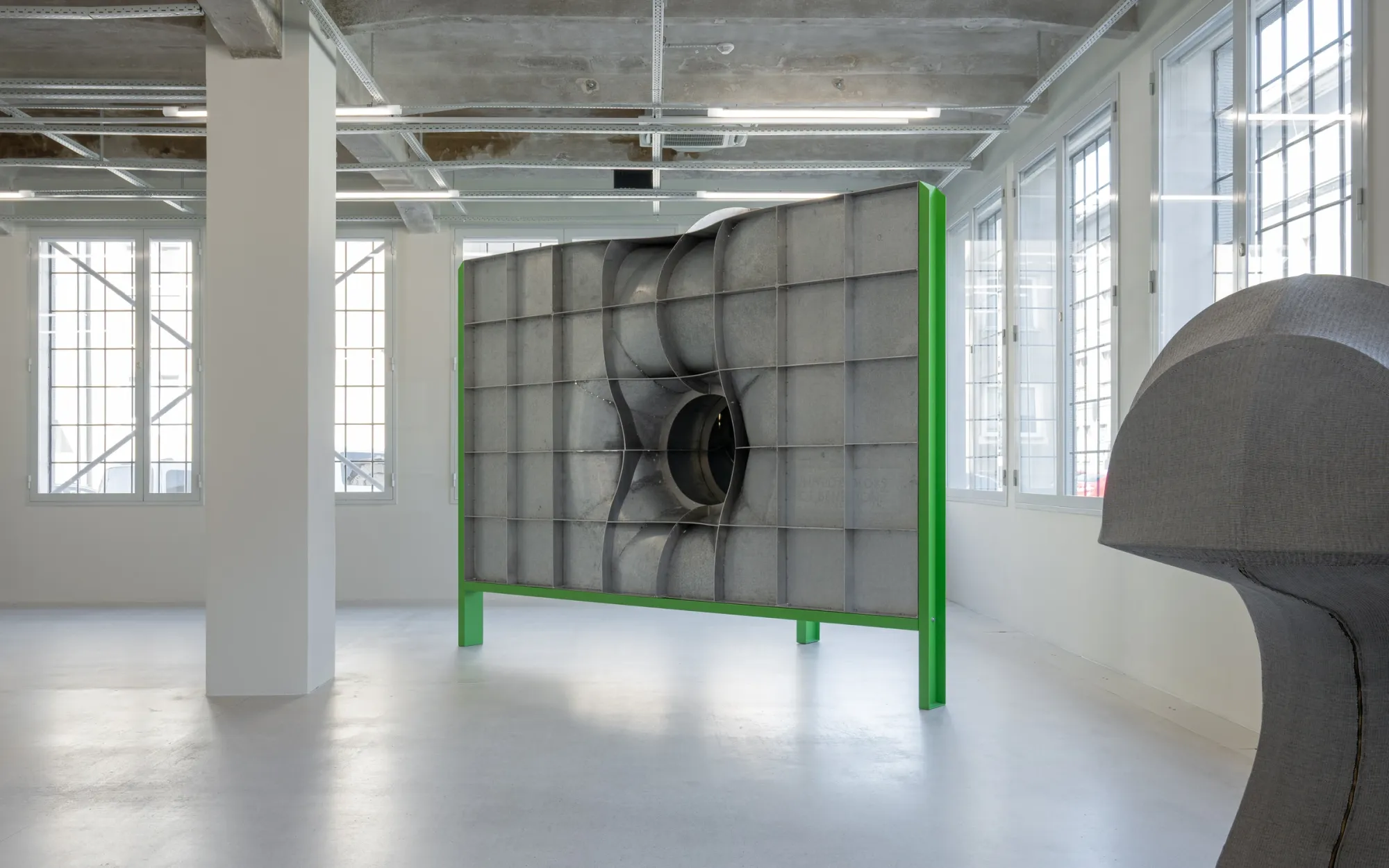
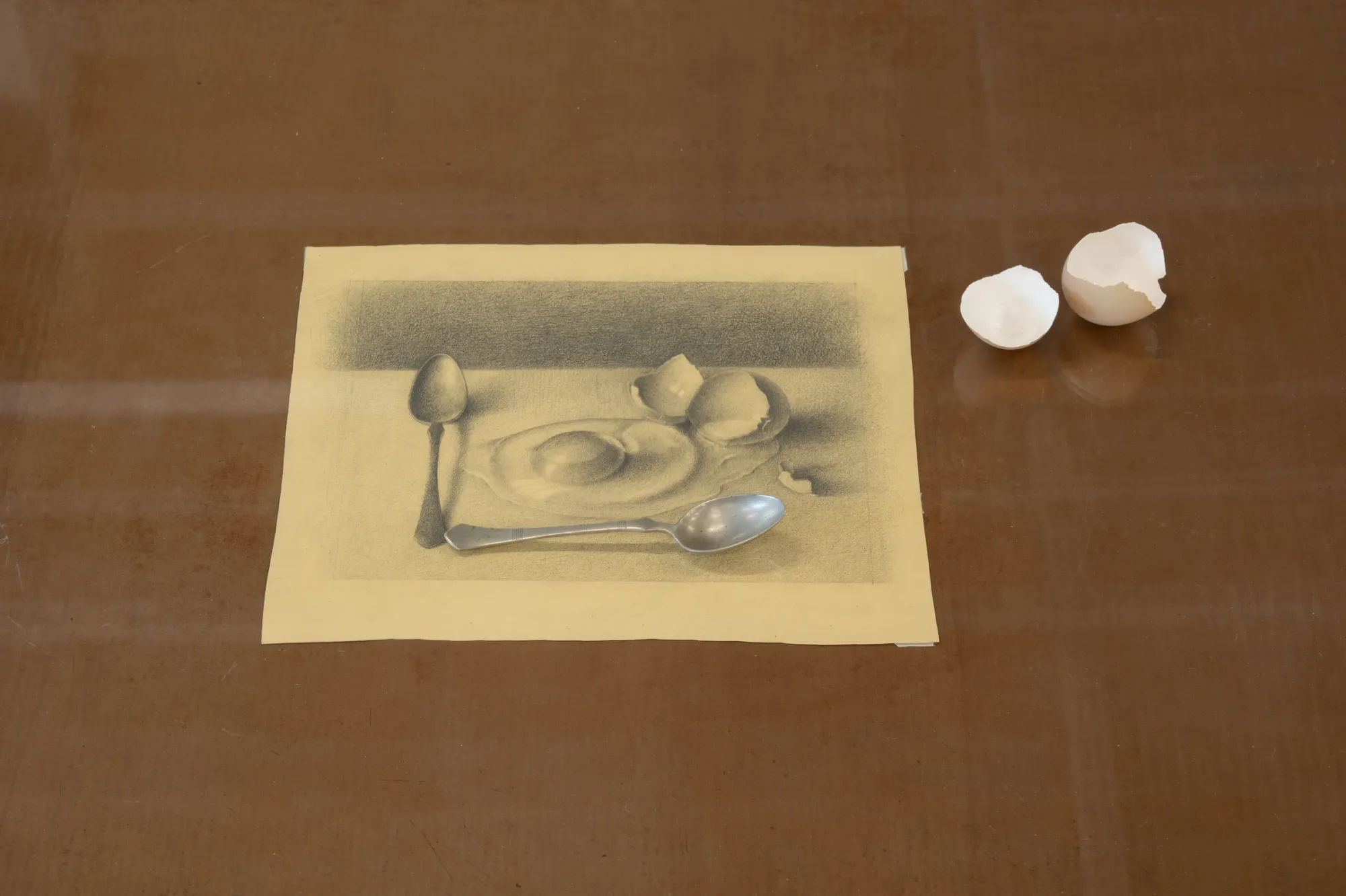
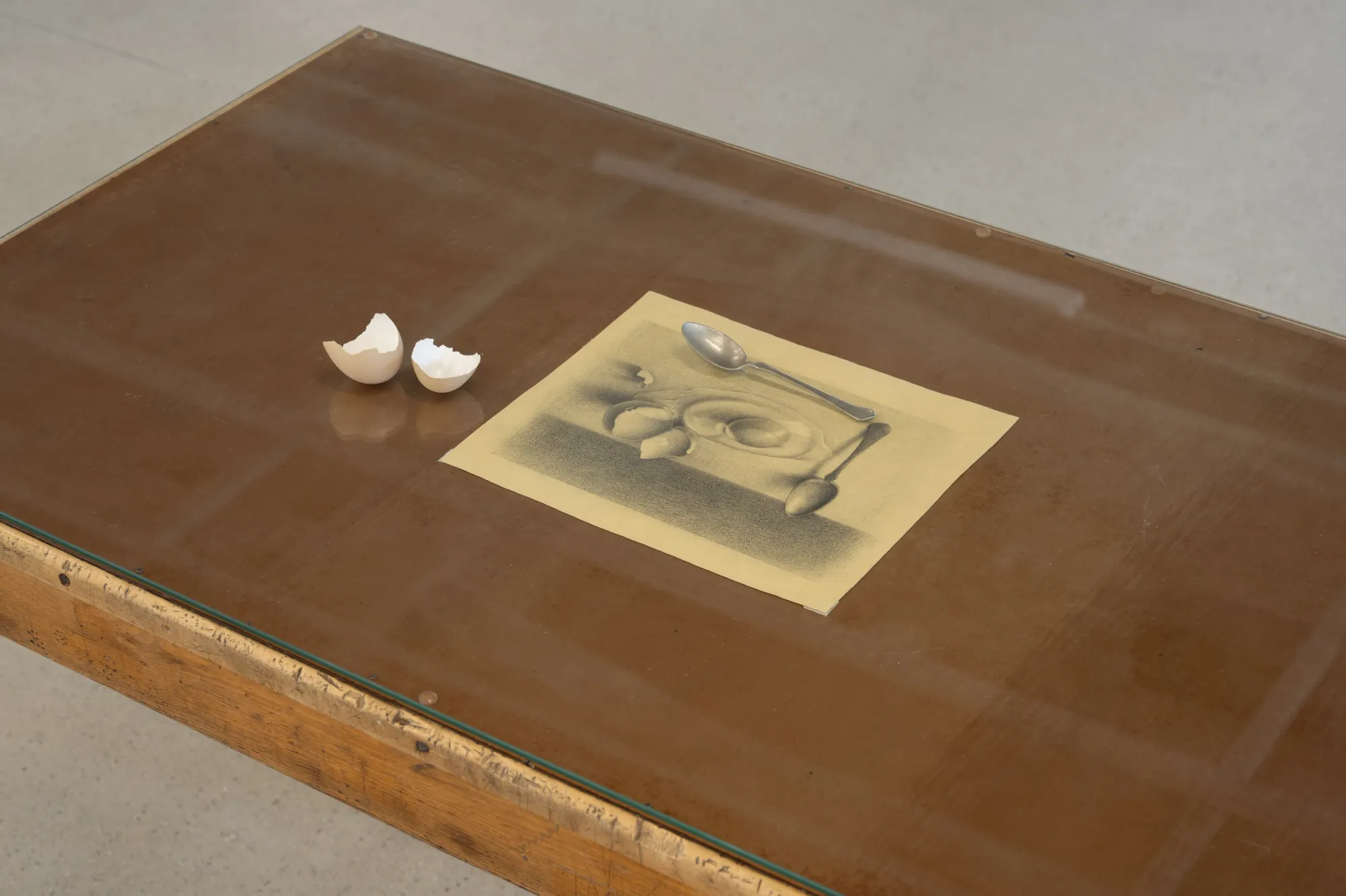
Jiří Příhoda's Billboard, a grid of scarred metal panels folding around a hidden tunnel, and Roman Ondak's Morning, a still life of eggshells and a graphite drawing on a café table, sit at very different scales in the same room. Anna Hulačová's Breakfast of a Teenager adds a plaster figure and a splayed animal form sharing a table that has lost its context.
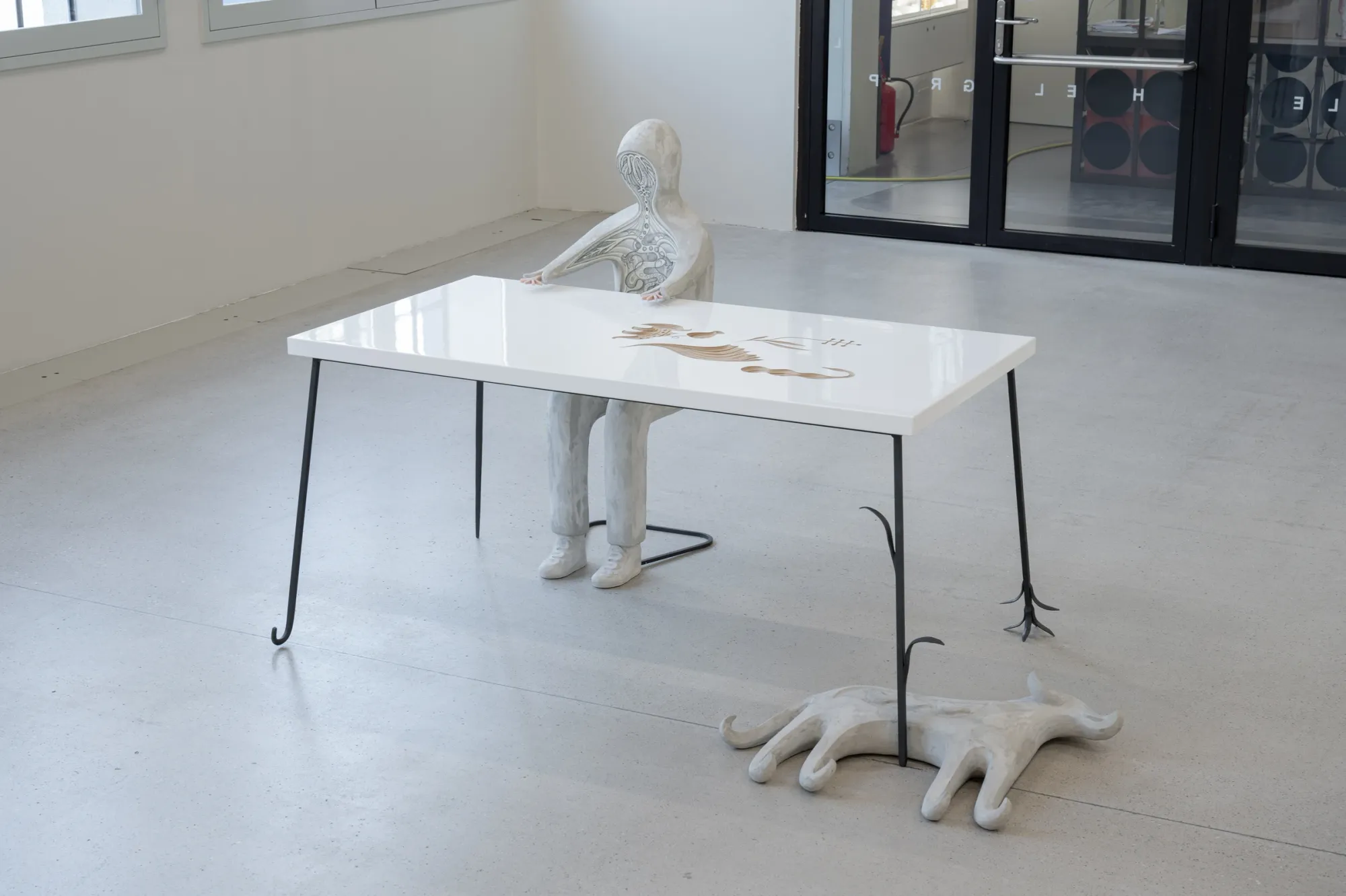
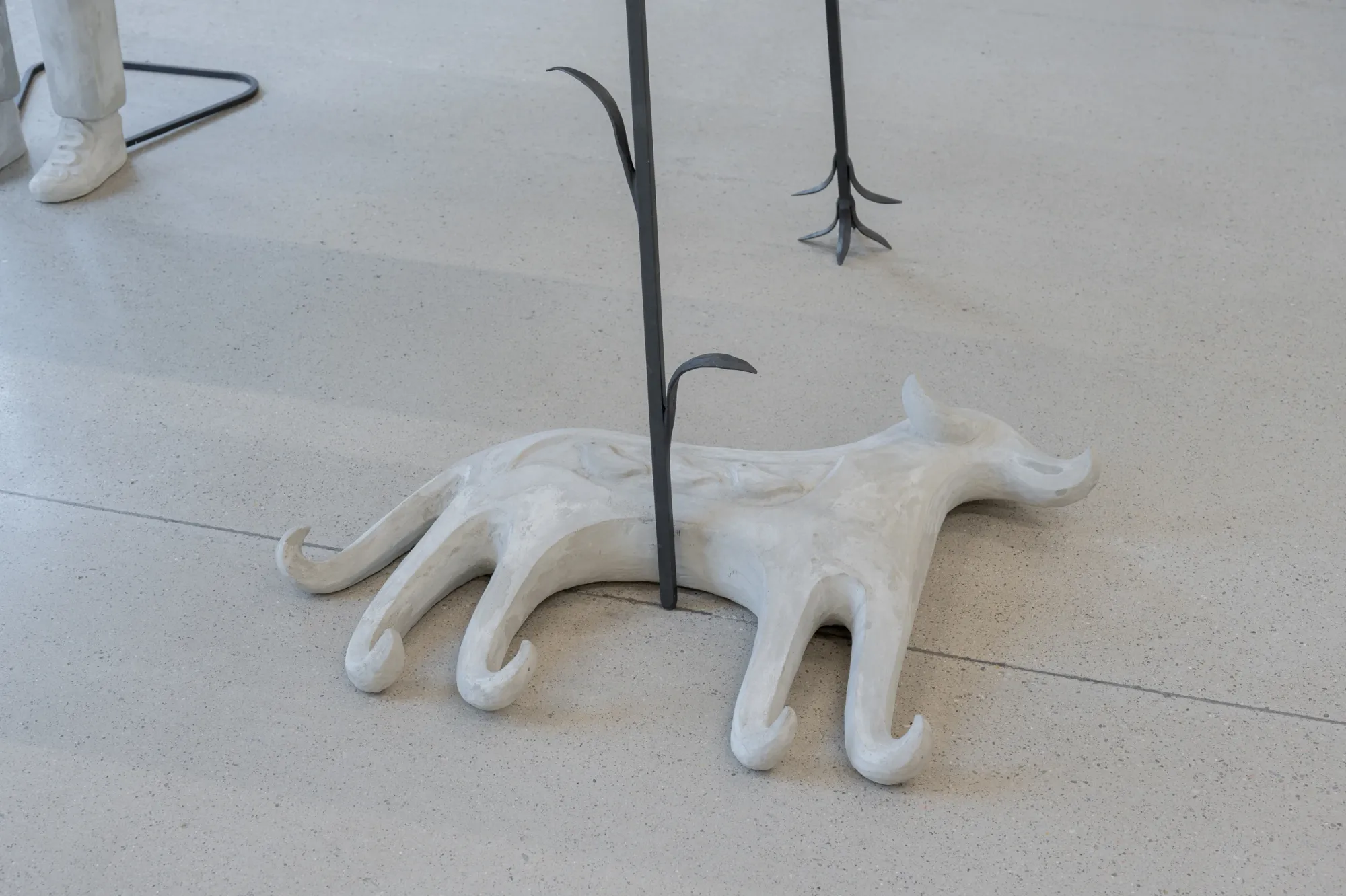
Institutions are not the only ones absorbing the cost of scale anymore. The fifth edition of the Signal series documents a private collection choosing to acquire and store objects most collectors would pass on precisely because they do not fit anywhere. That choice used to read as an institutional prerogative. The Robert Runták Collection argues it can also be a personal one.
By the time a visitor reaches the sinking caravan, the room has already made its case without saying so. The scale that once needed a museum's authority to justify itself now just needs a large enough room and someone willing to keep asking for one. Nothing here has been reduced to fit the collection it belongs to. The collection got bigger instead.
About Catapult Contemporary - Art Platform Submission
This is an exhibition review published by Catapult, an independent editorial platform for contemporary art, based in Vienna. We publish exhibition reviews, artist features, interviews, and critical context, with a focus on emerging and mid-career practices from Europe and beyond.
catapult-platform.art
Want to be featured? Submit your work →
 Dominique Catherina Foertig
Connect with the Artists and Gallery
David Možný on Instagram
Anna Hulačová on Instagram
Jiří Příhoda on Instagram
Krištof Kintera on Instagram
Milena Dopitová on Instagram
Roman Ondak on Instagram
Telegraph Gallery on Instagram
About Catapult Contemporary - Art Platform Submission
This is a exhibition review published by Catapult — an independent editorial platform for contemporary art, based in Vienna. We publish exhibition reviews, artist features, interviews, and critical context, with a focus on emerging and mid-career practices from Europe and beyond.
catapult.art
Want to be featured? Submit your work →
![Alt Text: Patrick Bérubé, (Ce)pendant [(Now)ever], Musée d'art de Joliette, 2026, wide view exhibition view, catapult contemporary rev](https://storage.ghost.io/c/1c/24/1c2478ff-417d-4e88-8226-288af467f6b9/content/images/size/w400/2026/07/patrick-berube-cependant-museejoliette-quebec-2026-hero.webp)