What a Mountain Gives Up When You Dig a Tunnel Through It

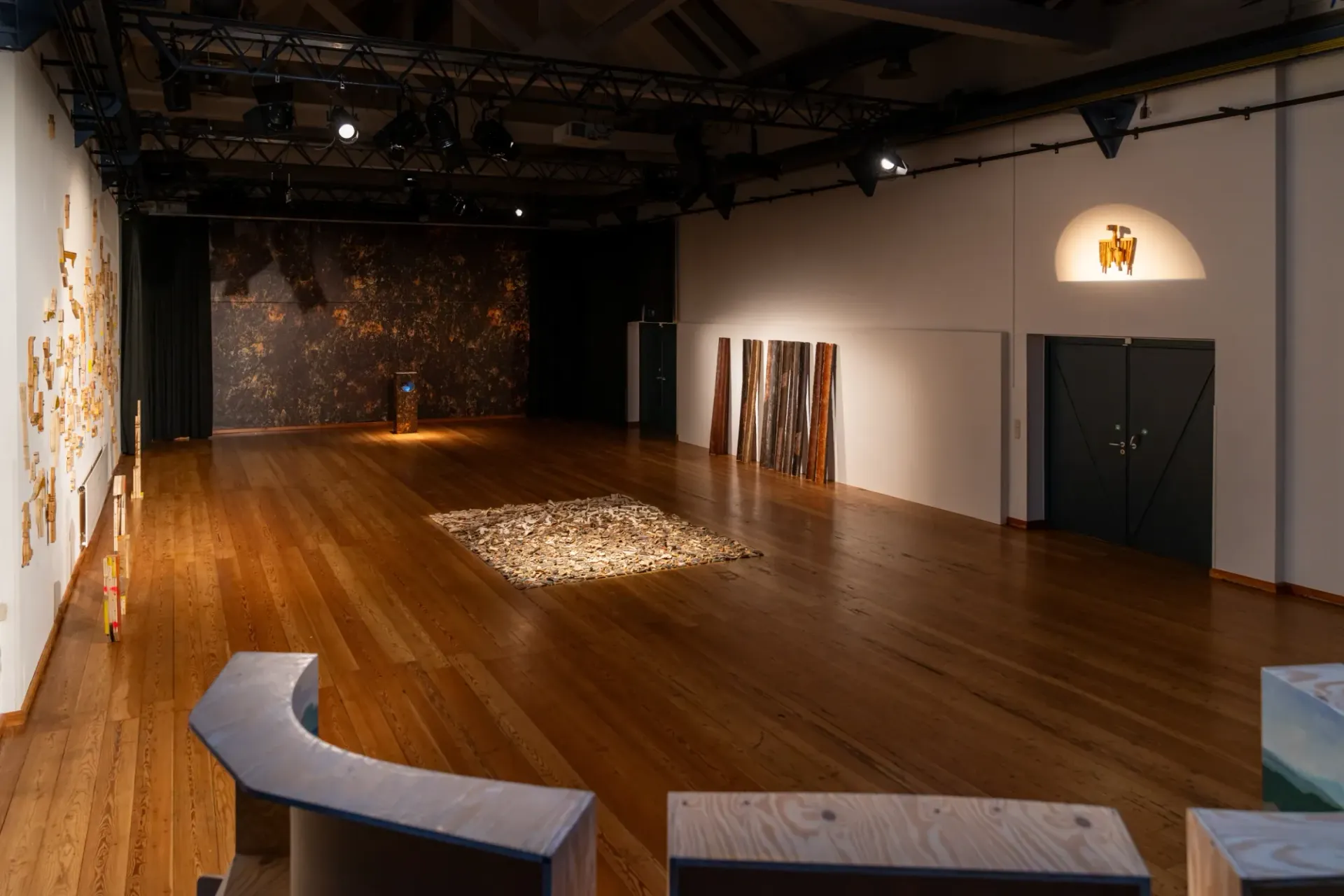
TRANSFER at Kulturforum Laßnitzhaus in Deutschlandsberg
Kulturforum Laßnitzhaus presents TRANSFER, curated by Anja Weisi Michelitsch and Roman Grabner, through August 30, 2026.
Sonnhild Essl, Ernst Koslitsch, Marlene Mautner, Katrin Plavčak, Daniel Wetzelberger, zweintopf
TRANSFER >< Ein künstlerischer Austausch zur Mobilität
Kulturforum Laßnitzhaus
Deutschlandsberg, Austria
–
Thursday to Sunday, 10:00–17:00
Hollenegger Straße 8, 8530 Deutschlandsberg, Austria
Anja Weisi Michelitsch, Roman Grabner
Christian Freydl - Last Image Anja Weisi Michelitsch
Courtesy Kulturforum Laßnitzhaus and TRANSFER, Verein für Kunst und Kultur
A two-venue exhibition shown concurrently across Styria and Carinthia, with a parallel presentation at Schloss Wolfsberg
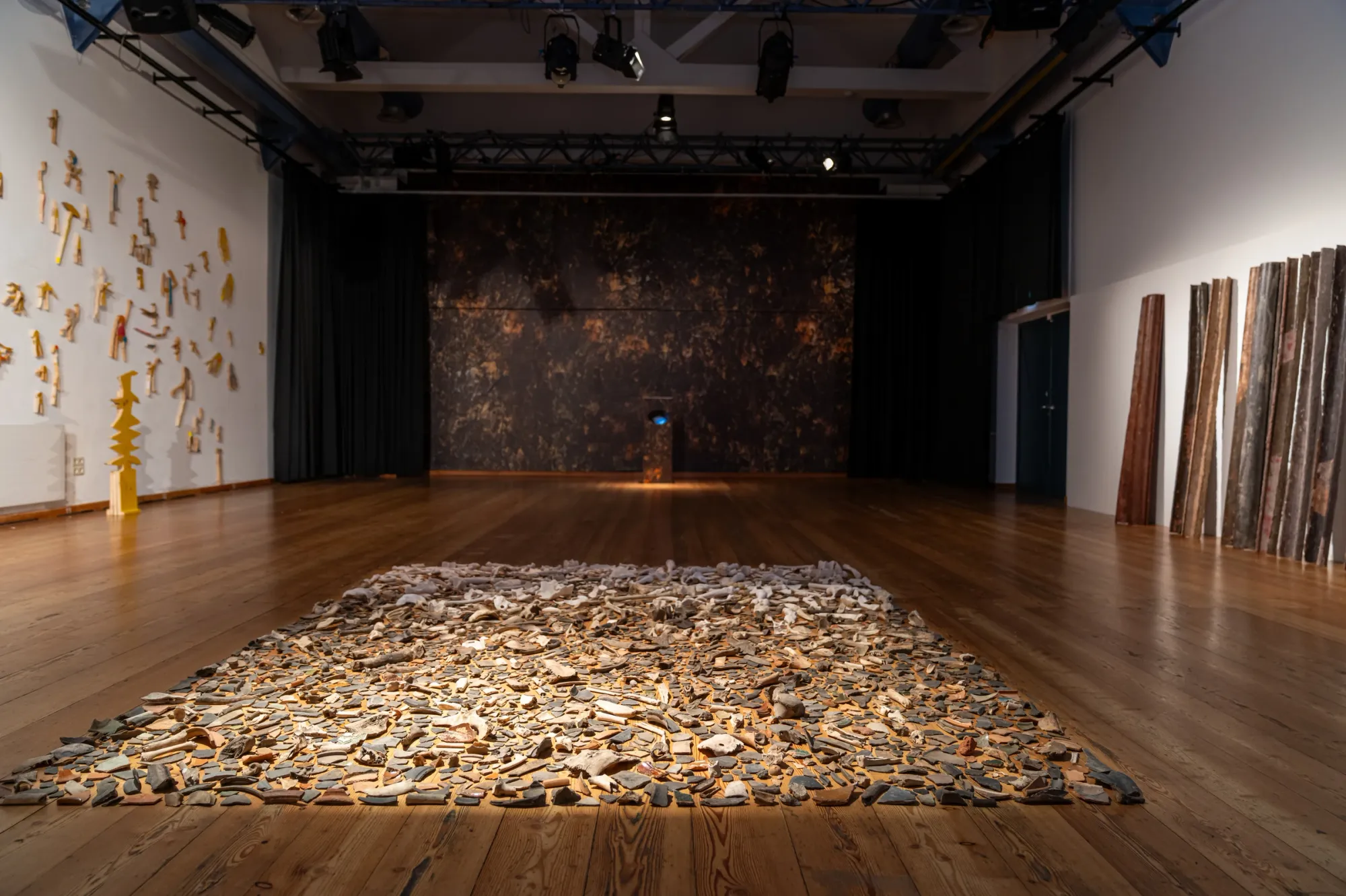
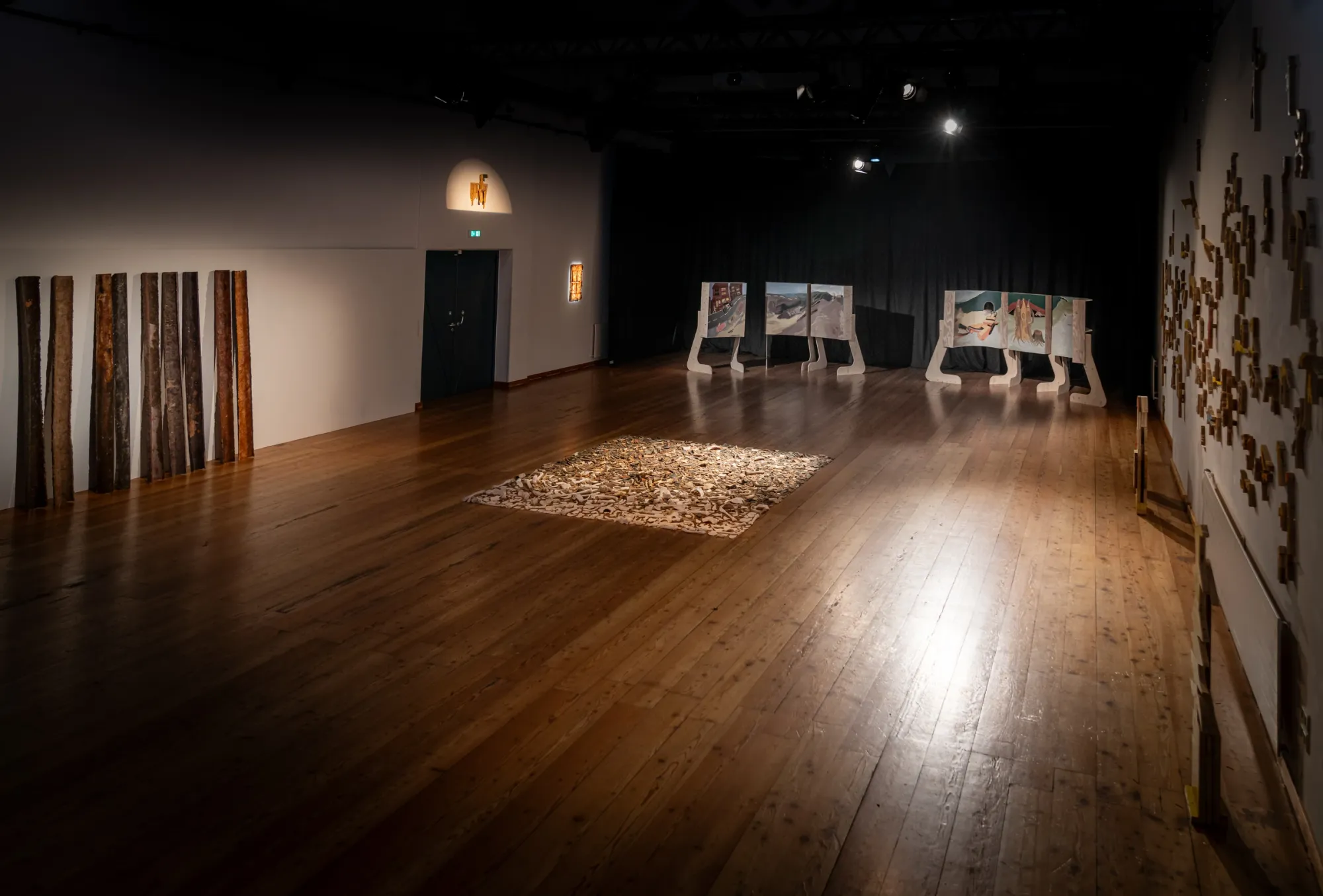
A tunnel through a mountain does not just move people faster from one side to the other. It also opens the ground itself, pulling up whatever has lain there for centuries. What comes up rarely arrives labeled.
A fragment does not need a whole to have come from. Sometimes it is only ever made as a fragment, and that is the point.
The six artists gathered in Deutschlandsberg take that opening as a working method rather than simply a metaphor. They cast, carve and inflate their way through the gap between what a find is and what it is made to mean, and they leave the seams showing.
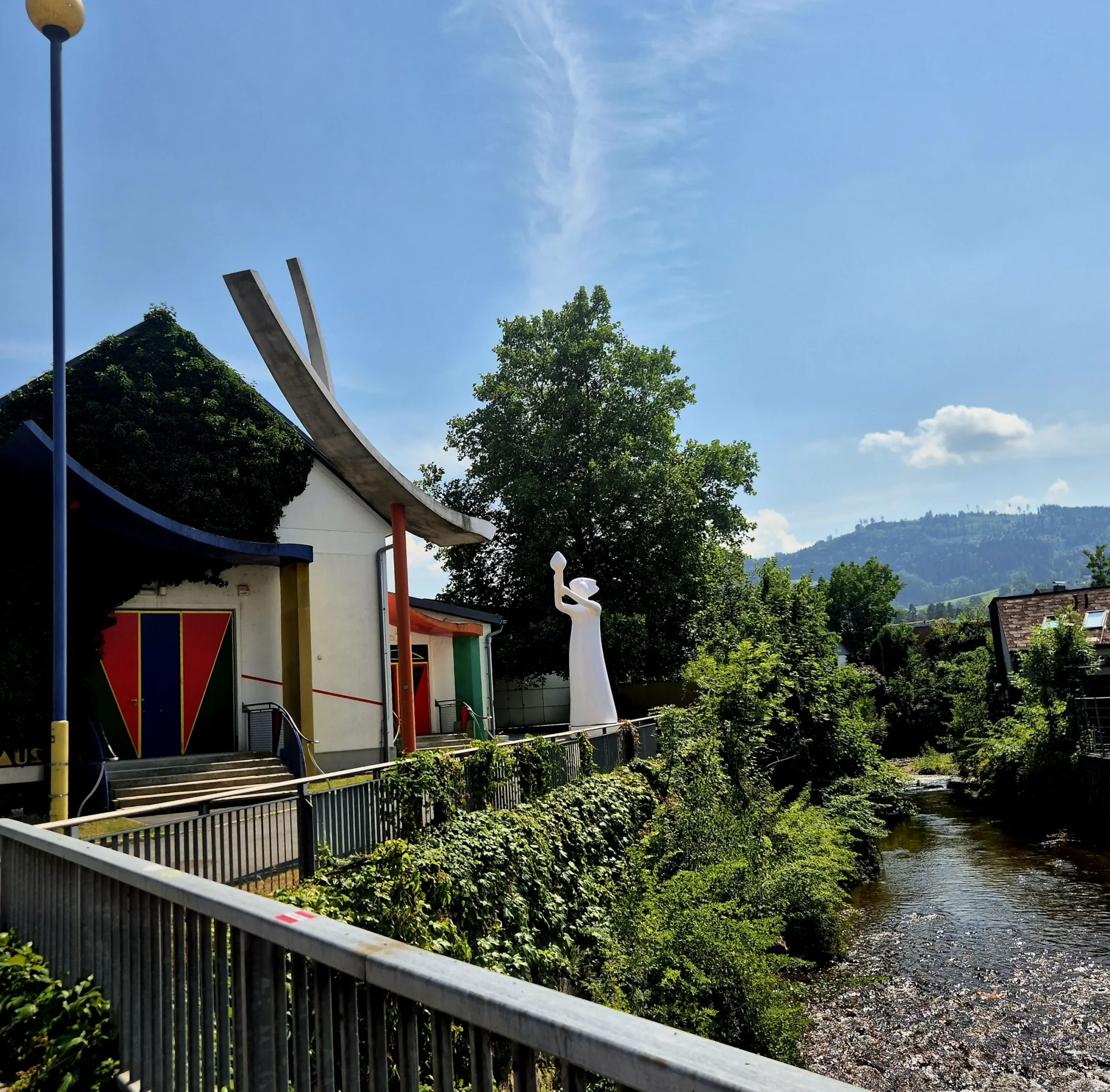
Kulturforum Laßnitzhaus occupies the former Ladlersaal building on the banks of the Laßnitz, which belonged to the adjoining Gasthaus Ladler and was sold separately to the municipality in 1992, and converted into a cultural venue by architect Hans Hoffer, a plainer counterpart to the historic rooms of Schloss Wolfsberg across the regional border in Carinthia, where the same TRANSFER project runs in parallel through the summer with a second group of six: Simon Goritschnig, Katharina Gruzei, Gašper Kunšič, Maria Legat, Payer Gabriel and Hubert Sauper.
Both exhibitions were assembled around the same occasion, the opening of the Koralmbahn, the new rail connection through the Koralm massif that has radically shortened travel between Styria and Carinthia.
In Deutschlandsberg the rooms read closer to their working, riverside past than to a palace's, and the six positions gathered here lean into that plainness rather than against it.
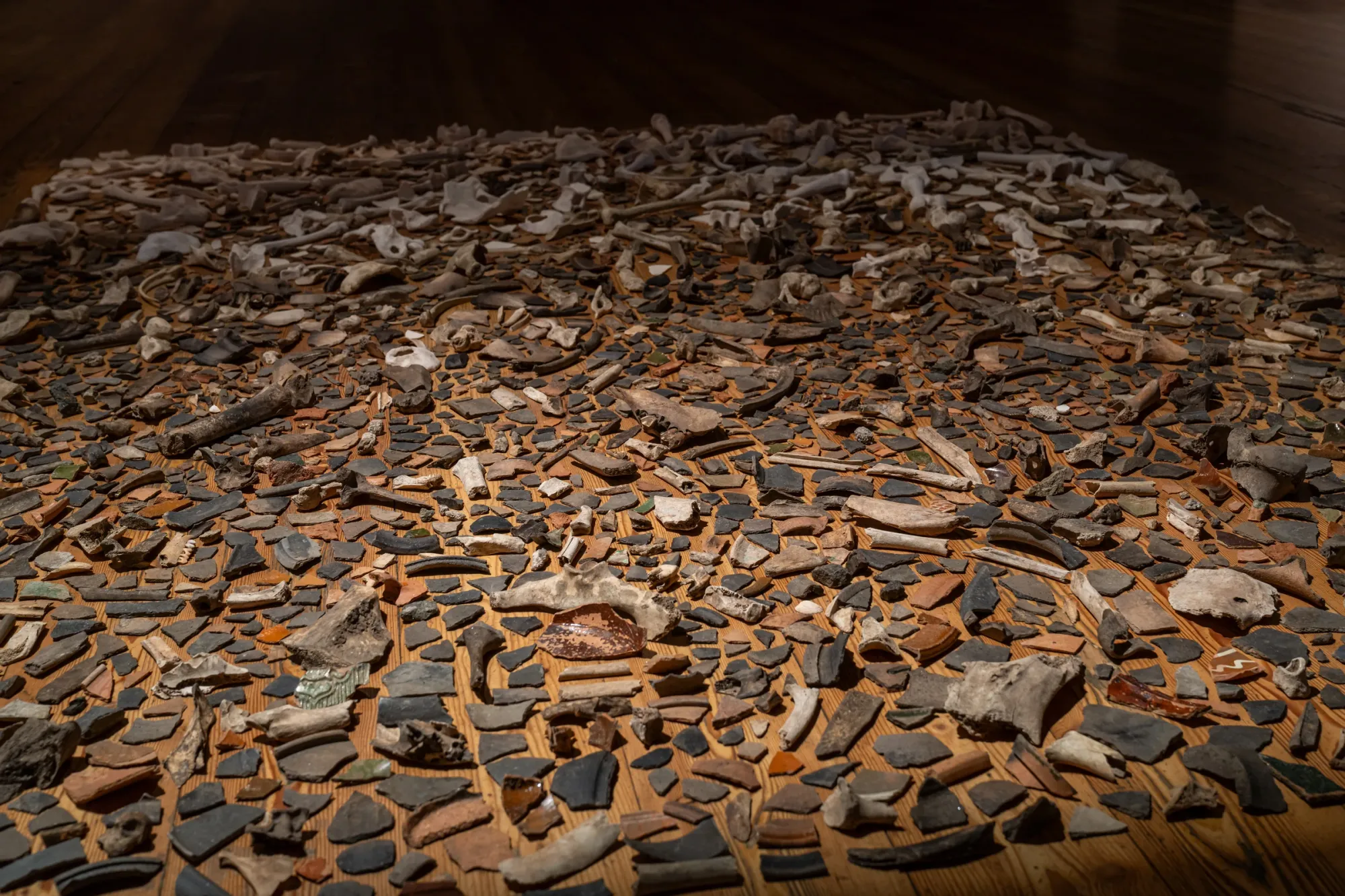
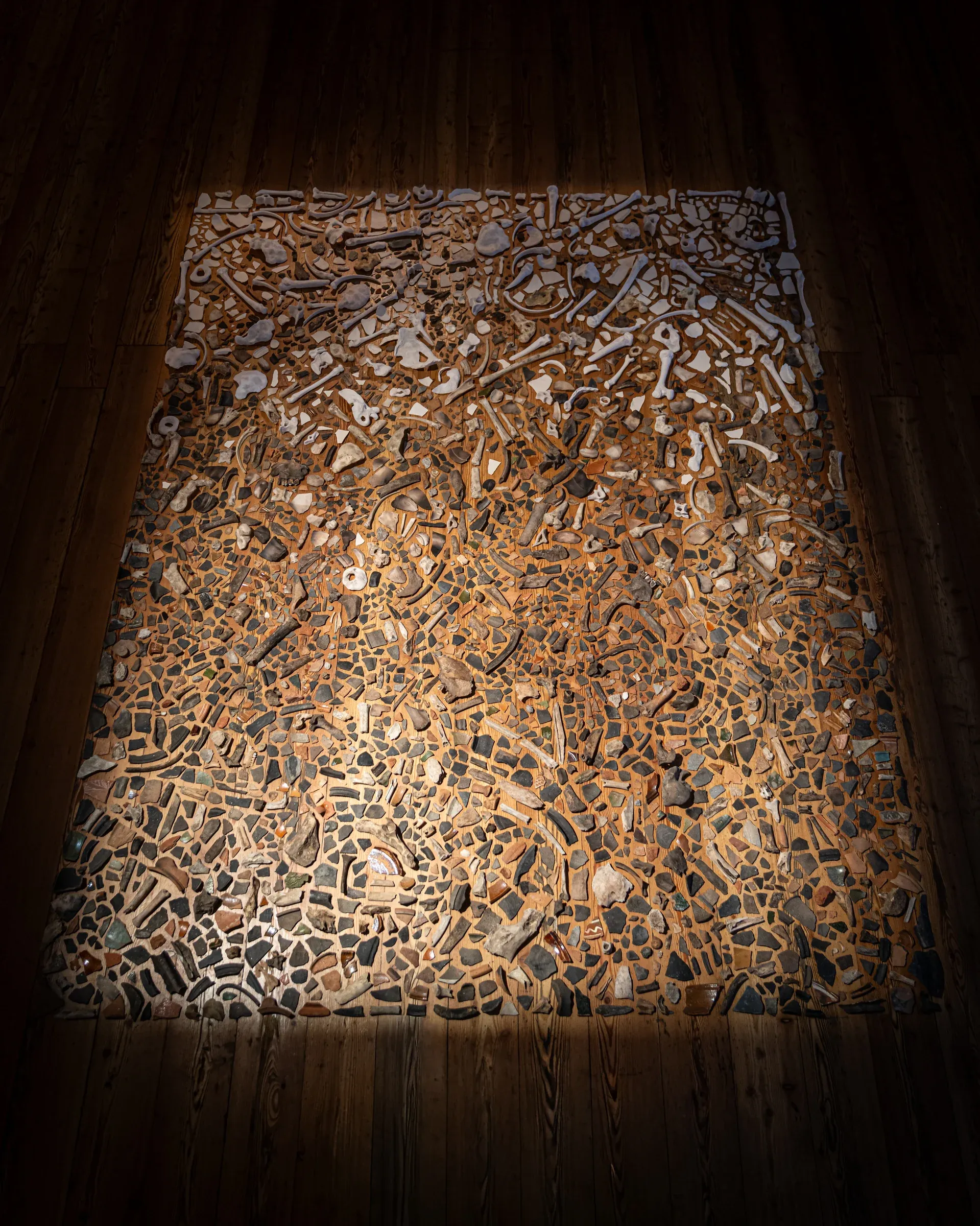
On the floor, Daniel Wetzelberger has laid out Stratum, ceramic shards set beside bone fragments from an actual archaeological dig along the new rail line.
Wetzelberger never fired a complete vessel and broke it. Every piece was shaped as a fragment from the start, arranged the way excavated material gets arranged before anyone knows what it belongs to. Sorted, not resolved.
Sonnhild Essl works from the opposite direction. Essl's paper mâché castings, Rinne No.2 to No.12, replicate the gutters, pipes and rods used on the Koralm construction site, a material cheap enough to still feel disposable.
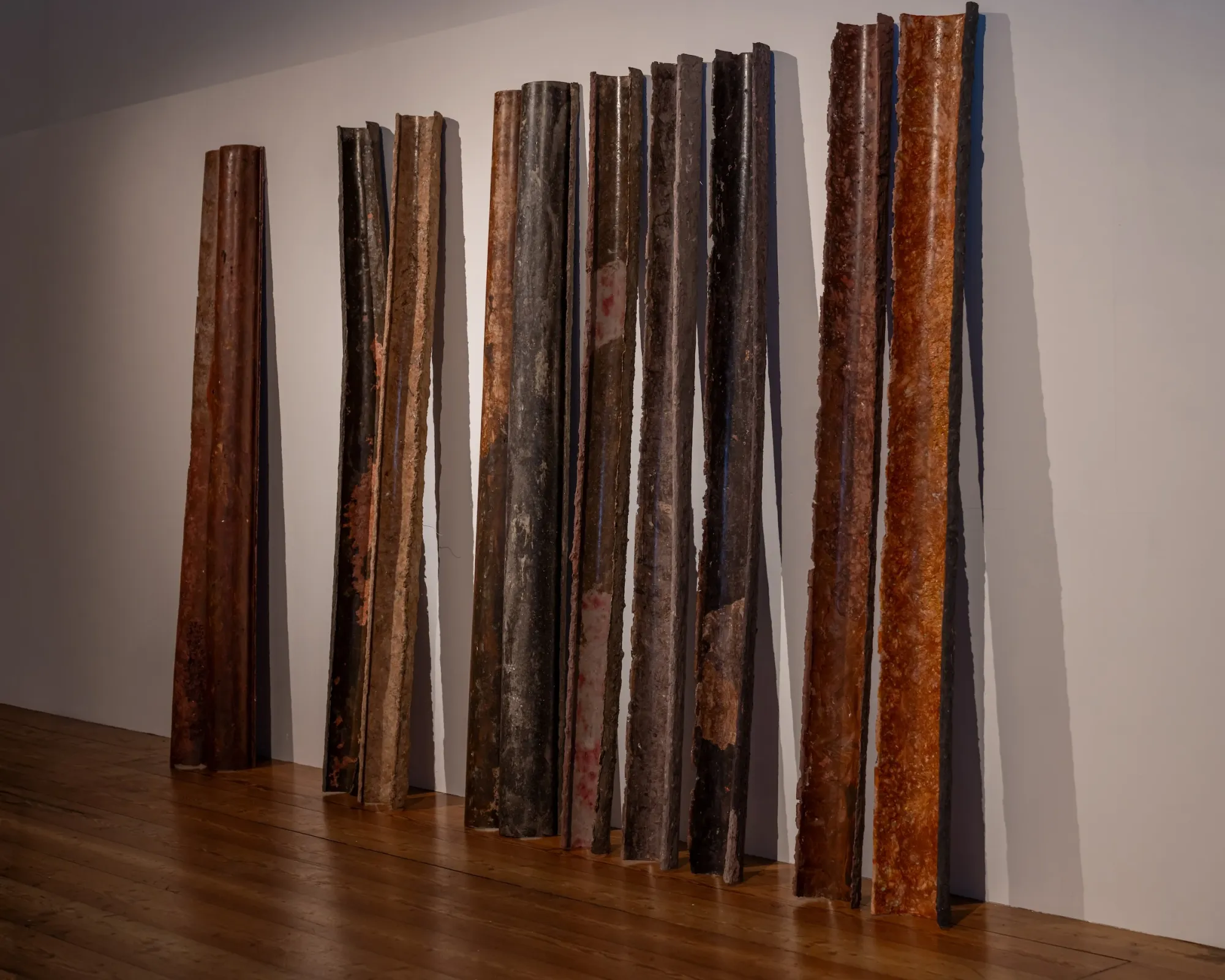
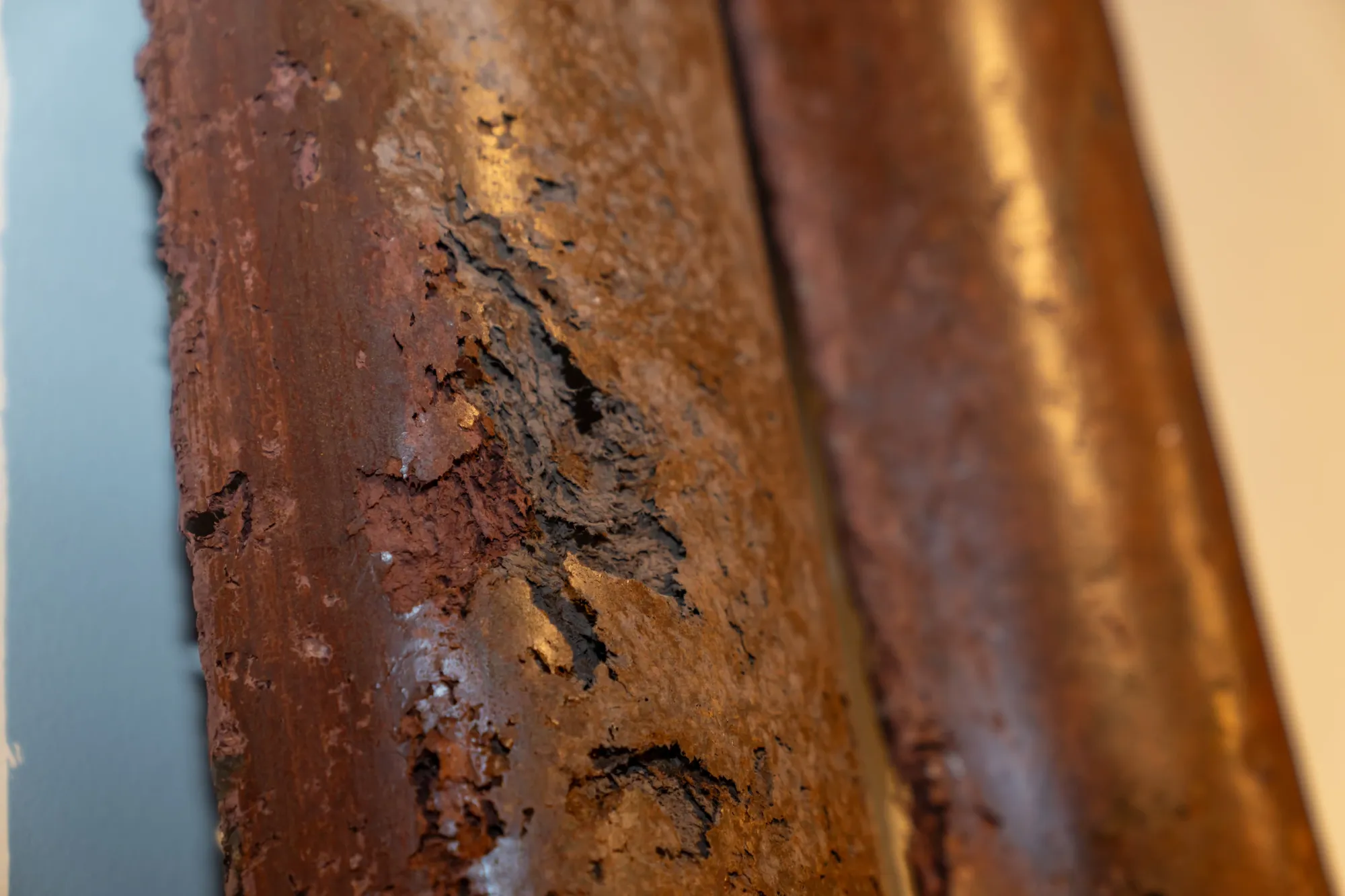
The originals are gone, mined, poured, used up. What remains is a slightly wrong copy that carries their shape without their weight.
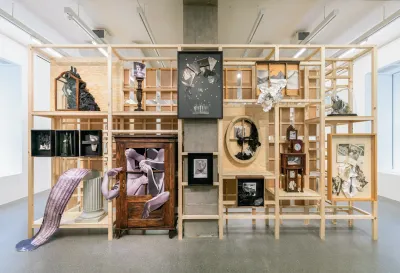
Ernst Koslitsch covers the main wall with The first 5000 years / Version 4, a piece that reads at a distance like a paleolithic cave painting.
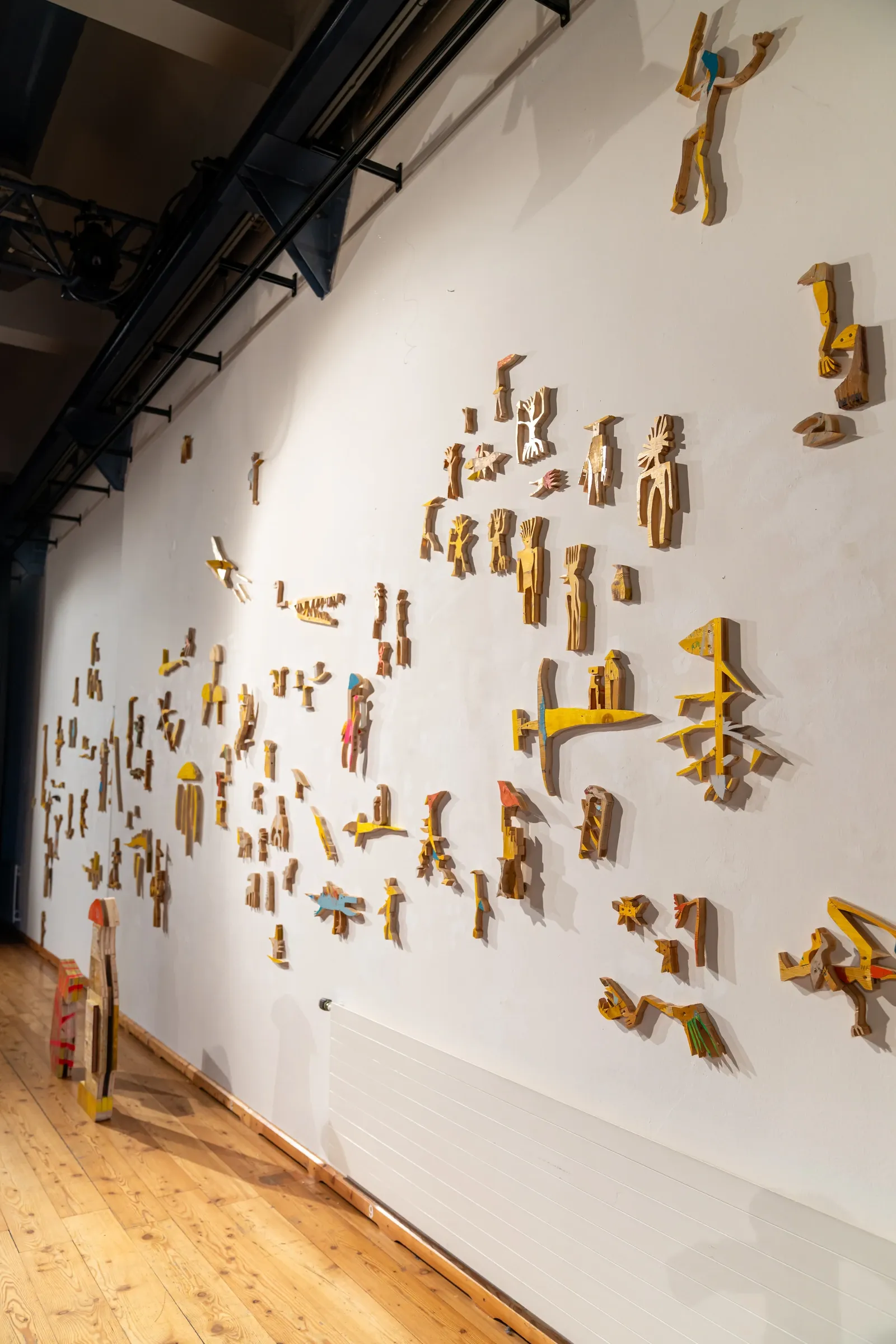
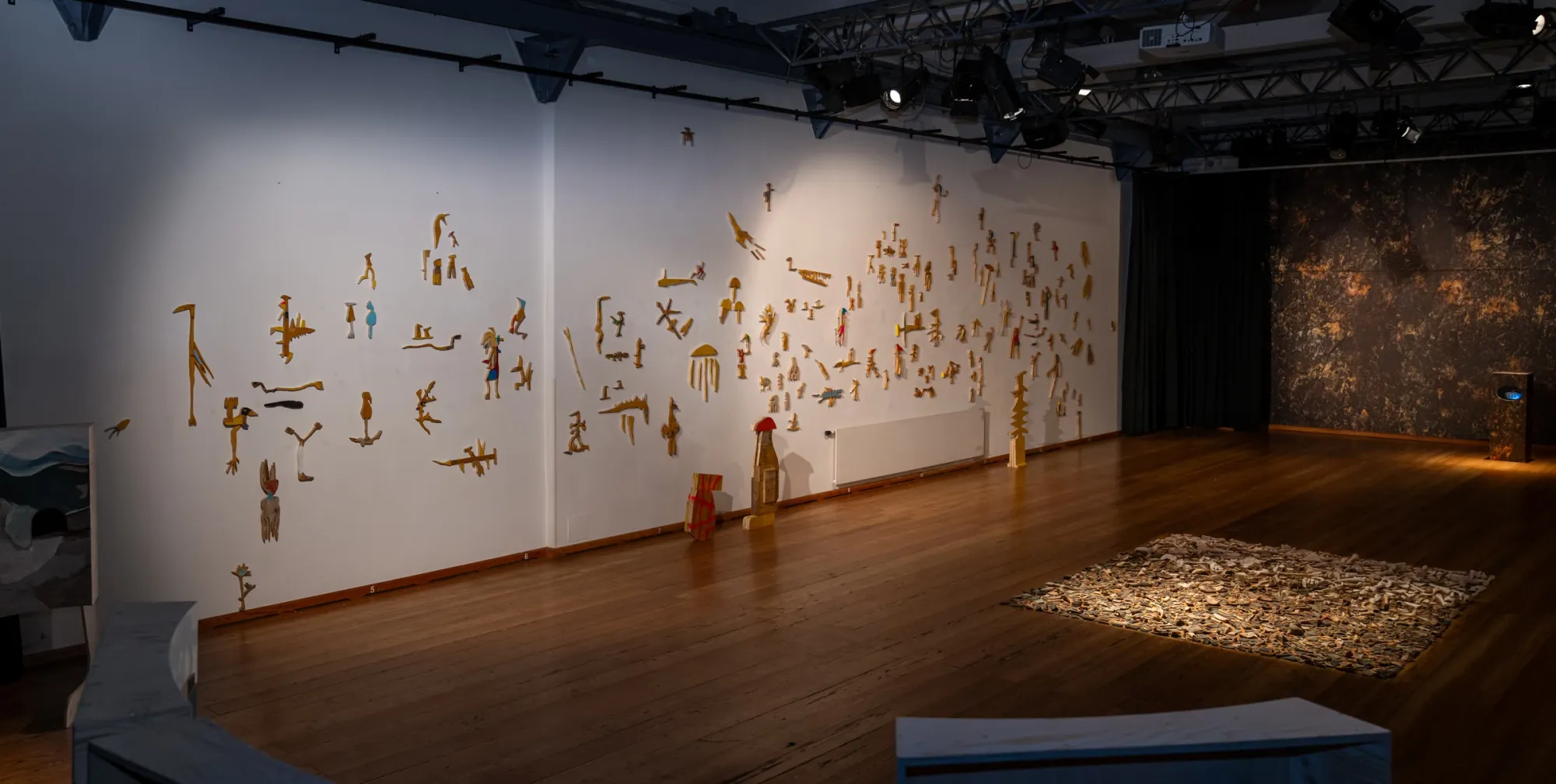
Up close the hunters share space with jellyfish, rockets and architectural fragments that refuse to sit in any one era, part of a method Koslitsch calls speculative archaeology: imagining what a future excavation might make of the present.
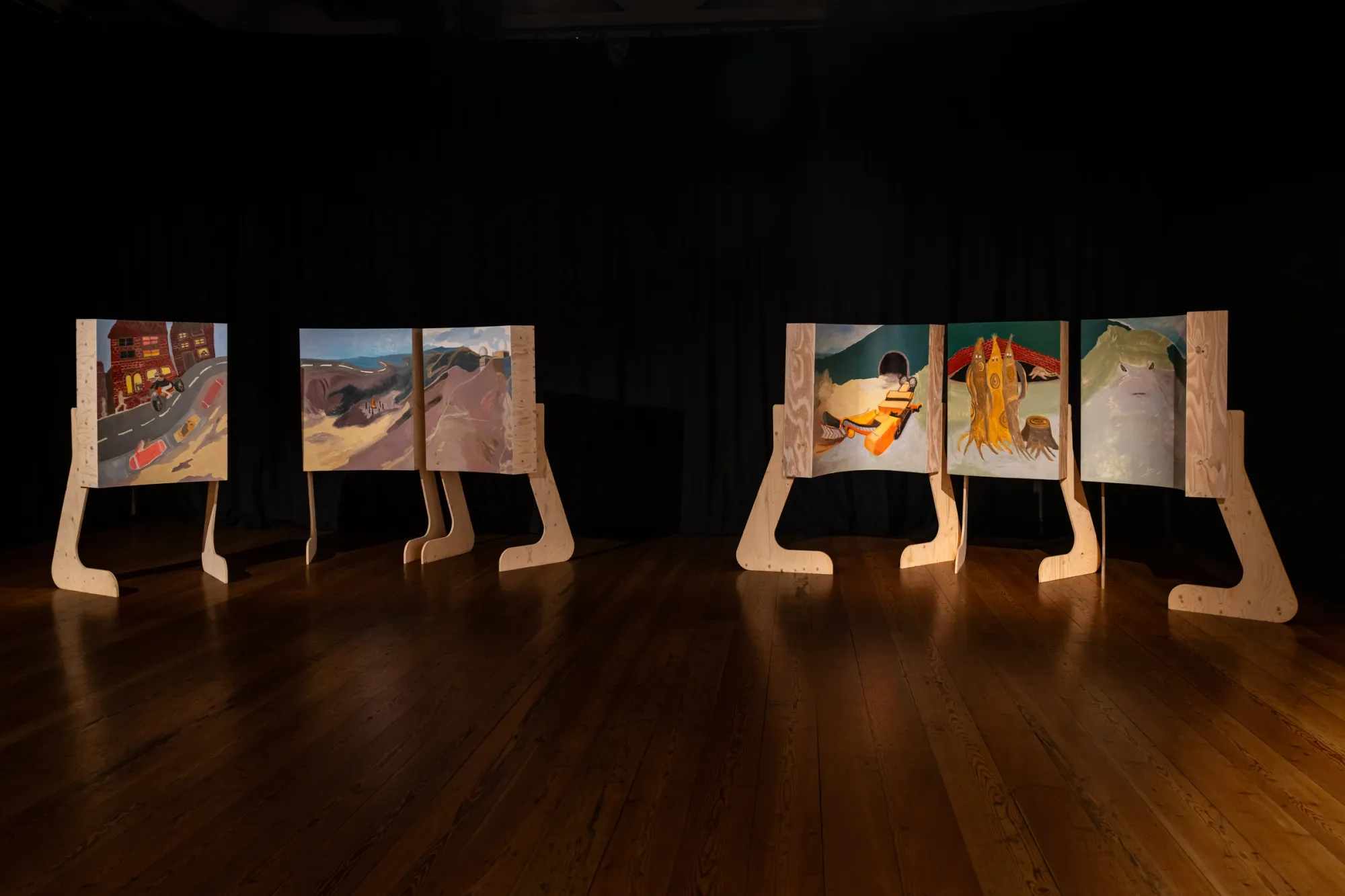
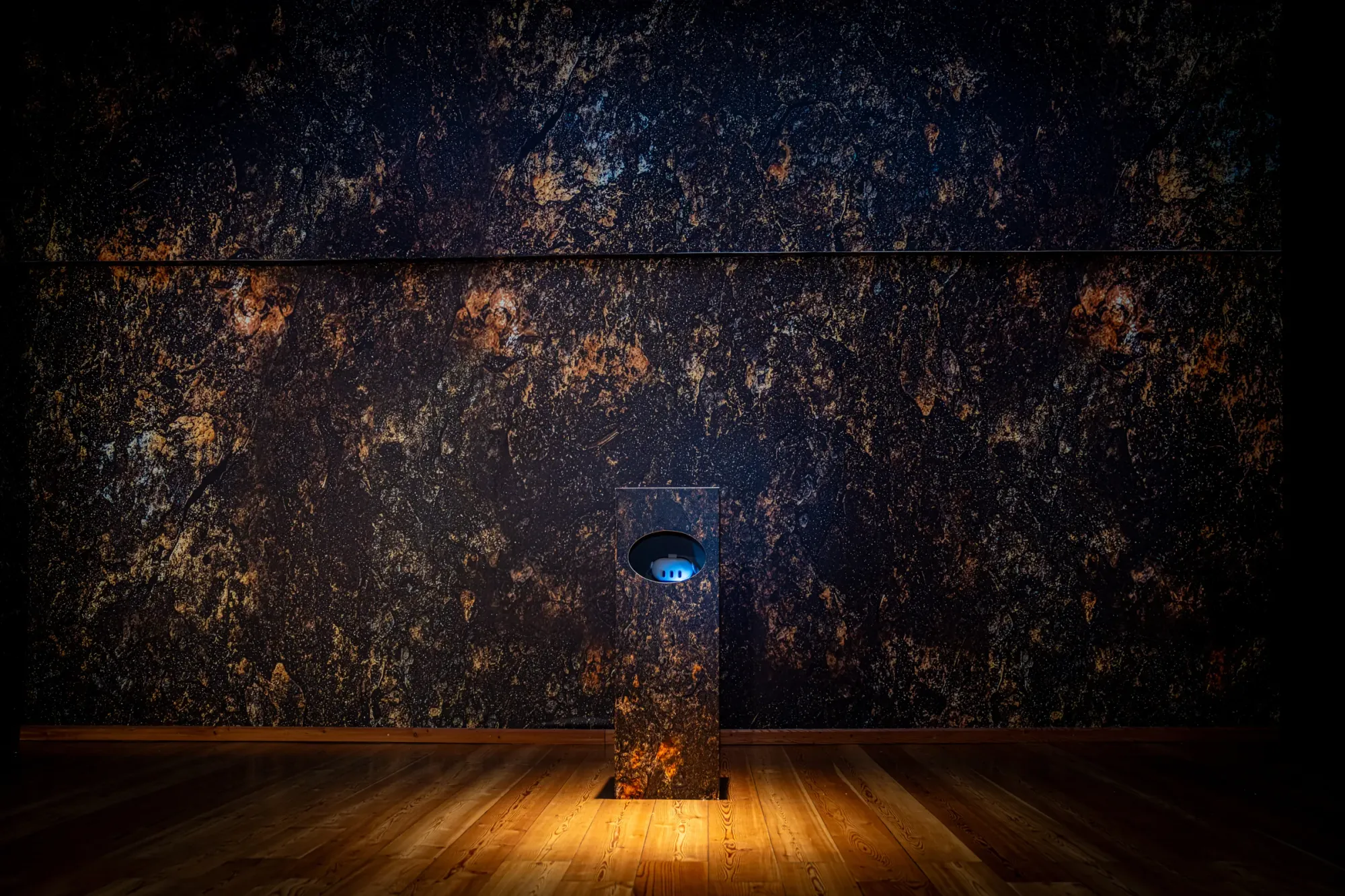
Katrin Plavčak's hinged wooden tableaus, arranged as two standing screens, installed at eye height like sculpture rather than painting, and Marlene Mautner's VR piece, which sends visitors into a tunnel system modeled on two Kafka stories, work the same territory from different directions.
The timing is not incidental. The Koralm Tunnel, which surfaces through all six positions, entered regular rail service with the Koralmbahn in December 2025. It was bored rather than blasted, and the cutting head of the machine that dug it now stands on public display at Bahnhof Weststeiermark, a piece of construction hardware turned into an exhibit of its own.
What the artists keep returning to is what that compression costs, not economically but perceptually: a train running through ten minutes of total darkness barely registers anymore, since a phone screen has already replaced the window.
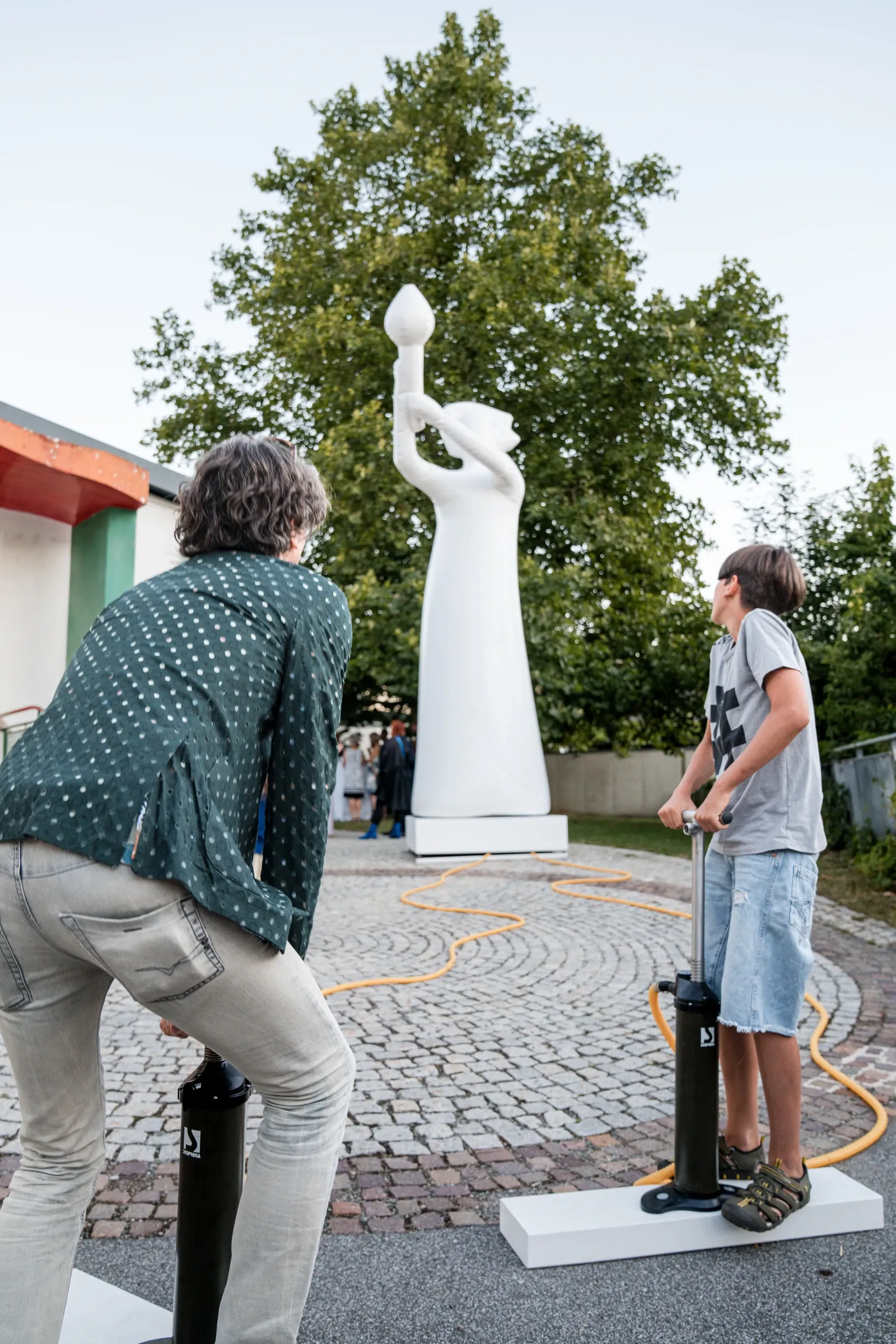
Against that backdrop, zweintopf's inflatable Goddess of Democracy, stationed at both the entrance and the exit of the show, reads less like decoration than like a warning built from the thinnest possible material.
The statue needs a pump running to stay upright, and the pump needs someone willing to keep it running. That is not a flaw in the piece, it is the piece.
 Admin / ChrKra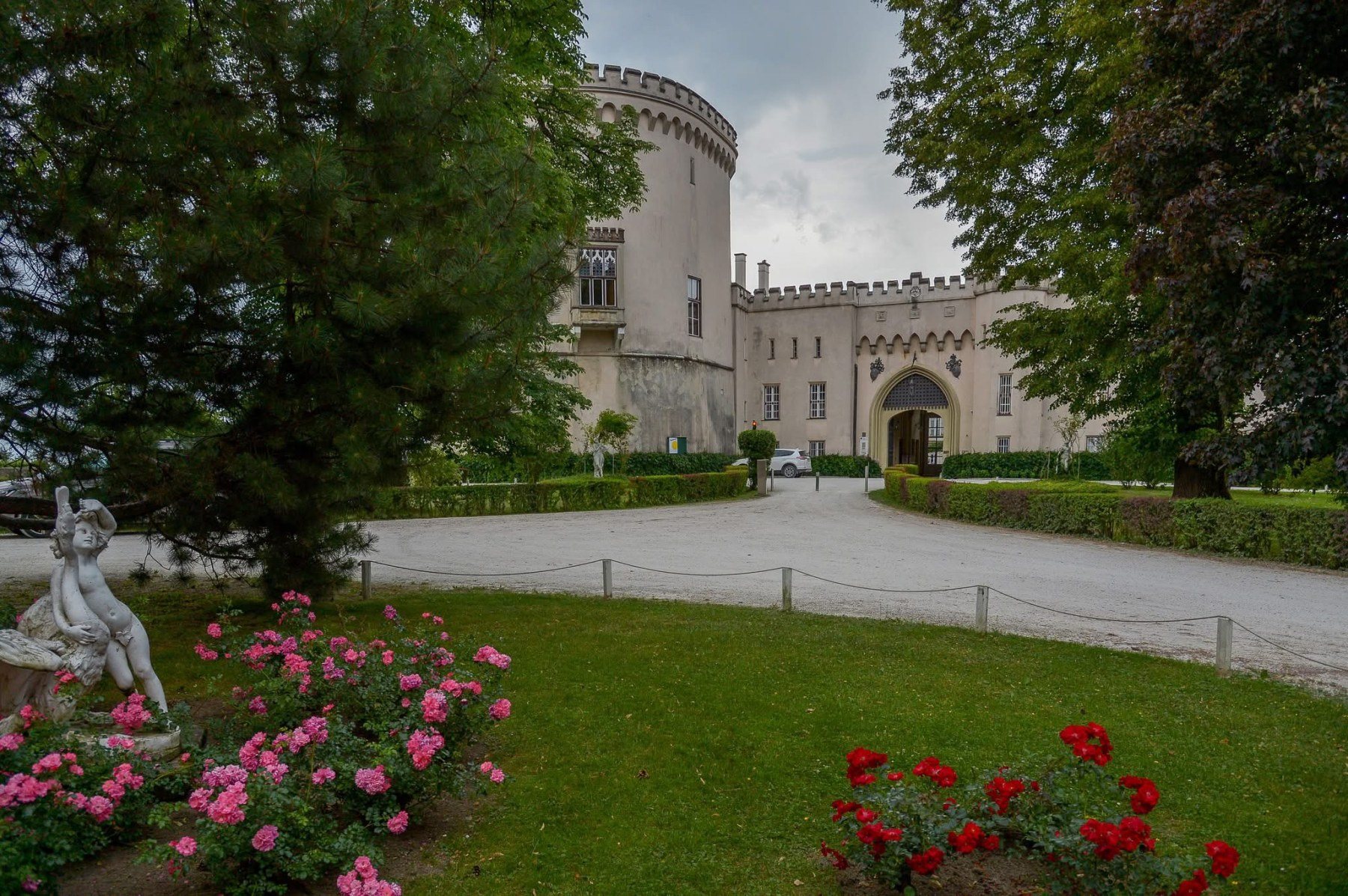
Transfer Duo Exhibiton Wolfsberg Deutschlandsberg
Nothing else in the six rooms states its terms as plainly: what survives here is not what gets buried and found again, but what somebody keeps deciding to hold up.
Marlene Mautner Instagram
zweintopf on Instagram
Ernst Koslitsch on Instagram
Sonnhild Essl Instagram
Katrin Plavčak Instagram
Daniel Wetzelberger on Instagram
Anja Weisi Michelitsch on Instagram
Born 1970 in Gütersloh, raised in Zeltweg, Styria, lives in Vienna. Since 2022 professor of painting and drawing at the Stuttgart State Academy of Fine Arts. Exhibited at Neue Galerie Graz and mumok Vienna.
Born 1977 in Wagna, Styria, lives in Vienna. Studied photography and sculpture in Vienna. Koslitsch Yellow Universe series applies speculative archaeology to memory and perception.
Born 1981 in Bad Radkersburg, works in Graz, Deutsch Goritz and Faenza. Studied ceramics and sculptural concepts at Linz Art University.
Born 1989 in Baiersbronn, Germany, raised in Neuberg an der Mürz. Studied ceramics and site-specific art in Linz and Vienna. Shortlisted for the 2023 Faenza Ceramics Prize.
Born 1989 in Bruck an der Mur, lives in Vienna. Studied applied photography and experimental game cultures at the University of Applied Arts Vienna.
Eva Pichler and Gerhard Pichler founded the duo in Graz in 2006. They work with installations and unannounced interventions in public space.
About Catapult Contemporary - Art Platform Submission
This is a exhibition review published by Catapult — an independent editorial platform for contemporary art, based in Vienna. We publish exhibition reviews, artist features, interviews, and critical context, with a focus on emerging and mid-career practices from Europe and beyond.
catapult.art
Want to be featured? Submit your work →