Eva Chenyao He's Bodies Comply Before Anyone Asks Them To

COLLECTA Presents Procrustean by Eva Chenyao He in Shanghai
COLLECTA presents Procrustean, on view through September 13, 2026.
Eva Chenyao He
Procrustean
COLLECTA
Shanghai, China
–
No. 77 Tai'an Road, West Building, 4th Floor, Changning District, Shanghai
A body that fits a bed built for someone else has already lost an argument it never got to have. The bed does not ask permission. It measures, and whatever refuses to match its length gets shortened or stretched until it does.
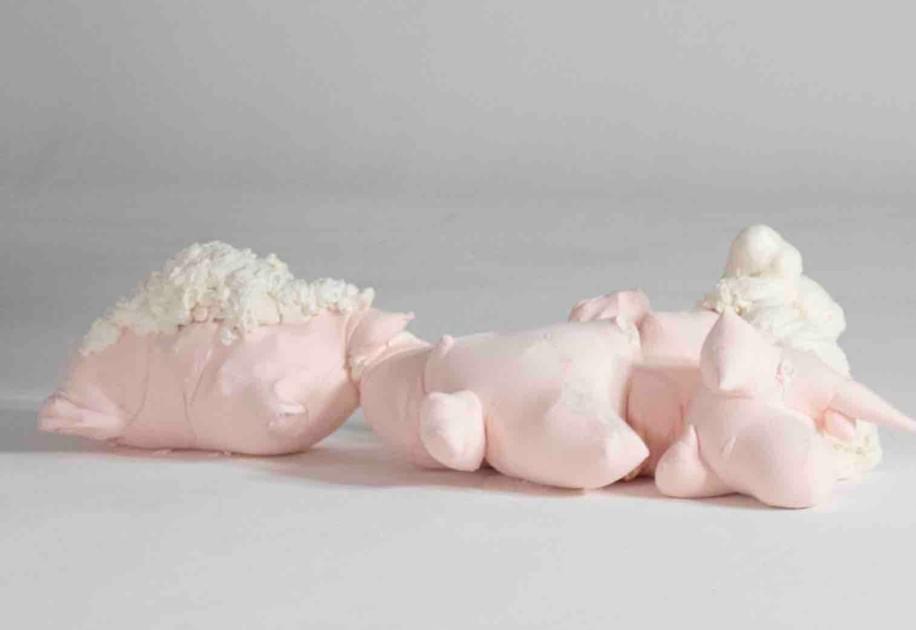
Most of the correcting happens quietly now, dressed as a chart, a threshold, a percentile, something with the calm authority of a number.
Nobody has to hold a person down once the bed has convinced them it was built to their exact measurements.

Eva Chenyao He - Web
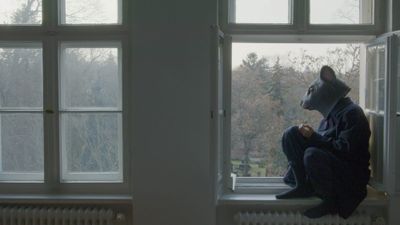
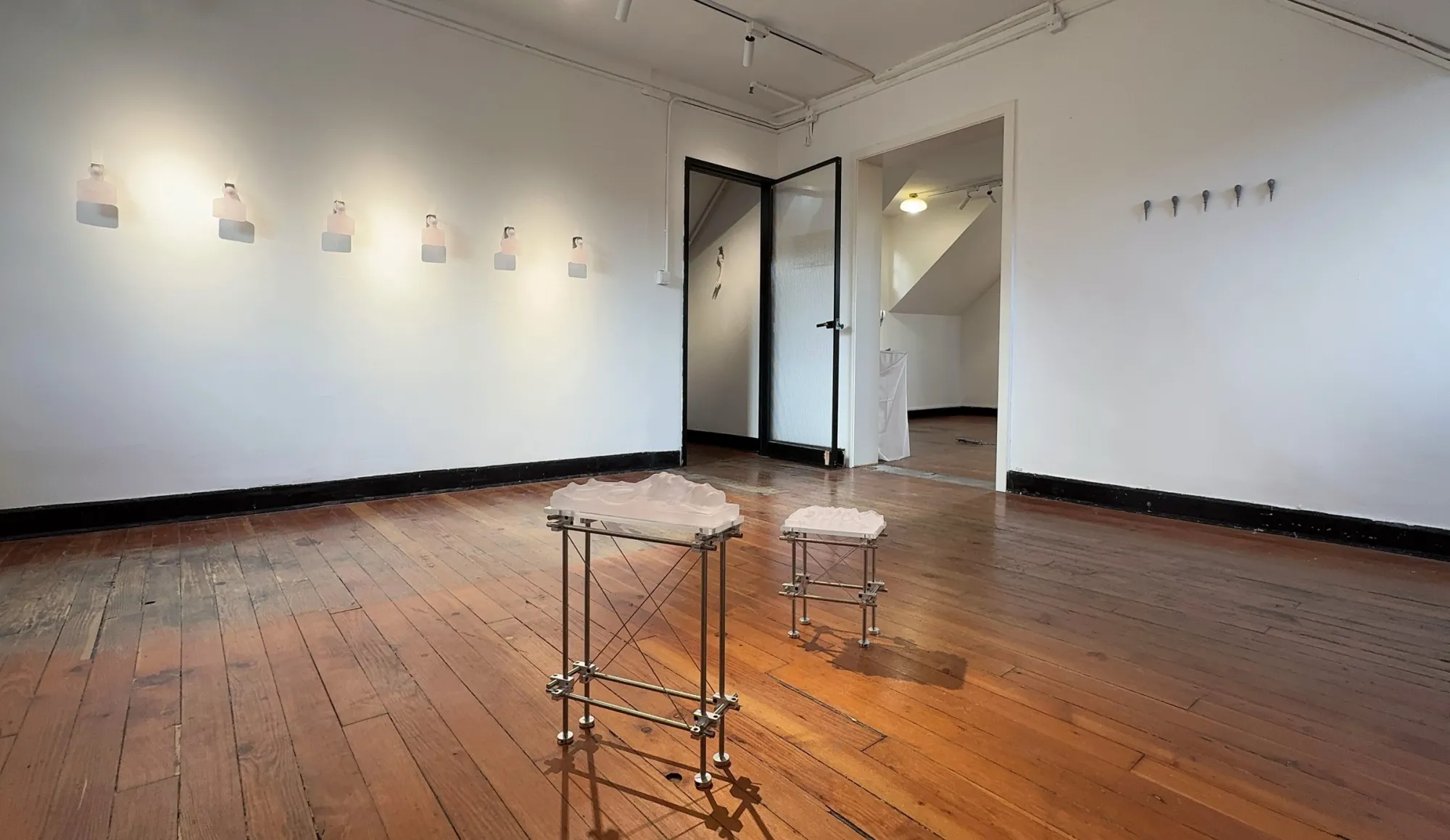
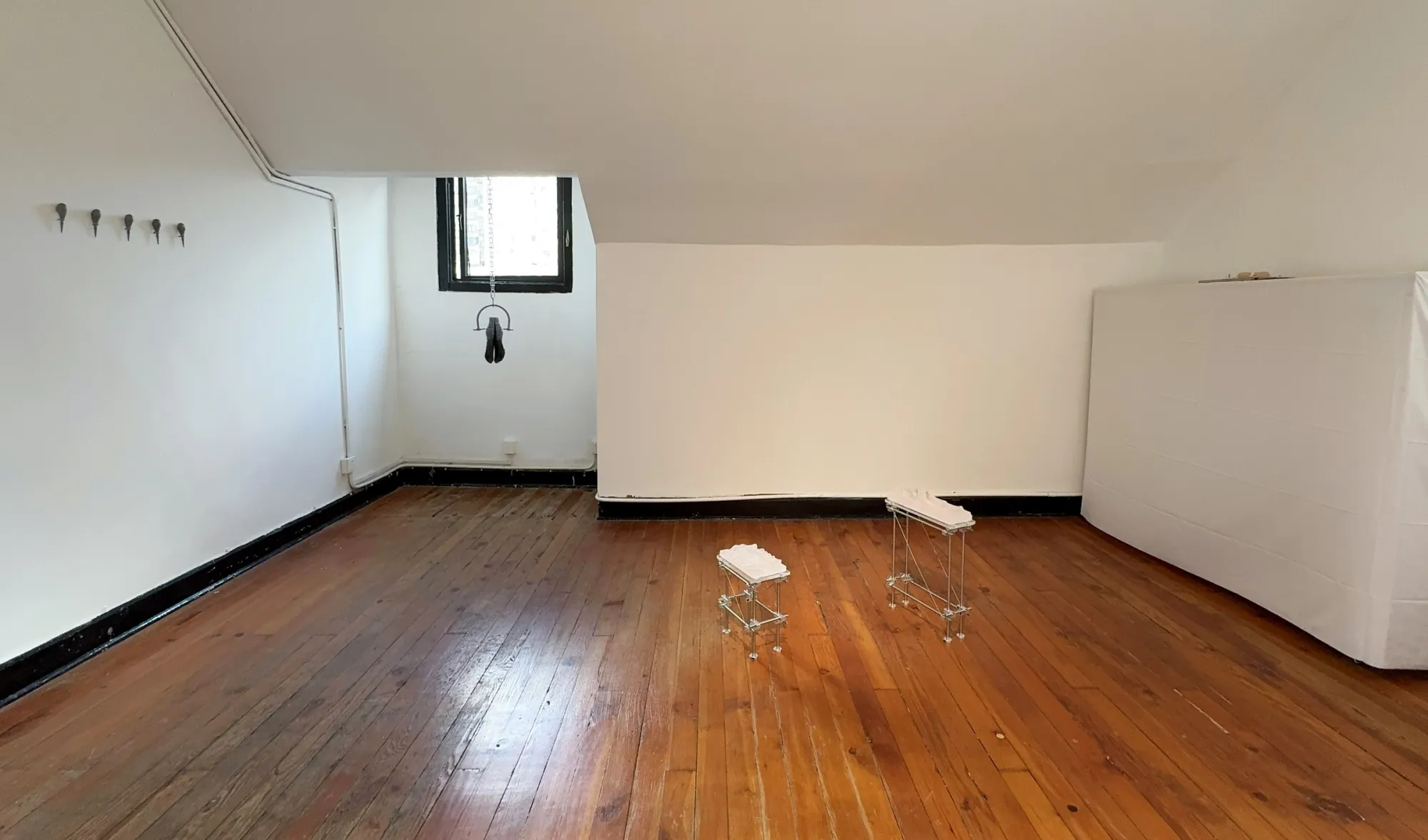
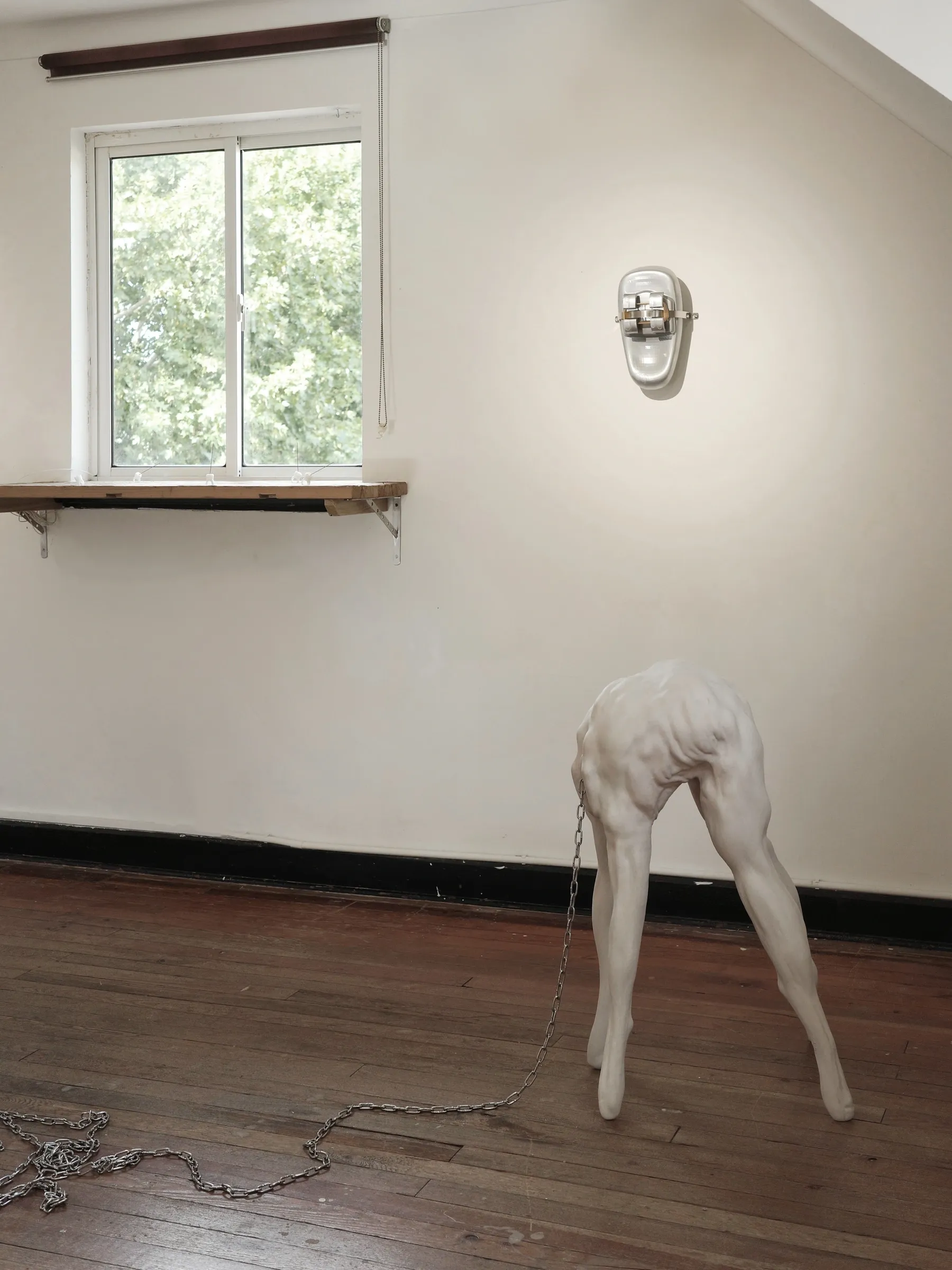
COLLECTA's Shanghai space sits under a sloped attic roof rather than the neutral cube most exhibitions default to. The ceiling drops low enough that visitors have to duck, the floorboards are worn soft with age, and a window with peeling black frames looks onto trees four floors below.
The instruments in this room do not look like weapons. They look like the objects that measured you before you knew you were being measured.
He installs the show inside this domestic irregularity, and moving through it means bending, adjusting the body to proportions never built for gallery viewing, before a single sculpture gets read.
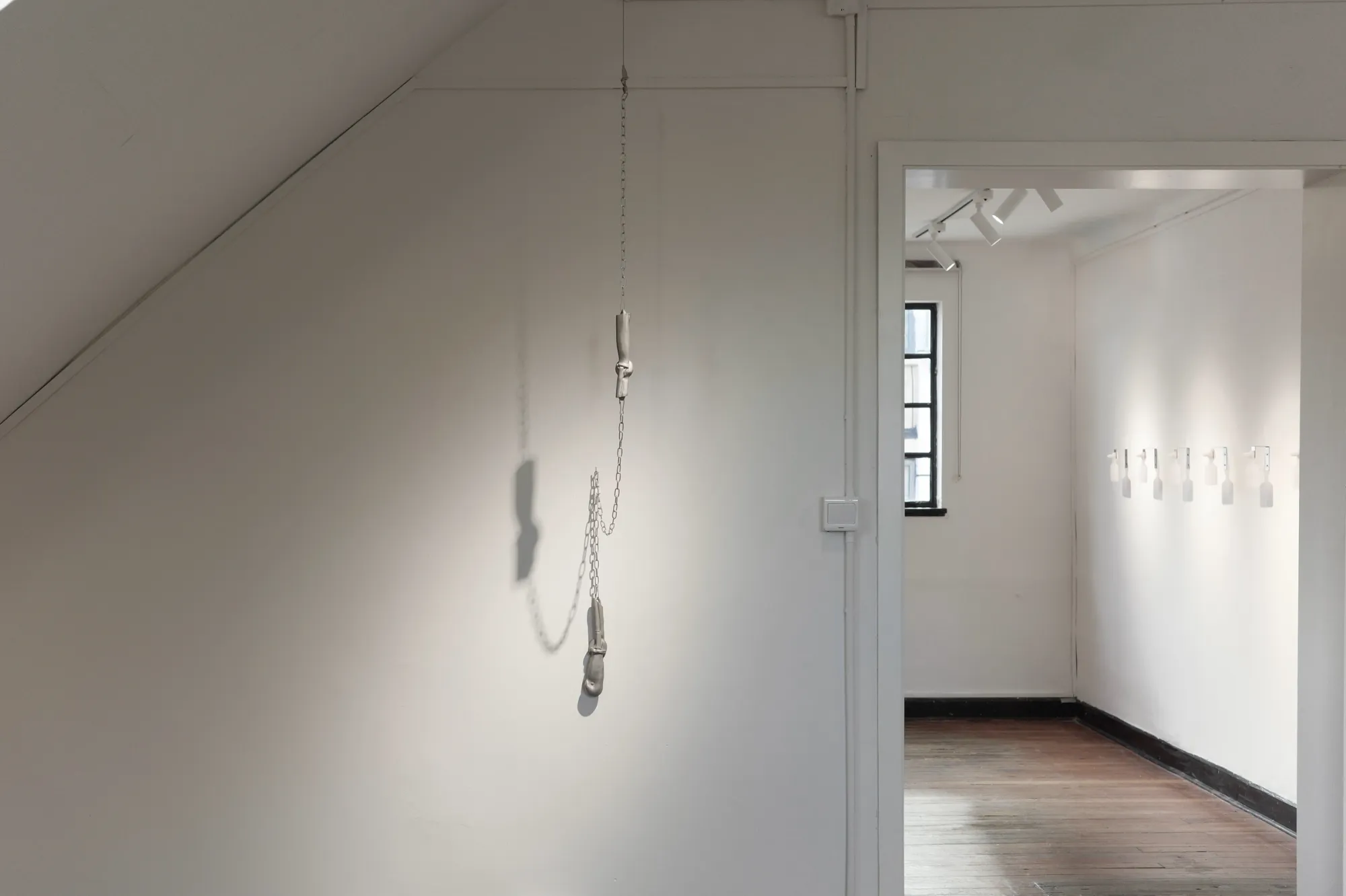
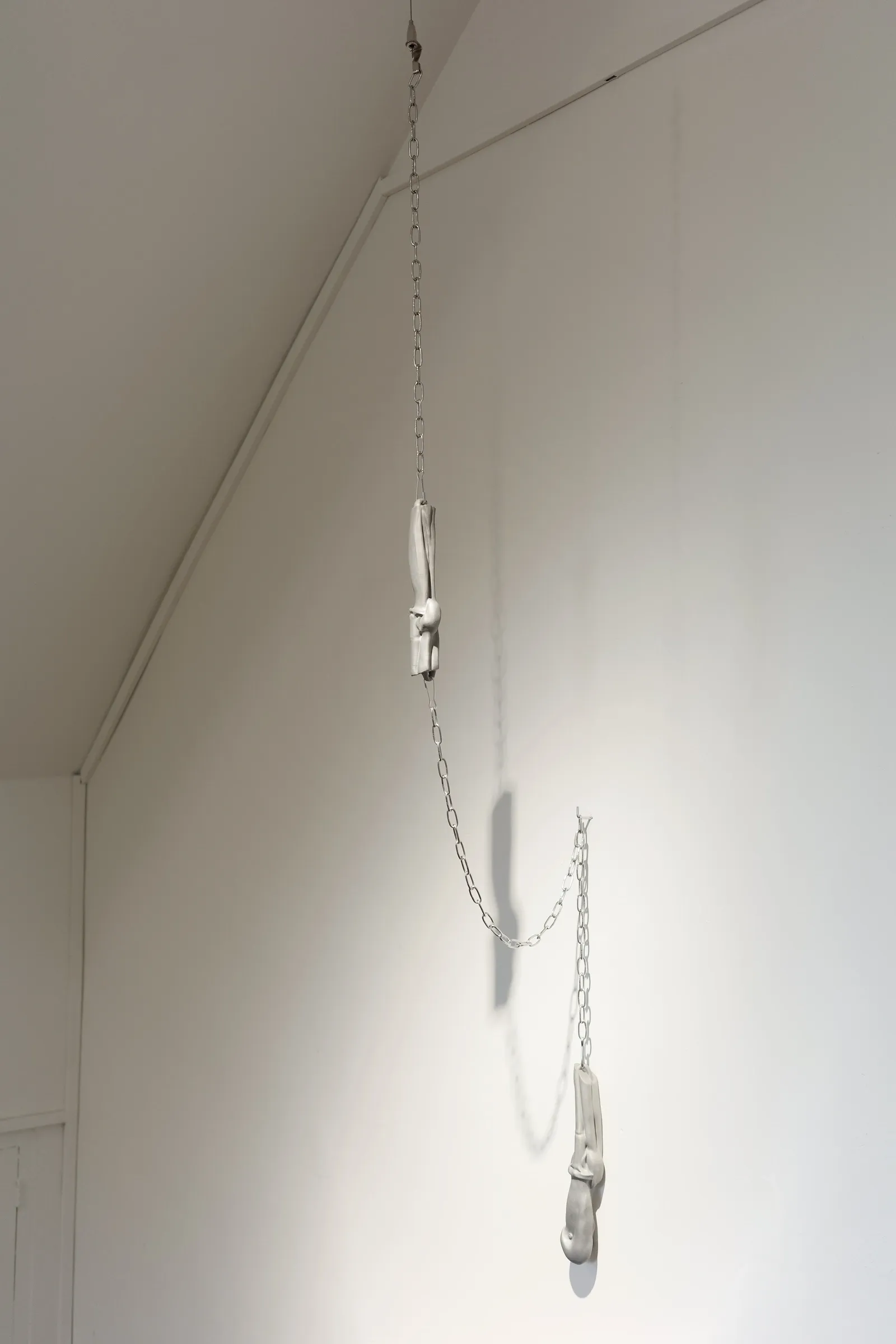
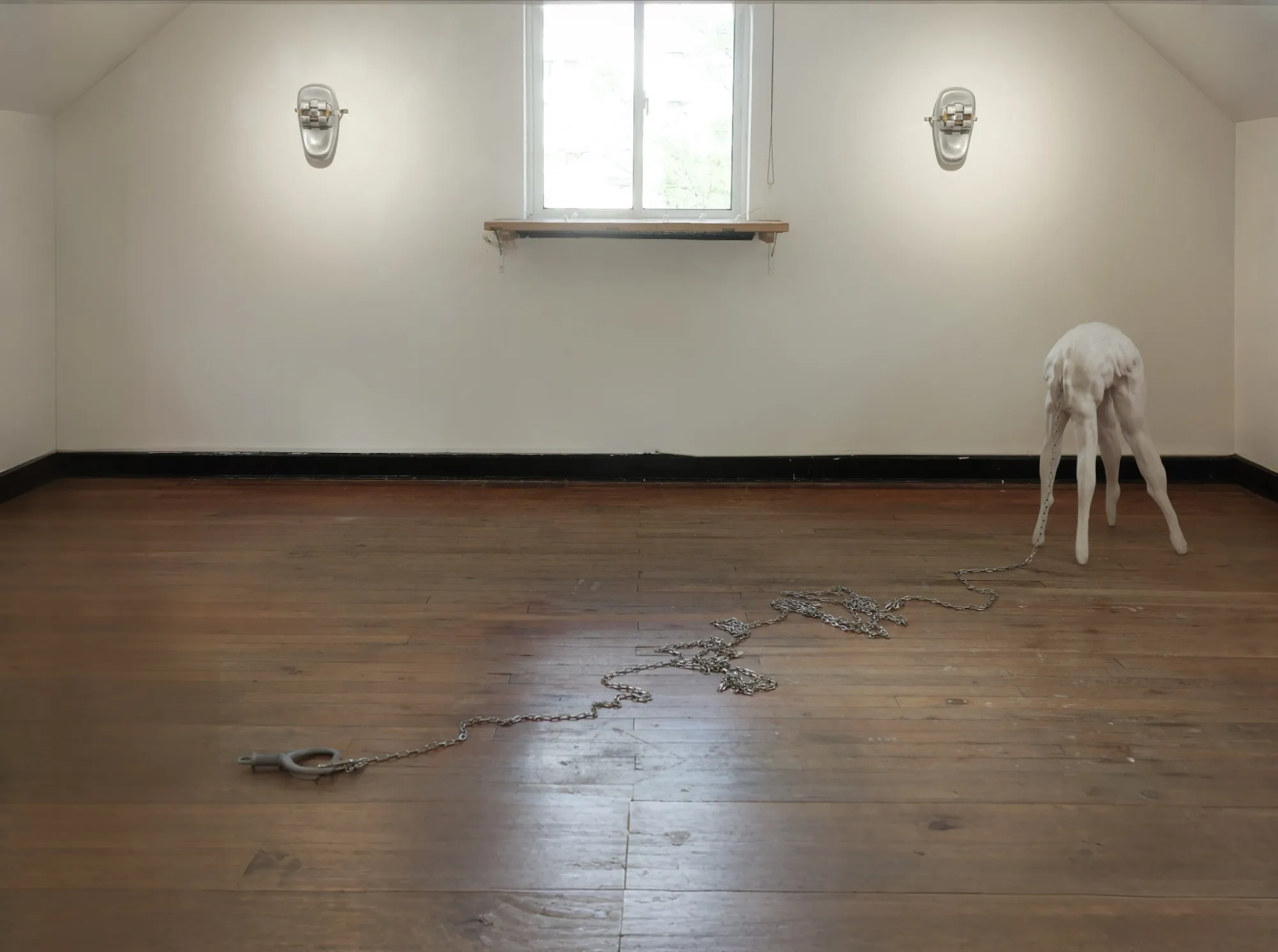
"It took over my gravity" reduces a body to its hindquarters, two pale legs and a rounded back cast in 3D-printed resin, walking away from the room on a chain that unspools across the floor to a bolt fixed in the wall. The chain runs long enough to suggest slack, almost freedom, except it ends in hardware meant to hold something in place. What remains keeps walking, tethered, toward whatever the anchor decides is far enough.
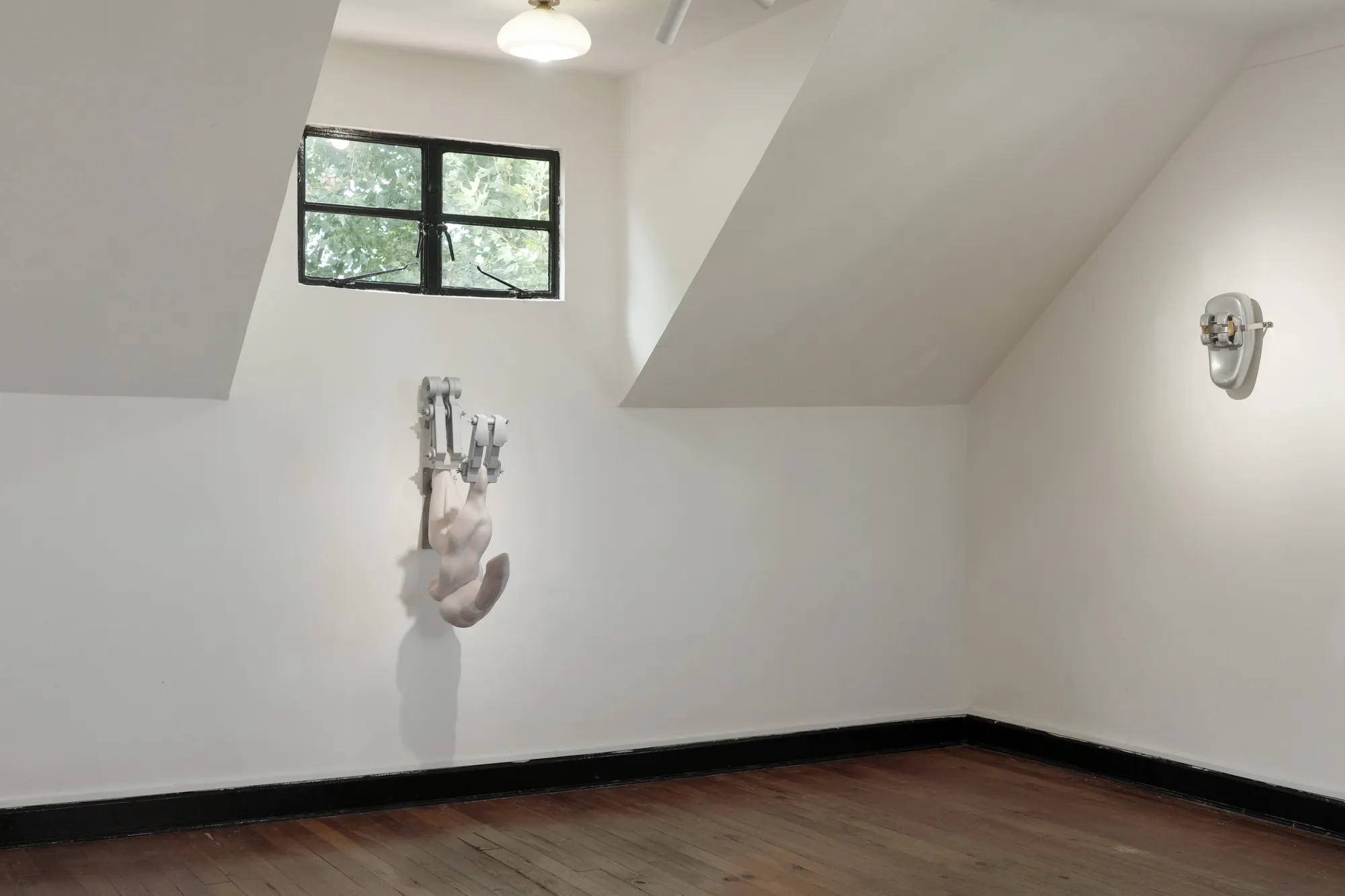
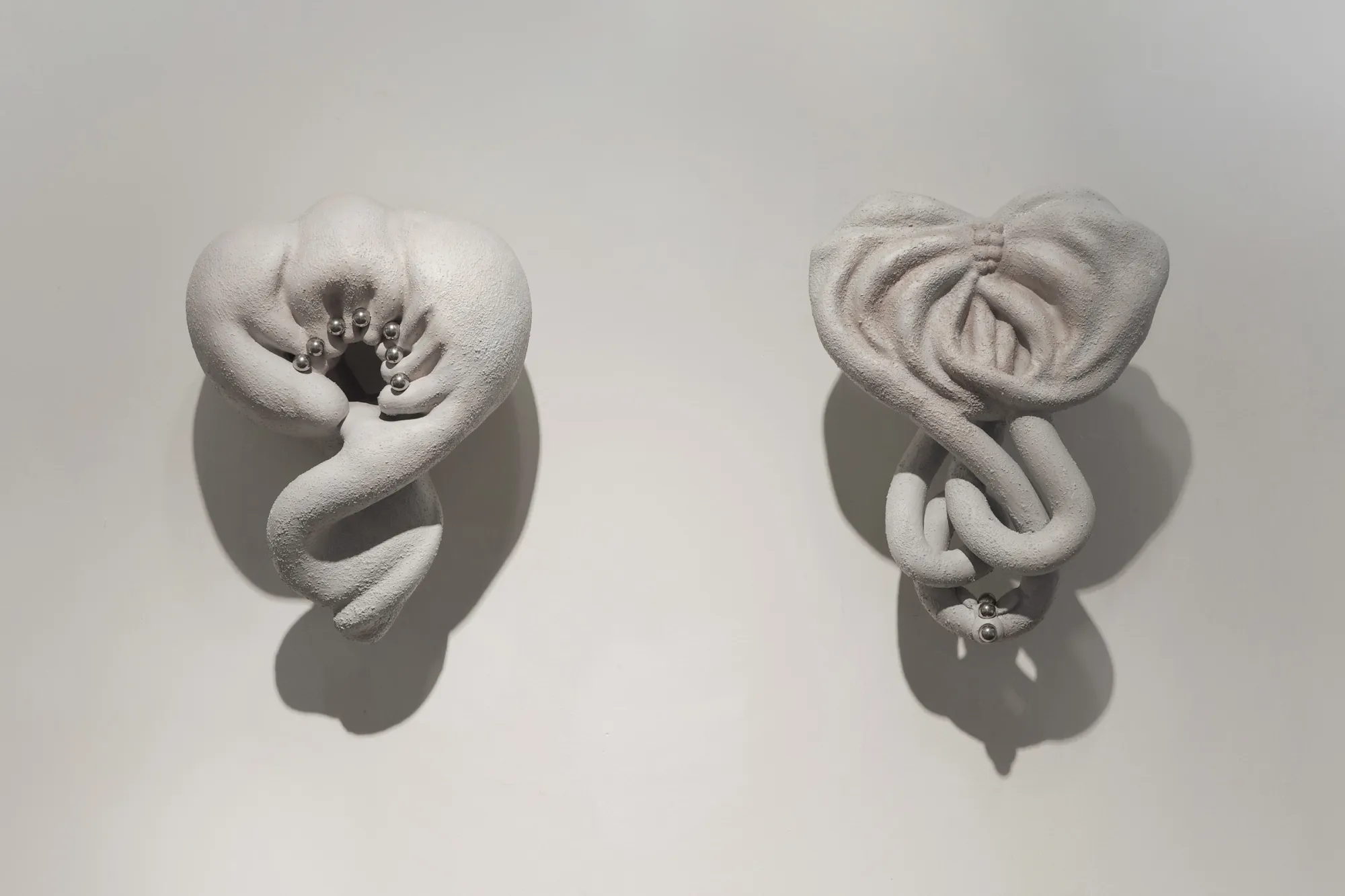
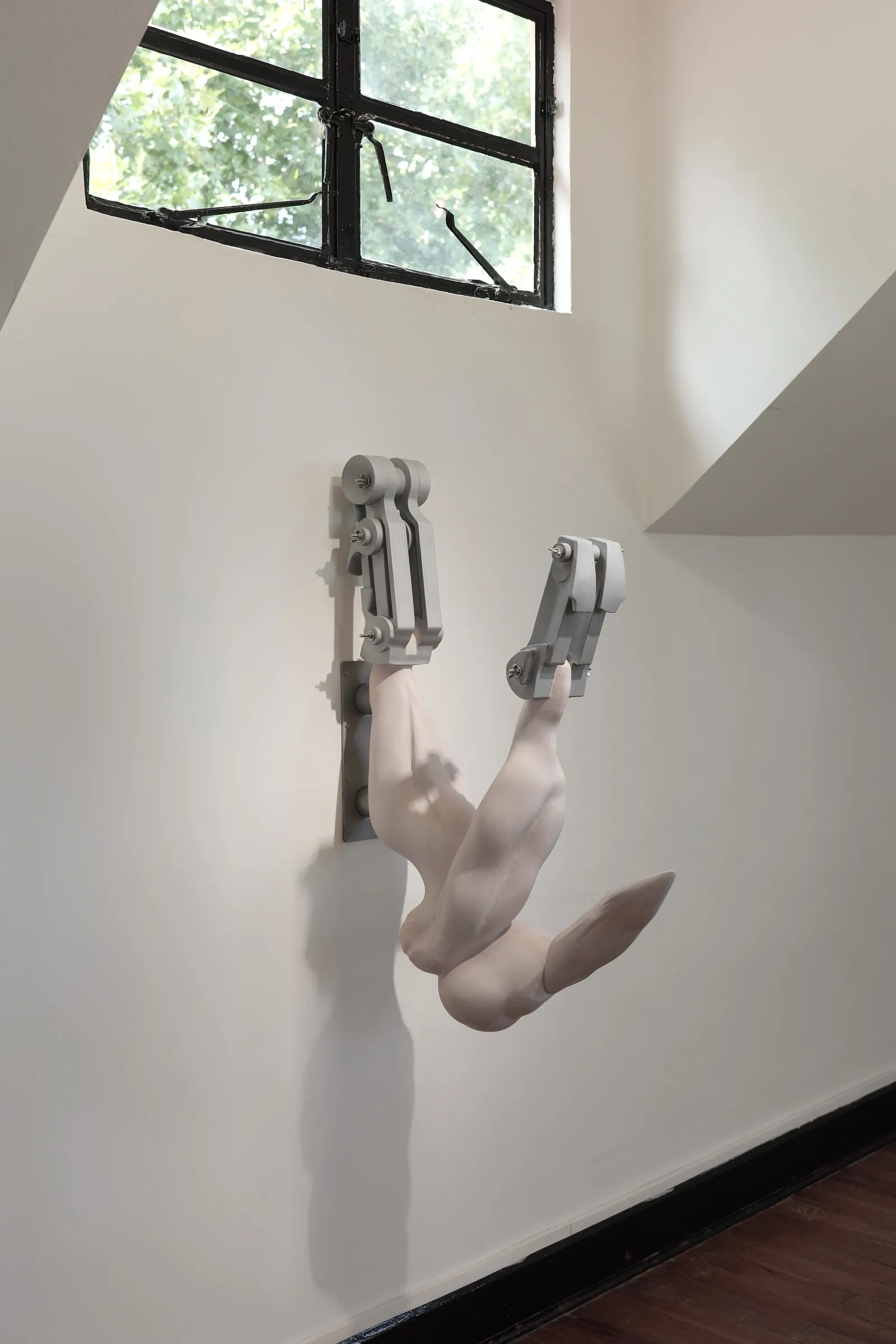
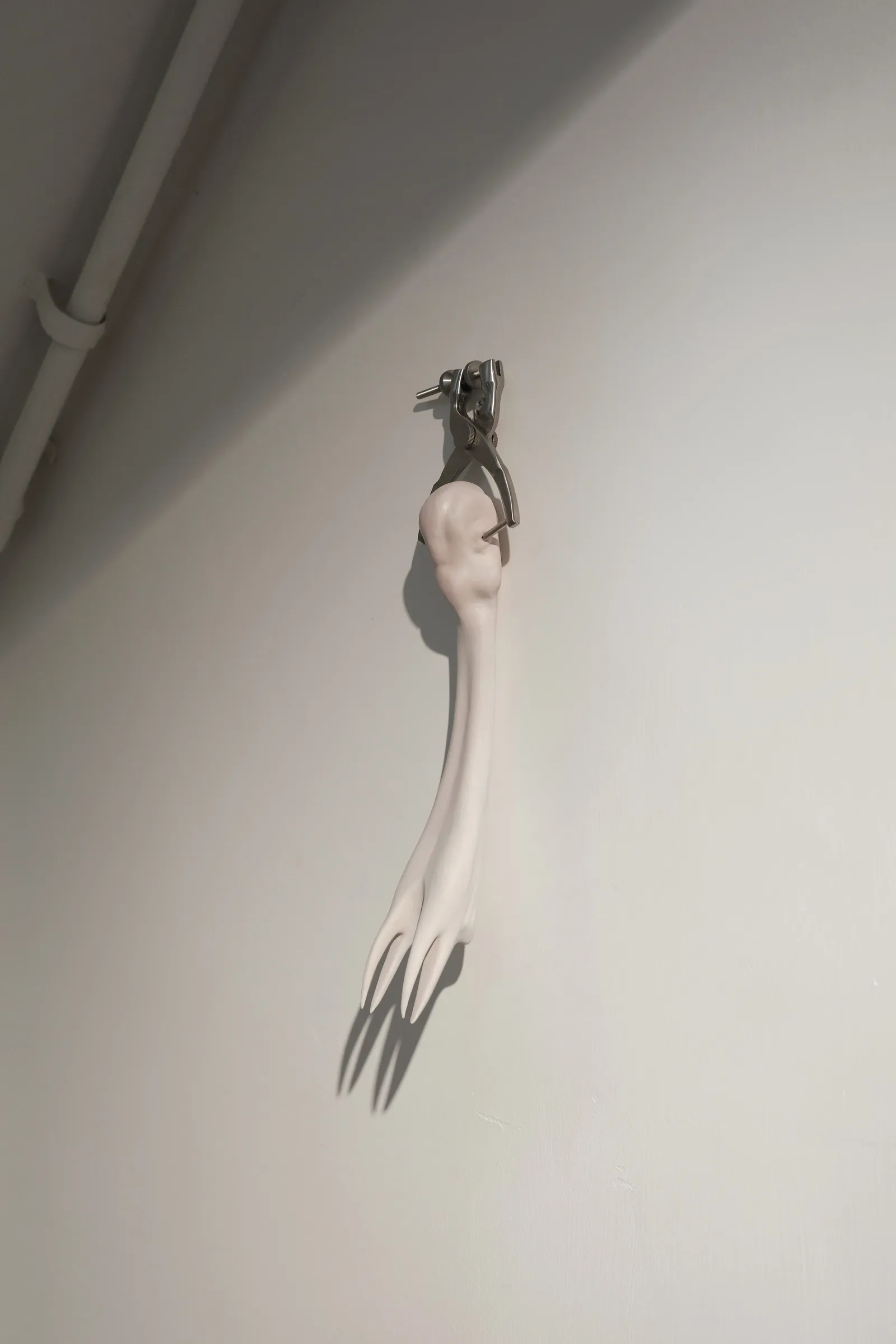
Smaller works along the walls repeat the same gesture at a different scale. A cranial retractor, the kind used to hold a skull open during surgery, clamps a tapering resin limb ending in four elongated fingers, hung so the hand points at the floor like something dropped mid-reach.
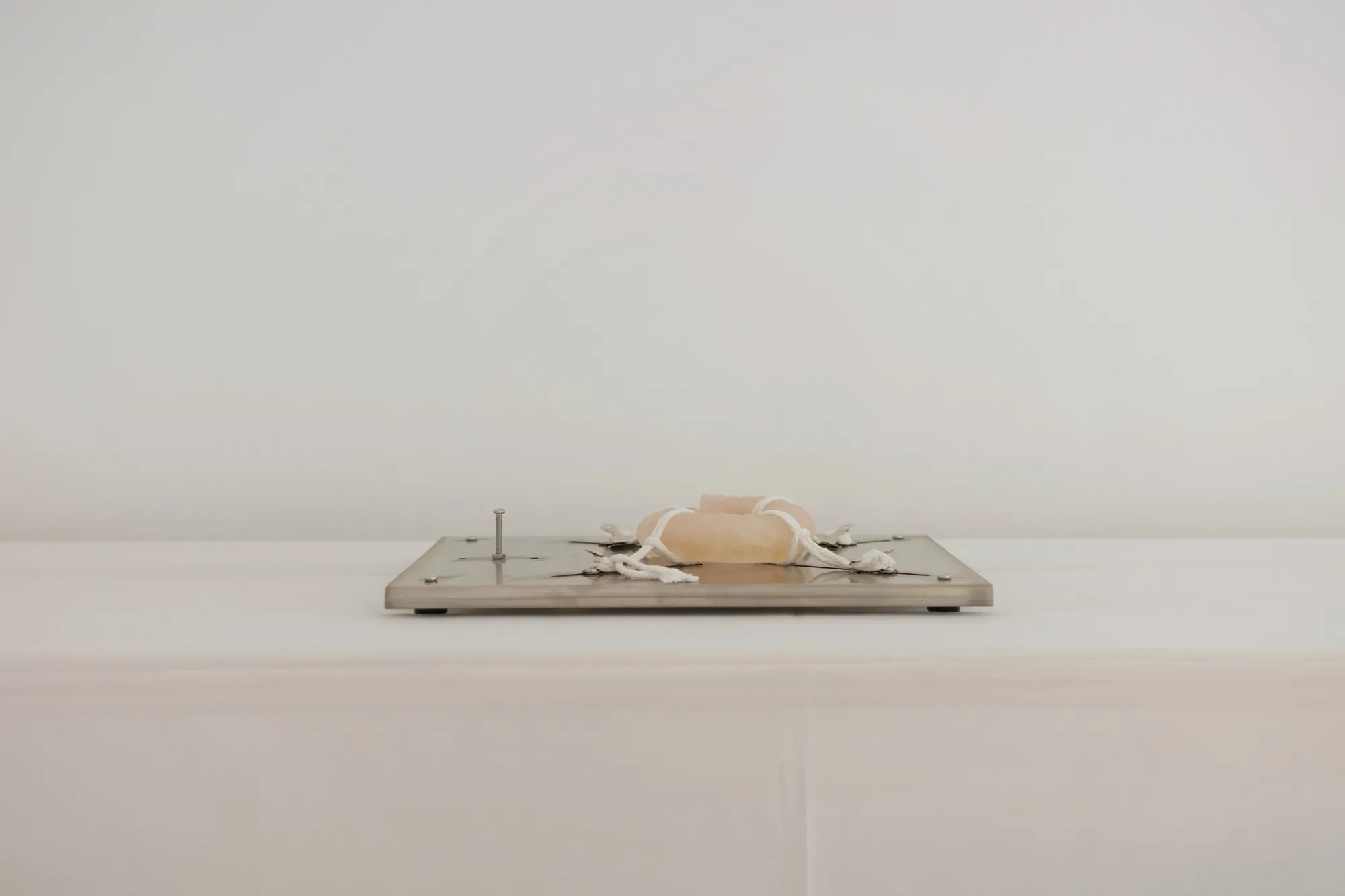
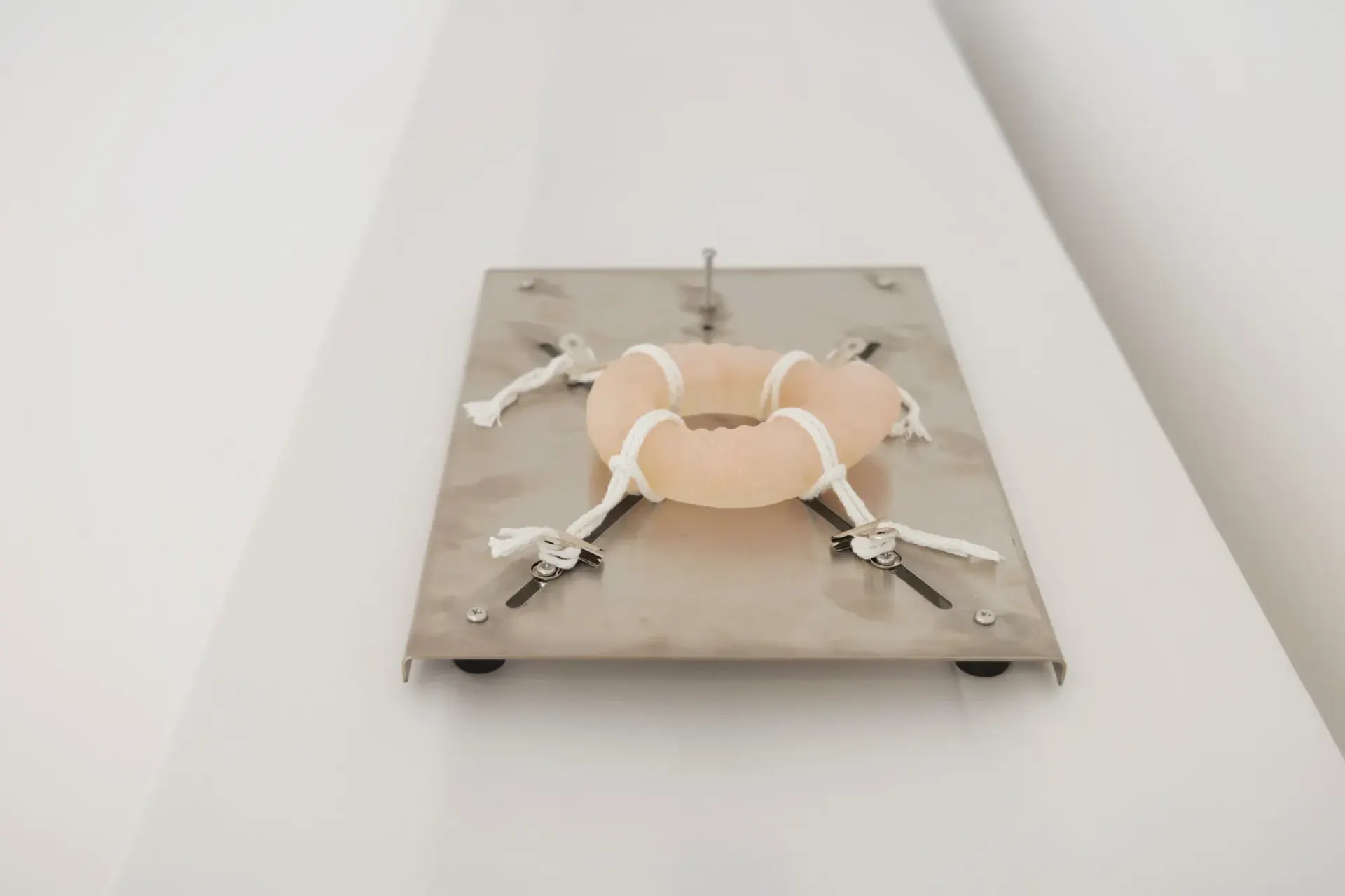
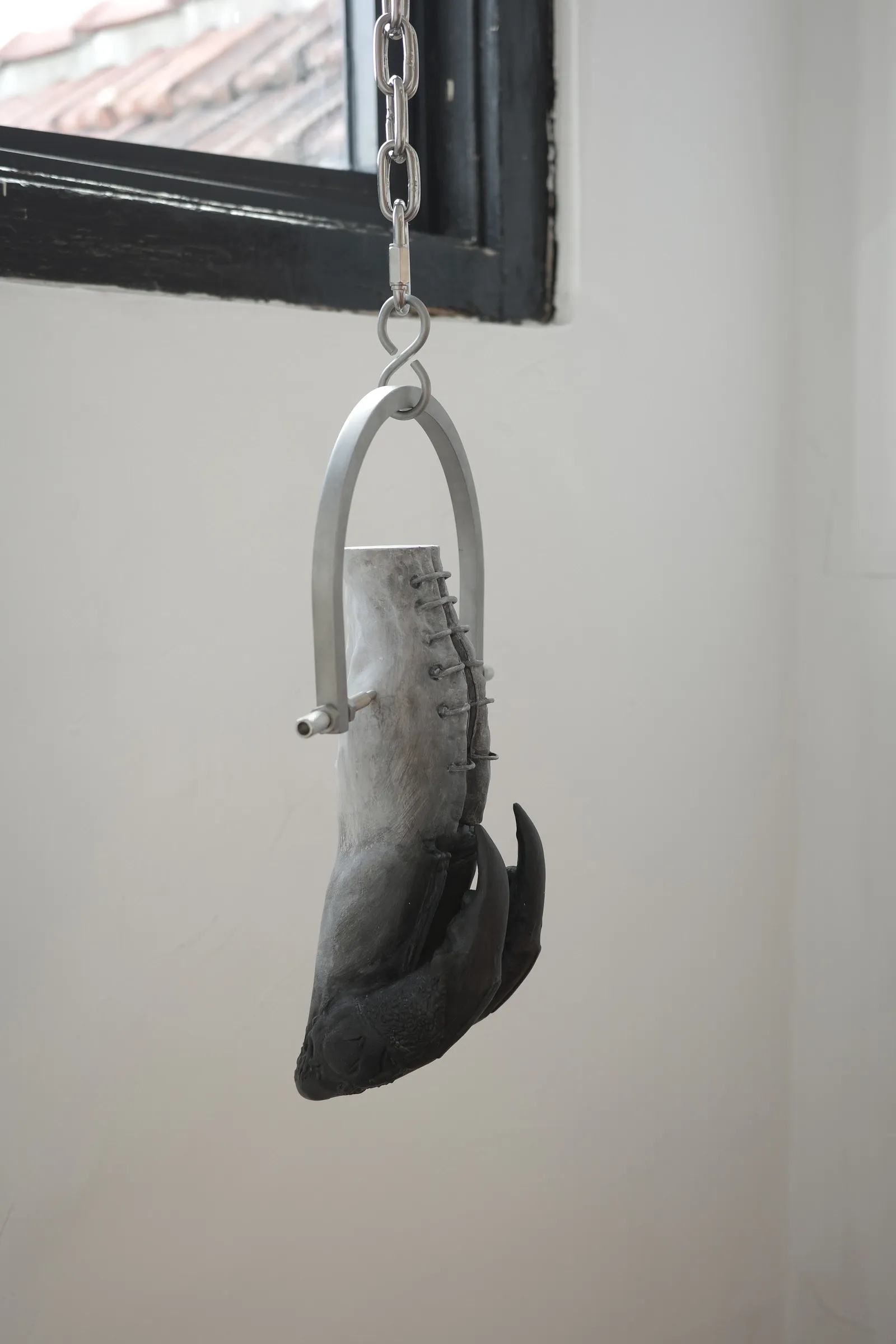
Elsewhere, stainless steel hardware pins a larger, pale oval form flush against the wall, its surface as blank as the resin is meant to read as skin. The bodies do not resist. They wait there, clamped, at head height.
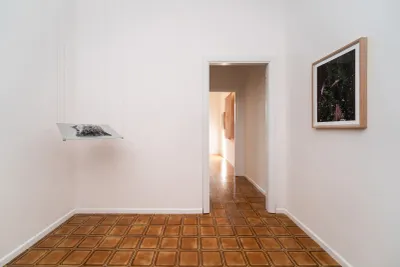
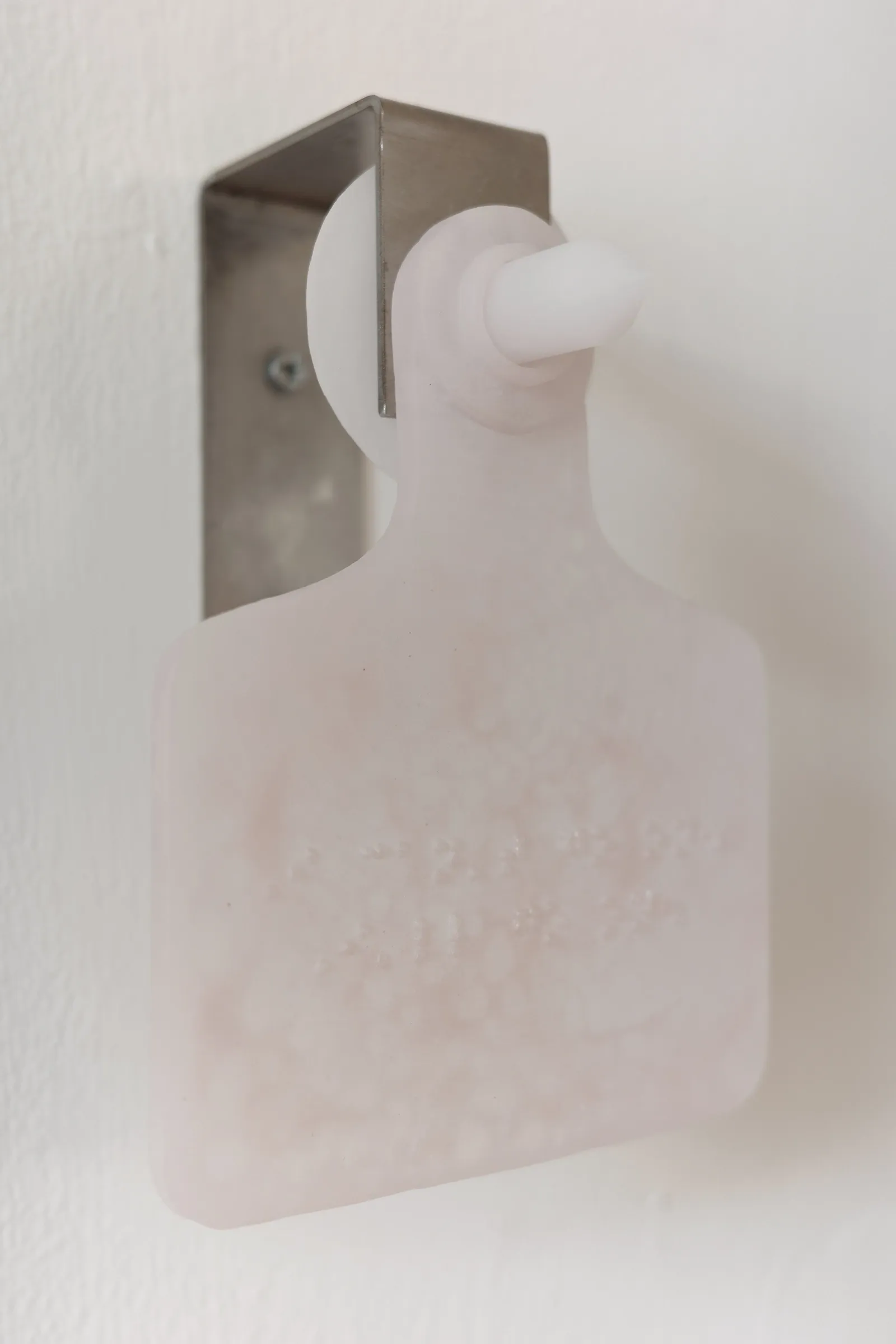
A row of six pale glass livestock ear tags runs along one wall, each cast in pâte de verre and stamped with a line of English Braille where an animal's identification number would sit.
Read by touch, the lines come from Rilke, Dickinson, Kafka, Beckett, Celan, and He herself. The texts describe being reduced, numbered, or unable to stop.A tag meant to identify livestock now asks a visitor to touch it like a wound, to check it is real.
None of this needs a torture chamber to land in 2026. The metrics that decide who is hireable or algorithmically visible sort through interfaces designed to feel neutral.
A percentile does not look like an iron bed. It looks like a dashboard, a score, a checkmark beside a name. He's instruments make that sorting tangible again, cold enough to hold in the hand.
The legs by the window keep dragging their chain toward the bolt fixed in the wall. Somewhere past the anchor, the chain runs out of slack.
The show does not say what happens then, only that the walking continues, four floors above a street lined with trees the visitors cannot see once the low roof forces their eyes back to the floor.
About Catapult Contemporary - Art Platform Submission
This is an exhibition review published by Catapult — an independent editorial platform for contemporary art, based in Vienna. We publish exhibition reviews, artist features, interviews, and critical context, with a focus on emerging and mid-career practices from Europe and beyond.
catapult-platform.art · Instagram
Want to be featured? Submit your work →