When External Rules Become Internal Convictions

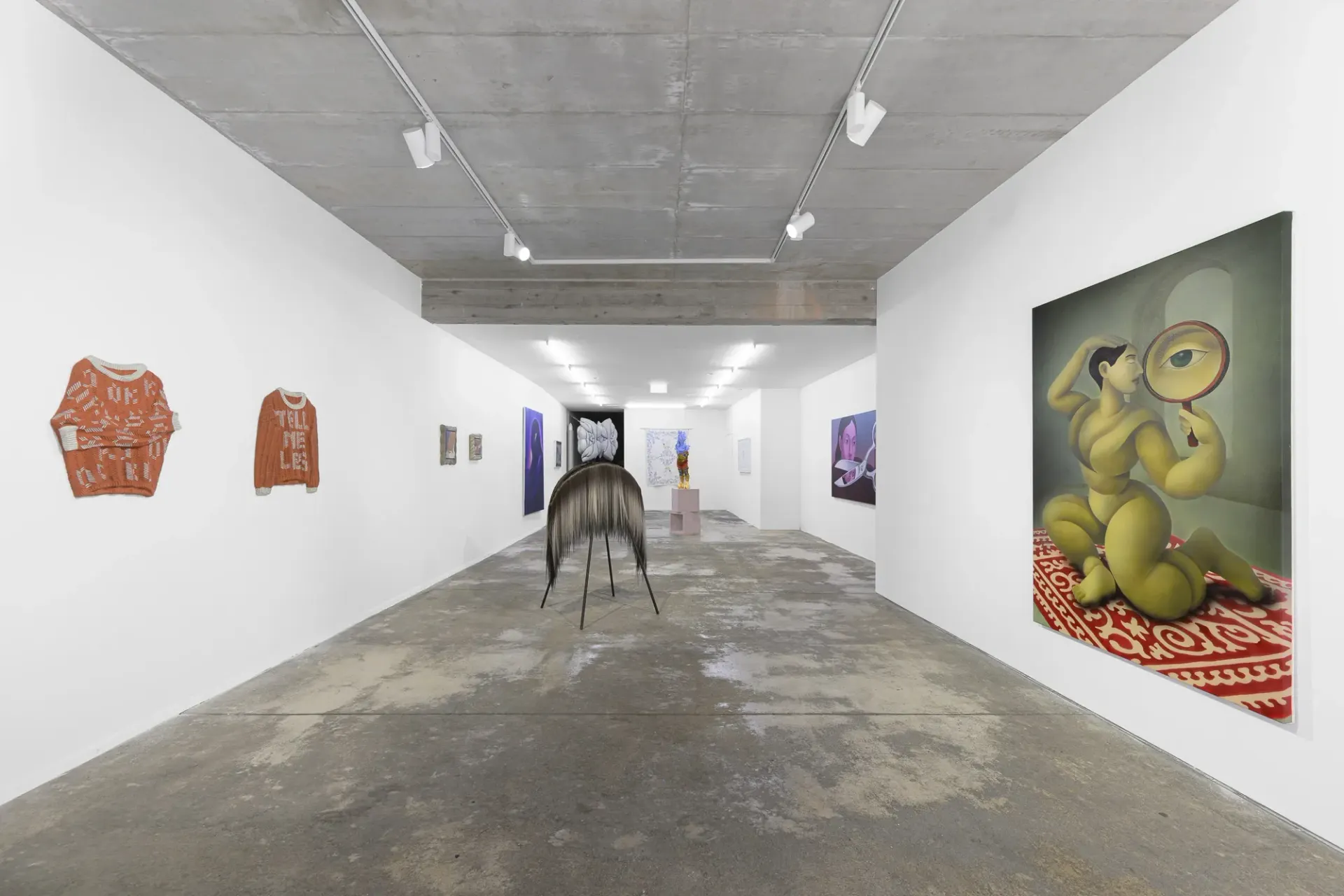
Umrian Gallery Presents Soft Power in Bratislava
Umrian Gallery presents Soft Power, featuring Aziya, Dana Bartoníčková, Magdaléna Roztočilová and Ivana Šáteková, through September 13, 2026.
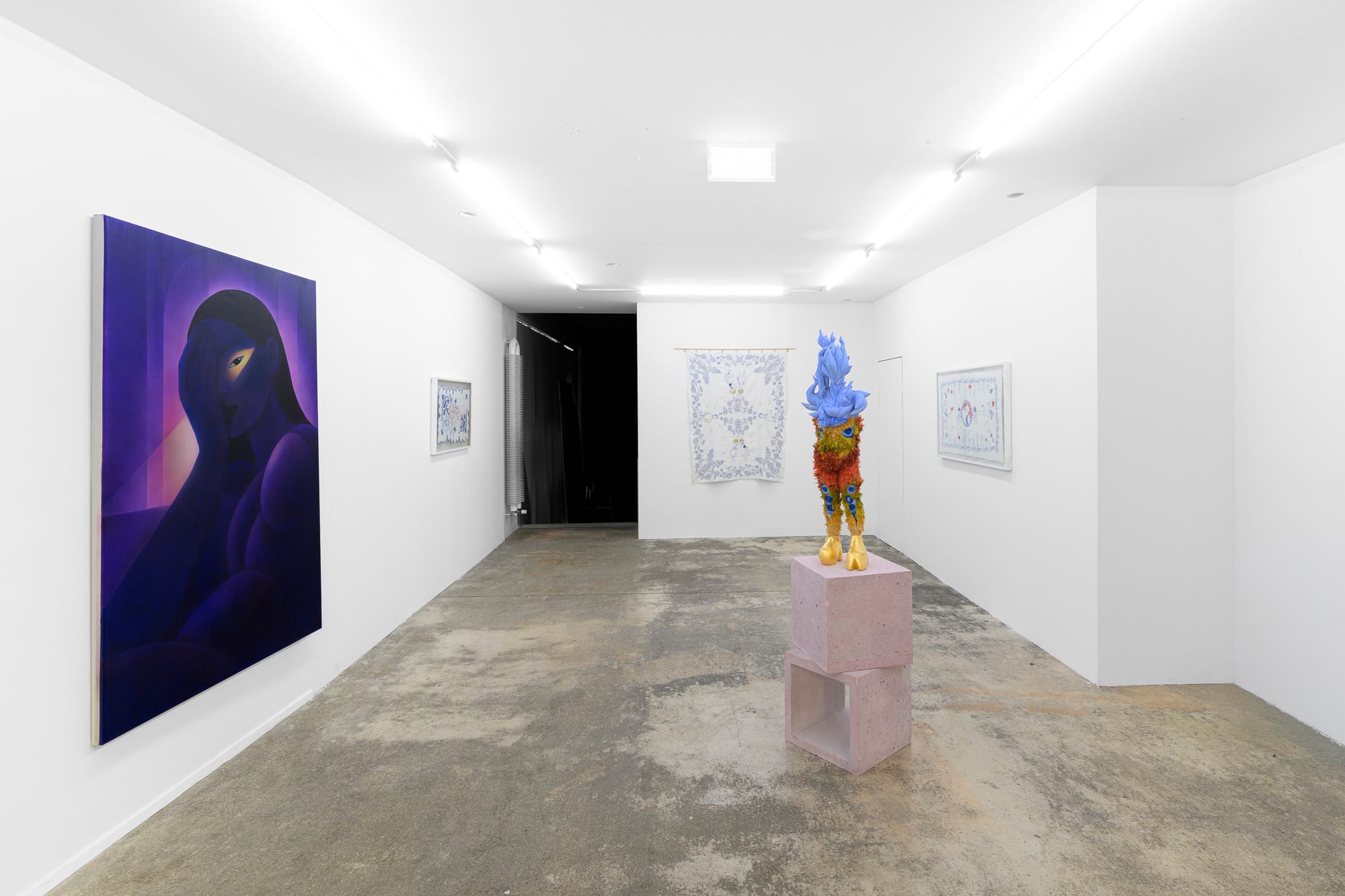
Aziya, Dana Bartoníčková, Magdaléna Roztočilová, Ivana Šáteková
Soft Power
Umrian Gallery
Bratislava, Slovakia
–
Baštová 6, Bratislava, Slovakia
Adam Šákový
Courtesy Umrian Gallery
Four artists working across painting, textile relief, embroidery and sculpture meet at Umrian Gallery this summer, each tracing how authority survives without ever raising its voice.
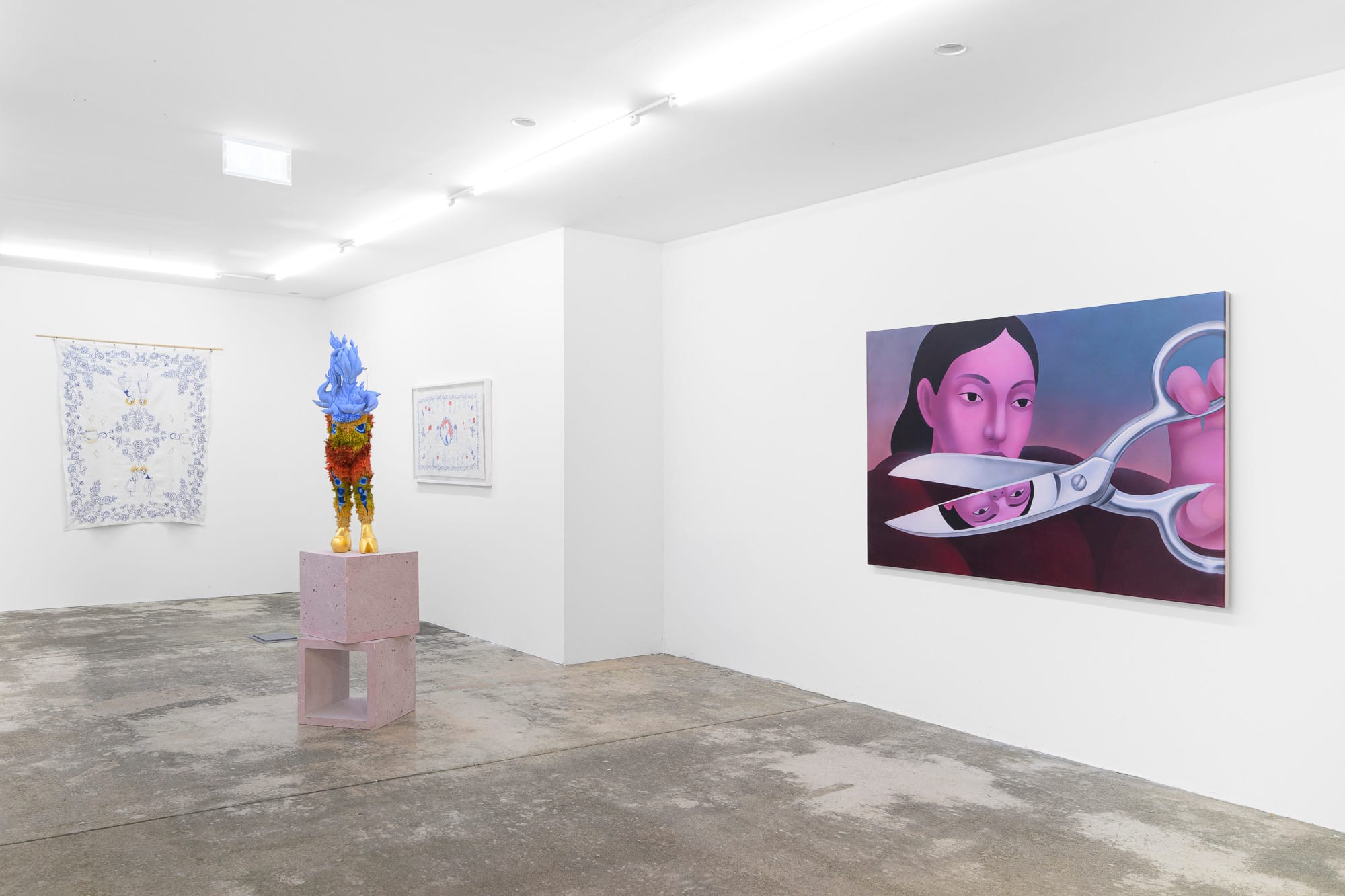
Aziya, Dana Bartoníčková, Magdaléna Roztočilová and Ivana Šáteková share a single question across four distinct material languages: what happens to power once it stops announcing itself and starts living inside gesture, garment and image.
Curatorial Text - Umrian Gallery
Power rarely operates today through explicit authority. More often, it functions subtly, through images, language, everyday gestures, family rituals, cultural traditions, and aesthetic norms that we gradually come to accept as natural.
Soft Power examines precisely this process. Rather than focusing on power as a political instrument or on its visible institutions, the exhibition explores the mechanisms through which social expectations become inscribed into the body, memory, identity, and interpersonal relationships.
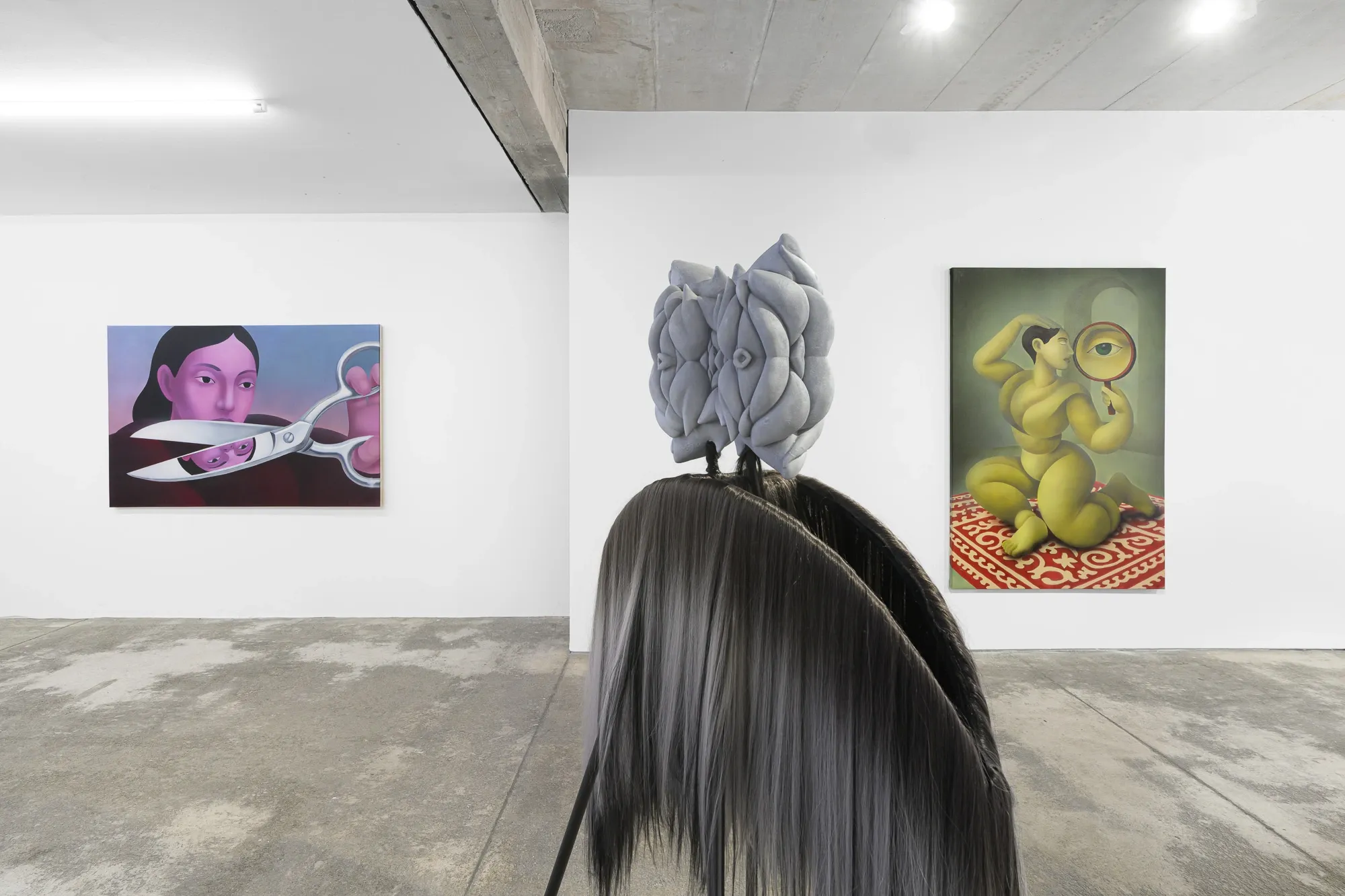
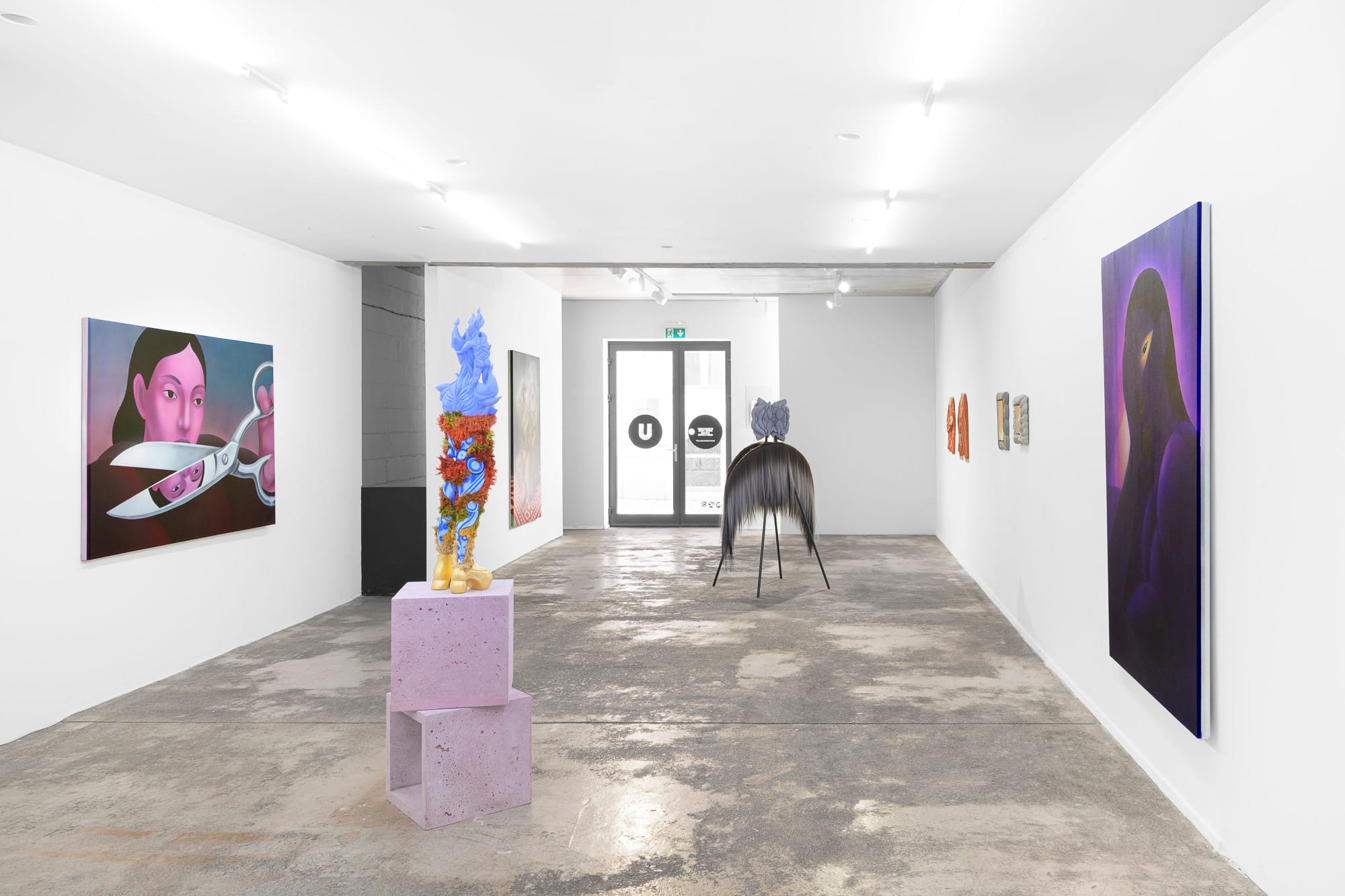
Here, power does not manifest itself through prohibition or command. It operates through repetition, representation, and the routines of everyday life. It shapes our understanding of what it means to be a woman, to belong to a community, to construct an image of oneself, or to inhabit one's own body.
The four artists approach these questions from distinct perspectives, yet together their works form a remarkably coherent whole. They do not seek to illustrate a single curatorial thesis. Instead, each reveals a different manifestation of the same phenomenon: the moment when social norms cease to appear external and become embedded within our own ways of seeing, feeling, and experiencing the world.
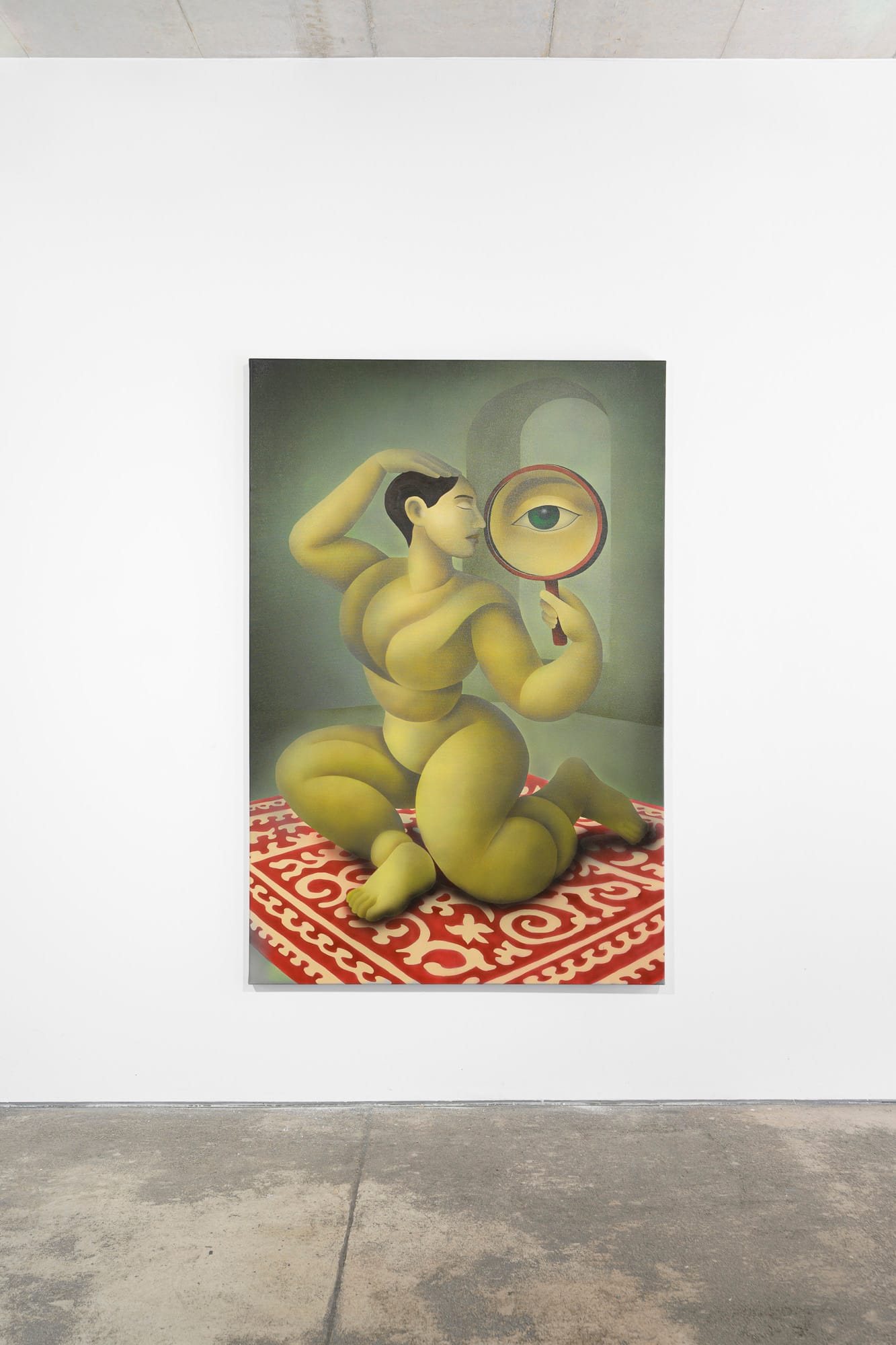
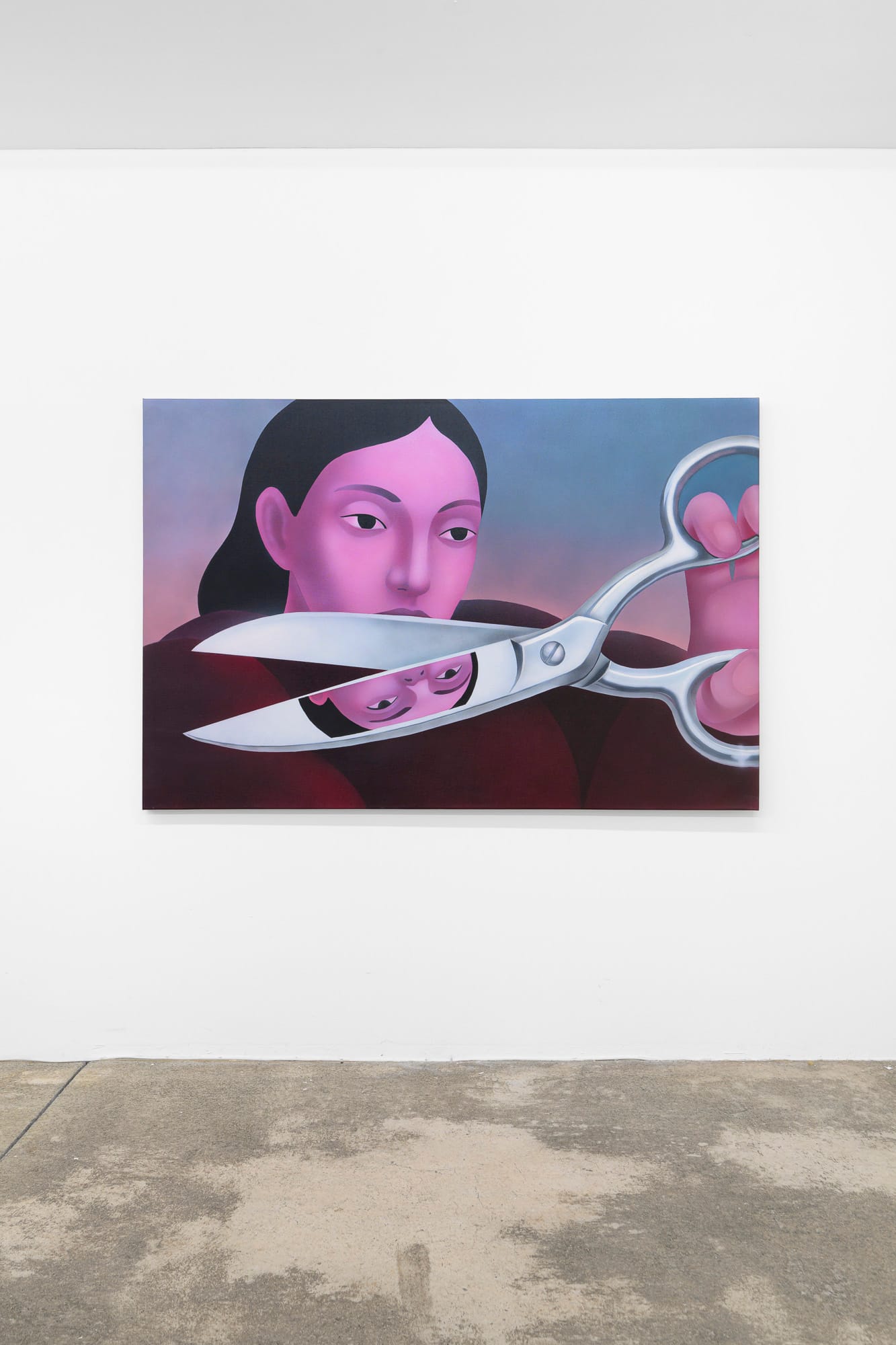
Aziya, paintings on view (left - “A Study of a Self”, acrylic and oil on linen, 180 x 120 cm) (right - AZIYA “Cut Off”, 180 x 110 cm, acrylic on linen) in Soft Power, 2026. Photo: Adam Šákový. Courtesy Umrian Gallery, Bratislava.
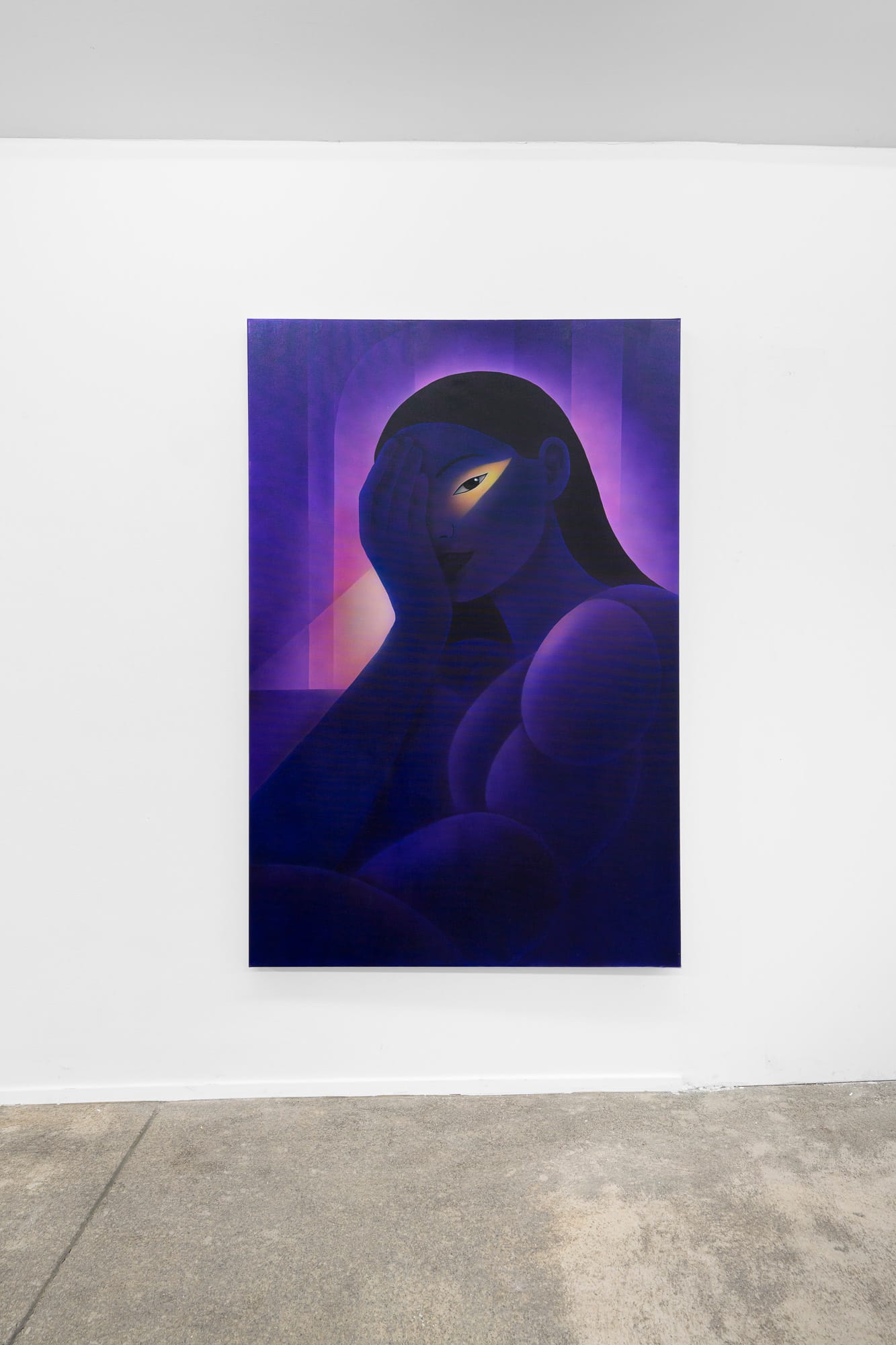
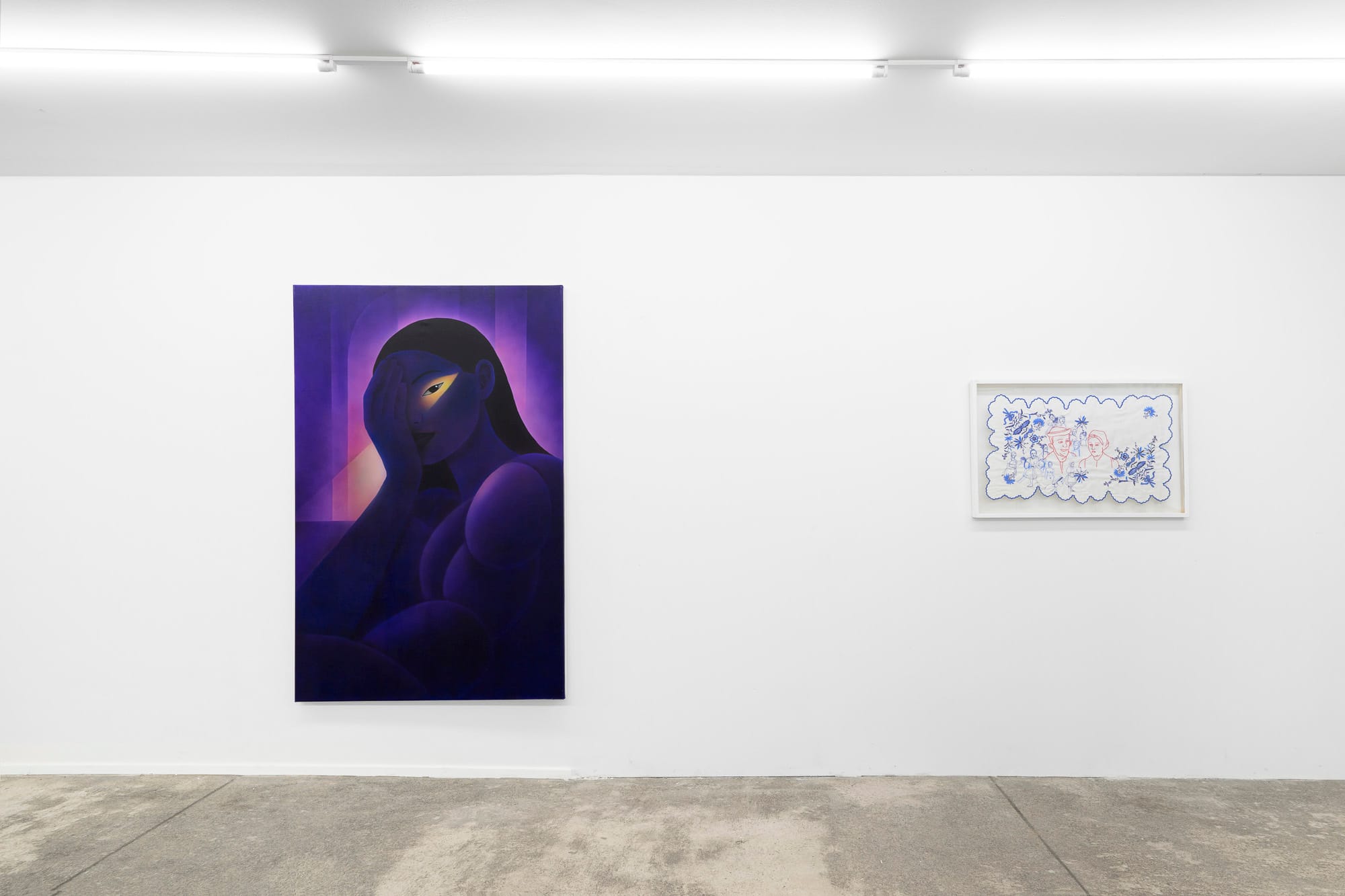
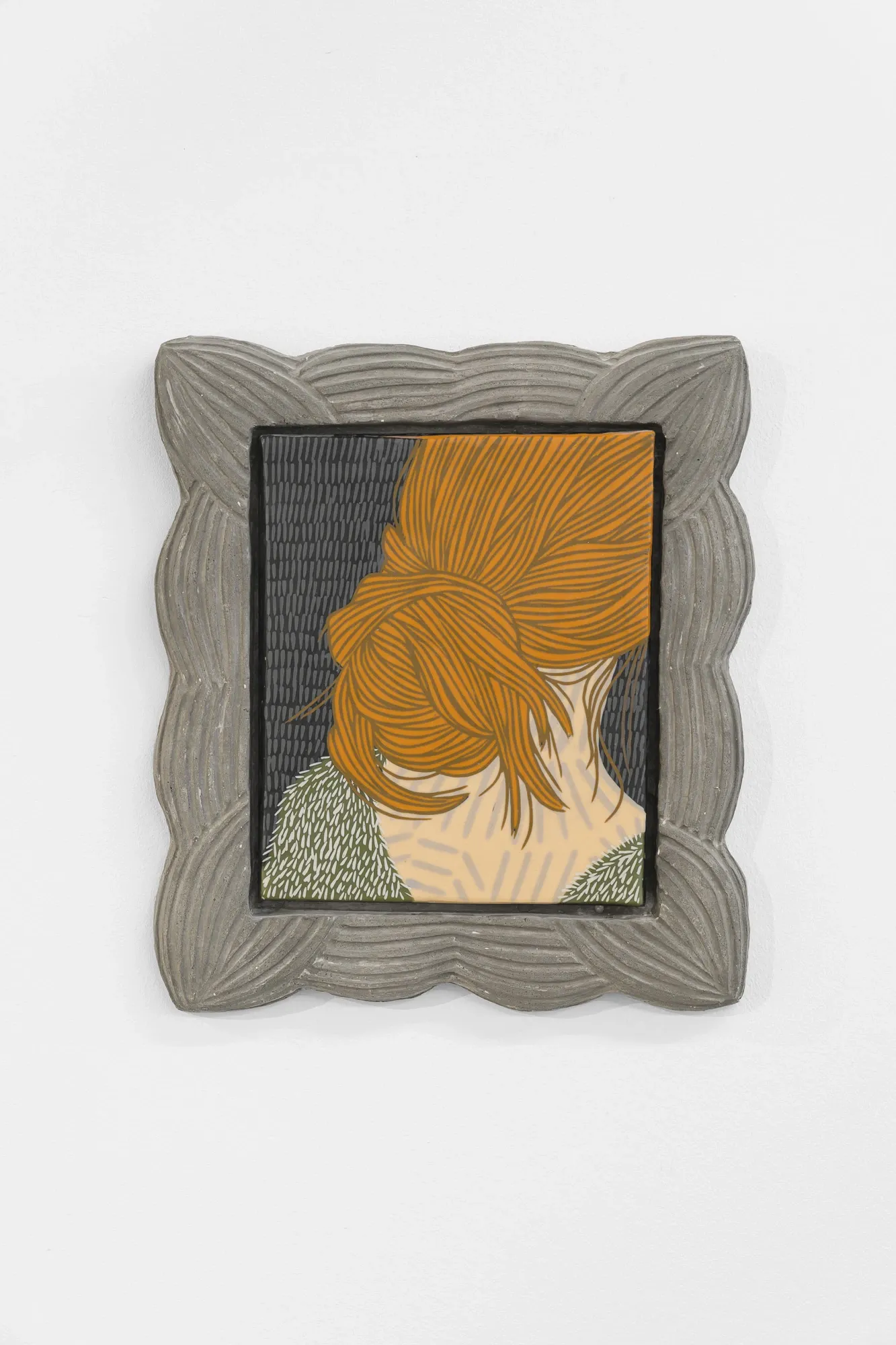
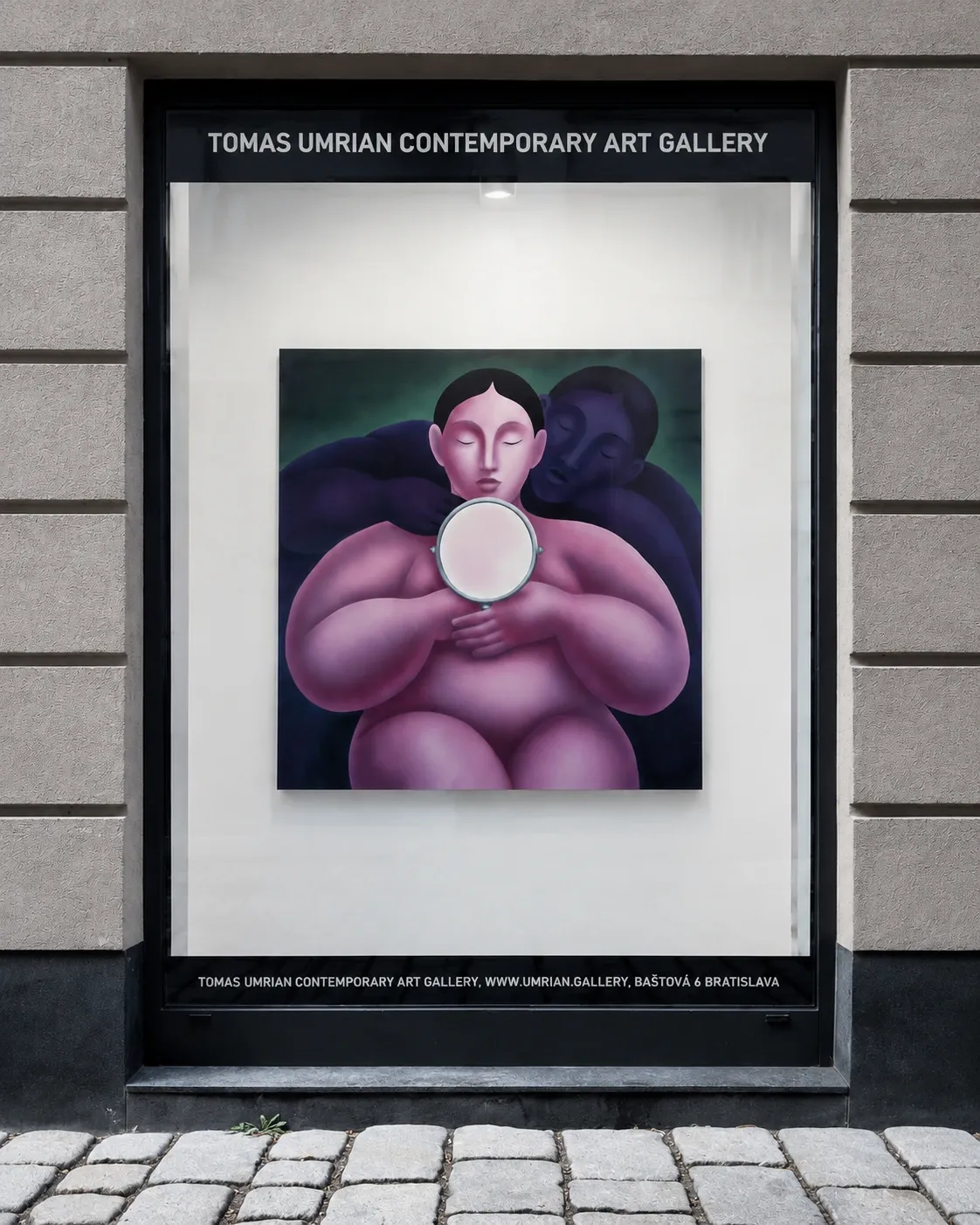
The paintings of Aziya present the human figure as a site of introspection. Her protagonists exist in a constant negotiation between self-perception and the gaze of others.
Mirrors, fragmented reflections, and recurring facial motifs do not suggest narcissism but rather question how identity is constructed within a culture saturated with images.
 Dominique Catherina Foertig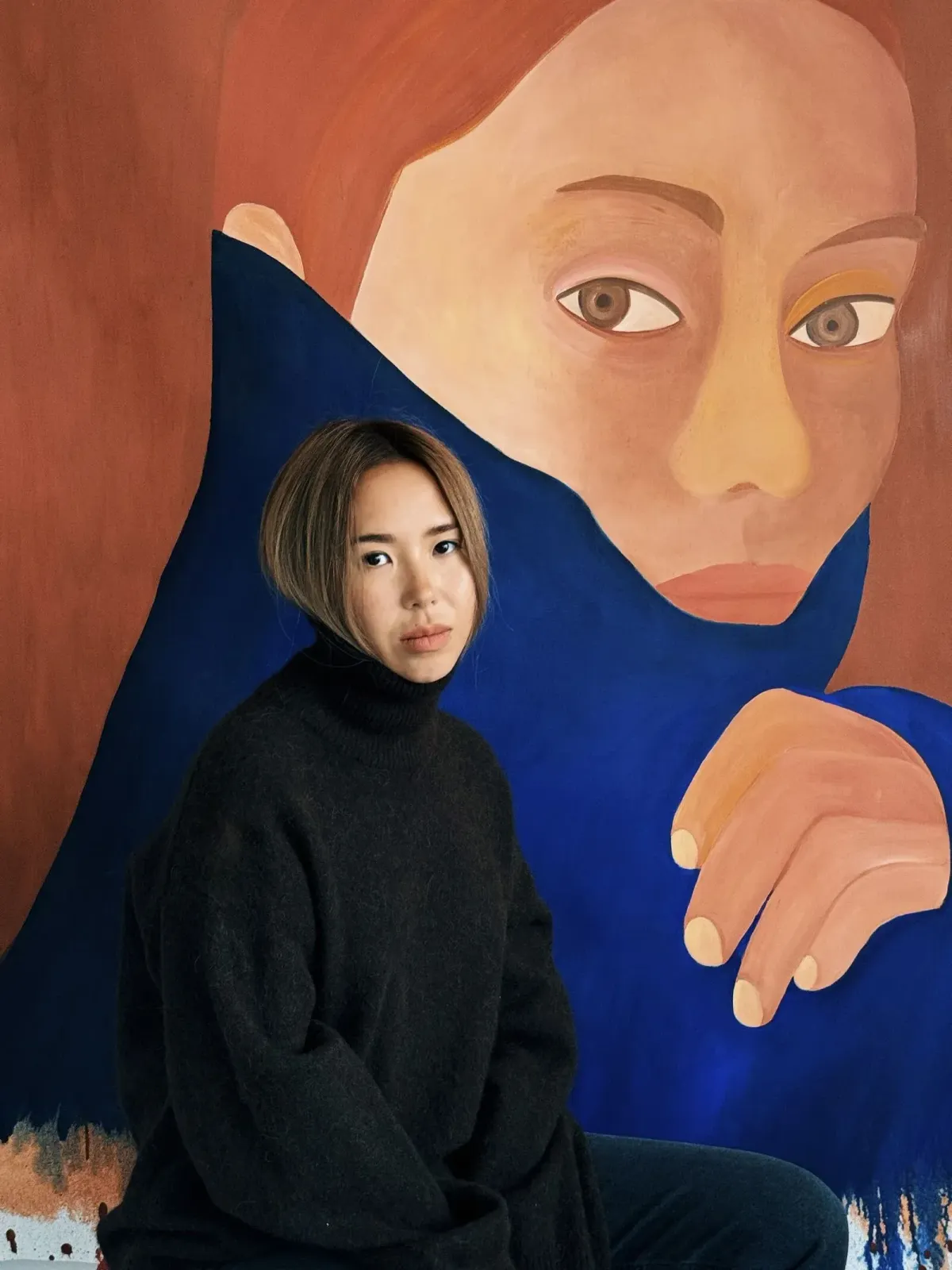
Artist Feature: Aziya - Catapult Contemporary art platform
The body is not represented as an object of contemplation but as a space where individual experience intersects with collective imagination. The seductive softness of her painterly language offers no sense of comfort; instead, it reveals the fragility of subjectivity shaped by external expectations.
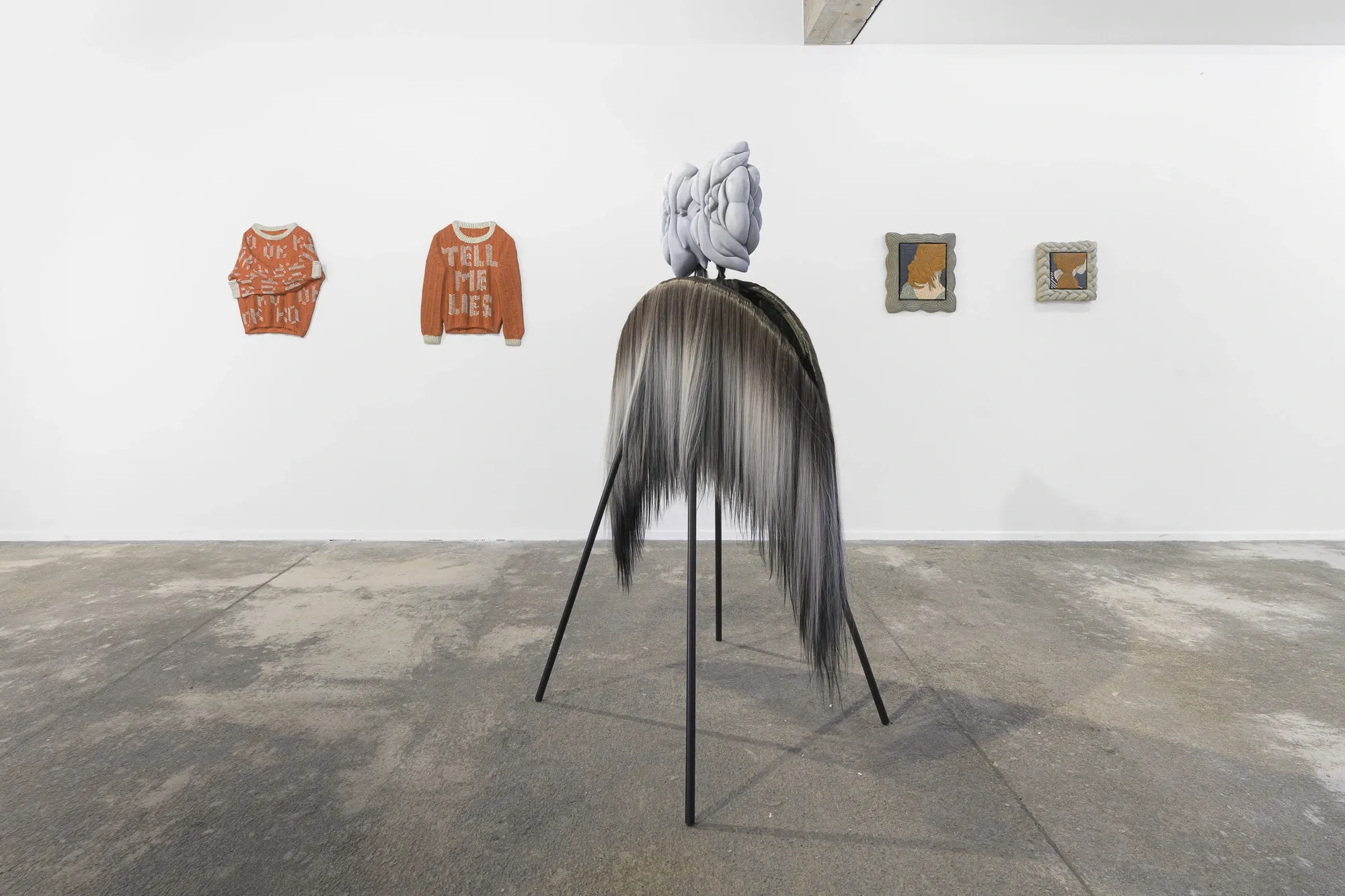
In the concrete reliefs of Dana Bartoníčková, the softness of a knitted sweater is transformed into a rigid material. A garment traditionally associated with warmth, intimacy, and protection assumes the qualities of armour.
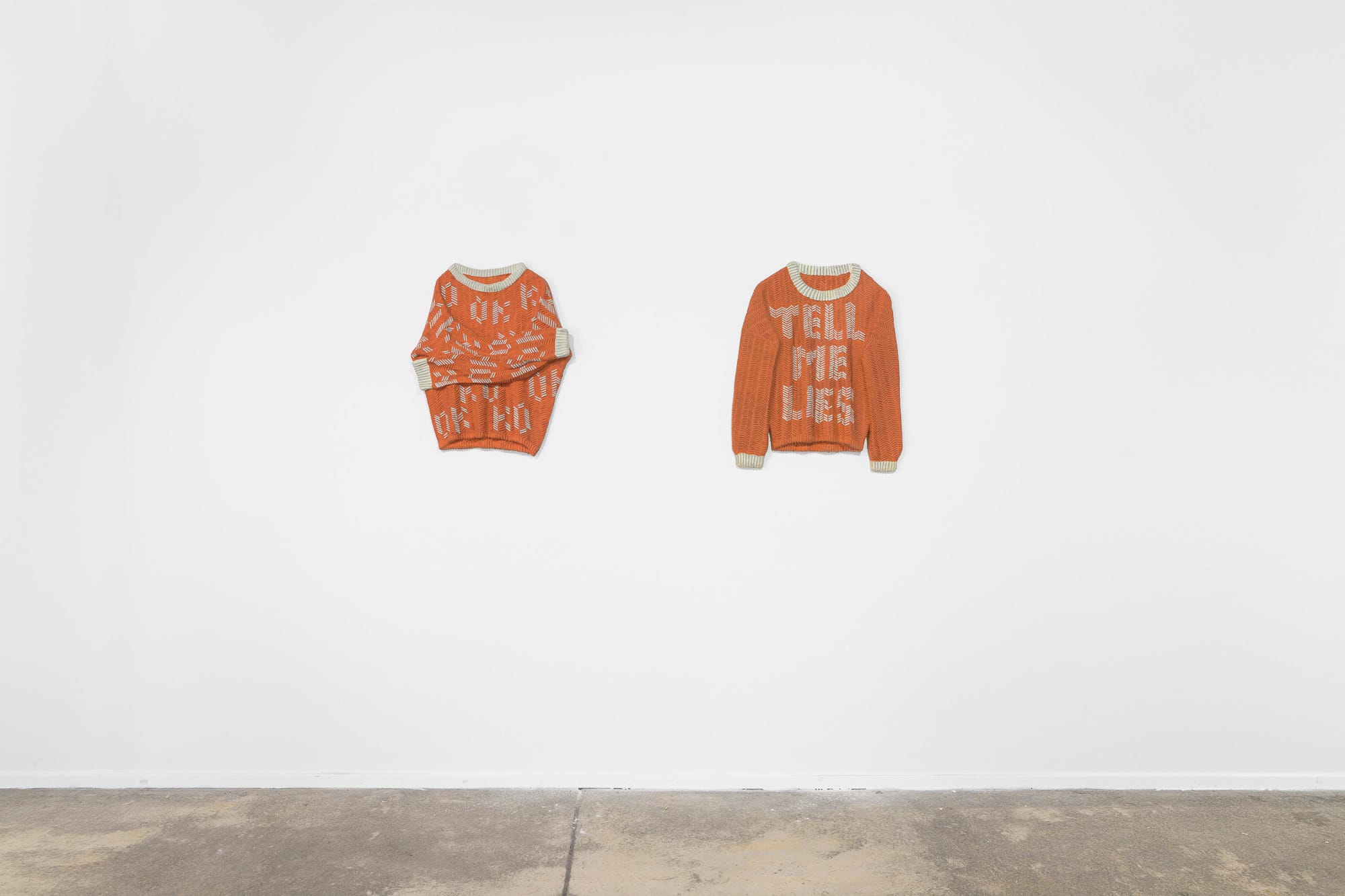
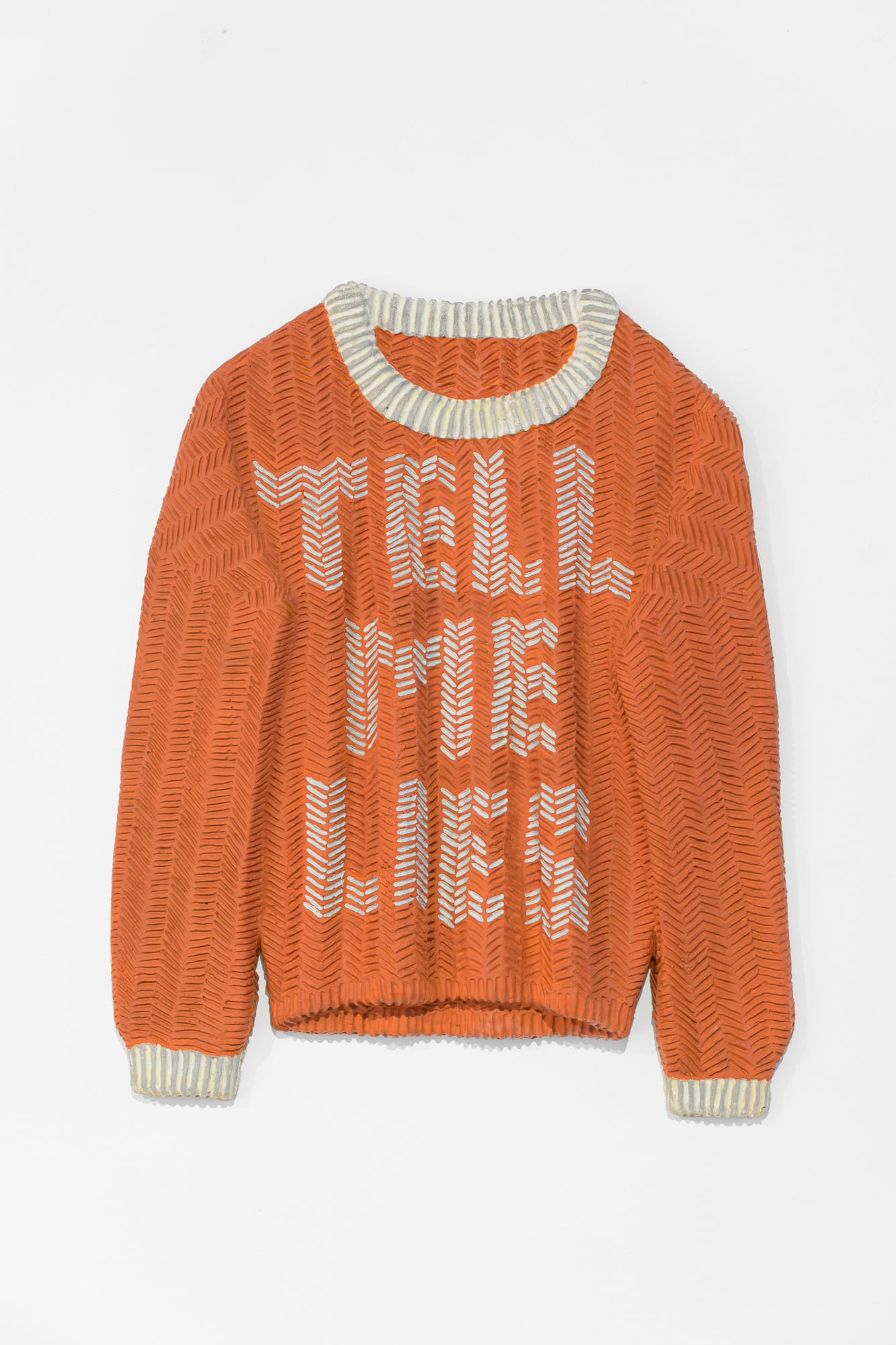
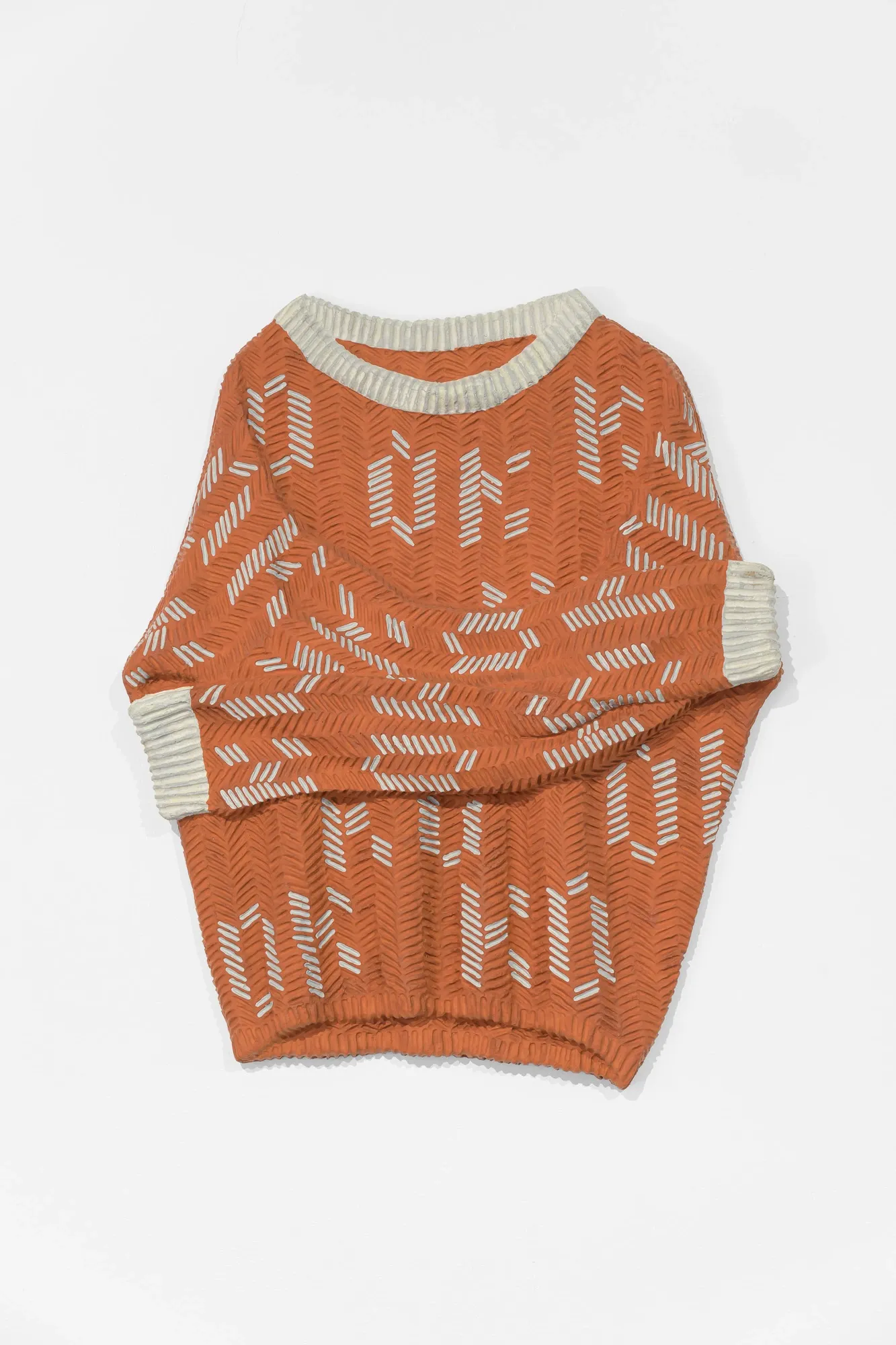
Dana Bartoníčková, Soft Armor, concrete relief detail, on view in Soft Power, 2026. Photo: Adam Šákový. Courtesy Umrian Gallery, Bratislava.
Textual interventions, Tell Me Lies and Love Me, Not My Body, turn an object of everyday closeness into a carrier of psychological tension. Protection becomes isolation, intimacy becomes control, and language itself emerges as an instrument capable of both creating and manipulating human relationships. Rather than depicting physical violence, Bartoníčková exposes the subtle mechanisms of emotional power that operate within the private sphere.
The embroidered works of Ivana Šáteková employ the visual language of folklore and domestic ornament to expose contradictions embedded within collective identity. Traditional motifs, decorative embroidery, and references to family life do not function as nostalgic celebrations of cultural heritage but as critical tools.
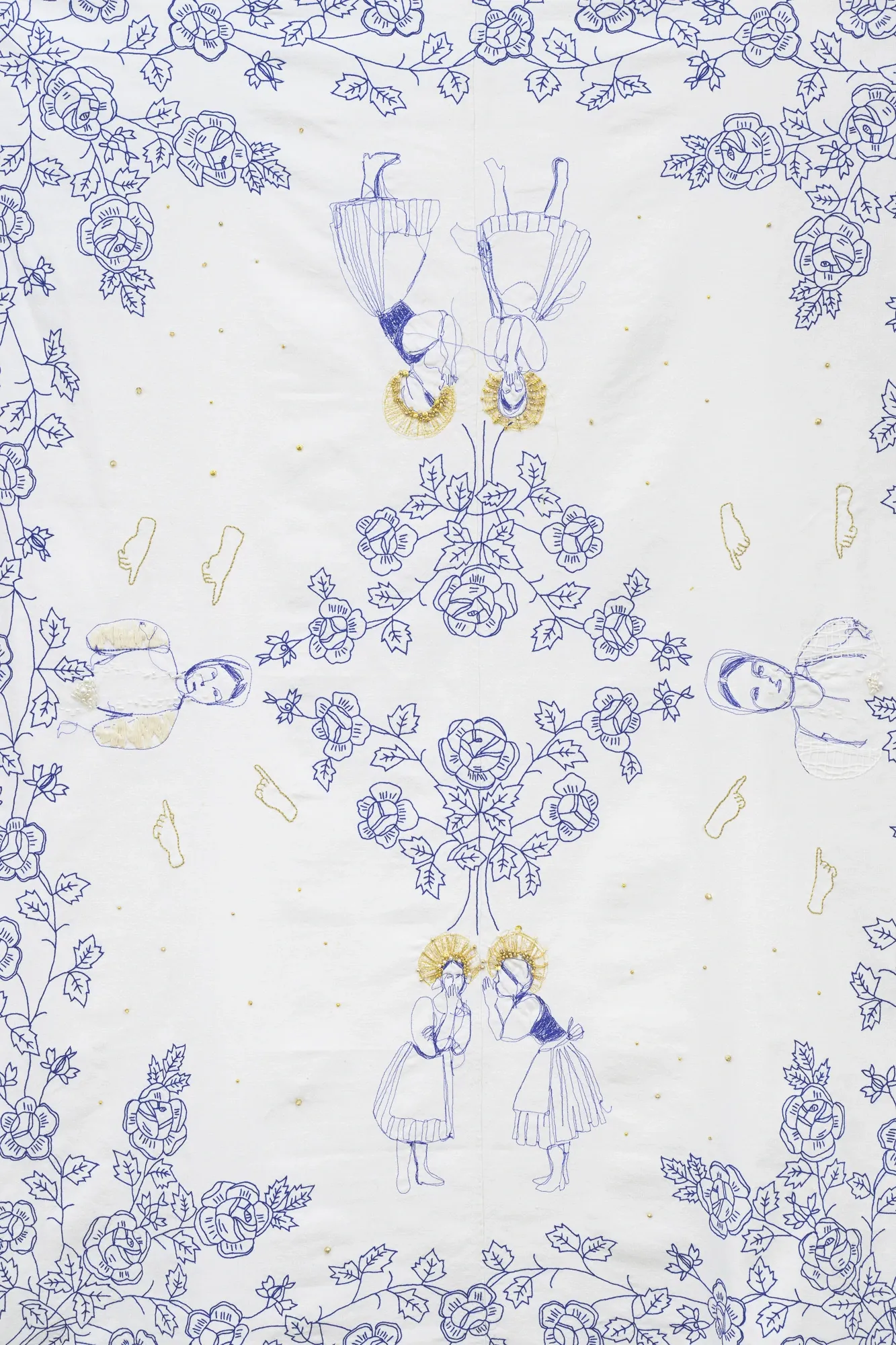
Humour, irony, and apparent innocence reveal how gender roles, family structures, and ideological narratives are quietly reproduced across generations. Her works demonstrate that cultural memory is never neutral; it remains an active mechanism through which the present continues to be shaped.
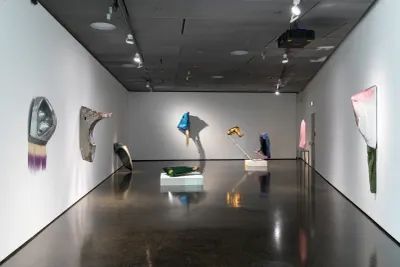
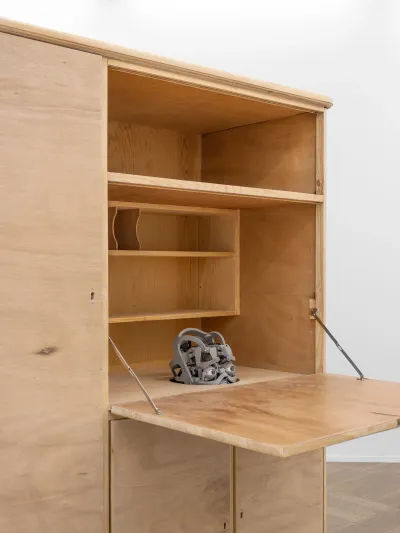
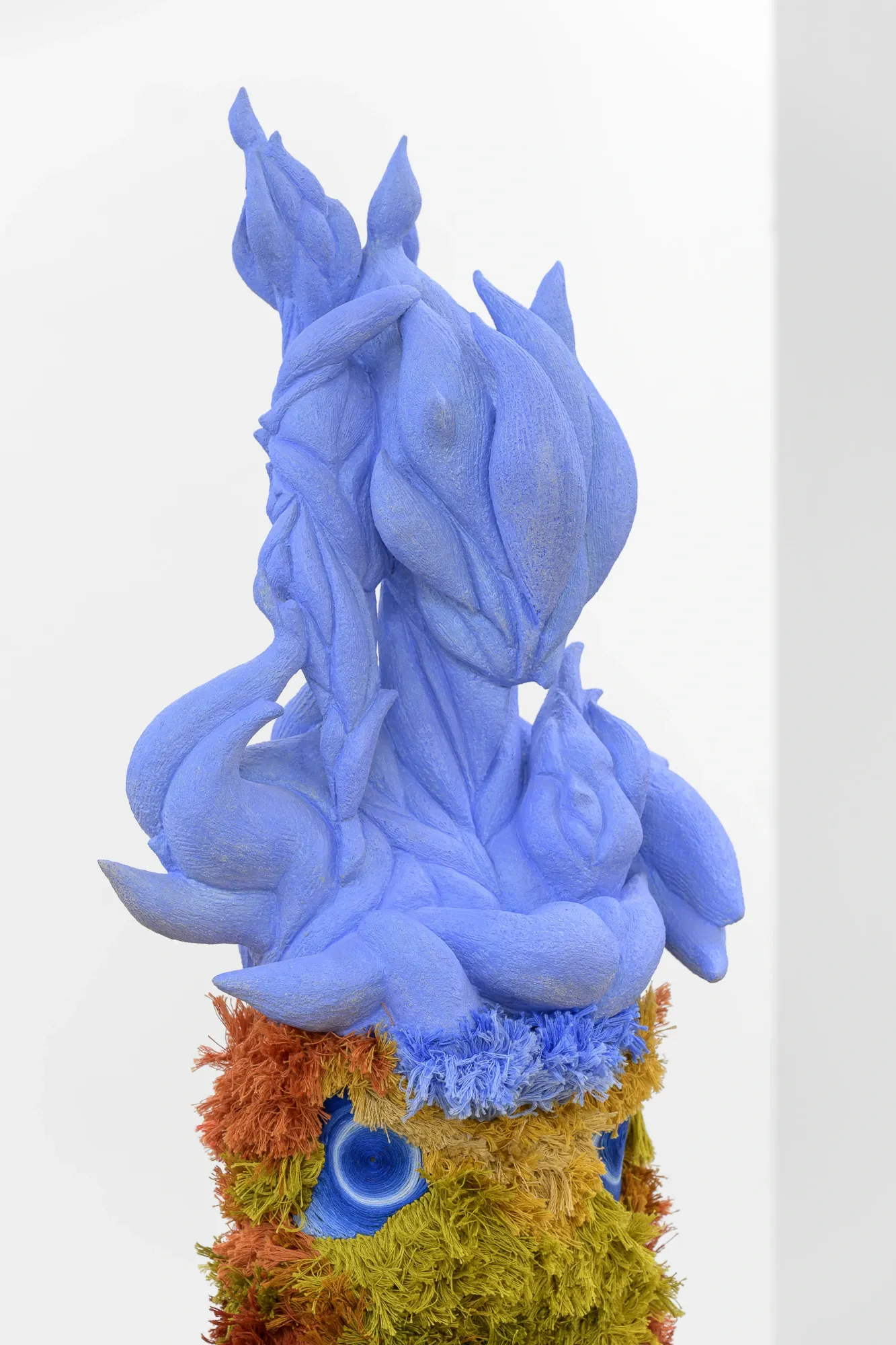
The sculptural practice of Magdaléna Roztočilová expands the exhibition into a more archetypal dimension. Hybrid bodies, organic forms, and synthetic materials generate objects that resist stable interpretation. Their physical presence oscillates between the human and the non-human, the familiar and the uncanny, intimacy and monumentality.
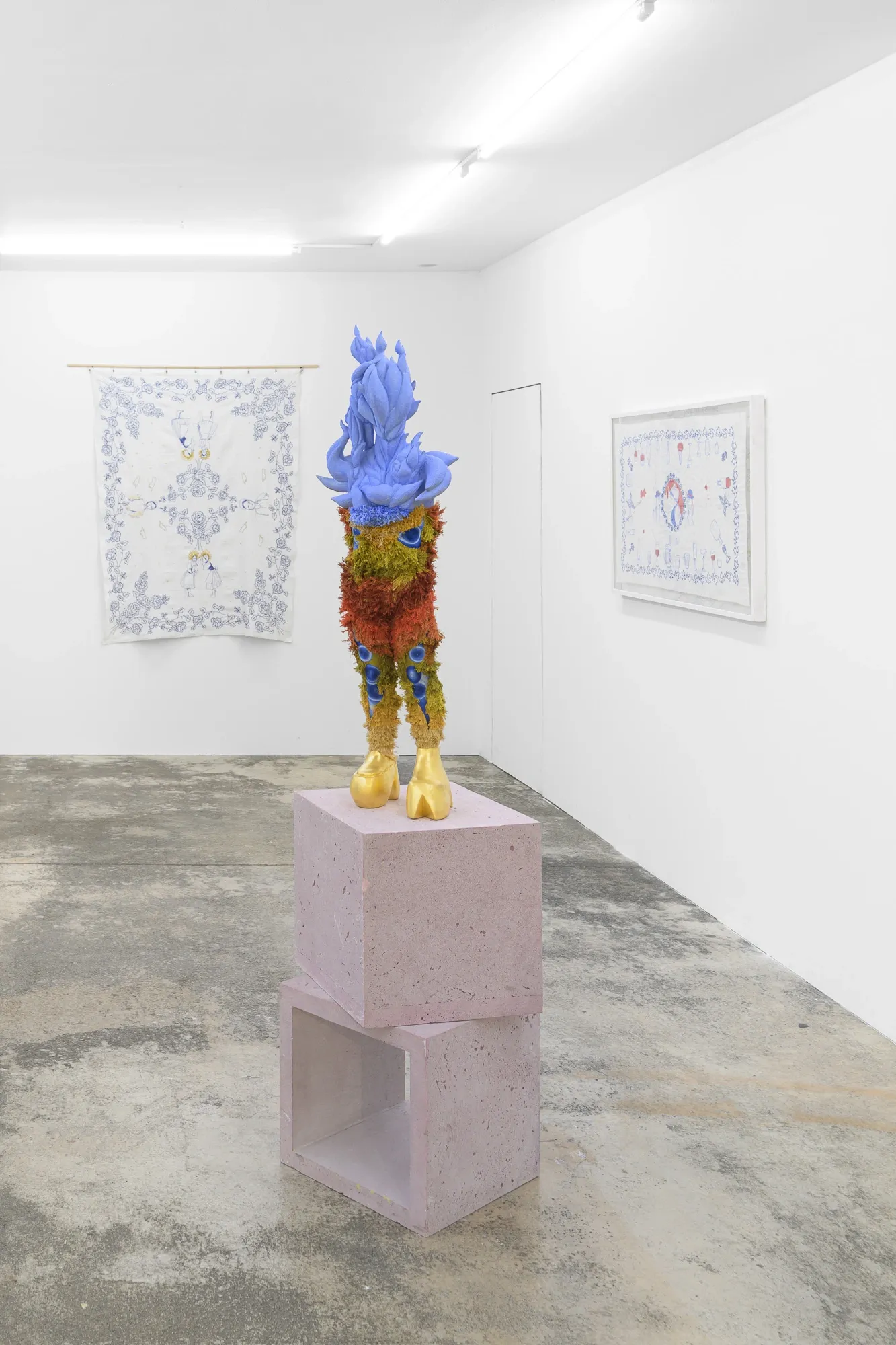
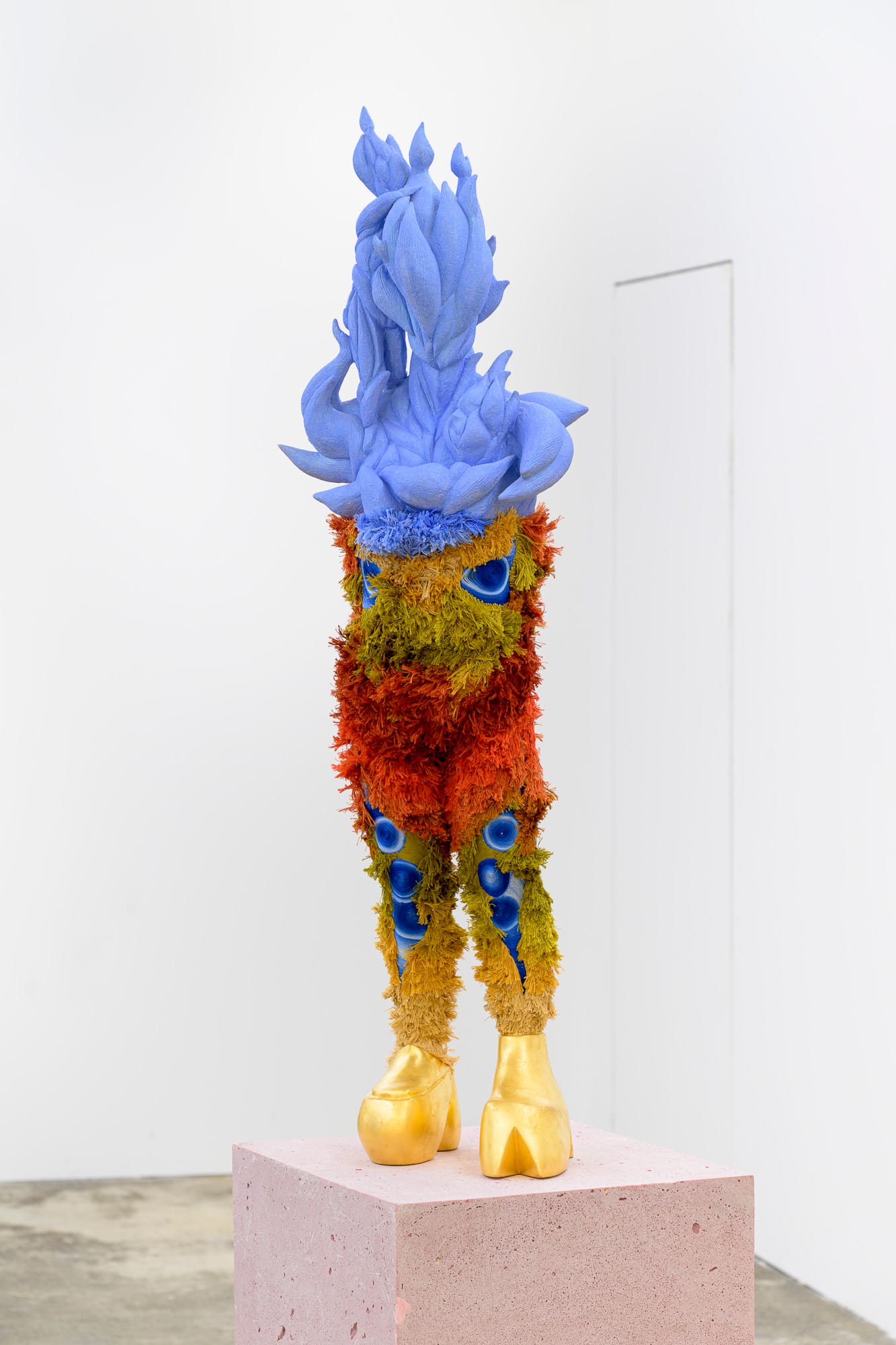
Magdaléna Roztočilová, Vítač, sculpture, on view in Soft Power, 2026. Photo: Adam Šákový. Courtesy Umrian Gallery, Bratislava.
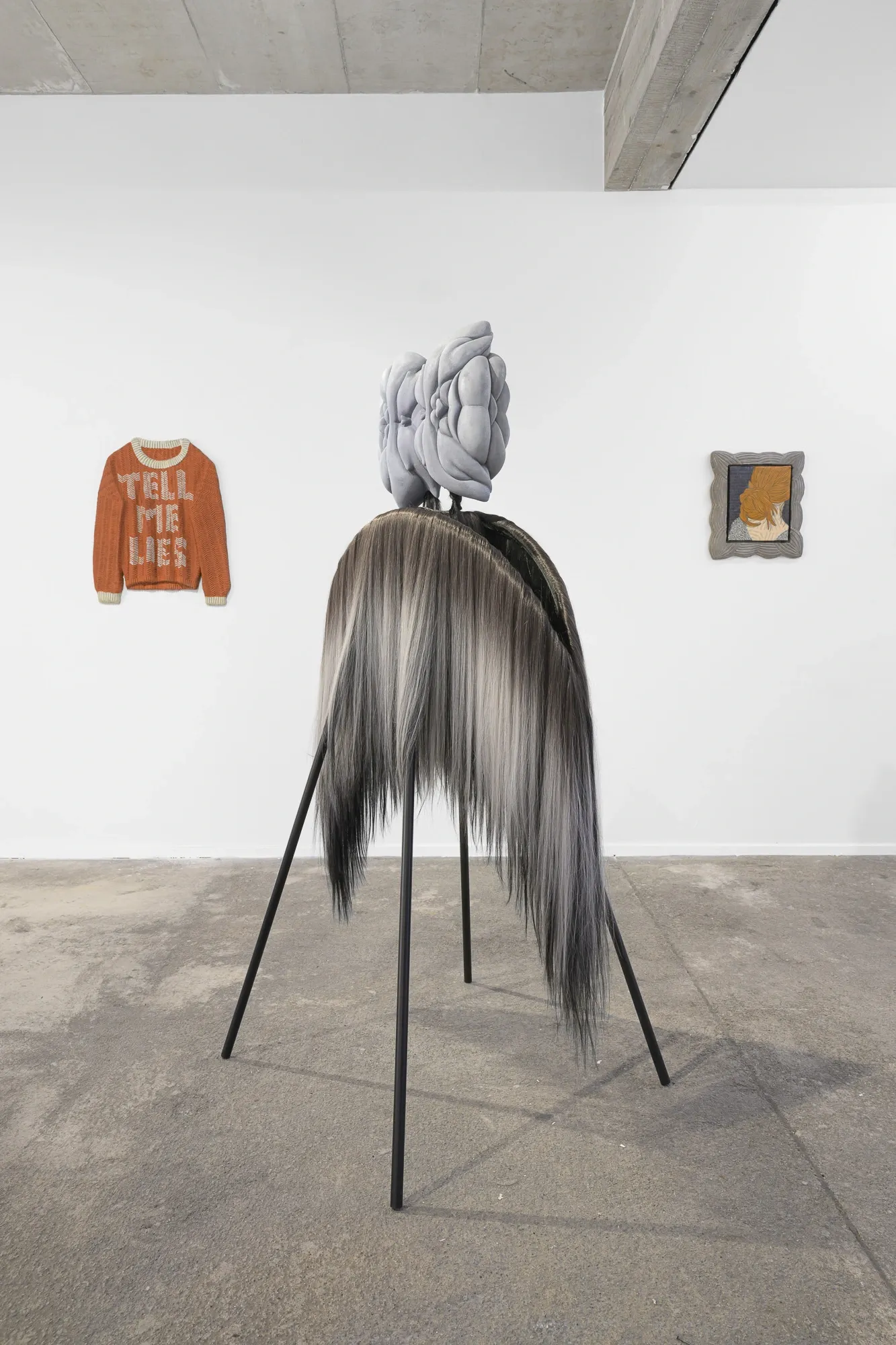
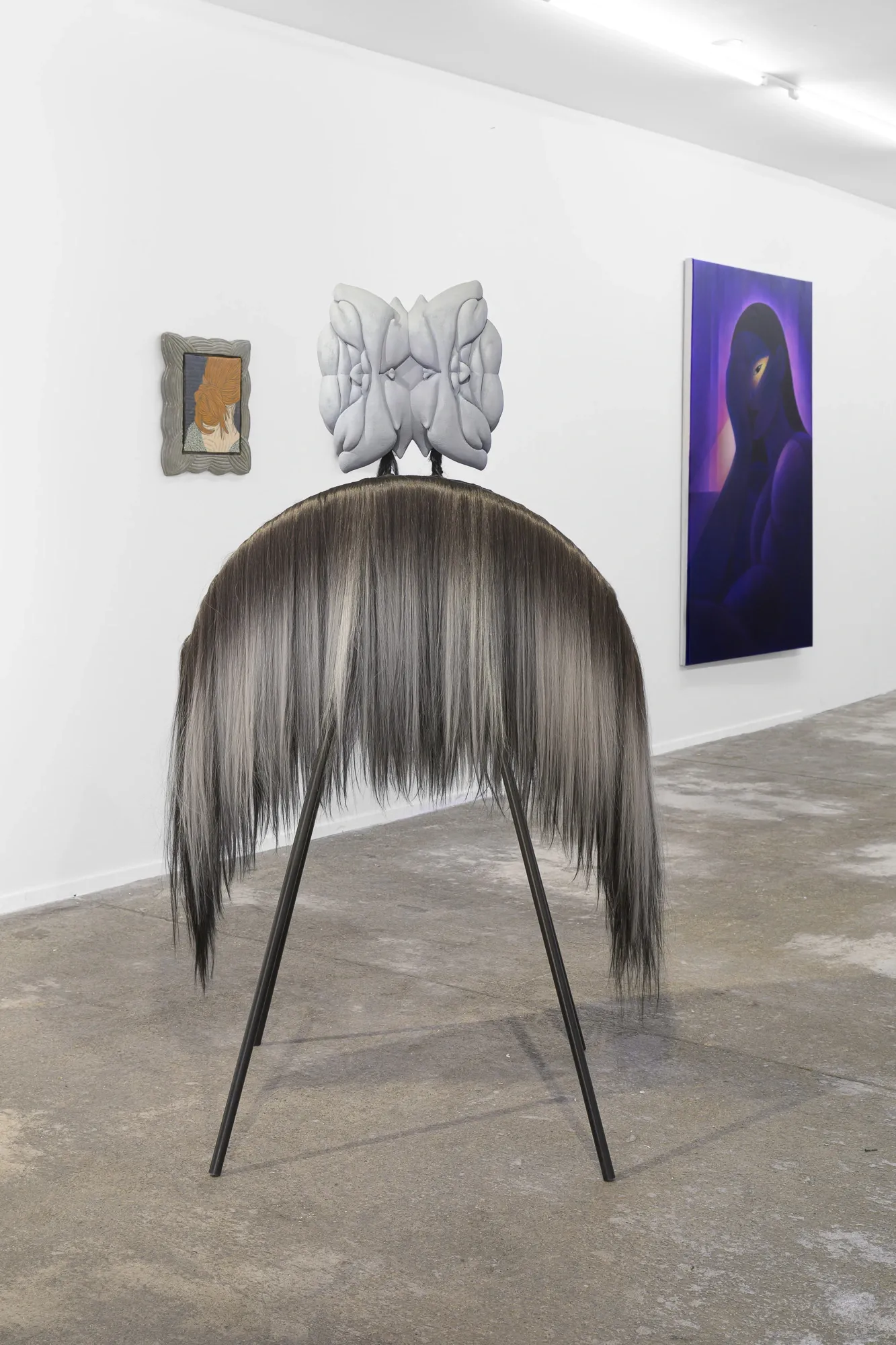
Magdaléna Roztočilová, sculpture, on view in Soft Power, 2026. Photo: Adam Šákový. Courtesy Umrian Gallery, Bratislava.
Roztočilová approaches the body not as a fixed biological entity but as an open structure in which cultural imagination, technology, memory, and materiality converge. Her sculptures shift the discussion of identity beyond social roles towards the very conditions of embodied existence.
Despite the diversity of media, the exhibition unfolds as a unified field of inquiry. Painting, relief, embroidery, and sculpture function not as separate disciplines but as complementary methods of investigating the same phenomenon.
What connects these works is not the notion of a singular female experience, but the understanding that identity is continuously negotiated between lived experience and the cultural frameworks through which that experience becomes intelligible.
At the same time, the exhibition refuses simplistic oppositions between victim and perpetrator, freedom and oppression, or the private and the political.
The mechanisms of soft power rarely impose themselves from outside. They become internalised, shaping the ways in which we perceive ourselves and others. It is precisely for this reason that they are so difficult to recognise.
Soft Power offers neither definitive answers nor moral conclusions. Instead, it creates a space in which familiar images of everyday life begin to reveal themselves as cultural constructions, historically contingent, socially produced, and constantly reaffirmed.
What appears natural is exposed as the result of an ongoing process of formation. And it is precisely in recognising this constructedness that the possibility emerges to imagine both ourselves and the world differently.
Follow the Artists and the Space
Aziya on Instagram
Dana Bartoníčková on Instagram
Magdaléna Roztočilová on Instagram
Ivana Šáteková on Instagram
Umrian Gallery on Instagram
About Catapult Contemporary - Art Platform Submission
This is a exhibition review published by Catapult — an independent editorial platform for contemporary art, based in Vienna. We publish exhibition reviews, artist features, interviews, and critical context, with a focus on emerging and mid-career practices from Europe and beyond.
catapult.art
Want to be featured? Submit your work →