Leah Dixon Gives the Wheel a Different Inventor

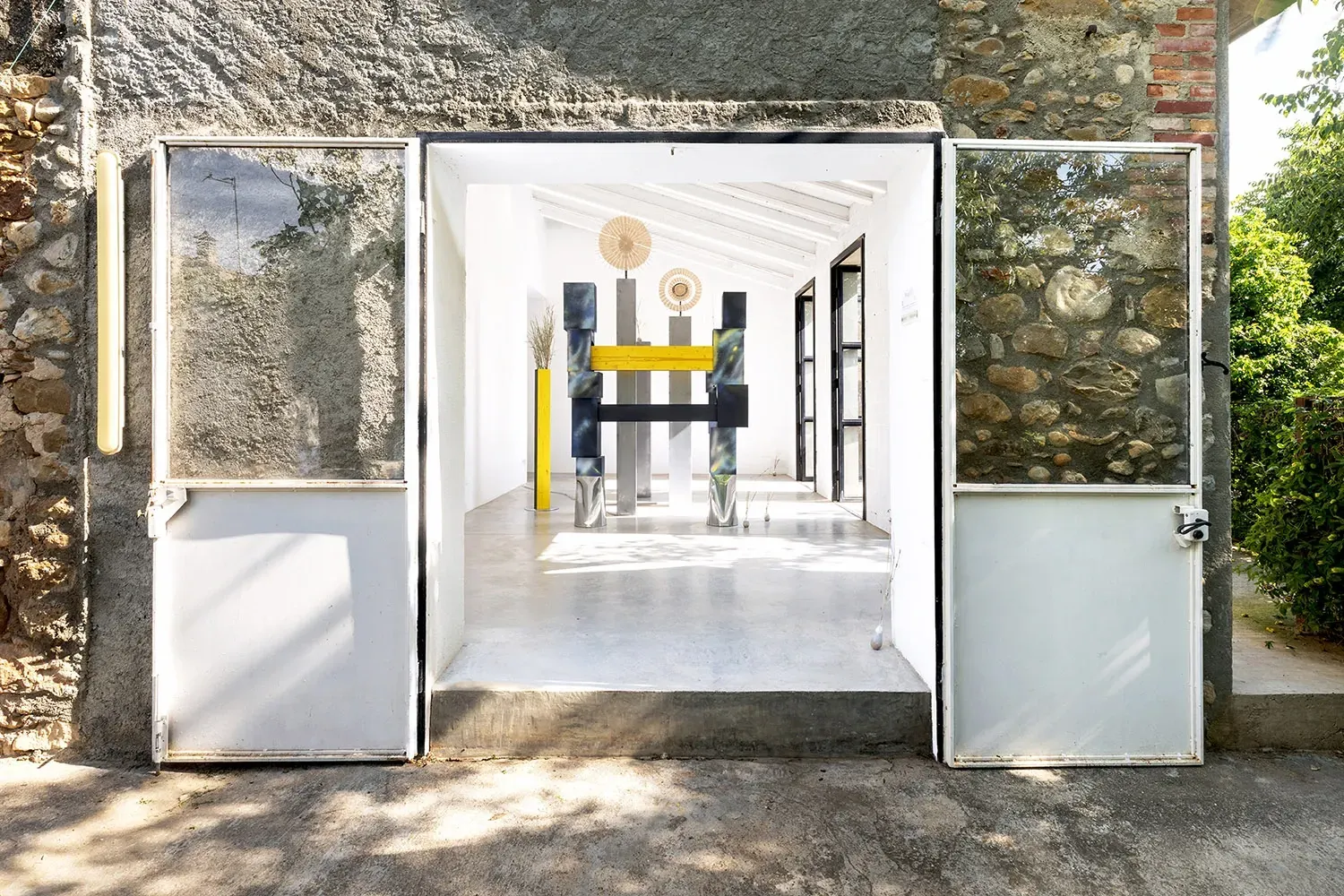
Leah Dixon at Spiritvessel Presents Tartan Tartana in Espinavessa
Spiritvessel presents Tartan Tartana by Leah Dixon, curated by Sira Pizà, through September 12, 2026.
Leah Dixon
Tartan Tartana
Spiritvessel
Espinavessa, Girona, Spain
–
Carrer de la Font 7, 17747 Espinavessa, Girona, Spain
Sira Pizà
Roberto Ruiz
Courtesy the artist and Spiritvessel
Curatorial View by Sira Pizà
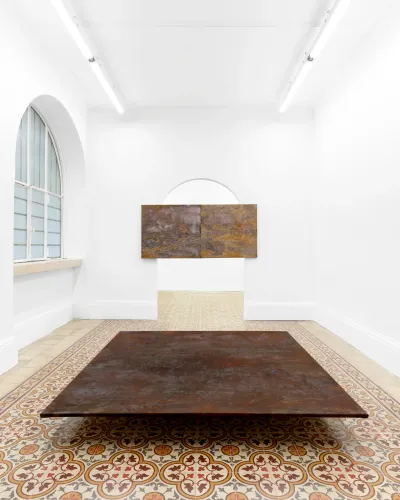
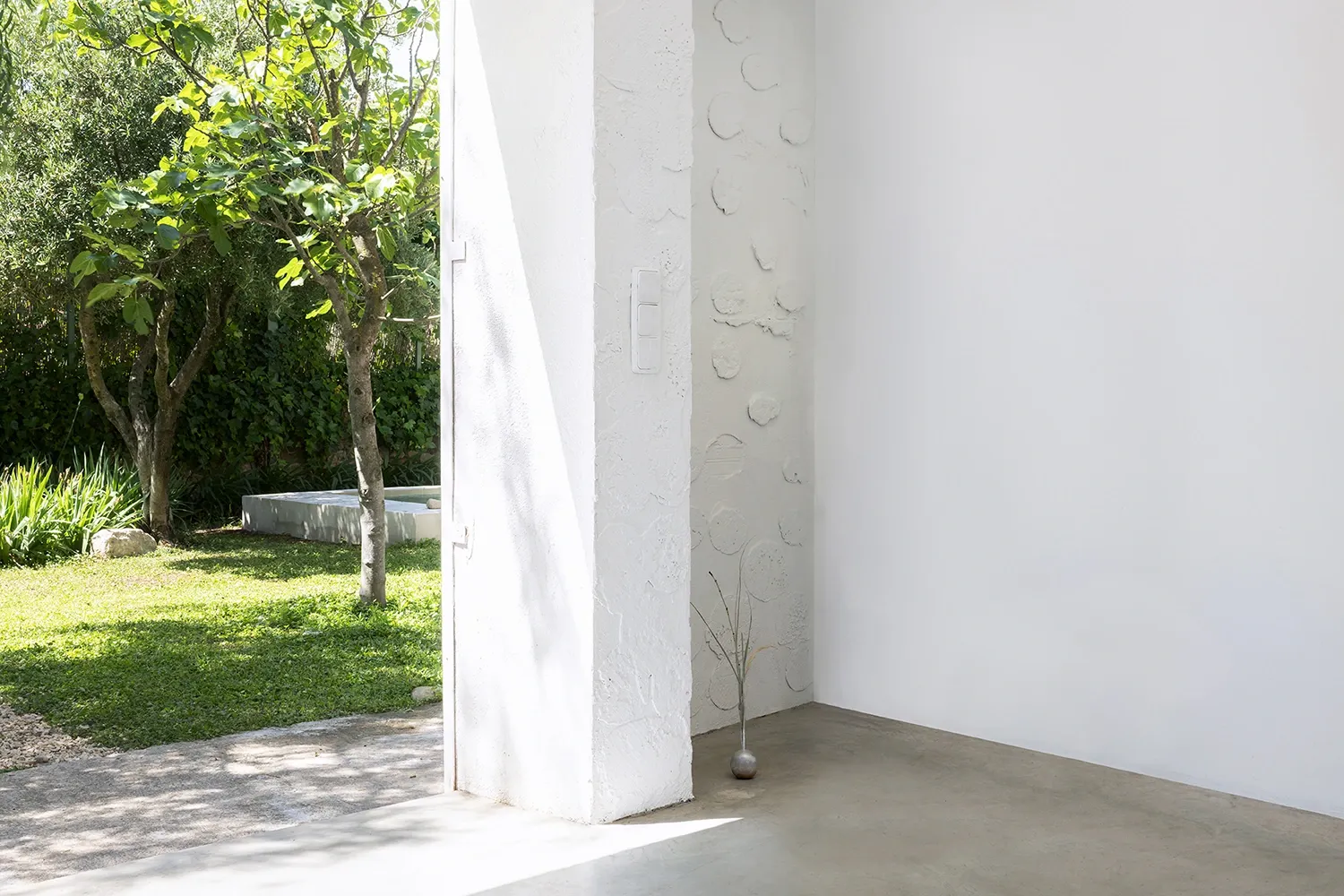
The show's title sculpture, TARTAN TARTANA: The Girl Who Invented The Wheel IV, is built around molded sawdust and resin clay onions, the vegetable Dixon assigns to a prehistoric woman who invents the wheel in a five-page origin story the artist wrote years before the exhibition.
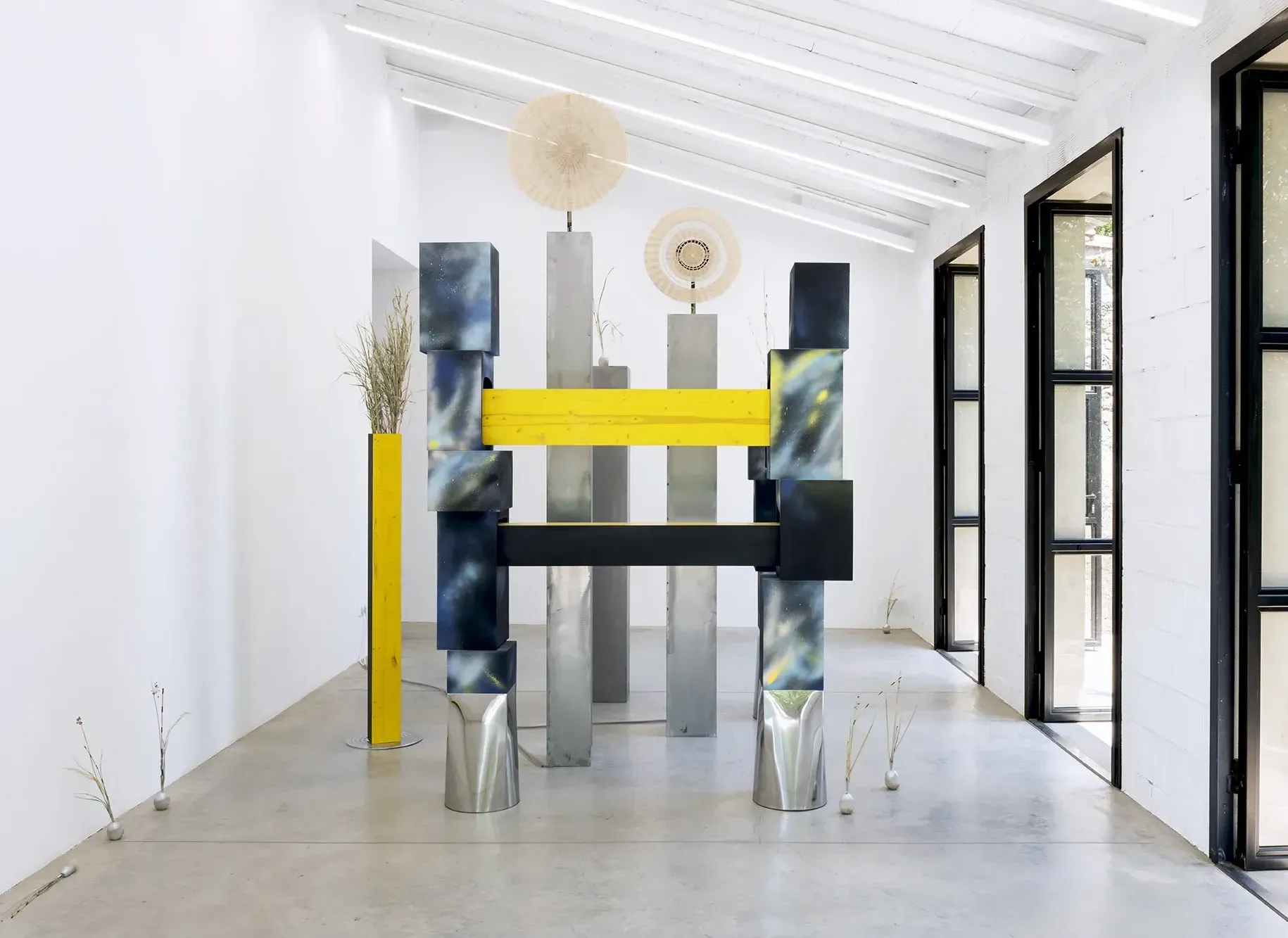
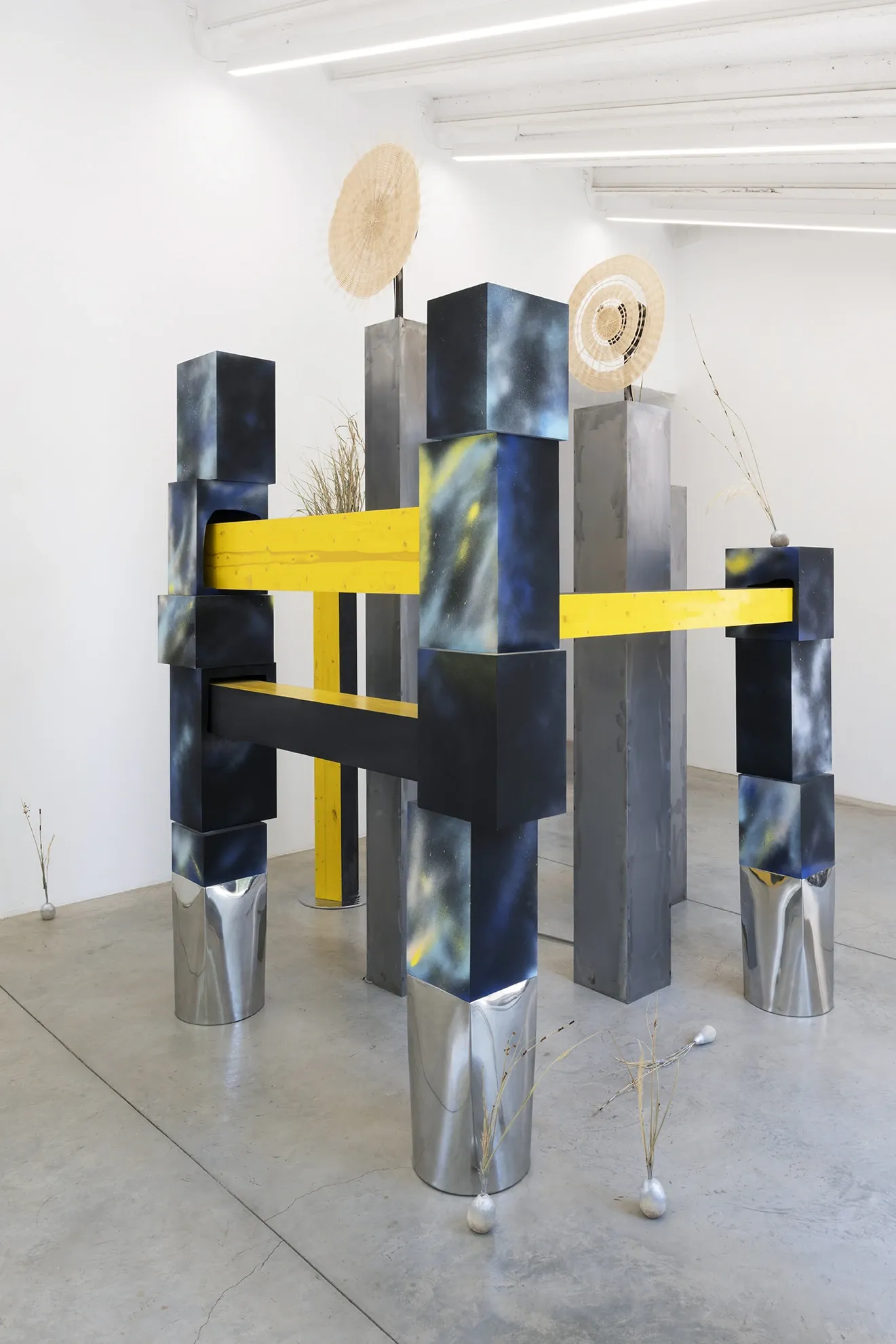
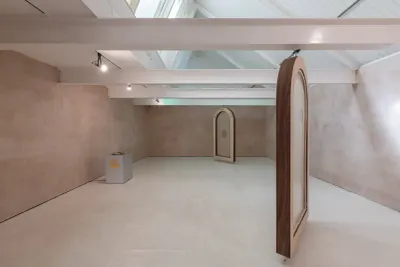
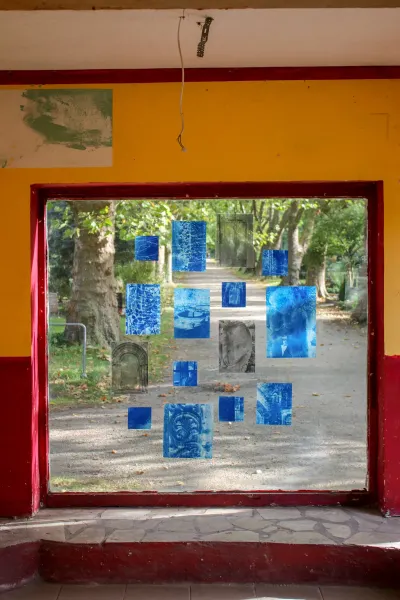
In that story, the same woman later watches humanity turn her parents' teeth and bones, the only parts of them that do not disintegrate, into the first monumental architecture. Outdoors, a second sculpture, Megalithic Fireworks Portals, suspends aluminum pipe and a plastic bucket from a freestanding wood and enamel structure. Below, curator Sira Pizà explains why.
Submit to the Living Archive
Current shows. Past exhibitions. Both belong here.
In a five page long story first written a few years ago, a girl from an undefined period in pre-historical times narrates her life in her home, a boggy glen surrounded by onion grass, which she learns to pick and replant in her family's land, in what seems like the beginning of farming. Her voice is contemporary, and she describes a trajectory of millennia from the vantage point of someone who's already been to all the different moments in time, past, present and future.
The heavy onion smell that always surrounds her becomes a saving grace when she manages to avoid marriage and is free to dedicate her time to mind wandering, investigating, and inventing. As a result of a chain of philosophical considerations, she happens upon the realization that a disc turned on its side, joined to another disc by a stick in its geometrical center, is a wheeled vehicle.
She soon connects the device to a rectangular body that can carry things and people far and wide, and so trade begins and with it the exponential spread and mix of human DNA and cultural practices. When her parents die, however, she observes the dawn of the very opposite thing: the fixed, immobile, unperishable power of monumental architecture.
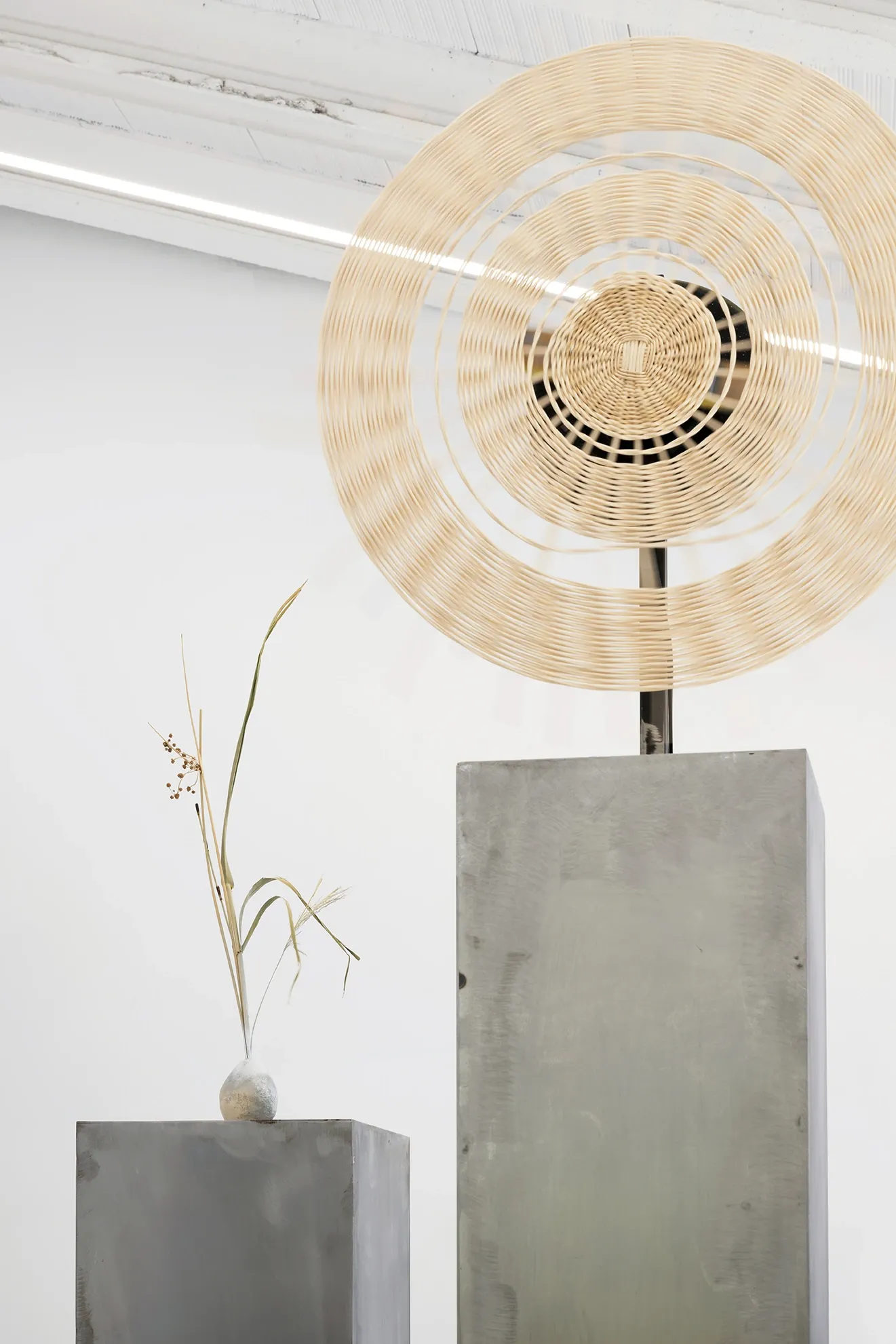
Her parents' teeth, which were the very thing that killed them, just like their bones, don't seem to disintegrate, and never disappear. She will then go on to see how humans turn to the endeavor of finding a toothbone-like material in their surroundings, which they can extract, move with their now long implemented wheelcarts, carve and cut and build into marble statues, columns, towers, temples, empires.
The story re-writes the widely accepted assumption that the wheel as we know it was invented primarily by men, for warfare, instead placing a woman and the universe of immediate domestic survival at the center of human need and desire.
It rejects a linear succession of events, understanding evolution and progress as an interconnected grid, rather than a linear road. Like time, in continuous forward motion, the wheel only moves forward, the inventor speaks, because nothing ever goes in any other direction than that.
Acceleration, as Virilio argued, is the true motive of progress - not capital, not accumulation, but the power to erase distances which eventually would lead to globalization.
In "Speeding up. Prehistoric animal traction and the revolute joint", Eva Rosenstock suggests viewing the advent of the first vehicles, long before the industrial revolution, from the angle of awareness of time in space and, hence, speed, considering the revolute joint, — the mechanical principle that allows an axle and wheel to rotate relative to one another — as the innovation emerging around the late 4th to early 3rd millennium BCE that dramatically increased the speed and efficiency of animal traction, transforming prehistoric economies and mobility, and thus, human self perception.
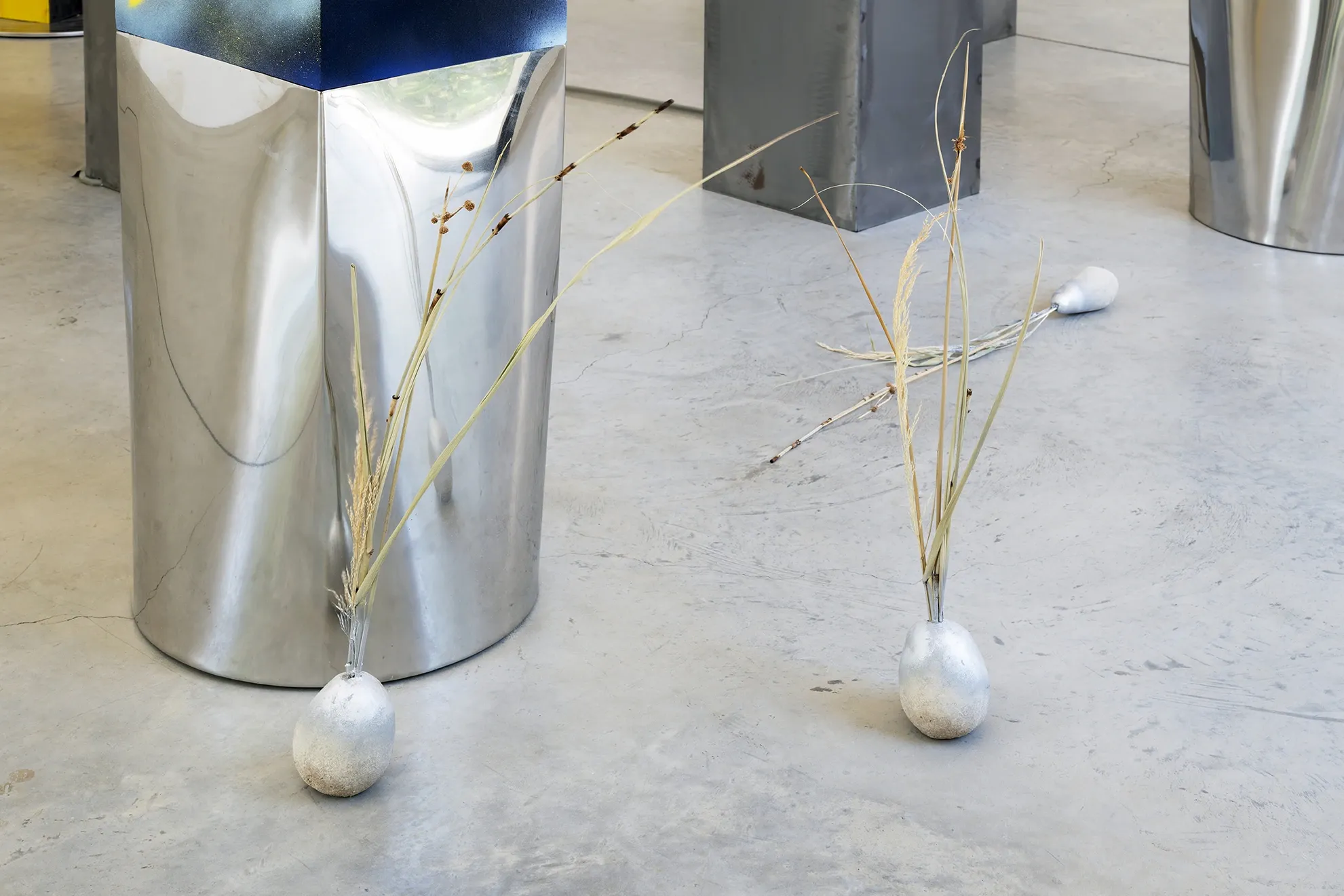
Leah Dixon wrote and has used this story as an internal thread, a sort of origin myth, a root to the sculptural development of her latest projects.
When Dixon first came to Espinavessa, it became clear that this place in the world was the perfect setting for her story, a context of stone houses made through centuries upon centuries, fields full of hayball wheels and modern manifestations of untraceable origins everywhere - in the clothes, in the traditions, in the architecture.
In Spanish and Catalan, Tartana is an ancient two-wheeled, horse pulled carriage; in modern colloquial language, it refers to an old, decrepit and battered car.
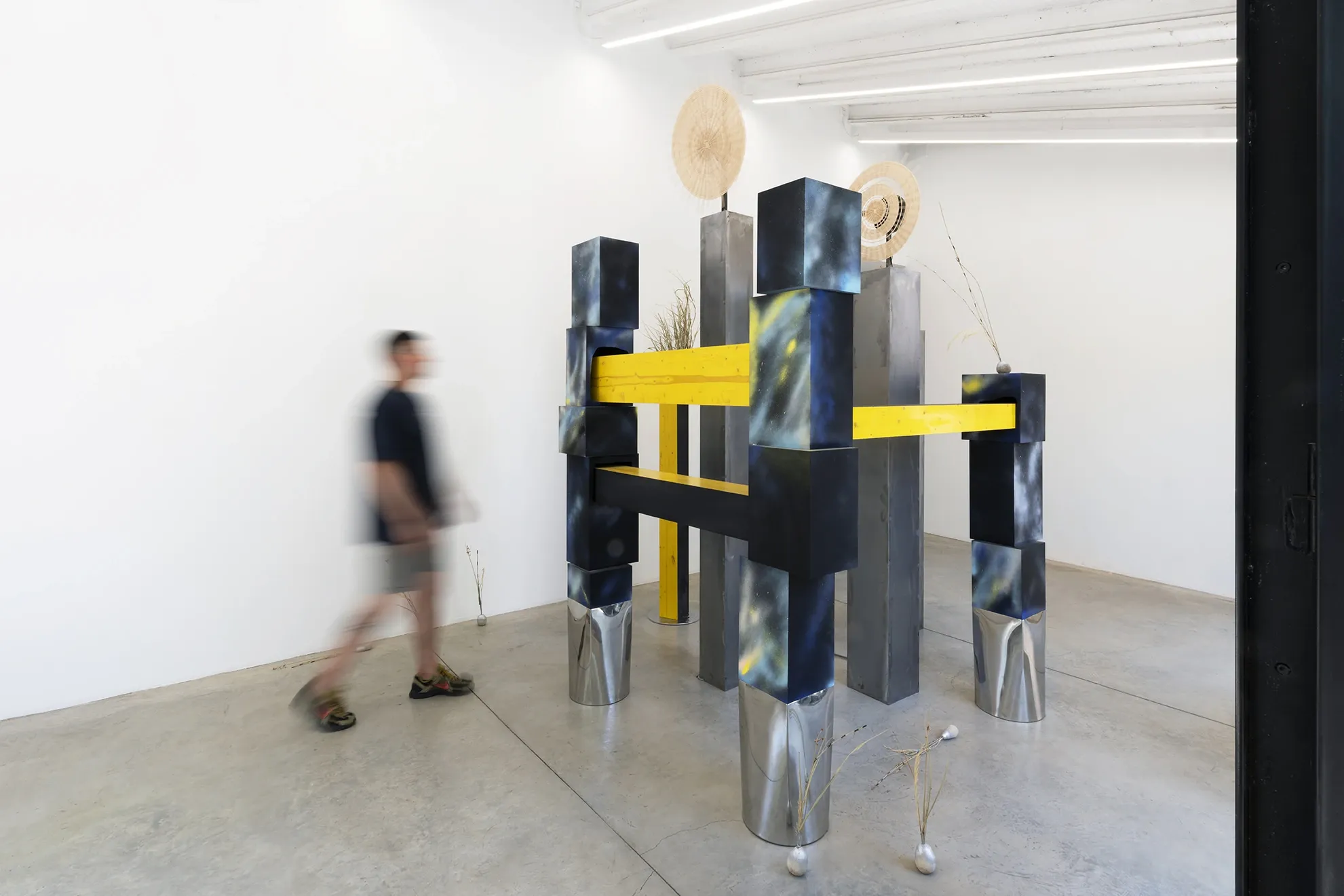
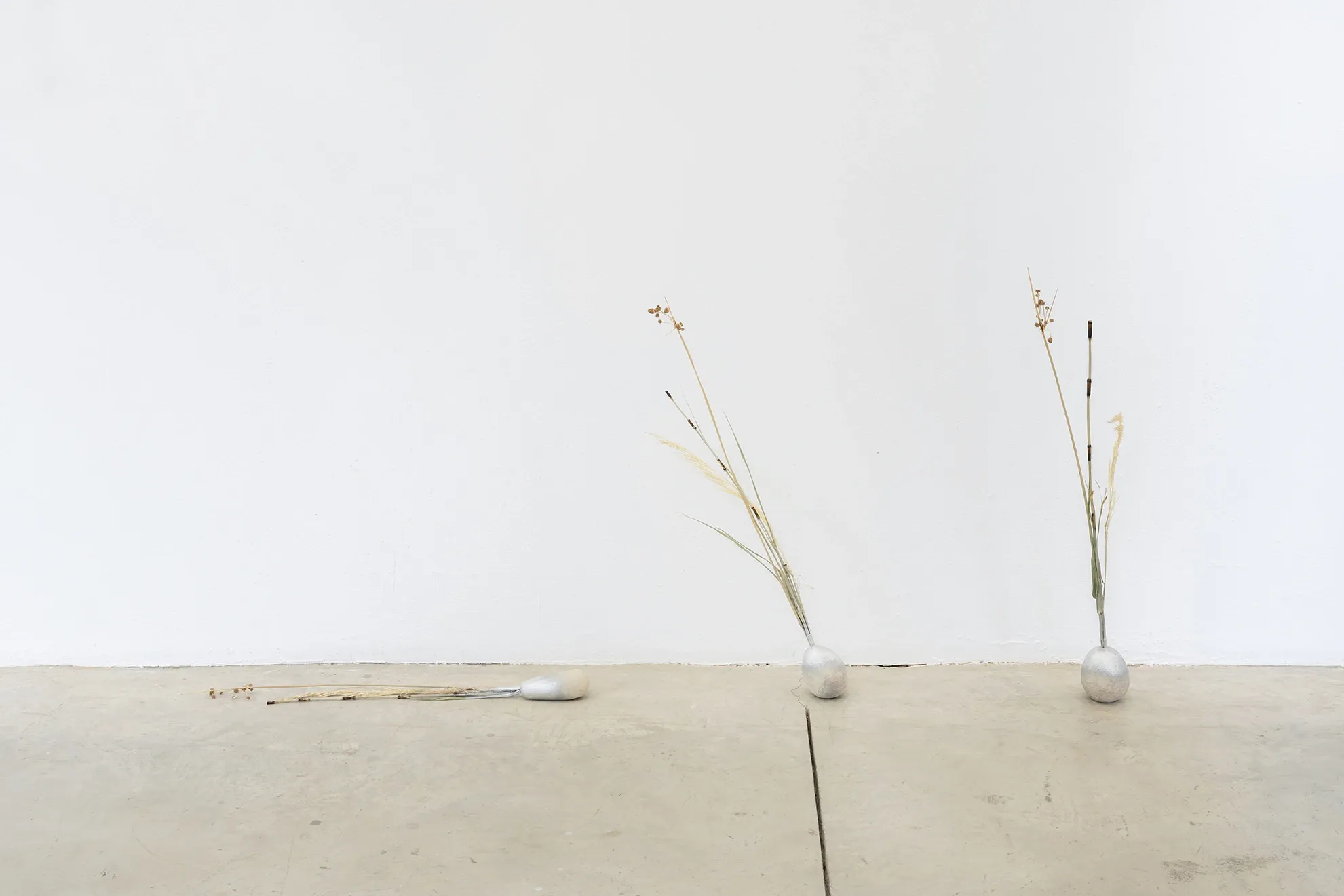
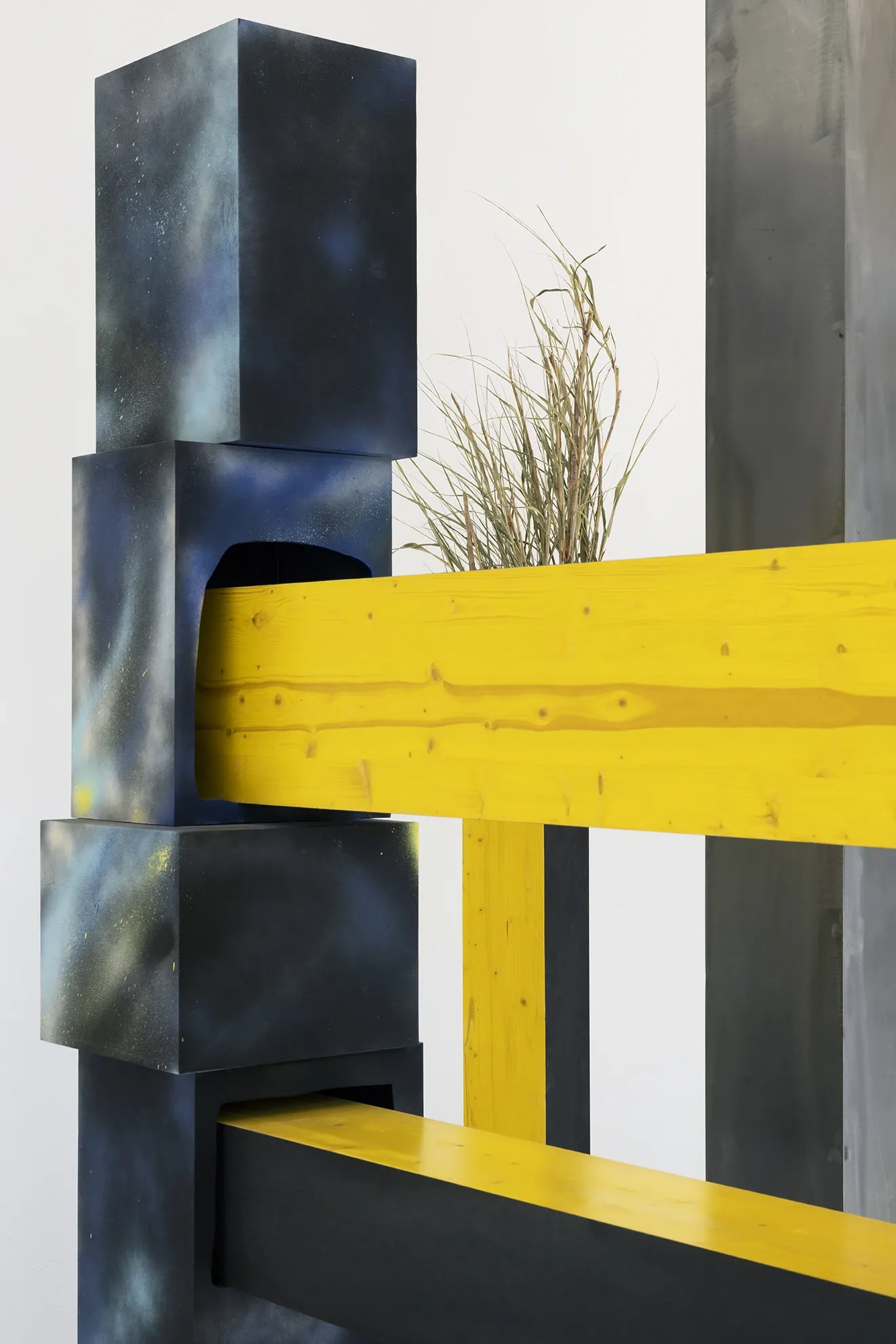
Acceleration takes the form of time leaps in Leah Dixon's story, as it does in her sculpture. The past and the future are interwoven in a three-dimensional unfolding of a black, blue and yellow tartan in space.
In the plain of the future, we encounter the tower, a rising monument, the epitome of capitalism - the skyscraper, made of reflecting glass, where we can see further away, beyond us: planets, galaxies, outer space. As a high rise building, architecture is no longer made to a person's scale: Dixon's futuristic sculptures might as well be made by another, alien entity.
In the reflected galaxies we find our projections, the stories that civilizations have placed in the skies in order to explain themselves. The vertical monument, the tower, is undone, broken into pieces and fallen. Horizontally, it depicts a volumetric take on the principle of warp and weft.
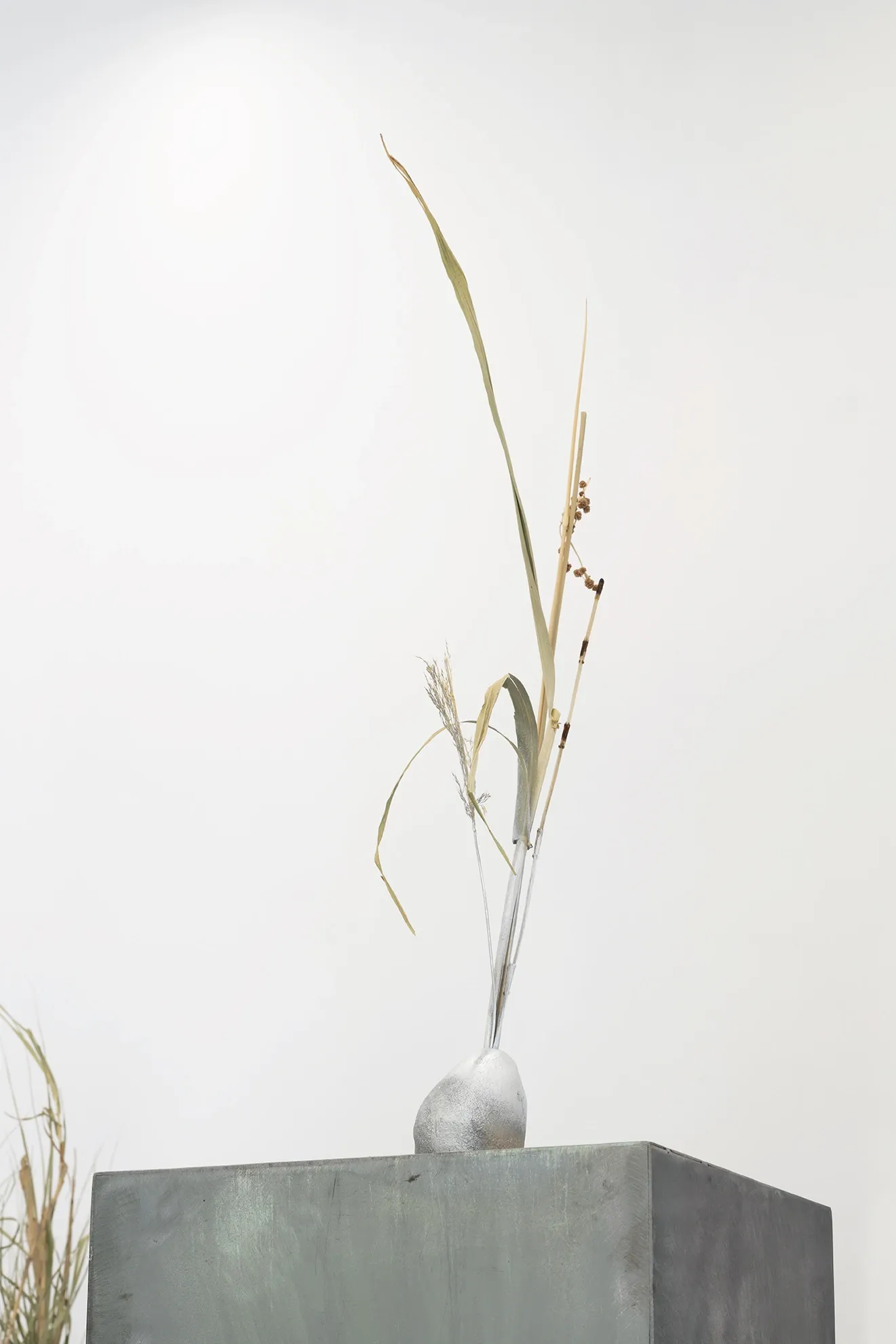
The idea of modern urbanism is already found in the very first handmade basket and cloth weavings, something that doesn't exist in nature on its own: the grid.
The earliest surviving sample of tartan fabric was found on European-featured mummies in a cemetery in the Tarim Basin desert, in present day China, and it dates back to around 1200 B.C. It's made of kemp, the coarse outer hair of a sheep or goat, and it is so similar to Scottish tartan of the 17th century, that it contributed to the genetics debate around the possibility of Western European migrations in that time period.
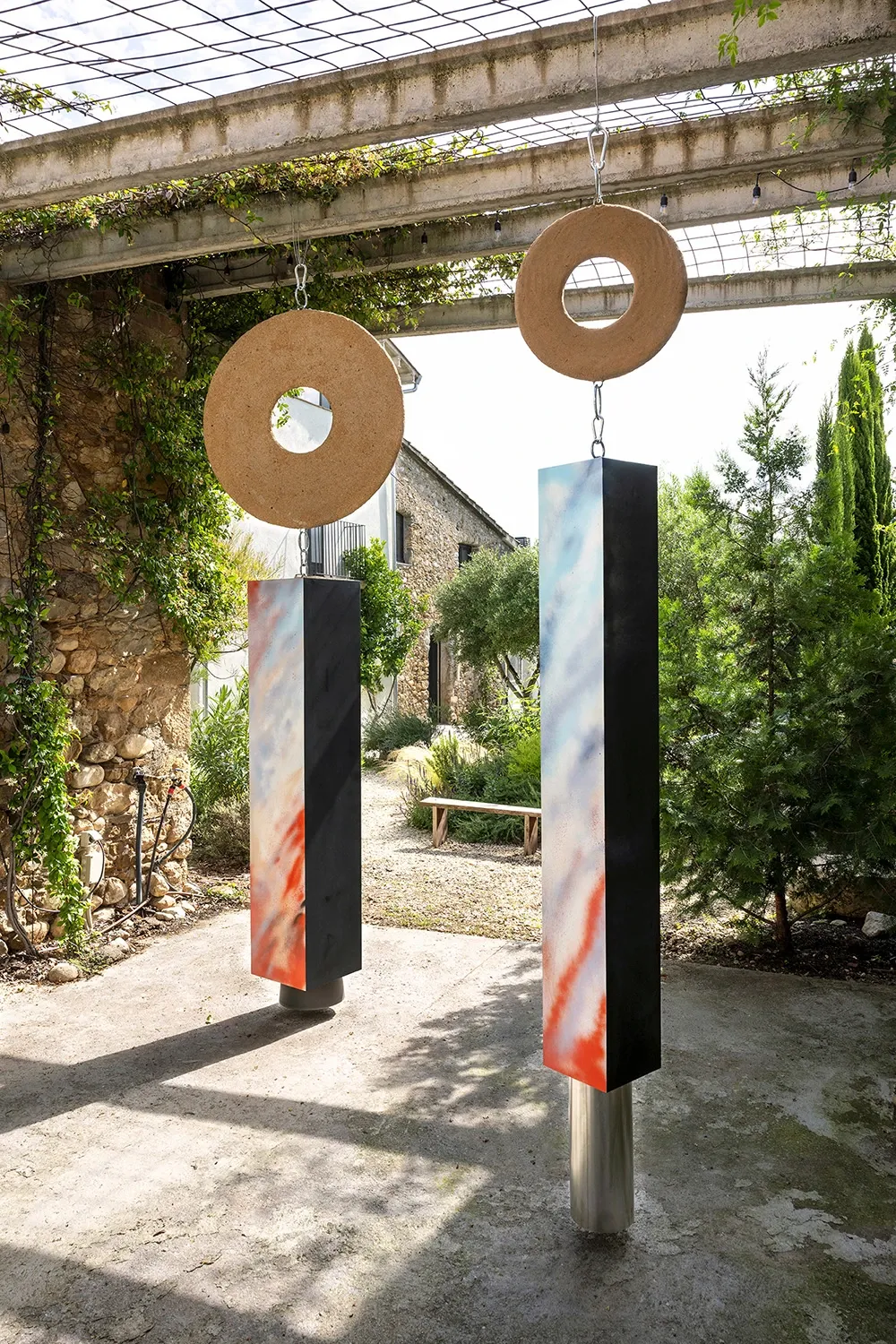
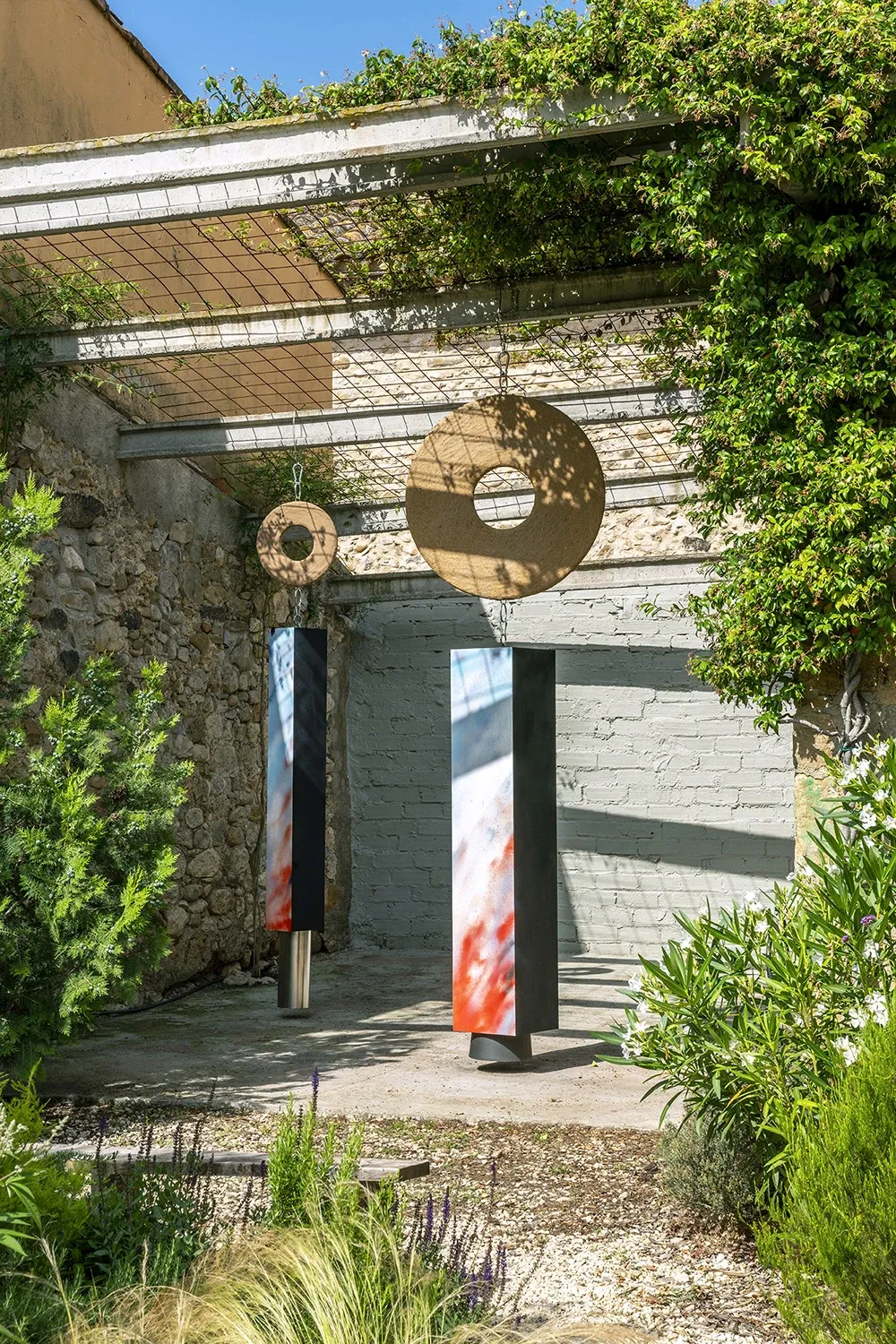
Leah Dixon, Megalithic Fireworks Portals, installation view, Spiritvessel, Espinavessa, 2026. Photo: Roberto Ruiz. Courtesy the artist and Spiritvessel.
Ultimately, evidence has established that highly sophisticated weaving technology had spread across Eurasia long before the Silk Road. After all, looms were invented in the Neolithic period, arguably becoming the first machines in human history, as they mechanized production processes.
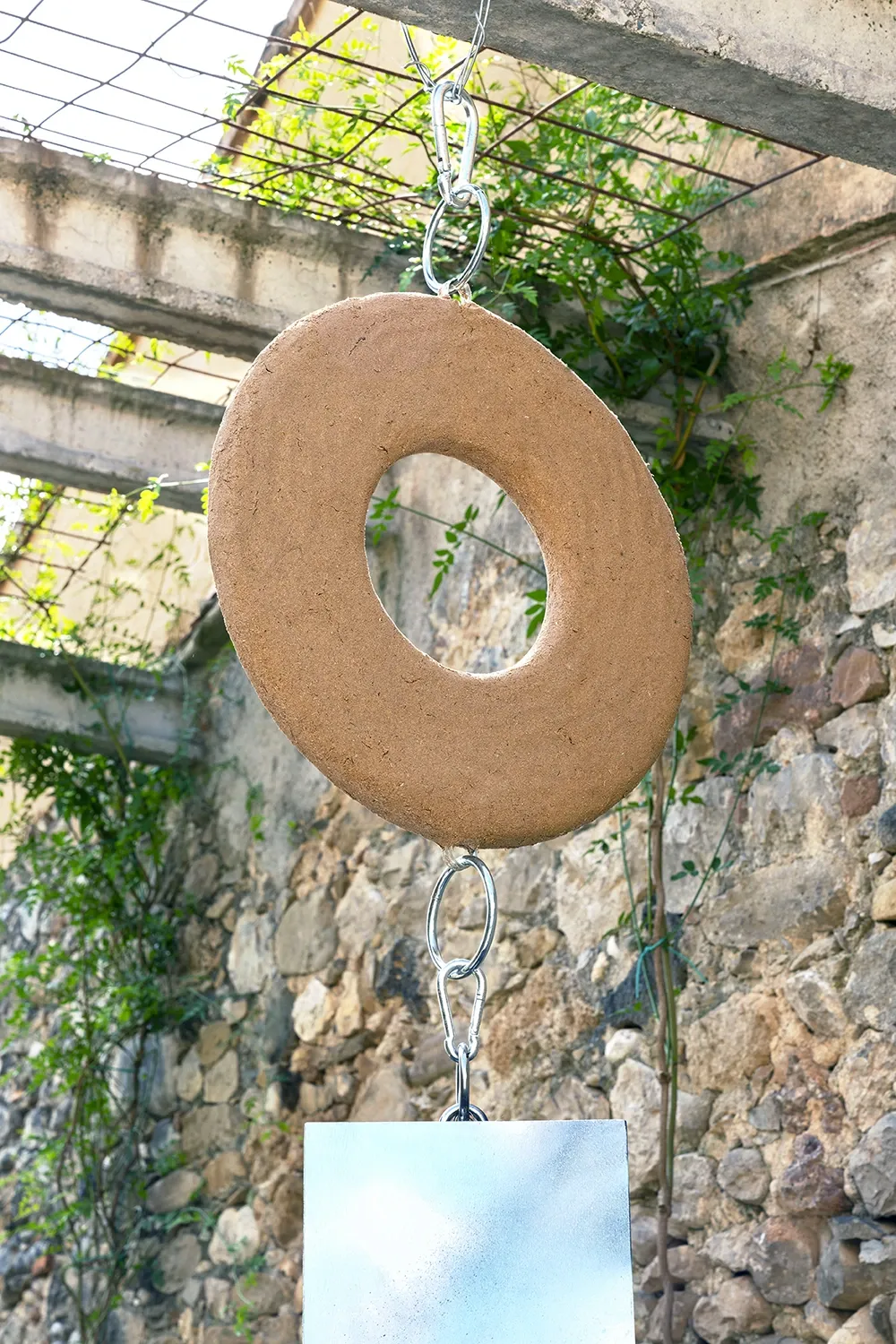
In terms of abstract thought, looms might mark the beginning of acceleration, speeding up the process of grid-making and materializing the warp and weft into perpendicular spokes holding up the tension between the hub, where the axle sits, and the rim. A tartan, a grid, a basket, a wheel, a circle, a sun: spinning over the fields, over the city landscape in endless circular motion.
Sira Pizà
What remains after Pizà’s text is the strange ease with which Dixon lets one invention become another. An onion becomes a wheel, the wheel becomes movement, movement becomes architecture, and architecture eventually breaks apart again.
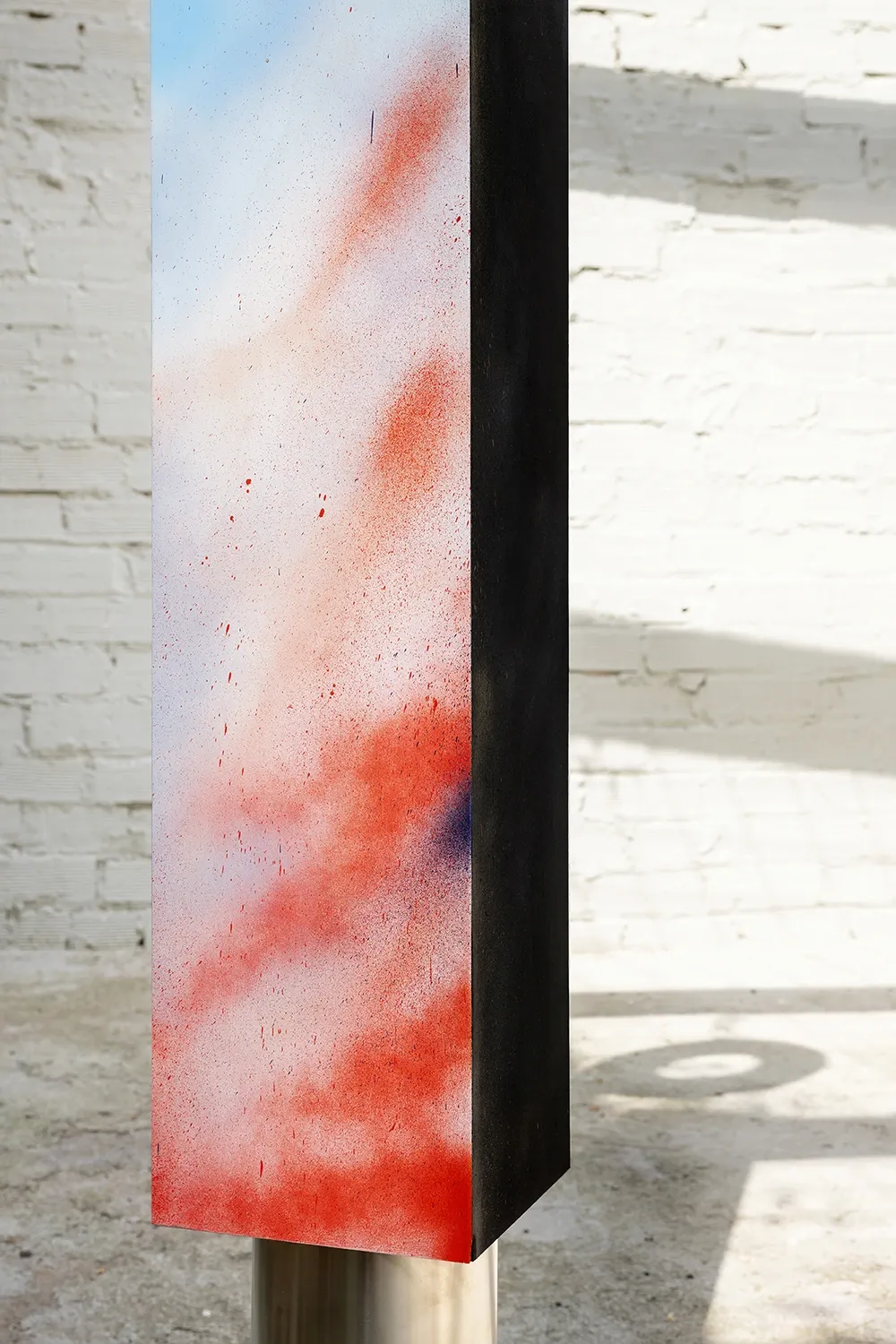
Tartan Tartana does not try to correct history so much as loosen its grip, making room for another possible beginning and, with it, another way of imagining where we might be going.
stay connected, keep the art in motion
Leah Dixon on Instagram
Spiritvessel on Instagram
Sira Pizà on Instagram
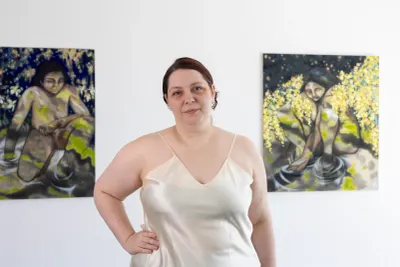
Leah Dixon is a sculptor based in New York City whose work investigates the relationship between bodies and architecture in shared social spaces, using a self-made language of modular geometry and personal color science. She holds a BFA from Ohio State University and an MFA from the NYC School of Visual Arts, and is the founder and creative director of BEVERLY'S, a bar and social architecture project in Lower Manhattan.
Sira Pizà curated Tartan Tartana at Spiritvessel and has curated previous exhibitions at the space.
About Catapult Contemporary - Art Platform Submission
This is an exhibition review published by Catapult — an independent editorial platform for contemporary art, based in Vienna. We publish exhibition reviews, artist features, interviews, and critical context, with a focus on emerging and mid-career practices from Europe and beyond.
catapult-platform.art · Instagram
Want to be featured? Submit your work →