Maija Fox Leaves Fingerprints on a Material Built to Have None

OUTPOST Presents As the Sap Rises in Norwich by Maija Fox
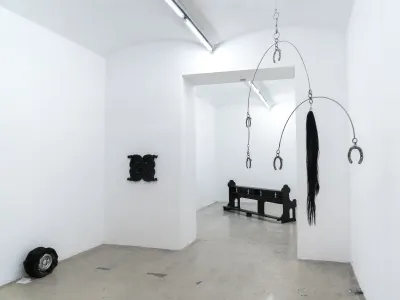
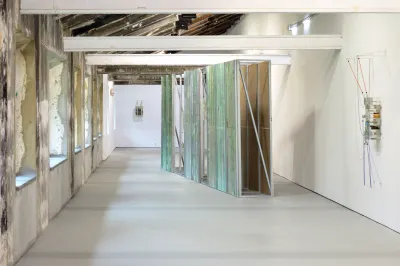
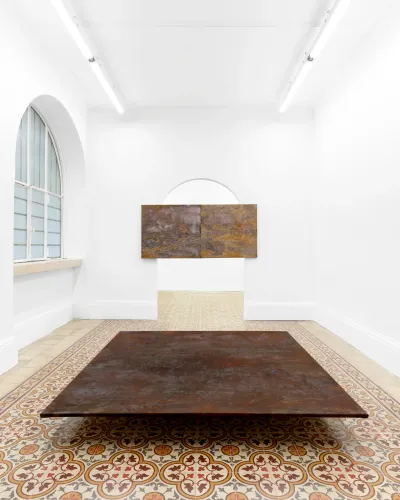
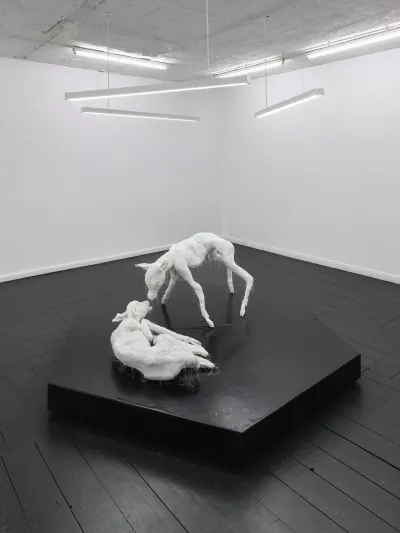
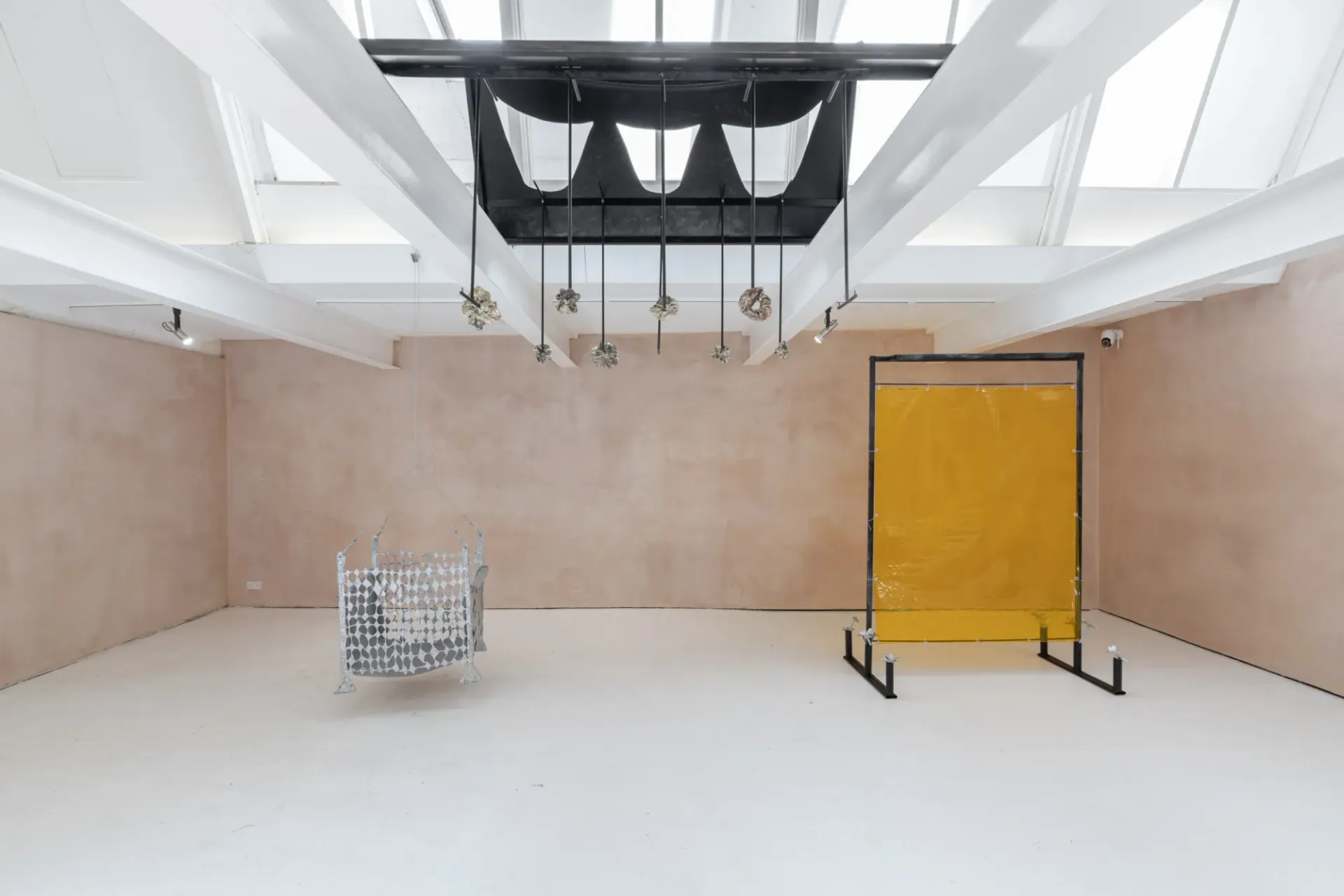
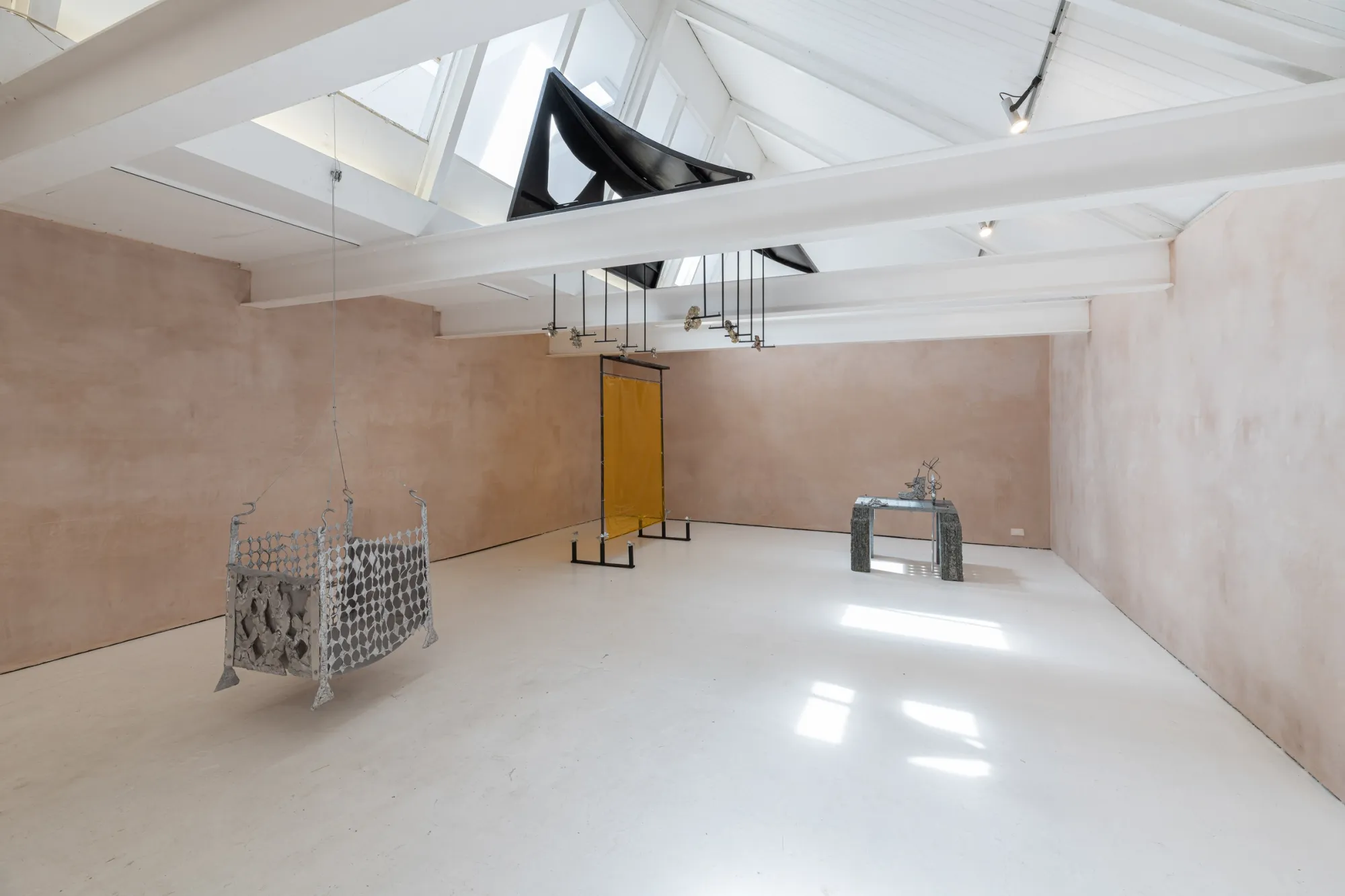
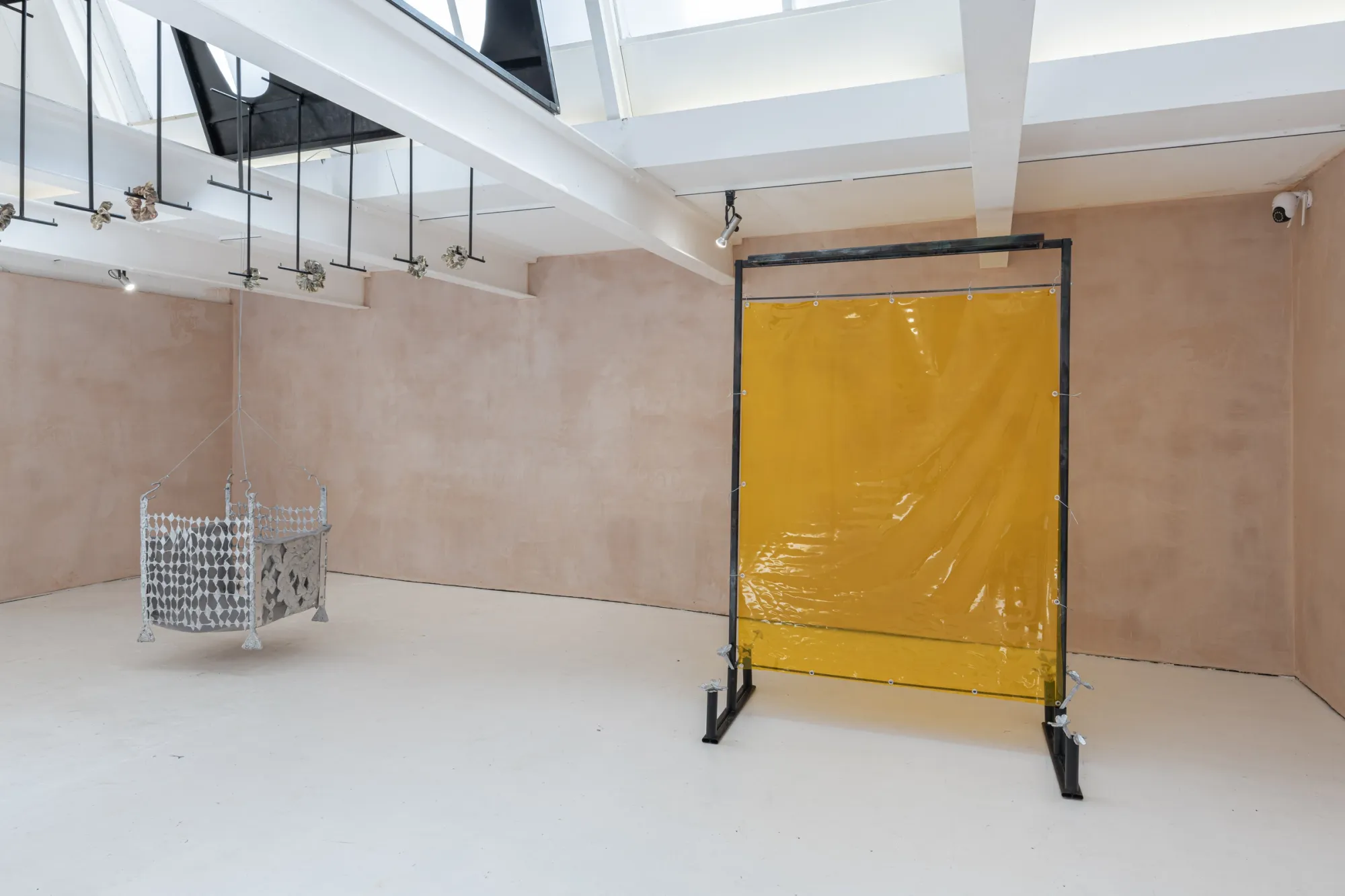
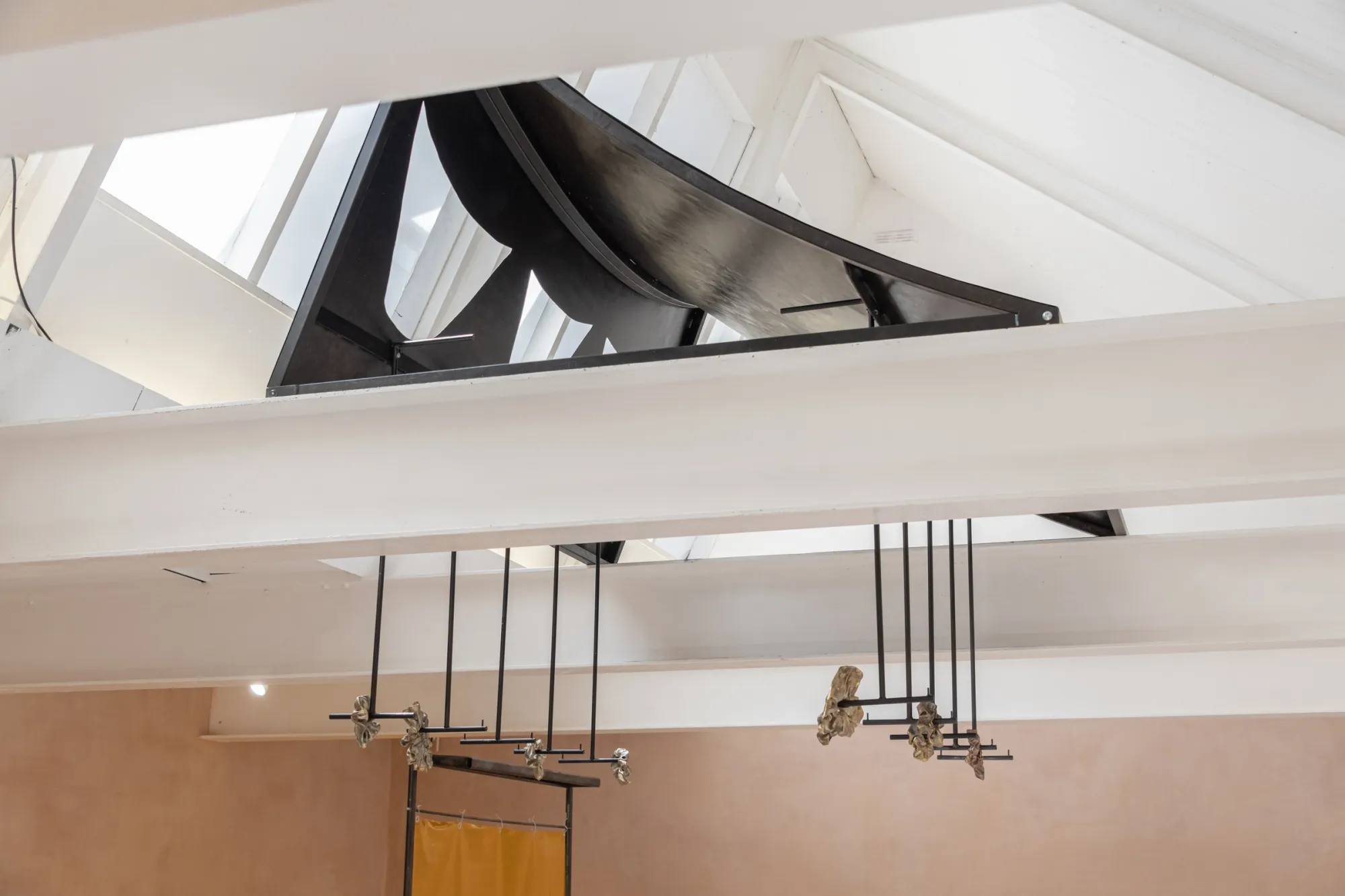
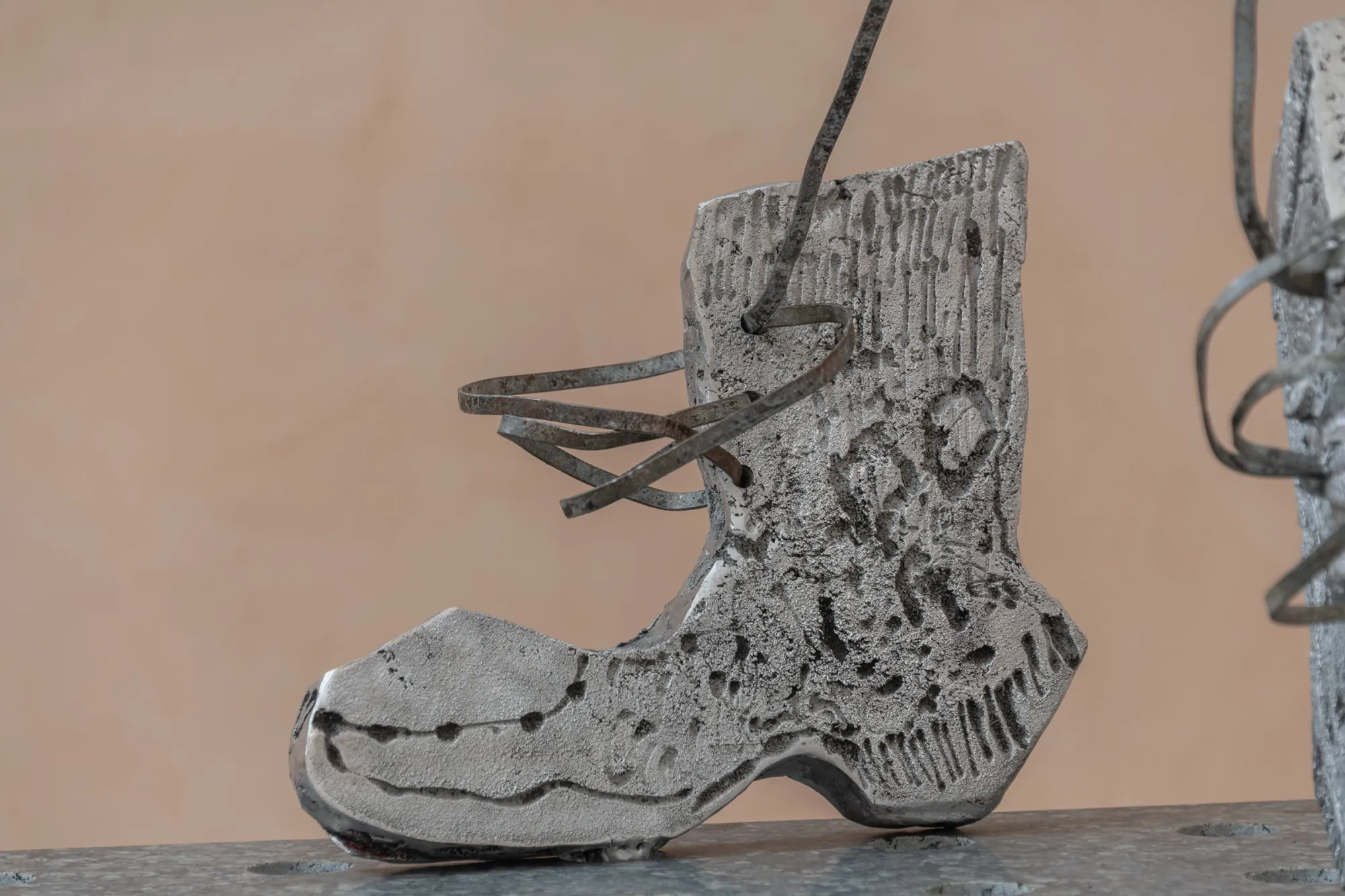
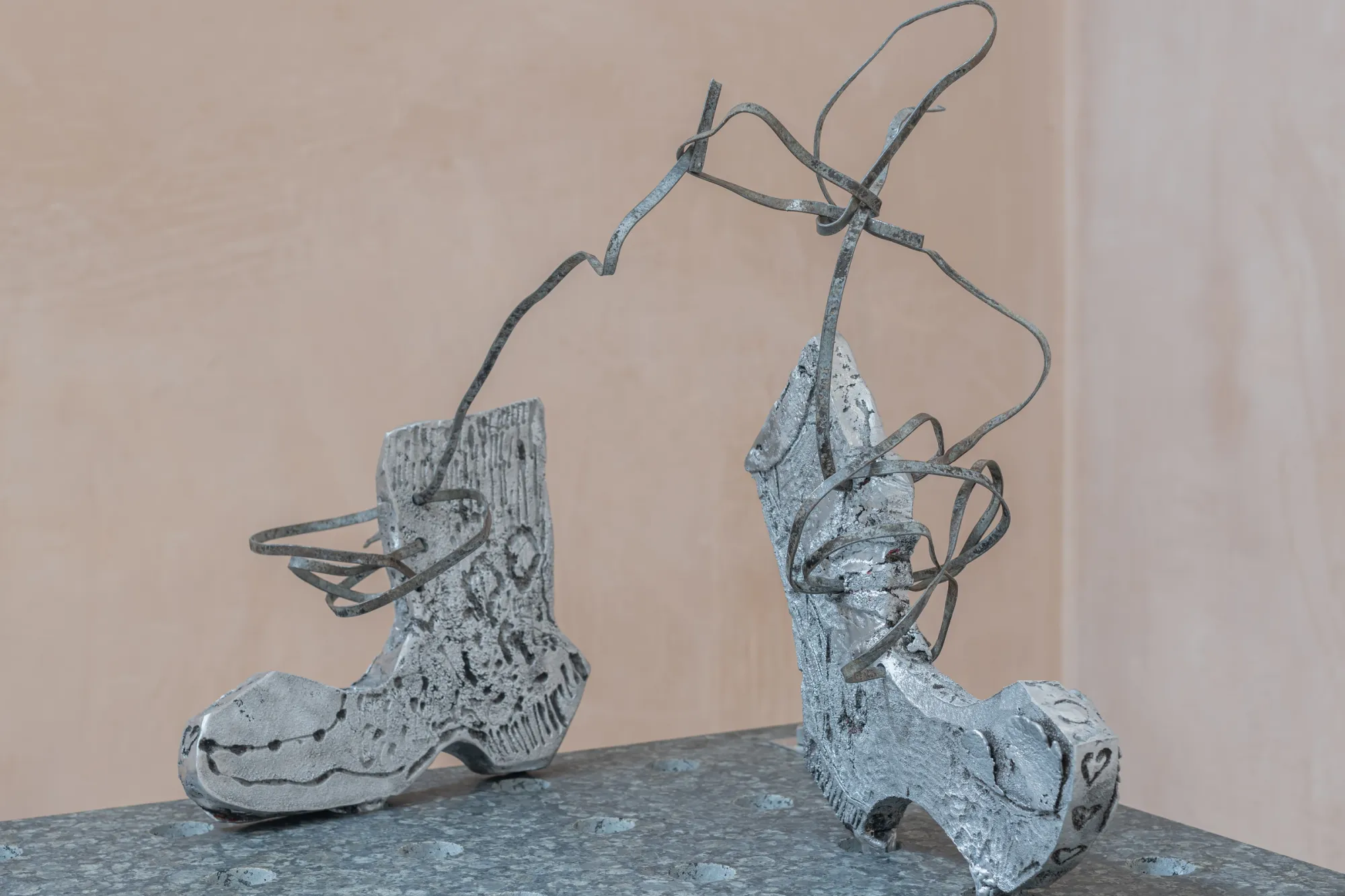
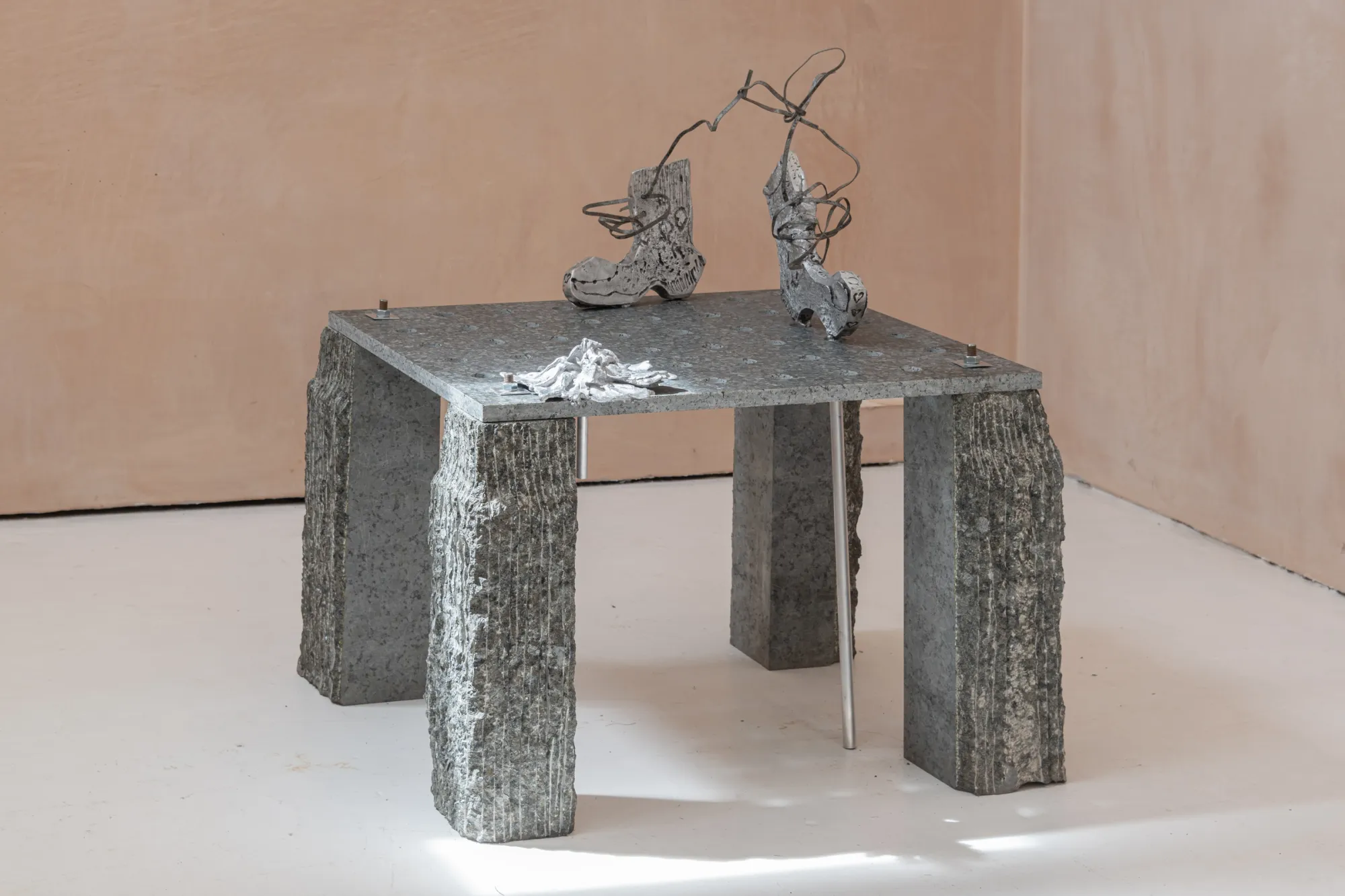
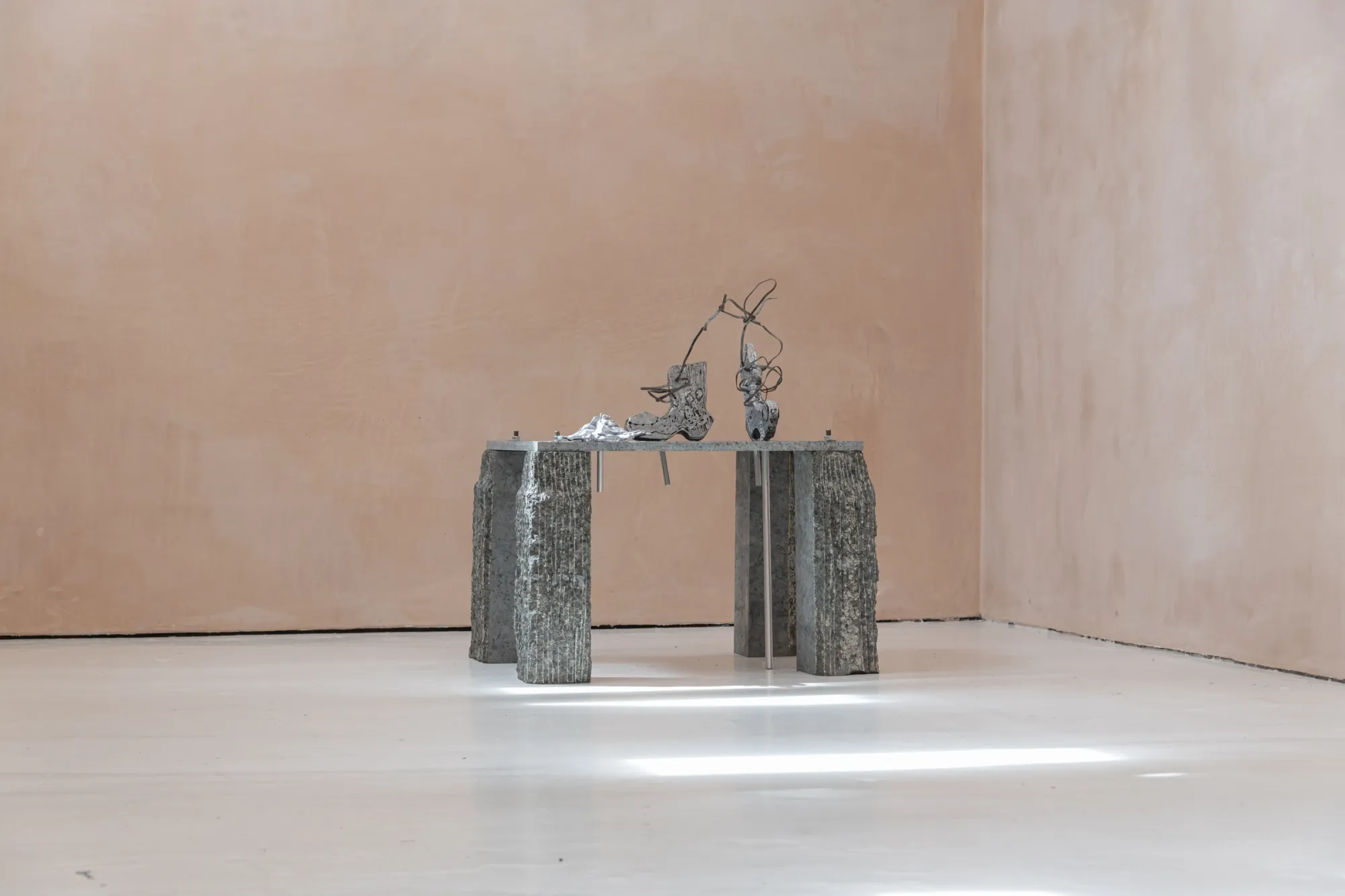
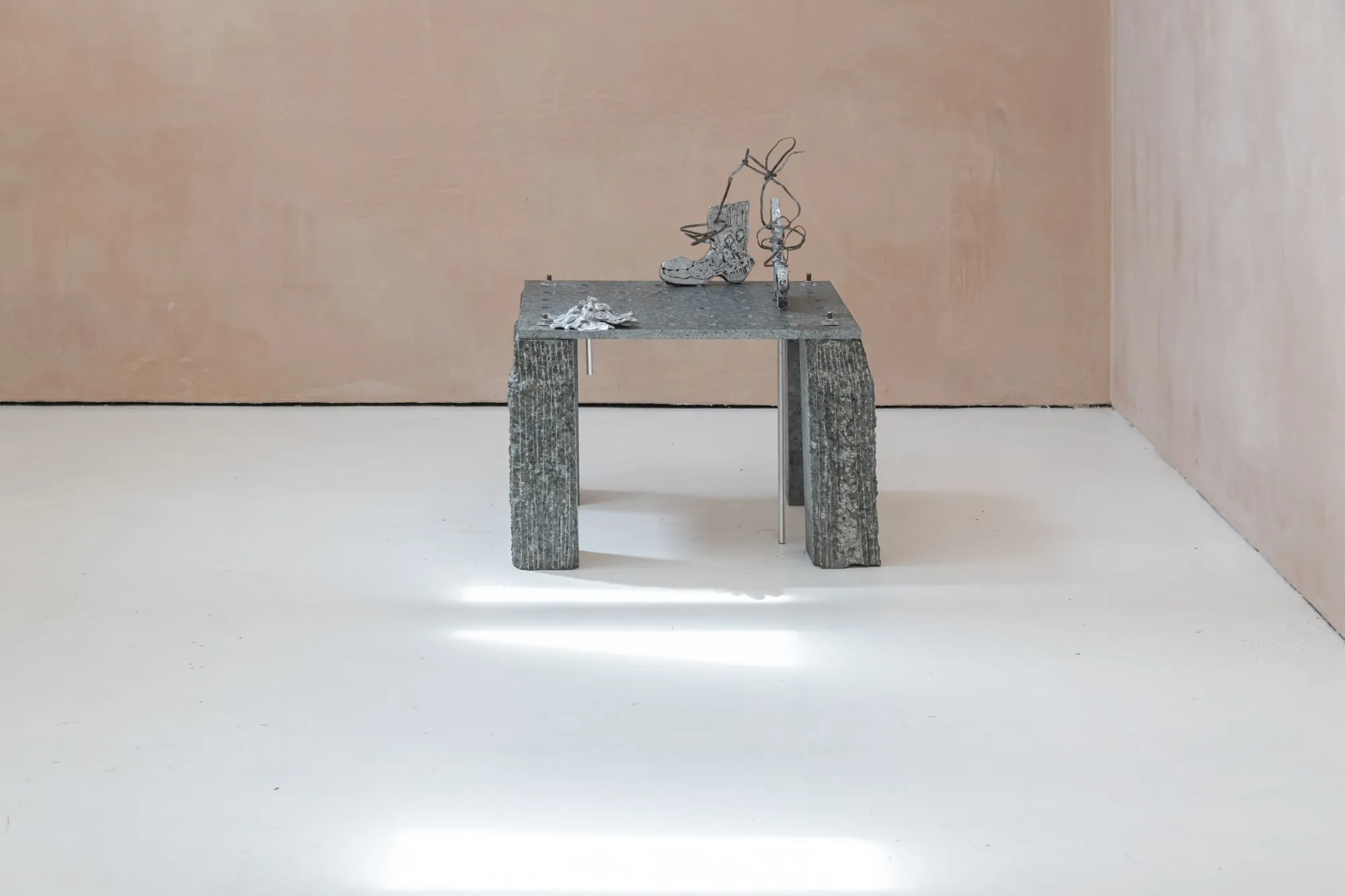
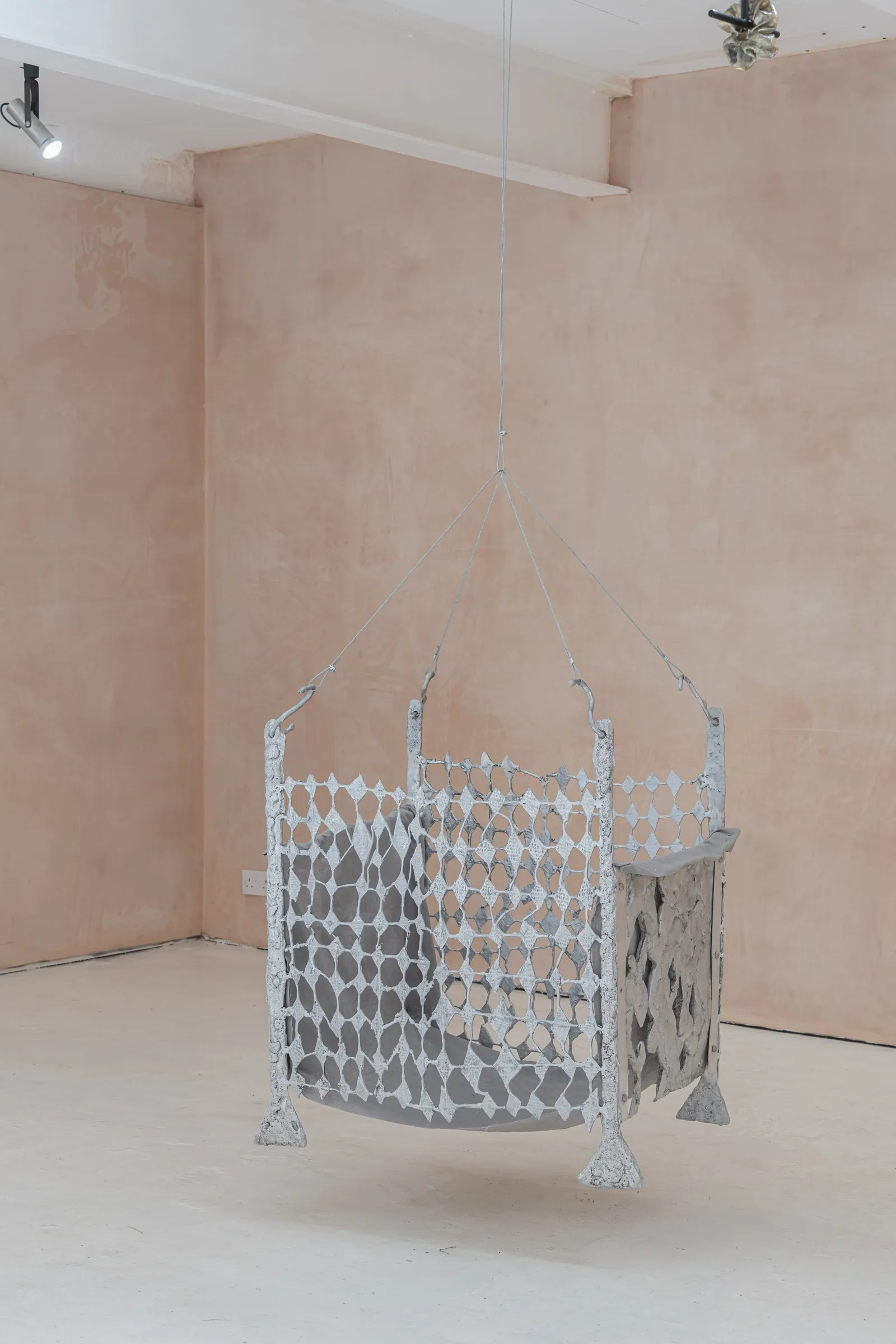
OUTPOST in Norwich is currently showing As the sap rises, a single sculptural installation by Helsinki based artist Maija Fox, built from cast aluminium, Baltic Green granite, linen and welding tools.
Maija Fox
As the sap rises
Day by Day, Bit by Bit
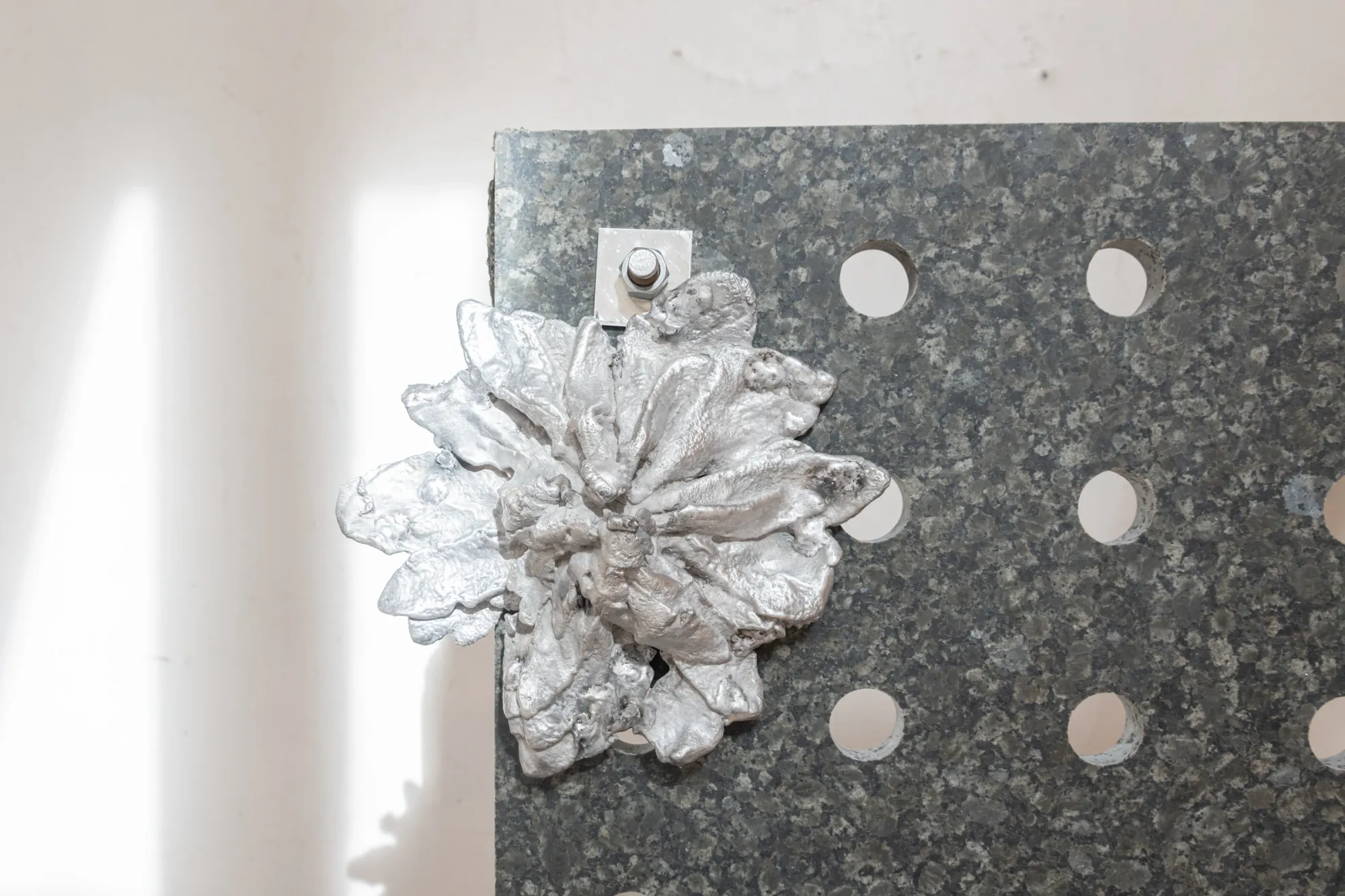
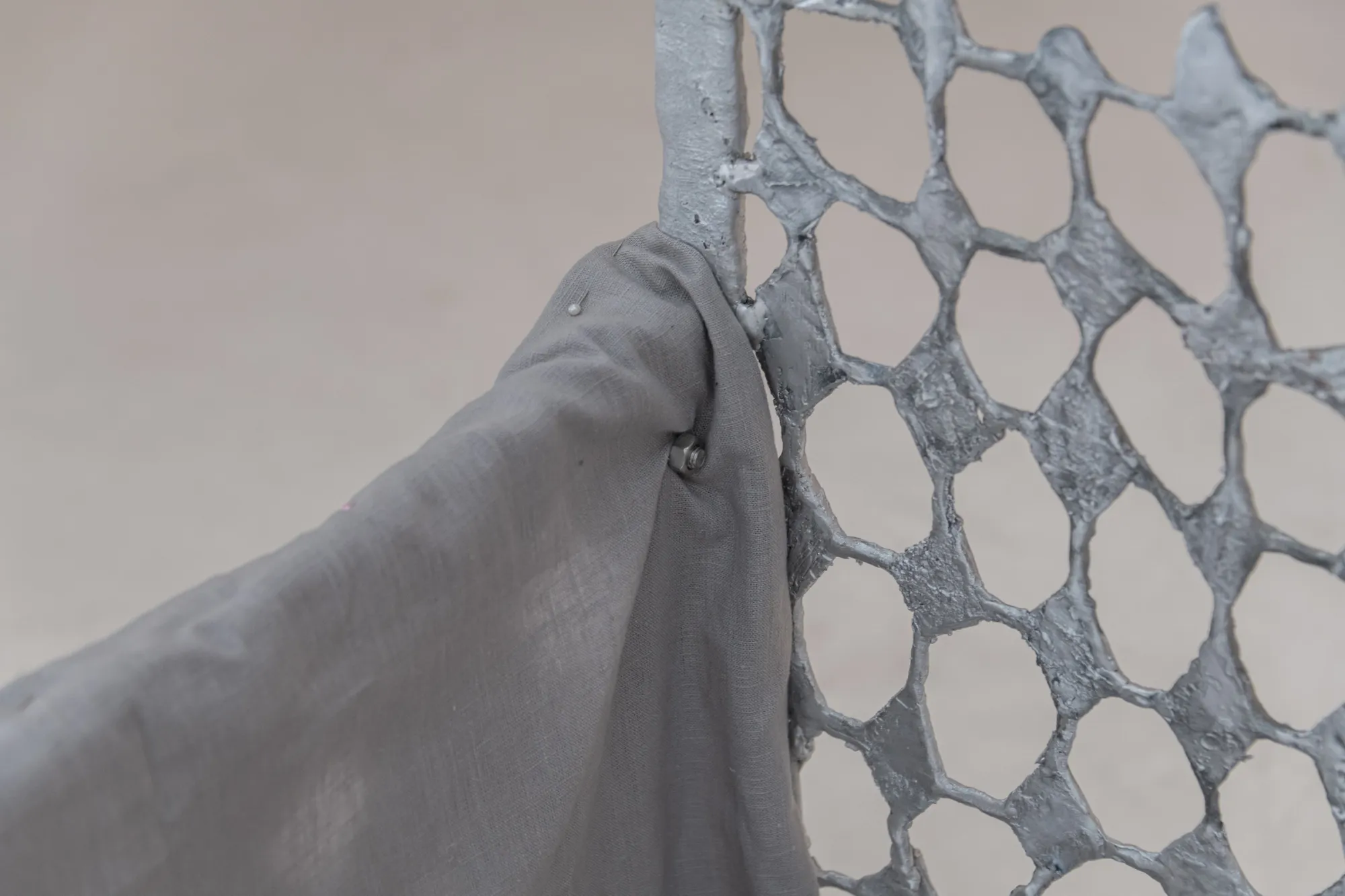
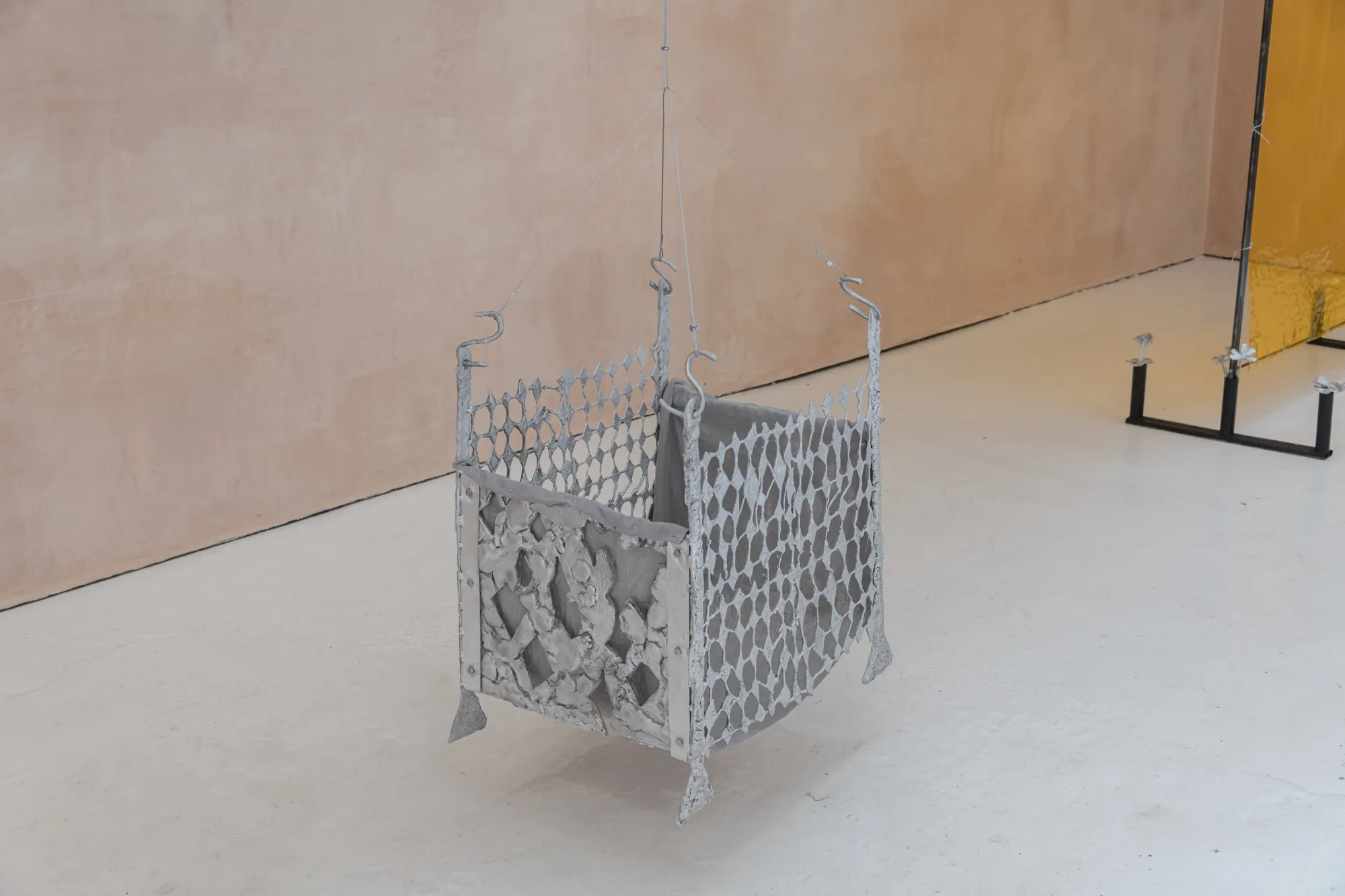
Cast aluminium, Baltic Green granite, linen, sewing pins, steel, PVC, aluminium welding wire, pulleys, steel rope, fixtures
2026
Norwich, UK
–
Thu–Sun, 12–6pm, or by appointment
10b Wensum Street, Norwich, NR3 1HR, UK
Studio Adamson
Guilherme Vilhena Martins (@gvilhenamartins)
Courtesy the artist and OUTPOST
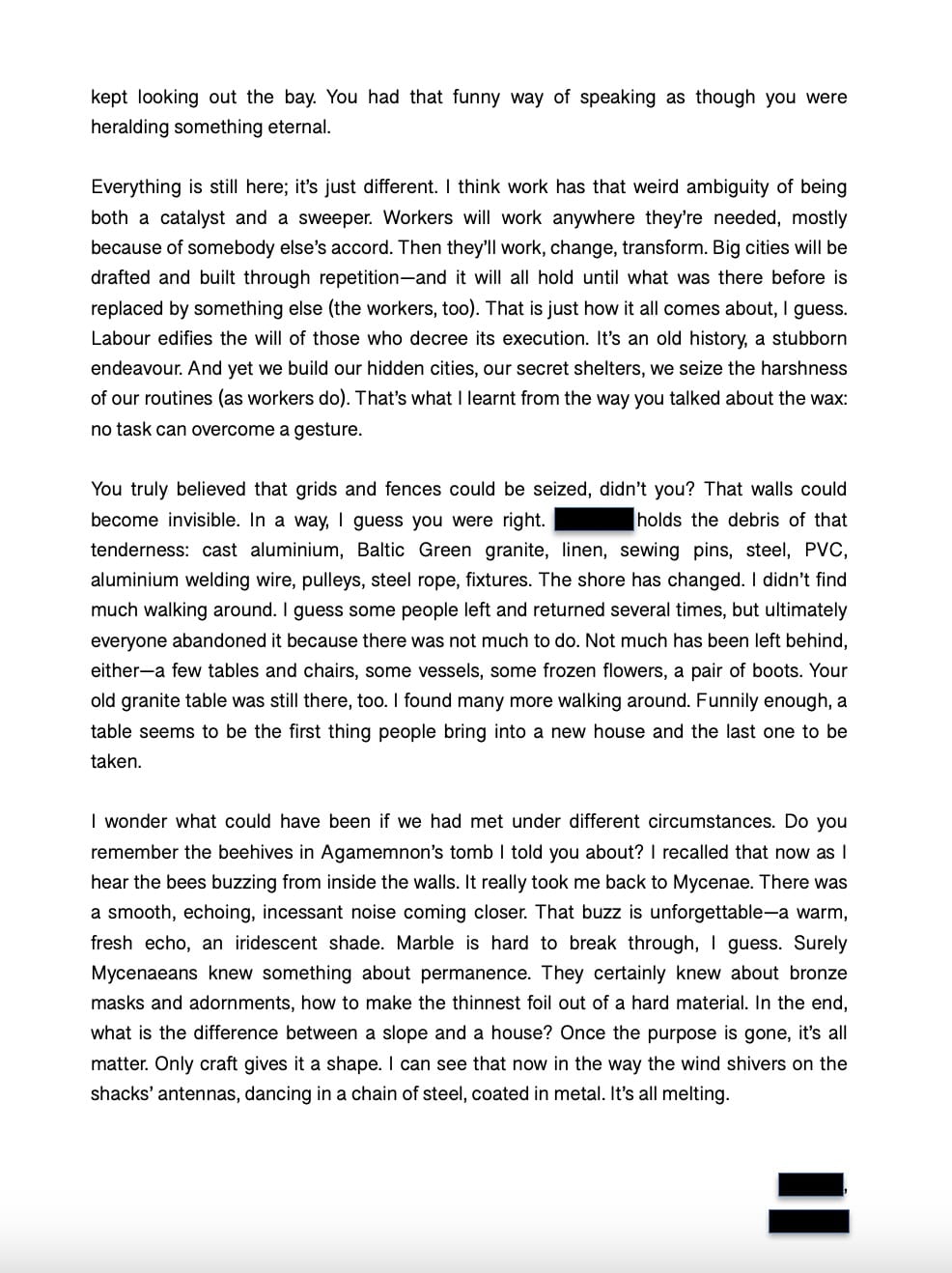
Titled Day by Day, Bit by Bit, the work turns her own developing workshop into its subject, tracing how skill, repair and access to metalworking pass between hands.
Guilherme Vilhena Martins Exhibition Text @gvilhenamartins
.
Conversation between Ellery Child and Maija in the OUTPOST courtyard.
Ellery: Place may be a good starting point. You have connections to the area: you were raised in rural Suffolk, studied for a short time in Norwich before art school in Glasgow and Helsinki, where you're now based. They're all quite distinctive places, I wondered how they've informed your practice, and whether the workshop is a common thread between them.
Maija: It's hard to say because, of course, the places we're in inform how we view the world. Coming from a rural background definitely shapes the way I look at things, particularly through nature. That was my first environment, so it became my first way of understanding the world.
Ellery: Do you think it's fair to say that people who grow up more rurally tend to be more resourceful? There isn't necessarily an abundance of people or resources, so when something breaks, you fix it.
Maija: Yes, I think that's part of the culture. It's about fixing, repairing and making do. It depends on your background, but if you don't have the means to buy something new, you figure out how to repair what you already have. You become inventive. You ask yourself, "How can I make this work in the way I need it to?"
My grandad was a ceramicist, so he was very much a maker. He had all kinds of tools, and I grew up surrounded by them. His family had a long history of blacksmithing, with the family forge located in Suffolk.
On my dad's side, my grandad was a farmer, and like most farms, there was always a practical workshop with the essential tools needed to repair tractors, machinery and farm equipment, including a basic welding machine. Those practical making and repair skills were an important part of everyday life, and they had a big influence on me.
I don't know if it's the same now. Things have changed. It's much easier to replace things than repair them.
Ellery: Exposure to tools at a young age is super inspiring, it piques curiosity. Alongside workshops, which you've created here at OUTPOST. Although workshops aren't neutral environments, they carry lots of associations. One is that they're hyper-masculine and very focused on production, efficiency and outcomes. I wondered if you could speak about your relationship to the workshop as something different. What does that space mean to you?
Maija: I think it's something that's constantly evolving. For the first time, I'm in a position where I'm trying to create my own workshop. Before this, I'd always worked in other people's spaces or institutional workshops. I never really had the autonomy to shape the environment.
 Catapult Submissions Team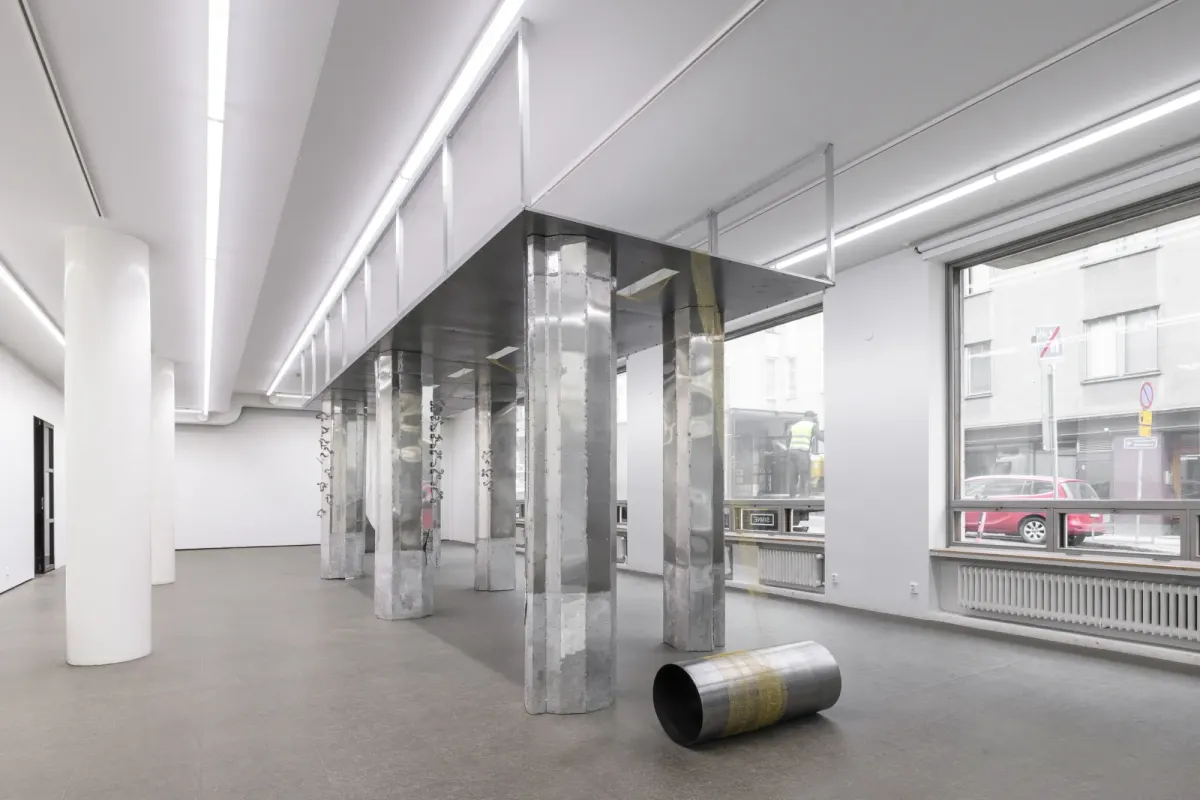
Maija Fox at Sinne Helsinki
Ellery: …and I presume to shape the culture of the space.
Maija: Exactly. It never really felt accessible. Even the knowledge that welding was something you could do as a woman wasn't really there. I didn't have examples around me of female metalworkers or workshops that felt welcoming. Those spaces always seemed distant. I could see something happening there and think, "I'm really interested," but it still felt like it belonged to somebody else.
Ellery: That makes me think about concealed labour. I've been sitting with the title of your work, As the sap rises. Sap is this nutrient-rich liquid that begins travelling through a tree as spring emerges, but the process is completely concealed until the leaves appear.
The workshop has a similar kind of concealed labour. People don't necessarily see everything that has happened there. Is it important to you that people understand that human labour has gone into your work?
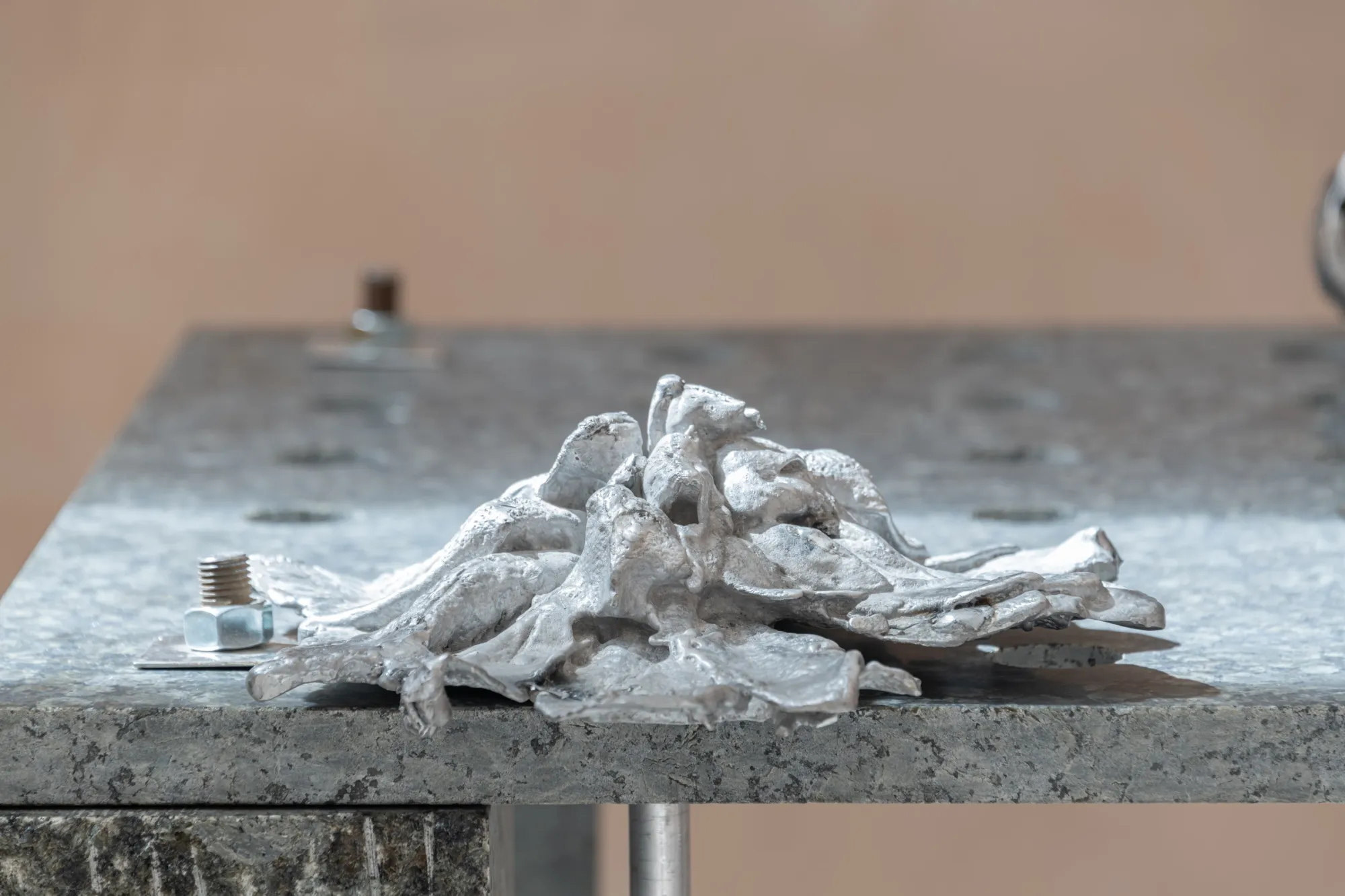
Maija: Yes, I think it is. I'm interested in the transformation of materials and how they can create a contrast between hidden processes and industrial ones, such as casting or working with aluminium.
Aluminium is everywhere. It's anonymous because we see it all the time as a functional material. The sheer amount of it makes it almost invisible.
So the trace of the hand becomes important, the ability to alter that outcome. Even if people don't recognise the casting process itself, they can still sense a tactile imprint or a certain sensitivity. It's not just a perfectly manufactured aluminium profile that's completely smooth and anonymous. There are fingerprints, marks and evidence that somebody has worked with it.
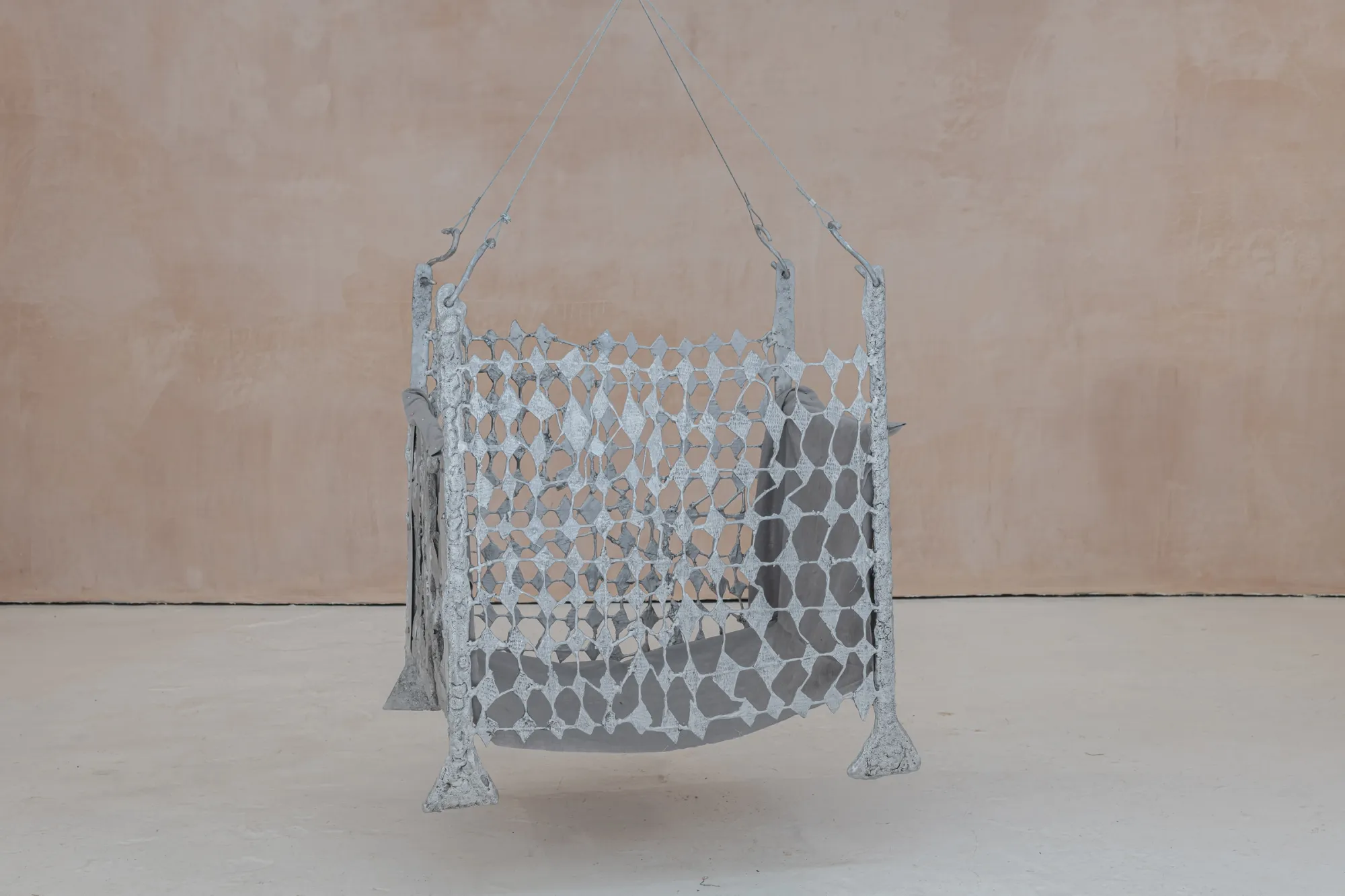
Ellery: As you're speaking, I'm thinking about where you've scratched into the wax model for the basket piece. Those marks are very clearly made by a human hand. They almost feel Neolithic. You can tell from the quality of the line that a person made them. Those are the kinds of gestures that poetically reveal the labour, and I think that's really interesting.
There's also another, perhaps more practical, example of concealed labour. You and your partner drove all of this work here from Helsinki.
You seem to have a real relationship with physical labour. Why do you enjoy doing hard things?
Maija: That's a really good question.
My labour is hard work, it takes energy and time but with something like the wax pieces, where the process is repetitive and labour-intensive, I actually find it restful.
I've been thinking a lot about stillness: how we work, how much we work, and what we ask our bodies and minds to do every day.
I'm interested in different ways of resting and different ways of approaching labour. Instead of seeing labour as something that only takes energy from you, I think of it as an exchange of energy between your body and the thing you're making, a kind of negotiation.
I find it interesting to think about labour as something that can also give energy back. It can be restorative. It can be a way of processing things through activity.
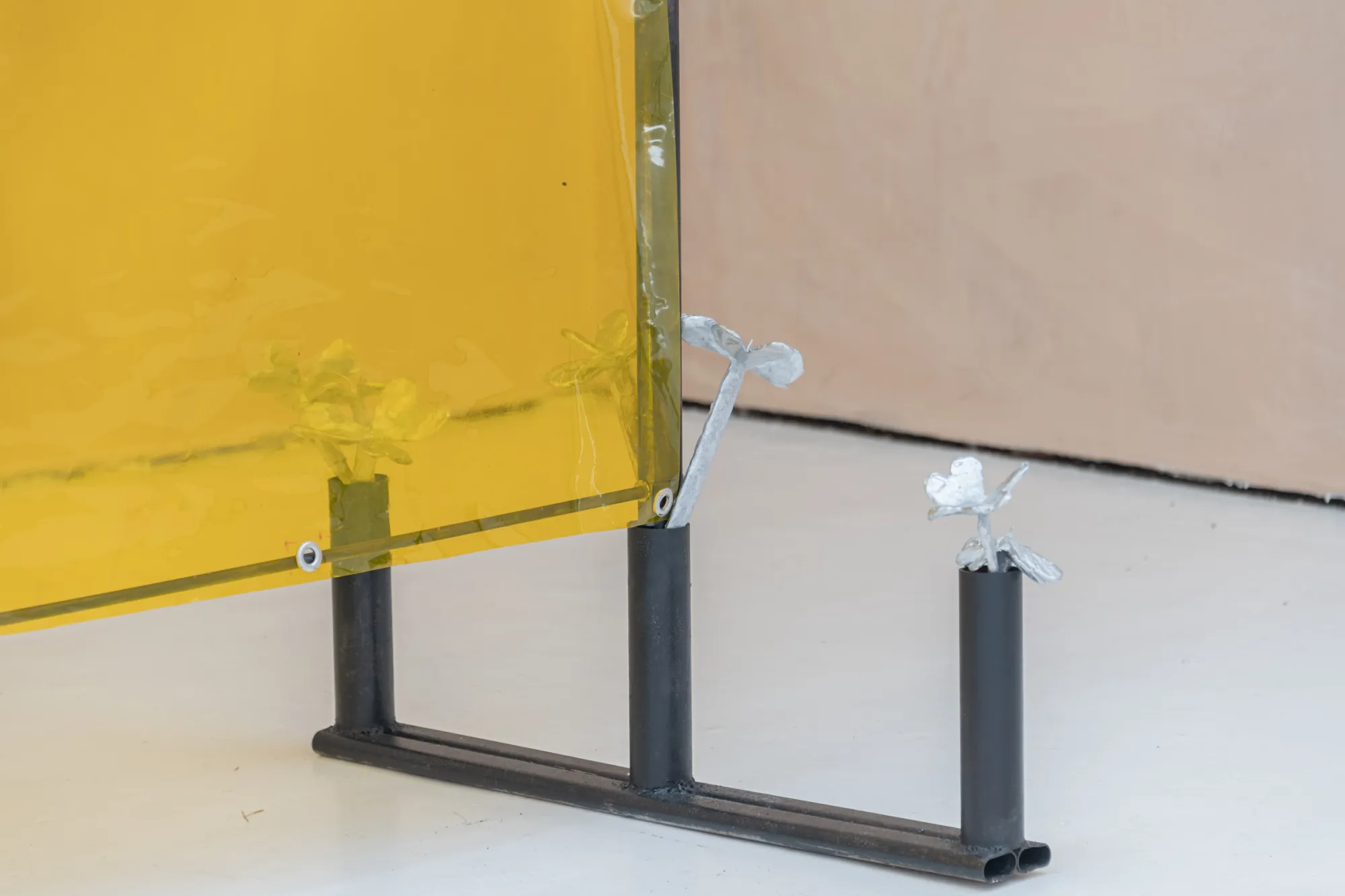
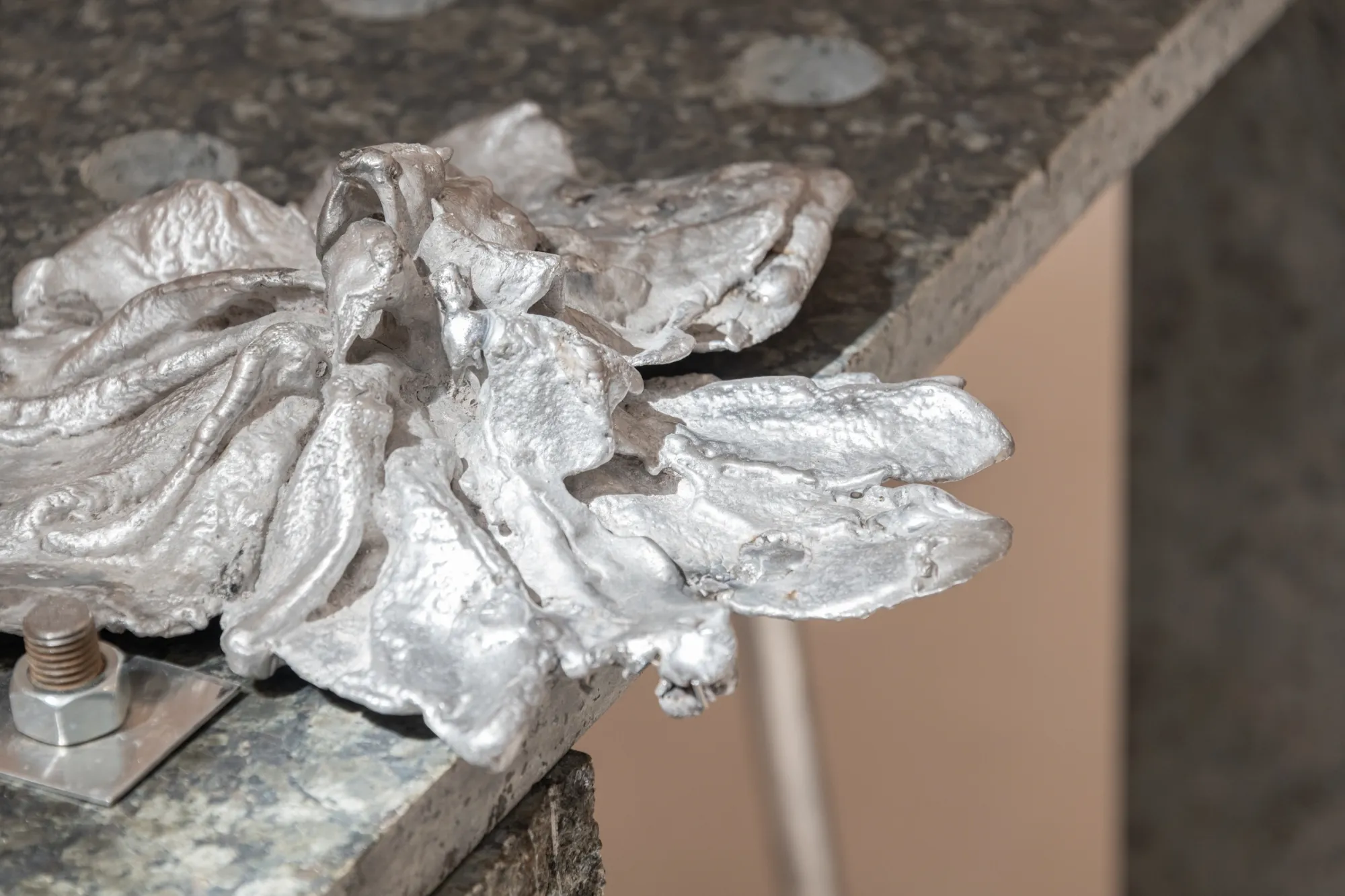
Ellery: That makes complete sense. It reminds me of the idea that energy creates energy. The more you do, the more it propels you forwards. I've got a question about energy and casting. With your objects particularly the flower/seed head that's sitting on the welding frame, and even the brass scrunchies the material seems to have an animacy, almost as though it carries a spirit. I wonder whether that comes from the casting process itself. The physical act of working with molten metal feels so charged. Do you feel there's a residue of that energy in the finished object? They seem very alive to me.
Maija: I think there is a very different feeling between a cast object and something that's fabricated from sheet material or another process. Casting goes through so many stages.
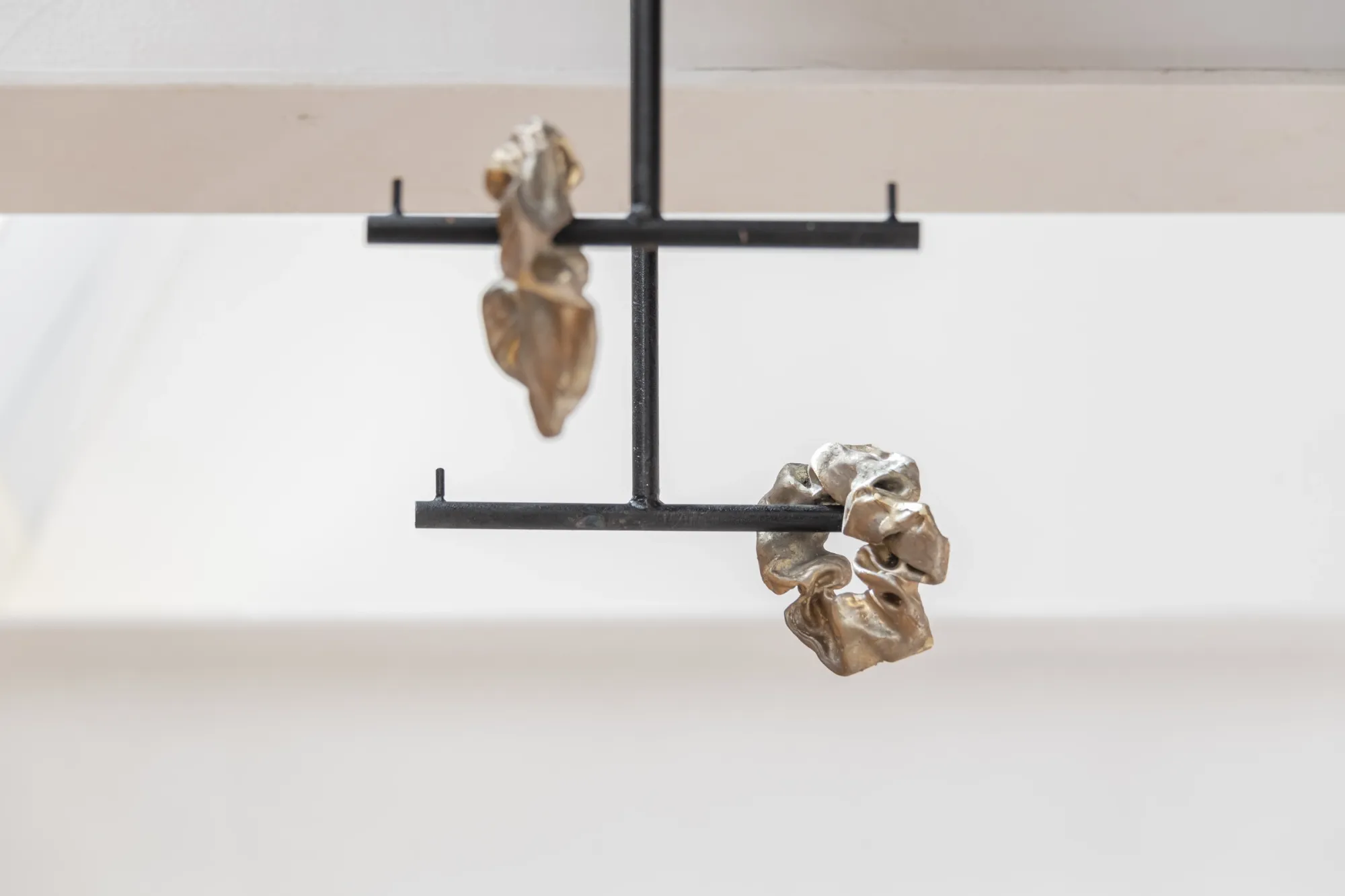
It also depends on what you're casting and how you choose to finish it. The process can change so drastically depending on the mould you use whether it's sand, plaster, or another material. Then there's the question of how you want to work with the surface afterwards, or whether you want to leave it almost exactly as it comes from the casting process.
Ellery: How do you make that decision?
Maija: I don't think I overthink it very much. By the time something has been cast, so much has already gone into making it. I also work in quite a rough way. I could spend days refining some of the brass pieces, cleaning every imperfection, because casting always produces unexpected things. But I actually enjoy those imperfections. Once the casting is finished, it's mostly about cutting away the air channels and grinding the surface. I see that more as cleaning or revealing the process than changing the object. I want to embrace the texture that the material gives me, rather than trying to perfect it.
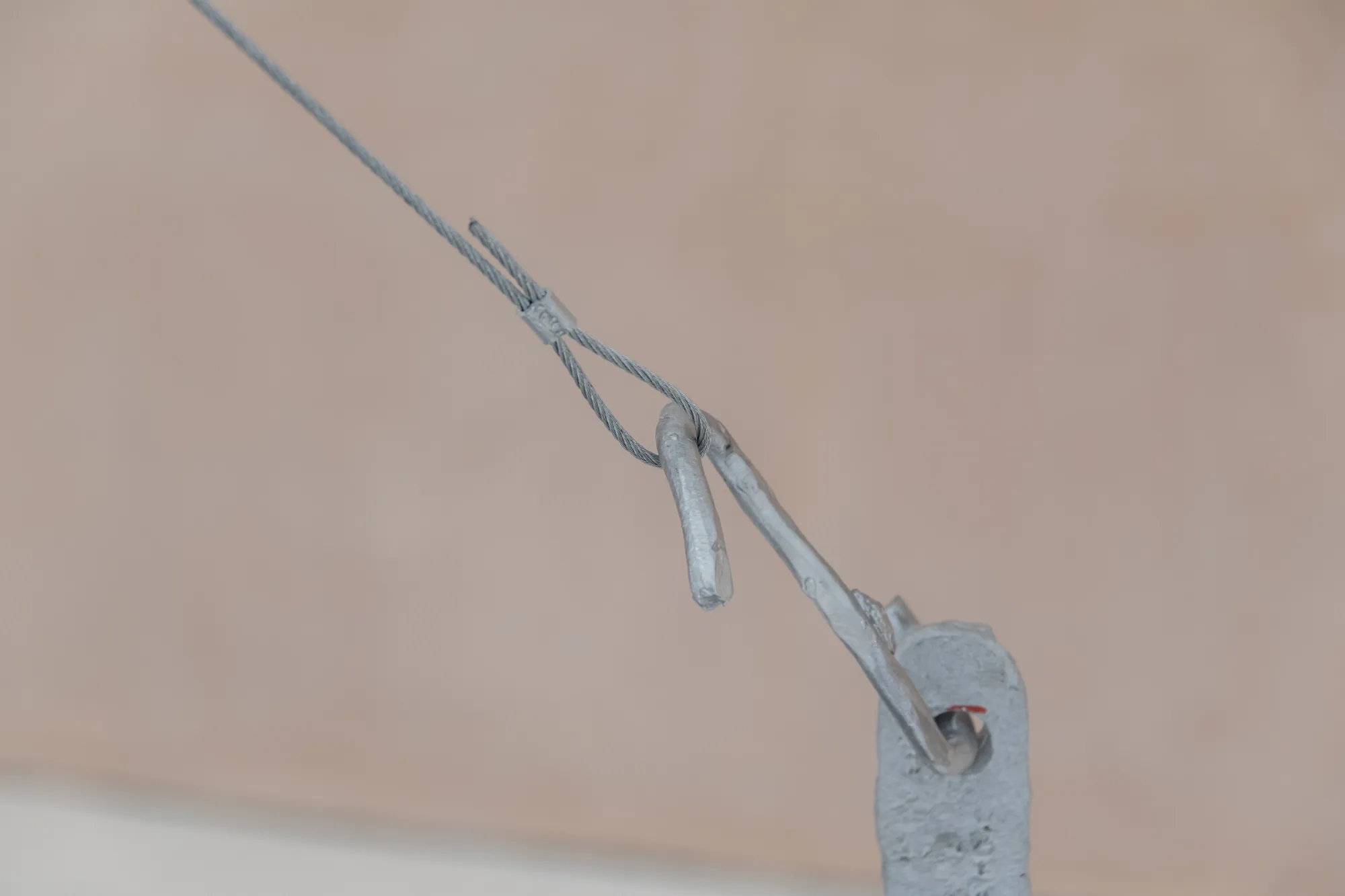
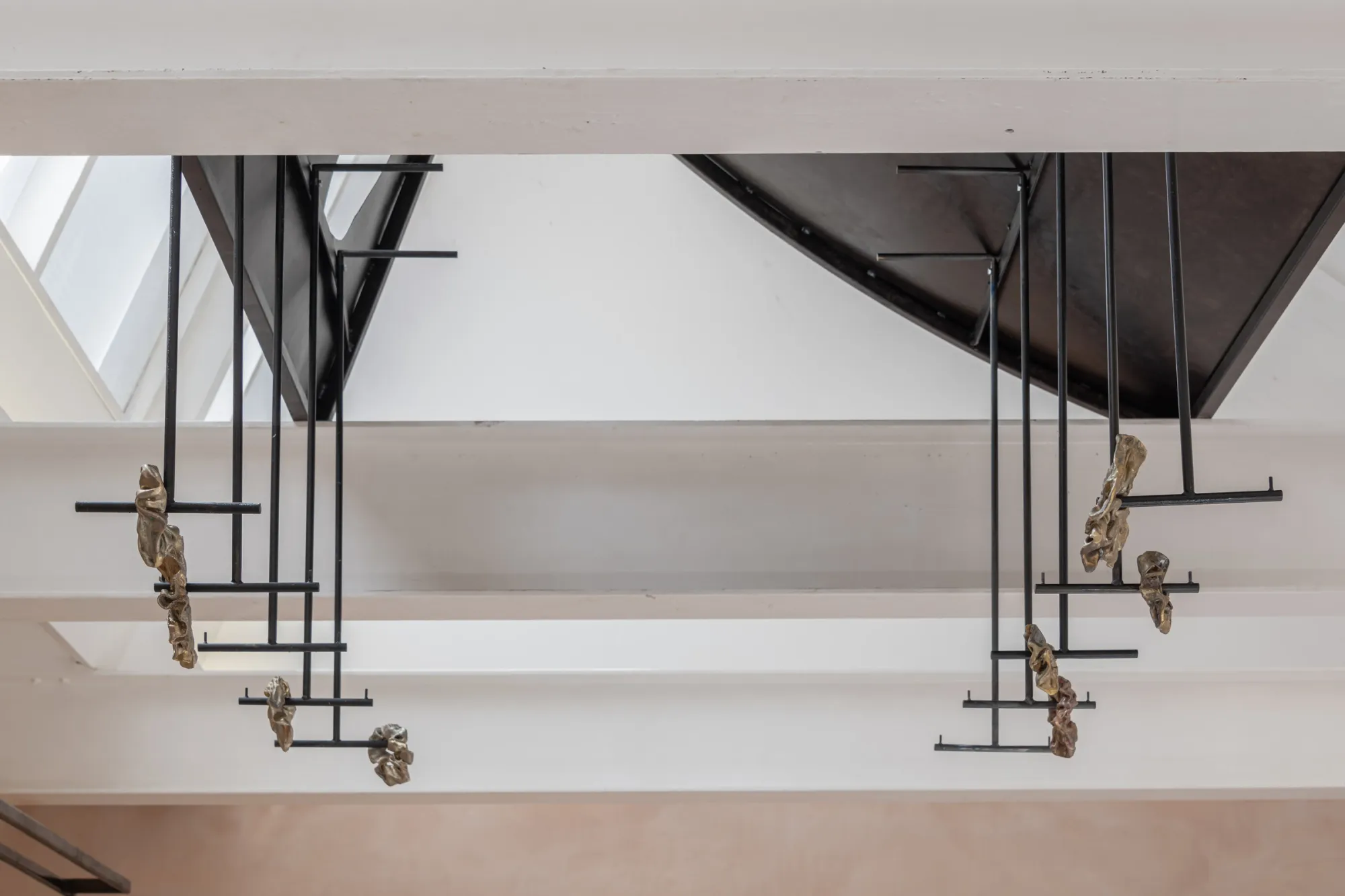
Ellery: It feels as though you're trying to manipulate the material only as far as you need to. If you polished the brass to a mirror finish, you'd be introducing another set of values that changes the read of the work. I really enjoy the roughness.
Maija: Yes. I like the rawness of the material. Brass, aluminium and steel feel much more interesting when they're allowed to exist in a direct way.
Ellery: It seems as though your materials are often moving in two different directions before being brought back together. On one hand there's something industrial, and on the other something very expressive. The casting feels incredibly poetic, while the industrial elements cut through it. How do you think about those two worlds?
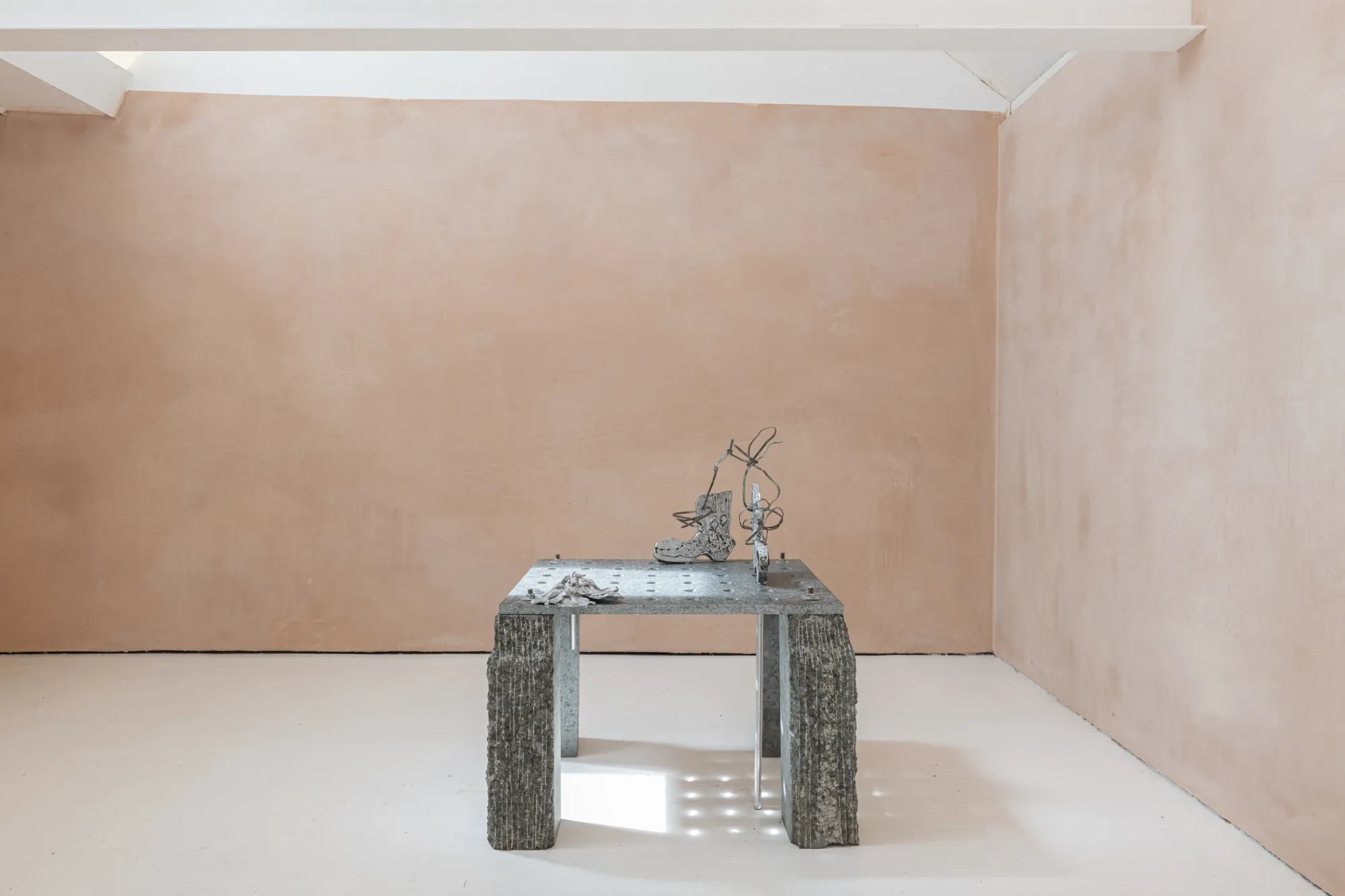
Maija: I think that comes back to the environments I'm interested in.
I'm always looking at the objects and textures around me whether they're things I encounter in a workshop or simply out in the city. I'm interested in the surfaces people use, their functionality, and the language that surrounds them.
Even industrial materials often have names that refer back to nature. Take barley sheet, for example. The language of industrial objects often borrows from the natural world.
I find that really interesting because industry and nature can feel so far apart. One is often damaging the other, yet they're still connected through language and association. We describe industrial forms by comparing them to things we recognise in nature a seed, a leaf, a flower. We still understand those shapes through natural references.
That contrast is something I keep returning to. It becomes a way of telling stories.
There's also a more personal layer to it. It's about my own relationship with workshop environments. They can feel incredibly brutal, but they're also capable of producing great beauty.
So there are really two threads running alongside each other. One is this relationship between industry and the natural environment. The other is my own experience of moving between a rural upbringing and cities, and spending time in workshops that can be physically demanding places.
(conversation interrupted by curious man approaching the gallery gates)
Ellery: We're back. Maybe something to talk about is others who are building more equitable environments for people to enter into workshop and metalwork. As part of the companion programming Slaghammers a feminist collective in Glasgow were invited to participate in a panel talk and female led organisation Ore Projects are doing an online session.
Maija: I also feel there are so many people doing amazing things when it comes to rethinking workshops and changing the way facilitation happens around metalworking.
Slaghammers is a collective I've known about for a long time, and they've really inspired me in the way they work together. Collaboration happens all the time in my own practice, particularly with casting, because it's something you have to do collectively. You simply can't do it alone.
There's something really wonderful about skill-sharing and being open. If you know something, or you're excited by something, being able to share that with other people feels incredibly valuable. It's such a positive way of working and collaborating.
I've been really inspired by Slaghammers, and that's something I've been trying to figure out in Helsinki too, how to facilitate people and create spaces where that kind of exchange can happen.
Over the last year I've been developing my own workshop. The first step has really been about autonomy and feeling more in control of my own practice. When you're constantly trying to access other people's working spaces, it can often feel like the opposite. It wears you down because you don't always feel welcome, or feel like you have any agency to make the experience easier or more comfortable.
That's something I've been working towards for quite a while, so it felt important to include other voices in this exhibition.
Ellery: It feels like that brings us back to where we began, talking about resourcefulness.
When you have your own tools, your own space and your own way of working, that's the ultimate invitation to agency. You're in control of your own workflow. Whether you're repairing a tractor or developing an art practice, having those tools builds competence, and, for want of a better word, it's empowering. You're no longer beholden to somebody else.
Maybe we'll finish by thinking about shared agency, skill-sharing and collectivity.
What do you think is a good entry point for someone who wants to get into metalworking?
Maija: It's really tricky.
I think that's exactly the problem. There just isn't enough visibility around metalworking. If there isn't a workshop nearby, or people around you making things, it's difficult to take that first step on your own.
There's also the financial side of it. It's much easier if there's somewhere you can go to try it before investing in tools or equipment yourself. For many people that's simply not an option.
That's where the gap is.
There's such a need for these spaces. So many of my classmates, after graduating in Helsinki, have really struggled. At university you begin to develop a set of skills, but once you graduate you're suddenly asking yourself, "How do I continue?" There simply aren't enough spaces that allow people to carry on developing those skills.
Ellery: That almost feels like a testament to why establishing workshops and why collectives like Slaghammers and Ore Projects are more important than ever.
They represent a different model of working. Rather than knowledge flowing from institutions in a top-down way, it's much more collectivised. Those feel like the real entry points.
Maija: I think so too. Some of the most exciting things happening are initiatives like Slaghammers and Ore Projects. They're showing people what's possible and creating opportunities to simply try something new.
It's a much more DIY, collective way of working. Not everyone involved is a professional welder. It's more like, "I'm interested. I know a little bit about this. How can we come together and figure it out?" Someone else knows something different, and together you build that knowledge.
Sometimes it's just saying, "I'm a bit scared to try this. Can we do it together?"
Some of these processes can feel intimidating, especially when you're using unfamiliar tools. Having a support network that says, "Yes, let's do this together," makes all the difference.
Ellery: I think there's real power in DIY culture, and in embracing amateurism as well. When you embrace amateurism, you're acknowledging that there's still so much to learn. That's actually quite a wonderful place to be.
Maija: Yeah. Definitely.
Raised in rural Suffolk, trained in Norwich and Glasgow, now based in Helsinki. Fox works across casting, welding and assemblage, and has spent the last year building her own workshop after years inside institutional and borrowed ones.
About Catapult Contemporary - Art Platform Submission
This is an exhibition review published by Catapult — an independent editorial platform for contemporary art, based in Vienna. We publish exhibition reviews, artist features, interviews, and critical context, with a focus on emerging and mid-career practices from Europe and beyond.
catapult-platform.art · Instagram
Want to be featured? Submit your work →