Sebastian Scholz Keeps Building the Room He Never Left

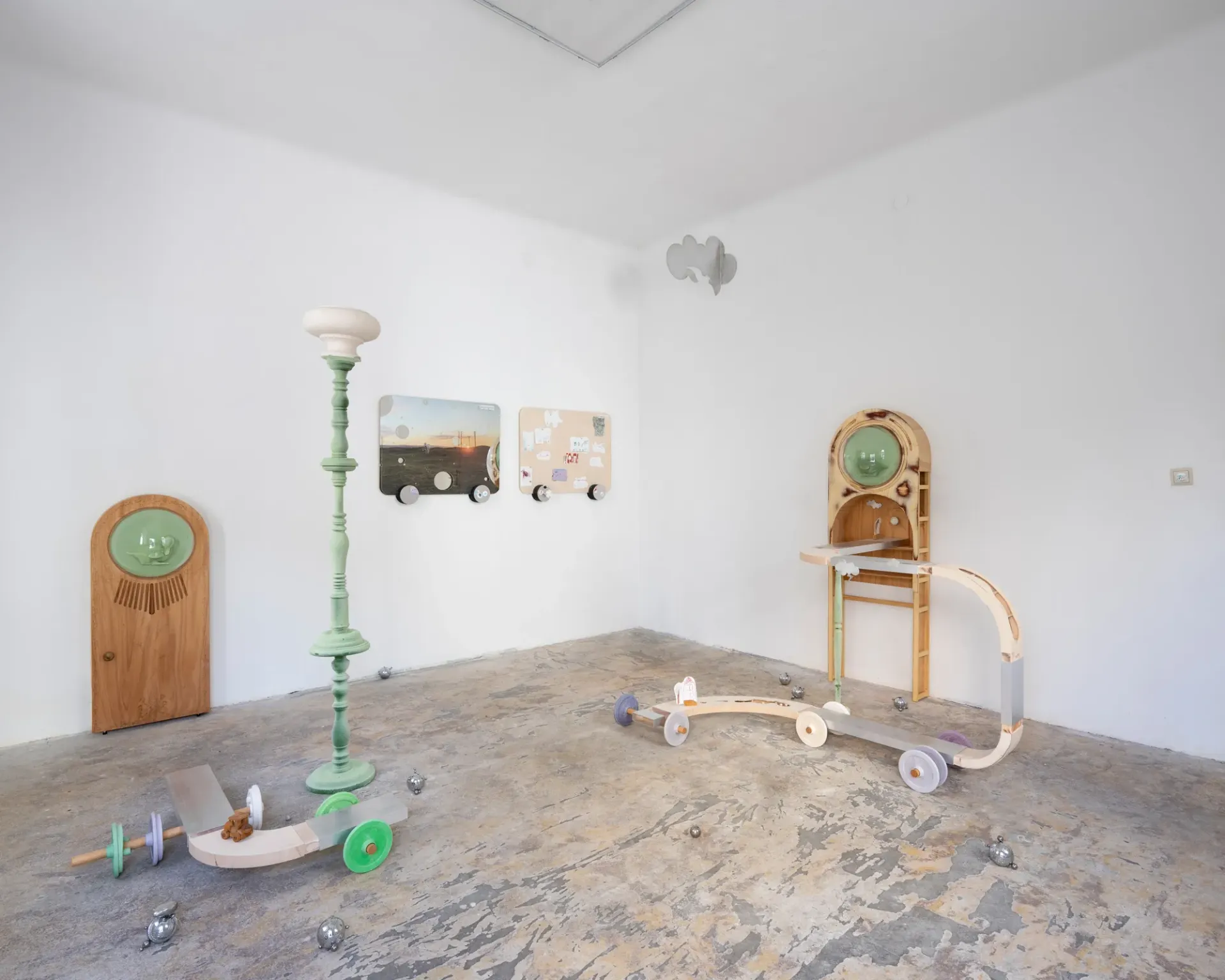
Global International Presents Sebastian Scholz's ludo in Vienna
Global International presented Sebastian Scholz's ludo at Gerlgasse 17 in Vienna, curated by Rainer Grillberger, Georg Holzmann and Simon Walterer, on view through June 24, 2026.
Sebastian Scholz
ludo
global international
Vienna, Austria
–
global international (Rainer Grillberger, Georg Holzmann, Simon Walterer)
Leonie Huber
Matthias Aschauer
Courtesy the artist and global international
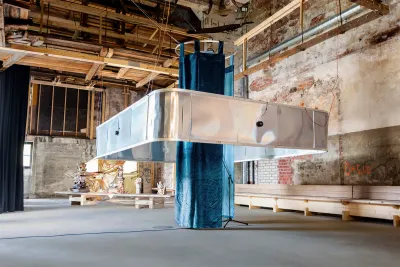
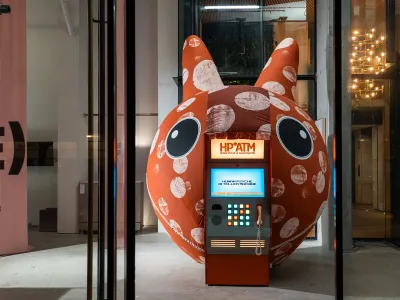
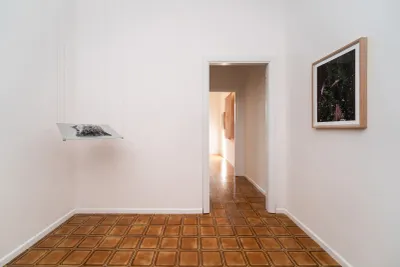
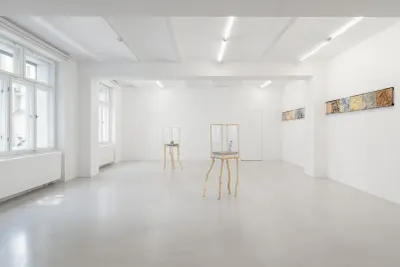
Sebastian Scholz turned Global International in Vienna into a room built around the logic of childhood play, with waggons, wooden structures, reflective surfaces, light and drawings appearing throughout the space.

ludo was on view at the Gerlgasse space from June 10 to 24, 2026, and moved between objects made this year and a wooden work dated 1989–2026. Catapult adds the curatorial text written for the exhibition by Leonie Huber, below.
Curatorial View - Leonie Huber
I play, ludo, it says here. The title of the exhibition thereby names, on the one hand, its subject — play — and, on the other, emphasises the dimension of the playful, which can shield artistic creation from disturbance or scrutiny. Leave me be, I'm playing. I'm just playing.
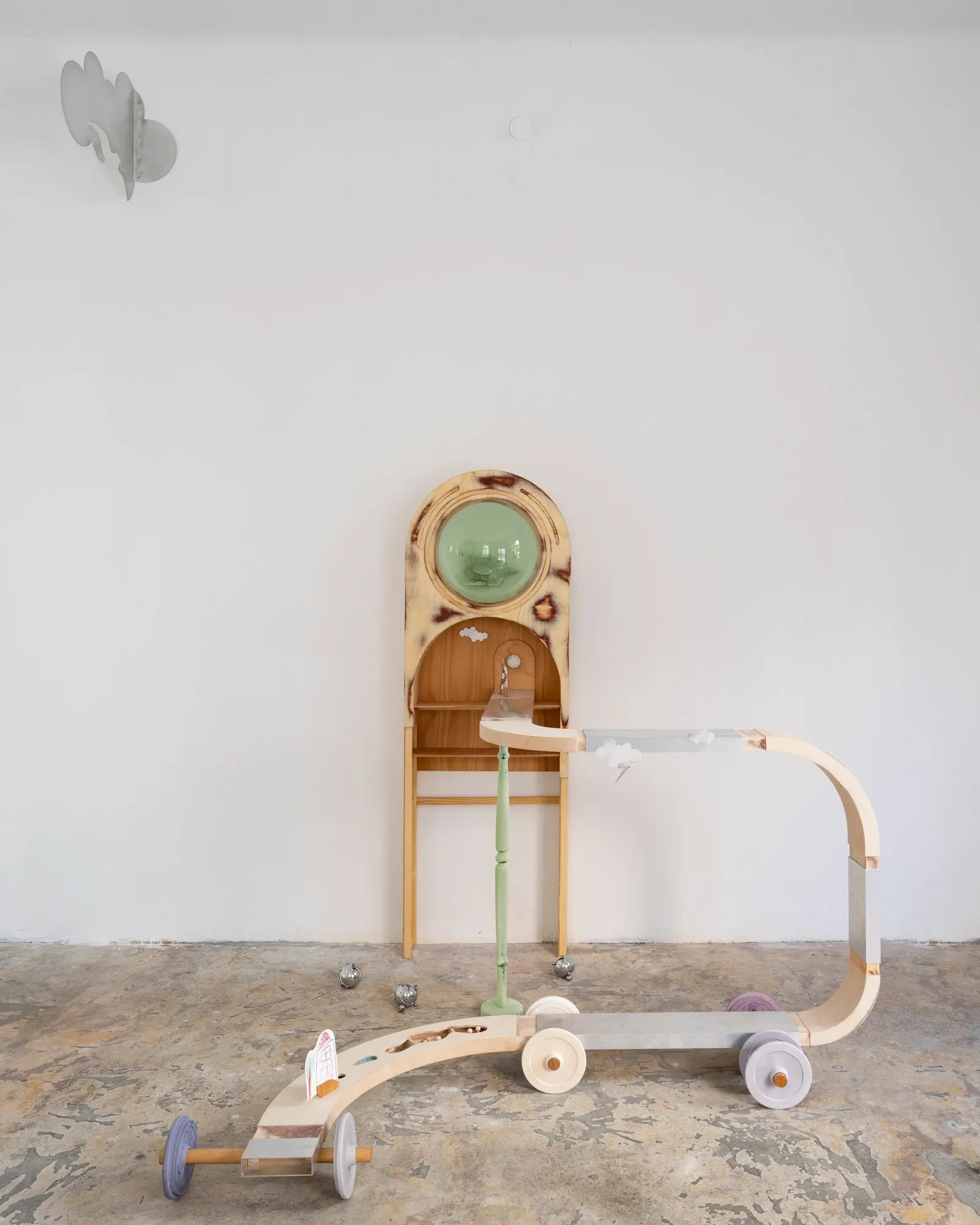
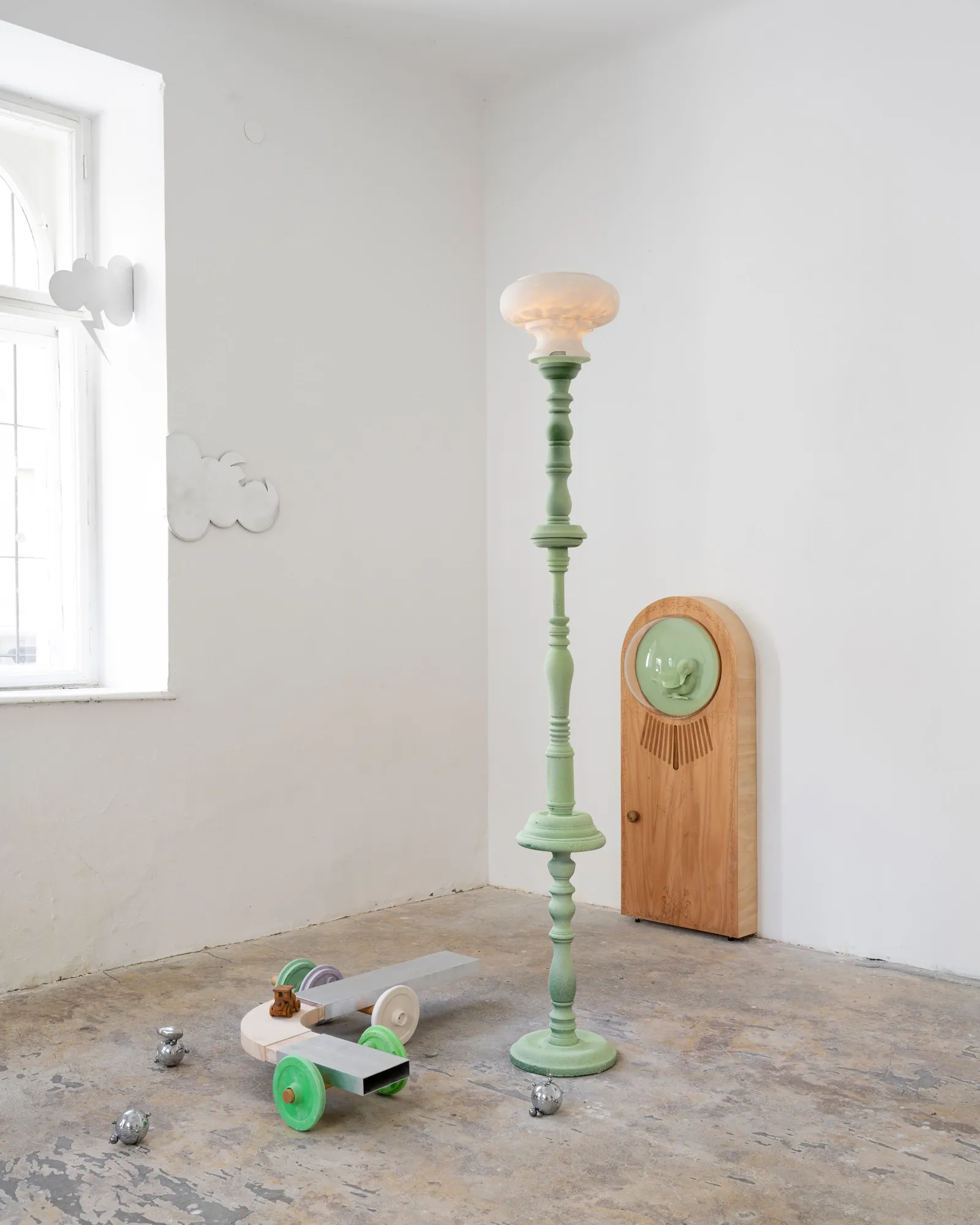
The image of a child playing in its room imposes itself. With its lower lip thrust forward, it dismissively towards the open door. As soon as the curious, yet controlling gaze from outside withdraws, it will place the waggon in its hand on the wooden tracks running across the floor. In the mind's eye, there is a play shop directly beside it where imitations of objects already familiar to the child are offered for sale.
The apple is neither sweet nor tart but wooden or made of plastic. The ringing of the cash register rewards every successful sale. Beneath clouds on the walls and plastic stars glowing in the dark, at night the child dreams of booming business and trains roaring off into the distance. Beyond this room lies the vastness of the universe — which doesn't even seem far-fetched, since here, in the first years of life, is where the whole world unfolds.
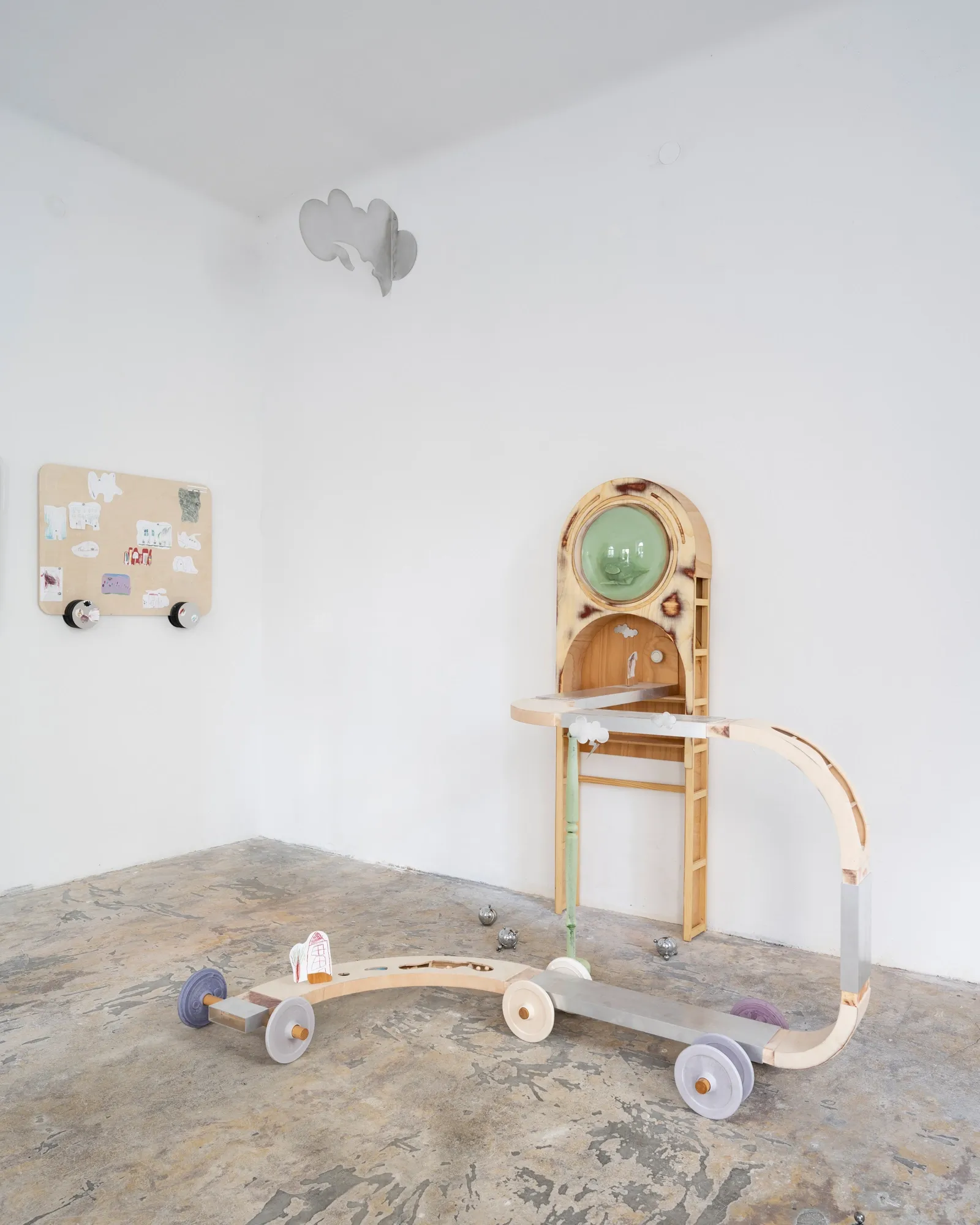
From the elevated perspective of adults, it seems obvious that children learn, through play, the norms and phenomena to which they will later have to submit. For example, the railway –– a vehicle of trade and industrialisation –– and its tracks –– a strategic infrastructure of warfare and colonialism — don't transport goods in children's rooms, but rather the idea of movement and logistics.
With his Homo Ludens, published in 1938 shortly before the start of World War II, Johan Huizinga put forward a notion attempting to capture the fundamental role of play in different areas of society: Through play, humans learn, among other things, the rules and rituals applied in art, law, and science — as well as the possibility of transgression.
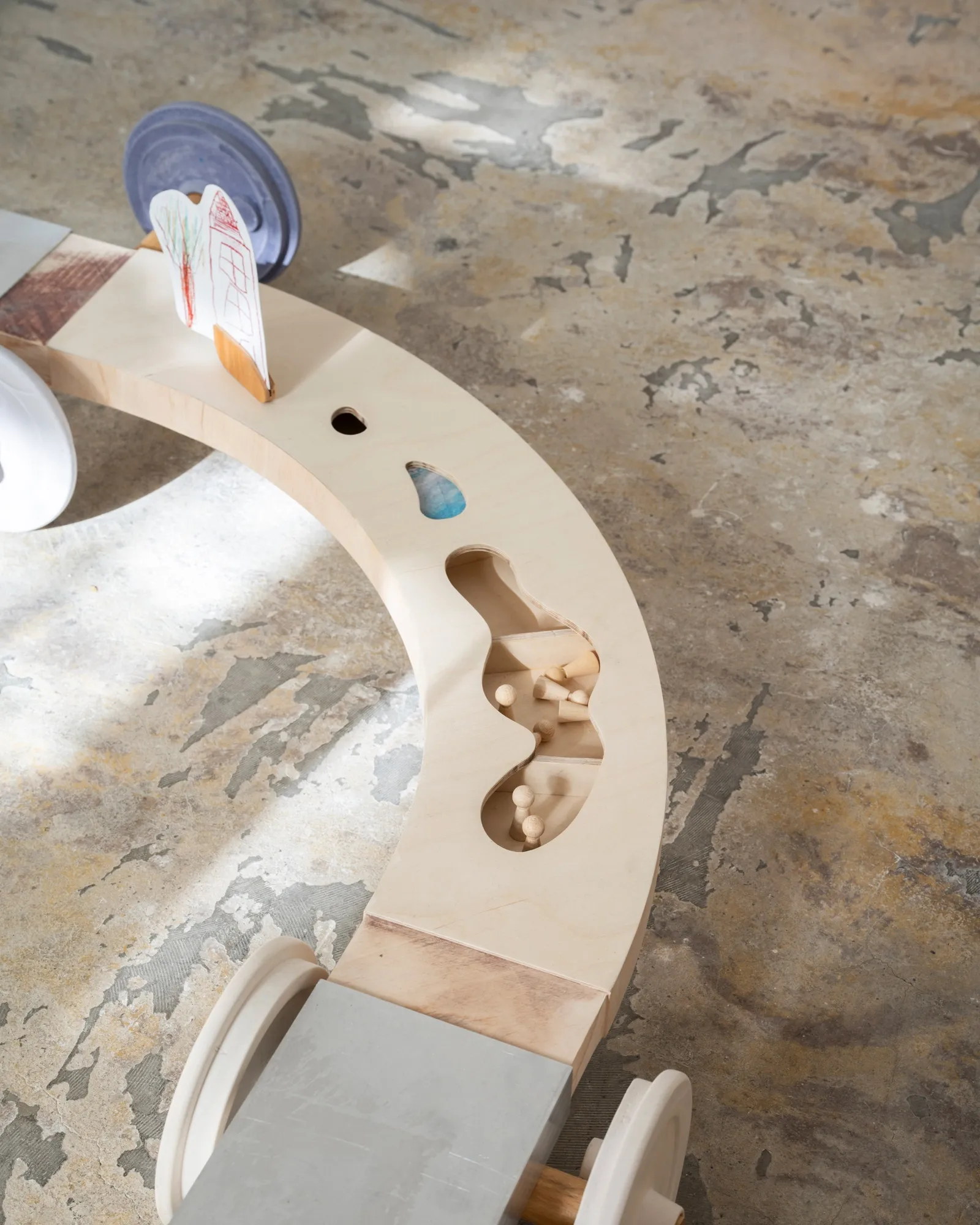
When marbles roll out of the run or a game is lost, it shows that something is at stake here. Apart from a sense of disappointment, however, the negative outcome of a game carries no consequences. What's at stake is one's own enjoyment, the goal being that it never ceases. This self-purpose of play marks the magic circle that, according to Huizinga, maintains a distance from the utilitarian creations of Homo Faber.
Something similar surrounds art, which — though as a differentiated field of work within capitalism it has left behind the naivety of creative activity — asserts its partial autonomy from worldly contexts through a comparable magic circle.
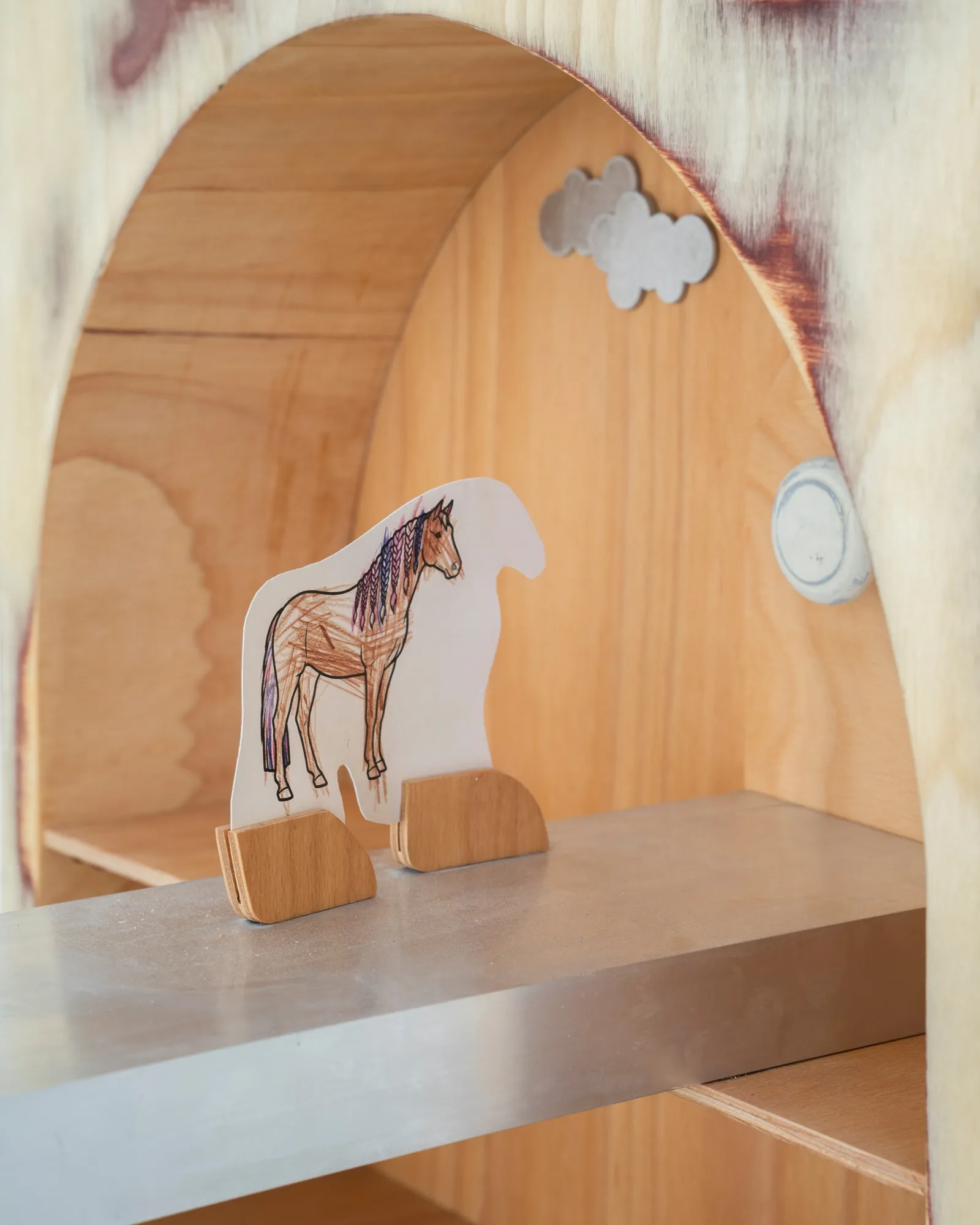
Play, lude, was the prompt this text has only partially succeeded in following. It, too, is subject to rules that hold up a mirror to the self-forgetfulness of play. First, orthography, grammar, and logic in order for others to play along at all. But also the conventions of a given context, the obligations of authorship, and the temptation to abandon playfulness in favour of meaning-making.
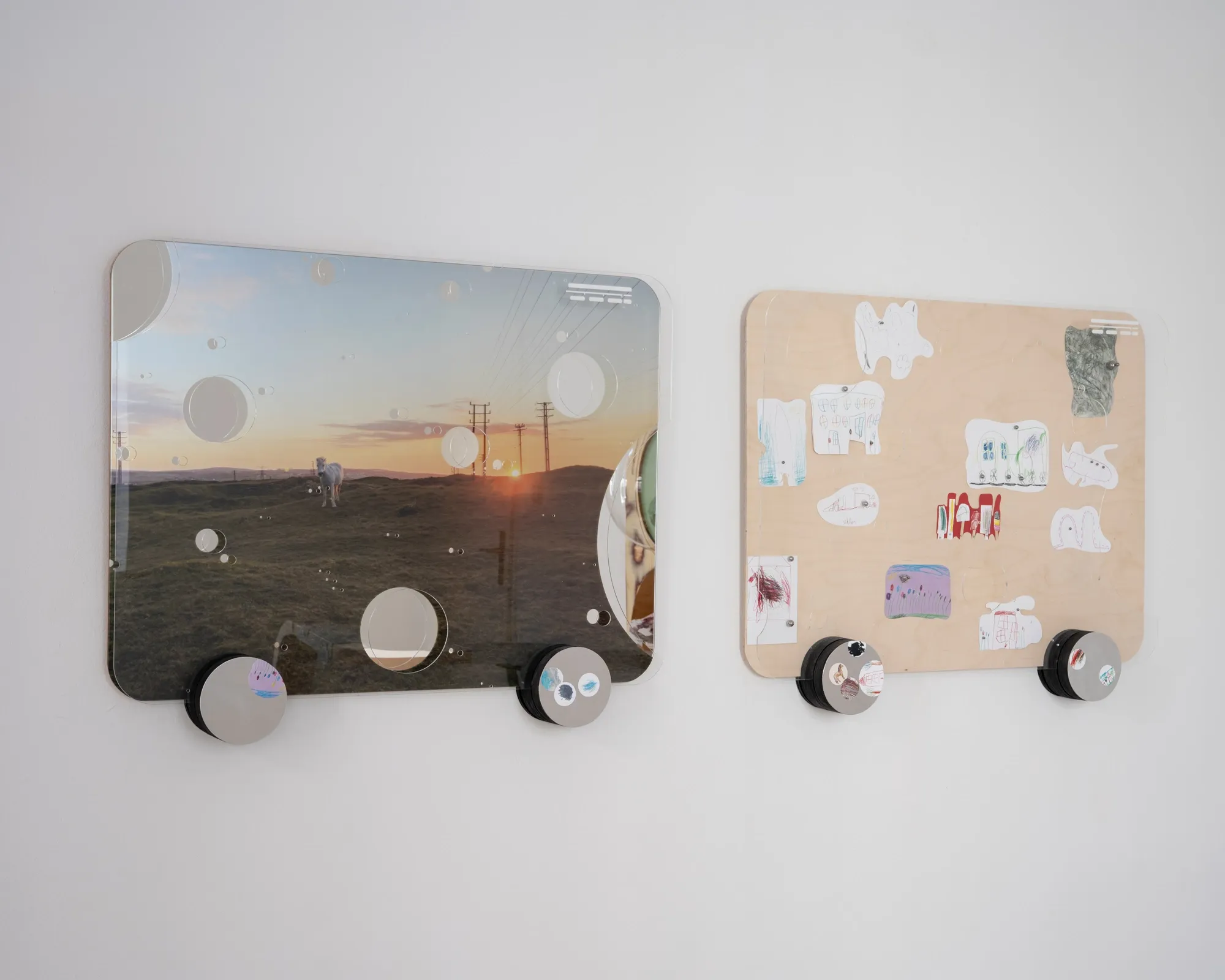
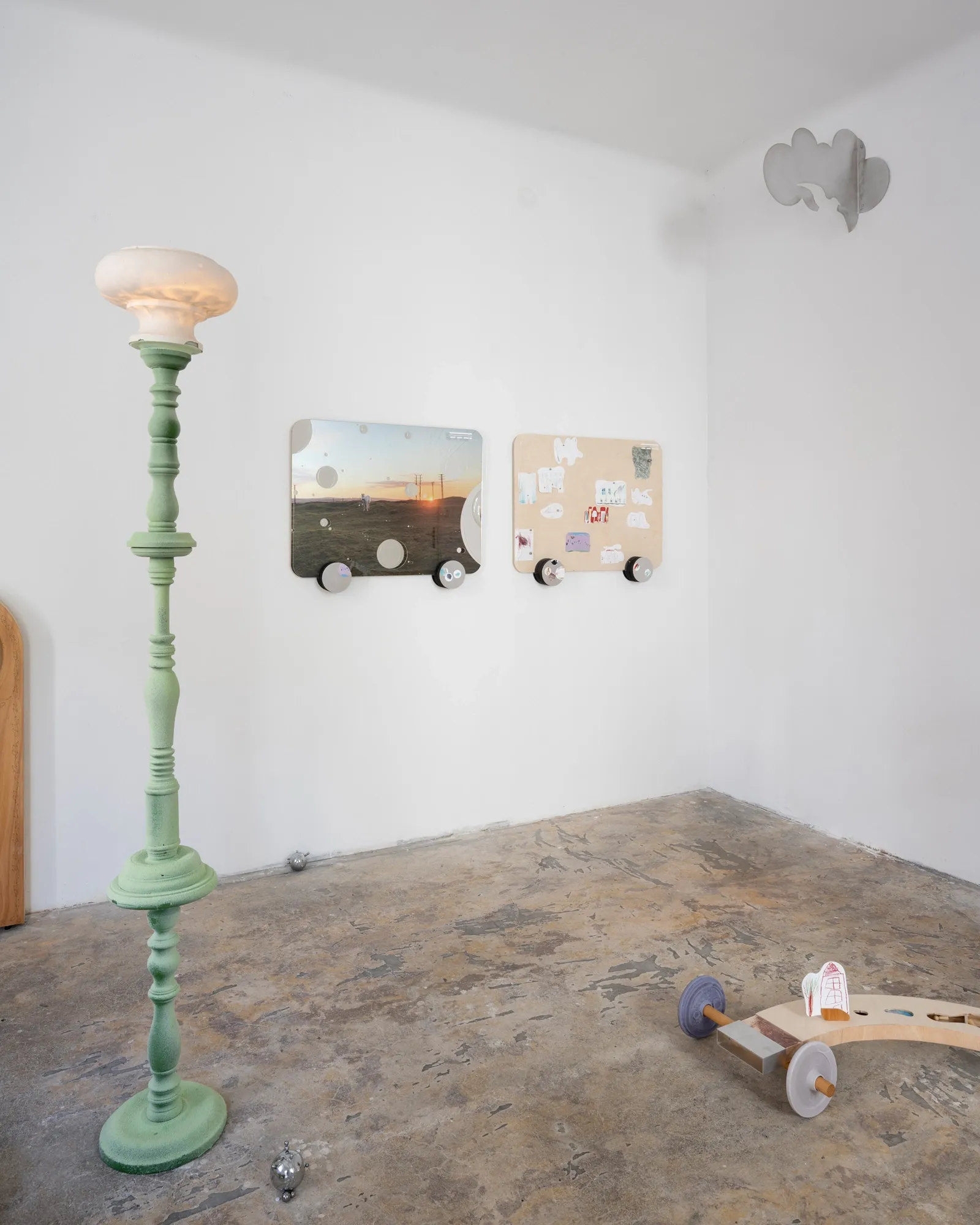
While the exhibition still has all things possible to offer, the text labels the commodity and sets its price: associations are evoked, references drawn upon, and interpretations suggested. And as soon as the cash register clinks open, everything that could still be anything is laid down.
— Leonie Huber
What lingers, now that Global International's Gerlgasse space has returned to its regular program, is a single work: a memory, dated 1989 to 2026, plain wood, set apart from the waggons and their brighter hardware. Most of the other works in ludo carried a single year beside their titles, like a receipt.
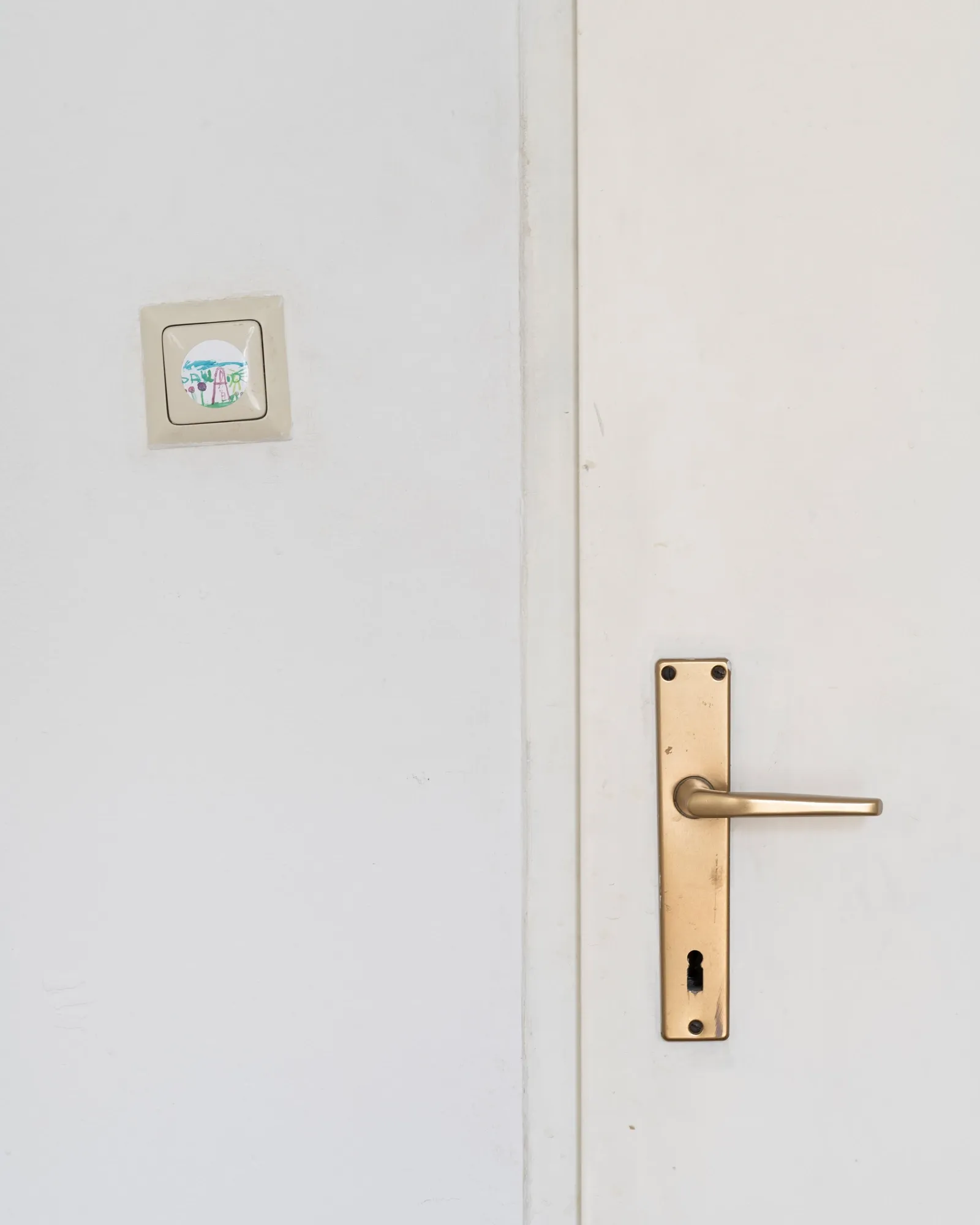
This piece carried a range, placing 1989 and 2026 within the same work and leaving the span between them deliberately open.
The show closed on June 24, but the gap between a first date and a last one is not the kind of thing that closes with a gallery. Somewhere, a boule ball is still catching light among its magnets, whether or not anyone is there to move it.
stay connected, keep the art in motion
Global International on Instagram
Sebastian Scholz on Instagram
About Catapult Contemporary - Art Platform Submission
This is a exhibition review published by Catapult — an independent editorial platform for contemporary art, based in Vienna. We publish exhibition reviews, artist features, interviews, and critical context, with a focus on emerging and mid-career practices from Europe and beyond.
catapult.art
Want to be featured? Submit your work →