Sofiia Yesakova and Matilde Sambo at Phantom Pförtnerhaus Berlin

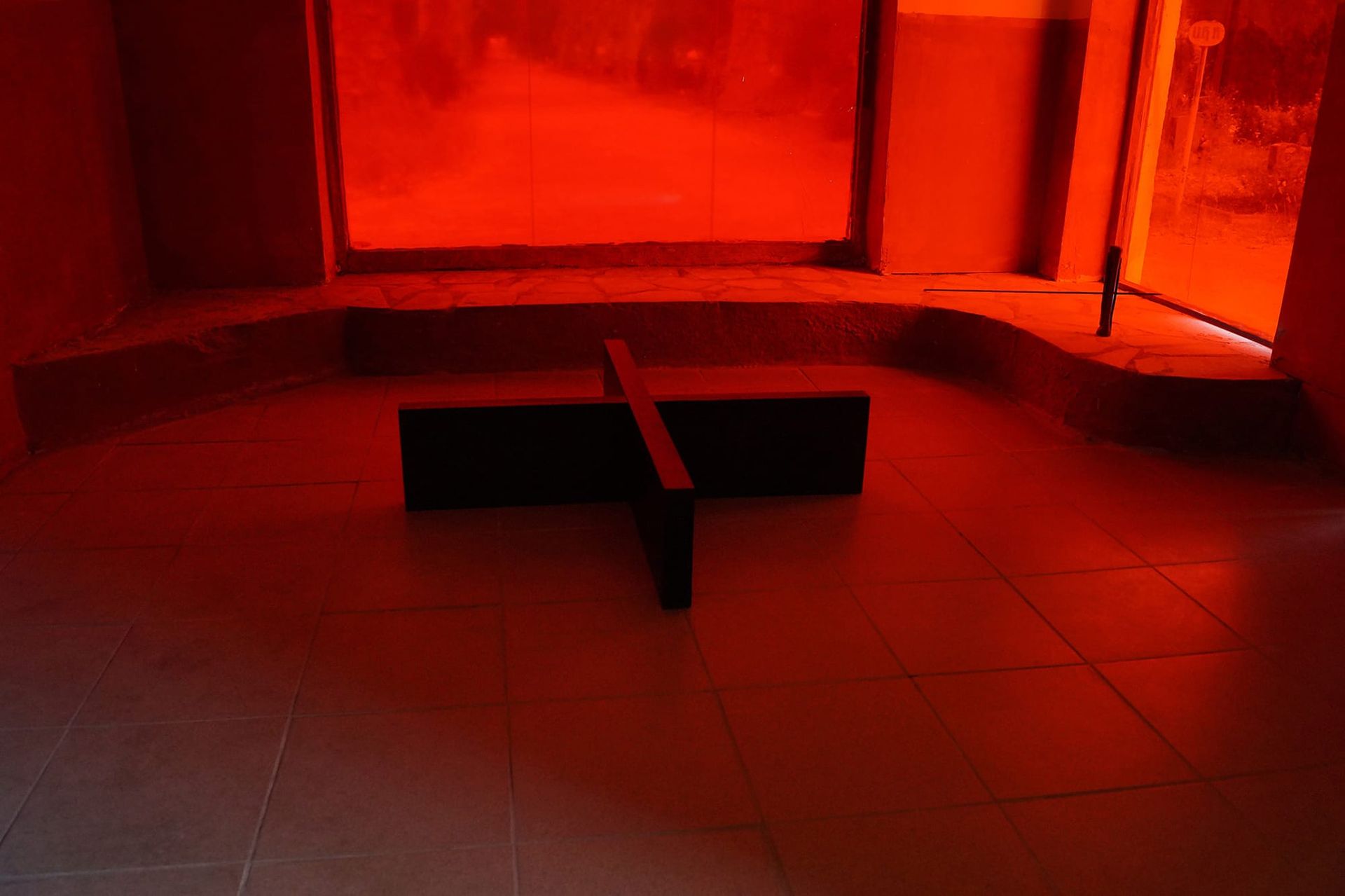
Sofiia Yesakova, Matilde Sambo
Chapter II
Phantom Pförtnerhaus
Berlin, Germany
–
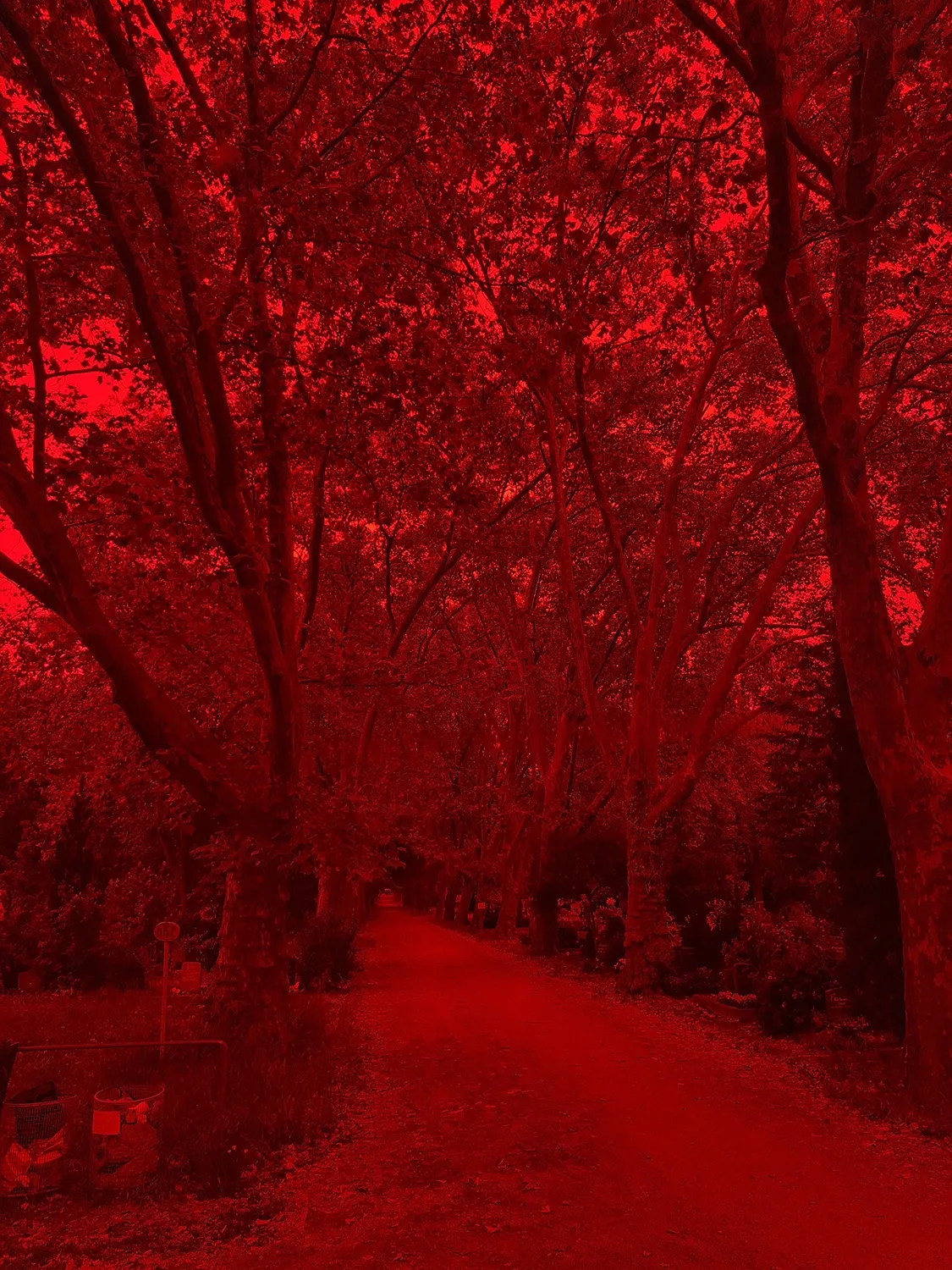
Georgen-Parochial Friedhof II, Berlin
Iana Pitenko
Courtesy the artists and Phantom Pförtnerhaus Berlin
Chapter II at Phantom Pförtnerhaus Berlin with Sofiia Yesakova and Matilde Sambo
Phantom Pförtnerhaus presents Chapter II, curated by Iana Pitenko, through 12 July 2026.
A cemetery is not a neutral venue. At Georgen-Parochial Friedhof II in Berlin, the second chapter of the Phantom Pförtnerhaus curatorial program positions two practices inside a site that already holds presence and absence as structural facts. The work does not illustrate this. It operates within it.
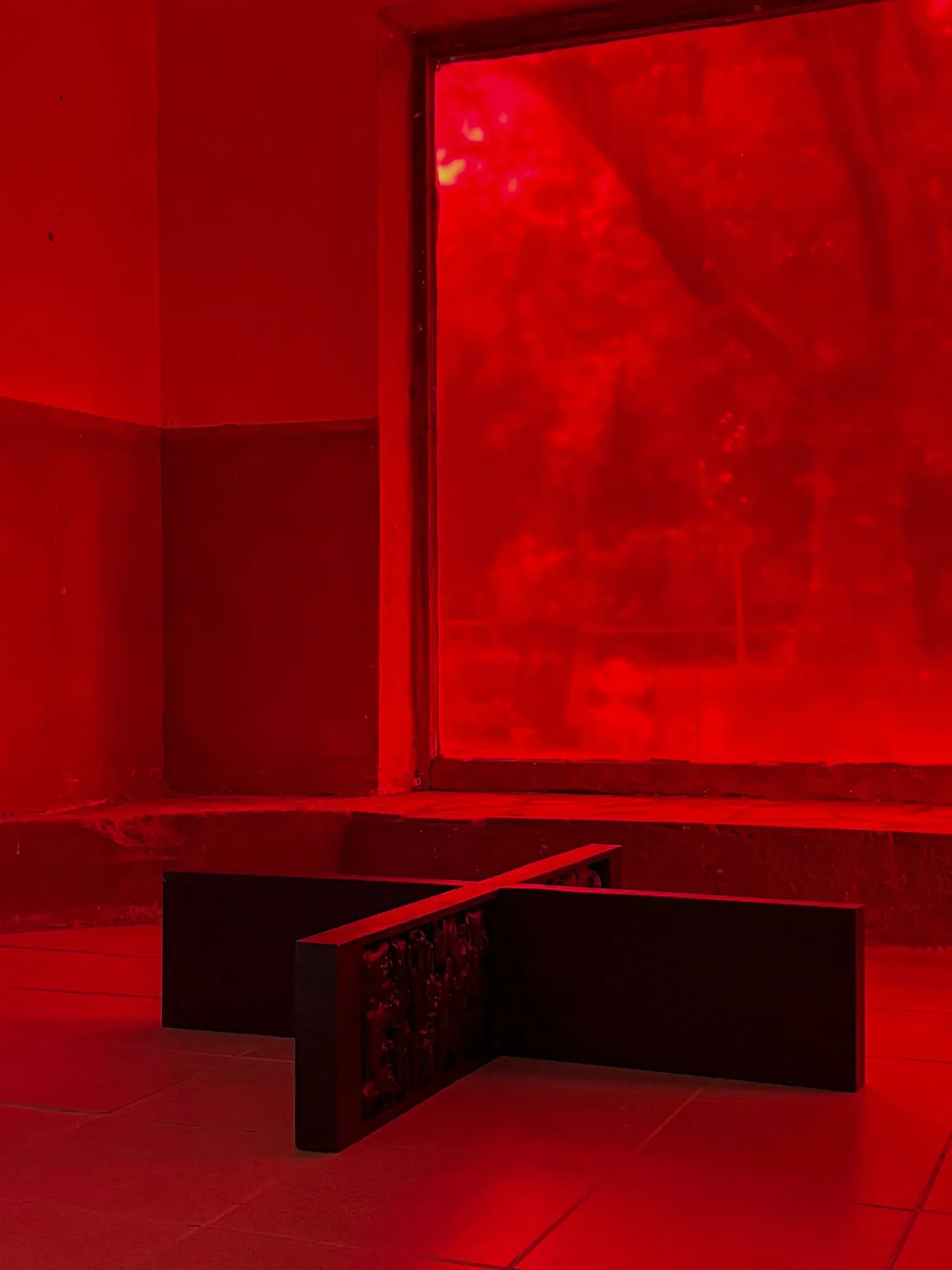
Sofiia Yesakova and Matilde Sambo approach fragmentation from opposite ends. One builds from containment, from the decision to hold form under pressure.
The other begins from dispersion, from forms that resist any final resolution. Together they make an argument. The phantom, as a condition, is not about return. It is about what has never fully left.
Fragmentation, here, is not a symptom. It is the medium through which two very different practices share the same condition, forms that hold on without knowing what they are holding.
The Pförtnerhaus, the gatehouse, stands at the entrance to the cemetery. In a gatehouse, threshold is not metaphor. It is the building's actual function, to mark the line between the living city and the ground given over to what remains. Iana Pitenko's curatorial framing of the phantom as "not return but persistence" finds this architecture as more than backdrop. The space determines what the works can mean within it.
 Dominique Catherina Foertig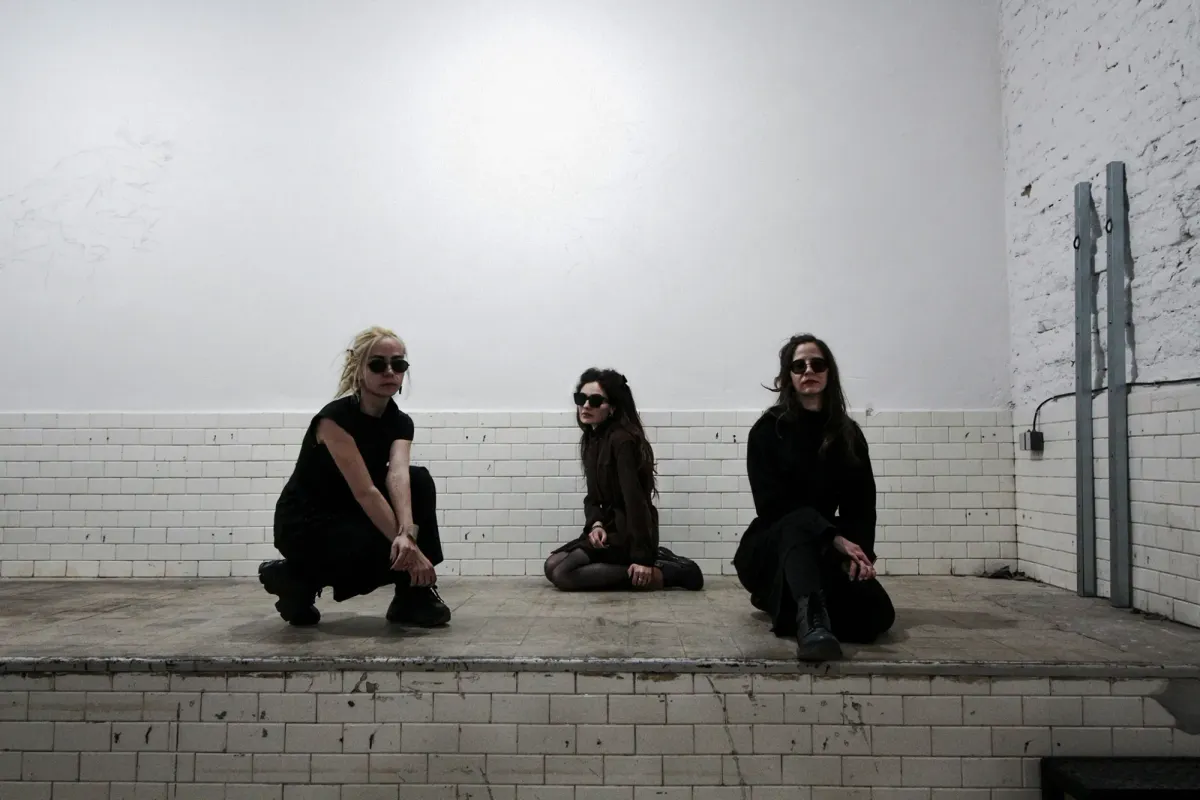
Sofiia Yesakova in another past exhibition on Catapult Contemporary
The Pförtnerhaus, the gatehouse, stands at the entrance to the cemetery. In a gatehouse, threshold is not metaphor. It is the building's actual function, to mark the line between the living city and the ground given over to what remains. Iana Pitenko's curatorial framing of the phantom as "not return but persistence" finds this architecture as more than backdrop. The space determines what the works can mean within it.
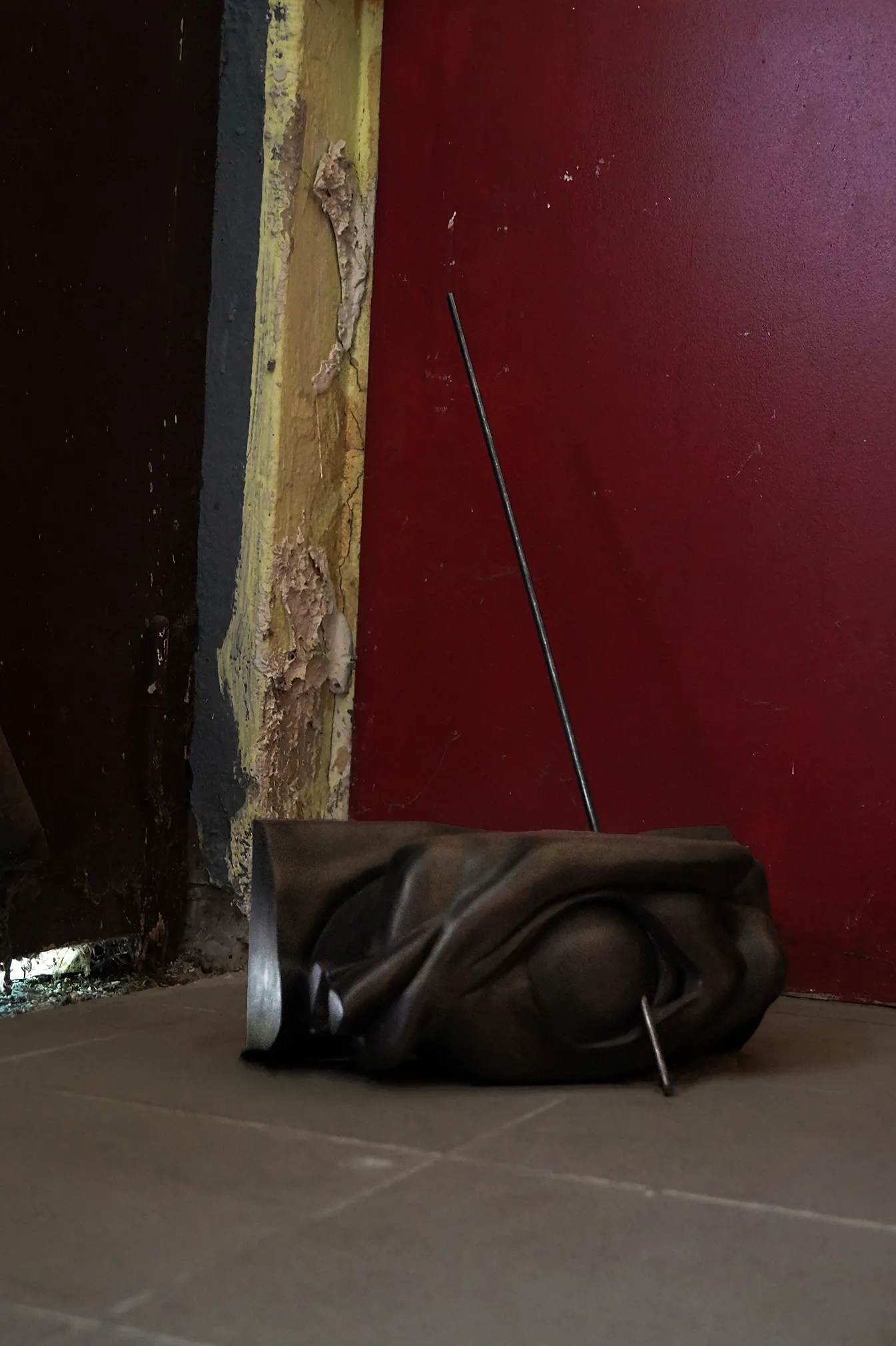
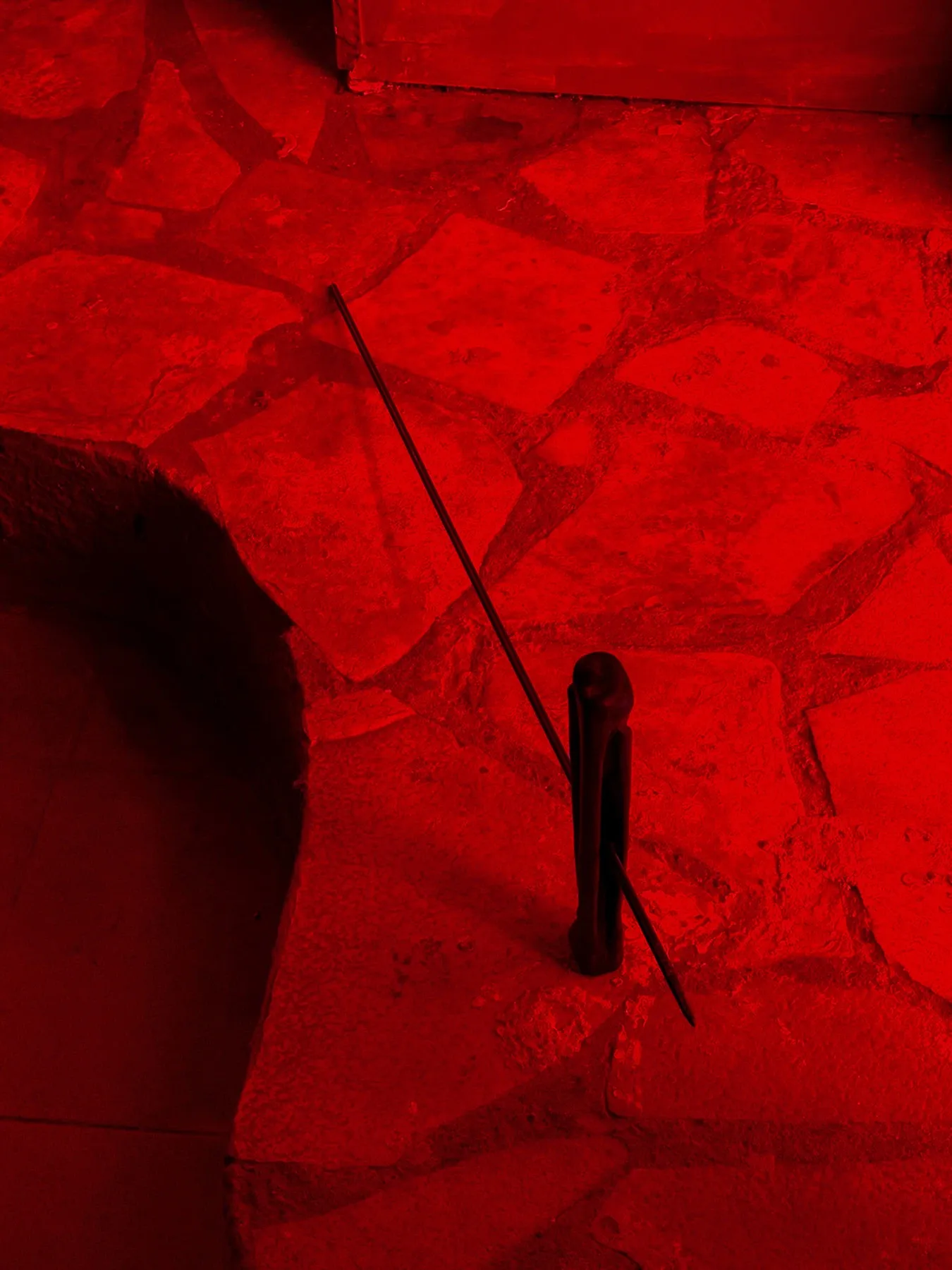
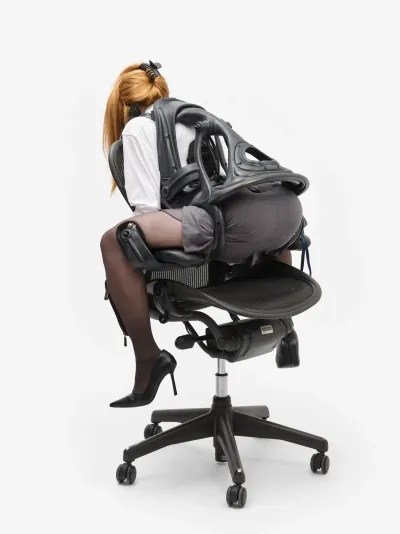
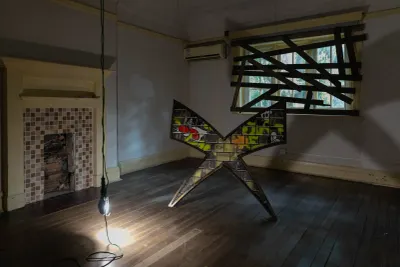
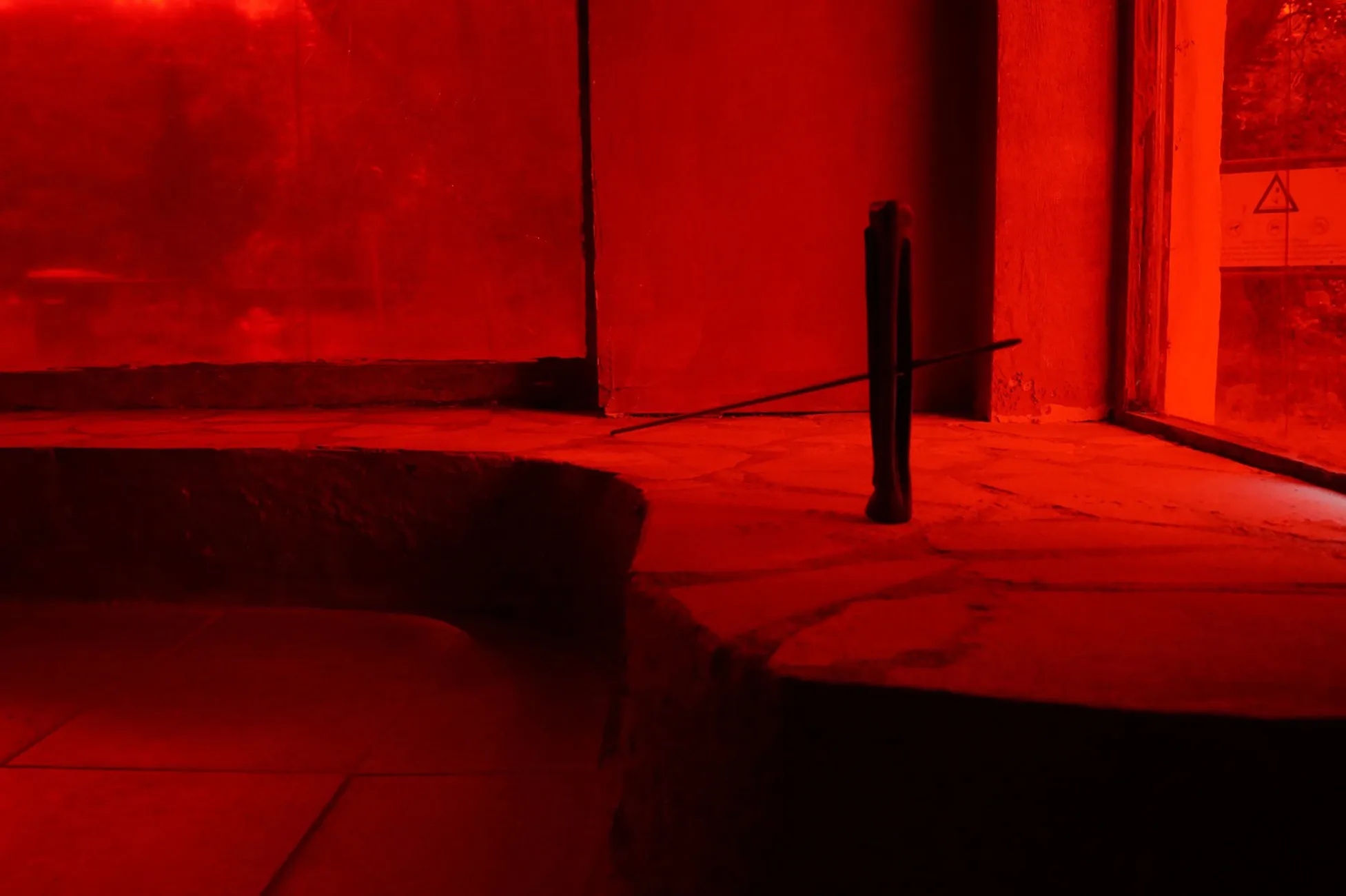
Sofiia Yesakova's Ugly Scenes. Nuances series works through carved black wood. The surfaces are dense, controlled, the emotional content absorbed rather than displayed. Black pigment, which the artist describes as symbolizing both absorption and the absence of light, seals the wood.
What remains visible is structure, line, rhythm, the trace of tool against material. One central work holds a carved eye, pierced by a metal rod, held open. The reference to Lucia of Syracuse, the saint depicted carrying her own eyes, arrives not as symbol but as physical logic. The eye cannot close.
It is made to witness. Yesakova's engagement with Foucault's concept of punitive restraint operates in exactly this register, the emotional component concealed, the form made to bear the weight of what it cannot express. The Deleuze-inflected reading she brings to her own series, layering, repetition, differentiation, shows in the rhythm of the carved marks themselves, each surface a record of a process that did not stop until structure held.
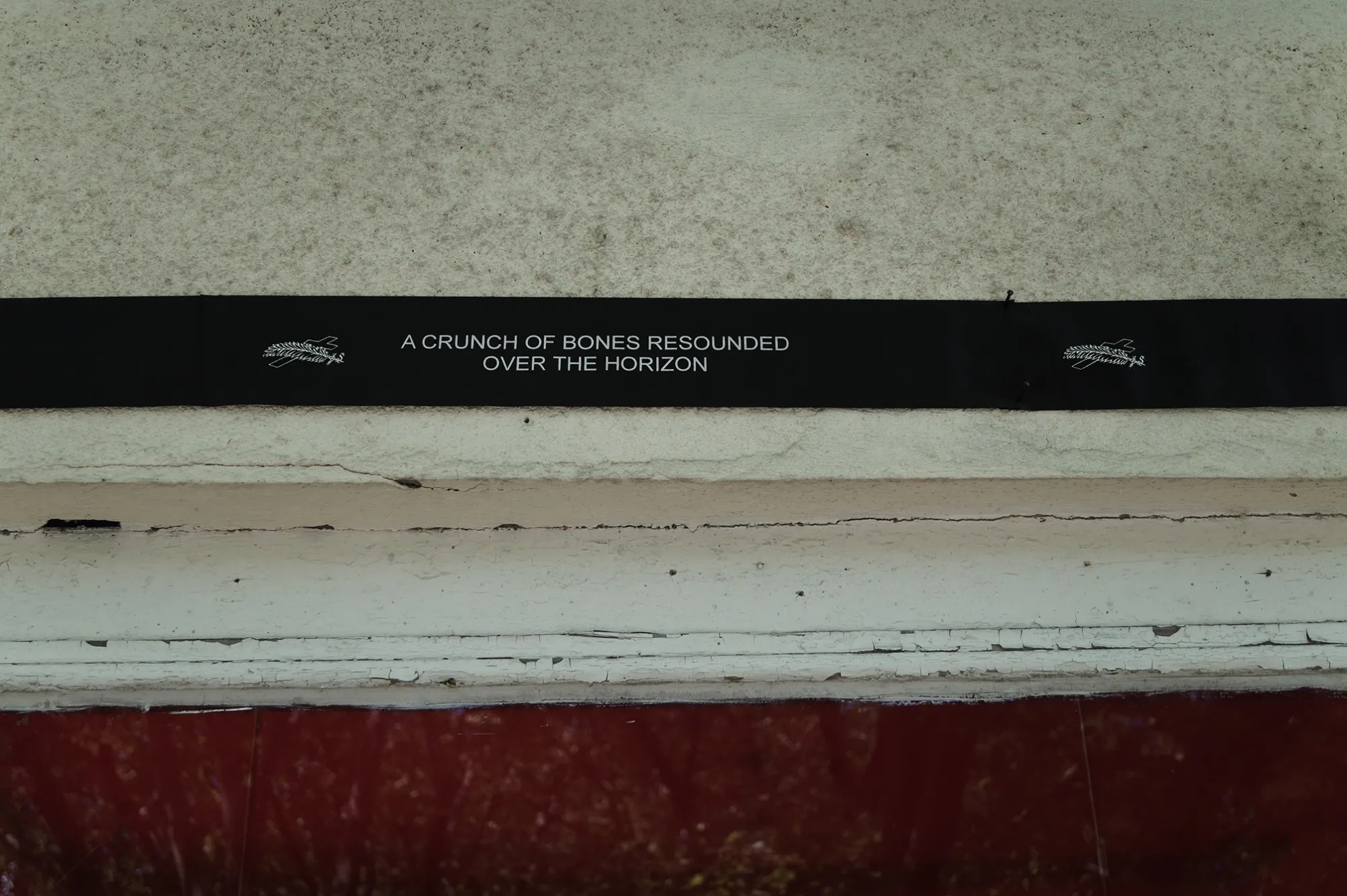
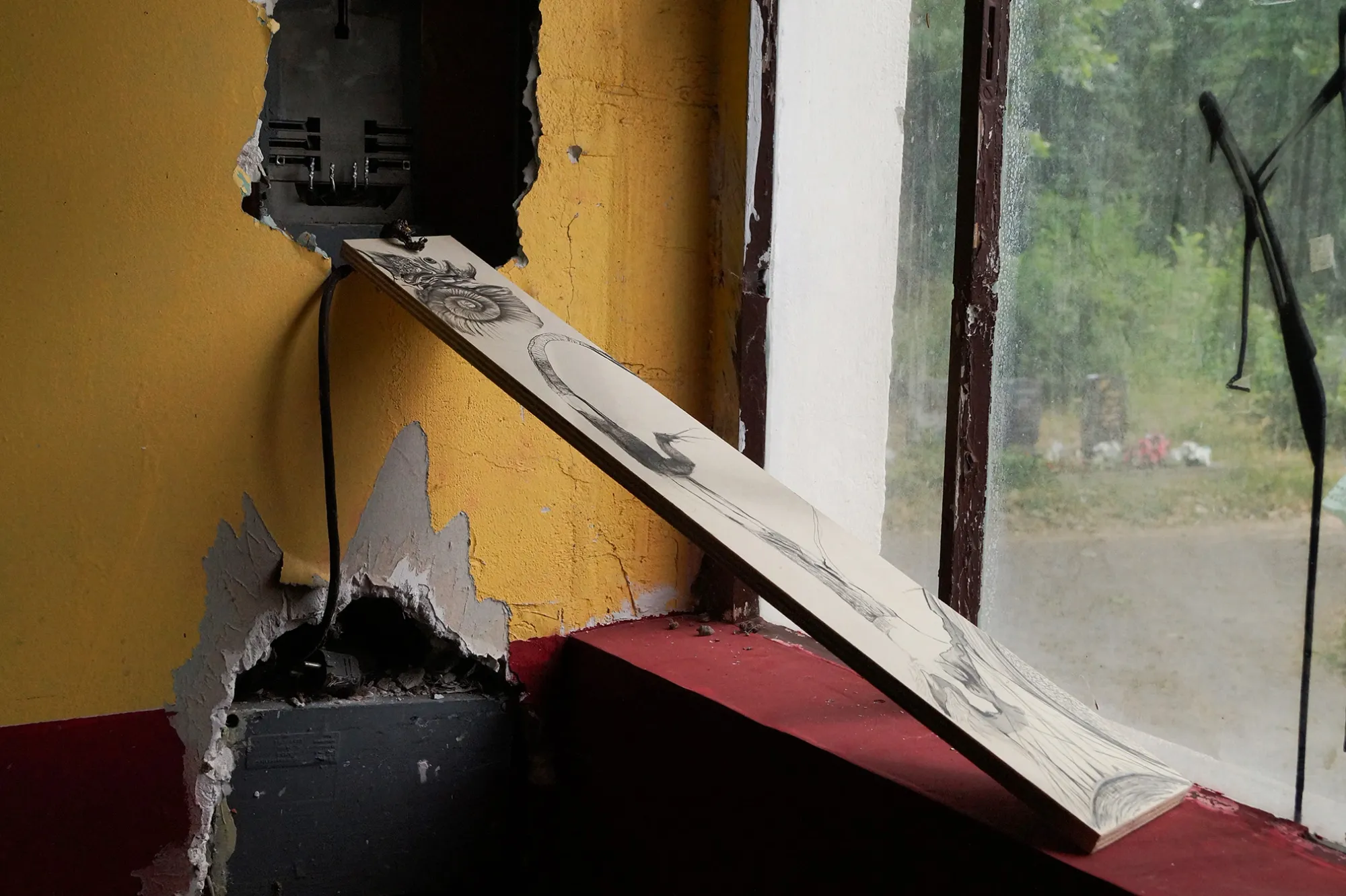
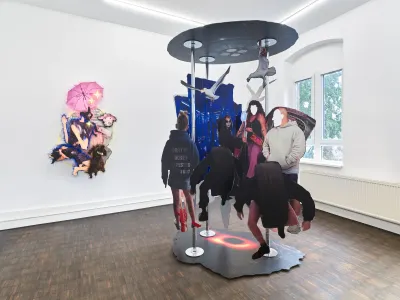
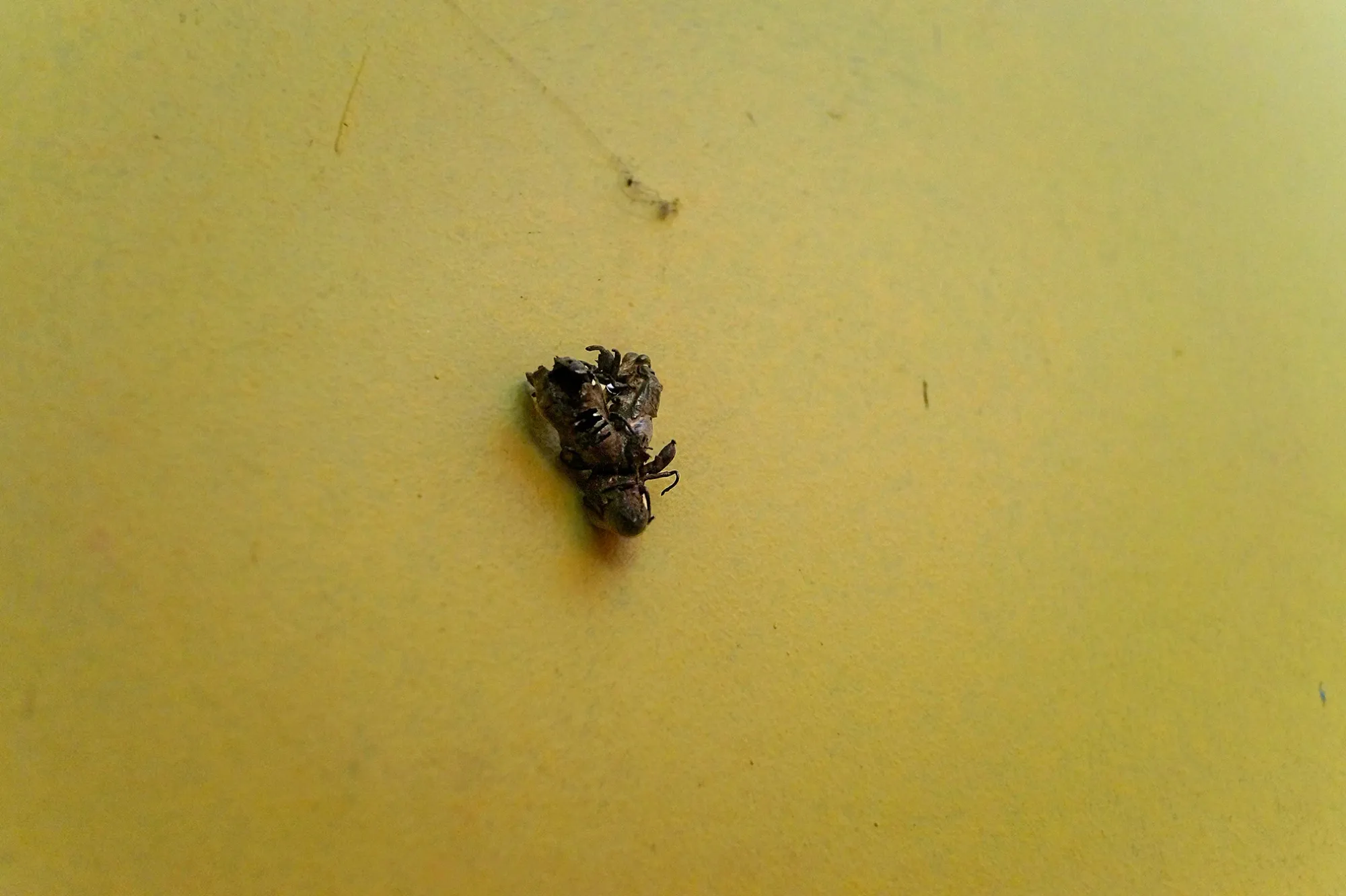
Matilde Sambo's works move by other principles. In the series Cantus ab aestu, cicada moults found on trees become casts, exoskeletons pressed into use as molds, the precise form of departure held as material. Small compositions of shells, hair, wax, and thorns are distributed in difficult corners of the space, at the edges of the viewer's sightline.
The graphite works on paper, from the series Interstizi e collisioni, hold figures in states of anatomical dissolution, the body organized and then released, forms drifting across the boundary between legibility and something less fixed. Nothing in Sambo's work resolves into fixed meaning, but nothing collapses either. The forms remain in transit. Her archaeological method, using collective memory as a site to excavate rather than commemorate, produces objects that carry their histories without announcing them.
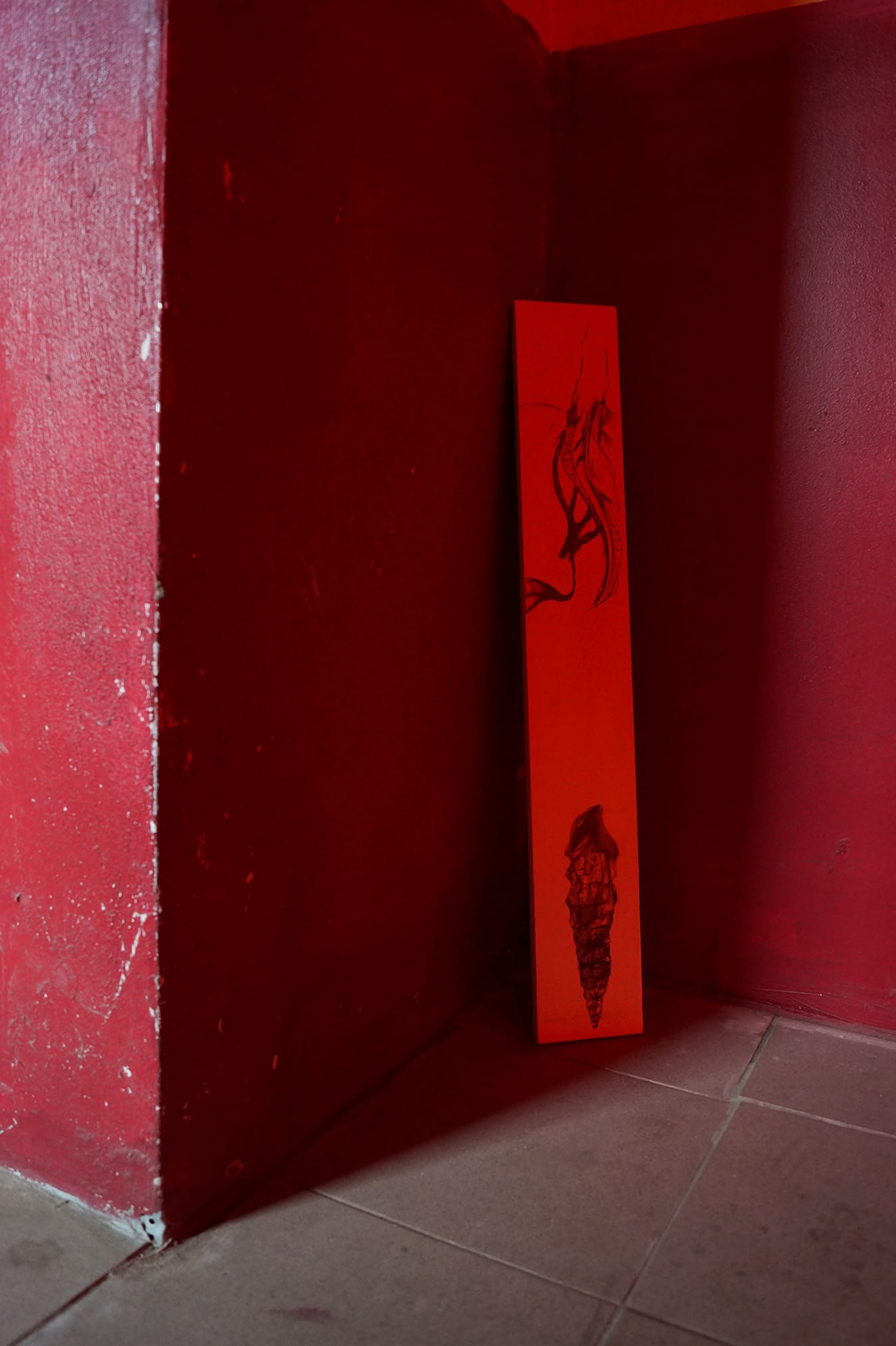
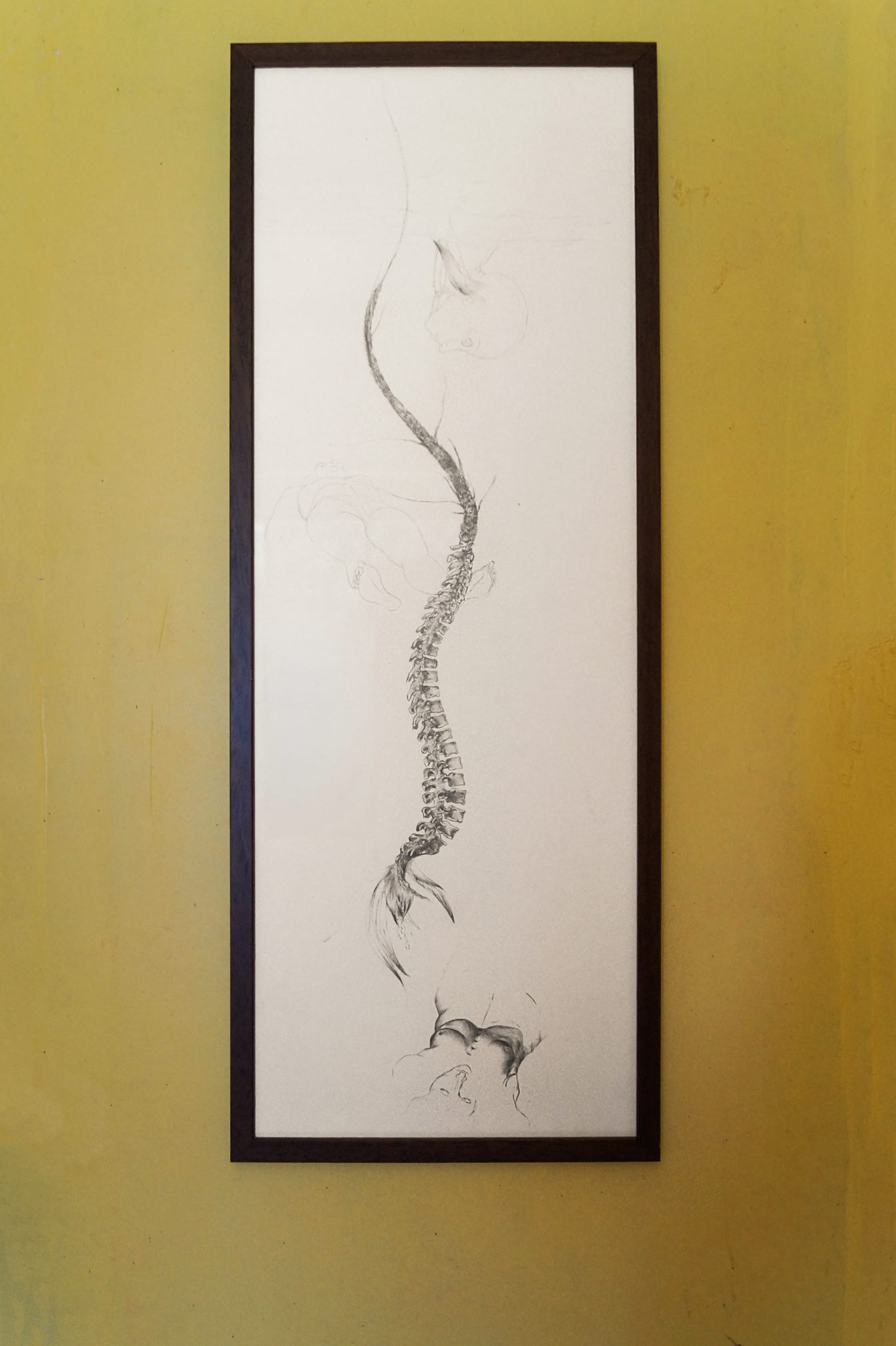
Both practices are working with something contemporary discourse tends to process too quickly, the relationship between form and what form is required to contain. Yesakova inscribes it directly, the carved wood holds the evidence of its own making, the force required to produce control.
Sambo disperses it into anatomical transit, where the body's organization becomes a system the work can inhabit and slowly dissolve. In a Berlin cemetery in 2026, this double movement carries weight beyond its art-historical frame. The city is full of sites where fragmentation was administered, where classification created distance from the emotional weight of events. The gatehouse does not resolve this context. It opens it.
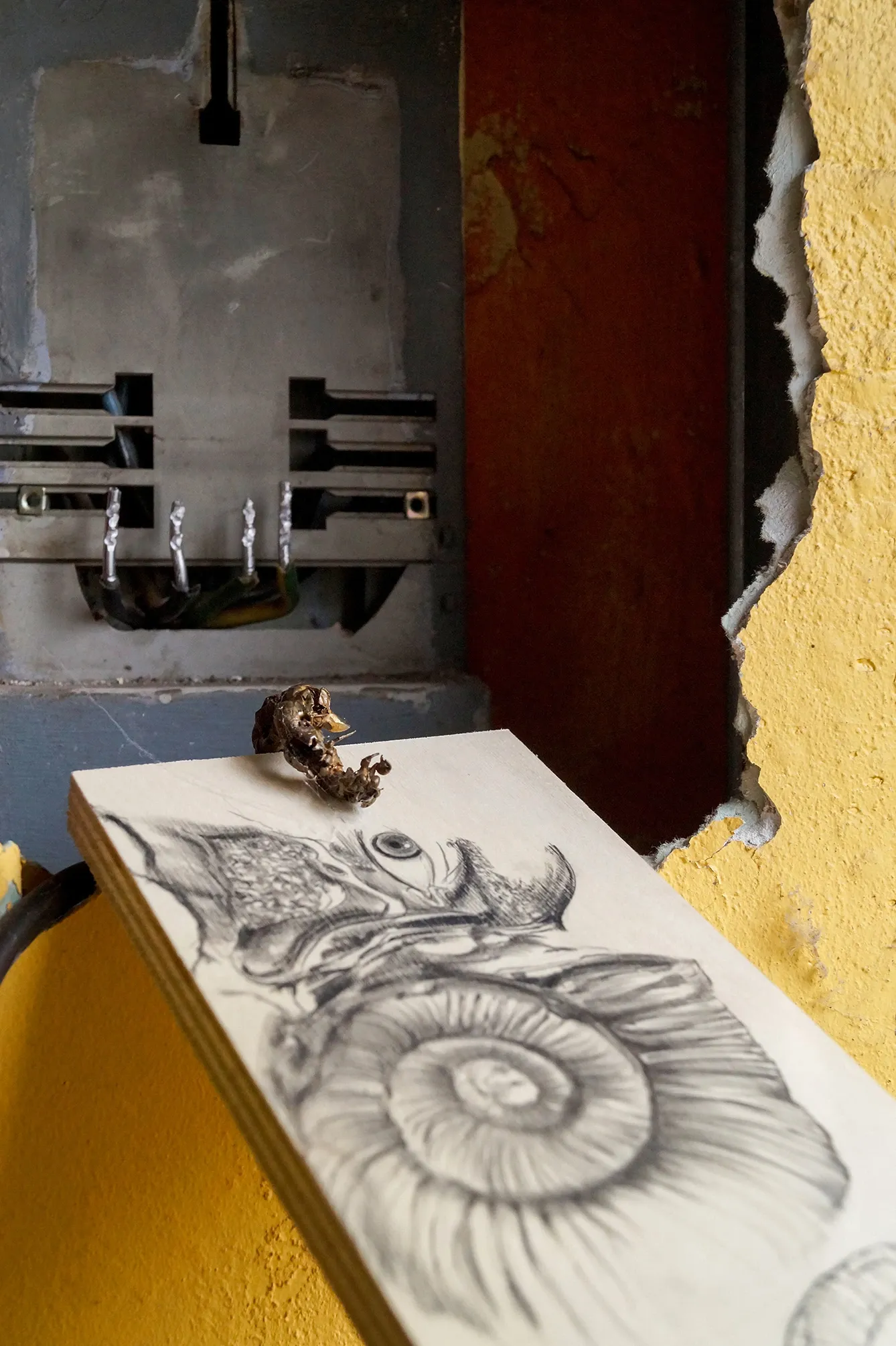
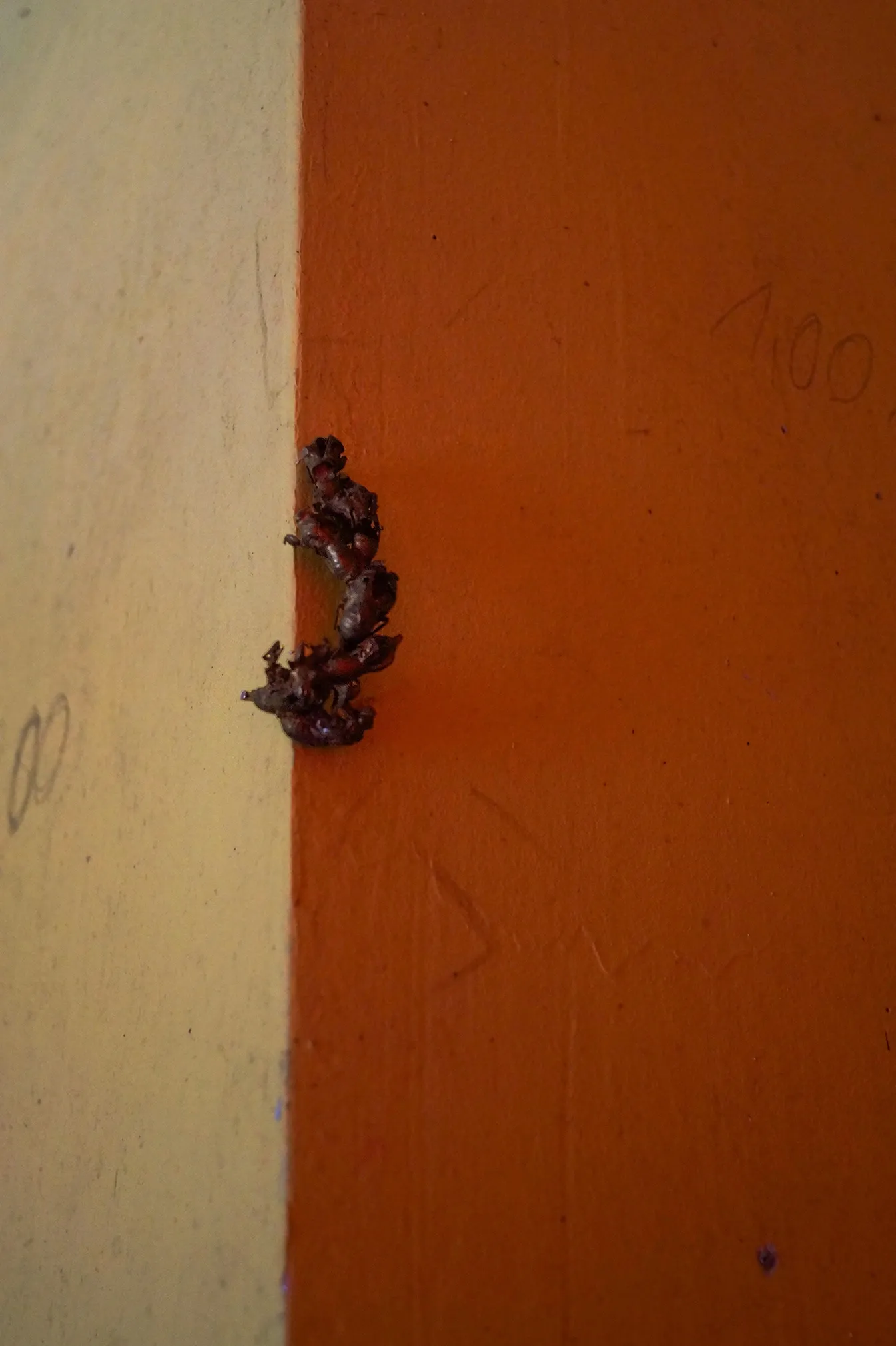
The cicada moult is a very specific form, the exact shape of something that is no longer there. Sambo uses it as a cast, a container shaped by absence, pressed into new material. When one spends time with it, the object and its condition become the same argument.
Yesakova's eye held open by metal rod does something similar in the opposite direction. It refuses the release of closing. The phantom, in this exhibition, is not a haunting. It is a method of holding form after form has moved on.
Instagram Phantom Pförtnerhaus
Instagram Sofiia Yesakova
Instagram Matilde Sambo
About Catapult Contemporary - Art Platform Submission
This is a exhibition review published by Catapult — an independent editorial platform for contemporary art, based in Vienna. We publish exhibition reviews, artist features, interviews, and critical context, with a focus on emerging and mid-career practices from Europe and beyond.
catapult.art
Want to be featured? Submit your work →