Gabriel Alonso lets the Leaf Carry the evidence

ATM Galería Presents A Long Chemical Dream in Gijón
ATM Galería presents A Long Chemical Dream, curated by Cristina Ramos, through November 8, 2026.
Gabriel Alonso
A Long Chemical Dream
ATM Galería
Gijón, Asturias, Spain
–
Tuesday to Saturday, 11:30 to 13:30 and 17:30 to 20:30. Other times by appointment.
Carr. de Deva, 675, 33394 Gijón, Asturias, Spain
Cristina Ramos González
Pelayo Tamargo
Courtesy ATM Galería
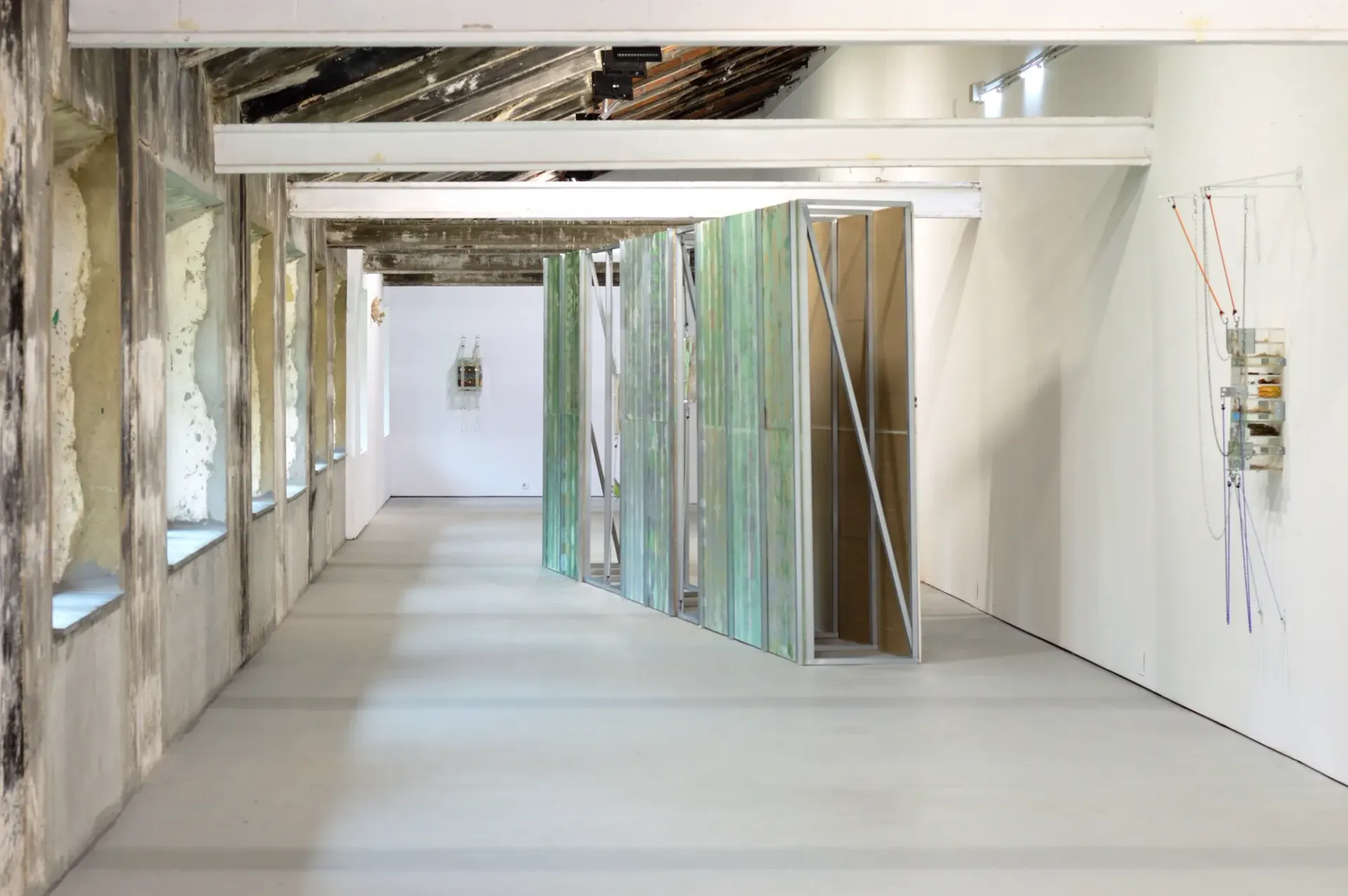
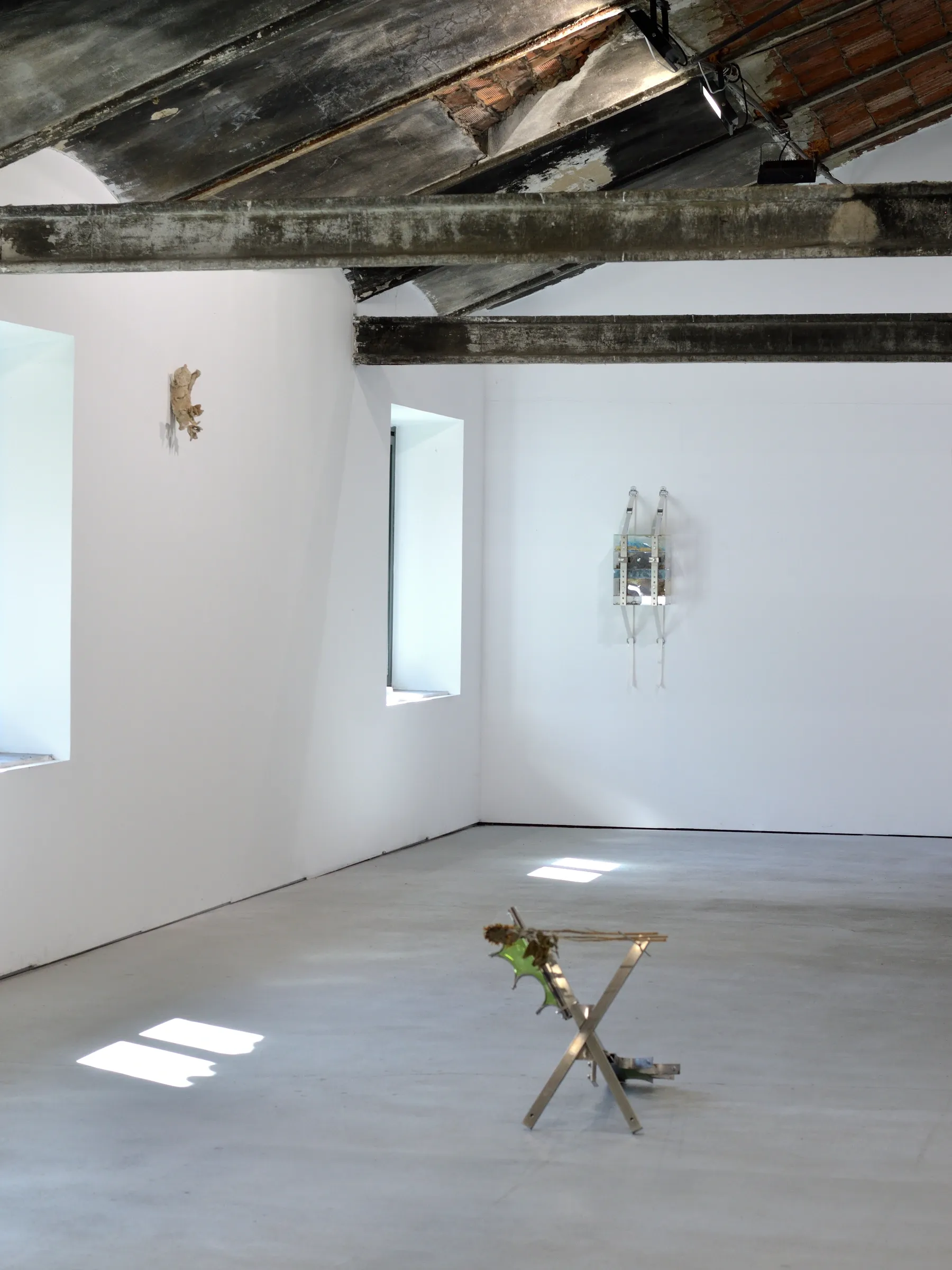
Alonso ferments plants with sulfates, industrial chemicals that alter soil fertility, and the plants answer by changing their own pigmentation.
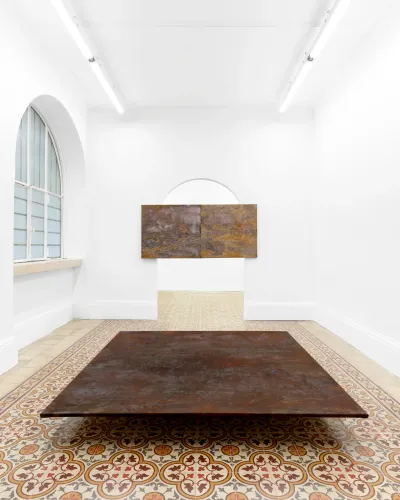
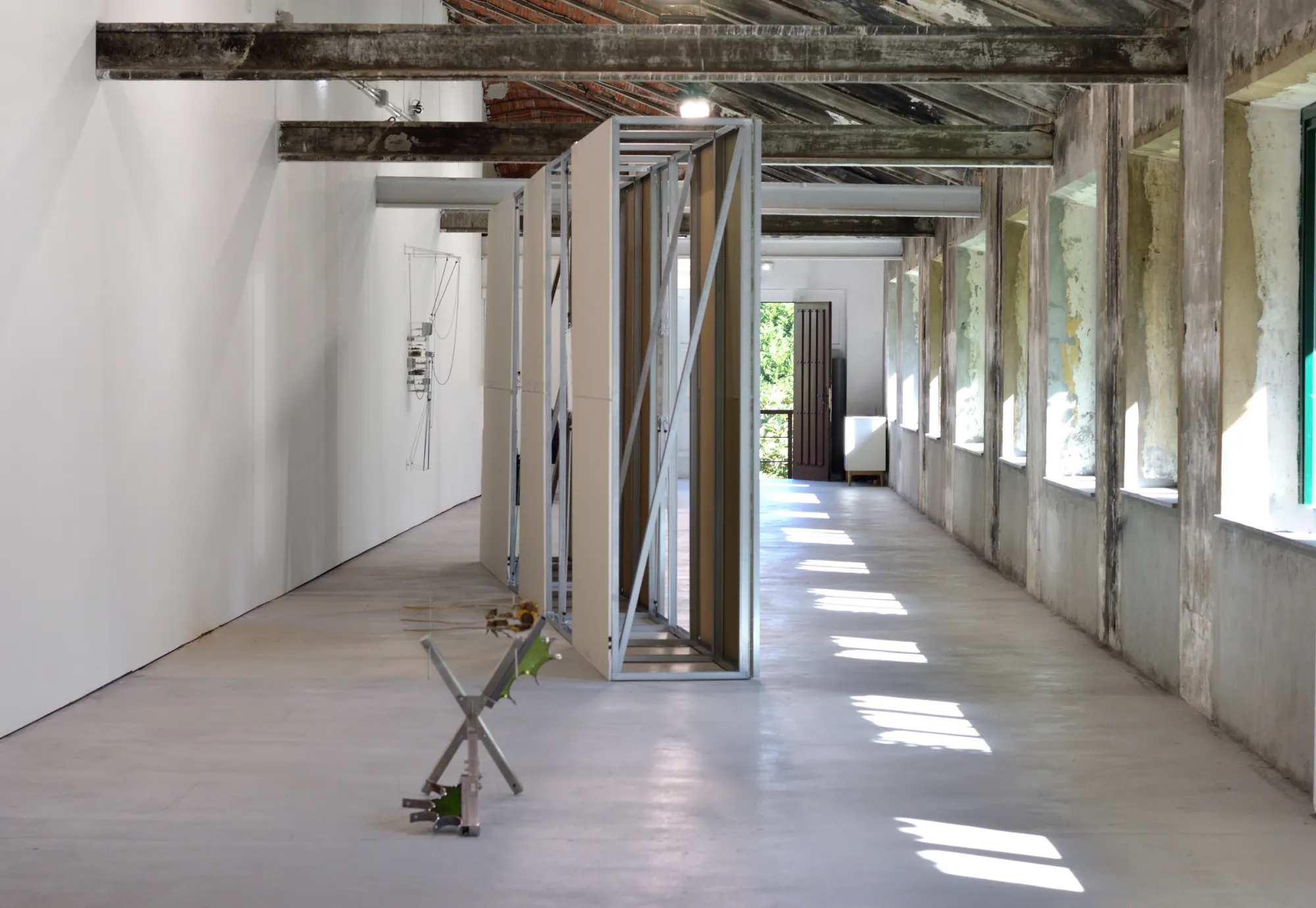
They share the space with climbing chains and ropes, and with a freestanding wall printed from the direct trace of vegetal morphology, chlorophyll left in the tissue. The whole installation takes the form of a greenhouse.
Below, curator Cristina Ramos González explains the botany behind the chemistry.
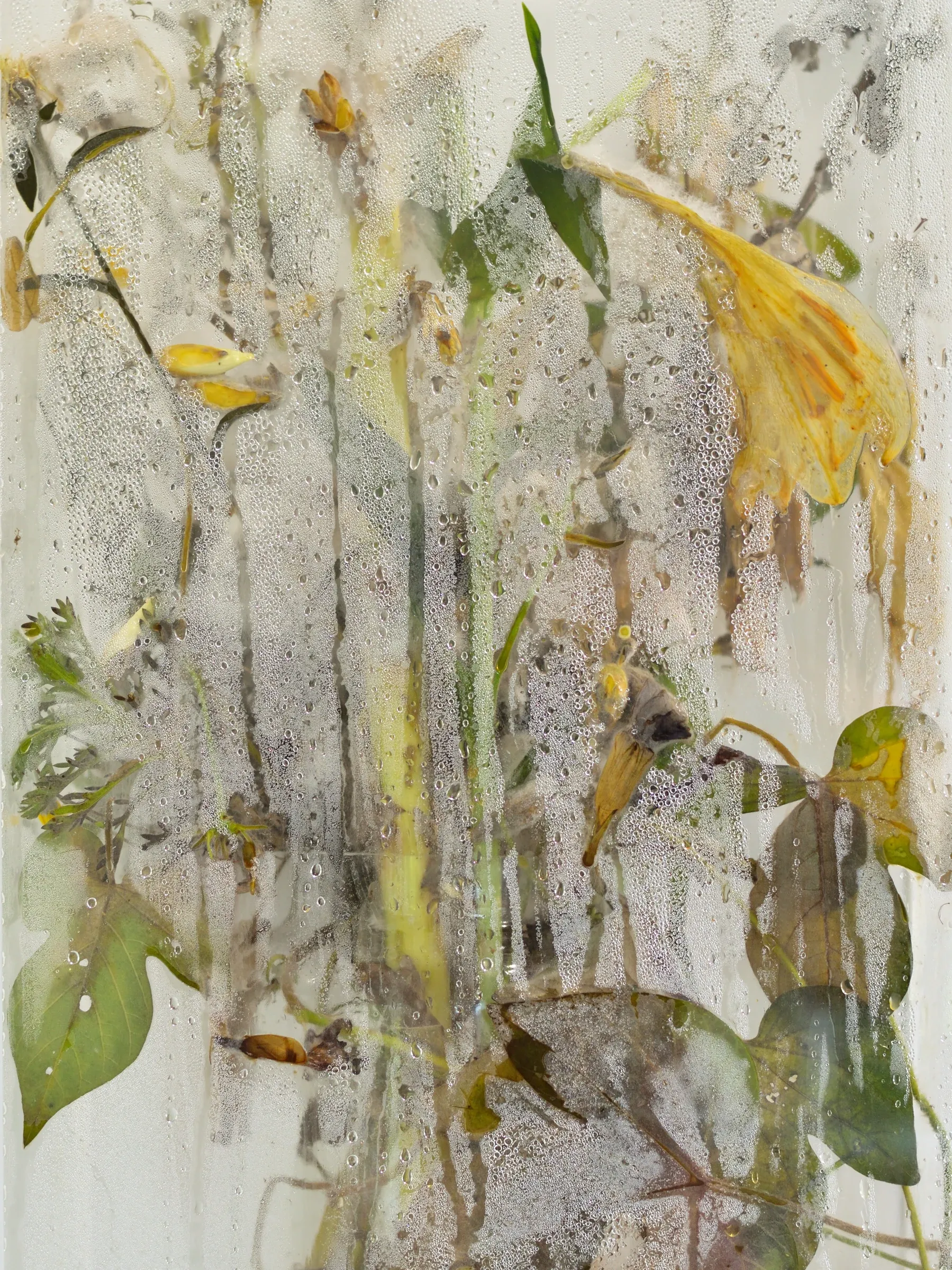
At the exhibition opening, a bouquet of fresh flowers gathered from gardens and plants surrounding the gallery was placed inside a box and left undisturbed.
Over the following weeks, the glass will gradually fog, the stems will darken and the petals will fall, creating a small weather system inside.
No one will water the flowers or intervene. The bouquet is left to undergo its own transformation as visitors come and go, introducing another dimension of vegetal time, decay and waiting into the exhibition.
Curatorial Text by Cristina Ramos González
Thinking through the vegetal condition requires, above all, shifting away from the paradigm of cold science (hard science) and its taxonomic drive.
Only then can we open ourselves to an intuitive and relational threshold: understanding the garden as a postnatural and hybrid territory in which the vegetal, the technological, and the symbolic intertwine in unstable ways.
It is at this intersection of temporalities that A Long Chemical Dream, a project by Gabriel Alonso, takes shape, questioning the ways in which Western botany constructed its knowledge.
The project challenges an epistemology that reduced plants to the condition of immobile, inactive beings devoid of anima.
Since the eighteenth century, when botany was instrumentalised in the pursuit of “green gold,” plant science has been shaped by political and economic interests.
The collecting bags of the colonial era were not merely tools: they were containers for the forced displacement of vegetal bodies, uprooted from their ancestral territories and transported to the scientific cabinets of imperial Europe.
By reconfiguring this apparatus, Alonso rejects the complacency of a purely ornamental botany.
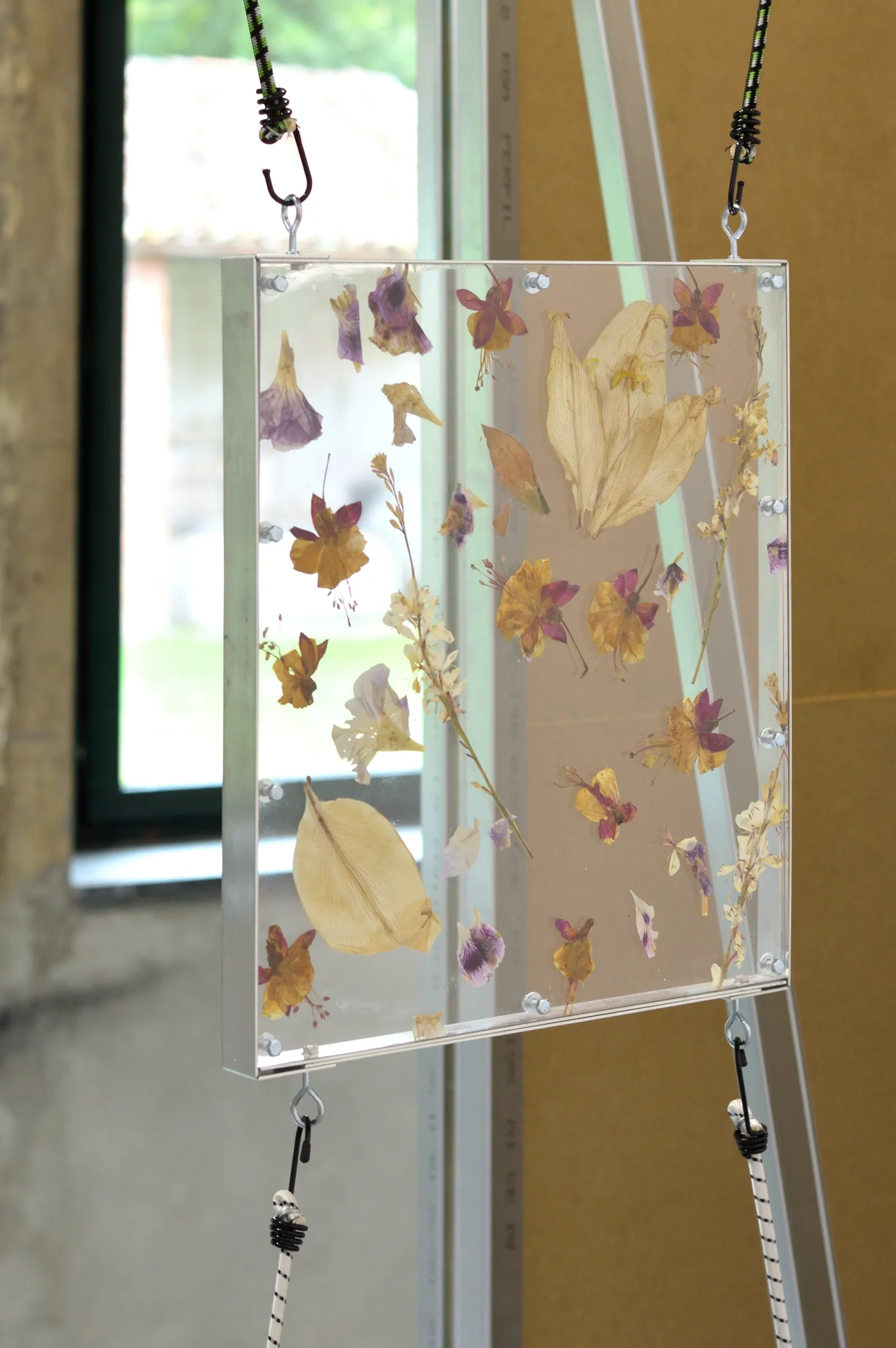
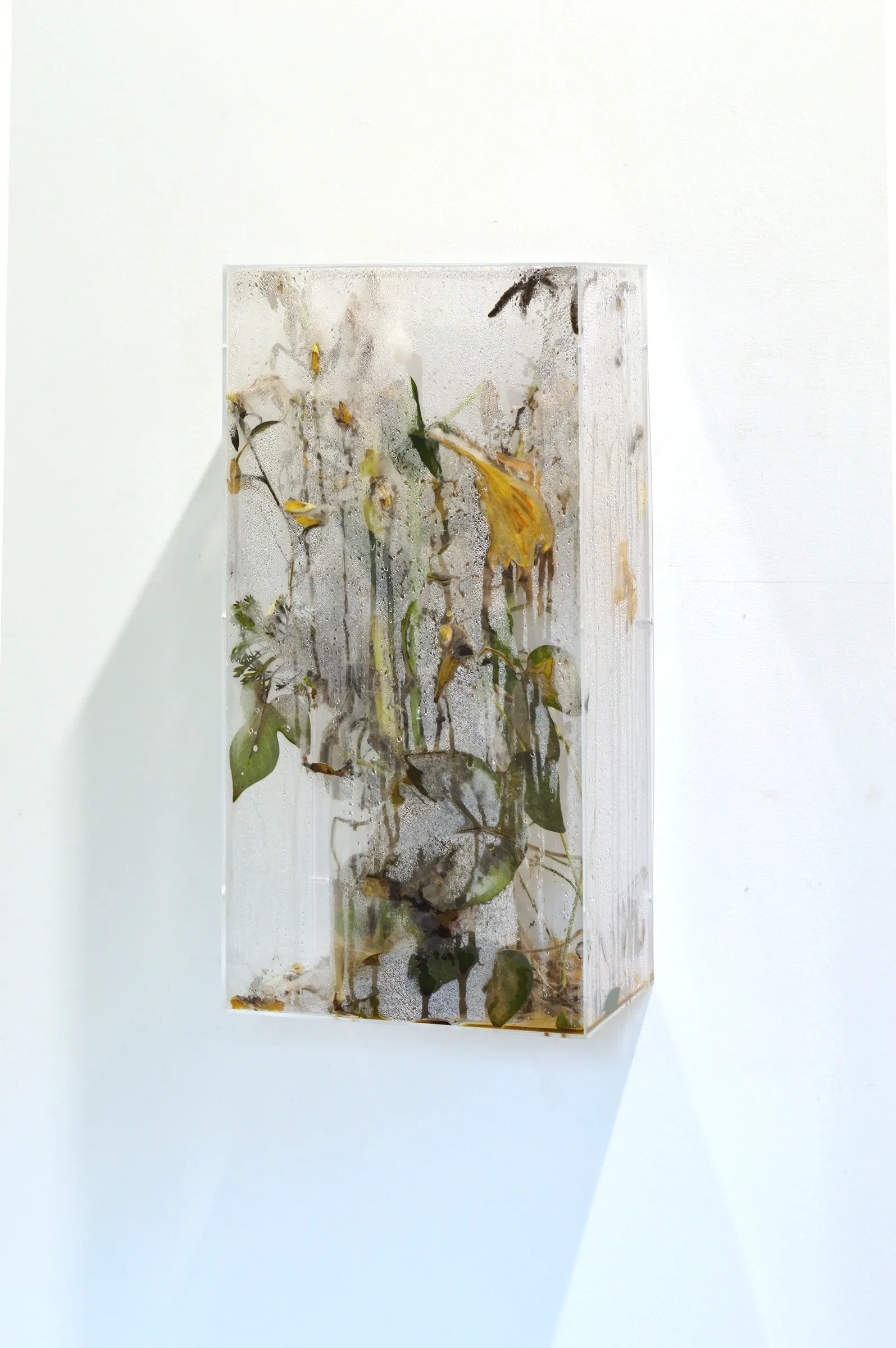
In the work, plants coexist and come into tension with climbing chains and ropes. This synthetic equipment, designed to measure and control access to “nature,” confines the plants and exposes an embodied paradox: that of a society that needs to technologically shield itself in order to approach the living.
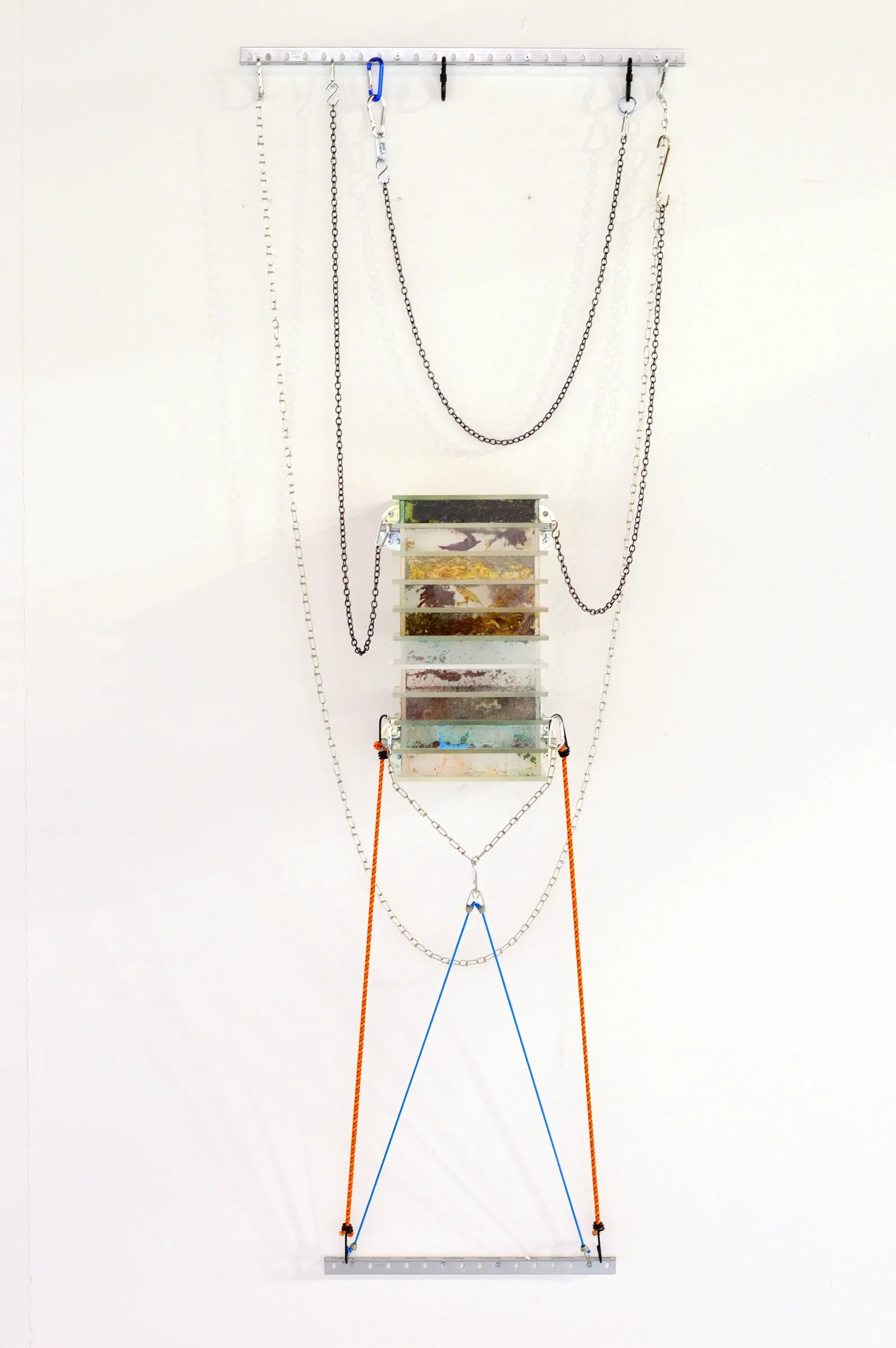
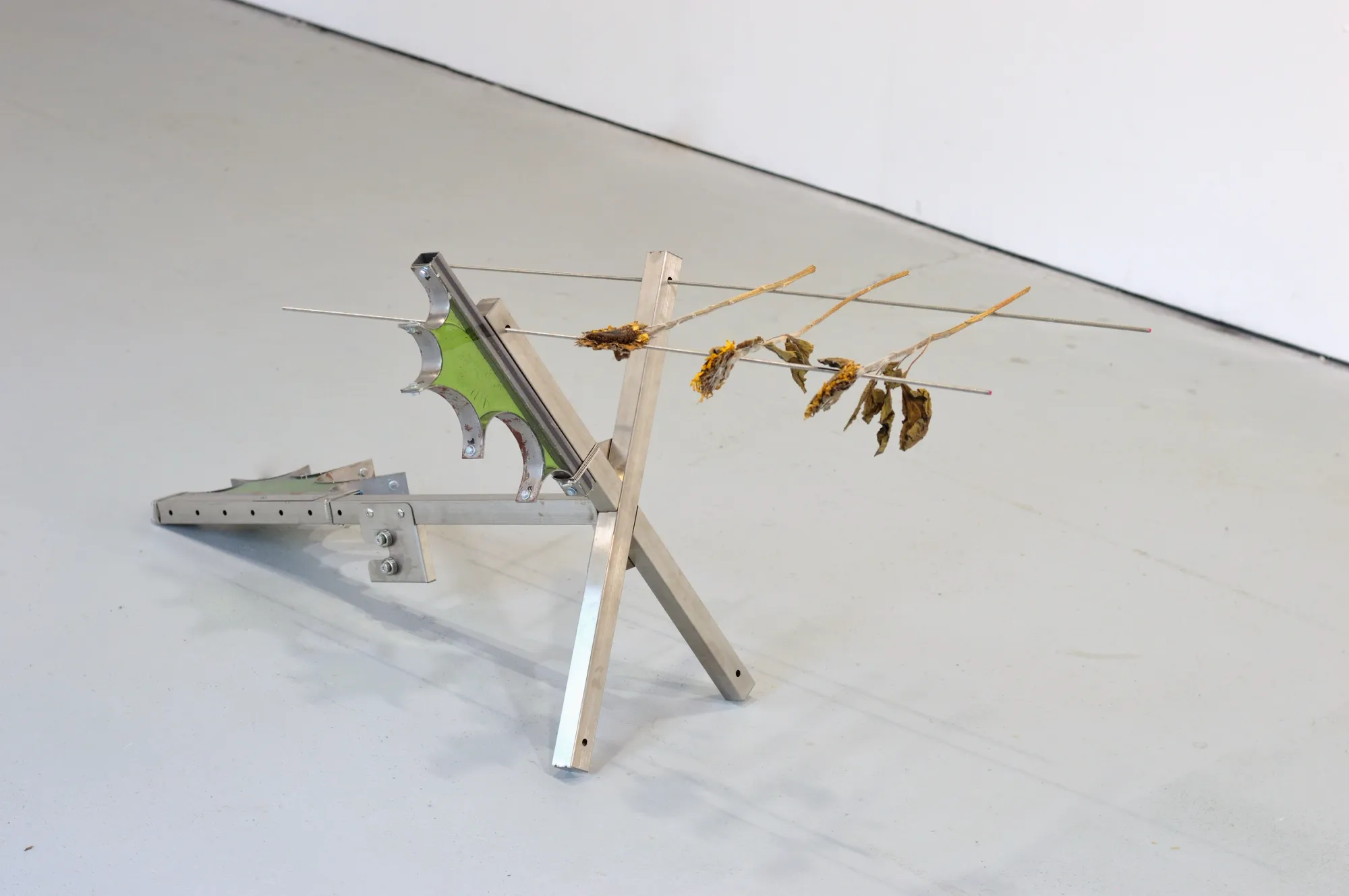
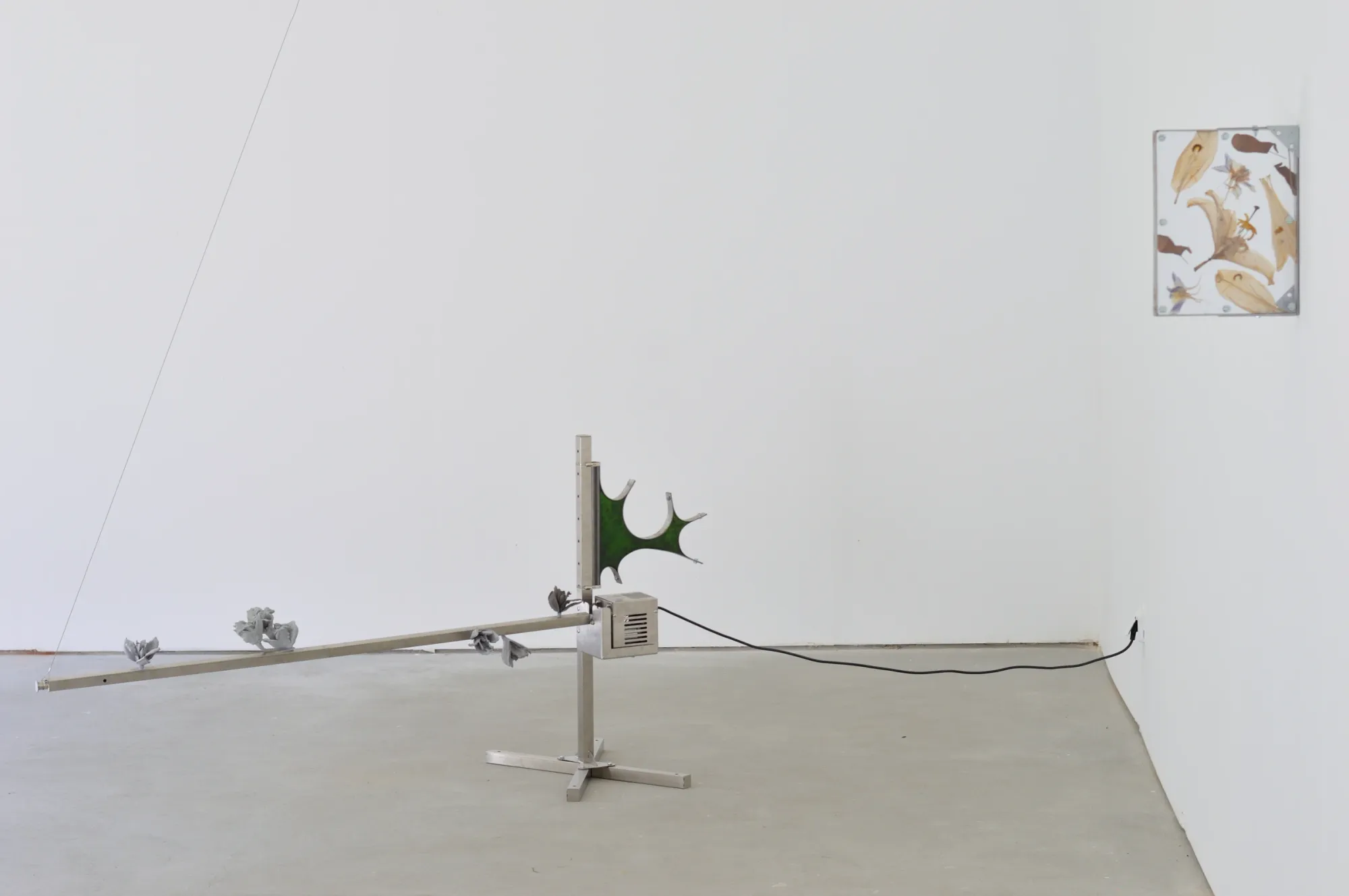
Against the extractive logic that has organised Western systems of knowledge—obsessed with flattening the complexity of living matter into dry herbarium sheets—there emerges a need for a phytopoetics. A perspective that recognises plants as co-creators of meaning, language, and resistance.
This voice takes shape through chromatic matter. When fermented with sulfates—industrial chemicals that alter soil fertility—the plants react by modifying their own pigmentation. Geopolitical violence is inscribed directly onto the leaf, transforming it into a visual testimony of a poisoned landscape.
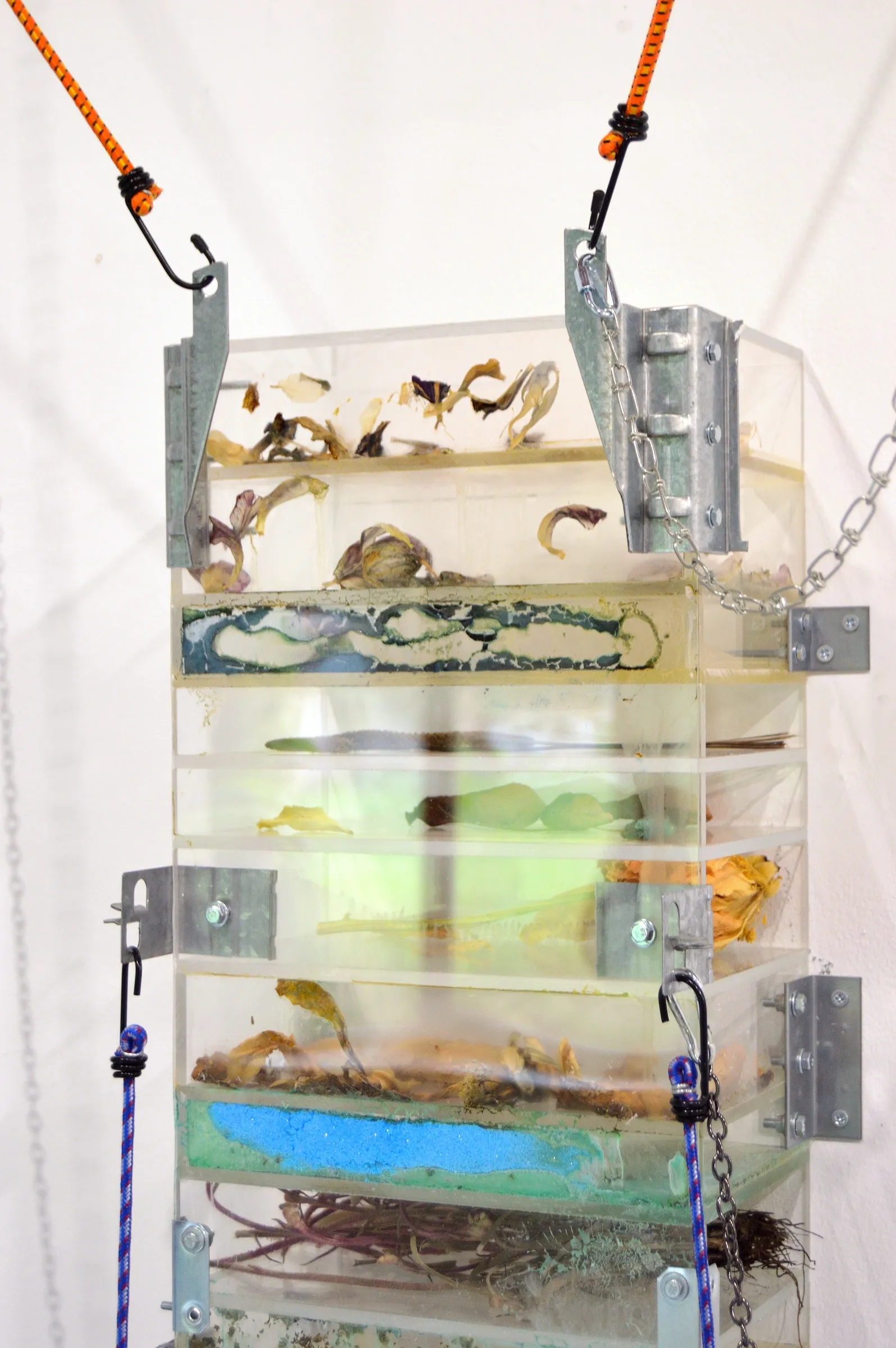
This tension is also materialised in an organic architecture: a freestanding wall that functions as a large membrane.
Through a printing technique that records the direct graphic trace of vegetal morphology, the surface reveals the density of a tissue imprinted by chlorophyll itself.
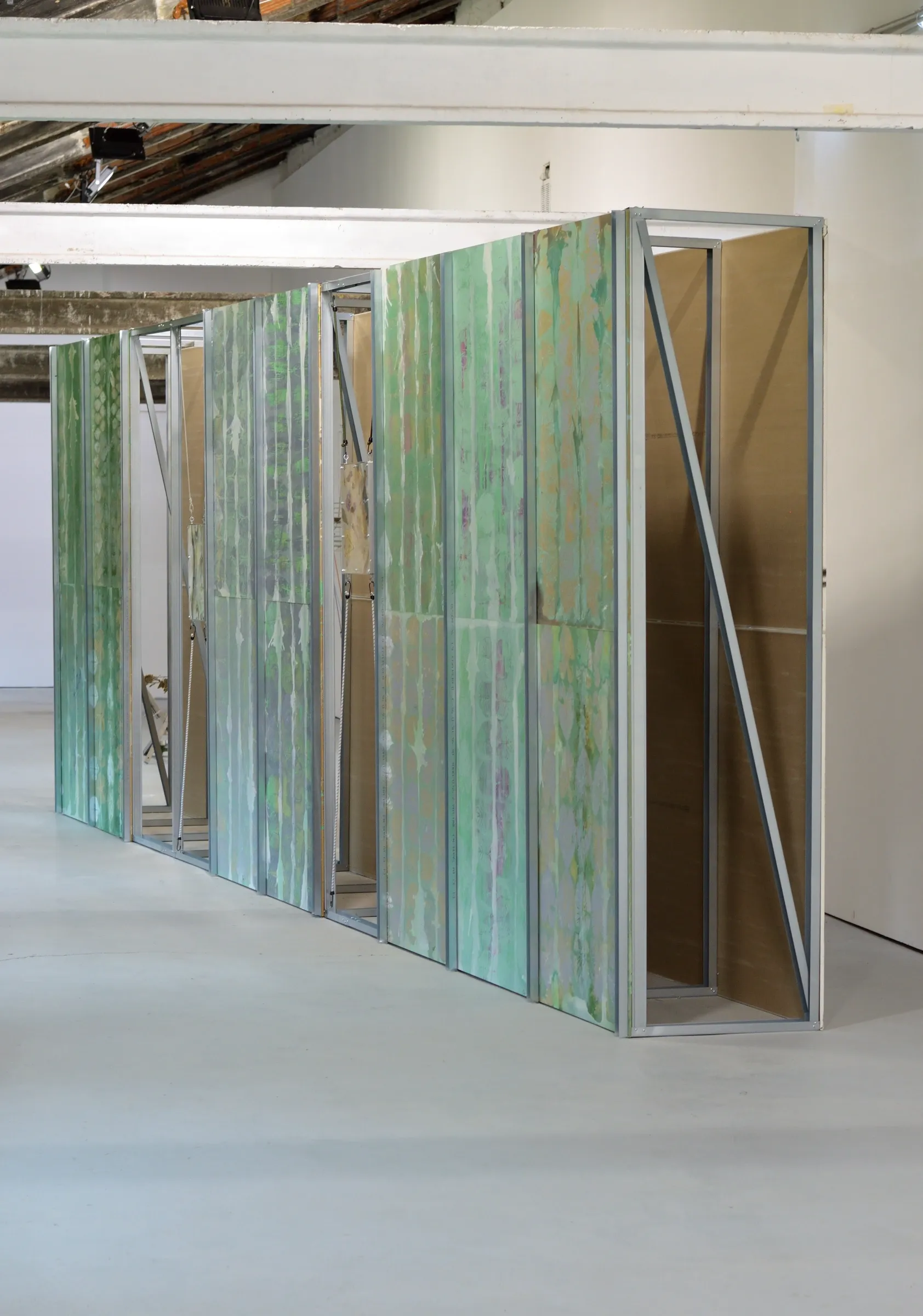
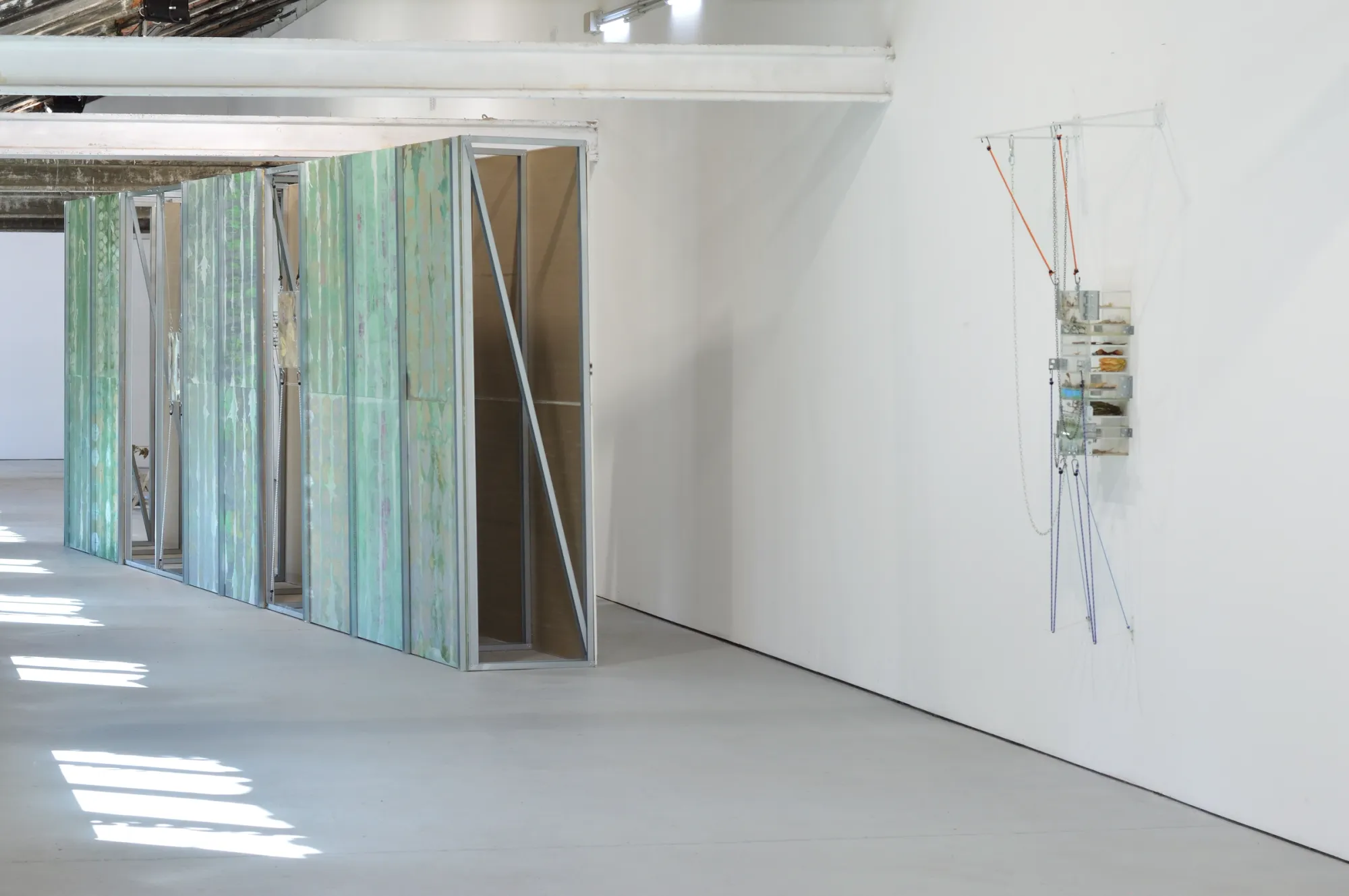
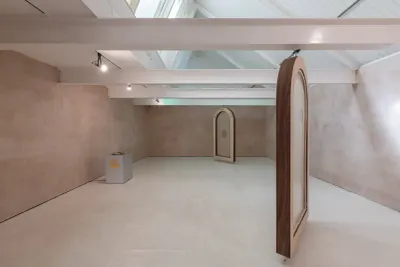
The installation takes the form of a greenhouse; a device in which light flows between the works, generating a transparent atmosphere shared by all bodies.
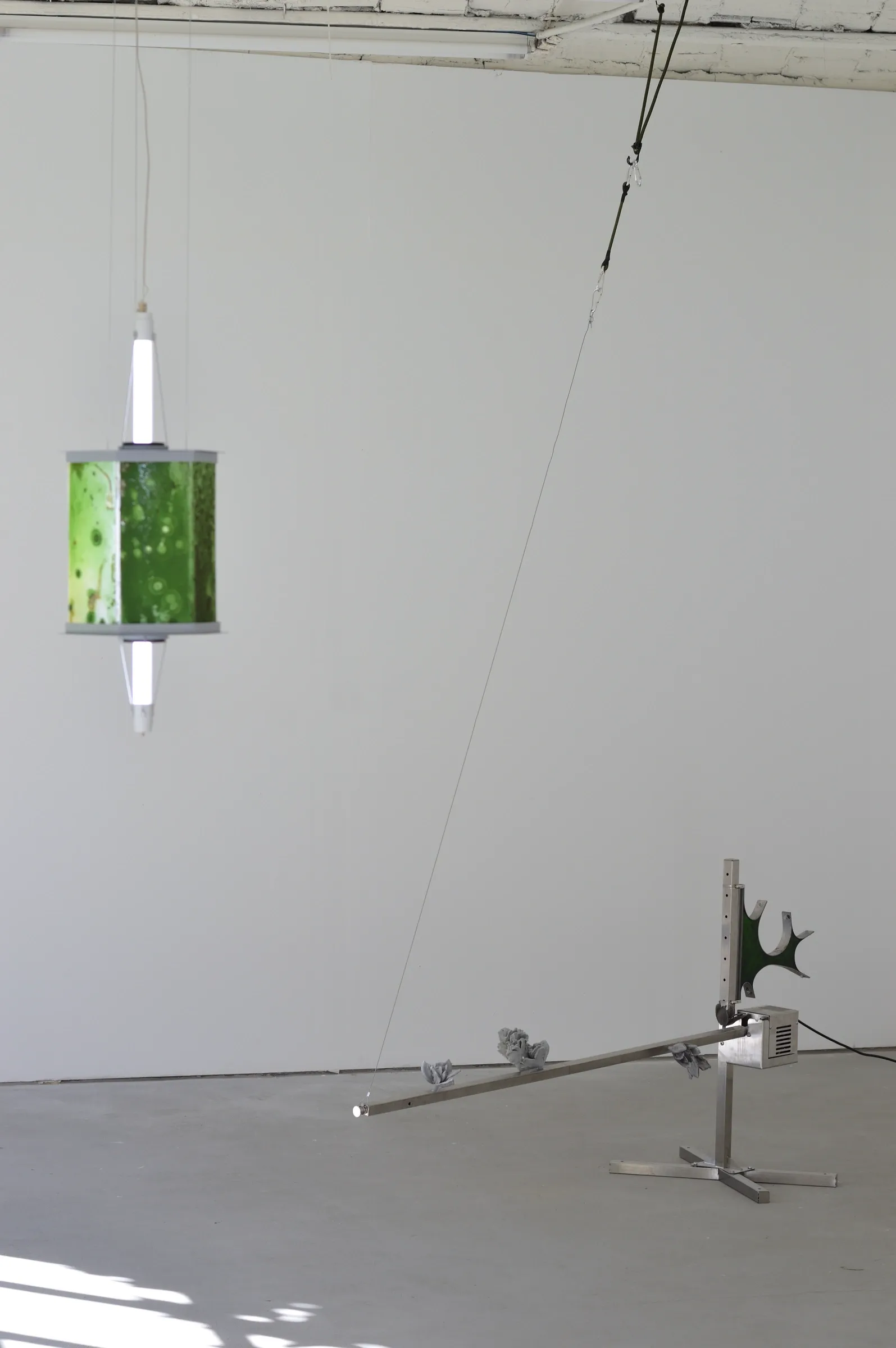
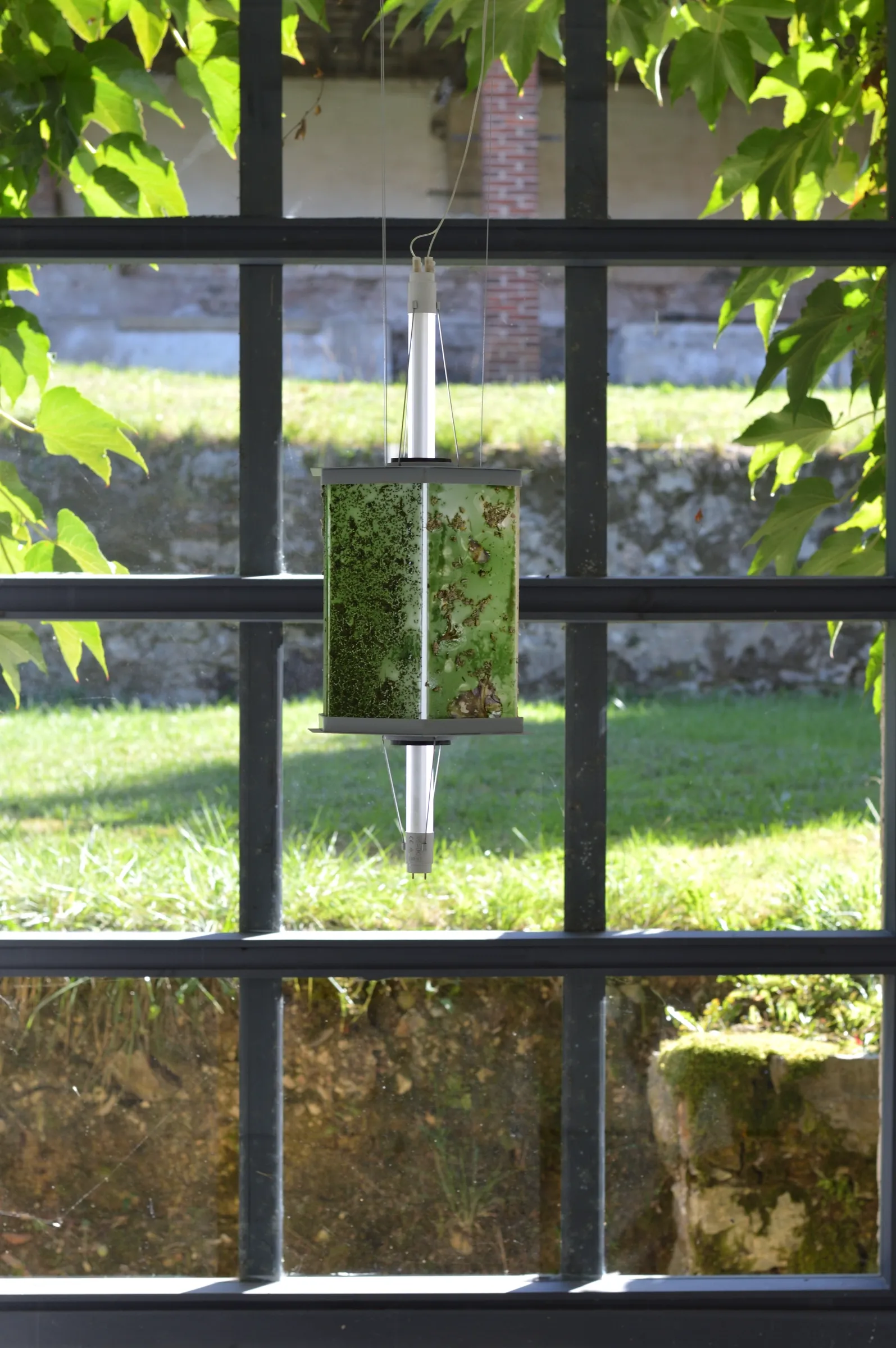
To perceive the rhythms of vegetal latency, germination, and waiting necessarily means allowing ourselves to be traversed by their temporalities and inhabiting the roots that extend into the depths of the world.
Cristina Ramos González Curator
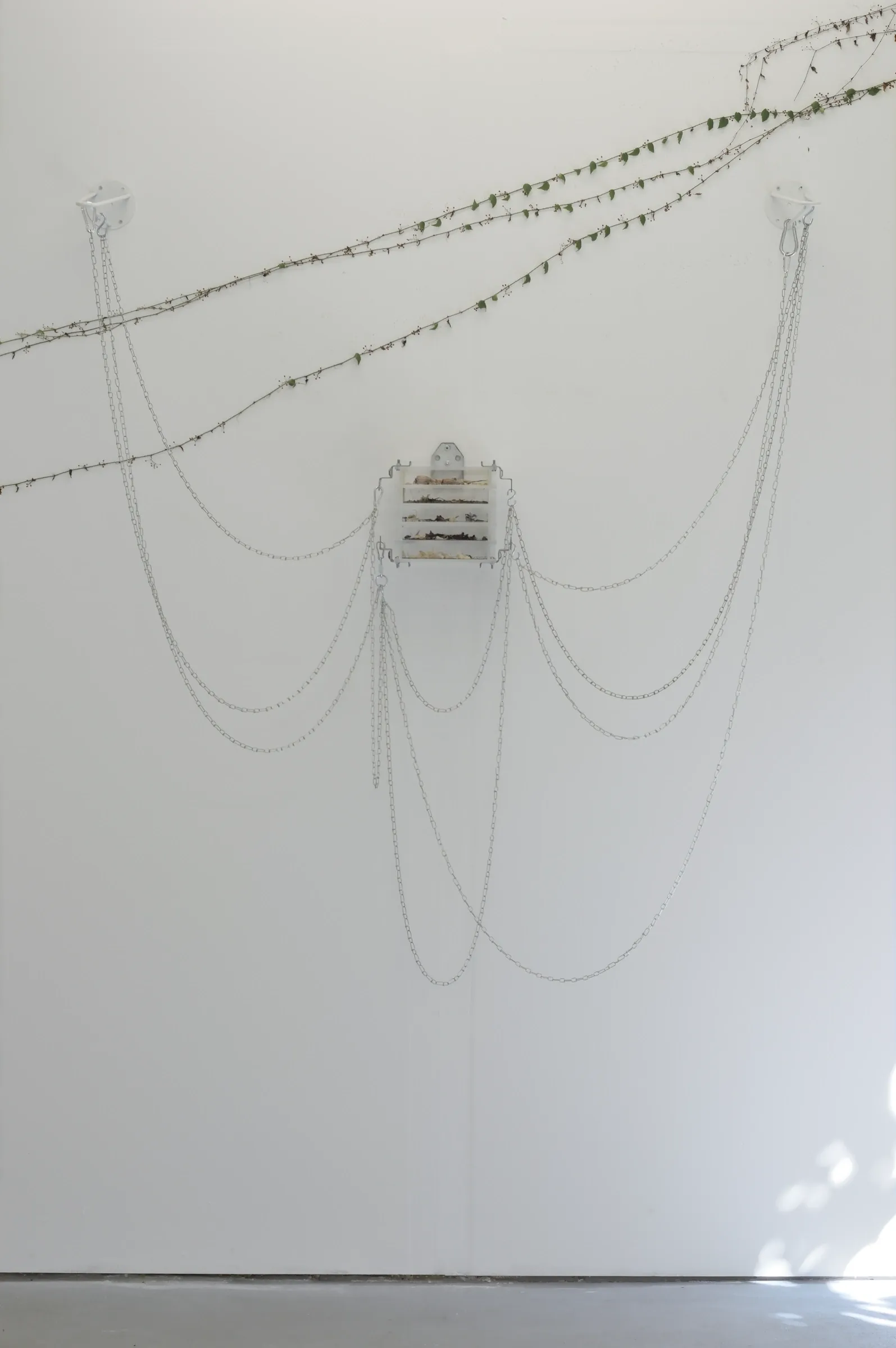
Cristina Ramos González curated A Long Chemical Dream and wrote its exhibition text. She also contributes to the accompanying publication.
About Catapult Contemporary
This is an exhibition review published by Catapult Contemporary, an independent editorial platform for contemporary art, based in Vienna. We publish exhibition reviews, artist features, interviews, and critical context, with a focus on emerging and mid-career practices from Europe and beyond.
catapult-platform.art ·
Instagram
Want to be featured? Submit your work →