João Maria Gusmão Leaves the Projector in the Room

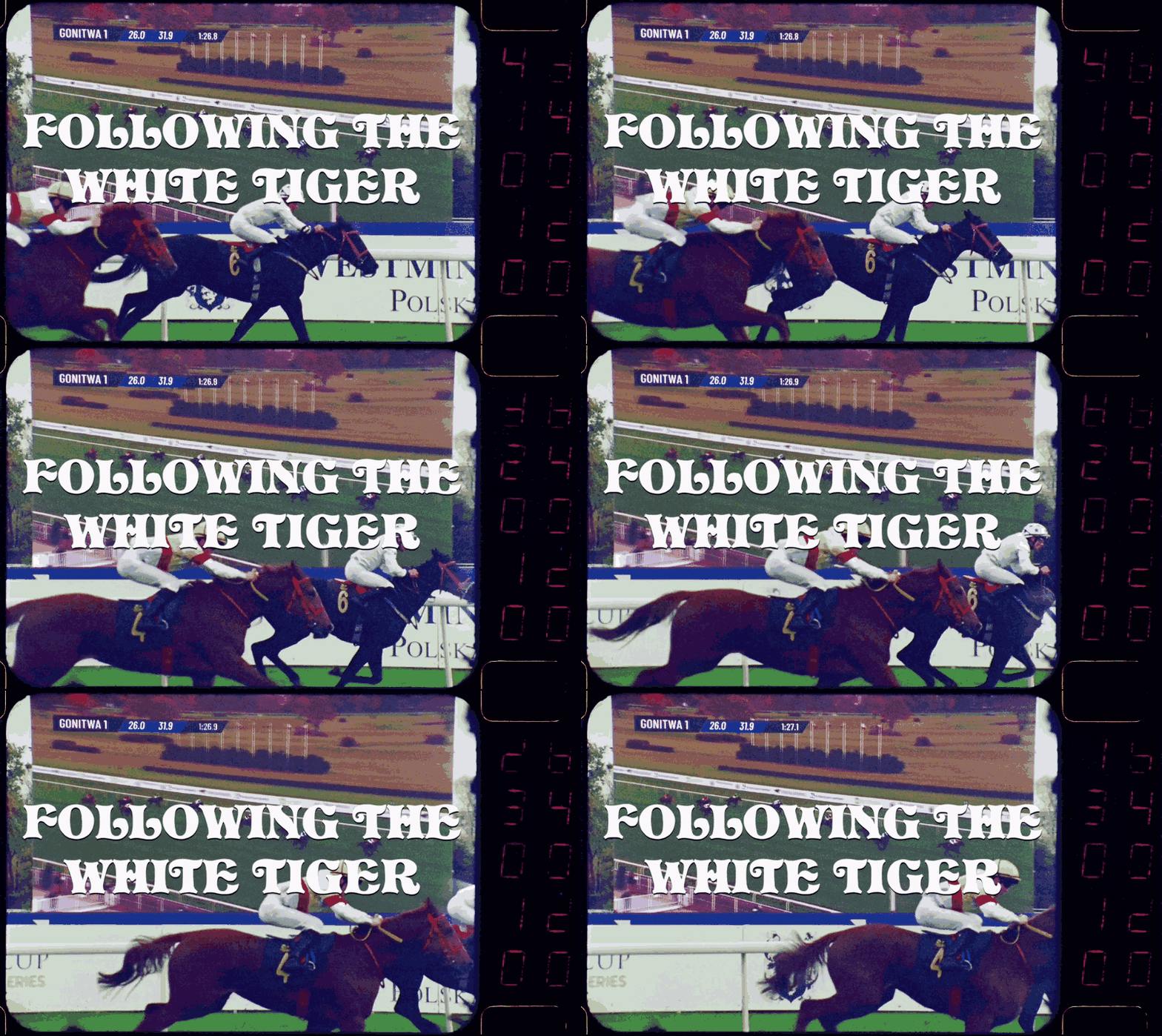
Zachęta National Gallery of Art Presents Following the White Tiger in Warsaw
Zachęta National Gallery of Art presents Following the White Tiger, curated by Post Brothers, through October 31, 2026.
João Maria Gusmão
Following the White Tiger
Warsaw, Poland
–
Tuesday to Sunday, 12 to 8 p.m. Thursday free entry
pl. Małachowskiego 3, 00-916 Warsaw
Post Brothers
Daniel Rumiancew / Zachęta Archive
João Maria Gusmão presents Following the White Tiger at Zachęta National Gallery of Art in Warsaw, on view through October 31, 2026, curated by Post Brothers.
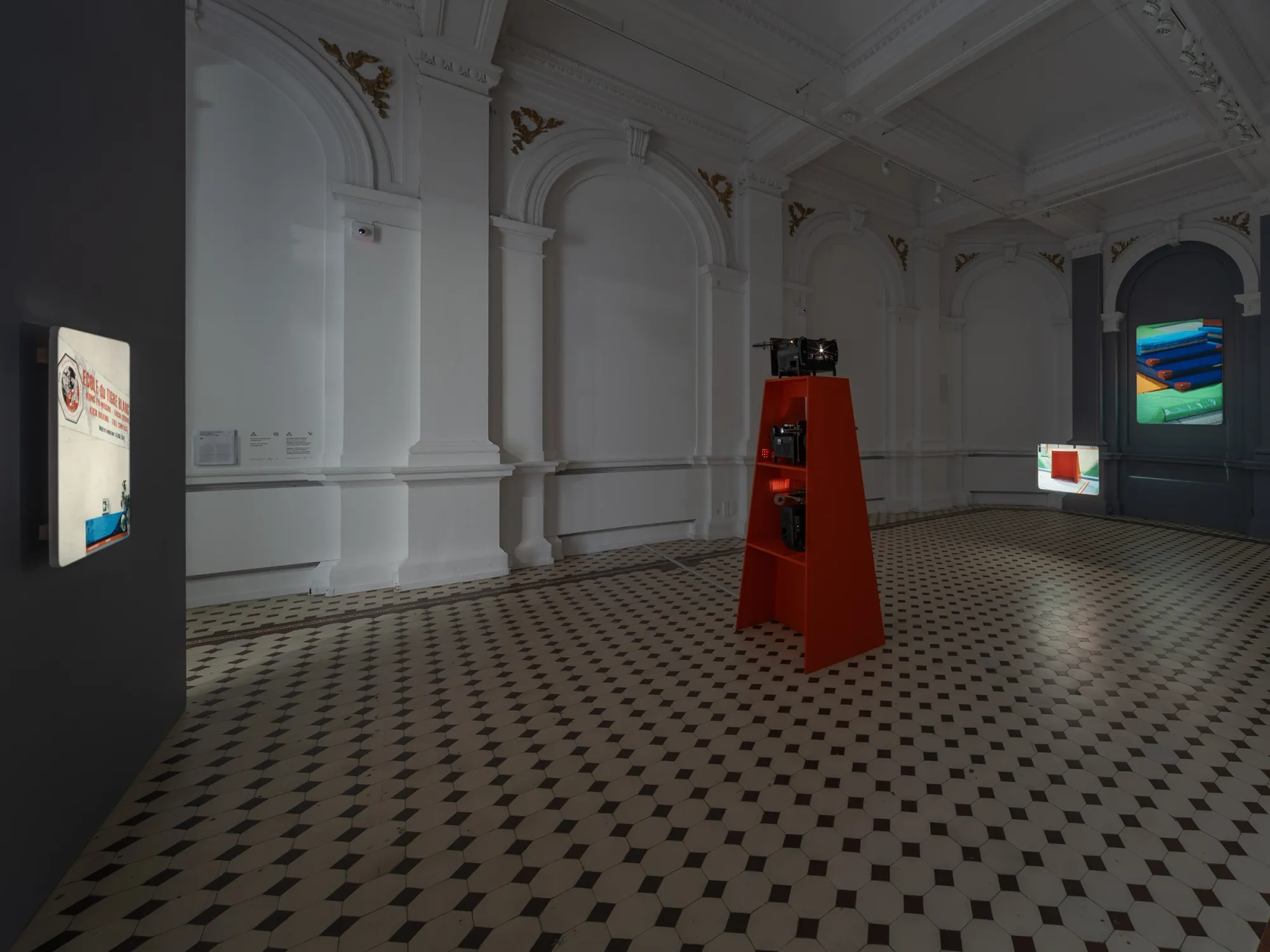
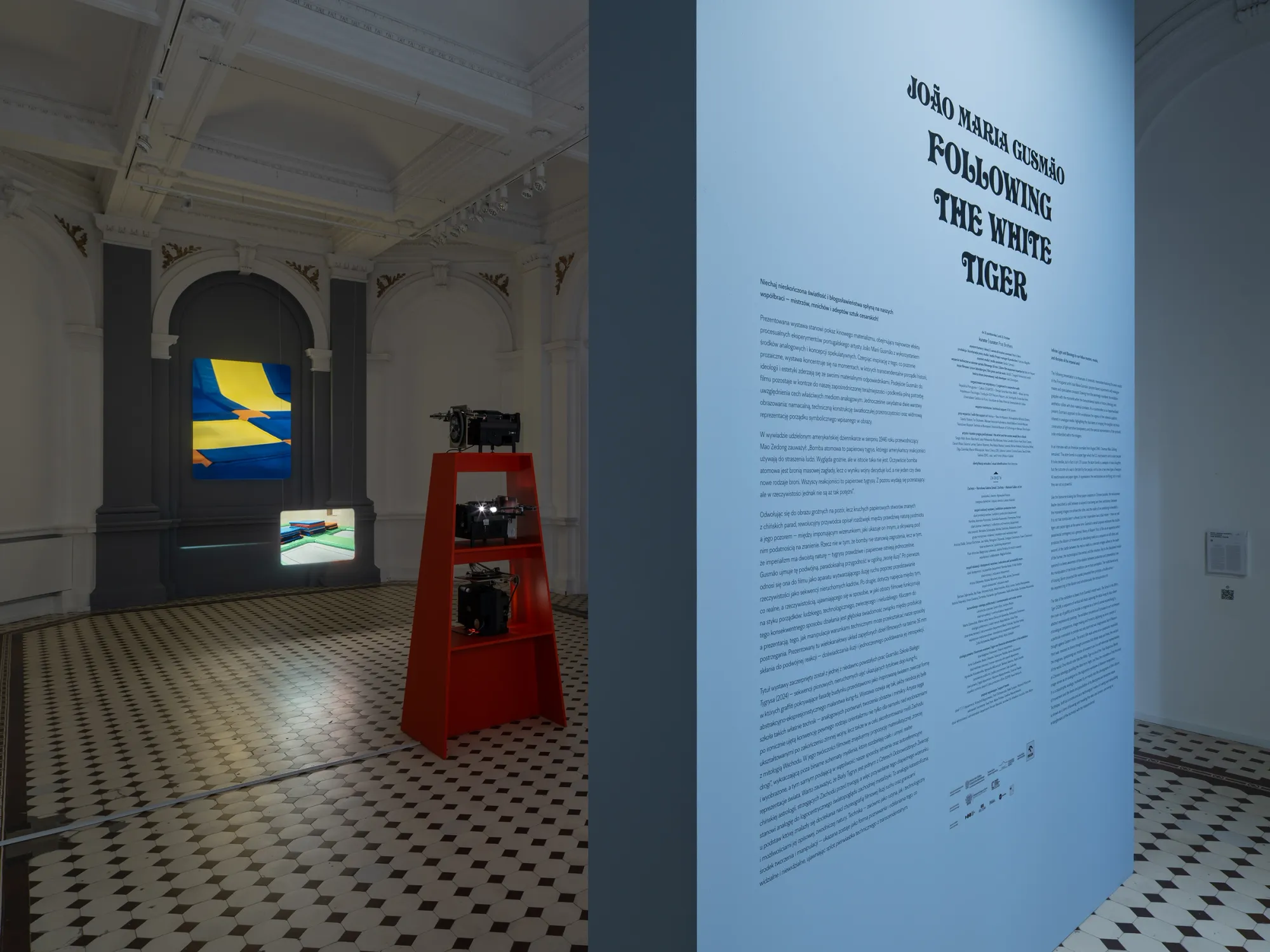
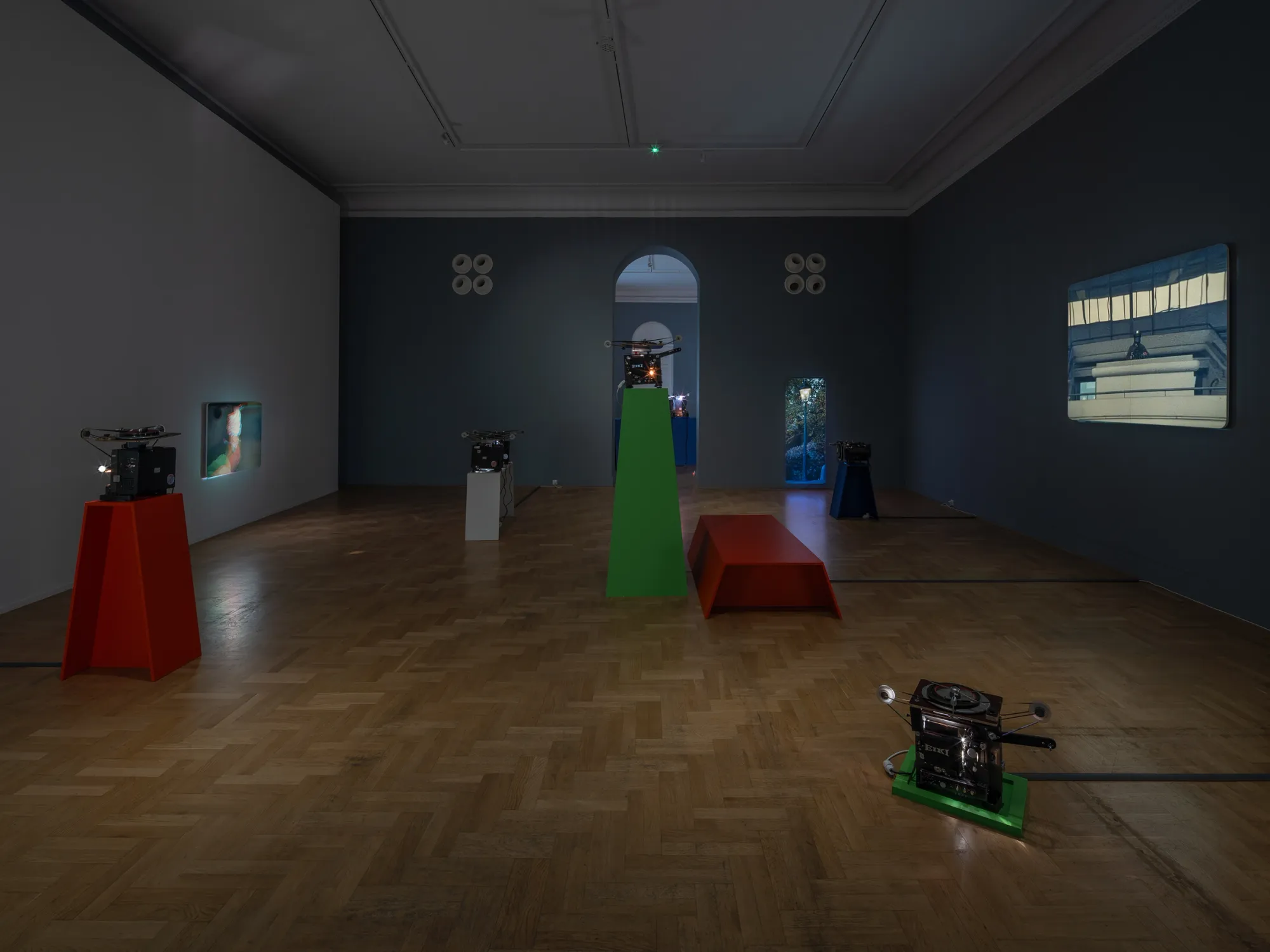
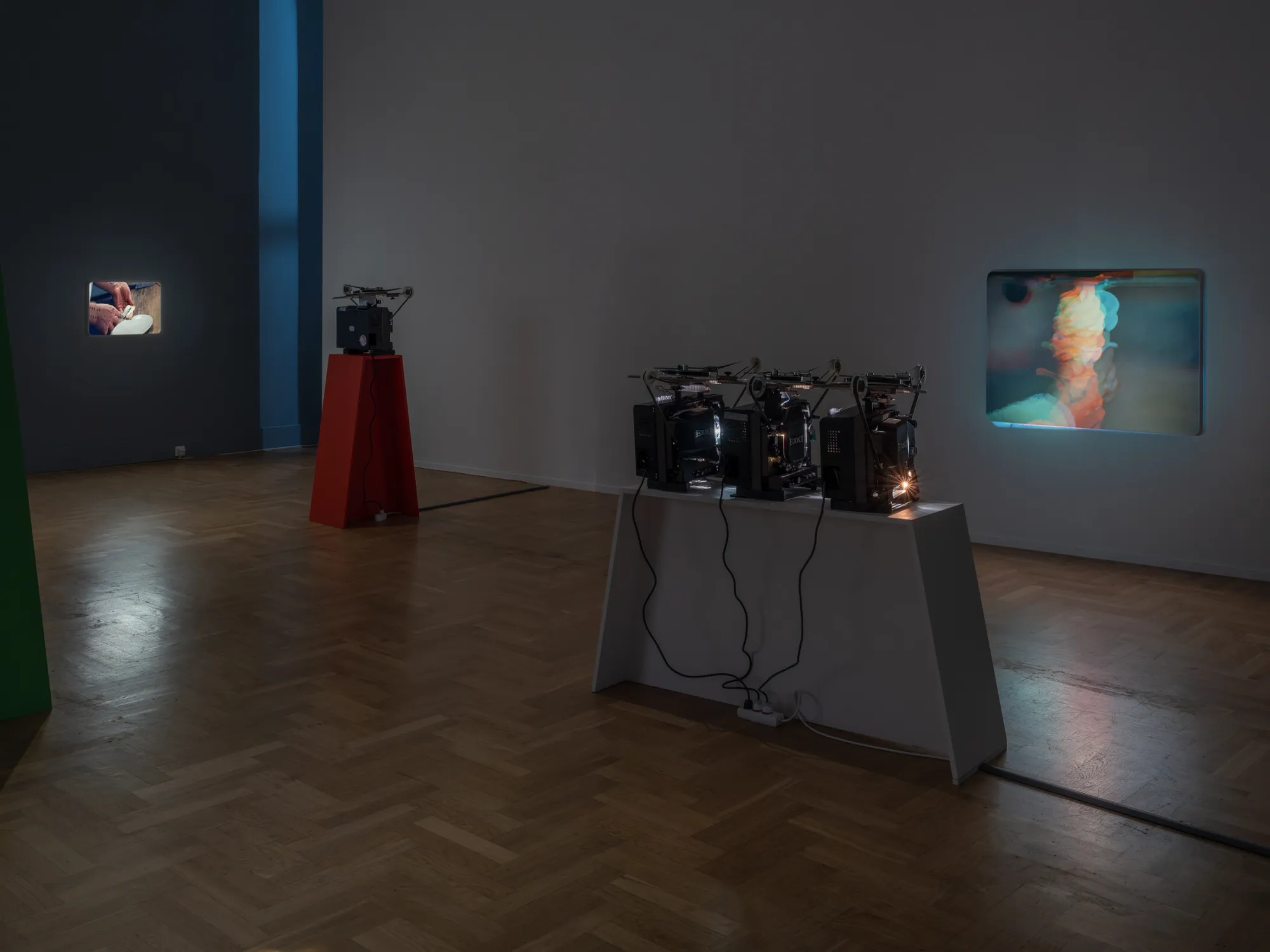
The show is a dozen looping 16mm film works that the artist calls film sculptures, and the projectors stay in the room, set on red, green and blue plinths beside the images they throw.
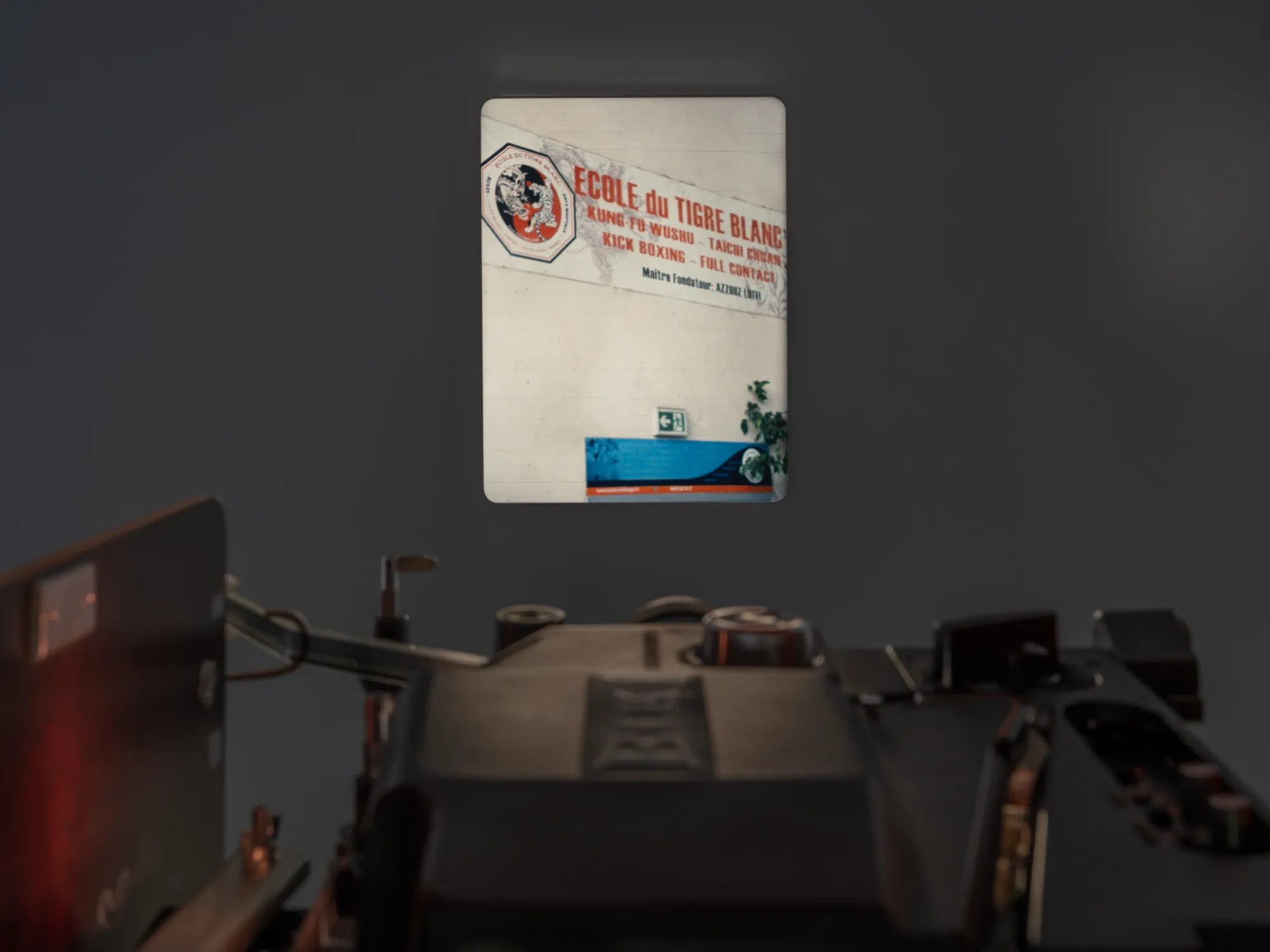
The title comes from The School of the White Tiger (2024), vertical stills of a kung fu dojo in Grasse, France, where painted-over graffiti on the façade is read as abstract painting.
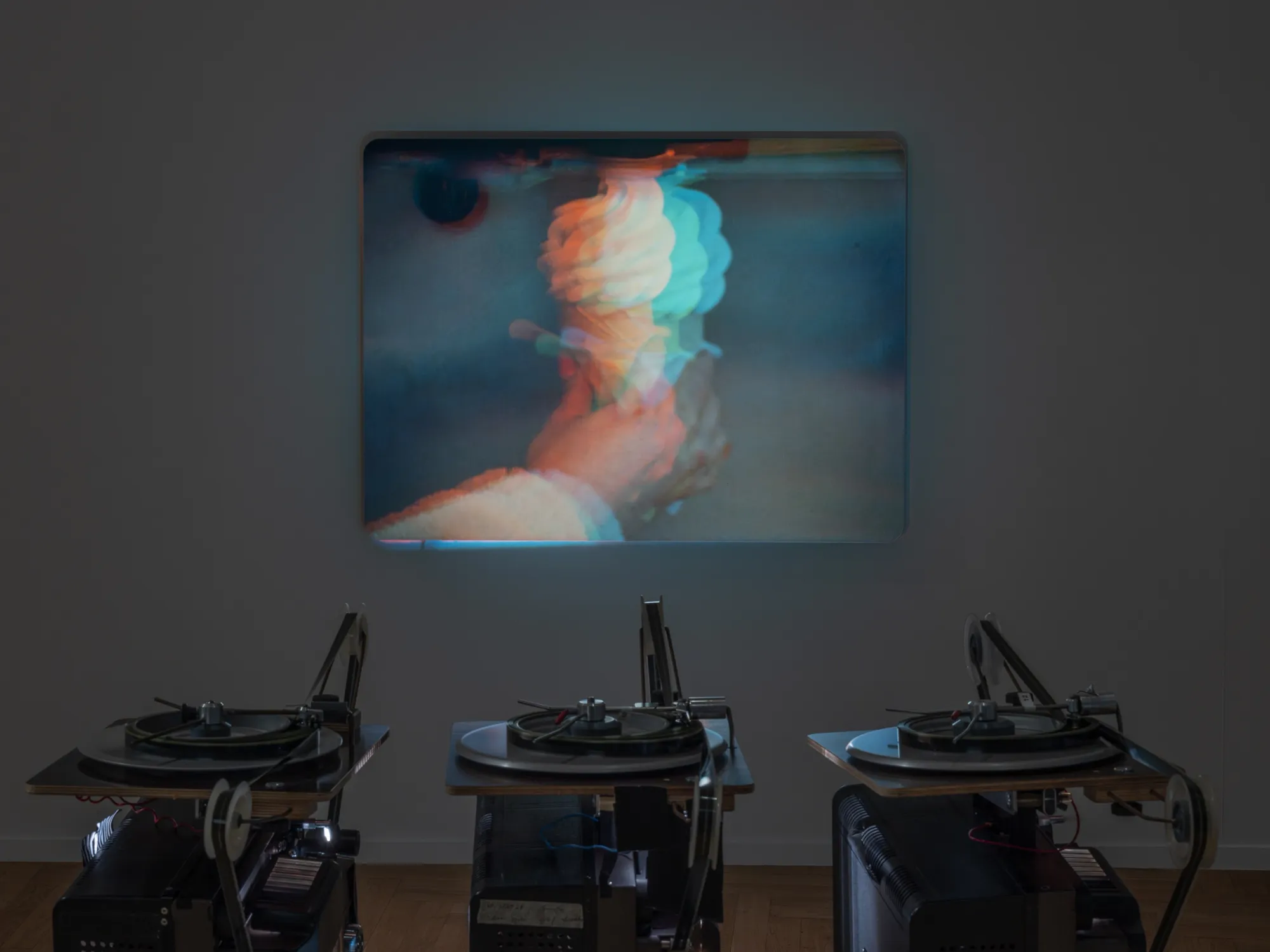
Other works include Light Cone, three superimposed projections with RGB filters, and Birds on Land, Mammals in the Sky, two masked projections that run out of sync. Below, the exhibition text opens with a greeting to monks and disciples of the imperial arts, then turns to Mao Zedong and his paper tiger.
Exhibition Text by Zachęta National Gallery of Art
Infinite Light and Blessings to our fellow masters, monks, and disciples of the imperial arts! Following the White Tiger is a showcase of cinematic materialism featuring the latest results of the Portuguese artist João Maria Gusmão’s process-based experiments with analogue means and speculative concepts.
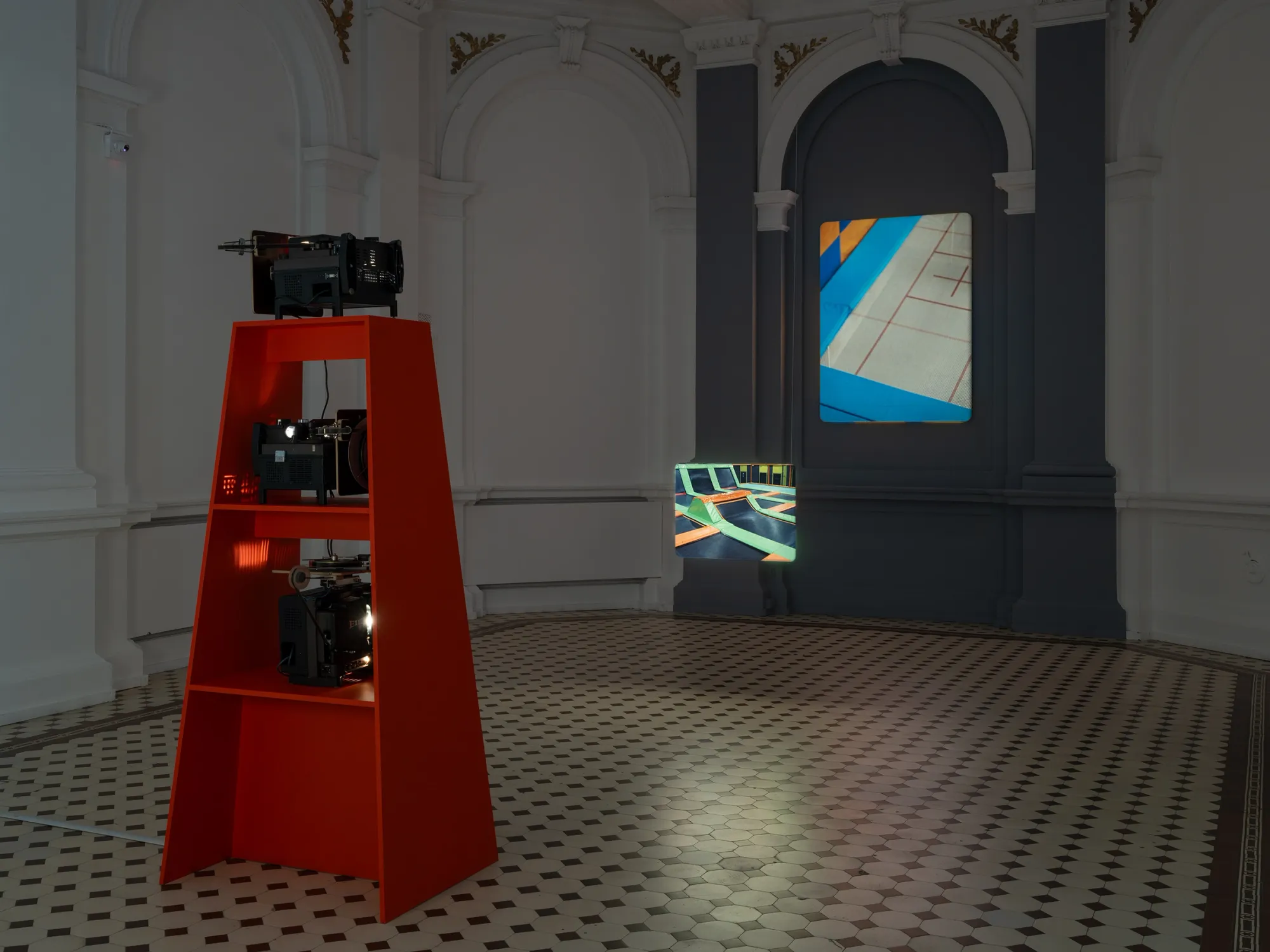
Drawing from the seemingly mundane, the exhibition grapples with the moments when the transcendental realms of history, ideology, and aesthetics collide with their material correlates.
As a counterstrike to our hypermediated present, Gusmão’s approach to film emphasizes the urgency of the indexical qualities inherent in analogue media, highlighting the dual layers of imaging: the tangible, technical construction of light-sensitive transparency, and the spectral representation of the symbolic order embedded within the imagery.
In an interview with an American journalist from August 1946, Chairman Mao Zedong remarked: “The atom bomb is a paper tiger which the U.S. reactionaries use to scare people. It looks terrible, but in fact it isn't. Of course, the atom bomb is a weapon of mass slaughter, but the outcome of a war is decided by the people, not by one or two new types of weapon. All reactionaries are paper tigers. In appearance, the reactionaries are terrifying, but in reality they are not so powerful.”
Like the fearsome-looking but flimsy paper creations in Chinese parades, the revolutionary leader described a split between a subject's true being and their semblance, between the imposing images one shows the other, and the reality of an underlying vulnerability.
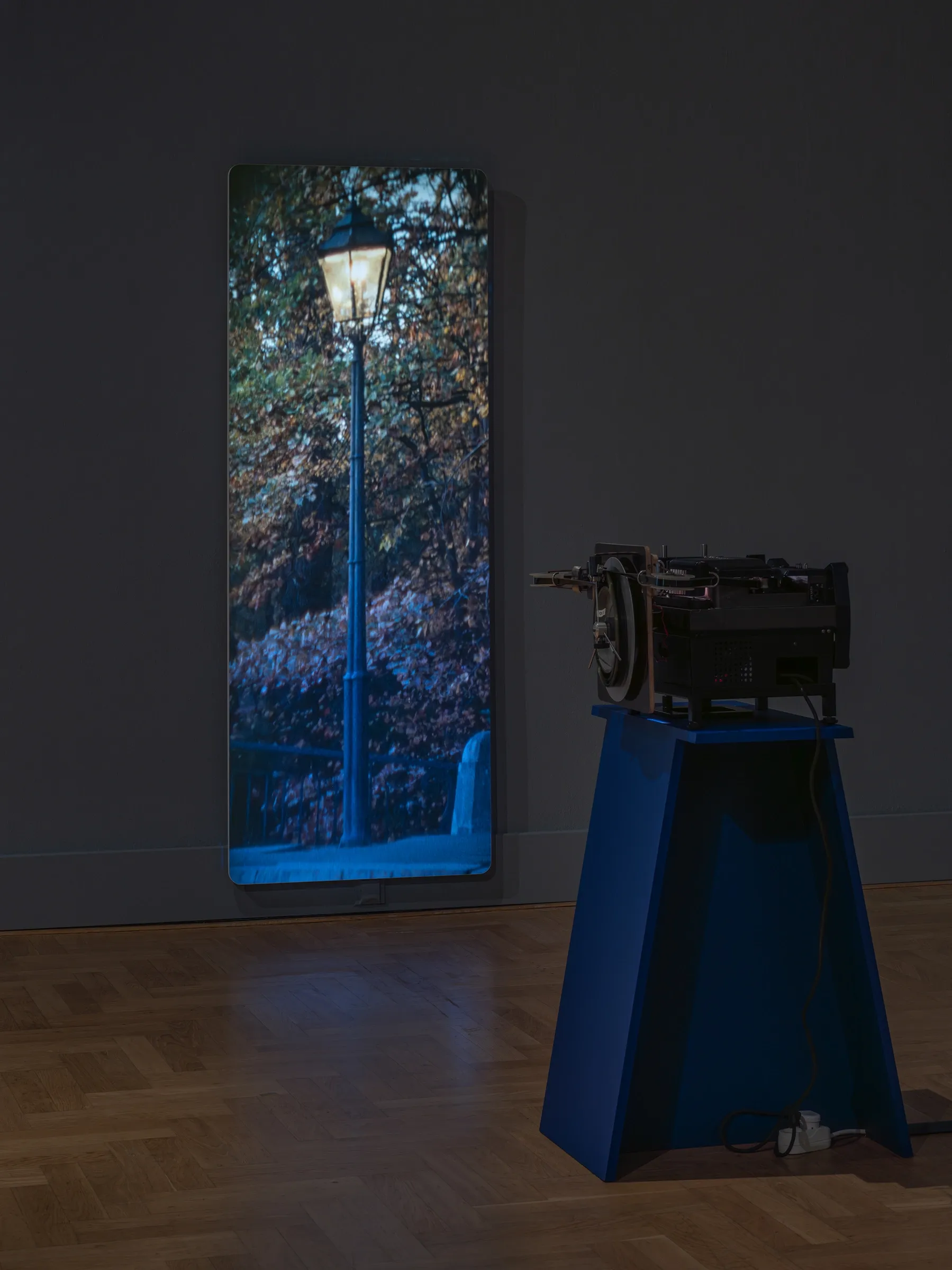
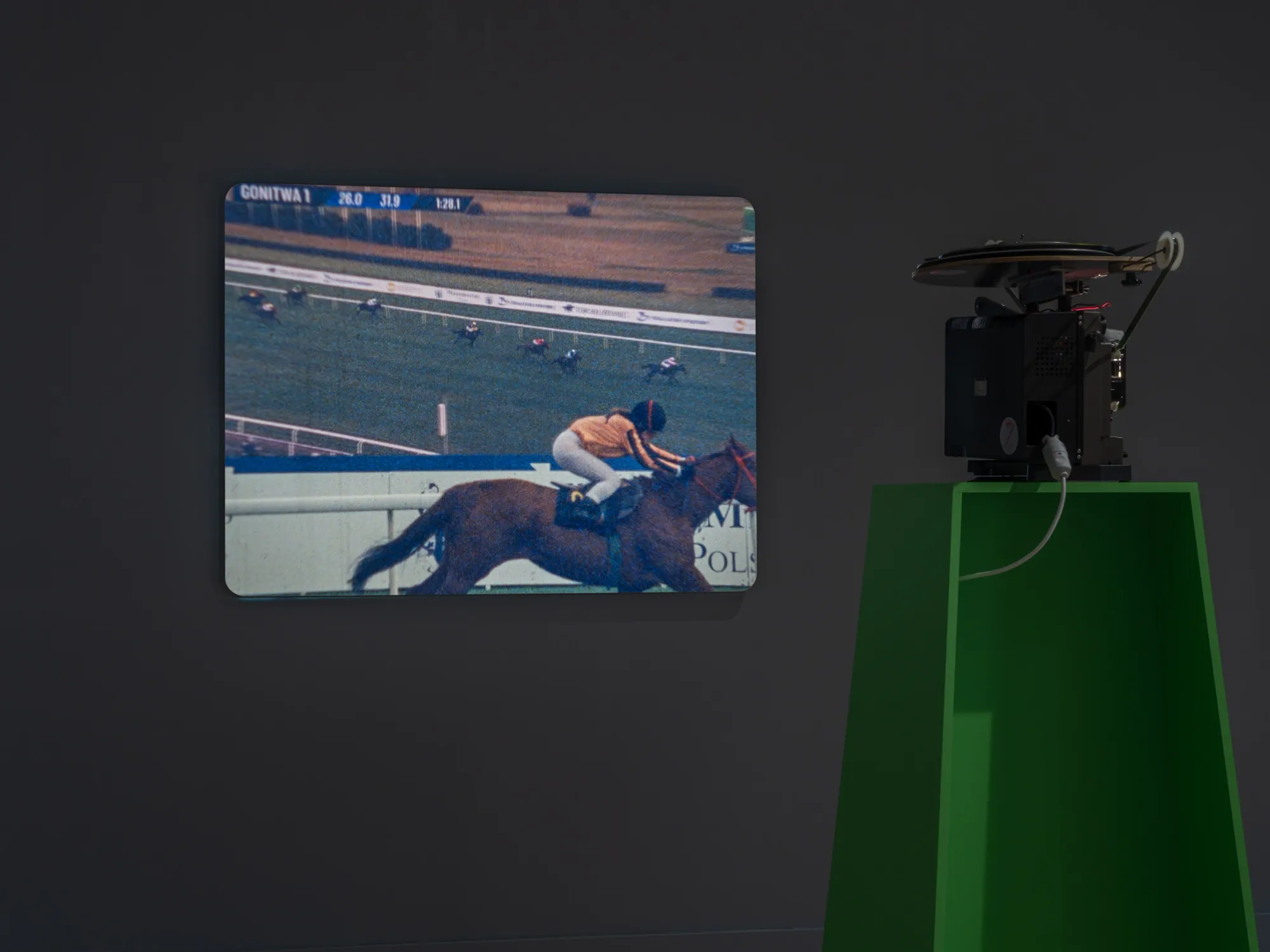
It is not that bombs aren’t a threat, but that imperialism has a dual nature— there are real tigers and paper tigers at the same time. Gusmão’s overall proposal embraces this double paradoxical contingency as a general ‘theory of illusion’: first, of film as an apparatus which produces the illusion of movement by describing reality as a sequence of still shots, and second, of the battle between the real vs reality as cinematic images adhere to the realm of the human, the technological, the animal, and the inhuman.
Key to this disciplined modus operandi is a keen awareness of the relation between production and presentation, how the manipulation of technical conditions can re-train perception. The multichannel array of looping 16mm projected film works presented here prompts a double action — the experiencing of the illusion and simultaneously the introspection of it.
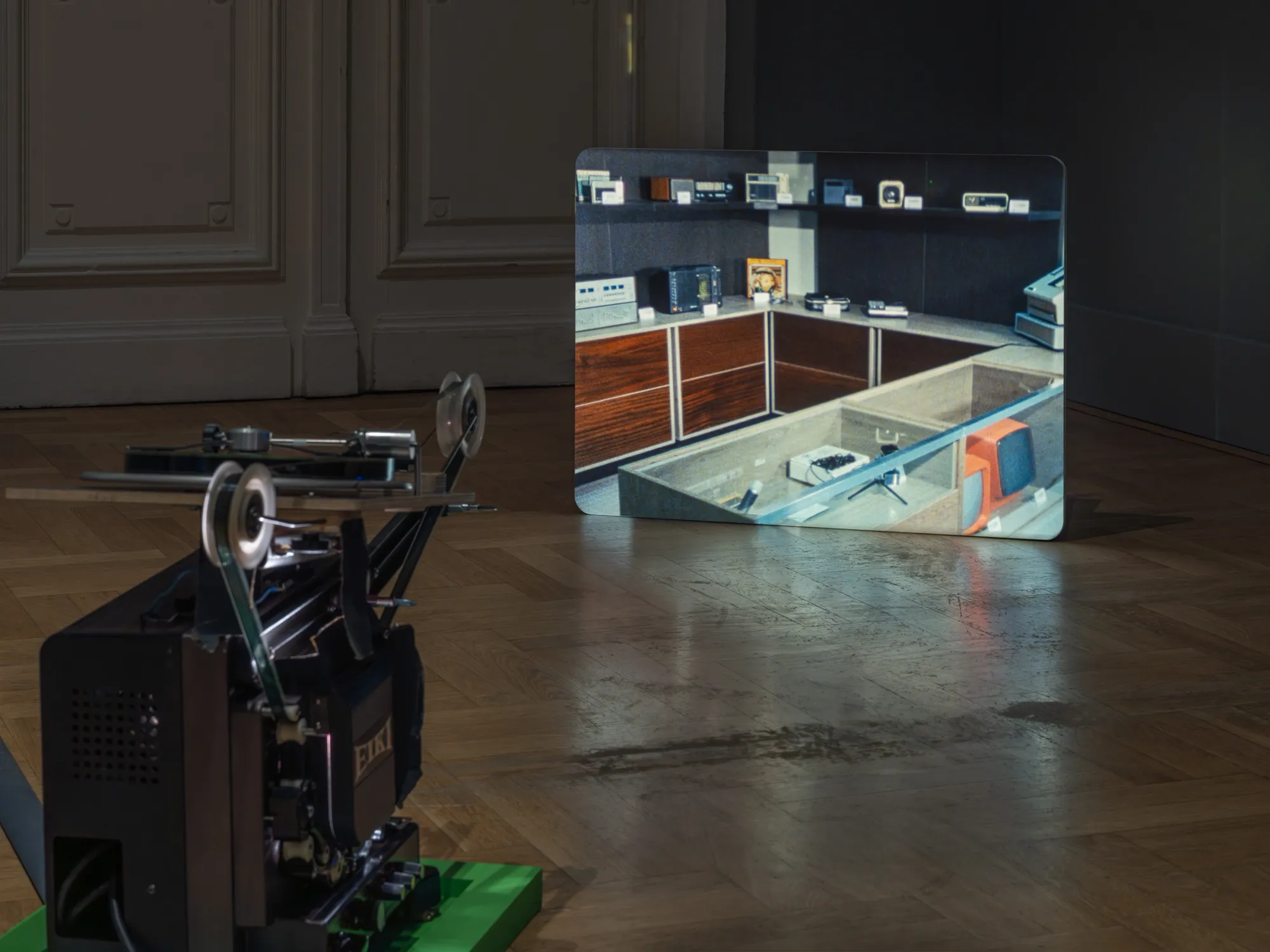
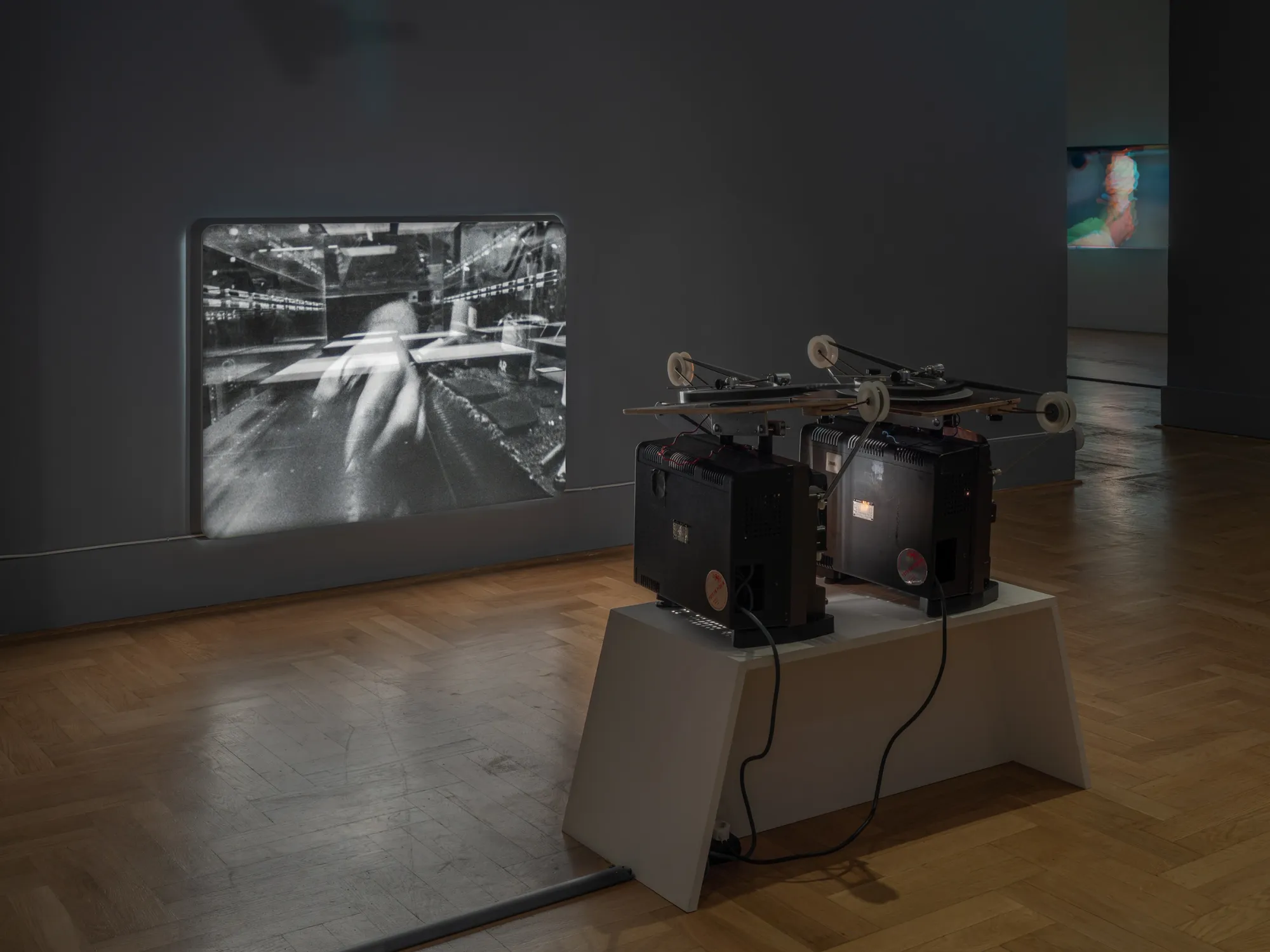
The title of the exhibition is drawn from Gusmão’s recent work, The School of the White Tiger (2024), a sequence of vertical still shots capturing the titular kung fu dojo, where the cover up of graffiti at its facade is imagined as a form of animal-inspired kung fu abstract expressionist painting. The exhibition proceeds as if schooled in such techniques of analogue comparisons, image-making and mimicry, deploying an ironic conceit of a particular orientalism to ponder not only post-cold war imaginations, but of Western thought against Eastern myth.
The artist’s film work arrives at an apophantic materialist ‘third way’ resistant to binary thought processes that divide body and mind, the real and the imaginary, questioning our modes of existence and our self-referential representations of the world. One should note that the White Tiger is one of the ‘Four Auspicious Beasts’ in Chinese astrology guarding the West from fright, and thus the conjuration of this ferocious image serves as an analogue for the logocentric worldview of Western metaphysics.
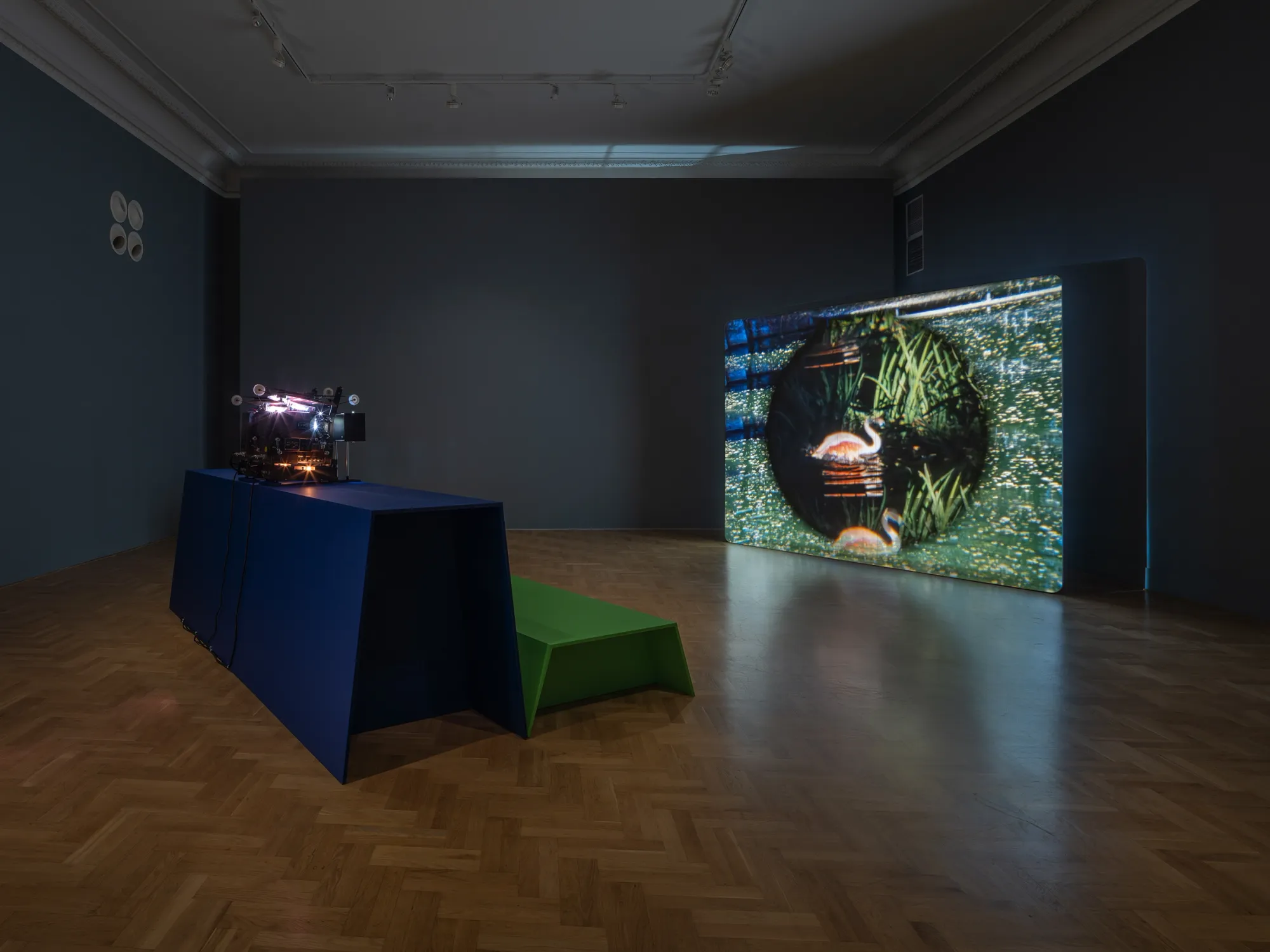
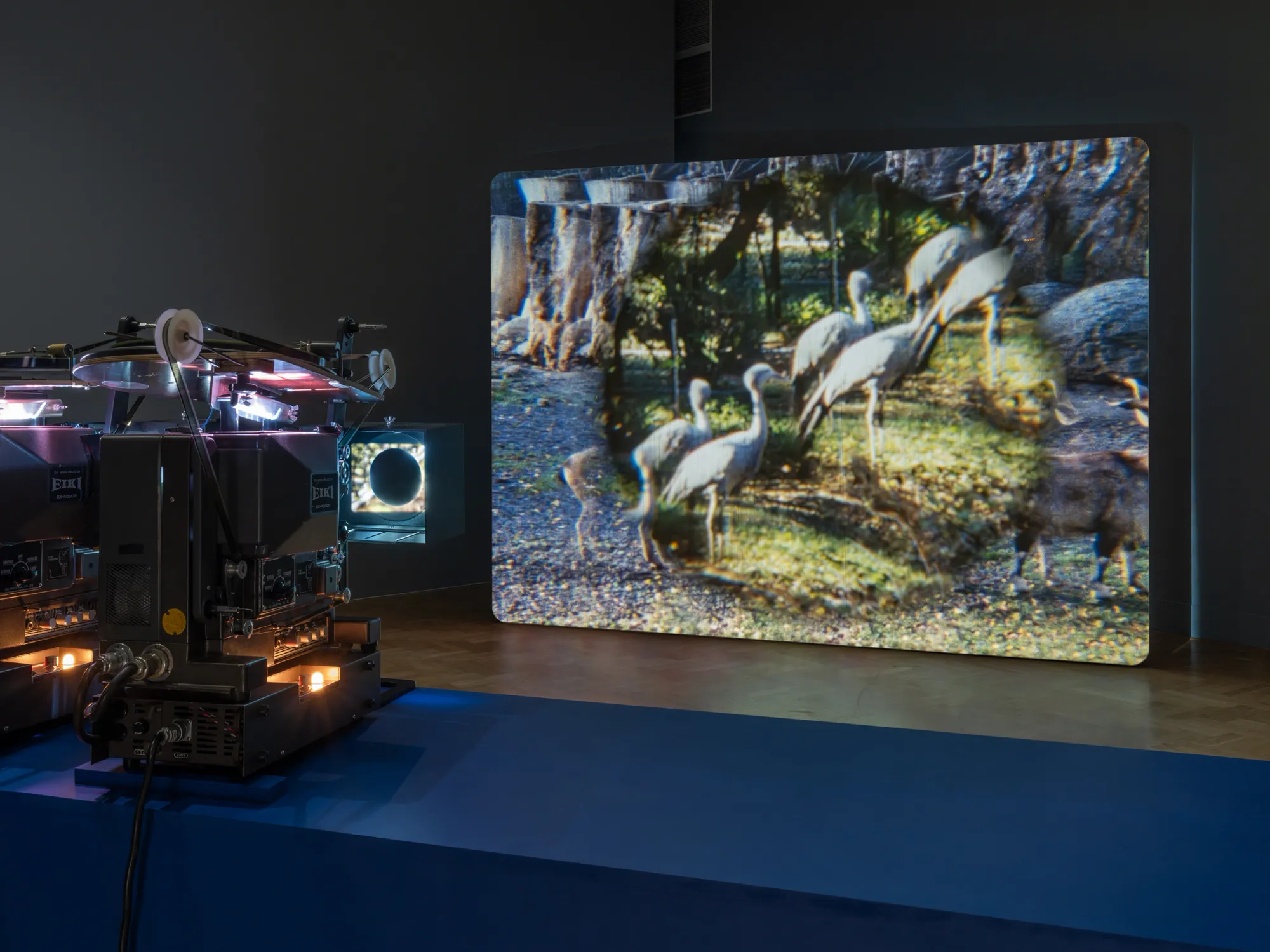
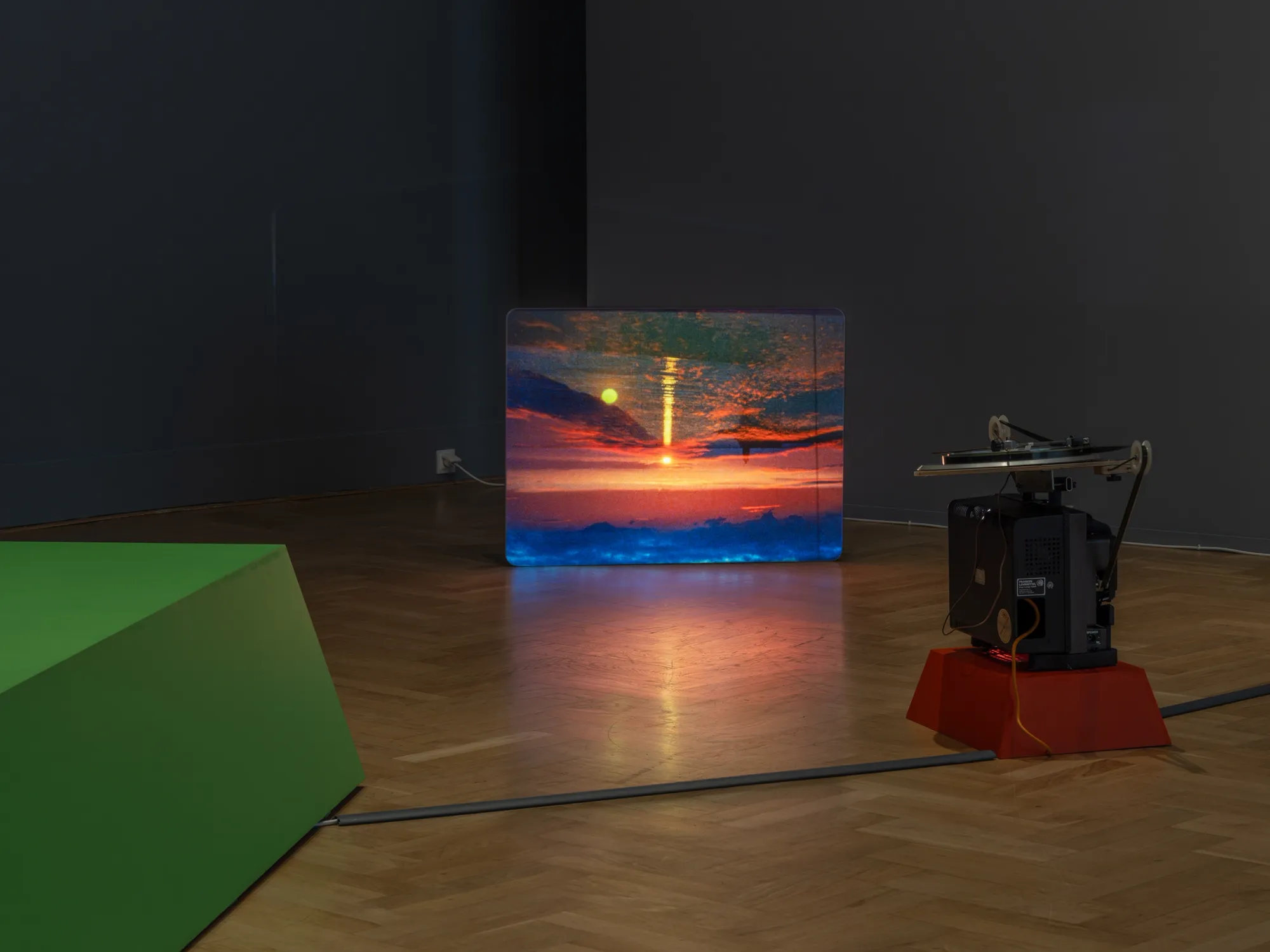
It is a catastrophic analogy, motivated by an inquiry into the choreography of film’s illusion of movement and the limits and possibilities of its descriptive and deceptive nature.
Technique, both as a routine and as a technological means of making and manipulating, is shown as a form of knowing and revealing the seen and unseen, uncovering an entanglement of the technical with the transcendental.
Lisbon-based artist, born 1979, working across analogue film, sculpture, drawing and publishing. From 2001 to 2018 he worked as a duo with Pedro Paiva, representing Portugal at the 53rd Venice Biennale.
A critical enterprise that includes Matthew Post. Curator at Kunstverein München from 2016 to 2019, based in Kolonia Koplany near Białystok, Poland.
About Catapult Contemporary
This is an exhibition review published by Catapult Contemporary, an independent editorial platform for contemporary art, based in Vienna. We publish exhibition reviews, artist features, interviews, and critical context, with a focus on emerging and mid-career practices from Europe and beyond.
catapult-platform.art ·
Instagram
Want to be featured? Submit your work →