Zhang Ting Sends the Textbook Boy Off the Prescribed Path

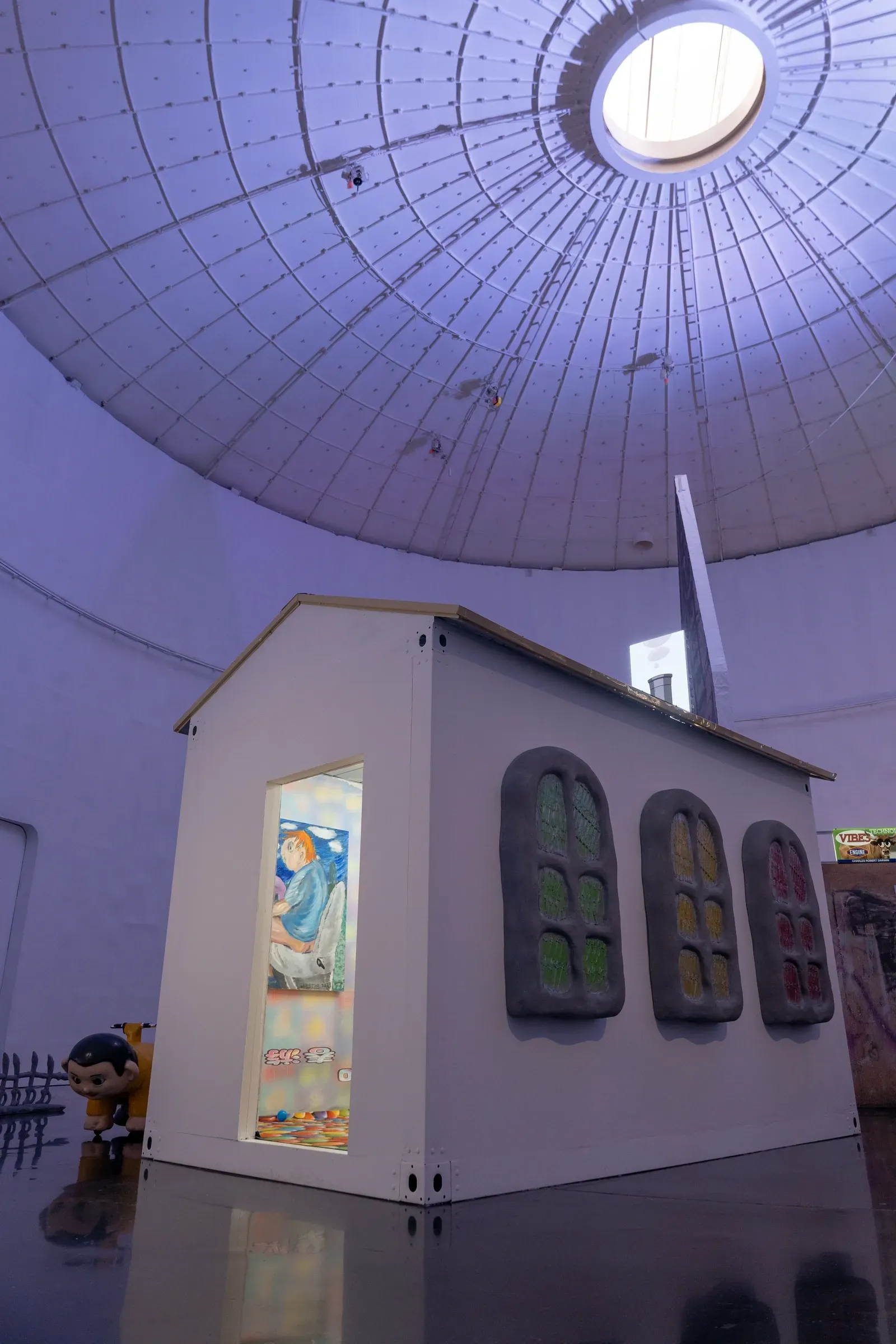
TANK Shanghai Presents TechDiumMory in Shanghai
TANK Shanghai presents TechDiumMory, a three-person exhibition featuring Jinkun Zhu, LazyBackHome (Zhang Nan) and Zhang Ting, through October 25, 2026.
Zhang Ting
TechDiumMory (three-person exhibition)
TANK Shanghai
Shanghai, China
–
2380 Longteng Avenue, Xuhui District, Shanghai
Courtesy the artist
Zhang Ting shows new and recent work in TechDiumMory, a three-person exhibition at TANK Shanghai in Shanghai's Xuhui District, on view from July 25 through October 25, 2026.
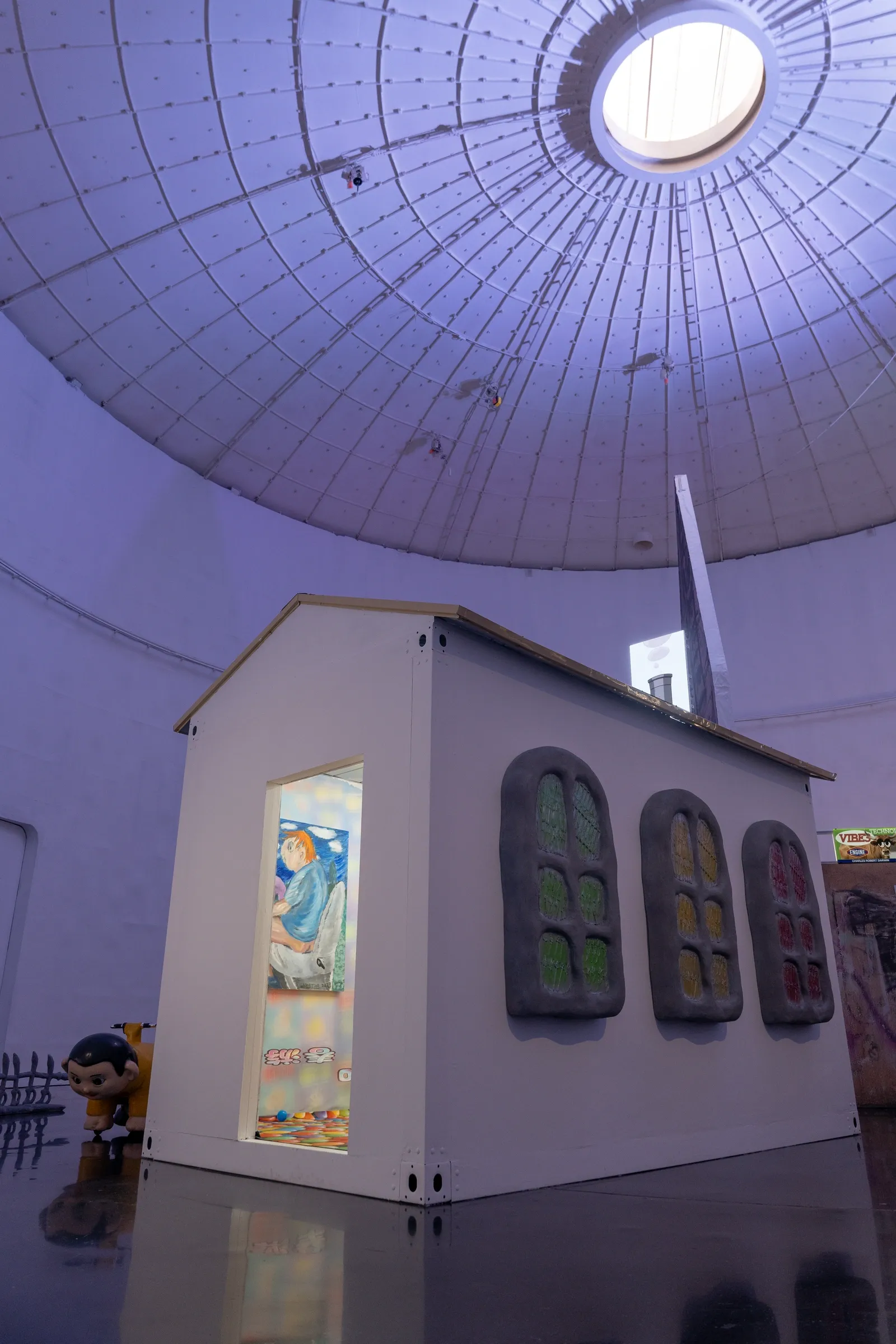
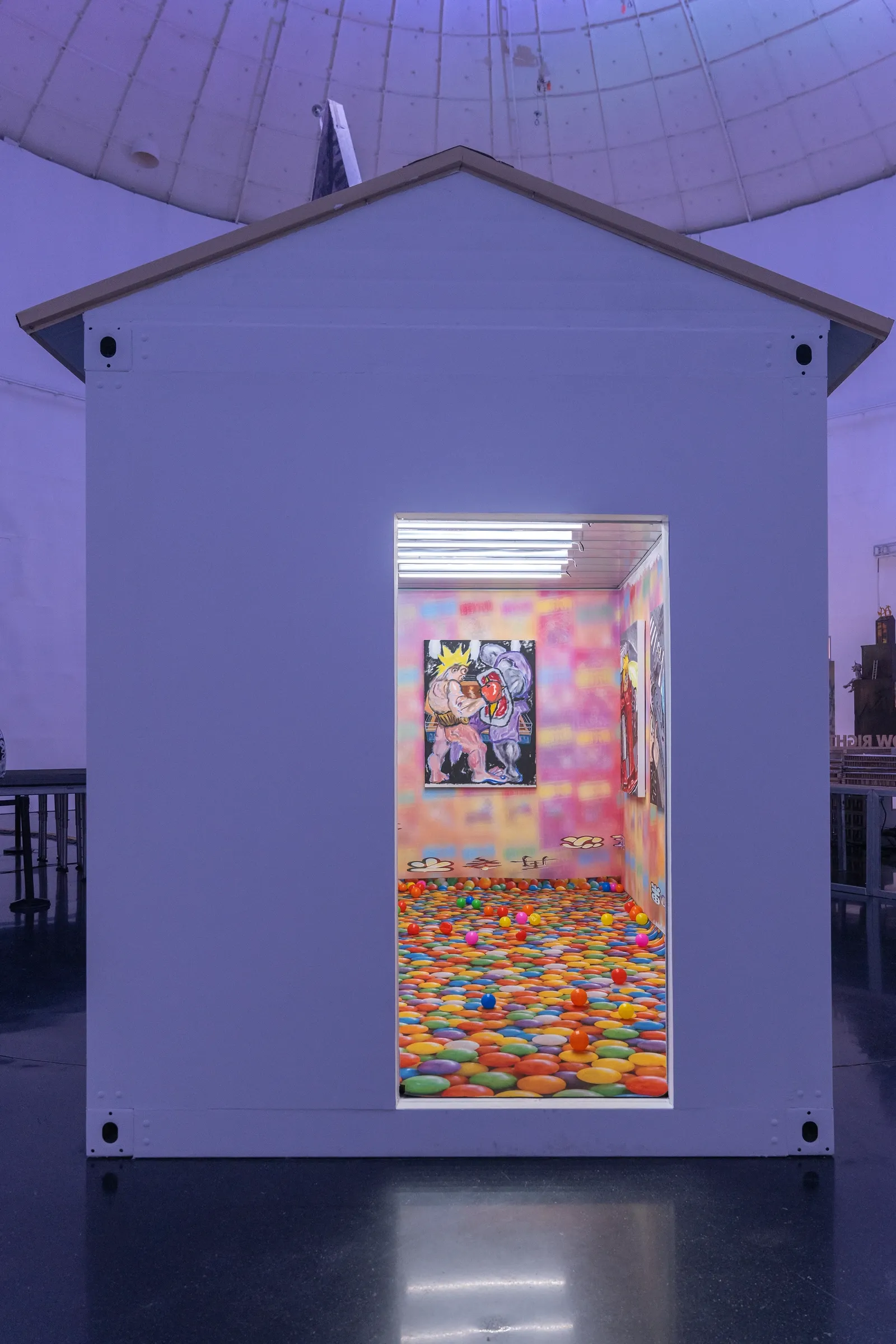
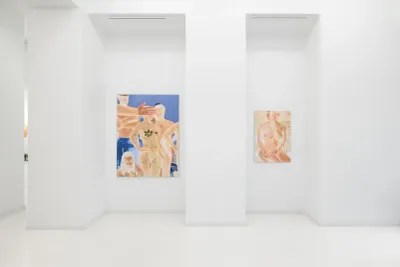
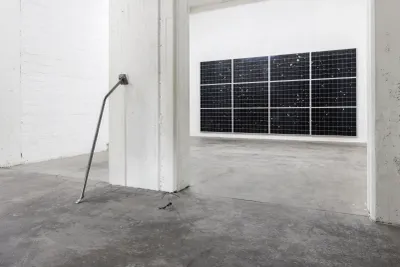
Zhang Ting, TechDiumMory, installation view through the doorway, TANK Shanghai, Shanghai, 2026. Courtesy the artist.
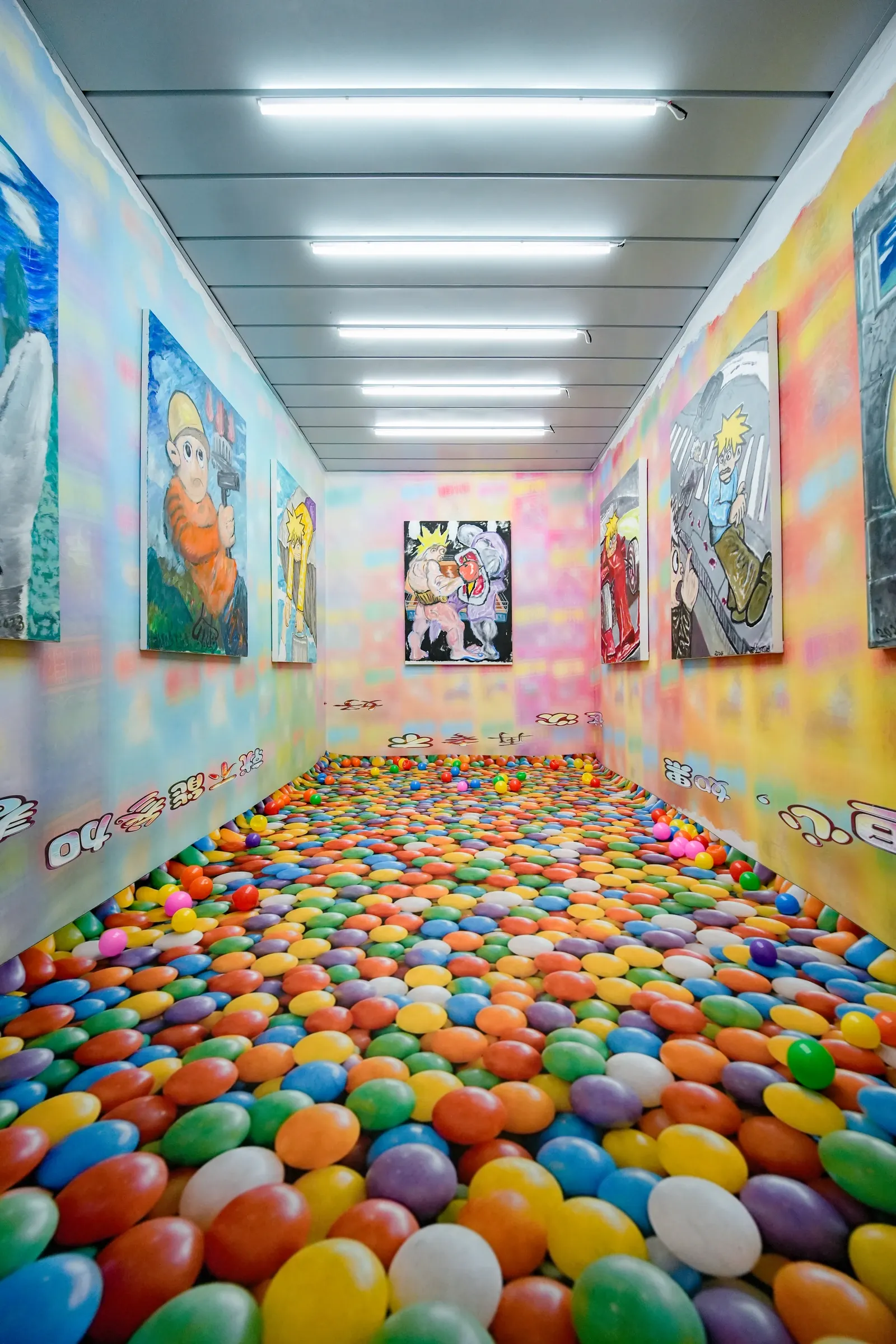
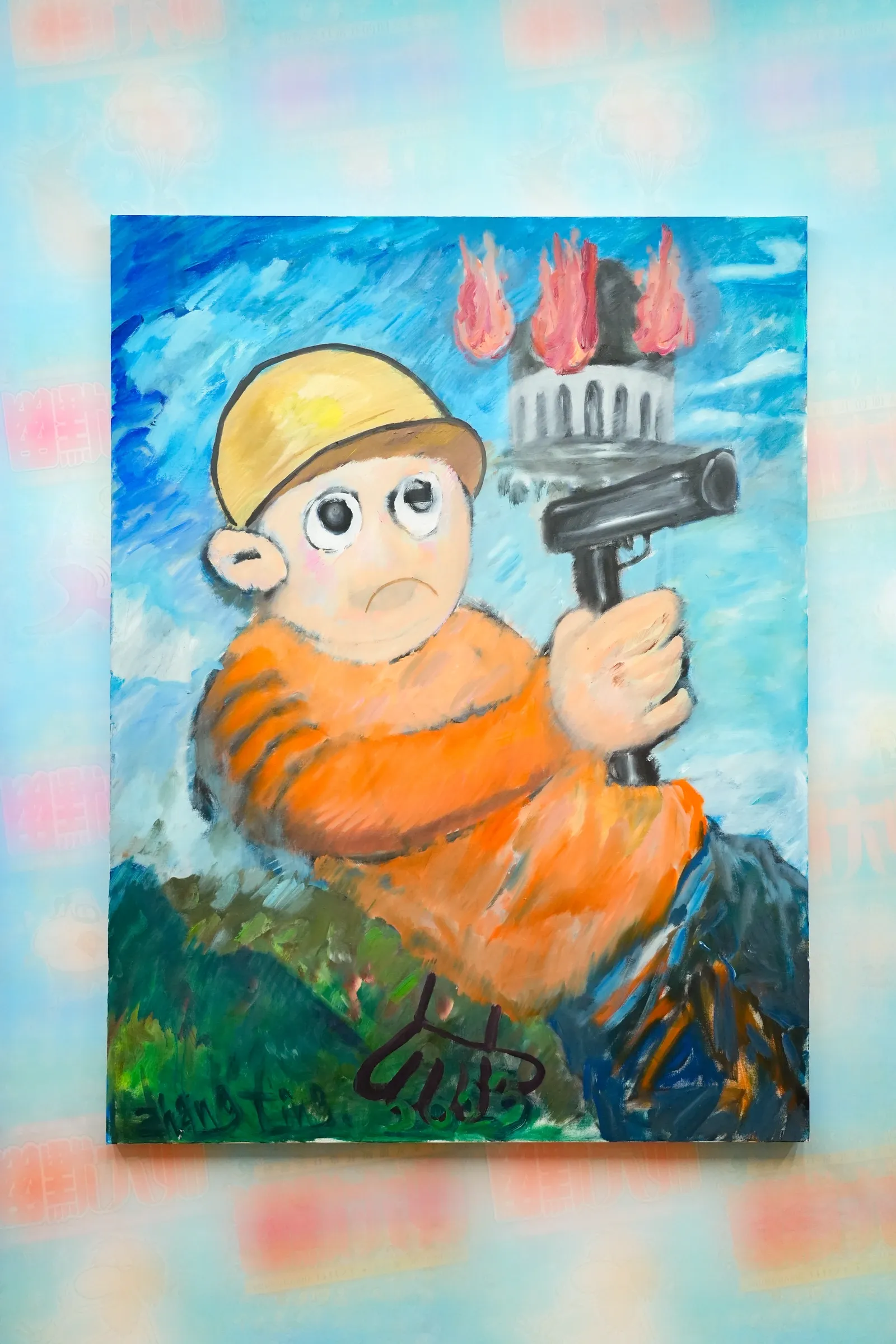
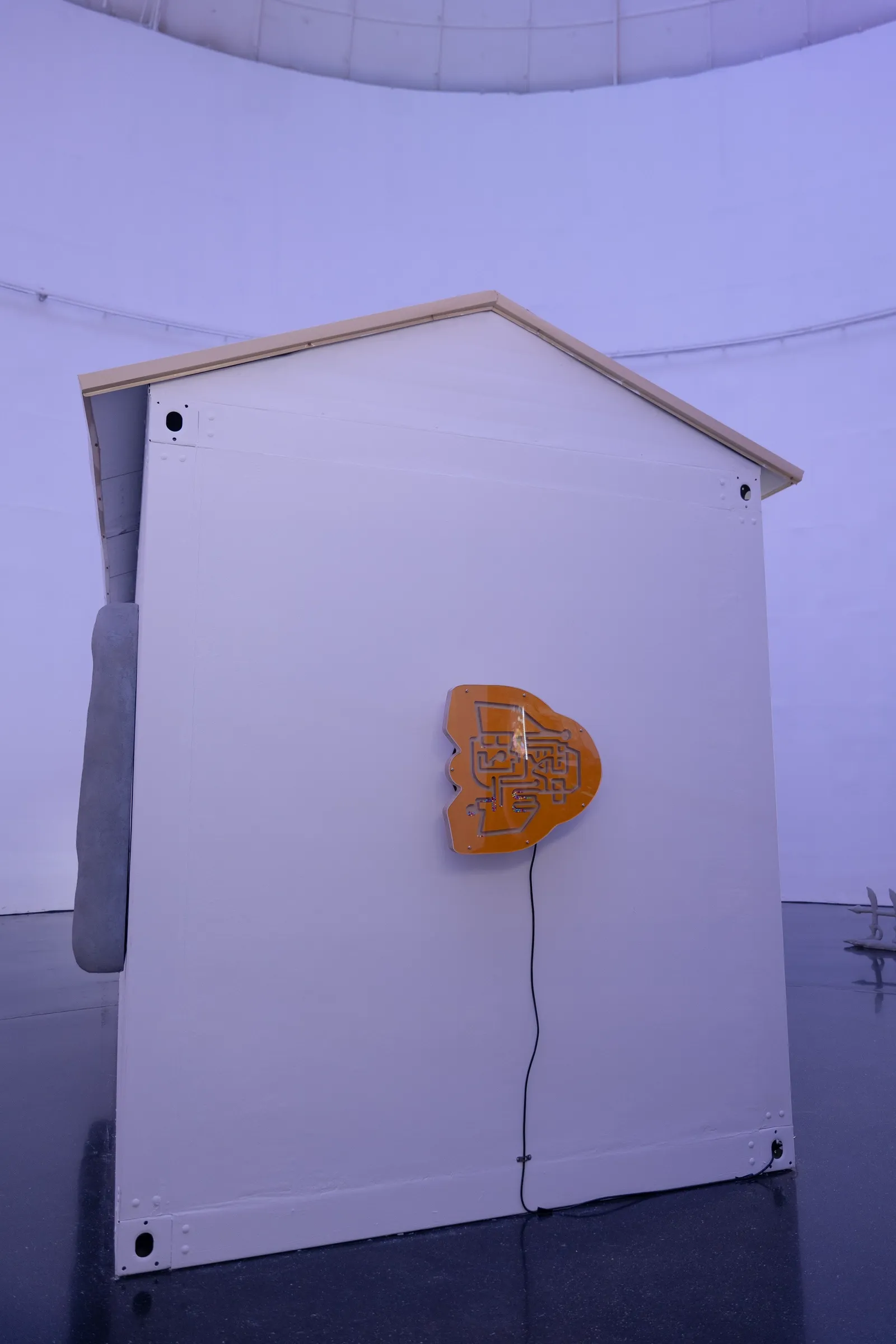
His central figure is XiaoMing, the generic schoolboy of Chinese textbooks and workbooks, repainted in the visual language of the popular comic magazine Wit & Humour and hung inside a white gabled house with a floor of candy-colored shapes and loose plastic balls.
“We grow while losing things along the way; the images and objects that shaped us become worn, rough, and incomplete, much like ourselves.”
The presentation extends beyond painting into sculptural objects, installation and video, bringing together imagery and materials connected to childhood, toys and popular visual culture. The Never-Ending Adventure develops from Zhang's memories of "Lao D" toys, the unlicensed toys once commonly encountered in school-gate shops.
In one work, a familiar toy sword from childhood is cast and transformed into the image of rain falling across a window. Below, the exhibition text expands on what happens when the familiar figure of XiaoMing leaves the prescribed narratives of educational materials.
Zhang Ting on XiaoMing, Childhood and the Prescribed Path
In this exhibition, Zhang Ting reimagines "XiaoMing," a recurring fictional figure in Chinese educational textbooks, workbooks, and reading materials, through the visual language of Wit & Humour (幽默大师), a widely circulated popular comic magazine in China.
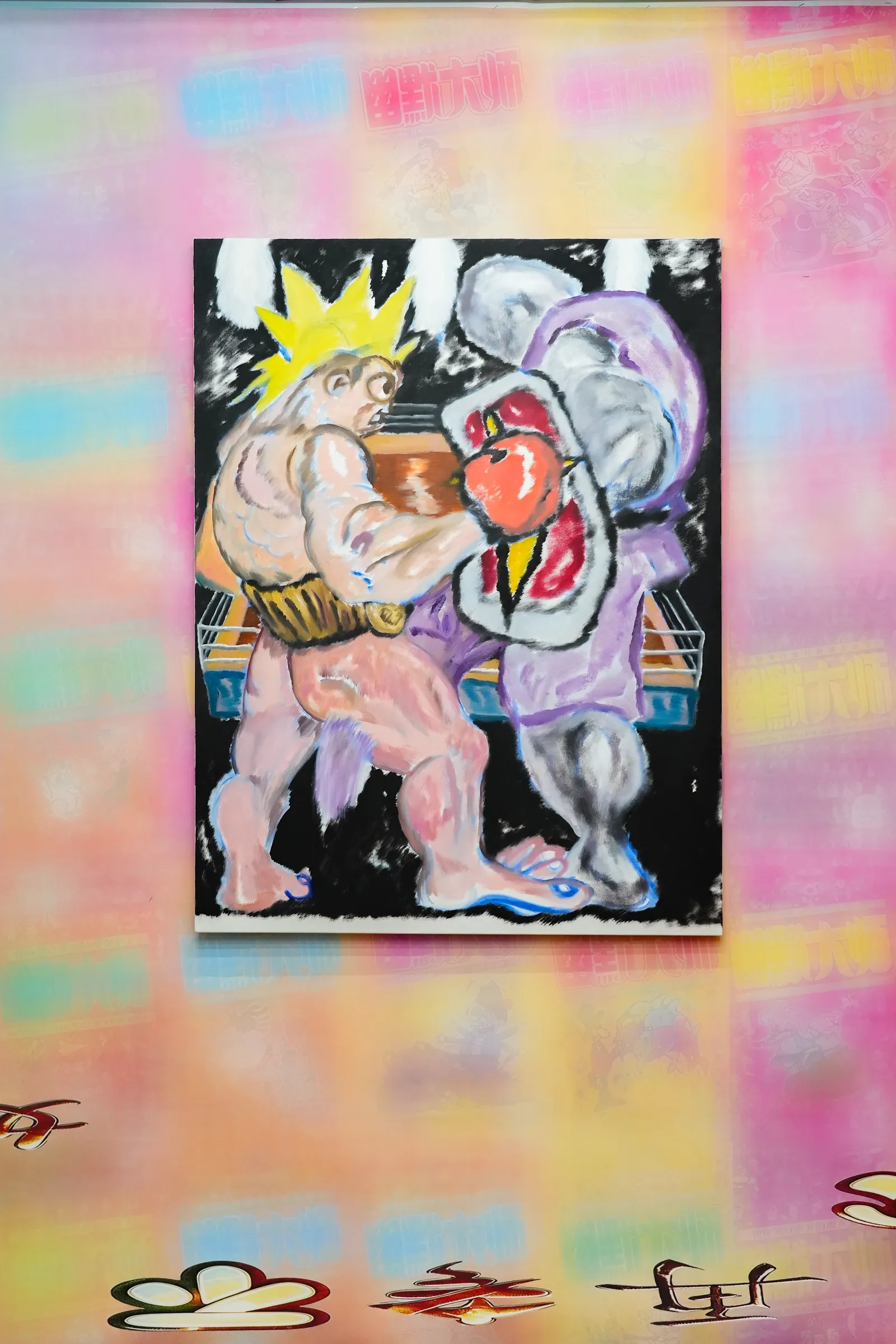
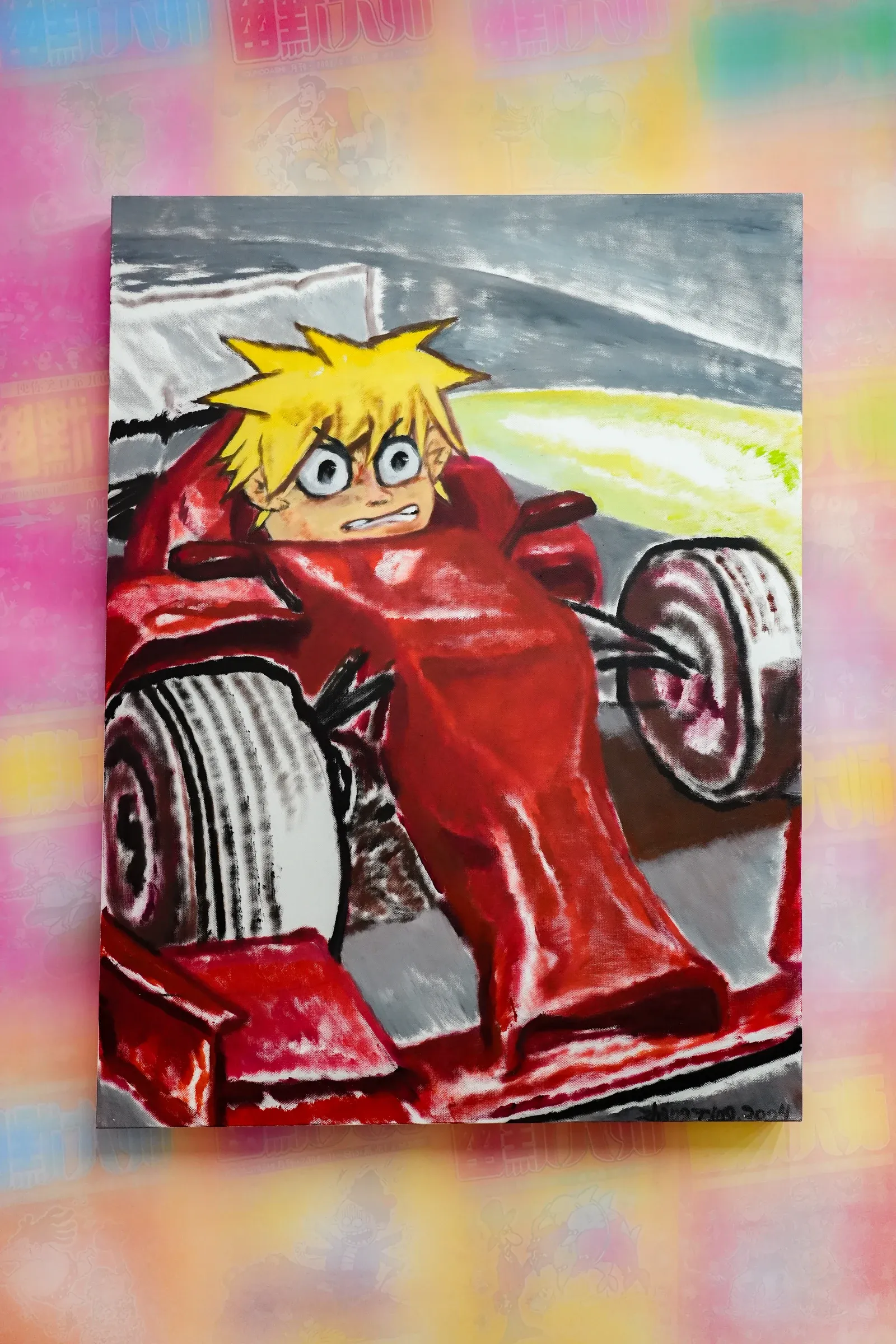
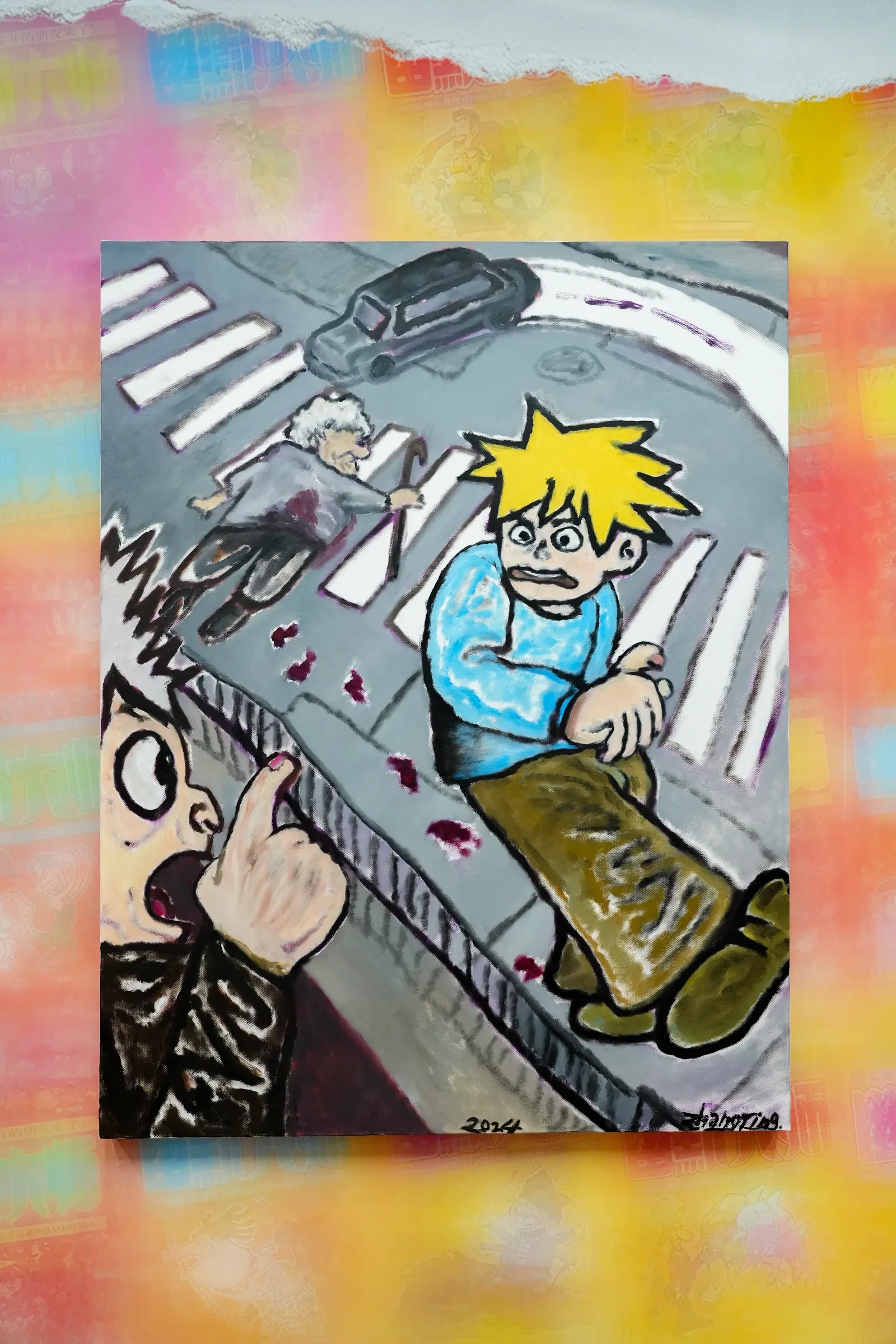
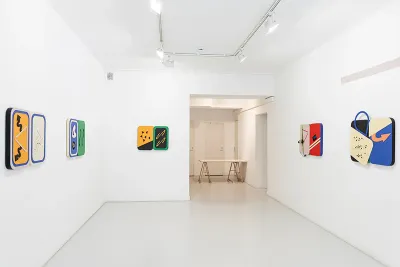
Zhang Ting, Racing Without a Helmet (right) An Escape, oil on canvas, 2024, oil on canvas, installation view, TechDiumMory, TANK Shanghai, Shanghai, 2026. Courtesy the artist.
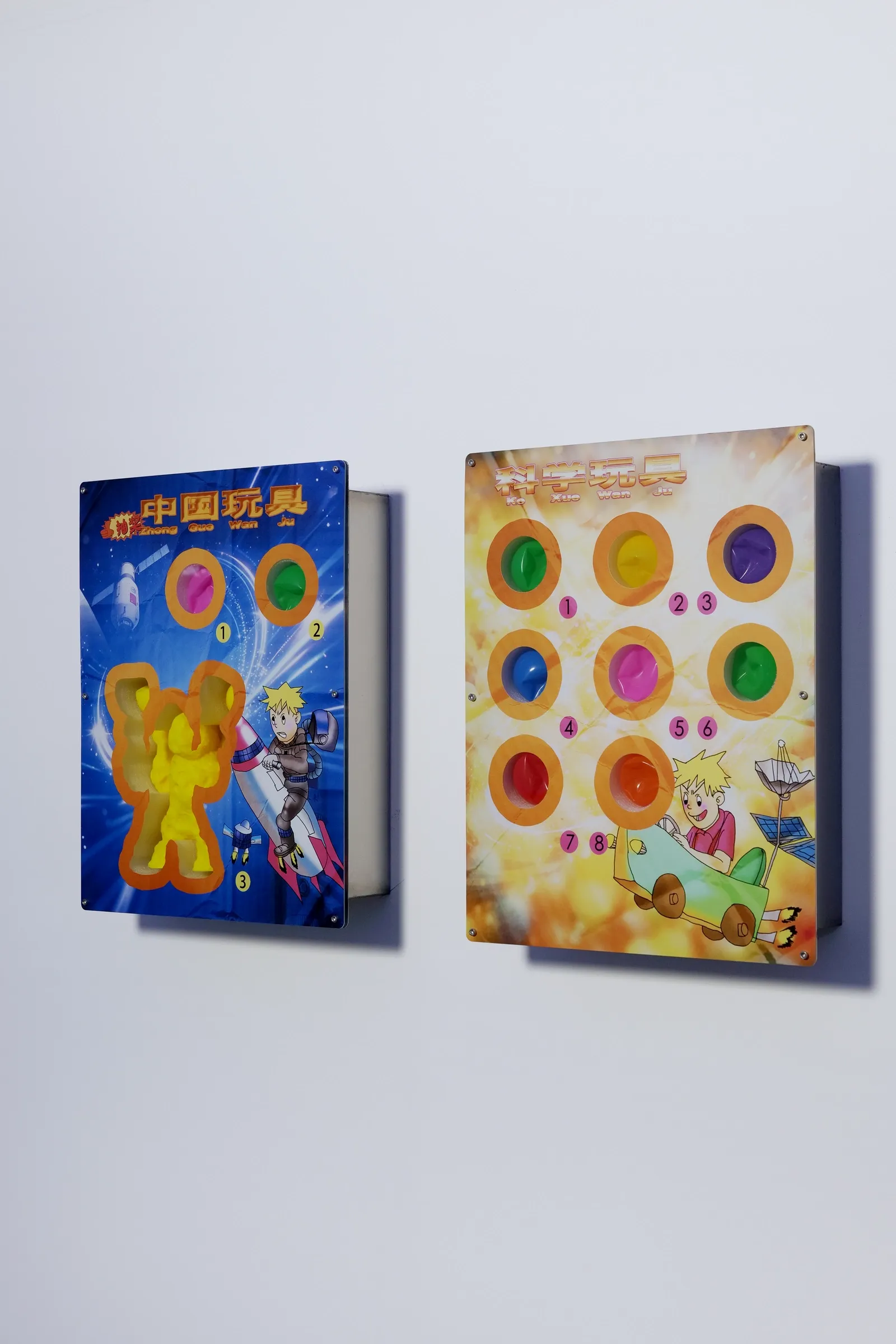
XiaoMing does not refer to any particular child, but rather to a standardized educational figure repeatedly produced across generations of learning materials. He can be attentive in class, careless in an exam, helpful to his classmates, or punished for being playful; whatever the situation, his story ultimately returns to a prescribed "correct" answer.
Zhang Ting places this familiar figure within new spaces and situations, transforming him from an educational model into the protagonist of an unstable narrative.
Growing up in China during the 2000s and early 2010s, Zhang Ting experienced a rapidly changing visual environment in which new forms of consumer imagery emerged alongside incomplete and uneven modes of production. Images often appeared close to contemporary consumer culture while retaining a distinctive roughness, ambiguity, and sense of imperfection. For a generation growing up during this period, these visual conditions were not distant cultural phenomena, but an ordinary part of everyday life.
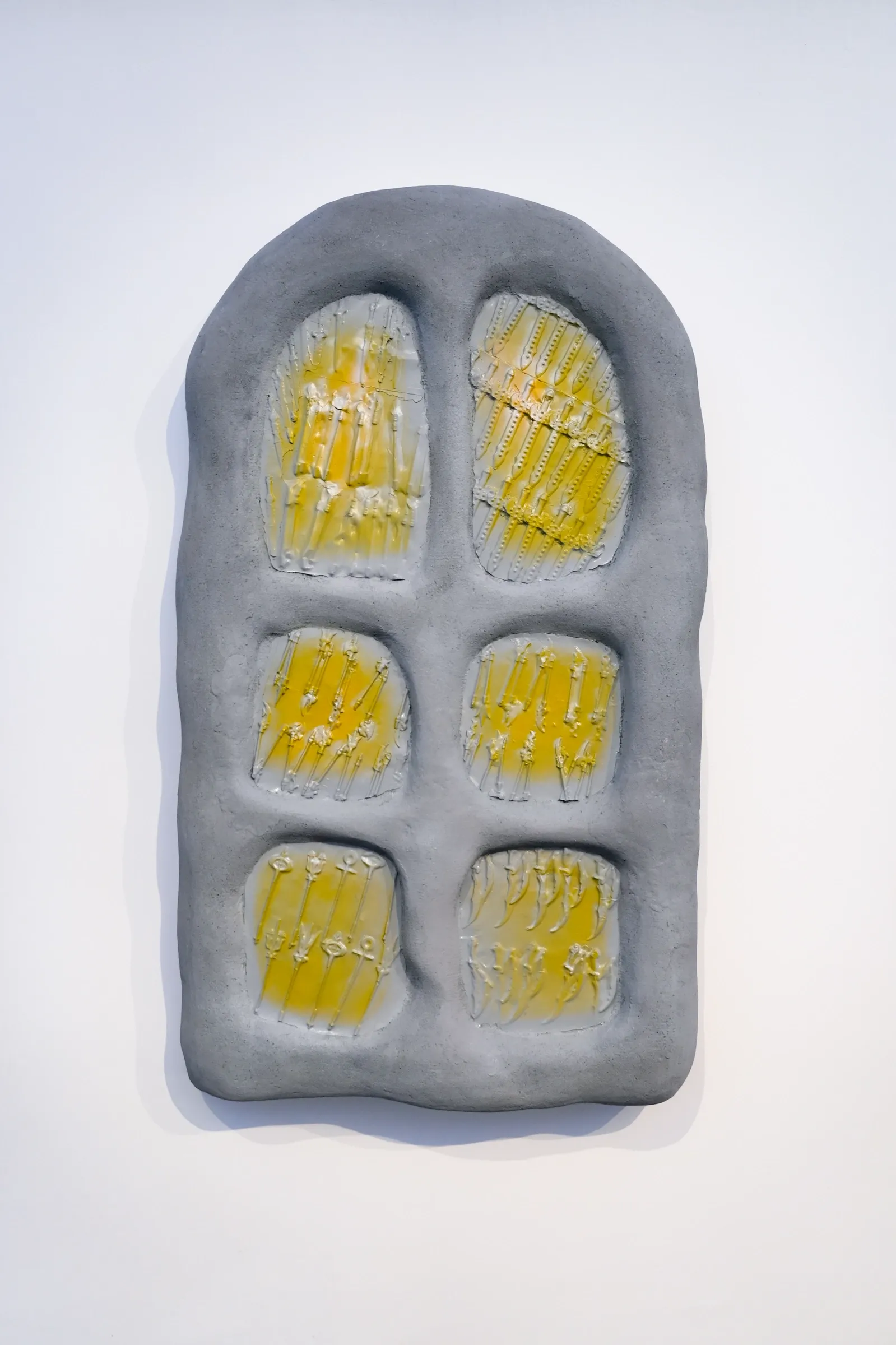
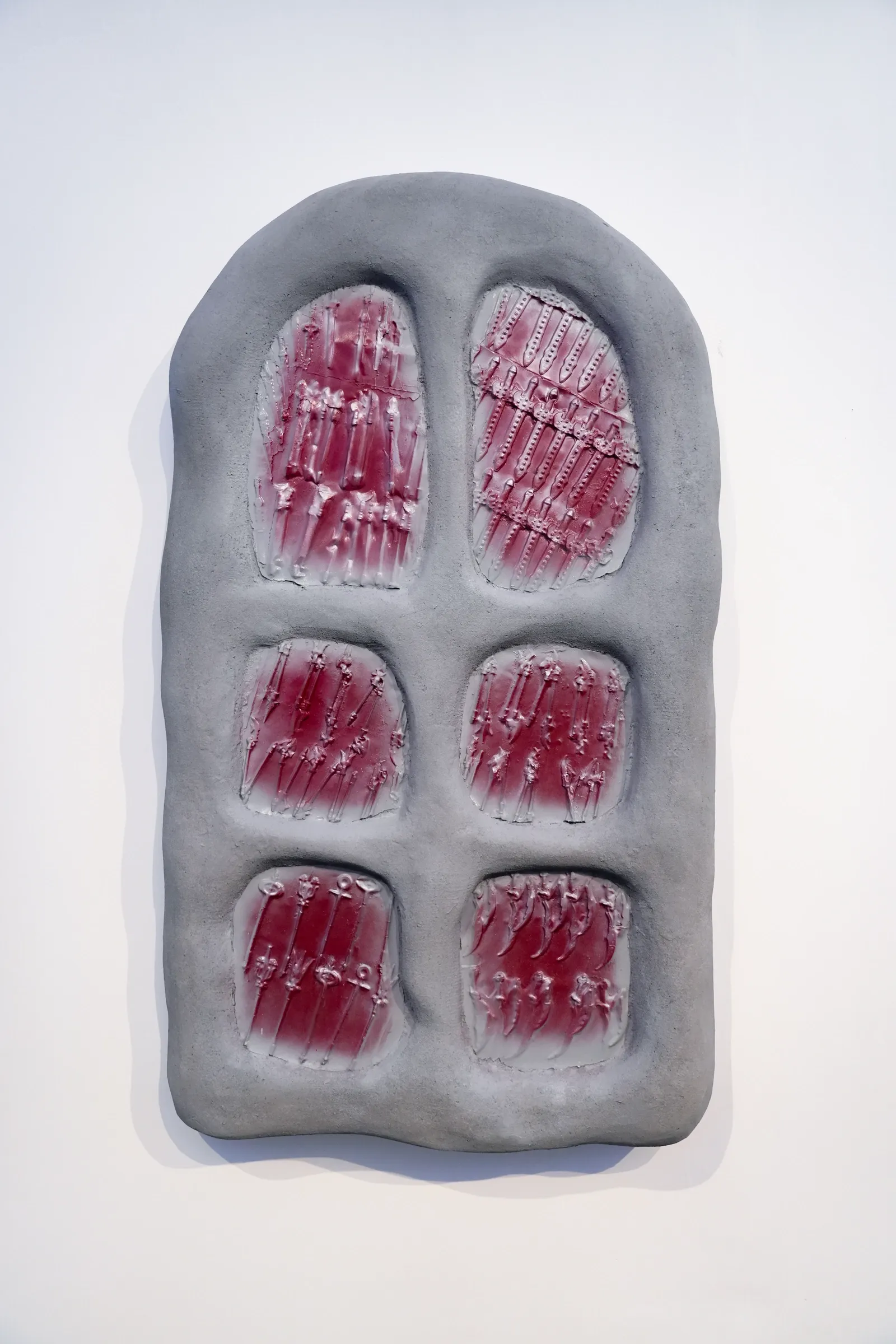
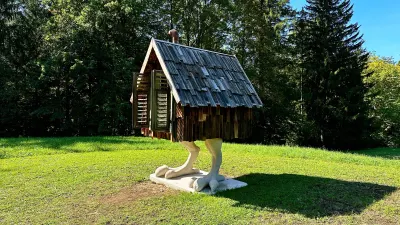
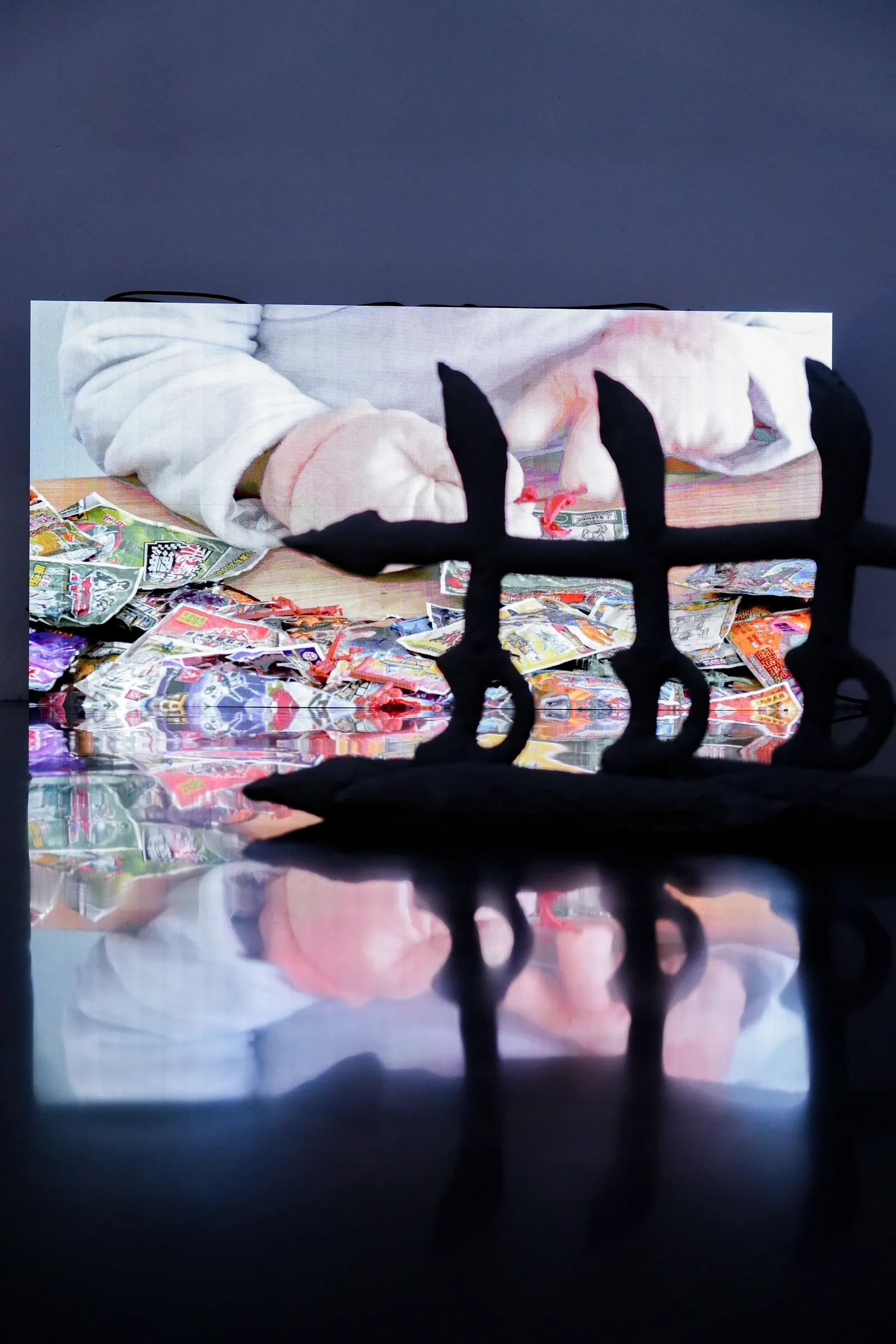
Zhang Ting, (left) The Never-Ending Adventure, 2026, fiberglass reinforced plastic, stone-like coating, colored paint, (right) The Never-Ending Adventure, 2026, fiberglass reinforced plastic, stone-like coating, colored paint, TechDiumMory, TANK Shanghai, Shanghai, 2026. Courtesy the artist.
Within this context, Zhang Ting incorporates memories of unlicensed toys, cartoon imagery, and everyday objects from childhood. Among these were what were colloquially known as "Lao D" toys. "Lao D" refers to unlicensed or counterfeit toys, with the "D" derived from the initial sound of "盗版" (daoban), the Chinese word for "counterfeit" or "pirated."
These toys were widely encountered in school-gate shops, grocery stores, and prize games. Often lacking clear copyright information or identifiable production sources, they nevertheless formed an ordinary and tangible part of childhood experience.
The memory of unlicensed toys is inseparable from the memory of a generation. As part of the everyday visual culture of many young Chinese people, these objects shaped childhood experiences and collective imagination. In Zhang Ting's work, they become not only fragments of personal memory, but also a metaphor for a generation growing up amid rapid change, uneven development, and imperfection.
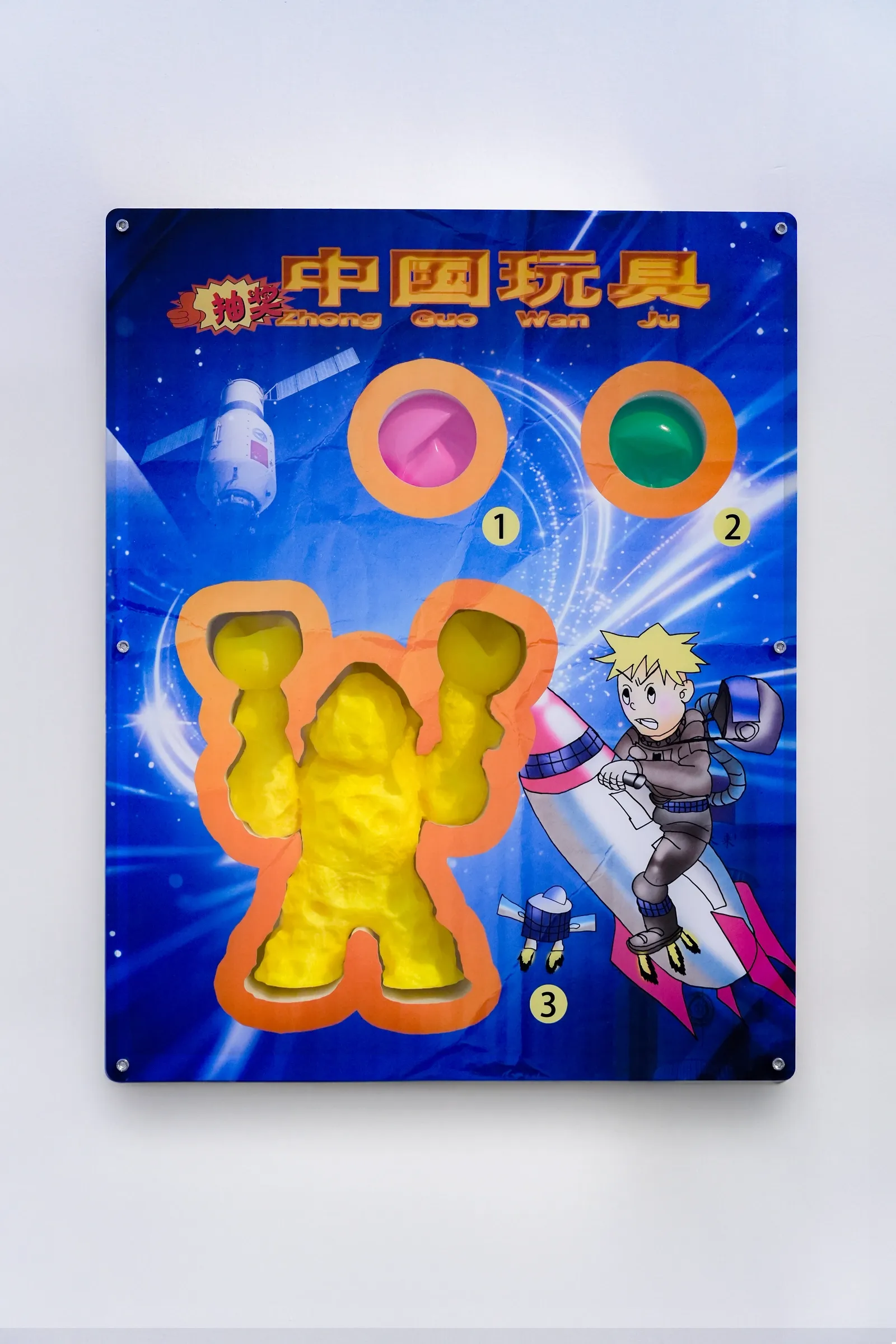
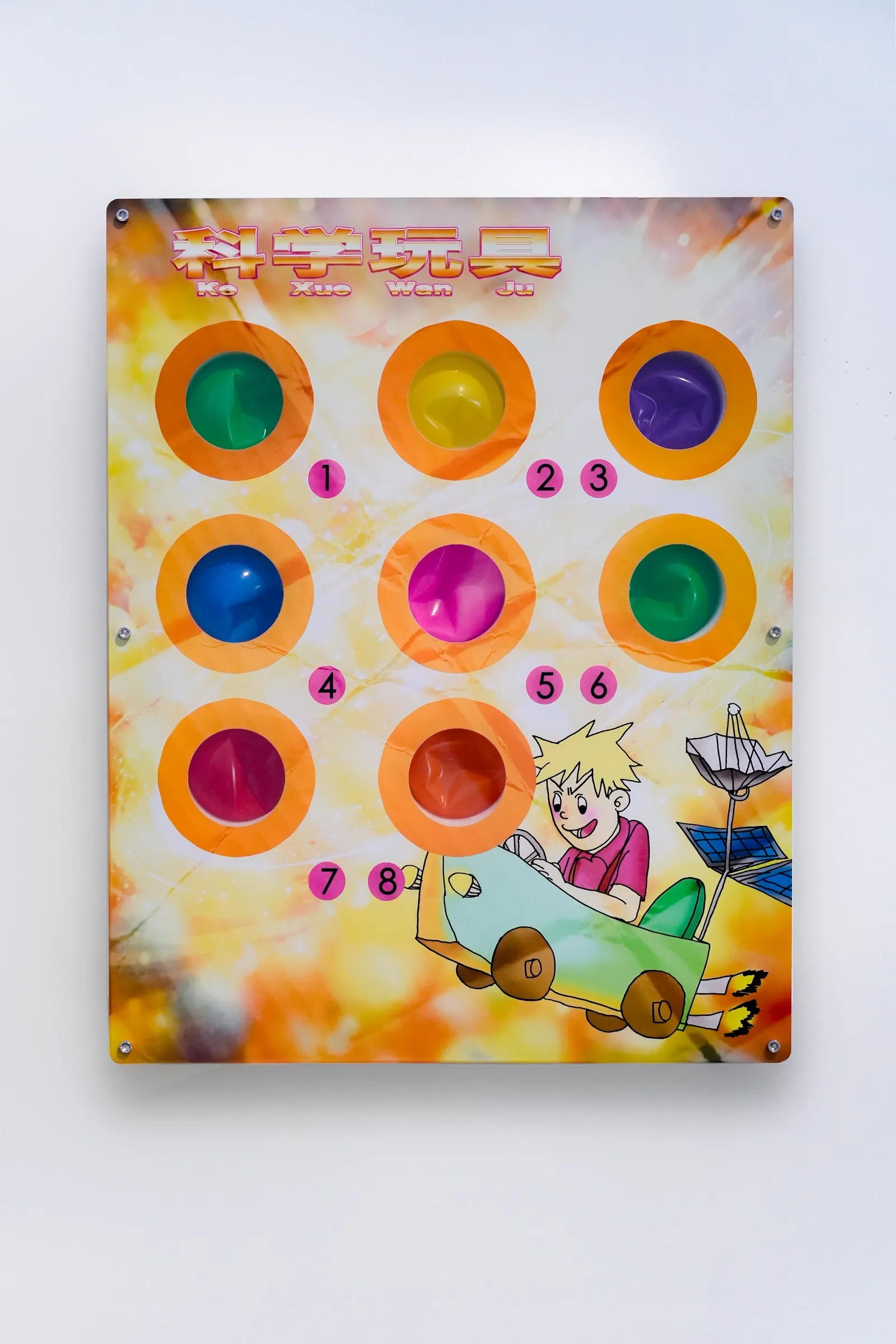
Zhang Ting, (left) China Toy, 2026, stainless steel, UV-printed acrylic, EPE foam, PLA plastic, PVC ball pit balls, (right) Science Toy, 2026, stainless steel, UV-printed acrylic, EPE foam, PLA plastic, PVC ball pit balls, TechDiumMory, TANK Shanghai, Shanghai, 2026. Courtesy the artist.
The Never-Ending Adventure is a series rooted in Zhang Ting's imagination and exploration of what a "truly Chinese toy" might be. It centers on "Lao D" toys and the childhood memories surrounding them.
In one work, Zhang Ting casts a familiar toy sword from childhood and transforms the "weapon" into the image of rain falling from a window. The molded plastic shell is stripped of its original consumer function and given the appearance of an archaeological artifact. An inexpensive toy is thus transformed into a fragment of an imagined past, carrying both the traces of rapid development and the imperfections of memory.
Across the paintings, XiaoMing repeatedly appears wearing a yellow hood and is placed in situations marked by danger and disorder. These scenes depart from the stable narratives prescribed by educational materials, bringing individual physical and psychological experience into tension with standardized models of childhood.
Xiaoming therefore becomes more than a fictional character: he becomes a shared visual and cultural symbol, carrying the contradictions of a generation shaped by rapid development, unstable images, and shifting forms of modernity.
The "adventure" in Zhang Ting's work is ultimately a departure from the prescribed path. We grow while losing things along the way; the images and objects that shaped us become worn, rough, and incomplete, much like ourselves. Yet even on a rainy day, we continue to step outside and venture into the unknown.
b. 1999, Ningbo, Zhejiang, China. Zhang Ting received both his B.A. (2021) and M.F.A. (2024) from the School of Intermedia Art at the China Academy of Art and is currently pursuing a second Master's degree in the Department of Painting at Tokyo University of the Arts, Japan. Currently lives and works in Tokyo and Hangzhou. His practice encompasses installation, experimental video, and painting. Closely engaged with the present, his work takes the visual experiences of childhood in China during the 2000s and 2010s as its point of departure. By retrieving and distilling images from childhood memory, he recontextualizes familiar yet forgotten figures within contemporary artistic discourse. Through these visual elements that have been repeatedly reproduced, consumed, and forgotten, Zhang reexamines the relationship between individual experiences of growing up and broader social transformations, constructing an ongoing reflection on contemporary reality. In 2026, he participated in the three-person exhibition TechDiumMory at TANK Shanghai. He has held solo exhibitions at MARTIN GOYA BUSINESS VERRE LIQUIDE, MARTIN GOYA BUSINESS HOME Theatre, and Ren Community Art Museum in 2023 and 2022, and presented individual projects at SURPLUS SPACE, ScheinSpace, and dongx3 in 2022 and 2021. His works are held in the collections of museums, galleries, and institutions including MARTIN GOYA BUSINESS, White Rabbit Gallery (Australia), and the CC Foundation.
About Catapult Contemporary - Art Platform Submission
This is an exhibition review published by Catapult — an independent editorial platform for contemporary art, based in Vienna. We publish exhibition reviews, artist features, interviews, and critical context, with a focus on emerging and mid-career practices from Europe and beyond.
catapult-platform.art · Instagram
Want to be featured? Submit your work →