When Cute Turns Dangerous: 8 Contemporary Artists Using Cuteness, Childhood and Play

Why Are Contemporary Artists Using Cuteness and Childhood Imagery?
Nothing here is quite as innocent as it looks.
A strange thing happens when you spend enough time looking through an art archive. Images that were never intended to meet begin talking to one another.
A smiling sunflower in Prague appears beside a girl sitting inside a cake with a knife. A cartoon skeleton is sewn from fleece. A pastel playground begins to feel less safe. Toy houses, rabbits, bows, plush bodies and strange animals keep returning, but the comfort they promise rarely survives for long.
Across the Catapult archive, cuteness repeatedly appears as something more complicated than an aesthetic preference.
These artists do not form a movement, and “cute” would be an inadequate description of their practices. What recurs instead is a strategy: visual languages associated with childhood, safety, nostalgia and harmlessness are placed precisely where safety can no longer be taken for granted.
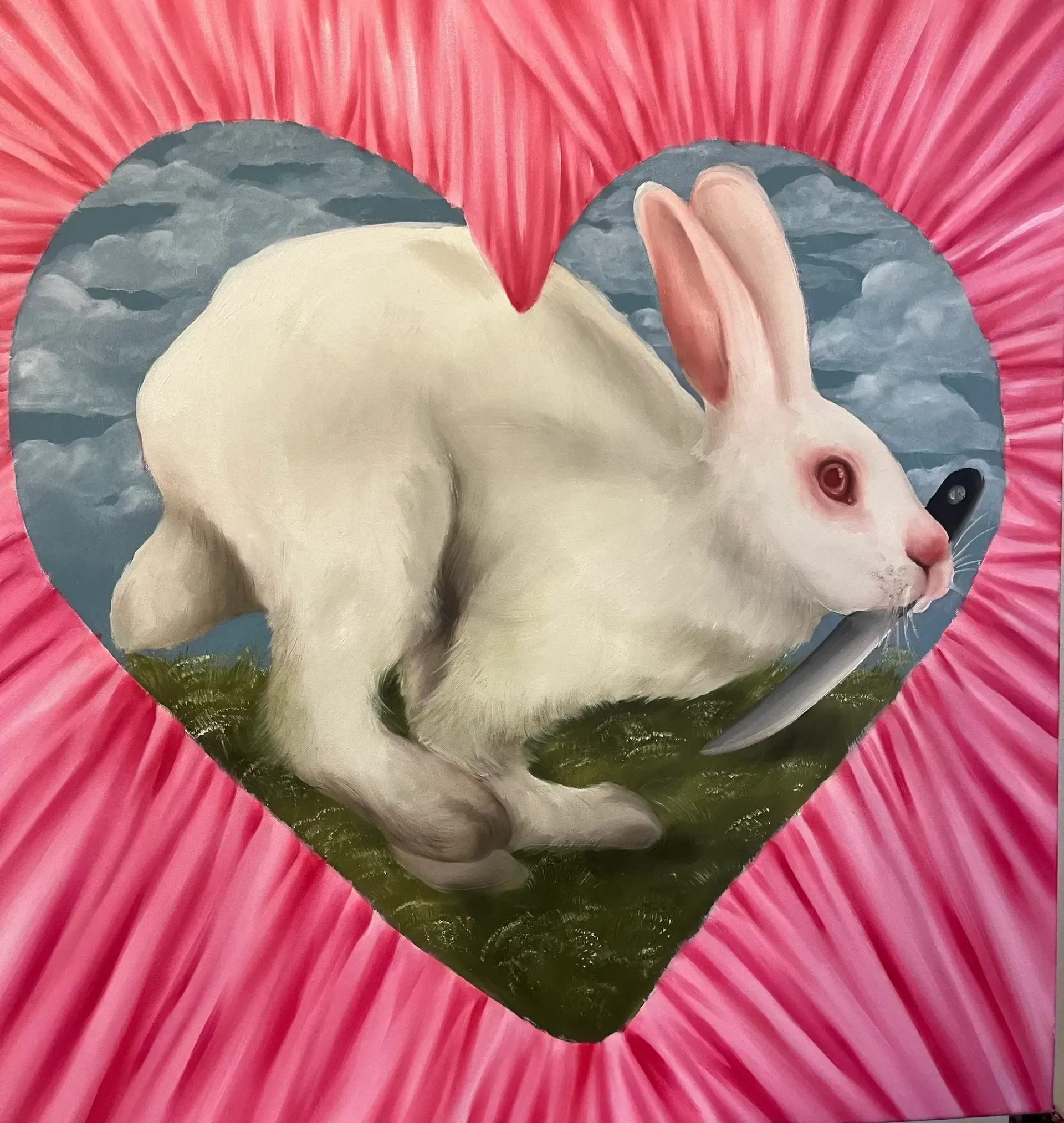
Sometimes the shift is immediate. A rabbit carries a knife. Elsewhere, softness becomes flesh, toys become ruins, and smiling characters absorb memories they were never designed to carry.
Why Cuteness Keeps Appearing in Contemporary Art
Cuteness has a remarkably direct visual grammar.
Round forms appear safe. Pastel colors soften an image. Plush materials invite touch. Toys pull us toward childhood before we consciously make the connection. Cartoon faces reduce emotion to something instantly readable.
That familiarity makes cuteness especially useful when an artist wants to introduce something that does not belong there.
Childhood imagery can carry adult memory. A soft material can describe a wound. Kawaii aesthetics can coexist with displacement and war. Nostalgia can open onto consumerism, anxiety or loss.
What connects the artists below is not a shared style, but the instability they find inside things that are supposed to reassure us.
1 - Olga Krykun: When Kawaii Becomes Camouflage
Ukrainian artist Olga Krykun uses kawaii imagery, pastel colors, bows, smiling flowers and deliberately kitsch forms to approach memory, displacement and experiences shaped by war.
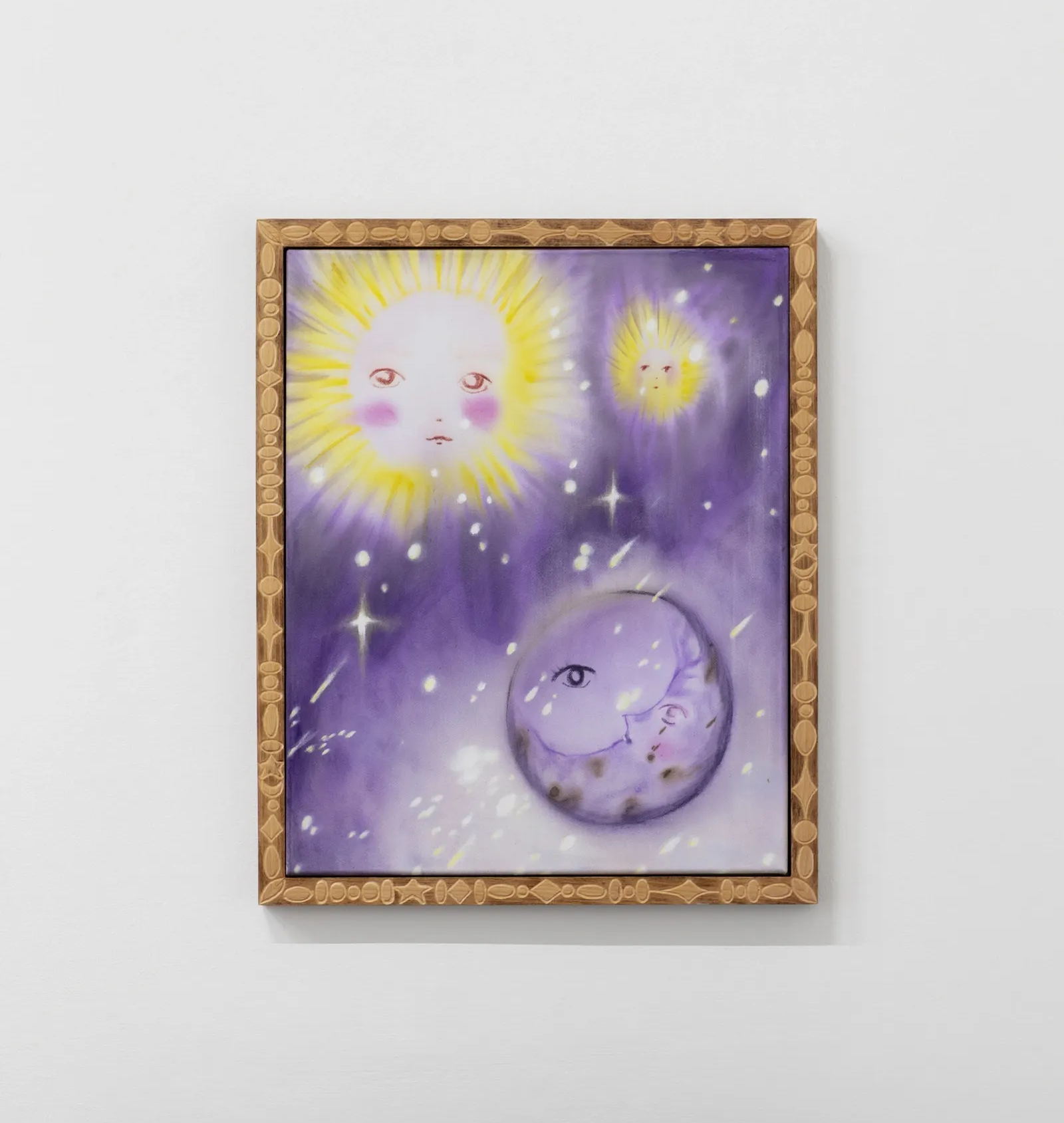
In Stardust for Tomorrow, presented at Clauda in Prague in 2026, sunflowers arrive with faces. Their round cheeks and sleepy expressions recall stickers, trinkets and objects made to be instantly lovable.
Krykun allows that sweetness to remain intact while changing what it has to carry. The sunflower can still be cute, but it is no longer uncomplicated.
 Dominique Catherina Foertig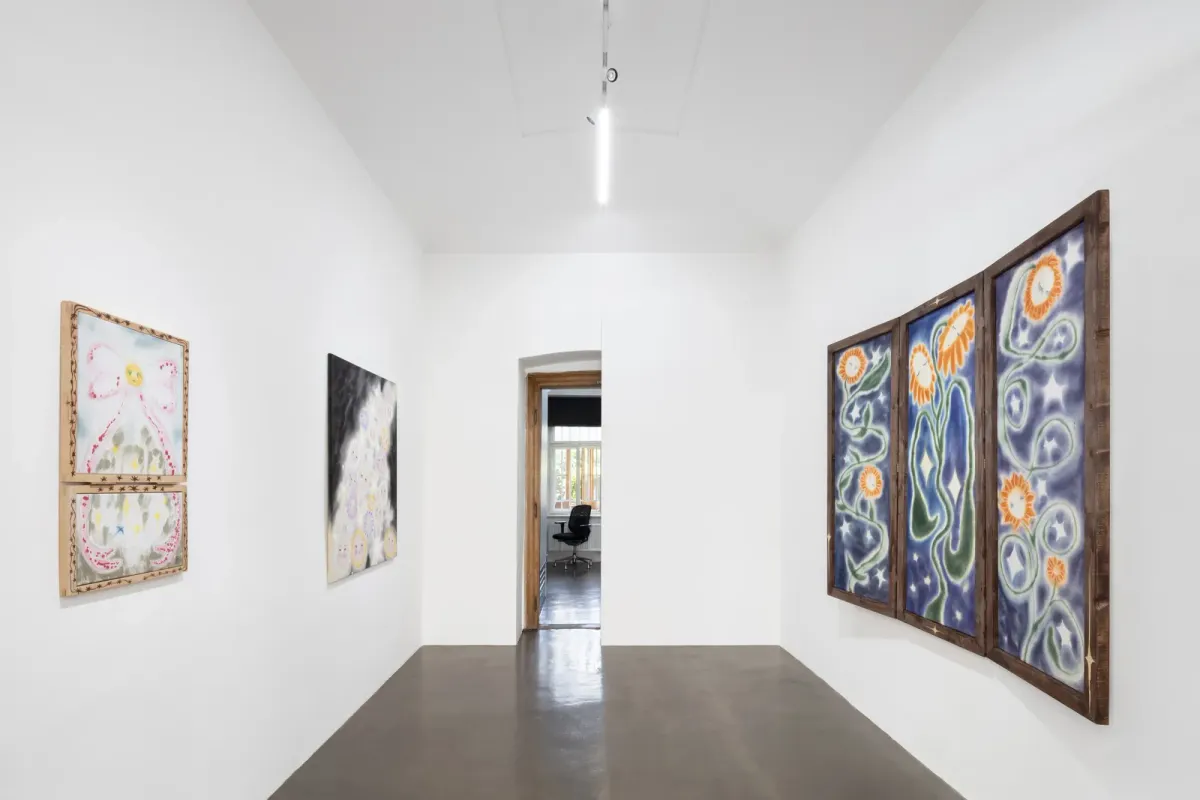
Olga Krykun at Claude Gallery Prague
Here, cuteness becomes camouflage, protection and perhaps even a way of approaching memories that resist direct representation.
2- Dominika Kováčiková: When Girlhood Grows Teeth
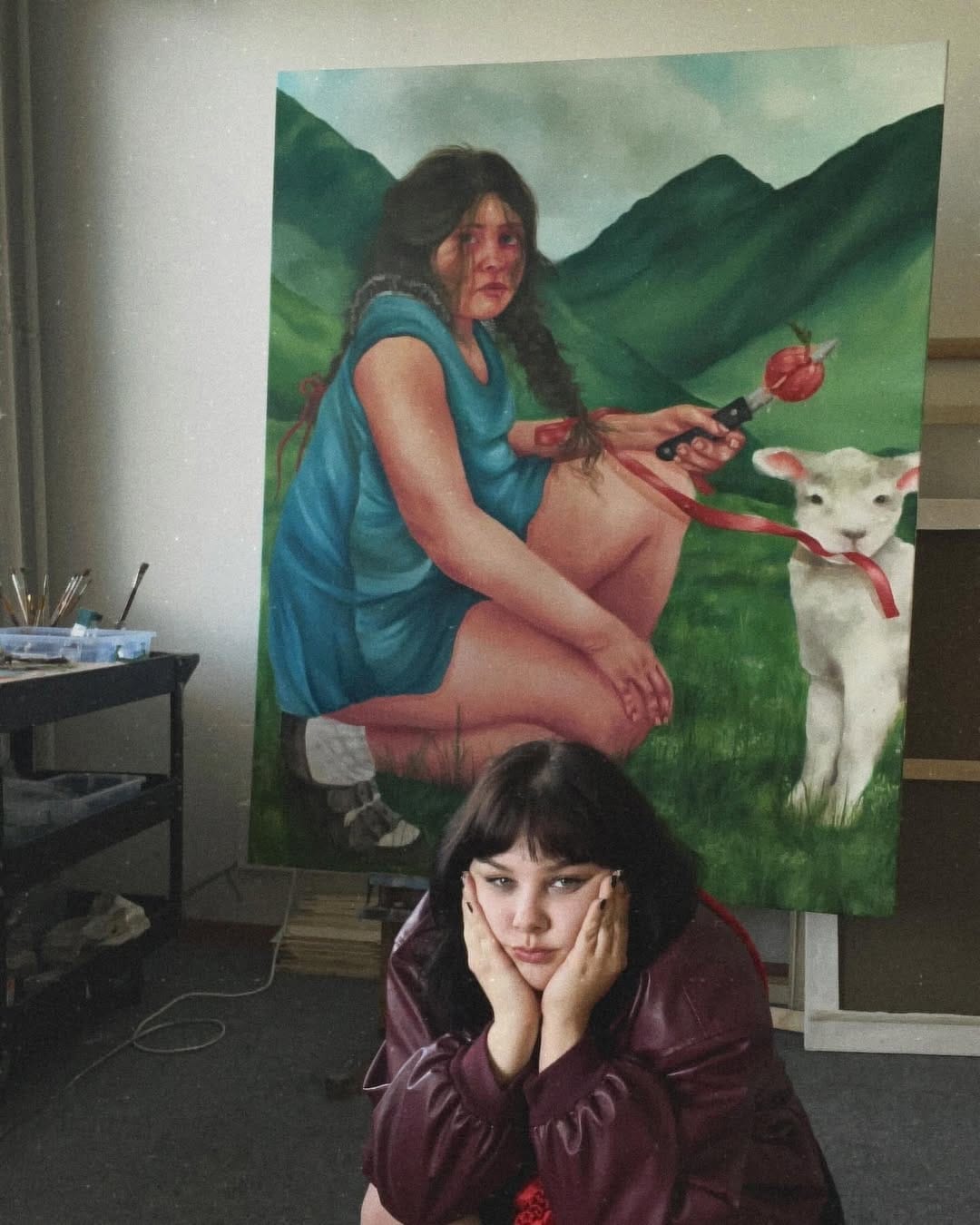
Slovak artist Dominika Kováčiková uses candy colors, rabbits, cakes, cherries and hyper-feminine imagery to explore girlhood, vulnerability, trauma and violence.
A girl sits inside an extravagant cake holding a kitchen knife. Elsewhere, a white rabbit carries a blade between its teeth.
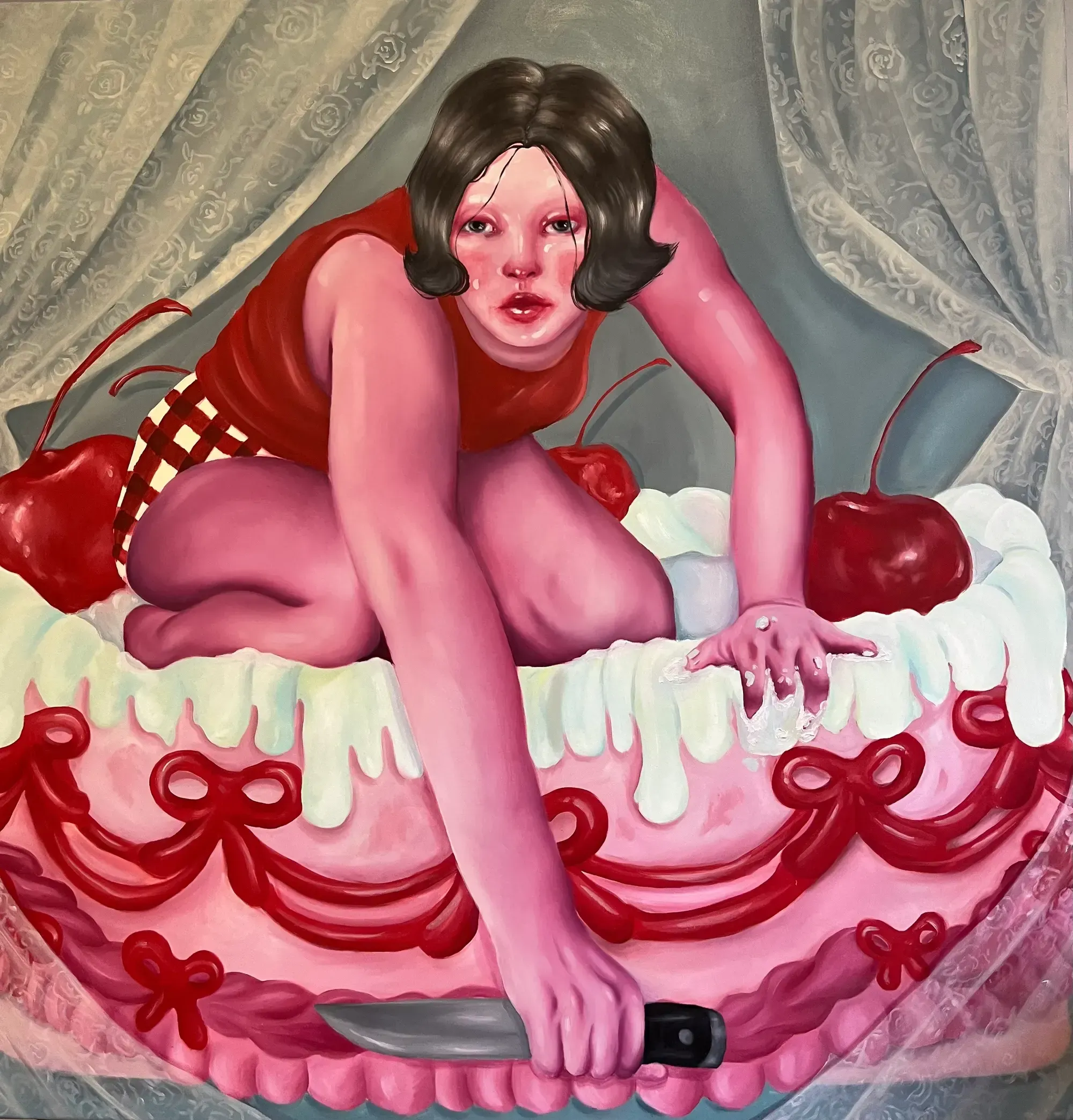
Pink fabric, sweets, soft bodies and animals belong to a visual universe built around innocence. Kováčiková keeps that universe seductive, then introduces a threat from inside it.
The knife does not destroy the cuteness. It changes who controls it.
 Ernst Koslitsch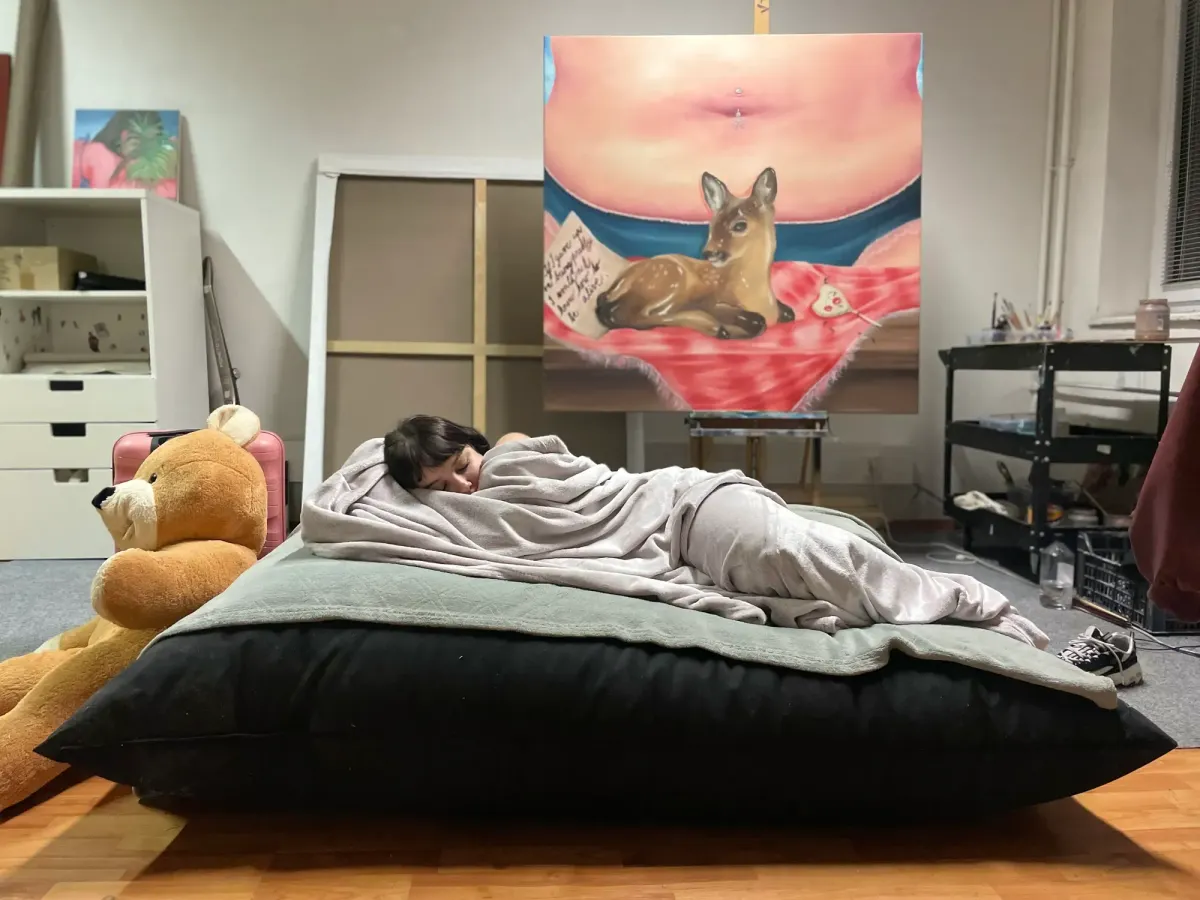
Read the full story - Dominika Kováčiková - Catapult Contemporary
Her work understands how often girlhood is surrounded by images telling girls how softness should look. Kováčiková keeps the sugar coating and gives the person underneath it something sharp to hold.
Dominika Kováčiková on Instagram
Daniel Ferstl: Horror Gets Soft
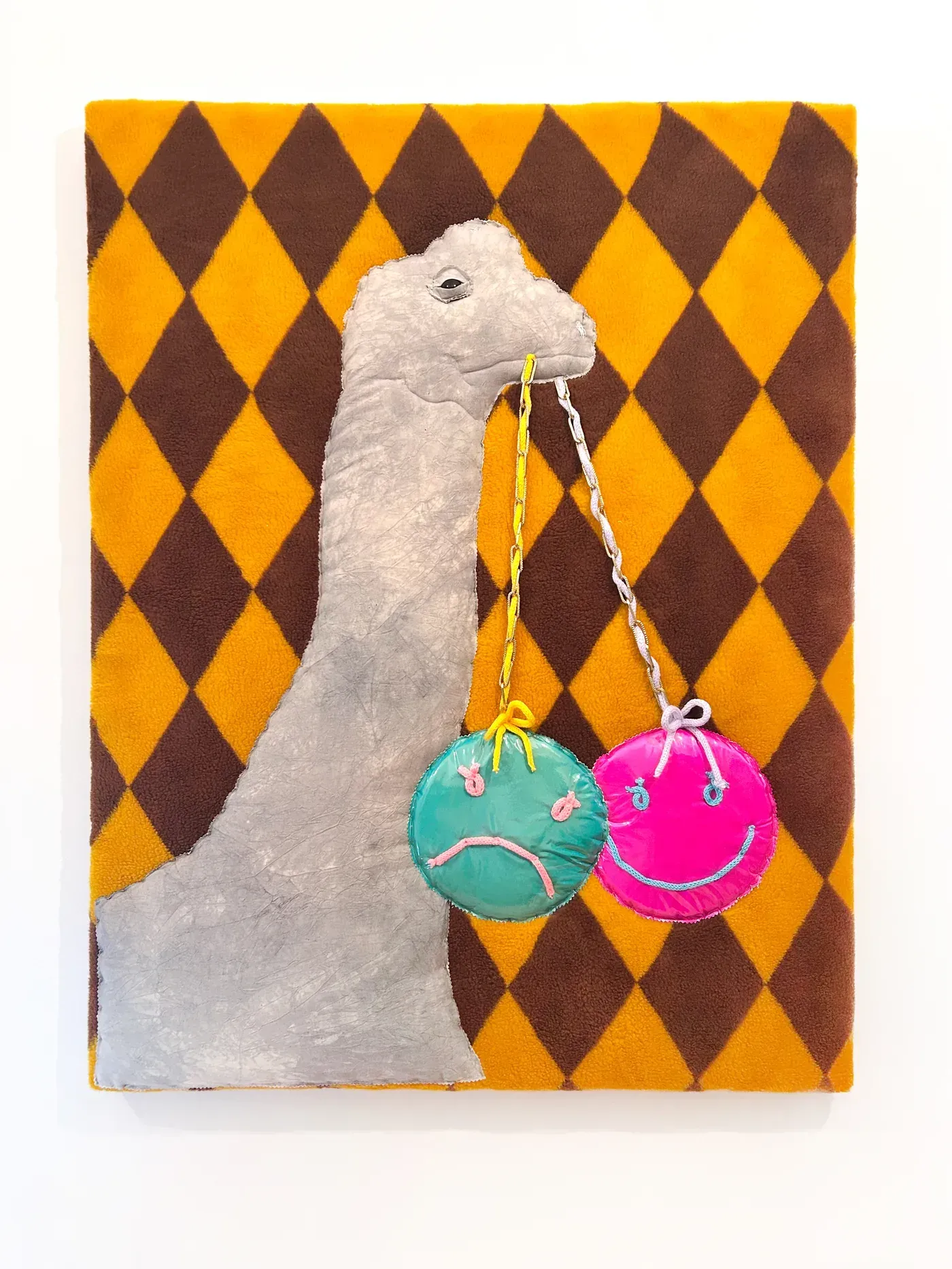
Vienna-based artist Daniel Ferstl combines textile, ink and mixed media with horror characters, cartoon dogs, meme imagery, skeletons and strange creatures.
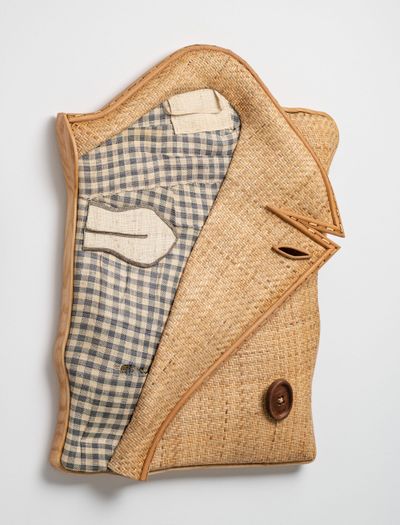
Fleece, wool, satin, felt and upholstery foam are materials associated with warmth and domestic comfort. Ferstl uses them to construct figures that should belong somewhere else.
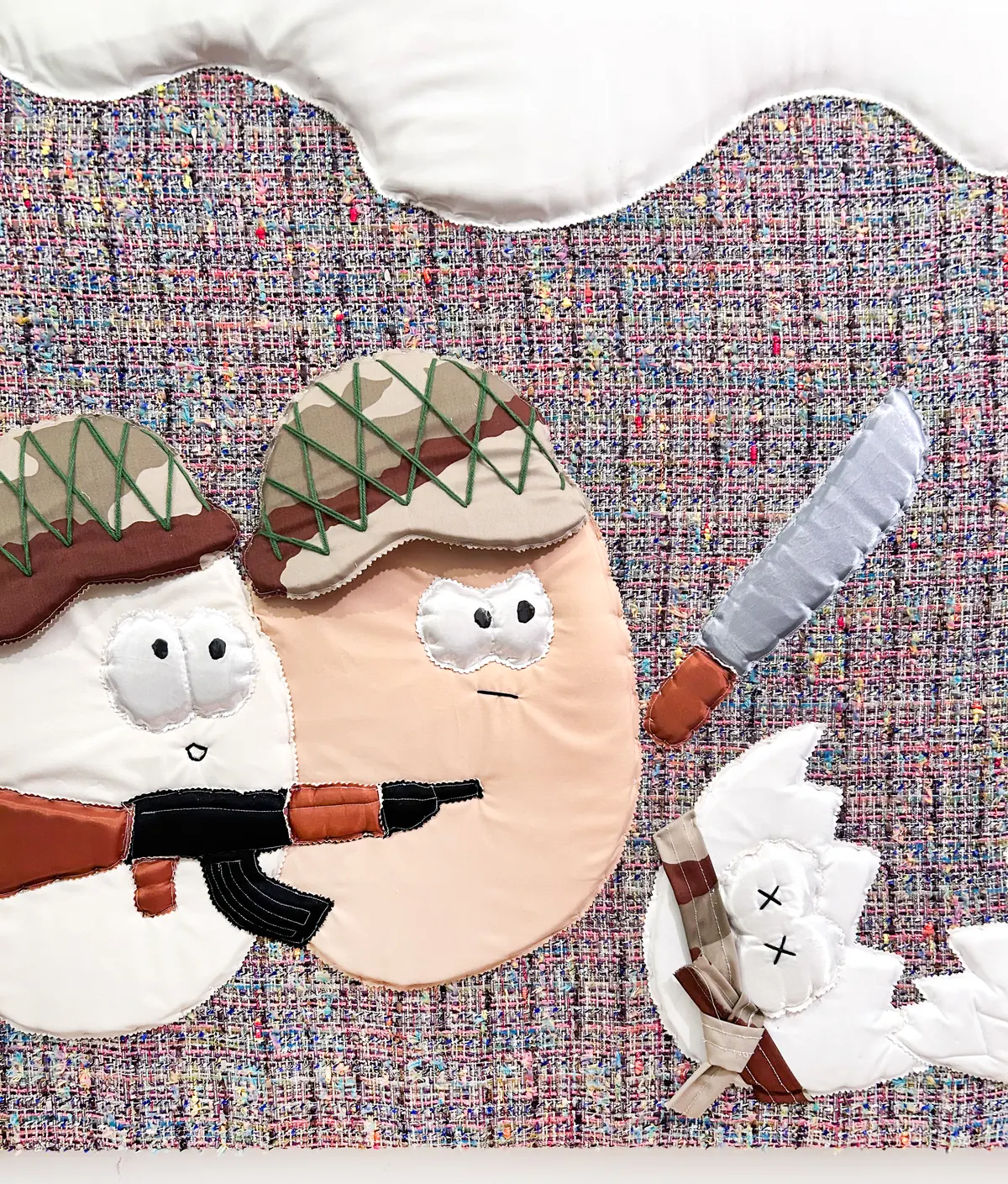
Horror becomes padded. Skeletons become tactile.
The effect is not simply comic. Ferstl allows comfort and dread to occupy the same object.
 Dominique Catherina Foertig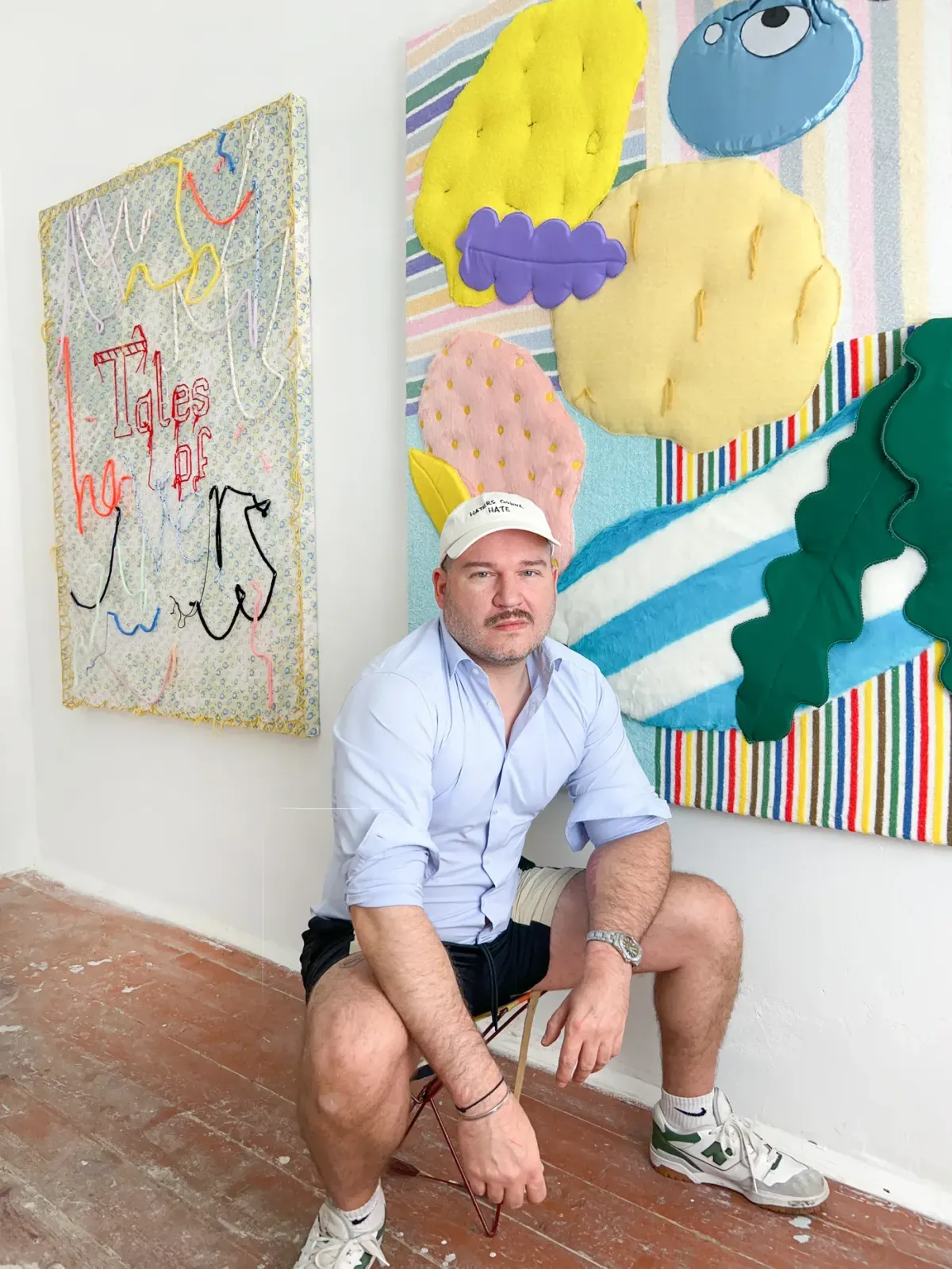
Read the full story about - Daniel Ferstl - Catapult Contemporary
Disposable internet imagery is slowed down, cut apart, stitched and given physical weight. The monster has become soft, but it has not become harmless.
Grip Face: The Playground Stops Feeling Safe
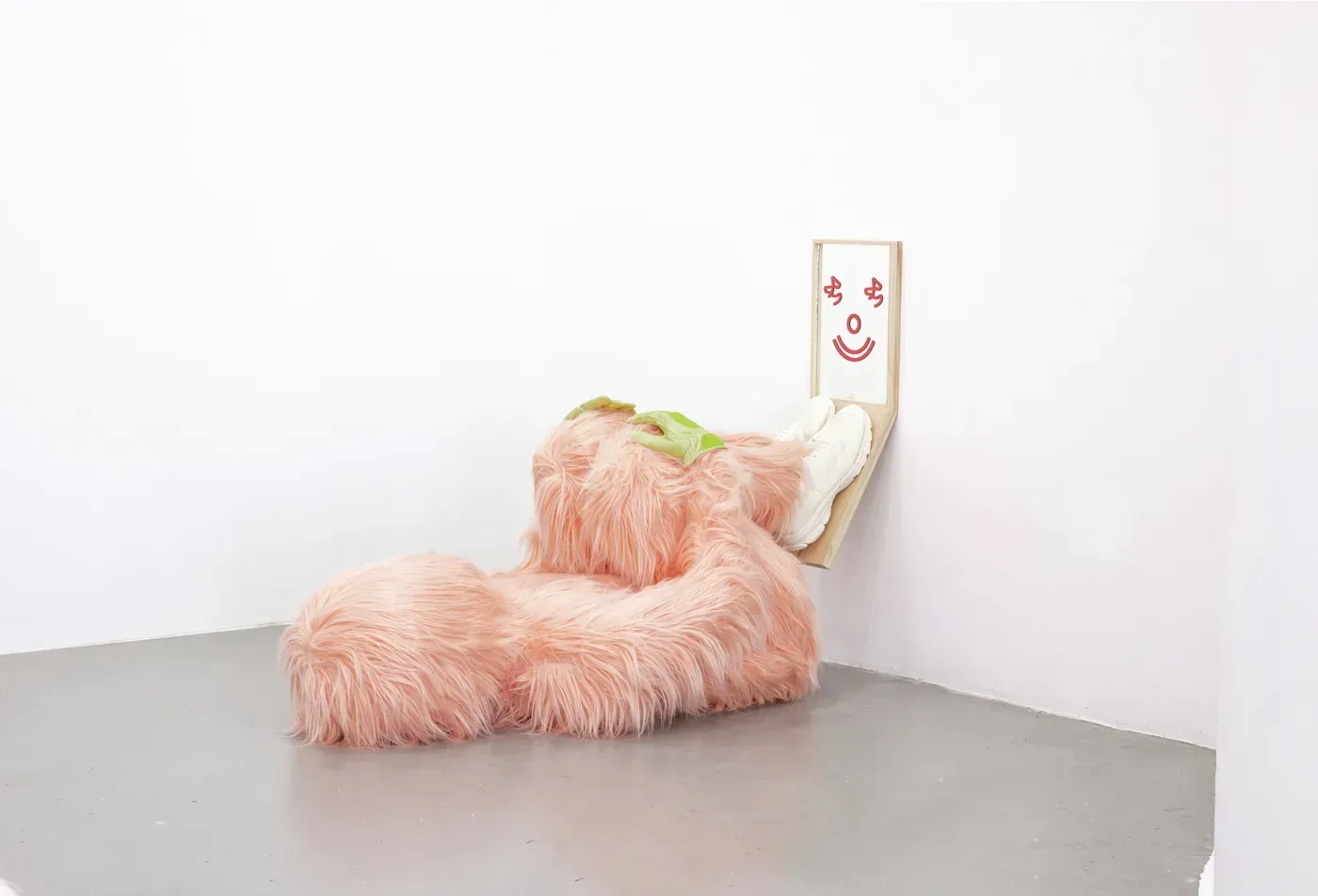
Spanish artist David Oliver, working as Grip Face, uses masks, soft textures, pastel colors and playground-like environments to examine identity, anxiety, conflict and control.
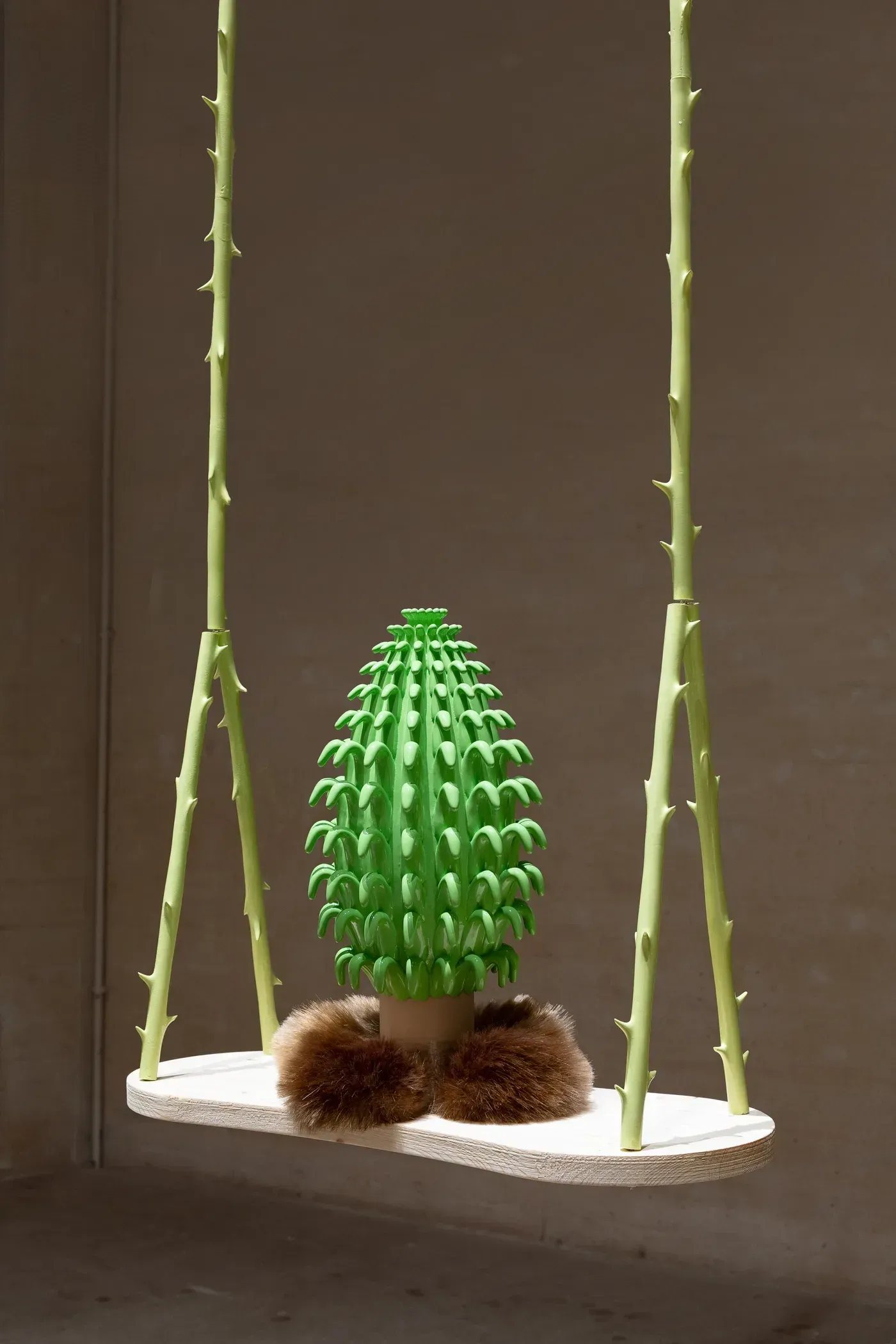
His installations can initially appear irresistible: swings, furry surfaces, bright colors and strange characters that seem to have migrated from children's entertainment into the gallery.
Then the architecture starts behaving differently.
 Catapult Submissions Team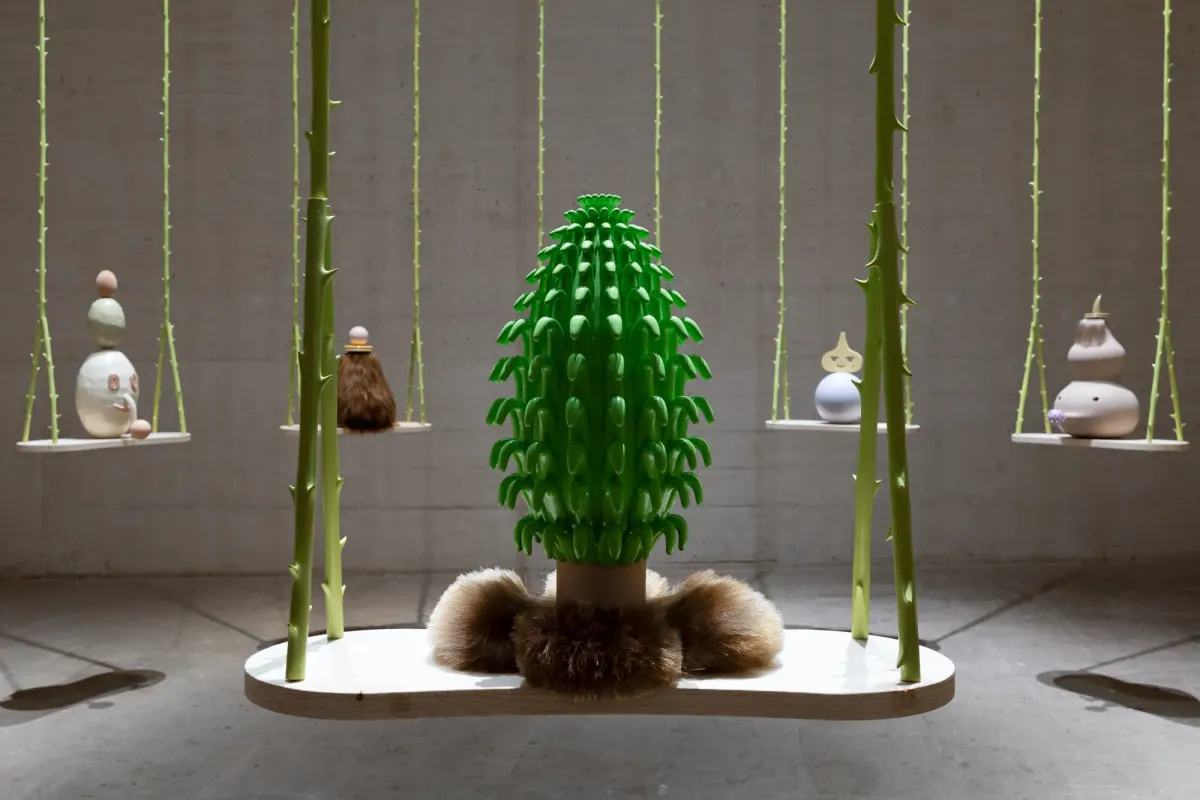
Read the full - Grip Face - Catapult Contemporary
In Utopía del Lodo y Sashimi de Bruma, presented at the Miró Foundation Museum in Mallorca, the playground becomes a structure through which war, civilian fragility and childhood vulnerability can be approached.
Grip Face does not abandon play in order to become serious.
Play is how the seriousness enters.
Ophelia Arc: When Softness Remembers the Wound
New York-based artist Ophelia Arc uses crochet, hand-dyed yarn, ribbon and textile to build sculptures around trauma, memory, vulnerability and the body.
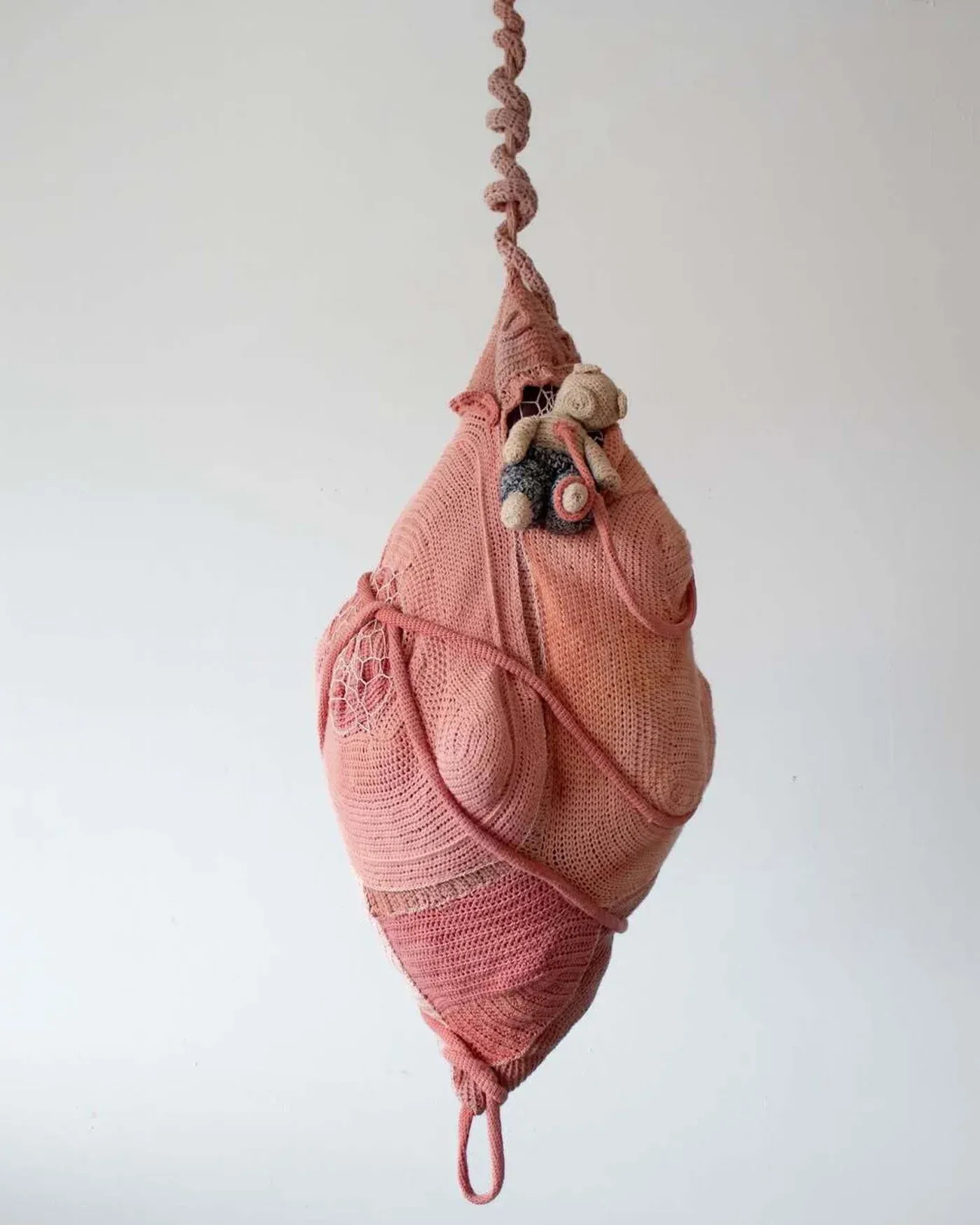
Her materials carry histories of comfort and care. Yet Arc stretches those associations until softness begins to resemble flesh.
Forms bulge, split and hang. Threads can read as sutures or umbilical cords. Surfaces hover between skins, wounds and protective membranes.
 Dominique Catherina Foertig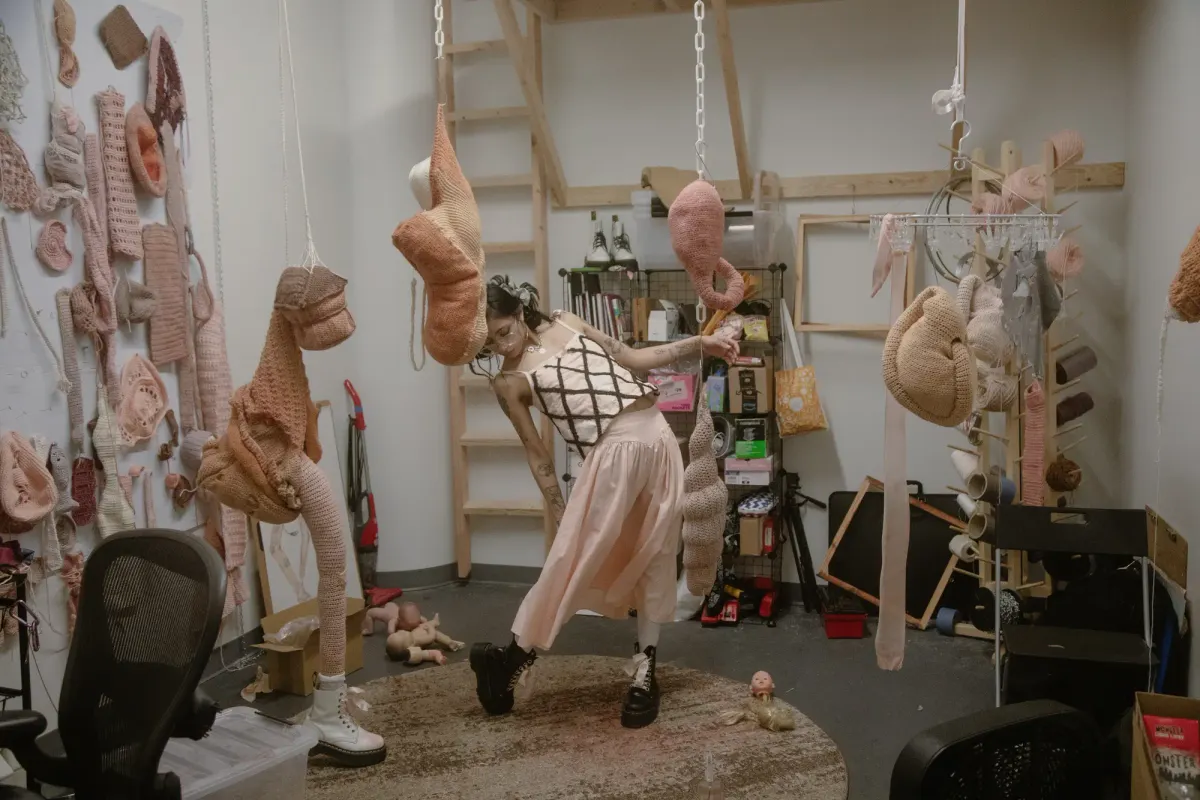
Read the full article of Ophelia Arc via Catapult Contemporary
In one work, a small toy bear appears inside a cocoon-like textile form, an emblem of childhood comfort absorbed into something bodily and psychologically unstable.
The bear cannot explain the memory around it. That is precisely why it works.
Martin Schuster: When the Toy World Becomes the Real World
German painter Martin Schuster builds images from toy architecture, cartoon fauna, video-game references and bright artificial landscapes.
At first, the paintings invite play. Houses look assembled rather than built. Animals seem borrowed from another reality. Landscapes carry the artificial clarity of a game level.
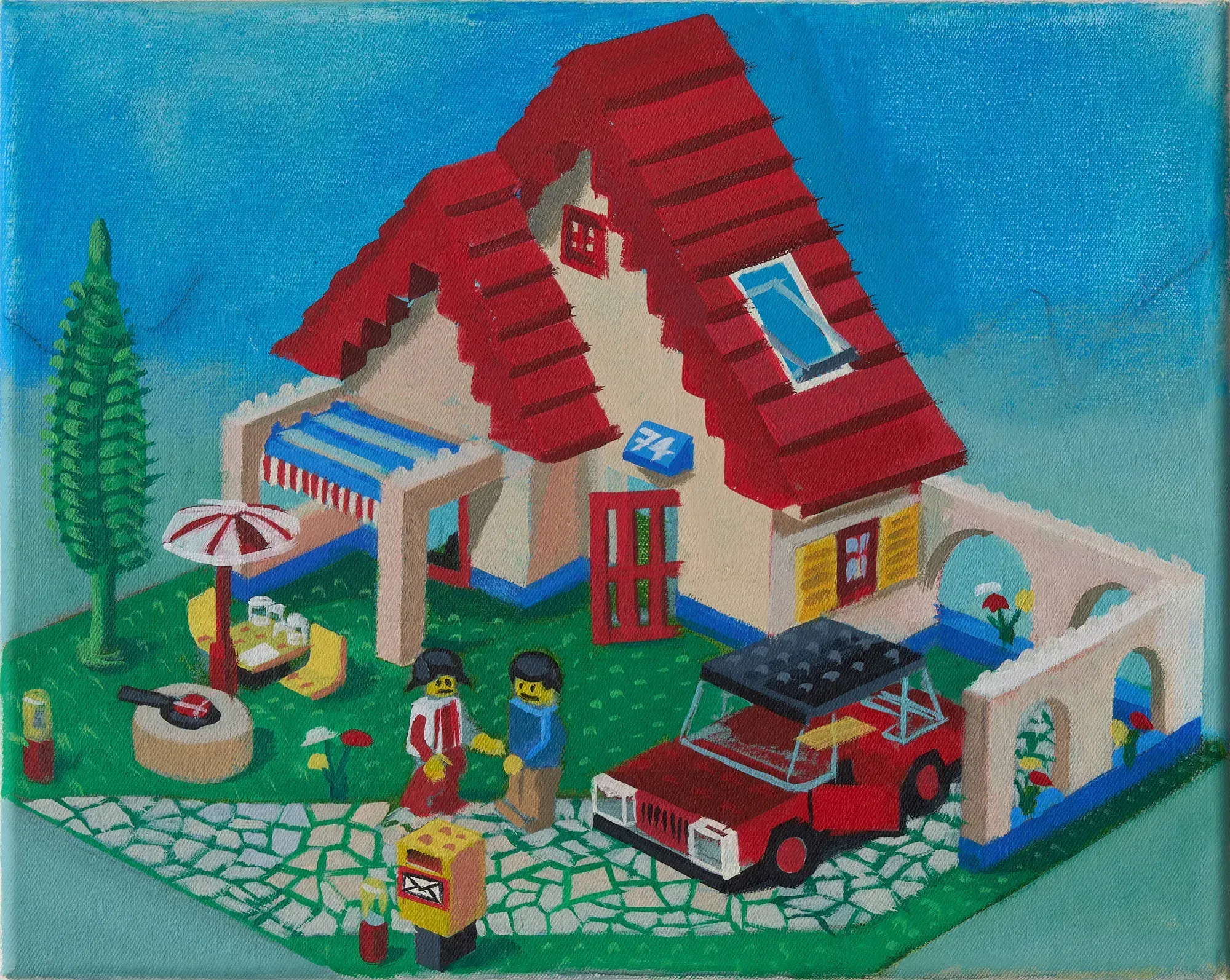
Then comes the aftertaste.
Pleasure sits beside fatigue. Desire meets consumption. Retreat and excess occupy the same image.
 Dominique Catherina Foertig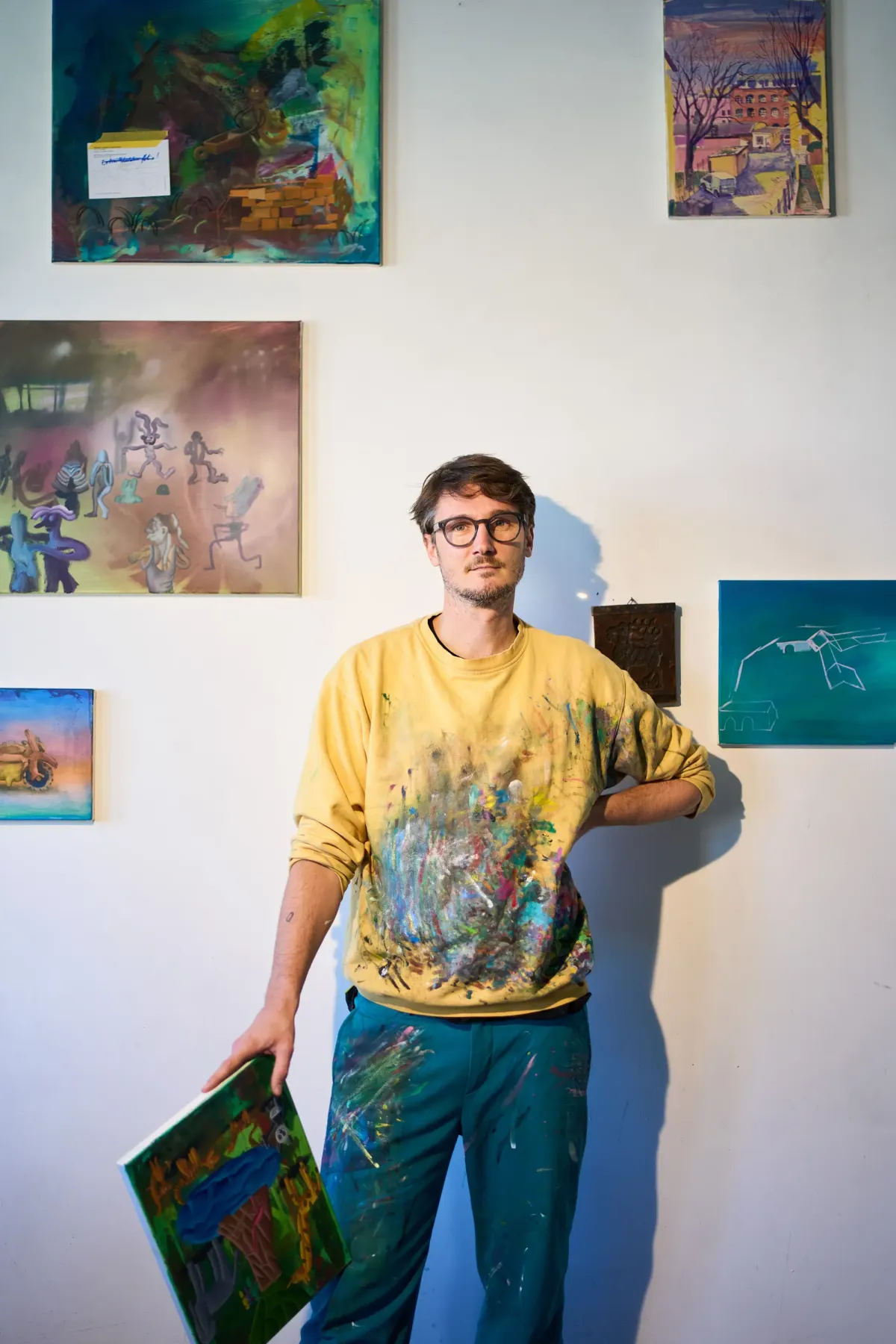
What initially looked like an escape begins to resemble the world we already inhabit.
Products, screens, planned leisure and fantasy architecture are not necessarily alternatives to contemporary life. In Schuster's paintings, they may simply be another version of it.
Gabriela Genčúrová: The Dream Starts Behaving Strangely
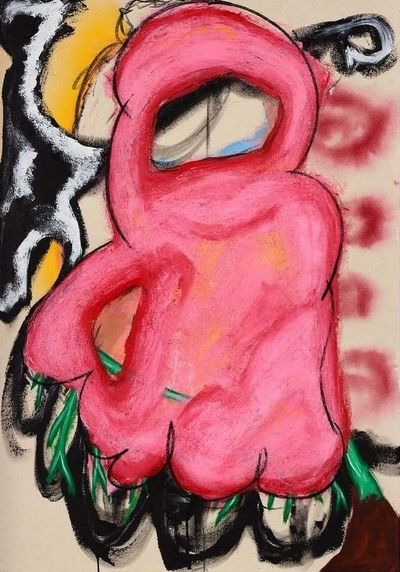
Slovak artist Gabriela Genčúrová works with dreamlike figures, strange animals, soft surfaces and surreal imagery to explore nostalgia, identity, transformation and the inner child.
Her paintings can appear playful at first glance.
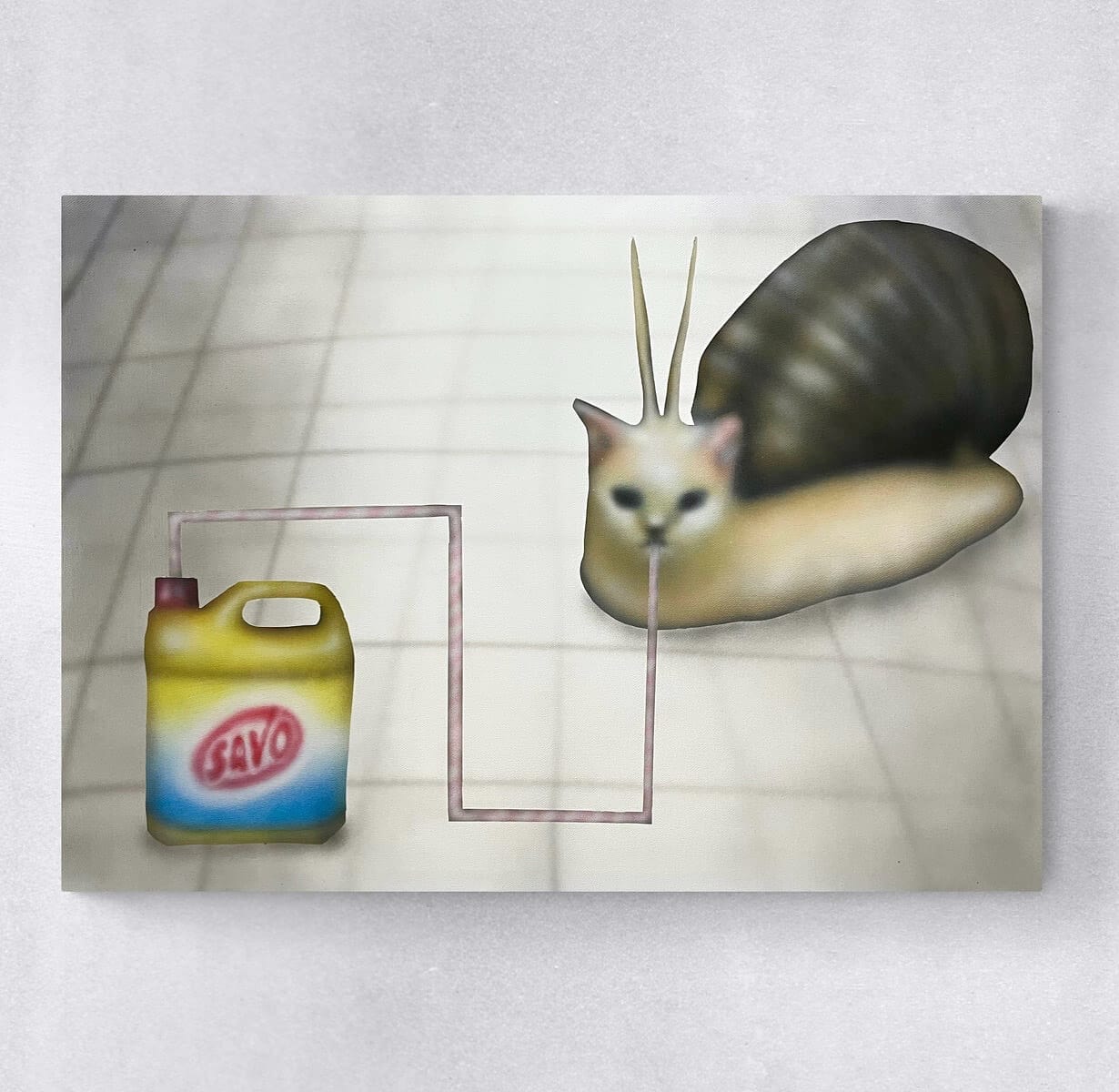
The figures have the logic of cartoons or characters remembered from dreams. Airbrushed surfaces give them an almost immaterial softness.
But the longer they remain visible, the less stable they become.
 Di Franco
Gabriela Genčúrová on Catapult Contemporary
Genčúrová does not need an obvious symbol of danger. Her unease comes from recognition without explanation. Something feels familiar, perhaps even nostalgic, but its meaning refuses to settle.
The dream remains colorful.
It simply stops behaving.
Gabriela Genčúrová on Instagram
Luca Bjørnsten: Nostalgia Learns to Sell
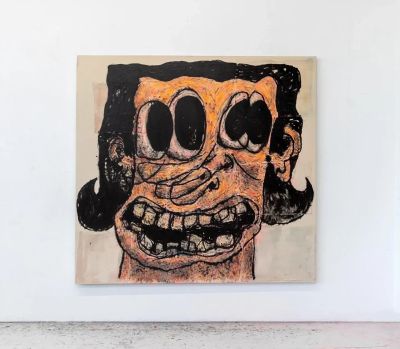
Danish artist Luca Bjørnsten uses retro video-game aesthetics, cartoons, bold color and familiar consumer imagery to explore nostalgia and the seduction of contemporary consumer culture.
His paintings often arrive with the visual ease of childhood entertainment. Bright colors, simplified forms and references to gaming culture make the images instantly accessible.
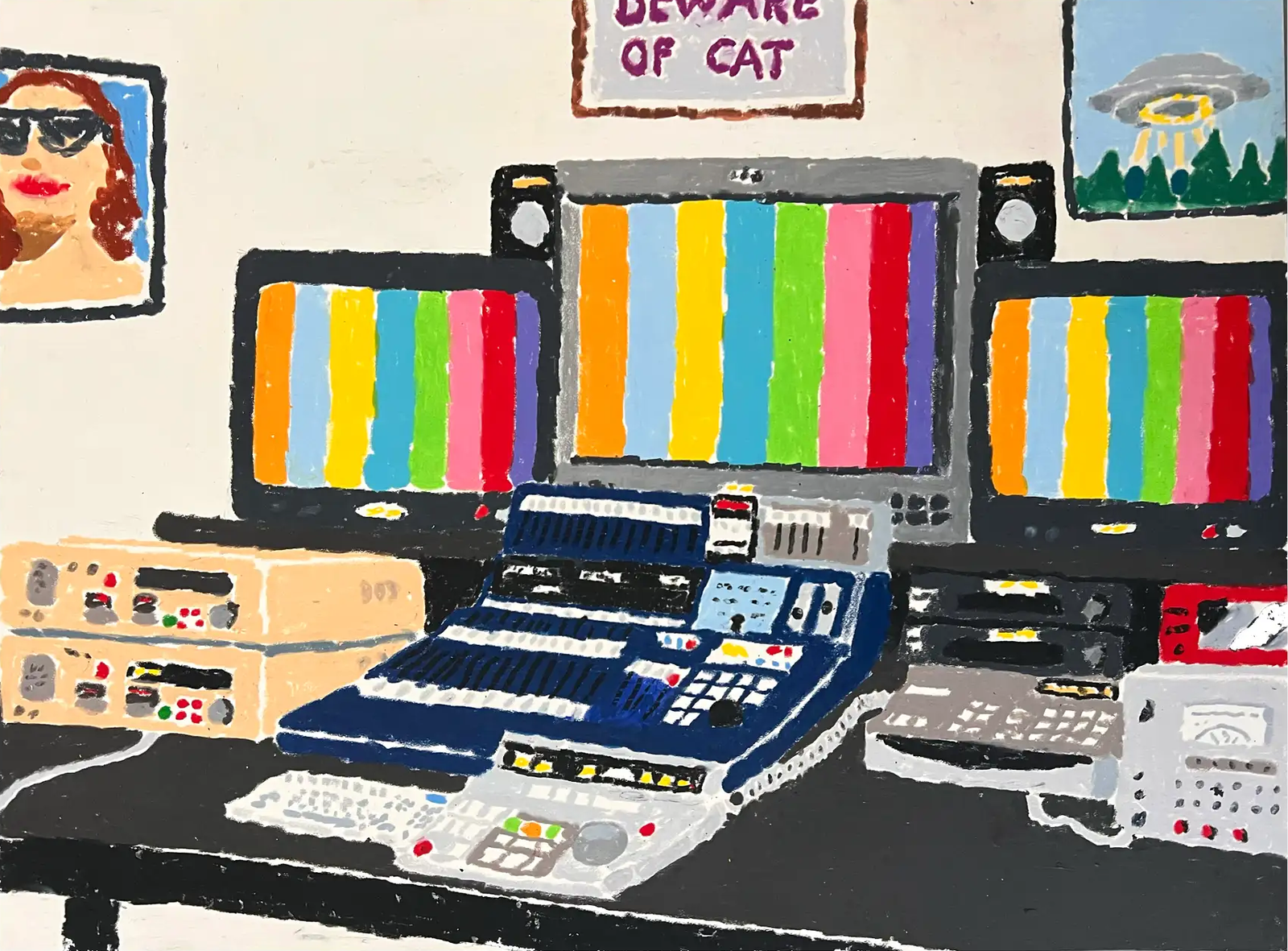
But that familiarity is exactly what Bjørnsten turns against us.
The nostalgia remains pleasurable while consumerism, branding and excess begin to occupy the same space. What feels playful also reveals how deeply commercial imagery has entered our memories, desires and sense of identity.
 Dominique Catherina Foertig
Deep dive into Luca Bjørnsten work practice - Catapult Contemporary
Here, cuteness does not become violent.
It becomes persuasive.
Why Artists Keep Returning to Childhood, Toys and Cuteness
For Olga Krykun, it can conceal what is difficult to approach directly. Dominika Kováčiková turns the visual codes of girlhood back on themselves. Daniel Ferstl lets horror and domestic comfort share the same material. Grip Face transforms the playground into an unstable political space.
Ophelia Arc lets textile carry bodily and psychological memory. Martin Schuster finds contemporary life inside the toy world. Gabriela Genčúrová returns to the strange emotional logic of childhood. Luca Bjørnsten uses nostalgia and playful pop imagery to expose the seductive logic of consumer culture.
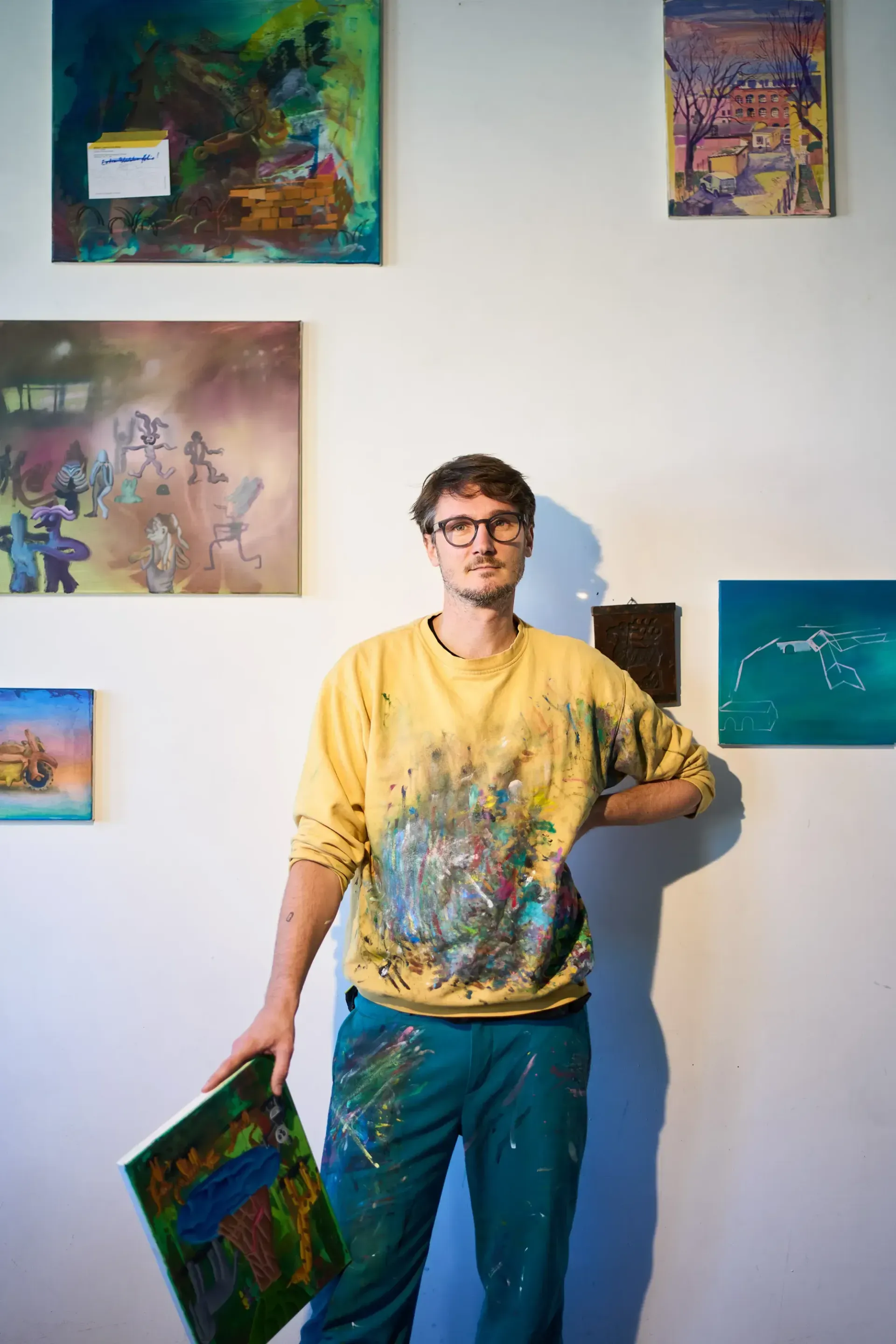
What connects them is not cuteness itself, but our trust in it. A teddy bear. A rabbit. A smiling flower. Pink fabric. A cartoon face. A toy house. We are trained to lower our guard around certain things, and artists know this too. When difficult, unstable or contradictory experiences resist direct representation, the language of innocence offers an unusual place to begin.
It creates proximity before explanation. You look because something seems familiar. You stay because something has gone wrong. Perhaps this is why cuteness has become so useful. It gets through the door before the difficult thing announces itself.
stay connected, keep the art in motion

This is a Context article published by Catapult Contemporary - an independent editorial platform for contemporary art, based in Vienna. We publish exhibition reviews, artist features, interviews, and critical context, with a focus on emerging and mid-career practices from Europe and beyond.